random practical questions
 Call Kai
 Learn
Learn Practice Test
 Spaced Repetition
 Match
Match Flashcards
 Knowt Play
1/43

There's no tags or description
Looks like no tags are added yet.
Name | Mastery | Learn | Test | Matching | Spaced | Call with Kai |
|---|
No analytics yet
Send a link to your students to track their progress
44 Terms
outline steps to determine the solubility of calcium hydroxide in a saturated sample
take a known volume of the saturated solution
evaporate until its dry
weigh the residue
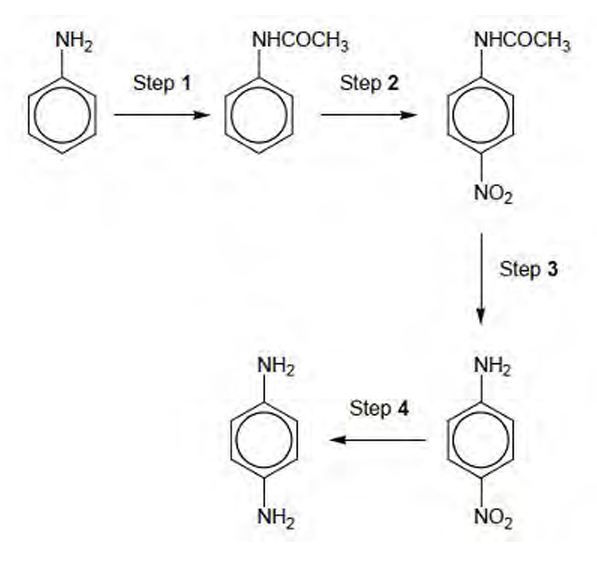
whats the type of reaction in step 3
hydrolysis
why can an XS of KMnO4 be undesirable when treating water
unpleasant taste
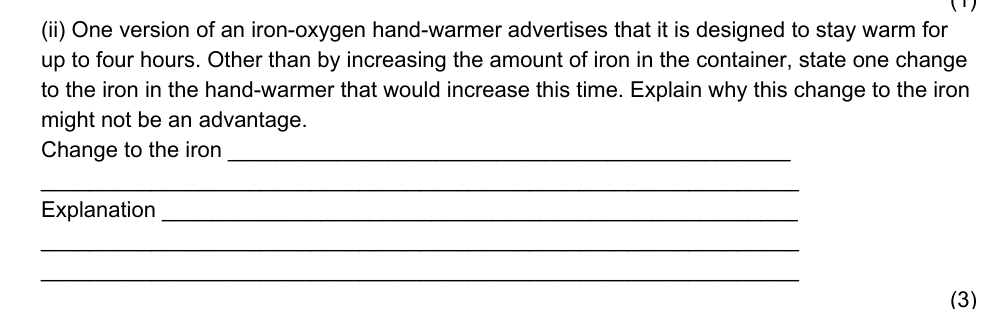
decrease SA
lower ROR

practical reason why mass of MgO obtained is slightly less than expected
some solid is blown away with the gas
safety and hazards - irritant, corrosive, flammable, toxic and oxidising
irritant - dilute acids and alkalis - wear gloves
corrosive - stronger acids and alkalis - wear goggles
flammable - keep away from naked flames
toxic - wear gloves, avoid skin contact, wash hands after
oxidising - keep away from flammable/easily oxidised materials
heating a crucible - whens it used
measuring mass loss in decomposition reactions
measuring mass gain when reacting Mg in Oxygen
heating a crucible - water of crystallisation in calcium sulfate crystals
weigh empty dry crucible and lid
add hydrated calcium sulfate to crucible and weigh again
heat with bunsen burner
allow to cool
weigh crucible and contents again
heat again and reweigh until constant mass
heating a crucible - why should large amounts of calcium sulfate not be used
the decomposition is likely to be incomplete
heating a crucible - why does the crucible need to be dry
a wet crucible would give an inaccurate result
mass lost would be larger as the water would be lost when heating
heating a crucible - purpose of lid
improves accuracy
prevents loss of solid from crucible
but should be loose fitting to allow gas to escape
heating a crucible - why should small amounts of solid not be used
the % uncertainties will be too high
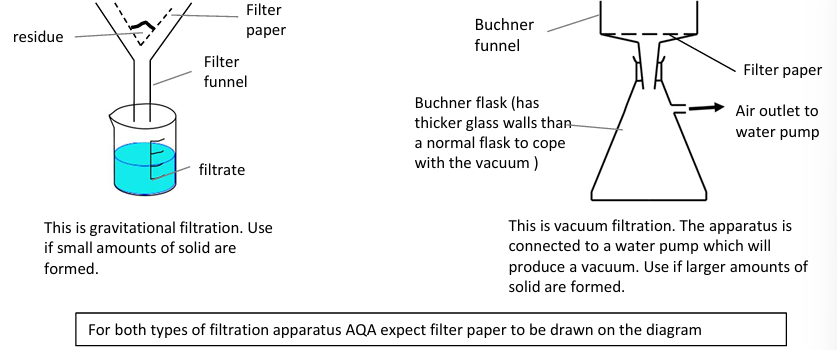
when to use gravitational vs vacuum filtration
spectrometry method
add appropriate ligand to intensify colour
make up solutions of known conc
measure absorption
plot graph absorption vs conc
measure absorption of unknown and compare
spectrometer filter colour
colour chosen to only allow the wavelengths of light through that would be most strongly absorbed by the coloured solution
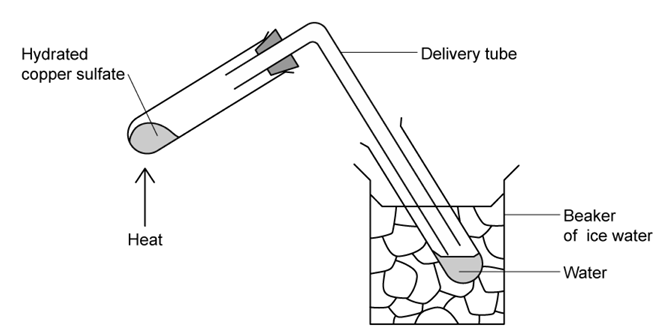
why cant the mass of water in the test tube be relied on to determine the mass of water for water of cystallisation
mass may be lower due to evaporation
mass may be higher due to condensation on test tube outside
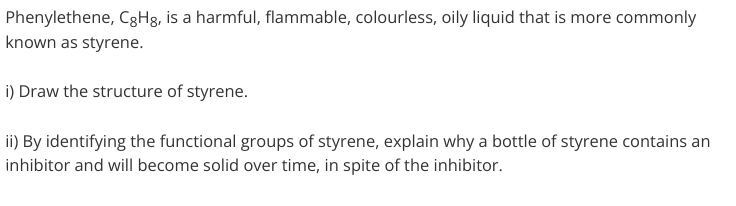
question ii
function groups are alkene and benzene ring
means can undergo addition polymerisation
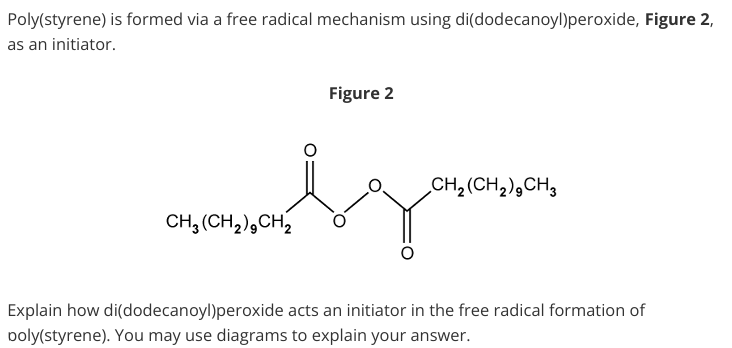
homolytic fission of the O-O bond forming two radicals

whats the assumption made
at the boiling point of a liquid, equilibrium is reached between liquid and vapour so that delta G = 0
describe the basic steps to determine the order of reaction with respect to bromine (or anything) using colorimetry
measure absorbance of a set of standard solutions of bromine to obtain a calibration curve
measure absorbance of the reaction mixture over time
ploy graph of conc bromine against time
determine order with respect to bromine from shape
in a redox titration why is iron dissolved in an XS of H2SO4 and not CH3COOH
XS - ensures all MNO4- reacts to form Mn2+
ethanoic acid is a weak acid and so does not supply sufficient H+
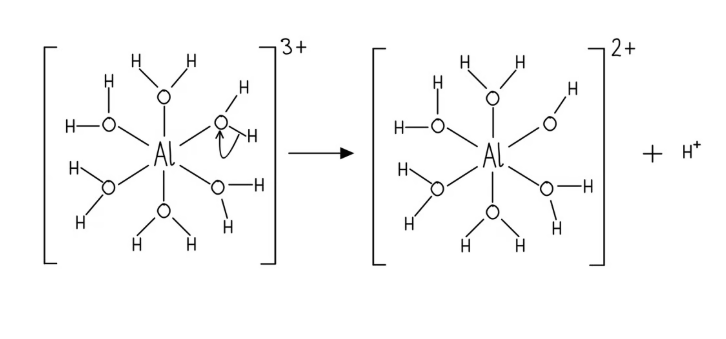
outline the mechanism to show how an aqueous Al3+ ion can act as a bronsted lowry acid
question ii
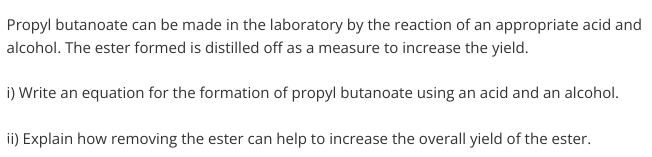
EQ shifts RHS to increase the ester conc
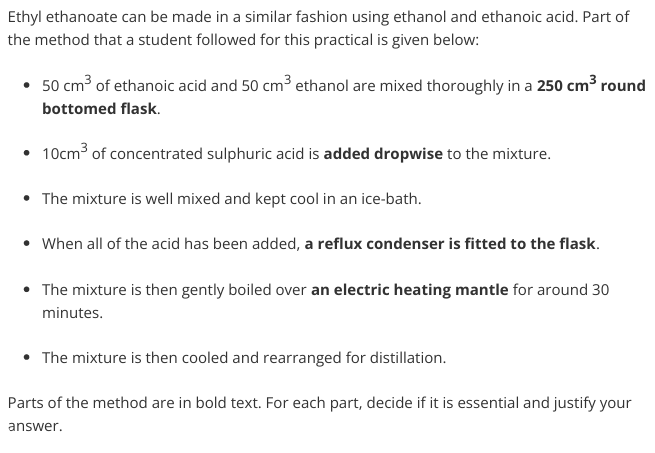
round bottomed flask - NO - just needs container that can hold minimum 110cm3
dropwise - YES - reaction is exothermic
reflux - NO - reaction can occur under distillation
electric heating mantle - YES - stops flammable vapors igniting
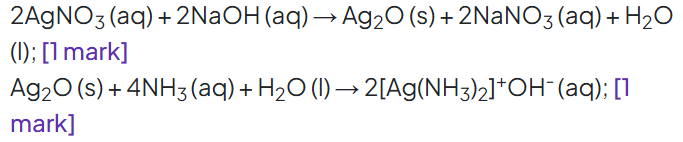
two equations incl state symbols to show the laboratory formation of tollens reagent
for testing tollens why should only clean and dry glassware be used
if its contaminated it prevents the glass from being uniformly wetted
so the silver mirror will not be able to adhere onto the glass surface
how can an airtight seal be formed between the reflux condenser and a round bottomed flask
greasing/using petroleum jelly on connecting parts
method for nitration of methylbenzoate
prepare nitrating mixture - dissolve small amount MB in conc H2SO4 then cool in an ice bath
prepare acid mixture - separate test tube mix equal vols of conc H2SO4 and HNO3 then cool in an ice bath
add acids - use dropping pipette to add to MB
monitor temp - stir continuously and ensure temp stays below 10 degrees
allow to stand at room temp so reaction goes to completion
precipitate the product - pour mixture over crushed ice
filter under reduced pressure, wash with cold water
safety considerations for nitration of methylbenzoate
conc acids are corrosive - goggles and gloves, fume cupboard
temp control - reaction is very exothermic so keep below 10 degrees to prevent splashing and to stop further nitration
methylbenzoate - flammable and an irritant, keep away from naked flames
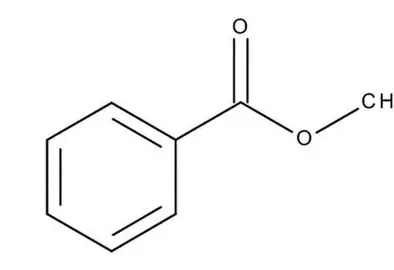
what is methyl benzoate
describe how you would safely and accurately measure out and place 25cm3 of a solution in a conical flask
rinse pipette with the solution
using a pipette and pipette filler, transfer the solution
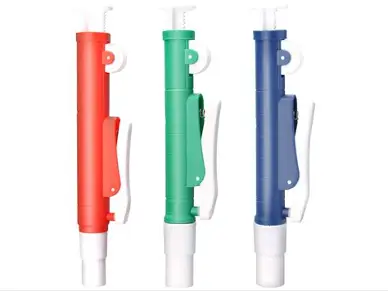
whats a pipette and pipette filler
a student carried out experiment to determine which of a chloro/bromo/iodoalkane hydrolysed the fastest when heated with silver nitrate in ethanol - describe an experimental method he could use. ensure that it is a fair test
fair test - haloalkanes with same chain length, all tubes same temp, equal vols of everything
place equal volumes of each haloalkane in separate test tubes and place in water bath
heat ethanol and silver nitrate in same water bath
when all reached same temp start clock
record time for each ppt to form
you have chloro/bromo/iodoethane - which has highest density and if all three were present in a container at room temp how would you separate
iodo highest as highest halogen mass
chloroethane is a gas and so must be removed via fractional distillation
if you add a substance to water and one layer forms what can be deduced
the substance is miscible in water - it can hydrogen bond

why can colorimetry be used to investigate this RoR
the orange colour of bromide fades as the reaction proceeds and colourless bromide ions are produced

explain the purpose of adding a large excess of methanoic acid
the conc of it is constant - so the effect of changing the conc of bromine on the rate can be determined
how does boiling water and then allowing it to cool to room temp increases accuracy
boiling it removed CO2 - which is acidic and so affects the pH
how do the conditions for nitration of methyl benzoate differ from those of nitration of benzene
benzene heated to 50 degrees
methyl benzoate cooled to less than 10 degrees
safety precaution using methanal
fume cupboard - irritates the nose
benefits of buchner filtration over normal
faster and produces drier crystals
explain why poly(cyclohexene) is a solid at room temp but the monomer cyclohexene is a liquid
poly(cyclohexene) is a larger molecule
so has more VDW forces between molecules and so more energy to overcome
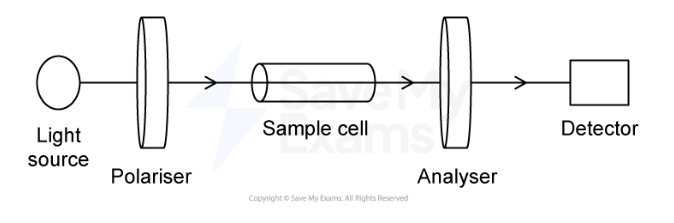
polarimeter diagram