Lecture 9
 Call Kai
 Learn
Learn Practice Test
 Spaced Repetition
 Match
Match Flashcards
 Knowt Play
1/17

There's no tags or description
Looks like no tags are added yet.
Name | Mastery | Learn | Test | Matching | Spaced | Call with Kai |
|---|
No analytics yet
Send a link to your students to track their progress
18 Terms
LLM Crohn’s Interviews: Evidence-based decision making
● Engine of large language models
● Fundamental contribution/invention of transformer model: attention
○ Past neural networks: long sentences are a problem
○ Now: system can handle an entire field
■ Focused on a few words at a time, carefully structured by “few other tools”
○ Transformer model sits on a foundation of a neural network
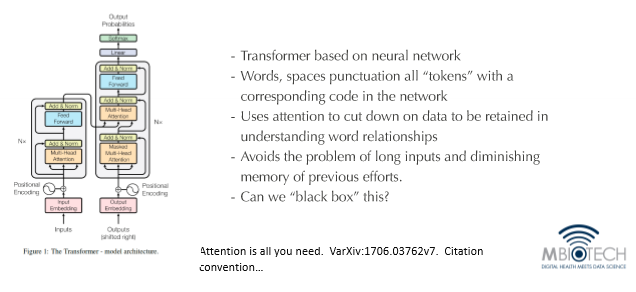
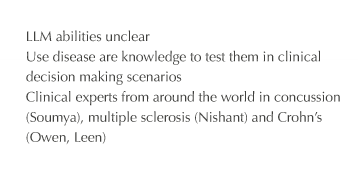
Strategy: Use Disease Expertise to interrogate LLM decision making
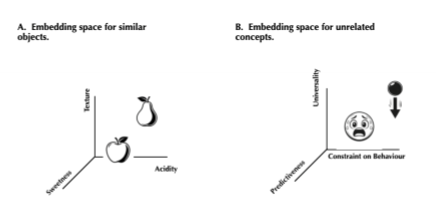
What is an Embedding Space
● Created dimensions to meaningfully distinguish a pear and an apple
○ To not confuse one with another
● Location of pear in ordinate space = embedding or vector
○ Vector - array or coordinates
● Embedding space - Assigning meaning to words or concepts
○ The closer things are, the more similar they are
○ Can be more than 3 dimensions
○ ChatGPT: ~2,000 dimensions
● Gravity and Fear (emotion) on Figure B
○ Embedding space can be for dissimilar embeddings
○ Can work on concepts, not just objects
Embedding: Setting up similarity scores
● Apple the fruit or Apple the company?
○ Relate to other words in a sentence
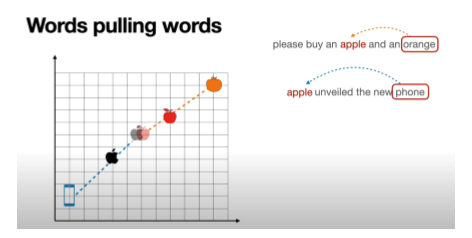
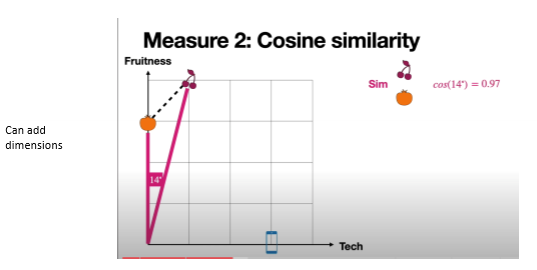
Similarity Scoring
● Origin of embedding space expressed as an angle
○ Look at angle that describes 2 points of reference
● When in same sentence: how close they are in the embedding space
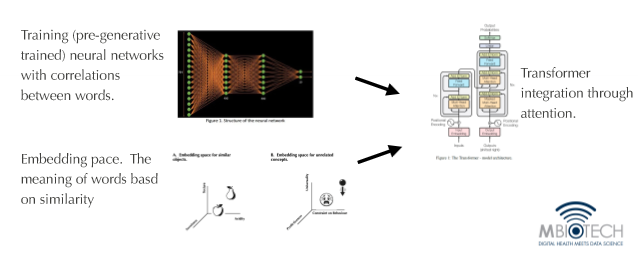
Transformer based large language models
● Most language models use transformer-based models
○ Transformer is the revolution
○ Transformer plays an integrative role between two areas:
■ Embedding space - helps in understanding meaning of concepts or words based on how similar they are in that space
■ Neural network - foundational core
● Pretraining is just training
○ Neural network is chained onto large volume of data/literature from different disciplines
○ Develop correlations between words within this training
■ Apple associated with sweetness, but not typically associated with automotive
○ Transformer model integrates pretraining and embedding space through its attention mechanism to read a sentence
■ Sees apple = knows what the apple is referring to
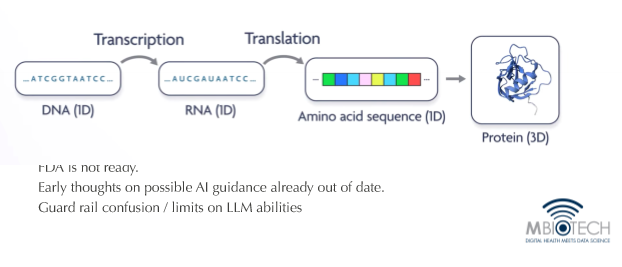
The problem in protein structure to be solved
● Challenge: Amino acid sequence and protein
○ How does the amino acid sequence give rise to 3d structure of protein?
○ Practical POV: DNA is relevant in its capacity to produce proteins
■ Proteins is the endgame
■ No point in discussing DNA if it does not affect proteins in any way
○ Better understand amino acid sequence
■ To create new 3d structures of proteins and modify existing 3d structures of proteins (a lot of work and expensive)
○ Protein reconstruction and development is nowhere near as easy as sequencing DNA
○ We need to understand this transition better
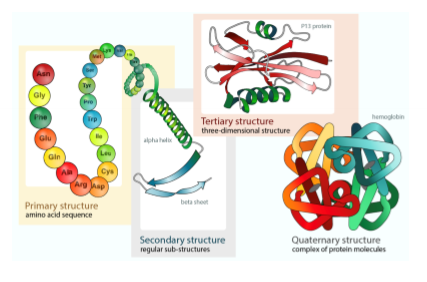
Protein folding (conformation) Review:
● AA sequence: primary structure
○ Can form secondary structures
● Main concern: tertiary structures ➡ conformation
○ Undergoing changes all the time, not static!
● Quaternary structure: assembly of protein using other proteins
○ Not really going through this
AlphaFold Evidence that AI can crack fundamental problems in protein folding
● First time computer program successfully predicted 3d structure of tertiary protein from primary structure (breakthrough)
● LLM and Protein Structure
○ Concept: continuous information (one word follows another word follows another word)
○ Protein follows another aa follows another aa…
○ Repurposing LLM based on transformers, but talking about amino acids
■ Aa became the language of LLMs
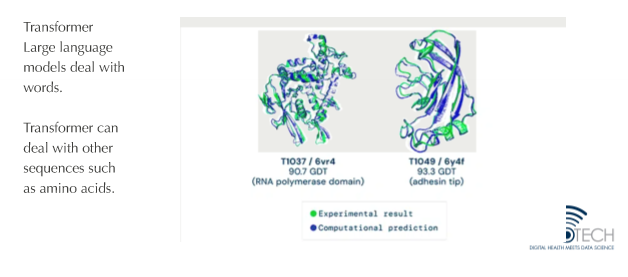
DeepMind (google) new product
● AlphaFold: application of AI that allows us to predict how proteins will fold, allowing us to discover new proteins
● What’s going on with AlphaFold
○ Integrates evolutionary information, and proteins from known protein structures
○ Key: evoformer - use of a transformer for serial positioning of aa
● Integration of information from biology AND pure geometry
AlphaFold
Workflow of alpha fold
Integrates evolutionary information and proteins from non-protein structure
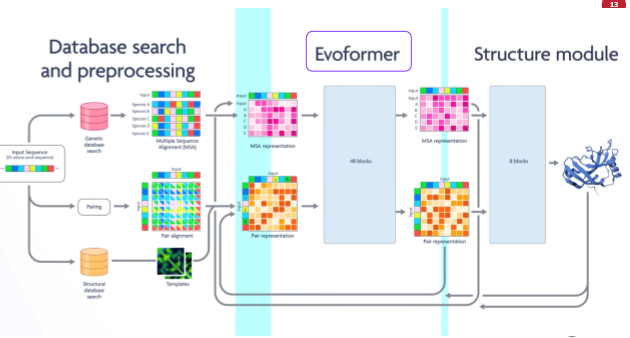
Predicting Protein Confirmation: Two data sources by alphaFold
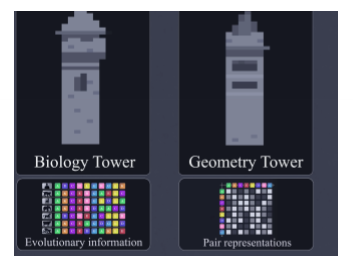
Geometry Tower: Triplet of attention or the “Triangle Equality”
● Comparing location of 2 aa = find configuration of 2 aa, the way they interact, and stabilize aa
● Can be done with multiple aa at the same time
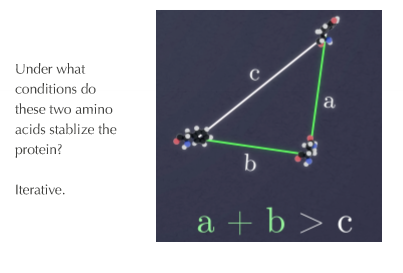
Using evolutionary history to add to Data about amino acid positions to predict protein structure
● Conserved when constantly cutting between species
● Stability of protein when found in a row
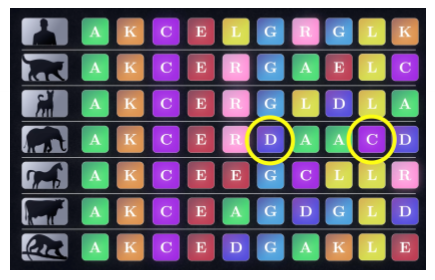
Alphafold: Seismic acceleration of protein structure discovery
Drawing on information on what amino acids are conserved
● What aa are conserved in context of other aa
● Range of aa combination in terms of sequence and 3d structure
● 150,000 proteins known before into 250 million proteins nowadays
● Sets a stage for practical application
Al method claims for AlphaFold
Method Claims for AlphaFold (how it is patented)
● Limited patent: early stages were not patented
○ Publish first before patenting
■ Issues with prior art; 1 year grace period before deciding to patent in USA and Canada
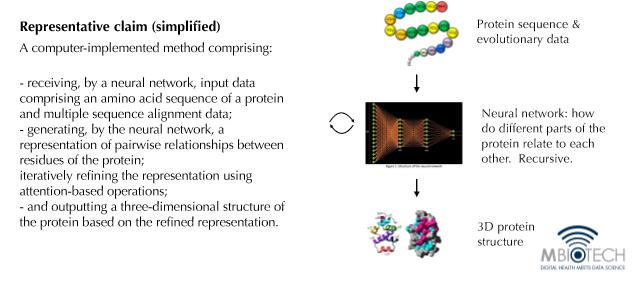
● 1st claim (method claim): take primary structure of protein, combine with known evo data, and combine with neural network training
○ Primary sequence data + evo data + neural network = 3d protein structure
○ Not algorithmic; physical outcome
■ 3d protein structure AND primary structure of polypeptide
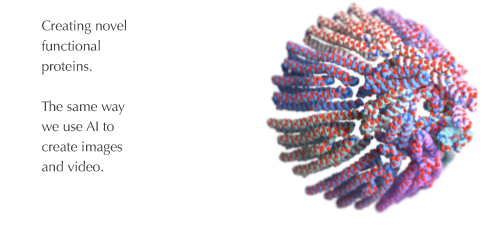
Creating Novel proteins: RF diffusion
● Type in protein along with its following properties
○ “Generate protein”
● Creating novel functional proteins
Benefits of predicting protein tertiary structure
Benefits of Predicting Protein Tertiary Structure
1. Discovering drugs
● Biologic - proteins
2. Effect of genetic variants
● What genetic variation means in terms of impact
3. Modeling protein-protein interactions
● Drug and binding site (back to biologics)
4. Engineering artificial proteins