ArHi 201 Greek Classical Age
 Call Kai
 Learn
Learn Practice Test
 Spaced Repetition
 Match
Match Flashcards
 Knowt Play
1/18

There's no tags or description
Looks like no tags are added yet.
Name | Mastery | Learn | Test | Matching | Spaced | Call with Kai |
|---|
No analytics yet
Send a link to your students to track their progress
19 Terms
Battle of Marathon
490 BCE Athenians rout the troops of Darius I
Xerxes’ Return
480 BCE Xerxes comes with 90’000 troops, defeats Spartan army at Thermopylae, and takes and sacks Athens
Greeks defeat the Persians
480-479 at Salamis and Platea
Classical Greek Sculpture
characterized by realism, motion, and “doughy” or fleshy faces, solemn expression, and solemn drapery
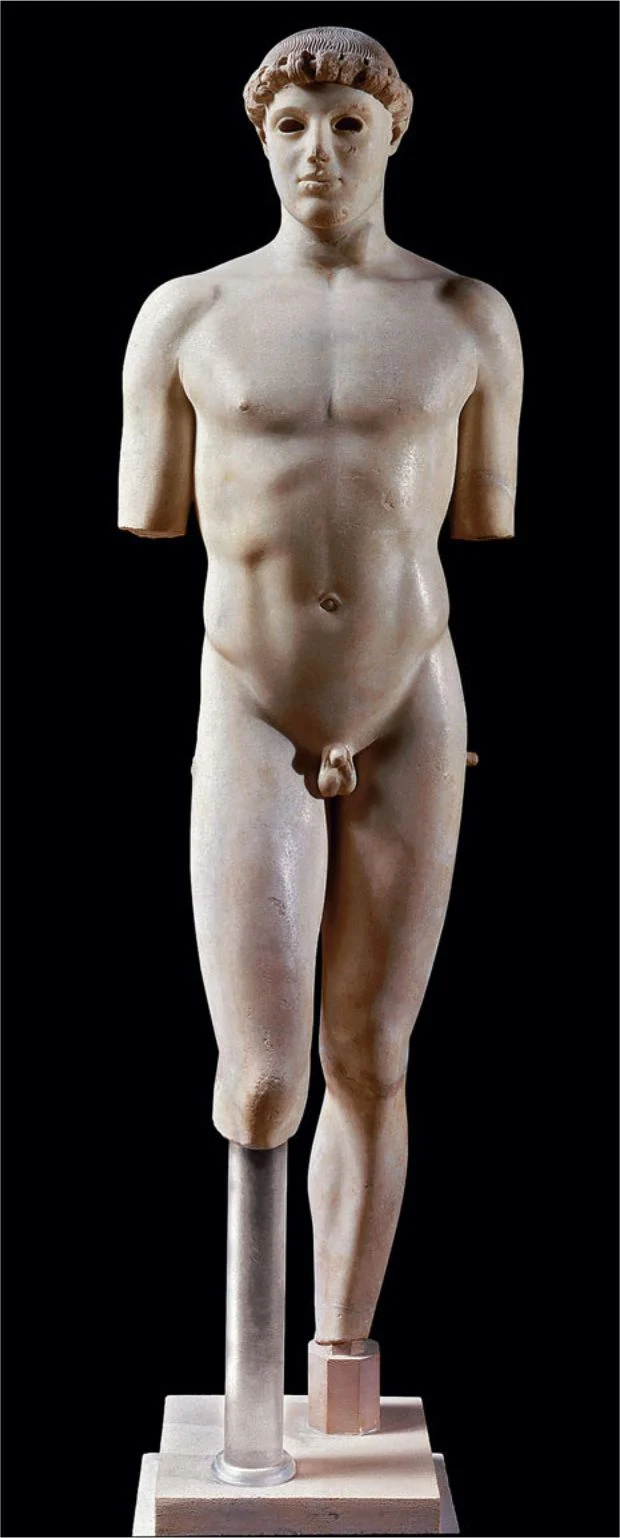
Kritios Boy. 480. One of the marks of the change to the Classical from the Archaic Period
Contrapposto
Italian word for “set against.” A composition developed by the Greeks to represent movement in a figure. The parts of the body are placed asymmetrically in opposition to each other around a central axis, and careful attention is paid to the distribution of weight.
Doryphoros
Ideals of proportion and harmony
Arete
Excellence and Virtue
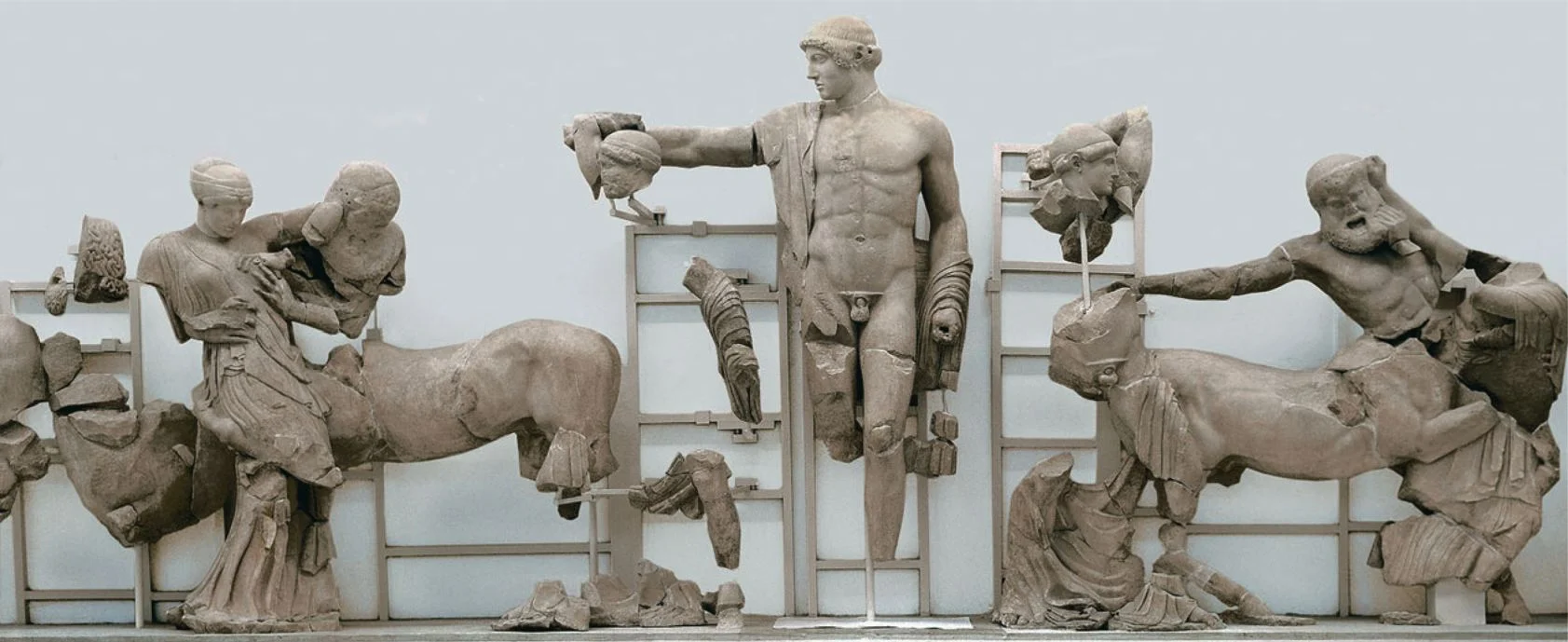
Temple of Zeus at Olympia West Pediment. Shows the story of the Lapiths, a Tribe from Thessaly. Represents a battle between human and beast, civilized and uncivilized. Apollo is in the center
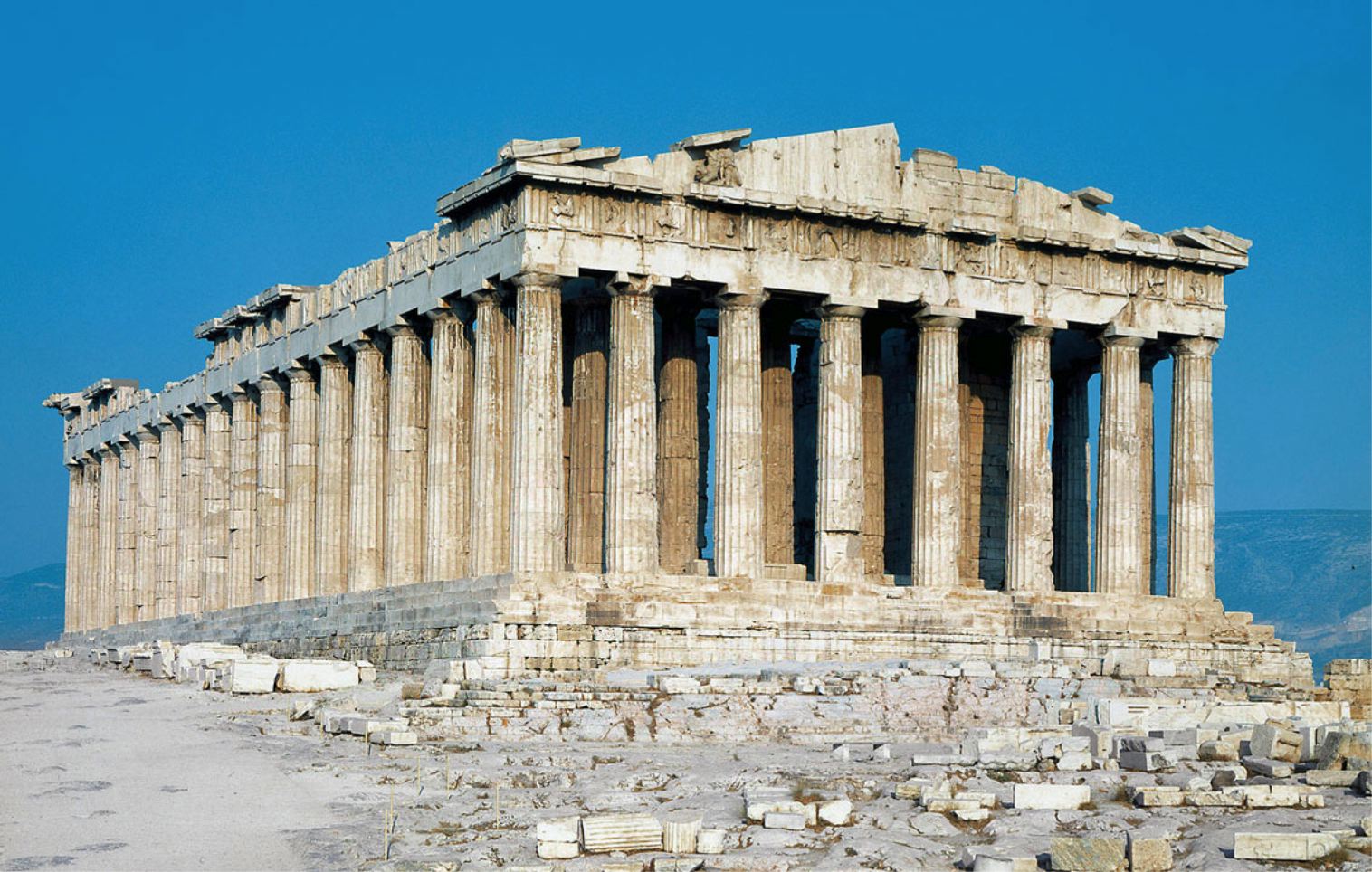
The Parthenon. Dominant temple on Akropolis. Dedicated to Athena. May not have been used directly for cult practices. Doric style with hints of ionic. Architects: Iktinos and Kallikrates.
Perikles
A political leader of Athens who made the beauty of the city a priority. The Parthenon, the Erechtheion were two projects he commissioned.

West Pediment of the Parthenon. Portrayed the struggle between Athena and Poseidon to be Athen’s patron deity.
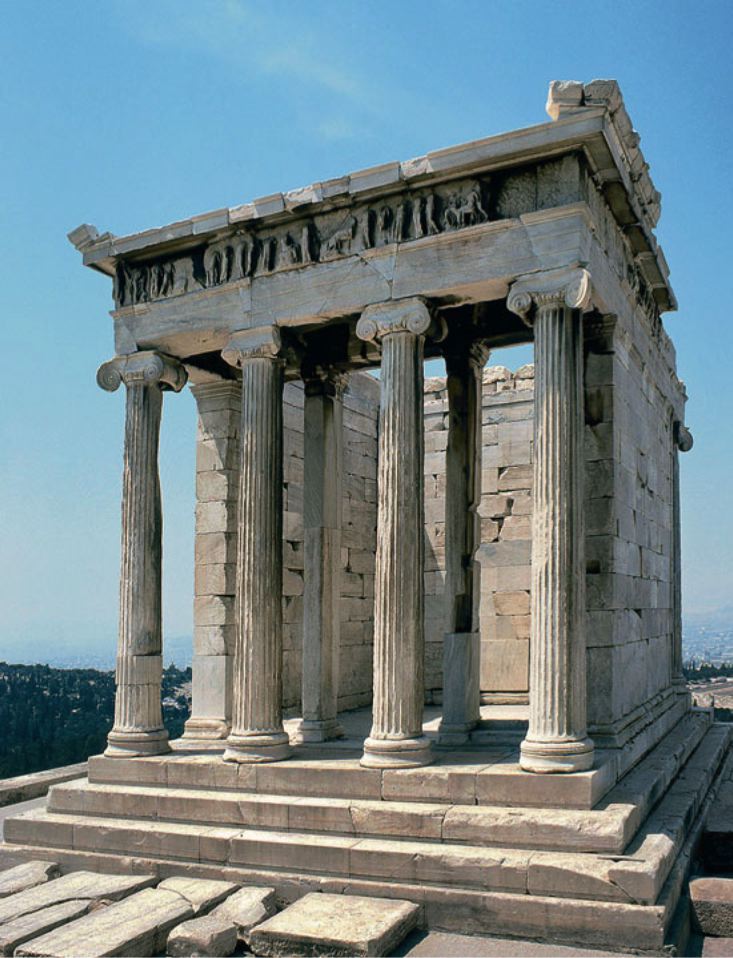
Temple to Athena with Nike in the pediment. Ionic style. Likely from the same architects as the parthenon. First structure to greet a visitor of Akropolis.
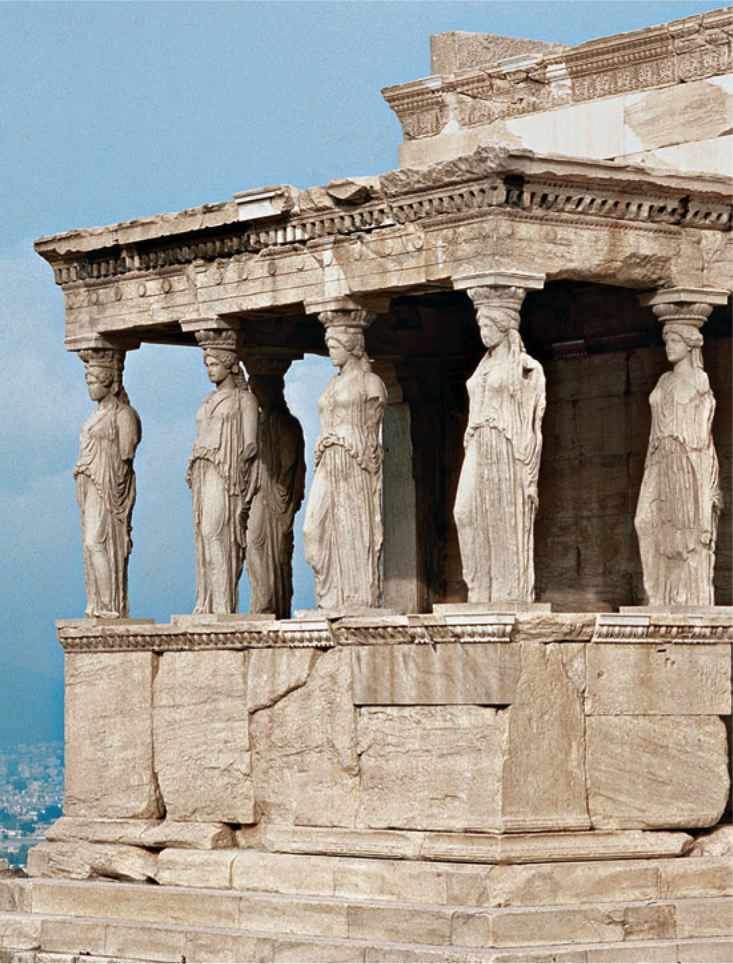
Erechtheion. A larger temple next to the Parthenon. Likely built by Mnesikles, who built the Parthenon. Held up by caryatids
Chryselephanitine
Usually referring to a sculpture in Classical Greece, signifying that it is made of gold and ivory. Pheidias’ cult statues of Athena in the Parthenon, and Zeus at Olympia, were chryselephantine.
Dellian league found(defensive alliance against the Persians)
478 BCE
Aeschylus writes Oresteia trilogy
458 BCE
Perikles orders the construction of the Parthenon
447 BCE
Polyponnesian war
431-404 BCE