Evolution Pt. 3
 Call Kai
 Learn
Learn Practice Test
 Spaced Repetition
 Match
Match Flashcards
 Knowt Play
1/103

There's no tags or description
Looks like no tags are added yet.
Name | Mastery | Learn | Test | Matching | Spaced | Call with Kai |
|---|
No analytics yet
Send a link to your students to track their progress
104 Terms
Species
pop at time and space where individuals can successfully reproduce with fertile viable offspring
cryptic species
2 species misidentified as 1 because of similar morphologies however they cannot interbreed
Biological Species Concept (Mayr)
group of actually or potentially interbreeding populations, which are reproductively isolated from other such groups
Problems with Biological species concept
asexually reproductive species, extinct species, ambiguous situations in nature
Phylogenetic species concept
Species are the smallest possible group descending from a common ancestor and recognizable by unique, derived traits
General Species Lineage
species are metapopulations that exchanges genes frequently enough to comprise the same gene pool
agreed upon aspects of a species
allele flow between populations, evolutionary force effects all populations, evolve as a lineage
benefits of biological species concept
focused on how species formed (barriers to gene flow)
Barriers to gene flow
Prezygotic barriers, postzygotic barriers
Prezygotic barriers
hinders mating or fertilization
Pre mating prezygotic barriers
ecological isolation (timing, habitat), behavioral isolation (mating rituals), mechanical isolation (anatomical)
Post mating prezygotic barriers
gametic isolation (sperm survivorship in females, molecules on egg coatings)
copopulatory behavioral isolation
unique mating rituals required for successful reproduction
Post-zygotic barriers (ie. hybrid has been formed)
intrinsic factors (hybrid fitness is low regardless of enviro) and extrinsic factors
intrinsic barriers
viability and fertility is low, and hybrid breakdown where 1rst generation is fertile and viable but the second generation is not
extrinsic factors
ecological invariability and behavioral sterility
behavioral sterility
hybrids produce normal gametes but cannot obtain mates
ecological inevitability
hybrids have lower viability because they cannot find an appropriate ecological niche (polar-brown bear hybrids)
reinforcement
increase in reproductive isolation between populations through selection against hybrids
Why will lions and tigers breed?
lack of reinforcement
models of speciation
allopatric speciation and sympatric speciation
allopatric speciation
geographical barrier initially blocks gene flow, isolating a population (mountain ranges, glacier movement, formation of land Bridges, emergence of unfavorable habitat)
kinds of allopatric speciation
vicariance and peripatric
natural selection, genetic drift, and sexual selection drive allopatric speciation through
cause evolution of prezygotic barriers and reproductive isolation
sympatric speciation
reproductive isolation without geographic isolation through disruptive selection
disruptive selection
when individuals mate no randomly with those more similar to themselves
hybrid zones
areas where hybrids exist
Allopolyploid
derivative of diploid of species between 2 species (instant speciation)
Parapatric Speciation
isolation by distance and ecological adaptation
horizontal gene transfer
complicates classification of microbes
stable ecotype model
species arise from adaption to a particular niche distinct from other niches of other species
sympatric
when species overlap in range
magic traits
traits that confer local divergent local adaptions and act as a reproductive barriers
Speciation examples
crickets in Hawaii (with high rates of speciation), Polar Bears from Brown Bears (allopatric speciation),
speciation through hybridation
when hybrids only mate between themselves and become a new species as a result
macroevolution
origination, evolution, and extinction over an extended period of time
biogeography
study of distribution of species over space and time
vicarence
vicariance: divergence of 2 large populations
peripatric
divergence of a small population from a large ancestral population
Biogeography of marsipuals
distributed in Australia > South America > North America (Asia to North America, North America back to Asia + to South America, Antartica to Australia, and then extinction, with recent dispersal to North America from South America)
Population size formula
N + B + I - D - E
Formula for Diversity where D(t+1) is diversity
D(t) + O - E (current diversity + origination - extinction)
turnover
disappearance of some species and replacement by others
standing diversity
number of taxonomical units present at a given time in a particular area (increases when origination rate is high and extinction rate is low)
symbols that represent extinction and origination rate
alpha-origination, omega-extinction
punctuated equilibra
periods of stasis punctuated by rapid change
gradualism
slow, gradual morphological changes over time
tempo of evolution
gradualism and punctuated equilibrium
adaptive radiation
recognized by phylogenies (lots of splits)
when origination is greater than extinction
lackk of competition and key innovation
biodiversity decreases when
extinction rate increases and origination rate decreases
Nautiloid decline
only 5 remaining species with 2400 fossils
mass extinction
statistically significant departure from background extinction rates resulting in a substantial loss of taxonomic diversity
Background extinction
normal rate of extinction for a taxon or biota
mass extinctions
5 + Anthroprocene
Types of species interactions
mutualism, parasitism/predation, commensalism, amensalism, competition
Coevolution
reciprocal evolutionary change between ecologically intimate species, driven by natural selection (requires: heritable variation in traits relevant to interactions + reciprocal selection)
did we coevolve with dogs
no, we domesticated dogs; dogs did not reciprocally select traits in us
which species interactions can lead to coevolvution
mutualism, parasitism, and predation/herbivory
Geographic mosaic theory of coevolution
variance in type of selection, strength of selection, and response to selection
coevolutionary antagonisms
(pred prey…) negative frequency dependence: common host becomes rare, rare parasites are selected, repeated
coevolutionary alternation
when multiple species interact (one species is antagonistic with multiple species)
coevolutionary arms race
antagonistic players get caught in escalation of ever-increasing ability (defense mechanisms in prey → evolutionary response to counter defense in predator)
antagonist pleiotrophy
more common in prey
TTX in newts
less TTX increase offspring amount but decreased survival, too much TTX decreases fitness, increases survival
snakes tradeoff
no TTX resistance: fast and unable to eat toxic newts, excess TTX resistance: slow but able to eat toxic newts
hot spots in terms of coevolutionary arms race
areas where species have matched abilities
cold spots with coevultionary arms race
areas where species have mismatched abilities (favorable for predators)
deaccelerating arms race
virulence in australian rabbits
mutualism
new alleles that enhance mutualistic interactions are favored by selection and spread (positive frequency dependence)
diverse network of mutualism
Mullerian mimicrisy (species look similar, signally harmful effects), Bayesian mimicry (cheating where one is not actually harmful)
key features of primates
5 digit hands and feet with flat nails, opposable thumbs/big toes, acute vision (depth perception), large complex brain, prolong pre and post natal development
defining features of apes
shoulder structure that allows full shoulder rotation and no tail
human features
extremely large brains relative to body size, bipedalism (walking on two legs upright), long thumbs that enable precision grip, long life span + development, complex tool making and use
major differences in hominins
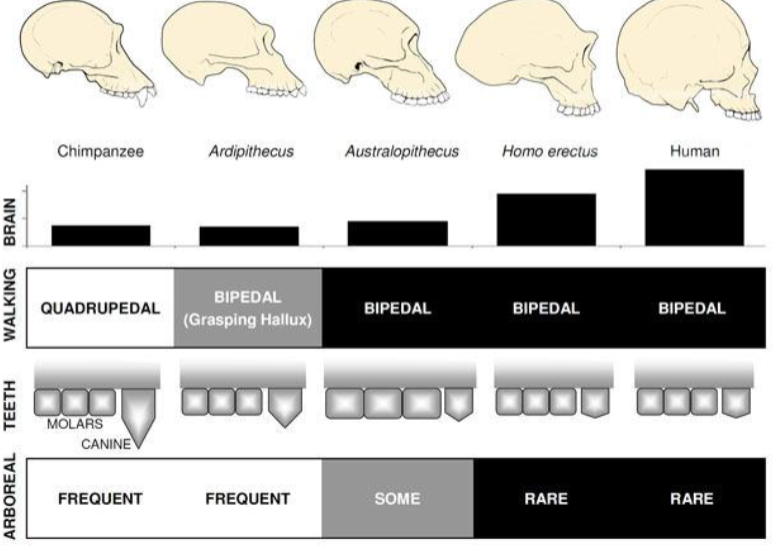
burdens of bipedalism
neck pain, broken hip, rotary cuff injuries, shin splints, etc.
tradeoffs (cost benefit) for bipedalism
benefit: free up hands, more energy efficient, and greater vision costs: lower back problems and mechanical issues
tradeoffs between bipedalism and large brains
wide pelvis prefered for birth, narrow pelvis for efficient walking → carrying of fetus for as long as possible but deliver before head is too big (reason for high baby head size to narrow cervix size)
humans originate from
africa
Non Africans have
lower diversity (high linkage disequilibrium) with about 2% neanderthal ancestory (east Asians have 20% more than Europeans)
asian waves of migration
had at least 2 early waves (ancestors of Australians and other ancestors of East Asians)
when were people present in oceania
47,000-55,000 ya
americans (indigenous) arose
early, with current indigenous pops more related than other pops (complex)
Neandrethal dna (benefits and risks)
boost immune system, correlated with worse COVID-19 response
reasons for human susceptibility to disease
pathogens evolve faster, limits of natural selection (environmental, historical constraints, tradeoffs, etc.), disease can actually be adaptation
health issues from mismatch
diabetes, skeletal/posture, obesity, etc.
hypothesis on obesity
thrifty genotype, phenotype, or epigenotype (Genotype: genome makes most of calories, Phenotype: senses poor calorie environment in mother and adjusts own metabolism, epigenetic: mother senses and adjusts childs metabolism)
Cancer
most arise sequentially from division as cells cannot recombine
hypothesis for mutation rate existing for cancer
zero mutation rate is bad for adaptation, we have evolved the optimal mutation rate
selection favors 0, but constraints mean we cant get there
is cancer a trade off
yes, occurs in places with a faster division rate (epithelial tissue)
why do humans age
window of reproductive success that is correlated with the lowest risk of accidental death
pathogens
evolve quickly
virulence selection pressures
transmission (opposite) and replication rate (directly corelated)
cholera
virulent but low transmittance
behavior
internally stimulated response to an external stimulus, which is a phenotype
variation in morphology and behavior
linked to supergene, sometimes cryptic
selection on behavior results in
changes in morphology due to promiscuous genes and pleiotrophy
why would organisms share traits
evolutionary history or similar selection pressures
differences between behavior and morphology
behavior changes more quickly, doesn’t fossilize, and relies on complex mechanisms