Topic 9: Plant Growth - Shoots
 Call Kai
 Learn
Learn Practice Test
 Spaced Repetition
 Match
Match Flashcards
 Knowt Play
1/22

There's no tags or description
Looks like no tags are added yet.
Name | Mastery | Learn | Test | Matching | Spaced | Call with Kai |
|---|
No analytics yet
Send a link to your students to track their progress
23 Terms
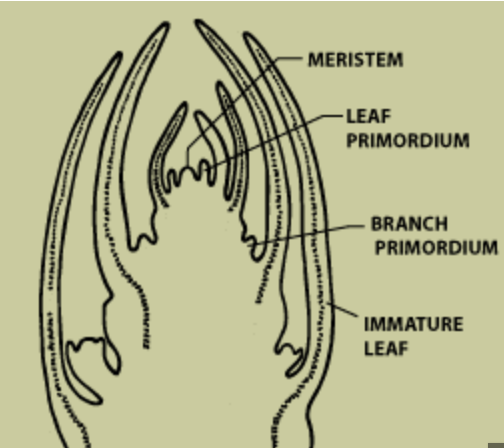
Primordia
These are organ precursors that form on the margins of the shoot apical meristem (SAM)
Vegetative meristems specifically produce leaf primordia
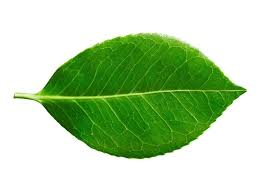
Simple leaf
A type of leaf that possesses a single, undivided blade
common on monocots
veins usually parralel
Compound leaf
A leaf in which the blade is divided into multiple leaflets
common in eudicots
Palisade mesophyll
Chloroplast-rich, elongated cells located on the upper side of the leaf that are specialized for capturing light
Spongy mesophyll
A porous layer of cells with a high surface area to volume ratio that facilitates gas circulation within the leaf
Bundle sheath cells
Cells that surround the veins and regulate the transfer of substances between the mesophyll and the vascular tissue
Rhizomes
Stems that grow underground and have the ability to put up new shoots
Stolons
Also known as "runners," these are stems that extend along the soil surface, establishing new plantlets at their nodes
Root tubers
While the worksheet uses this term, the sources describe stem tubers as the enlarged ends of rhizomes or stolons used for food storage
Spines
These are modified leaves
Thorns
These are modified axillary branches
Prickles
These are modified epidermal extensions of the stem; unlike thorns, they have no vascularization
Secondary growth
This process drives the thickening of stems and roots, primarily in eudicots and conifers, through the action of lateral meristems
doesnt happen in monocots
Vascular cambium
A cylinder of lateral meristematic tissue that runs between the xylem and phloem, adding more vascular tissue to widen the shoot
Cork cambium
Lateral meristematic tissue that develops in the cortex and produces cork
Cork
A tough, waxy covering produced by the cork cambium that protects the stem from water loss and biological invaders.
Secondary xylem
Xylem cells formed to the inside of the vascular cambium; these cells eventually become wood
Secondary phloem
Phloem cells formed to the outside of the vascular cambium
Suberin
A waxy substance produced by cork cells that waterproofs the stem and prevents leakage
Bark
This includes all tissue external to the vascular cambium, specifically the secondary phloem, cork cambium, and cork
Annual rings
These develop from the uneven seasonal growth of secondary xylem
smaller rings in the winter/fall
larger rings in spring
Heartwood
The older layers of secondary xylem that have ceased to conduct water
Sapwood
The most recent layers of secondary xylem that are still active in water conduction