Lab 6
 Call Kai
 Learn
Learn Practice Test
 Spaced Repetition
 Match
Match Flashcards
 Knowt Play
1/98

There's no tags or description
Looks like no tags are added yet.
Name | Mastery | Learn | Test | Matching | Spaced | Call with Kai |
|---|
No analytics yet
Send a link to your students to track their progress
99 Terms
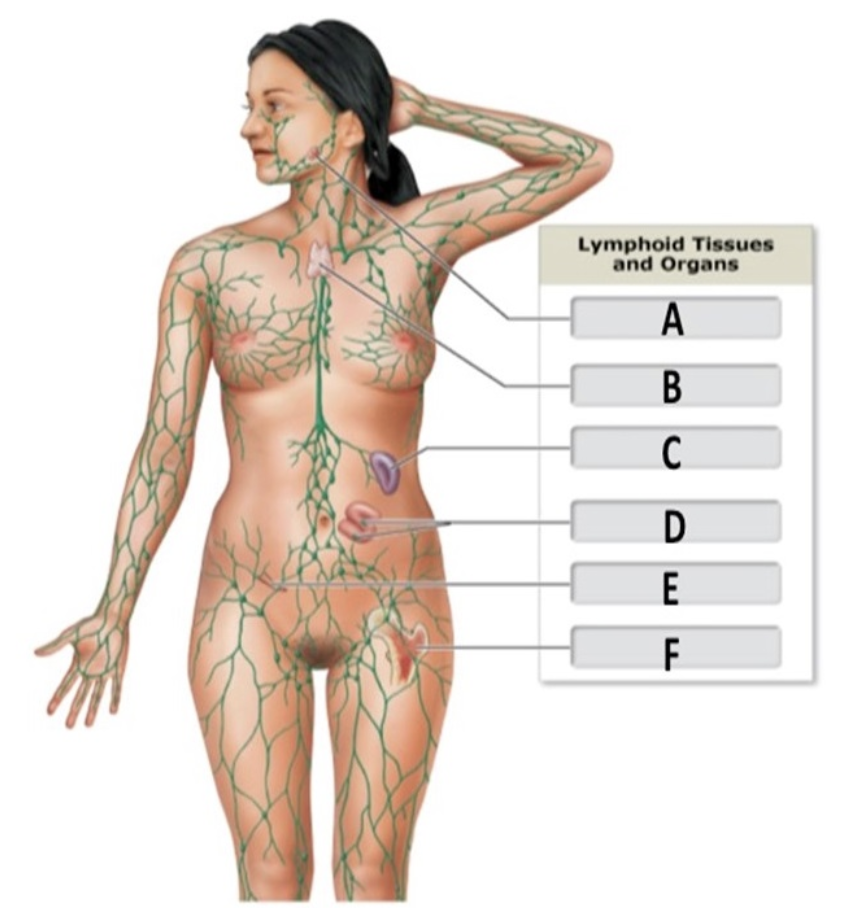
Appendix
E
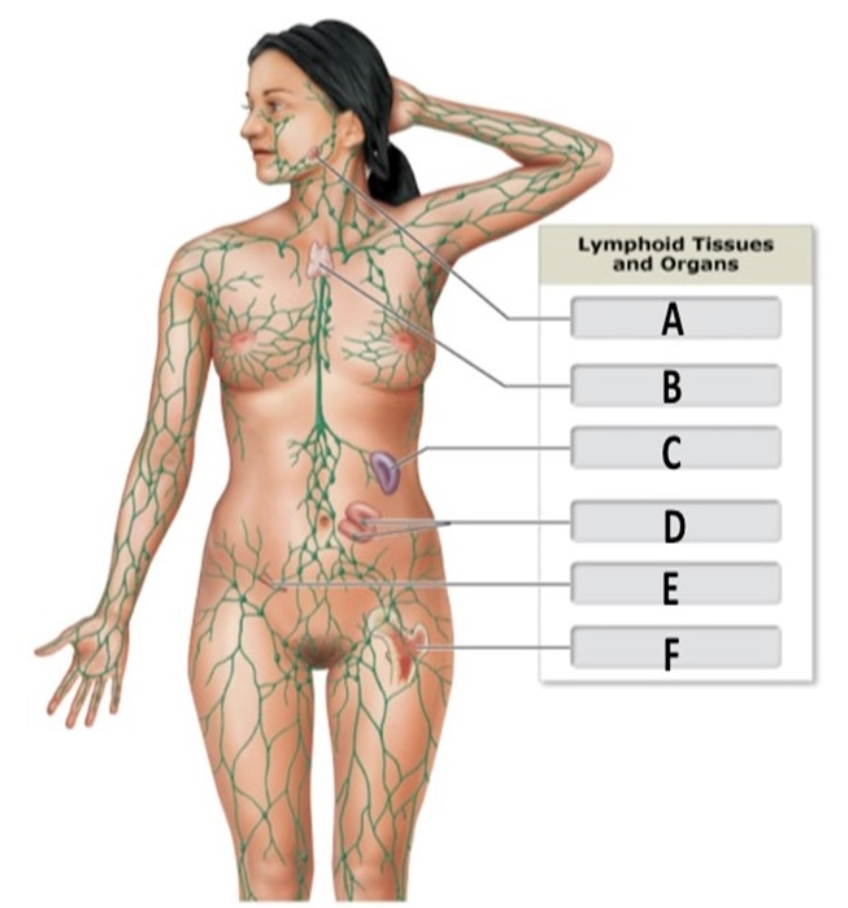
Thymus
B
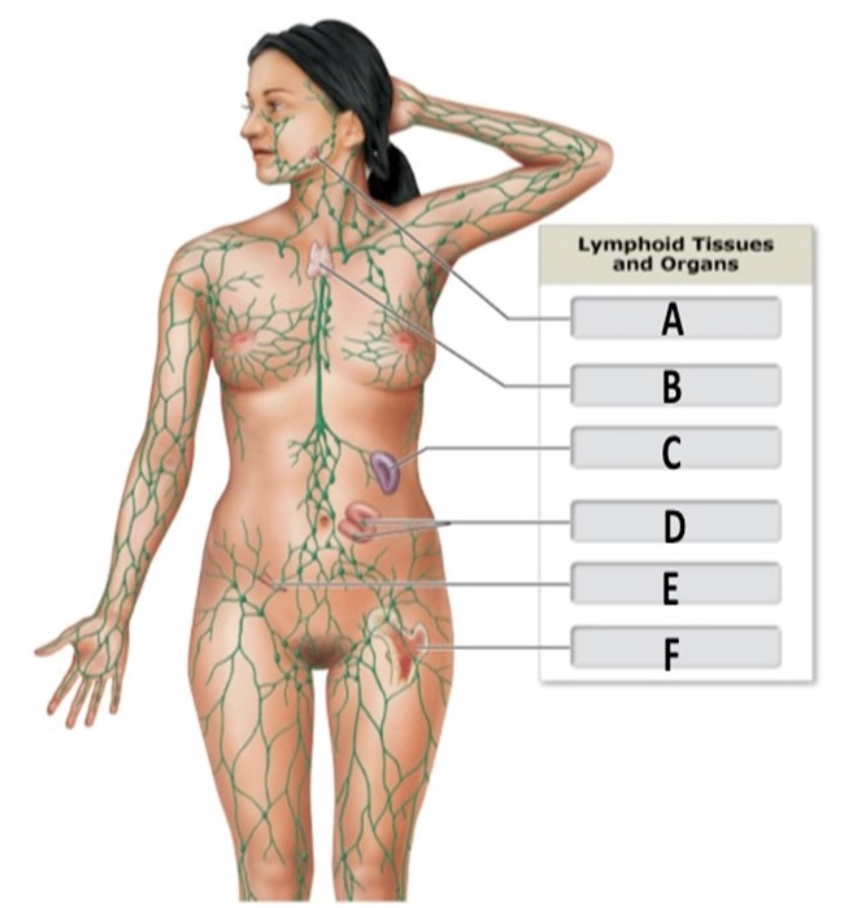
Spleen
C
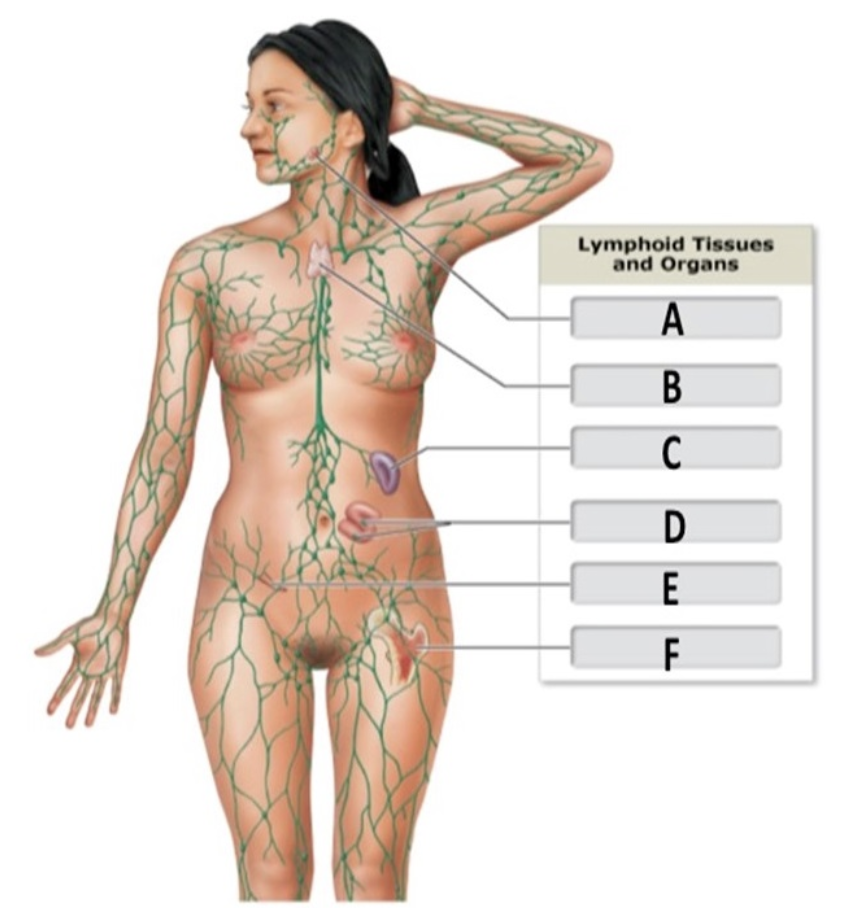
Red bone marrow
F
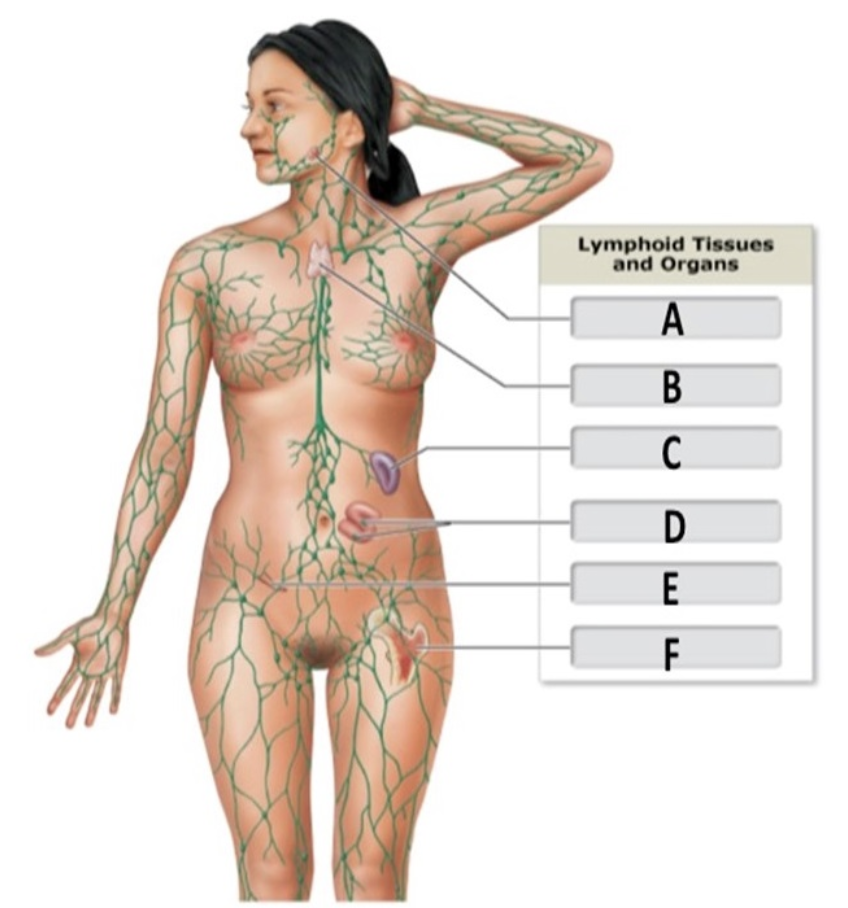
Mucosa - associated lymphatic tissue
D
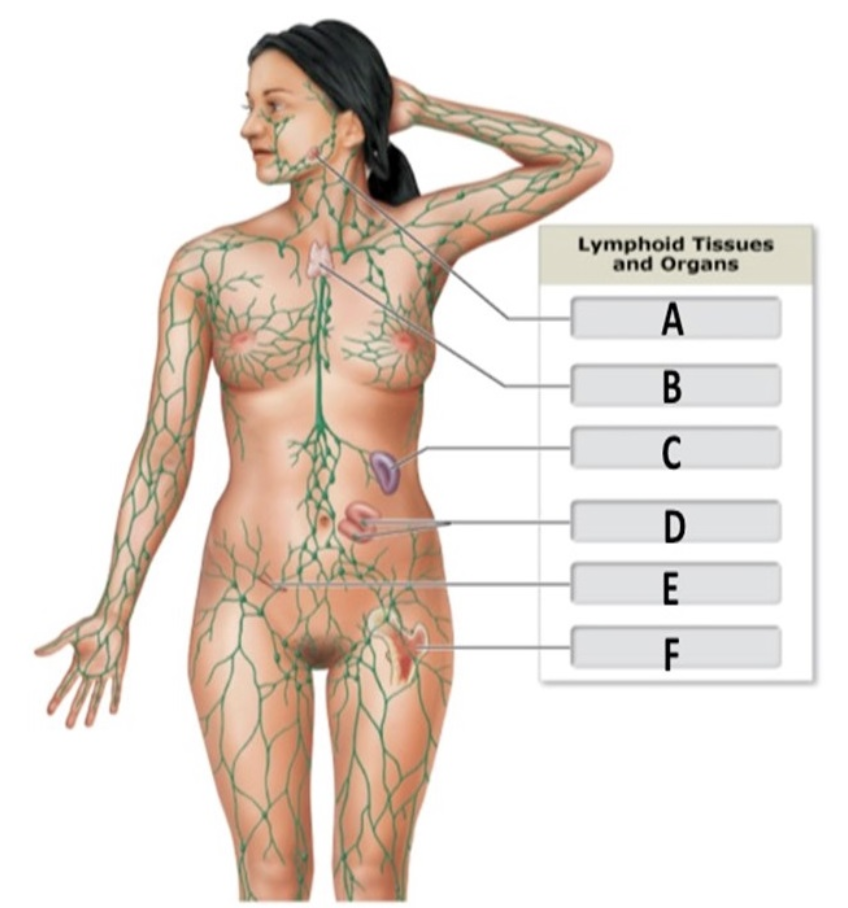
Tonsil
A
In terms of specificity, innate defenses are considered ____________ and adaptive defenses are considered ______________.
non-specific/specific
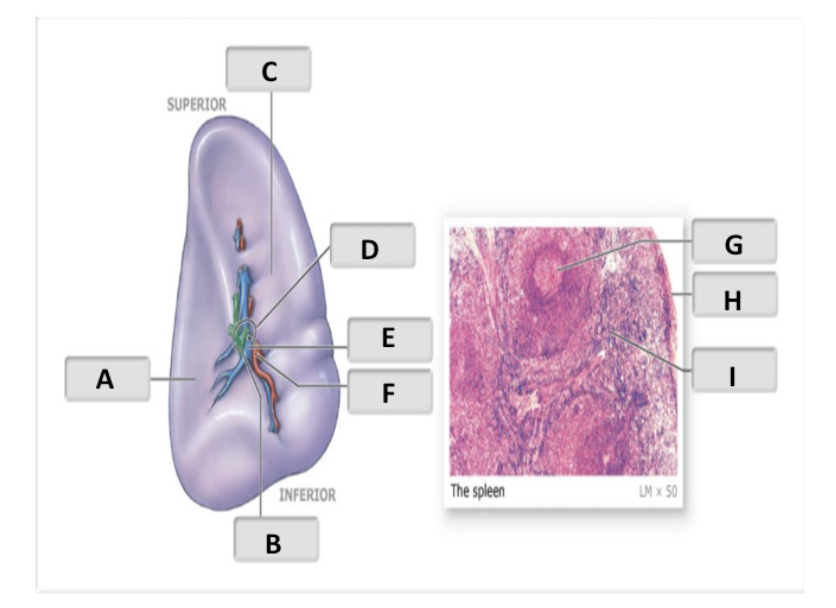
renal area
A
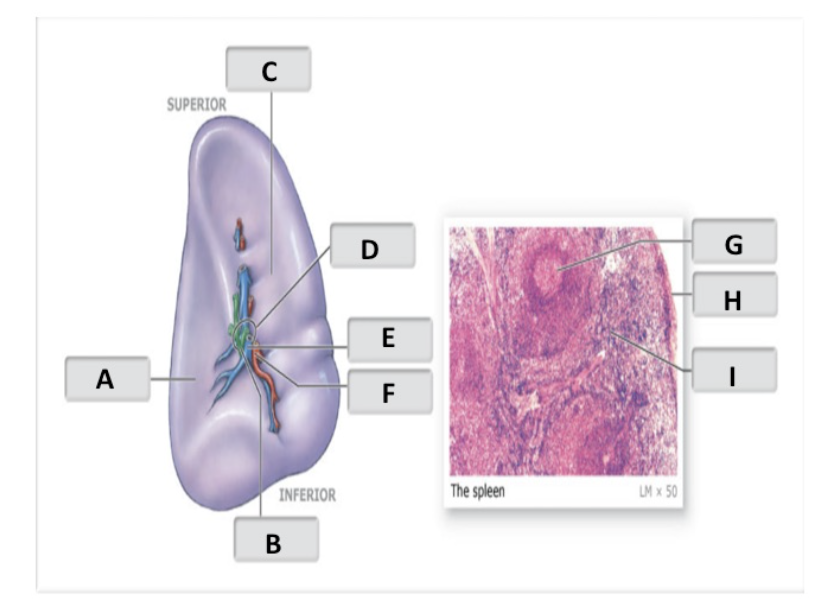
Hilum
D
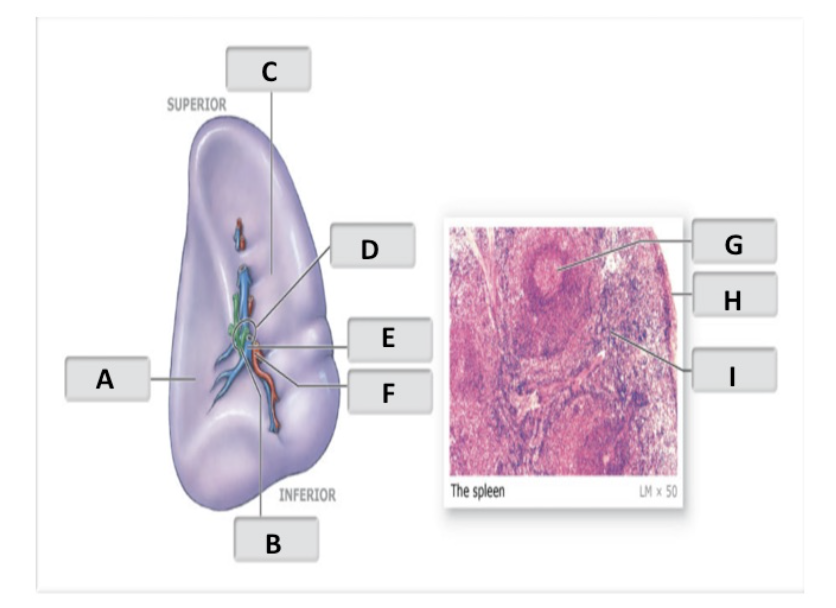
Splenic artery
F
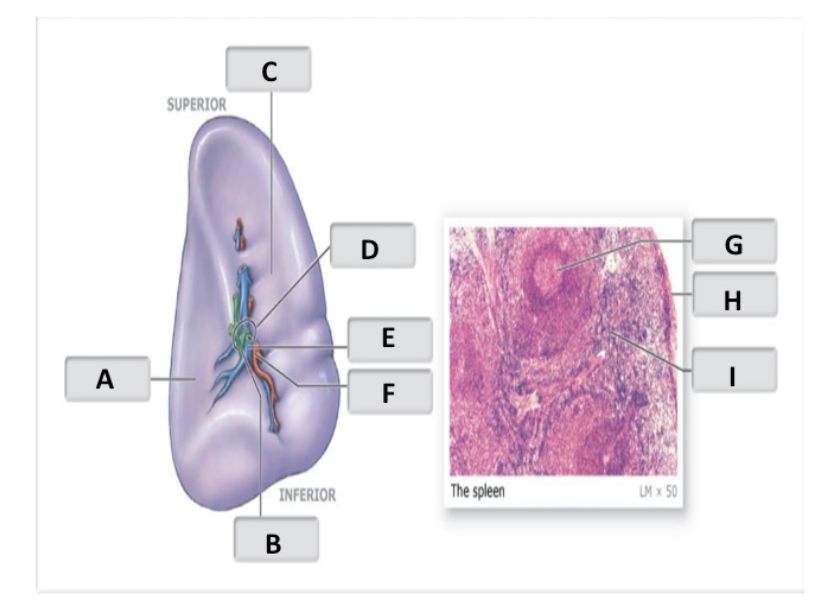
White pulp
G
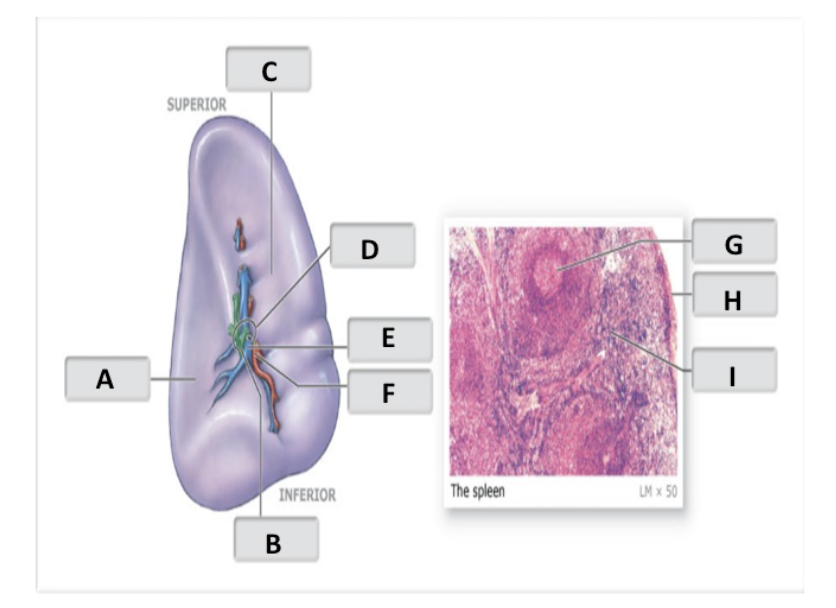
Gastric area
C
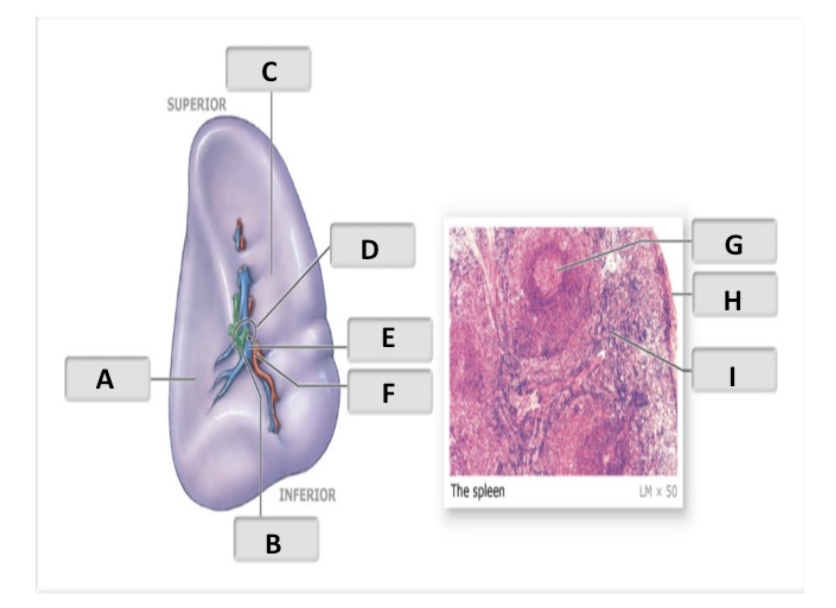
Red pulp
I
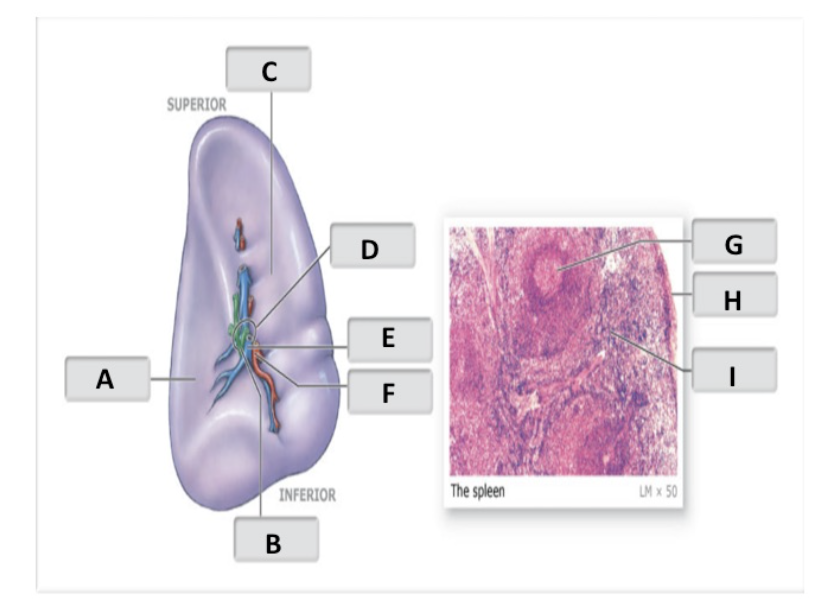
Capsule
H
Splenic vein
E
Lymphoid tissues or organs that are sites of lymphocyte formation and maturation are called __________.
primary lymphoid tissues/organs
Inflammation of the tonsils is called ______________.
tonsillitis
The collection of lymphoid tissues that protect the epithelia of the digestive, respiratory, urinary, and reproductive systems is called _____________.
MALT
Peyer’s patches are located in the epithelial lining of the ____________.
small intestine
Inflammation of the lymph nodes is called __________.
lymphadenitis
Lymphoid tissue and organs that are sites where lymphocytes are activated upon exposure to an antigen or abnormal cells are called __________.
secondary lymphoid tissues/organs
Hormones produced by the thymus that promote the development and maturation of lymphocytes are collectively called _________.
thymosins
The removal of a severely ruptured spleen is called ___________.
splenectomy
Which of the following is NOT a secondary lymphoid tissue/organ?
thymus
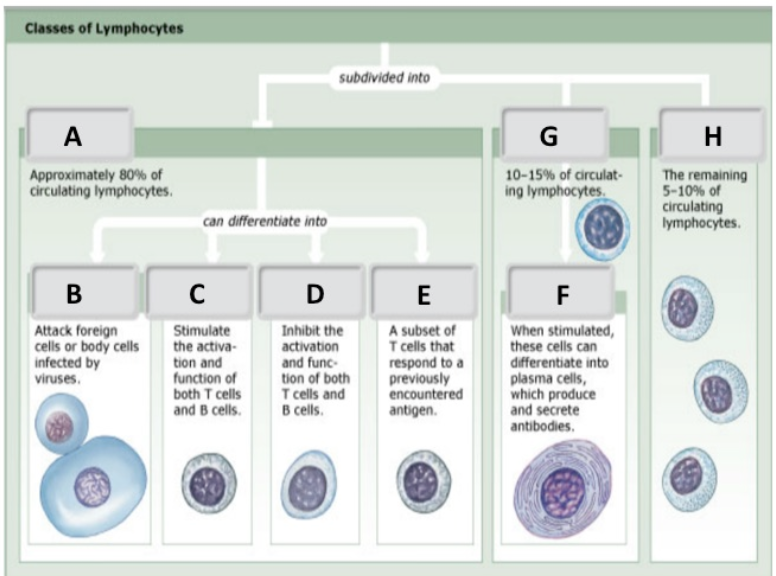
Cytotoxic T cells
B
NK cells
H
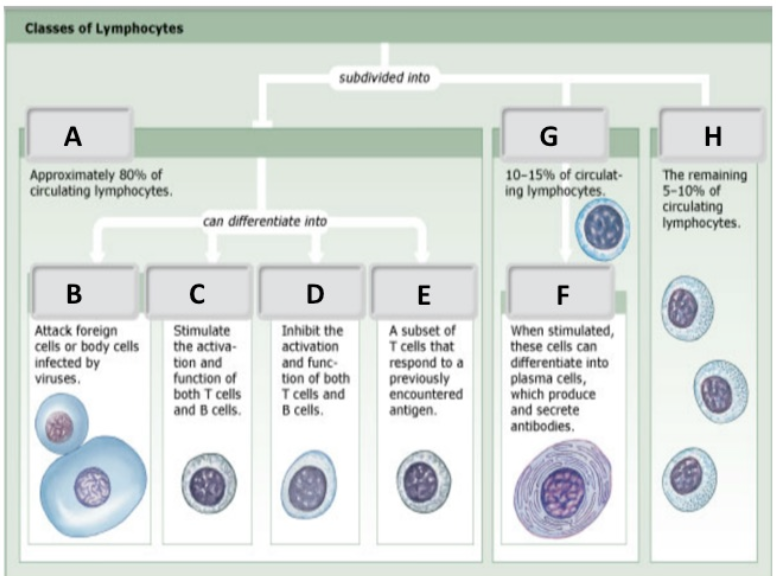
Memory T cells
E
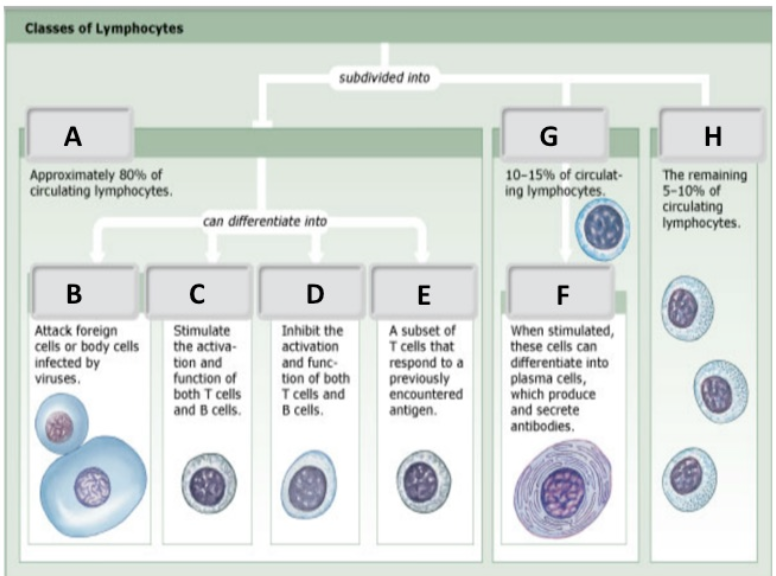
Helper T cells
C
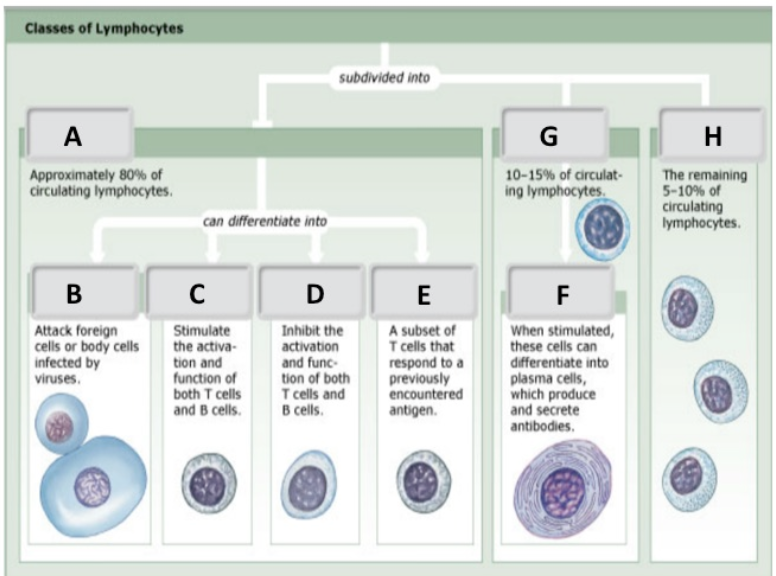
Regulatory T cells
D
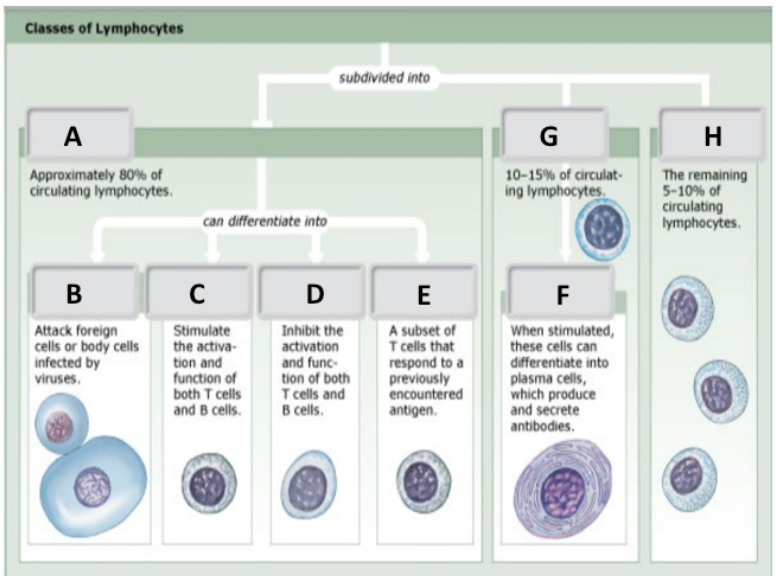
B cells
G
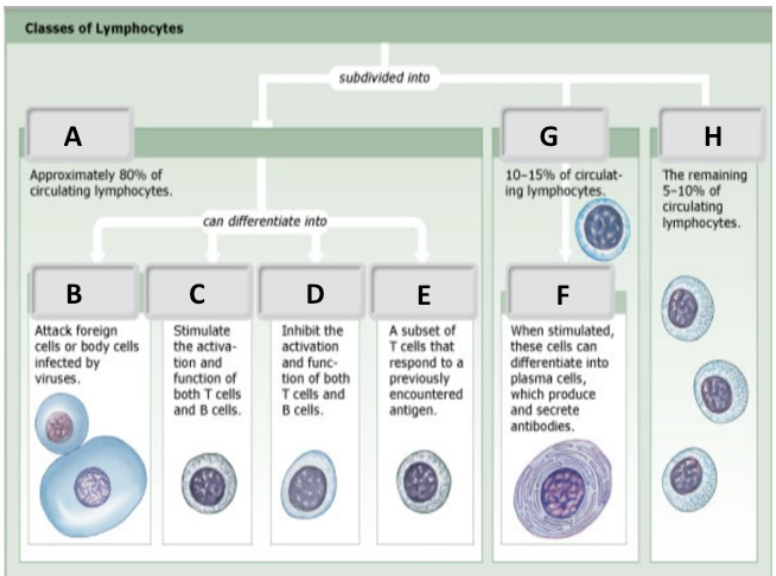
T cells
A
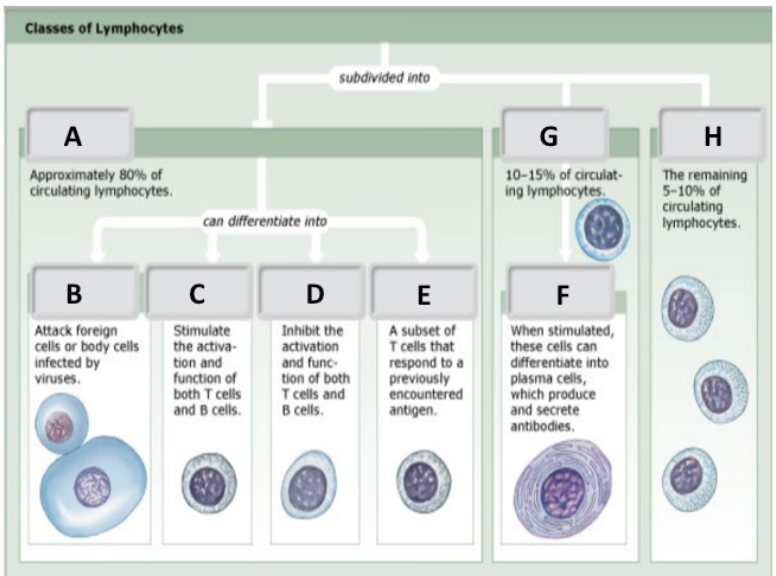
Plasma cells
F
Which type of lymphocyte stimulates the activation and function of both T cells and B cells?
T helper cells
Which type of lymphocyte is a subset of T cells that respond to a previously encountered antigen?
Memory T cells
Which type of lymphocyte inhibits the activation and function of both T cells and B cells?
T suppressor cells
Which type of lymphocyte that matures in the red bone marrow is involved in immune surveillance in the peripheral tissues?
NK cells
Which type of lymphocyte differentiates from B cells in the peripheral tissues and is involved in antibody-mediated immunity?
plasma cells
Which type of lymphocyte differentiates from mature T cells in the peripheral tissues and is involved in cell-mediated immunity to destroy foreign cells or body cells infected by viruses?
cytotoxic T cells
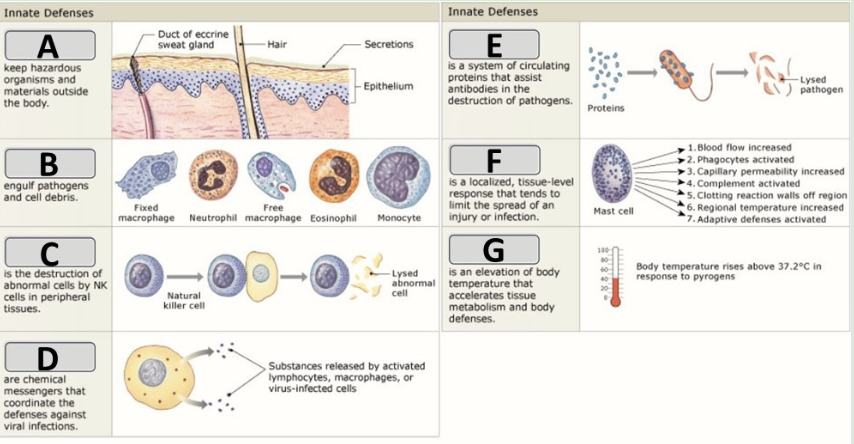
complement
a system of circulating proteins that assist antibodies in pathogen destruction
fever
an elevated body temp that accelerates tissue accelerates tissue metabolism and body defenses
physical barriers
keep hazardous organisms and materials out of the body
antibodies
not an innate defense
interferons
chemical messengers that coordinate defenses against viral infections
phagocytes
engulf pathogens and cell debris
inflammation
localized, tissue-level response that tends to limit the spread of injury or infection
immune surveillance
destruction of abnormal cells by NK cells in peripheral tissues
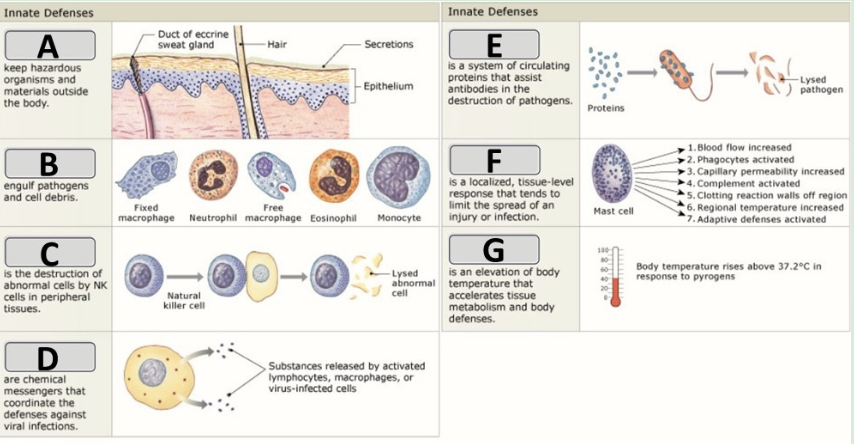
complement
E
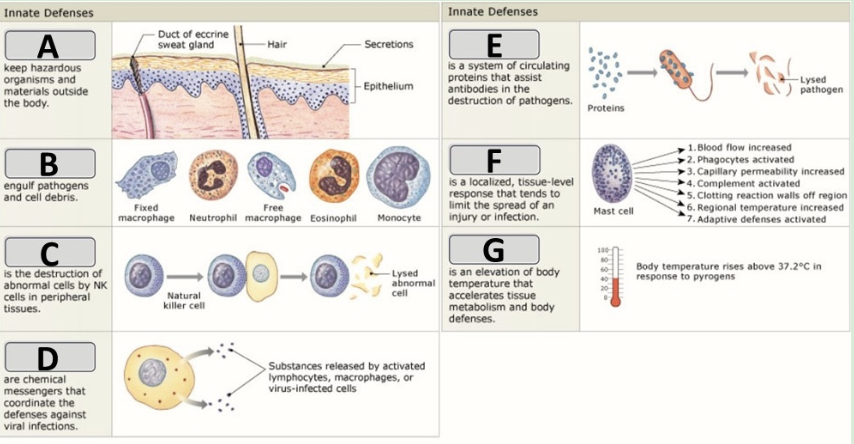
Interferons
D
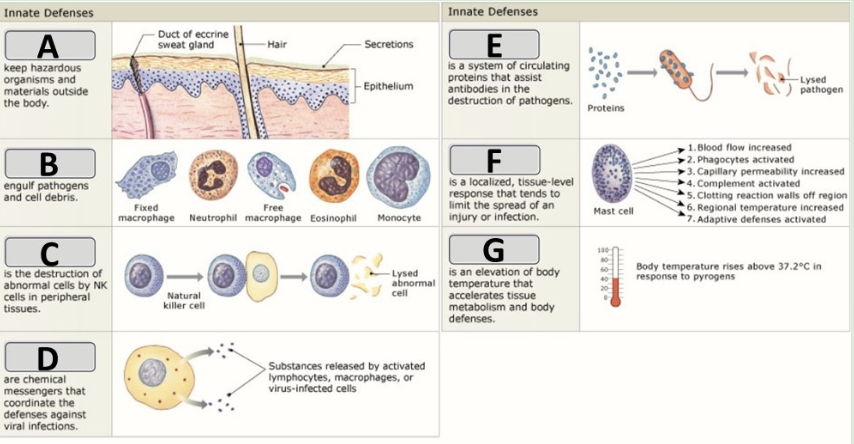
immune surveillance
C
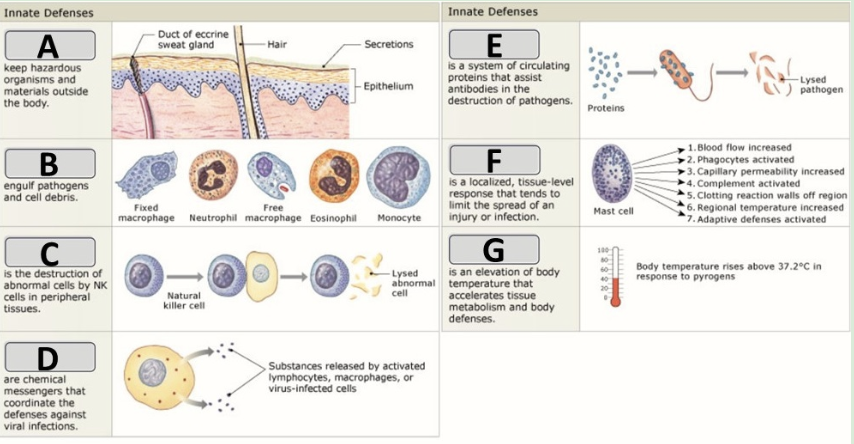
Physical barriers
A
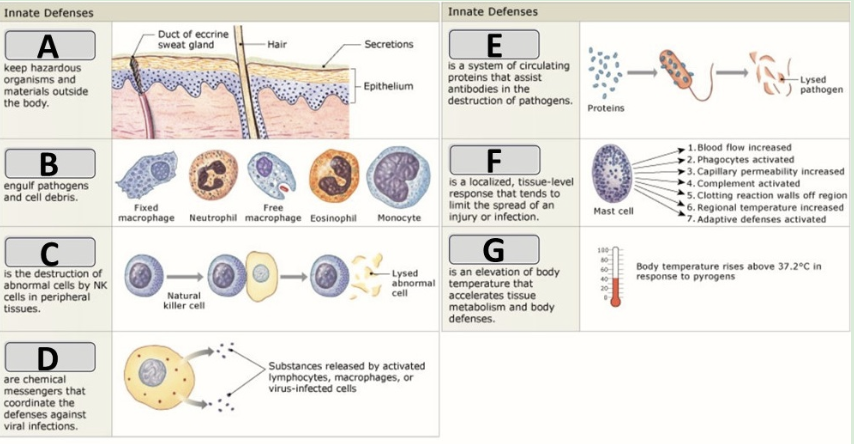
Inflammation
F
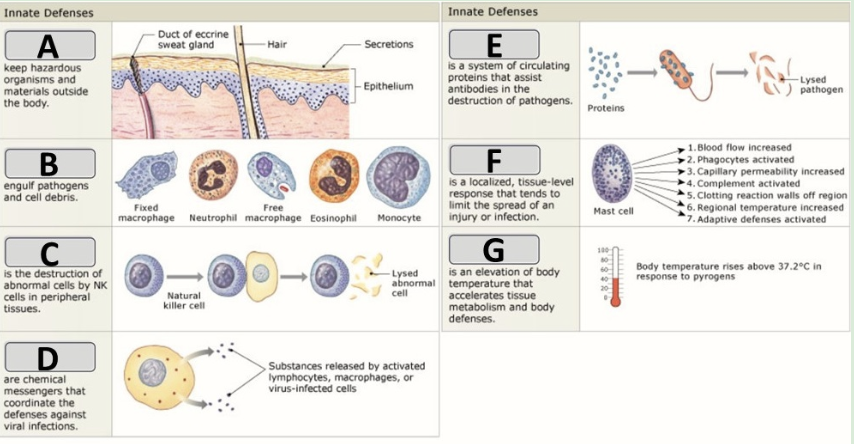
phagocytes
B
Fever
G
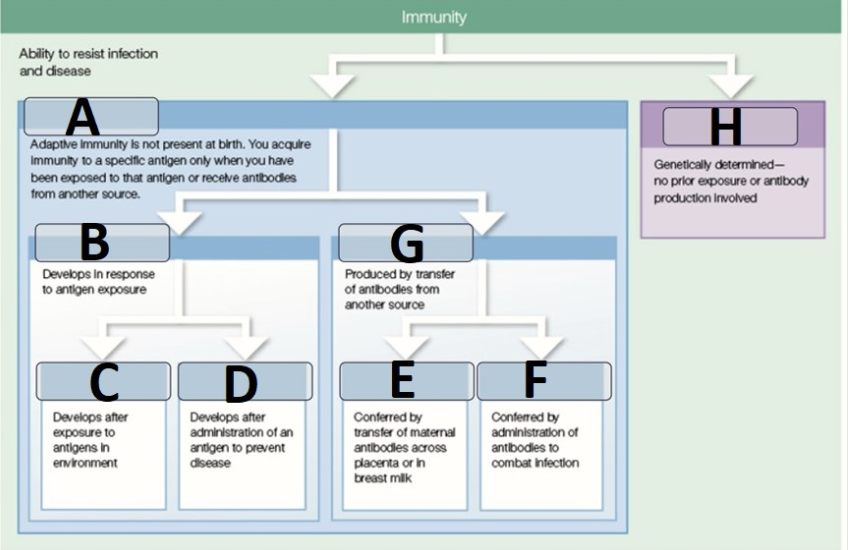
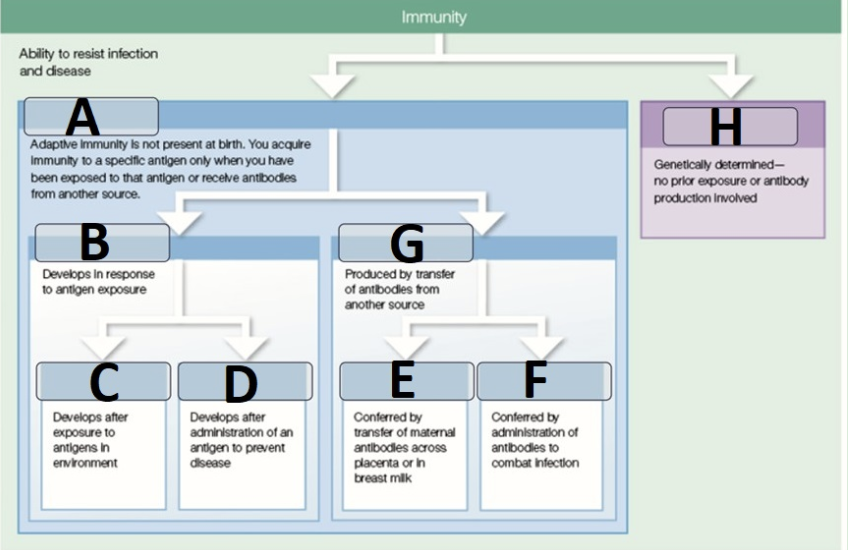
innate (nonspecific) immunity
H
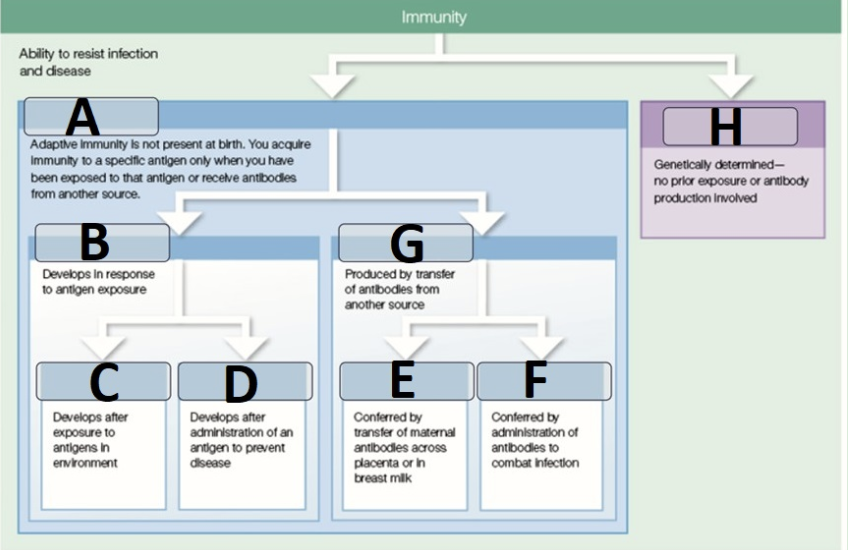
naturally acquired active immunity
C
artifically acquired active immunity
F
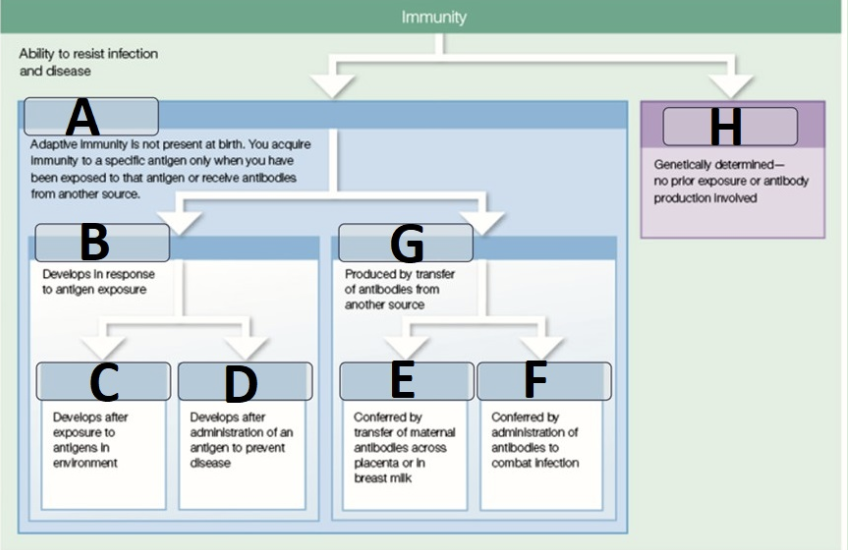
adaptive (specific) immunity
A
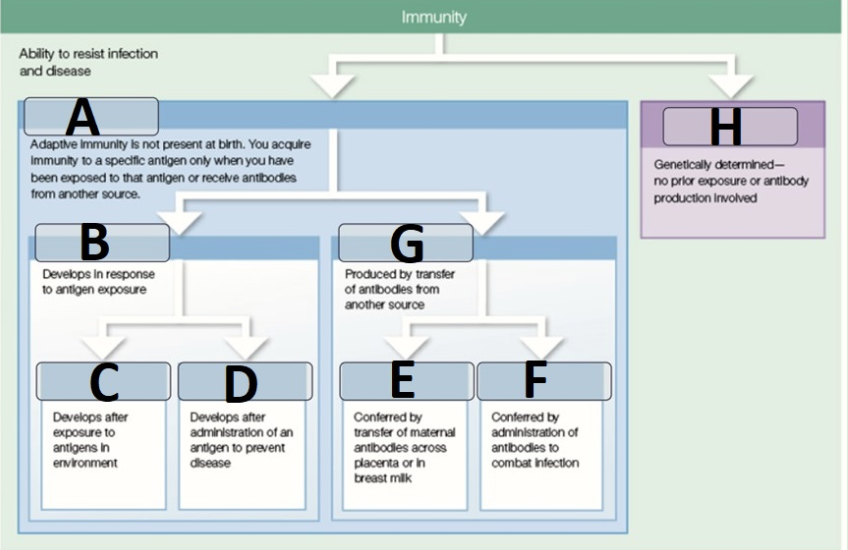
naturally acquired passive immunity
E
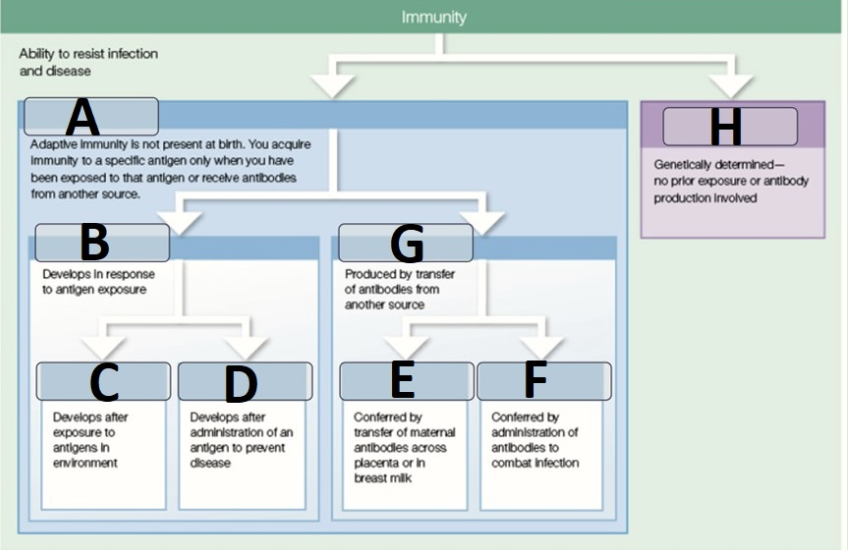
passive immunity
G
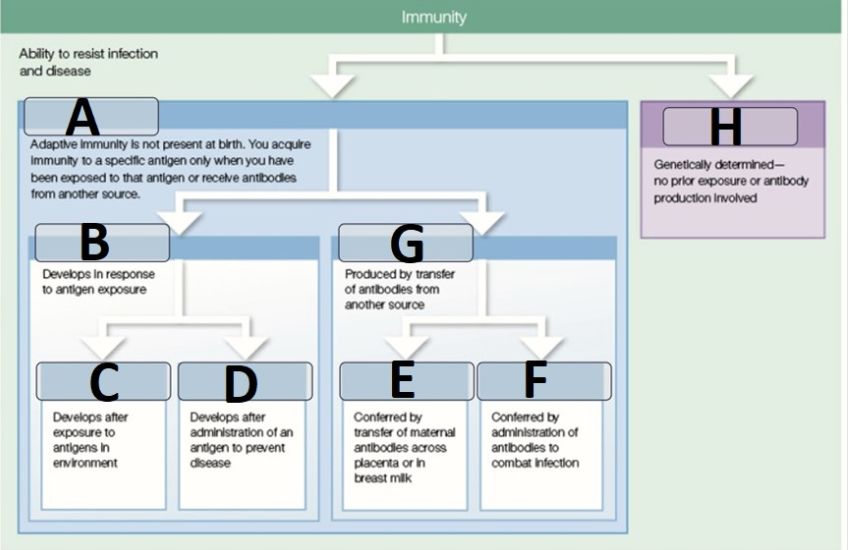
active immunity
B
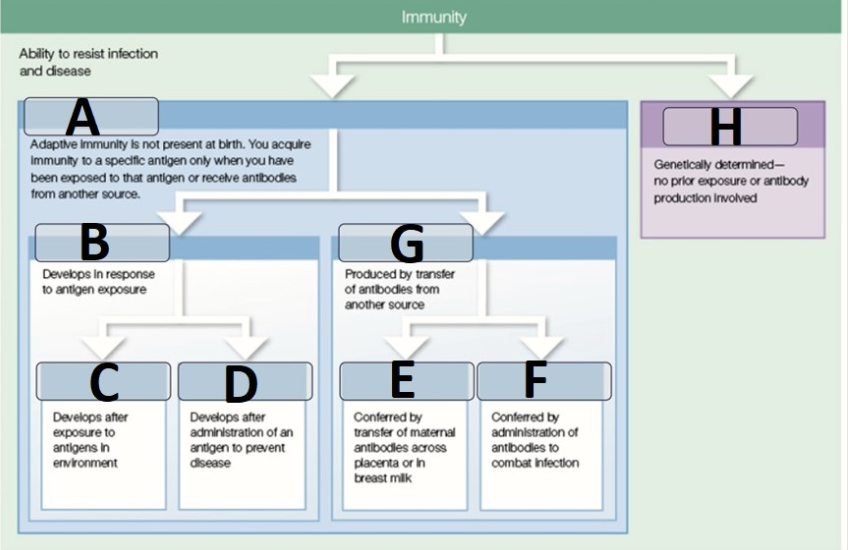
artificially acquired active immunity
D
What innate defense keeps hazardous organisms and materials outside the body?
skin
T cell membrane proteins that are necessary for antigen recognition when an antigen is presented to them are called
clusters of differentiation
Helper T cells have _______ markers, while cytotoxic T cells and suppressor T cells have _______ markers
CD4/CD8
The _______ marker is found on all types of T cells.
CD3
T cells are involved in ___________ immunity and B cells are involved in ____________ immunity.
cell-mediated/antibody-mediated
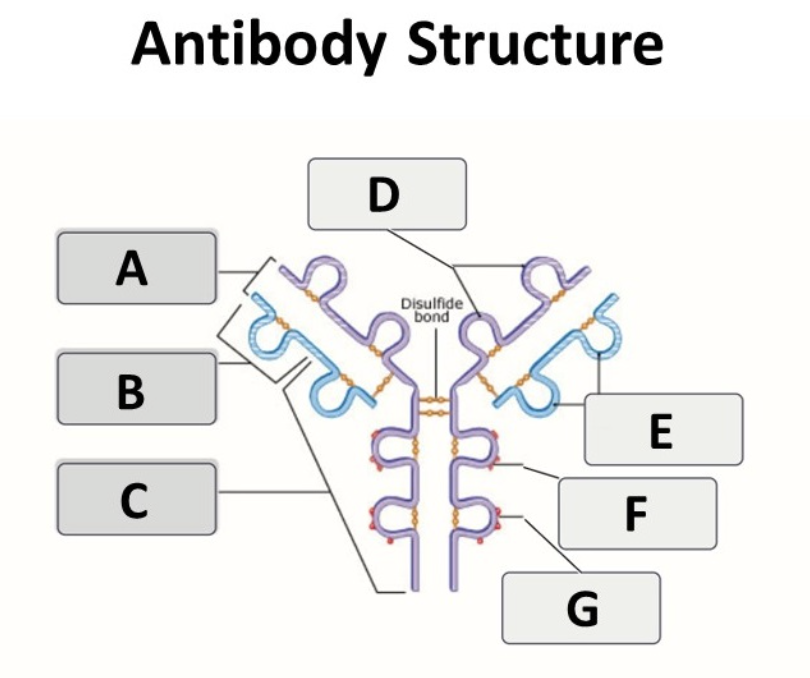
heavy chain
D
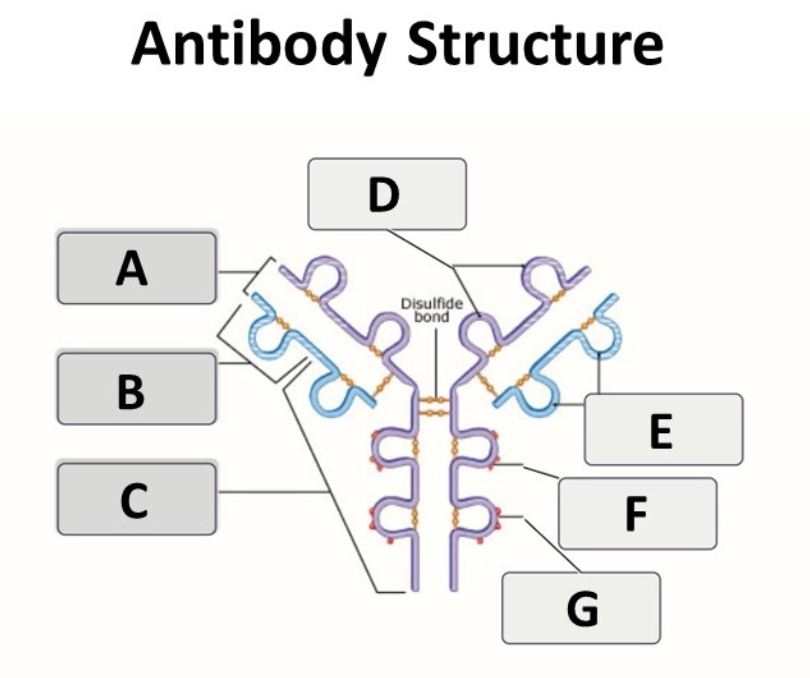
Antigen-binding site
A
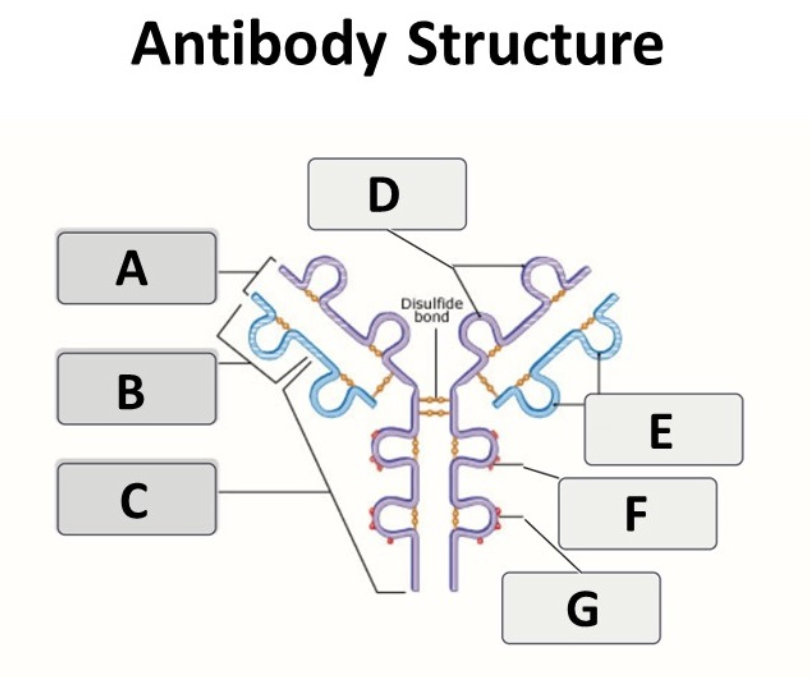
Light chain
E
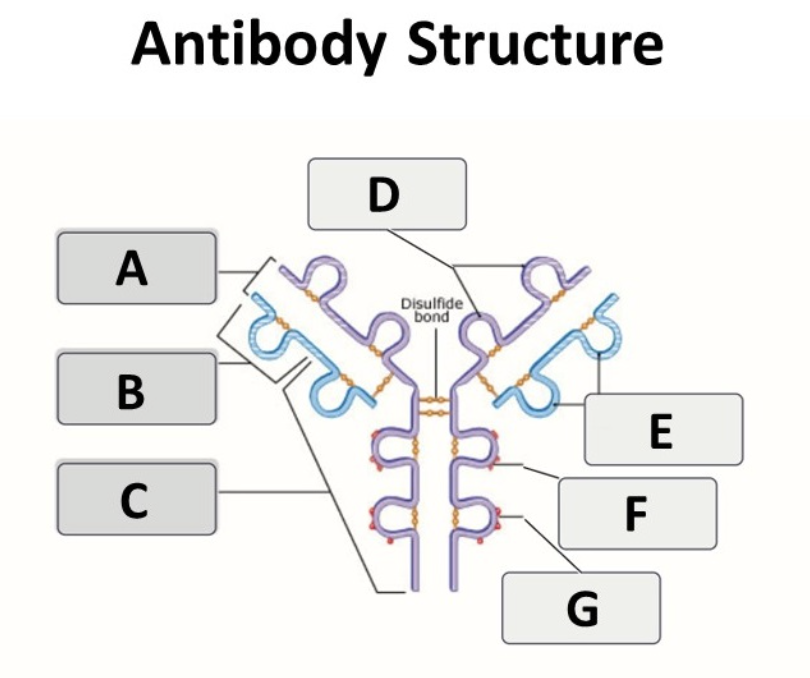
variable segment
B
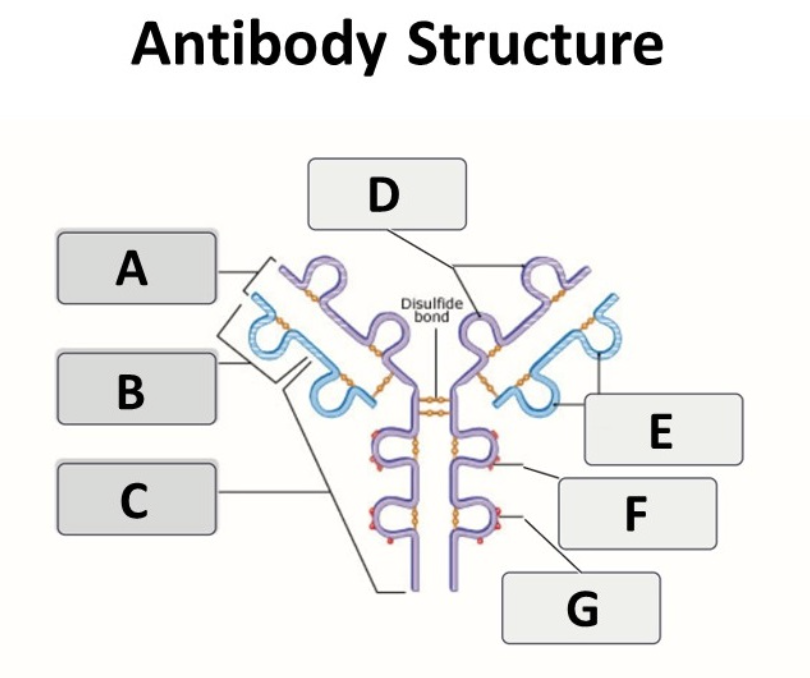
site of binding to macrophages
G
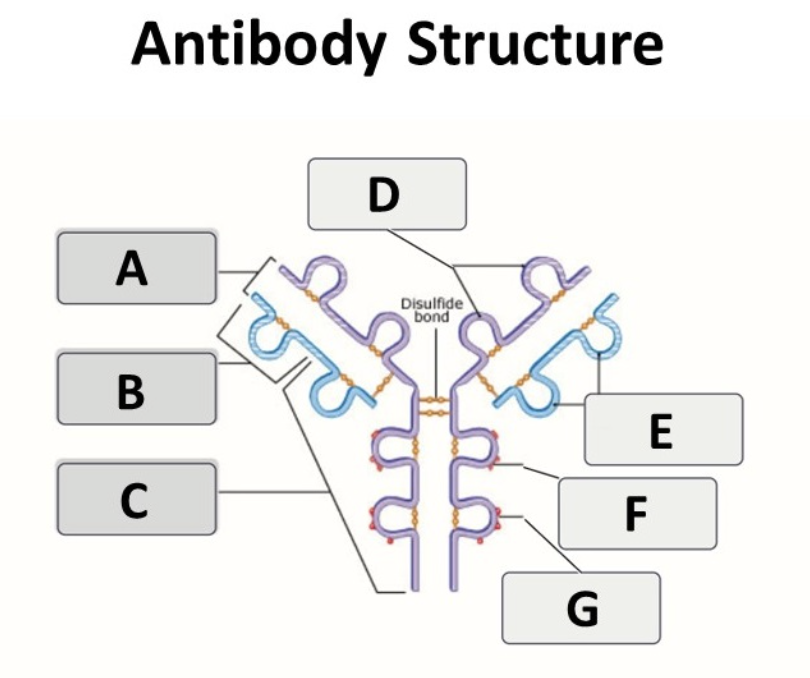
complement binding site
F
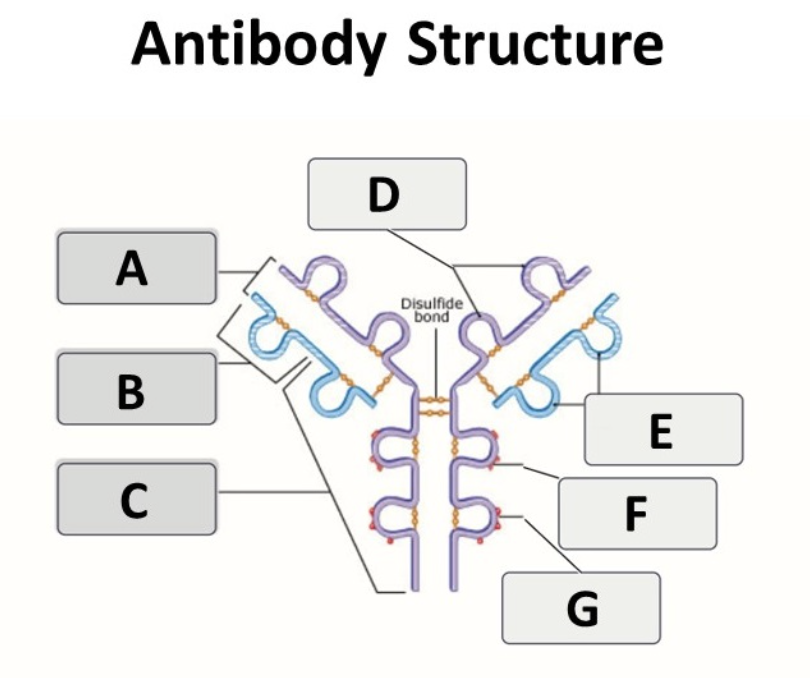
constant segment of light and heavy chain
C
What antibody class is found in tears and can be dimeric in structure with a secretory piece?
IgA
What antibody class is pentameric (starburst) in structure?
IgM
What antibody type is responsible for agglutination reactions occurring when a patient receives an incompatible blood type?
IgM
Chemicals released from cytotoxic T-cell function to kill pathogens. Which of the following isn’t a chemical produced by T cytotoxic cells?
pyrogens
When a macrophage encounters a free-floating pathogen, it phagocytizes it, breaks it down into pieces, then displays the pieces on its cell surface using a certain protein molecule. Displaying pieces of a pathogen in this fashion is called antigen ______________.
presentation
Both B and T cells originate from _______________.
red bone marrow
B cells mature in the ___________ and T cells mature in the _____________.
red bone marrow; thymus
Lymph is filtered through the _____________, where antigens and pathogens are removed and the immune system can be activated.
lymph nodes
While ______________ lymphatic vessels carry lymph from the tissues to the lymph nodes, ______________ vessels carry cleansed lymph away from the lymph nodes.
afferent; efferent
____________ are found in the lymph node's germinal centers of lymphoid follicles, and __________ wander through the deep cortex searching dendritic cells for their specific antigen.
B cells; T cells
The ______________ cleanses the blood like the lymph nodes cleanse the lymph.
spleen
When the surface barriers (innate external defenses) are penetrated, what is the next line of defense?
innate internal defenses
B and T lymphocytes recognize pathogens by binding to them. The molecule the lymphocyte recognizes is called the ______________ found on the antigen.
antigenic determinant
Specific B cells called ______________ secrete antibodies which bind to antigens.
plasma cells
Which of the following is NOT a part of innate internal defences?
skin
______________ is a process of coating bacteria to enhance phagocytosis by a macrophage.
Opsonization
______________ are a type of lymphocyte, but, unlike the B and T cells, they are not specific.
Natural killer cells
When immune cells such as NK cells, kill target cells by direct contact, it causes the target cell to undergo ______________, a form of cellular suicide.
apoptosis
Virally infected cells secrete chemicals called ____________.
interferons
What would likely occur if a donor and recipient's MHC proteins don't match when performing a transplant procedure?
tissue rejection
Which of the following is not an antigen-presenting cell that has MHC-II proteins?
T cells
Cytotoxic T cells circulate through the body searching for infected or cancerous cells by examining the antigenic determinant on ______________ proteins on the cell surface.
MHC I
Antigens presented on MHC class II cells are ______________ antigens.
exogenous
Class II MHCs are produced in the ___________________.
rough endoplasmic reticulum
MHC II proteins bind to antigen fragments when they fuse with the ______________.
phagolysosome
CD4 cells are converted to helper T cells when ______________ and ______________ present the antigen.
dendritic cells; macrophages