Test 1: Lab
0.0(0)
Studied by 0 people Call Kai
 Learn
 Practice Test
 Spaced Repetition
 Match
 Flashcards
 Knowt Play
Card Sorting
1/36

Earn XP
Description and Tags
37 Terms
1
New cards
Go over the coloring book
Better yet. Do it over.
2
New cards
What else is special about metabotropic receptors?
They activate secondary messenger pathways and result in long term changes (like changes in gene expression)
3
New cards
Where are fluids absorbed?
plasma in intestine
4
New cards
Where are excess fluids and electrolytes lost?
Thy are lost via
* sweat
* GIT
* urine
* sweat
* GIT
* urine
5
New cards
Name 6 functions of water
1) helpts maintain water temperature
2) protective cusion
3) lubrication
4) reactant for hydrolysis reactions
5) solvents
6) transportation
2) protective cusion
3) lubrication
4) reactant for hydrolysis reactions
5) solvents
6) transportation
6
New cards
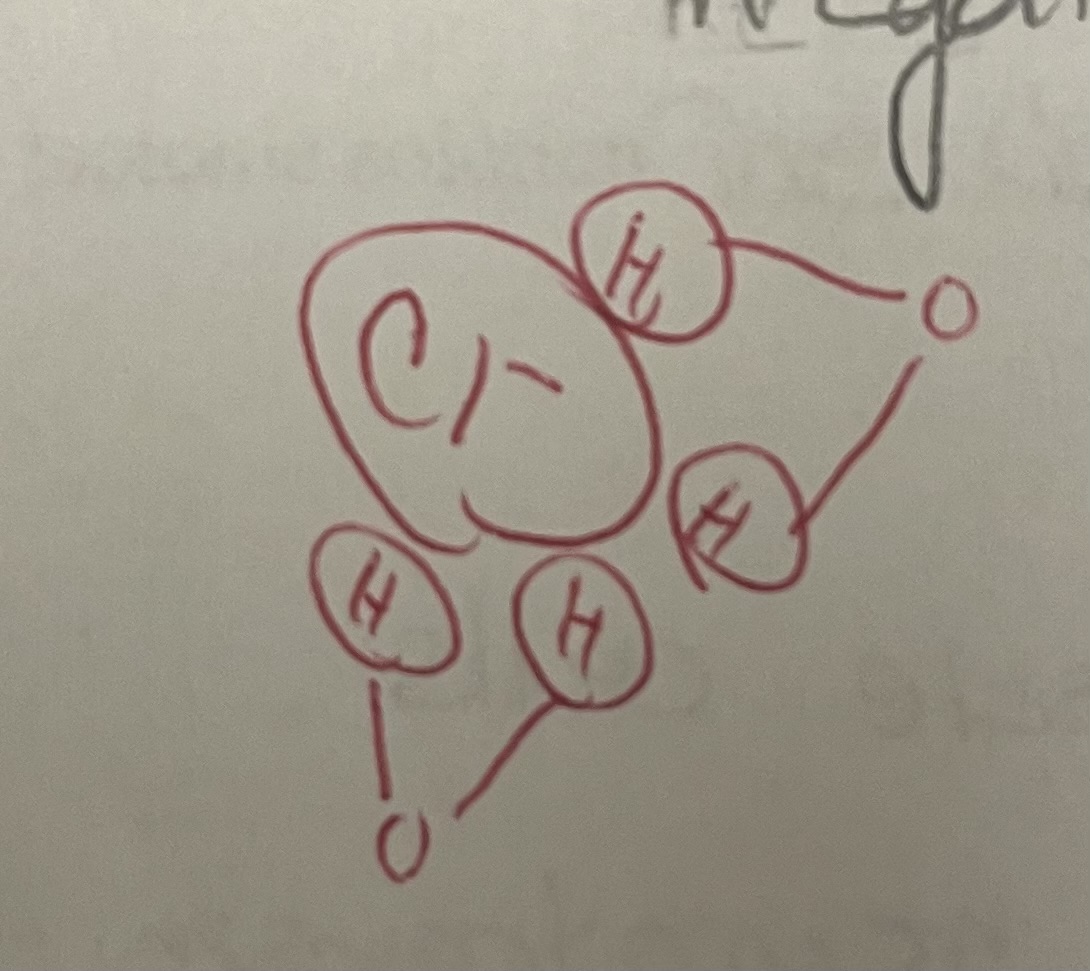
Draw and describe how water acts as a solvent to dissolve calcium chloride
The partial negative charge on oxygen attracts positive ions like calcium and the partial positive charge attract the negativ echarged ions like chloride.
7
New cards
The amount of water in the body depend on the amount of…?
fat tissue
8
New cards
Describe the effect of age on the percentage of water in the body
As you grow older the percentage of water in the body goes down BECAUSE as we age we lose lean body mass and gain fat. Fas has a low water content compared to lean body mass
9
New cards
List 3 fluid compartments and the percentage of total body water in each
1) Intracellular fluid (ICF) 62%
2) Interstitial fluid (ECF) 30%
3) Plasma (ECF) 8%
2) Interstitial fluid (ECF) 30%
3) Plasma (ECF) 8%
10
New cards
Give an example of ions/electrolytes
Na+, K+, Ca2+, Mg2+, Cl-, HCO3-, HPO4 2-, etc
11
New cards
Give an example of colloids
proteins
12
New cards
give an example of nonelectrolytes
glucose
13
New cards
List the major extracellular cations
**Na+**, K+, **Ca2+**, Mg2+
14
New cards
List the major extracellular anions
Cl-, protein, HCO3-, HPO4 2-, H2PO4 2-, SO4 2-, organic acids
15
New cards
List the major intracellular cations
K+, Mg 2+, Na+
16
New cards
List the major intracellular anions
H2PO4 2-, HPO4 2-, protein, SO4 2-, Cl-, HCO3-
17
New cards
What is interstitial fluid? Do we typically find a lot of protein in interstitial fluid?
Interstitial fluid is the fluid surrounding the cells. We typically don’t find a lot of protein in interstial fluid
18
New cards
Within a fluid compartment, the total number of --- must be equal to the total number of ---
positive charges, negative charges
19
New cards
Name the 7 functions given for electrolytes
1) cofactors for enzymes
2) action potentials in neuron and muscle cells
3) Secretion and action of hormones and neurotransmitters
4) Muscle contraction
5) Acid/Base balance
6) secondary active transport
7) osmosis
2) action potentials in neuron and muscle cells
3) Secretion and action of hormones and neurotransmitters
4) Muscle contraction
5) Acid/Base balance
6) secondary active transport
7) osmosis
20
New cards
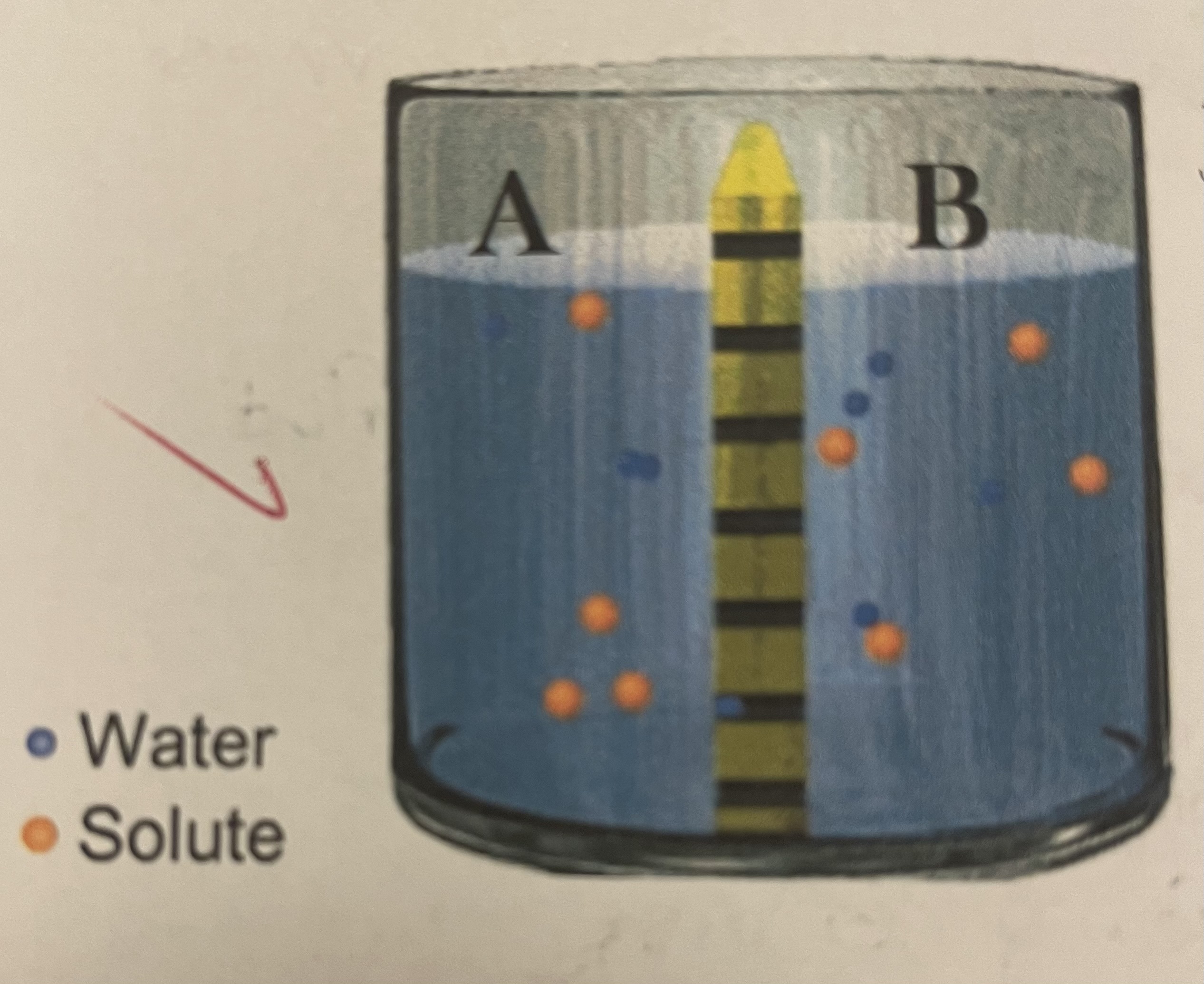
Observe the image. When more solute particles are added to the side “A” of a container with a semipermeable membrane, which way will the water move? Explain
THe water will move to side “A” becasue increasing the concentration of solute decreases the concentration of water and osmosis is the movement of water from a aside that has ;more water to the side that less water
21
New cards
What happens to a patient’s red blood cells when a hypotonic solution is given?
the cells expand and possibly burst
22
New cards
What happens to a patient’s red blood cells when a hypertonic solution is given?
the cells shrink
23
New cards
What happens to a patient’s red blood cells when an isotonic solution is given?
the cells stay the same
24
New cards
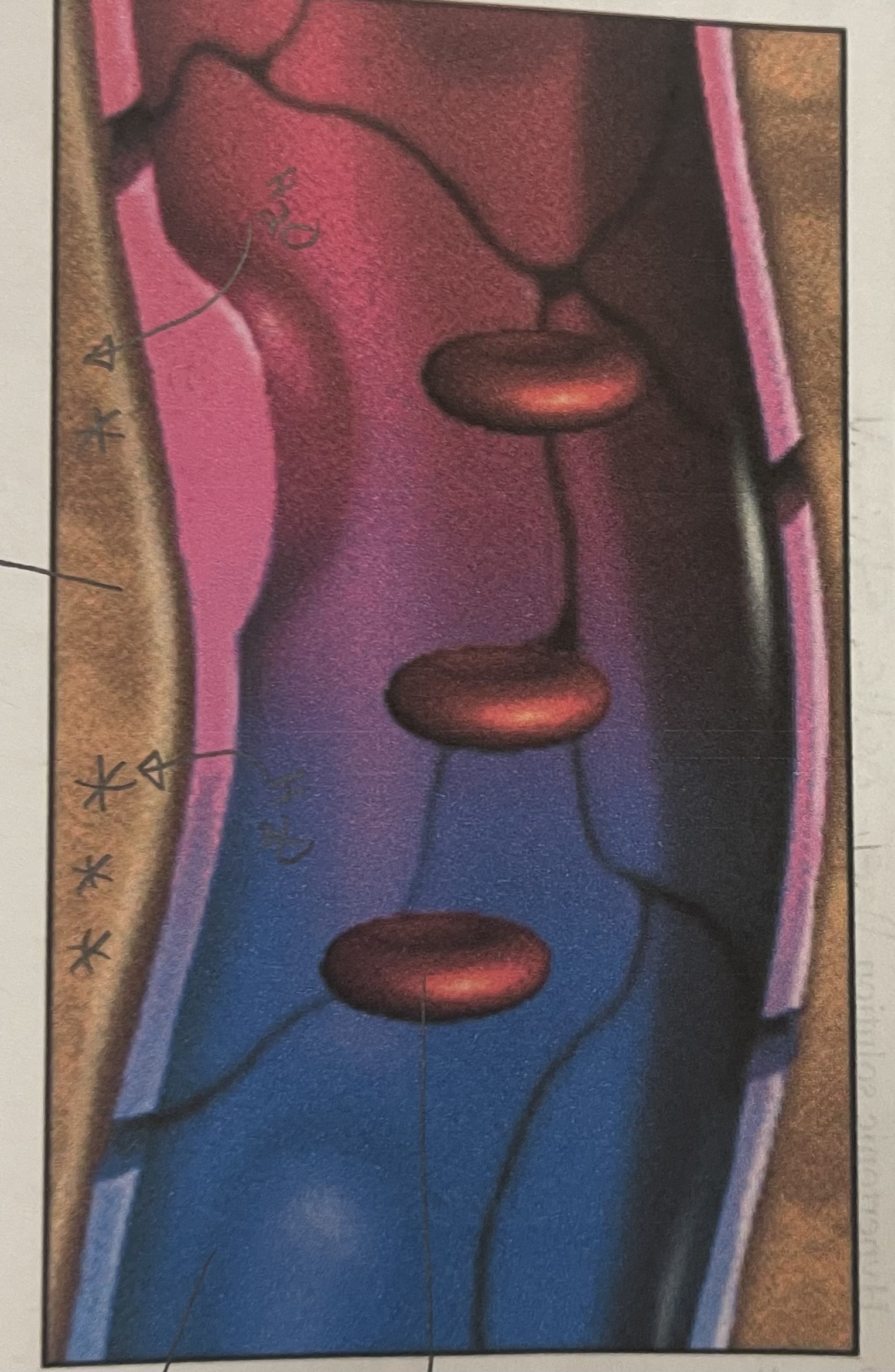
Label the three fluid compartments
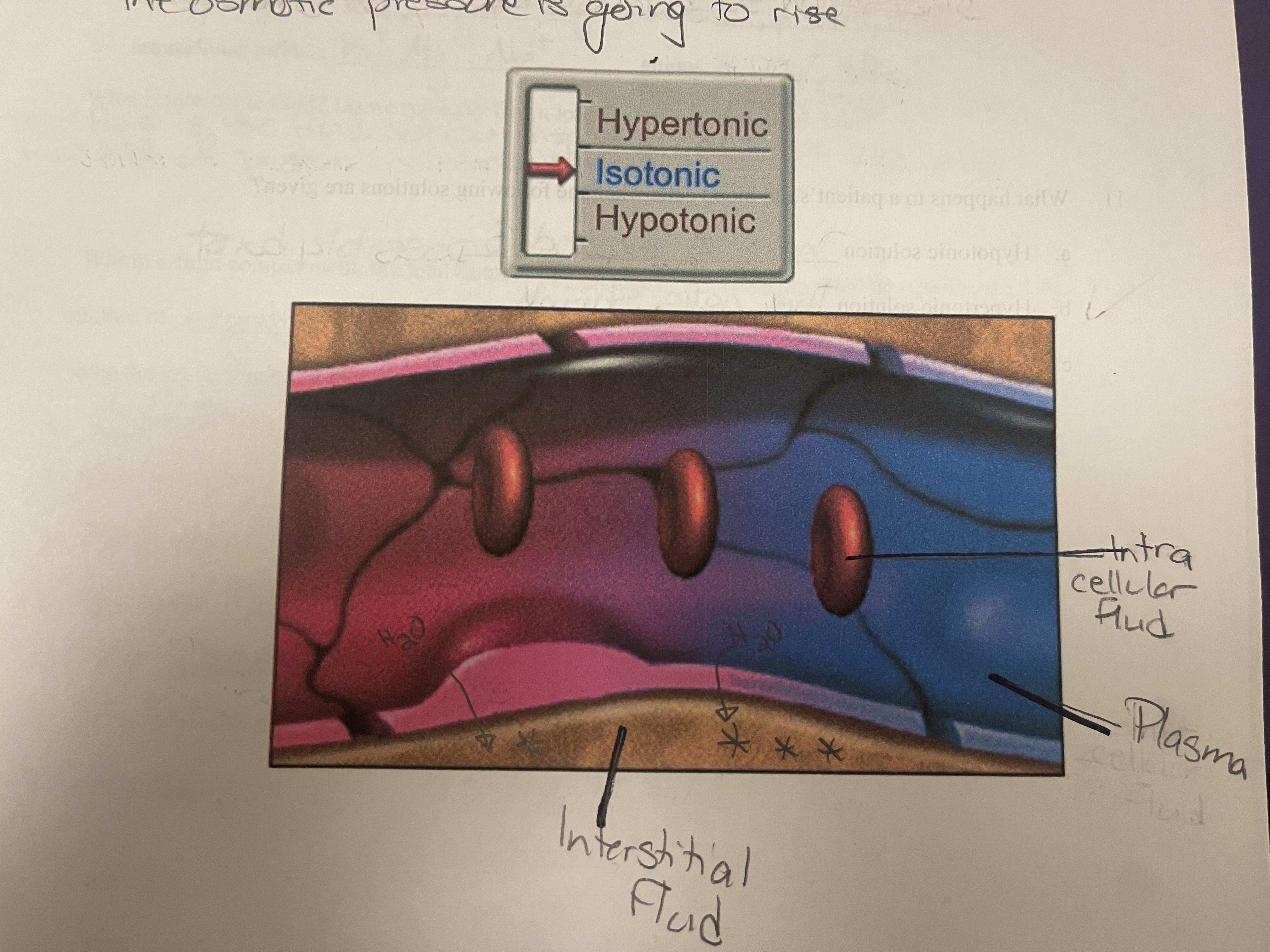
25
New cards
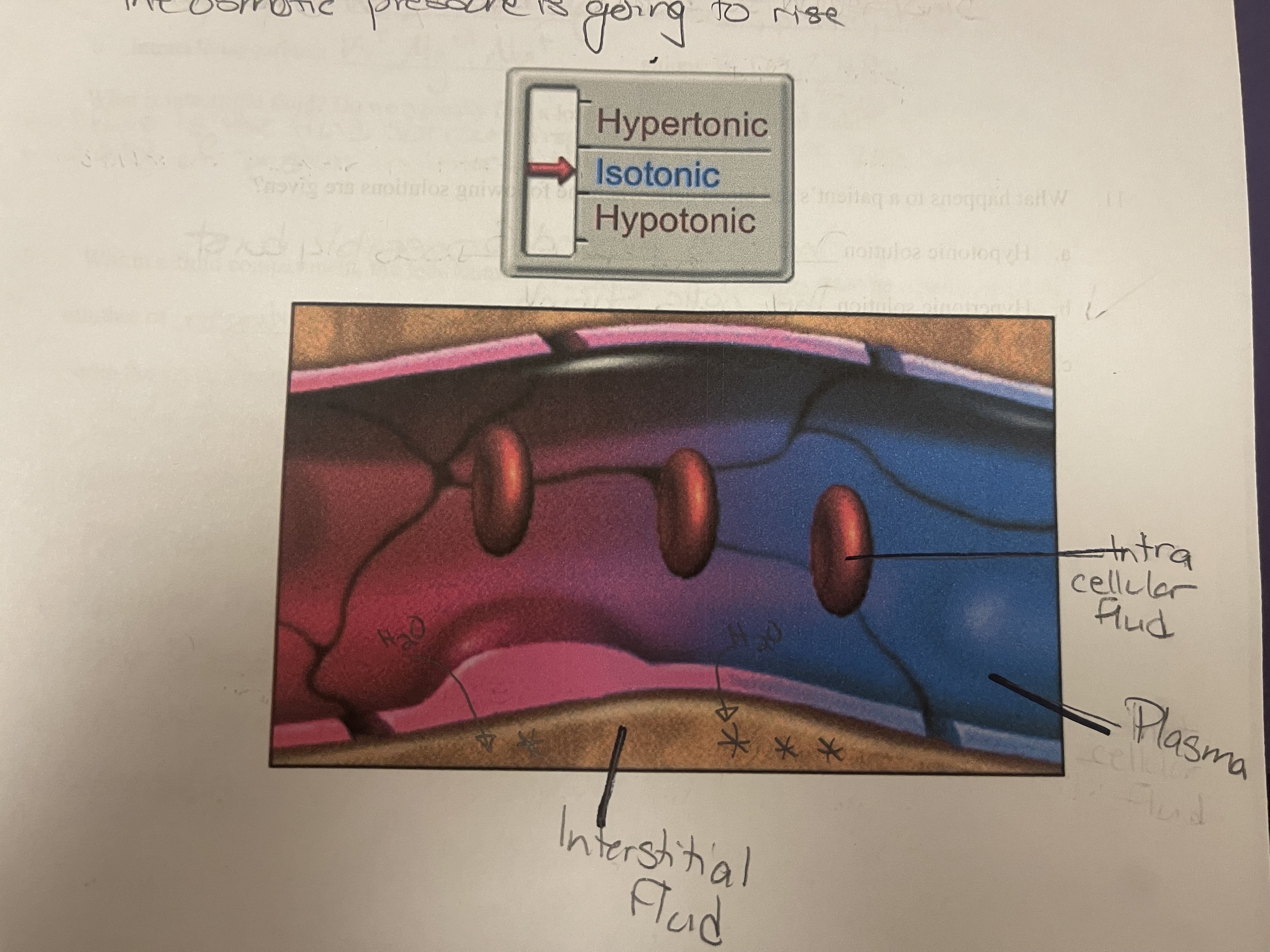
If I add proteins to the interstitial fluid compartment, what happens to the tonicity of the interstitial fluid compartment?
The interstitial fluid compartment becomes hypertonic
26
New cards
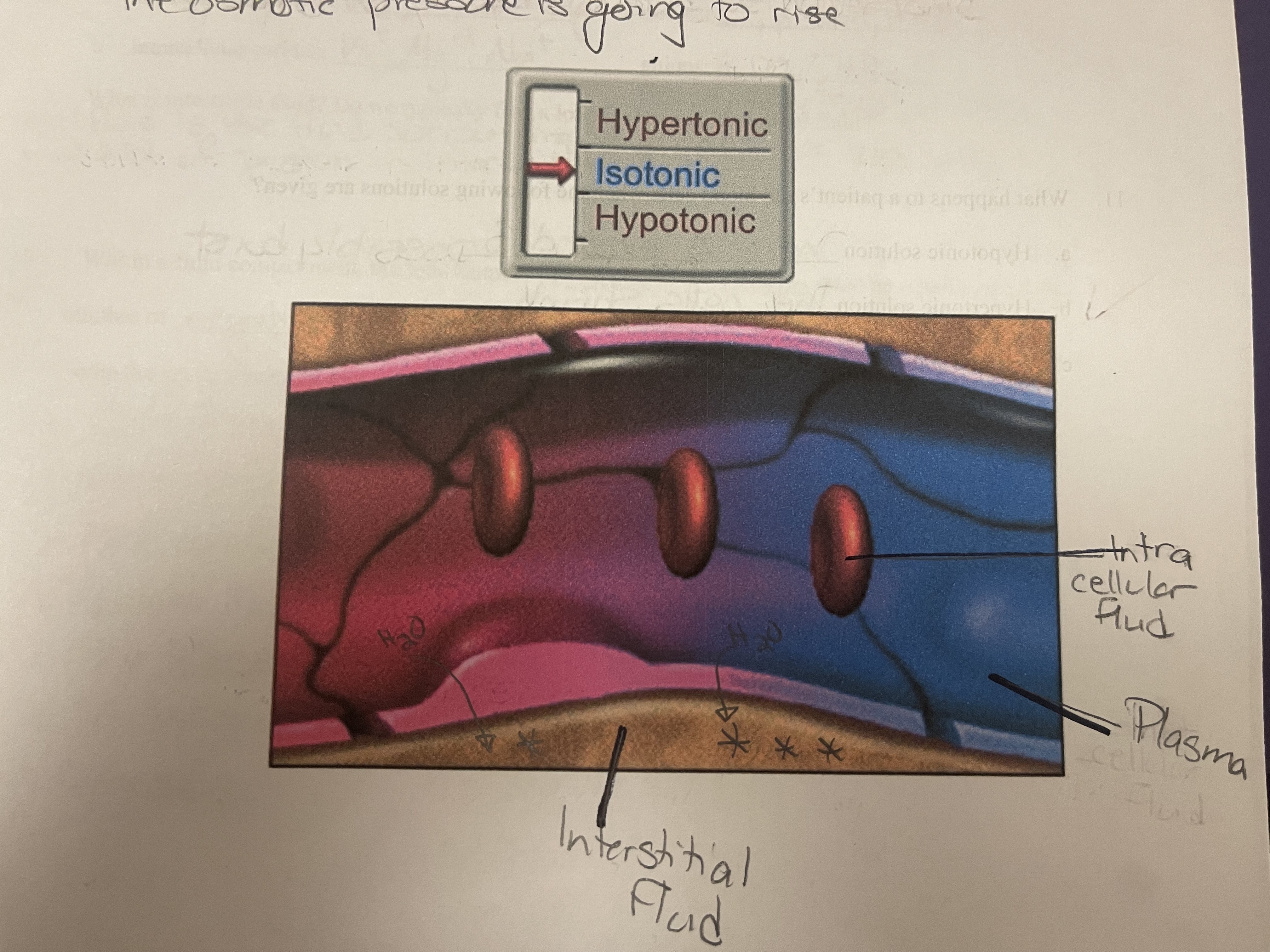
If I add proteins to the interstitial fluid compartment, what happens to the movement of water?
The water will move toward the interstial fluid compartment
27
New cards
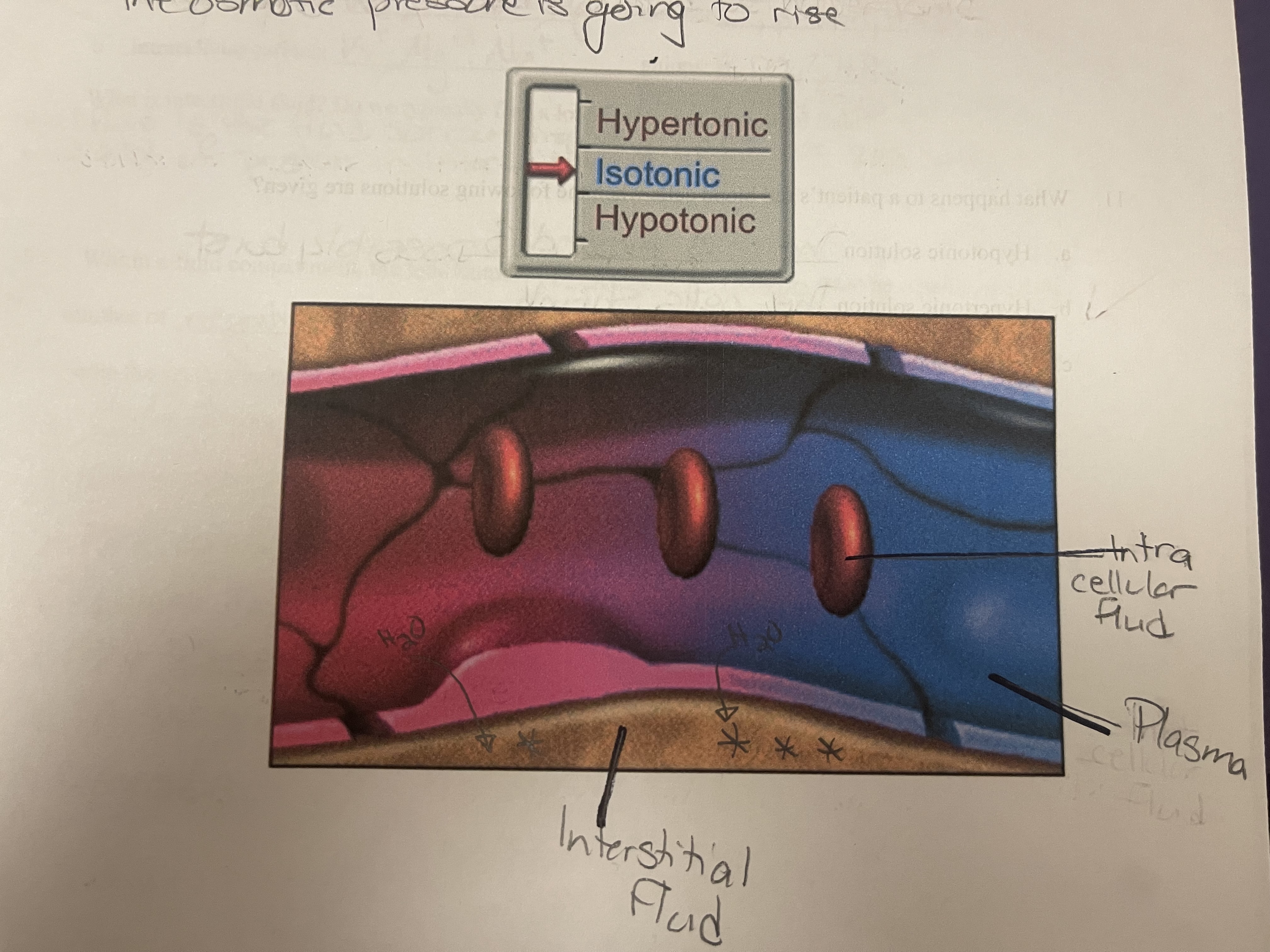
If I add proteins to the interstitial fluid compartment, what happens to the osmotic pressure within the interstial fluid comparment?
The osmotic pressure is going to rise
28
New cards
The release of insulin from beta cells of pancreas is on the knowt for lecture even though it was covered during lab
29
New cards
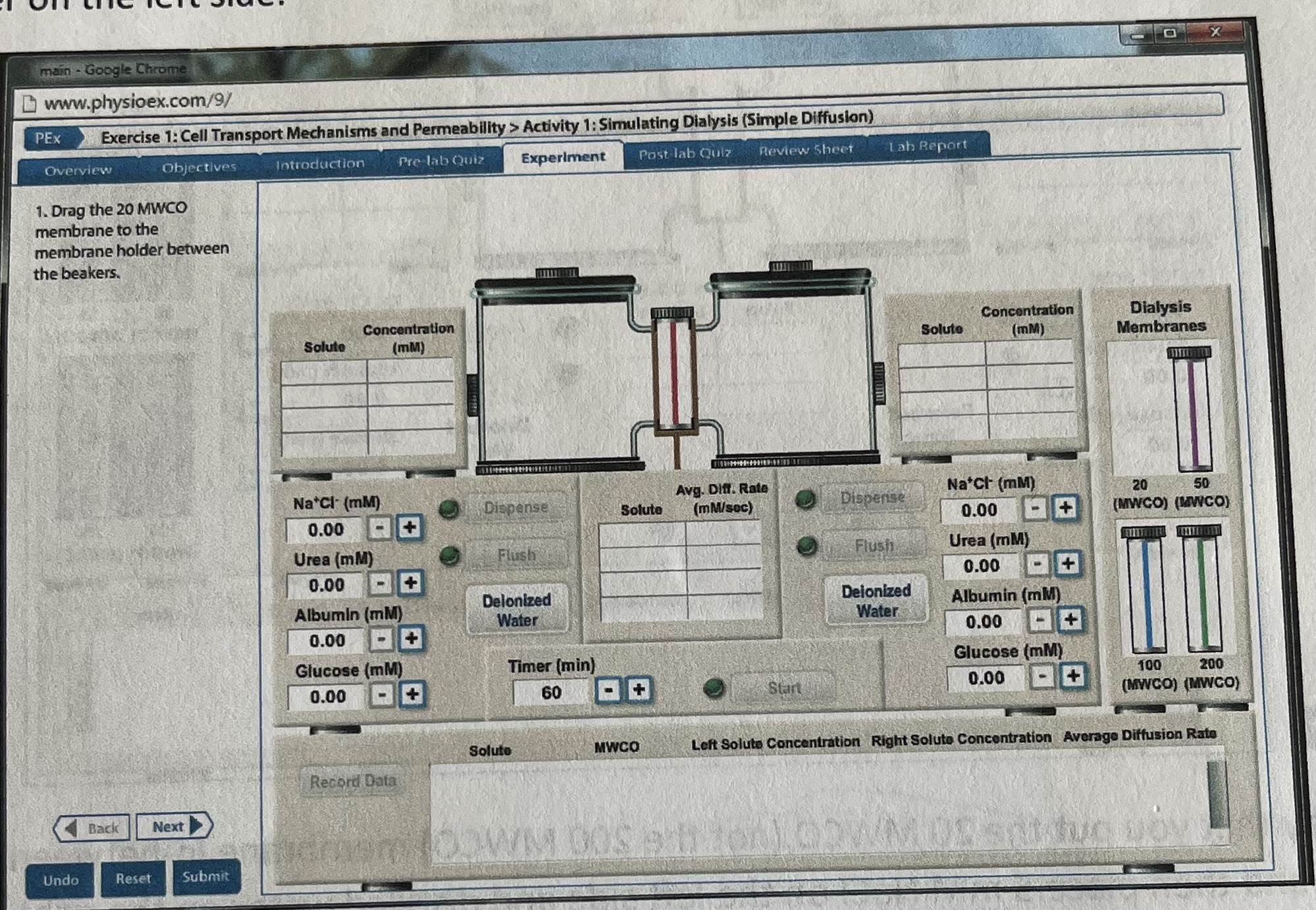
Let us say that you place the 200MWCO membrane in between two beakers(as shown). You then place 20 mM NaCl (Molecular weight 58.4g/mole) on the right side and plain distilled water on the left side.
\
What happens to the NaCl ions over time? Do they diffuse over time? Why or why not?
\
What happens to the NaCl ions over time? Do they diffuse over time? Why or why not?
THe NaCl ions will diffuse overtime because they ae small enough (58.4 g/mol) to pass through the 200 MWCO membrane
30
New cards
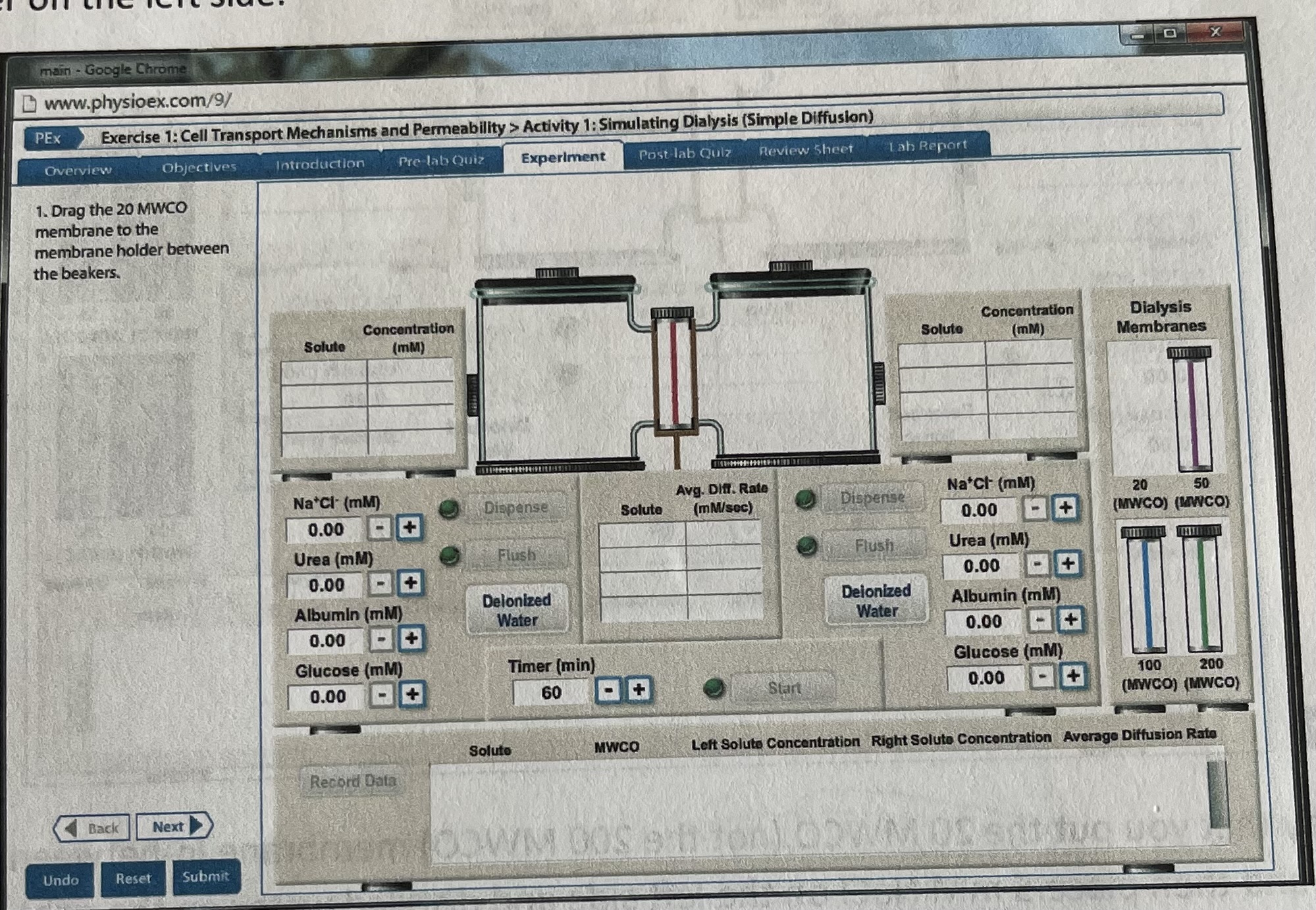
Let us say that you place the 200MWCO membrane in between two beakers(as shown). You then place 20 mM NaCl (Molecular weight 58.4g/mole) on the right side and plain distilled water on the left side.
\
If I keep the same 200 MWCO membrane in place but repear the experiement by doubling the NaCl concentration to 40mM and keep the distilled water, what will happen to the rate of diffusion when compared to the 20mM NaCl? Explain.
\
If I keep the same 200 MWCO membrane in place but repear the experiement by doubling the NaCl concentration to 40mM and keep the distilled water, what will happen to the rate of diffusion when compared to the 20mM NaCl? Explain.
__The rate of diffusion will go up__ and the will take longer because there is much more NaCl present than prior
31
New cards
This time, you are switching gears and you are studying pressure (mmHg) generated across the membrane byl the movement of water. Study the image below and notice that we have the same MWCO membranes but htis time we are studying pressure instead of measuring the rate of diffusion.
\
Let us say that you pyt the 20 MWCO (not 200 MWCO) membrane in vetween the two beakers and then place 5mM NaCl on the left side and distilled water on the right side. Can NaCl diffuse across the membrane? Explain. Can water diffuse across the membrane? Explain.
\
Let us say that you pyt the 20 MWCO (not 200 MWCO) membrane in vetween the two beakers and then place 5mM NaCl on the left side and distilled water on the right side. Can NaCl diffuse across the membrane? Explain. Can water diffuse across the membrane? Explain.
No becuase NaCl is too large (58.4g/mol) to diffuse across the 20 MWCO membrane. Water can diffuse across the membrane because the abundance of NaCl on the left side reduces the water on the left side so water from the right will diffuse to the left via osmosis
32
New cards
This time, you are switching gears and you are studying pressure (mmHg) generated across the membrane byl the movement of water. Study the image below and notice that we have the same MWCO membranes but htis time we are studying pressure instead of measuring the rate of diffusion.
\
Let us say that you pyt the 20 MWCO (not 200 MWCO) membrane in vetween the two beakers and then place 5mM NaCl on the left side and distilled water on the right side.
\
Which side (left or right) will experience the build up of pressure? Explain.
\
Let us say that you pyt the 20 MWCO (not 200 MWCO) membrane in vetween the two beakers and then place 5mM NaCl on the left side and distilled water on the right side.
\
Which side (left or right) will experience the build up of pressure? Explain.
The left side will experience the build up of pressure because water from the right side is going more to the left due to the left side having more solute and less water
33
New cards
This time, you are switching gears and you are studying pressure (mmHg) generated across the membrane byl the movement of water. Study the image below and notice that we have the same MWCO membranes but htis time we are studying pressure instead of measuring the rate of diffusion.
\
If I double the concentration of NaCl to mM on the left side and keep distilled water on the right side, what will happen to the value of pressure (mmHg) compared to the value obtained with 5mM NaCl? Explain.
\
If I double the concentration of NaCl to mM on the left side and keep distilled water on the right side, what will happen to the value of pressure (mmHg) compared to the value obtained with 5mM NaCl? Explain.
The value of pressure is going to double compared to the vaule of pressure with mM NaCl because the concentration of NaCl was increased
34
New cards
What are the units of molarity?
M or moles/liter
35
New cards
How do you calculate the osmolarity of a solution?
An **osmole** (Osmol) is 1 mol of particles that contribute to the osmotic pressure of a solution.
For example, NaCl dissociates completely in water to form Na+ ions and Cl− ions.
Thus, each mole of NaCl becomes two osmoles in solution: one mole of Na+ and one mole of Cl−.
A solution of 1 mol/L NaCl has an osmolarity of 2 Osmol/L.
A solution of 1 mol/L CaCl2 has an osmolarity of 3 Osmol/L (1 mol Ca2+ and 2 mol Cl−).
36
New cards
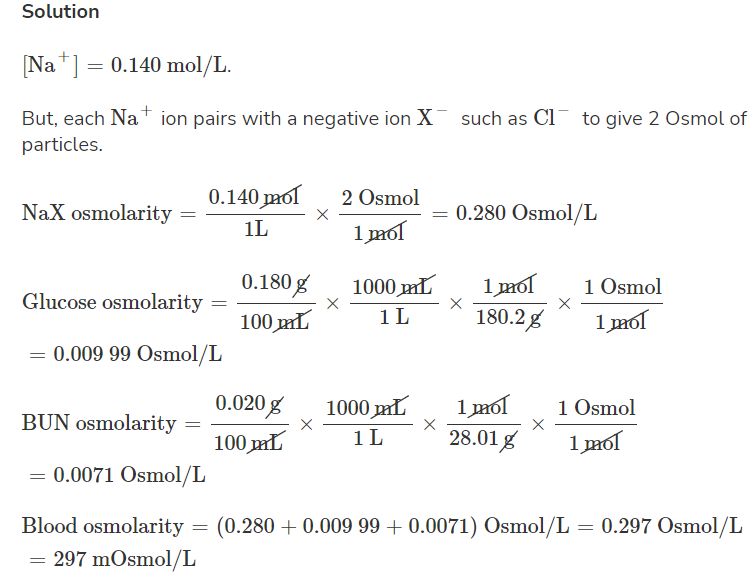
Calculate the osmolarity of blood. The concentrations of solutes are:
1) \[Na⁺\]=0.140 mol/L; \n 2) \[Glucose\]=180 mg/100 mL; \n 3) \[BUN\] (blood urea nitrogen)=20 mg/100 mL
1) \[Na⁺\]=0.140 mol/L; \n 2) \[Glucose\]=180 mg/100 mL; \n 3) \[BUN\] (blood urea nitrogen)=20 mg/100 mL
37
New cards
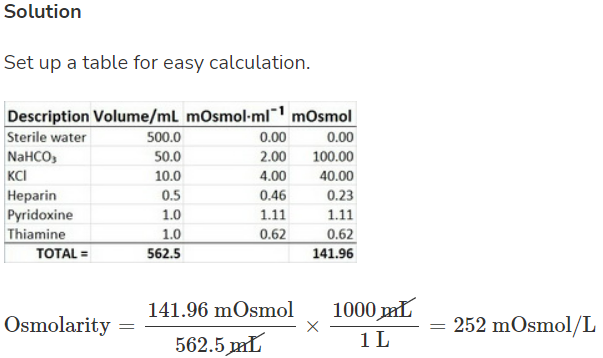
Calculate the osmolarity of an IV admixture that contains 500 mL sterile water; 50 mL NaHCO₃ 8.4 %; 10 mL of 2 mmol/mL KCl; 0.5 mL heparin 5000 units; 1 mL pyridoxine; 1 mL thiamine.