Science 1.2
 Call Kai
 Learn
Learn Practice Test
 Spaced Repetition
 Match
Match Flashcards
 Knowt Play
1/17

There's no tags or description
Looks like no tags are added yet.
Name | Mastery | Learn | Test | Matching | Spaced | Call with Kai |
|---|
No analytics yet
Send a link to your students to track their progress
18 Terms
Whats a double helix composed offrecap
Double helic composed of two strands of DNA , each with sugar phosphate backbone .
Nitrogenoues base what is that
a nitrogen-containing organic molecule that acts as a fundamental building block of DNA and RNA, forming the "rungs" of the genetic ladder
these bases are adenine , thymine , cytosine , guanine
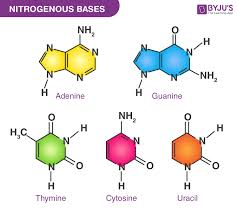
whats complementary base
Its the base pair of the nitrogenous bases
adenine- thymine and guanine-cytosine
Nucleotide , what is it and what does it consist of ( 3 things)
Nucleotides consist of sugar molecule , phosphate molecule and single nitrogenous base .
This order allow nucleotides on DNA to form specific genes that code for many protein
The nucleotides pair the nitrogenous bases (A,T,G,C) and pairs with its correct complementary base
Whats RNA
ibonucleic acid(RNA) ( Nucleic acid similar to DNA help produce protein from gene of dna )
Contain nitrgenous bases
RNA is single strand
Helps DNA replicate and use genetic information in DNA to produce protein
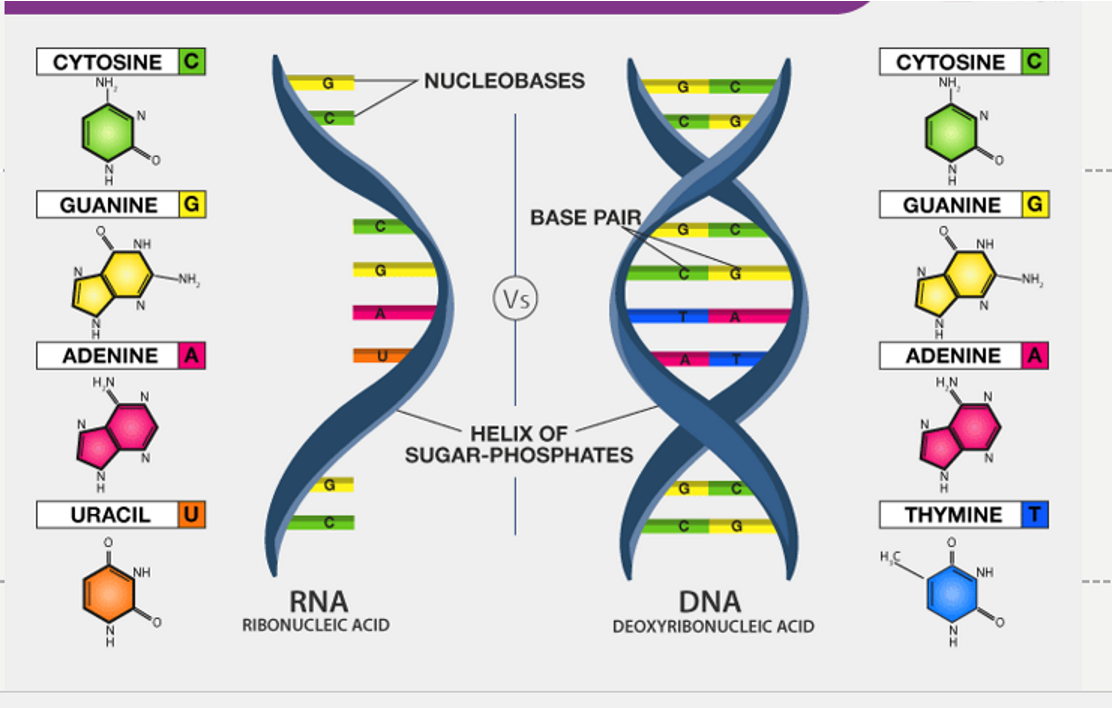
DNA is held by chemical bonds- what is sugar phosphate backbone holding
Sugar- phosphate backbone is held together by covalent bonds (Phosphodiester bond).
Covalent bonds are strong and hold nucleotides together during replication and protein synthesis.
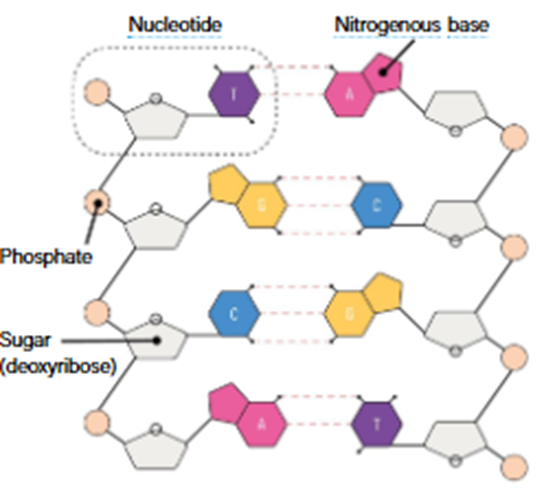
NOw what are weak bonds point to where it is
Weak bonds
Bons between n itrogenous bases in middle of ladder are weak
Weak bonds in DNA, primarily hydrogen bonds, are noncovalent interactions between the nitrogenous bases that hold the two strands of the double helix together.
bonds are weak individually, allowing the DNA to unzip easily for replication and transcription so nucleotides can be read
DNA replication , what are enzyme
Protein that speeds up chemical reaction and does not get used up
Molecular machinery
Usually ends “ase”
Example from text: Dna helllicase,amylase
WHats DNA replication and its process name the first two
chromosome containing the DNA ‘unwinds’, sothe DNA is in long strands
A section of DNA is “unzip” by an DNA helicase (an enzyme), so that the nucleotides on both sides are available
After the nucleotides are avaliable , whats the last two steps
New nucleotides are matched to the existing ones on both sides of the DNA via the Complementary BasePairing Rule by the enzyme DNA polymerase
Each new strand is ‘glued’ back together, making two identical double helices from the existing one. These are called daughter molecules.
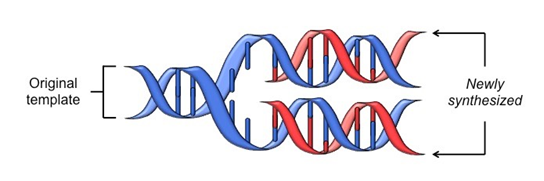
draw the process of dna replication
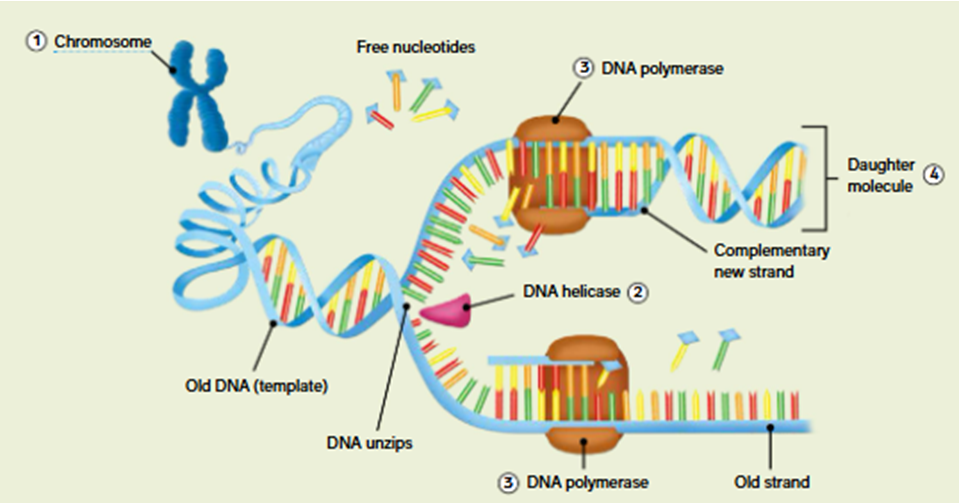
after dna replication , what do the two new strands become
Two new strands of DNA compress into chromosomes., and when the cell divides, the two new cells receive identical copy of the replicated DNA. this allows genetic code is passed onto all new cells
State that DNA Replication is semi conservative , what does that mean
each new DNA molecule consists of one original template strand and one newly synthesised strand.
New section , Genes on DNA are use to produce proteins What is the role of DNA when cells do not need to replicate? ( protein synthesis) . name the two steps iof protein synthesis
Protein synthesis
Dna contains genes that code for protein
They code through protein synthesis in two steps
Transcirption 2. translation
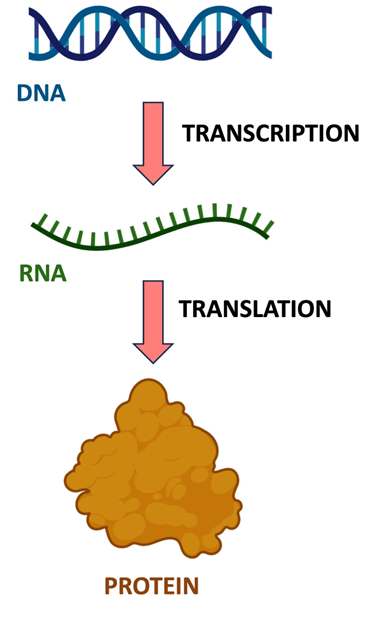
Transcription , is this the begining of protein synthesis and where doe sit occur
Process of producing mrna from dna template
it occurs in the nucleus
The mrna read unwound section of nucleotide and copies nitrogenous bases that make up gene(e.g A-T turns to A-U) This called complentary strans cause each base is read , the RNA adds opposite , matchin base to chain ( Uracil+adenine Guanine + cytosine)
whats translation second step and where
Translation second step
Translation is the process where ribosomes in the cytoplasm decode mRNA—produced during transcription—to assemble amino acids into a polypeptide chain, forming a functional protein
Dna information to codon through MRna
The ribosome reads the mRNA sequence in sets of three bases called codons.
Each codon specifies a particular amino acid.
Amino acids bond together, forming a long chain called a polypeptide.
This chain folds into functional protein.
What do proteins do
Cellular processes – usually enzymes, speed up chemical reactions
e.g. amylase breaks down starches when we eat food
Lactase breaks down lactose (sugar in milk)
Where does protein help growth
Muscles are mainly made up of protein
Heal during injury
Reproduction – allows humans to produce hormones such as oestrogen and progesterone