IÐN301
 Call Kai
 Learn
Learn Practice Test
 Spaced Repetition
 Match
Match Flashcards
 Knowt Play
1/27

Earn XP
Description and Tags
miðpróf
Name | Mastery | Learn | Test | Matching | Spaced | Call with Kai |
|---|
No analytics yet
Send a link to your students to track their progress
28 Terms

What event?
Start events:
– which signal how process instances start
(tokens are created)

What event?
End events:
– which signal when process instances
complete (tokens are destroyed)

What event?
Event that occurs during a process
is called intermediate

What activity?
Task: Activities represent units of work, carried out
be a resource, that have a duration

What activity?
Transaction is a set of activities that logically
belong together (embedded sub-processes)

What activity?
Call activity to indicates use of sub-process
external to the current process (is a global
process model); allows for reusable process
definition
Activities naming conventions:
the label should be verb + a noun, e.g. “Approve order”. The noun may be preceded by an adjective, e.g. “Issue driver license”, and the verb may be followed by a complement to explain how the action is being done, e.g. “Renew driver license via offline agencies”.
• Avoid long labels, no more than five
• Capitalize the first word of activity labels

Explain this gateway
XOR gateway:
• Splitting: routes flow to exactly one branch
• Merging: awaits incoming to complete before triggering outgoing flow

Explain this gateway
AND gateway:
• Splitting: routes flow to all branches
• Merging: awaits all incoming to complete before triggering outgoing flow

Explain this gateway
OR gateway:
• Splitting: routes flow to one or more branch
• Merging: awaits all incoming to complete before triggering outgoing
Name the three discovery method
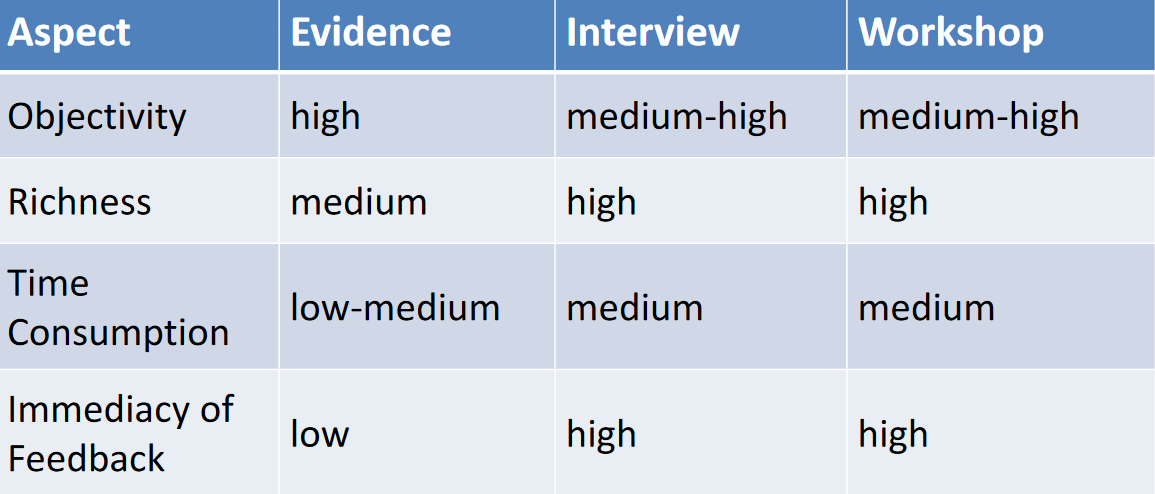
Evidence-based discovery
Interview-based discovery
Workshop-based discovery
Evidence based discovery is split in what 3 different categories
Document analysis
Observation
Automatic process discovery
Describe Evidence based - Document analysis
• Document analysis exploits the fact that there is usually
documentation material available related to an existing process
• Some potential issues with document analysis:
1. Most documentation available on operations in a company is not
readily organized in a process-oriented way
2. Level of granularity of the material might not be appropriate
3. Documents only partially trustworthy
Describe Evidence based - Observation
• Observation is a method of discovery following directly the processing of
individual cases in order to get an understanding of how a process works
• Process analyst can either play:
– the active role of a customer of a process or
– the passive role of an observer
Describe Evidence based - Automatic process discovery
• Automatic process discovery emerges from the extensive operational
support of business processes provided by various information systems.
• Uses event logs and data has to be recorded in such a way that each event
can be exactly related to three things:
– an individual case of the process,
– a specific activity of the process, and
– a precise point in time.
Describe Interview-Based Discovery
• Interview-based discovery a method built on interviewing domain experts about how a process is executed
• Two strategies for scheduling interviews:
– starting backwards from the products and results of the process (find input needed for conducting work, gives order) and
– starting from the beginning of the process and proceeding forward – follow and observe the process flow and decisions at each stage
Describe Workshop-Based Discovery
• Workshop-based discovery offers opportunity to obtain detailed information on the business process with process participant:
– The facilitator takes care of organizing the verbal contributions of the participants.
– The tool operator is responsible for directly entering the discussion results into the modeling tool.
– Several domain experts also participate, as much as
– the process owner and the process analyst.
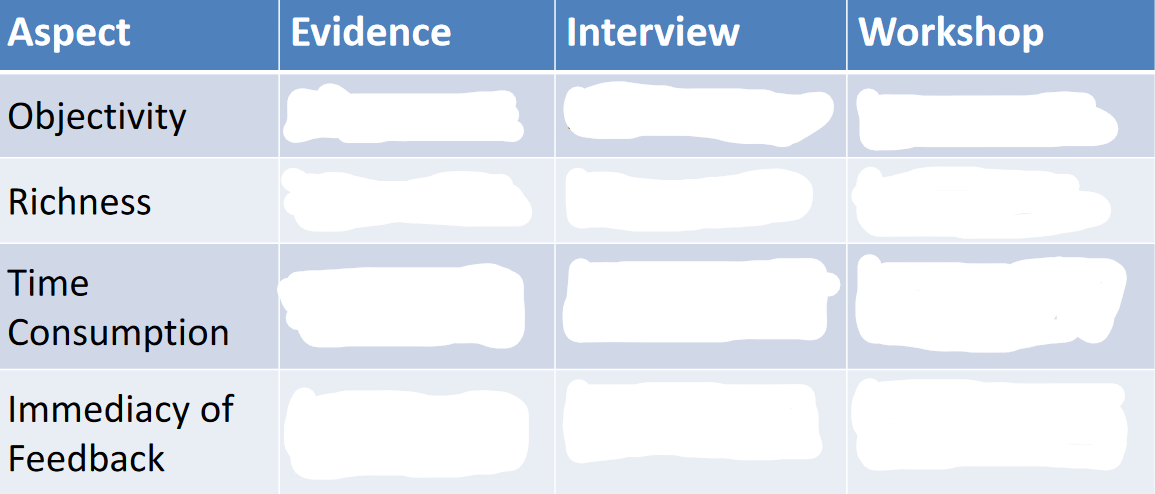
Fill in the Summary of Discovery Methods
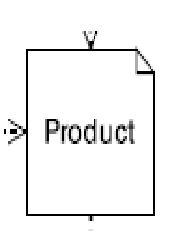
What is this
Data objects represent information flowing in and out of activities; they can be physical artifacts such as an invoice or a letter on a piece of paper or electronic artifacts such as an e-mail or a file
• link them to activities with a dotted arrow with
an open arrowhead (called data association

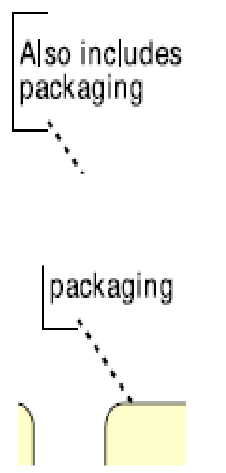
What is this
• Additional information can be provided via text annotations. An annotation is depicted as an open-ended rectangle encapsulating the text of the annotation, and
• is linked to a process modeling element via ab dotted line (called association)

What is this
Start Timer event: Indicates that an instance of the process is created at certain date/time e.g. start process at 6pm every Friday

What is this
Intermediate Timer Event: Triggered at certain dates/times or after a time interval has elapsed since the moment even is “enabled”

What is this
Start Message Event: Indicates that an instance of the process is created when a messa ge is received

What is this
End Mesasge Event - Indicates that an instance of the process is completed when a message is sent

What is this
Intermediate Message Event - Indicates that an even is expected to occur during the process. The event is triggerd when a message is receieved or sent
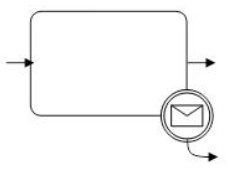
What is this
An Exceptions condition : External: Something goes wrong outside the process, and the execution of the current activity must be interrupted.
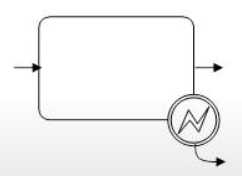
What is this
An Exceptions condition : Internal: Something goes wrong inside an activity, whose execution must thus be interrupted.
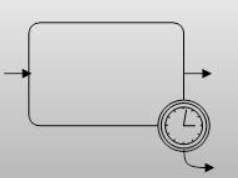
What is this
An Exceptions condition : Timeout: an activity takes too long and must be interrupted