BIO 30 reproductuive system topic 5 and 6
 Call Kai
 Learn
Learn Practice Test
 Spaced Repetition
 Match
Match Flashcards
 Knowt Play
1/98

There's no tags or description
Looks like no tags are added yet.
Name | Mastery | Learn | Test | Matching | Spaced | Call with Kai |
|---|
No analytics yet
Send a link to your students to track their progress
99 Terms
what happens when sperm recahes the egg
the acrosome releases enzymes to digest the jelly-like coating surrounding the egg
zygote
first single cell of new life
sperm nucleus and egg nucleus (n) fuse to form
zygote
chorion (trophoblast)
outer layer of blastocyst which forms placenta and the amnion
gas/nutrient/waste exchange
inner cell mass
develops into embryo
from ovulation to implantation: day 1
first cleavage - cell divides by mitosis
from ovulation to implantation: day 4
16 - 32 cell stage. ball of cells is called a morula
from ovulation to implantation: day 5
the cells being to move aroound to form an inner and outer layer of cells
from ovulation to implantation: day 6
the two layers of cellsa rrange temselves around a hollow fluid filled vaicty called the blastocoel, the actual cell mass is called a blastocyst
from ovulation to implantation: day 7
Implantation- the blastocyst, by means fo villi and enzymes secreted by the chorion implants itself in the endometrium, resulting in pregnancy. the chorion secretes hCG, a hormone which stimulates the corpus luteum to produce progesterone and estrogen for the first 3 months
totipotent cells
stem cells from the blastocyst that are undifferentiated and used for stem cell research
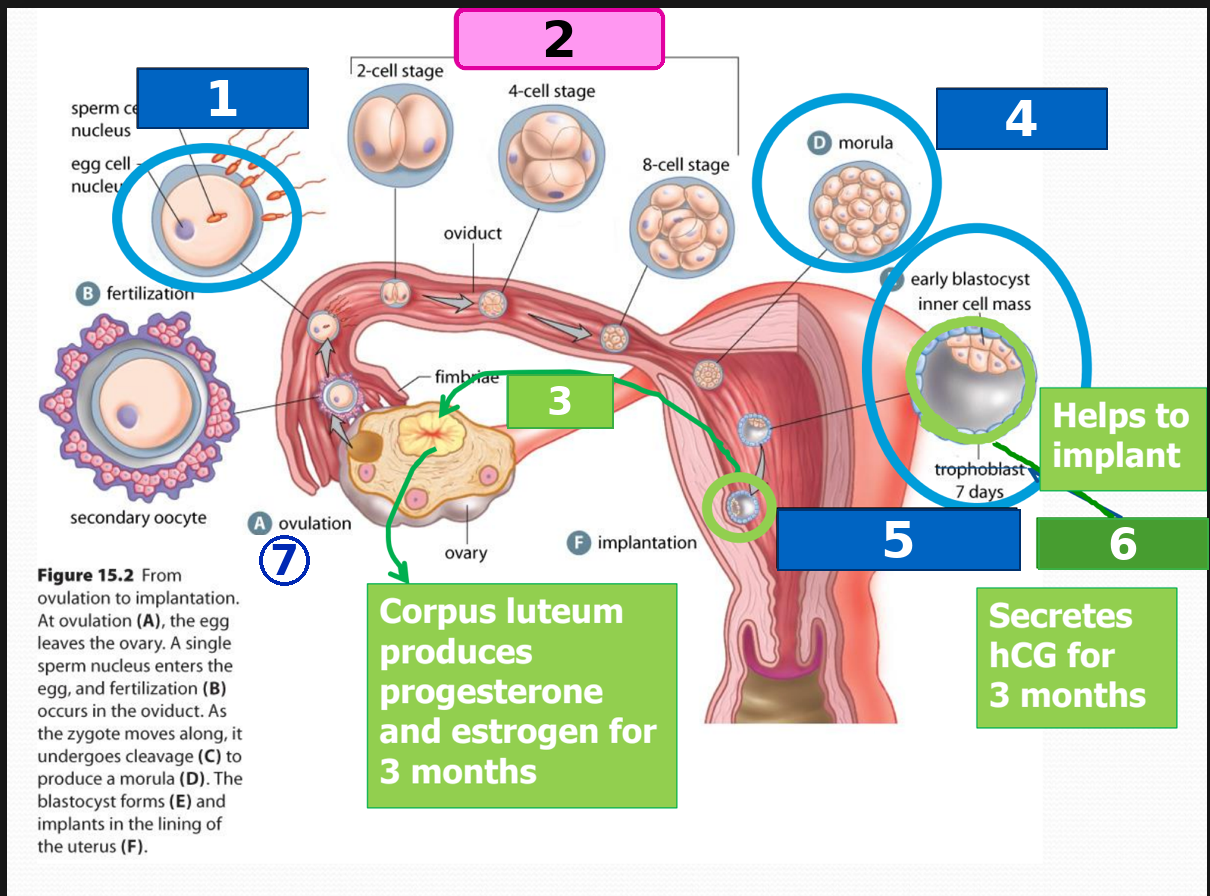
1
zygote
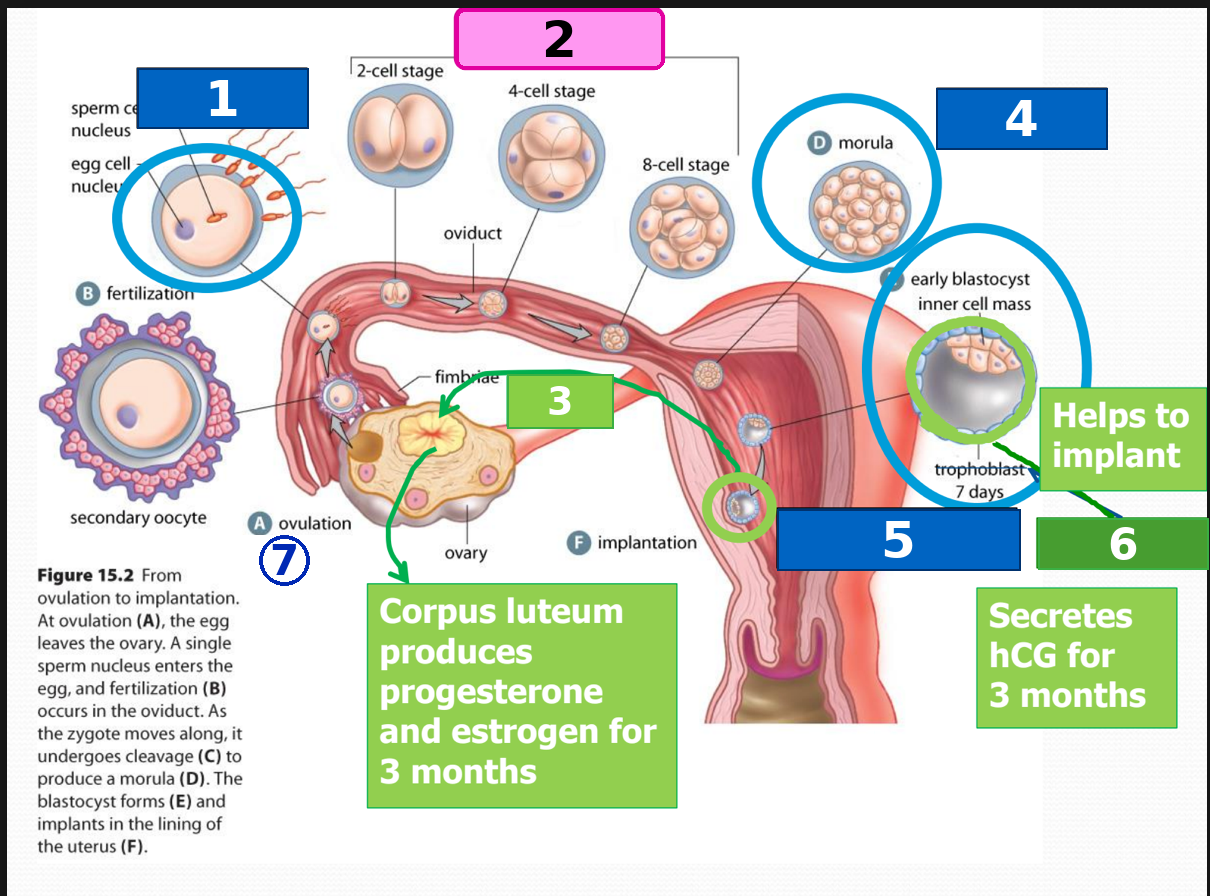
2
mitosis
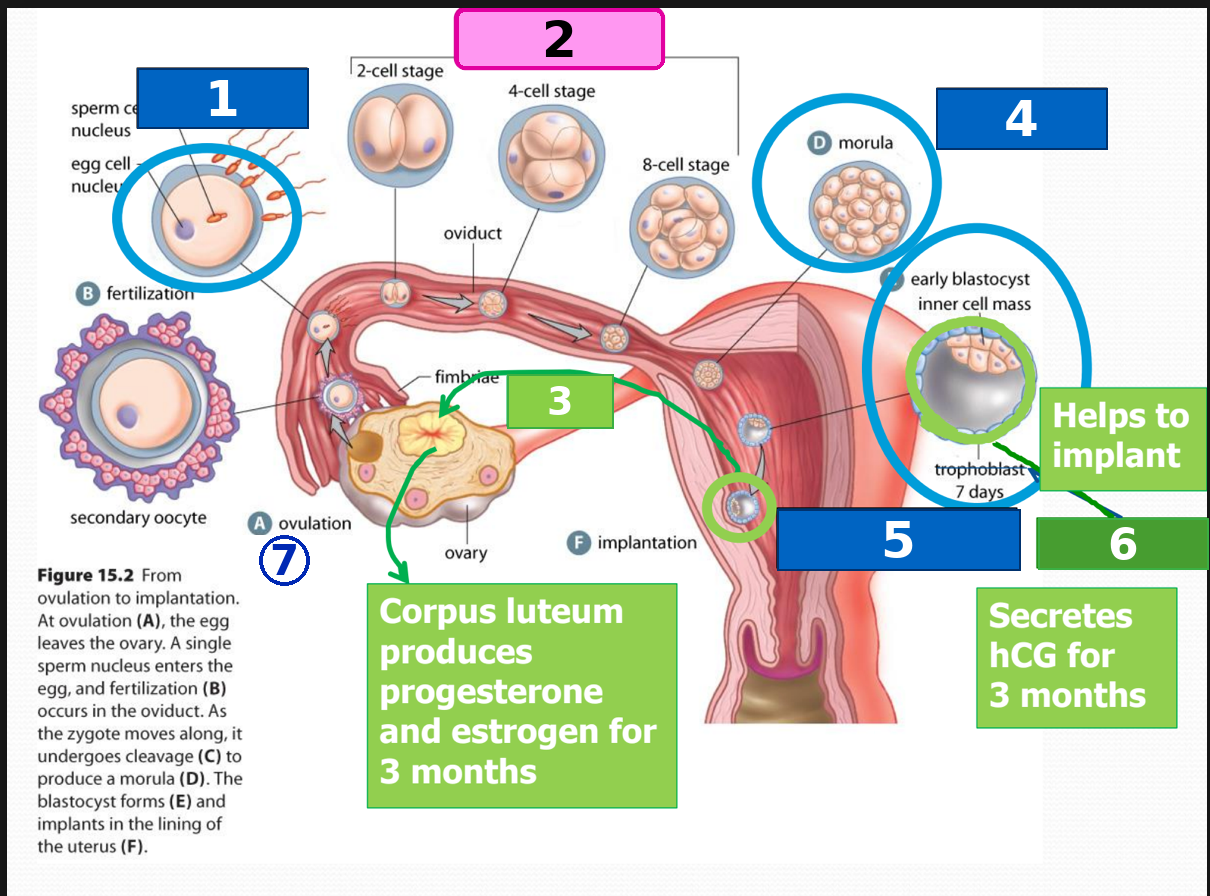
3
hCG
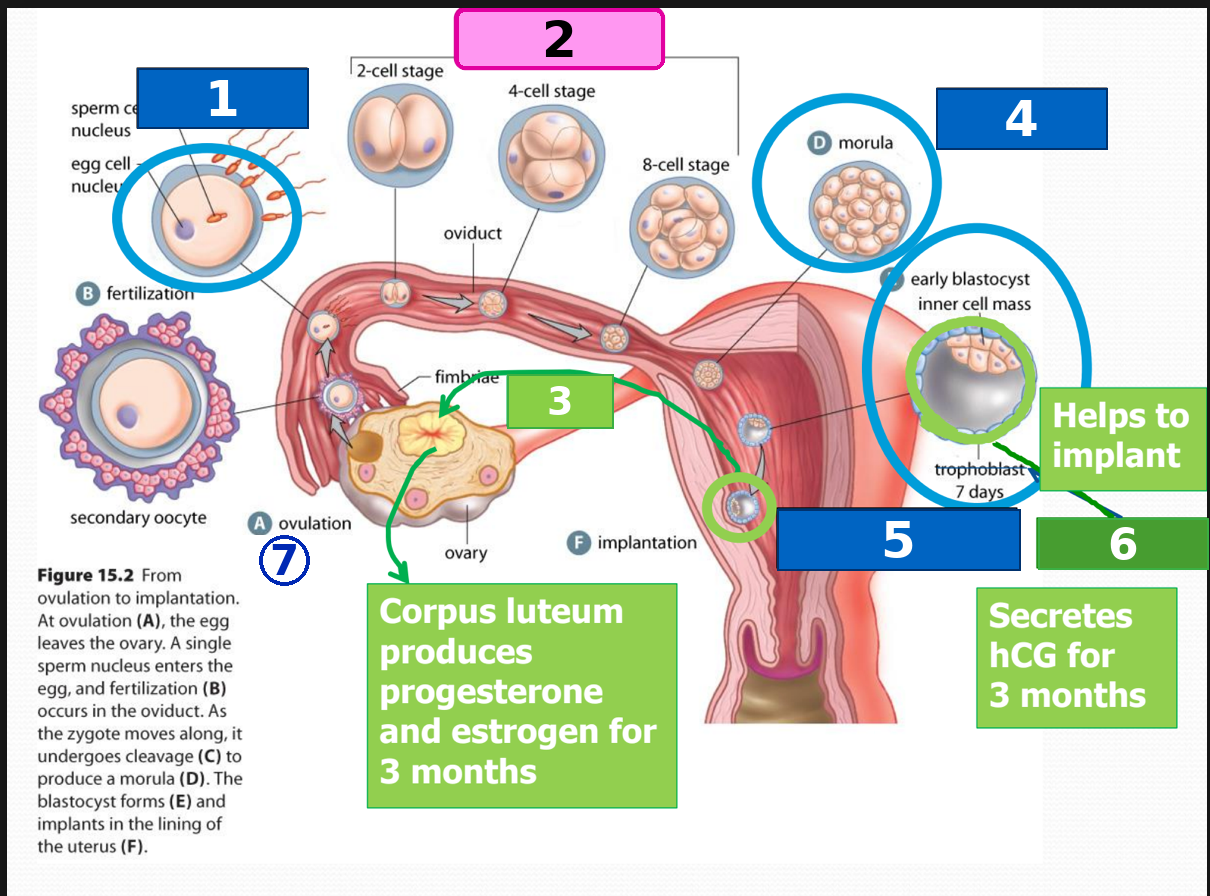
4
morula
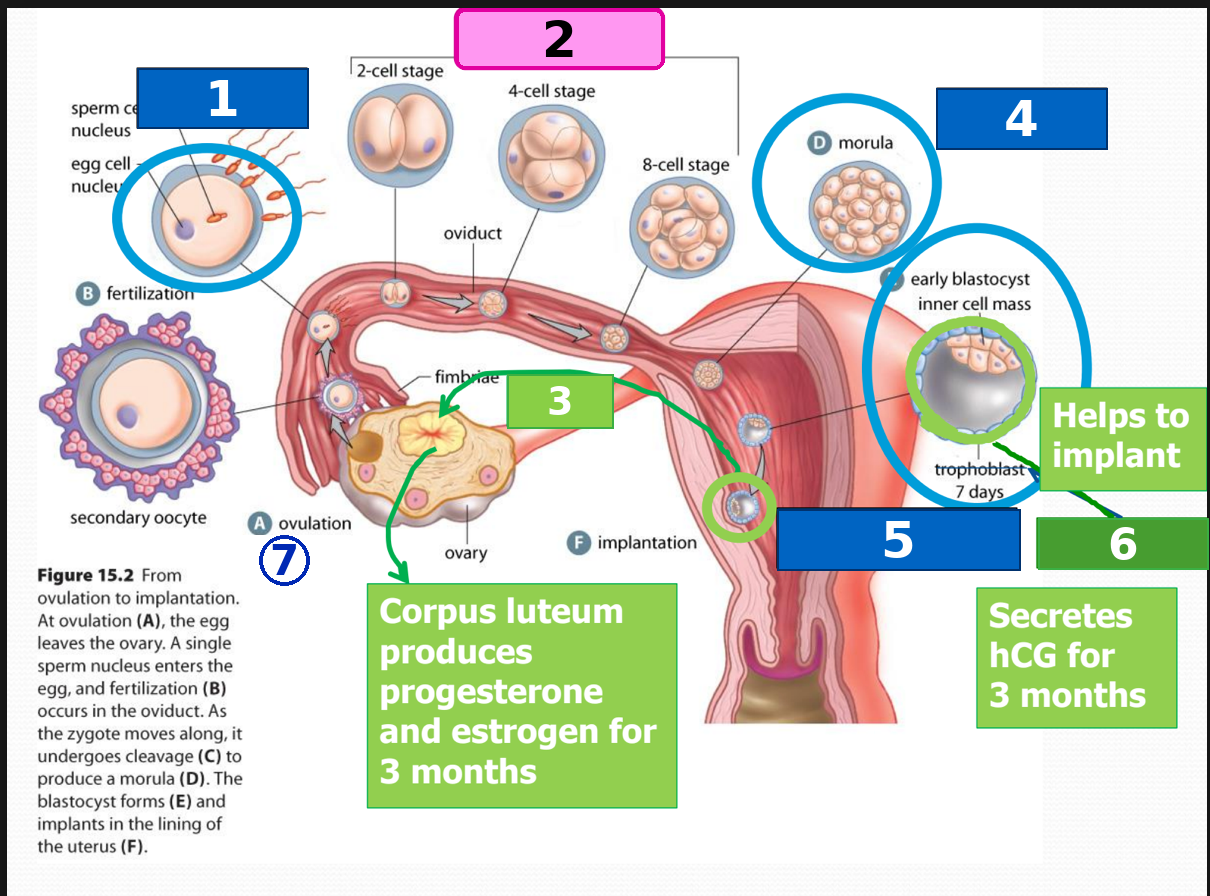
5
blastocyst
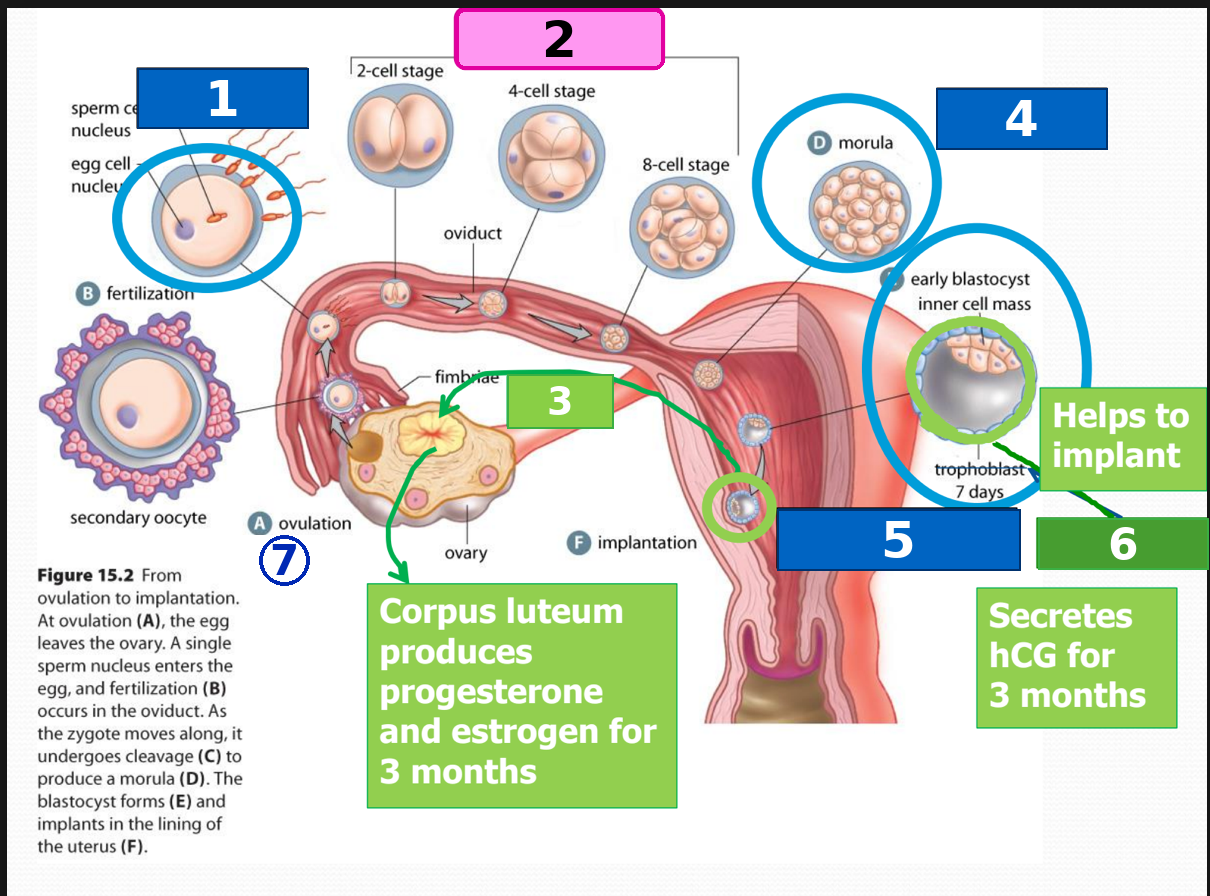
6
chorion
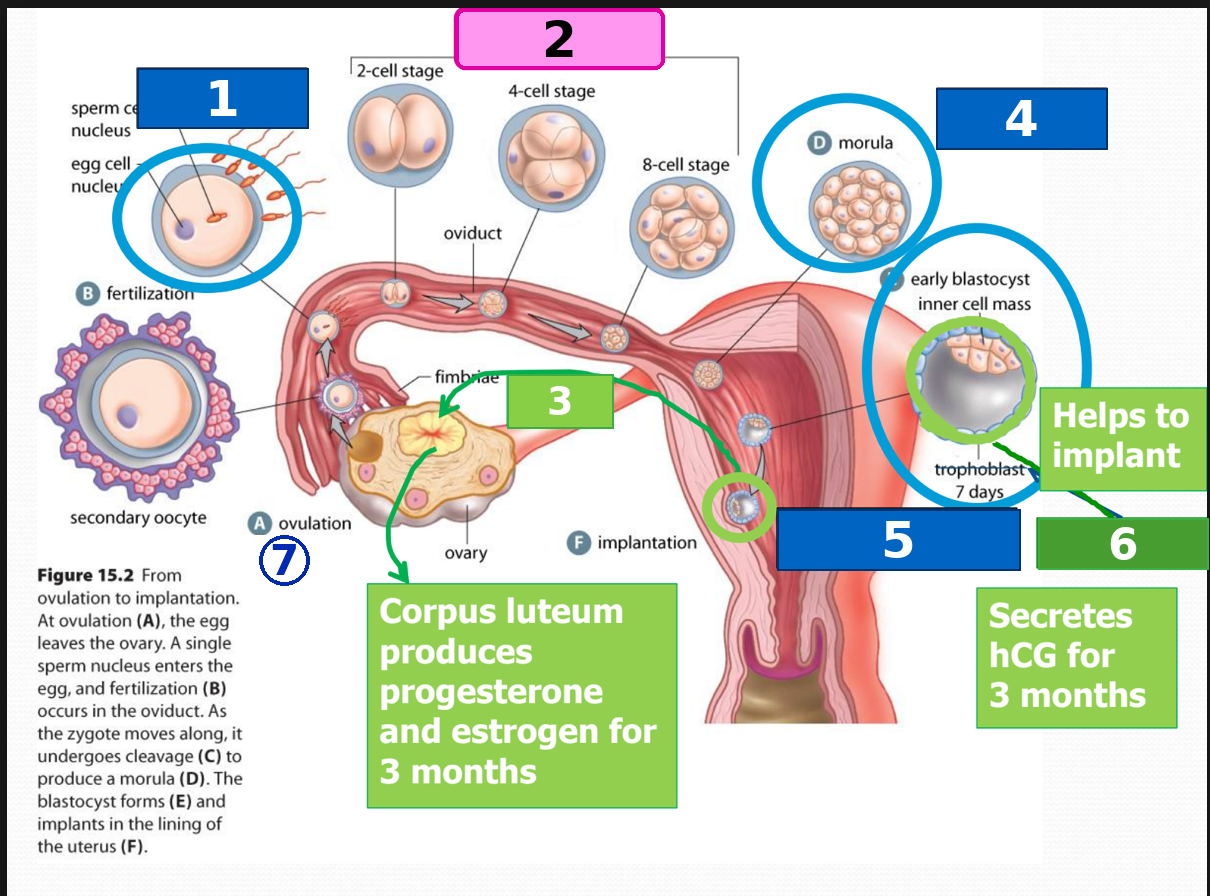
7
day 14
gastrula
3 germ layers. neurulation
neurulation
formation of neural tube (develops into brain and spinal cord)
ectropic pregnancy
a fertilizaed egg has implanted outside the uterus and usually in the fallopian tube
outer layer of the blastocyst (the chorion) starts to secrete
hCG when it implants in the endometrium on day 7 which causes morning sickness and is measure in a pregnancy test
how can a msicarriage occur
placenta doesnt start making progeerstone and estrogen after corpus luteum stops making it
gastrulation
process in which the inner cell mass of blastocyst turns into 3 Germ layers
what day does blastocyst become gastrula
day 7
ectoderm (outer)
skin (epidermis), nervous system
mesoderm (middle)
sekelton, muscles, gonads
endoderm (inner )
lining of the digestive and respiratory systems and endocrine glands
morphogenesis
biological processs that causes an organism to develop its shape. e.g. formation of blastocyst, gastrula, germ layer, etc
amnion
Inner membrane of outer layer of blastocysts
beomes fluid-filled sca that protects embryo from infection, impact and temperature fluctations
allantois
forms the foundation of tne umbilical corn and becomes part of the bladder
yolk sack
in outer animals: provides nutrients
small in humans and forms blood cells
placenta
allows echange of some substances between mother and fetus
DOES NOT EXHANGE BLOOD CELLS FROM EITEHR MOTHER OR FETUS
placenta exchange from mother
nutrients, oxygen, antibotics, viruses, drugs, alciohol
placenta exchange from fetus
metabolic wastes (CO2, urea)
when is placenta formed
when villi from chorion extend from endometrium and is not fully developed until 2nd trimester
placenta secretes
estrogen and progesterone during 2nd and 3rd trimester
umbilical cord
rope like structure that forms after 8 weeks, runs from belly button of fetus to placenta
carries _ arterie(s) and _ Vein(s)
2,1
arteries from umbilical cord carry what kind of blood from fetus to mother
deoxygenated
veins from umbilical cord carry what kind of blood from mother to fetus
oxygenated
1
placenta
2
chorion
3
amnino
4
cervical plug/mucus - helps keep out pathogens
5
uterus
6
amniotic fludi
7
umbilical cord
8
umbelical vein - carries oxygenated blood
9
umbilical arteries - carry deoxygenated blood
10
cervix
11
vagina
1st trimester
mainly organogenesis
sex develops
most susceptible to environmetnal factors (teratogens)
chorion secrets hCG
organogenesis
development of organs
teratogens
substances that increase chance of birth defects
Alcohol effect
can cause FASD
tobacco effect
can cause hidnered fetal growth
cannabis effect
affects the brain, heart, intestines and can cause sudden infant death syndrome (SIDS)
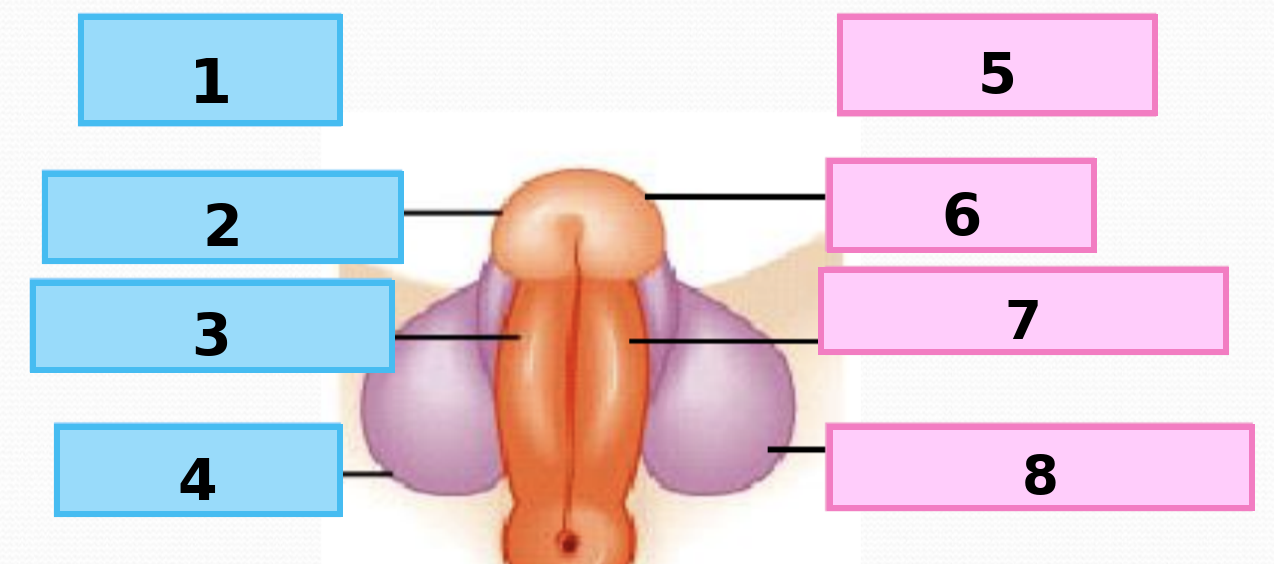
1
males
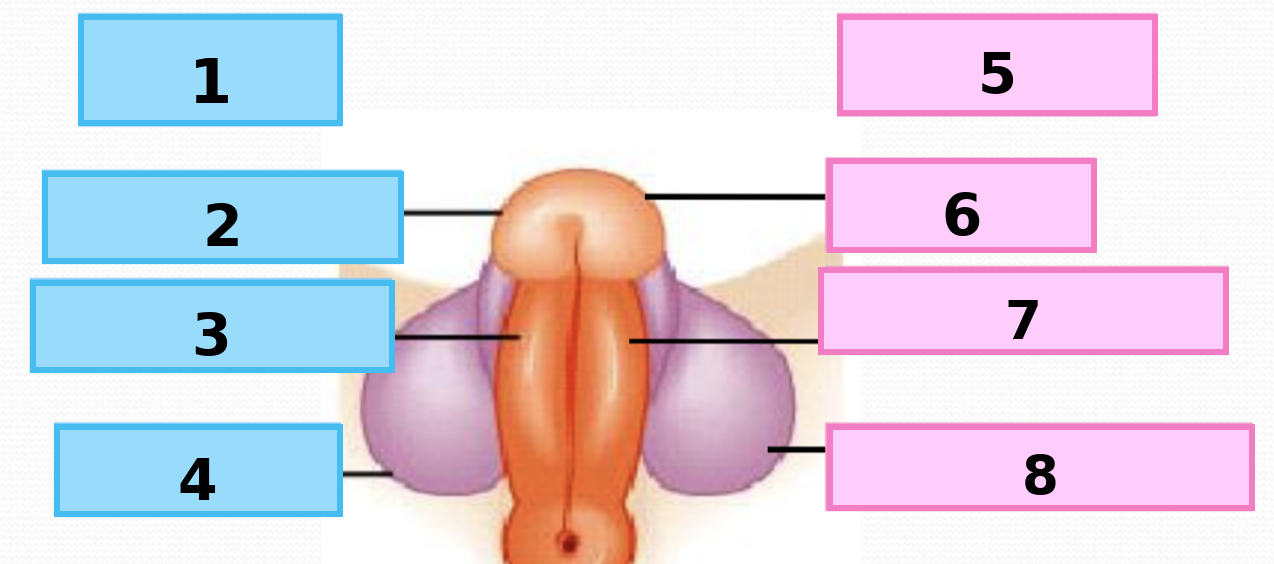
2
glans penis
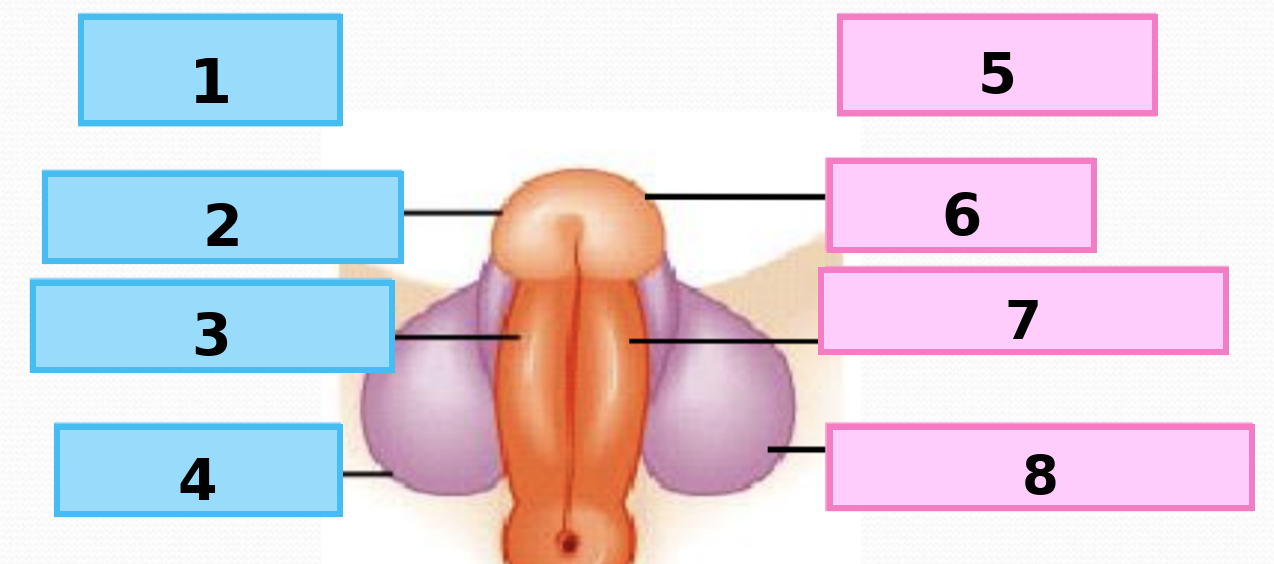
3
penis shaft
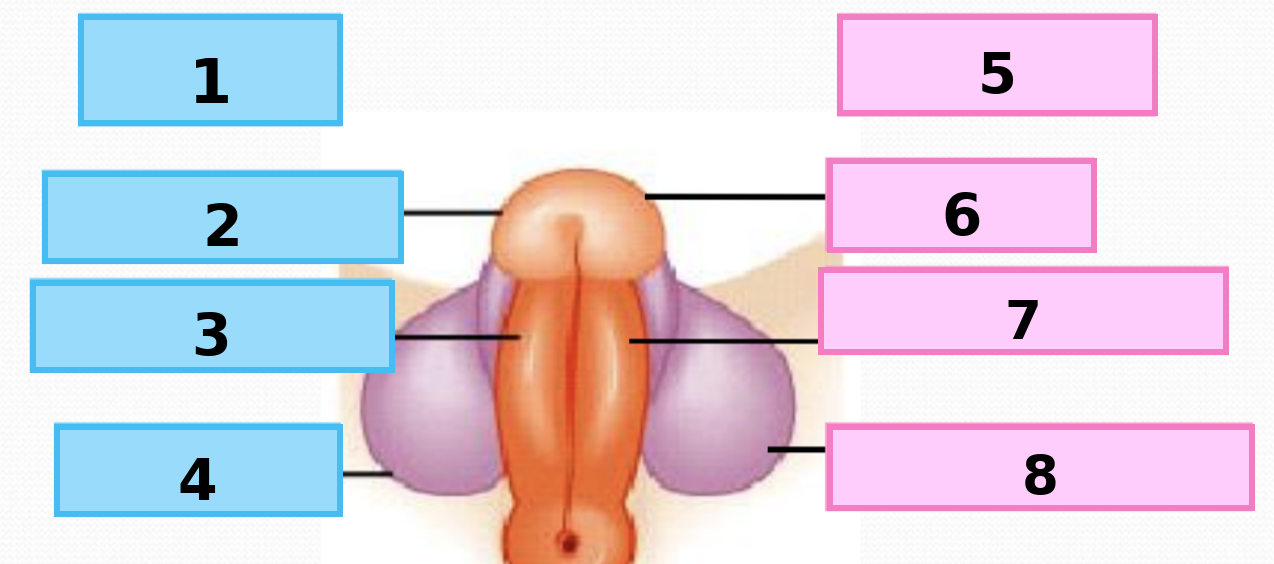
4
scrotum
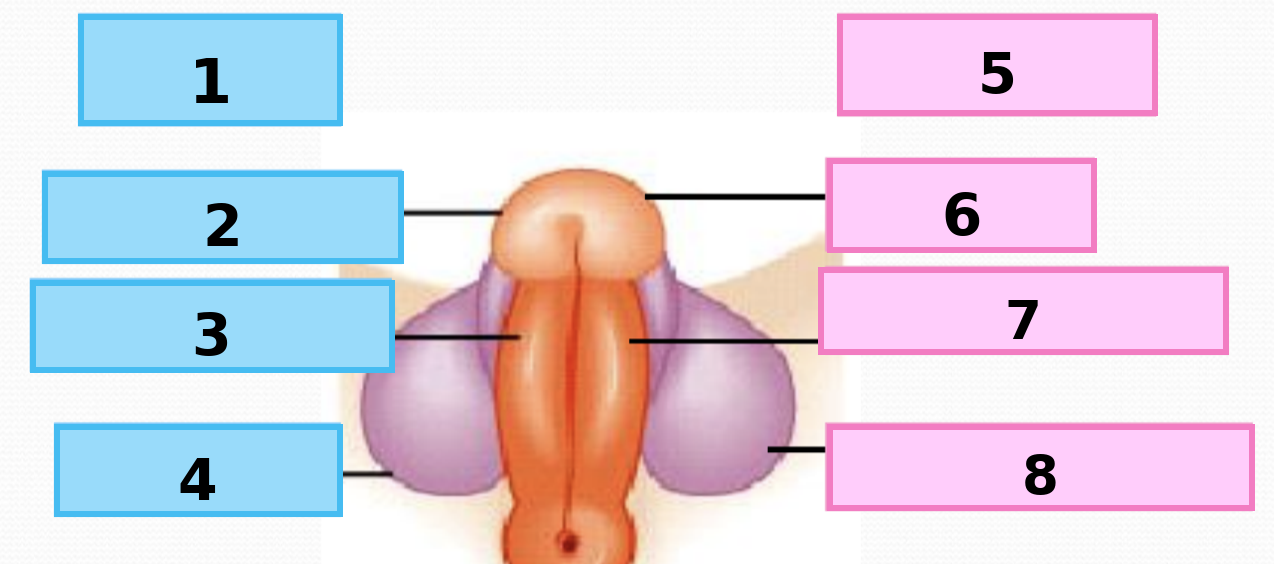
5
females
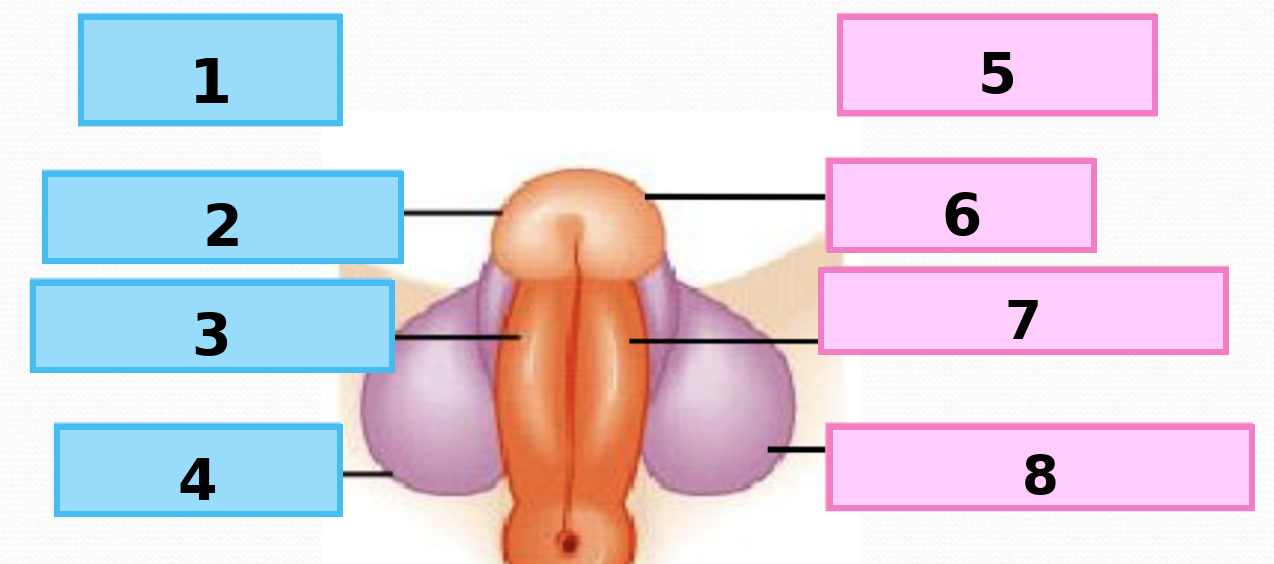
6
clitois
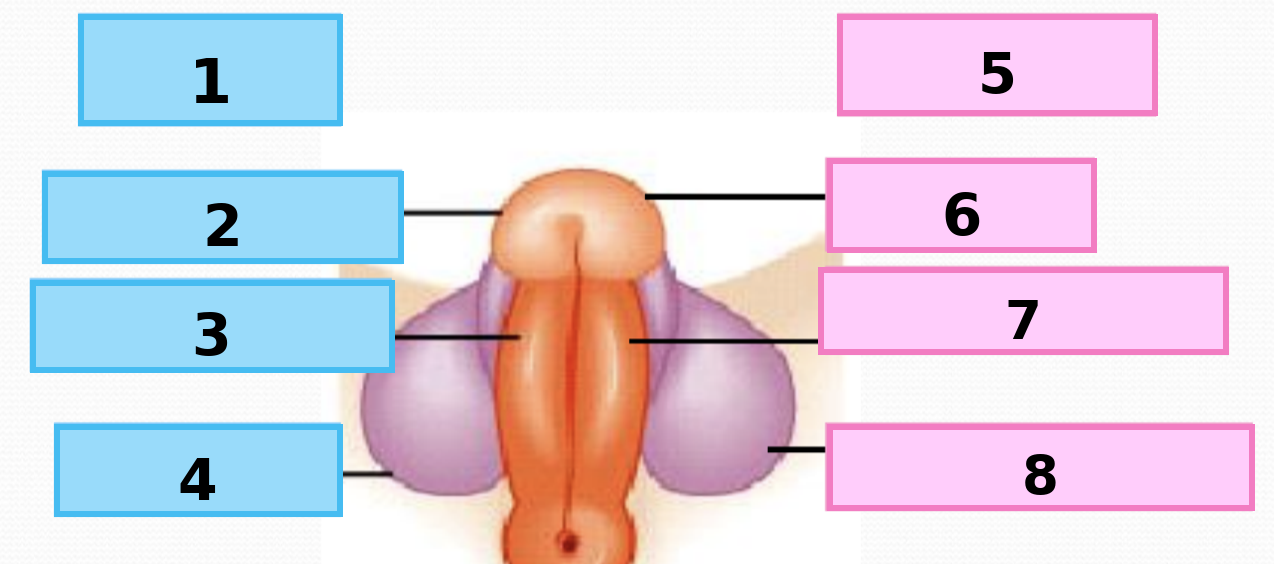
7
labia minor
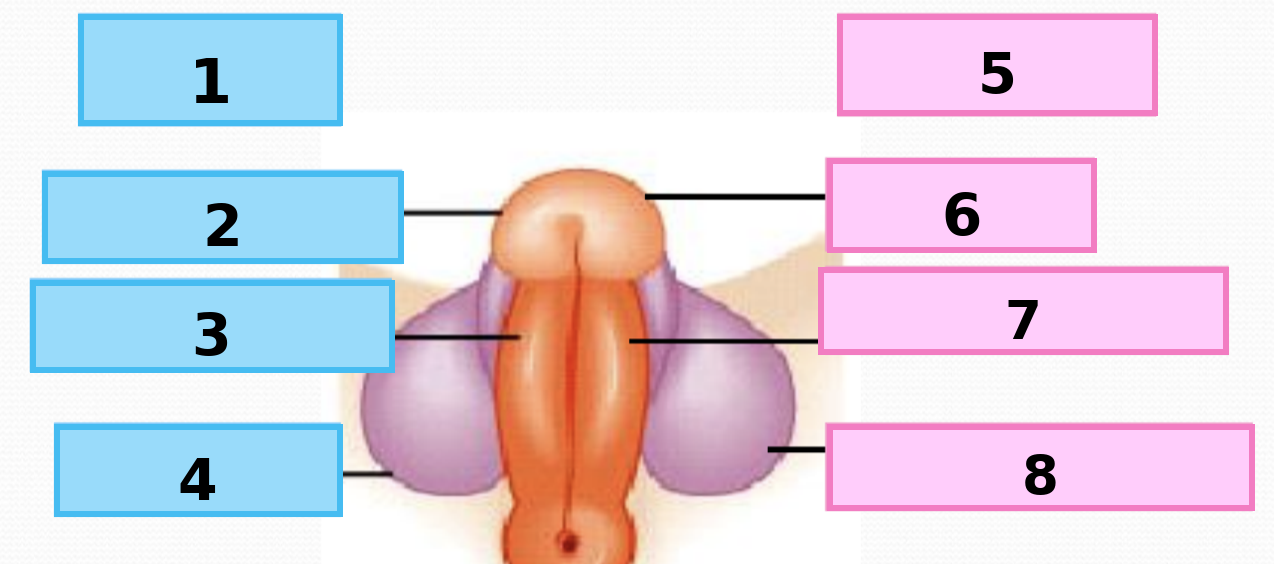
8
labia major
abdomiinal cabity
where female and male sex organs origniate
2nd trimester
grow adn refinement of tissues; hair and fingernails grow
organs contineu to form, carilage skeleton replace by bone
fetus can survive outside womb at end of this trimester (with medical support)
placenta secretes progesterone and estrogen
third trimester
fetus grows rapidly
organs sytem increase in size
fat is depsited
repsiratory and ciruclator system allow for air breathing
tesstes decend into scrotum
parturition
low levels of progesterone to labor onset
high estrogen levels trigger oxytocin receptors in myometrium
rythmic uterine contrations signal labor
cervix beings to dilate
aminiotic membrane bursts (water breaks)
labour hormones
prostaglandins, relaxtin, oxytocin, prolatin
prostaglandins
local area hormone that works with oxytocin causing uterine contractions
relaxin
produced by placenta, relaxes ligaments in pelvix which ease passage of baby
oxytocin
produced by hypothalamus and stored in posterior pituitary, positive feedback causes uterine contractions
prolactin
produced by anterior pituitary, causes mamary glands to produce milk
1st stage of birth
dilation (labour)
2nd stage of birth
expulsion (delivery)
3rd stage of birth
placental delivery
episiotomy
incision is made iwth scalpel to increase size of vaginal opening
caesarean section
incision in abdomen and uterus
epidural analgesia
needle inserted into the epiusural space in the spine which provides pain relief during labor by blocking sensoru pain receptors essentially making one numb from waist down
colostrum
yellowish fluid produced by mammary glands during first days after birth which are high in protein and antibodies to protect baby
________ is produecd after birth when levels of ________ and _______ drop. this initates milk production
prolactin, estrogen, progesterone
chorionic villus sempling
a thin tube is guided throguht the cervix or a needle is inserted into the uterus to remove a sample of choronic villus cells from the placenta for genetic testing
amniocentesis
neddle withdraws amniotic fluiid smaple containing fetal cells which are used for genetic/kartotyping/hormone tests
ultrasound imaging
soundwaves sent through body are used to visulaize internal structures
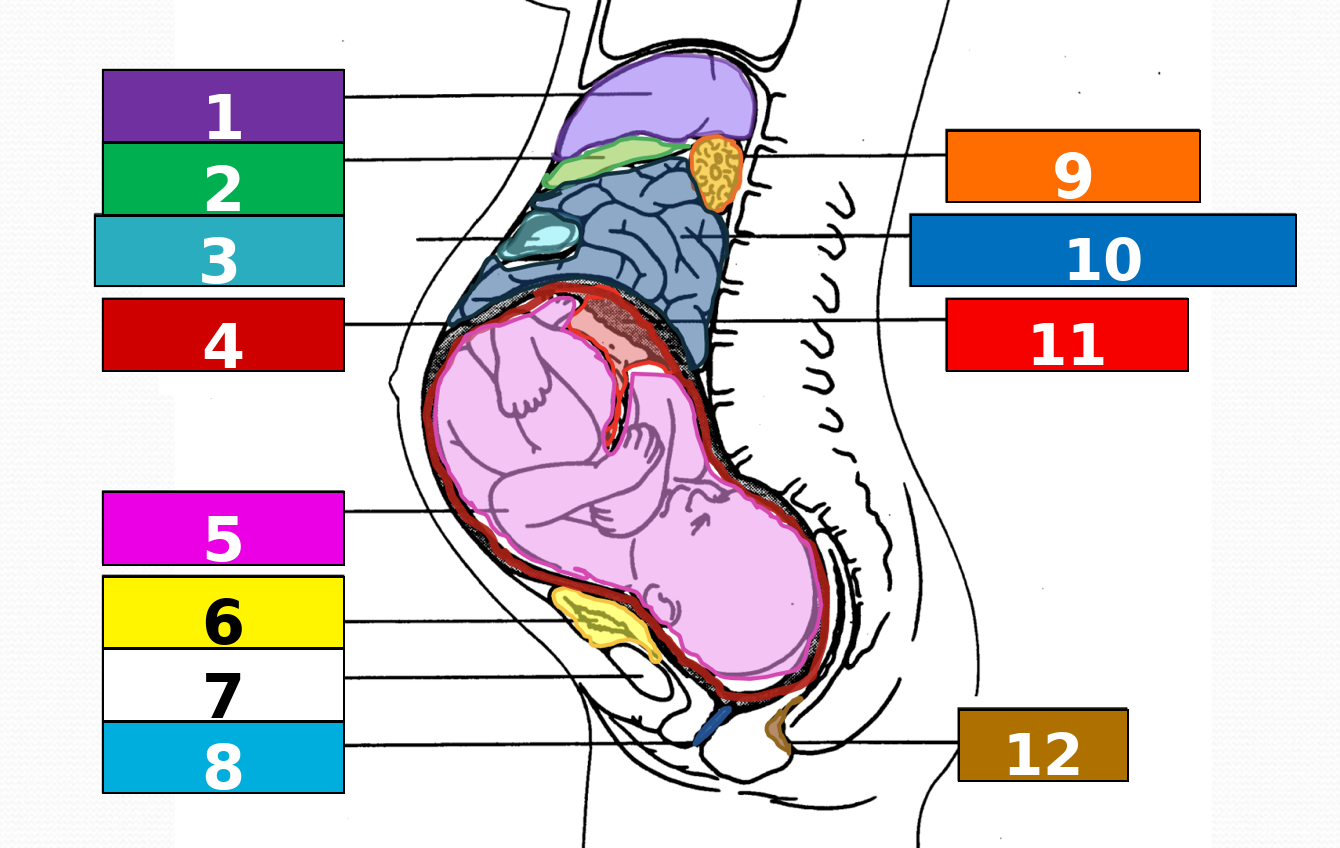
1
liver
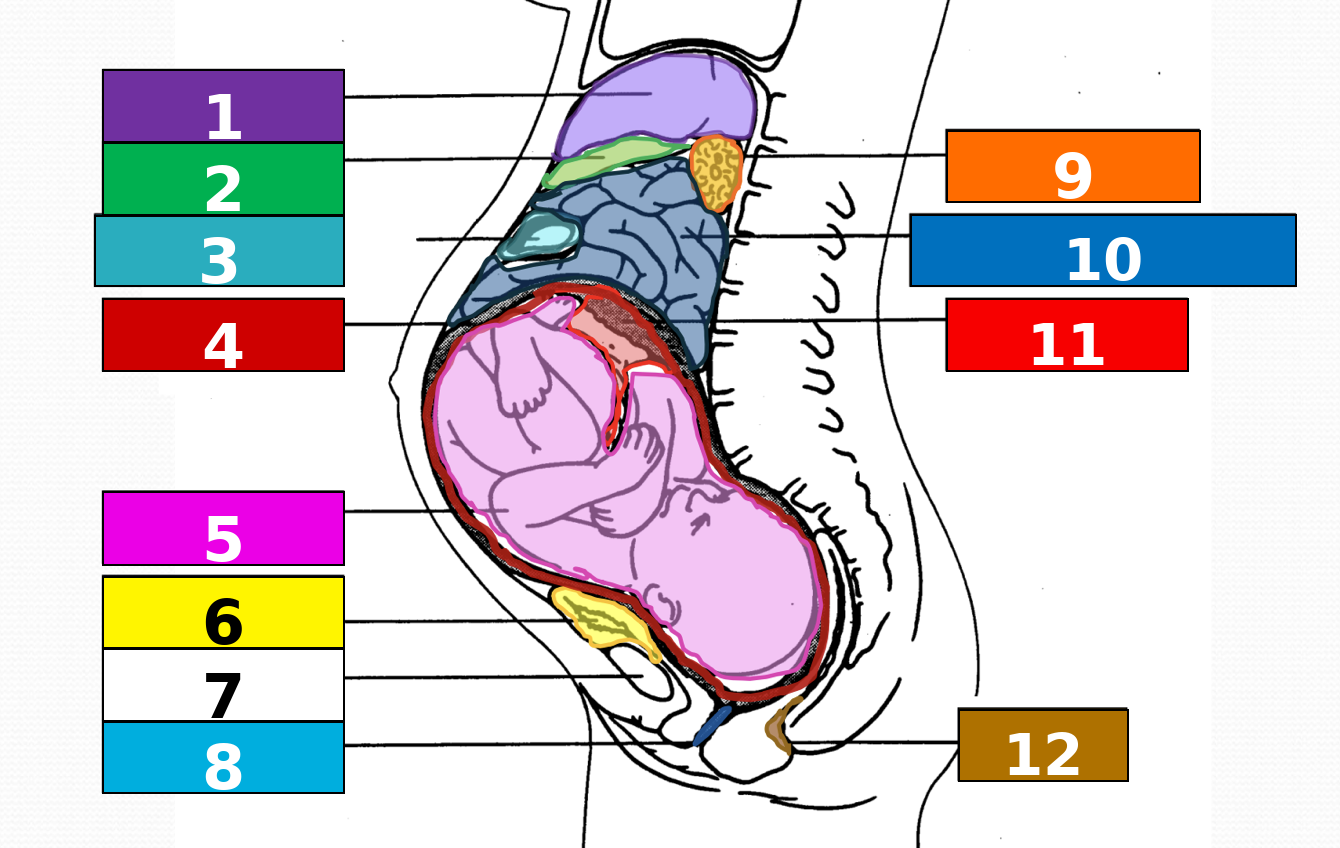
2
stomach
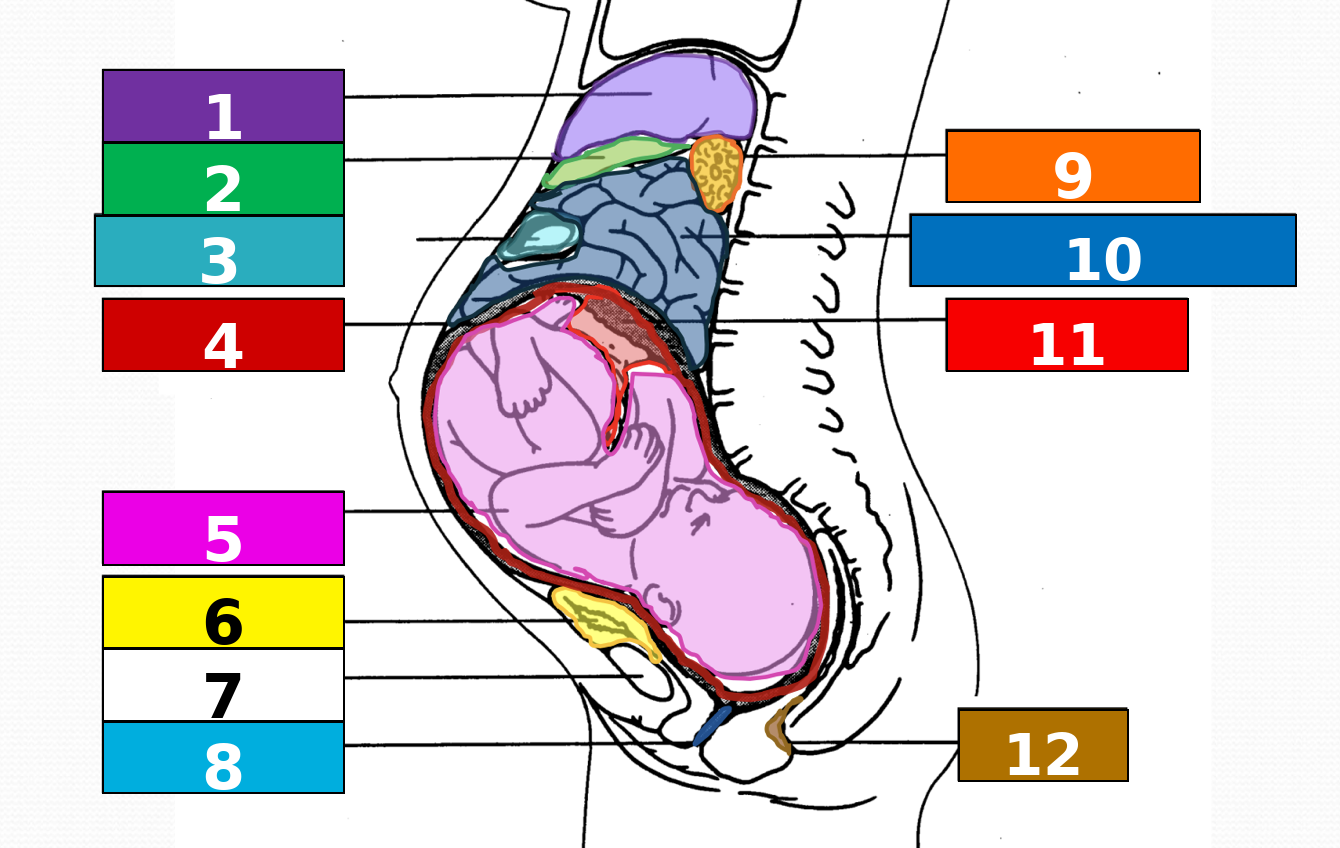
3
colon
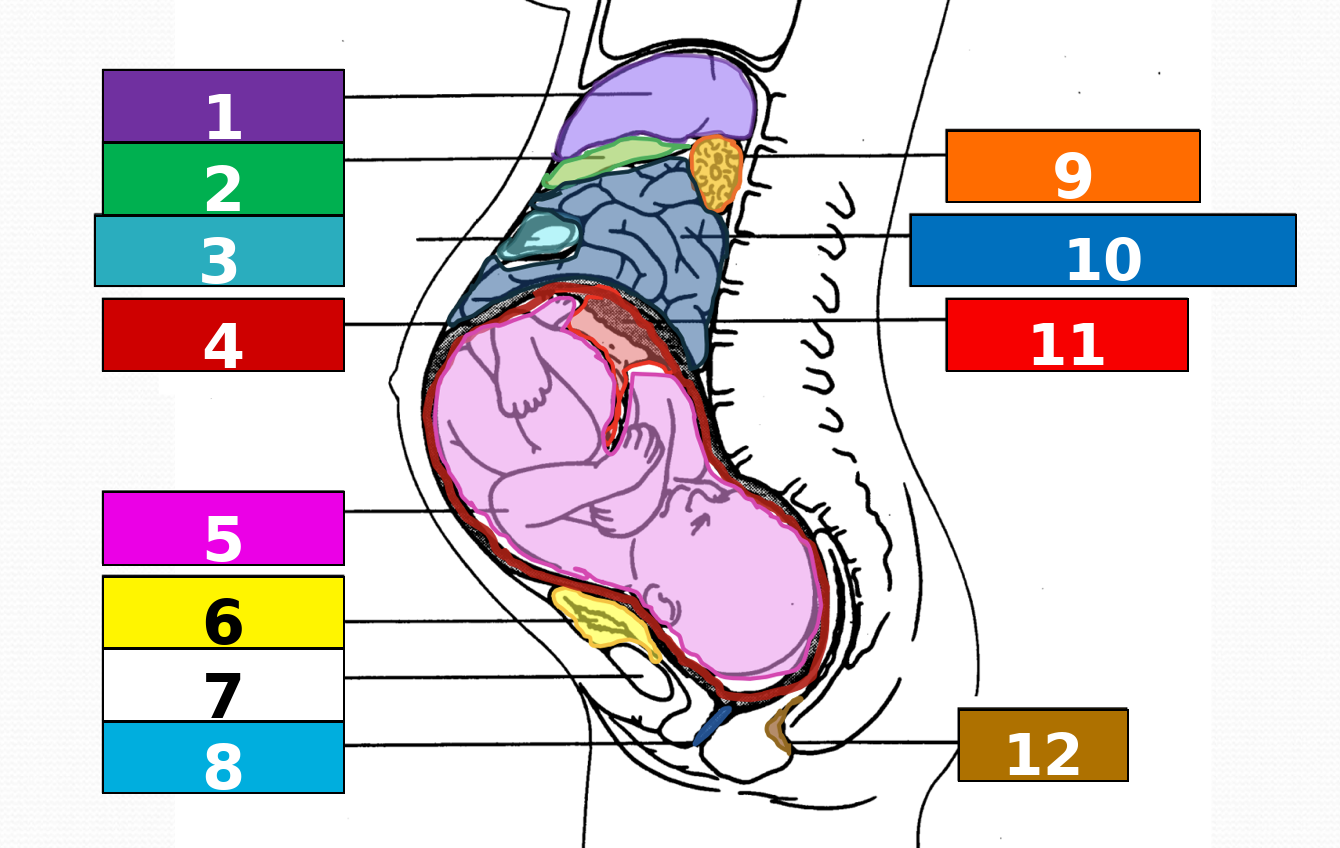
4
uterus
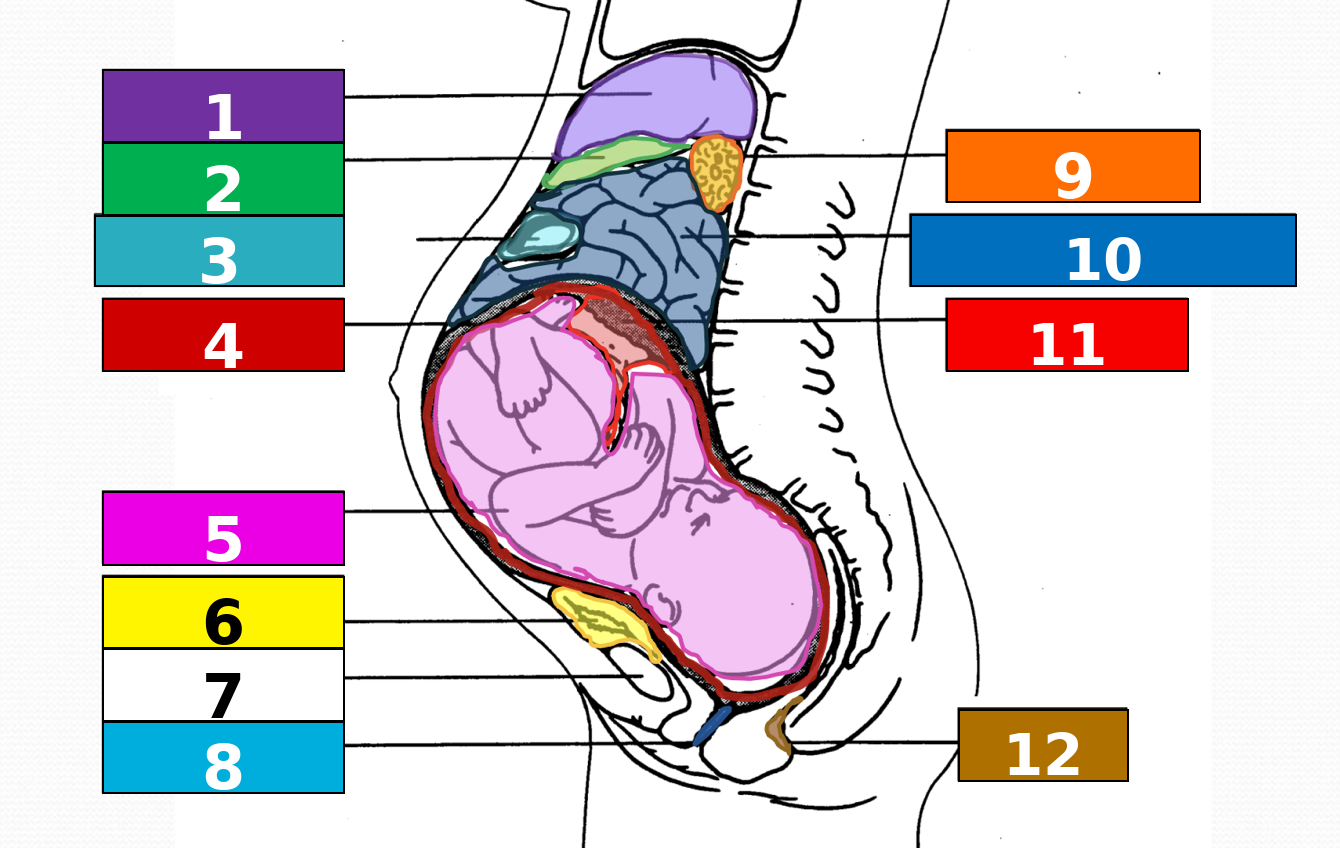
5
fetus
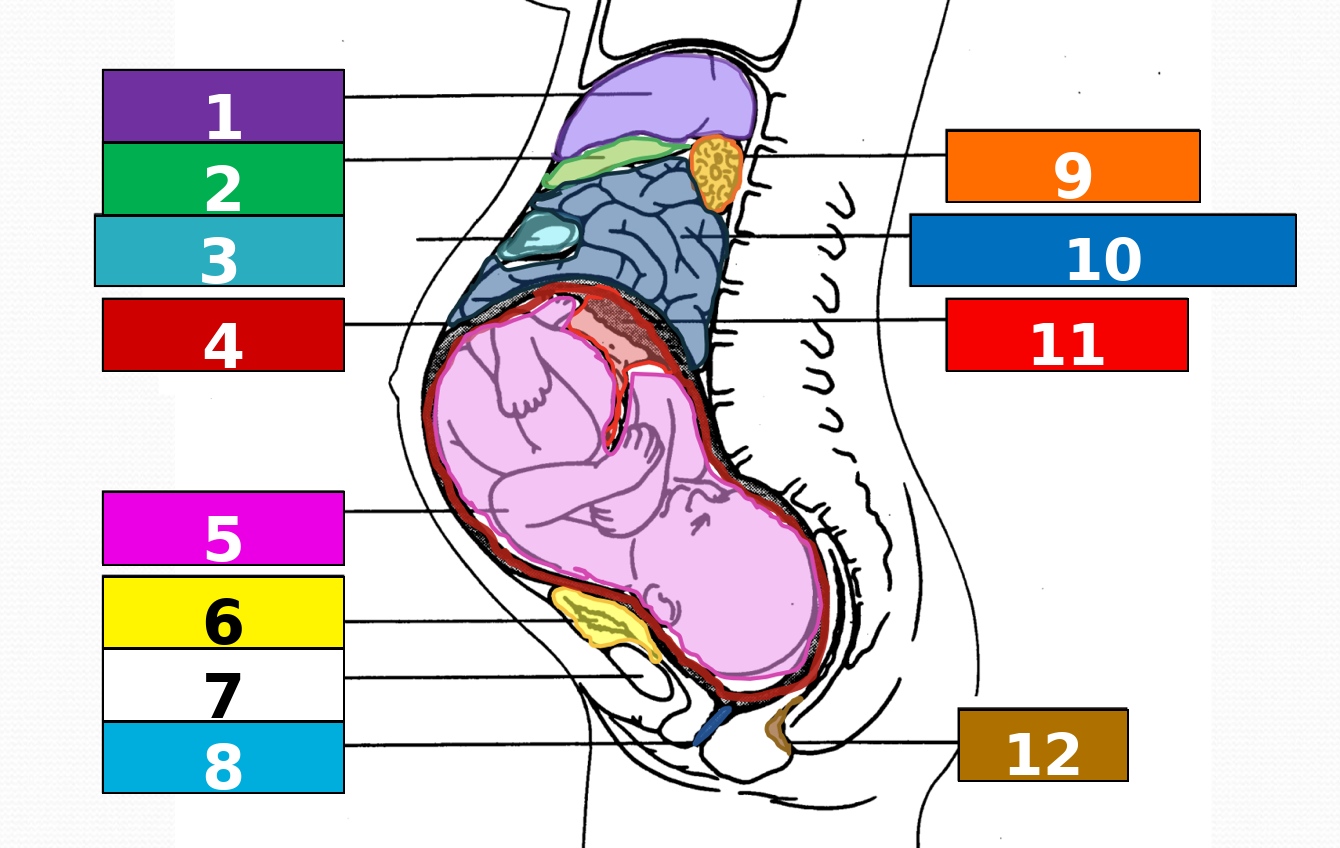
6
bladder
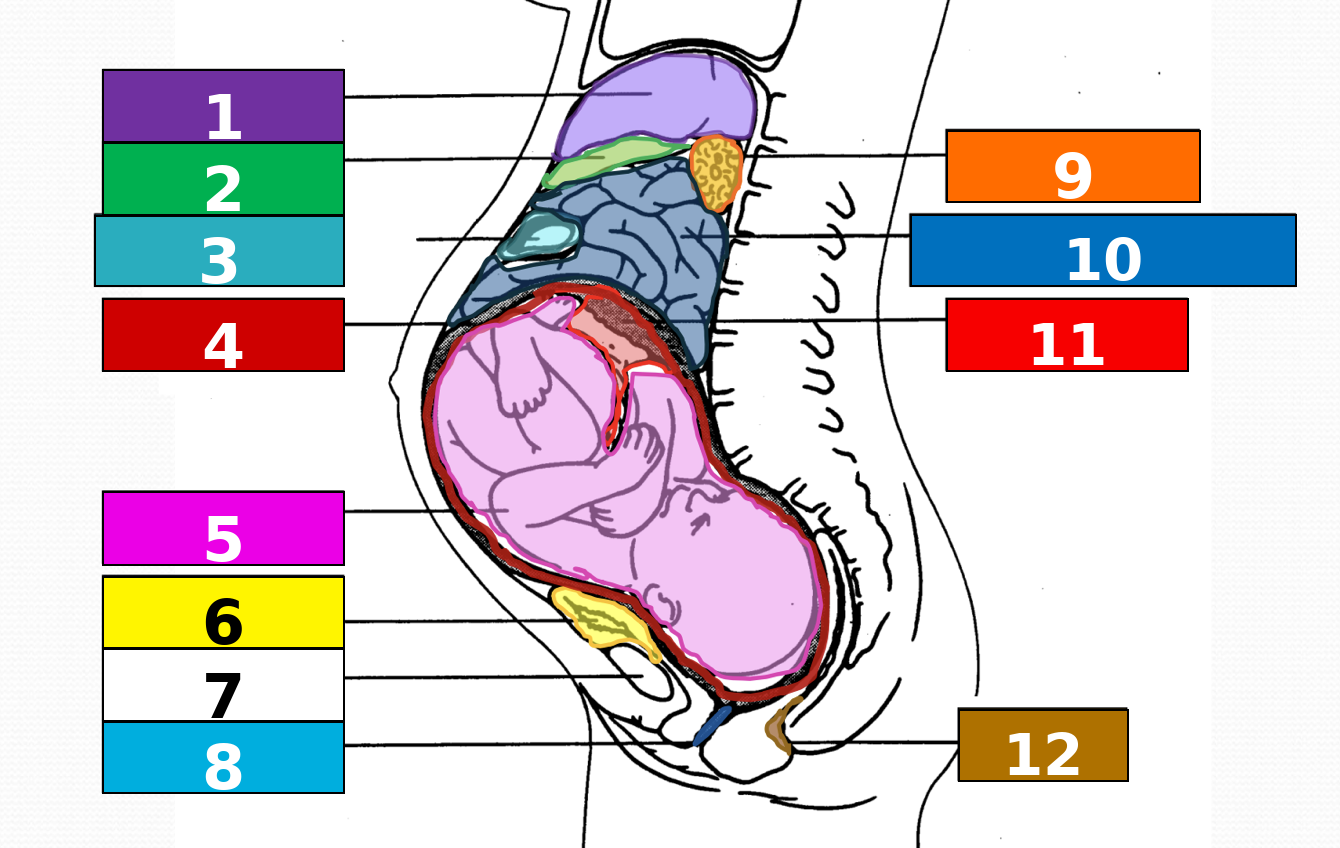
7
bone
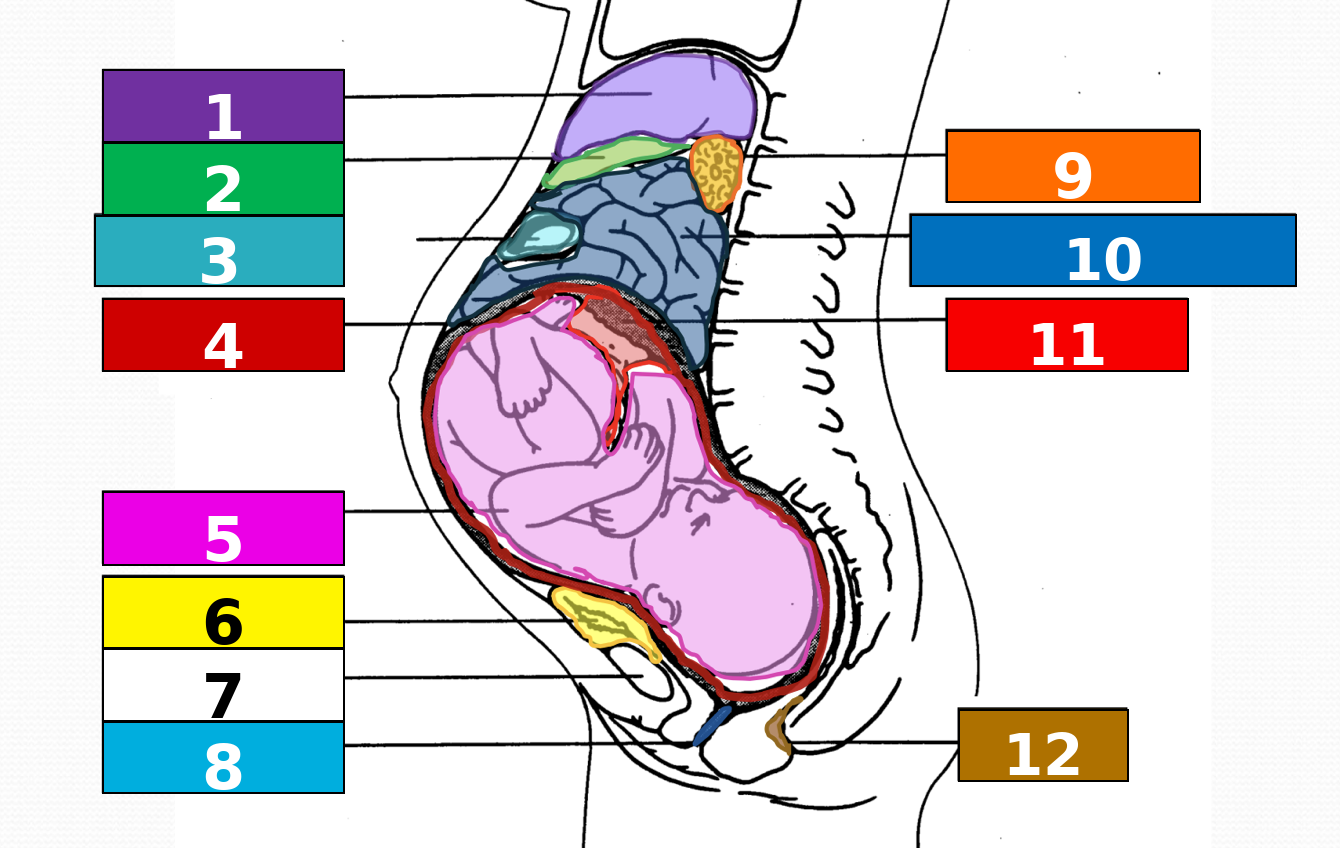
8
vagina
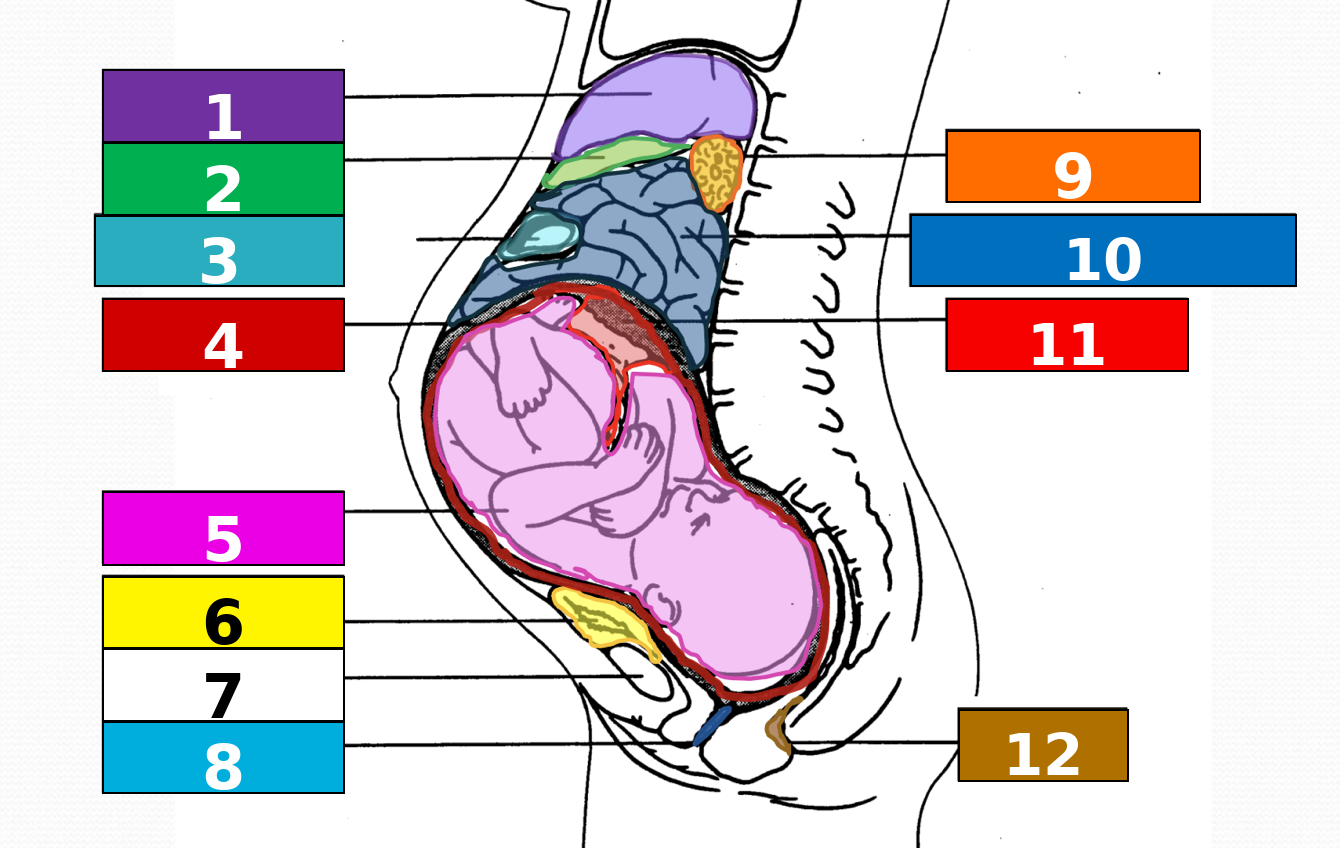
9
pancreas
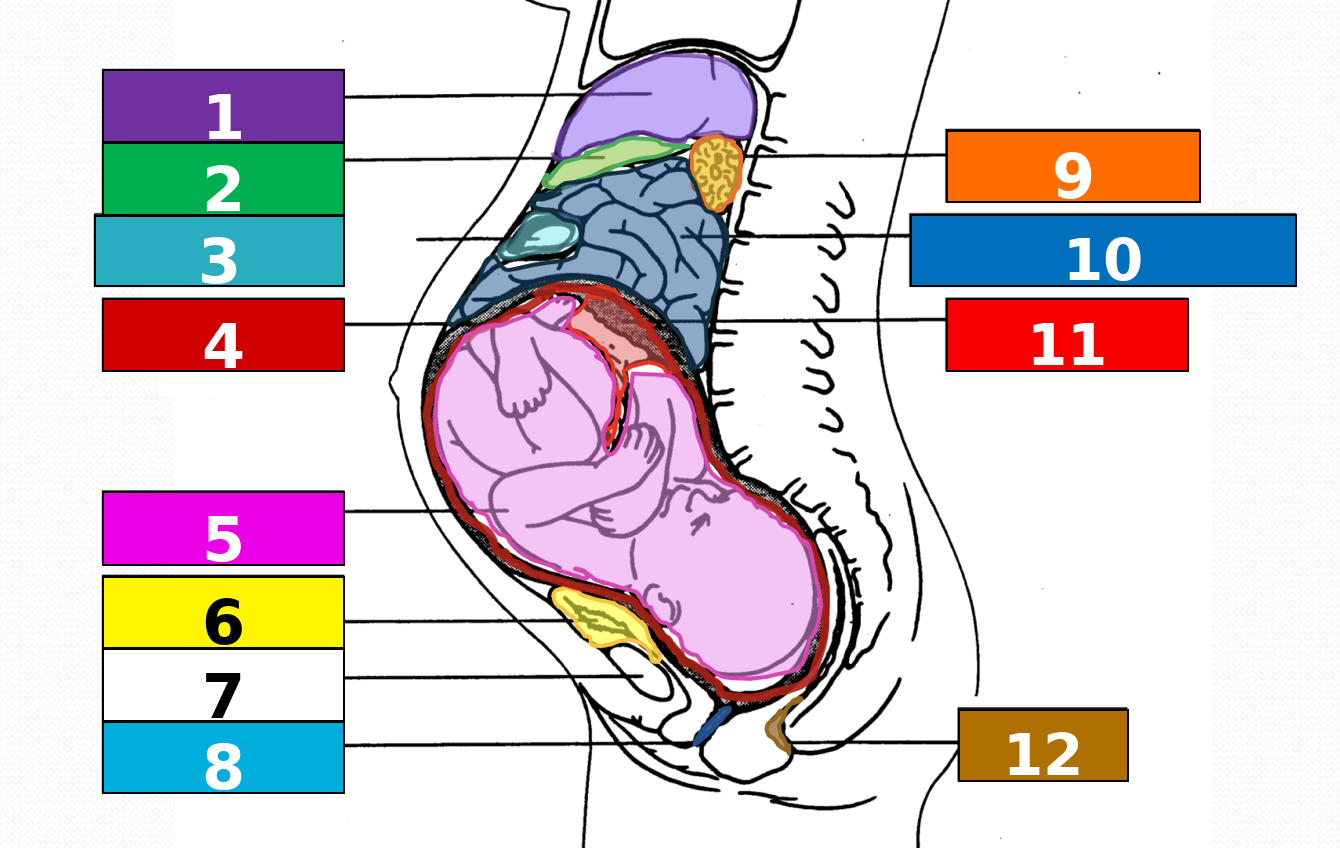
10
small intestine
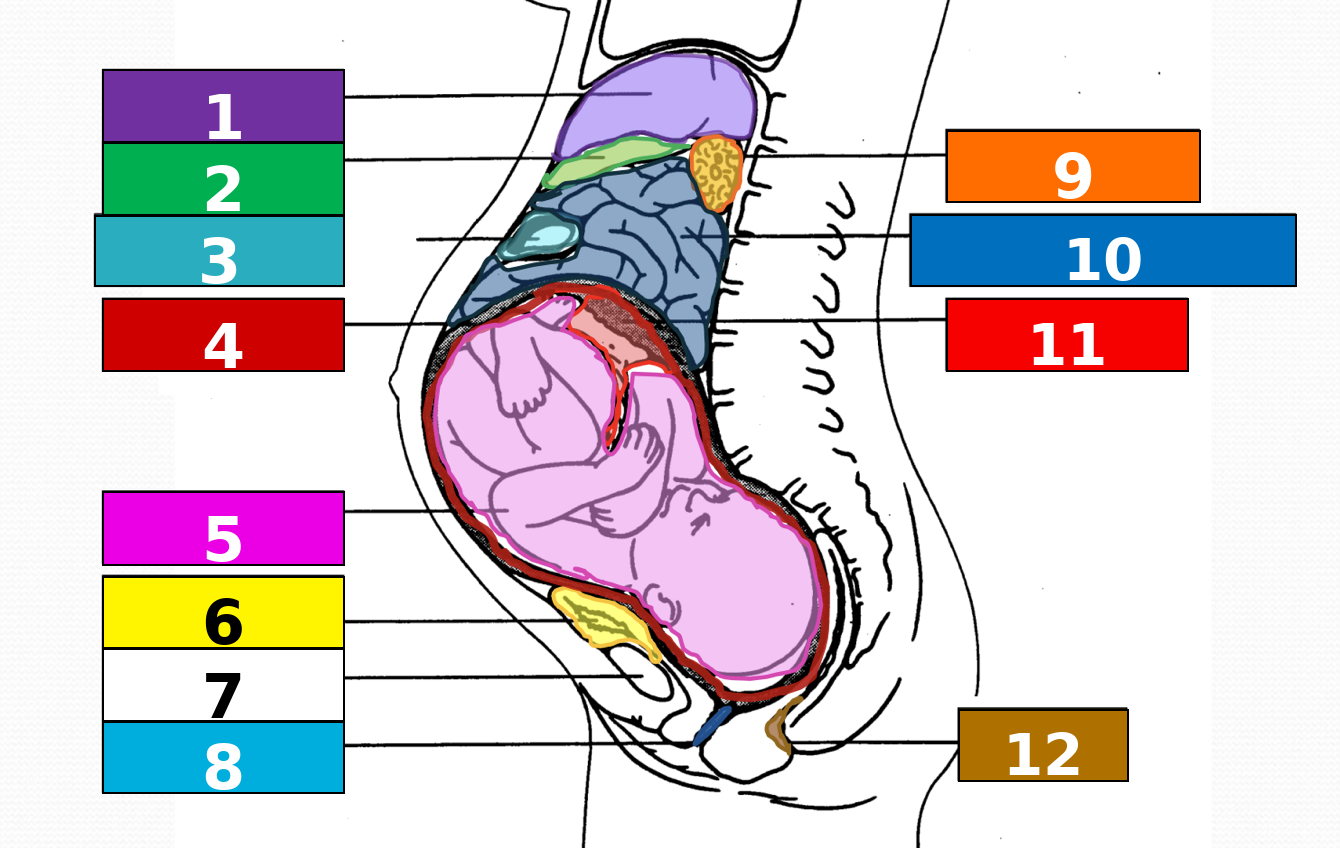
11
placenta
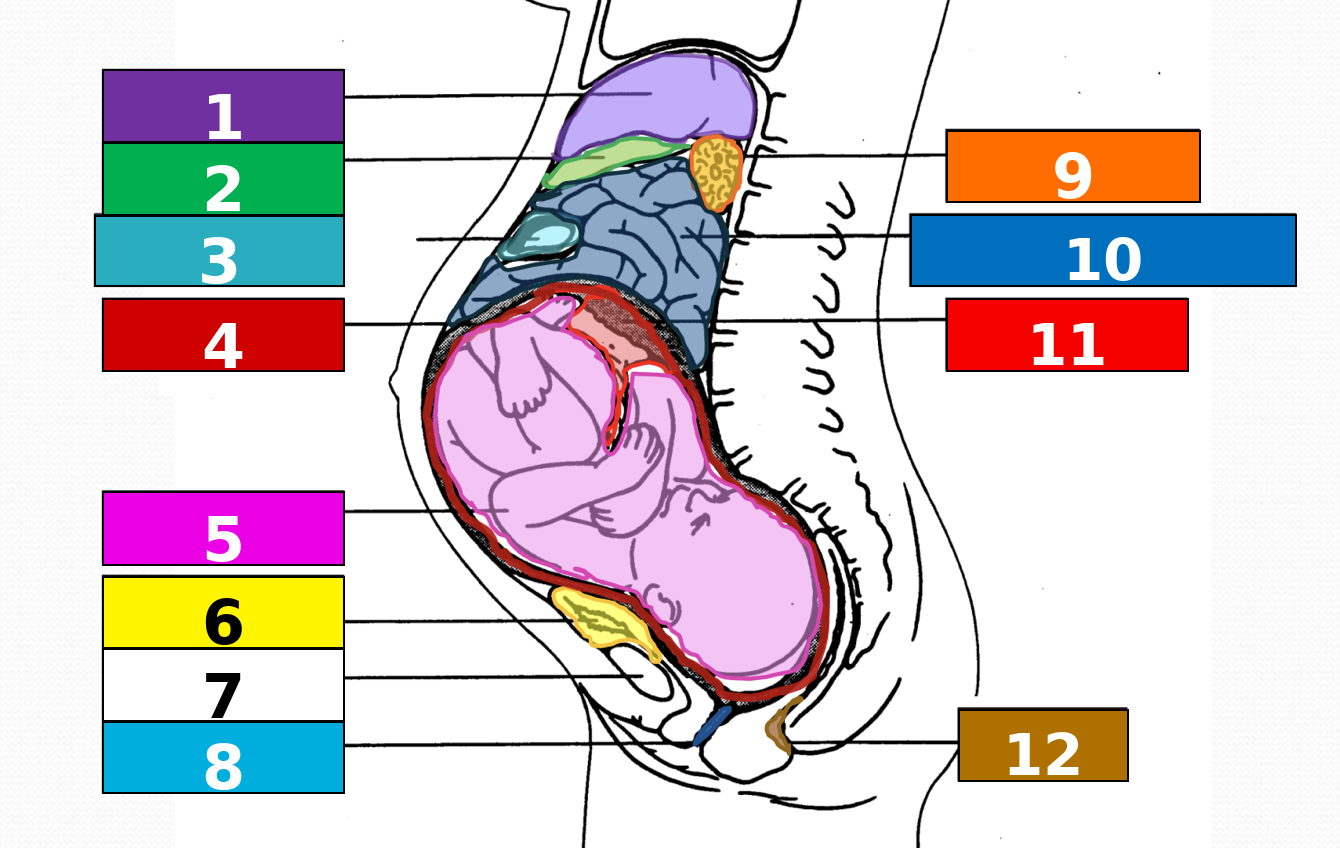
12
anus