BI358 midterm 1
 Call Kai
 Learn
Learn Practice Test
 Spaced Repetition
 Match
Match Flashcards
 Knowt Play
1/58

There's no tags or description
Looks like no tags are added yet.
Name | Mastery | Learn | Test | Matching | Spaced | Call with Kai |
|---|
No analytics yet
Send a link to your students to track their progress
59 Terms
metabolism
the sum of all chemical reactions in the cell
which one is NOT a chemical reaction
melting, freezing, evaporating, dissolving
The chemical formula for hydrolysis
A-B + H2O ←> A-OH + H-B
rates of chemical reactions depend on….
activation energy
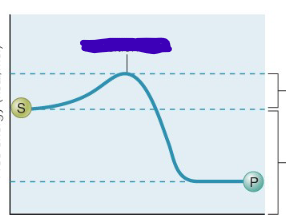
transition state
enzymes
protein catalysts that increase the rate of biochemical reactions
how does enzymes increase the rate of biochemical reactions?
reducing activation energy
substrate
the reactant bound by an enzyme
What is the specific region of an enzyme molecule where a substrate binds?
the active site
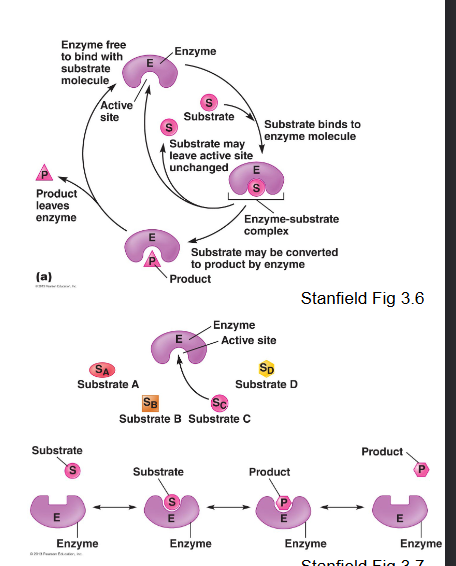
What temporary structure is formed when a substrate binds to an enzyme molecule?
the enzyme substrate complex
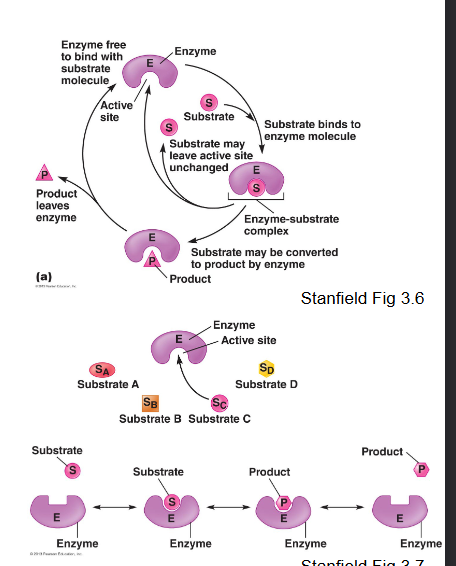
what is NOT one of the two possible fates of a substrate once it forms an enzyme-substrate complex?
it may degenerate
True or False: When a product leaves an enzyme, the enzyme is altered and cannot bind to another substrate.
False, the enzyme is freed to bind with another substrate
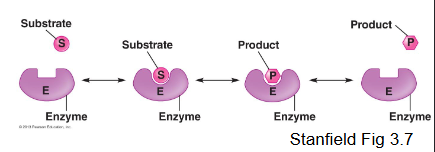
rates of enzyme catalyzed reactions depend upon the following except
changes to a reaction’s overall thermodynamics and chemical equilibrium
Competitive inhibition
modulator molecule that is not a substrate binds the active site and prevents the entry of substrate
allosteric modulation
modulator binds a regulatory site far from the active site
covalent modification
covalent bond adds/removes a chemical group that alters activity
substrate level phosphorylation
occurs in absence of O2, such as anaerobic glycolysis
oxidative phosphorylation
depends on supply of O2 for oxidation reactions in mitochondria. The primary mode of ATP production in most cells.
energy metabolism
encompasses the pathways needed to convert the enrgy in food to ATP to power cellular functions
ATP production in energy metabolism
carbohydrates, lipids, proteins
ATP consumption in energy metabolism
movement, membrane transport, molecular synthesis
Glucose oxidation
glycolysis → linking step → krebs cycle → oxidative phosphorylation
glycolysis and linking step
breaks down glucose and produces two molecules of pyruvate
glycolysis occurs in the…
cytosol
gluconeogenesis
a reverse series of reactions to regenerate glucose from pyruvate, which only occurs in some tissues
krebs cycle
Acetyl-coA enters the Krebs cycle in the mitochondrial matrix
oxidative phosphorylation
NADH and FADH2 donate their electrions to electron acceptors in the electron transport system and are oxidized to NAD+ and FAD
when you’re hungry, what comes first?
sensory cues
cell to cell communication is largely performed by
intercellular chemical messengers
If there is no receptor for ligands
there will be no response/signal
autocrine/paracrine signalling
messengers act locally reach target cells - diffusion
endocrine signalling
hormones secreted by endocrine cells reach targets via circulation - slow acting
neural signalling
neurotransmitters secreted by neurons at synapse with targets - fast acting
which one is NOT apart of hormonal cell signaling?
purines and fatty acids
which of the following is NOT apart of neurotransmitter cell signaling?
steroids and purines
which of the following is not apart of auto/paracrine cell signaling?
steroids and purines
peptides, purines, and most biogenic amines are __________
hydrophilic
steroids, fatty acid derivatives, and a small number of biogenic amines are _________
hydrophobic
what does not classify as a catecholamine?
serotonin
what are catecholamines?
neurotransmitters and hormones made from tyrosine
growth hormone
hormone released by anterior pituitary
Growth hormones are considered as a _________
peptide/protein messenger
atrial natriuretic peptide
hormone released by the heart to regulate sodium reabsorption by the kidneys
active peptides are released by Ca2+. This initiates…?
exocytosis
why does active peptides released by Ca2+ initiate exocytosis?
Ca2+ acts as positive feedback signal for specific ion channels.
steroid messengers
produced from cholesterol by the gonads and placenta and the adrenal cortex
eicosanoids
made from phospholipids
eicosanoids act like…
neurotransmitters or paracrine/autocrine agents
what is NOT one of the two main functions of membrane proteins
passive transport
does not require energy
active transport
mechanisms that require energy, move substances against diffusion gradients
Simple diffusion
concentration gradients provide a chemical driving force for diffusion, driving the overall movement of solute from regions of higher to lower concentration
diffusive equilibrium
net flux is zero