IB Psych Research Methods
 Call Kai
 Learn
Learn Practice Test
 Spaced Repetition
 Match
Match Flashcards
 Knowt Play
1/70

There's no tags or description
Looks like no tags are added yet.
Name | Mastery | Learn | Test | Matching | Spaced | Call with Kai |
|---|
No analytics yet
Send a link to your students to track their progress
71 Terms
confederate
This is what you call an individual who participates in an experiment who pretends to be a participant but is actually working with the researchers.
confounding variables
This is an outside factor that can affect the results of an experiment, making it hard to determine the true relationship between the variables being studied.
correlational research
This is a type of research in psychology that examines the relationship between two or more variables to determine whether and how they change together, without implying causation.
counterbalancing
This is a technique used in psychological research to control for the effects of the order in which treatments or conditions are presented, ensuring that each condition is tested in every possible order across participants.
dependent variable
This is the variable in psychological research that is measured or observed to assess the effect of the independent variable, reflecting the outcomes or changes that occur as a result of experimental manipulations.
descriptive statistics
This is a branch of statistics that involves summarising and organising data to describe its main characteristics, often using measures such as mean, median, mode, standard deviation, and graphical representations like charts and graphs.
experiments
This is a method used in research to investigate cause-and-effect relationships between variables. This involves manipulating one or more variables under controlled conditions to observe their effect on other variables, aiming to establish causal relationships and test hypotheses.
field experiment
This is a research method where investigations are conducted in real-world settings rather than controlled laboratory environments, allowing researchers to observe behaviours and outcomes under natural conditions without artificial constraints. Extraneous variables may not be controlled in this situation.
natural experiment
This type of experiment is where researchers look for naturally occurring variables to study. For example, researchers studying the psychological effects of stress might compare people affected by a natural disaster to those in unaffected areas, using the disaster as the naturally occurring variable.
quantitative research
This is an approach to research on behaviour focused on quantifying variables and analyzing numerical data through statistical techniques to identify patterns, relationships, and generalisations.
quasi-experiment
This is a research method where the investigator studies the effect of an independent variable without random assignment to conditions, often due to practical or ethical constraints.
For example, a researcher studying the impact of sleep deprivation on memory might compare students who naturally get different amounts of sleep before an exam, without randomly assigning them to sleep conditions.
true experiment
This is a research method where the investigator manipulates one or more variables, randomly assigns participants to different conditions, and controls other factors to determine causation.
survey
This is a method of gathering information from a large number of people through a set of predefined questions. For example, a government may conduct a survey to assess public health concerns.
case study
This is a research method involving an in-depth, detailed examination of a single subject, group, or event to explore and understand complex issues within their real-life context. In most instances, case studies may use other research methods in conjunction such as interviews, data collection through observation or tests, among others.
content analysis
This is a method to analyse data in qualitative research in which the researcher identifies themes that emerge from the data.
covert observation
This is a type of observation where information related to the nature of the study, the identity of the researcher, and the actual observation of the participants are kept from those who are being studied.
inductive content analysis
This method of analysing qualitative data involves analysing transcriptions, identifying patterns, coding themes, or categories within the data without preconceived theoretical frameworks.
interviews
This is a method in which a researcher engages in direct conversation with individuals or groups to gather information, insights, or opinions on a specific topic of study.
meta-analysis
This method collects data from multiple research studies with the same research aim or question.
naturalistic observations
This is a type of observation of naturally occurring behaviour in its natural setting. To do this experiment, researchers may use several recording techniques, such as field notes. Due to its nature, ethical considerations related to doing covered observations should be justified.
participant observation
This is a research method where the researcher actively engages in and observes the activities, behaviours, and interactions of participants in their natural setting or environment, often over an extended period of time.
qualitative research
This is an approach to research on behaviour focused on understanding human behaviour, experiences, and perspectives through in-depth, non-numerical data such as interviews, observations, and text analysis.
structured interviews
This is an interview method with a fixed set of questions in a specific order. For example, job interviews often follow a structured format to compare candidates fairly.
semi-structured interviews
This is an interview method with some predefined questions but allows for flexibility in responses. For example, researchers often use semi-structured interviews to explore complex issues.
unstructured interviews
This is an interview method with open-ended questions allowing the conversation to flow naturally. For example, a therapist may use unstructured interviews to understand a patient's feelings.
focus group interviews
This is a discussion with a small group of people led by a moderator to gather opinions on a specific topic. For example, companies use focus groups to test new product ideas.
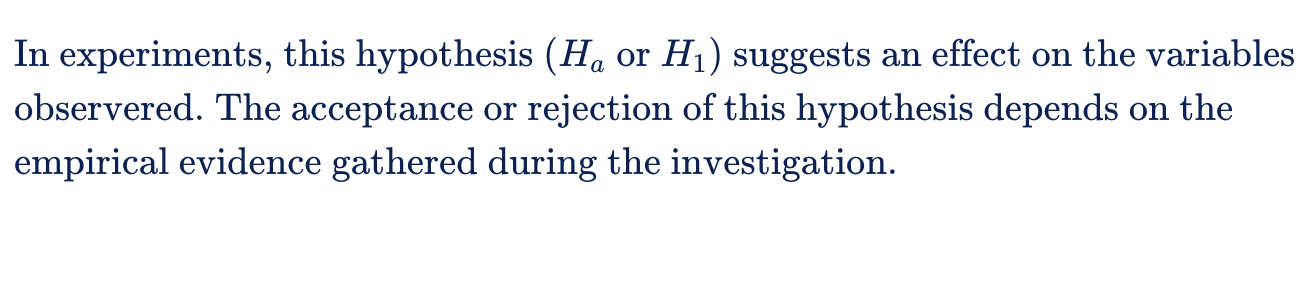
alternative/experimental hypothesis
convenience sampling
This is a sampling method where participants are selected based on their availability and ease of access, rather than being randomly chosen, often leading to a less representative sample.
cross-sectional design
This is a research design in psychological research where data is collected from a population or a representative subset at one specific point in time to examine the prevalence and relationships among variables. It is the opposite of longitudinal research, which involves collecting data from the same subjects repeatedly over an extended period to observe changes and developments over time.
hypothesis
This is a testable and falsifiable statement that proposes a relationship between variables, typically derived from theory or observations.
independent samples/measures design
This is a research design that involves using two separate groups of participants for different experimental conditions. For instance, one group is assigned to the control condition while the other group is assigned to the experimental or treatment condition. This allows researchers to compare the effects of different treatments or conditions across distinct groups of participants.
independent variable
This is the variable in psychological research that is deliberately manipulated or controlled by the researcher to investigate its effect on the dependent variable, determining the cause-and-effect relationship within the study.
longitudinal study
This type of study is done over a certain period, combining a variety of qualitative & quantitative research methods. This is also common in studies in developmental psychology.
matched pair design
This is a research design where participants are grouped into pairs based on specific characteristics, such as age or gender, and then randomly assigned to either the control or experimental group. Matching helps control for variables that could influence the results, ensuring a more accurate comparison between the groups.
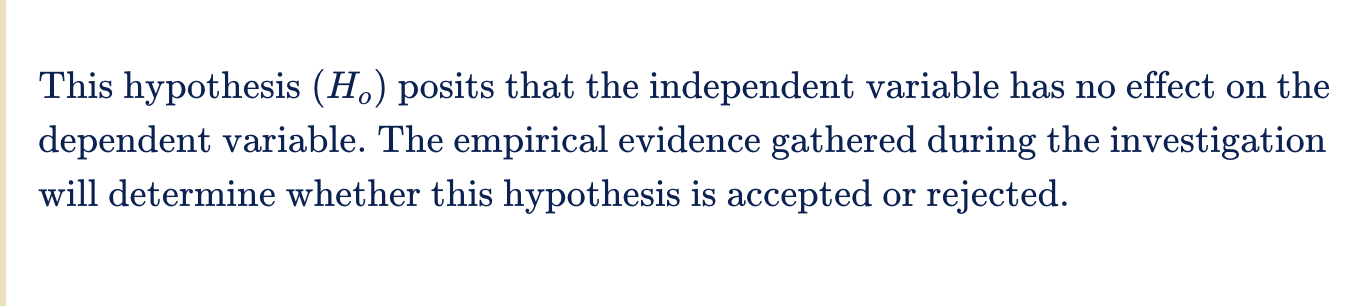
null hypothesis
operationalisation
This is the process of defining and measuring a variable in a specific way so that it can be observed and quantified in a psychological study. This involves translating abstract concepts (like happiness or anxiety) into measurable indicators for the purpose of research.
opportunity sampling
This is a sampling method where participants are selected based on their availability and willingness to take part in the study. It is often used for convenience but may not produce a representative sample of the population.
participant bias
This is a term used in psychological research to describe any systematic deviation in participants' responses or behaviors that affects the study's outcomes, often influenced by factors such as social desirability, demand characteristics, or experimenter bias.
population validity
This is the degree to which the findings of a study can be generalised to a wider group beyond the specific sample studied. It reflects how well the sample represents the broader population.
purposive sampling
This is a sampling method where participants are selected based on specific characteristics or criteria relevant to the research question. The goal is to choose individuals who are most likely to provide valuable insights for the study.
random sampling
This is a sampling method where every member of the population has an equal chance of being selected for the study. It helps ensure that the sample is representative and reduces selection bias.
regression to the mean
This is a statistical phenomenon observed in psychological research where extreme scores on a variable tend to move closer to the average (mean) score upon subsequent measurements. It occurs because extreme scores are often influenced by random or situational factors that are less likely to persist over time, leading to a natural tendency for scores to regress or normalise toward the mean in subsequent assessments.r
repeated measures design
This is a research design where each participant is exposed to all experimental conditions, allowing for comparisons within the same individuals across different treatments or situations.
sampling
This is the process of selecting a subset of individuals from a larger population to participate in a study. It aims to represent the population and draw conclusions about the whole group.
sampling bias
This bias may lead to a distortion in research results when certain groups or individuals are more or less likely to be included in the sample, leading to an unrepresentative sample. It can skew the findings and affect the validity of the study.
selection bias
This is a threat to internal validity, which occurs when groups are not equivalent at the start of the experiment. When this happens, we cannot be sure if the results are caused by the experimental manipulations or the influence of IV (independent variable) or another variable.
self-selected sampling
This is a sampling method where participants choose to take part in a study on their own accord, rather than being randomly selected. It often results in a sample that may not be representative of the broader population.
stratified sampling
This is a sampling technique where the population is divided into distinct subgroups based on specific characteristics, and then random samples are taken from each subgroup. It ensures that each subgroup is appropriately represented in the final sample.
testing effect
This is a threat to internal validity, which occurs when the initial measurements for the DV (dependent variable) may affect subsequent measurements.
acquiescence
This is a response bias in psychological research where participants tend to agree or endorse items regardless of their content, often out of a tendency to be polite, avoid conflict, or appear agreeable.
construct
This is a theoretical idea or concept that we cannot directly see but infer from measurable behaviours, responses, or other observable events.
It represents abstract qualities or processes like intelligence, motivation, anxiety, and self-esteem, which help us understand, describe, and predict human behaviour and mental processes. It provides a structure for researchers to measure and study complex psychological phenomena.
construct validity
This is how well a test measures what it is supposed to measure. It shows how accurately the test reflects the intended psychological traits or behaviours. It involves checking if the test can tell apart related and unrelated concepts and if it matches established theories and evidence.
credibility
This is the degree to which research accurately reflects the true picture of what is being investigated and the results genuinely represent the perceptions and opinions of the participants, serving as a crucial factor in establishing trustworthiness in qualitative research.
demand characteristics
This is a phenomenon in psychological research where participants modify their behaviour or responses based on their perception of the experiment's purpose or what is expected of them. These cues can come from various sources, such as the experimental setting, instructions, or the experimenter's behaviour, and may lead to biased or altered results if not controlled for.
ecological validity
This is the extent to which the findings of a study can be generalised to real-world settings and situations, reflecting how well the study conditions and results apply to everyday life.
experimenter bias
This is a form of bias in experimental research where the experimenter's expectations or beliefs about the outcome of the study unintentionally influence the results. This bias can manifest in subtle ways, such as in the administration of procedures, interpretation of results, or unintentional cues given to participants, potentially affecting the validity and reliability of the findings.
external validity
This is the extent to which the findings of a study can be generalised to real-world settings, different populations, and conditions beyond the context of the study. This assesses the relevance and applicability of research findings to broader populations or situations, ensuring that conclusions drawn from the study can be applied to other contexts with confidence.
generalisability
This is the extent to which findings from a study can be applied or generalised to other populations, settings, or contexts beyond those directly studied, indicating the broader relevance and applicability of research findings. This is commonly used in quantitative approaches to research.
inferential statistics
This is a type of statistical analysis that involves using sample data to make conclusions or generalisations about a population. It helps researchers estimate characteristics of a population based on observed sample data.
instrumentation bias
This is a threat to internal validity, which occurs when the instrument used to measure the DV (dependent variable) changes during the course of the experiment (e.g. use of human observers, non-standardised measurements)
internal validity
This is how well a study measures what it intends to measure without other factors influencing the results. For example, in an experiment testing a new medication, this concept ensures that any observed improvement in patients' health is truly because of the medication, not other factors like diet or exercise.
leading question bias
This is a type of questioning that subtly encourages a particular response or steers the respondent towards a specific answer, potentially influencing their response beyond what they might naturally provide.
maturation effect / bias
This is a threat to internal validity, which occurs when participants go through a natural developmental process during the course of the experiment. This influences the result of an experiment because there is no assurance that the changes within the participants are caused by the experimental conditions or their growth.
method triangulation
This is a research approach that involves using multiple methods or sources of data to study a phenomenon or research question. It aims to enhance the validity and reliability of findings by cross-verifying information from different perspectives or data collection techniques.
model
This is a theoretical framework or representation used in psychology to explain and predict behaviours, mental processes, or phenomena. It serves as a simplified depiction of complex psychological concepts and relationships.
order effects
This is a type of bias in repeated measures designs where the sequence in which conditions are presented affects participants' responses. It can include fatigue, practice, or carryover effects.
question order bias
This is a type of bias that occurs when the order in which questions are presented influences respondents' answers. Earlier questions can affect how subsequent questions are interpreted and answered.
researcher bias
This is a form of bias in research where the investigator's personal beliefs, expectations, or preferences unintentionally influence the design, implementation, or interpretation of a study, potentially skewing the results or conclusions drawn from the data.
social desirability bias
This is a kind of bias that occurs when participants respond in a way they believe will be viewed favourably by others or align with societal norms. Responses may be influenced by a desire to present oneself positively, leading to over-reporting socially desirable behaviours and under-reporting socially undesirable ones.
theory
This is a system of ideas and principles that explains and predicts psychological phenomena based on empirical evidence and research. It provides a framework for understanding the underlying principles of behaviour and mental processes.
reductionist
This is an approach that explains complex phenomena by breaking them down into simpler components. For example, studying behaviour by only focusing on neurotransmitters is a reductionist view.