the gender pay gap and discrimination
 Call Kai
 Learn
Learn Practice Test
 Spaced Repetition
 Match
Match Flashcards
 Knowt Play
1/13

There's no tags or description
Looks like no tags are added yet.
Name | Mastery | Learn | Test | Matching | Spaced | Call with Kai |
|---|
No analytics yet
Send a link to your students to track their progress
14 Terms
two components of Oaxaca-Blinder
differences due to characteristics
differences due to discrimination
borjas (2012)
¾ of the wage difference for men and women is discrimination
½ for black-white discrimination
taste based discrimination
employer → when the employer discriminates towards an minority employee
employee → discrimination towards type of employee
customer → discrimination against where to buy from
government → discrimination towards population
Becker (1957) employer discrimination assumptions
there are two groups m and f
m and f are equally productive, f may have to compensate for discrimination
value of the marginal product is identical for both
employers have a taste for discrimination against f
what does employer discrimination cause in the LR
overtime, employers with a taste for discrimination will pay the price in terms of profit loss. they will fail to hire overly productive workers.
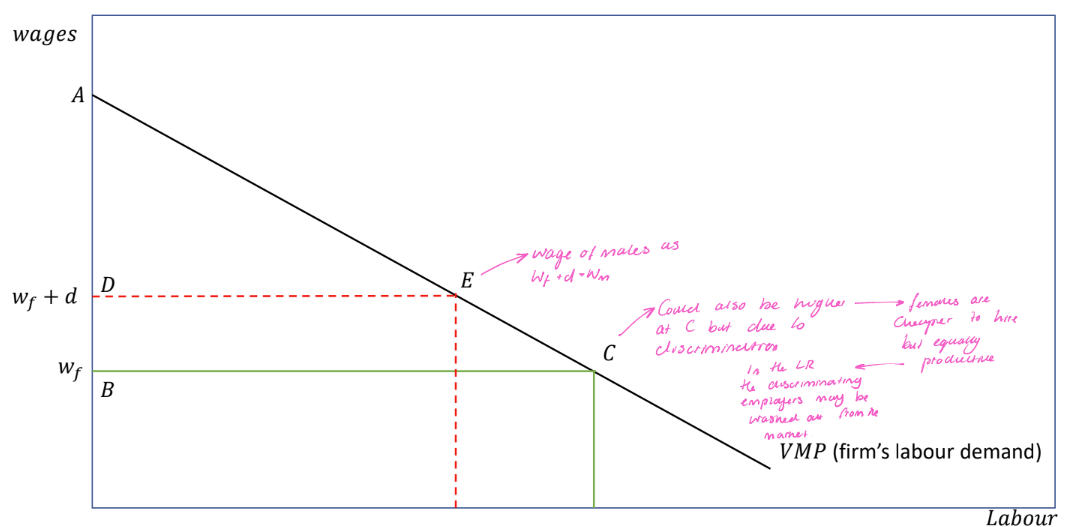
determining the size of the wage gap
where the line is straight, there are very few female workers, S1 marks where employers being to hire more f as f wage is lower
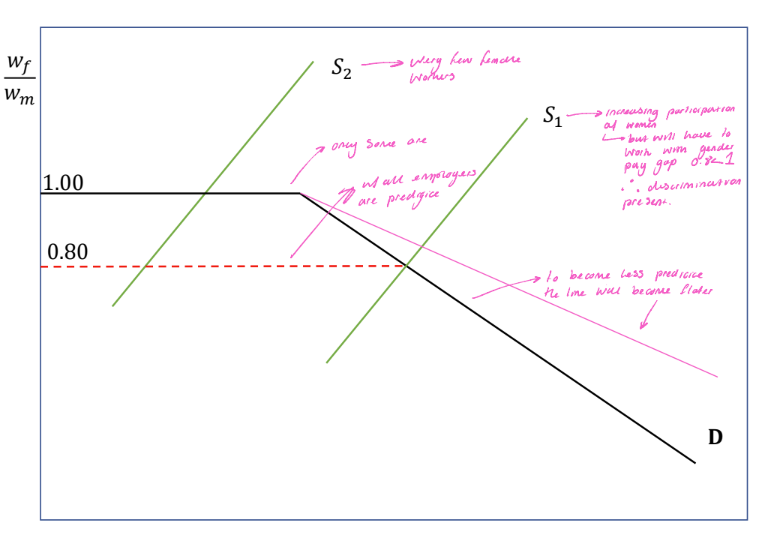
wage ratio dependents
the supply of f → very few f would mean that f would go to non prejudice
the number of non prejudice employers → longer horizontal section
the degree of prejudice → sloped part would be flatter
impacts for all firms in the LR
less prejudice firms earn higher profits as others pay for expensive m wage. these firms then grow and now demand more f and m demand falls. a long run equilibrium is reached, prejudice will still be there but these is no discrimination
statistical discrimination
imperfect information causes people to judge individuals by group characteristics eg. women taking maternity leave and employers not wanting to hire any based of the trend
solutions for statistical discrimination
strict antidiscrimination laws
affirmative action → policy requiring a certain number of women to be hired
occupational crowding (statistical)
self selection into a sector based on personal beliefs eg. construction sector and beauty
why is self selection in occupational crowding
rational choice that skills depreciate and women choose to maximise lifetime earnings, women take jobs with skills that are less likely to de
human capital example
due to many women taking time off they have less labour market experience and they may naturally depreciate
what can be come to help women depreciate less
parental leave
child care provisions
income support and tax incentives