Etruscan and Roman Key Images
 Call Kai
 Learn
Learn Practice Test
 Spaced Repetition
 Match
Match Flashcards
 Knowt Play
1/28

There's no tags or description
Looks like no tags are added yet.
Name | Mastery | Learn | Test | Matching | Spaced | Call with Kai |
|---|
No analytics yet
Send a link to your students to track their progress
29 Terms
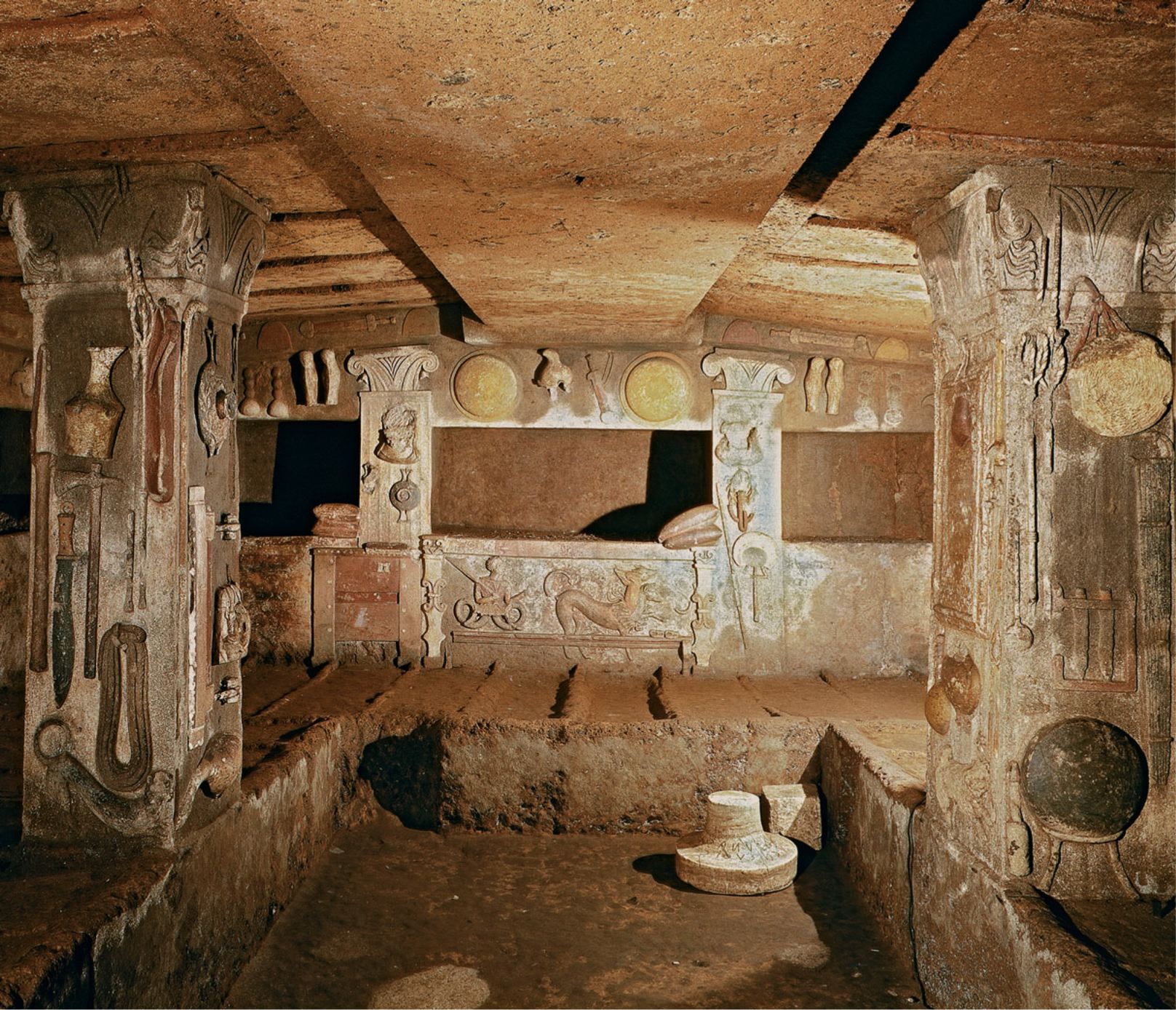
Burial Chamber, Tomb of the Reliefs, Cerveteri. 3rd century BCE. Etruscan culture. An artist applied everything the dead might want in the afterlife onto the walls in stucco. This concept is reminiscent of Egyptian funerary practice, though replicas of actual items differ markedly between the two cultures.
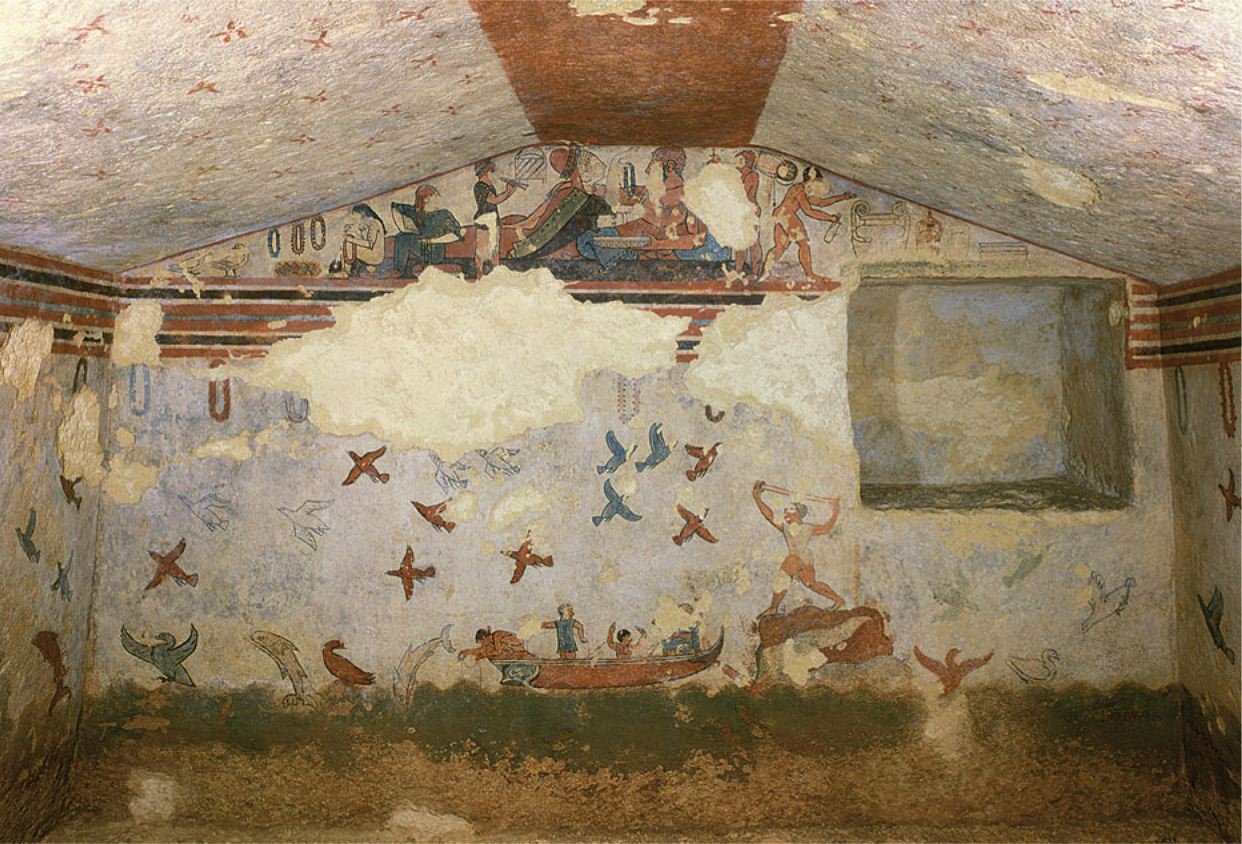
Tomb of Hunting and Fishing, Tarquinia. ca. 530–520 BCE. Archaic period. Etruscan culture. Rather than humans dominating the landscape, they are apart of it, which is in Etruscan style.
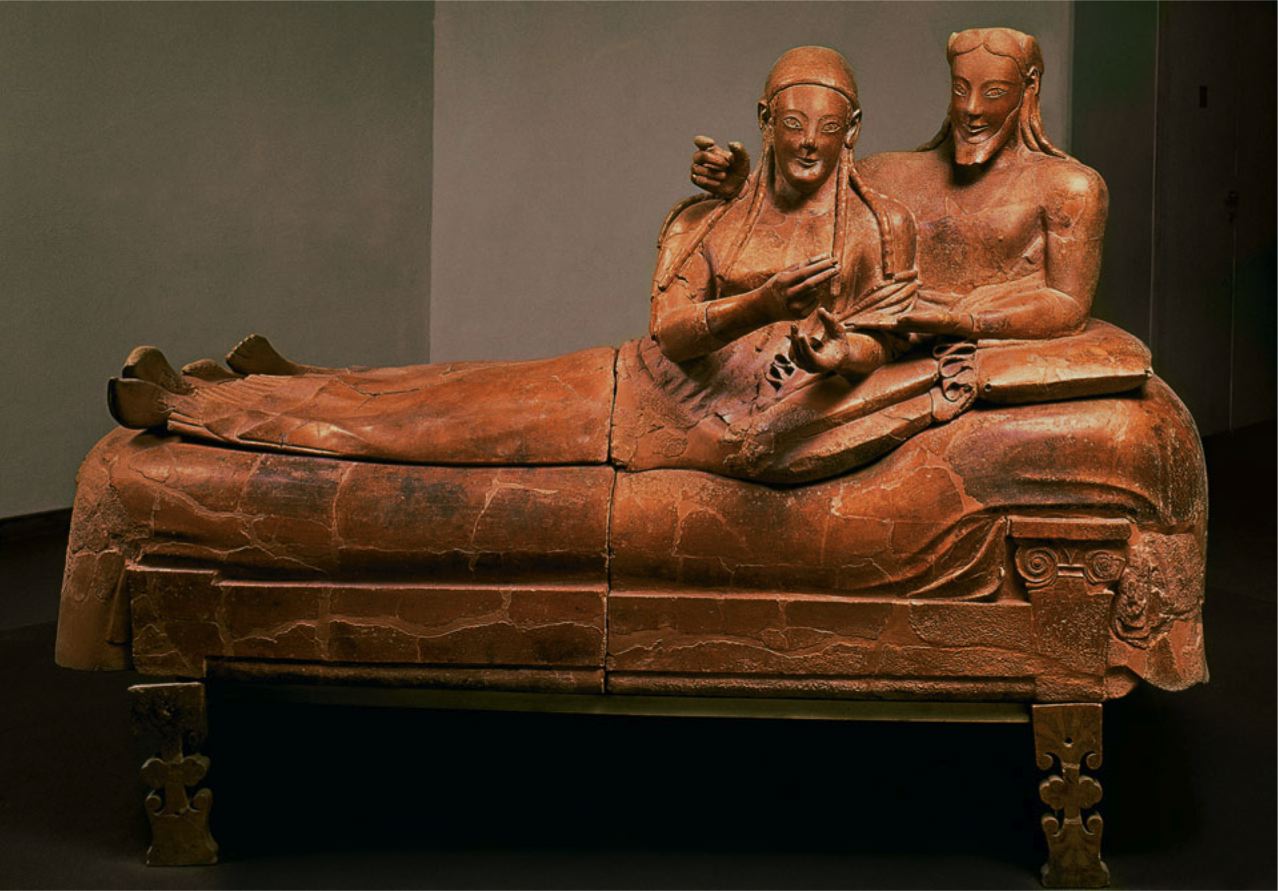
Sarcophagus from Cerveteri. ca. 520 BCE. Terra cotta. Etruscan art. Archaic period and style. Was once painted in bright colours. Perhaps is a married couple. Both figures once held an object, potentially a perfume bottle or an egg (symbol of eternity).
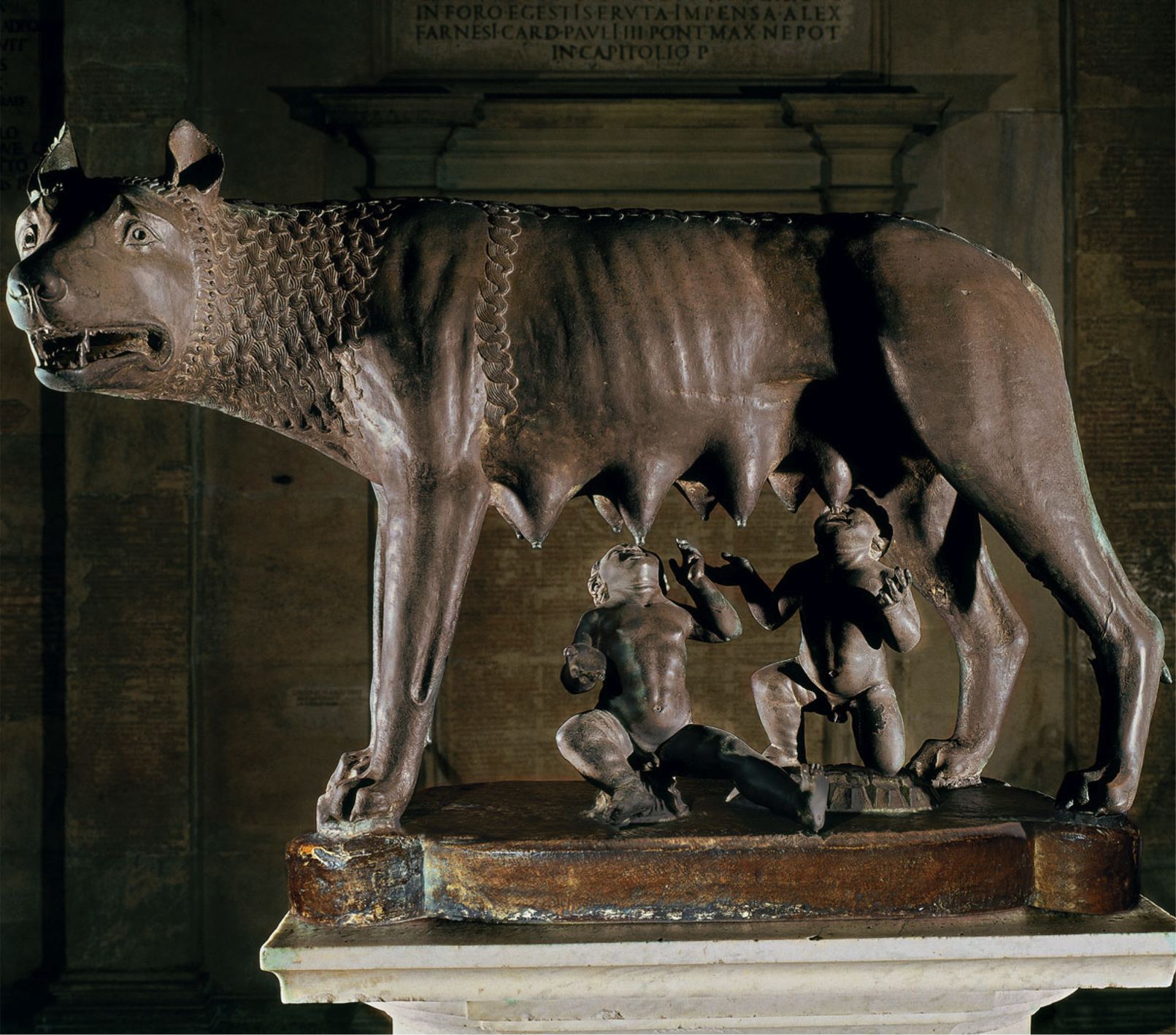
She-Wolf. ca. 500 BCE. Bronze. Most likely Etruscan art. Romans may have seen in this Etruscan bronze a representation of their legendary mother wolf who raised Romulus and and Remus, the founders of Rome.
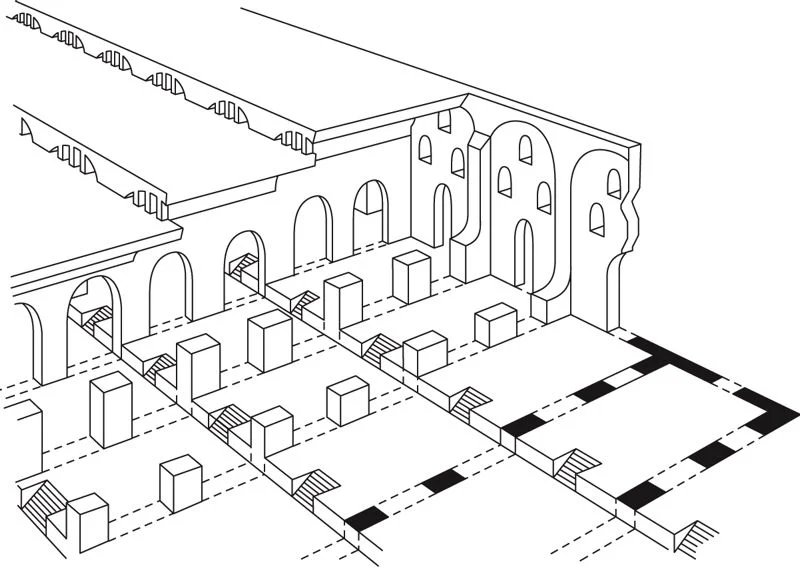
Navalia, Rome. First half of the 2nd century BCE. Partial reconstruction drawing. The earliest known building in Rome constructed entirely of concrete. Roman sailors could pull the ships into these spaces for easy maintenance in the winter months.
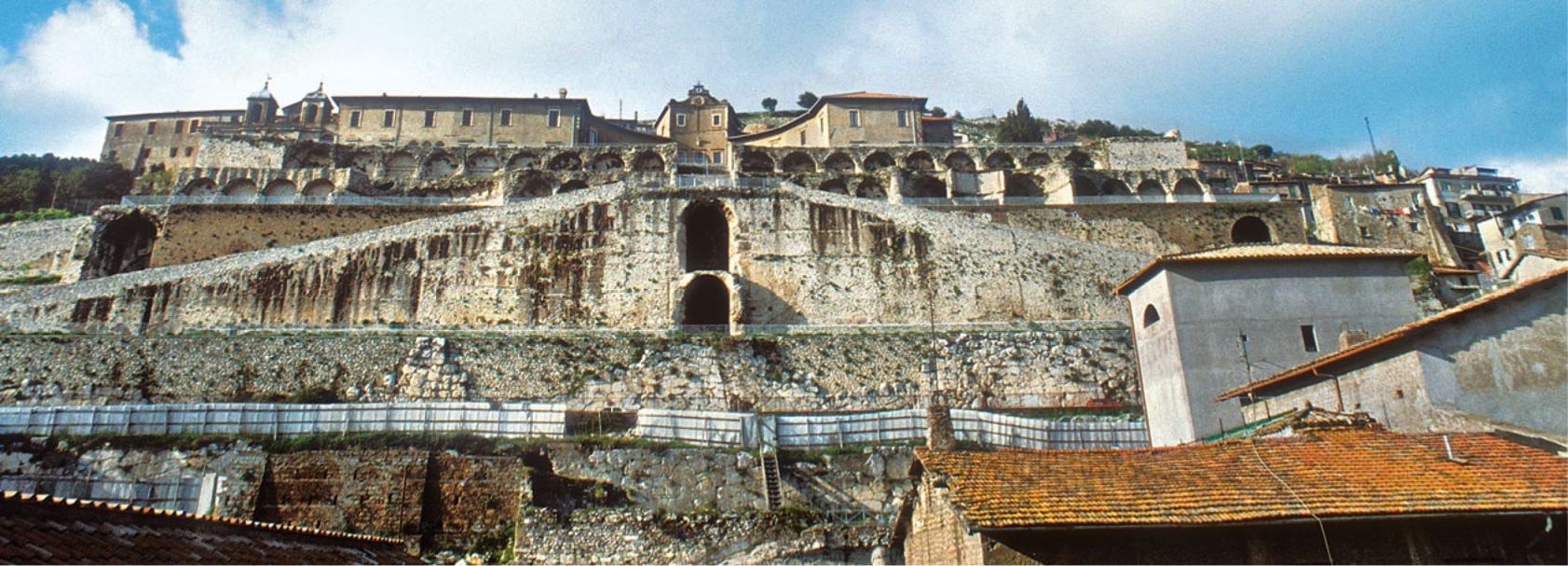
Sanctuary of Fortuna Primigenia (goddess of luck and fate), Praeneste (Palestrina). Late 2nd century BCE. Shows the power and use of concrete. An oracular center where priests interpreted divine will by drawing lots. Architects used concrete to mold structures over the entire surface of the hillside and to craft spaces that controlled and heightened a visitor’s experience.
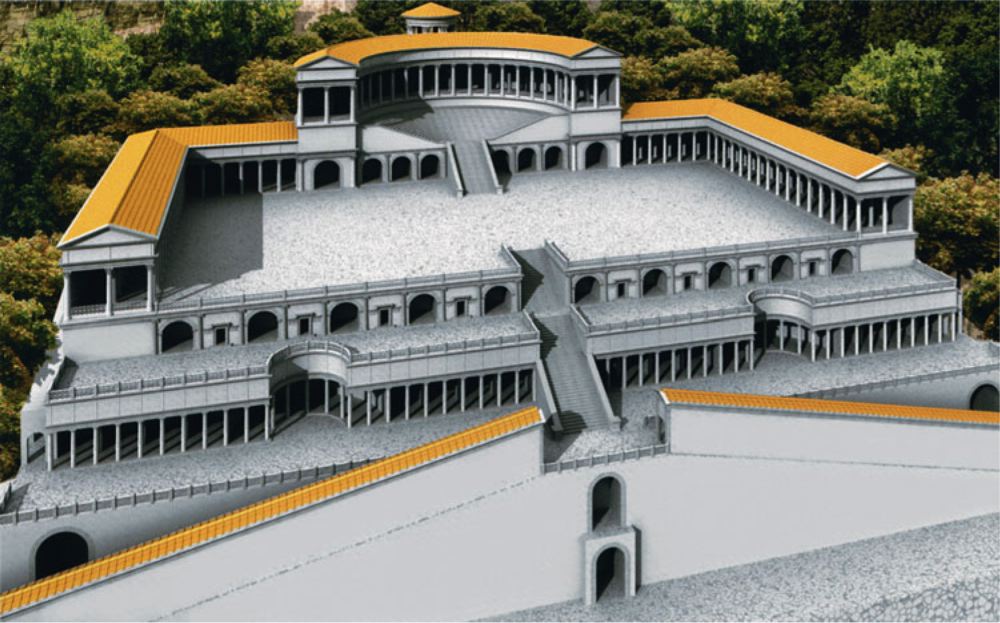
Reconstruction of Sanctuary of Fortuna Primigenia, Praeneste.
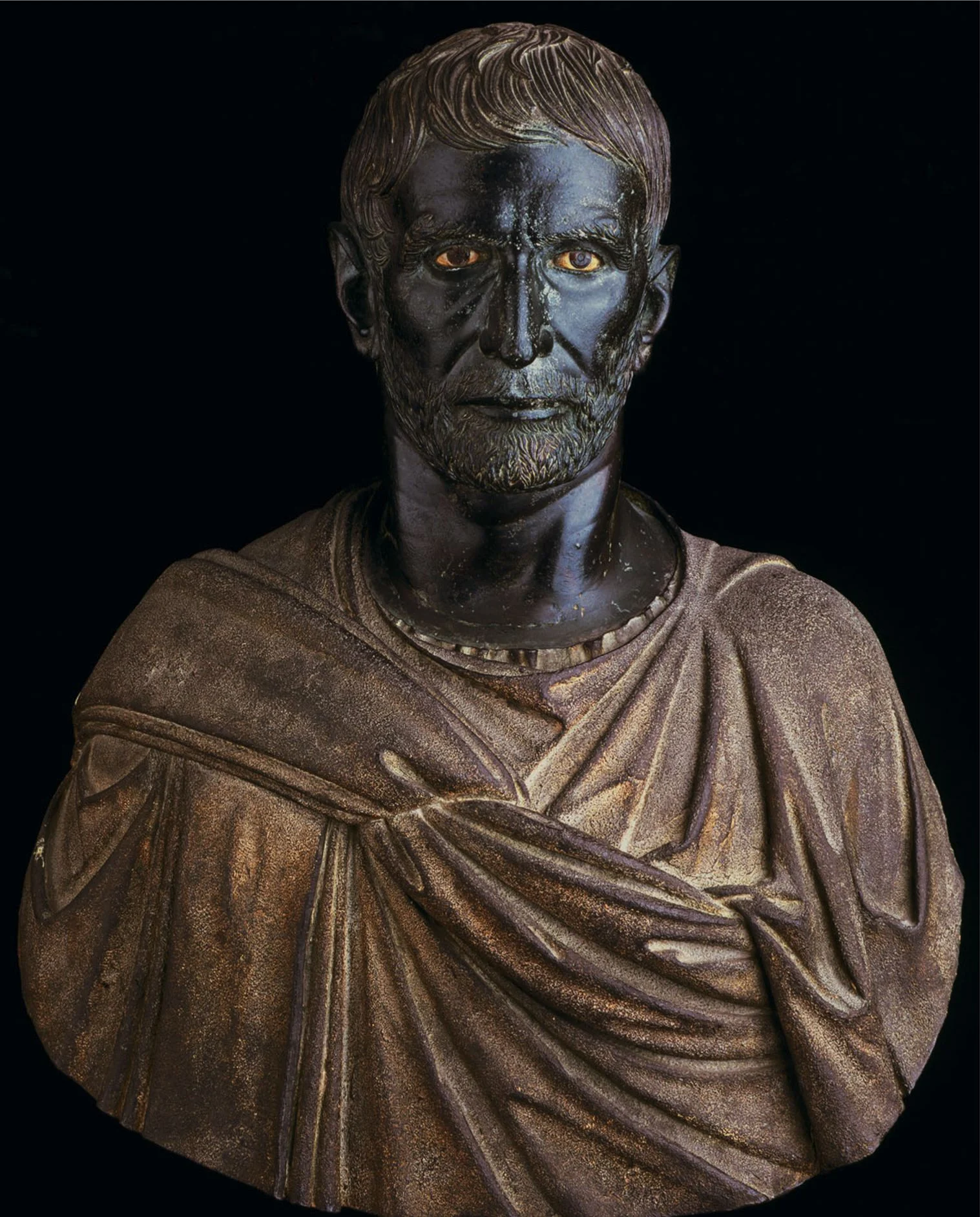
“Brutus.” Late 1st-century BCE head, modern bust. An example of early Roman portraiture. Bronze. Likely one of the political or military figure heads on display on the forum. Named after the founder and first consul of the Republic.
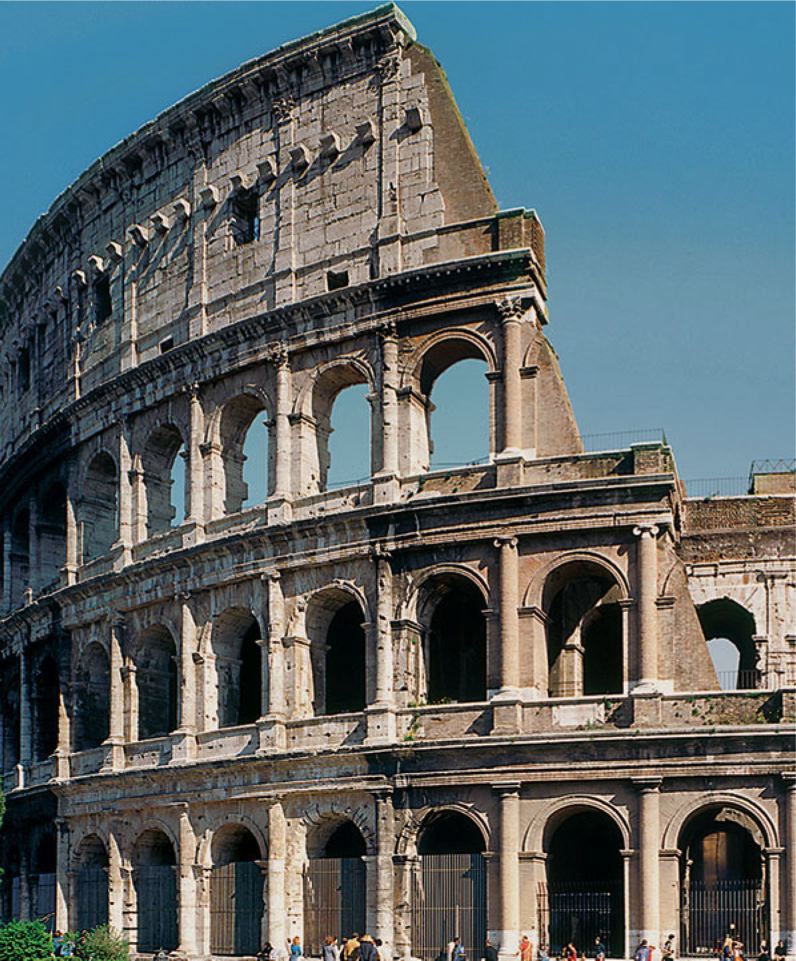
Exterior of Colosseum
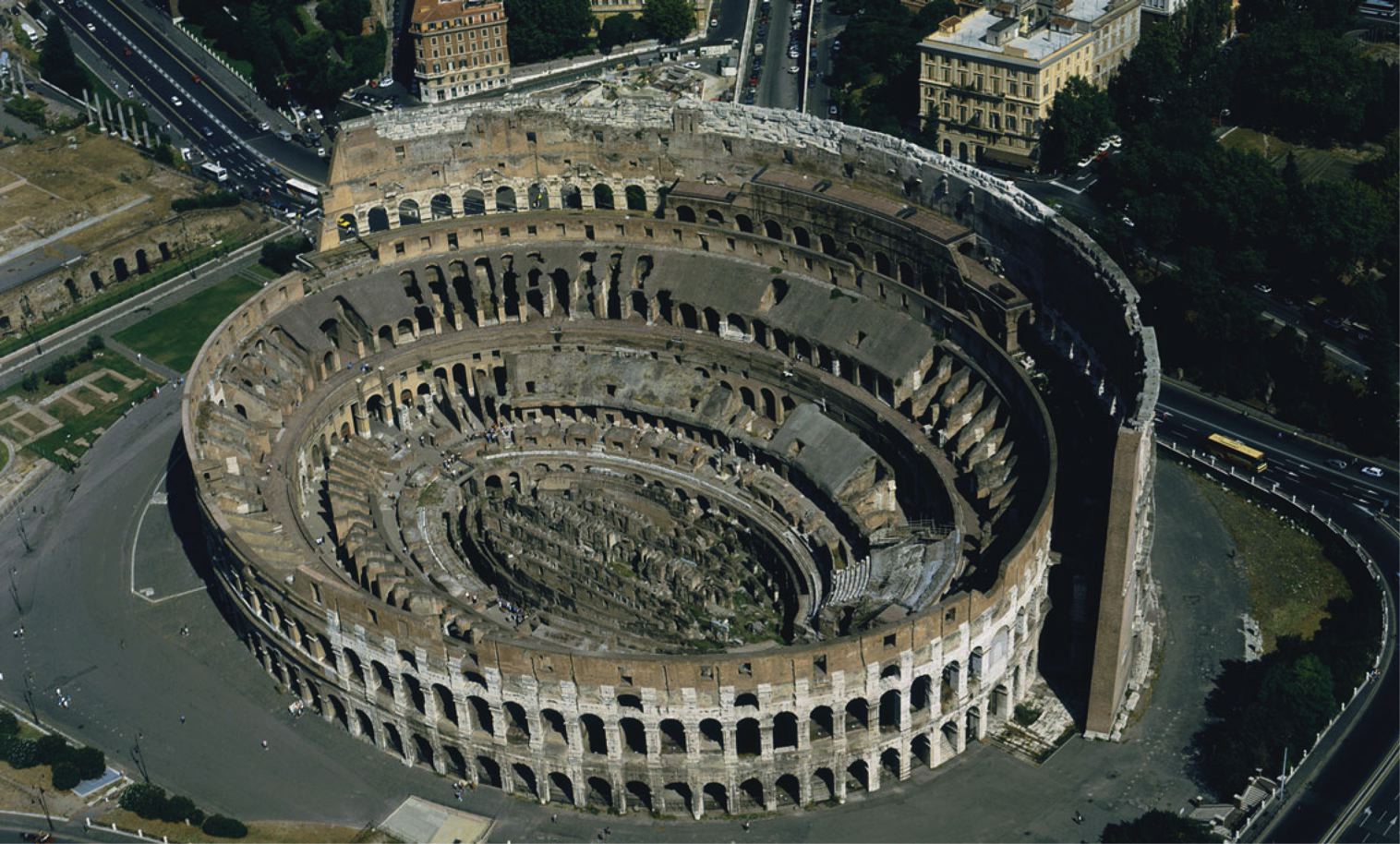
Colosseum, Rome. 72–80 CE. Created by Vespasian. The first of a permanent amphitheater for the gladiatorial games and mock sea battles that were so central to Roman entertainment and to Rome’s penal system. Vespasian’s sun Titus inaugurated it in 80 CE with over 100 days of games, at a cost of over 9,000 animal lives.
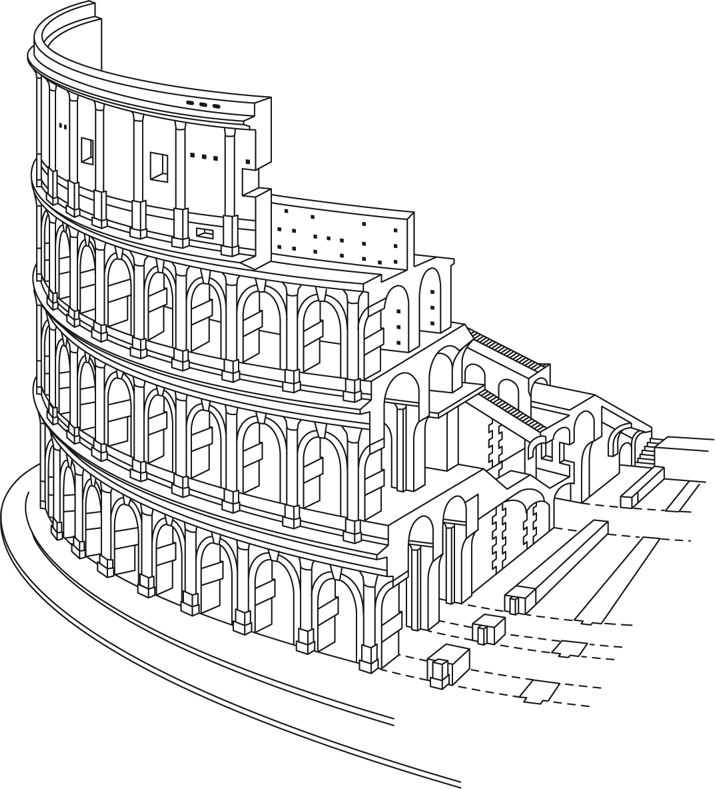
Sectional view of Colosseum
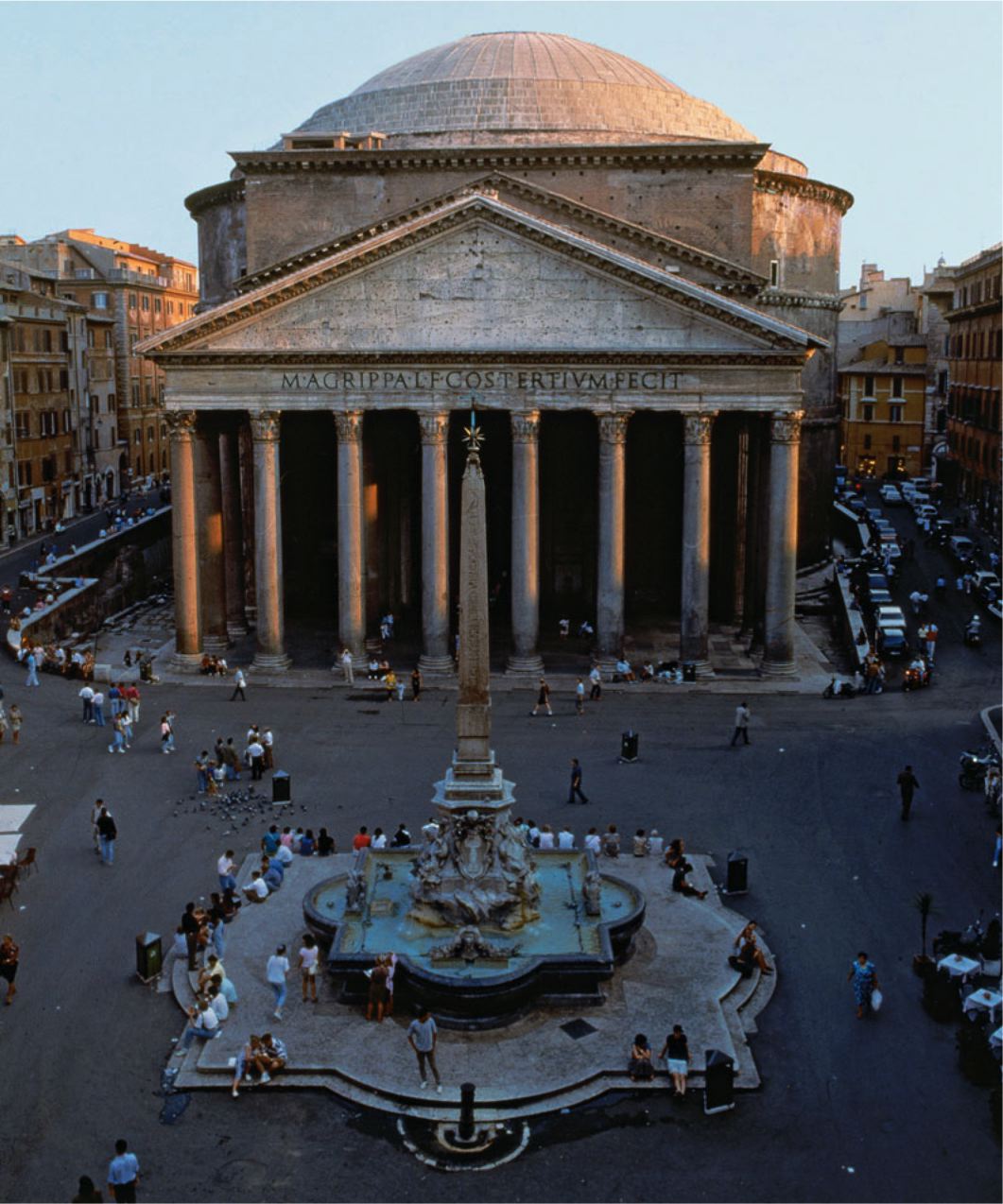
Pantheon, Rome. 117–25 CE. Third construction after Augustus’ right hand man Agrippa on the first, Domitian on the second. Hadrian was Emperor when the third was built. Likely a temple to all gods (a Hellenistic concept). Where Hadrian preferred to hold court.
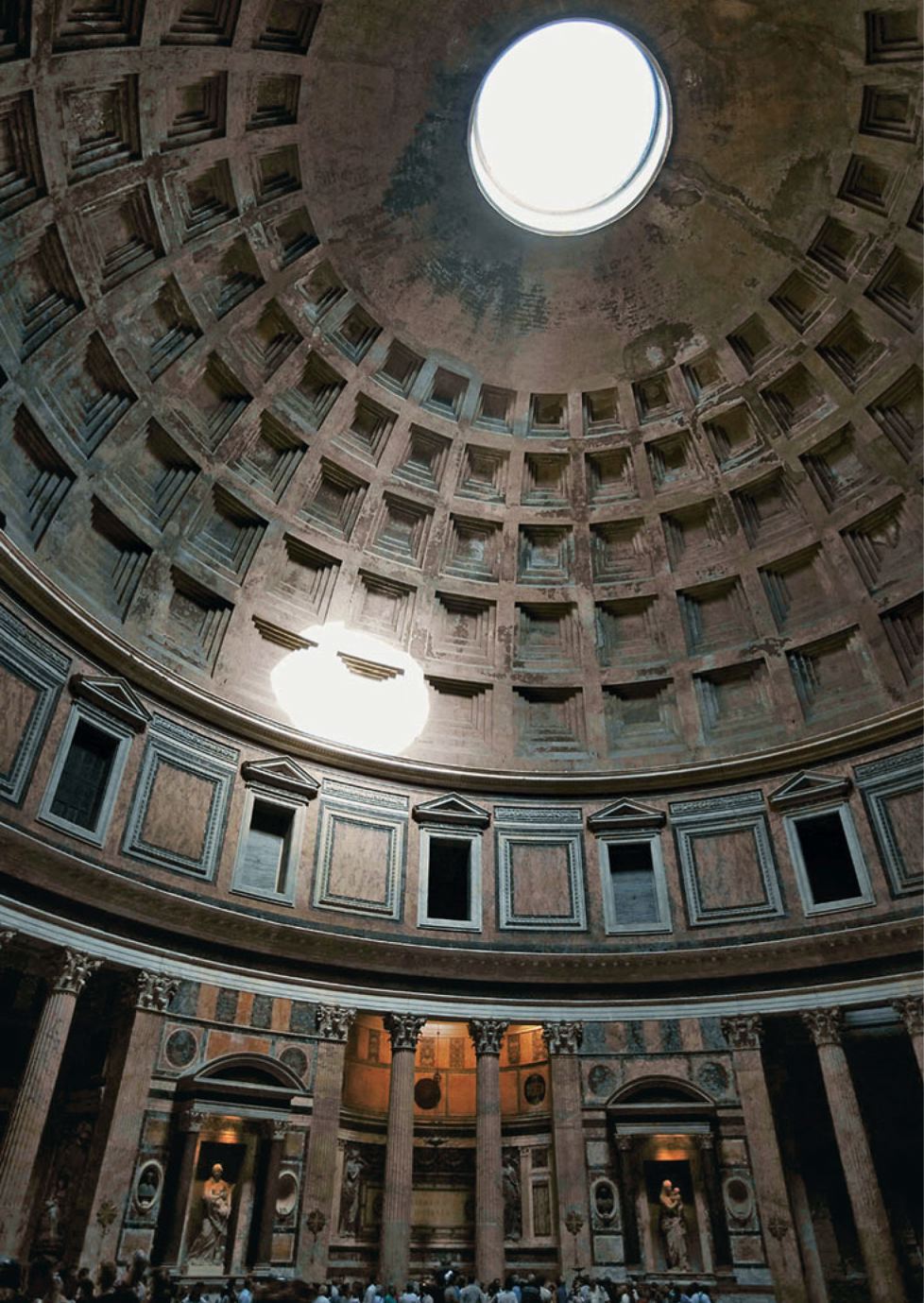
Interior of Pantheon. Shows the oculus that lets in the light. For many ancient viewers, the resultant sphere of the dome would have symbolized eternity and perfection, and the dome’s surface, once emblazoned with bronze rosettes in its coffers (recessed panels), must have evoked a starry night sky.
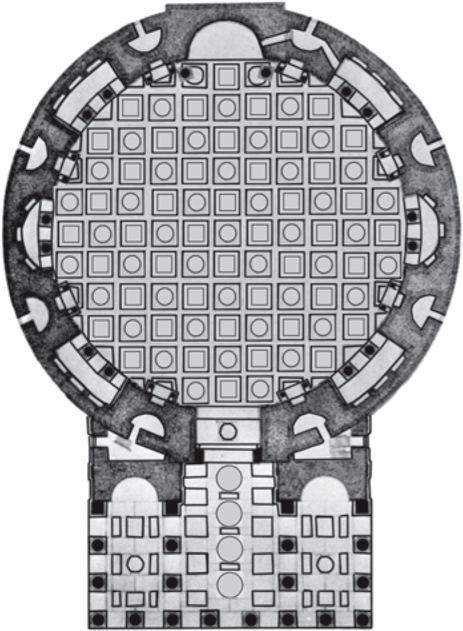
Plan of Pantheon
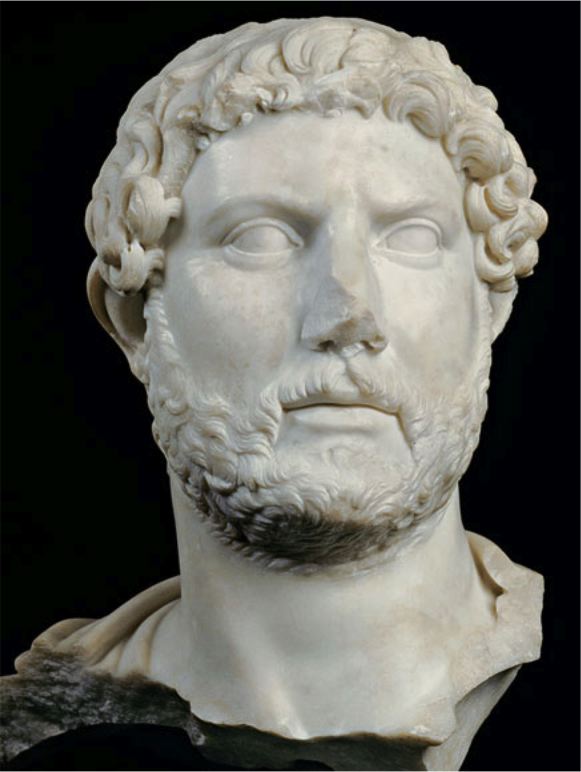
Portrait of Hadrian. After 117 CE. Marble. A revival of Greek classicism. He adopted the full beard that was characteristic of Greek philosophers. It was in his reign that sculptors began to carve the pupils and irises of eyes, rather than painting them.
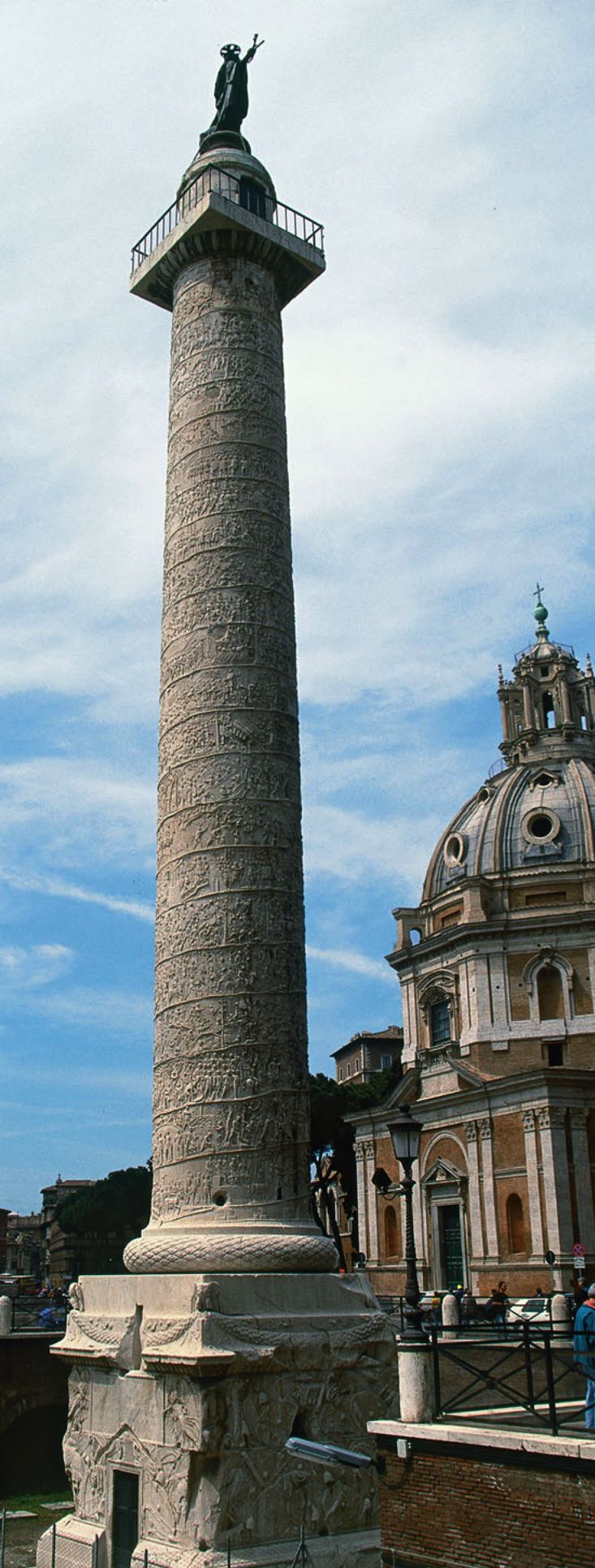
Column of Trajan, Rome. 106–13 CE. Marble. Supported a gilded structure of the emperor, lost in medieval times. There’s a winding staircase inside, so the viewer could look up and see Trajan’s forum. Credited to Apollodorus.
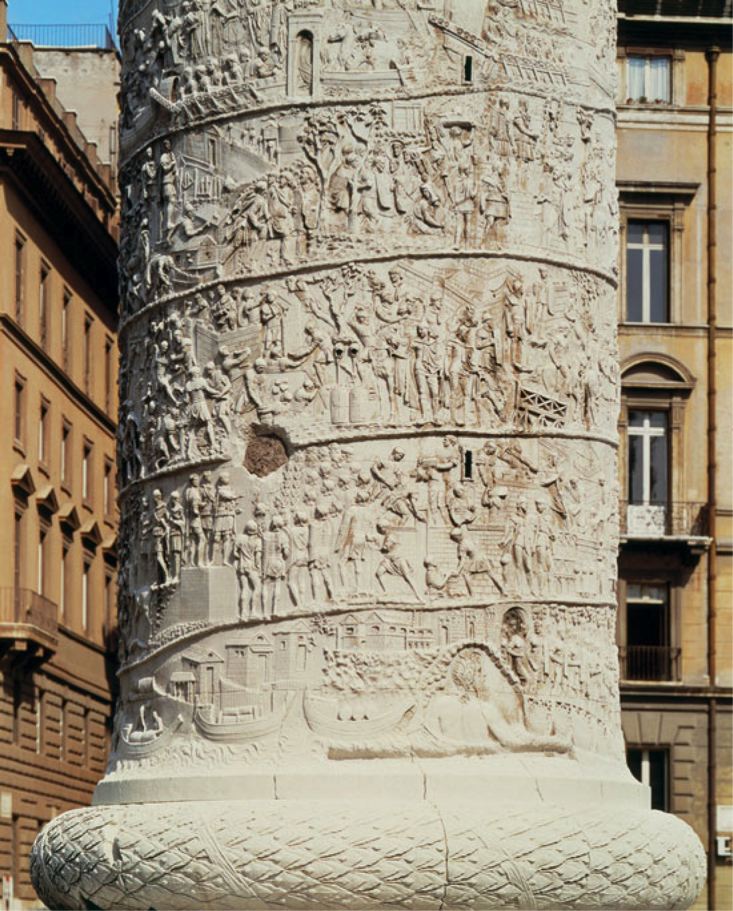
Lower portion of Column of Trajan, Rome. 106–13 CE. Marble. Continuous narrative relief that winds around its shaft in a counterclockwise direction, celebrating the emperor’s victorious campaigns against the people of Dacia (in present-day Romania). The narrative begins (at the bottom) with the Roman army’s crossing of the Danube to reach Dacian territory. The river is personified.
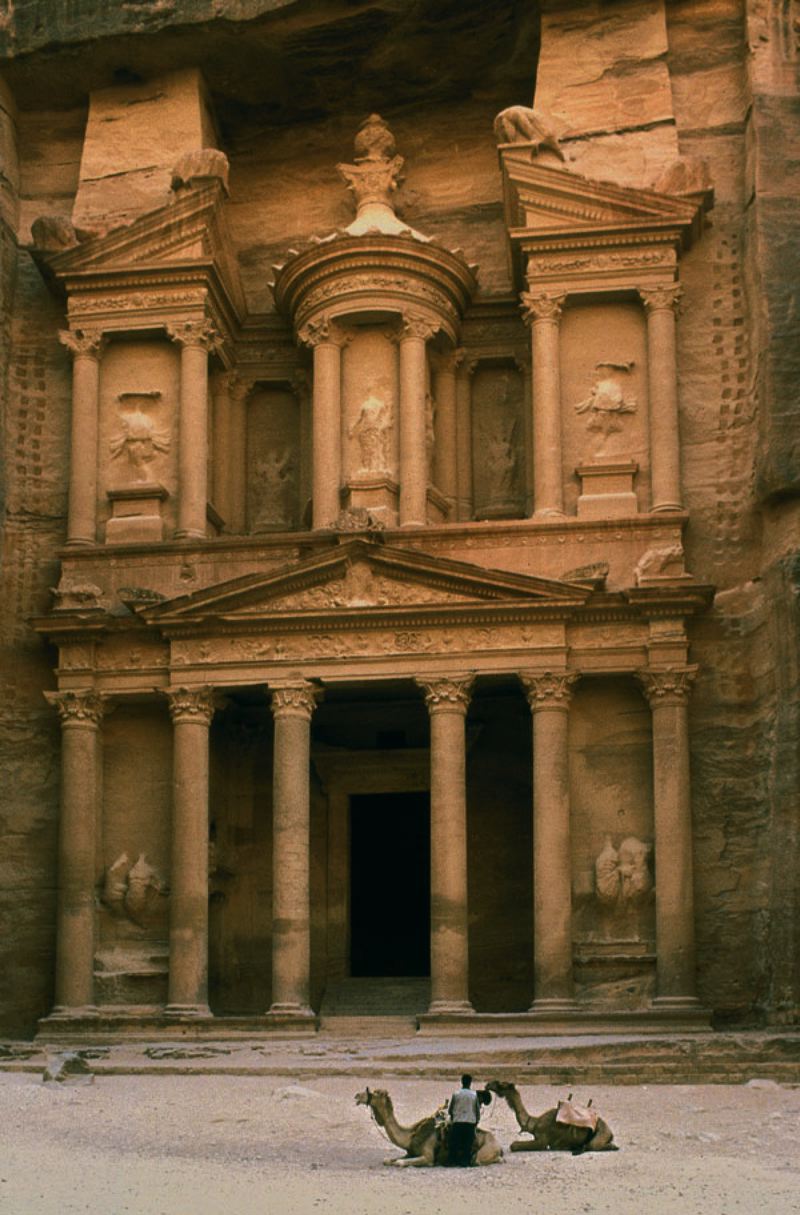
El Khasneh, Petra, Jordan. Probably early 2nd century CE. Belongs to the Trajanic or Hadrianic period. Carved from the living rock of the pink sandstone clifs, the monument resembles a temple façade. Shows syncretism of Romans and Nabataeans.
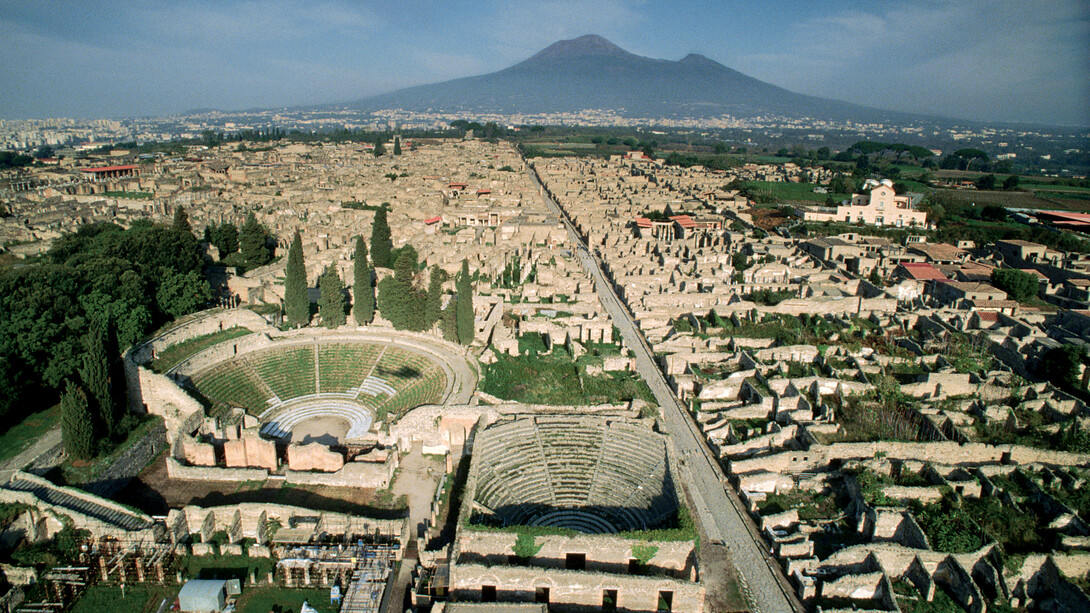
Aerial view of Pompeii
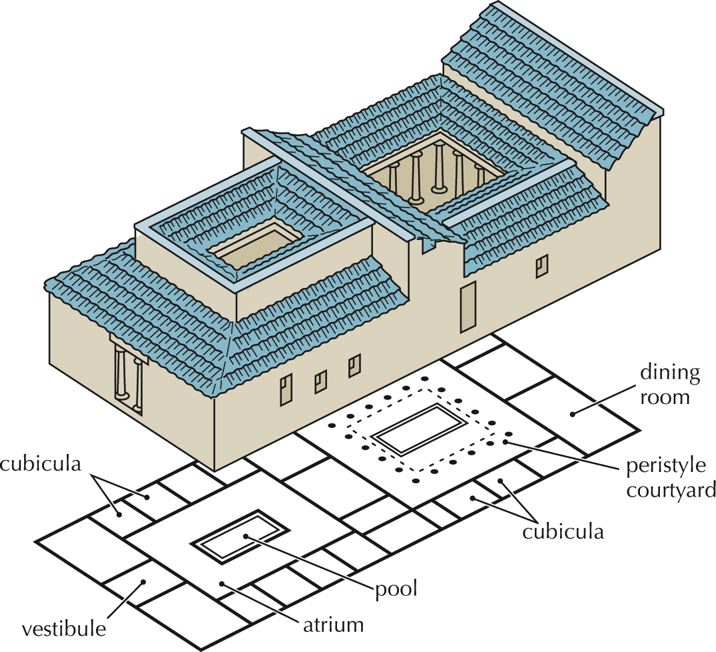
Reconstruction of Pompeiian house
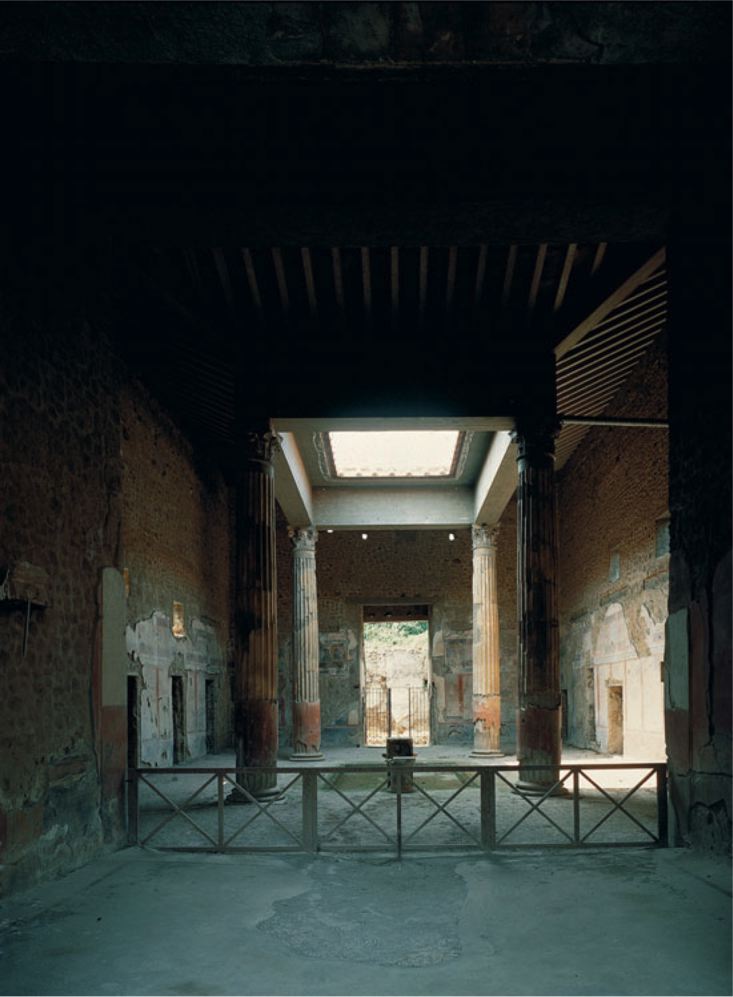
Atrium of the House of the Silver Wedding, Pompeii. 2nd century BCE–79 CE. By tradition, the Atrium was where Romans kept portraits of ancestors.
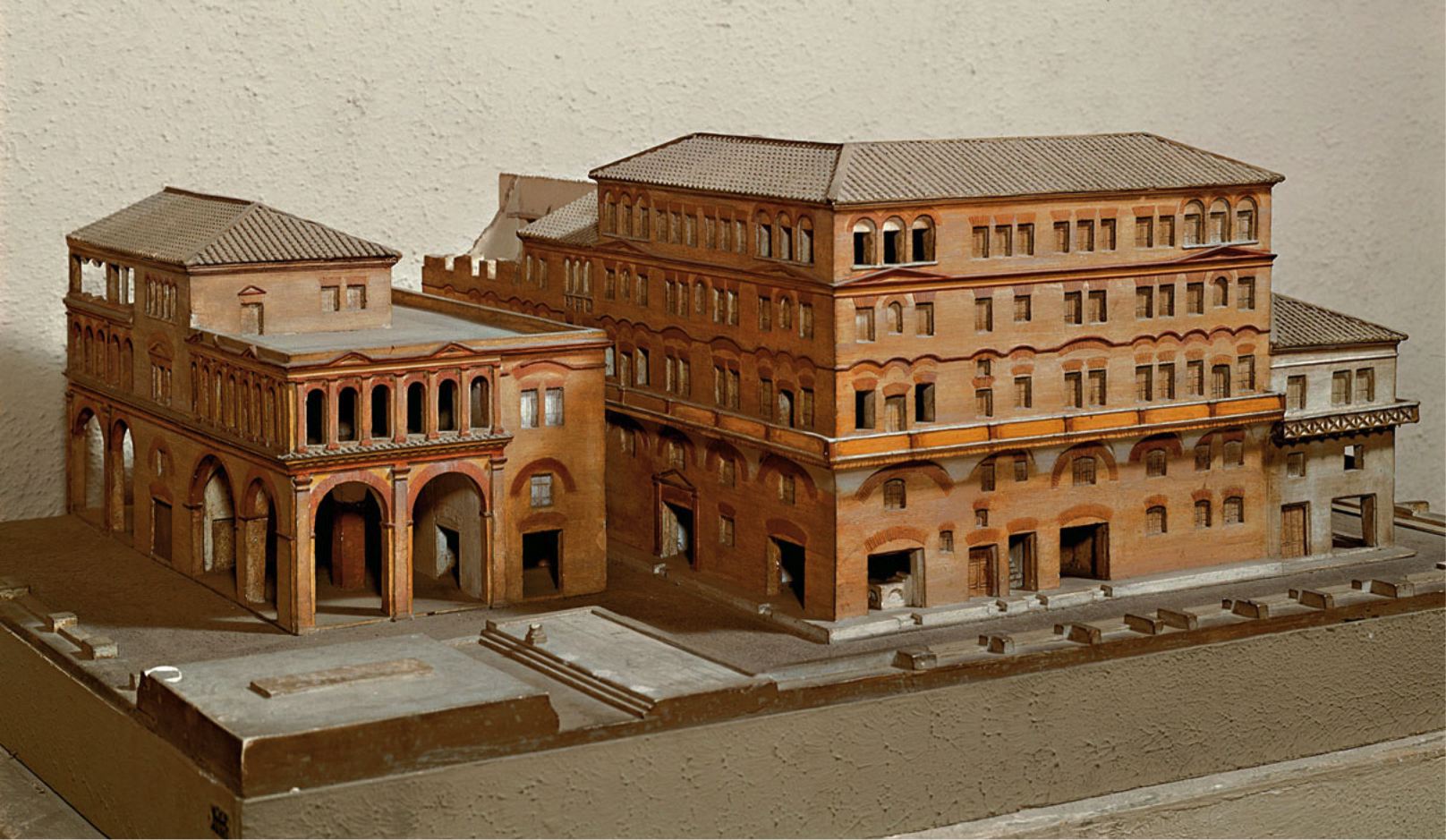
Model of apartment block from Rome’s port city Ostia. Shows a low-income family living situation for Rome. The wealthy made much money from these.
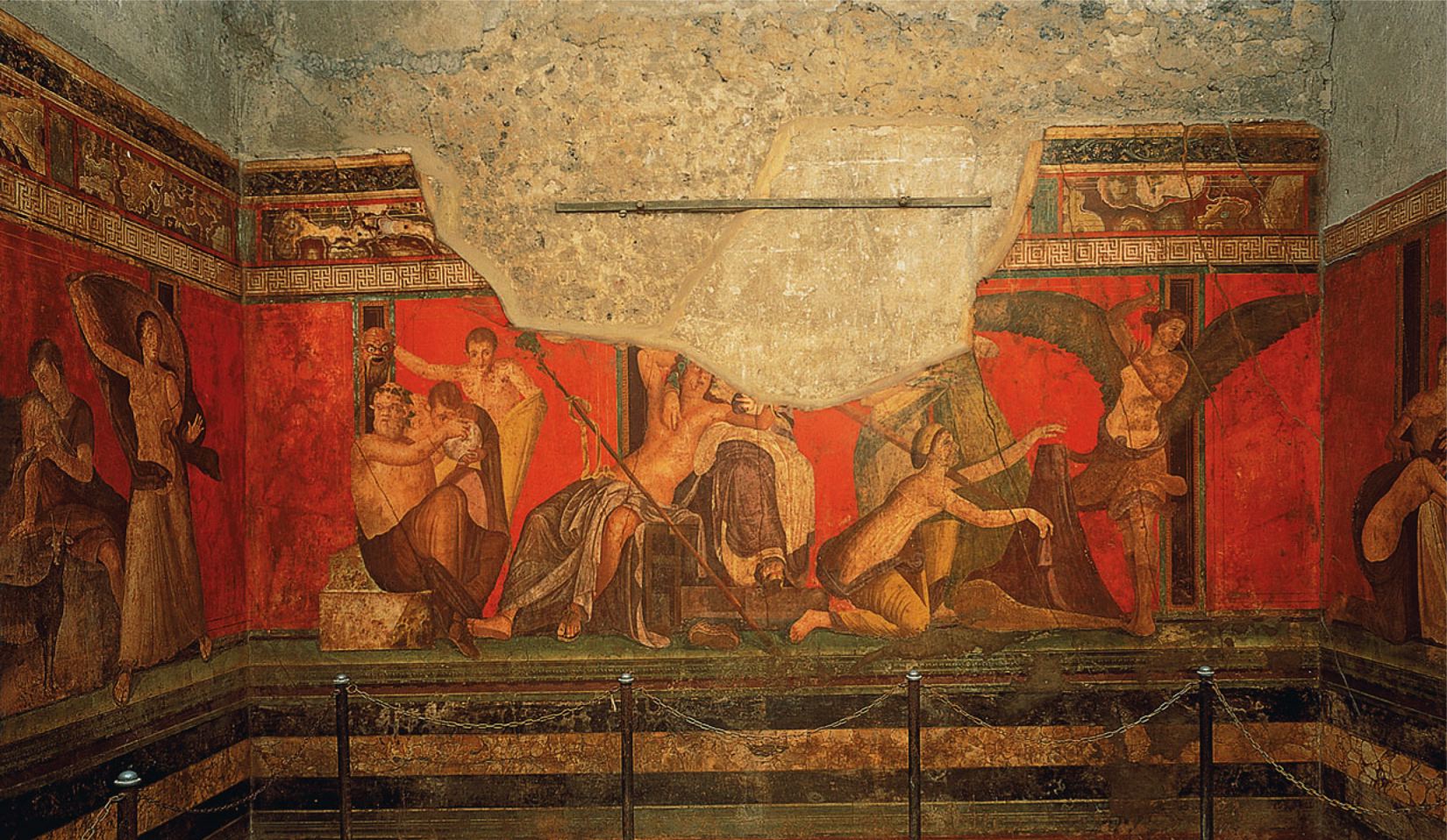
Scenes of Dionysiac Mystery Cult, from the Villa of the Mysteries, Pompeii. Second Style wall painting. ca. 60–50 BCE. The scene depicts rituals from the Dionysian mystery religion from Greece. Potentially shows initiation into womanhood or marriage.
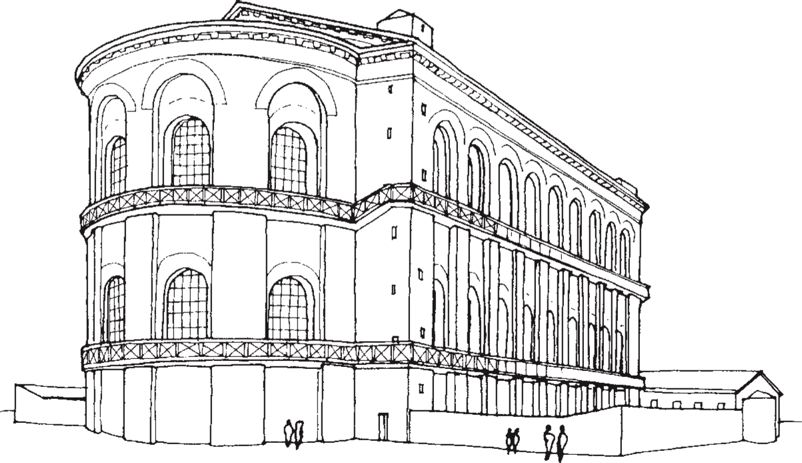
Basilica of Constantius Chlorus (father of Constantine the Great), Trier, Germany. Early 4th century CE. Apart of the tetrarch era.
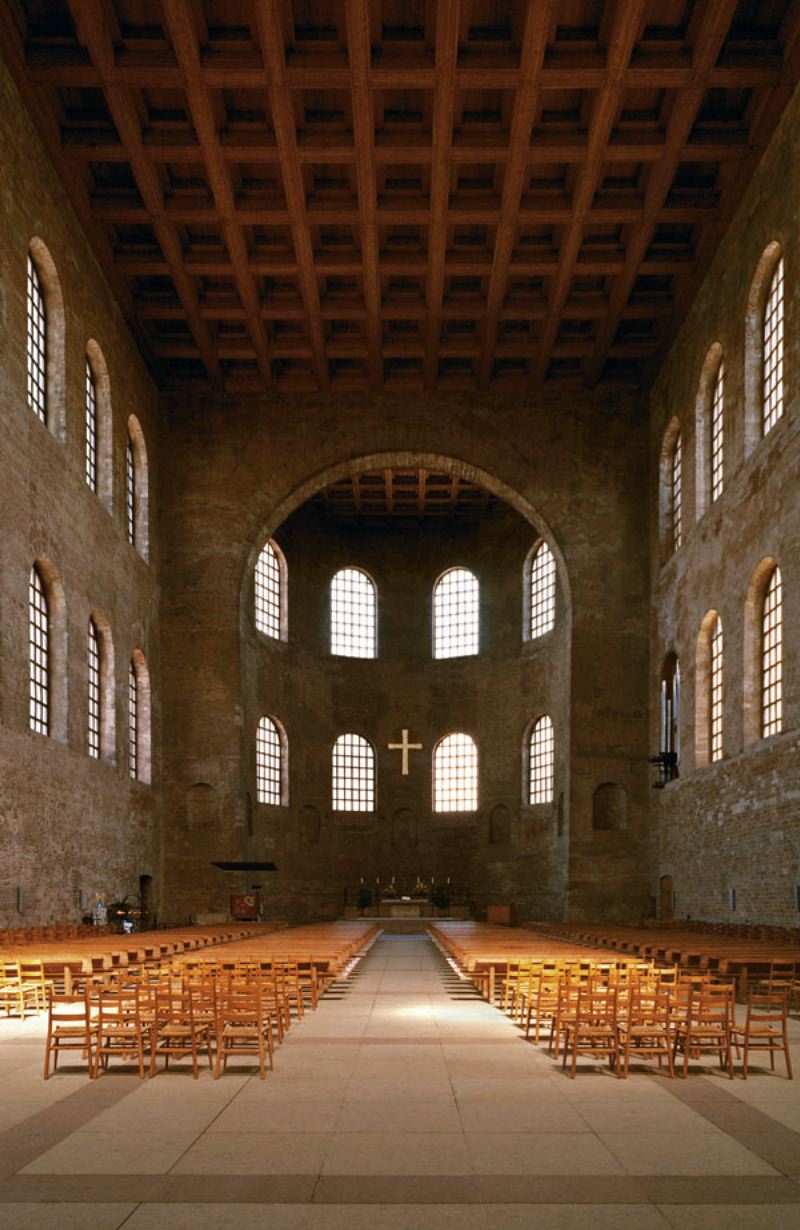
Interior of Basilica of Constantius Chlorus. Classicism has desolved.
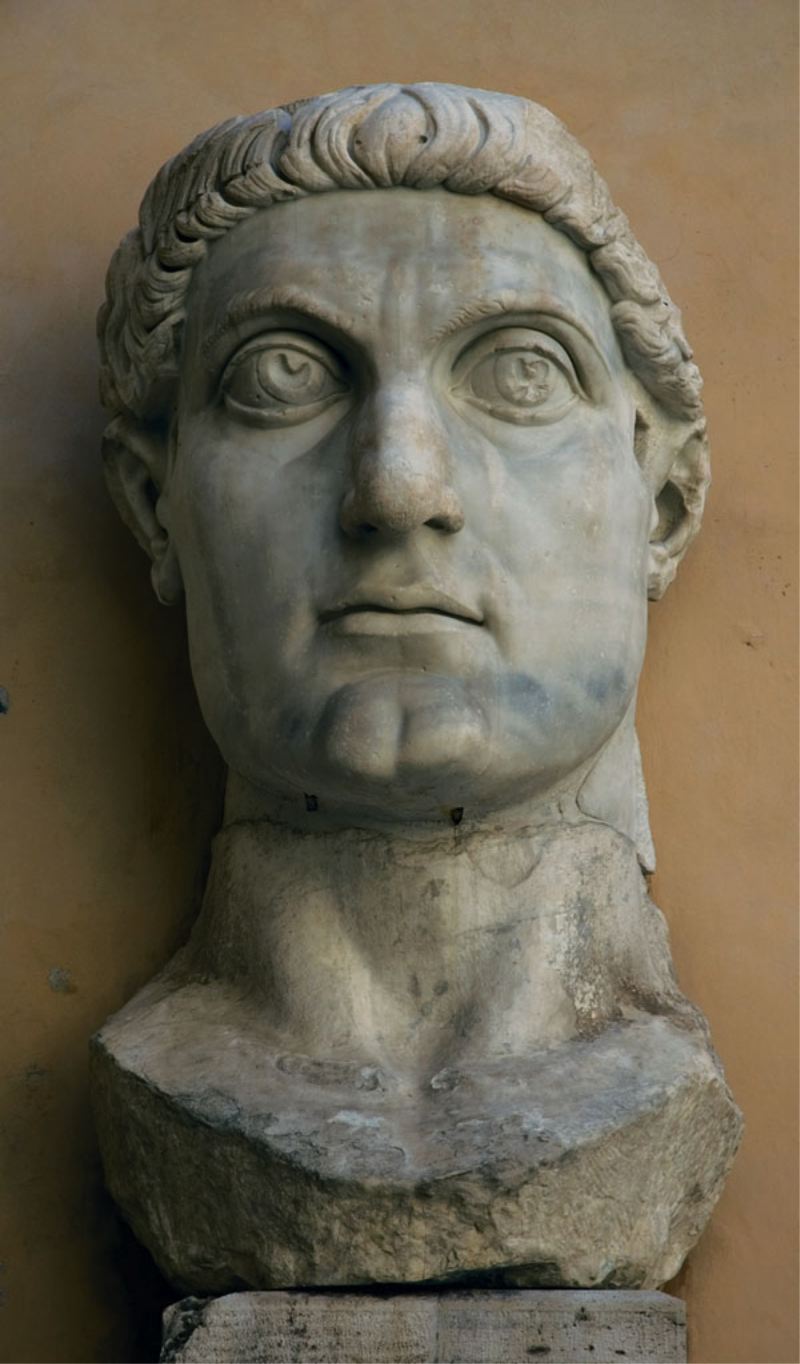
Portrait of Constantine the Great. Early 4th century CE. Marble. Abates some of the the severe abstraction style that evolved during the tetrarchy period. Perhaps the eyes gaze at something beyond this world; perhaps they are a window to the soul. The full cap of hair, and the absence of a beard, appear to be direct references to Trajan and Augustus, great emperors of the past whose achievements still gave the office its authority.
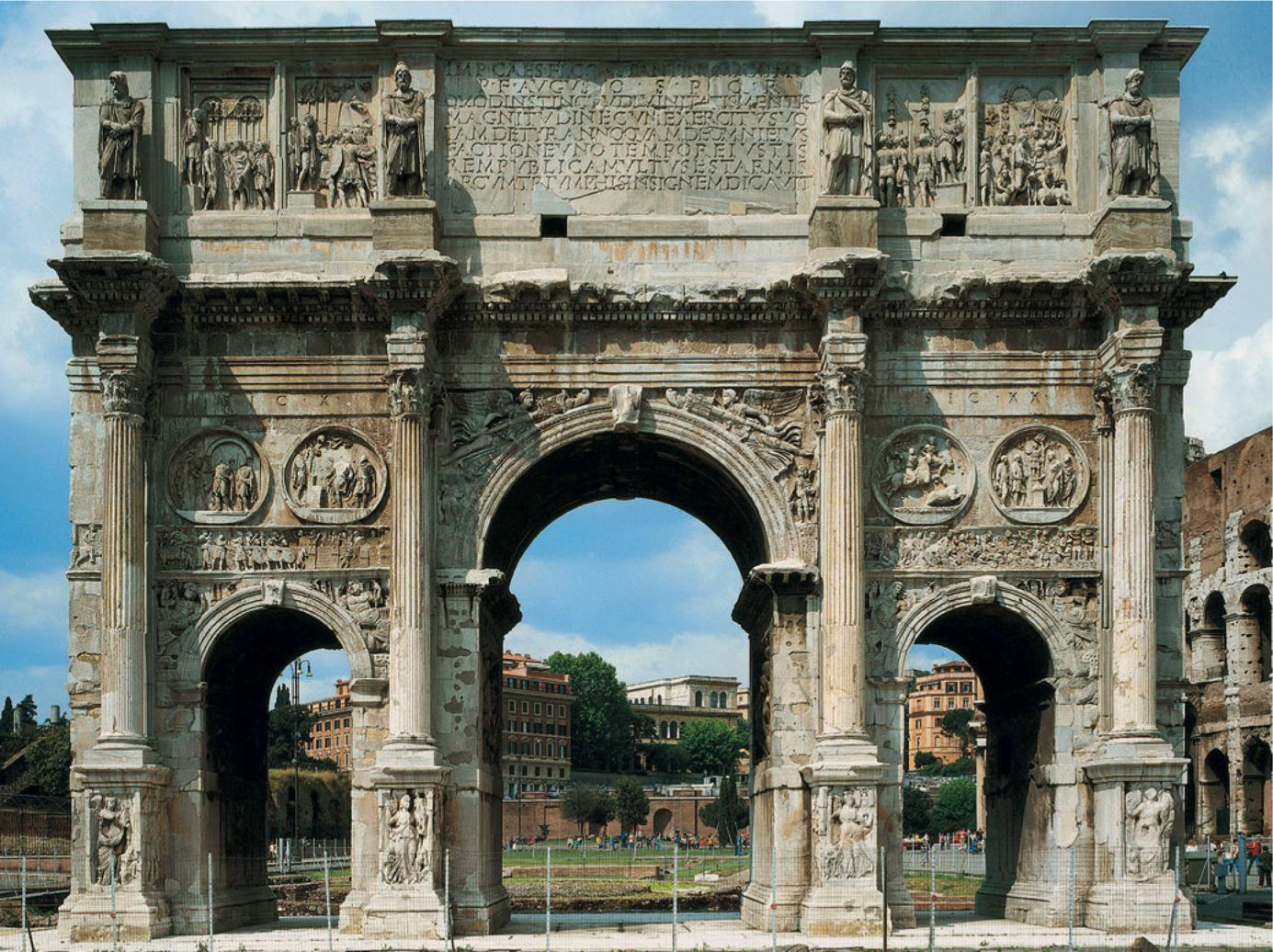
Arch of Constantine, Rome. 312–15 CE. Celebration of his ten-year anniversary and his conquest of Maxentius (the former Roman Emperor). Scenes show Rome’s history or mythological events.
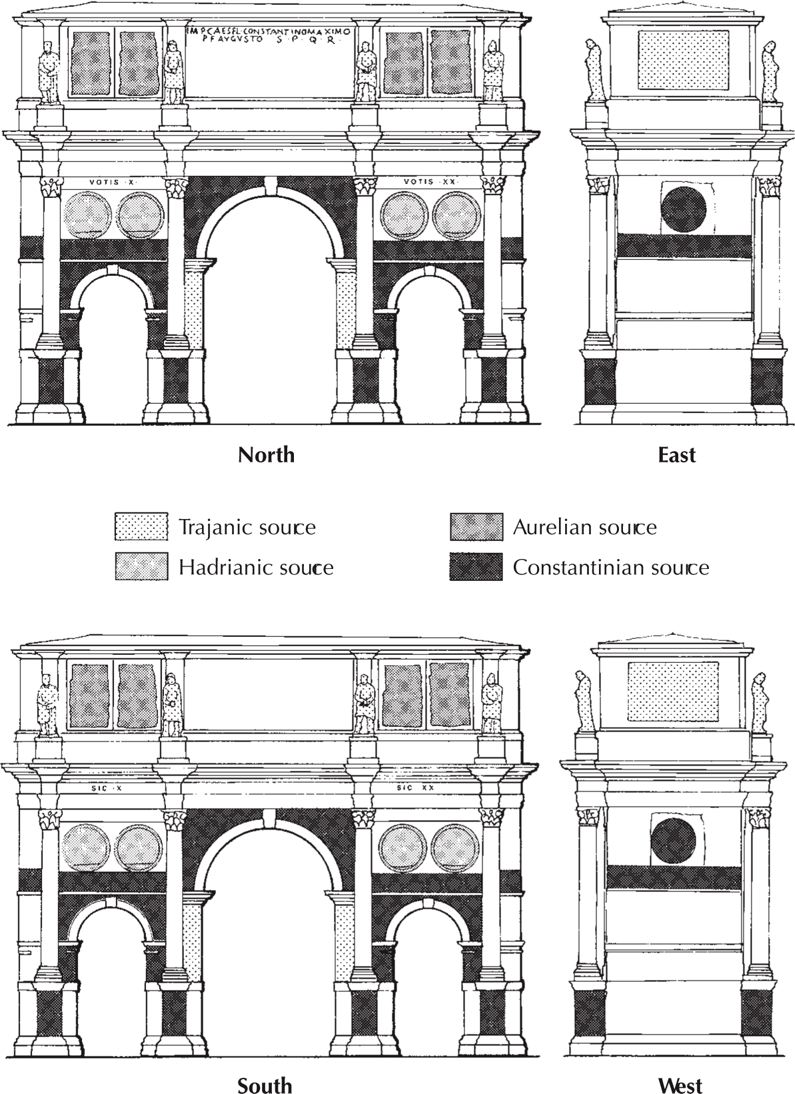
Schematic drawing of Arch of Constantine showing reused sculpture
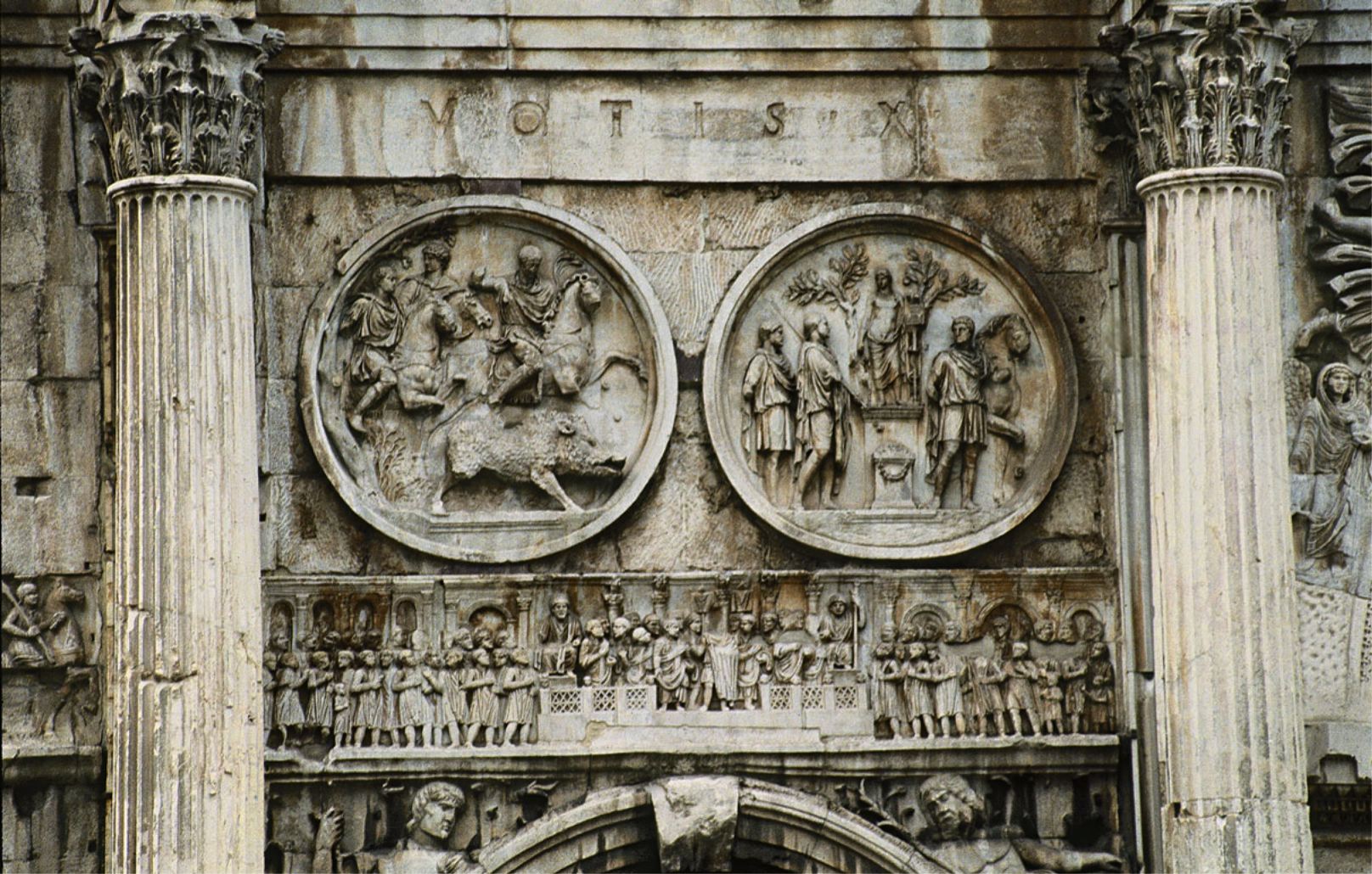
Constantinian relief from Arch of Constantine. depicts Constantine addressing the Senate and people of Rome from the rostrum, in the Forum, after entering Rome in 312 CE. their abstract quality makes them unusually legible from a distance, which is how viewers would have seen them.