Exam 5 Pearson
 Call Kai
 Learn
Learn Practice Test
 Spaced Repetition
 Match
Match Flashcards
 Knowt Play
1/90

Earn XP
Description and Tags
ch. 27, 28, 29
Name | Mastery | Learn | Test | Matching | Spaced | Call with Kai |
|---|
No analytics yet
Send a link to your students to track their progress
91 Terms
Which of the following is considered a role of primary sex organs?
production of sex hormones |
secretions for copulation |
site of fertilization |
copulation |
production of sex hormones |
Viable sperm production is optimal below the body's core temperature.
True |
False |
True
Sperm are produced in the __________.
seminiferous tubules |
epididymis |
ejaculatory duct |
ductus deferens |
seminiferous tubules |
The dartos and cremaster muscles are important to the integrity of the male reproductive system. Which of the following best describes the role they play?
They contract to allow ejaculation. |
They regulate the temperature of the testes. |
They are responsible for penile erection. |
They contract to push sperm along the ductus deferens. |
They regulate the temperature of the testes. |
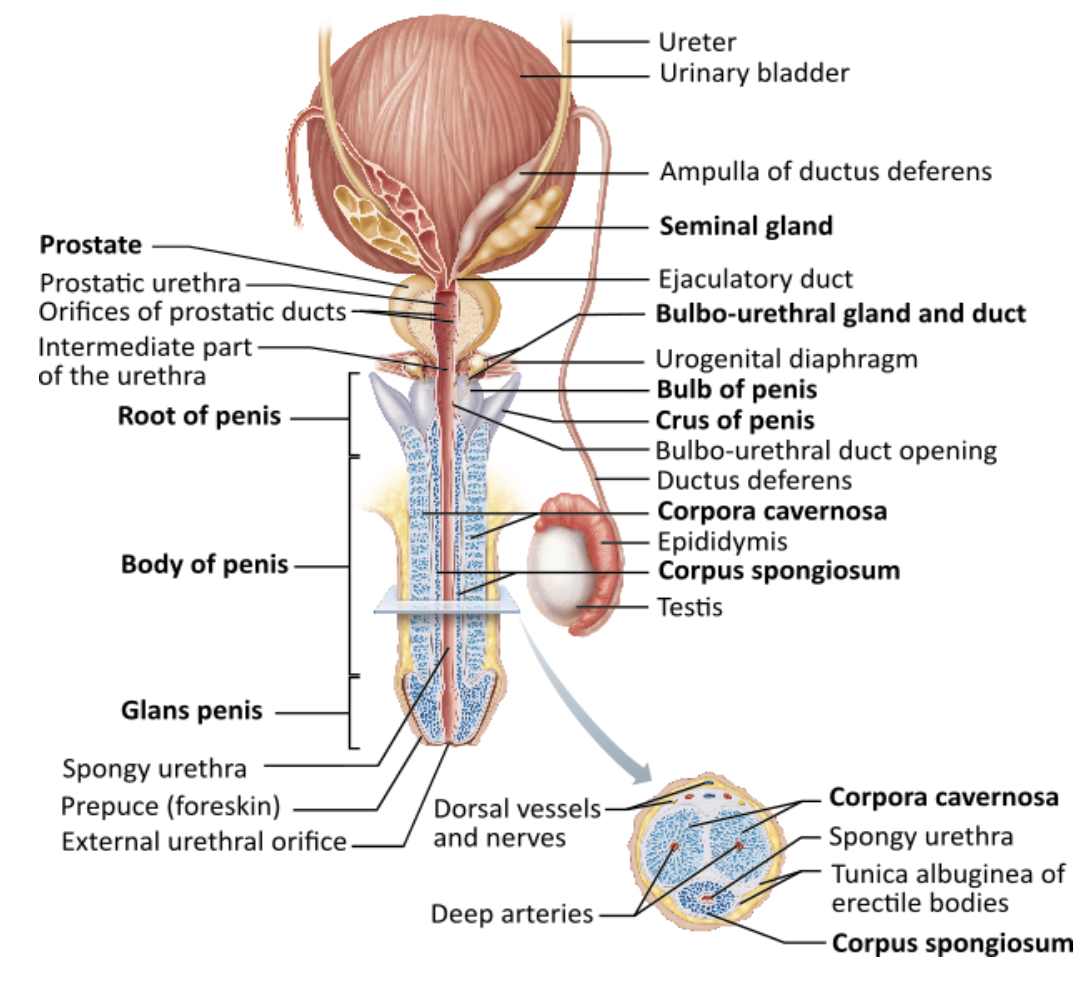
Which of these male accessory ducts transports both sperm cells and urine?
urethra |
ejaculatory duct |
epididymis |
ductus (vas) deferens |
urethra |
Which male reproductive structure is NOT correctly matched with its function?
epididymis: produces sperm |
bulbo-urethral gland: neutralizes urethra before ejaculation |
seminal gland: produces semen |
ductus deferens: carries sperm toward ejaculation |
epididymis: produces sperm |
Which of the following glands are responsible for producing 70% of semen volume?
the seminal glands |
the pituitary |
the bulbo-urethral glands |
the prostate |
the seminal glands
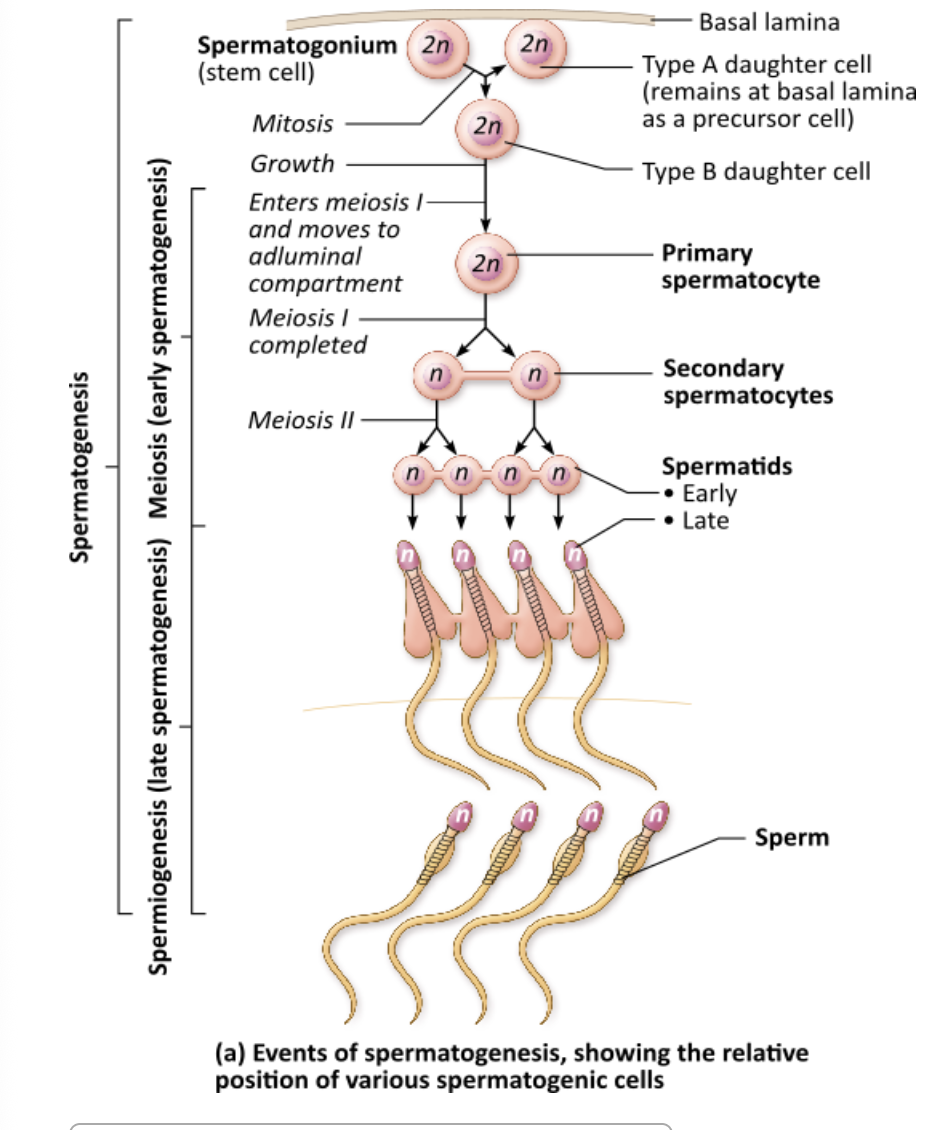
Which of the following is the final product of spermiogenesis?
type B daughter cells |
secondary spermatocytes |
sperm |
spermatids |
sperm |
The number of chromosomes in a human gamete is __________; this is referred to as a __________ chromosome number.
23; haploid |
23; diploid |
46; haploid |
46; diploid |
23; haploid |
Human egg and sperm are similar in that ________.
they are about the same size |
they have the same number of chromosomes |
they have the same degree of motility |
about the same number of each is produced per month |
they have the same number of chromosomes |
What is the function of the blood testis barrier?
to provide only select nutrients to the developing sperm |
to filter out male sex hormones |
to ensure that semen contains only sperm and seminal fluid |
to prevent activation of the immune system of the male against the developing sperm |
to prevent activation of the immune system of the male against the developing sperm |
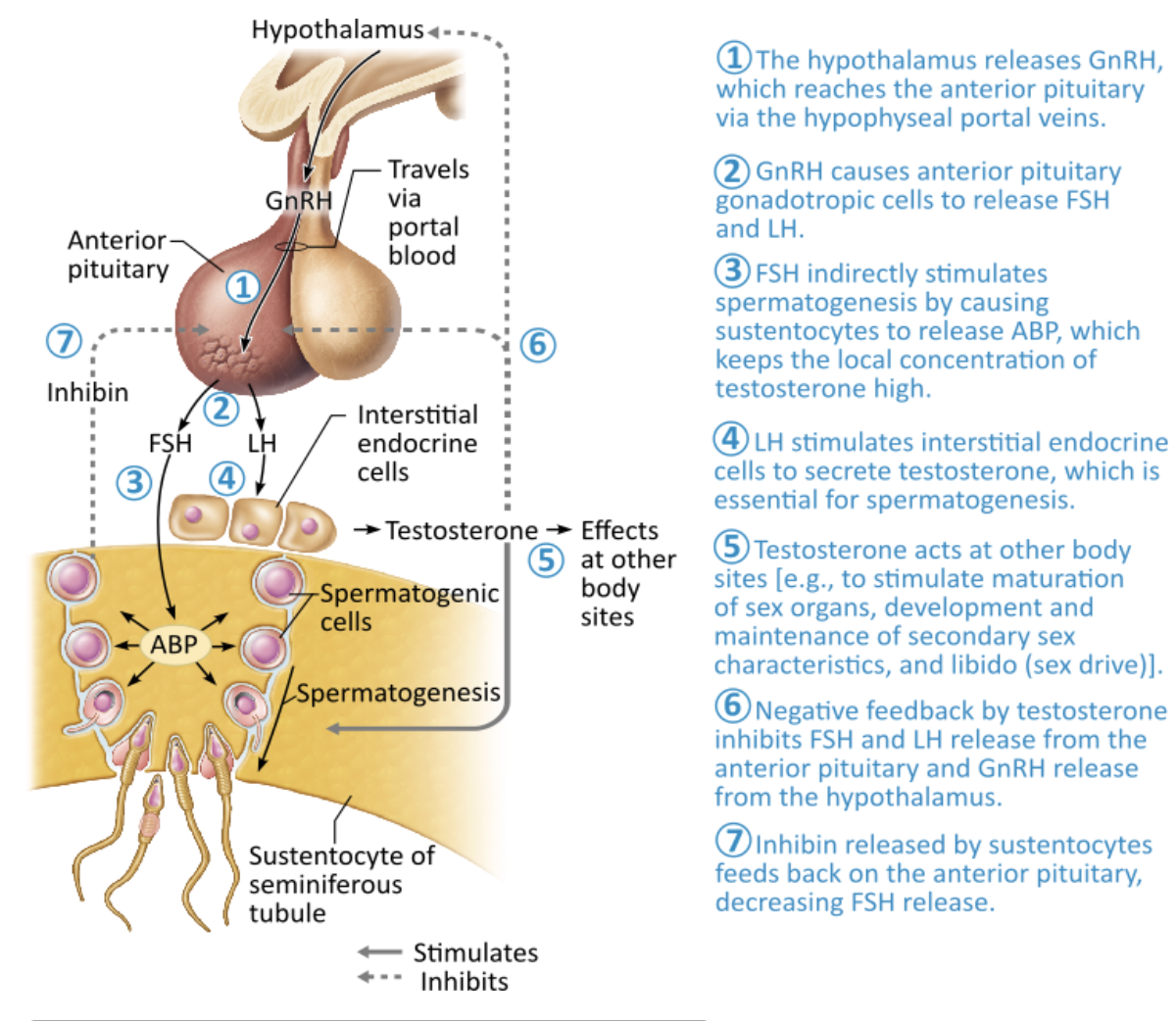
What is the testicular target for follicle-stimulating hormone (FSH)?
spermatogonia |
sustentocytes (Sertoli cells) |
spermatozoa |
interstitial endocrine cells (Leydig cells) |
sustentocytes (Sertoli cells) |
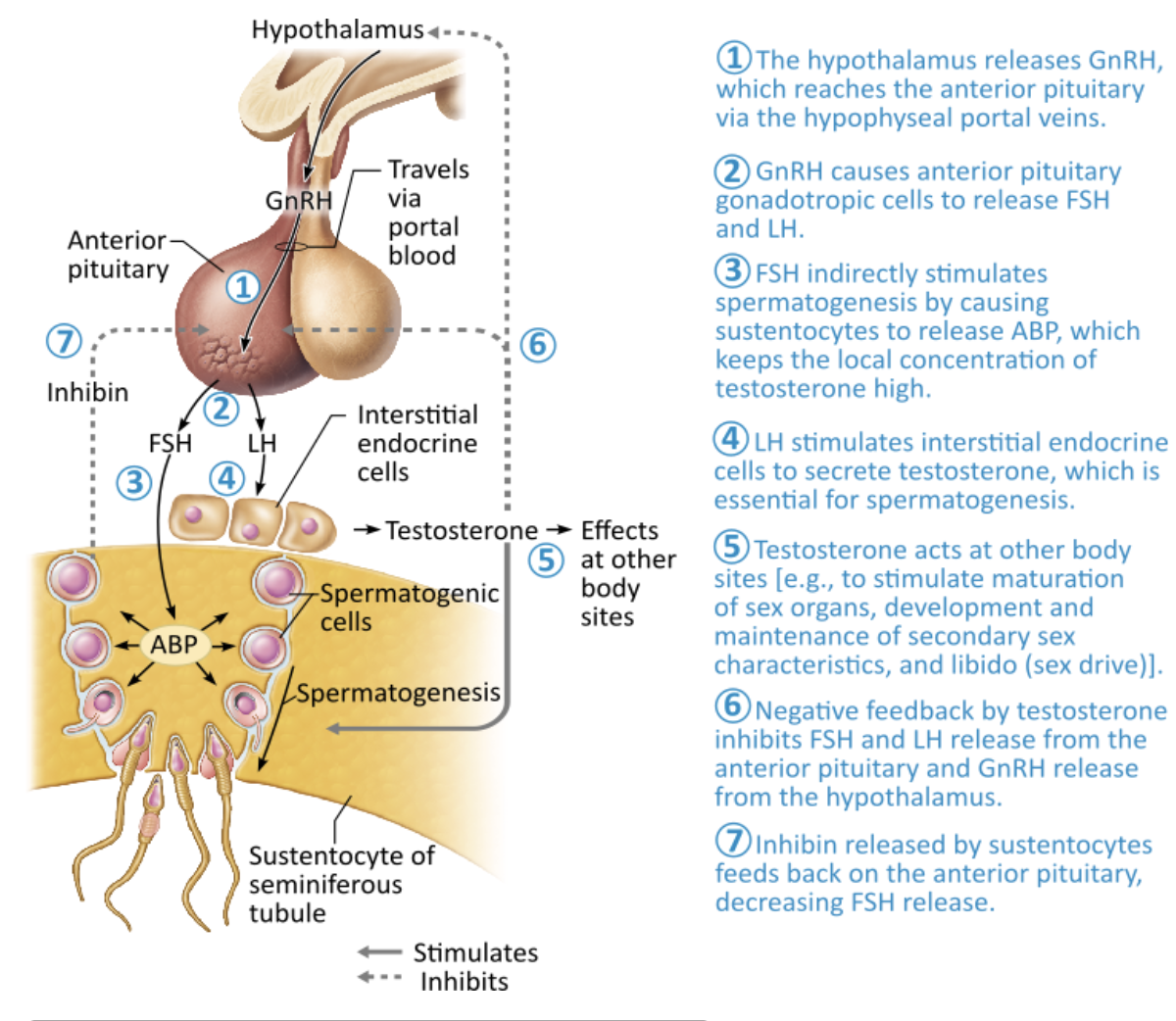
Which hormone promotes the formation of male secondary sex characteristics such as the appearance of pubic, axillary, and facial hair; enhanced hair growth on the chest; and a deepening voice?
|
gonadotropin-releasing hormone (GnRH) |
testosterone |
luteinizing hormone (LH) |
testosterone |
The release of __________ encourages sustentocytes to release __________.
follicle-stimulating hormone; androgen-binding protein |
luteinizing hormone; testosterone |
luteinizing hormone; androgen-binding protein |
inhibin; testosterone |
follicle-stimulating hormone; androgen-binding protein |
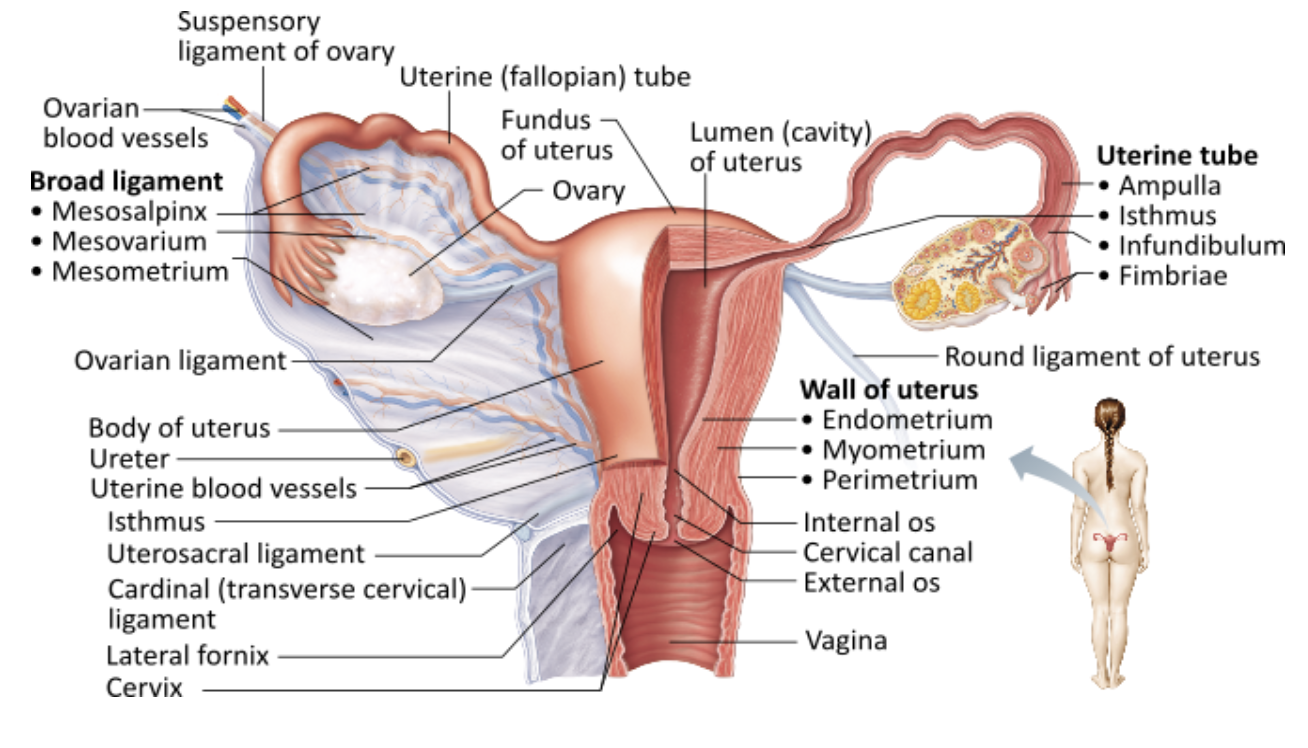
What part of the female system is the usual site of fertilization of the ovulated oocyte?
uterine (fallopian) tube |
uterus |
cervical canal |
vagina |
uterine (fallopian) tube |
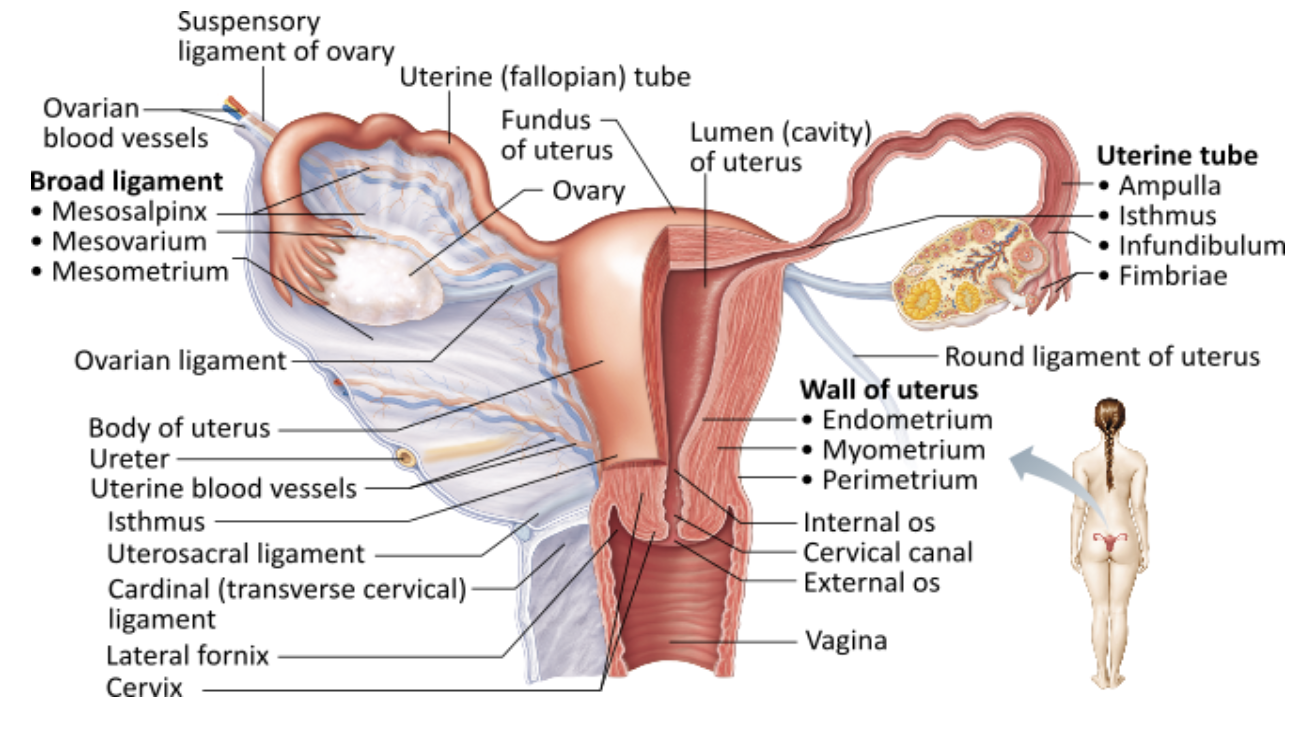
Which layer of the uterus is made of smooth muscle?
myometrium |
endometrium |
mesometrium |
perimetrium |
myometrium |
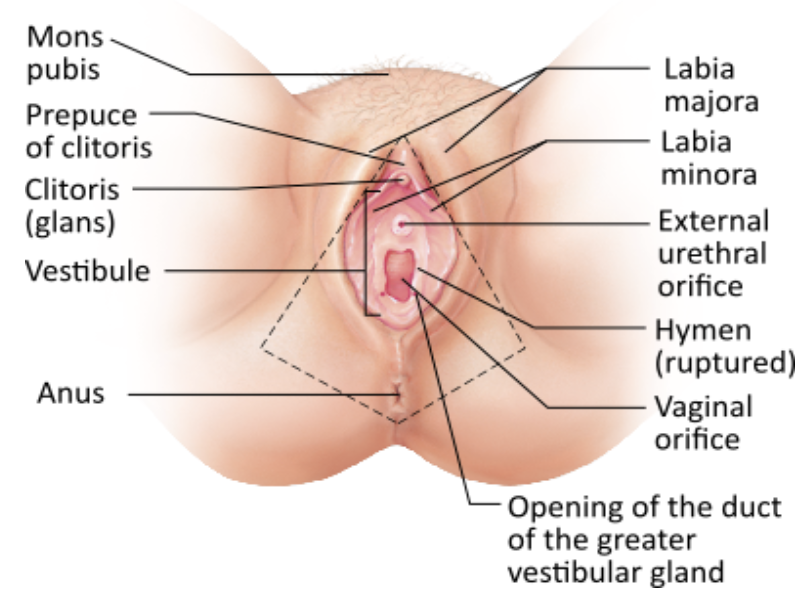
Which structure(s) of the female's external genitalia has/have erectile tissue?
clitoris |
mons pubis |
labia minora |
labia majora |
clitoris
The __________ is shed during each menstruation and is then regenerated by the __________.
basal layer of the endometrium; functional layer of the endometrium |
myometrium; perimetrium |
functional layer of the endometrium; basal layer of the endometrium |
functional layer of the endometrium; myometrium |
functional layer of the endometrium; basal layer of the endometrium |
Fertilization generally occurs in the ________.
uterus |
vagina |
uterine tubes |
ovary |
uterine tubes |
Which layer of the uterus is the site for implantation of a fertilized egg?
myometrium |
functional layer of the endometrium |
basal layer of the endometrium |
perimetrium |
functional layer of the endometrium |
The Pap smear is a test to detect cancerous changes in cells of the cervix.
True |
False |
True |
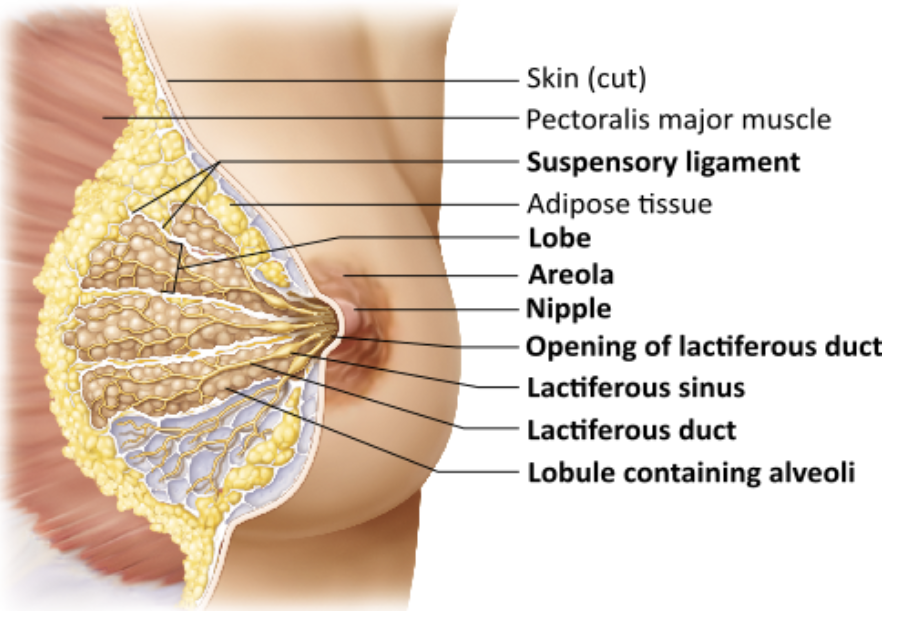
What part(s) of the breast produce(s) milk?
lactiferous ducts |
alveoli |
areola |
lactiferous sinus |
alveoli |
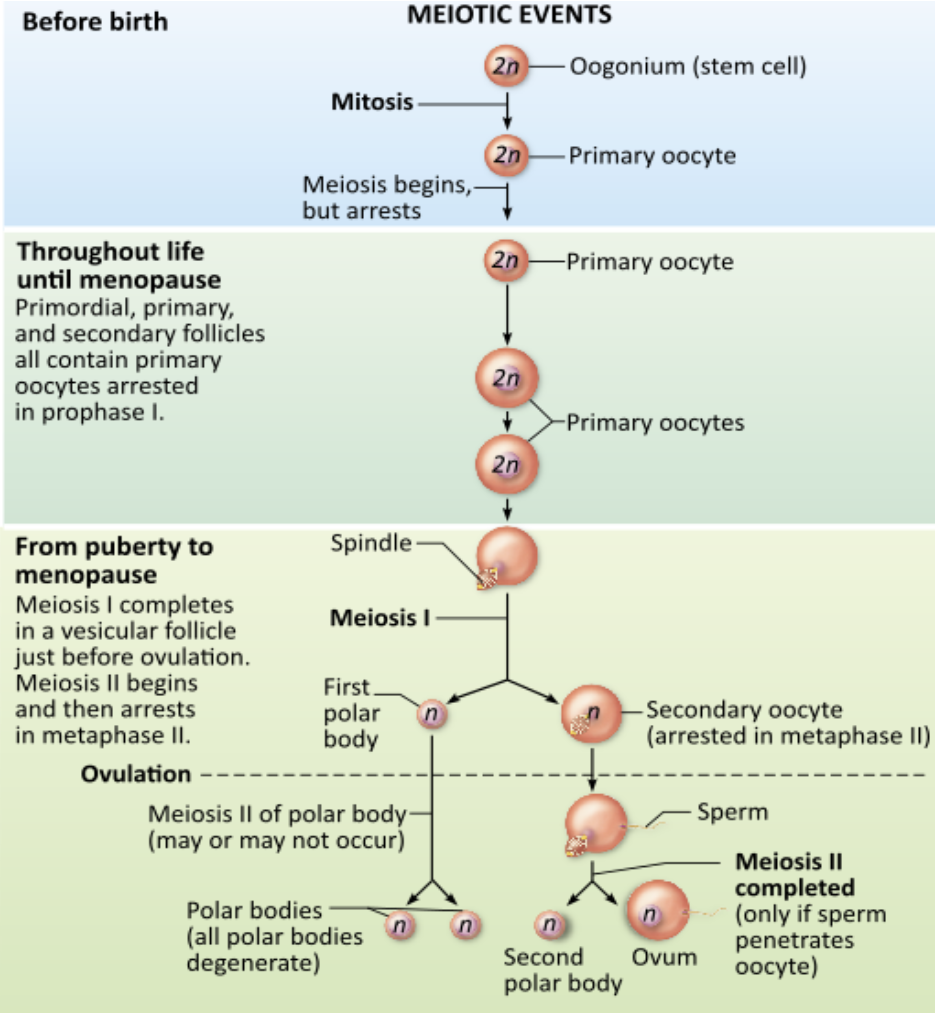
What is the main difference between oogenesis and spermatogenesis in terms of meiosis?
The number of functional gametes produced is different. |
Oogenesis produces three polar bodies, while spermatogenesis produces only one. |
Oogenesis does not include a second meiotic division. |
Oogenesis takes place in the uterus, while spermatogenesis takes place in gonadal tissue. |
The number of functional gametes produced is different.
Why does only one egg, rather than four eggs, develop during oogenesis, given that spermatogenesis results in four sperm formed from one stem cell?
The egg does not go through the meiotic division processes that the sperm undergo. |
Once formed, spermatids, but not oocytes, undergo additional rounds of division by mitosis. |
Only one egg can be fertilized at a time. |
Unequal cytoplasmic division ensures that a fertilized egg has ample nutrients for its journey to the uterus. |
Unequal cytoplasmic division ensures that a fertilized egg has ample nutrients for its journey to the uterus. |
Formation of a secondary oocyte occurs during __________.
pregnancy |
the luteal phase |
the follicular phase |
ovulation |
the follicular phase |
A surge in __________ directly triggers ovulation.
progesterone |
follicle-stimulating hormone (FSH) |
estrogen |
luteinizing hormone (LH) |
luteinizing hormone (LH) |
What structure is the target for gonadotropin stimulation occurring during the events that lead to ovulation?
vesicular follicles |
pituitary gland |
the endometrium |
the corpus luteum |
vesicular follicles |
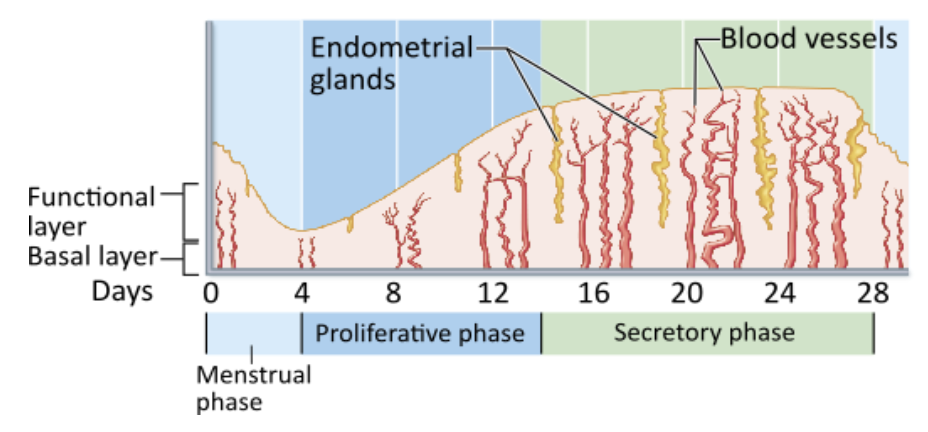
During what phase of the female's uterine cycle is the uterine lining shed?
proliferative phase |
preovulatory phase |
secretory, or postovulatory, phase |
menstrual phase |
menstrual phase |
Normally menstruation occurs when ________.
blood levels of estrogen and progesterone decrease |
the corpus luteum secretes estrogen |
blood levels of FSH fall off |
blood levels of estrogen and progesterone increase |
blood levels of estrogen and progesterone decrease |
All of the following statements referring to the uterine cycle are true EXCEPT ________.
a decrease in the levels of ovarian hormones signals menstruation |
estrogen is secreted by the developing follicle in the follicular phase of the cycle |
FSH and LH directly promote development of the uterine endometrium |
the corpus luteum is formed from the ruptured follicle after ovulation |
FSH and LH directly promote development of the uterine endometrium |
The critical factor that determines gender during development is ________.
presence of progesterone |
lack of an X chromosome |
inhibition of estrogen |
the SRY gene |
the SRY gene
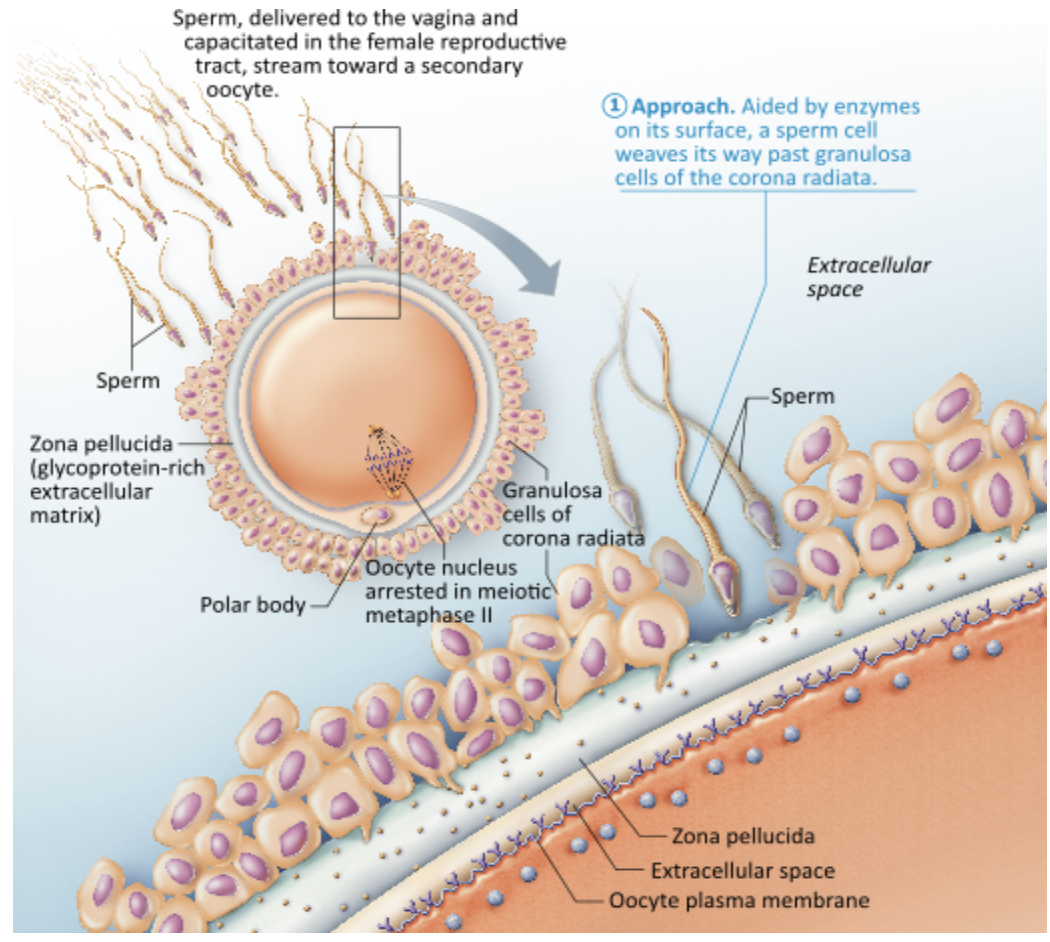
Once sperm are deposited into the vagina, the sperm's motility must be enhanced and they must be prepared to release hydrolytic enzymes from their acrosomes. What is this process called?
cortical reaction |
fertilization |
capacitation |
acrosomal reaction |
capacitation
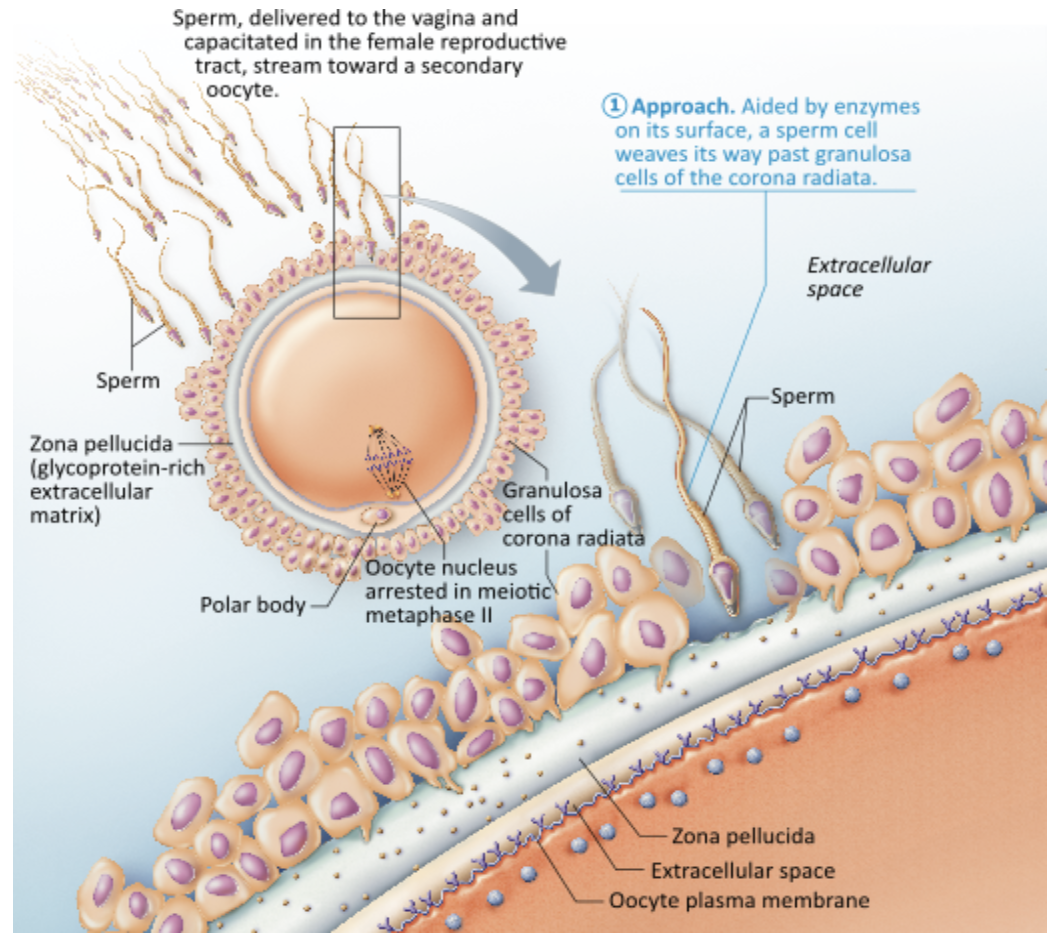
Which of the following is the first barrier that must be penetrated by the sperm in order to fertilize an oocyte?
corona radiata |
oocyte plasma membrane |
zona pellucida |
extracellular space |
corona radiata |
What is the name for the period of time that extends from the last menstrual period until birth, which is approximately 280 days?
an embryo |
a gestation period |
the conceptus |
pregnancy |
a gestation period |
How long is the secondary oocyte viable and capable of being fertilized after it is ovulated?
24-36 hours |
36-72 hours |
12-24 hours |
a full week |
12-24 hours |
Select the correct statement about fertilization.
Once inside the uterus, most sperm are protected and remain viable. |
Millions of sperm are destroyed by the vagina's acidic environment. |
If estrogen is present, the pathway through the cervical opening is blocked from sperm entry. |
Both sperm and the ovulated secondary oocyte remain viable for about 72 hours in the female reproductive tract. |
Millions of sperm are destroyed by the vagina's acidic environment.
At what point is meiosis II completed for the female gamete?
ovulation |
puberty |
fertilization |
implantation |
fertilization |
In the block to polyspermy, fusion of the sperm and oocyte plasma membranes causes ________ levels in the oocyte's cytoplasm to rise, triggering the cortical reaction.
sodium ion |
ATP |
calcium ion |
phosphate ion |
calcium ion |
The period from fertilization through week eight is called the embryonic period.
True |
False |
True
A zygote is usually formed within the uterus.
True |
False |
True
The correct sequence of preembryonic structures is ________.
zygote, morula, blastocyst |
zygote, blastocyst, morula |
blastocyst, morula, zygote |
morula, zygote, blastocyst |
zygote, morula, blastocyst |
The "fluid-filled, hollow ball of cells" stage of development is the blastocyst.
True |
False |
True
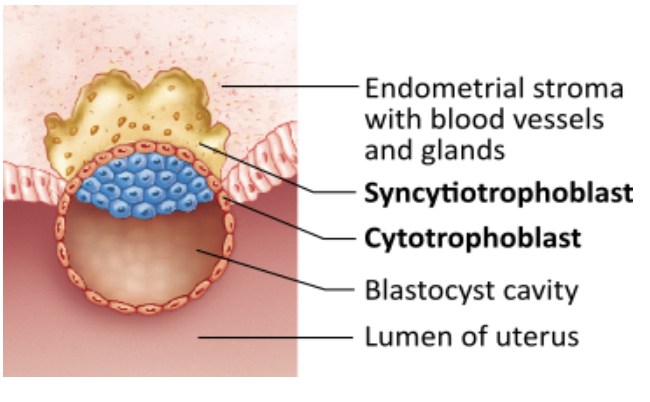
What cellular area shown in the figure secretes human chorionic gonadotropin (hCG)?
embryoblast |
cytotrophoblast |
the entire blastocyst |
syncytiotrophoblast |
syncytiotrophoblast |
Together, what do the decidua basalis and the chorionic villi form?
amnion |
placenta |
yolk sac |
chorion |
placenta |
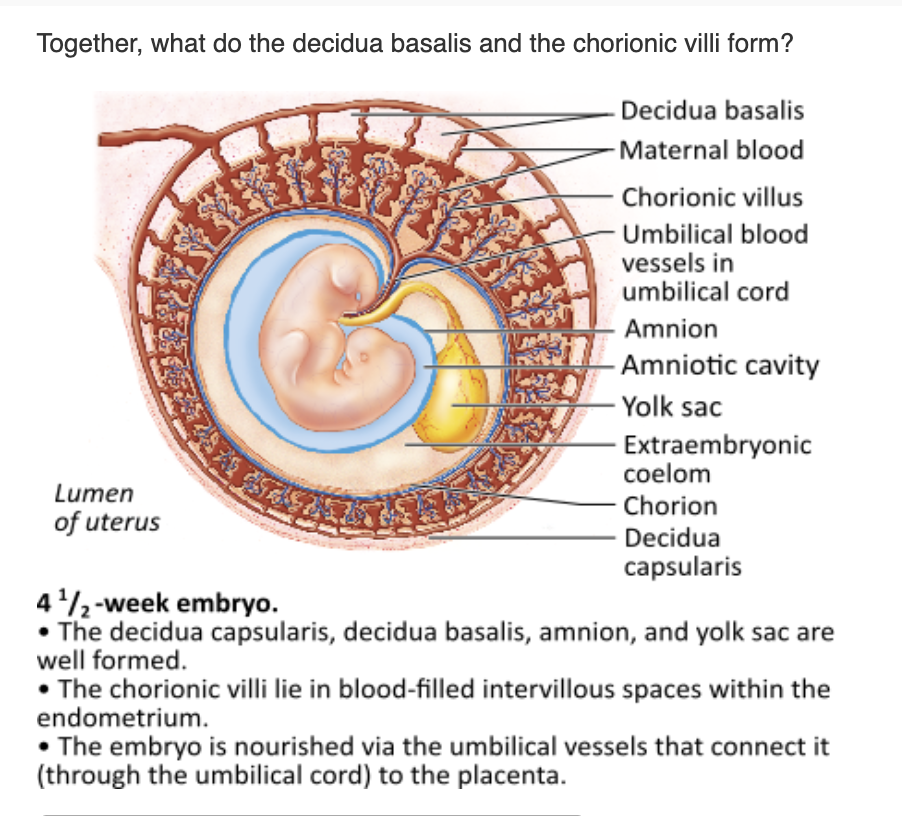
amnion |
placenta |
yolk sac |
chorion |
placenta
Human chorionic gonadotropin helps to maintain the corpus luteum for the entire gestational period.
True |
False |
False
A pregnancy test involves antibodies that detect growth hormone (GH) levels in a woman's blood or urine.
True |
False |
False
Which primary germ layer gives rise to the nervous system?
endoderm |
sclerotome |
ectoderm |
mesoderm |
ectoderm
Which fetal vascular shunt directly connects the right atrium to the left atrium so as to bypass the nonfunctional lungs?
ligamentum arteriosum |
ductus arteriosus |
ductus venosus |
foramen ovale |
foramen ovale |
Based on the function of the extraembryonic membranes, which of these problems would likely develop if there were a deficiency in the yolk sac?
lack of umbilical cord formation and umbilical attachment to the urinary bladder |
lack of development of the embryo |
lack of blood cells for the early embryo |
loss of amniotic fluid |
lack of blood cells for the early embryo |
Which of the following is NOT one of the primary germ layers?
gastroderm |
ectoderm |
mesoderm |
endoderm |
gastroderm
Which of the following is the primary germ layer that forms the basis for the musculoskeletal system?
gastroderm |
ectoderm |
mesoderm |
endoderm |
mesoderm
The foramen ovale and the ductus arteriosus are both examples of __________.
cells of the mesoderm that form the heart and blood vessels |
pulmonary bypass shunts, which serve to bypass the lungs |
venous shunts, which serve to bypass the liver sinusoids |
cells of the somatic mesoderm, which help to form the dermis of the skin |
pulmonary bypass shunts, which serve to bypass the lungs |
Which of the following incorrectly matches an embryonic structure with its function?
amnion: protects embryo against physical trauma and helps maintain homeostatic temperature |
yolk sac: provides nutrients to developing embryo |
allantois: serves as the structural base for the umbilical cord |
chorion: forms fetal part of placenta |
yolk sac: provides nutrients to developing embryo |
Of the three primary germ layers, the mesoderm forms the most body parts.
True |
False |
True |
A dangerous complication of pregnancy called __________ results in an insufficient placental blood supply, which can starve a fetus of oxygen. The pregnant woman becomes edematous and hypertensive, and proteinuria occurs.
dystocia |
dyspnea |
parturition |
preeclampsia |
preeclampsia
As pregnancy continues, the increasing bulkiness of the anterior abdomen changes the woman's center of gravity, possibly causing an accentuated lumbar curvature called ________.
hunchback |
lordosis |
kyphosis |
scoliosis |
lordosis |
What role does oxytocin play in promoting labor?
Oxytocin stimulates the uterus to contract. |
Oxytocin stimulates the myometrial cells of the uterus to form oxytocin receptors. |
Oxytocin antagonizes progesterone’s quieting influence on uterine muscle. |
Oxytocin promotes the formation of gap junctions between the uterine smooth muscle cells. |
Oxytocin stimulates the uterus to contract. |
During what stage is the afterbirth delivered?
expulsion stage |
engagement |
placental stage |
dilation stage |
placental stage |
A lack of _____ can, without treatment, lead to _____ in premature infants.
surfactant; alveolar collapse |
oxygen; suffocation |
surfactant; lung overinflation |
oxytocin; pneumothorax |
surfactant; alveolar collapse |
Prior to the let-down reflex, the mammary glands secrete a yellowish fluid called ________ that has less lactose than milk and almost no fat.
meconium |
colostrum |
prolactin |
bilirubin |
colostrum
__ = Leads to the development of morula and then a blastocyst
Cleavage
__= Embedding of the blastocyst in the uterine wall.
Implantation
__= Leads to the formation of the first cell of the new individual.
Fertilization
__=Leads to the establishment of the three primary germ layers.
Gastrulation
__= Leads to enhancement of sperm motility and increasing membrane fragility to enable enzyme release from acrosomes.
Capacitation
Your genotype is a description of your combination of alleles for a given phenotype.
True |
False |
True
__ = Actual genetic makeup
Genotype
__ __ = A chromosome pair that may be very different in size
Sex Chromosomes
__ = Genes not expressed unless they are present in homozygous condition.
Recessive
__ = Situation in which an individual has identical alleles for a particular trait.
Homozygous
__ = Genes for the same trait that have different expressions.
Allele
__ = The gene allele that suppresses or masks the expression of the other allele.
Dominant
__= Situation in which an individual has different alleles making up the genotype for a particular trait.
Heterozygous
__= Chromosomes regulating most body characteristics.
Autosomes
Recessive genes are usually expressed in humans only when ________.
they are coding for genetic diseases |
the organism is in the embryonic stage |
they are coding for skin color |
both alleles for the gene are exactly the same, or homozygous |
both alleles for the gene are exactly the same, or homozygous |
An individual who is heterozygous for a particular trait, yet expresses both alleles of that trait, is demonstrating an example of ________.
recessive inheritance |
incomplete dominance |
dominance |
sex-linked inheritance |
incomplete dominance |
Hereditary characteristics are transmitted to offspring by genes.
True |
False |
True
What is the result of one chromatid segment forming a chiasma with a homologous chromatid segment?
sex chromosomes |
homologous chromosomes |
homozygous chromosomes |
recombinant chromosomes |
recombinant chromosomes |
Using the information provided in this figure, what is the probability of these parents producing a homozygous dominant offspring?
0% |
25% |
50% |
75% |
25% |
The character that produces albinism has been attributed to a single recessive allele, a. Using the information provided in this figure, what is the probability of these heterozygous parents producing an offspring who carries an allele for albinism?
25% |
50% |
75% |
100% |
75% |
Using the information provided in this figure, what is the probability of heterozygous parents carrying the recessive allele for albinism producing an offspring who expresses the albino phenotype?
25% |
50% |
75% |
100% |
25% |
Which of the following terms applies to a continuous phenotypic variation between two extremes?
incomplete dominance |
polygenic inheritance |
multiple-allele inheritance |
sex-linked inheritance |
polygenic inheritance |
Which of the following human conditions best exemplifies polygenic inheritance?
hemophilia |
sickle-cell trait |
height |
red-green color blindness |
height |
__ __ = : Inheritance that results in continuous or qualitative phenotypic variations between two extremes; an example is skin color.
Polygenic Inheritance
___-___ ___ = : Inheritance of the ABO blood group type is an example of this type of inheritance.
Multiple-Allele Inheritance
___-___ ___ = : Inherited traits determined by genes on the X or Y chromosomes.
Sex-Linked Inheritance
__ __ = : The heterozygote has a phenotype intermediate between those of the homozygous dominant and homozygous recessive.
Incomplete Dominance
__ - __ __ = : The dominant gene is expressed when present; the recessive gene is expressed only in the absence of the dominant gene.
Dominant-Recessive Inheritance
Which type of inheritance involves genes not located on autosomal chromosomes?
incomplete dominance inheritance |
multiple-allele inheritance |
polygene inheritance |
sex-linked inheritance |
sex-linked inheritance |
The expression of all physical traits is strictly due to the inheritance of specific genes.
True |
False |
False |