Physics Waves and Magnetism
 Call Kai
 Learn
Learn Practice Test
 Spaced Repetition
 Match
Match Flashcards
 Knowt Play
1/45

There's no tags or description
Looks like no tags are added yet.
Name | Mastery | Learn | Test | Matching | Spaced | Call with Kai |
|---|
No analytics yet
Send a link to your students to track their progress
46 Terms
What must the conductor do to generate a potential difference?
has to cut across the magnetic field lines
if the magnetic field lines are going side to side, the conductor has to move up and down (“cutting” the lines)
conductor or magnet can move relative to eachother to create a potential difference
Maxwell’s equations
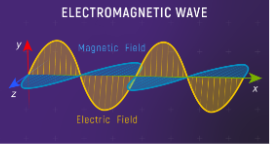
a changing electric field induces a magnetic field
a changing magnetic field induces an electric field
as the electric field changes it induces a magnetic field, as the magnetic field is created it induces an electric field….
this is called light
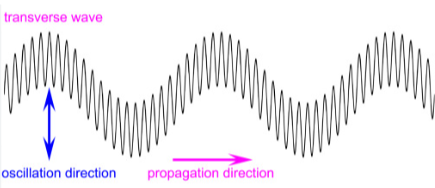
transverse waves
light
particles vibrate perpendicular to the direction the wave is traveling
it only happens with transverse/light waves
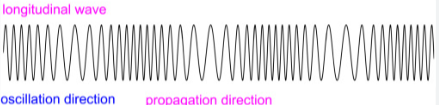
Longitudinal waves
move parallel to the direction of the wave
sound and water
Do electromagnetic waves need a medium to travel through?
no
speed of light in a vacuum (no medium)
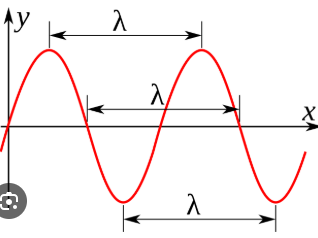
wavelength
variable = lambda λ
unit = meters (is a distance)
length of one FULL wave
amplitude
distance from equilibrium to max displacement
meters
direct relationship to energy
more energy, higher wavelength
crest
highest point of a wave
trough
lowest point of a wave
frequency
number of complete cycles per second
unit = Hz (hertz), variable= f
ex. 8 cycles in 4 seconds (number of cycles/ by how many seconds_
f= 2 Hz
period
how LONG it takes for 1 complete cycle
time it takes for one full cycle to be completed
is a unit of time (seconds)
variable = T
period equation: T= 1/f
wave equation
v=fλ velocity= frequency x wavelength
velocity will be either speed of sound or light in ref table (usually)
What are waves that are in phase?
points that are wavelengths apart (one or more)
0 or 360 degrees
split wavelength into fourths (90,180,270,360)
What are waves that are out of phase?
points are are 180 or 270 or 90 out of phase
if it goes past 360 then its what is left over
ex. if it is 450 out of phase, it is really 90 (450-360=90)
wave interference
when two or more wave meet while traveling along the same medium
there is two types
constructive interference
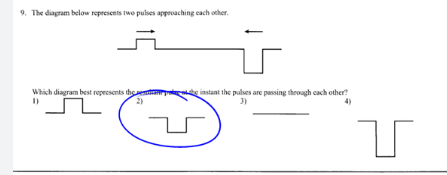
when two waves overlap another in phase
their amplitudes are added, a bigger resultant wave
destructive interference
when two waves overlap out of phase, results in smaller amplitude
if they are not the same shape then the wave flips to the side of the larger wave and the difference is subtracted
standing waves
produced when two waves of equal amplitude and wavelength pass through one another while traveling in opposite directions
alternate from going in phase and out of phase
constructive and destructive interference occurs
nodes
points that remain stationary on a standing wave
on the equilibrium line
antinodes
points of maximum amplitude on waves
move the most (on the crest)
just count the points on the crests not troughs because it is the same point (ossilates)
Wave fronts
way to make drawing waves easier
the lines are crests and in between are troughs
doesn’t show amplitude
can be represented using a circle of lines
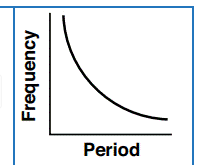
What is the relationship between wavelength and frequency?
inversely related
as wavelength increases (gets longer), frequency decreases
as wavelength decreases, frequency increases (waves get shorter)
Doppler Effect
a change in frequency due to movement (either object moving or a person is moving relative to an object)
coming towards you (ambulance), frequency increases, wavelength decrease, pitch is higher
moving away, —> frequency decreases, wavelength increases, lower pitch
What is the difference between particles and waves?
particles have mass like marbles (can’t bend)
waves don’t have mass so they can bend
diffraction
bending of a wave through or around the edge of a barrier
depends on size of barrier (narrower—> more diffraction, wider—> less diffraction)
Double slit experiment
waves diffract through both openings and then create an interference pattern
where they intersect they form a pattern (destructive —> a line)
constructive —> semi-circles
resonance
everything has a natural frequency at which it will vibrate if disturbed
if something is vibrating at the natural frequency of another object, that other object will vibrate
what is the variable for speed of light in a vacuum?
lower case c
3 × 10^8 m/s (m/s because it is a speed)
natures speed limit (nothing can travel faster)
How do different mediums affect the speed of light?
travels slowest in solids
fastest in gases
consider air the same as a vacuum (n=1)
electromagnetic spectrum on reference table
left to right the frequency decreases so the wavelength is is increasing (getting longer)
the only values shown are frequency
have to use v=fxlambda to figure out wavelength of light
reflection
the bouncing back of light as it strikes a medium
consists of two rays, incident and reflected
a normal line is drawn perpendicular to the reflecting surface
all angles of incidence and reflection are measured against the NORMAL
regular reflection
when a beam of light strikes a smooth surface (glass or metal)
the reflected rays will be parallel, creating an undisturbed mirror image
diffuse reflection
when a beam of light strikes an irregular surface
each ray obeys the laws of reflection
reflected rays are not parallel so no mirror image is formed
refraction
change in direction due to a change in velocity when light enters a medium
FREQUENCY STAYS THE SAME
absolute index of refraction
variable = n, no units
ratio of the speed of light in a vacuum to its speed in a medium
n=c/v
absolute index of refraction= speed of light in a vacuum x speed of light in a different medium
What does a higher index indicate?
higher index means the light will travel slower (n=1 for light in a vacuum, so the further, greater you are away from 1 the slower you will travel because nothing can be faster than light)
llower index—> faster
How does density/n impact the bending of light rays?
greater the density/ higher n —> bends toward the normal
lower density/ lower n —> bends away from the normal (y -axis)
think of marching outside
if incident ray is against the normal line/ vertical no refraction will occur
Snell’s law
used to measure how much a ray is refracted/ bends
n1 x sin1 = n2 x sin2
MAKE SURE CALCULATOR IS IN DEGREE MODE
1 is where the light is coming from, 2 is what its entering
how to use a protractor
critical angle
the angle at which light will emerge parallel to the boundary
bends so much that it doesn’t leave the water/ refracts completely horizontal
critical angle problem, air will be 90 degrees and n=1
How is index of refraction affected by wavelength and frequency?
as wavelength increases (longer) —> the index of refraction decreases
refracted less than light with shorter wavelengths
as wavelength decreases (shorter) —> n increases (refracted more)
index of refraction is inversely proportional to WAVELENGTH (not frequency)
ex. blue light (shorter wavelength) so it refract increases (refracts more), blue is always on the bottom of the rainbow
Which wave has a period twice that of wave W?
period- number of seconds per complete cycle
wave w frequency- 2 cycles/ sec, T=1/2
wave a frequency- 1 wave/ 1 sec, T=1 twice as much)
blue and red light
blue light has a higher frequency, decreased wavelength (refracts more/ increased refraction)
red light has a lower frequency, increased wavelength (refracts less, decreased refraction)
What do sound waves and x-rays have in common?
transmit energy without transmitting matter
When does a light ray increase in speed as it travels from one medium to another?
increases if it travels from a small index of refraction to an even smaller one
bends AWAY from normal
What does an inverse relationship look like?
fraction
Differences between sound and light waves?
sound - mechanical (medium), longitudinal (particles parallel)
light- electromagnetic (no medium), transverse (particles perpendicular)