3. adapted from quizlet: ryanef123 FP 12 - Master Cast Fabrication and Pindexing (Dr. Akhtar)
 Call Kai
 Learn
Learn Practice Test
 Spaced Repetition
 Match
Match Flashcards
 Knowt Play
1/54

There's no tags or description
Looks like no tags are added yet.
Name | Mastery | Learn | Test | Matching | Spaced | Call with Kai |
|---|
No analytics yet
Send a link to your students to track their progress
55 Terms
What is the correct order for clinical procedures?
- Try-in / Insertion / Cementation
- Examination (Alginate Impression + Bite registration); Facebow Transfer (Diagnostic and treatment planning)
- Final Impression; Interocclusal Record; Shade Selection
- Recare and Maintenance
- Tooth Preparation; Temporization
1. Examination (Alginate Impression + Bite registration); Facebow Transfer (Diagnostic and treatment planning)
2. Tooth Preparation; Temporization
3. Final Impression; Interocclusal Record; Shade Selection
4. Try-in / Insertion / Cementation
5. Recare and Maintenance
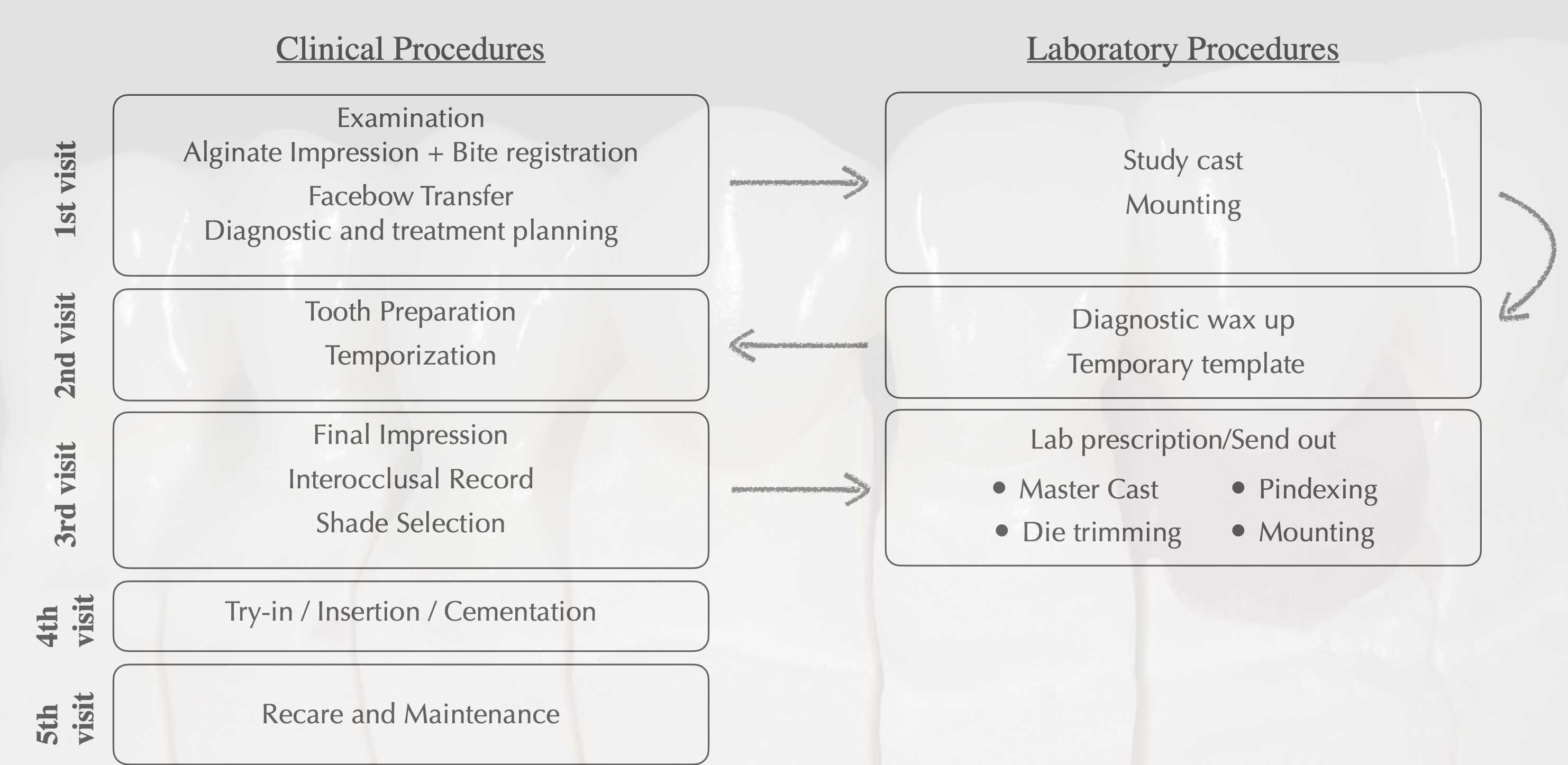
What is the laboratory procedure after visit 1: Examination (Alginate Impression + Bite registration); Facebow Transfer (Diagnostic and treatment planning)?
Create study cast and mount
What is the laboratory procedure after creating a study cast and mounting?
Diagnostic wax up
Temporary template
What is the laboratory procedure after visit 3: Final Impression; Interocclusal Record; Shade Selection?
Lab prescription/Send out:
Master Cast
Pindexing
Die trimming
Mounting
What material do we use for preliminary impression? (!)
Alginate
What material do we use for final impression? (!)
Polyether or Polyvinyl siloxane (PVS)
What material do we use for study/diagnostic cast? (!)
Type III dental stone
What material do we use for definitive cast/master cast? (!)
Type IV or V dental stone
What type of cast is mounted on an articulator? (!)
Working cast
Define the following: Definitive reproduction of prepared teeth used to fabricate a prosthesis
Cast
Define the following: Highly accurate replica of single tooth generally used to make crown/inlay
Die
Define the following: Replica used to observe a patient's oral structures
Model
Define the following:
The positive reproduction of the form of a prepared tooth in suitable hard substance
Exact reproduction of the prepared tooth
All surfaces must be accurately duplicated without voids or bubbles
Remaining tooth structure immediately cervical to the finish line should be easily discernible
Give adequate access to the margins for wax-up
Die
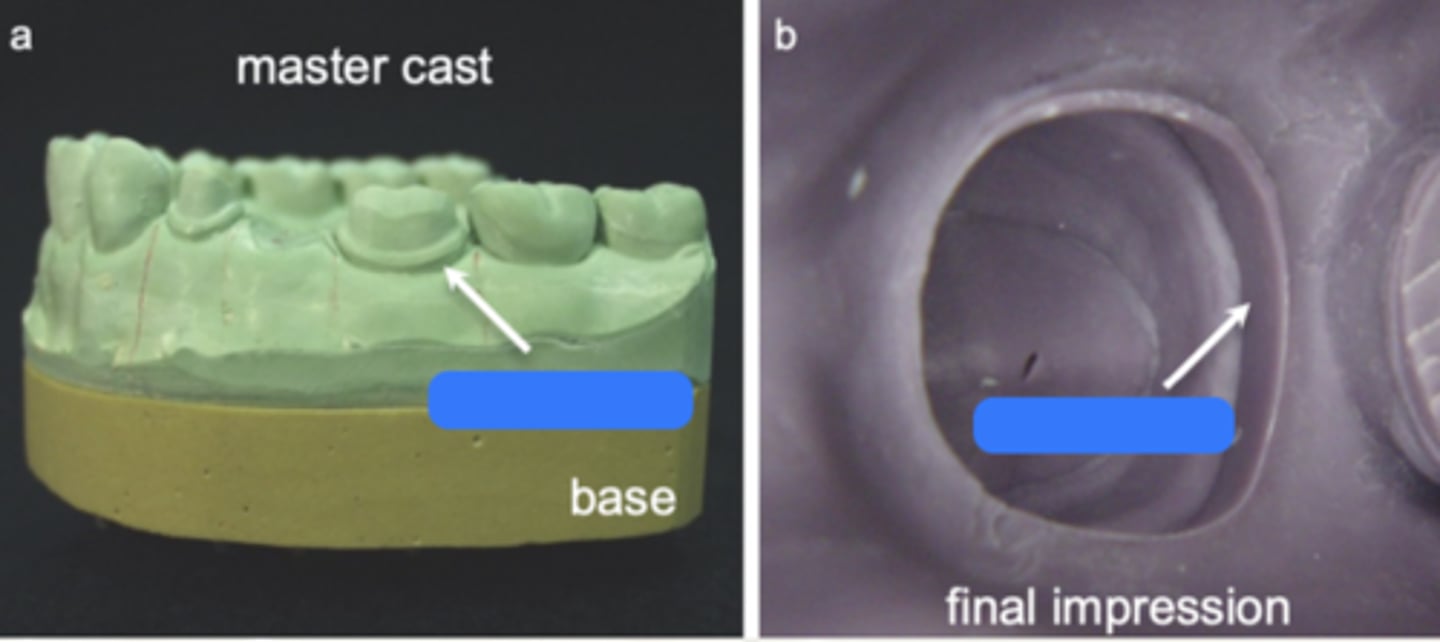
Final impression should have ideally ___-__mm visible tooth structure
0.5-1 mm
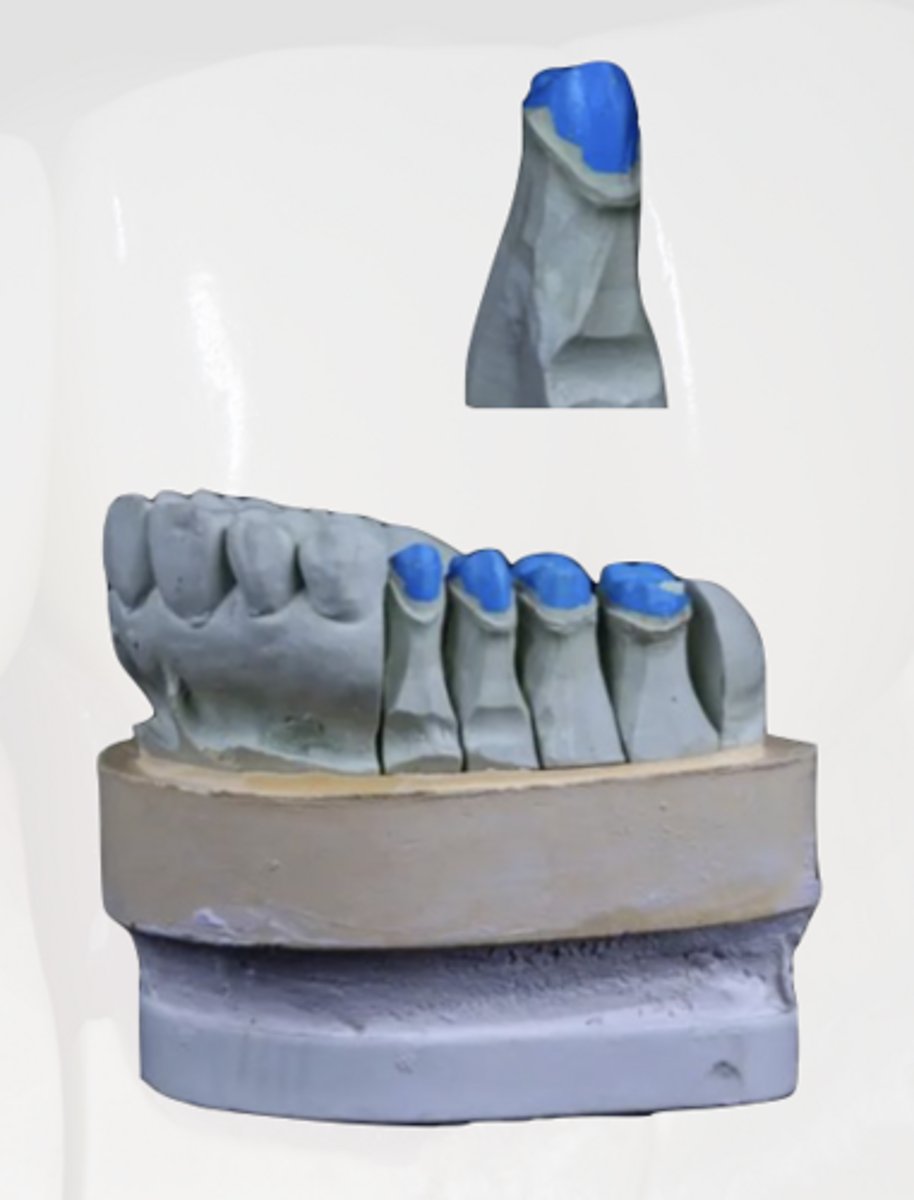
All of the following are requirements for a good casts EXCEPT:
A) Exact reproduction of both prepared and unprepared tooth surfaces
B) Free of voids and bubbles, especially along the finish lines of the prepared teeth
C) Should include all relevant soft tissues including all edentulous spaces and residual ridges.
D) Certain portions of the cast must be distortion free
E) The Cast and the Die must be trimmed to ensure access for carving the wax pattern along the margins
D - ALL portion of cast must be distortion free
ID cast and die system (working cast + separate/removable die):
Single die for wax coping and margins
Solid cast for proximal contacts and occlusion
Working cast with a separate die
ID cast and die system (working cast + separate/removable die):
Retained by pins in a base
Dowel pin technique - Di-lock tray technique - Pindex system.
Working cast with removable dies - used today, Pindex more common
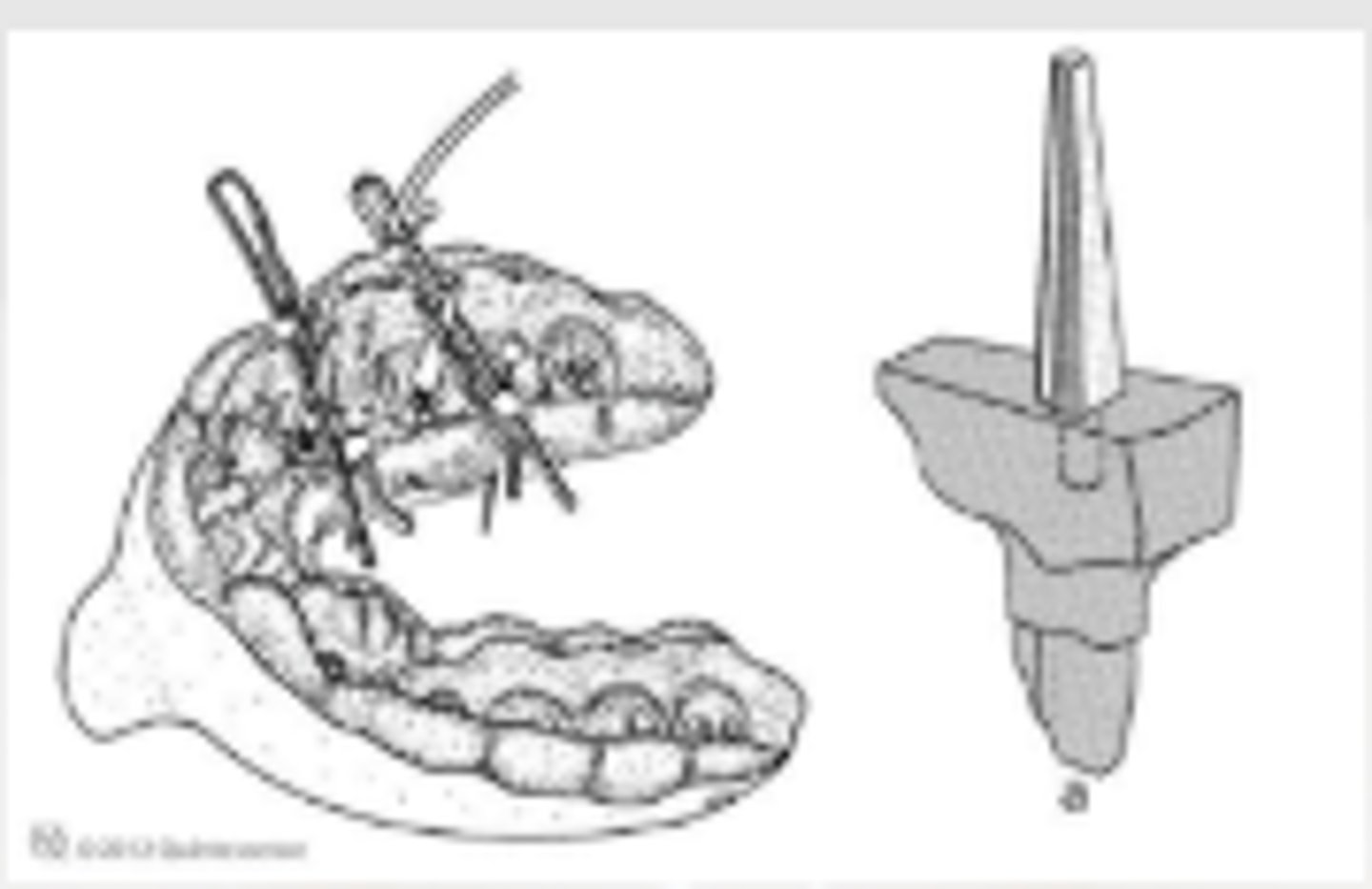
ID the technique
Dowel pin technique
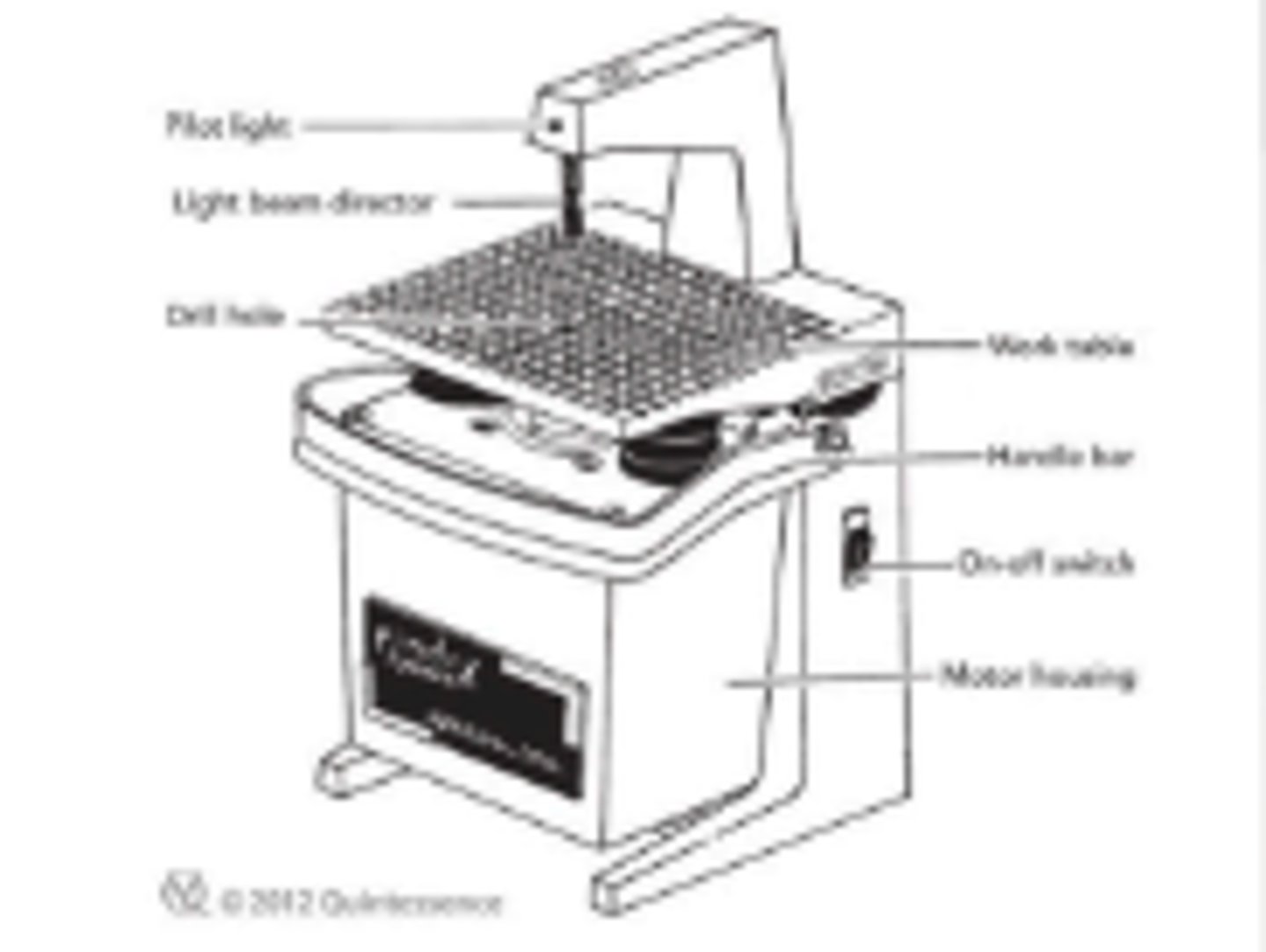
ID the technique
Pindex system
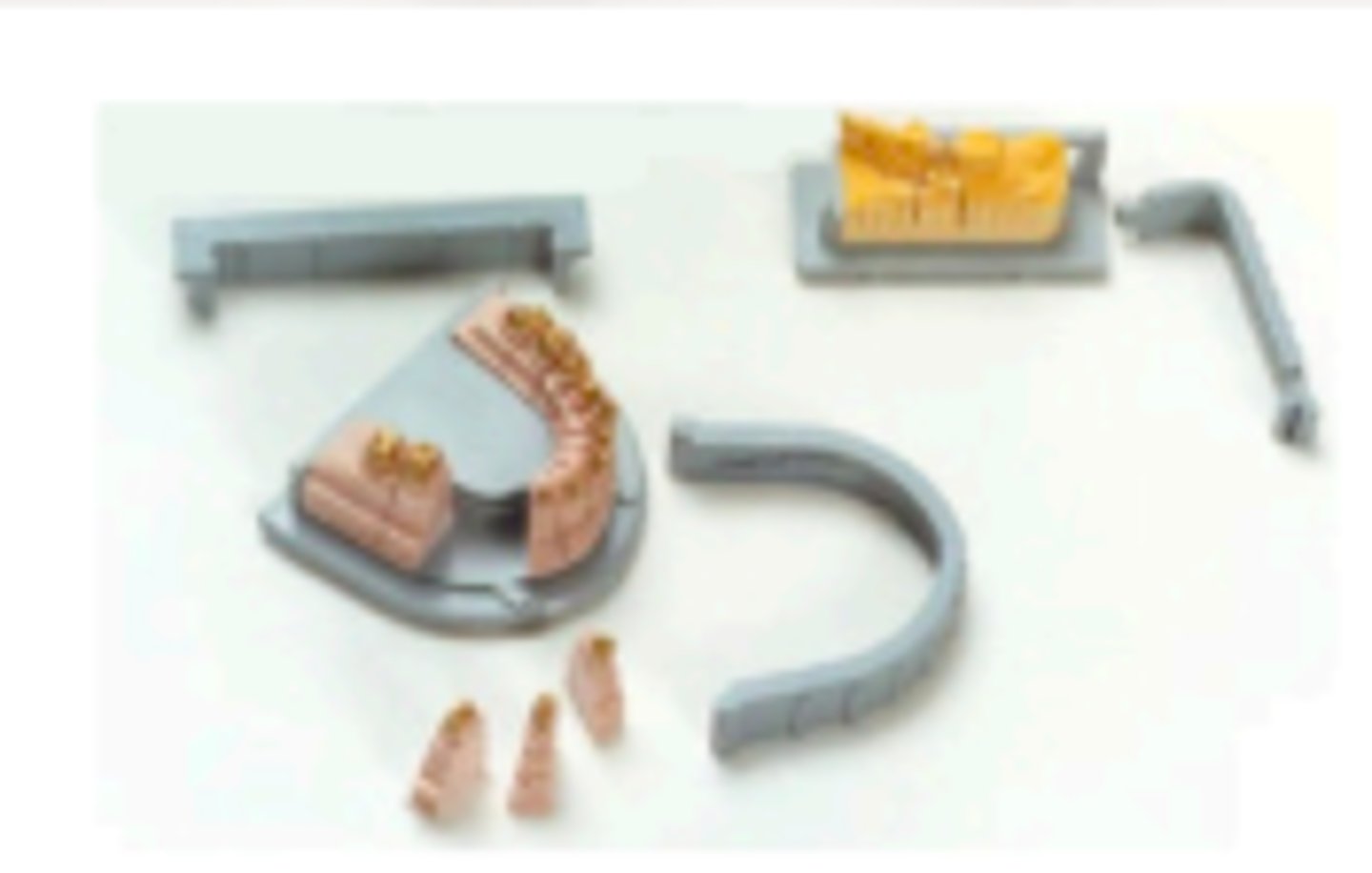
ID the technique
Di-lock tray technique
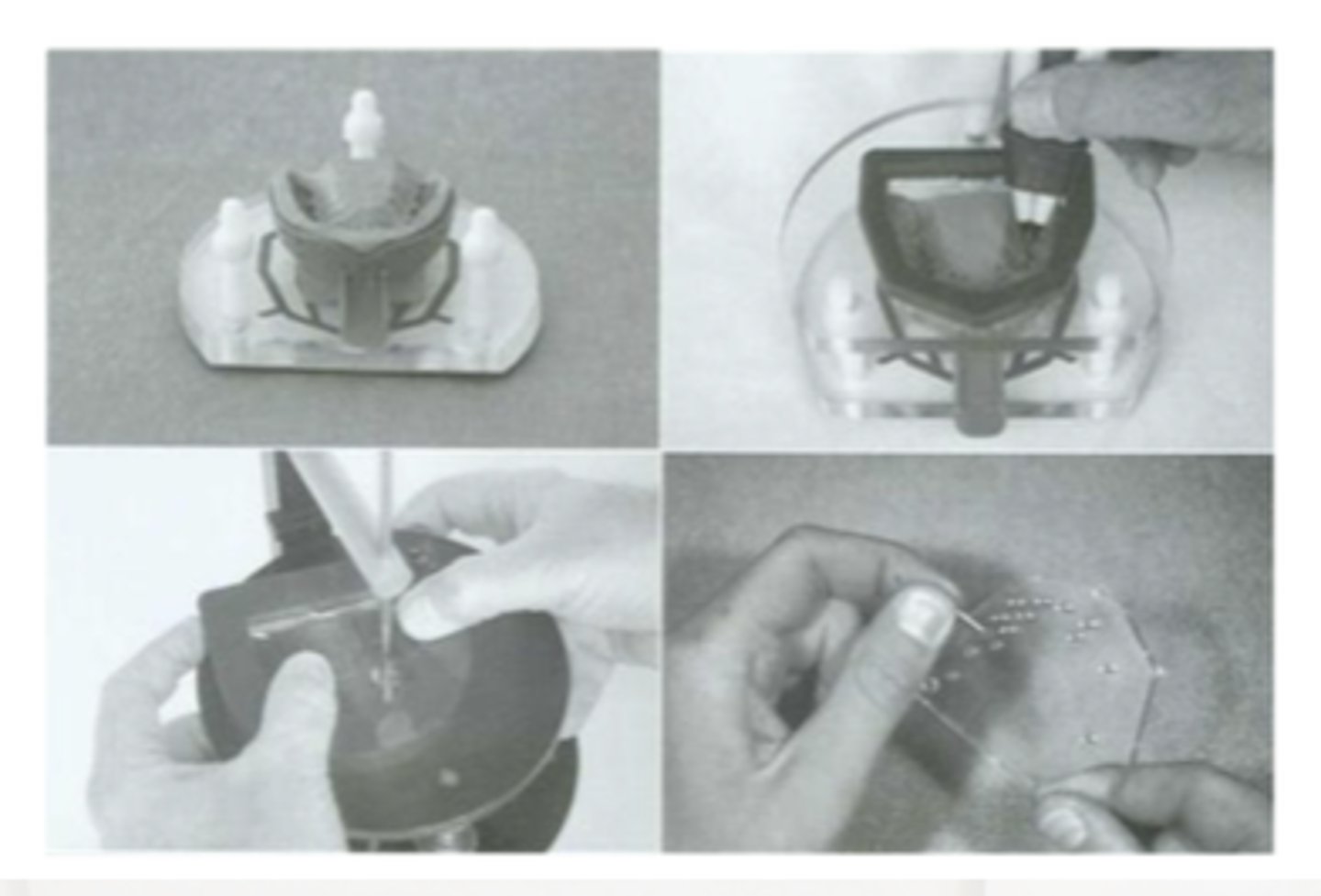
ID the technique
DVA Model System
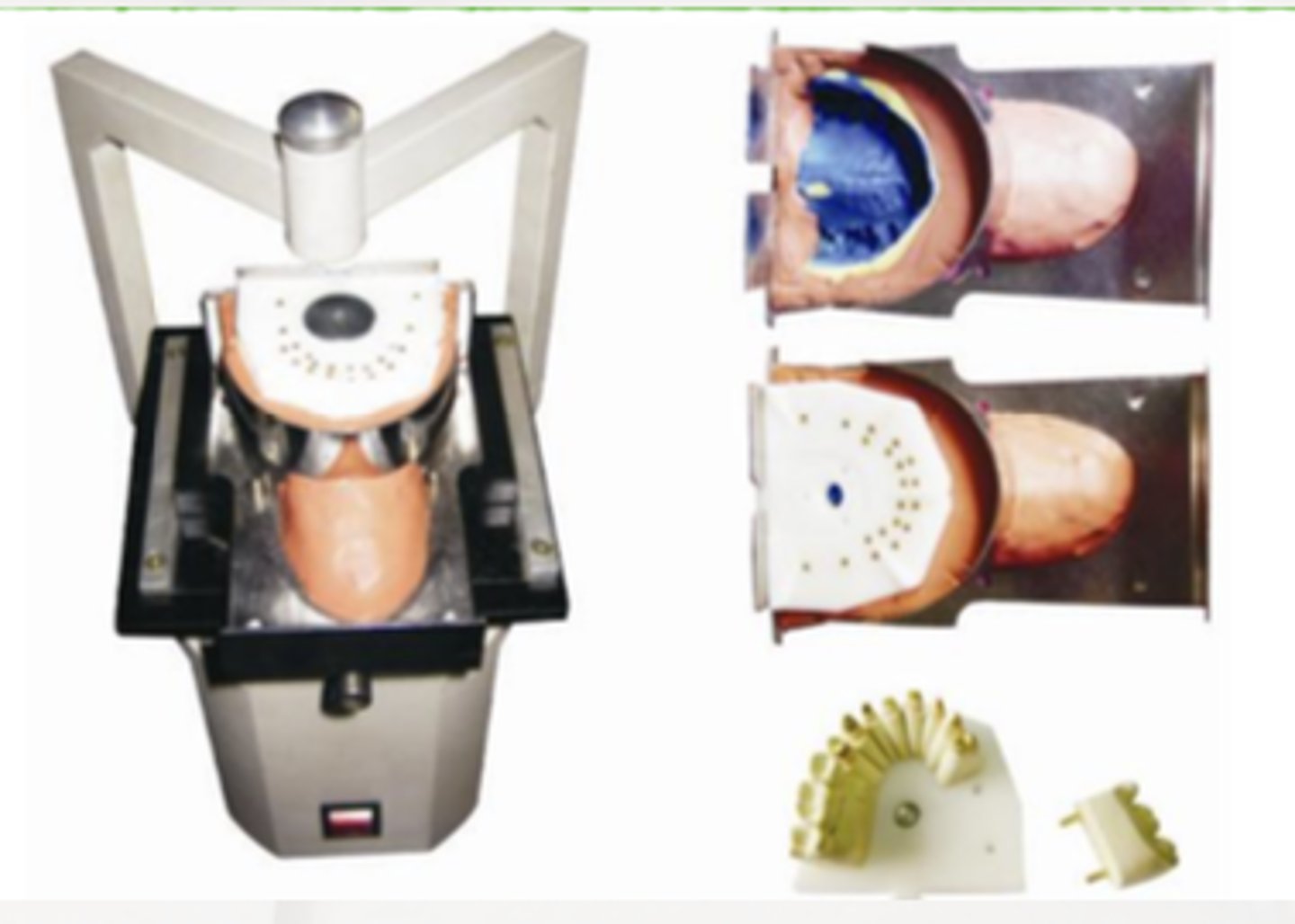
ID the technique
Zeiser
ID the technique :
A reverse drill is used to create a master cast with dies that can be removed and replaced repeatedly with great precision
The impression is poured without positioning and attaching dowel pins before hand
The machine accurately drills parallel holes from the underside of a trimmed cast
Pindexing technique
Which of the following is false regarding impression pouring in the pindexing technique?
A) Stone is added to the impression in large increments above the preparation
B) Tray is tilted to fill the preparation
C) Sufficient stone added to allow for trimming
A - added in SMALL increments
Which of the following is false regarding cast trimming in the pindexing technique?
A) First trim bottom cast
B) Cast height exclusive of the teeth should be 15mm thick, parallel to the occlusal plane and flat and smooth
C) Palate/tongue area is trimmed with an arbor band
D) Palate/tongue area is trimmed to be V shape & finished with a lab carbide bur
E) Slight bevel or taper of the lingual side of the cast or both facial and lingual sides
D - should say U-shaped!!
What shape is the cast shaped into during the pindexing technique?
U-shaped (finish w lab carbide bur, slightly bevel or taper lingual side of cast or both facial and lingual sides)
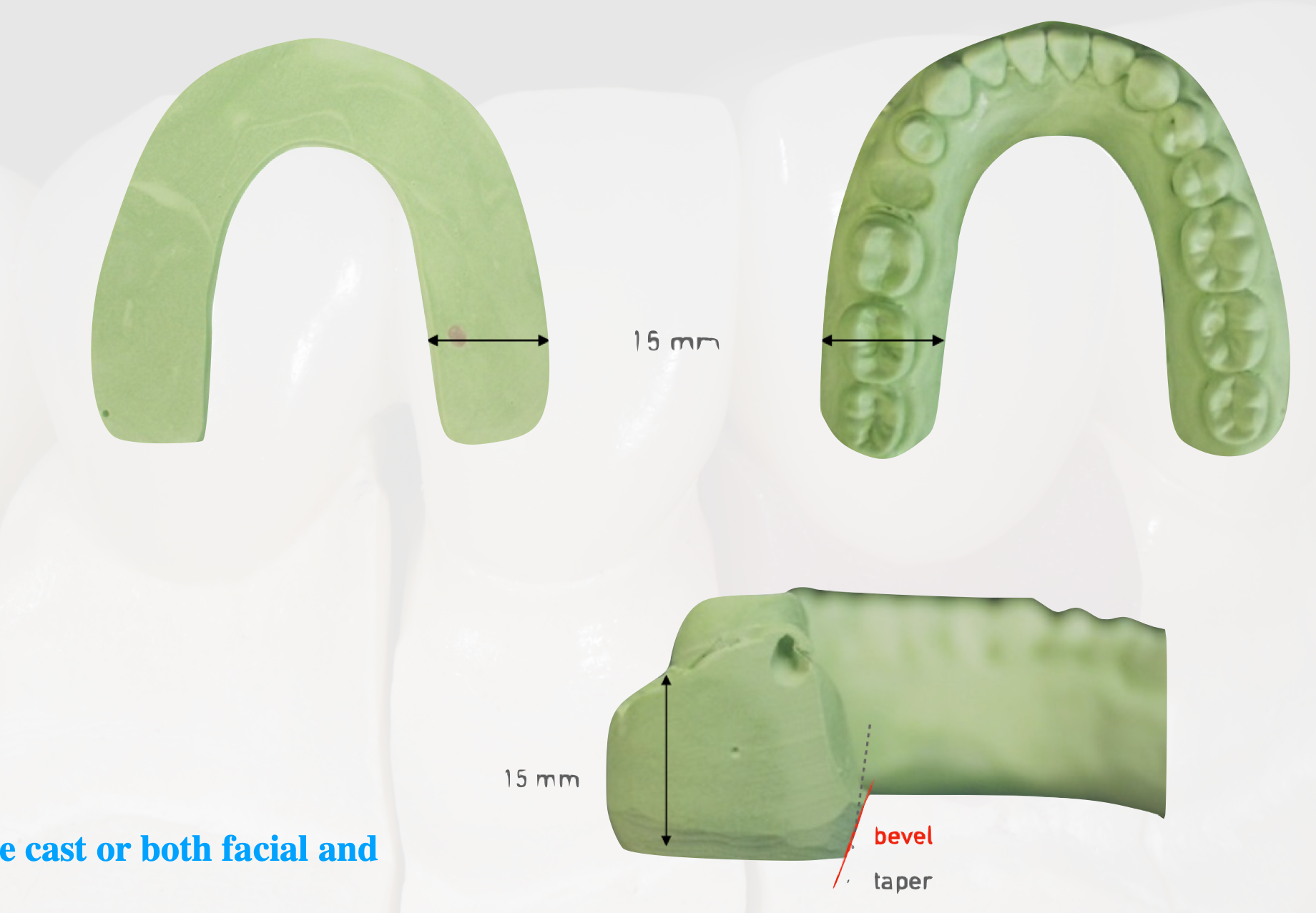
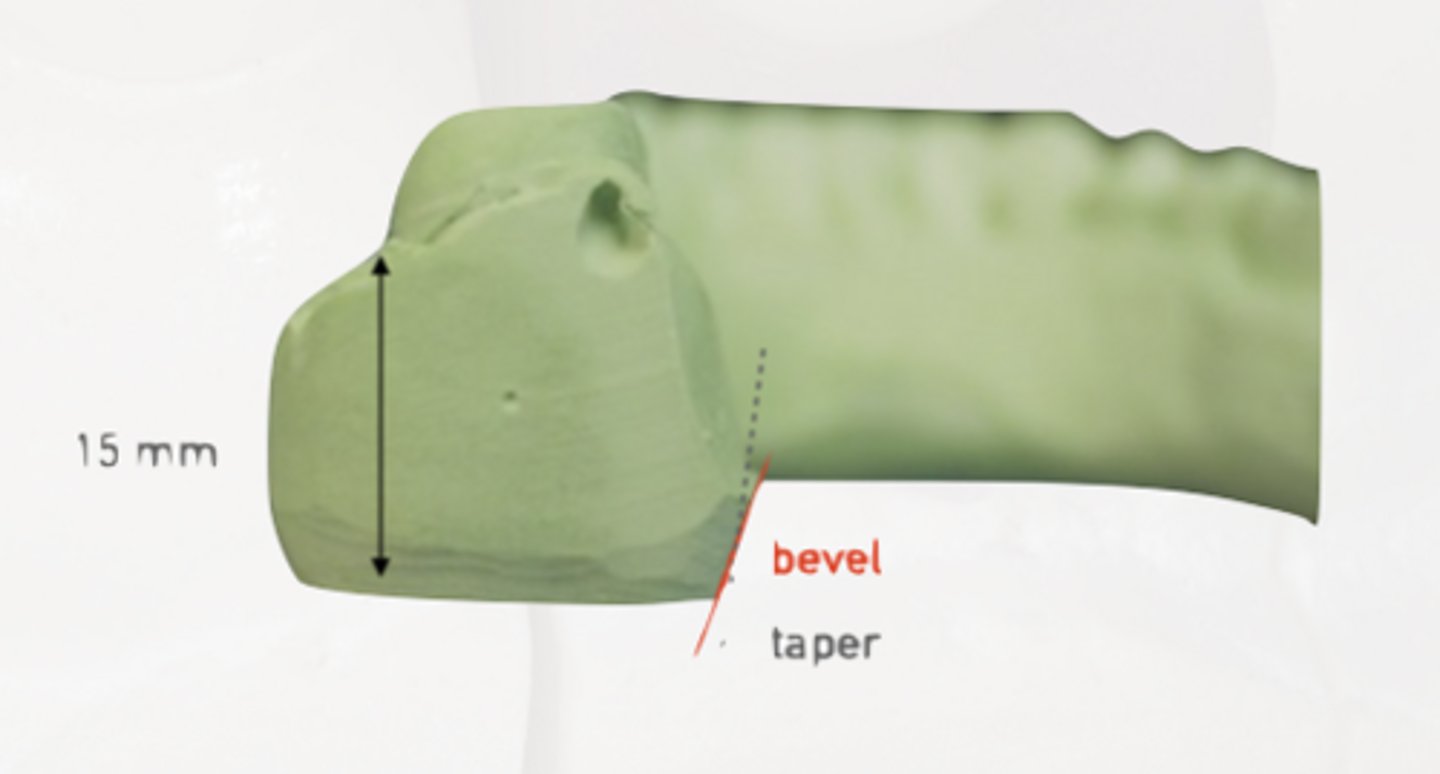
Why do you place a bevel at the red line here?
Helps with the ability to separate the cast from stone later
Sawing lines are ____ degrees to the arch
90 degrees
T/F: 2 pins per section, 2 pins per die, 2 pins for edentulous ridge
True, to prevent continuous rotation
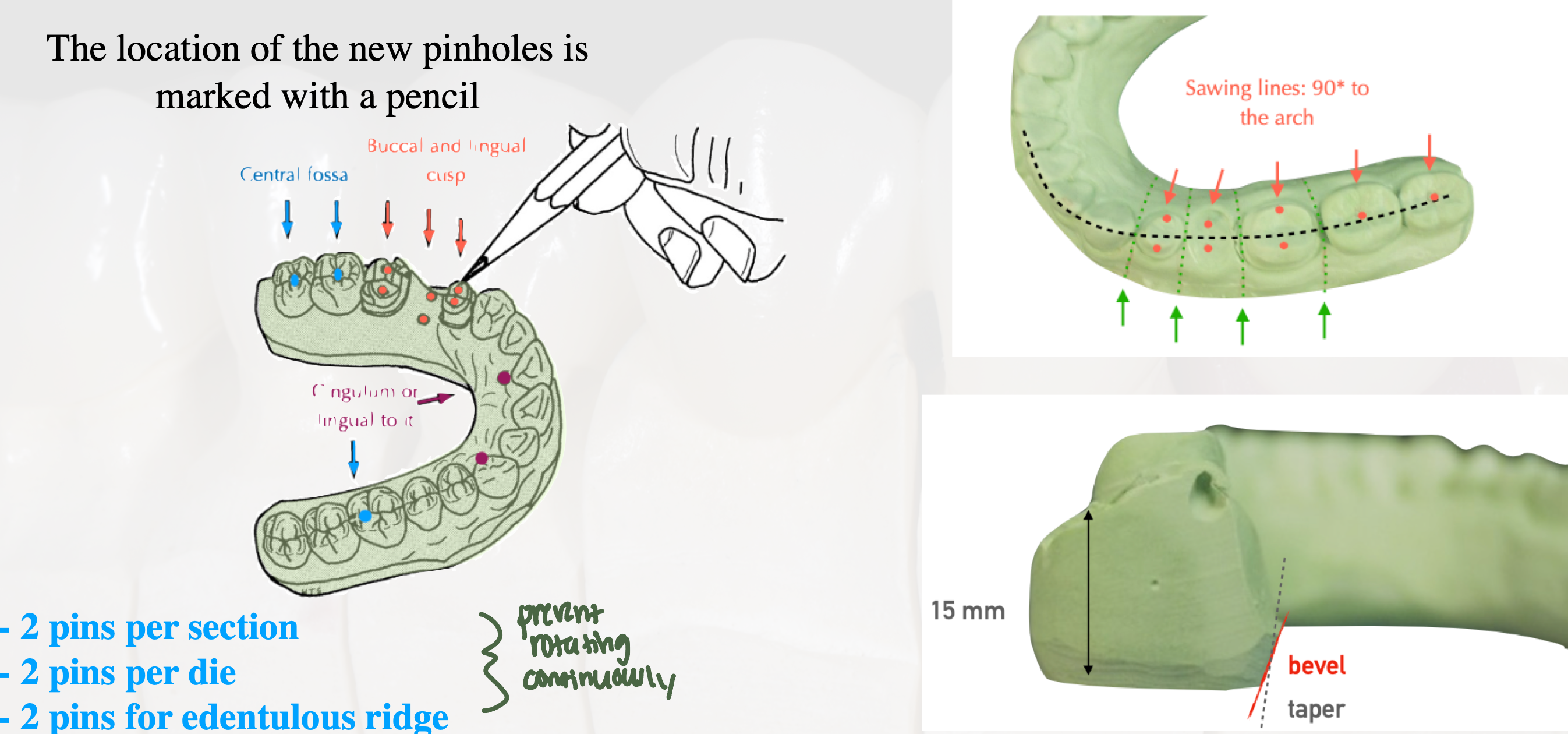
Where are long pins placed on the die?
Facial side
Where are short pins placed on the die?
Lingual side
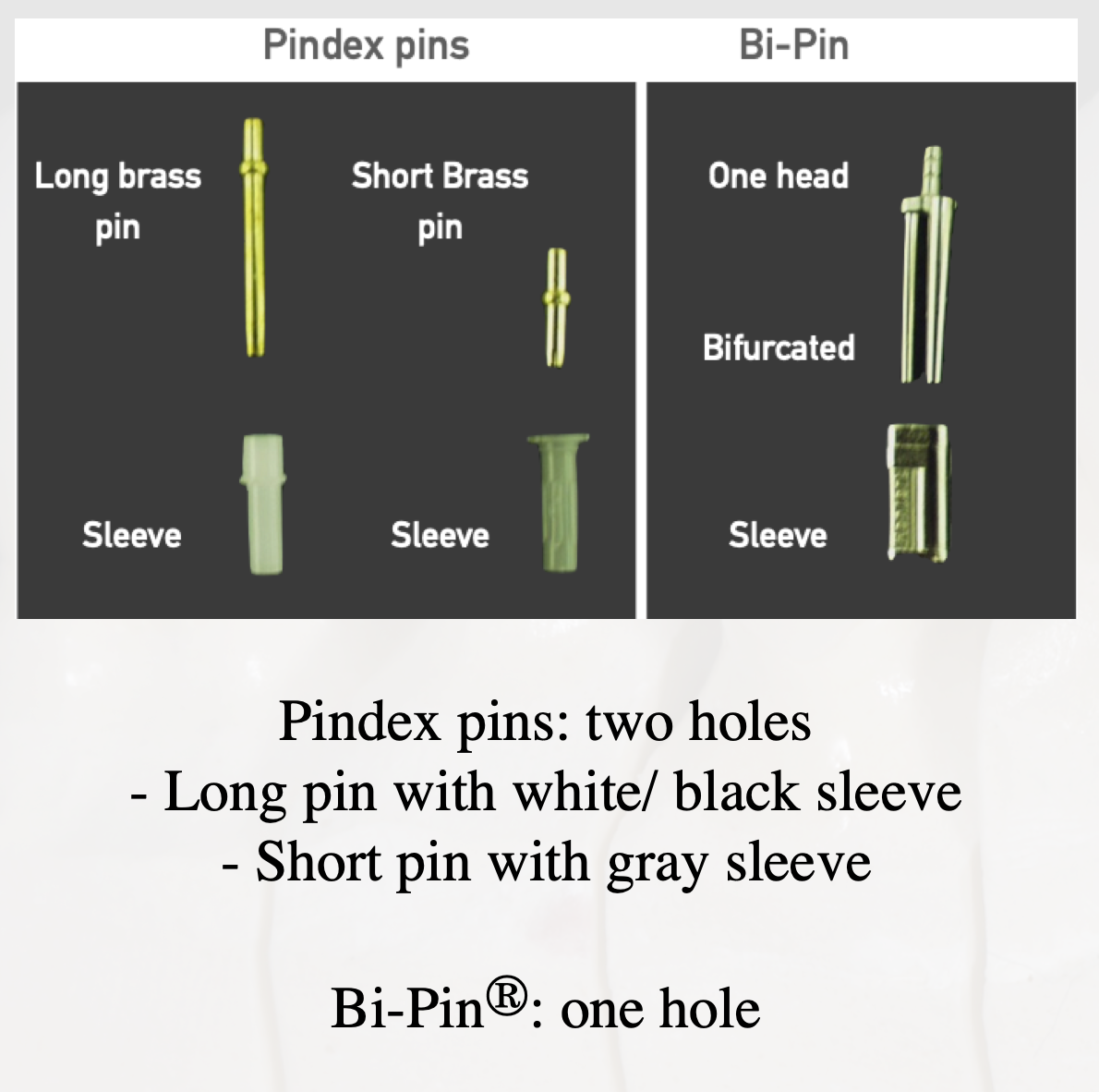
Pindex pins are ____ parallel holes and secured with super glue
2
Placement of white/black sleeves on the ________ pins
Long
Placement of gray sleeves on the ________ pins
Short
bi-pin is ___ hole
1 hole
Which pins are placed first: shorter or longer pins?
Shorter pins
To lubricate the base, the bottom of the cast can be lightly coated with what? (2)
Petroleum or Super-Sep, so you can separate later on so it’s its own tooth
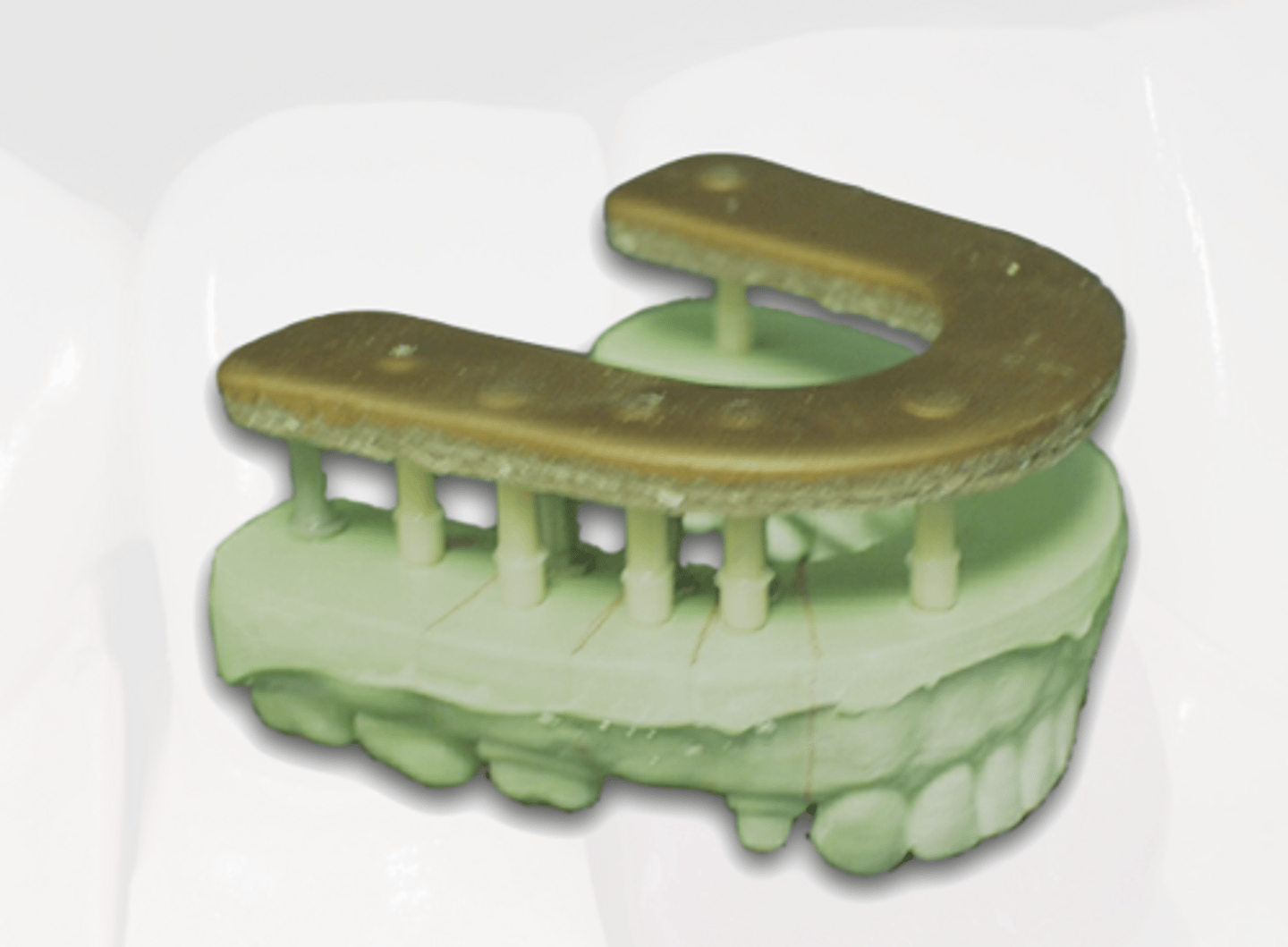
Where do you place utility wax?
On the ends of the long pins
Where should you paint a thick layer of yellow stone before sealing the cast?
Base of the pins (use vibrator plate)
seal cast until wax contacts the base former
stone should cover the bevel w no gap or voids
What can we use to section the dies?
Saw
When sectioning the die, it should be parallel or slightly __________ occlusally
Divergent
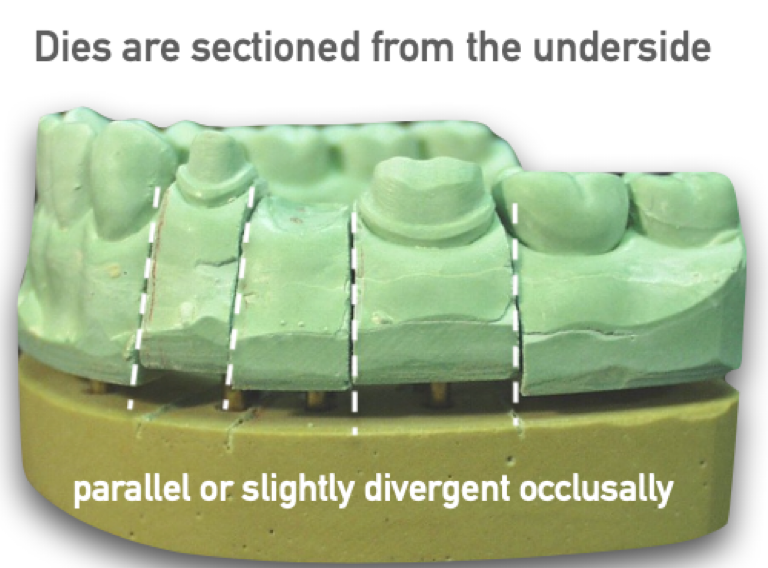
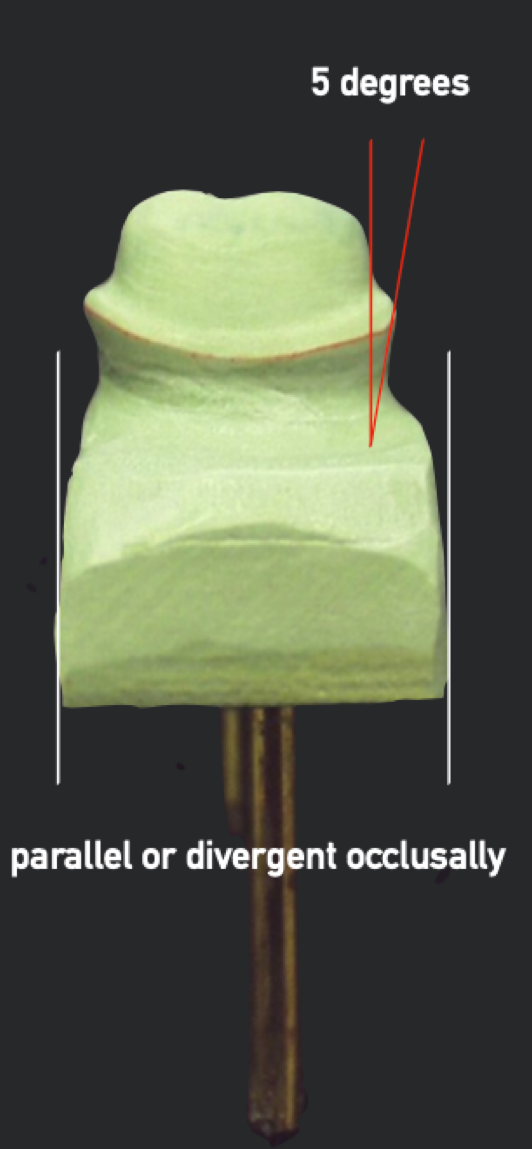
The following is the purpose of what?
To facilitate finishing of the margins of the wax pattern
Emergence profile/cervical contour
Flush with tooth surface below the finish line
Die trimming and ditching
why do this? to visualize easily
Physiologic ditching occurs at __ degrees, if no or very short axial contour exist
5 degrees
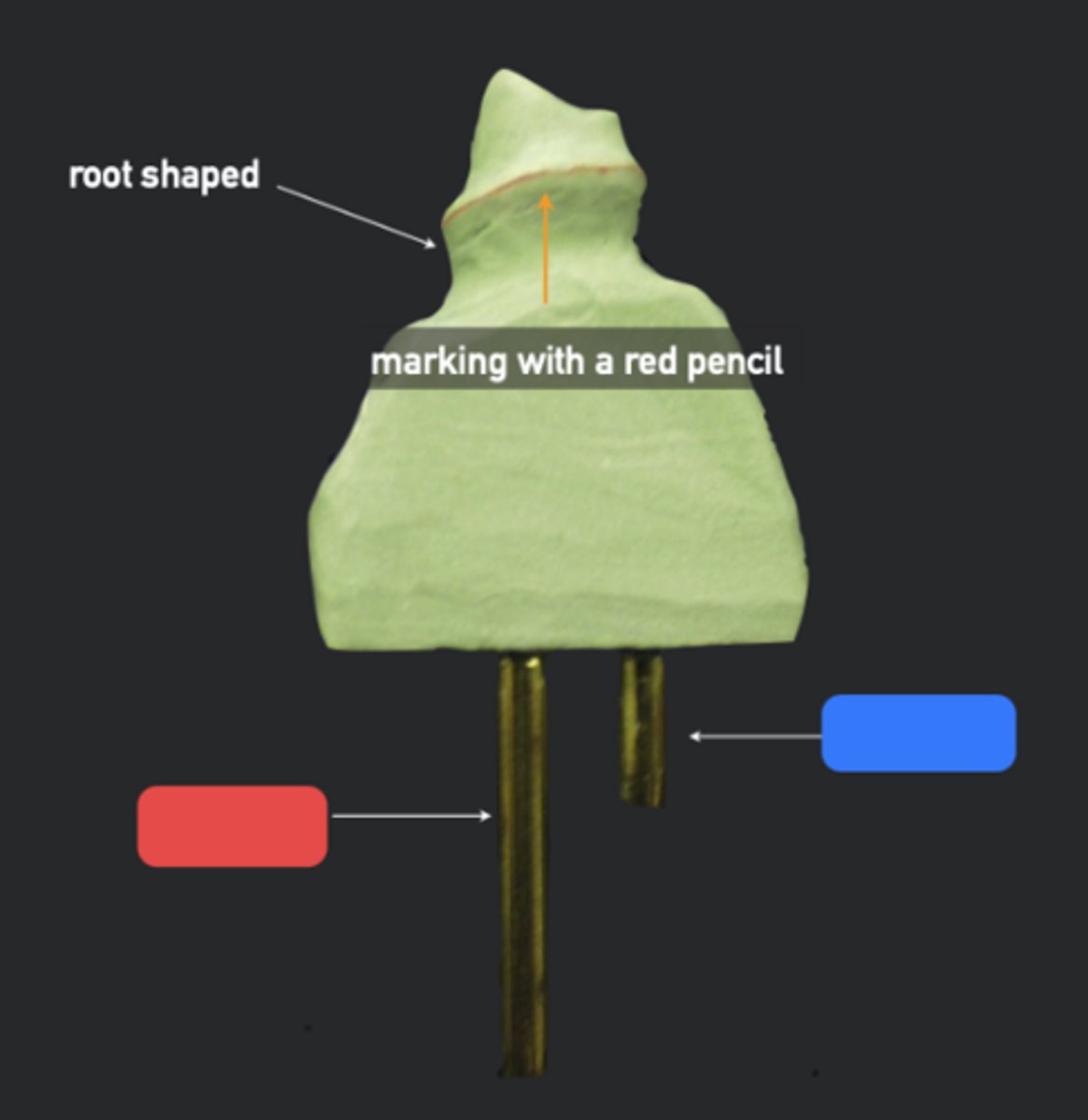
What side of the tooth is indicated by the pin at the blue box?
Lingual (short pin)
if the ditch is too far below margin, die can fracture
trynna mimic roots
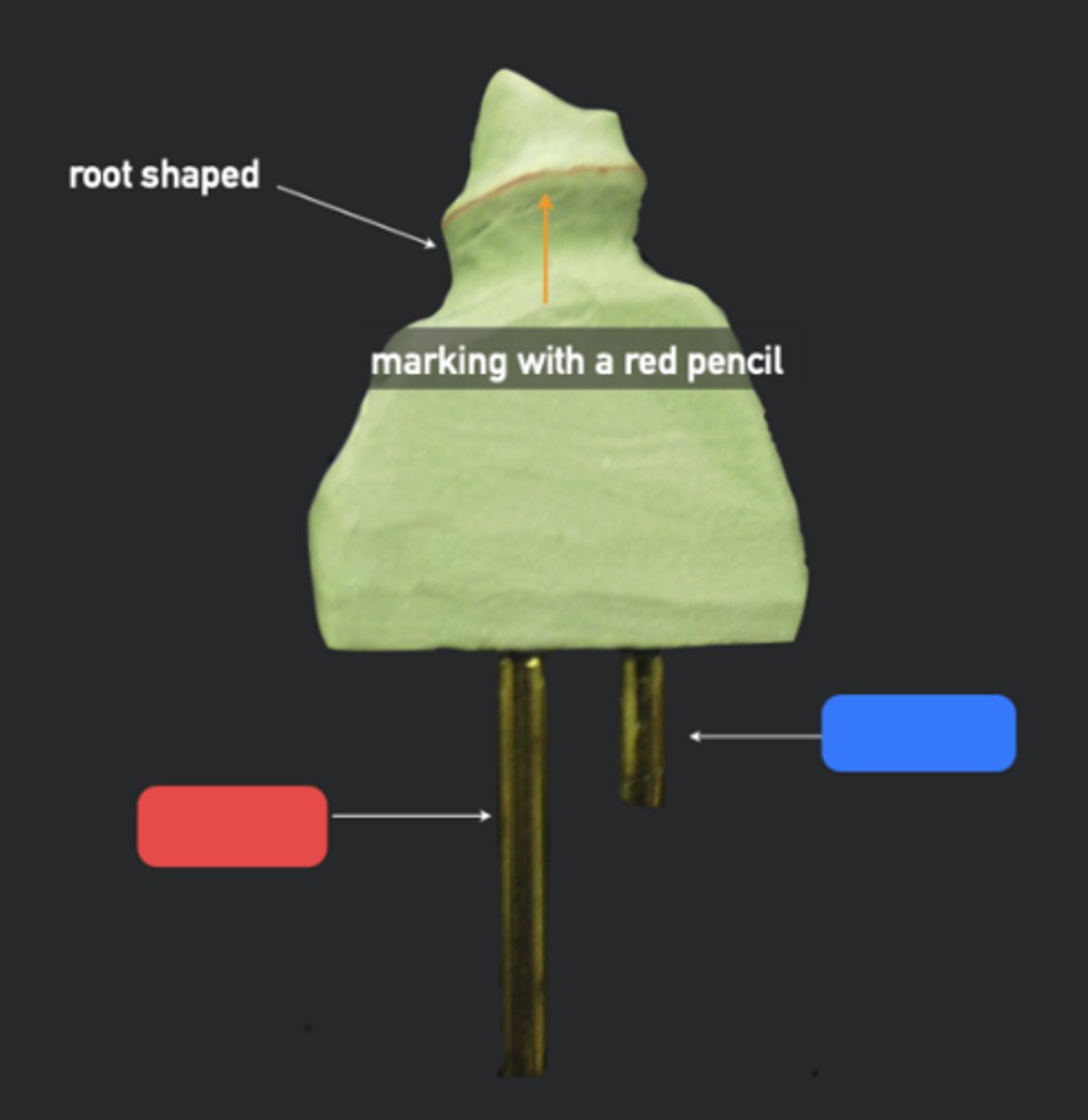
What side of the tooth is indicated by the pin at the red box?
Facial (long pin)
if the ditch is too far below margin, die can fracture
trynna mimic roots
What has the following characteristics?
Cover the pin with utility wax
Place the interocclusal record between the pinned master cast and the opposing cast
Fix the casts with tongue depressor and sticky wax or silicon glue
Cast mounting
Define the following:
Involves using digital scanning and CAD/CAM (Computer-Aided Design/Computer-Aided Manufacturing) technologies to create virtual models of dental casts and dies
Digital ditching (ditching digitally)
Digital fabrication of casts and dies offers several advantages such as what? (3)
Increased accuracy
Increased efficiency
Ability to easily store and transmit digital files
Define the following:
A dental scanner is used to capture precise digital images of the teeth and surrounding tissue
Digital scanning
Define the following:
The digital scans are then imported into CAD software, where dental technicians can manipulate the digital models to create virtual working casts and dies
CAD modeling
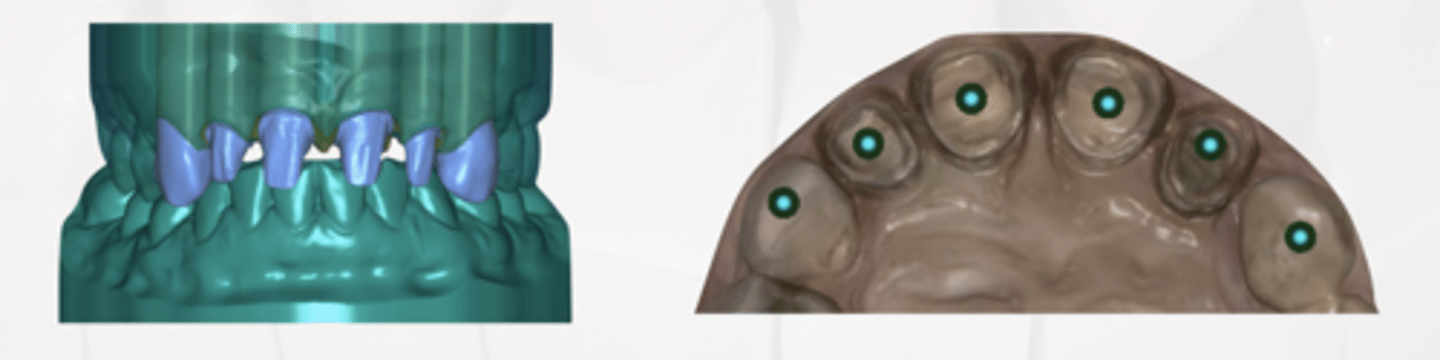
Define the following:
Refers to the process of creating space or clearance around specific areas of a dental model to accommodate restorative materials like crowns or bridges
Virtual ditching - visualize the margins, know what you are looking at
Define the following:
Once the virtual models are finalized, they can be sent to a milling machine or 3D printer for fabrication. The CAM (Computer-Aided Manufacturing) process involves converting the digital design into physical restorations using materials such as ceramics, resins, or metals.
CAM Fabrication
Define the following:
After fabrication, the dental restorations may undergo additional post-processing steps such as polishing, staining, or glazing to achieve the desired aesthetics and surface characteristics
Final finishing
What technique has the following steps?
1. Impression pouring
2. Cast trimming
3. Marking the pin position
4. Pindexing
5. Pin placement
6. Lubricant for the base
7. Placing the utility wax
8. Base forming
9. Base trimming
10. Section the die
Pindexing Technique (!)
What technique has the following steps?
1. Digital scanning
2. CAD Modeling
3. Virtual Ditching
4. CAM Fabrication
5. Final Finishing
Digital Fabrication of the Cast and Dies (!)