4.3.3 Strategies influencing growth and development
 Call Kai
 Learn
Learn Practice Test
 Spaced Repetition
 Match
Match Flashcards
 Knowt Play
1/37

There's no tags or description
Looks like no tags are added yet.
Name | Mastery | Learn | Test | Matching | Spaced | Call with Kai |
|---|
No analytics yet
Send a link to your students to track their progress
38 Terms
MARKET-ORIENTATED STRATEGIES
trade liberalisation
promotion of FDI
removal of government subsidies
floating exchange rate systems
microfinance schemes
privatisation
IMPACTS OF TRADE LIBERALISATION
reduce in trade barriers (e.g. tariffs,quotas) → increases competition → firms incentivised to reduce costs/improve efficiency to be able to lower prices (easier for those in developing countries as they usually have lower labour costs) → increases demand for their goods → increases export-led growth
also allows resources to be allocated to where country has comparative advantage- can specialise in this
POS IMPACTS OF PROMOTION OF FDI
gov can incentivise FDI by reducing regulations, taxation and/or min wage
increases job opportunities as they open business in these countries so helps fill savings gap → pos multiplier effect
involves transfer of knowledge → company can bring production and management techniques and train workers
EVAL OF POS IMPACTS OF PROMOTION OF FDI
if they reduce taxes to promote → less tax revenue
environmental damage and exploitation of natural resources
if they reduce min wage → lower incomes + usually poorer conditions → less consumption → lower living standards
POS IMPACTS OF REMOVAL OF GOVERNMENT SUBSIDIES + EVAL
often poorly targeted since subsidies on basic goods like rice will benefit everyone, and not just poor- better to give cash payments to poor as its better targeted
often lead to inefficient firms- firms may become subsidy dependant so wont attempt to lower AC→ can limit development
opportunity cost removed- couldve led to high levels of debt if gov funded by borrowing
EVAL- but removing it is politically unpopular (e.g. shown in Egypt)
POS IMPACT OF FLOATING EXCHANGE RATE SYSTEMS + EVAL
countrys exchange rate would be determine by demand and supply → gov dont have to worry ab gold and foreign currency reserves as they dont intervene
EVAL- currency can be volatile → makes it difficult for exporters/importers to make decisions about future → uncertainty → deter FDI
POS IMPACTS OF MICROFINANCE
aim to give poor households permanent access to a range of financial services, including loans, savings and insurance
allows borrowers to invest in businesses or start up new ones
scheme tends to target groups who would be less likely to otherwise receive loans, e.g. women
EVAL OF POS IMPACTS OF MICROFINANCE
this happened in south africa
became method of financing consumption spending → unemployed didnt have funds to ensure repayment of their loan → had to take out new loans or sell assets → can build up debt
when used for investment → increased informal economy with very little being spent on sustainable methods of development
POS IMPACTS OF PRIVATISATION + EVAL
can end corruption within a firm who is owned by state
can encourage firm to be more efficient due to increased competition → lower prices
selling off a firm, particularly if it is loss making, will improve gov finances and reduce debt
EVAL- if firm privatised as a monopoly there will be no competition within the market.
INTERVENTIONIST STRATEGIES
development of human capital
protectionism
managed exchange rates
infrastructure development
promoting joint ventures with global companies
buffer stock schemes
POS IMPACTS OF DEVELOPMENT OF HUMAN CAPITAL
would provide workers with skills and training → improve efficiency and productivity
human capital could be developed through schools or vocational training, e.g apprenticeships
higher skills would allow country to develop from primary sector to a manufacturing sector, overcoming primary product dependency
better education also improves living standards
EVAL- opportunity cost + time lag
POS IMPACTS OF PROTECTIONISM + EVAL
allows domestic industries to grow by keeping foreign goods out and protects them from strong competition
can use a policy of import substitution, where they deliberately attempt to replace imported goods with domestically produced goods by adopting protectionist measures
create jobs in SR
EVAL- means countries lose out from the benefits of comparative advantage and could cause inefficiency, since domestic producers suffer from a lack of competition + others may retaliate
POS IMPACTS OF MANAGED EXCHANGE RATES + EVAL
could be fixed against diff exchange rates
-high exchange rate for essential products makes it cheaper, which helps to reduce poverty if goods are consumer goods and encourages investment if they are capital goods
-lower exchange rate for other imports makes it more expensive, discouraging their import and encouraging consumers to buy from domestic producers
EVAL- often fail to work in practice; black markets in foreign exchange develop which can destabilise system
or gov can manage a single exchange rate which will reduce volatility, but speculation may mean that countries find it difficult to maintain an exchange rate over a number of years
POS IMPACTS OF INFRASTRUCTURE DEVELOPMENT + EVAL
improved transport- makes transporting goods more efficient → explain → econ growth
improved water system- reduce water borne diseases → improve living standards
improved hospital and schools- increase human capital
EVAL- opportunity cost + time lag + neg externatilies
POS IMPACTS OF PROMOTING JOINT VENTURES WITH GLOBAL COMPANIES
one way to reduce the exploitation of countries as a result of FDI would be to set up a joint venture
will help to keep some of the profits generated w/in country, which can be used in investment
POS IMPACTS OF BUFFER STOCK SCHEMES
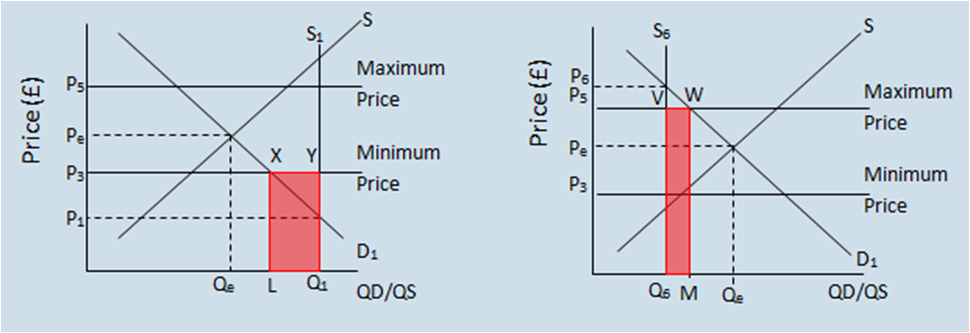
where gov imposes both a max and min price for goods, buying up stocks when excess supply and selling them when excess demand
self-financing: money is raised when selling products, which allows the gov to buy the next lot of stocks
used on commodities, where prices are volatile → stabilises prices → encourages investment
prevents sharp falls in prices, so producers prevented from shutting down, and sharp rises in prices, so consumers can afford it
EVAL OF POS IMPACTS OF BUFFER STOCK SCHEMES
requires stocks to go up and down; if they keep rising, then scheme will run out of money and if they keep falling, scheme will run out of stocks
require huge start-up costs and problems of storage
min prices may be set too high→ encourages producers to become inefficient → will produce a lot as they know they will be able to sell it anyway → so high excess supply → gov has to continually buy up the stocks
OTHER STRATEGIES
industrialisation: the Lewis model
development of tourism
development of primary industries
fairtrade schemes
aid
debt relief
POS IMPACTS OF INDUSTRIALISATION: THE LEWIS MODEL
Lewis model assumed that developing countries had dual economies with a traditional agricultural sector, which had low wages, low productivity, underemployment and low savings, and modern industrial sector, w/ high investment
argues that there is surplus of labour in rural areas, which meant that the labour had zero marginal product due to diminishing returns in primary sector
this labour would be attracted to the industrial sector due to higher wages → increases productivity → higher profits → higher investment → econ growth
EVAL OF POS IMPACTS OF INDUSTRIALISATION
surplus labour in urban areas- lack of jobs in urban areas which would lead to urban poverty replacing rural poverty + improvements in tech would decrease demand for labour
neglect of agriculture- although labour productivity is low for some parts of the yr, during planting and harvesting lots of labour is needed
businesses may not re-invest higher profits + those with higher wages may not save more → less in banks → less to borrow
POS IMPACTS OF DEVELOPMENT OF TOURISM
tourism is income elastic- as global economy grows → demand for industry → increase AD → econ growth
tourists represent a source of foreign currency, which will fill currency gap. so countries will be able to fund their imports without negative consequences
countries are likely to attract investment from transnational hotel companies (also transfer knowledge) → can help to fund improvements in infrastructure so gov have an incentive to invest (have pos multiplier effect)
jobs creation- since tourism industry relies on low skilled workers who know the local area
higher tax revenues- higher income and higher profits (increase spending to diversify)
EVAL OF POS IMPACTS OF DEVELOPMENT OF TOURISM
seasonal and involves low skilled, low paid jobs→ some areas will see a loss of employment and that investment may only receive a short-term return during off-peak→ so effect of the multiplier is limited
large amount of wealth will be withdrawn as TNCs repatriate their profits, causing problems involving capital flight
externalities- due to increased no. of people and businesses → pollution + env damage
POS IMPACTS OF DEVELOPMENT OF PRIMARY INDUSTRIES
some countries, like Saudi Arabia, were able to develop because of an abundance in natural resources
development of a primary industry provides funds to allow a country to diversify → allowing infrastructure development and better education
has been significant FDI in commodity mining (China in Africa)
EVAL OF POS IMPACTS OF DEVELOPMENT OF PRIMARY INDUSTRIES
primary product dependency- has volatile prices (explain using other fcs)
dutch disease
low value added- start of production process so has the lowest compared to other sectors
FAIRTRADE- DEFINITION
social movement whose goal is to help producers in developing countries achieve better trading conditions and promote sustainable farming
POS IMPACTS OF FAIRTRADE SCHEMES
fair price- agreements made to buy a guaranteed amount of produce over a period of time at a price which is above market price when the agreement was made → gives producers stability and raises their income
production is sustainable- minimise env damage
Sri Lanka study- showed those under fair trade had higher income and satisfaction → able to save for the future and invest or provide financial support for family
EVAL OF POS IMPACTS OF FAIRTRADE SCHEMES
not all farmers will qualify for scheme- decreases demand for their good→ lower profits→ causes division in communities
reduces incentive to diversify and keeps farmers engaged in low profit activities
DEFINITION OF AID + TYPES OF AID
when a country voluntarily transfers resources to another or gives loans on concessionary terms
tied aid- aid with conditions attached, such as economic or political reforms or a commitment to buy goods from donor country
bilateral aid- directly from one country to another
multilateral aid- when countries give aid to an international organisation who distributes it to other countries
concessional loans- loans given on lower, or no, interest rates
POS IMPACTS OF AID
reduce absolute poverty- especially after disasters/wars
fill savings gap, as outlined by Harrod-Domar → provides funds for investment, whether this be in infrastructure or in human capital
provides foreign exchange to fill foreign currency gap
can contribute to increased globalisation + reduce world inequality
EVAL OF POS IMPACTS OF AID
dependency on aid- countries become over-reliant rather than developing strategies to raise their own tax revenue to fund development
corruption- money does not always go to where it is meant to
neg issues in LR due to concessional loans- still have to be repaid→ may limit where the money is spent; countries may only spend money on things they know will see a return in SR
difficult to know the best way to develop a country and therefore it is difficult to know how to effectively spend aid
POS IMPACTS OF DEBT RELIEF
many countries suffer greatly from high interest repayments to loans they have taken out → opportunity cost of repaying → limits econ growth
debt relief allows more money to be spent on provision of services and infrastructure to aid development
EVAL OF POS IMPACTS OF DEBT RELIEF
moral hazard- bc it creates a precedent: every poor country may now expect to receive debt relief
eases pressure on corrupt govs- may spend the tax revenue they have for their own benefit
developed countries see a loss
INTERNATIONAL INSTITUTIONS AND NON-GOVERNMENT ORGANISATIONS
world bank
international monetary fund (IMF)
NGOs
ROLE OF WORLD BANK
initially its focus was reconstruction after WWII but now on long term growth and development for LEDCs
provides finance for internal investment projects (e.g. electricity and water delivery)
loans from world bank can be below market IR if they are to LEDCs
ROLE OF IMF
initially its role was to promote exchange rate stability so they can promote international trade
but now provide finance to solve short-term balance of payments and financial crises, collect data and provide policy advice to raise living standards
EVAL OF INTERNATIONAL INSTITUTIONS
IMF and World Bank also implemented structural adjustment policies (liberalisation, privatisation, fiscal austerity)- but cuts to gov spending can decrease AD and damage living standards + free trade can damage domestic businesses as imports would increase + privatisation can lead to monopolies being created
IMF has received criticism for its macroeconomic reforms- involves reducing M and increasing X which reduces amount of resources available for consumption
ROLE OF NGOS
non-profit organisations that are run independently from gov
provide direct assistance to countries in form of project work- range from education to healthcare and can either be emergency or long term
an act as pressure groups to lobby govs to adopt more pro-development strategies
EVAL OF NGOS
small scale- low impact on a national level as they target specific areas
harder to regulate- especially if they lack transparency and accountability
issues with funding- bc non profit, they get their funds from donations so if this decreases over time, it will be more difficult to have any impact