TMs 2 - Ch 12 - 14 - ligand effects, reaction types, catalysis
 Call Kai
 Learn
Learn Practice Test
 Spaced Repetition
 Match
Match Flashcards
 Knowt Play
1/36

There's no tags or description
Looks like no tags are added yet.
Name | Mastery | Learn | Test | Matching | Spaced | Call with Kai | Chat |
|---|
No analytics yet
Send a link to your students to track their progress
37 Terms
trans effect series
least substitution of trans ligand
F-, H2O, OH-
< NH3 < py
< Cl- < Br- < I-
< NO2-, Ph- < PR3
< H-, NO, CO, CN-, C2H4
most substitution of trans ligand
Linear vs. bent NO
Linear = 3 e- donor
Bent = 1 e- donor
Describe the bonding in alkyne ligands
2x π systems
Only 1 is of correct orientation to react
act same as alkenes - 2 e- donor (L type)
Which phosphine ligand has similar pi-acceptor ability to CO?
PF3 - EWG present
all others are WORSE PI ACCEPTORS
what metals do phosphines help stabilise?
Late TMs (Pd, Pt)
In 0 ox. state
What phsophine is a good sigma donor
PtBu3
can electronics + sterics of phosphines be tuned independently?
NO
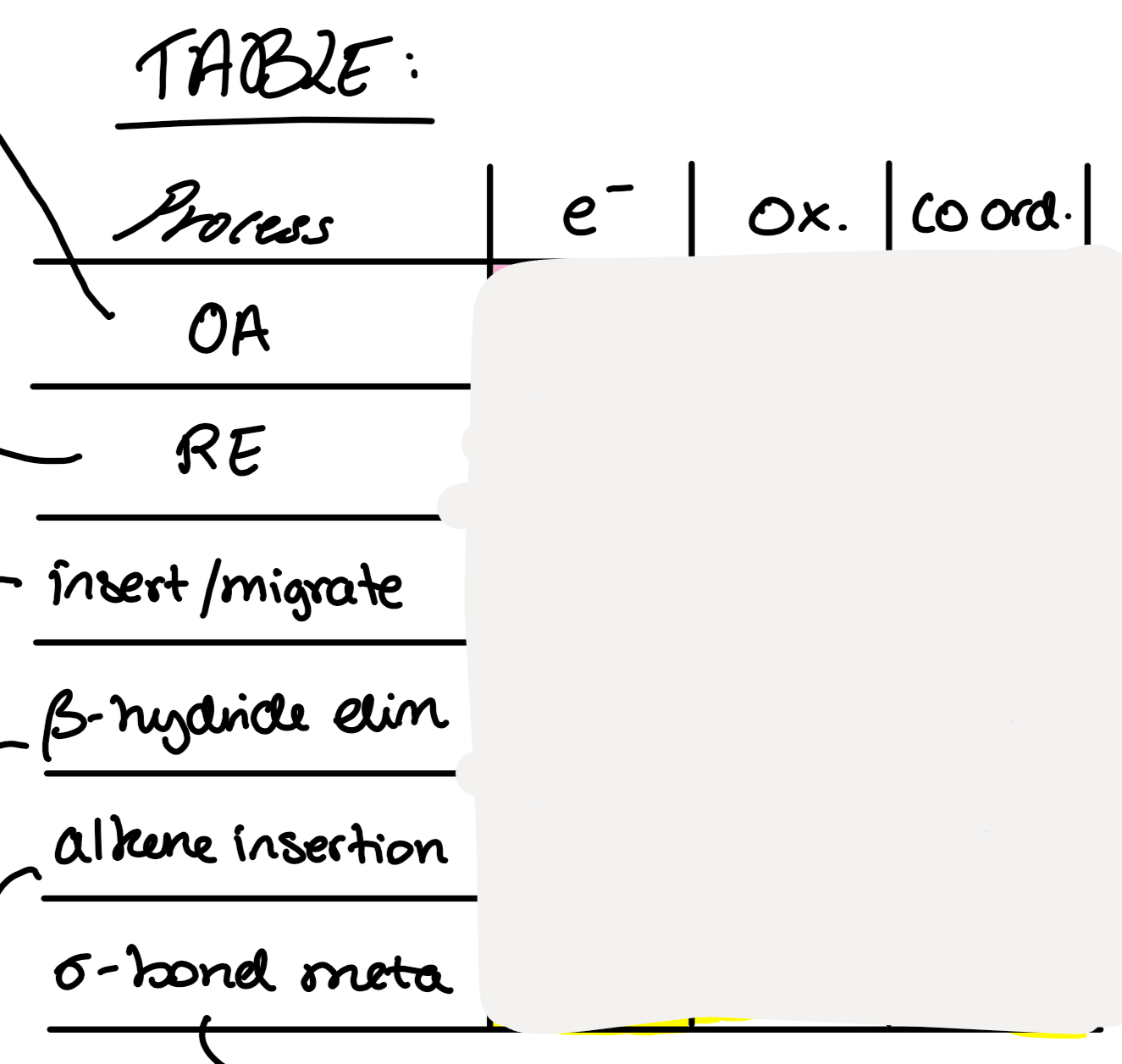
Table of reactions between metals + ligands
cyclooligomerisation
form benzene ligand from alkynes
what happens to the NMR on complexation of a benzene?
LOCALISED bonding character increases
lower ring current
lower shift
how can Cp be made?
deprotonate CpH
REMEMBER Cp- is the ligand!!!!
weak base is ok
Use NaCp - salt crashes out to provide driving force
Cp vs Cp*
Cp* better donor
what reactions can ferrocene and cobaltocene catalyse/be used in?
Ferrocene: friedel-crafts acylation of cp
cobaltocenIUM (+ charge): oxidation of CpMe to CPCOOH
reactions involving a single electron carrier (easy to oxidise/reduce reversibly)
How do bipy ligands aid electron transfer?
strong pi-acceptors
stabilise a ± 1 change in oxidation state
oxidative addition
AB adds cis as 2x X type ligands
What is the TS for OA of H2?
alkene-like:
sigma donation from H-H sigma
pi acceptance from H-H sigma star
How does OA of HX (HCl etc.) depend on solvent?
non polar - cis addition, concerted
polar = trans addition (stabilise ions)
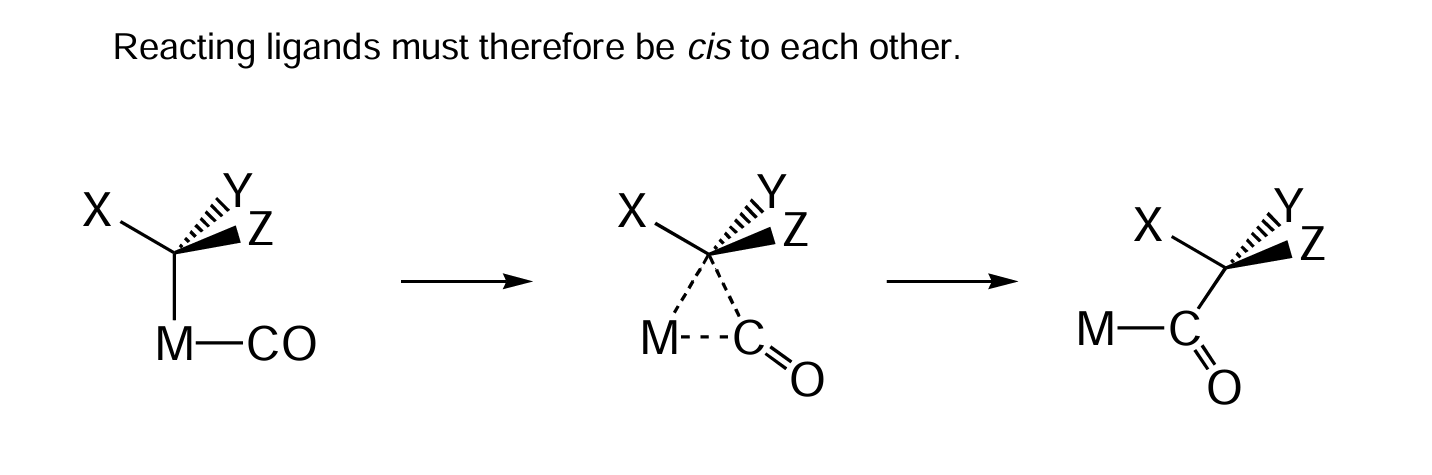
insertion/migration reaction
insertion = 1 ligand inserts into another
migration = 1 group removed from another ligand and goes back onto metal
via 3-centre (triangle) TS
β-hydride elimination
eliminates FROM LIGAND - forms C=C
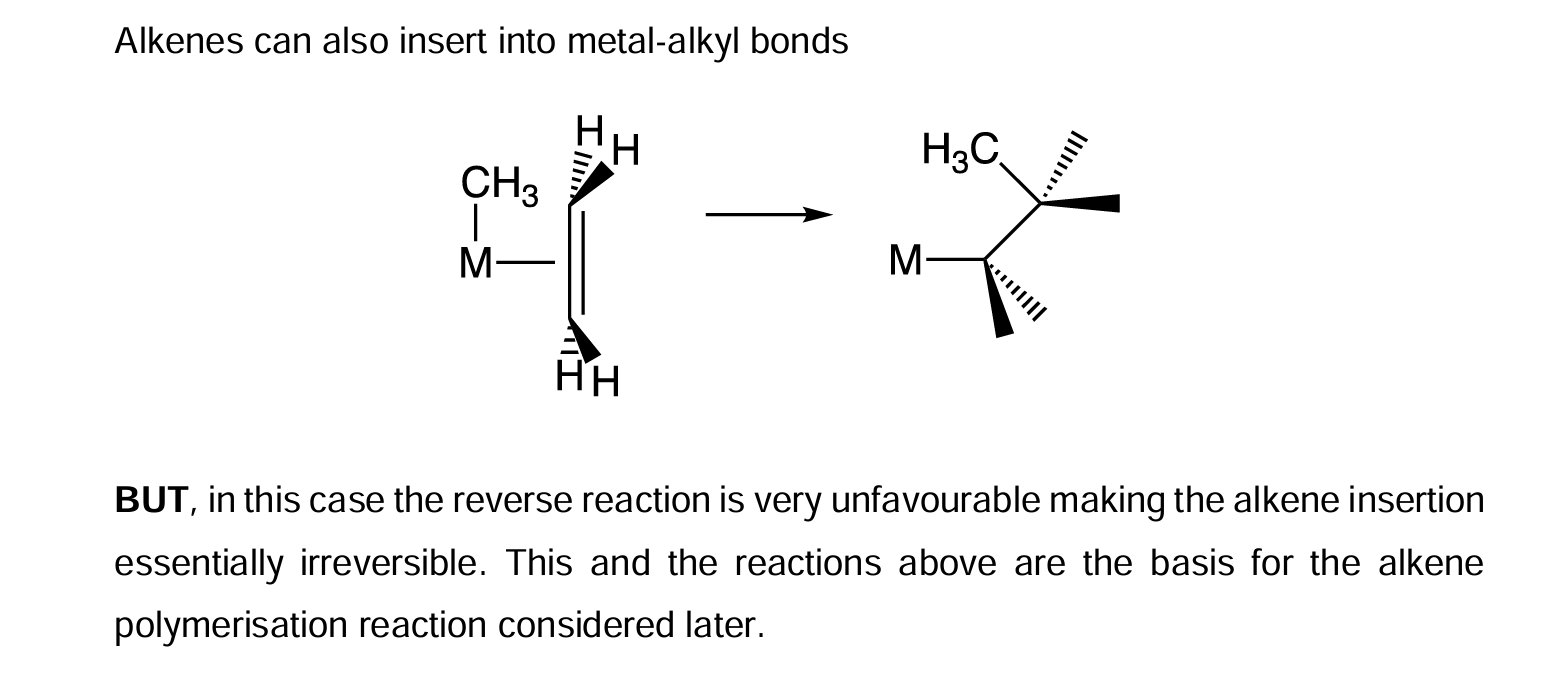
alkene insertion
GETS RID OF ALKENE!
how can we catalyse alkene polymerisation?
insertion rxn
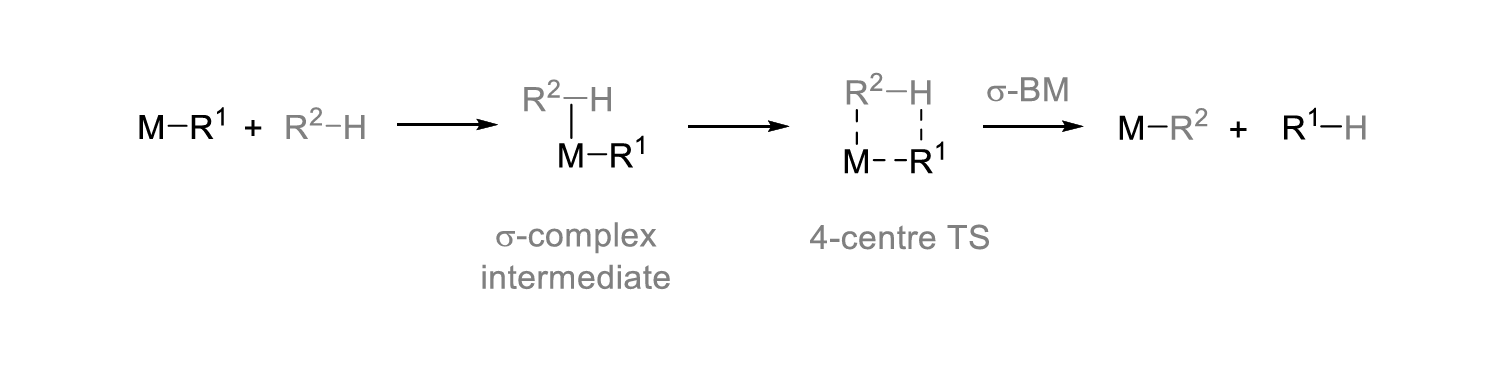
σ- bond methathesis
d0 metals
match up sets of δ−,δ+
M R1 + H R2 → H M + R1 R2 or the other connectivity
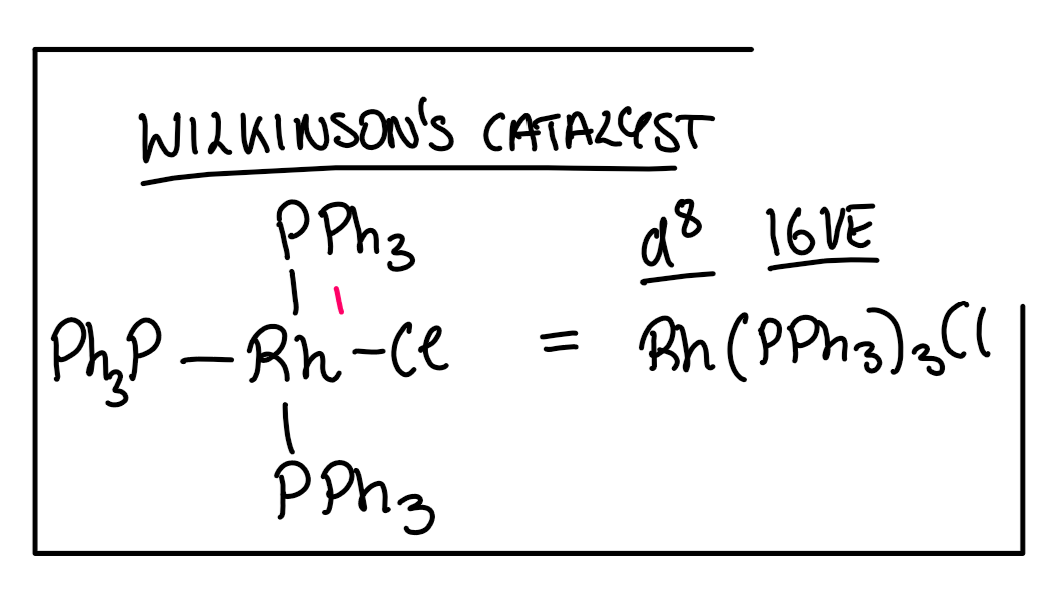
Formula of Wilkinson’s catalyst. What does it do?
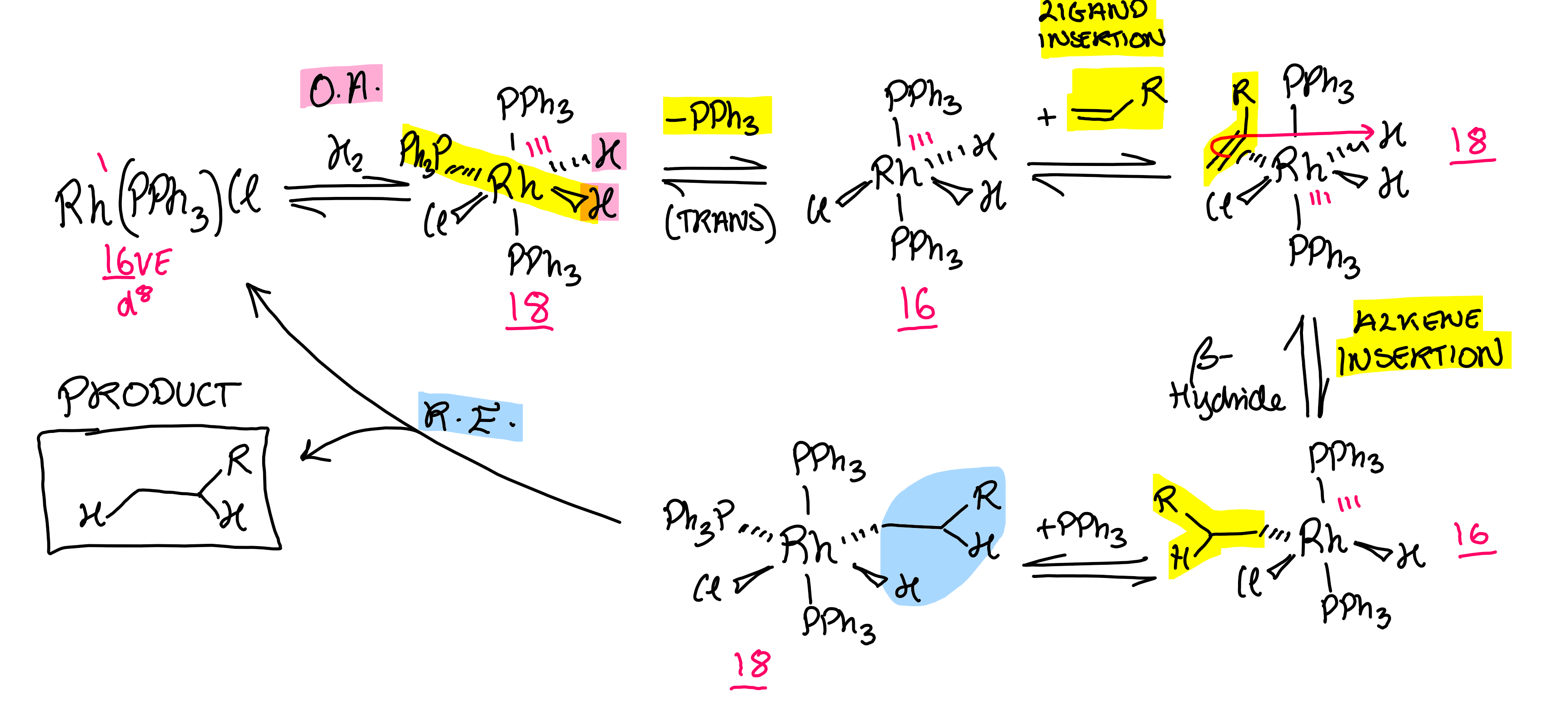
Catalyses hydrogenation across C=C bond
Hydrogenation catalytic cycle
Focus: Wilkinson’s Catalyst, a Rh complex.
What is a hydroformylation rxn?
Add CO + H
to C=C
Form aldehyde
Hydroformylation catalysis
Focus: migration/insertion of CO
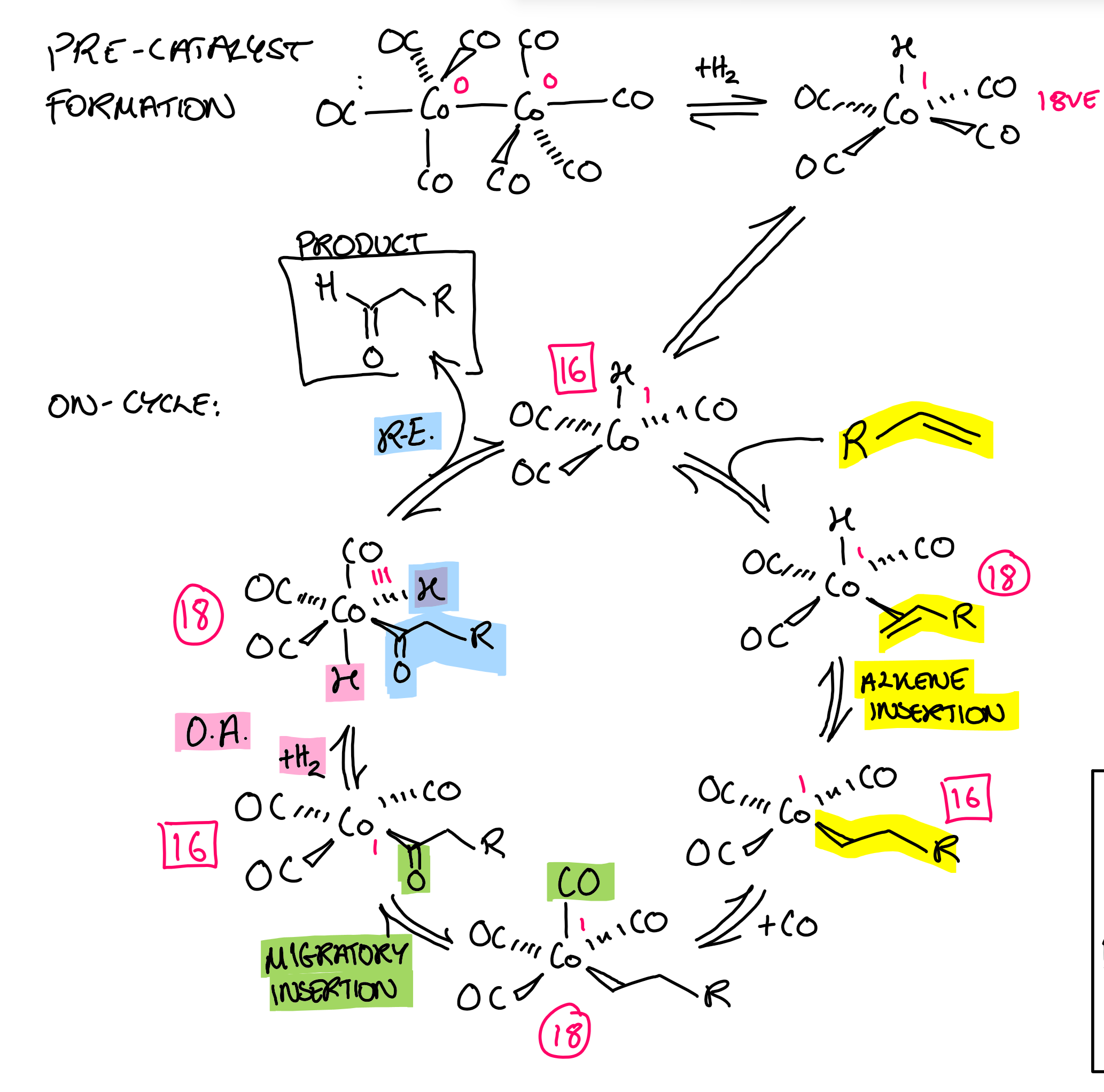
How do you dictate formation of a linear vs. branched aldehyde in hydroformylation?
+ bulky group on catalyst (e.g. PR3) = branched
CO (less bulky group) = linear
STERICS not electronics dominated
What reaction is Mizoroki-Heck used for?
extending ALKENE chain

Mizoroki-Heck cross-coupling cycle
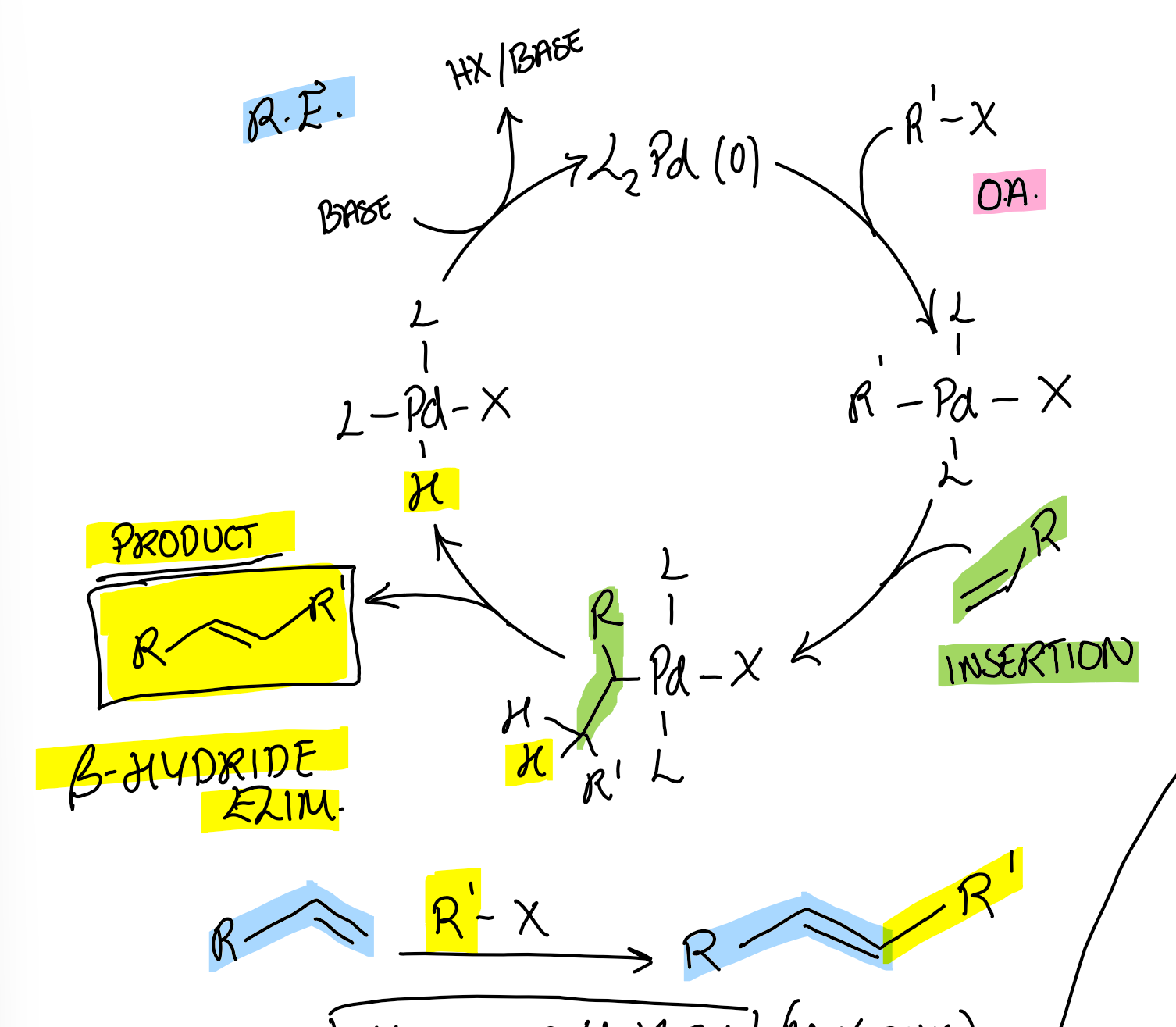
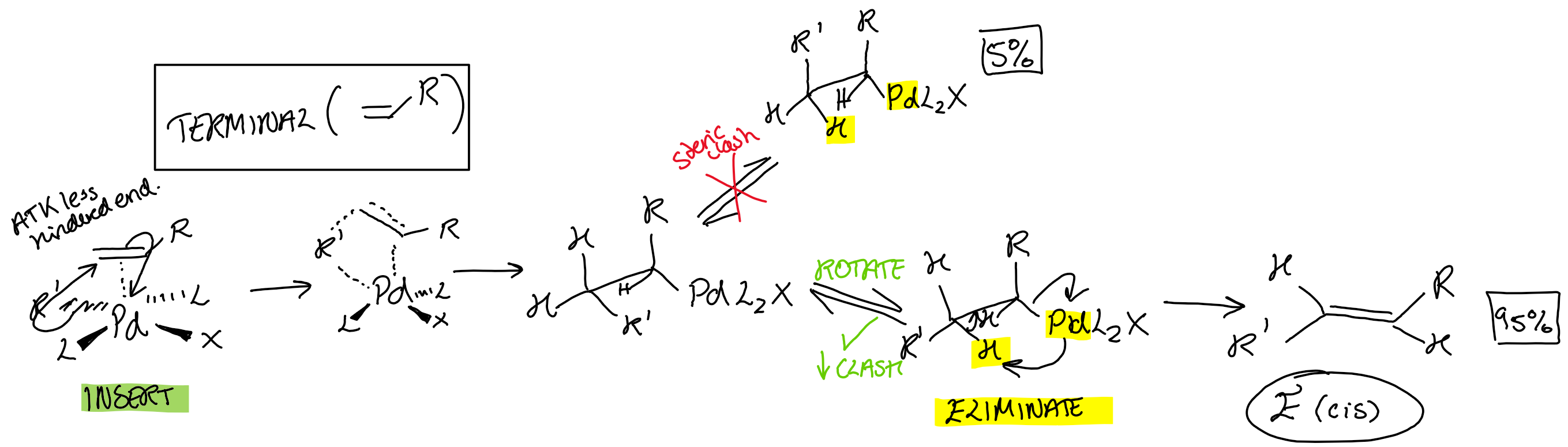
What is the selectivity of the Mizoroki-Heck reaction for terminal alkenes, H2C=CHR?
TS goes via R’ attack on least substituted side
Force E (trans) due to steric clash when eliminating β hydride
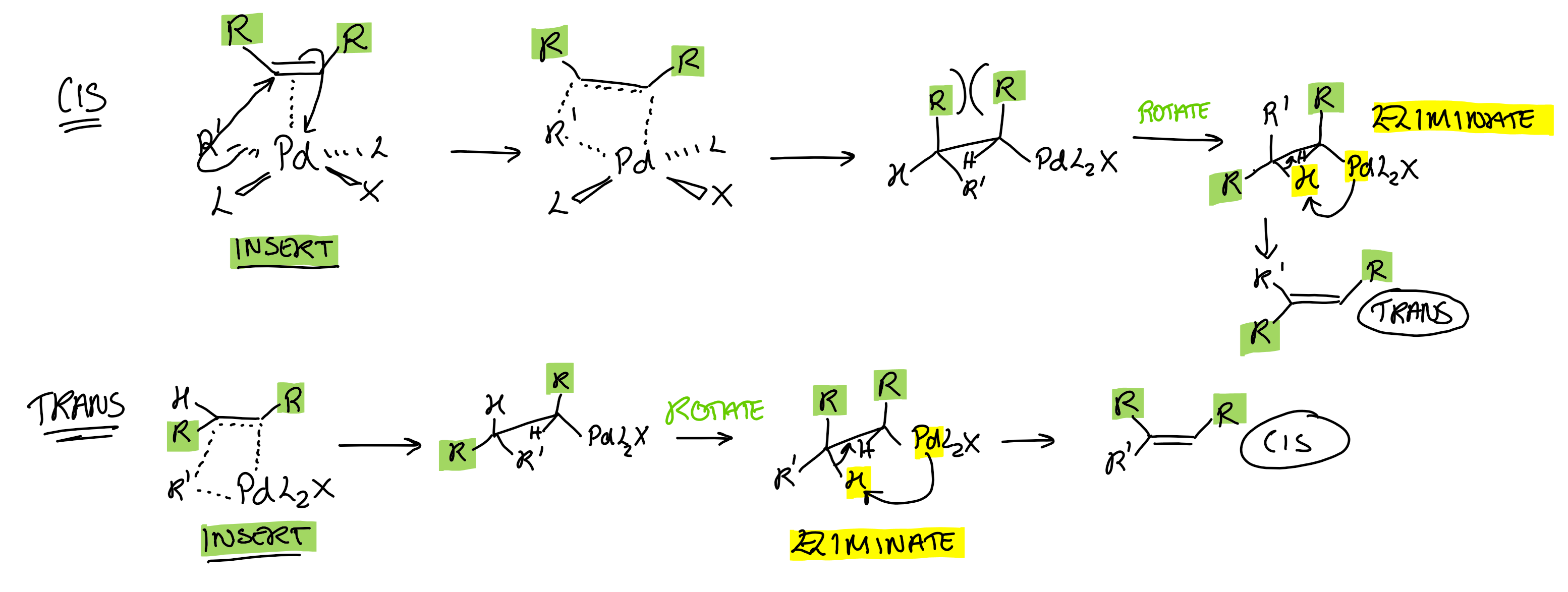
What is the selectivity of the Mizoroki-Heck reaction for 1,2 disubstituted alkenes, RHC=CHR?
INVERSION cis ↔ trans
Only 1 elimination position possible
What reaction is Suzuki-Miyaura used for?
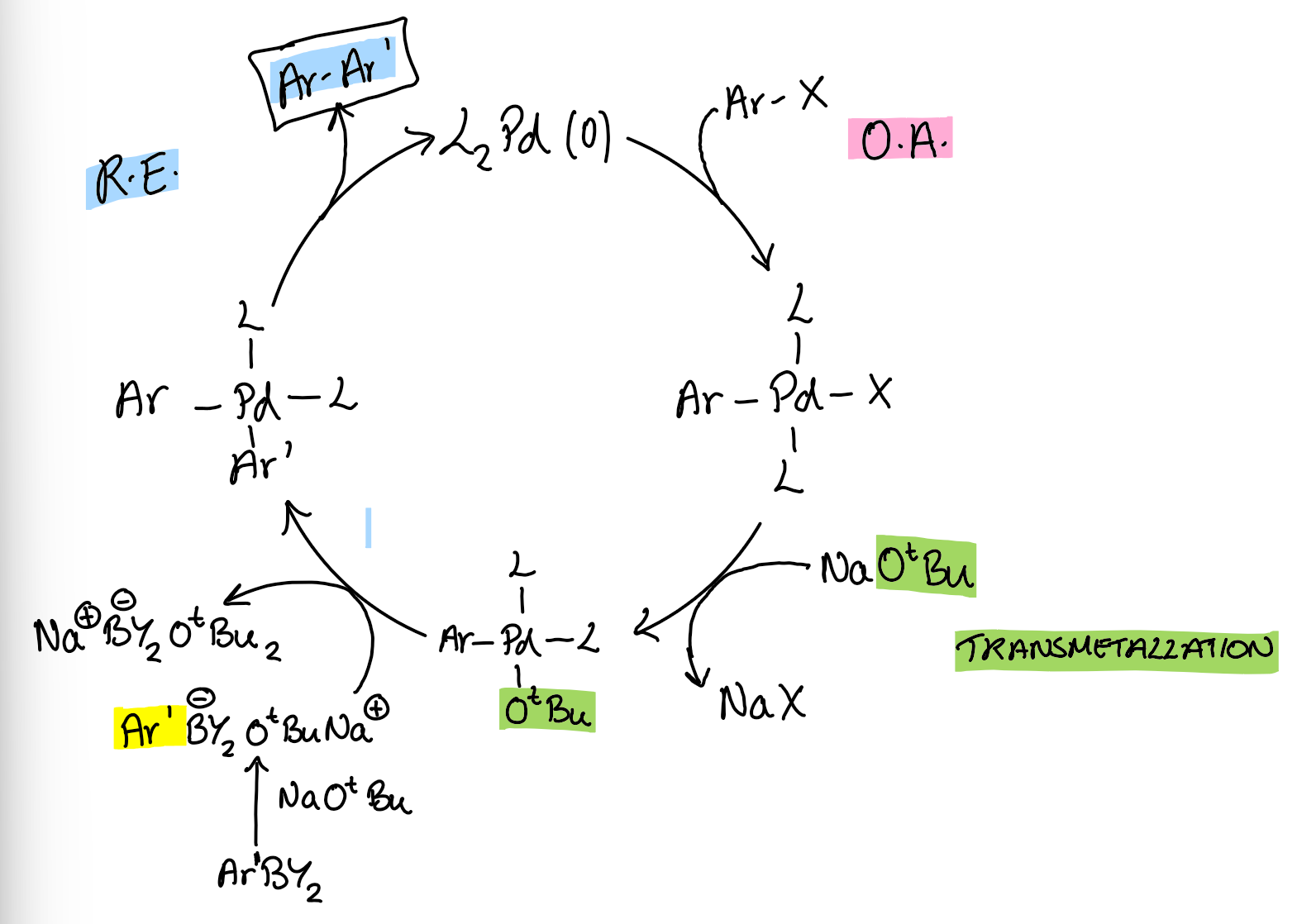
join 2 aromatic rings, via BORONIC ACID

Suzuki cross-coupling cycle
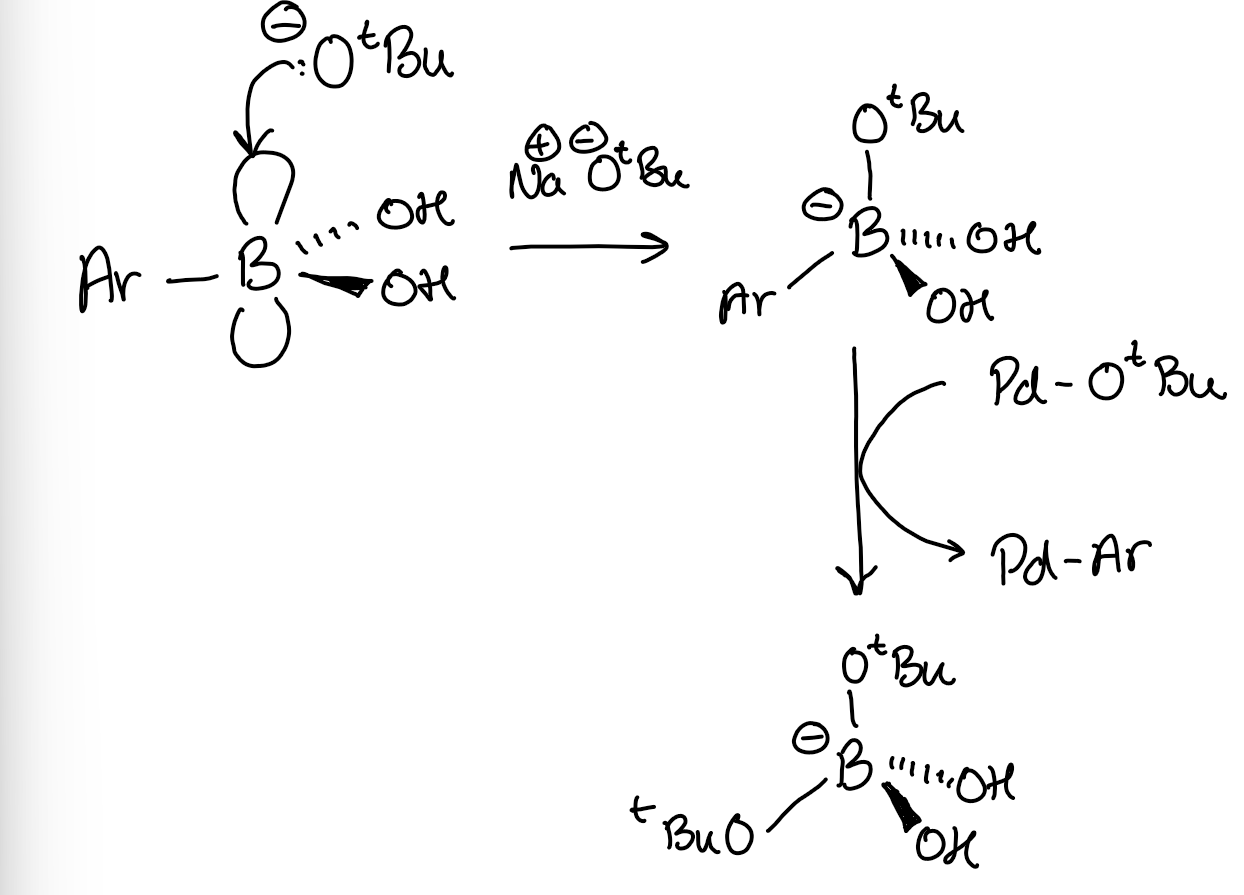
Mechanism for Suzuki ligand exchange step, starting from Boronic acid
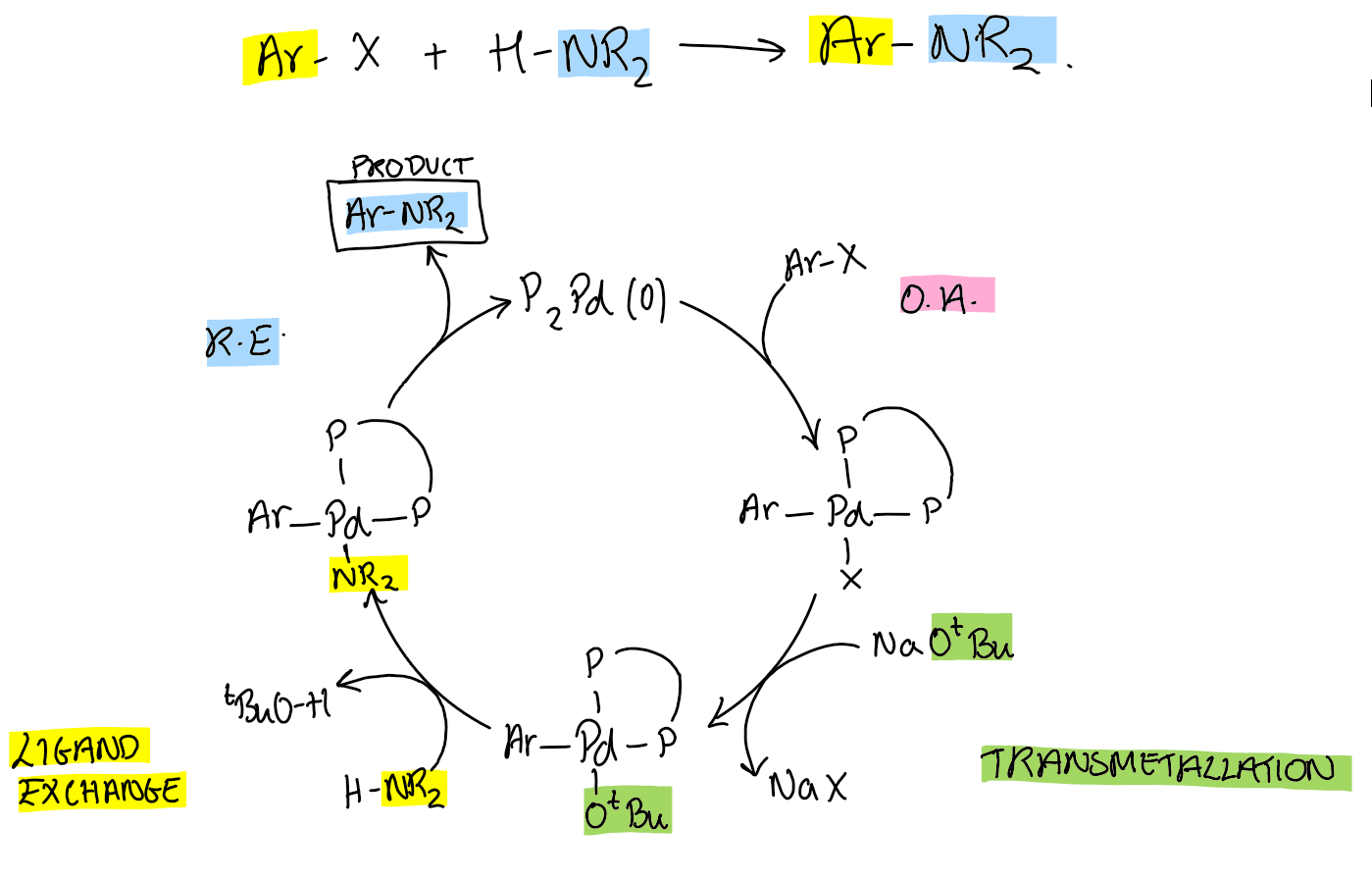
What reaction is Buchwald-Hartwig used for?
Phenylamines by adding to aromatic ring

Buchwald-Hartwig cross-coupling cycle
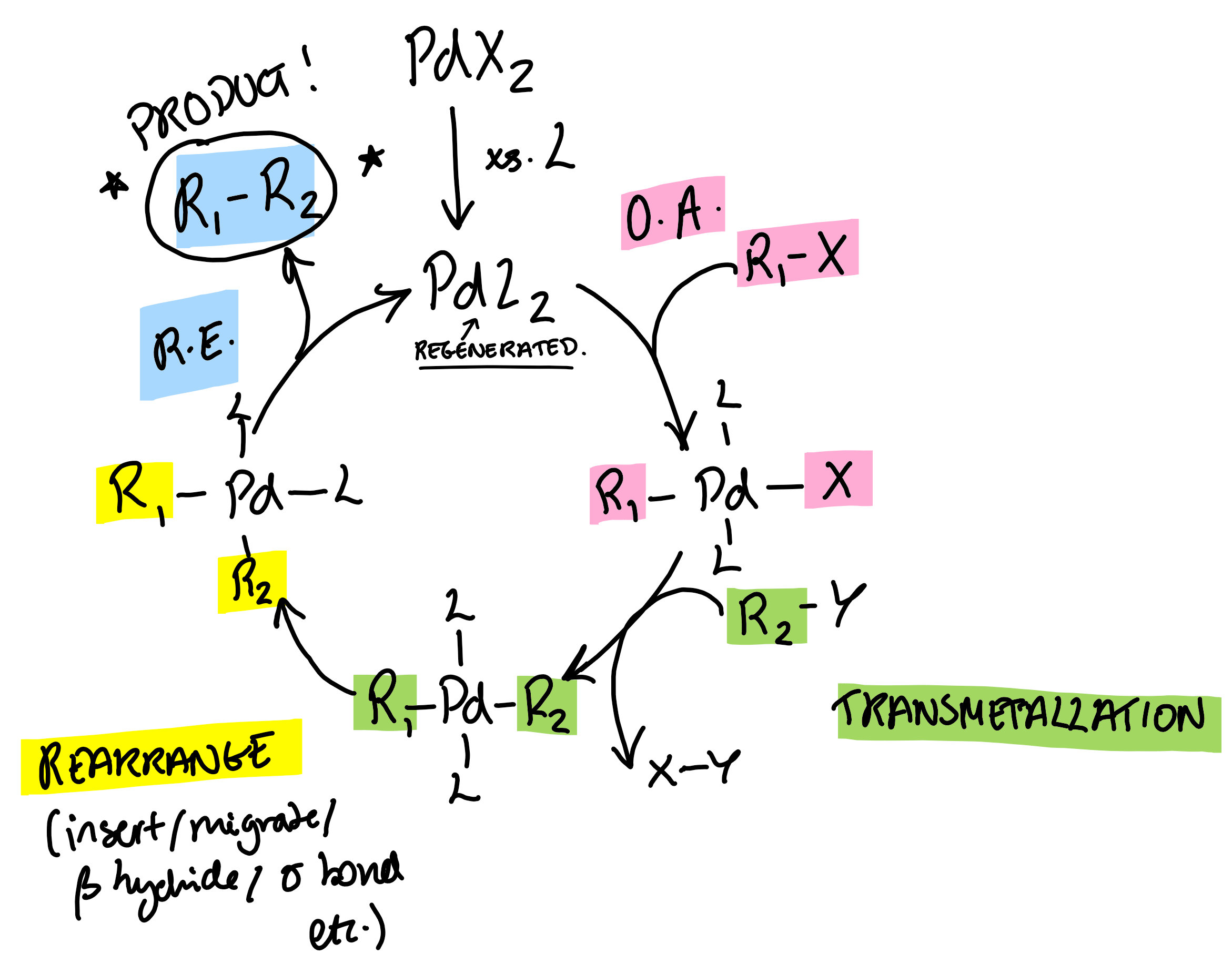
General Pd catalytic cycle