phylum platyhelminthes
 Call Kai
 Learn
Learn Practice Test
 Spaced Repetition
 Match
Match Flashcards
 Knowt Play
1/29

There's no tags or description
Looks like no tags are added yet.
Name | Mastery | Learn | Test | Matching | Spaced | Call with Kai |
|---|
No analytics yet
Send a link to your students to track their progress
30 Terms
platyhelminthes
flat worms
ectoderm on outside
endoderm lining the gut
mesoderm in between (used for movement)
what are the three tissue layers in all platyhelminthes
gastrovascular cavity
what kind of gut do platyhelminthes have
mouth
what serves as both an entrance and exit from the gut
bilaterally symetrical
what kind of symmetry does the body have
rostral
head end, contains coordination center that can be referred to as a brain
caudal
tail end
no specialized respiratory system
what is significant about platyhelminthes respiratory system
acoelomate
flat worms are __, the outside of the gut is directly continous with the mesoderm, there is no coelomic cavity so the gut is not free inside the body
class turbellaria
not parasitic (free living)
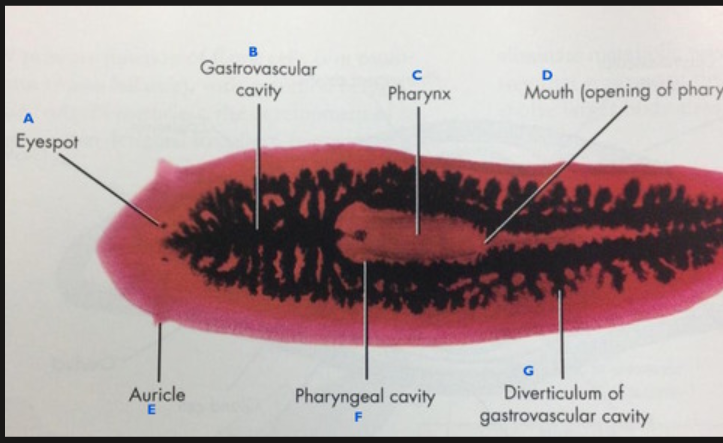
planaria (whole mount)
freshwater ponds
carnivore
sensory flaps on sides
pharynx can protrude from mouth
planaria cross secctions
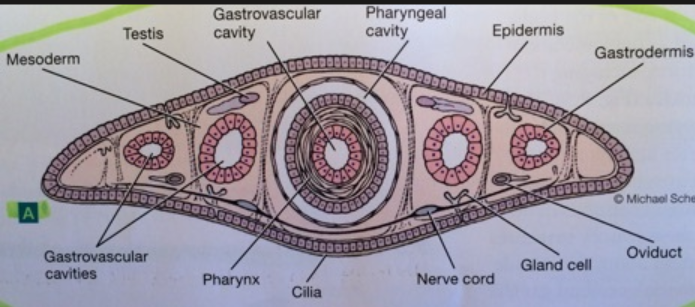
cilia
1 of two ways planaria move, help to glide over surface
muscle
1 of two ways planaria move, allows to bend and change direction
class tremadota (flukes)
parasitic
life cycles of parasites are complex, there are intermediate hosts and life stages
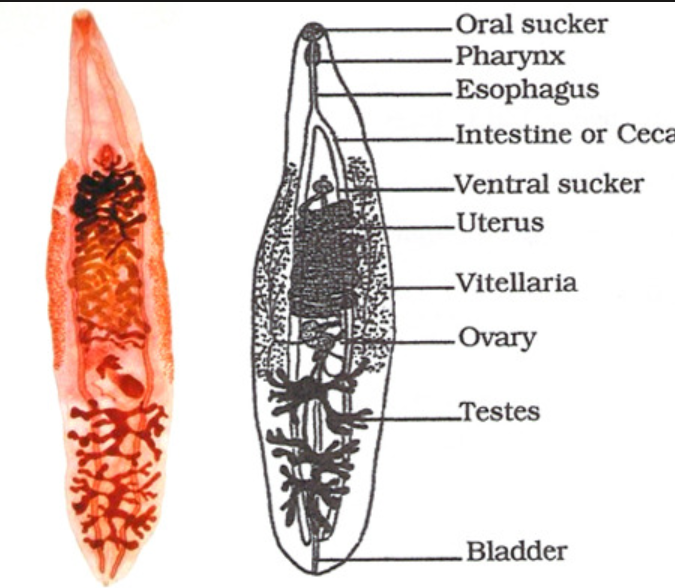
opisthorchis/clonorchis (whole mount)
the liver fluke
both sexes in one
human parasite
where raw fish is a delicacy
how do opisthorchis infect the human body
in the feces
how do opisthorchis small brown eggs exit from a humans body
when they are eaten by some freshwater snails
how do liver fluke eggs hatch
miracidium
liver fluke or opisthorchis hatchling
after several metamorphoses
when do the opisthorchis infect freshwater fish
liver fluke enters digestive system and migrate from small intestine through the bile duct to liver to mature and produce eggs
how do liver flukes get to the liver
through bile duct to the digestive system
how do liver fluke eggs exit the body through the feces
class cestoda
parasitic tapeworms
extremely flat
body divided into segments
no digestive system (absorb through body walls)
scolex whole mount
cestoda
big circles are suckers
disc of hooks at tip
large segments are full reproductive machines
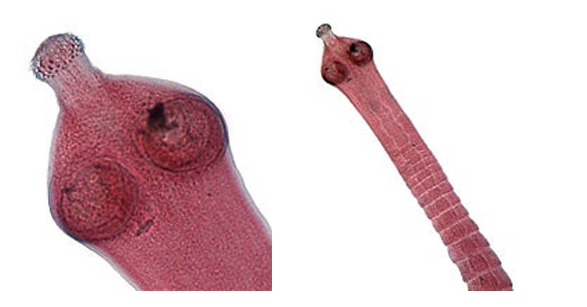
suckers and hooks
how do tapeworms hold on
mature proglottid of scolex
branched uterus (has hundreds of eggs in each segment)
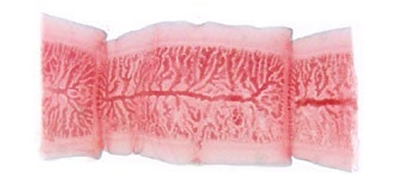
cestode life cycle
taenia in cow or pigs - larvae encyst flesh of the animal - when human eats infected meat (uncooked), live cysts break down during digestion - scolecies turn right side out - attach themselves to mucous membrane of intestine by hooks and suckers - become sexually mature
auricles
in planaria there is a head end with a pair of black, light sensitive spots that are chemoreceptors.
color of planariawould make them blend in and be invisible at bottom of ponf
mesoderm
what layer is muscular