Culture and ID Methods
 Call Kai
 Learn
Learn Practice Test
 Spaced Repetition
 Match
Match Flashcards
 Knowt Play
1/24

There's no tags or description
Looks like no tags are added yet.
Name | Mastery | Learn | Test | Matching | Spaced | Call with Kai |
|---|
No analytics yet
Send a link to your students to track their progress
25 Terms
What are the phenotypic characteristics of bacteria that can be observed?
colony morphology
microscopic morphology
staining characteristics
environmental requirements for growth (oxygen or no oxygen)
nutritional needs
biochemical characteristics (catalase, oxidase, etc.)
antimicrobial susceptibility
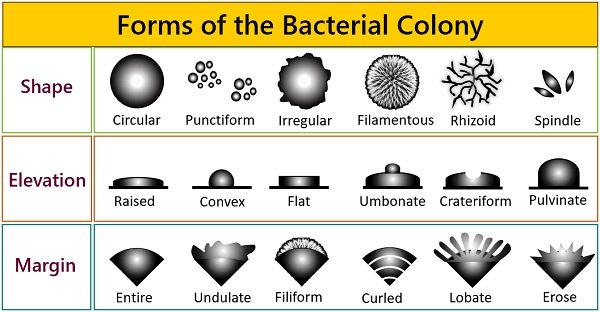
When observing colony morphology, what is noted about the colonies?
hemolysis patterns
size
form/margin
what the edges of the colonies look like
elevation
surface consistency
mucoid, creamy, viscous, brittle, dry, etc.
density
color
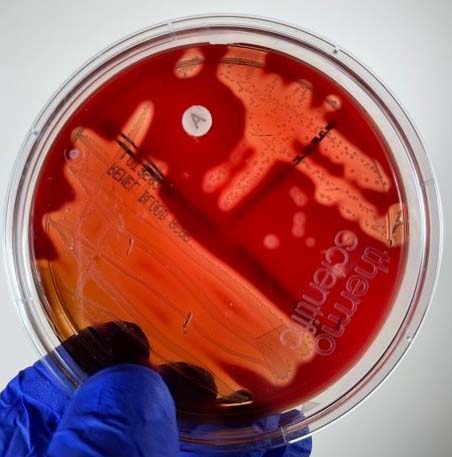
What type of hemolysis pattern is this?
beta
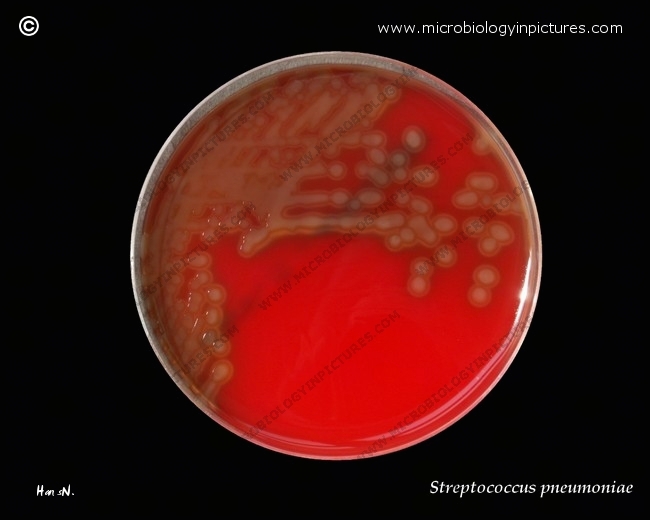
What type of hemolysis pattern is this?
alpha
What are the 5 margins of bacterial colonies?
smooth (entire), rough, irregular, curled, and filamentous
page 85 in textbook
What are the 5 types of elevation of bacterial colonies?
flat, convex (dome shaped), raised, umbilicate, and umbonate
List the 6 preliminary biochemical tests used for bacteria identification
carbohydrate utilization
catalase
coagulase
cytochrome oxidase
spot indole
PYR hydrolysis
Carbohydrate utilization test
enzymes within specific bacteria can break down carbohydrates in the absence of oxygen = fermentation
carbs broken down in the presence of oxygen = oxidation
growth media contain carbohydrates and an acid base indicator for identifying if the organism uses a certain carbohydrate
if a carbohydrate is utilized, a color change will occur
glucose, lactose, maltose, sucrose, and fructose
catalase testing
some organisms produce the enzyme catalase, which helps them survive phagocytosis by breaking down hydrogen peroxide into water and oxygen bubbles
catalase positive = bubble formation
catalase negative = no bubbles
can help distinguish between Staphylococcus and Streptococcus
Staph is positive, Strep is negative
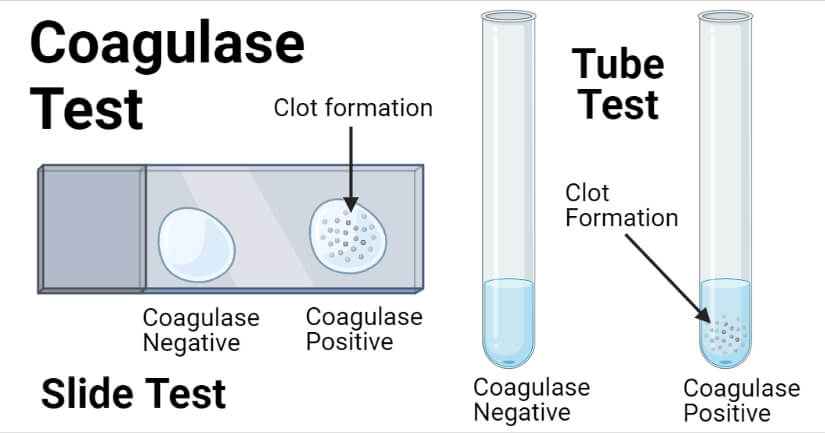
coagulase testing
the enzyme coagulase converts fibrinogen to fibrin
Staphylococcus aureus produces coagulase
slide test
colony is mixed with rabbit plasma, positive reactions indicated by fibrin clots
tube test
rabbit plasma is mixed with the organism and incubated
cytochrome oxidase test
detects if an organism produces cytochrome oxidase enzyme for metabolism
an oxidase reagent and the specimen are placed on filter paper
positive reactions are purple
oxidase positive genuses:
Neisseria, Pseudomonas, Campylobacter, Aeromonas, and Pasturella
not common in the Enterobacteriaceae family
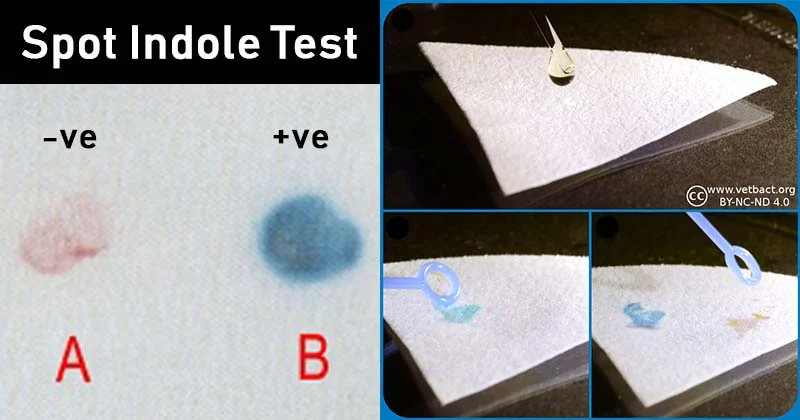
spot indole test
detects if an organism has the enzyme tryptophanase
breaks down tryptophan when bacteria are grown on SBA or chocolate agar
a colony is smeared onto filter paper and Kovach’s reagent is added
positive reactions are blue-violet
differentiates E. coli (indole pos) from other Enterobacteriaceae, and Proteus mirabilis (indole neg) from Proteus vulgaris (pos)
PYR hydrolysis test
detects if bacteria have the ability to break down the substrate PYR
important for differentiating:
Group D enterococcus (pos) from non-enterococcus (neg)
and group A Streptococcus (pos) from group B Streptococcus (neg)
positive reactions are pink
What are multitest systems?
single-step systems that incorporate inoculation, incubation, interpretation of results, and reporting of results for specimens
biochemical and enzymatic reactions
can be manual or semi-automatic
uses numeric codes and databases based on the biochemical profile of microorganisms
What are the advantages of multitest systems in the micro lab?
shorter incubation and reaction times
reproducible, yields consistent results
bioMerieux API multitest system
utilizes microtubes with dehydrated substrates that are reconstituted by adding a bacterial suspension
allows for the identification of:
Enterobacterales, Streptococcus, Staphylococcus, Neisseria, Haemophilus, Corynebacterium, anaerobes, non-fermenters, and yeast
a large database for the organism profiles is accessible through the internet-based API web service
How does the bioMerieux API multitest system work?
after incubation for 18-24 hours, reactions are read, and a profile number is determined
determining the organism’s profile number:
the 20 microtubes are broken down into groups of 3
the microtubes with positive reactions are assigned points and the points are added up for each group
the 7-digit code of all the added up points can be entered into the database for microbial ID
What are the automated ID systems for detecting metabolic activity in organisms?
Vitek 2 by BioMerieux
Microscan Walkaway by Beckman Coulter
Sensititre by ThermoScientific
Phoenix by BD
In detecting metabolic activity, organisms are identified by their utilization of substrates. What are the 3 ways to detect end products in microbial metabolism?
colorimetry
a spectrophotometer measures color change using pH indicators or substrates
nephelometry
fluorometry
nephelometry
measures light scatter
useful for antibiotic susceptibility testing
wells are coated with antibiotic
as an organism grows, the substrate becomes more turbid
the more turbid the solution is, the more resistant the bacteria is to the antibiotic
fluorometry
uses biochemical substrates bound to a fluorescent component, such as a fluorophore
if the organism has an enzyme to metabolize the substrate, the fluorophore is released and fluoresces
What does MALDI-TOF MS stand for?
Matrix-Assisted Laser Desorption Ionization Time of Flight Mass Spectrometry
How does MALDI-TOF MS work?
a specimen is applied to a target plate
matrix (a chemical) is added to the target
a laser hits the target and ionizes the sample
ionized molecules fly up through a vacuum tube and hit a detector (time of flight is the time in nanoseconds for ion travel)
a spectrum is generated based on signal intensity
this spectrum is unique to each species and is compared to the spectra of known organisms in a database for identification
What are the pros and cons of MALDI-TOF MS?
pros
quick results
cost effective
yields accurate and reproducible results
cons
identification is limited to the database
only pure cultures can be used
cannot be used with clinical specimens (due to contaminants or multiple organisms)
How do automated blood culture systems work?
by measuring the log phase of growth of microorganisms in blood cultures