2.1 - Methods & Microbe Host interactions
 Call Kai
 Learn
Learn Practice Test
 Spaced Repetition
 Match
Match Flashcards
 Knowt Play
1/59

There's no tags or description
Looks like no tags are added yet.
Name | Mastery | Learn | Test | Matching | Spaced | Call with Kai | Chat |
|---|
No analytics yet
Send a link to your students to track their progress
60 Terms
c. Community infection
[Microbe Host Interactions - Features of Infectious Disease]
Type of infection associated with Gram-positive organisms acquired in the community.
a. Nosocomial infection
b. Hospital-acquired infection
c. Community infection
d. Opportunistic infection
b. Nosocomial infection
[Microbe Host Interactions - Features of Infectious Disease]
Another term for hospital-acquired infection.
a. Zoonotic infection
b. Nosocomial infection
c. Opportunistic infection
d. Contagious infection
a. Gram-positive
[Microbe Host Interactions - Features of Infectious Disease]
Gram characteristic of organisms commonly associated with nosocomial infections.
a. Gram-positive
b. Gram-variable
c. Gram-negative
d. Acid-fast
Enterococcus faecium
Staphylococcus aureus
Klebsiella Pneumoniae
Acinetobacter baumannii
Pseudomonas aeruginosa
Enterobacter spp.
📌Mnemonic: “ESKAPE”
[Microbe Host Interactions - Features of Infectious Disease]
Example of Hospital - Acquired / Nosocomial Infections [6]
c. Indirect contact
[Microbe Host Interactions - Features of Infectious Disease]
Route of transmission involving contact with nonliving things.
a. Direct contact
b. Vector-borne
c. Indirect contact
d. Vehicle-borne
c. Fomite
[Microbe Host Interactions - Features of Infectious Disease]
Term for nonliving objects that serve as indirect contact transmission.
a. Reservoir
b. Vector
c. Fomite
d. Carrier
b. Mumps virus
[Microbe Host Interactions - Features of Infectious Disease]
Example of a disease transmitted via indirect contact through fomites.
a. Syphilis
b. Mumps virus
c. Varicella
d. Cholera
c. Horizontal transmission
[Microbe Host Interactions - Features of Infectious Disease]
Type of direct contact transmission occurring between persons on the same level.
a. Vertical transmission
b. Vector-borne transmission
c. Horizontal transmission
d. Airborne transmission
c. Syphilis
[Microbe Host Interactions - Features of Infectious Disease]
Example of disease transmitted via horizontal transmission through sexual contact.
a. Varicella
b. Rubella
c. Syphilis
d. Mumps
d. Vertical transmission
[Microbe Host Interactions - Features of Infectious Disease]
Type of direct contact transmission from mother to child.
a. Horizontal transmission
b. Vector-borne transmission
c. Droplet transmission
d. Vertical transmission
Toxoplasmosis
Others - varicella
Rubella via transplacental spread
Cytomegalovirus
Herpes, Hepatitis B , HIV
Syphillis
📌Mnemonic: “TORCHS”
[Microbe Host Interactions - Features of Infectious Disease]
Organisms transmitted via vertical transmission [6]
b. Toxoplasmosis
[Microbe Host Interactions - Features of Infectious Disease]
Organism transmitted via vertical transplacental spread.
a. Herpes
b. Toxoplasmosis
c. Syphilis
d. HIV

b. Droplet
[Microbe Host Interactions - Features of Infectious Disease]
Contact transmission route via respiratory route with droplet size of < 1meter
a. Airborne
b. Droplet
c. Fomite
d. Vector-borne
c. Airborne transmission
[Microbe Host Interactions - Features of Infectious Disease]
Vehicle-borne transmission via respiratory route that is more contagious.
a. Droplet transmission
b. Waterborne transmission
c. Airborne transmission
d. Foodborne transmission
d. Greater than 1m
[Microbe Host Interactions - Features of Infectious Disease]
Airborne transmission droplet size.
a. Less than 1m
b. Exactly 1m
c. Equal to droplet
d. Greater than 1m
Measles
Tuberculosis
Varicella
📌Mnemonic: “MTV”
[Microbe Host Interactions - Features of Infectious Disease]
Disease transmitted via airborne route [3]
c. Cholera
[Microbe Host Interactions - Features of Infectious Disease]
Example of a waterborne disease.
a. Salmonellosis
b. Varicella
c. Cholera
d. Tuberculosis
b. Salmonellosis
[Microbe Host Interactions - Features of Infectious Disease]
Example of a foodborne disease.
a. Cholera
b. Salmonellosis
c. Varicella
d. Measles
d. Vector-borne

[Microbe Host Interactions - Features of Infectious Disease]
Transmission route that transmits organism from 1 host to another host.
a. Airborne
b. Waterborne
c. Vehicle-borne
d. Vector-borne
Brucellosis
Q fever
Chlamydia
📌Mnemonic: “BQC”
[Microbe Host Interactions - Features of Infectious Disease]
Example of disease that hav NO VECTOR [3]
Exposure
Infection
Disease
Duration
[Microbe Host Interactions - Features of Infectious Disease]
Stages of Infectious Disease [4]
c. Infection
[Microbe Host Interactions - Features of Infectious Disease]
Stage of infectious disease involving invasion of pathogen.
a. Exposure
b. Disease
c. Infection
d. Incubation
d. Disease
[Microbe Host Interactions - Features of Infectious Disease]
Stage of infectious disease characterized by presence of signs and symptoms.
a. Exposure
b. Infection
c. Incubation period
d. Disease
d. Incubation period
[Microbe Host Interactions - Features of Infectious Disease]
Period that helps identify the duration of quarantine.
a. Convalescent period
d. Incubation period
c. Prodrome period
d. Decline period
c. Quarantine
[Microbe Host Interactions - Features of Infectious Disease]
Measure applied when a person has no symptoms after exposure.
a. Isolation
b. Treatment
c. Quarantine
d. Hospitalization
b. Isolation
[Microbe Host Interactions - Features of Infectious Disease]
Measure applied when a person has symptoms of infection.
a. Quarantine
b. Isolation
c. Observation
d. Incubation
c. Septicemia
[Microbe Host Interactions - Features of Infectious Disease]
Uncontrolled increase of organism in the blood.
a. Syndrome
b. Bacteremia
c. Septicemia
d. Viremia
d. Syndrome
[Microbe Host Interactions - Features of Infectious Disease]
Collection of signs and symptoms.
a. Septicemia
b. Disease
c. Infection
d. Syndrome
b. 2 weeks
[Microbe Host Interactions - Features of Infectious Disease]
Incubation period of SARS CoV.
a. 1 week
b. 2 weeks
c. 3 weeks
d. 4 weeks
c. 3 weeks
[Microbe Host Interactions - Features of Infectious Disease]
Incubation period of Ebola.
a. 1 week
b. 2 weeks
c. 3 weeks
d. 4 weeks
Influenza
Common cold
Hepatitis A
Hepatitis E
[Microbe Host Interactions - Features of Infectious Disease]
Example of an acute infectious disease [4]
Tuberculosis
Hepatitis B
Hepatitis C
Hepatitis D
[Microbe Host Interactions - Features of Infectious Disease]
Example of an chronic infectious disease [4]
d. Hepatitis E
[Microbe Host Interactions - Features of Infectious Disease]
Most common cause of viral hepatitis.
a. Hepatitis A
b. Hepatitis B
c. Hepatitis C
d. Hepatitis E
d. Hepatitis C
[Microbe Host Interactions - Features of Infectious Disease]
Hepatitis type assured to be chronic.
a. Hepatitis A
b. Hepatitis B
c. Hepatitis D
d. Hepatitis C
d. Prodrome
[Microbe Host Interactions - Features of Infectious Disease]
Stage of infectious disease characterized by early signs and symptoms.
a. Acne
b. Decline
c. Convalescent
d. Prodrome
b. Acne
[Microbe Host Interactions - Features of Infectious Disease]
Stage of infectious disease characterized by peak signs and symptoms.
a. Prodrome
b. Acne
c. Decline
d. Convalescent
c. Decline
[Microbe Host Interactions - Features of Infectious Disease]
Stage of infectious disease characterized by decreasing signs and symptoms.
a. Prodrome
b. Acne
c. Decline
d. Convalescent
d. Convalescent
[Microbe Host Interactions - Features of Infectious Disease]
Stage of infectious disease characterized by recovery.
a. Prodrome
b. Acne
c. Decline
d. Convalescent
d. Mortality rate
[Microbe Host Interactions - Features of Infectious Disease]
Epidemiologic index that measures number of deaths.
a. Morbidity rate
b. Incidence rate
c. Prevalence rate
d. Mortality rate
b. Morbidity rate
[Microbe Host Interactions - Features of Infectious Disease]
Epidemiologic index that measures number of diseases.
a. Mortality rate
b. Morbidity rate
c. Incidence rate
d. Prevalence rate
c. Prevalence rate
[Microbe Host Interactions - Features of Infectious Disease]
Epidemiologic index that identifies both new cases and old cases.
Example: Survey
a. Mortality rate
b. Morbidity rate
c. Prevalence rate
d. Incidence rate
d. Incidence rate
[Microbe Host Interactions - Features of Infectious Disease]
Epidemiologic index that identifies only new cases.
a. Mortality rate
b. Morbidity rate
c. Prevalence rate
d. Incidence rate
c. Endemic
[Microbe Host Interactions - Features of Infectious Disease]
Pattern of occurrence where disease occurs at a specific place or people.
a. Epidemic
b. Pandemic
c. Endemic
d. Sporadic
c. Malaria
[Microbe Host Interactions - Features of Infectious Disease]
Endemic disease in Palawan
a. Schistosomiasis
b. Filariasis
c. Malaria
d. Dengue
d. Schistosomiasis
[Microbe Host Interactions - Features of Infectious Disease]
Endemic disease in:
Samar
Leyte
a. Malaria
b. Filariasis
c. Dengue
d. Schistosomiasis
c. Filariasis
[Microbe Host Interactions - Features of Infectious Disease]
Endemic disease in:
Albay
Mindoro
a. Malaria
b. Schistosomiasis
c. Filariasis
d. Dengue
d. Epidemic
[Microbe Host Interactions - Features of Infectious Disease]
Pattern of occurrence where the number of cases exceeds the expected frequency.
a. Endemic
b. Sporadic
c. Pandemic
d. Epidemic
b. Outbreak
[Microbe Host Interactions - Features of Infectious Disease]
Another term for epidemic.
a. Endemic
b. Outbreak
c. Pandemic
d. Sporadic
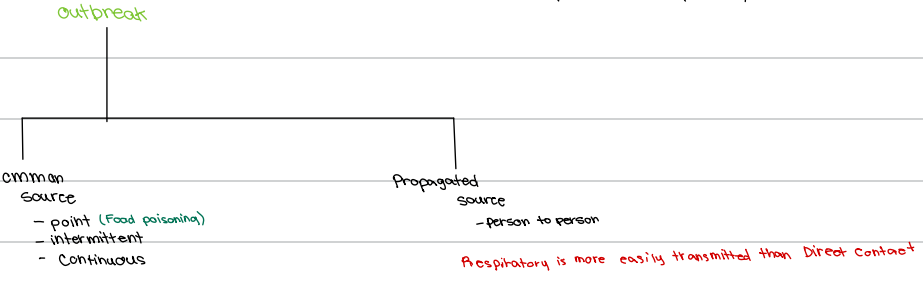
c. Common source
[Microbe Host Interactions - Features of Infectious Disease]
Type of epidemic outbreak originating from a single contaminated source.
a. Propagated source
b. Continuous source
c. Common source
d. Intermittent source
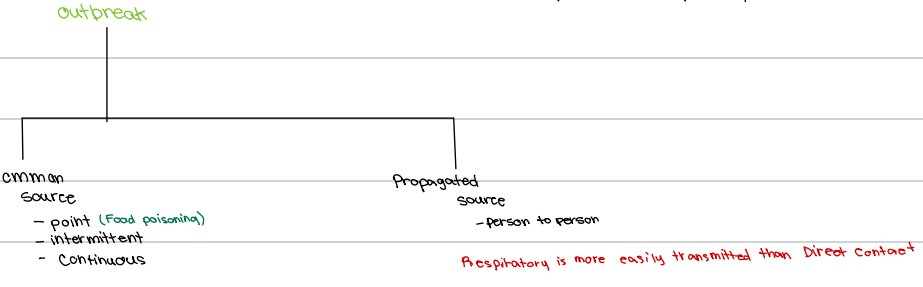
b. Food poisoning
[Microbe Host Interactions - Features of Infectious Disease]
Example of a common source point outbreak.
a. Person to person transmission
b. Food poisoning
c. Respiratory transmission
d. Vector-borne transmission
Point
Intermittent
Continuous
[Microbe Host Interactions - Features of Infectious Disease]
Types of common source outbreaks [3]
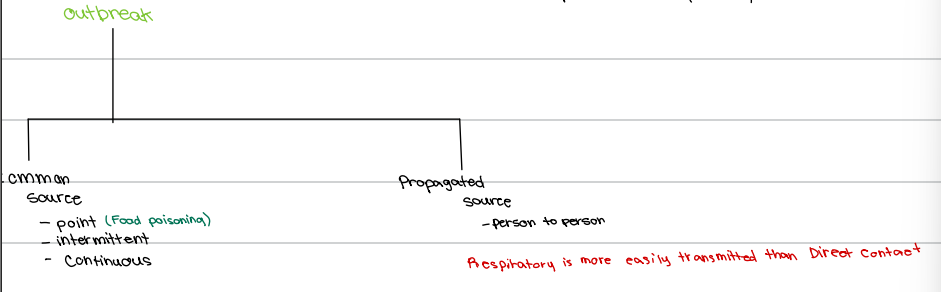
d. Propagated source
[Microbe Host Interactions - Features of Infectious Disease]
Type of epidemic outbreak transmitted from person to person.
a. Common source
b. Point source
c. Intermittent source
d. Propagated source
c. Respiratory
[Microbe Host Interactions - Features of Infectious Disease]
Route of transmission more easily transmitted than direct contact in propagated source outbreaks.
a. Waterborne
b. Foodborne
c. Respiratory
d. Vector-borne
c. Sporadic
[Microbe Host Interactions - Features of Infectious Disease]
Pattern of occurrence at irregular or scattered intervals.
a. Endemic
b. Epidemic
c. Sporadic
d. Pandemic
d. Pandemic
[Microbe Host Interactions - Features of Infectious Disease]
Pattern of occurrence that is worldwide in distribution.
a. Endemic
b. Sporadic
c. Epidemic
d. Pandemic
d. Epidemic
[Microbe Host Interactions - Features of Infectious Disease]
One patient with smallpox in Manila.This pattern of occurrence is:
a. Endemic
b. Sporadic
c. Pandemic
d. Epidemic
a. True
[Microbe Host Interactions - Features of Infectious Disease]
Smallpox (variola virus) is the only human disease to have been officially eradicated through vaccination.
a. True
b. False
Climate change
Organism change
Demographic change
[Microbe Host Interactions - Features of Infectious Disease]
Factors that contribute to emerging and reemerging infections [3]
c. HIV/AIDS
[Microbe Host Interactions - Features of Infectious Disease]
Example of an emerging infection that appeared in the 1980s.
a. SARS
b. Ebola
c. HIV/AIDS
d. MERS
d. SARS
[Microbe Host Interactions - Features of Infectious Disease]
Example of an emerging infection that appeared in the 2000s.
a. HIV/AIDS
b. Ebola
c. MERS
d. SARS