TOPIC 11 Pelvis and hip

0.0(0)
Studied by 2 people
call kaiCall Kai
learnLearn
examPractice Test
spaced repetitionSpaced Repetition
heart puzzleMatch
flashcardsFlashcards
GameKnowt Play
Card Sorting

1/51

encourage image

There's no tags or description

Looks like no tags are added yet.

Last updated 9:42 PM on 6/16/26
Name
Mastery
Learn
Test
Matching
Spaced
Call with Kai

No analytics yet

Send a link to your students to track their progress

52 Terms
1
New cards
term image
knowt flashcard image
2
New cards
term image
knowt flashcard image
3
New cards
term image
knowt flashcard image
4
New cards
term image
knowt flashcard image
5
New cards
term image
knowt flashcard image
6
New cards
term image
knowt flashcard image
7
New cards
term image
knowt flashcard image
8
New cards
term image
knowt flashcard image
9
New cards
term image
knowt flashcard image
10
New cards
term image
knowt flashcard image
11
New cards
term image
knowt flashcard image
12
New cards
term image
knowt flashcard image
13
New cards
term image
knowt flashcard image
14
New cards

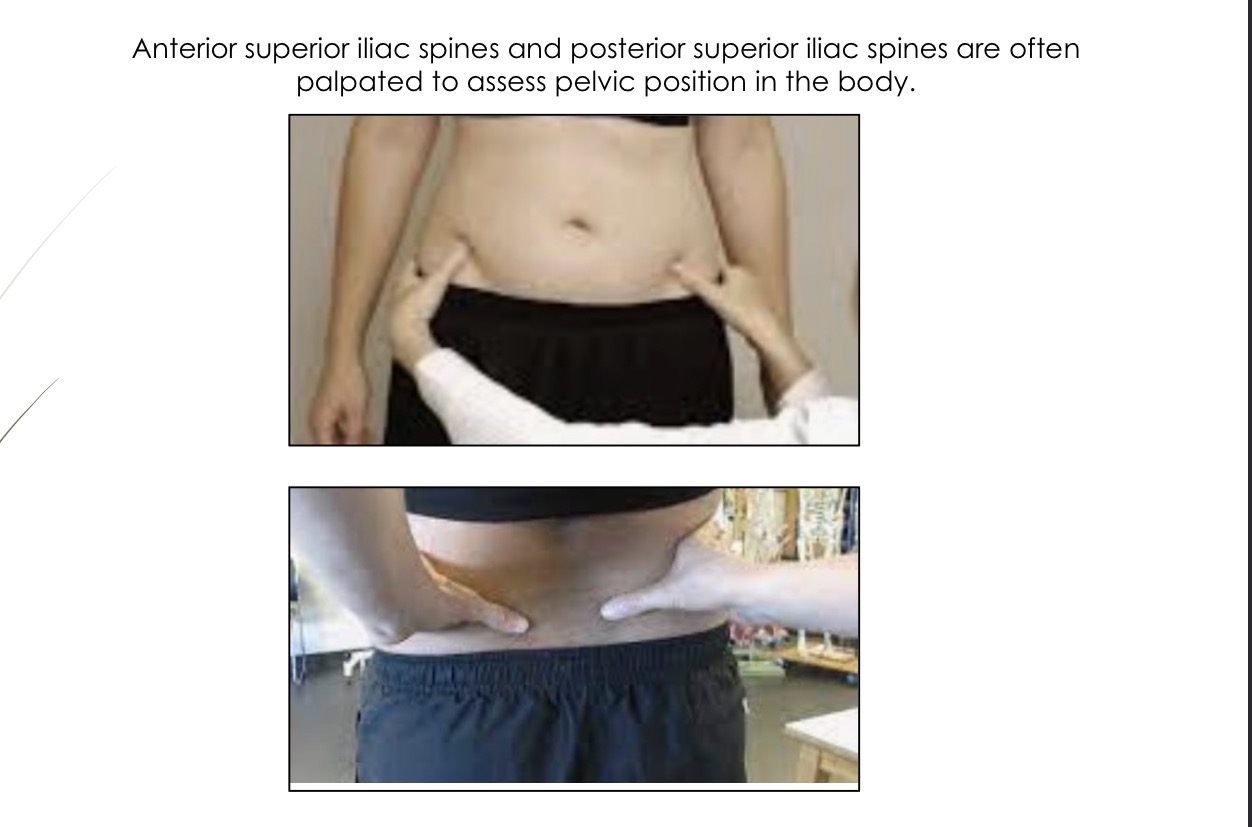
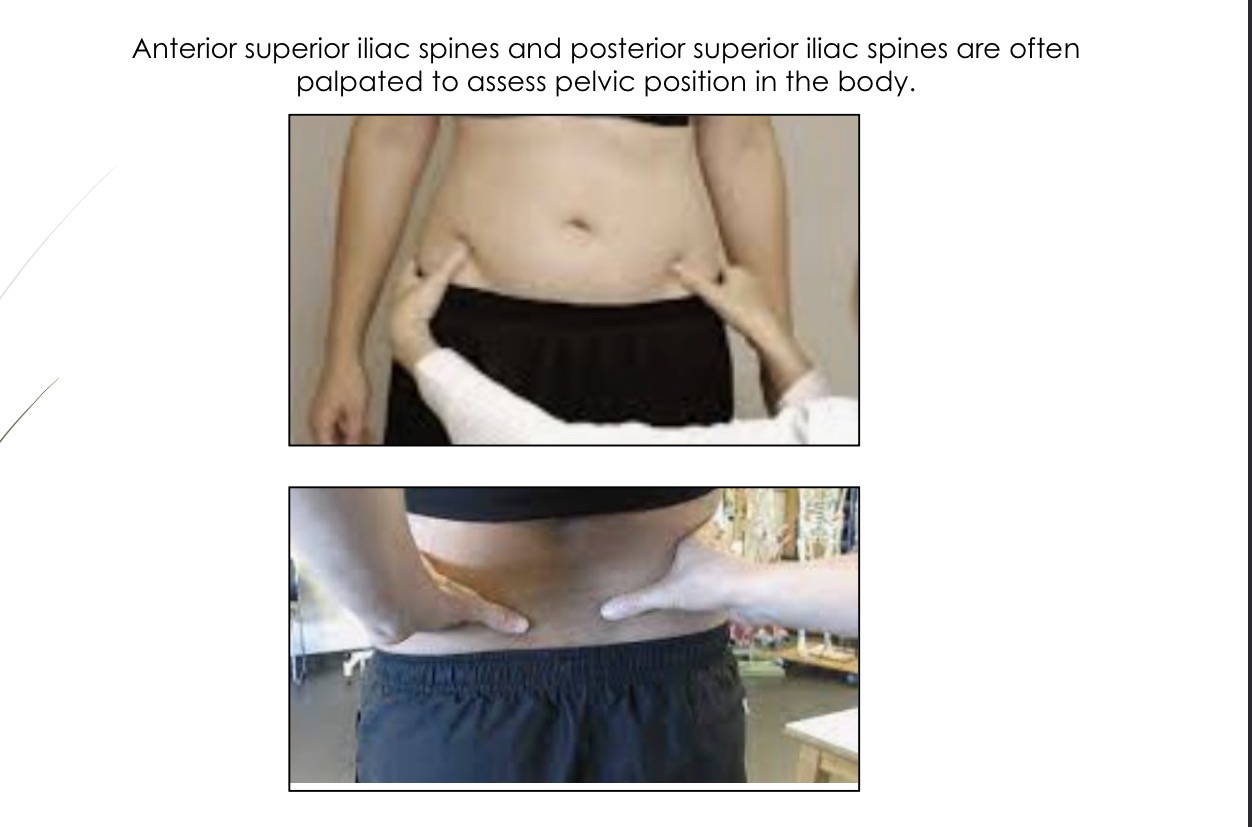
Why are the anterior superior iliac spine (ASIS), posterior superior iliac spine (PSIS) palpated?

The ASIS and PSIS are palpated to test a patient's pelvic symmetry. If symmetrical, both the ASIS’s and PSIS’s should be level.

15
New cards

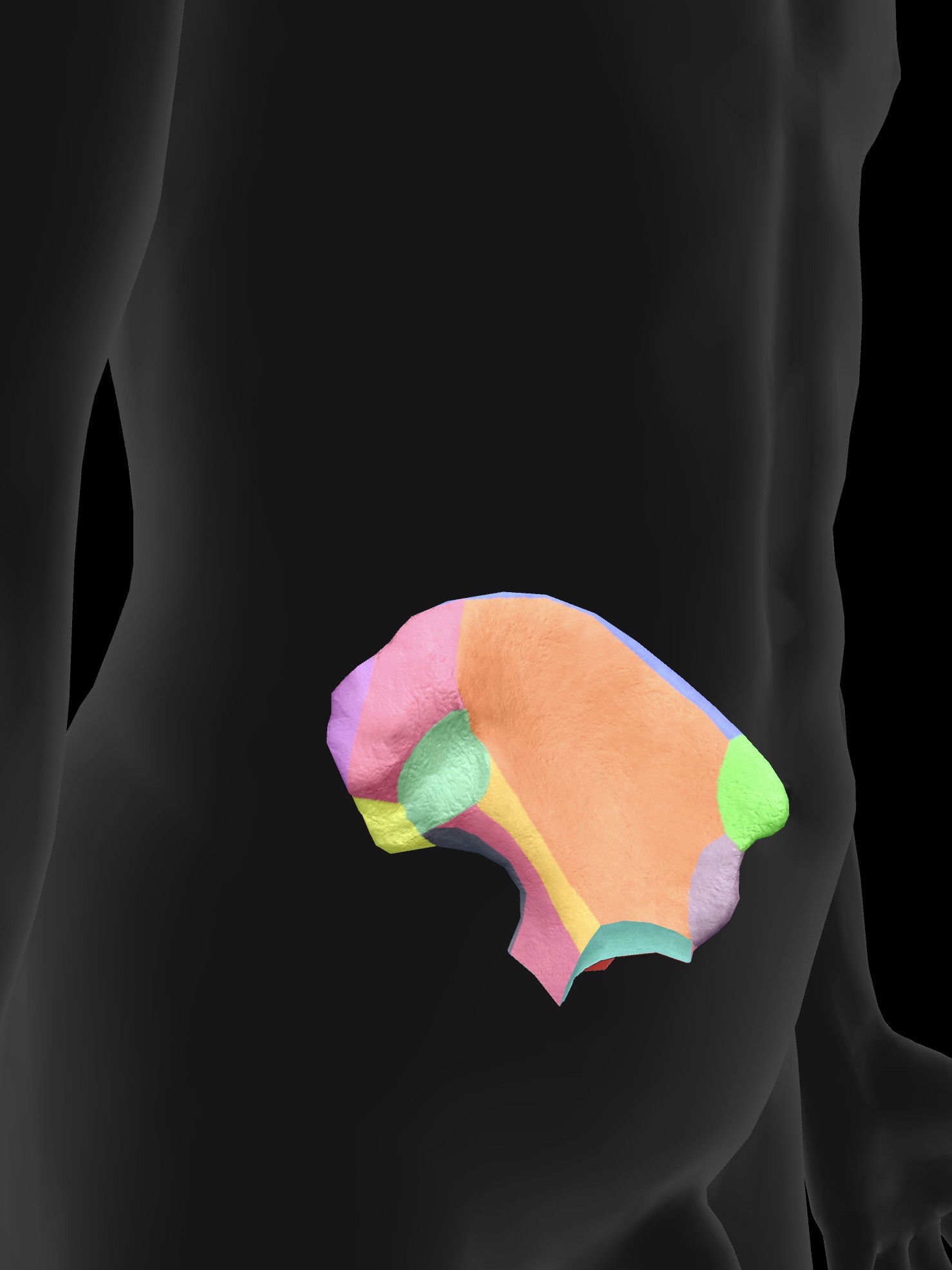
How is the pelvis positioned in the body?

The pelvis is tilted anteriorly

16
New cards

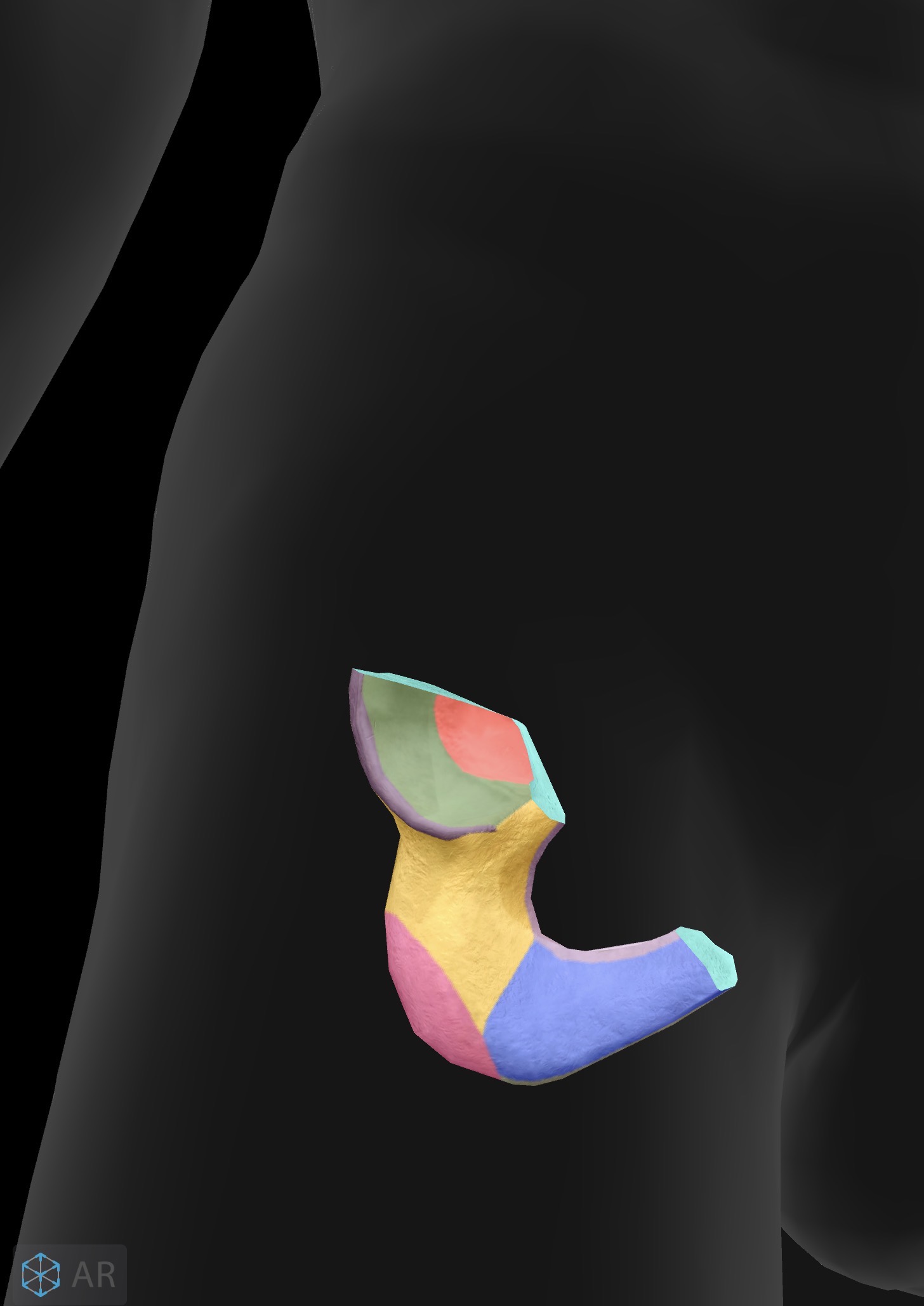
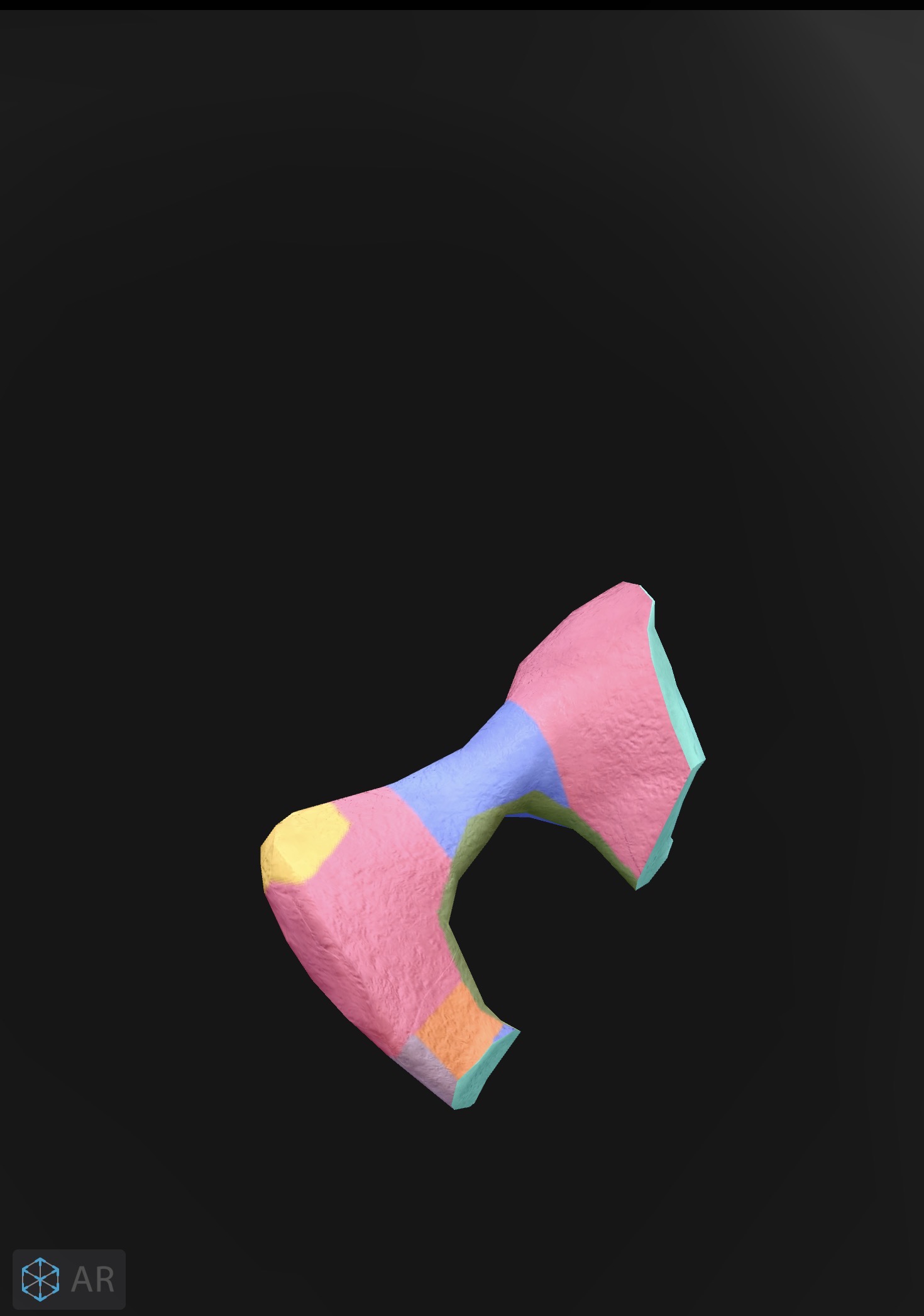
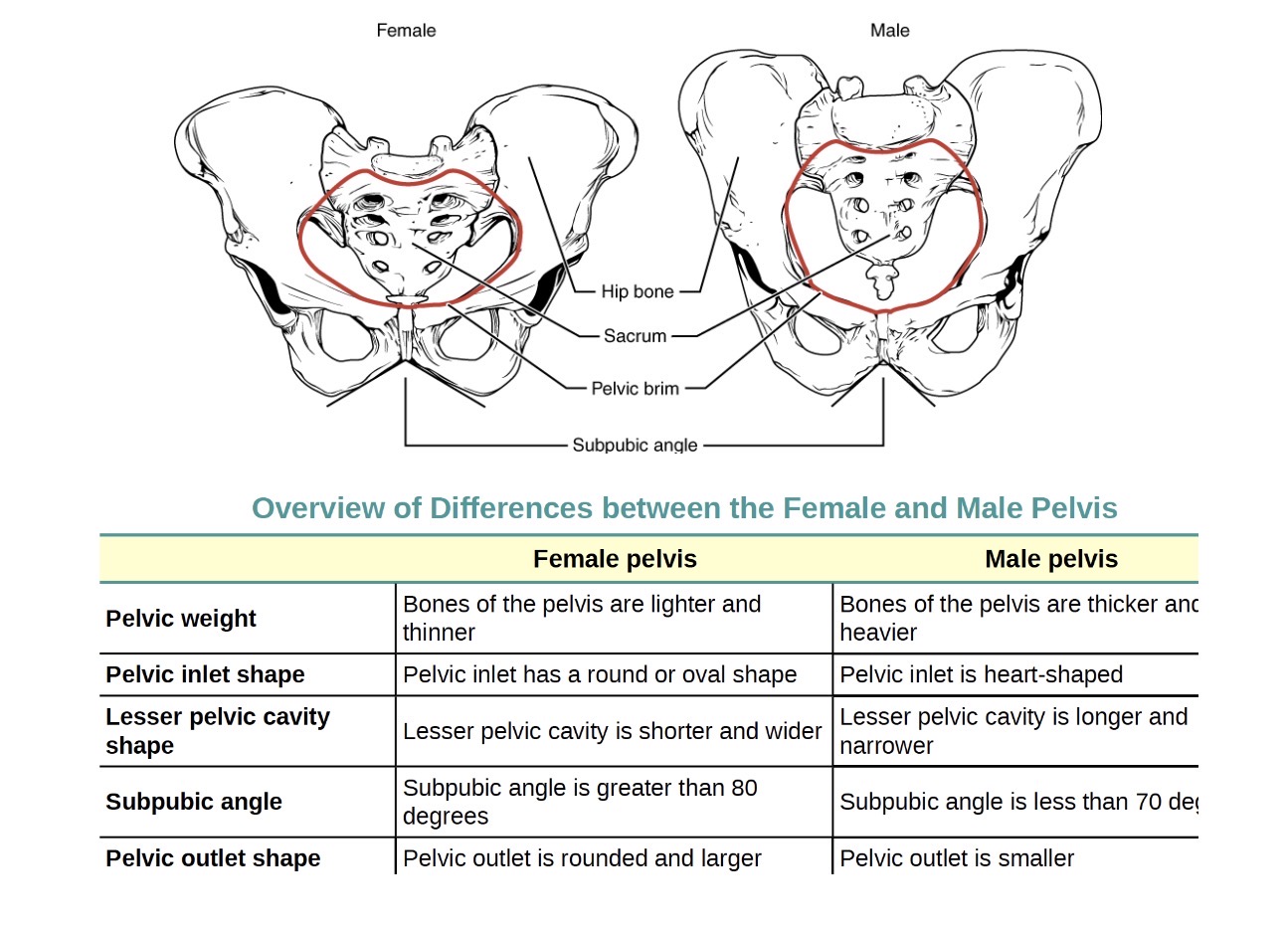
What are the major differences between male and female pelvises?

  • Bones of male pelvis are thicker and heavier

  • Female pelvis is wider to accommodate childbirth

  • Ischial tuberosities of females are farther apart

  • Because of increased pelvic width, the subpubic angle is larger in females

  • Female pelvic brim (pelvic inlet) is more oval shape compared to males

  • False pelvis of females is also wider and more shallow than the narrower-deeper, and tapering lesser pelvis of males

17
New cards
term image
knowt flashcard image
18
New cards
<p>What is this called? What does it do?</p>

What is this called? What does it do?

Acetabulum. Considered the “socket” of the hip joint

<p>Acetabulum. Considered the “socket” of the hip joint</p>
19
New cards
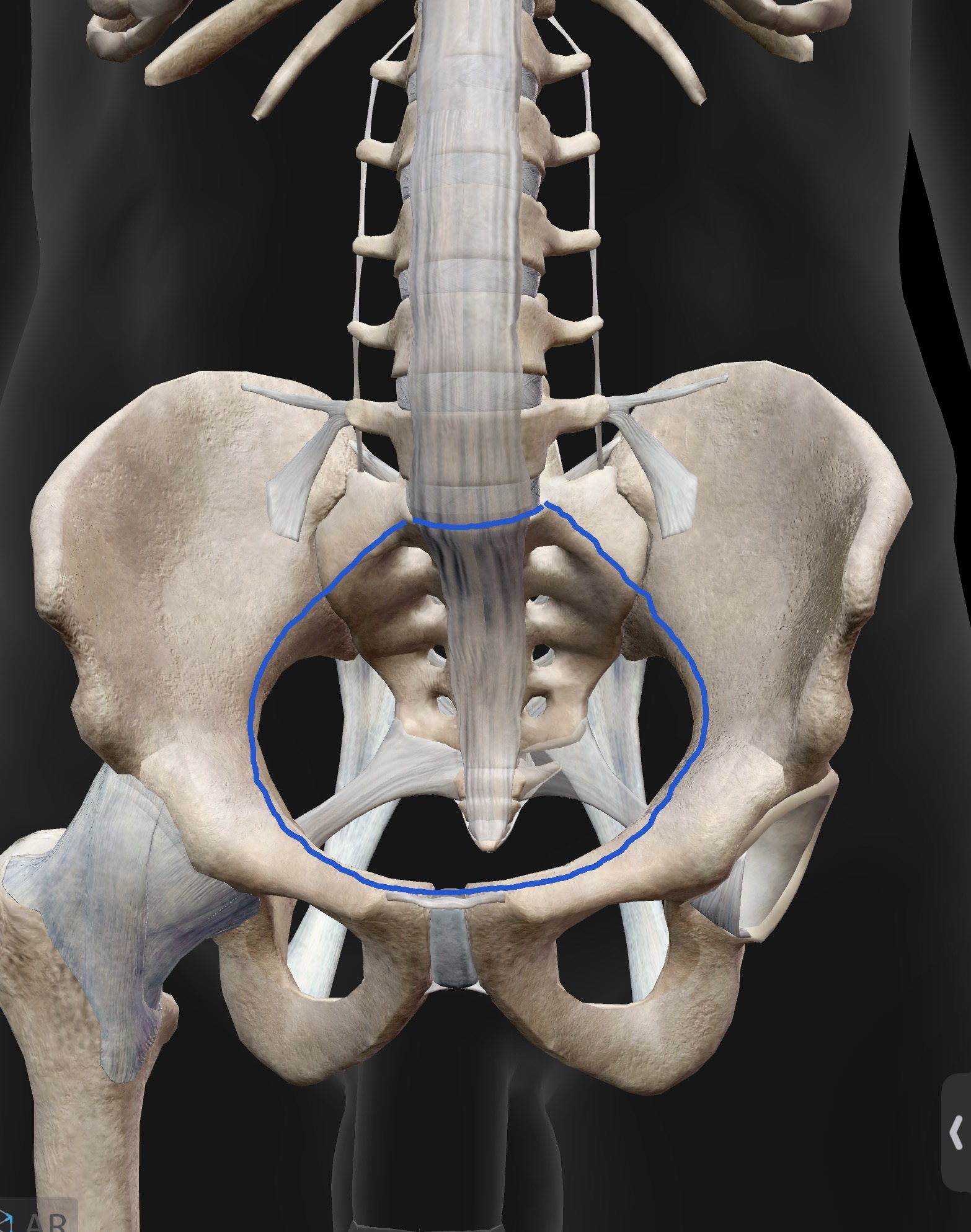
<p>What is this called? What does it do?</p>

What is this called? What does it do?

Obturator Foramen. Largely filled in by a membrane. Serves as an attachment for muscles. Obturator nerve runs through

<p>Obturator Foramen. Largely filled in by a membrane. Serves as an attachment for muscles. Obturator nerve runs through</p>
20
New cards
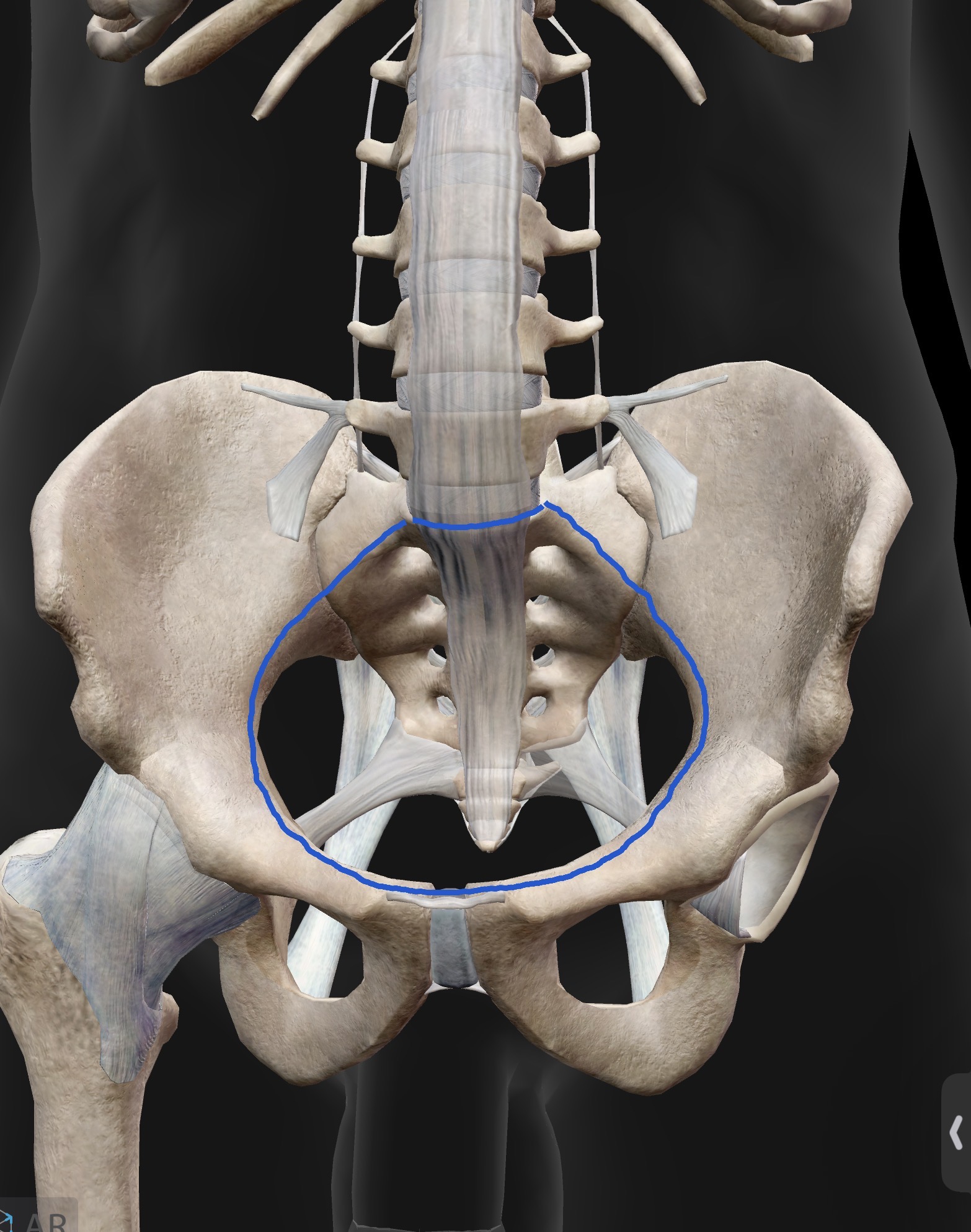
<p>What is this called? What does it do?</p>

What is this called? What does it do?

Pelvic brim

Forms the entrance of the “true” pelvis, also known as the “pelvic inlet”
<p>Pelvic brim</p><p>Forms the entrance of the “true” pelvis, also known as the “pelvic inlet”</p>
21
New cards
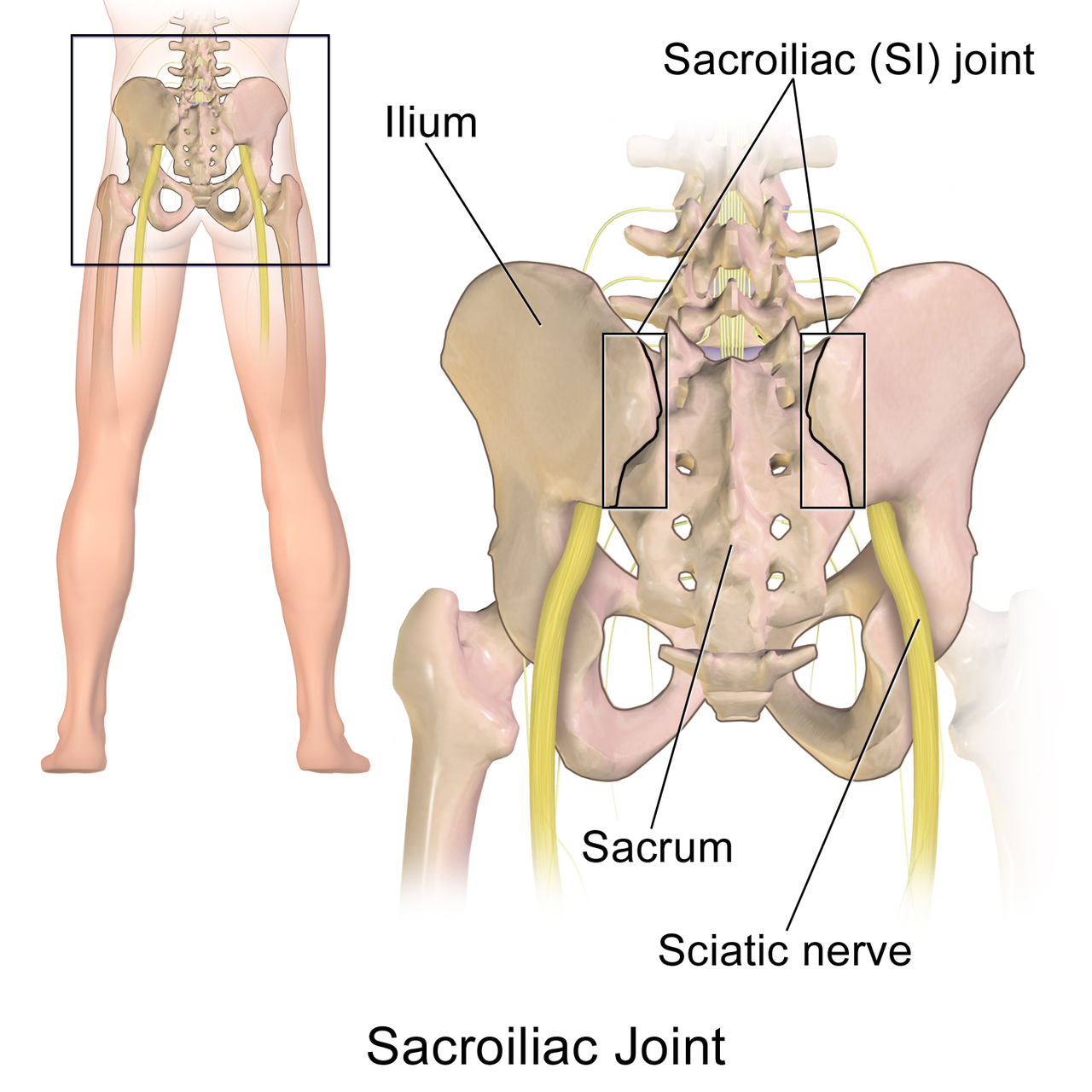
<p>What joint is this? What is its structural and functional type? What are the articulating bones?</p>

What joint is this? What is its structural and functional type? What are the articulating bones?

Sacroiliac joint (SI) joint

Articulating bones - sacrum and articular/auricular surface on pelvis

Structural type - synovial; plane

Diarthrotic; slight gliding
<p>Sacroiliac joint (SI) joint</p><p>Articulating bones - sacrum and articular/auricular surface on pelvis</p><p>Structural type - synovial; plane</p><p>Diarthrotic; slight gliding</p>
22
New cards
<p>What joint is this? What is its structural and functional type? What are the articulating bones?</p>

What joint is this? What is its structural and functional type? What are the articulating bones?

Hip joint

Articulating bones - acetabulum and head of femur

Structural type - synovial; ball and socket

Functional type - diarthrotic: flex/exten, abduction/adduction, inter/exter rotation

<p>Hip joint</p><p>Articulating bones - acetabulum and head of femur</p><p>Structural type - synovial; ball and socket</p><p>Functional type - diarthrotic: flex/exten, abduction/adduction, inter/exter rotation</p>
23
New cards
<p>What joint is this? What is its structural and functional type? What are the articulating bones?</p>

What joint is this? What is its structural and functional type? What are the articulating bones?

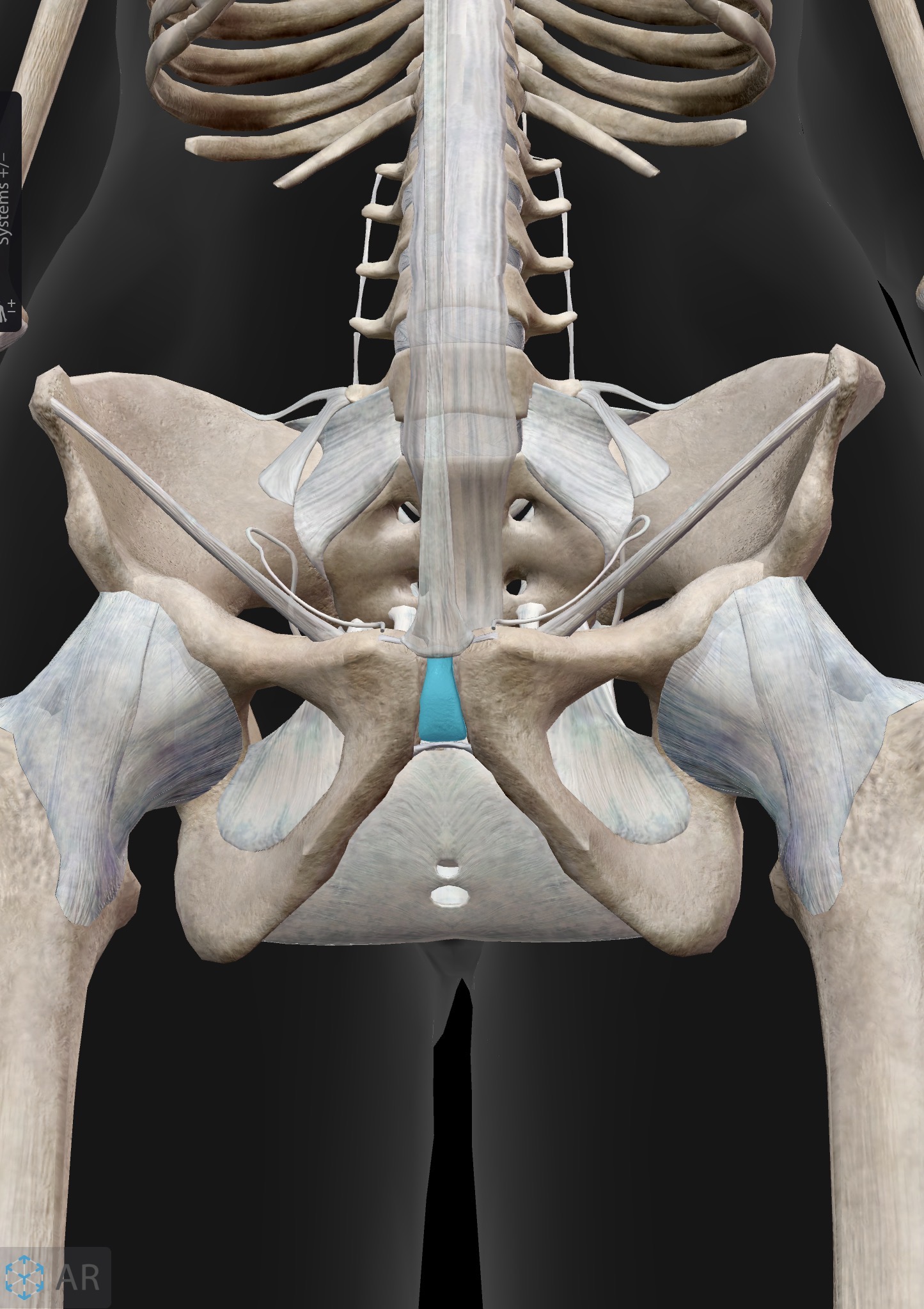
Pubic symphysis

Pubic bones and fibrocartilage

Cartilaginous; symphysis

Amphiarthrotic; slight movement
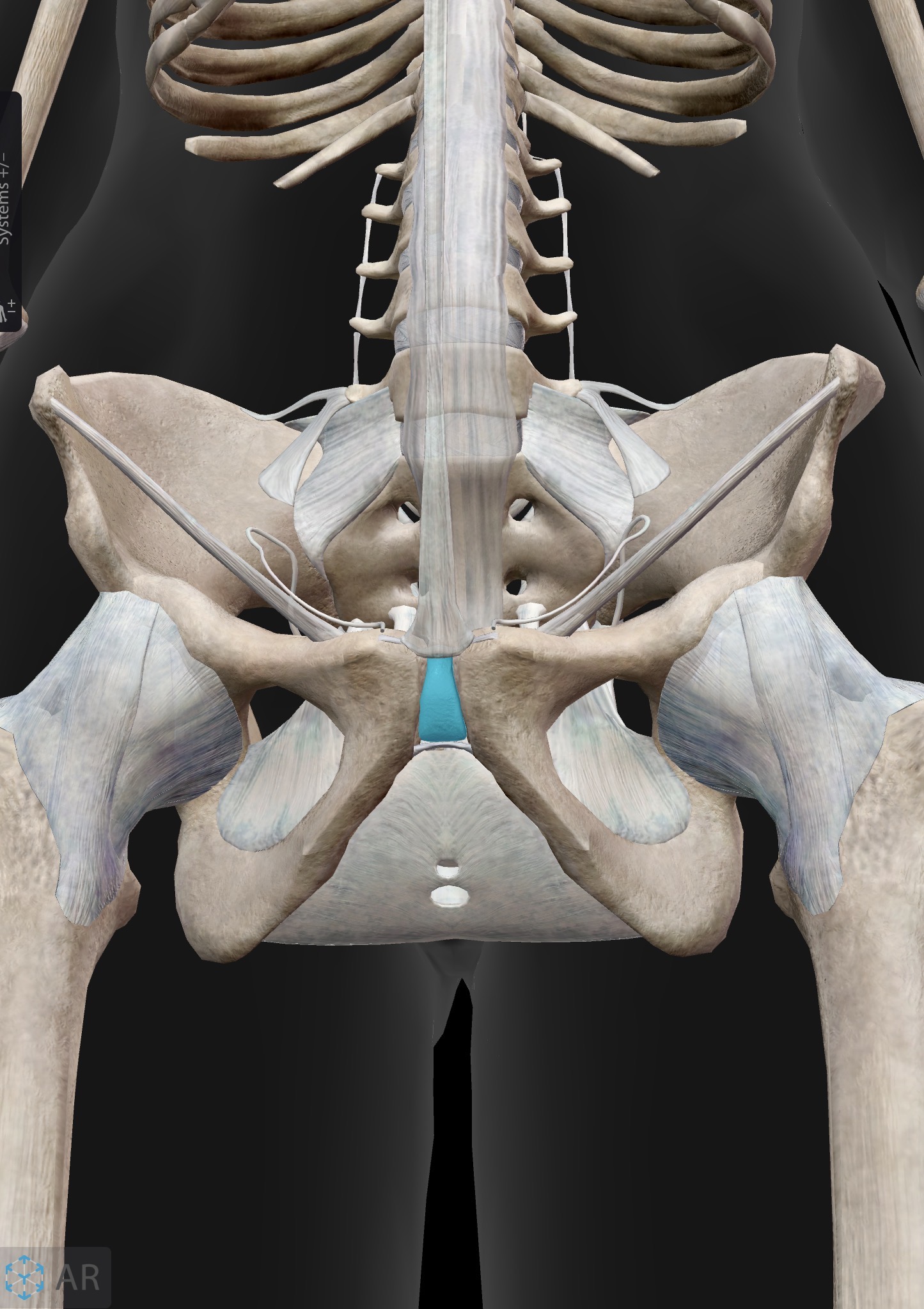
<p>Pubic symphysis</p><p>Pubic bones and fibrocartilage </p><p>Cartilaginous; symphysis</p><p>Amphiarthrotic; slight movement </p>
24
New cards
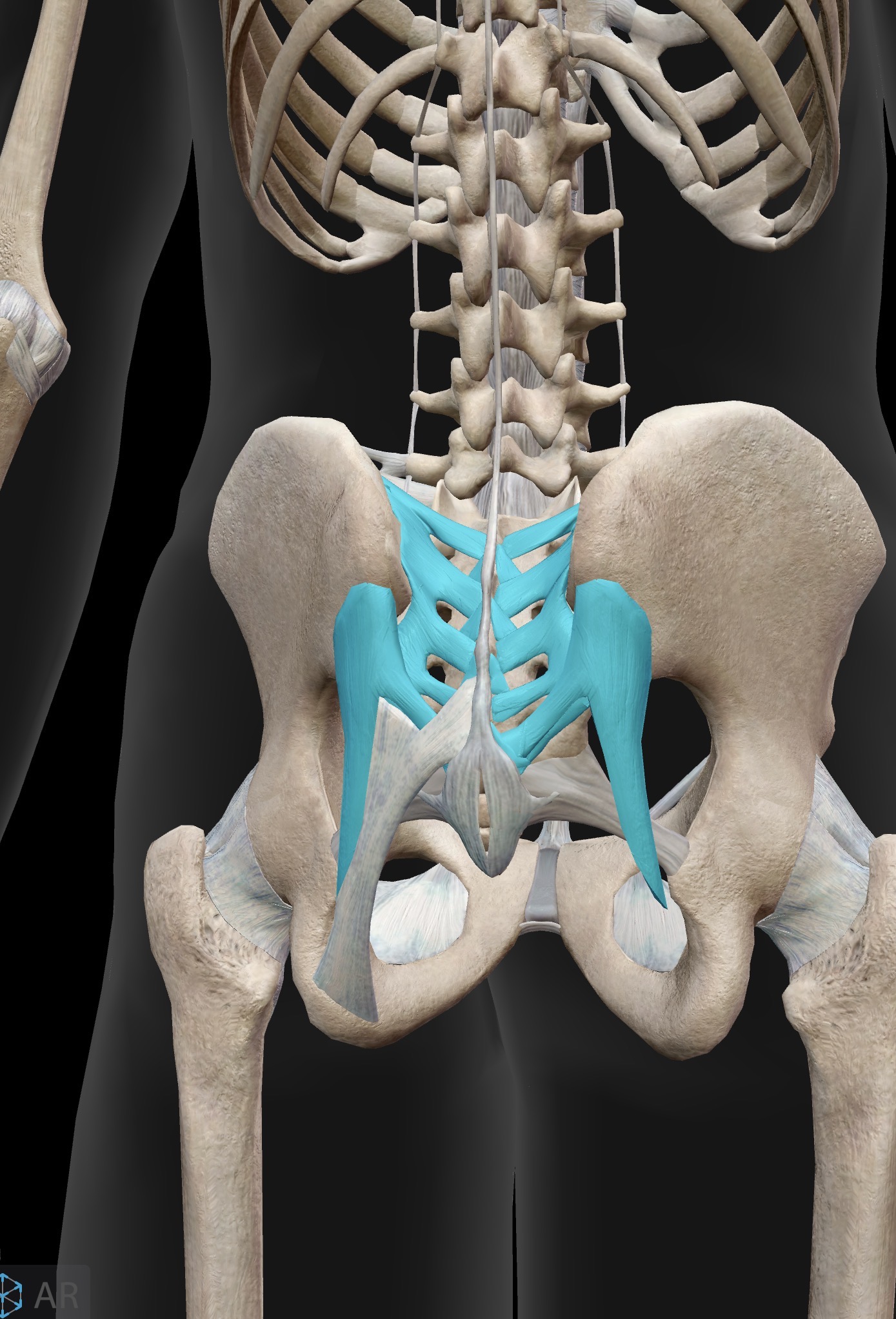
<p>What ligament is this? What does it do?</p>

What ligament is this? What does it do?

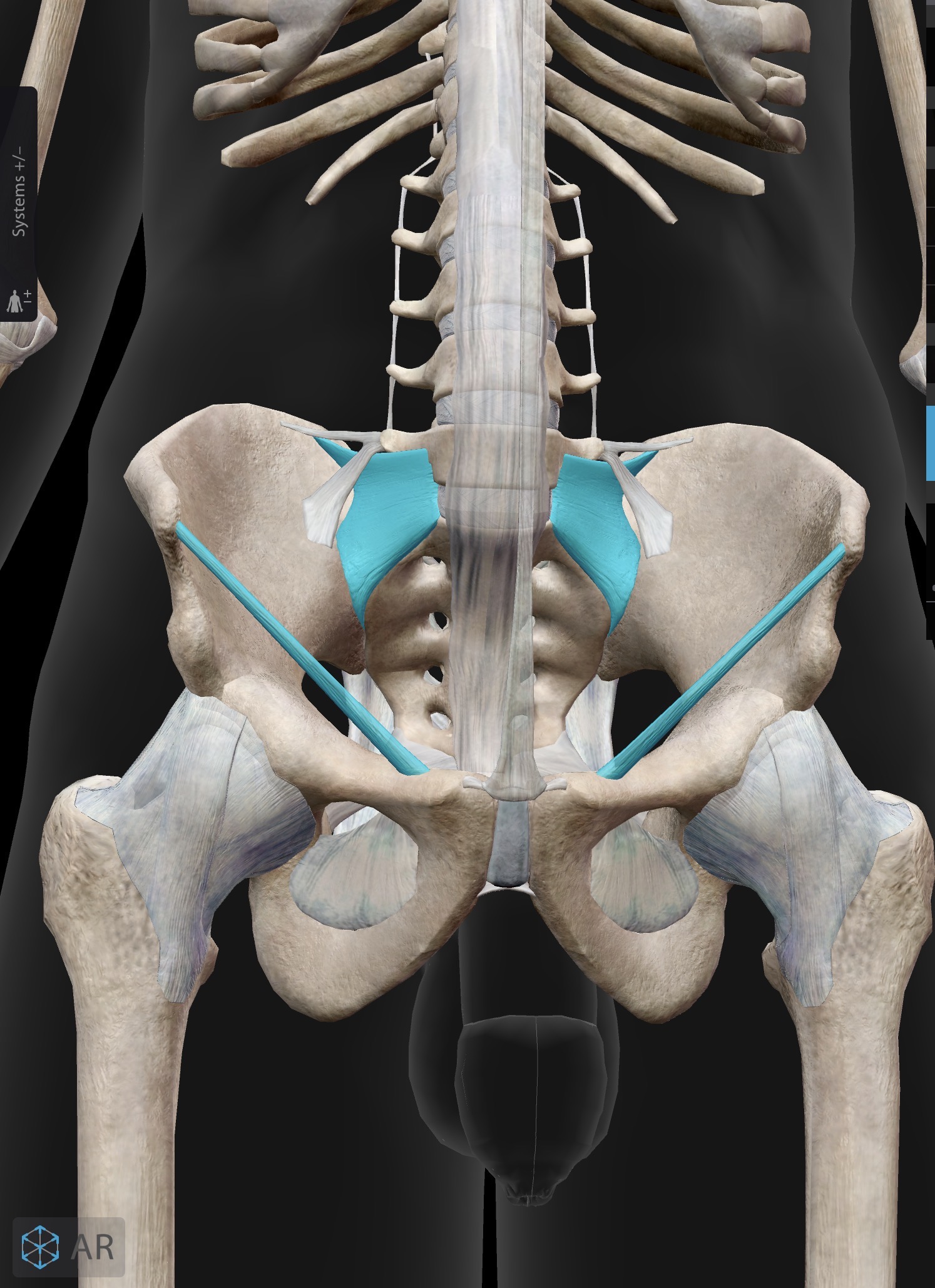
Anterior sacroiliac - anterior surface of sacrum to anterior surface of ilium

Inguinal - ASIS to pubic tubercle
25
New cards
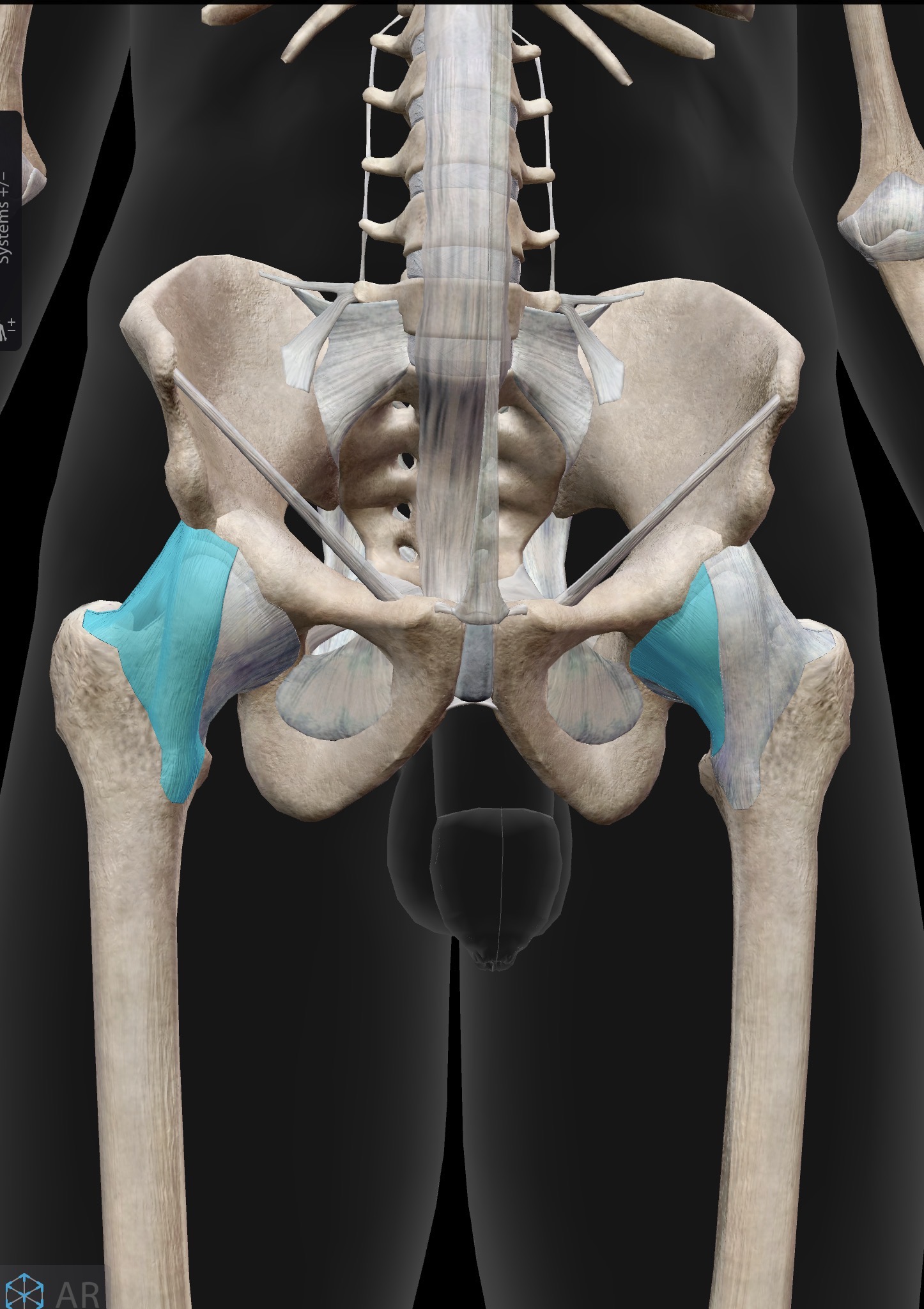
<p>What ligament is this? What does it do?</p>

What ligament is this? What does it do?

Posterior sacroiliac - posterior surface of sacrum to posterior surface of ilium
26
New cards
<p>What ligament is this? What does it do?</p>

What ligament is this? What does it do?

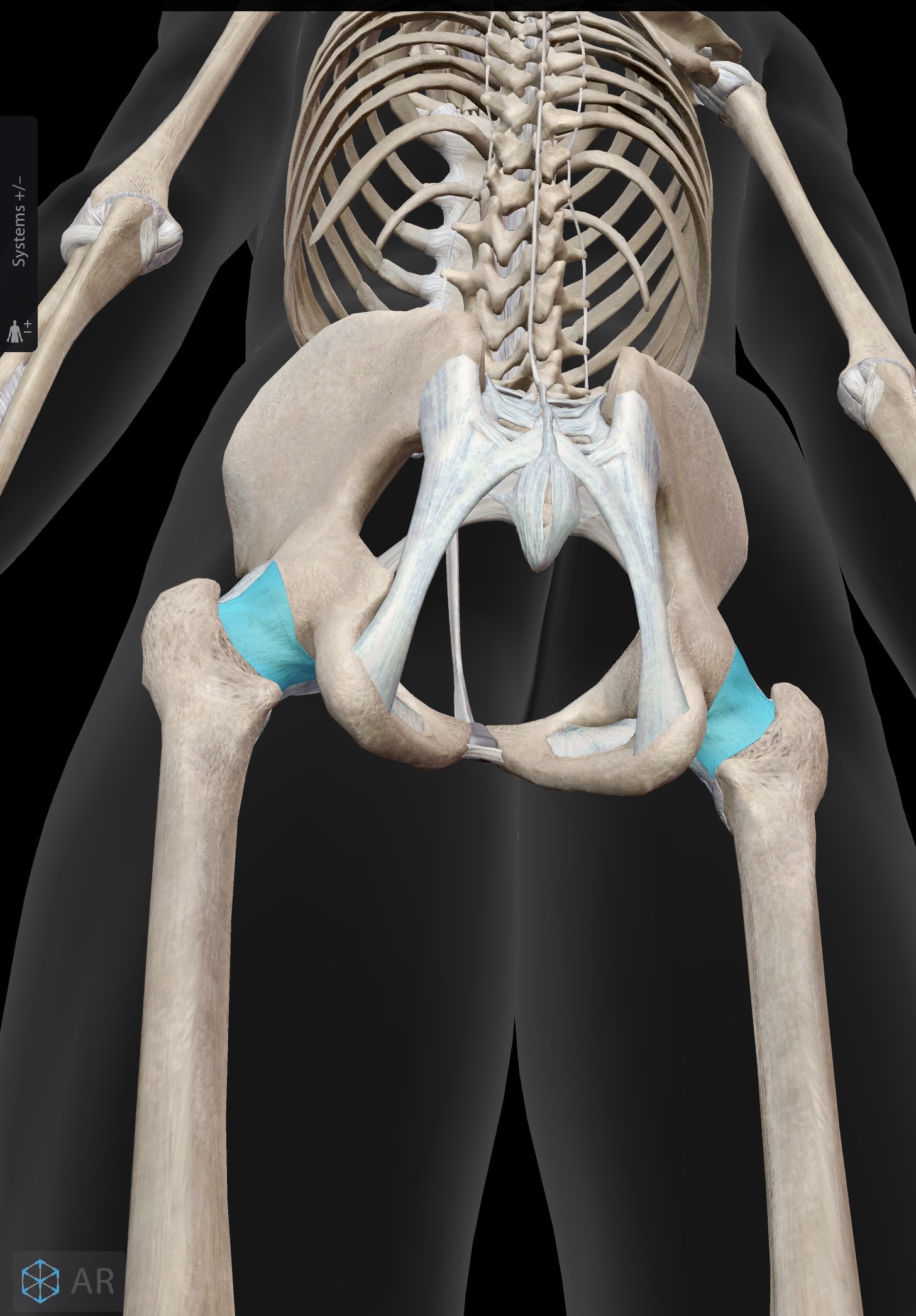
Capsular hip ligaments - anatomical neck of femur to pelvic

<p>Capsular hip ligaments - anatomical neck of femur to pelvic</p>
27
New cards
<p>What ligament is this? What does it do?</p>

What ligament is this? What does it do?

Capsular hip ligaments - anatomical neck of femur of pelvic bone

<p>Capsular hip ligaments - anatomical neck of femur of pelvic bone</p>
28
New cards
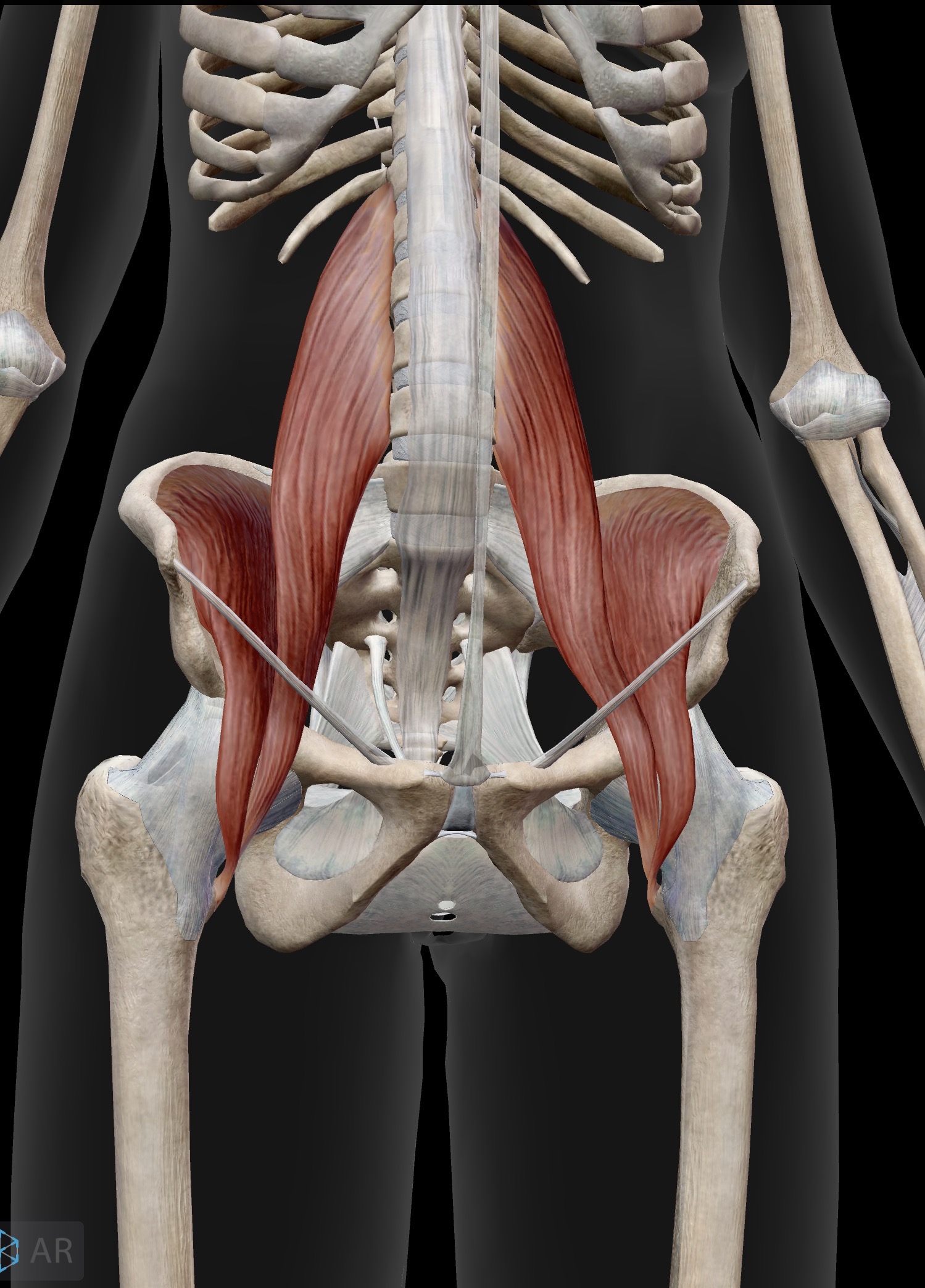
<p>What joint accessory is this?</p>

What joint accessory is this?

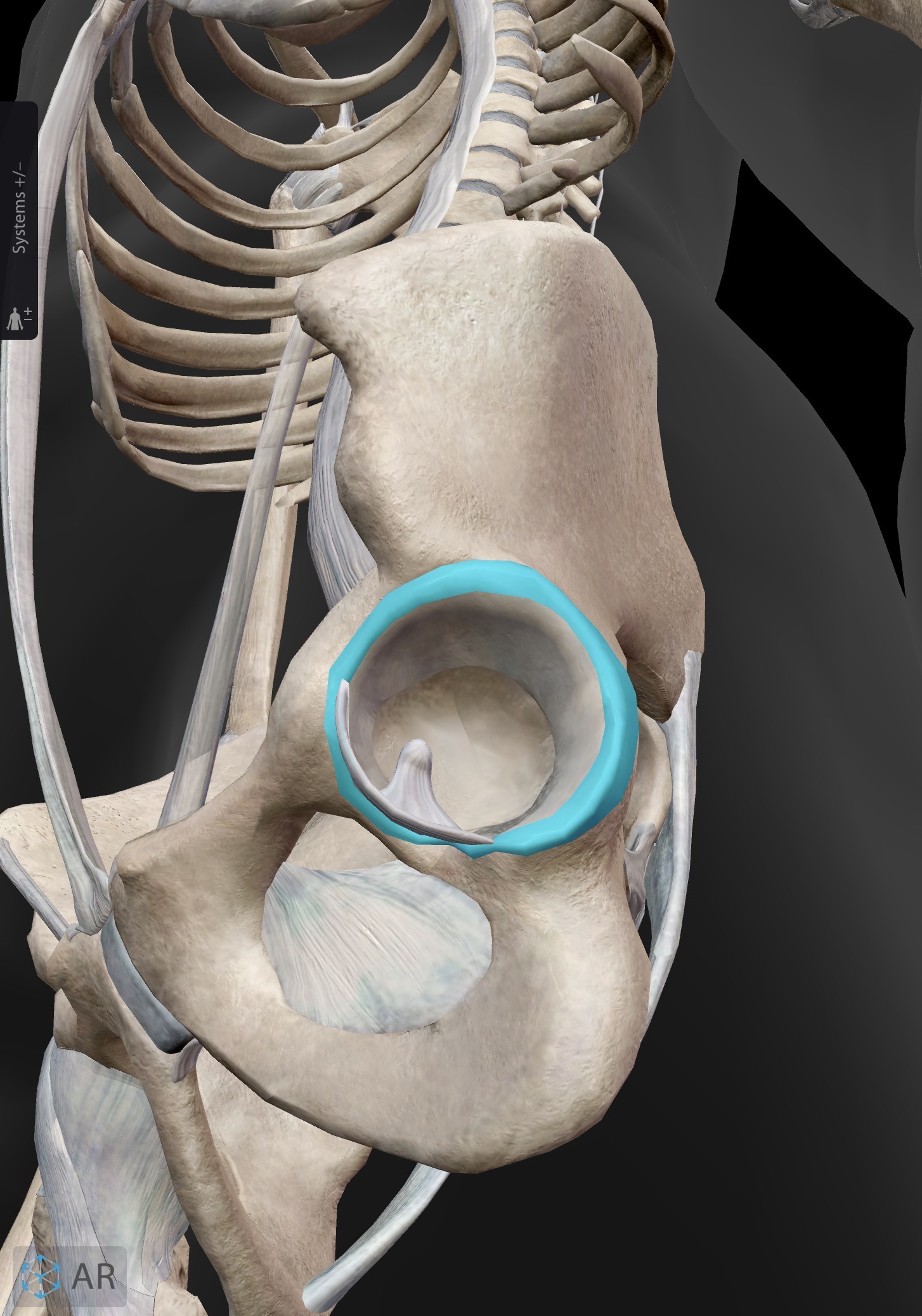
Acetabular labrum - fibrocartilage rim around the acetabulum. The acetabular labrum deepens the socket, thus making the joint more stable.
29
New cards
<p>Name the muscle and corresponding letter ( O = origin, I = insertion, A = actions, IN = innervation)</p><p>O</p><p>I</p><p>A</p><p>IN</p>

Name the muscle and corresponding letter ( O = origin, I = insertion, A = actions, IN = innervation)

O

I

A

IN

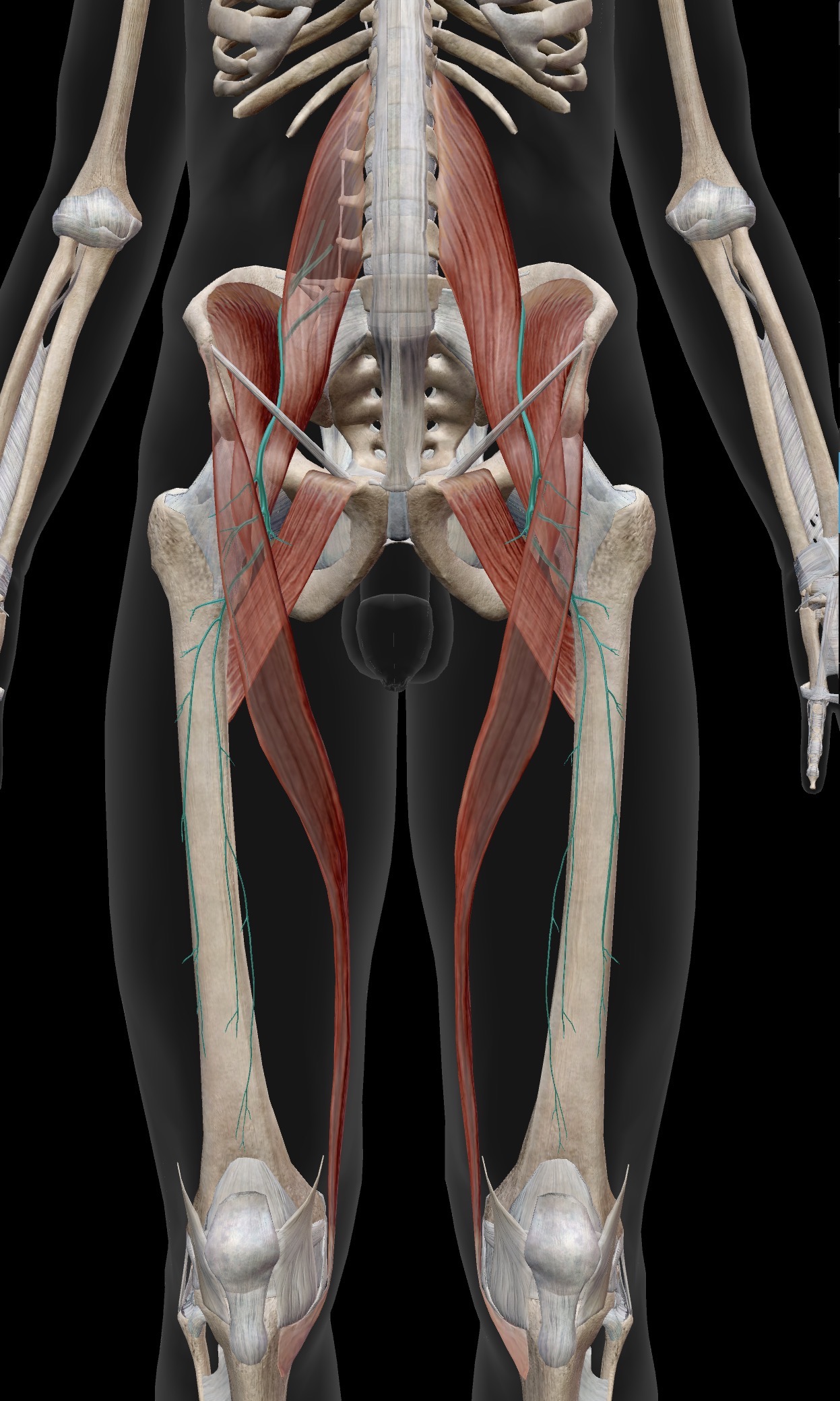
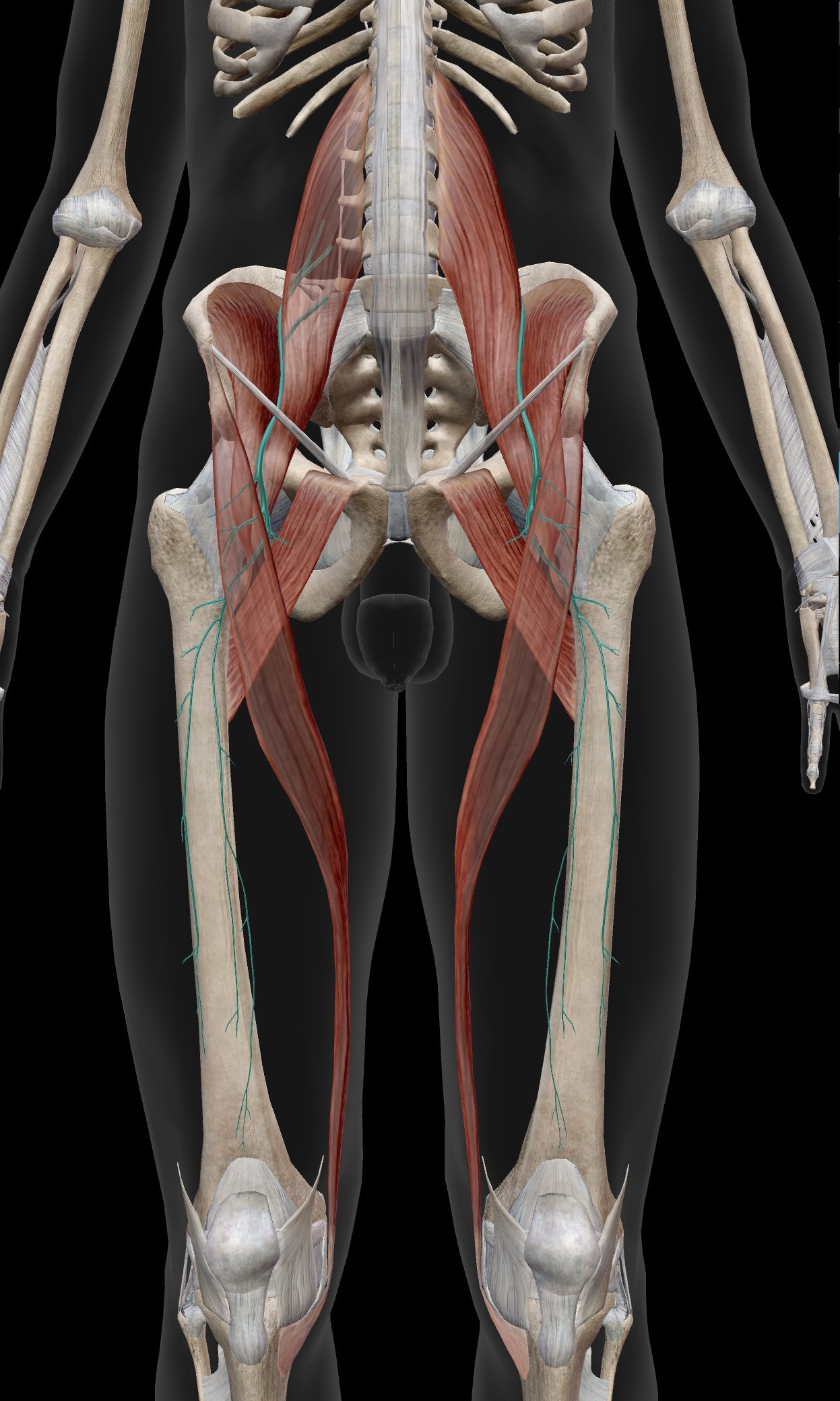
Iliopsoas (iliacus and psoas major)

O: the bodies, transverse processes and discs T12-L5 (psoas major) and the iliac fossa (iliacus)

I: Lesser trochanter of femur

A: Hip flexion (prime mover of hip flexion)

If you “fix” the hip, the iliopsoas can flex the trunk

IN: psoas major: L1-L3 nerve roots before they join the femoral nerve (femoral nerve is acceptable)

Iliacus: Femoral nerve
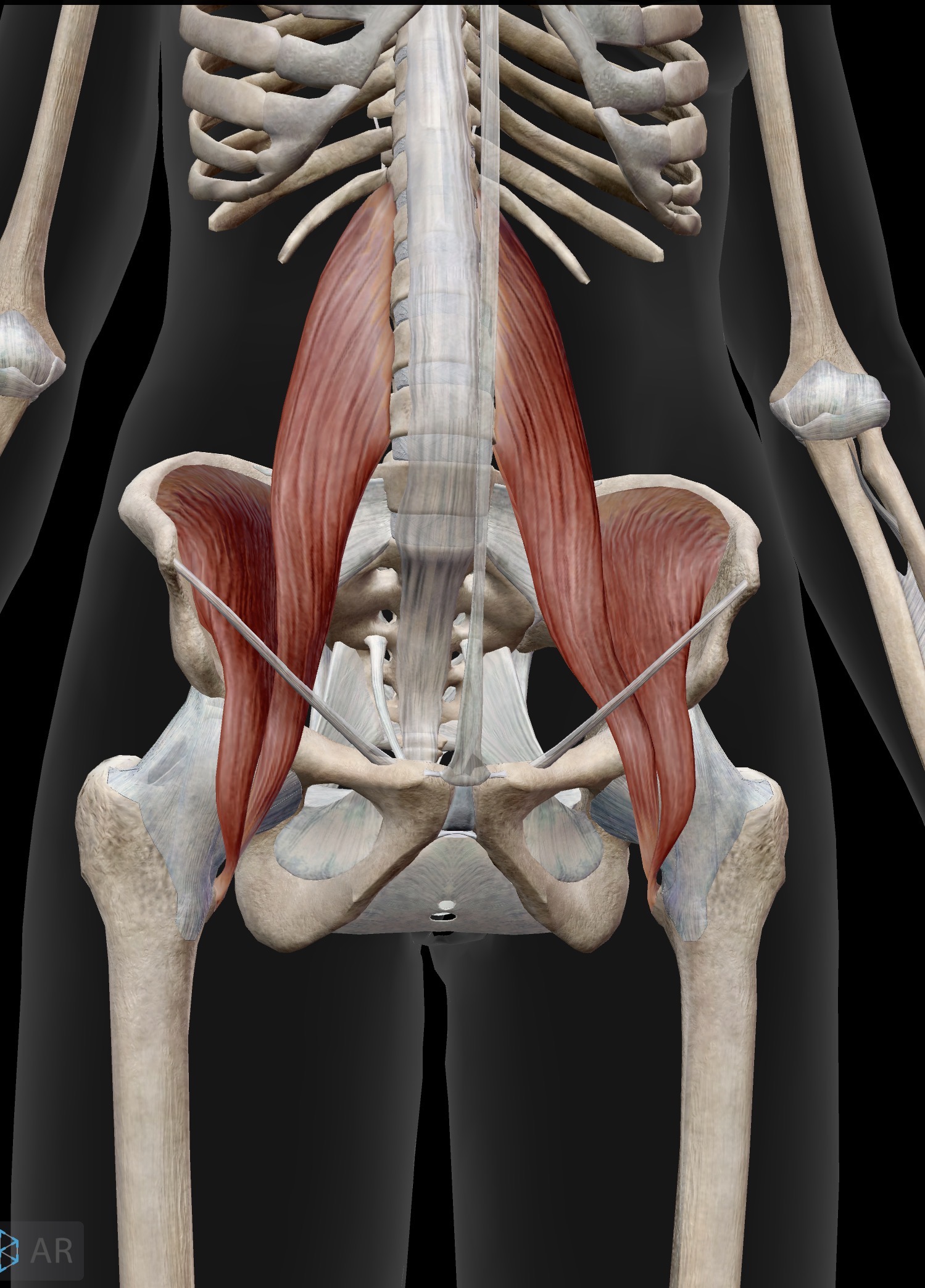
<p>Iliopsoas (iliacus and psoas major)</p><p>O: the bodies, transverse processes and discs T12-L5 (psoas major) and the iliac fossa (iliacus)</p><p>I: Lesser trochanter of femur</p><p>A: Hip flexion (prime mover of hip flexion)</p><p><em>If you “fix” the hip, the iliopsoas can flex the trunk</em></p><p>IN: psoas major: L1-L3 nerve roots before they join the femoral nerve (femoral nerve is acceptable)</p><p>Iliacus: Femoral nerve</p>
30
New cards
<p>Name the muscle and corresponding letter ( O = origin, I = insertion, A = actions, IN = innervation)</p><p>O</p><p>I</p><p>A</p><p>IN</p>

Name the muscle and corresponding letter ( O = origin, I = insertion, A = actions, IN = innervation)

O

I

A

IN

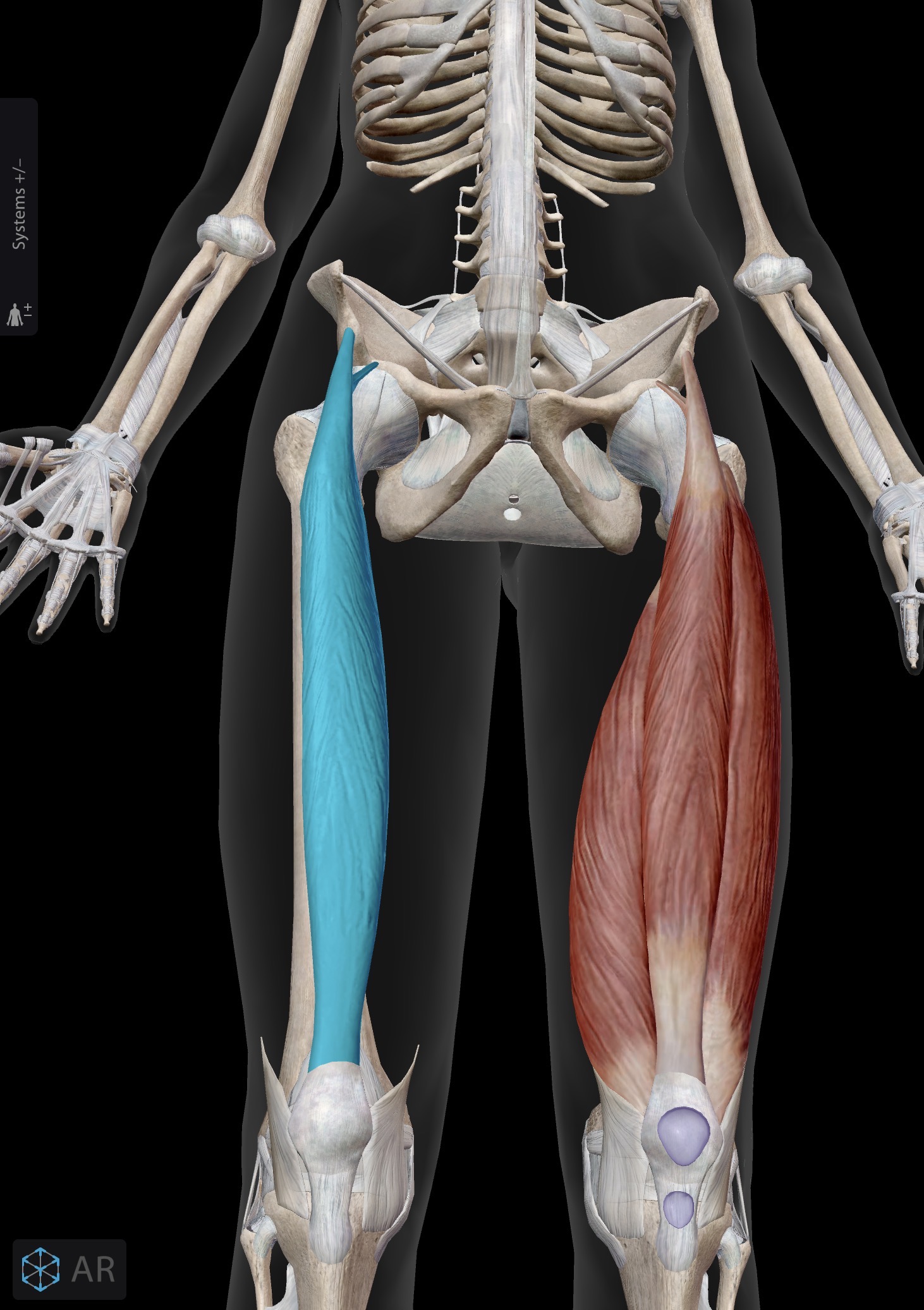
Rectus femoris

O. Anterior inferior iliac spine

I. Patella (via quadriceps tendon) and tibial tuberosity (Via patellar tendon/ligament)

A. Hip flexion with knee extension

In. Femoral nerve
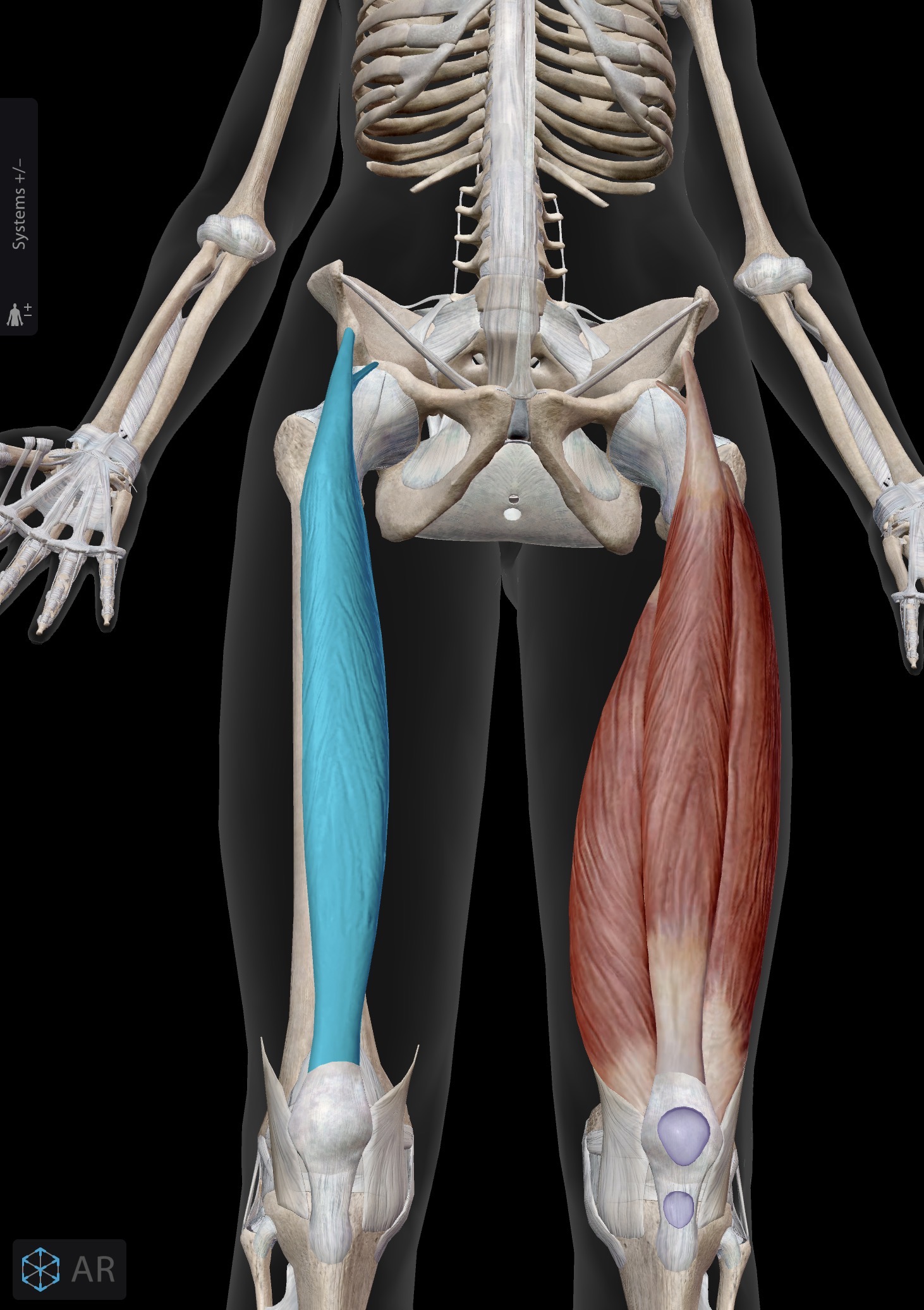
<p>Rectus femoris</p><p>O. Anterior inferior iliac spine</p><p>I. Patella (via quadriceps tendon) and tibial tuberosity (Via patellar tendon/ligament)</p><p>A. Hip flexion with knee extension </p><p>In. Femoral nerve</p>
31
New cards
<p>Name the muscle and corresponding letter ( O = origin, I = insertion, A = actions, IN = innervation)</p><p>O</p><p>I</p><p>A</p><p>IN</p>

Name the muscle and corresponding letter ( O = origin, I = insertion, A = actions, IN = innervation)

O

I

A

IN

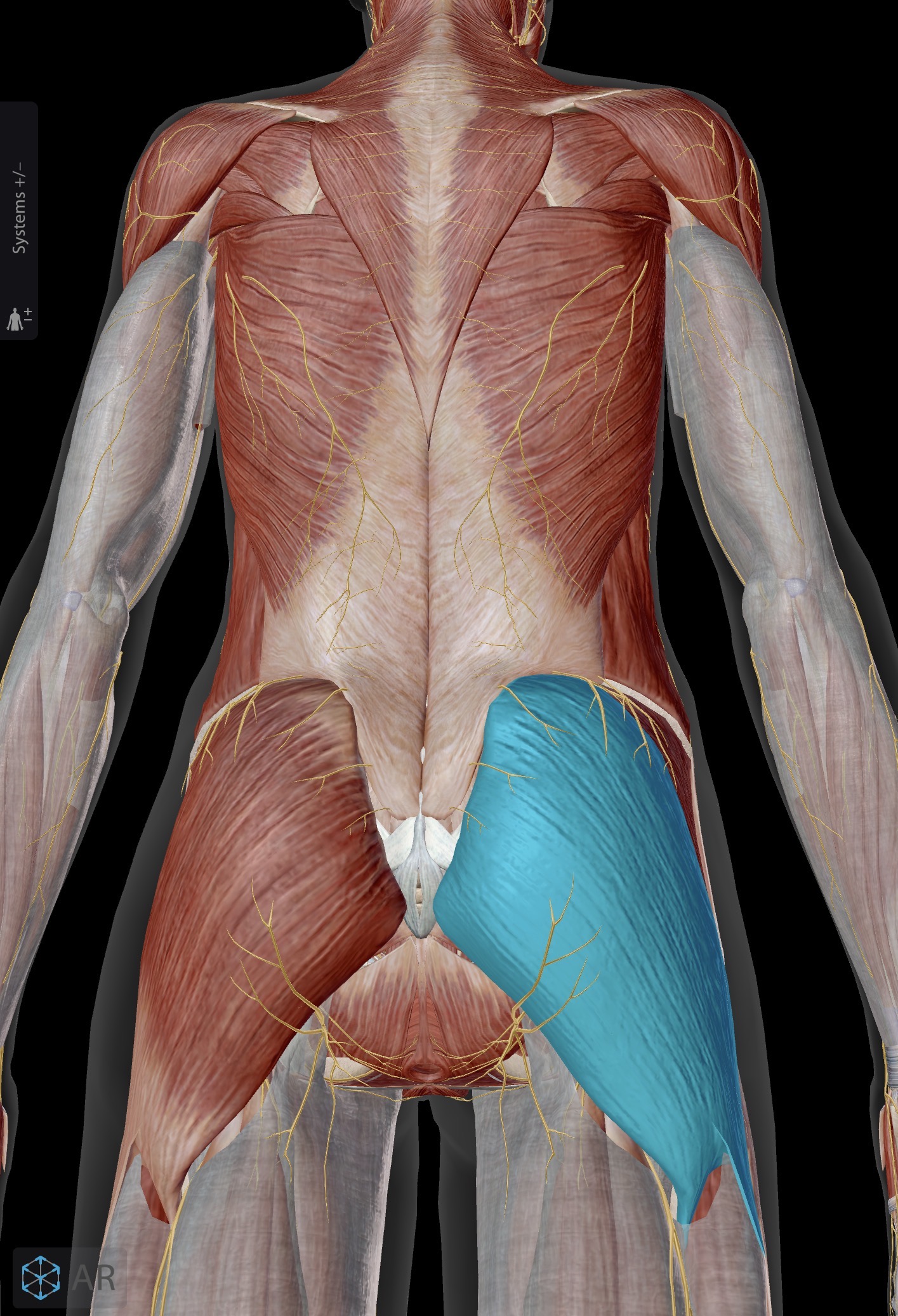
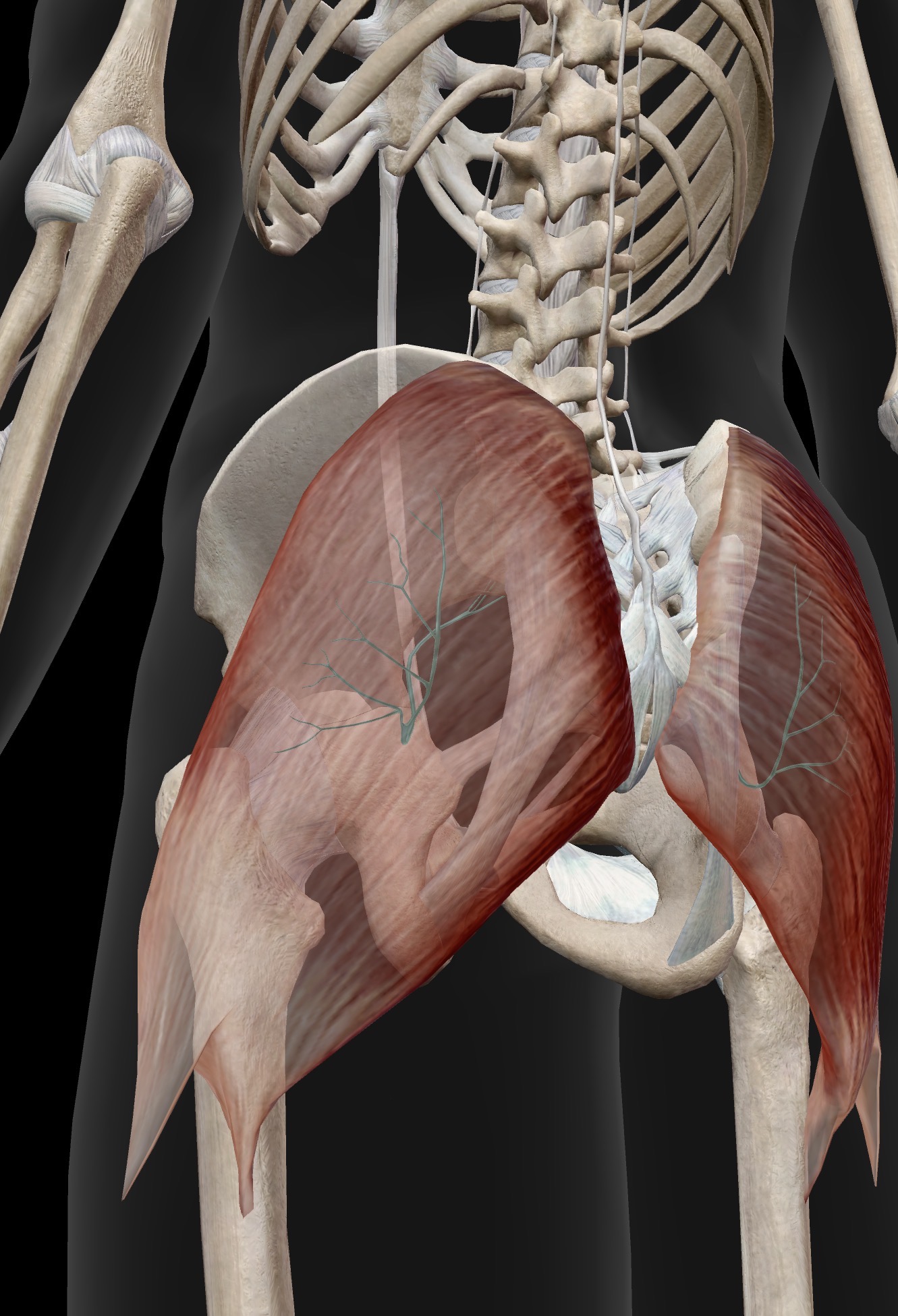
Gluteal Maximus

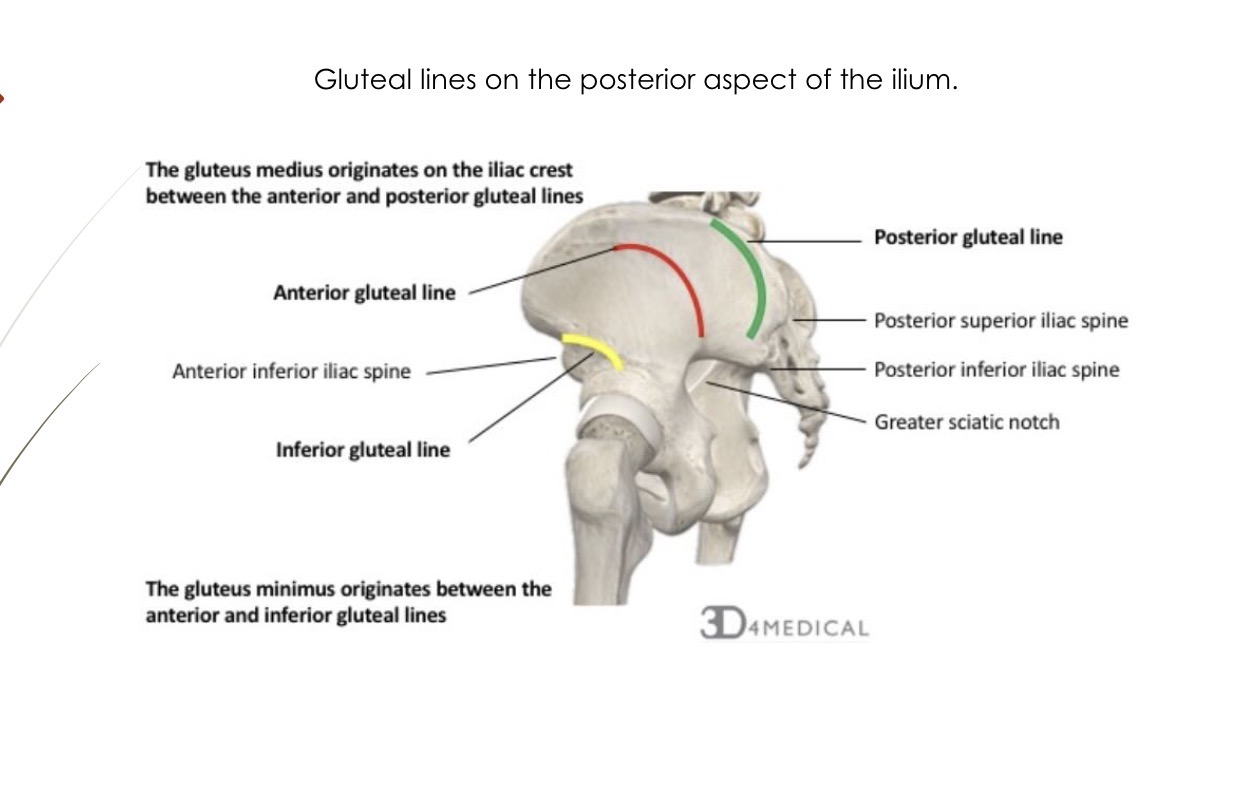
O: posterior gluteal line, sacrum, coccyx, lumbar fascia

I: 2 insertions: 1. Gluteal tuberosity. 2.Iliotibial band (IT band)

A: extension and external rotation of the hip

IN: inferior gluteal nerve

Gluteus Maximus is a powerful hip extensor (eg. Climbing stairs, sprinting). Less active when walking
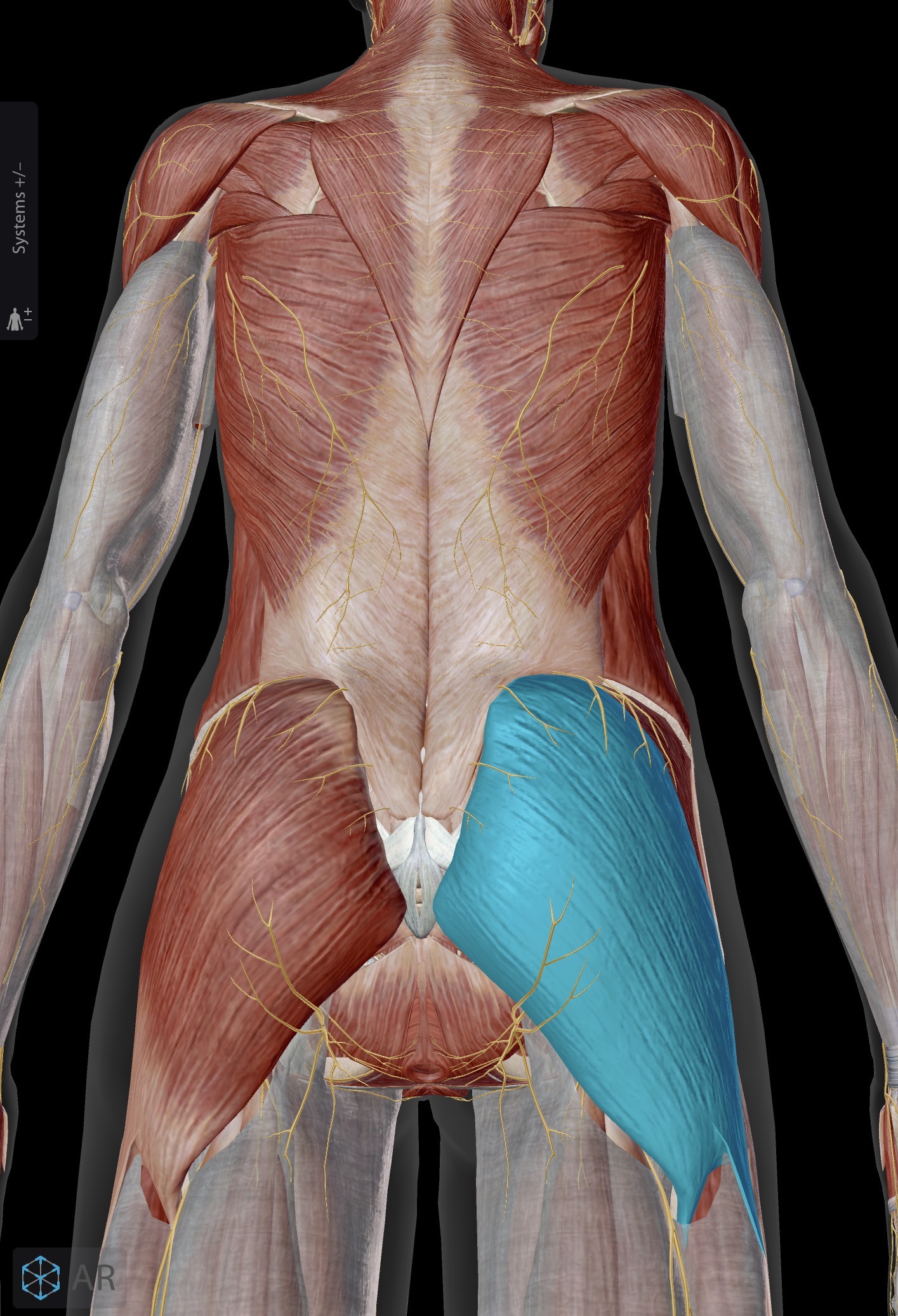
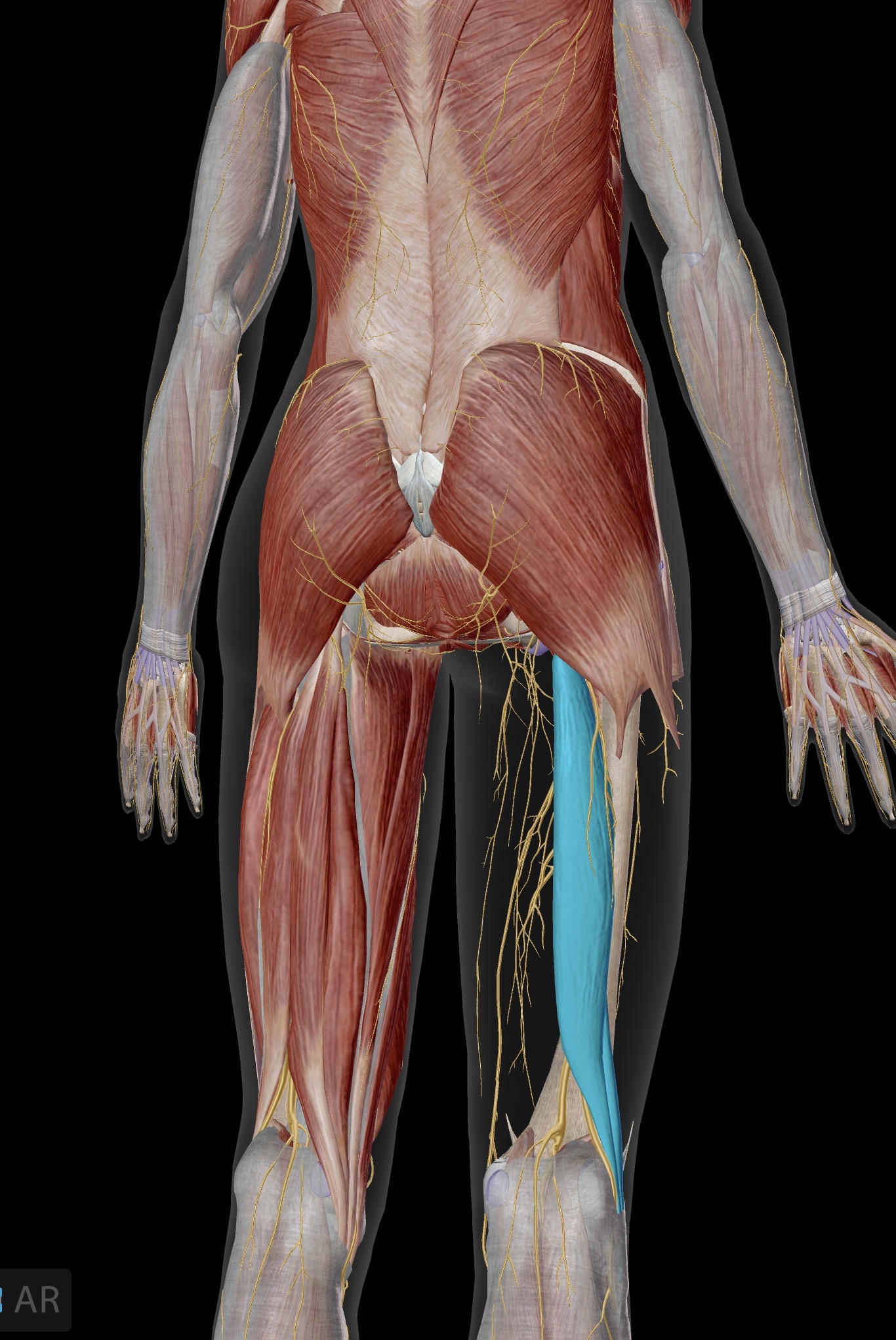
<p>Gluteal Maximus</p><p>O: posterior gluteal line, sacrum, coccyx, lumbar fascia</p><p>I: 2 insertions:     1. Gluteal tuberosity.       2.Iliotibial band (IT band)</p><p>A: extension and external rotation of the hip</p><p>IN: inferior gluteal nerve</p><p><em>Gluteus Maximus is a powerful hip extensor (eg. Climbing stairs, sprinting). Less active when walking</em></p>
32
New cards
<p>Name the muscle and corresponding letter ( O = origin, I = insertion, A = actions, IN = innervation)</p><p>O</p><p>I</p><p>A</p><p>IN</p>

Name the muscle and corresponding letter ( O = origin, I = insertion, A = actions, IN = innervation)

O

I

A

IN

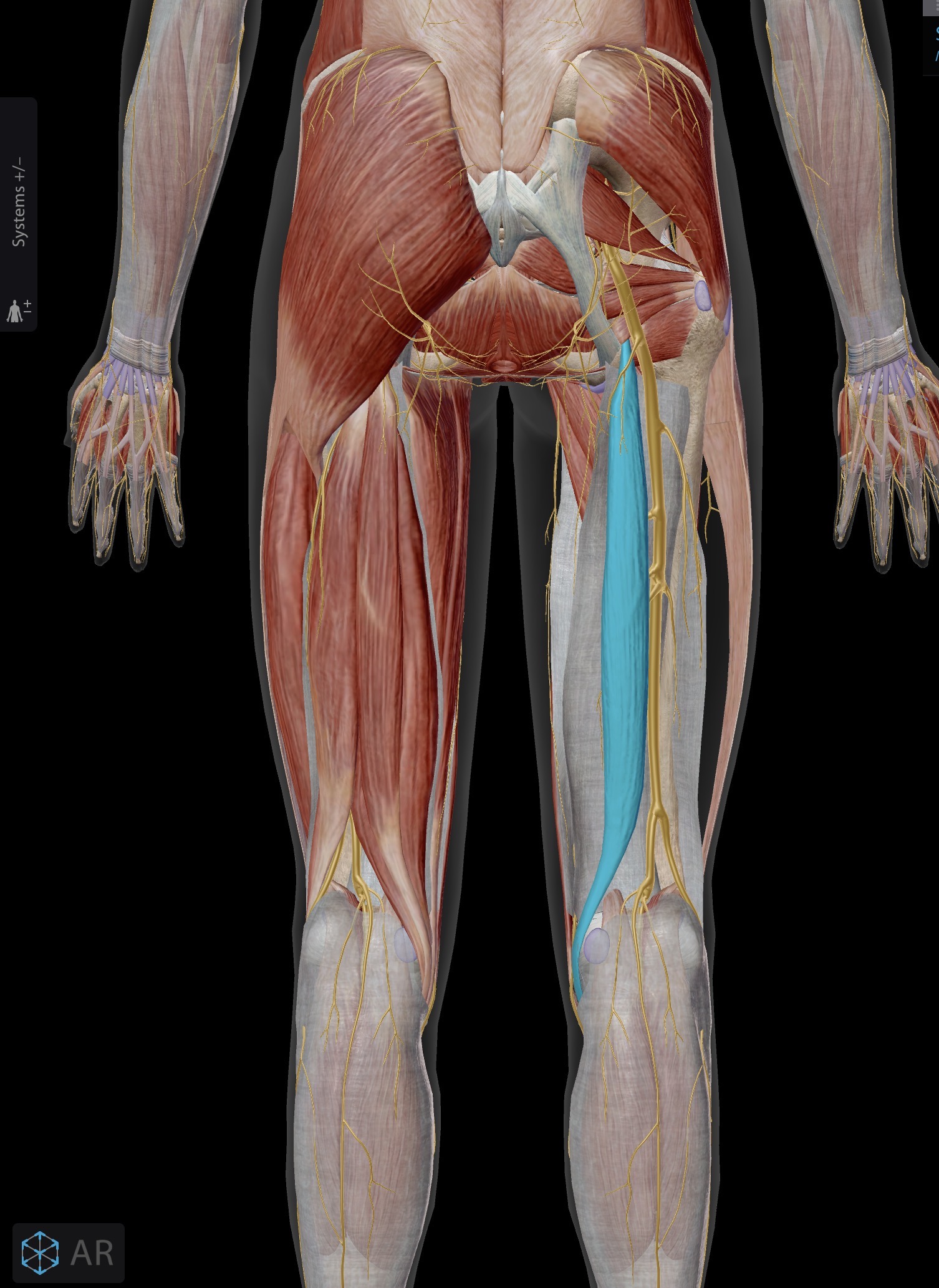
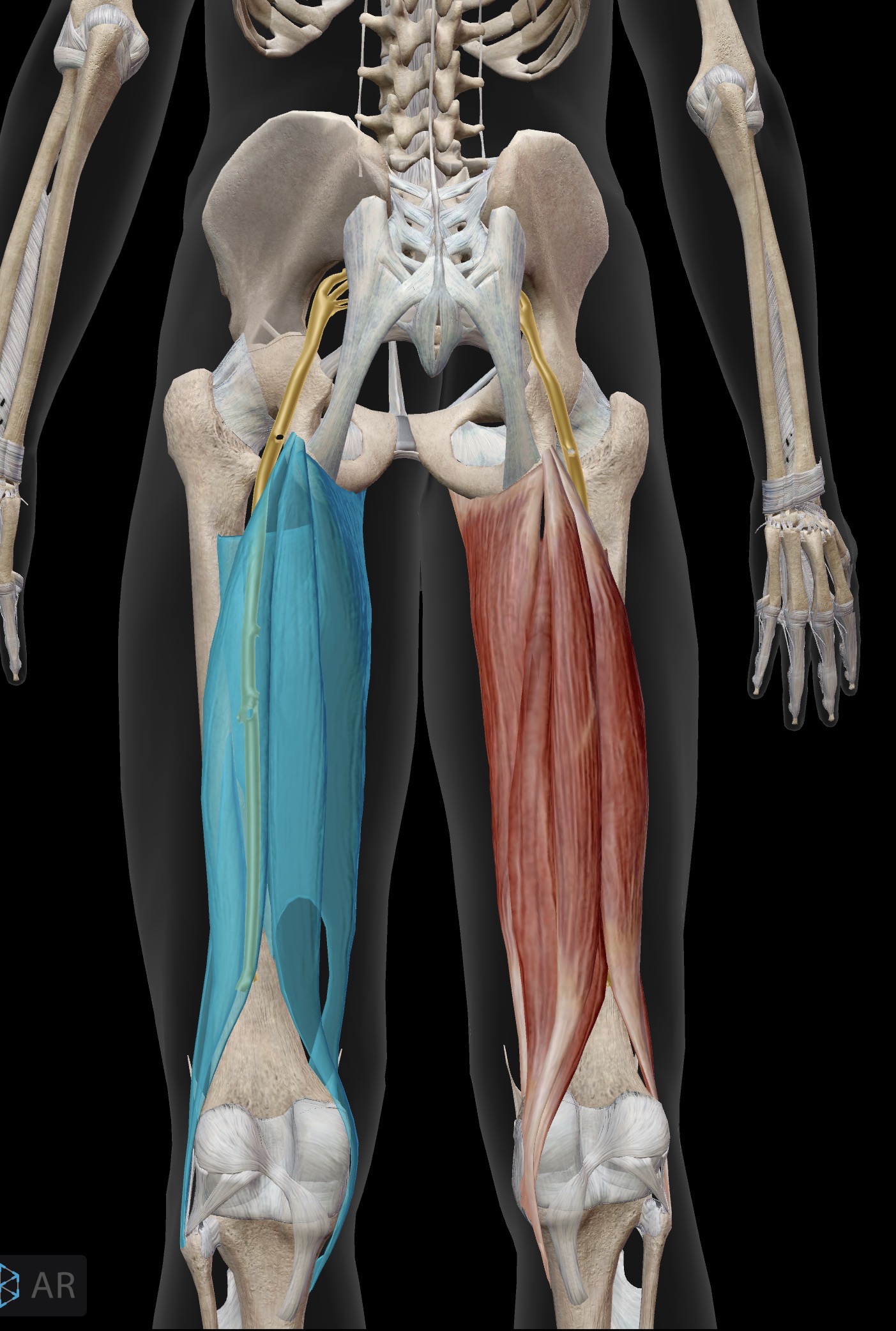
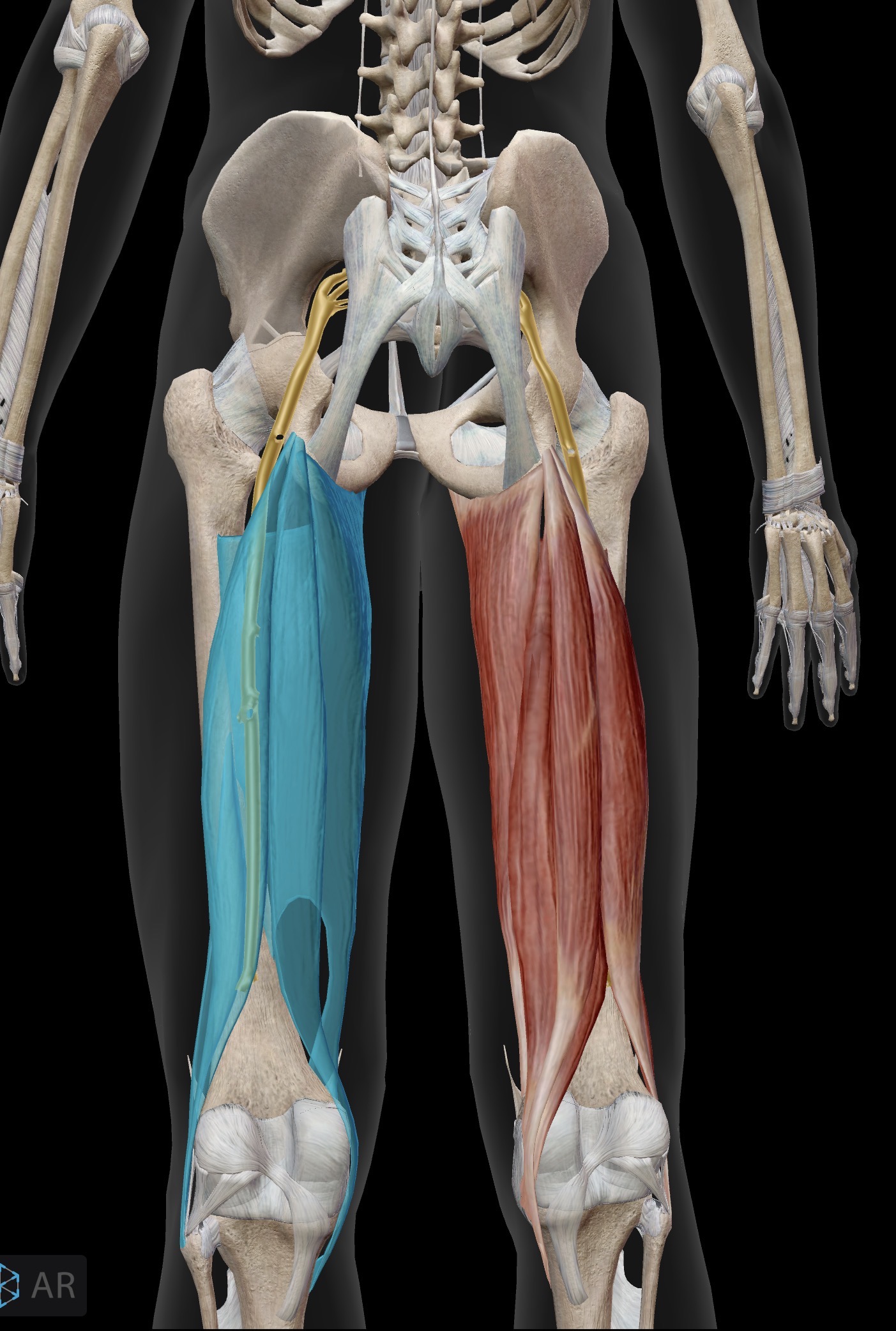
Biceps femoris

O: Long head - ischial tuberosity. Short head- lateral aspect of distal femur

I: Head of fibula

A: Hip extension and knee flexion

Only the long head of biceps femoris is a hip extensor; short head only acts on the knee joint

IN: Sciatic nerve
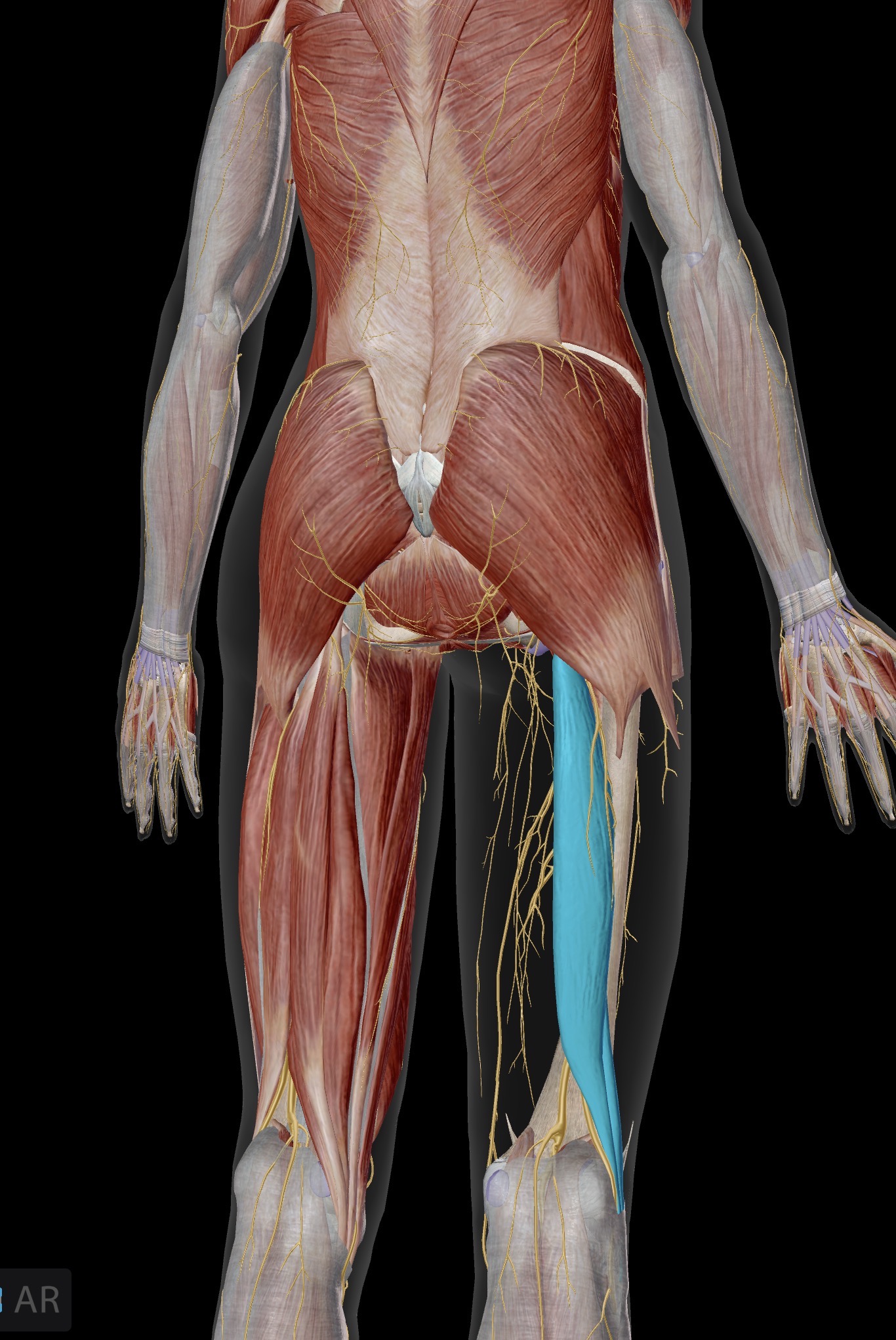
<p>Biceps femoris</p><p>O:    Long head - ischial tuberosity.   Short head- lateral aspect of distal femur</p><p>I: Head of fibula</p><p>A: Hip extension and knee flexion </p><p><em>Only the long head of biceps femoris is a hip extensor; short head only acts on the knee joint</em></p><p>IN: Sciatic nerve</p>
33
New cards
<p>Name the muscle and corresponding letter ( O = origin, I = insertion, A = actions, IN = innervation)</p><p>O</p><p>I</p><p>A</p><p>IN</p>

Name the muscle and corresponding letter ( O = origin, I = insertion, A = actions, IN = innervation)

O

I

A

IN

Semitendinosus

O: ischial tuberosity

I: proximal, medial, anterior tibia - a spot known as the “pes anserine group” (Gracilis and sartorious also attach here)

A: Hip extension and knee flexion

IN: sciatic nerve

Semitendinosus has a clinical significance as being a common muscle used for ACL grafts when someone tears their ACL. It is commonly used with the gracilis tendon
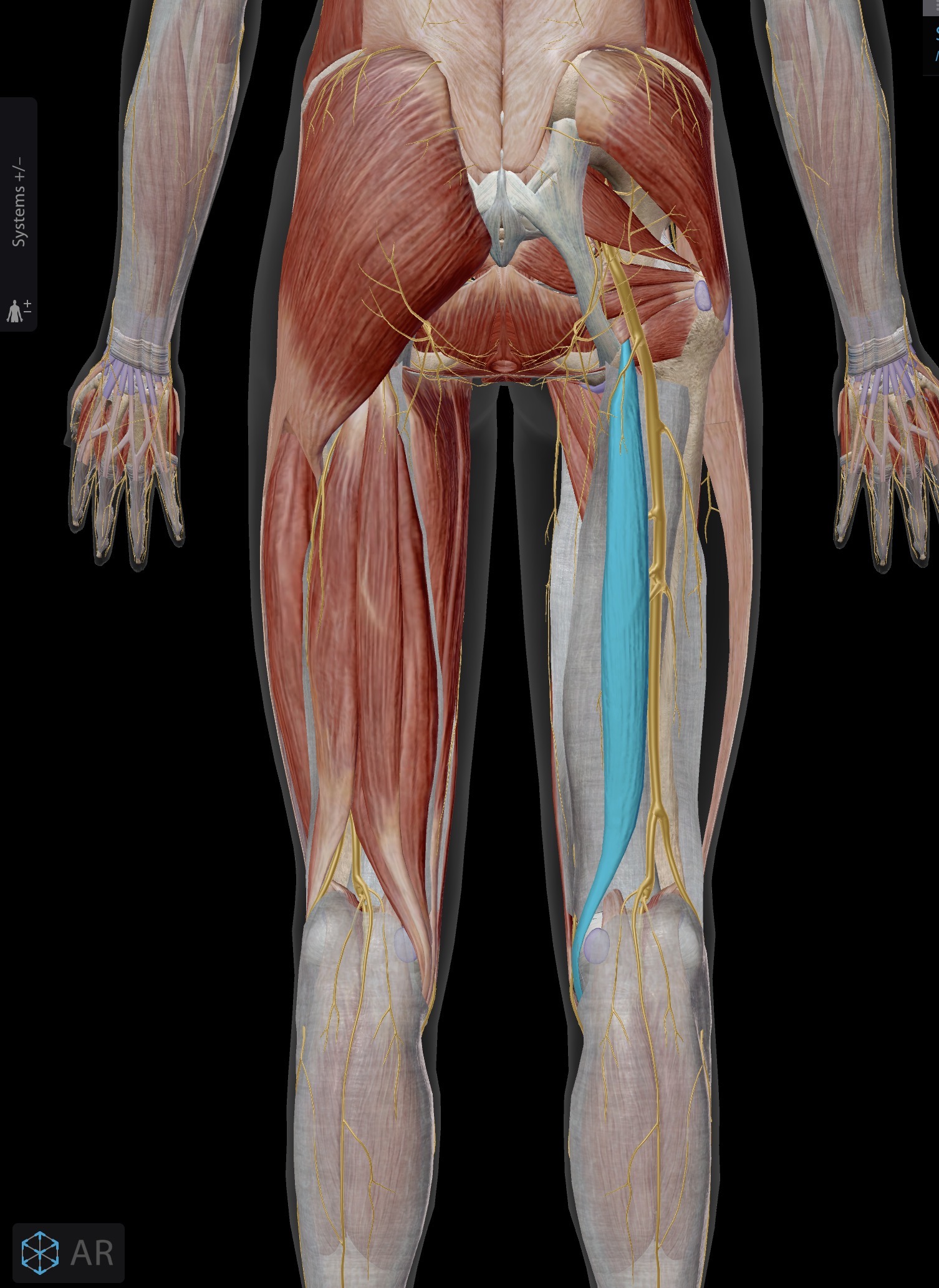
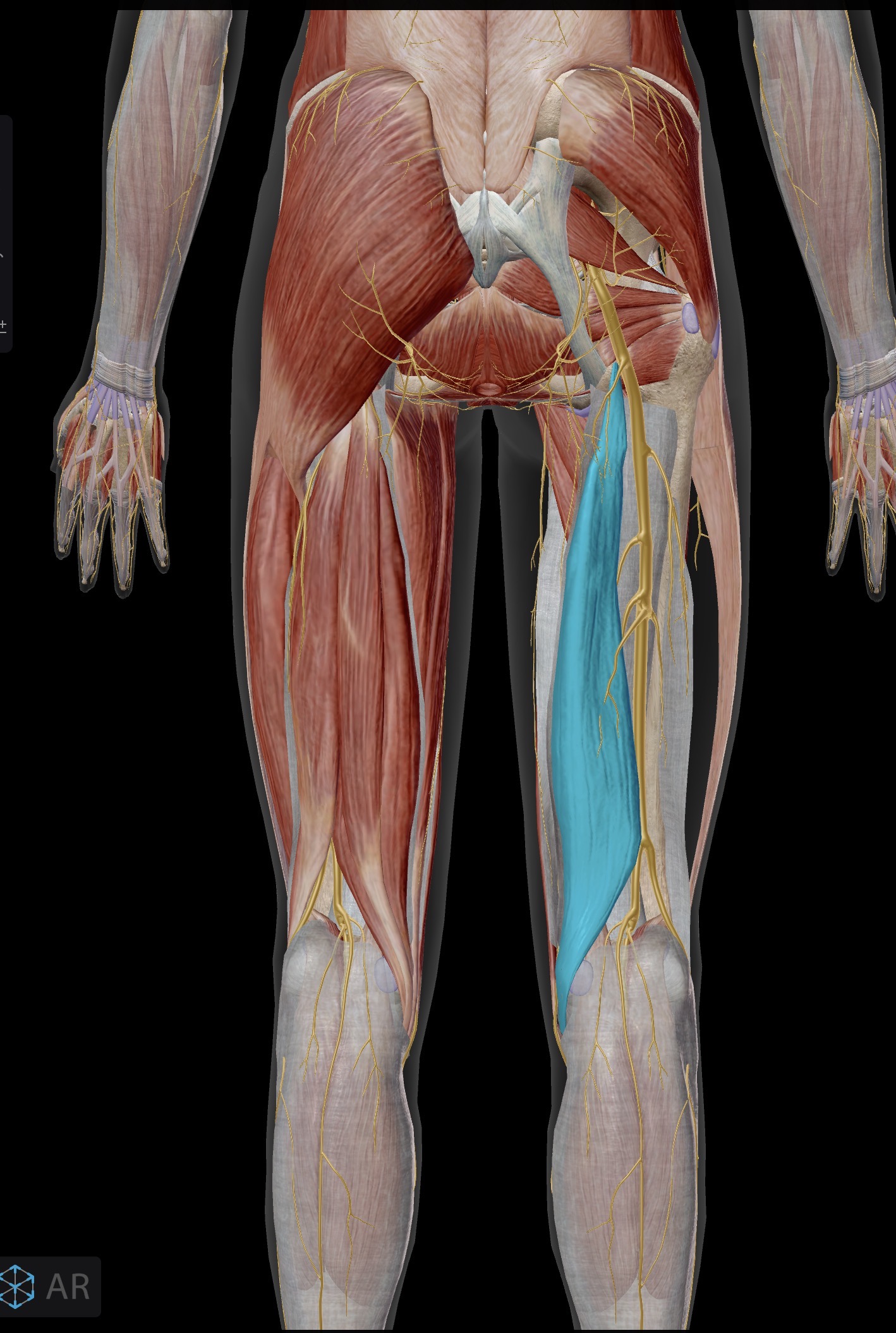
<p>Semitendinosus</p><p>O: ischial tuberosity</p><p>I: proximal, medial, anterior tibia - a spot known as the “pes anserine group” (Gracilis and sartorious also attach here)</p><p>A: Hip extension and knee flexion</p><p>IN: sciatic nerve</p><p><em>Semitendinosus has a clinical significance as being a common muscle used for ACL grafts when someone tears their ACL. It is commonly used with the gracilis tendon</em></p>
34
New cards
<p>Name the muscle and corresponding letter ( O = origin, I = insertion, A = actions, IN = innervation)</p><p>O</p><p>I</p><p>A</p><p>IN</p>

Name the muscle and corresponding letter ( O = origin, I = insertion, A = actions, IN = innervation)

O

I

A

IN

Semimembranosus

O: Ischial tuberosity

I: posterior aspect of medial condyle of tibia

A: Hip extension and knee flexion

IN: Sciatic nerve
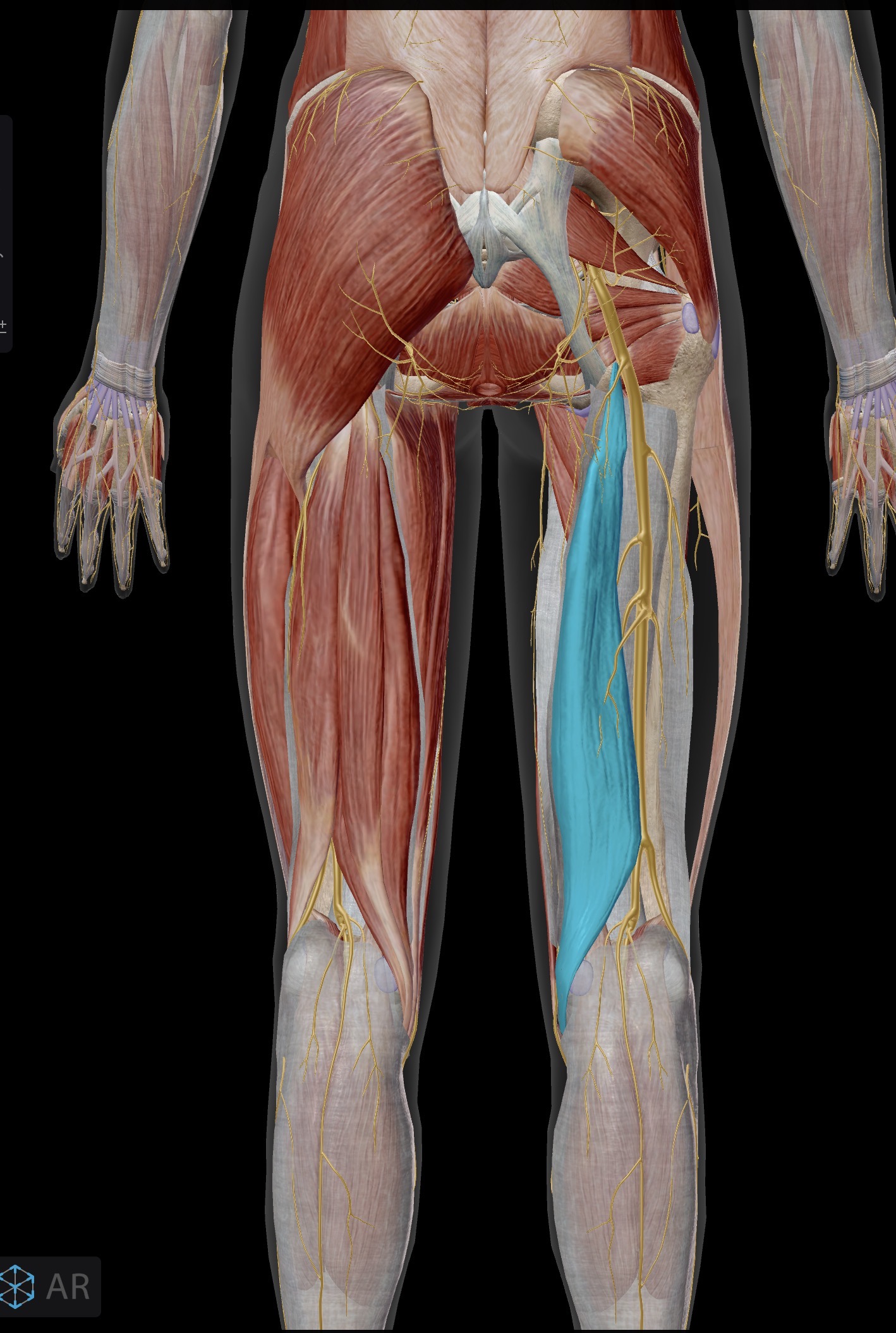
<p>Semimembranosus</p><p>O: Ischial tuberosity</p><p>I: posterior aspect of medial condyle of tibia</p><p>A: Hip extension and knee flexion</p><p>IN: Sciatic nerve</p>
35
New cards
<p>Name the muscle and corresponding letter ( O = origin, I = insertion, A = actions, IN = innervation)</p><p>O</p><p>I</p><p>A</p><p>IN</p>

Name the muscle and corresponding letter ( O = origin, I = insertion, A = actions, IN = innervation)

O

I

A

IN

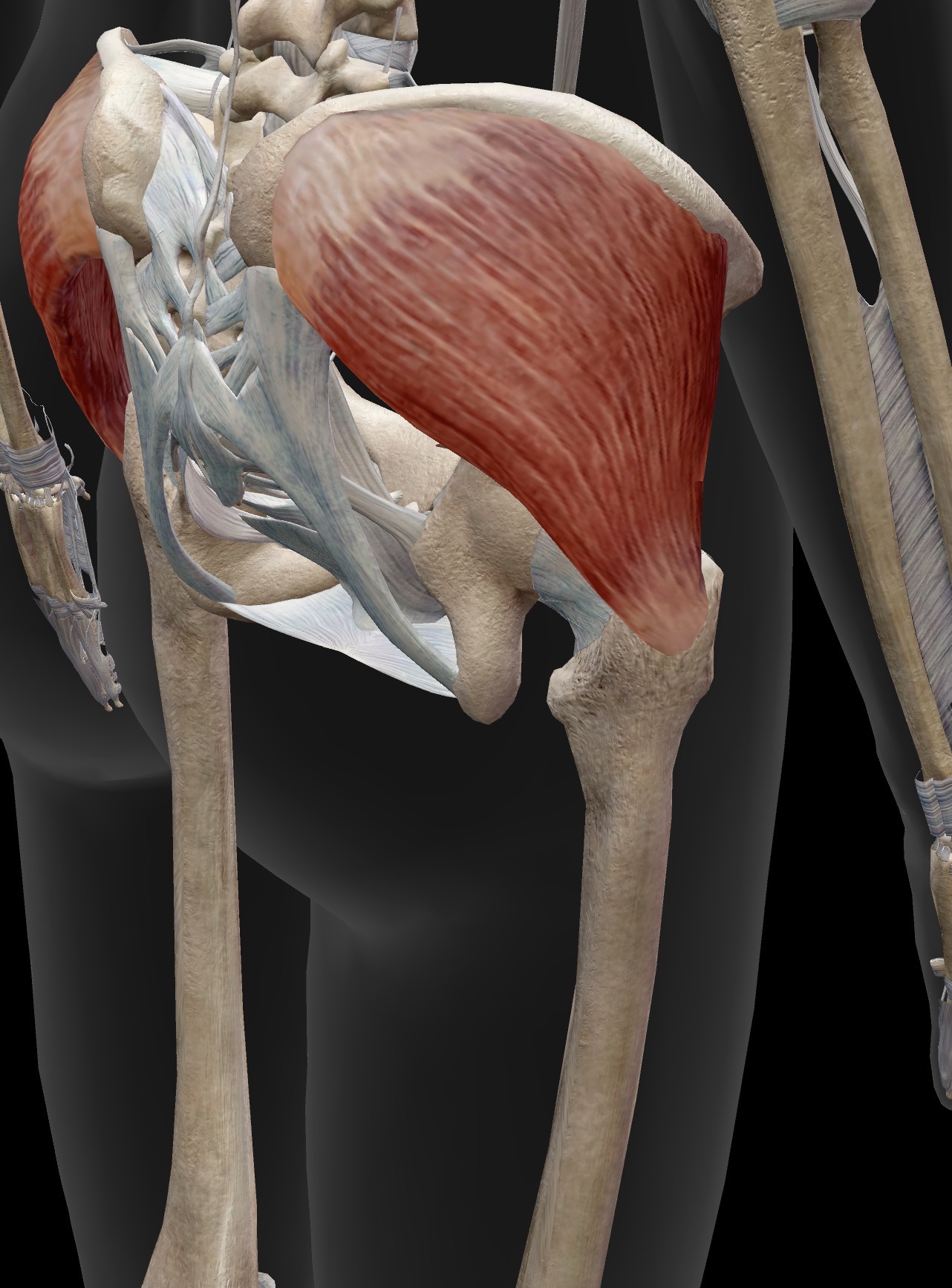
Gluteus Medius

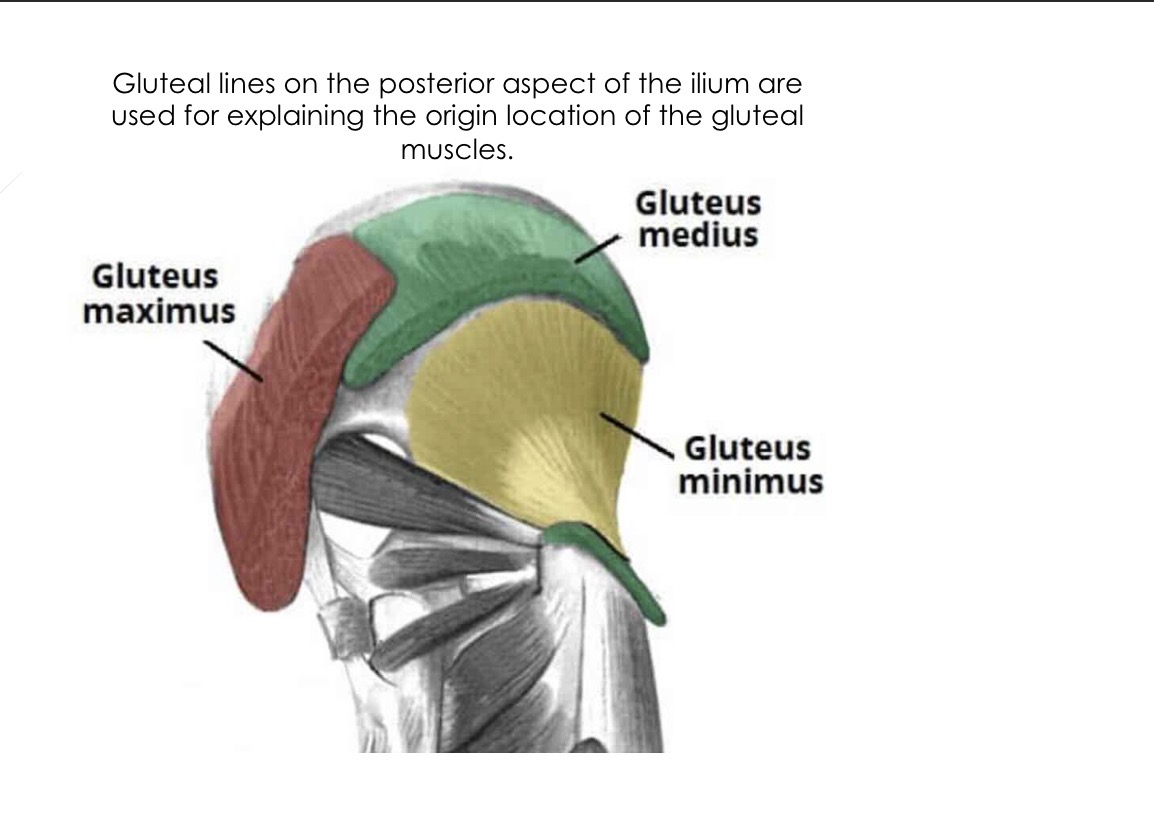
O: Posterior, superior ilium (between the posterior and middle/anterior gluteal lines)

I: Greater trochanter (lateral aspect)

A: Abduction and internal rotation of the femur at the hip. Posterior fibers assist with external rotation of the femur at the hip

IN: Superior gluteal nerve
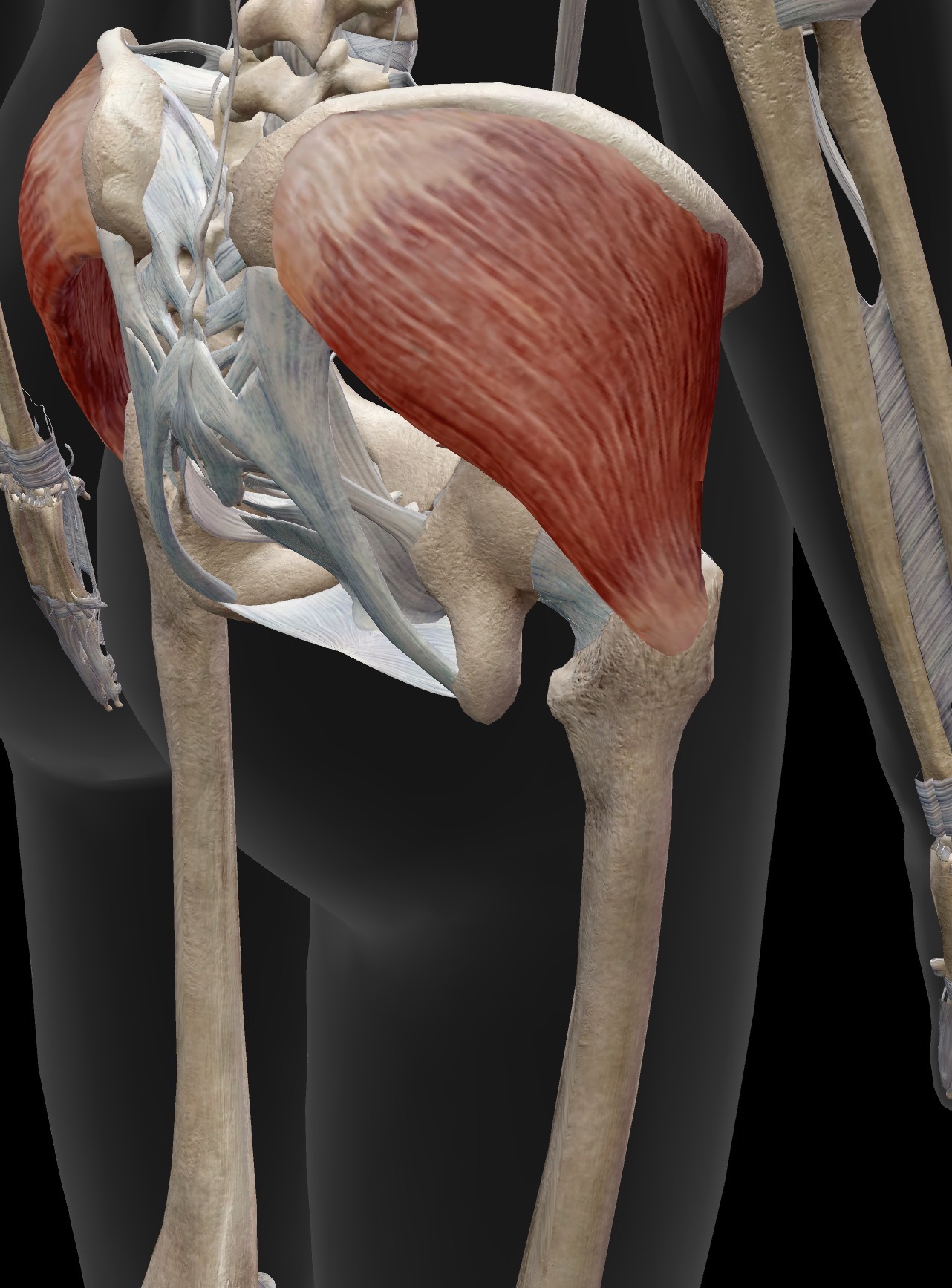
<p>Gluteus Medius</p><p>O: Posterior, superior ilium (between the posterior and middle/anterior gluteal lines)</p><p>I: Greater trochanter (lateral aspect)</p><p>A: Abduction and internal rotation of the femur at the hip. Posterior fibers assist with external rotation of the femur at the hip</p><p>IN: Superior gluteal nerve</p>
36
New cards
<p>Name the muscle and corresponding letter ( O = origin, I = insertion, A = actions, IN = innervation)</p><p>O</p><p>I</p><p>A</p><p>IN</p>

Name the muscle and corresponding letter ( O = origin, I = insertion, A = actions, IN = innervation)

O

I

A

IN

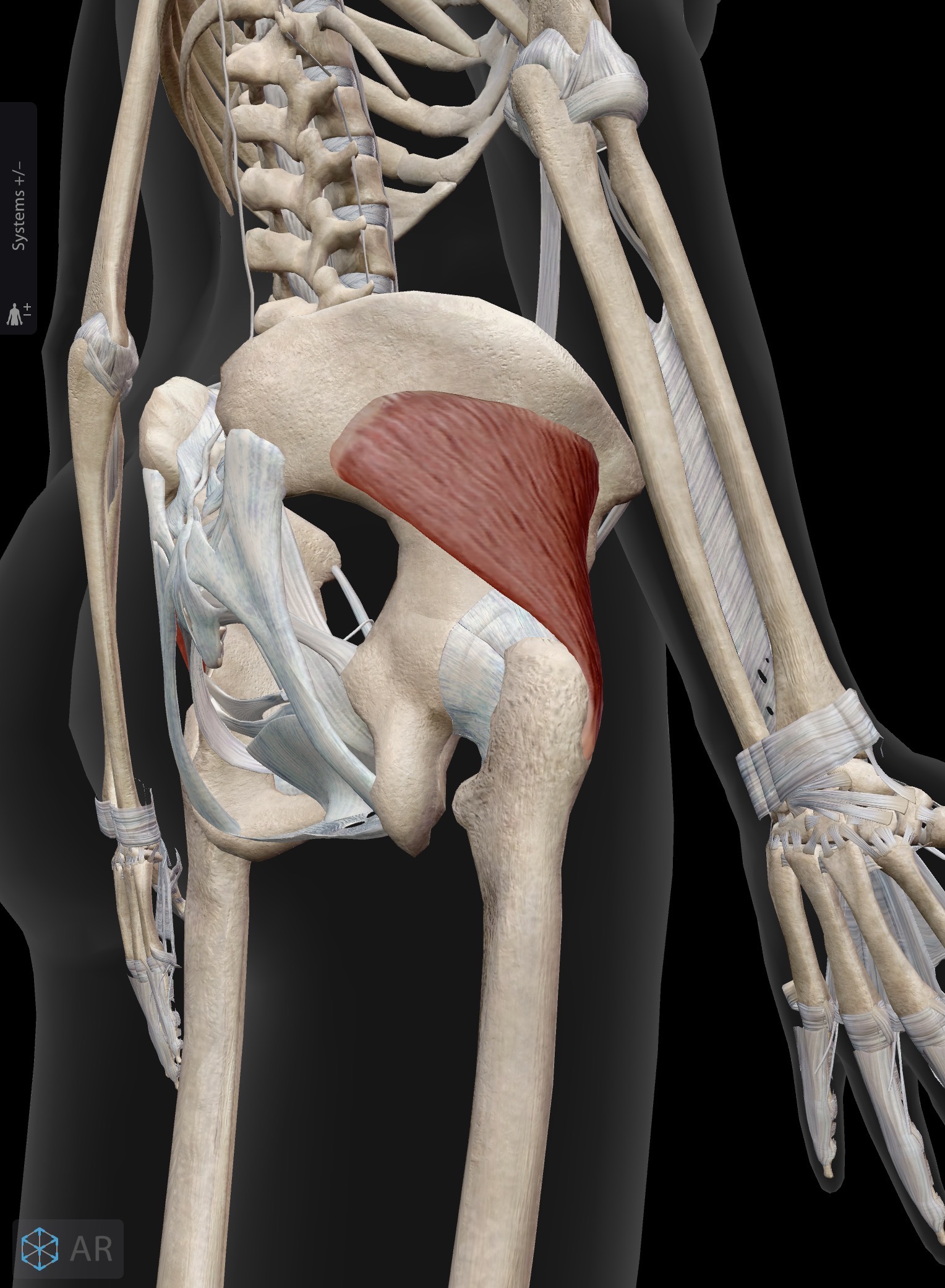
Gluteus Minimus

O: Posterior, inferior ilium (between middle/anterior and inferior gluteal lines)

I: Greater trochanter

A: Abduction and internal rotation of the femur at the hip

IN: Superior gluteal nerve
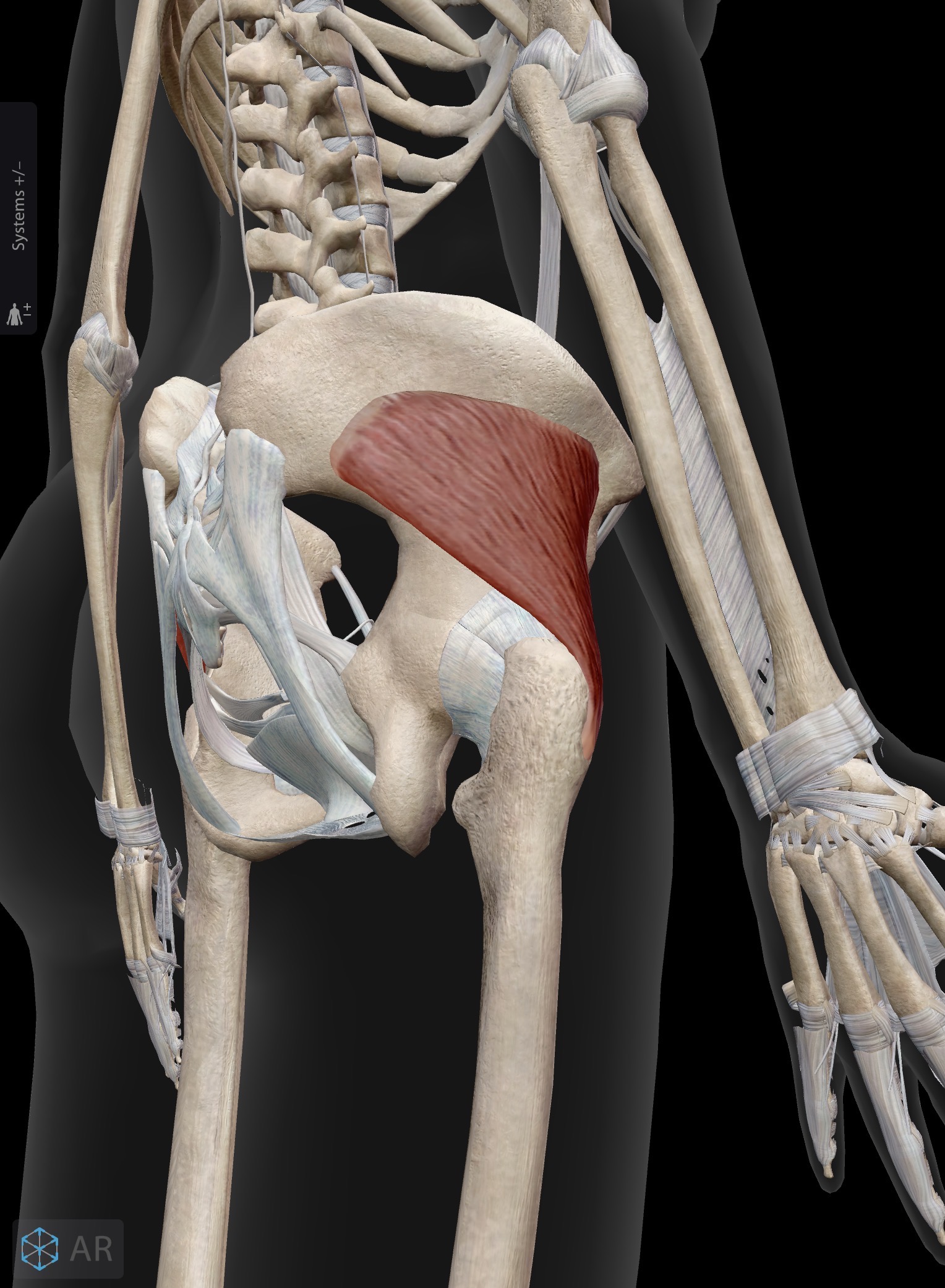
<p>Gluteus Minimus</p><p>O: Posterior, inferior ilium (between middle/anterior and inferior gluteal lines)</p><p>I: Greater trochanter</p><p>A: Abduction and internal rotation of the femur at the hip</p><p>IN: Superior gluteal nerve</p>
37
New cards
<p>Name the muscle and corresponding letter ( O = origin, I = insertion, A = actions, IN = innervation)</p><p>O</p><p>I</p><p>A</p><p>IN</p>

Name the muscle and corresponding letter ( O = origin, I = insertion, A = actions, IN = innervation)

O

I

A

IN

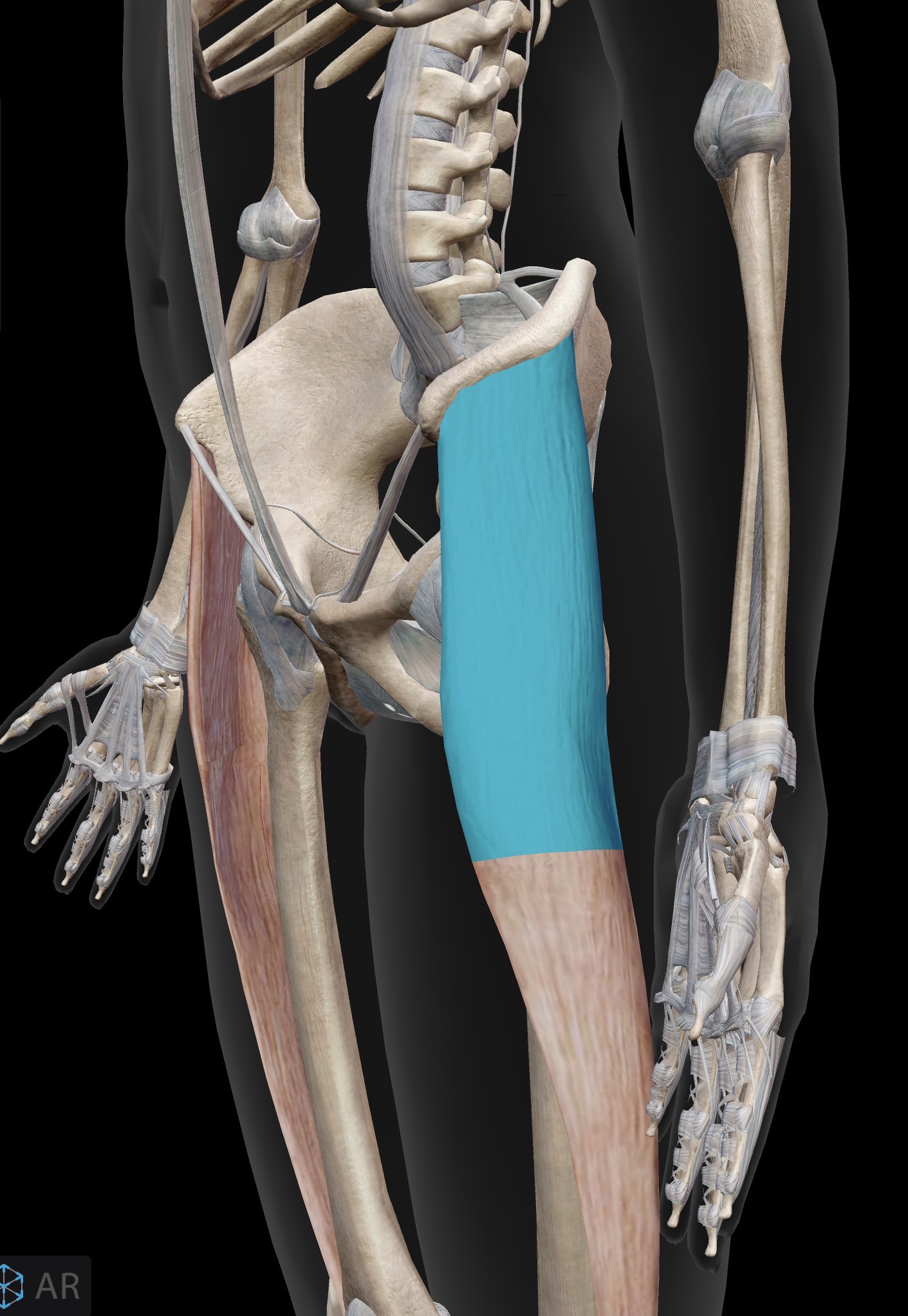
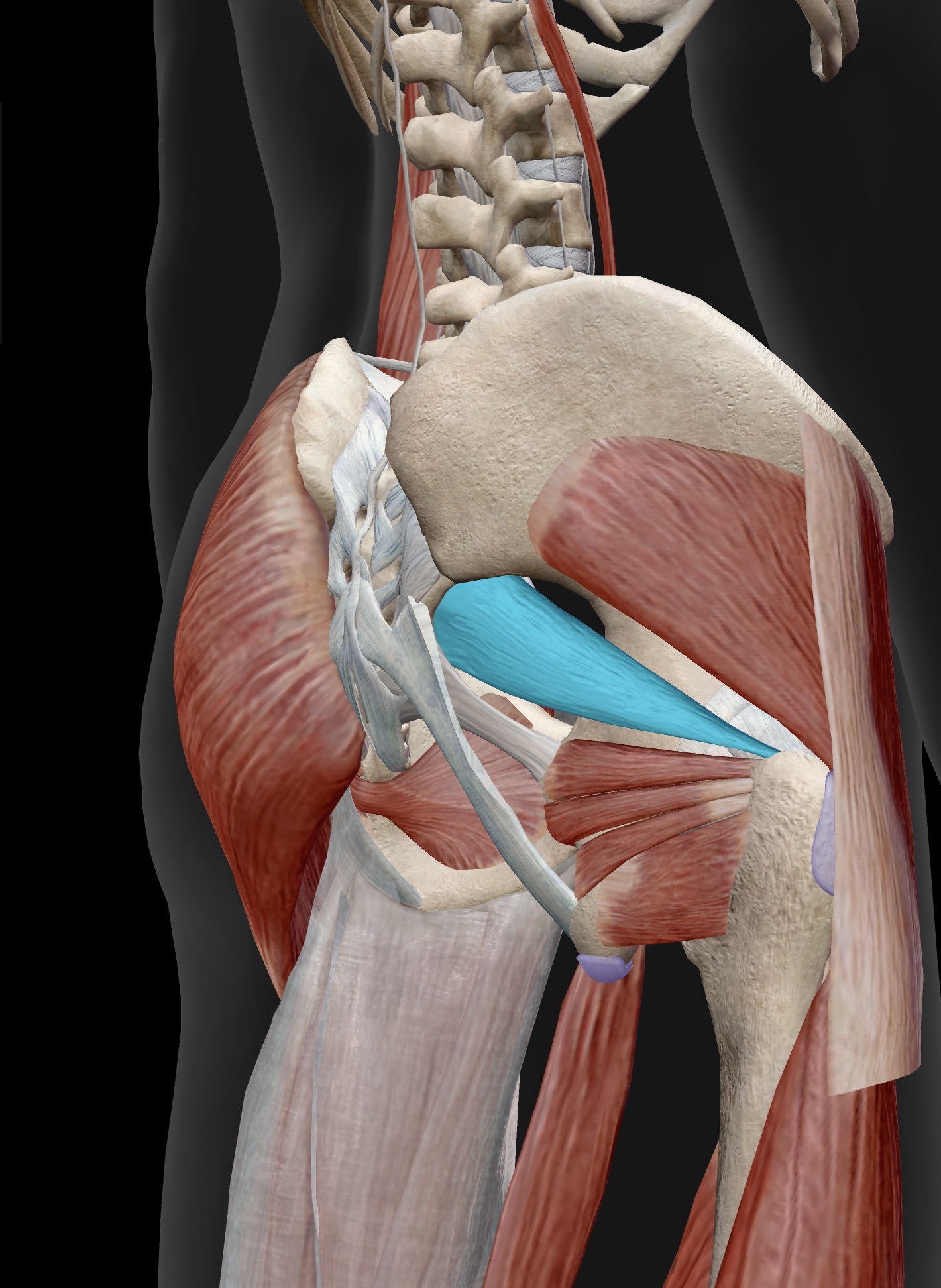
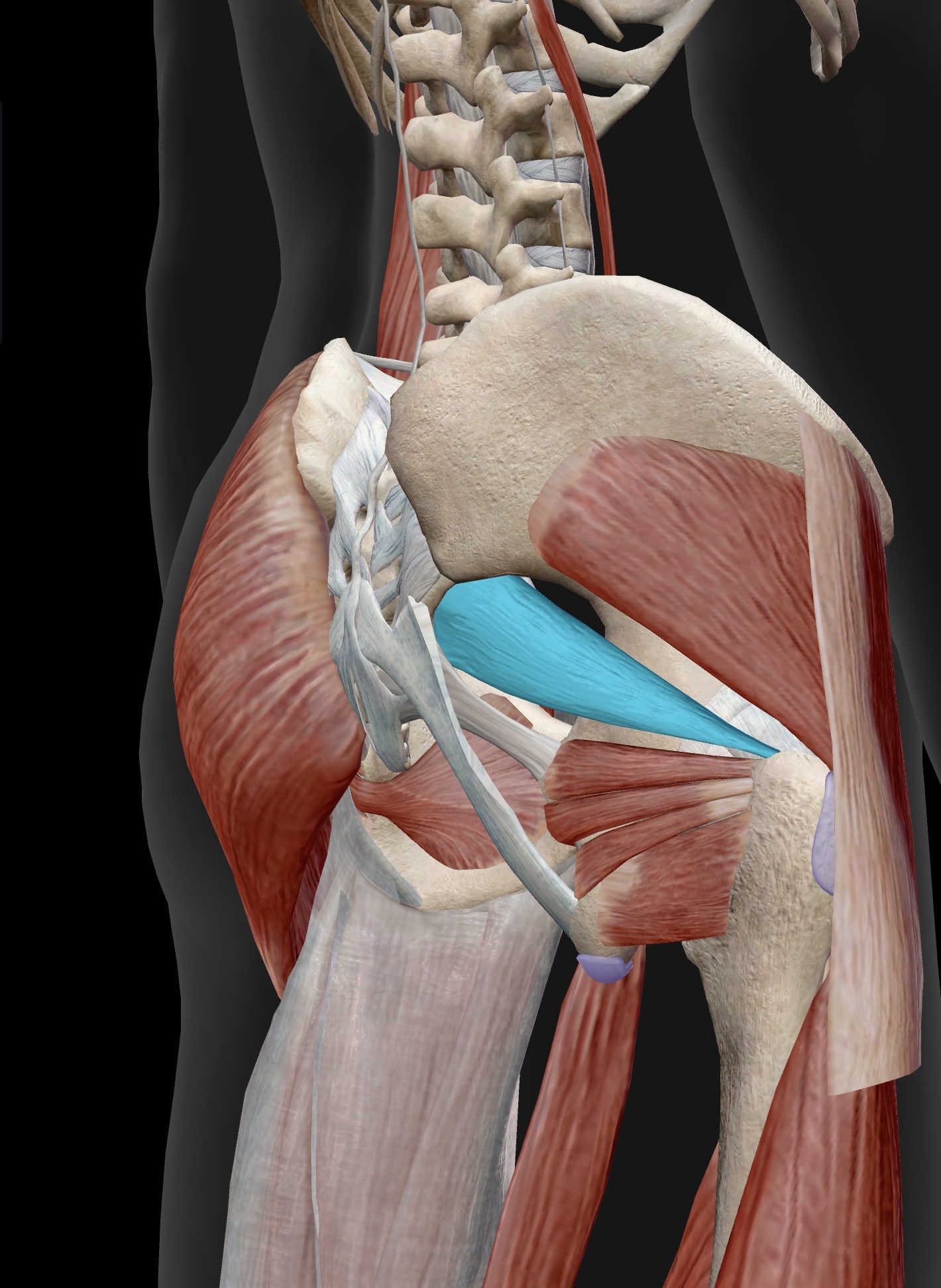
Tensor fascia latae

O: Slightly posterior to ASIS on iliac crest

I: Iliotibial tract/band (ITB); The ITB then inserts into the anterior, lateral, proximal tibia (gerdy’s tubercle)

A: Abduction, flexion and internal rotation of the femur at the hip. Also, assists with hip flexion (synergist to iliopsoas and rectus femoris for flexion of the femur at the hip joint).

  • Makes the IT band (Iliotibial band) taut, so helps stabilize the knee

IN: superior gluteal nerve

Know the difference between tensor fascia latae (a muscle) and the IT band (connective tissue)

  • These hip abductors also help stabilize the pelvis

  • Tensor fascia latae (TFL) also helps stabilize the knee (especially in full extension)
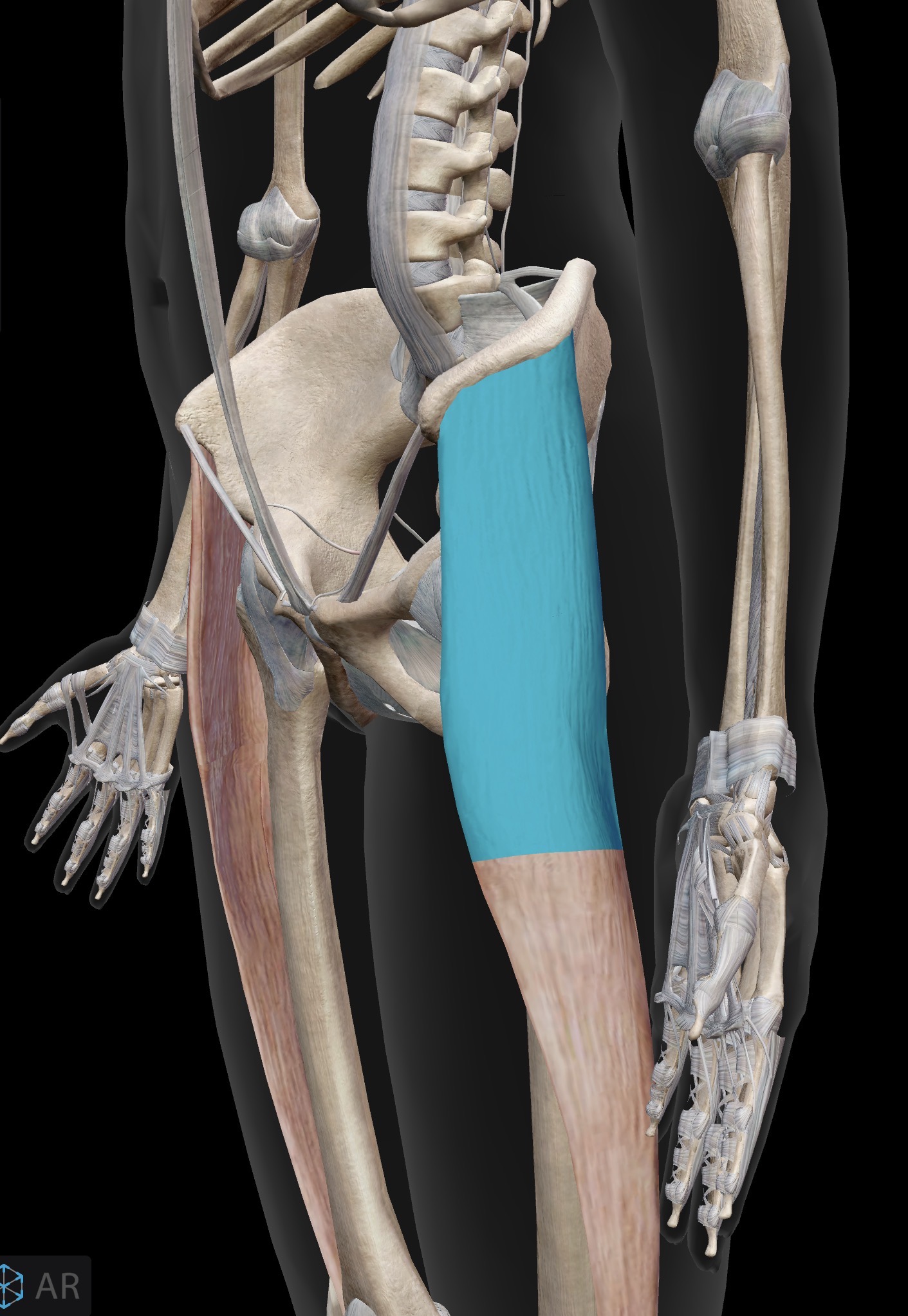
<p>Tensor fascia latae</p><p>O: Slightly posterior to ASIS on iliac crest</p><p>I: Iliotibial tract/band (ITB); The ITB then inserts into the anterior, lateral, proximal tibia (gerdy’s tubercle)</p><p>A: Abduction, flexion and internal rotation of the femur at the hip. Also, assists with hip flexion (synergist to iliopsoas and rectus femoris for flexion of the femur at the hip joint).</p><ul><li><p>Makes the IT band (Iliotibial band) taut, so helps stabilize the knee</p></li></ul><p>IN: superior gluteal nerve</p><p><em>Know the difference between tensor fascia latae (a muscle) and the IT band (connective tissue)</em></p><ul><li><p>These hip abductors also help stabilize the pelvis</p></li><li><p>Tensor fascia latae (TFL) also helps stabilize the knee (especially in full extension)</p></li></ul><p></p>
38
New cards
<p>Name the muscle and corresponding letter ( O = origin, I = insertion, A = actions, IN = innervation)</p><p>O</p><p>I</p><p>A</p><p>IN</p>

Name the muscle and corresponding letter ( O = origin, I = insertion, A = actions, IN = innervation)

O

I

A

IN

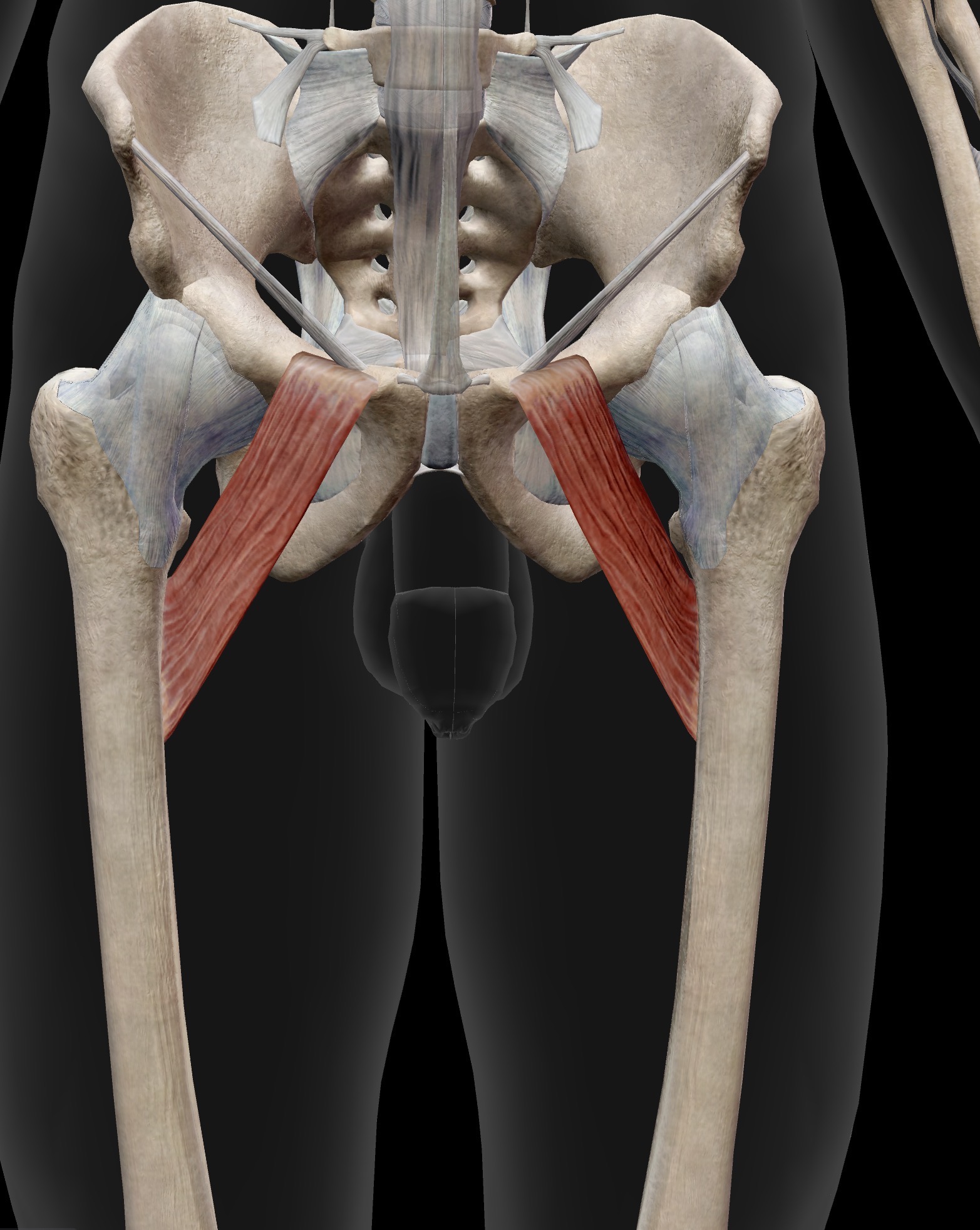
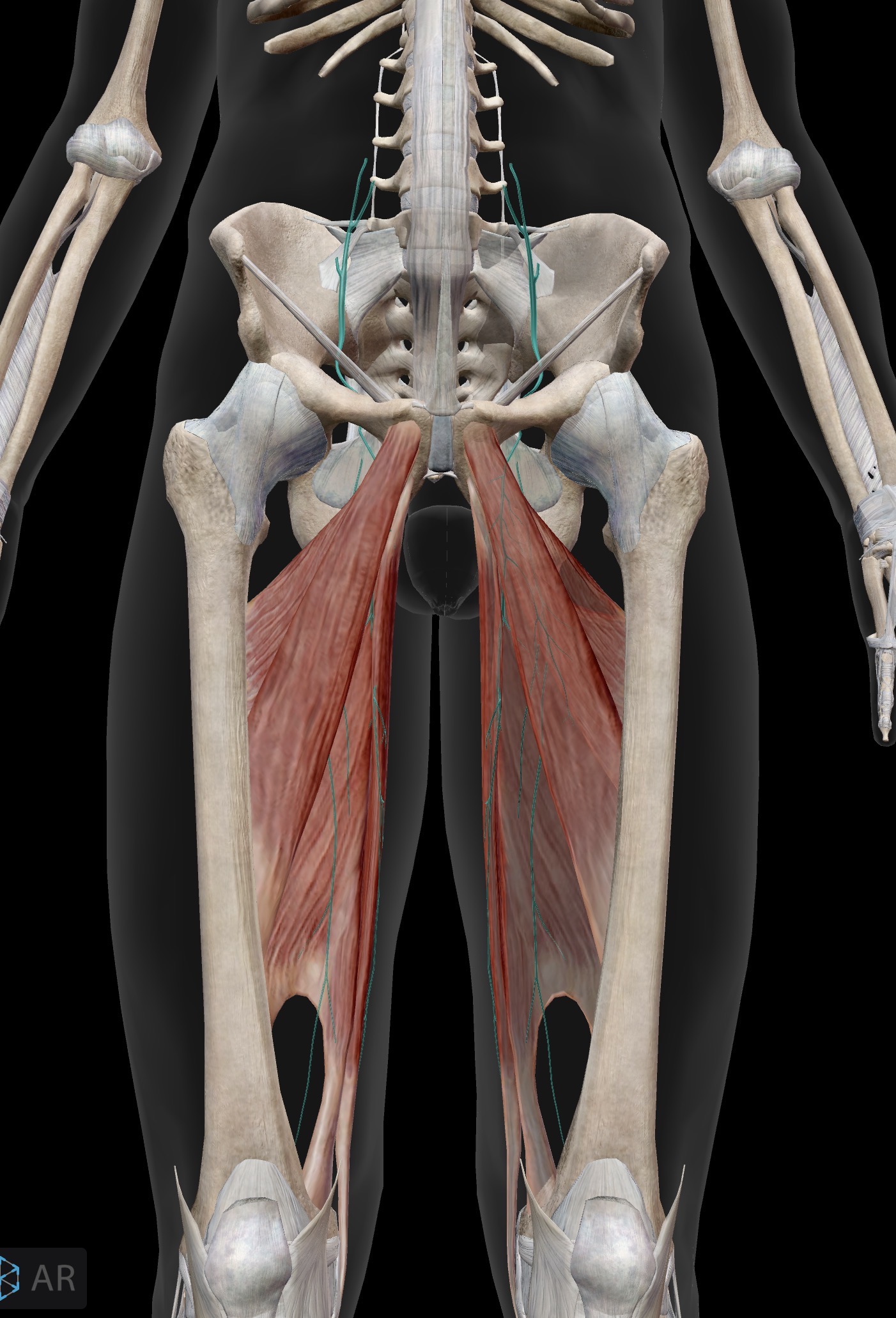
Adductor Longus

O: Pubis

I: Middle portion of linea aspera

A: Adduction of the femur at the hip

IN: Obturator nerve
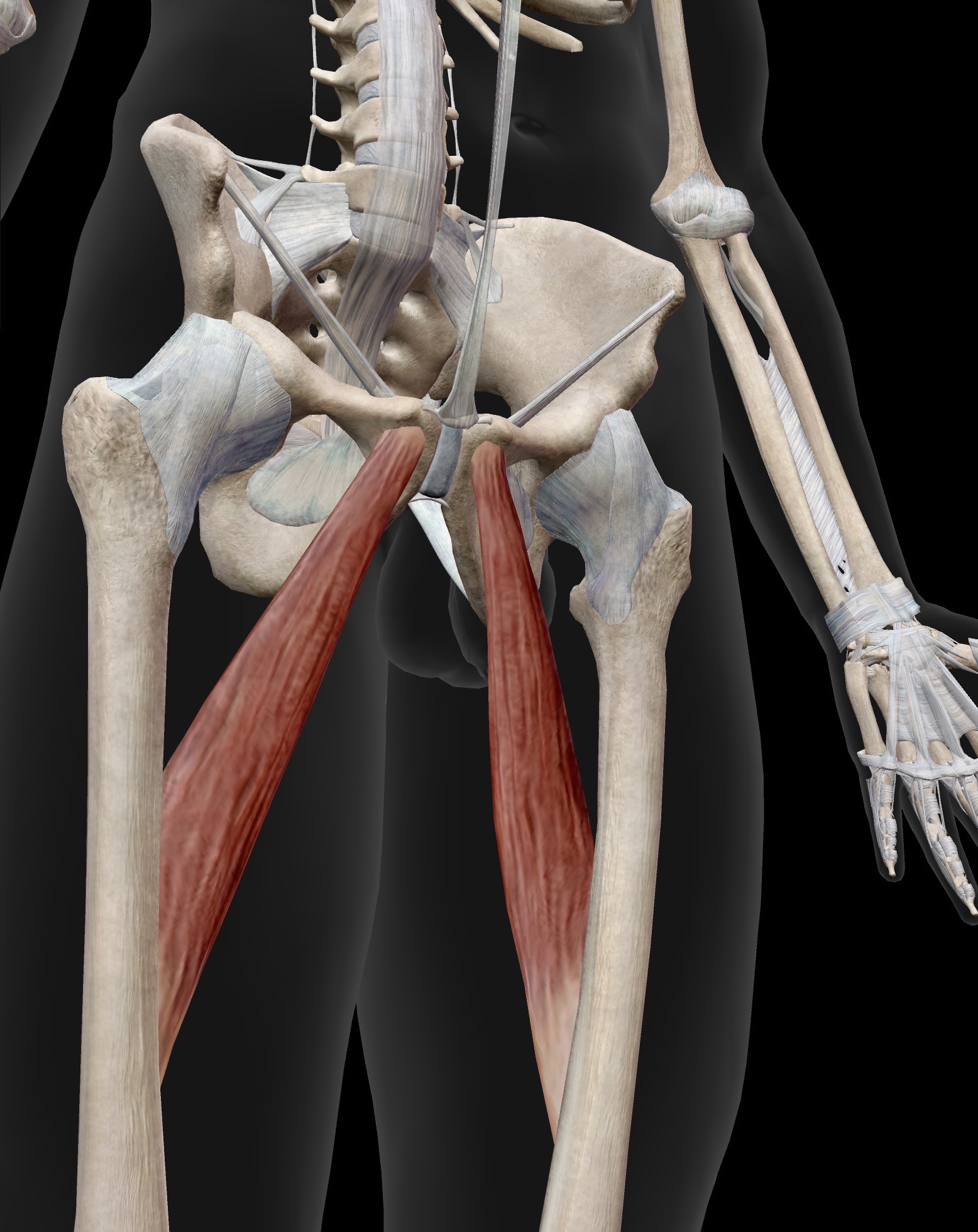
<p>Adductor Longus</p><p>O: Pubis</p><p>I: Middle portion of linea aspera</p><p>A: Adduction of the femur at the hip</p><p>IN: Obturator nerve</p>
39
New cards
<p>Name the muscle and corresponding letter ( O = origin, I = insertion, A = actions, IN = innervation)</p><p>O</p><p>I</p><p>A</p><p>IN</p>

Name the muscle and corresponding letter ( O = origin, I = insertion, A = actions, IN = innervation)

O

I

A

IN

Adductor Brevis

O: Pubis

I: upper portion of linea aspera

A: Adduction of the femur at the hip

IN: Obturator nerve
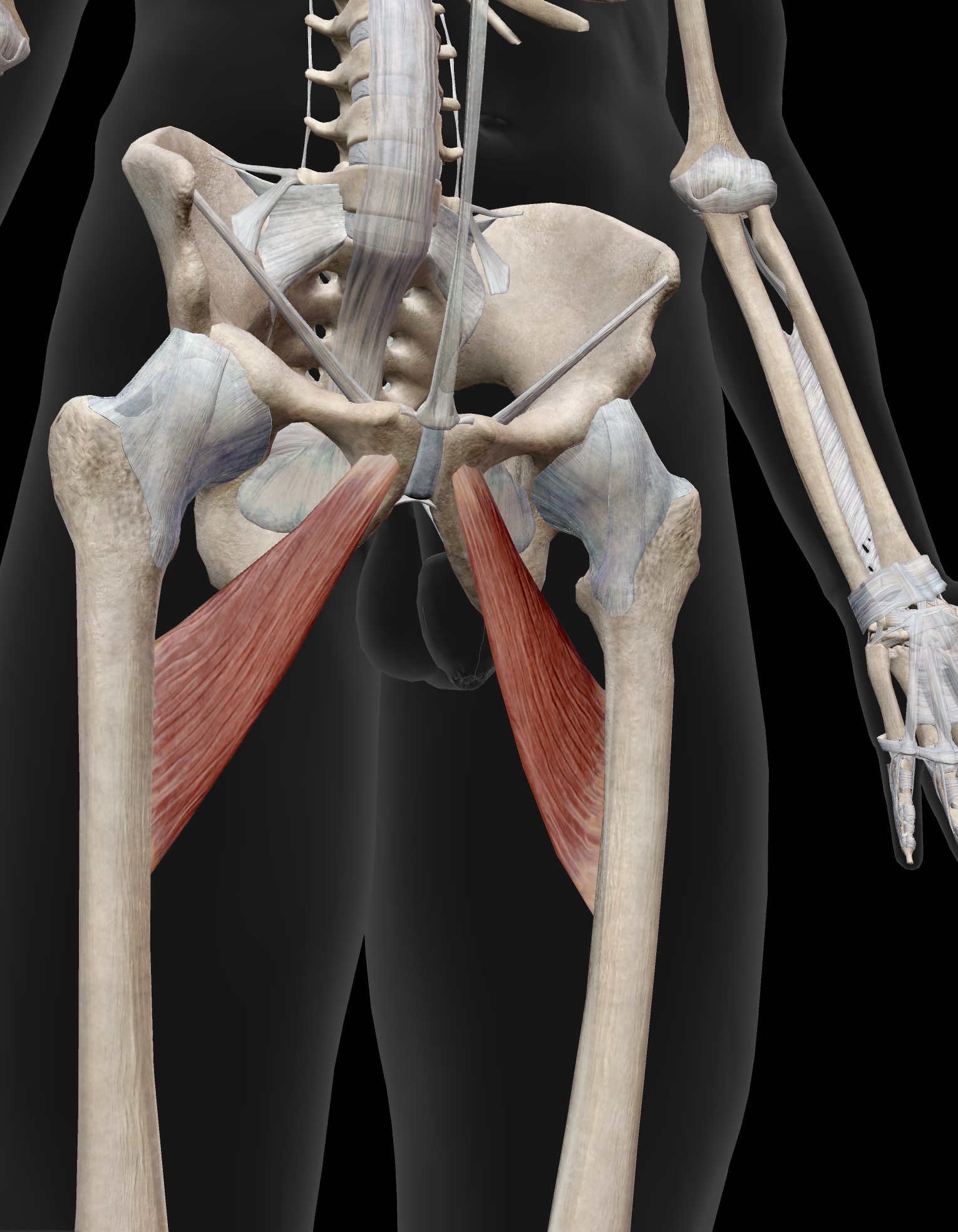
<p>Adductor Brevis</p><p>O: Pubis</p><p>I: upper portion of linea aspera</p><p>A: Adduction of the femur at the hip</p><p>IN: Obturator nerve</p>
40
New cards
<p>Name the muscle and corresponding letter ( O = origin, I = insertion, A = actions, IN = innervation)</p><p>O</p><p>I</p><p>A</p><p>IN</p>

Name the muscle and corresponding letter ( O = origin, I = insertion, A = actions, IN = innervation)

O

I

A

IN

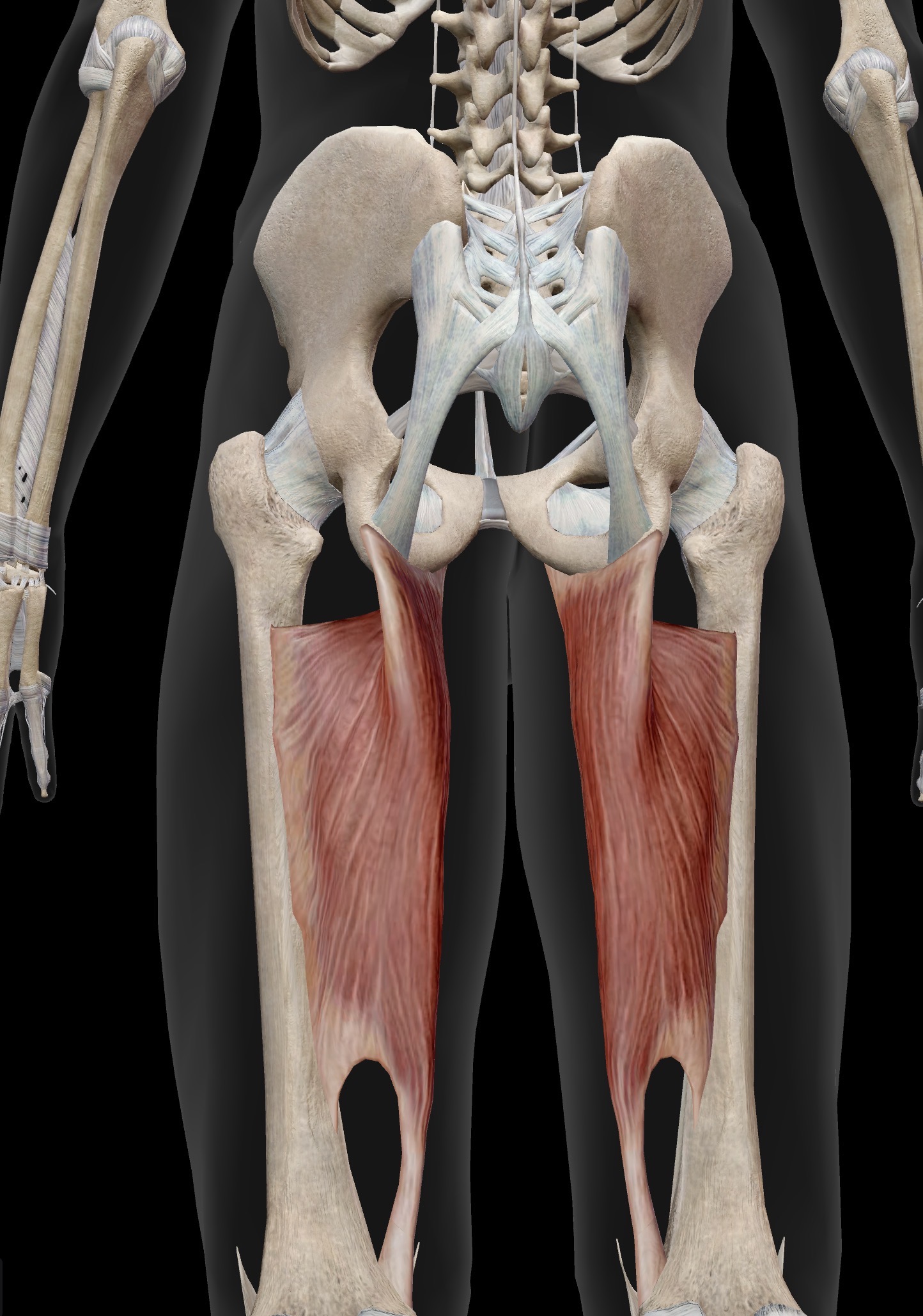
Adductor Magnus

O: Pubis

I: Entire length of linea aspera and adductor tubercle

A: Anterior fibers adduct the femur at the hip and posterior fibers extend the femur at the hip.

(synergist to hamstrings and gluteus maximus for hip extension)

  • This muscle is very large and its origin spans a wide region. Some of its fibers pull the femur in adduction while others pull the femur into extension

IN: Medial muscle fibers (adductor portion): Obturator nerve

Posterior muscle fibers (extensor portion): Sciatic nerve

<p>Adductor Magnus</p><p>O: Pubis</p><p>I: Entire length of linea aspera and adductor tubercle</p><p>A: Anterior fibers adduct the femur at the hip and posterior fibers extend the femur at the hip. </p><p>(synergist to hamstrings and gluteus maximus for hip extension)</p><ul><li><p>This muscle is very large and its origin spans a wide region. Some of its fibers pull the femur in adduction while others pull the femur into extension</p></li></ul><p>IN: Medial muscle fibers (adductor portion): Obturator nerve</p><p>Posterior muscle fibers (extensor portion): Sciatic nerve</p><p></p>
41
New cards
<p></p><p>Name the muscle and corresponding letter ( O = origin, I = insertion, A = actions, IN = innervation)</p><p>O</p><p>I</p><p>A</p><p>IN</p>

Name the muscle and corresponding letter ( O = origin, I = insertion, A = actions, IN = innervation)

O

I

A

IN

Pectineus

O: Superior ramus of pubis (it is the only muscle that originates from the superior ramus of the pubis)

I. Proximal portion of femur, in region from lesser trochanter to linea aspera

A: Adduction of the femur at the hip

IN: Femoral nerve

<p>Pectineus</p><p>O: Superior ramus of pubis (it is the only muscle that originates from the superior ramus of the pubis)</p><p>I. Proximal portion of femur, in region from lesser trochanter to linea aspera</p><p>A:  Adduction of the femur at the hip</p><p>IN: Femoral nerve</p>
42
New cards
<p>Name the muscle and corresponding letter ( O = origin, I = insertion, A = actions, IN = innervation)</p><p>O</p><p>I</p><p>A</p><p>IN</p>

Name the muscle and corresponding letter ( O = origin, I = insertion, A = actions, IN = innervation)

O

I

A

IN

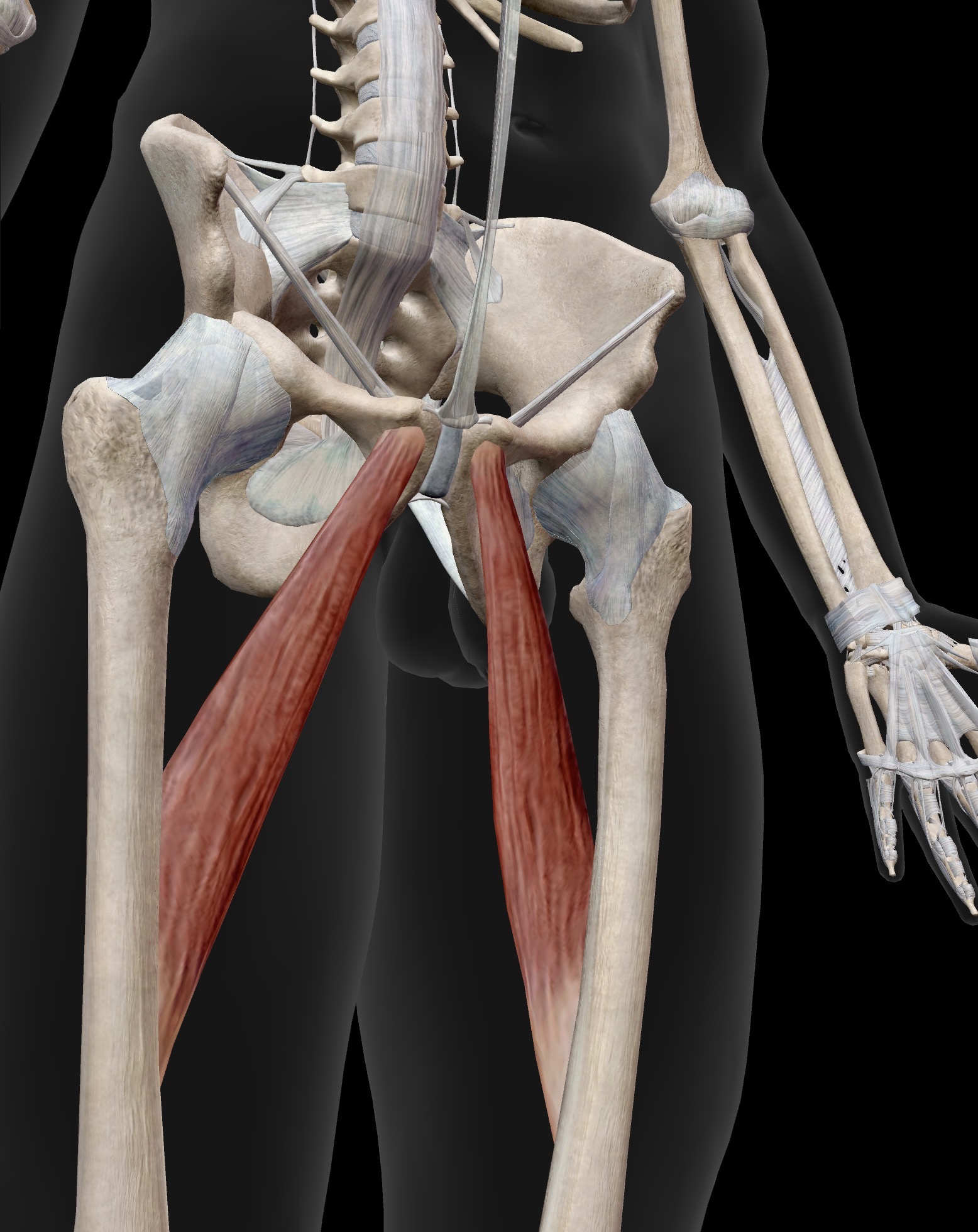
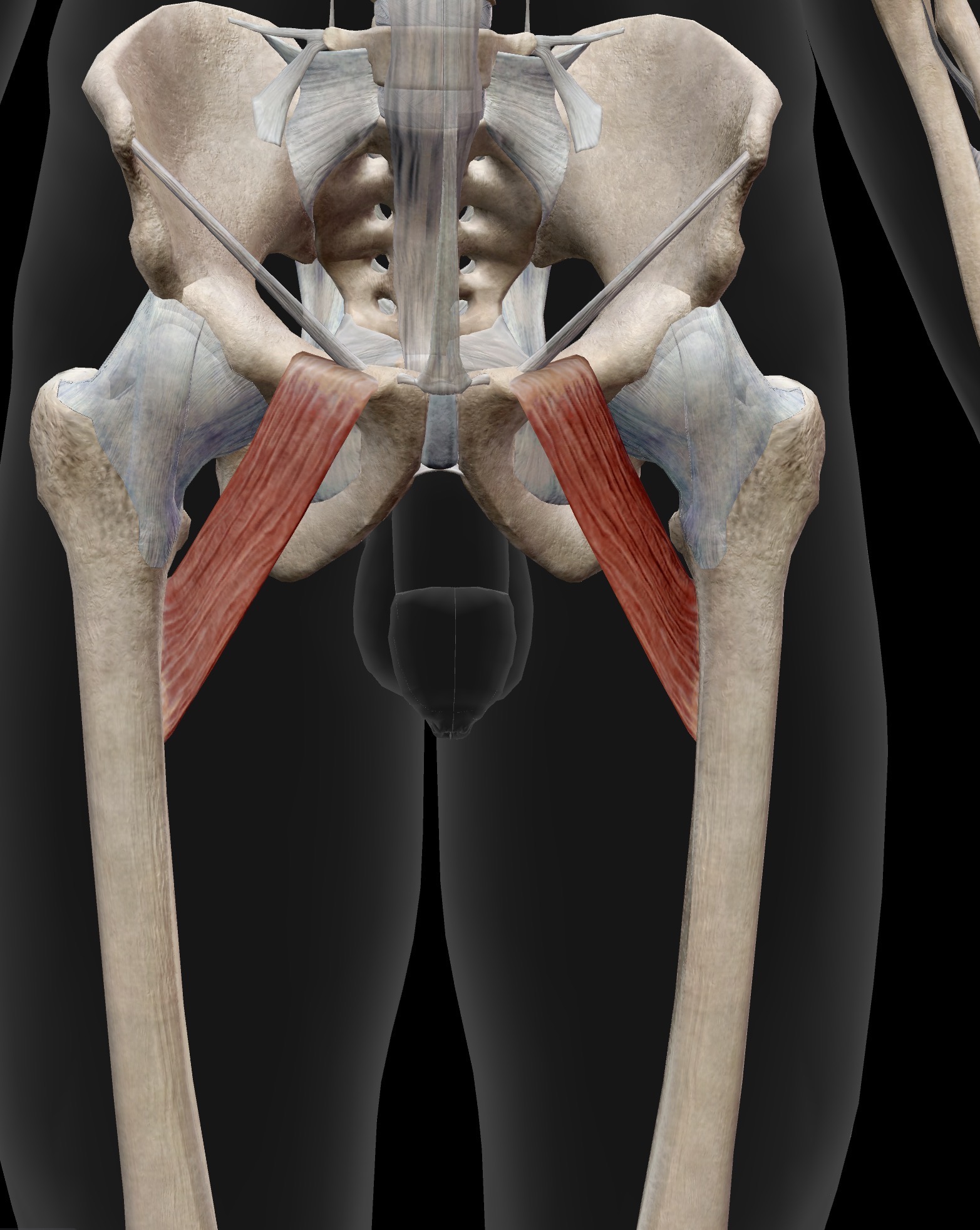
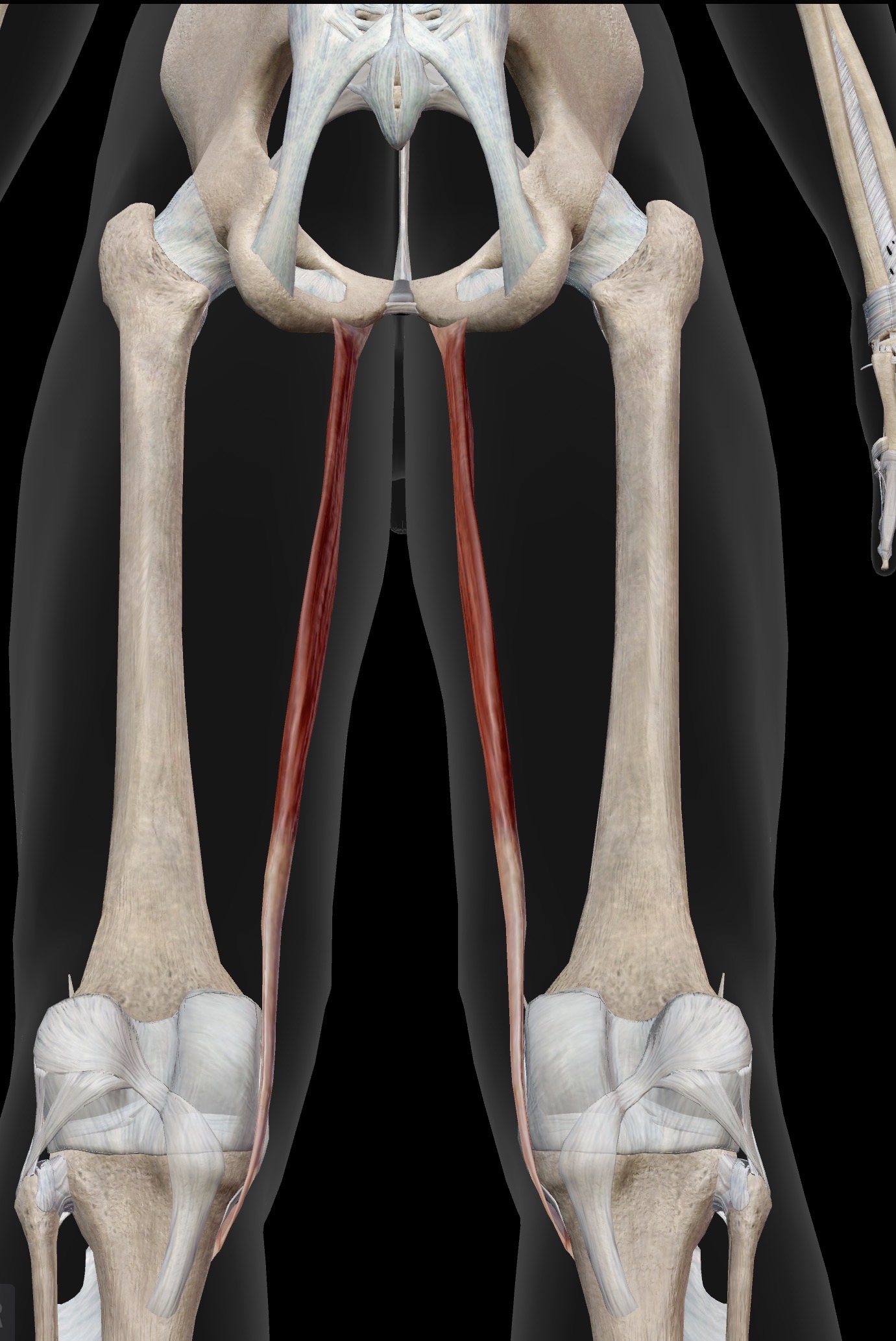
Gracilis

O: Pubis

I: Proximal, medial, anterior tibia - a spot known as the “pes anserine group” (Sartorious and semitendinosus also attach here: “Say grace before tea”)

This is the only adductor that crosses the knee joint. The others insert to different regions of the femur, primarily along the linea aspera

A: Adduction of the femur at the hip

IN: Obturator nerve
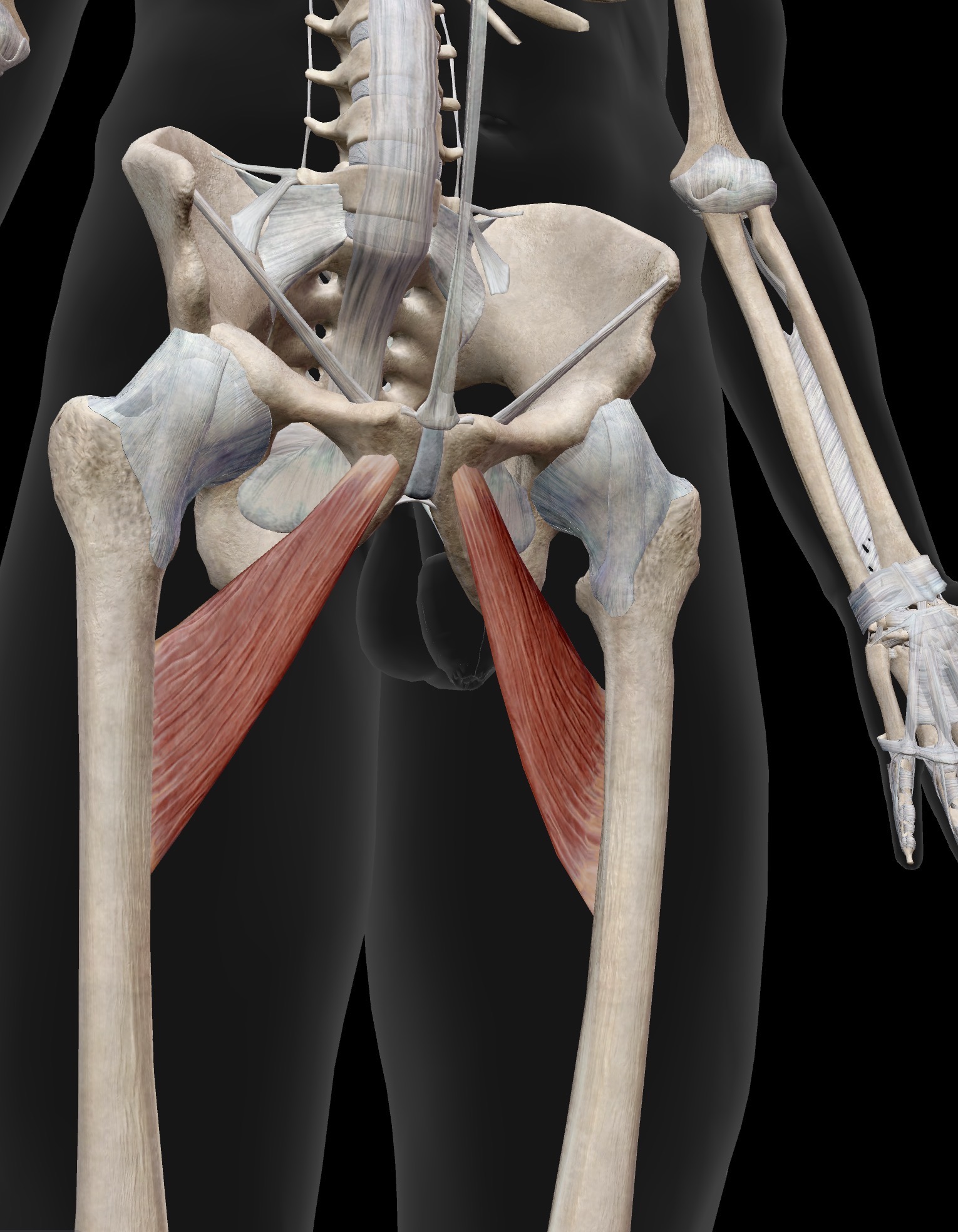
Note: Gracilis has a clinical significance as being a common muscle (the tendon of the muscle) used for ACL grafts when someone tears their ACL. It is commonly used with the semitendinosus tendon.
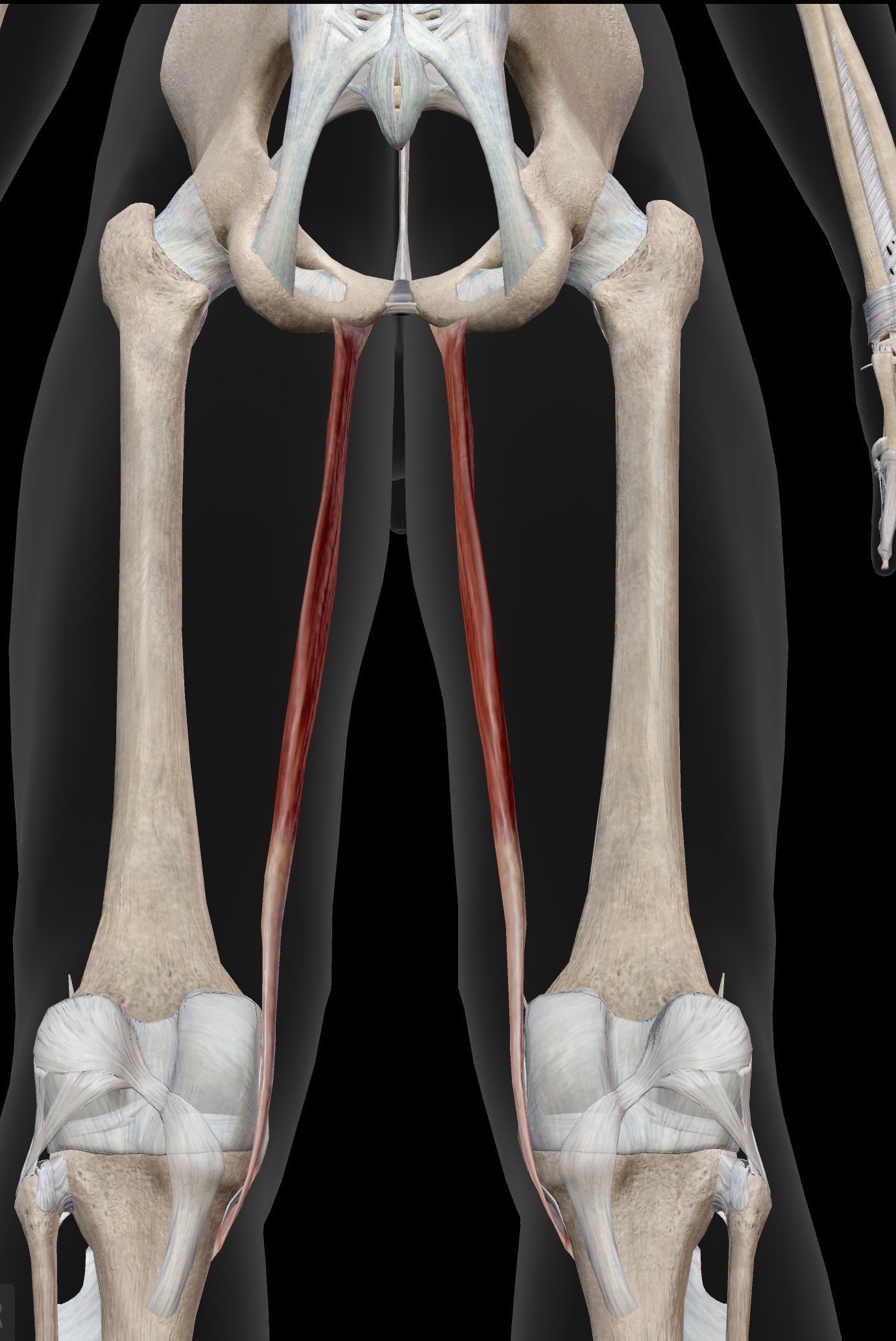
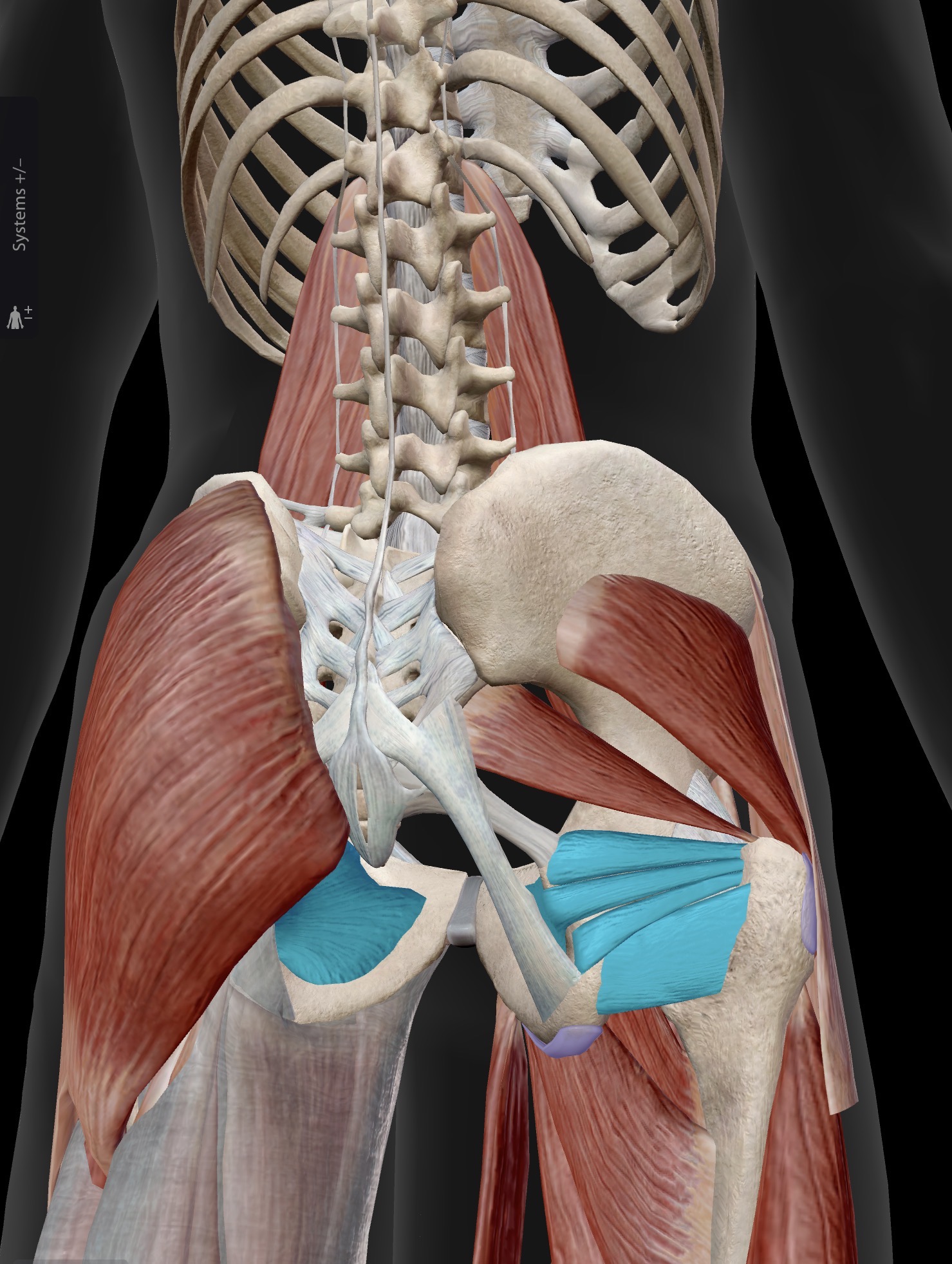
<p>Gracilis</p><p>O: Pubis</p><p>I: Proximal, medial, anterior tibia - a spot known as the “pes anserine group” (Sartorious and semitendinosus also attach here: “Say grace before tea”)</p><p><em>This is the only adductor that crosses the knee joint. The others insert to different regions of the femur, primarily along the linea aspera</em></p><p>A: Adduction of the femur at the hip</p><p>IN: Obturator nerve</p><p><em>Note: Gracilis has a clinical significance as being a common muscle (the tendon of the muscle) used for ACL grafts when someone tears their ACL. It is commonly used with the semitendinosus tendon.</em></p>
43
New cards
<p>Name the muscles and corresponding letter ( O = origin, I = insertion, A = actions, IN = innervation)</p><p>O</p><p>I</p><p>A</p><p>IN</p>

Name the muscles and corresponding letter ( O = origin, I = insertion, A = actions, IN = innervation)

O

I

A

IN

from top to bottom

  • Gemellus superior

  • Obturator internus

  • Gemellus Inferior

  • Quadratus femoris

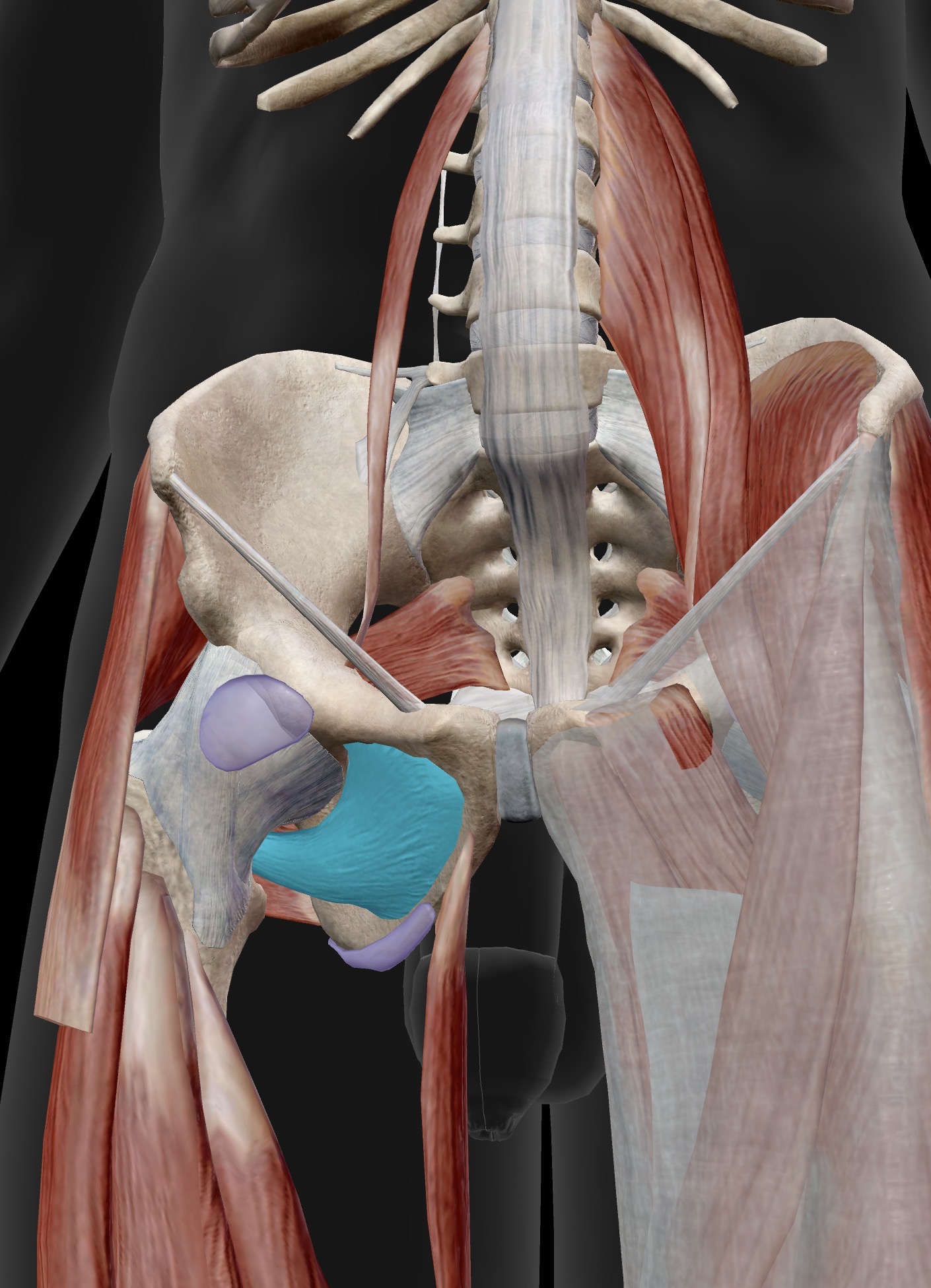
Insertions and actions are all the same

I: Greater trochanter region

A: External rotation of the hip, when the hip is extended
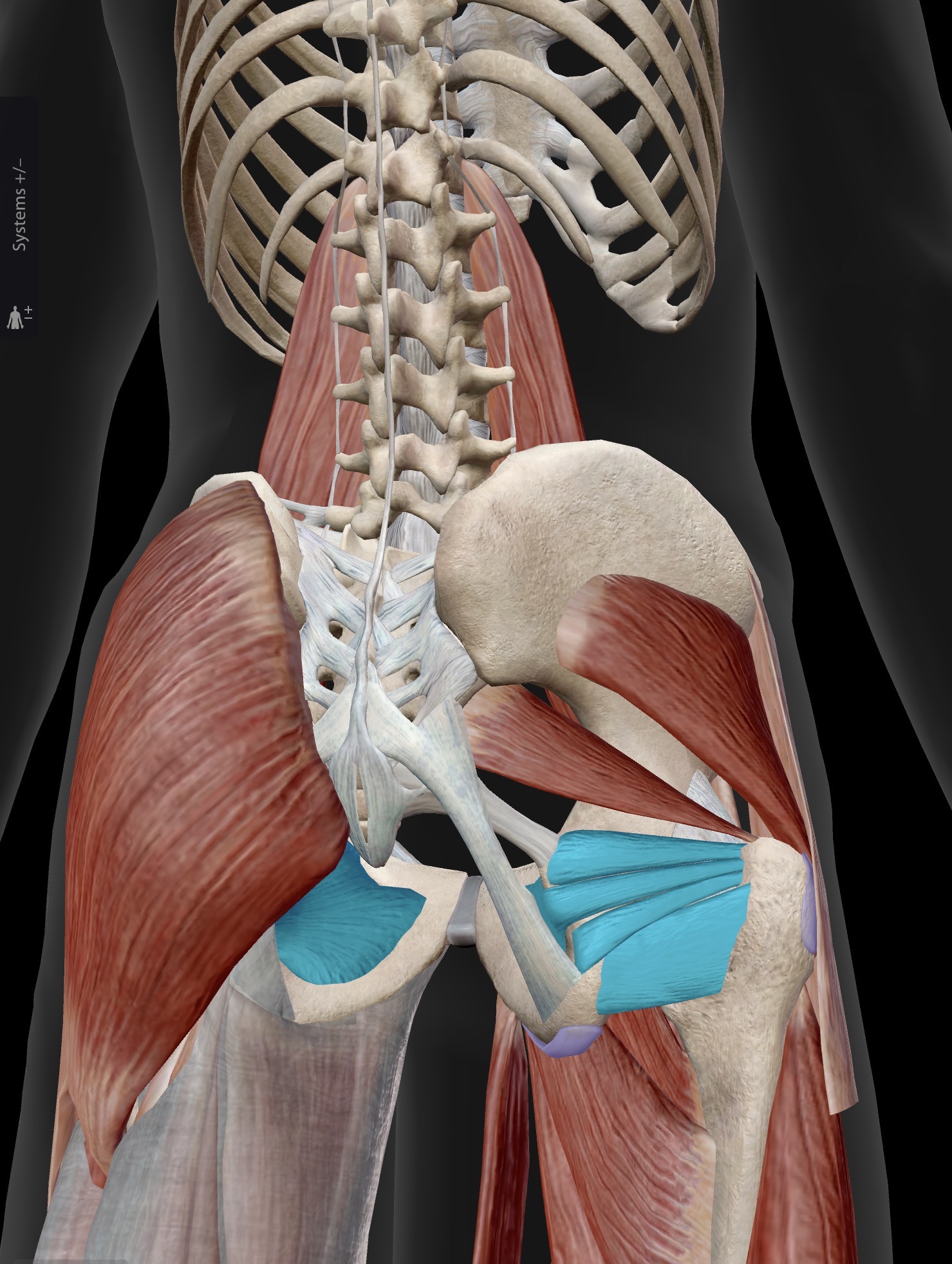
<p>from top to bottom</p><ul><li><p>Gemellus superior</p></li><li><p>Obturator internus</p></li><li><p>Gemellus Inferior</p></li><li><p>Quadratus femoris </p></li></ul><p>Insertions and actions are all the same</p><p>I: Greater trochanter region</p><p>A: External rotation of the hip, when the hip is extended</p><p></p>
44
New cards
<p>Name the muscle and corresponding letter ( O = origin, I = insertion, A = actions, IN = innervation)</p><p>O</p><p>I</p><p>A</p><p>IN</p>

Name the muscle and corresponding letter ( O = origin, I = insertion, A = actions, IN = innervation)

O

I

A

IN

Obturator externus

I: Greater trochanter

A: External rotation of the femur at the hip, when the hip is extended

<p>Obturator externus</p><p>I: Greater trochanter</p><p>A: External rotation of the femur at the hip, when the hip is extended</p>
45
New cards
<p>Name the muscle and corresponding letter ( O = origin, I = insertion, A = actions, IN = innervation)</p><p>O</p><p>I</p><p>A</p><p>IN</p>

Name the muscle and corresponding letter ( O = origin, I = insertion, A = actions, IN = innervation)

O

I

A

IN

Piriformis

O: Anterior Surface of sacrum

I: Greater trochanter

A: External rotation of the hip, when the hip is extended
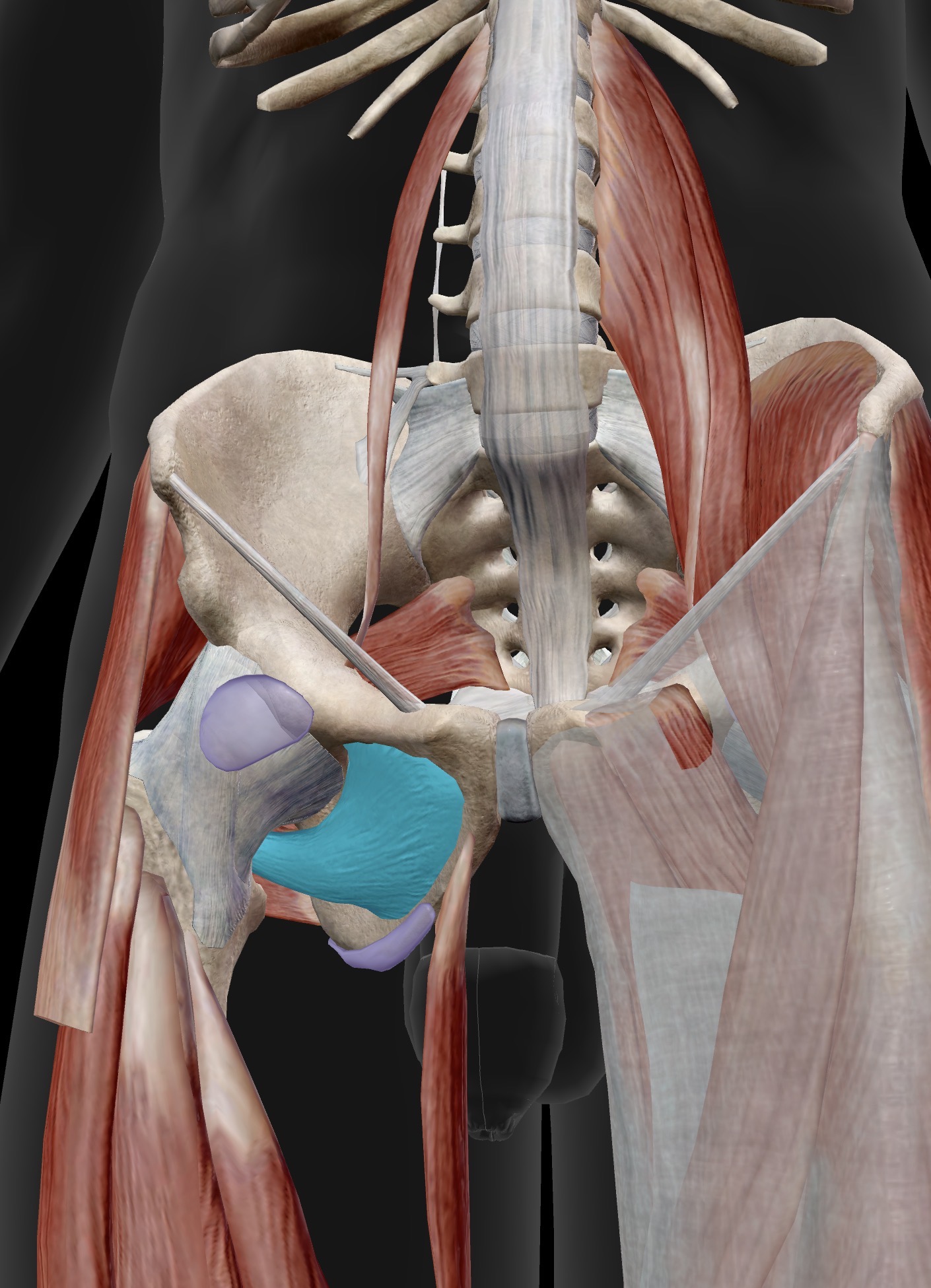
<p>Piriformis</p><p>O: Anterior Surface of sacrum</p><p>I: Greater trochanter</p><p>A: External rotation of the hip, when the hip is extended</p>
46
New cards
<p>Name the muscle and corresponding letter ( O = origin, I = insertion, A = actions, IN = innervation)</p><p>O</p><p>I</p><p>A</p><p>IN</p>

Name the muscle and corresponding letter ( O = origin, I = insertion, A = actions, IN = innervation)

O

I

A

IN

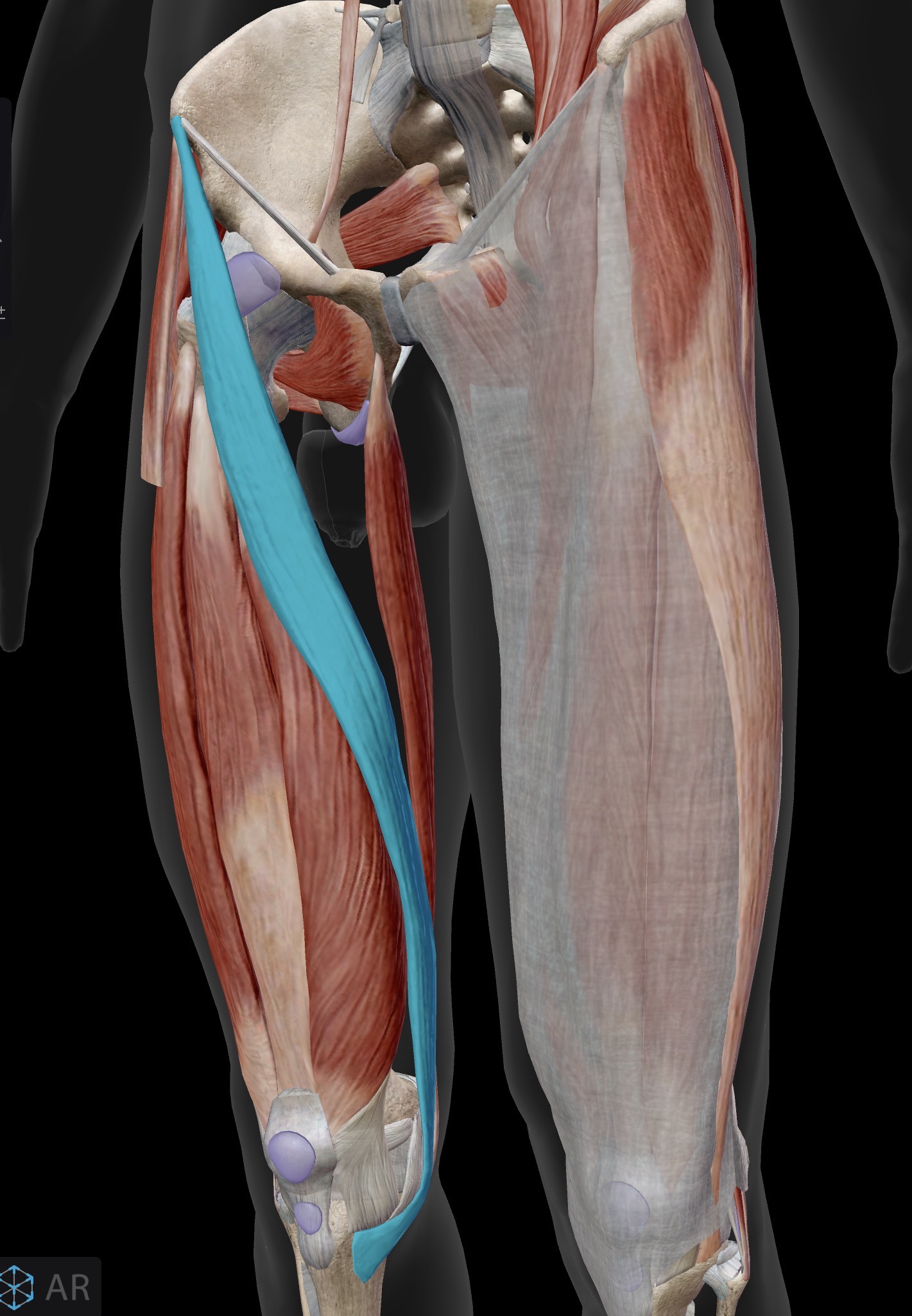
Sartorious

O: Anterior superior iliac spine (ASIS)

I: Proximal, medial, anterior tibia - a spot known as the “pes anserine group” (gracilis and semitendinosus also attach here: “say grace before tea”)

A: “Tailor sit” movement (combined flexion, abduction and external rotation of the femur at the hip and weak flexion of the tibia at the knee)

IN: Femoral nerve
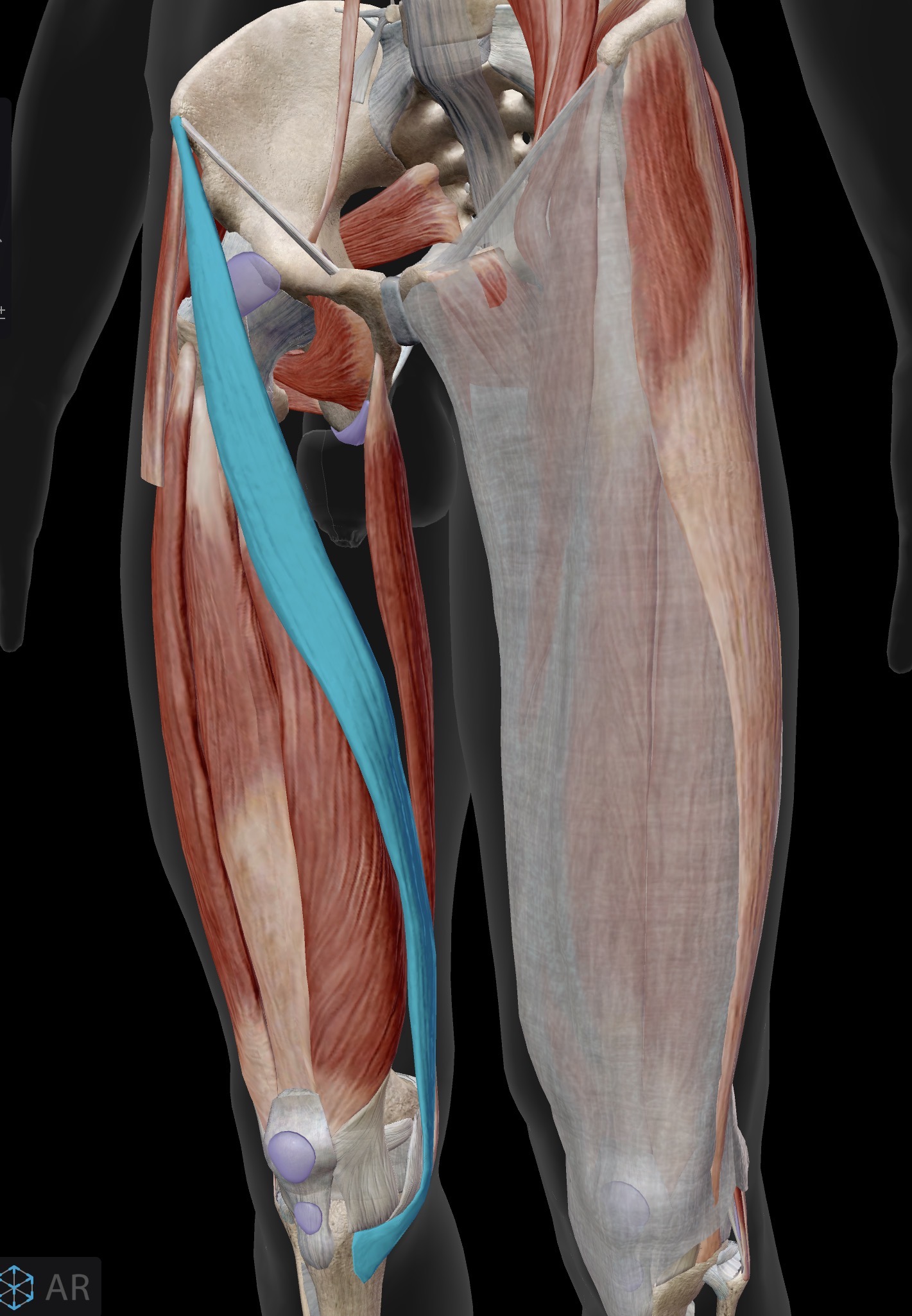
<p>Sartorious</p><p>O: Anterior superior iliac spine (ASIS)</p><p>I: Proximal, medial, anterior tibia - a spot known as the “pes anserine group” (gracilis and semitendinosus also attach here: “say grace before tea”)</p><p>A: “Tailor sit” movement (combined flexion, abduction and external rotation of the femur at the hip and weak flexion of the tibia at the knee)</p><p>IN: Femoral nerve</p>
47
New cards
term image
knowt flashcard image
48
New cards
<p>What nerve is this?</p>

What nerve is this?

Femoral nerve
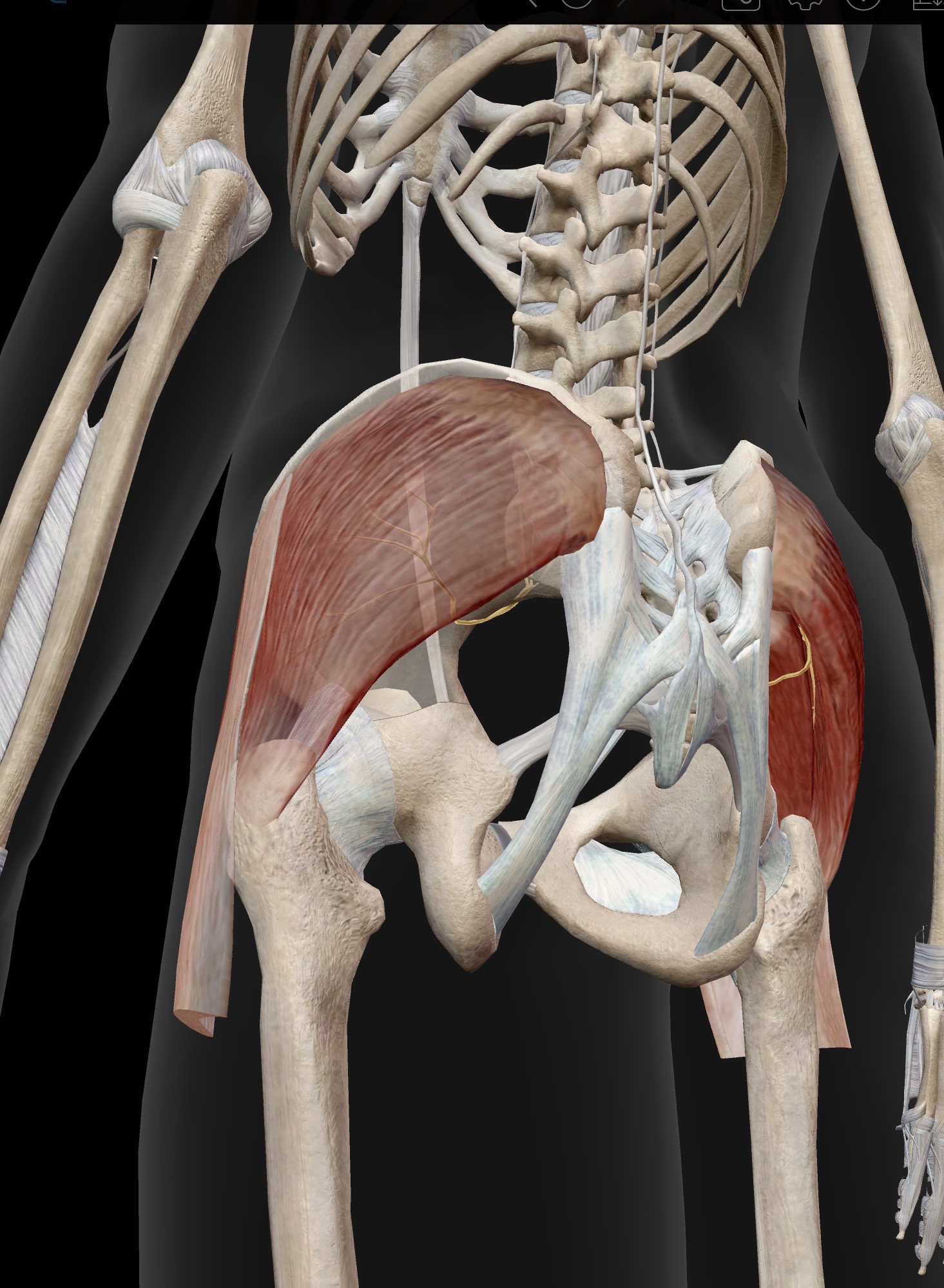
<p>Femoral nerve</p>
49
New cards
<p>What nerve is this?</p>

What nerve is this?

Superior gluteal nerve
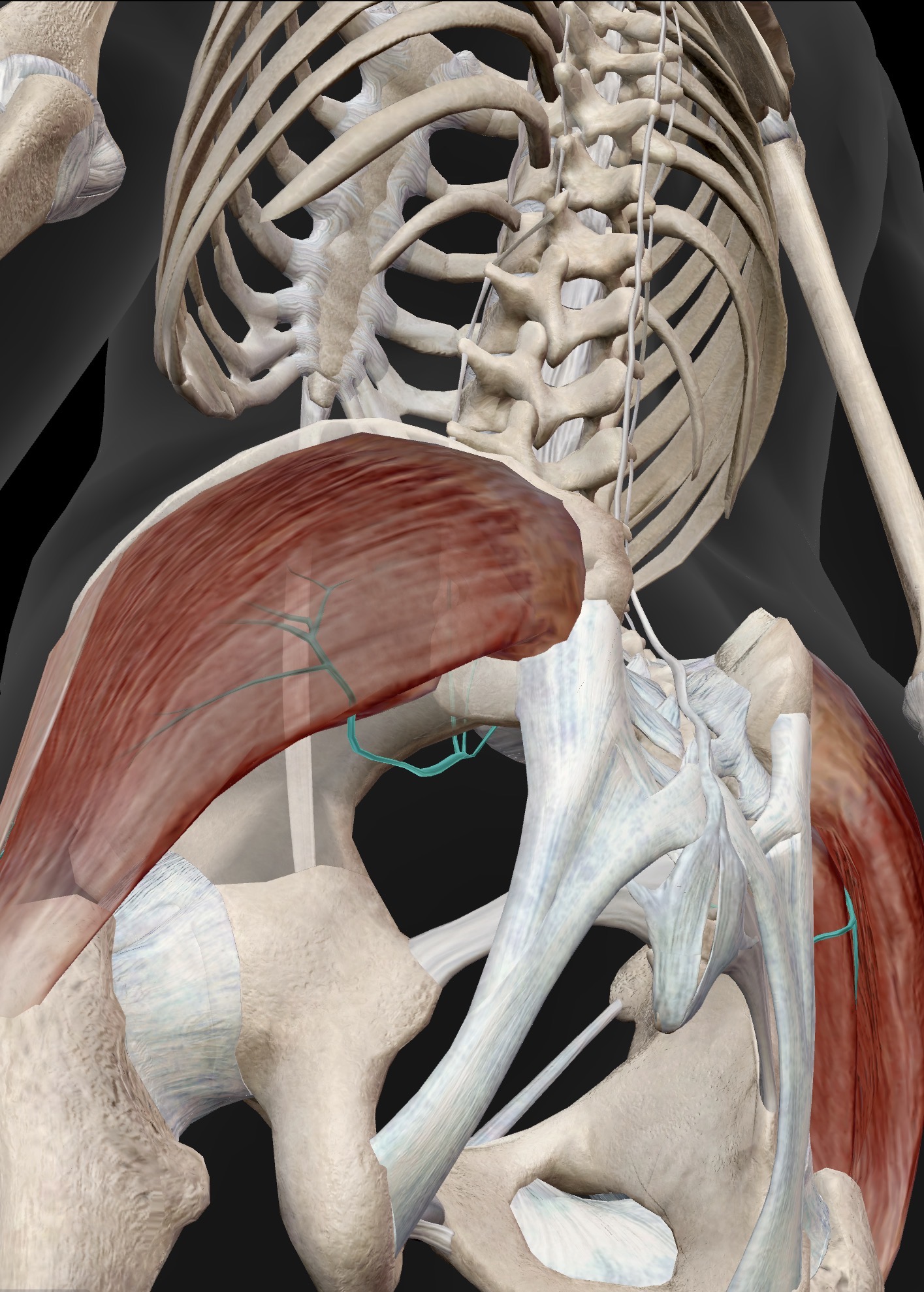
<p>Superior gluteal nerve</p>
50
New cards
<p>What nerve is this?</p>

What nerve is this?

Inferior gluteal nerve
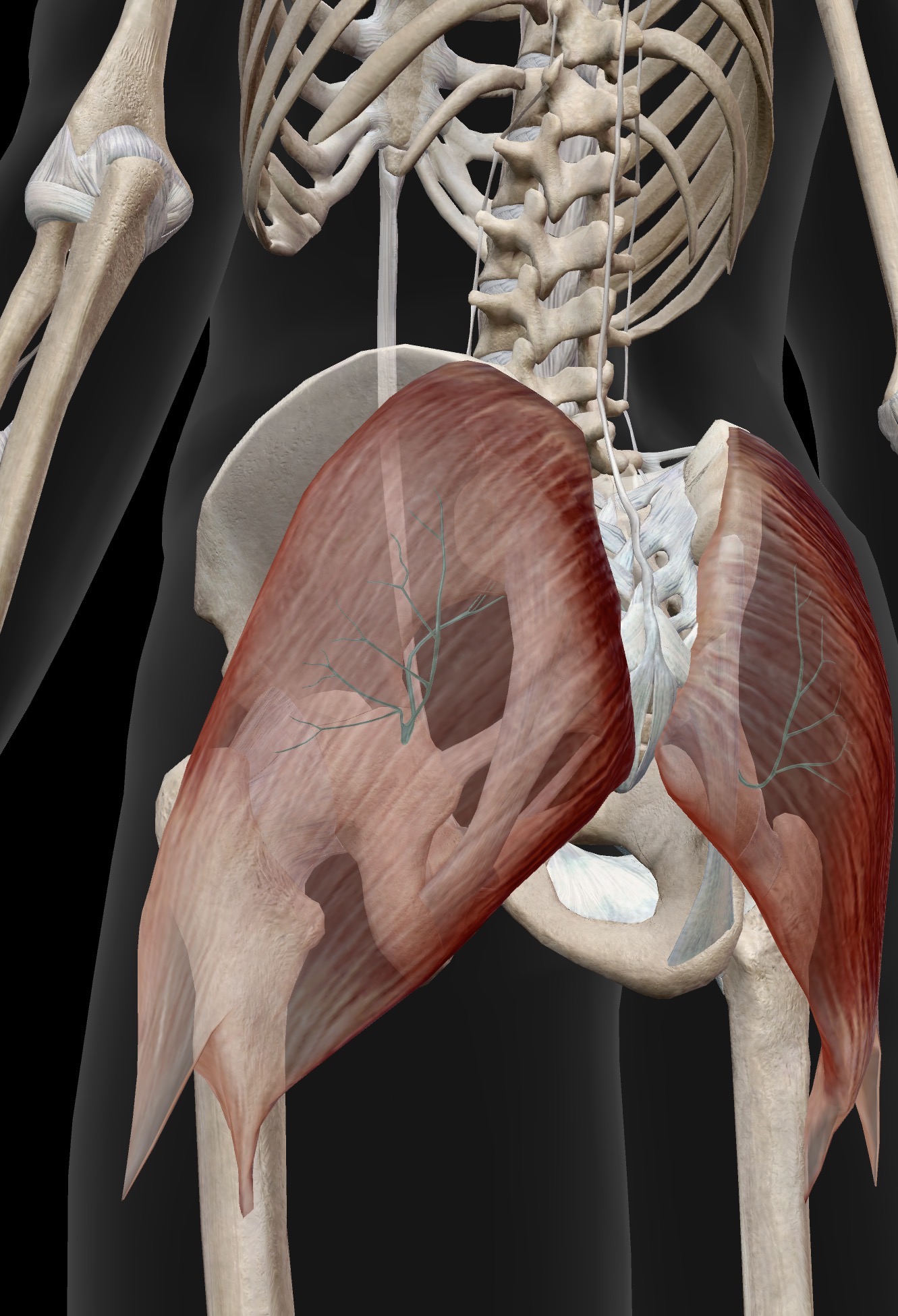
<p>Inferior gluteal nerve</p>
51
New cards
<p>What nerve is this?</p>

What nerve is this?

Sciatic nerve

<p>Sciatic nerve</p>
52
New cards
<p>What nerve is this?</p>

What nerve is this?

Obturator nerve

<p>Obturator nerve</p>