Content Area 4: Later Europe and the Americas
 Call Kai
 Learn
Learn Practice Test
 Spaced Repetition
 Match
Match Flashcards
 Knowt Play
1/33

There's no tags or description
Looks like no tags are added yet.
Name | Mastery | Learn | Test | Matching | Spaced | Call with Kai |
|---|
No analytics yet
Send a link to your students to track their progress
34 Terms
Rococo Period (France before French Revolution)
Scientific rev and enlightenment
Based on ideas on logic, observation, and reason
Absolutism
European conquest of the indigenous populations of the world
Nobility will regain some of their power after the death of Louis XIV in France, many will leave Versailles for townhomes in Paris
Time period of change
Rococo age will end with the start of the French Revolution
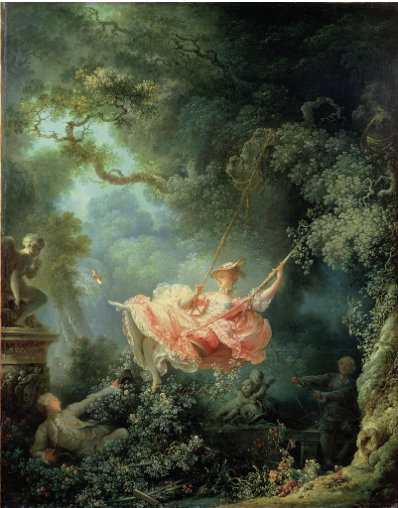
Fragonard’s The Swing: (Rococo)
Greenness = fertility
Shoes come off = sexual occurances
Dog is barking like crazy = no fidelity
Elicit affair, common among the noble class
Artist: Jean-Honore Fragonard
Oil on canvas
Frivolity of the nobility, garden like setting, naughtiness, undercurrent of sexuality
Atmospheric perspective
Rococo aristocracy engaging in pleasurable activities, very different from how the rest of the french lived
Lower left hand corned a man is hidden in the bushes look up the dress of the woman on the swing
Man controlling the swing is unaware of the hidden youth
Some believe the man swinging the woman is a priest
cupid/puti statue holds finger up to lips as if shushing
Rococo paintings were a reaction against the French Baroque that were focused on the French King
This would have been in a noble townhouse in Paris, a rather small painting for a smaller setting
This painting is best known for symbolizing the arrogance and carelessness of the nobility a few decades before the french revolution
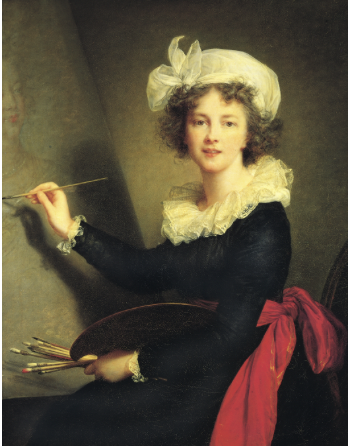
Le-Brun Self Portrait: (Rococo)
Colors of the French flag, the revolution
Painted in Rome while in Exile
Oil on canvas
Elisabeth Louise Vigee-Le Brun was the main portraitist to Marie Antoinette (she lives at Versailles)
This painting depicts Le Brun as she paints Marie Antoinette from memory (cause she isn’t there in exile)
Le Brun has to flee France during the French Revolution as she was associated with the monarchy
She wears attire that was made fashionable by Marie Antoinette
Turban, sash of red ribbon
The painting depicts alert intelligence, vibrancy and freedom from care (a bit of sadness for not being with marie antoinette
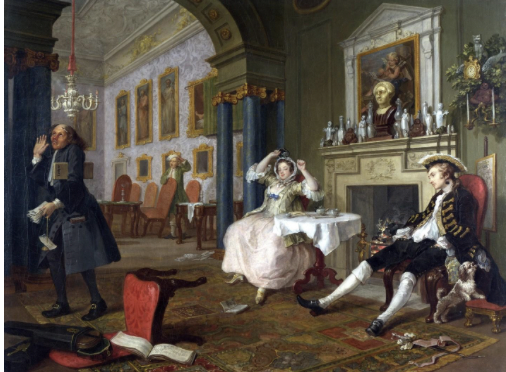
The Tête à Tête, from Marriage a la Mode: (Narrative) (English Rococo)
William Hogarth
London
Oil on canvas
One of the six-paintings in a series called “marriage a la mode.” narrative series
Pokes fun at the English nobility
Man has been out all night with another woman, dog sniffs at bonnet in his pocket (dog is not at rest, knows something is wrong)
Broken sword means he has been in a fight and lost (may mean something else…)
Wife has been playing cards all night, bodice is slightly undone, accountant holds unpaid bills knowing the couple can’t pay because of her gambling
Turned over char shows that the violin player left hurriedly when the husband came home, music in art was symbolic for sensuality
Classicism is depicted through the home’s interior but many inexpensive recently purchased items cheap the interior, see the fireplace mantle
Classical statue with a broken nose
In another painting in the series the husband goes to the doctor to be treated for syphilis, which appears on his neck in the painting
The rest of the paintings show the debauchery and the charade of this marriage
Both husband and wife have been cheating/unfaithful
Husband gets killed by her lover
She poisons herself
Lover is hanged
Infant child has syphilis
Hogarth’s overall message is one that tells that being aristocratic is not always what it seems, to be careful of who you marry, and never marry for money or prestige
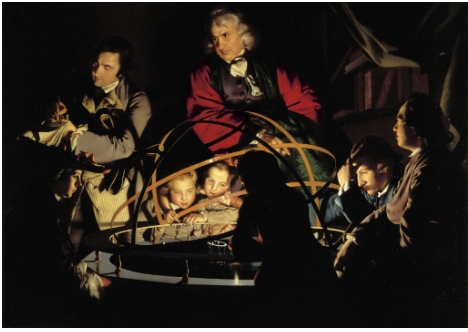
A Philosopher Giving a Lecture at an Orrery:
Joseph Wright of Derby
Derby, England
Oil on canvas
Characteristic of the Scientific Revolution and Enlightenment
Depicts a group who came together once a month to discuss astronomy, Lunar Society
An Orrery is an early form of a model of the solar system, a sort of planetarium
Imitates planetary motion
Unseen lamp imitates the sun
Mixed group of middle class people
Different reactions on their faces (have all four phases of the moon)
Philosopher is stylized like Isaac Newton
An eclipse is being demonstrated
Notetaker on the left records major points of the discussion
Each face in the painting depicts a certain phase of the moon, Lunar Society
Inspired by Caravaggio/s use of tenebrism
Wright painted a number of candle lit paintings like this
Neoclassicism (Later Europe and Americas)
A reaction to the frivolous nature of the Rococo
Will develop out of the French Revolution (and partly American Revolution), and be embraced by Napoleon
Many enlightenment philosophers called for a new artform that embraced higher values and virtuousness
Will borrow heavily from Ancient Greece and Rome and partly the Renaissance
Self sacrifice for the common good
The measure of a person is the good that he accomplishes
Greek democracy, Roman Republic all themes of the French Revolution and American Revolution
Greco Roman architecture will return
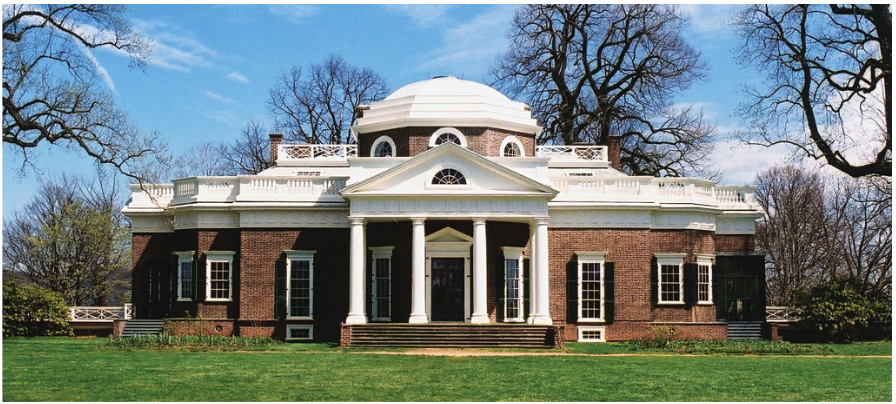
Monticello: (Neoclassicism)
Thomas Jefferson
Charlottesville, Virginia
Brick, glass, stone, and wood
Monticello means little mountain in Italian
Jefferson wanted a new architectural concept that didn’t look like the Baroque
Chief building on Jefferson’s plantation
Symmetrically planned interior
Brick building, stucco is applied to look like white marble
Tall French doors and lots of windows to allow breezes to come in from any direction (appropriates from Palladio)
Lightly studied Renaissance architect Palladio in college (not his major)
Appears to be a one story building but it is actually two stories
Octagonal dome appropriates from Pantheon
Appropriates from the writings of Palladio and from the Roman ruins Jefferson saw in France
Based off architecture he saw in France as the American Minister to France (diplomat)
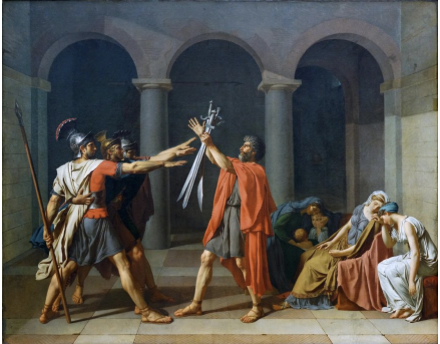
The Oath of the Horatii: (Neoclassicism) (Narrative, but don’t pick it)
Jacque-Louis David
Paris, France
Oil on canvas
Patron: Louis XVI
Exemplum Virtutis - painting that exemplifies virtues of self sacrifice and honor
Old roman myth
Story of three brothers that pledge loyalty to their father and to Rome
Going to battle against Curiatti, another family
Woman crying on the right is Horatii daughter who is engaged to a Curiatti
Male forms are rigid, vigorous, and power, gestures are unified
Classical dress and architecture in the background
However, appropriates from caravaggio in the lighting
Three sons will fight to the death for rome
Painted five years before French Revolution, major economic turmoil while the aristocracy lives in luxury
Unfair taxation
Food shortages
David provided a new type of painting, one that exemplified self sacrifice and virtuous behavior in a time when those power showed none
Considered to be the start of Neoclassical painting
David created quite a stir at the Salon Art Exhibit in Paris as this piece was a complete departure from the Rococo
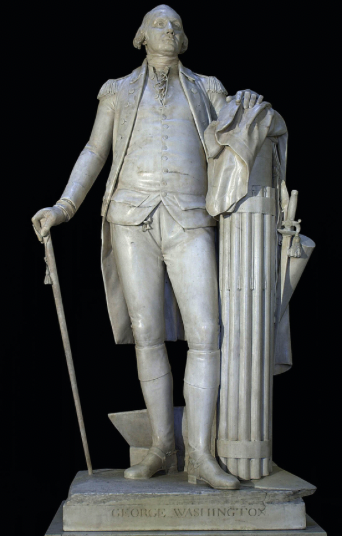
George Washington: (Neoclassicism)
Jean-Antoine Houdon
Carrara Marble
Houdon from Paris, usually depicted subjects in classical dress, togas
Washington demanded that he be depicted as an 18th century gentlemen
Vest too small
Protruding stomach
Button missing from jacket
Houdon depicted Washington as a man of vision and the Enlightenment
Badge of Cincinnatus
Cincinnatus was a Roman general that left his farm to temporarily become a dictator during crisis
Returned to the farm when the crisis was over. Very similar to Washington
Washington returned to his farm after presidency, many thought he might perform a coup d’etat
Symbolism:
Plow behind Washington - plantation
Roman Fasces - rod tightly bound together like the 13 colonies
Washington leads on the 13 rods of the fasces as if his support comes from the 13 colonies
Gentleman’s walking stick in his hand, sword over at his sife
Stands very similarly to Polykleitos’ Doryphoros and therefore Augustus of Primaporta
Houdon consulted with Washington on all of these symbols
An 18th Century American depicted of power
Power that is service to one’s country and the notion that power comes from the people
Romanticism (Later Europe and Americas)
An embrace of freedom and democracy but a reaction to the French Rev and Age of Napoleon
A reaction to the notion that reason embraced in the Enlightenment could solve all problems
It didn’t, it lead to the Reign of Terror
An embrace of emotion over reason, nature over industry
Romantics promoted freedom of expression, individual thought, and social independence
Romantic artists often embraced gloomy, depressed, and pensive mindsets
Romantic artists will embrace individuals capable of great heroic deeds
Romantics will “romanticize” the middle ages as being a simpler, more honest time period
Photography will develop in this time period
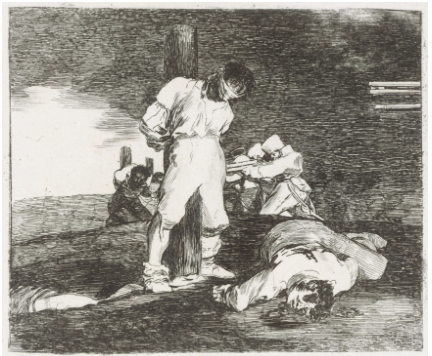
Y no hai remedio (And There's Nothing to Be Done), from Los Desastres de la Guerra: (culturally significant event + narrative) (Romanticism)
Francisco de Goya
Etching
From the “Disasters of War Series”
82 images that are critical of Napoleon’s occupation of Spain
Spain was in continuous warfare at this time period (and prior)
Original title, “Fatal Consequences of Spain’s Bloody War with Bonaparte and Other Emphatic Caprices”
Series explore the themes of war, famine, politics, power, and death
And There is Nothing To Be Done
Spanish patriots about to be executed without a trial by French soldiers
Goya depicts them as civilians
French soldiers awaiting the order to fire
Mangled body on the ground
A critique on the “Enlightened” rule of Napoleon
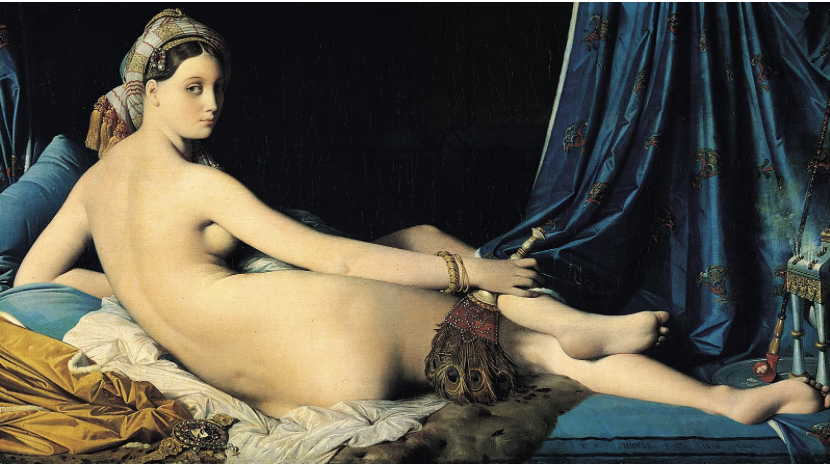
La Grande Odalisque: (Romanticism)
Jean-Auguste Ingres
Paris
Oil on canvas
Patron is the Bonaparte Queen of Naples (Napoleon’s sister), out of power when the piece was completed
Ingres is David’s student
Considered to be a blend of neoclassical and romantic
Should be viewed as a continuation of the development of the female nude
Depicts a French interpretation of a Turkish Harem - French Imperialism (romanticizing the concept of the foreigner)
Has elements of exotic (foreign) which are the romanticizing elements
Turban
Hookah
Feather fan
Elements of Renaissance mannerism, back is elongated, left leg is out of place, right arm is very long
This was done to give an element of sensuality
These are the classicizing elements
Appropriated from the Neoclassical pieces by David, Ingres’ master
Compare to:
Titian’s Venus of Urbino
Manet’s Olympia
Any piece showing the female form
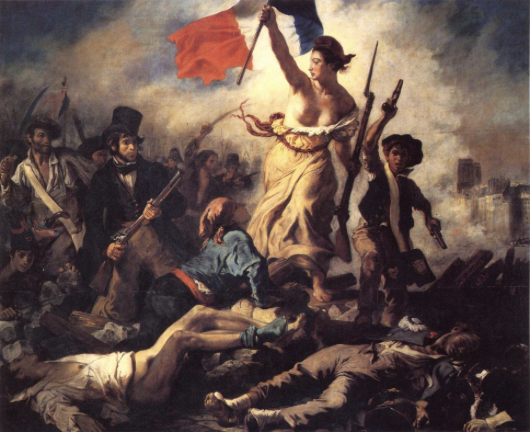
Liberty Leading the People: (Culturally significant event) (Romanticism)
Eugene Delacroix
Paris
July Revolution of 1830 that overthrows Bourbon King Charles X and installs Citizen King Louis Philippe
Symbolism:
Red, white, and blue motifs throughout the painting
Child represents students that were a major part of the uprising
Middle class man with rifle (Delaxcroix), lower class man with sword show that this is a “revolt of the people”
Liberty wears a red cap that is worn in the ancient world by freed slaves
Notre Dame Cathedral can barely be seen through the smoke
French Tricolor from the first revolution is carried by liberty
French government sought to hight the painting from 1831 to 1856 because of its subversive message
Iconic image to the final downfall of the Ancient Regime
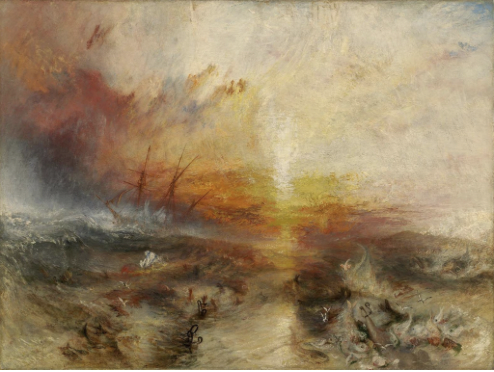
Slave Ship: (humans and nature) (Romanticism)
JMW Turner
English Romanticism
Oil on canvas
Full name: Slavers Throwing Overboard the Dead and Dying, Typhoon Coming On
Based on true story from 1781
Slaves were insured against accidental drowning but not sickness
Illness started spreading through the ship
The captain cast the sick overboard because he couldn’t collect insurance unless they drowned
Slavery was outlawed in England in 1833, but some exceptions were still allowed in terms of trade
This painting brought the horrors of slavery back into the public eye
Recognizable forms but unclear
Ship, hands, chains
Turbulent seascape, storm
Foreboding sunset acts as a symbol of the inhumanity
Turner used loose and rapid brushstrokes
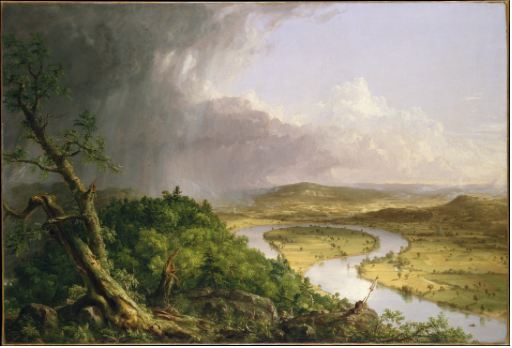
View from Mount Holyoke: (humans and nature) (Romanticism)
Thomas Cole, American Romanticist
Also called The Oxbow
Oil on canvas
Cole is the founder of the Hudson River School which painted American landscapes in a Romanticist style
Massachusetts landscape
Division of two different landscapes
Left: dark, dense forest, boats on river, bright clear weather
Painted as a reply to a British book that Americans had destroyed their environment with industrialization
Manifest Destiny is an undercurrent of this piece in the manner in which it shows civilization slowly taking over the land
Tiny homes with fireplaces
Agriculture
Herding
Ferry
Compare to:
Fan Kuan’s Travellers
Pieter Brughel’s Hunters in the Stone
Any landscapes
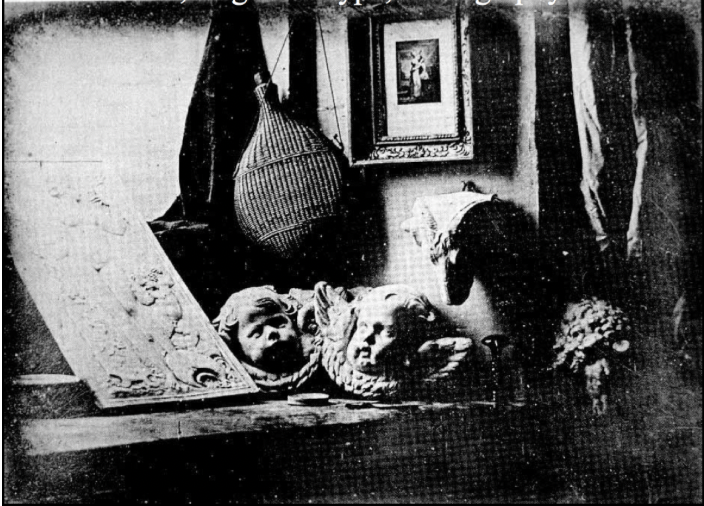
Still Life in Studio: (Romanticism)
Louis Daguerre
France
Daguerreotype (early photography)
Still life inspired by painted still lifes like vanitas paintings
Variety of textures: fabric, wicker, metal, wood
Daguerreotype was an early form of the camera that has no negative and imprints an image on shiny metal with the use of photosensitive (light) chemicals
Significant because it is the advent of a new form of art that will play a significant role in the 20th Century
Not Romantic, just something that occurs in the time period
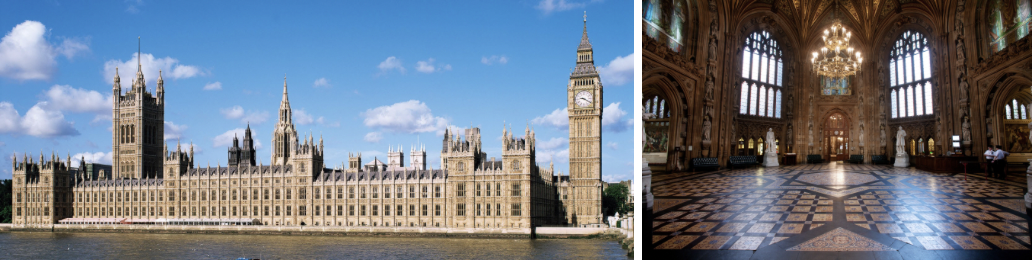
Palace of Westminster (Houses of Parliament): (governing authority in architecture) (Romanticism)
Romanticism = romanticize the middle ages, why it looks gothic
Barry and Pugin
Victorian Era, London
Limestone, masonry, and glass
Parliament building burned down in 1835. Competition held for a new design. Barry and Pugin won
Enormous structure, 1100 rooms, 100 staircases, 2 miles of hallways
Barry was a classical architect, which accounts for the classical “Elizabethan” elements and layout of the building (more greco-roman, mostly in the rotunda - from pantheon)
Pugin was a gothic architect, which accounts for the gothic elements and exterior decoration
Romanticist because of Gothic elements
Big Ben is the clock tower that is meant to be a village clock tower for all of England
Central lobby:
Situated between the House of Commons and House of Lords
Constituents can meet their Parliamentarians here
Sculptures of the Kings and Queens of England and Scotland around the sides of an octagonal room
Similar to the rotunda of the US Capital
Four very large mosaics over each doorway representing the four saints that represent the different parts of Great Britain
Westminster Hall:
This portion of the building is the only part that remains of the original building that burned
The entire structure was built during the Industrial Revolution which was viewed as dark, polluting, and ugly.
Building this in a Gothic style showed a desire to return to the part, to a simpler time, along with showing historical permanence of the government.
This example of the embrace of the Medieval is what makes the Palace of Westminster Romanticism
Compare to:
Versailles
Forum of Trajan
The Agora
Forbidden City
Nan Madol
Or any governing structure related to power and authority
Realism (Later Europe and Americas)
Brought on by the revolutions of 1848 that started in France and spread throughout Europe
Revolutions focused on bringing about democracy, better conditions for the working class
Inspired Karl Marx to write the Communist Manifesto
Artists began to want to push the limits of what was considered to be “art”
Realism was a reaction to the manner in which Romanticism romanticized the past and focused on emotions and vague ideas. Realists wanted that which honest, real, and gritty
Courbet, “Show me an angel and I will paint one.” is a major theme of the realists
Realists often painted the lower classes in their environment
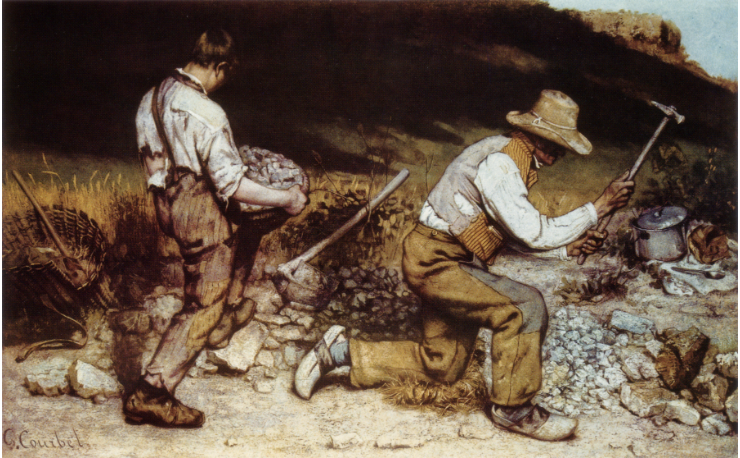
The Stonebreakers: (Realism)
Gustave Courbet
France
Oil on canvas
Courbet submitted this piece to the Salon of Paris art exhibition. Created a great shock
Stone breaking to build a paved road
Poverty is emphasized, old man and young man. Born poor, die poor
Reaction to the labor unrest of Revolutions of 1848
Massive painting, which is usually reserved for grand historical or governmental pieces
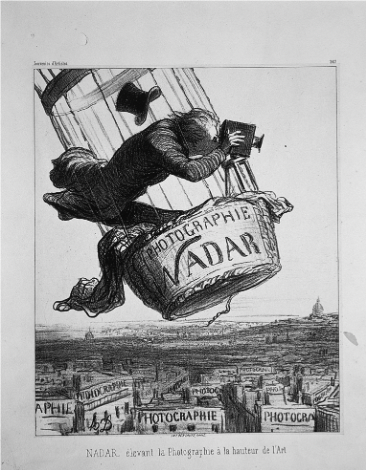
Nadar Elevating Photography to Art: (Realism)
Honore Daumier
Lithograph
Nadar was a photographer that took aerial photographs of Paris in the 1850s
Lithograph depicts Nadar as so focused on a good picture that he almost falls from balloon, loses hat
Every building has “photographie” written on it
Mocks the idea of photography as art
Completed after a french court decision that determined photography to be art and should be considered art by the Paris Salon
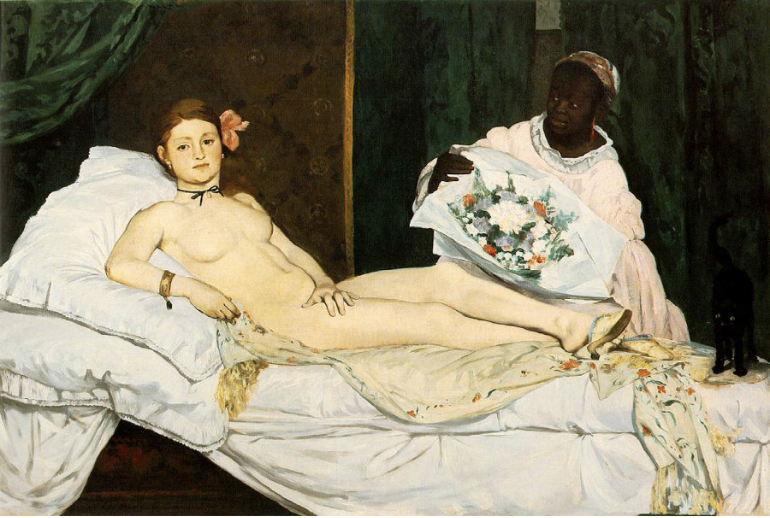
Olympia: (Realism)
Edouard Manet
Paris, France
Oil on canvas
Created a scandal at the Paris Salon of 1865
Appropriates from Titian’s Venus of Urbino
Unlike Venus, Olympia’s is cold, uninviting, and making direct eye contact with the viewer
A mistress was common to upper class Parisian men at this time
Olympia is a common “stage name” for a courtesan/prostitute in Paris
Maid delivers flowers from an admirer or customer
Simplified modeling, yet her hands are highly modeled with shadowigng
Not a classically beautiful face like Urbino, instead it is a real woman’s face with natural imperfections
Dark contrasts
Cat at foot of bed (Urbino’s dog)
Dogs are loyal, cats will leave if you don't give them what they want
Created a stir due to the fact it was a prostitute being depicted as a Venus
Her uncaring and direct look was found to be unnerving to the viewers
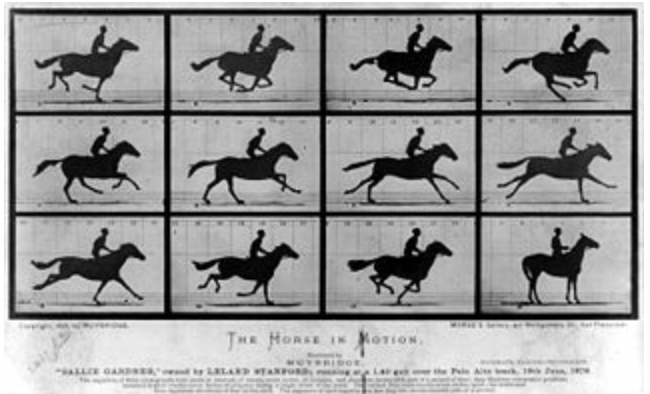
The Horse in Motion: (Narrative, but not really telling a story) (Realism)
Eadweard Muybridge
Patron: Leland Stanford
Photograph
By 1870s photography now advanced enough that it can capture moments the human eye cannot
In this piece a bank of cameras snap pictures triggered by trip wires at different points on a horse track, showing sequence
Designed to show whether a horse ever takes all four feet off the ground
Photography has advanced greatly and is now better able to catch an exact moment in time
Major influence to impressionist painters
Compare to other technical advancements in art:
Steel in architecture
Oil paint vs fresco
Lost wax technique vs subtractive method
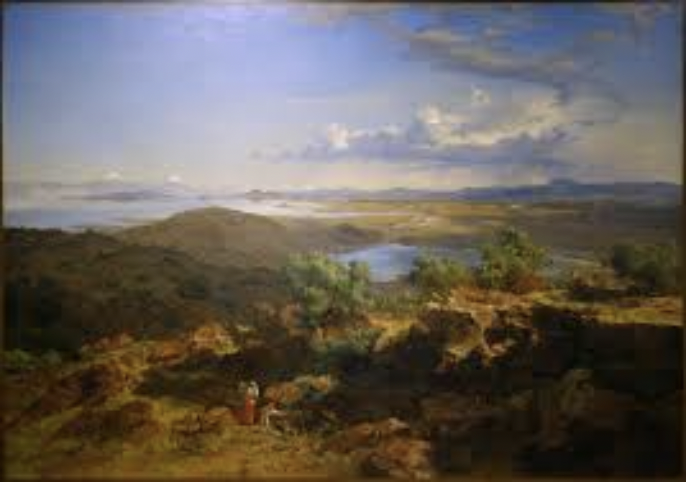
The Valley of Mexico from the Hillside of Santa Isabel: (humans in nature) (Realism)
Jose Maria Velasco
Mexico
Oil on canvas
Velasco was mainly a landscape painter by training
Keen observer of nature: rocks, clouds, and waterfalls
Rejected realist landscapes of Courbet and the Romanticist landscapes of JMW Turner
Glorifies the Mexican countryside
Mexico City can be seen off in the distance
Basilica of Guadalupe can be seen (Virgin of Guadalupe)
Lake Texcoco is seen yet it has been somewhat filled in
Hints of industrialization appear, dust kicked up by machines
Two volcanoes in the back are major parts of Aztec myths
Essentially, this painting is a celebration of Mexico, its history, present, and mythology
Compare to culturally significant landscapes:
Fan Kuan’s Travellers
The Oxbow
Bruegal
The Great Wave
Impressionism (Later Europe and Americas)
A growth out of realism in the idea that an artist can break the rules
Heavy influence of Japanese Woodblock Prints that were being brought from Japan
Highly influential, new and out of the ordinary for western art
Japanese carved designs on wood, colored, and used as a sort of stamp to recreate the image in the wood
Impressionists were highly inspired and included elements into their paintings
Main characteristics:
Very bourgeoisie, middle class
Momentary slice of life
Effect of light on color instead of light on black
Very limited use of black paint
Use of complementary colors
Cropped edges (influence of photography)
Avant-Garde, impressionists were considered “ahead of the mainstream” and somewhat radical - rejected by the salon
Their art will become mainstream and then will no longer be considered avant garde
Manet, Monet, Degas, Cassatt
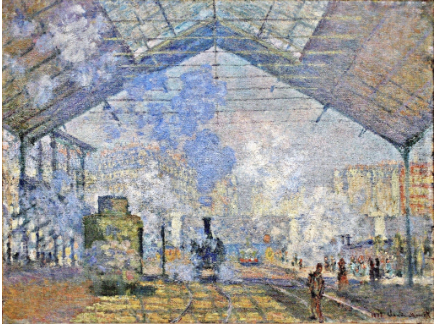
The Saint-Lazare Station: (Impressionism)
Claude Monet
France
Oil on canvas
Exhibited at the impressionist exhibition of 1877
Monet is famous for painting series of paintings of the same object at different times of day, seasons, months, years
This is one of the series depicting this train station
Effects of steam, light, and color are the primary concern, the travelers and machines are secondary
Forms dissolve, colors become the main focus to the viewer
Monet usually focused on natural settings and landscapes
This one focused on modern machine, industrialization
Line is almost ignored
Shows the effect of industrialization on French society, but also gives the notion of a growing middle class that can live in suburbs
Monet’s intent is to focus on the play of light and color rather than creating an academically correct image of a train coming into a station
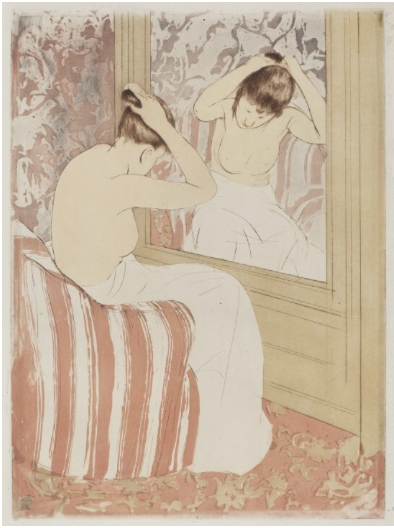
The Coiffure:
Mary Cassatt
France (Cassatt is an American expatriate)
Drypoint and aquatint (form of etching with color)
Able to be mass reproduced
1890 the French School of Fine Arts showcased a number of Japanese Woodblock prints (The Wave was one)
Woodblock prints had a tremendous effect on the young artists of the time period
Cassat’s work is almost always of women, women who are depicted without men, independent
No posing or acting, momentary slice of life
Highly appropriates Japanese Woodblock art
Japanese hairstyle and point of view, seen from the back
Contrasting curves of the female figure with the straight lines of the wall and chair
Pastel colors
Cassatt made hundreds of these etchings in her home studio between 1890-91
Her pieces depicted the bourgeois working class women of the 19th century
White nude, but there is no eroticism
More based on a momentary slice of life as a working woman gets ready
After a few quality reprints, Cassatt would destroy the copper on which the originally etching was created so that it wouldn’t be copied
Post Impressionism (Later Europe and Americas)
Should be seen as an extension of Impressionism, not a completely different genre
post-Impressionists wanted to focus on line, shape, and color more than impressionists did
Abstract versions of the natural world that were almost the opposite of the Renaissance’s desire to closely imitate nature
Post Impressionists wanted to do more than just copy nature, they wanted to include the artist’s interpretation of nature
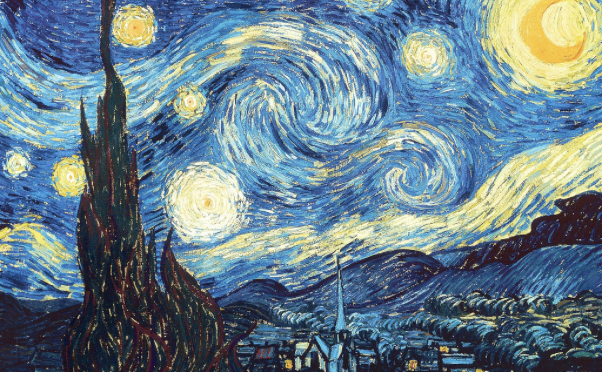
The Starry Night: (humans in nature) (Post Impressionism)
Vincent Van Gogh
Oil on canvas
Thick short brushstrokes, impasto technique
Possibly a view from Van Gogh hospital room in St. Remy
Part of the plain white canvas can be seen in the swirls of different parts, every space need not be filled
Left to right wave like design broken by a tree and church steeple, stars over a placid village
Cyprus looking tree looks like a green flame, cyprus is a tradition symbol of death and eternal life
Van Gogh completed Starry Night while in an asylum for a breakdown
His room had a view, but the studio where he painted it did not
It is believed that Starry Night is his mind’s interpretation, painted from memory
Strong example of post impressionism as it is more focused on the artist’s interpretation other than reality
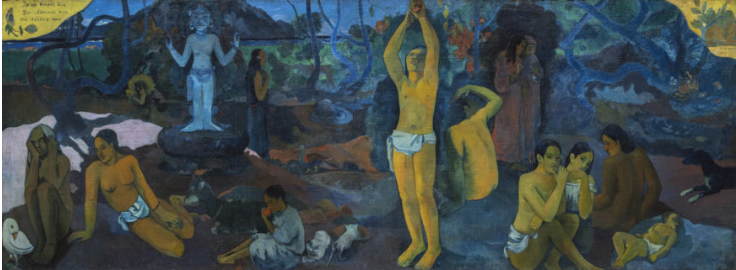
Where do we come from? Where are we going?: (Narrative + blending of cultures) (Post Impressionism)
Paul Gauguin
French, painted in Tahiti
Oil on canvas
Gauguin will paint this in Tahiti after he leaves France
He suffered from infections, very impoverished, mental health issues
Painting reflects the emotions he felt with the death of this daughter
He planned to kill himself and have this painting be his last piece
He didn't
It is supposed to tell the story of life, read RIGHT to LEFT
Right: birth and starting of life
Middle: mid life, making your way in the world
Left: death
Death figure is that of a Peruvian mummy that was exhibited in Paris, this mummy will appear in many pieces of art at this time
Uses Tahitian motifs throughout
Blue Tahitian idol represents the afterlife/spirituality
Tahiti depicted to be an Eden like place
Gauguin was influenced by many non Western cultures, a product of 19th century Imperialism
Egyptian figures used for inspiration
Japanese woodblock prints when Gauguin uses solid fields of color
Tahitian imagery, Tahiti is a French colony at this time
Gauguin saw this painting as his ultimate personal expression
Most significant because it embodies Post Impressionist characteristics with the influence of non-Western cultures
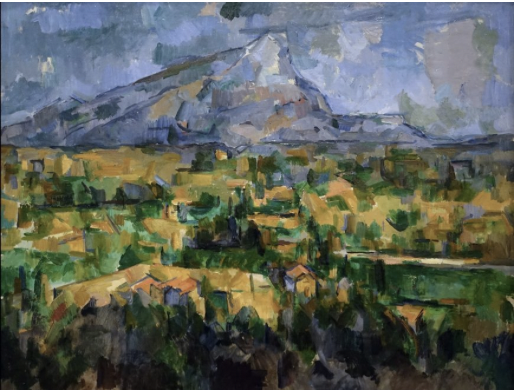
Mont Sainte-Victoire: (humans and nature, but not an anchor piece) (Post Impressionism)
Paul Cezanne
France
Oil on canvas
One of 11 in a series about this mountain
Painted towards the end of Cezanne’s life
Many Post Impressionist artists were painting very flat painting that were influenced by Japanese Wood-block prints
Cezanne detested flat paintings, wanted to show the true solid nature of the subject matter in a Post Impressionistic style (houses are the only thing that have lines)
He sought rounded compositions with geometric construction made with color splashes
Employed proper perspective, which many post impressionist artists did not
Did this by putting darker, heavier colors in the forward part of the image and cooler, lighter colors in the background
Not impressionist because Cezanne is more focused on geometric forms than momentary lighting and slices of life
Significant because Cezanne is pushing the boundaries and adapting what PI artists were doing.
Will have major impact on the Cubists like Picasso
Compare to other landscapes
Hunters
Valley of Mexico
Travellers
Symbolism
Trying to symbolize a state of mind
Reaction against the 19th century belief in the advance of science and technology
Sometimes called Art Nouveau
Sometimes it is mistaken for post-impressionism
Artists were less concerned with the visible world of surface appears
Major artists were Rousseau, Munch, Klimt, and Rodin
Heavily influenced by romanticism and Goya’s black painting like Saturn Devouring His Children
Instread… the focus of their art was to give visual form to states of mind
Imagination taking precedence over nature
Visualizing an emotion, fear, anxiety, or idea, not necessarily realistic
Irrational notions within the mind
Sigmund Freud and Psychology are major topics of discussion at this time
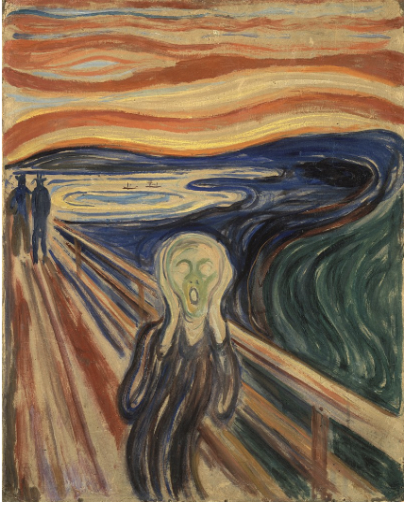
The Scream: (Symbolism)
Edvard Munch
Norwegian
Tempera and Pastel on cardboard
Munch uses long thick brushstrokes swirling around the painting
Peruvian mummy exhibit in Paris, same as Guagin, was the inspiration
Figure cries out in scream, landscape echoes the emotions of the figure
Colors symbolize anguish (not nature)
Figure looks emancipated with a skull-like head
Has patterns that are similar to another contemporary art form known as Art Nouvea
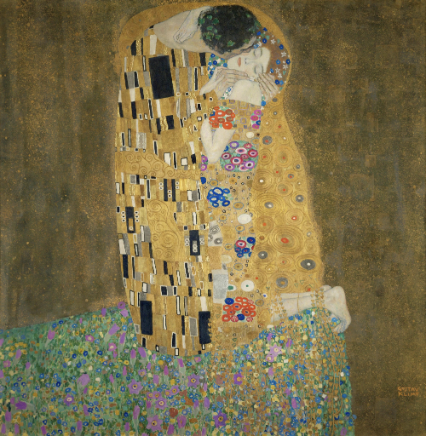
The Kiss: (Symbolism)
Gustav Klimt
Art Nouveau/Symbolism
Vienna Austria
Oil on canvas with gold leaf
Art Nouveau movement began around 1890 and will end at WWI
Sought to combine many art forms into one, a unification of mediums
The Kiss shows very little of the human body, just the two heads, four hands, two feet
Male figure is symbolized by rectangular symbols and the female by circular/round symbols
Suggestive of passion, all consuming love, sensuality, eroticism yet not overtly sexual
The turning of the man’s neck is suggestive of power and control
The woman’s hand caressing the man’s hand as he pulls her in
Reminiscent of the icons from the Byzantine empire
Gustav Klimt may have been trying to create a modern icon by showing the escape that passion provides lowers.
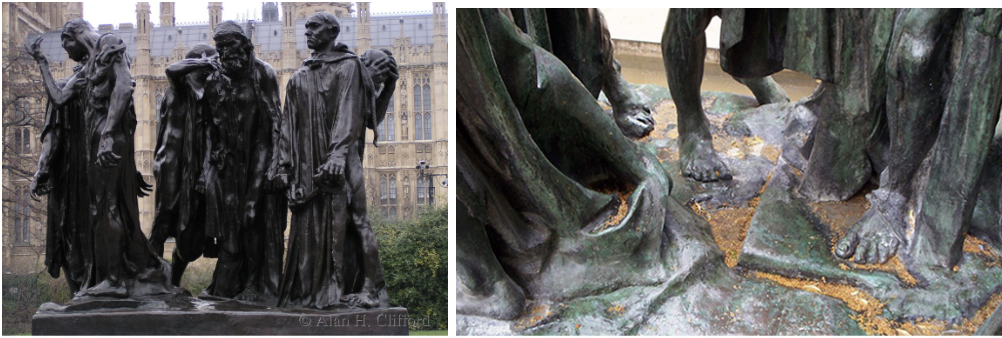
The Burghers of Calais: (culturally significant event) (Late 19th Century Sculpture)
Auguste Rodin
Bronze casting
Patron: city council of Calais
The artist’s interpretation includes the work of his hands like the impressionist painter’s brush strokes can be seen
The physical imprint of the artist’s hand is analogous to the impressionists brush strokes
Tells the story of the burghers of Calais that sacrificed themselves to save their city during the 100 years war in the 1300s
By offering their lives the burghers ensured the people of Calais would be given food after a long siege
Sculpture embodies the feelings that many french felt after the germans took over france in 1871 during the franco-prussian war
Very tied to the nationalism of the time
Each figure was sculpted individually and each one shows a different reaction to their impending death
All figures suffer from lack of food
Some fearful, some resigned, some pitifully sad, some committed their death for their city
Central figure is eustache de saint pierre, noose around neck for hanging
Rodin intended for the sculpture to be placed at ground level so viewers could see the emotions eye to eye
The city of calais will reject the work, they wanted something that showed a single personification of the figures, they wanted something heroic
City council insisted on a federal to life the figures up
Rodin cast another set for eye level and put it in paris