Deck #1: Depth Perception
 Call Kai
 Learn
Learn Practice Test
 Spaced Repetition
 Match
Match Flashcards
 Knowt Play
1/36

There's no tags or description
Looks like no tags are added yet.
Name | Mastery | Learn | Test | Matching | Spaced | Call with Kai |
|---|
No analytics yet
Send a link to your students to track their progress
37 Terms
True or False - Depth perception is only binocular.
False - Depth perception can be monocular AND binocular
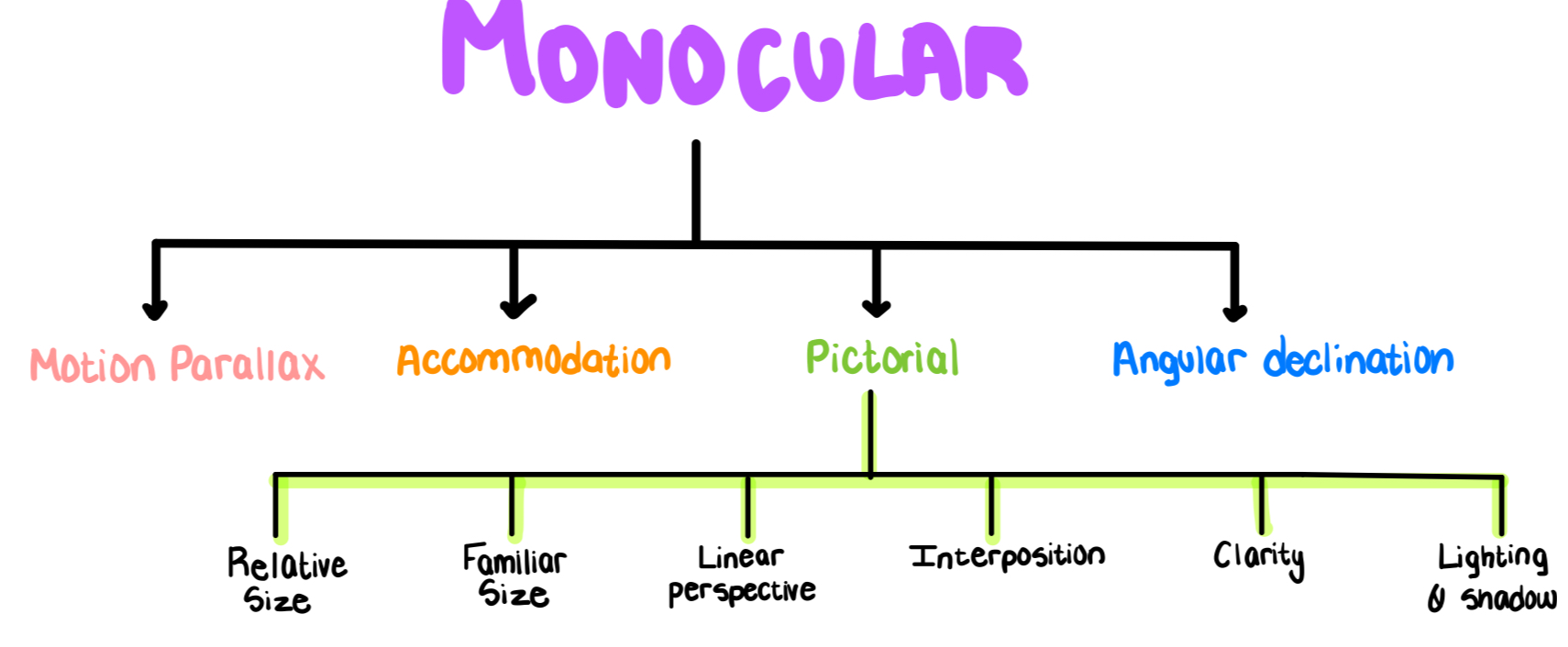
Classify the Monocular Depth cues.
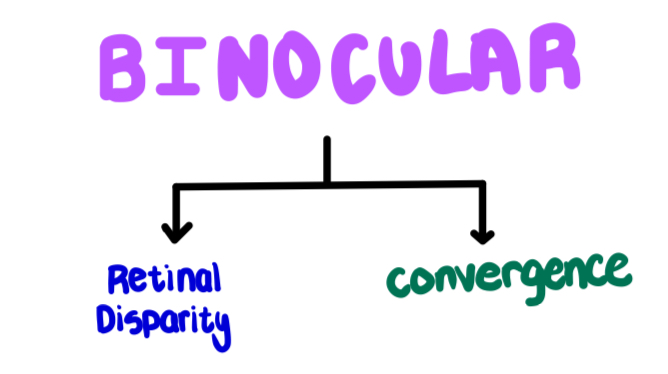
Classify the Binocular Depth cues.
True or False - Monocular cues are weaker than binocular cues.
False - perceived as strongly as binocular depth cues
List the Pictorial cues.
Relative Size
Familiar Size
Linear
Perspective
Texture
Interposition
Clarity
Lighting and Shadow
List the non-pictorial cues.
Kinetic Depth
Angular Declination below the horizon
Motion Parallax
Accommodation
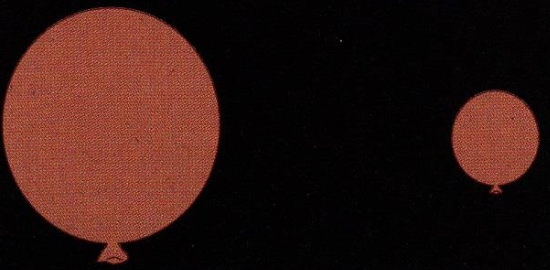
What is Relative size?
Farther objects = appear smaller
used to compare 2 obj of unknown size
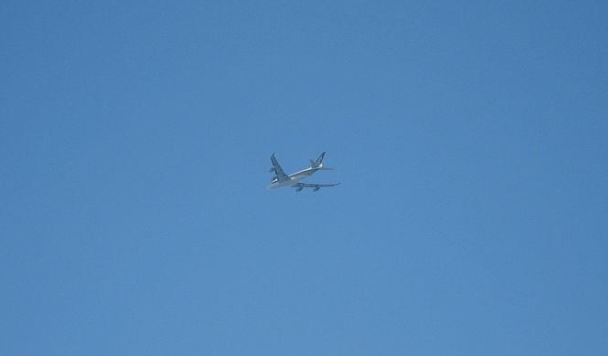
What is Familiar size (size constancy)?
Farther objects = appear smaller
used when viewing objects of known SIZE
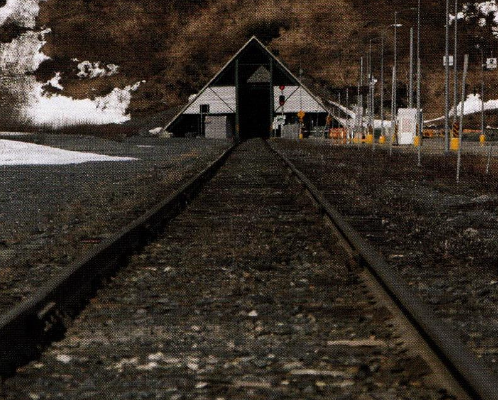
What is Linear perspective?
Smaller separation b/w track = farther away
seen when looking at long corridor or railroad track
What is Texture Gradient?
Distance obj = Densely packed = smaller size = appear farther away
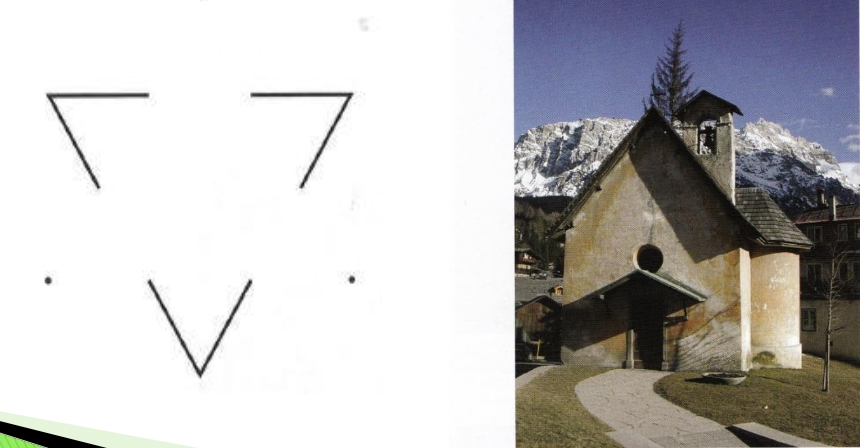
What is Interpositon (imposition)?
→ occurs when the view of scene is partially obstructed
Nearer object occludes distant object
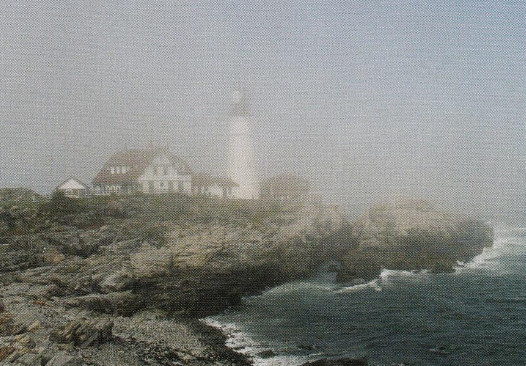
What is Clarity (ariel perspective)?
→ unobstructed objects are perceived as CLOSER
Fog, Rain, Smoke and Smog might interpose objects in the bg making them “seem farther”
What is Lightning & Shadow (shading)?
When light falls on an object → casts a shadow which is interpreted as falling behind the object

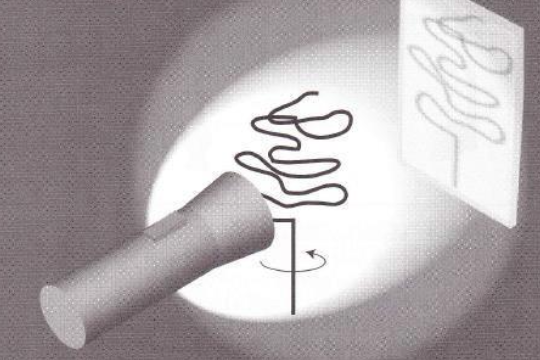
What is Kinetic Depth Effect?
rotating 2D obj makes it appear 3D
Define Looming.
rapid expansion (or shrinking) in the size of any given image
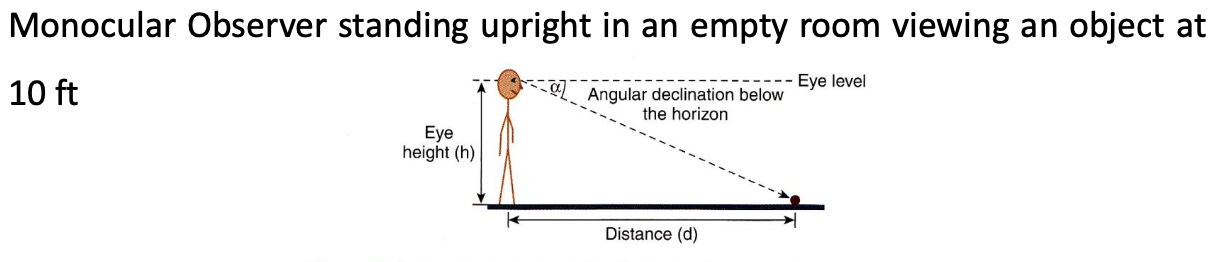
What is Angular declination below the horizon?
→ angle an object makes with the horizon
allows our visual determine object distance
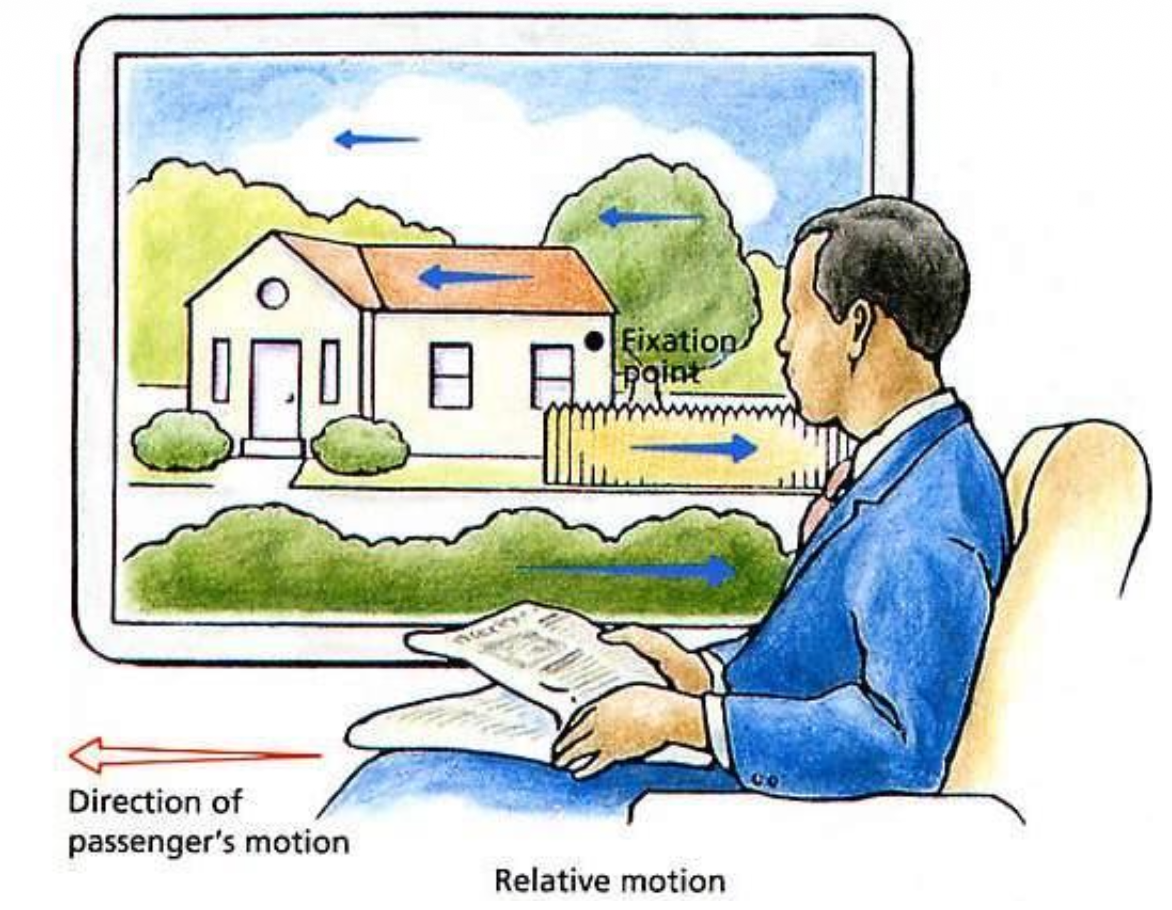
What is Motion Parallax?
→ occurs when the moving observer fixates an object while noticing the relative motion of surrounding objects
kinetic monocular depth cue
Near obj = against motion
Farther obj = with motion
What part of the brain encodes for Motion Parallax?
Middle Temporal Area (area MT/V5)
What part of the brain encodes for Binocular disparity & motion?
Middle Temporal Area (area MT/V5)
How useful is accommodation in providing depth perception cues?
weak cue
not used much to judge distances
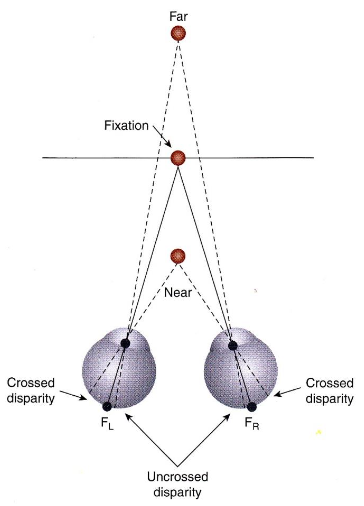
How do images form for uncrossed vs crossed disparity for Stereopsis?
Uncrossed = form nasal to the foveas (signaling that the ball is farther than fixation)
Crossed = form temporal to the foveas (signaling that the ball is closer)
What is an important contributor to depth perception at NEAR distances?
Stereopsis
Why is Stereopsis less important for DISTANCE?
threshold for retinal disparity requires objects to be separated by LARGE distances
Small retinal disparity produces _______, whereas large retinal disparity produces_______.
Small retinal disparity produces stereopsis, whereas large retinal disparity produces diplopia.
Define Perceptual Constancy. Give examples of the different types.
tendency to see familiar objects as having standard shape, size, colour, or location regardless of changes in the angle of perspective, distance, or lighting
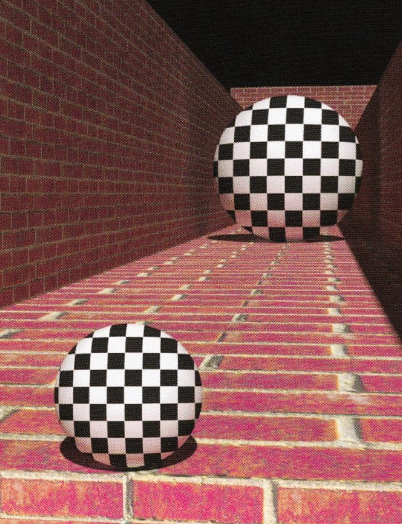
How do Size constancy and Size illusion compare to eachother?
Size constancy = object appears the same size despite changes in distance and retinal image
e.g., sizes of cars at different distances
Size illusion = occurs when that constancy fails and the object is misperceived as larger or smaller due to incorrect distance cues
e.g., top ball is perceived as larger and farther, when in reality it’s the same size as the bottom ball
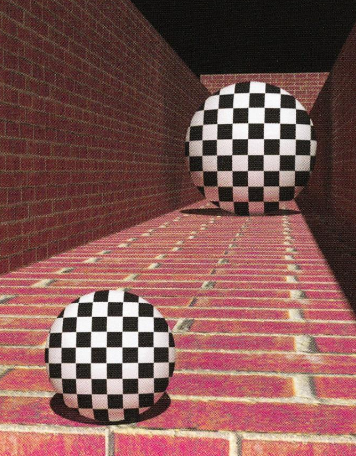
What is Emmert’s law for size illusion?
perceived object size producing the retinal image is proprotional to it’s perceived distance
e.g., image looks LARGER when it’s FARTHER
What is the Moon Illusion?
Moon looks FARTHER on the horizon (due to depth cues like trees and buildings → so brain makes it appearLARGER even though its retinal image size stays the same as when it’s overhead

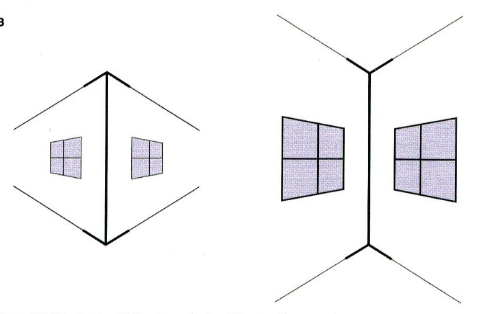
What is the Muller-Lyer Illusion?
→ both lines are the same size, but the line form an outgoing corner appears FARTHER than the ingoing corner line
At what level in the visual system is Perceived Size encoded?
Cortical area - perceived size is encoded early
In what population is Figure-ground illusion discrimination/perception impaired?
Parkinson’s disease
Can vision be trained?
can be improved with training by looking at different aspects of figure
Retinal disparity (Stereoacuity) can be as small as _____ arc seconds. But it is typically ____ arc seconds.
Retinal disparity (Stereoacuity) can be as small as 3 arc seconds. But it is typically 40 arc seconds.
What must the visual cortex contain for a highly developed stereoacuity?
Normal complement of binocular neurons
Give examples of Disorders of binocular vision. What do these result in?
Anisometropia
Strabismus
Both cause reduction in stereoacuity
What is Monovision?
→ when one eye is correct for distance, while the other eye is corrected for near via CL, refractive laser procedures
allows pt to alternate b/w near & distance vision
interfere with stereopsis
BUT depth perception is retained due to monocular cues
might interfere with driving (distance rx of the eye normally used for near should be used)
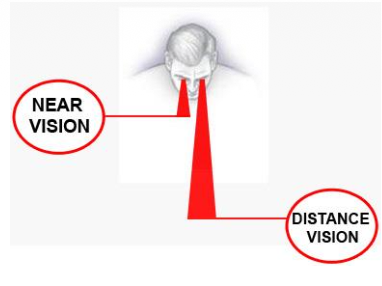
Why doesn’t diplopia occur during Monovision?
b/c unused eye is largely suppressed