Repro System Part 3 - Pregnancy
 Call Kai
 Learn
Learn Practice Test
 Spaced Repetition
 Match
Match Flashcards
 Knowt Play
1/17

There's no tags or description
Looks like no tags are added yet.
Name | Mastery | Learn | Test | Matching | Spaced | Call with Kai |
|---|
No analytics yet
Send a link to your students to track their progress
18 Terms
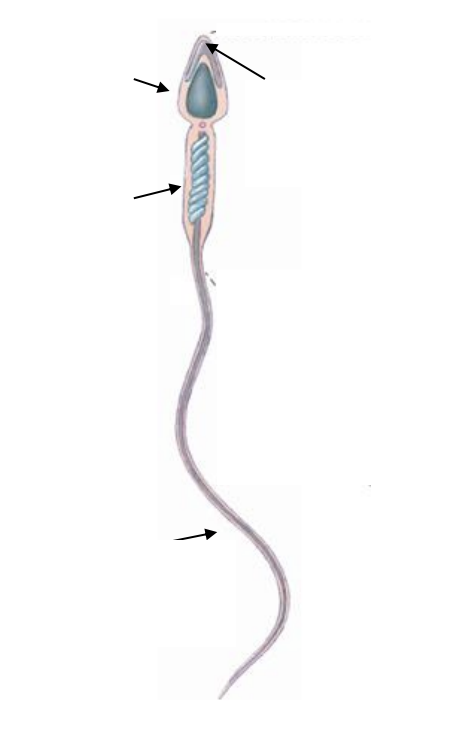
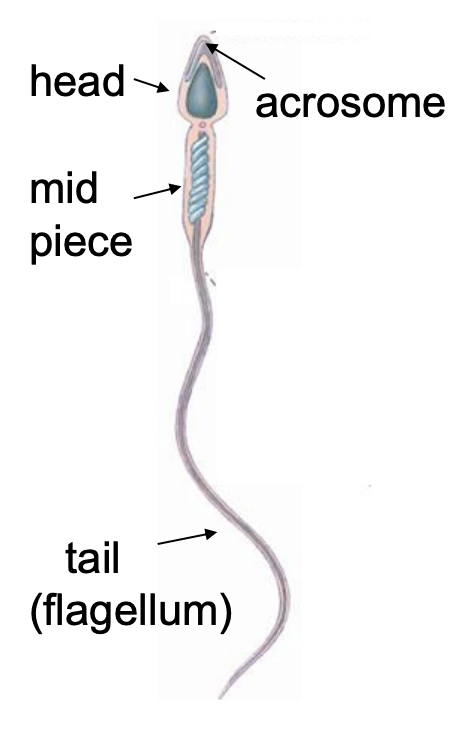
Why must the sperm do after entering the vagina
two main things for their last maturation step (what is this process called)
Explain how it works
Three main things that occur in the sperm
How long does it take the sperm to reach the gg
What must it pass through
How does the vagina help with this (two things)
What hormones affect this process (comes from the semen)
Sperm undergoes capacitation becomes hyperactive
Albumin, enzymes, lipoproteins bind to sperm:
glycoprotein coat removed
intracellular changes
develop strong whip-like motion
Sperm must pass through (~30 min) cervical mucous (thin, estrogen)
Uterine & oviduct contractions aid transport
(estrogen, protaglandins - semen helps aid in contractions)
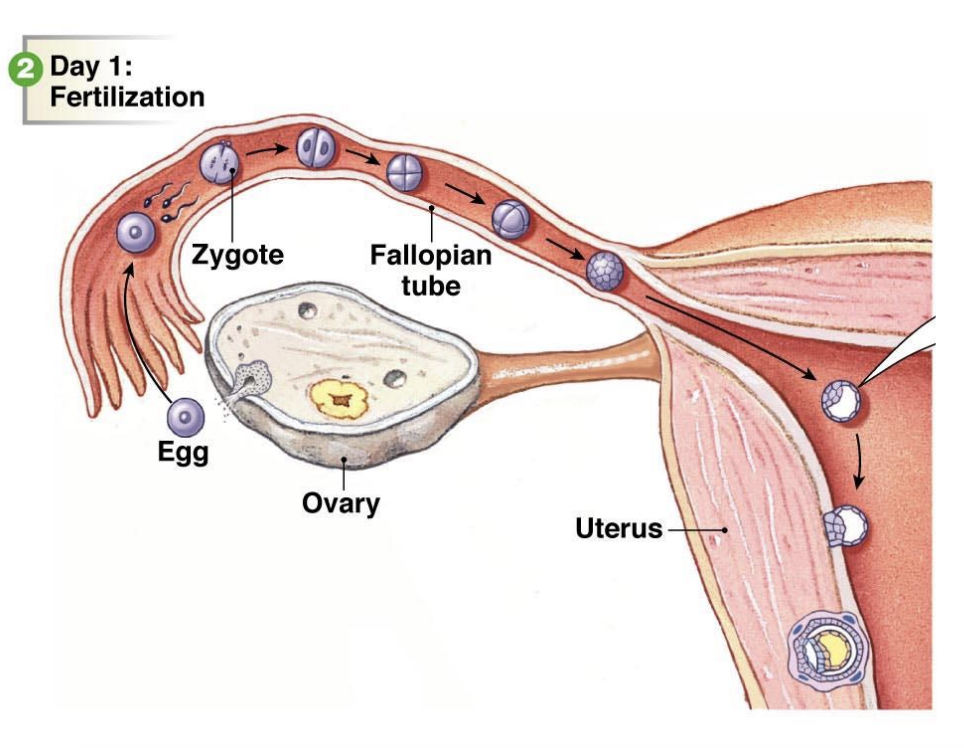
In what part of the female body does the fertilization occur
how long is the oocyte viable for
how long is the spermatozoa viable for
Fertilization happens in the fallopian tubes
Oocyte viable for 24h
Spermatozoa viable 4-6 days
Fertilization
how many sperms reach the oocyte
What does the progesterone do
Produced from what cells
What does acrosomal enzymes do
About 100 sperm reach oocyte
Guided by chemotaxis (progesterone from cumulus cells)
It attracts the sperms towards the oocyte
Sperm tunnel through barriers (acrosomal enzymes will remove the layers of the oocyte at the the head (acrosome) of the sperm)
First sperm fusing with egg wins
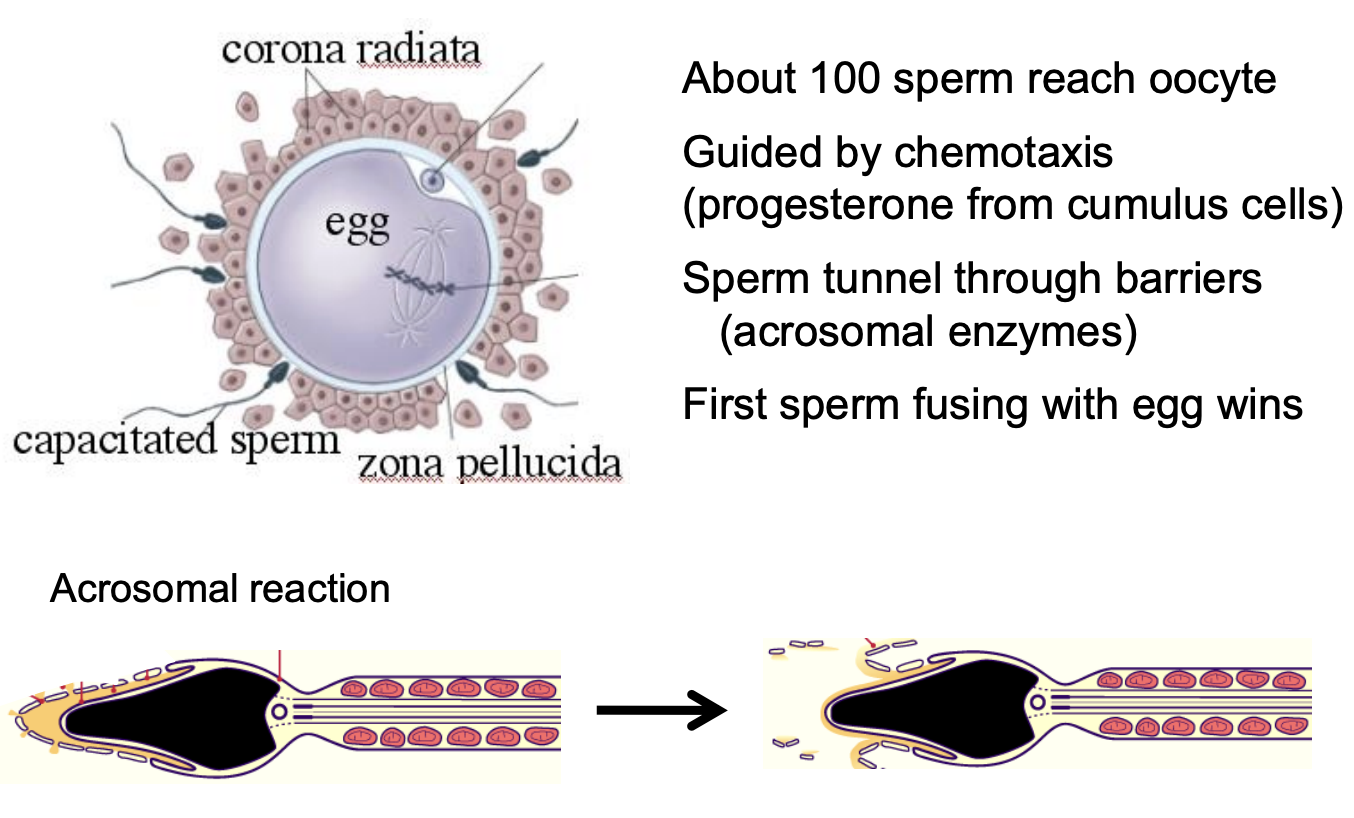
Fertilization - Cortical Reaction
How does more sperms are prevented from enerting the oocyte after the first binds?
how does the sperm bind with the oocyte
After binding what does it trigger
What does the event cause
Explain how the nucleus fuses together
four steps
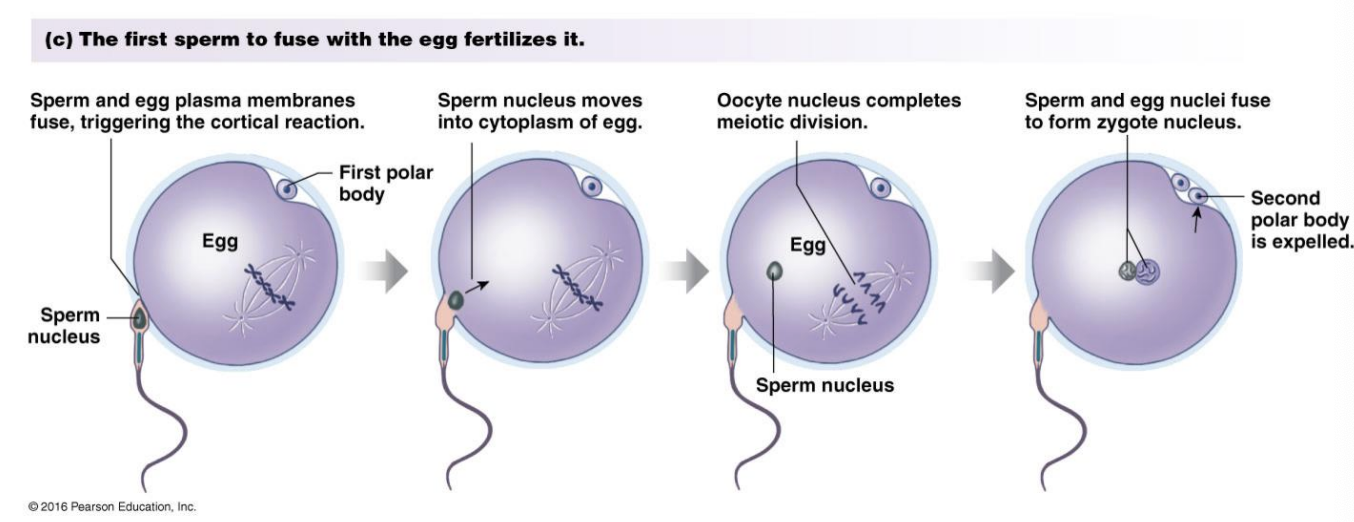
Prevent addition sperm binding with oocyte (polysperm)
Sperm docks with sperm-binding proteins on oocyte membrane
Triggers depolarization of oocyte
Fusion of cortical granules (oocyte intracellular vesicles) with outer membrane
Coat fertilized oocyte and prevent penetration by additional sperm
(i.e. prevents polyspermy)
How the nucleus fuse together
cortical reactions triggered by binding
sperm nucleus enters the egg
oocyte completes the meiotic division
zygote nucleus formed
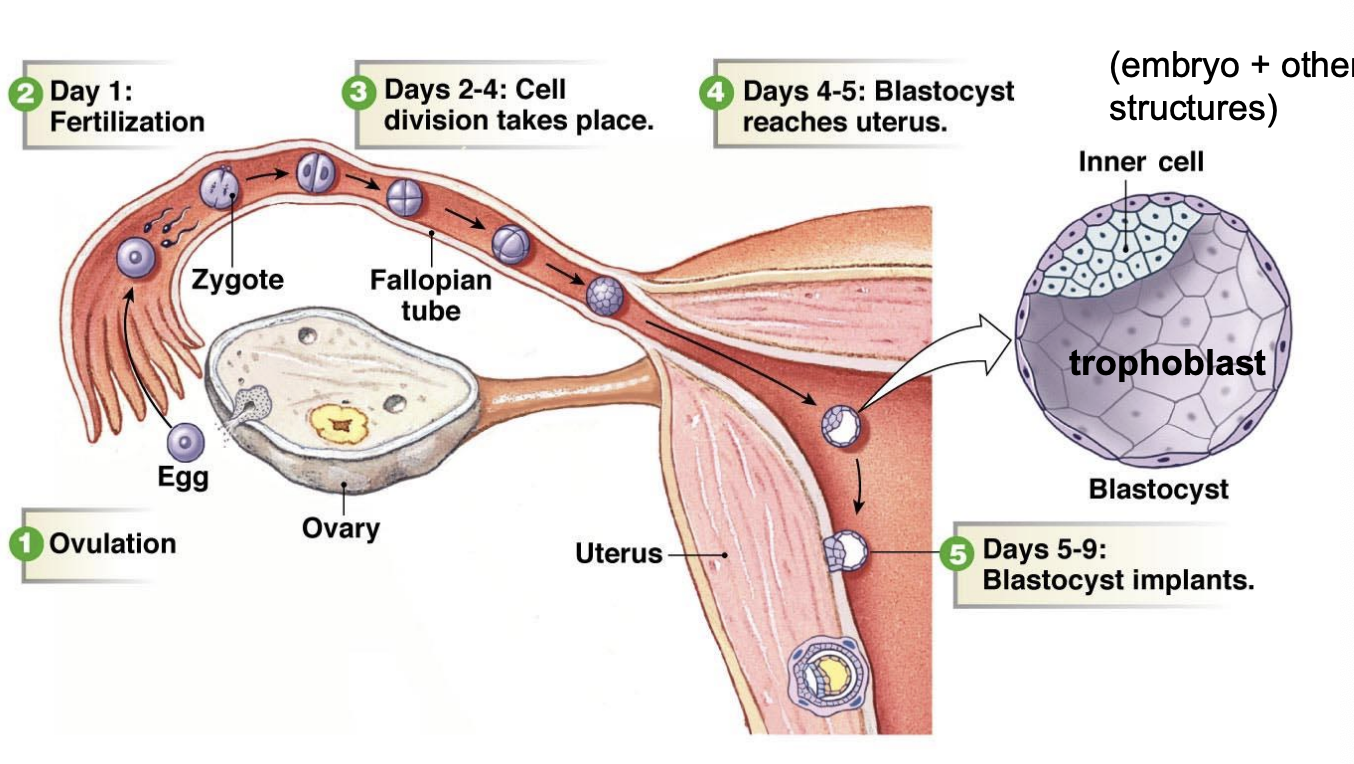
What happens after fertilization
5 steps
Blastocyte vs trophoblast
ovulation
fertilization
cell division
blastocyst reaches uterus
blastocyst implanted and now called trophoblast (with the addition of embryo and other structures)
Fertilization hormone
what is it called
what cell secrets it
What two things does the hormone do
What hormone is it similar to
What other application is useful with the help of the hormone
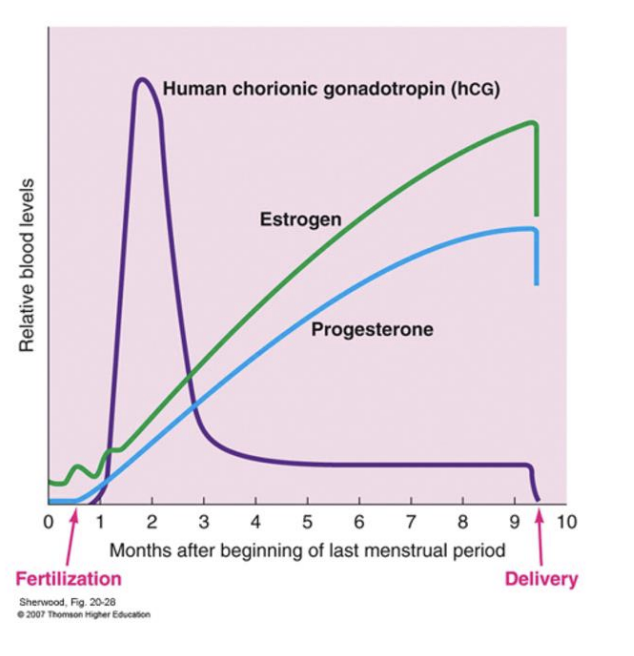
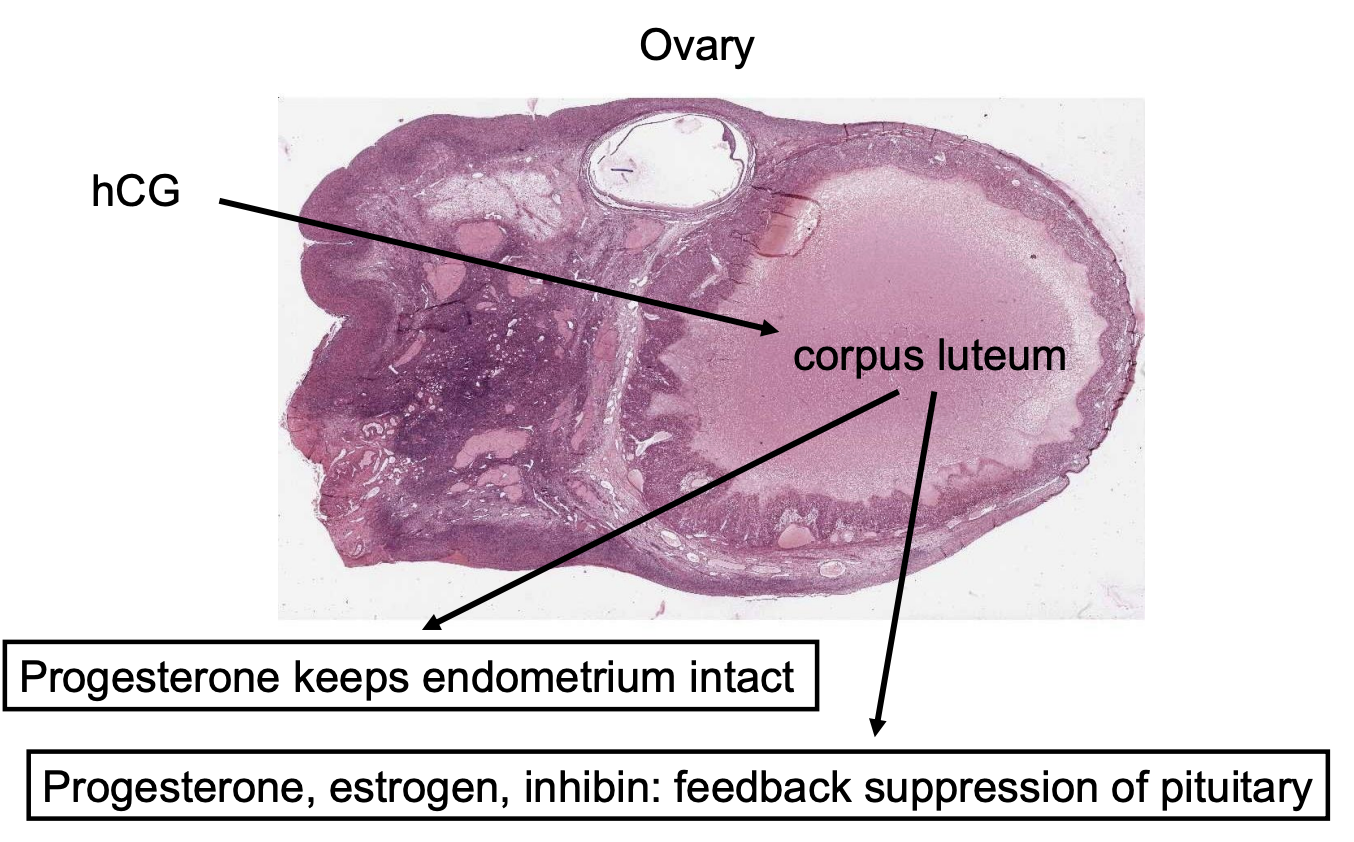
Human chorionic gonadotropin (hCG) secreted from trophoblast (the fertilized egg)
Takes over from pituitary to maintain corpus luteum and prevent next menstrual cycle
Similar in structure to LH
Basis of pregnancy test
Why does hCG maintain the corpus luteum?
hormones
Progesterone keeps endometrium intact
We don’t want it to break down during pregnancy
Progesterone, estrogen, inhibin: feedback suppression of pituitary (Lh and FSH)
For the increase of the three hormones
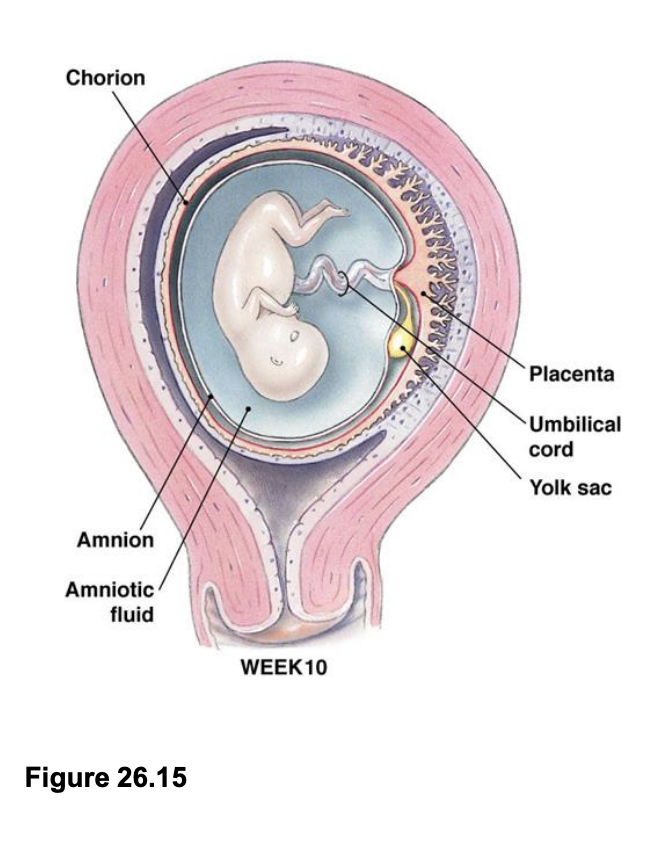
Fetus and placenta
Placenta Performs role of
Digestive, respiratory and renal systems for the fetus
Exchange of:
nutrients/waste
oxygen/carbon dioxide
proteins, chemicals, etc
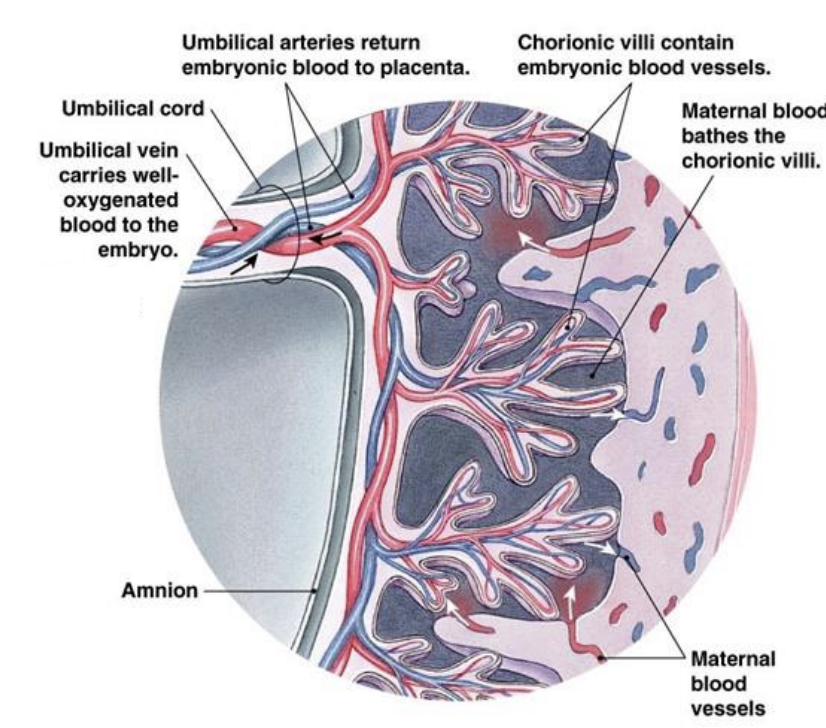
Placental circulation
Is there a link between mother and fetal child’s vasculature (blood vessels)
What transfers nutrients and gases between the two?
Maternal vasculature not physically linked to fetal vasculature
Maternal blood forms a lacunae(lake)
The space linked the maternal vasculature to the fetal’s vasculature
Fetal chorionic villi transfer gases & solutes between mother & fetus
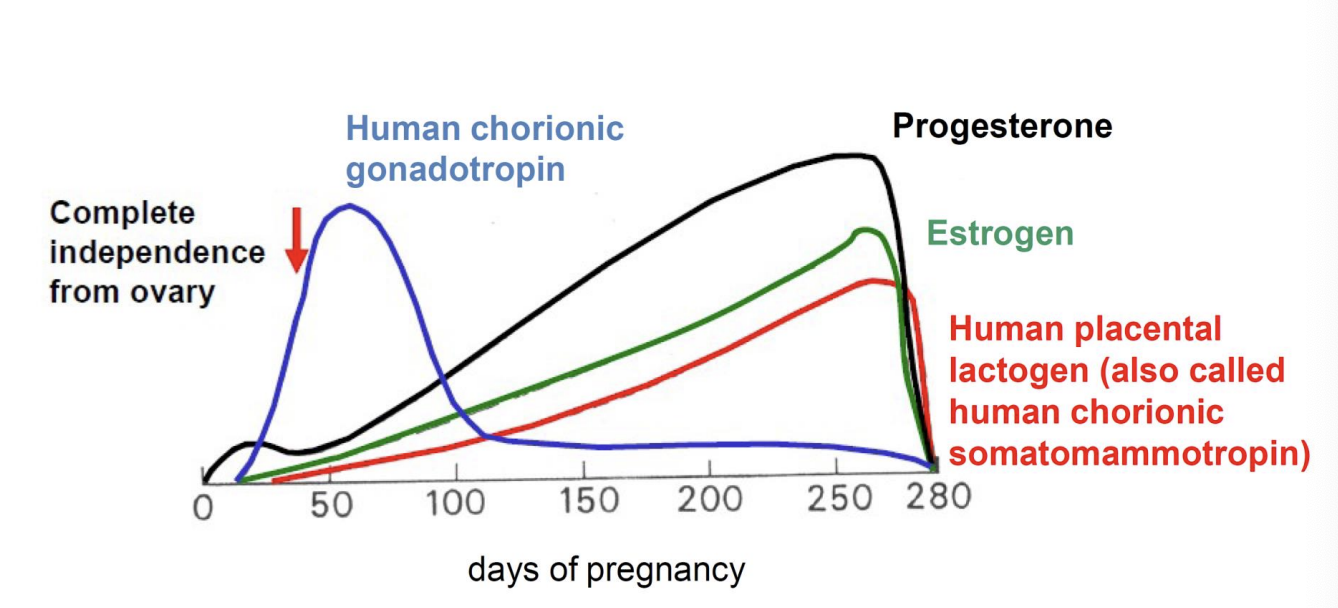
Placenta: A Temporary Endocrine Gland
produces what four things
Explain why HCG decreases at this point
+ explain the movement
More information next flashcard
HCG decreases because the placenta takes over
produces human placental lactogen
or human chorionic somatomammotropin
secretes estrogen and progesterone to the mother
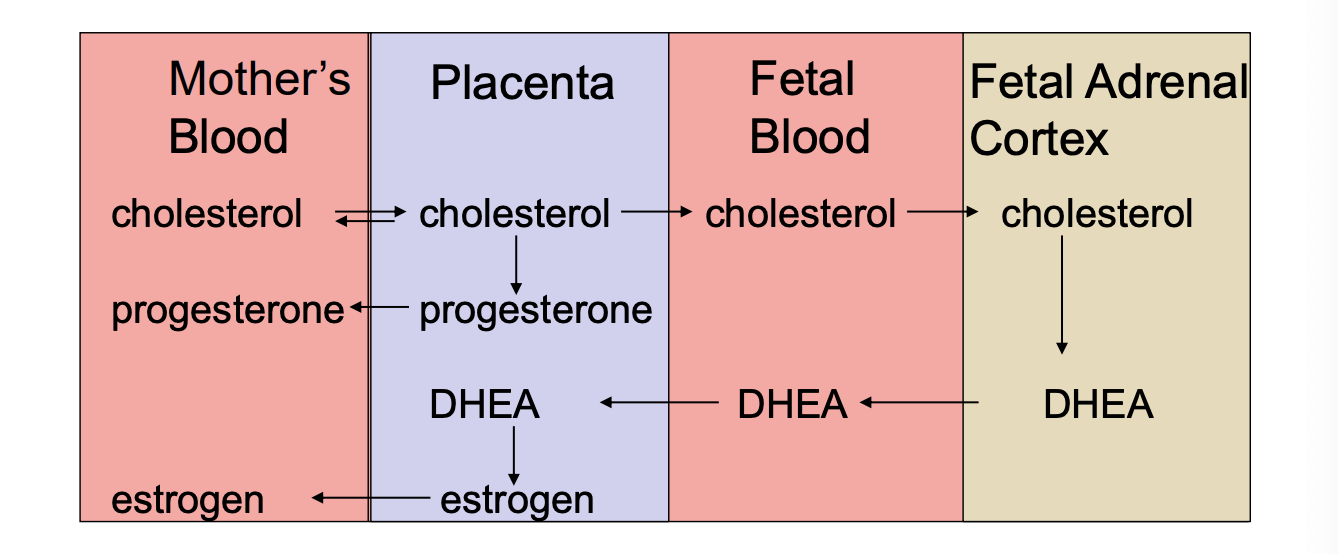
Movement of hormones and other things between the mother’s blood placenta, fetal blood and fetal adrenal cortex
DHEA is a precursor to estrogen
The fetal adrenal cortex produces it, moves it to the fetal blood and to the placenta where it gets converted into estrogen
Placenta also produces progesterone
Therefore the progesterone and the estrogen gets diffused into the mother’s blood to continue supplying nutrients to the fetus
Function of placental hormones
list the four hormones as well as their main function(s)
Human chorionic gonadotropin
– maintains corpus luteum; stimulates fetal testis
Progesterone
– suppresses uterine contractions, cervical plug, mammary gland development (milk)
Estrogen
– uterine development (growth, blood supply, oxytocin receptors), breast duct development, etc
Human placental lactogen
– Structurally related to growth hormone and prolactin
– High in mother/low in fetus
– Decreases maternal cellular uptake of glucose, enhances maternal lipolysis
Normal terms of pregnancy:
six - list the weeks
First trimester
second trimester
third trimester
normal birth
preterm
postterm
First trimester: 0-12 weeks embryo development
Second trimester: 12-28 weeks fetal development,
Third trimester: 28 weeks to delivery fetal maturation
Lungs fully develops in the child
Normal birth: 37-42 weeks after last menstrual cycle
Preterm: fetus born > 28 weeks usually viable without intervention
Postterm: >42 weeks
Force birth
e.g. C-section
Maternal adaptations to pregnancy
renal
cardiovascular
immune system
calcium homeostasis
Renal:
increased vasopressin levels increase blood volume
increased activity RAS sodium and fluid retention
Cardiovascular: increased output
Immune system: partially suppressed
Reason: new growing in the body should not be attack by the immune system
Calcium homeostasis: pregnancy associated hyperparathyroidism
calcium transfer to fetus
increased calcitonin to limit mobilization of maternal bone
Protecting the maternal bone
How is labour triggered?
What is the other name for it?
What does the ovary release?
What does the placenta do?
What receptors involved
What three hormones released in the body
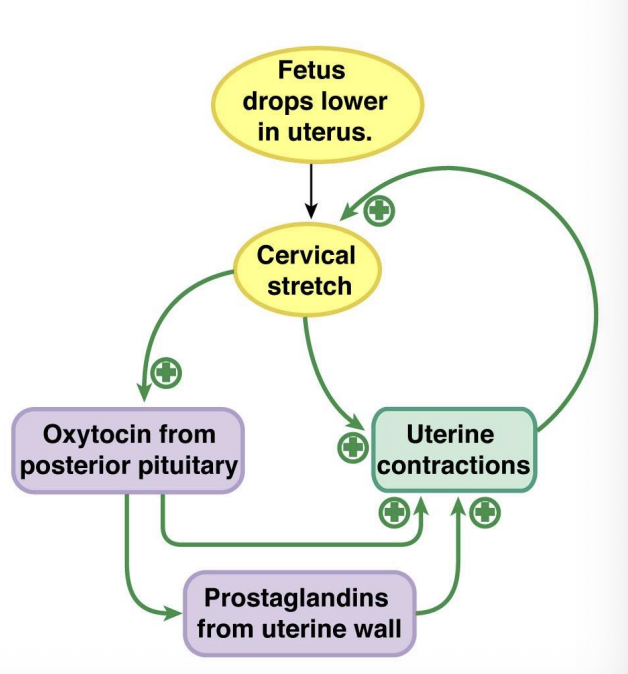
Before parturition, relaxin released from ovary and placenta loosens the ligaments in the pelvic bone and cause the cervix to soften
Triggers/Initiation?
increase Estrogen & oxytocin receptors in uterus increase
increase Fetal cortisol
increase Placental corticotropin-releasing hormone (CRH)
increase Prostaglandins
What hormones are necessary for breast milk?
Before parturition
two hormones
what do they do
what do they prevent
After parturition
Two hormones involved
what does each hormone
Where are they produced?
Before parturition
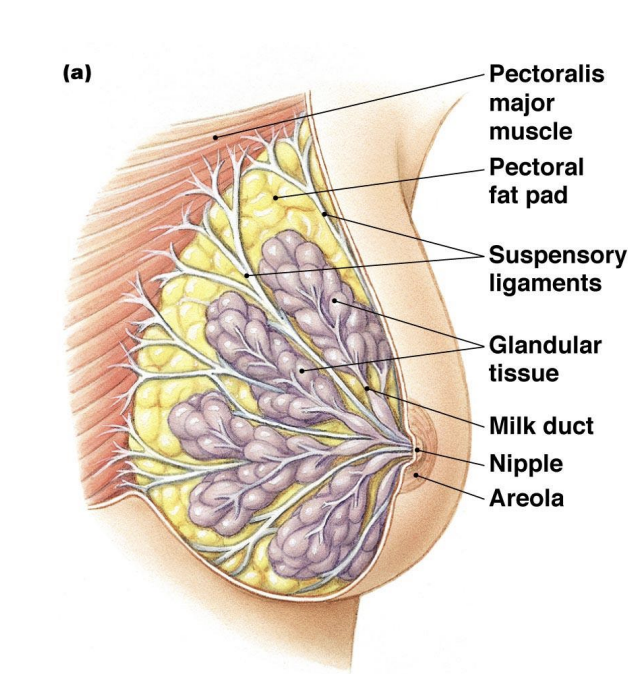
Estrogens and progesterone needed for the development of mammary glands but inhibit milk production
After partuitition
Prolactin triggers Epithelial milk producing cells
Oxytocin triggers Myoepithelial cells to squeeze the milk to the milk duct and out the breast
Both released from the pituitary gland
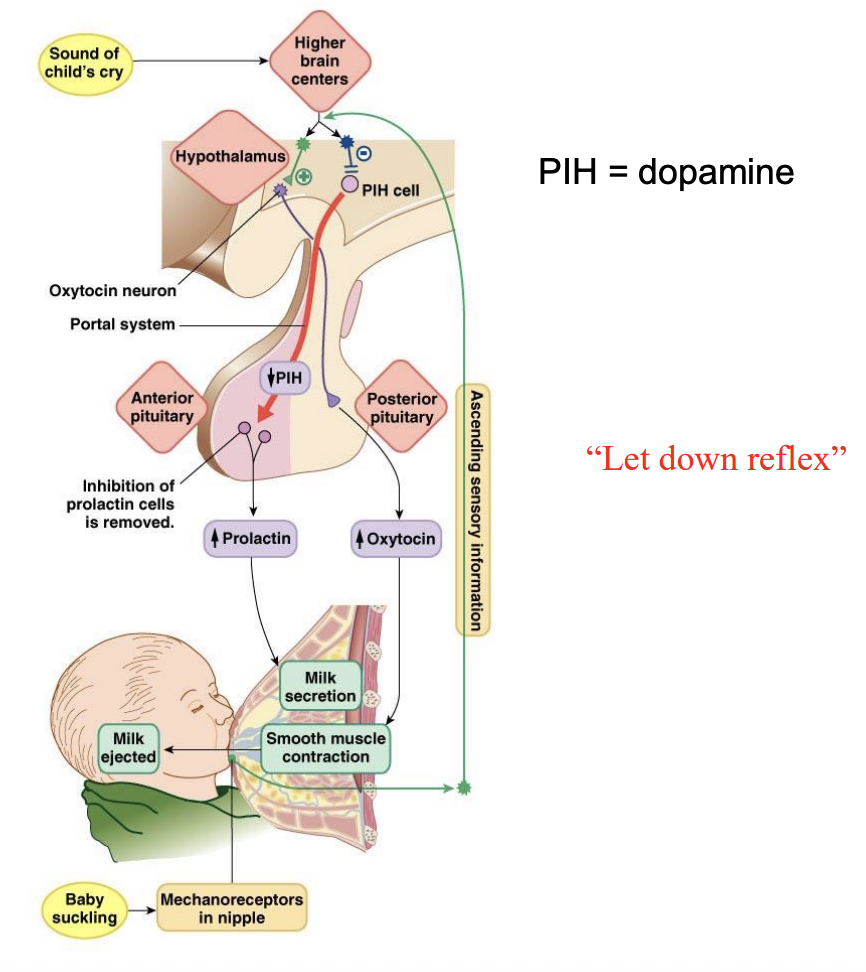
Explain the regulation of oxytocin and prolactin (milk control)
in what pituitary is it secreted from
Posterior secrets oxytocin
anterior pituitary triggered by decrease PIH in the hypothalamus
Release prolactin
Positive feedback from mechanoreceptors in the nipples (increased sucking)