Med Term Chapter 2 - Terms pertaining to the body as a whole
 Call Kai
 Learn
Learn Practice Test
 Spaced Repetition
 Match
Match Flashcards
 Knowt Play
1/200

There's no tags or description
Looks like no tags are added yet.
Name | Mastery | Learn | Test | Matching | Spaced | Call with Kai |
|---|
No analytics yet
Send a link to your students to track their progress
201 Terms
Anabolism
process of building up large proteins from amino acids, energy is required
Ana -
Up
"bol"
to cast
- ism
a process
catabolism
process where complex nutrients are broken down to simpler substances, energy is released
cell membrane
structure that surrounds and protects, determines what enters and leaves the cell
chromosomes
rod-shaped structures made of DNA molecules that contain genes
46 chromosomes
How many chromosomes do humans have?
23 chromosome pairs
How many chromosome pairs would be present on a human karyotype?
23 chromosomes
How many chromosomes do gametes have?
cytoplasm
A jellylike fluid inside the cell membrane and outside of the nucleus in which the organelles are suspended
DNA
chemical found within each chromosome, directs the activities of the cell
endoplasmic reticulum
network of canals within the cytoplasm of the cell, large proteins are synthesized from smaller proteins
genes
regions of DNA within each chromosome
Karyotype
picture of chromosomes in the nucleus, arranged in numerical order to determine their number and structure.
Metabolism
total of the chemical processes in a cell. including anabolism and catabolism
Meta -
change
Mitochondria
rod-shaped structures in the cytoplasm that provide the principal energy source for the cell.
the mitochondria
where does catabolism occur inside the cell?
Nucleus
control center of the cell that contains chromosomes which direct the activities of the cell
Androgens
male hormones
Differentiation
when cells mature and specialize into their final state
Tissue
a group of similar cells that work together to do a specific job
Histologist
a scientist who specializes in the study of tissues
Epithelial tissue
all tissue that covers the
outside of the body and lines the inner surface of internal organs.
Where specifically is epithelial tissue found?
Outer layer of skin, lining internal organs, exocrine and endocrine glands
Muscle tissue
consists of involuntary, voluntary, and cardiac muscle tissue
Involuntary muscle tissue
What type of muscle tissue allows for movement without conscious control?
Where is involuntary muscle tissue found?
In the heart, digestive system, and other internal organs.
What type of muscle tissue allows for movement with conscious control?
Voluntary muscle tissue
Where is voluntary muscle tissue found?
Anywhere we can direct movement like legs, arms
Cardiac Muscle
Special type of muscle only found in the heart
Connective Tissue
A body tissue that provides support for the body and connects all of its parts
Types of connective tissue
Adipose, cartilage, bone, and blood
Nerve Tissue
Conducts impulses all over the body
Viscera
internal organs in the main cavities of the body
Systems
Groups of organs working together to perform complex functions
Digestive system
Mouth, pharynx, esophagus, stomach, intestines, liver, gallbladder, pancreas
Pharynx
throat, serves as the common passageway for food and air
Urinary (excretory) system
Kidneys, ureters, urinary bladder, urethra,
Ureters
2 tubes leading from the kidney to the urinary bladder
Urethra
tube from the bladder to the outside of the body
Respiratory
Nose, pharynx, larynx, trachea, bronchial tubes, lungs,
Larynx
Voice box located above the trachea
Trachea
windpipe, tube leading from the throat and larynx to the bronchial tubes
lungs
where exchange of gases takes place
Female reproductive system
ovaries, fallopian tubes, uterus, vagina, mammary glands
Male reproductive system
testes and associated tubes, urethra, penis, prostate gland
Endocrine system
thyroid gland, pituitary gland, sex glands, adrenal glands, pancreas, parathyroid glands
Thyroid gland location
surrounds the traceha in the neck
pituitary gland location
at the base of the brain
Nervous System
brain, spinal cord, nerves, and collections of nerves
Circulatory System
Hearts, blood vessels, lymphatic vessels and nodes, spleen, thymus gland
Types of blood vessels
arteries, veins, capillaries
Musculoskeletal System
muscles, bones, joints
Skin and sense organ system
skin, hair, nails, sweat glands, sebaceous glands, eye, ear, nose, and tongue
Adipose tissue
collection of fat cells
Cartilage
What type of connective tissue is often attached to bones at joints?
What part of the body is cartilage a component of?
External ear and nose
Trachea
What structure in the respiratory system has rings of cartilage?
Epithelial cells
skin cells that cover the outside of the body and line the internal surfaces of organs
Uterus
womb; the organ that holds the embryo/fetus
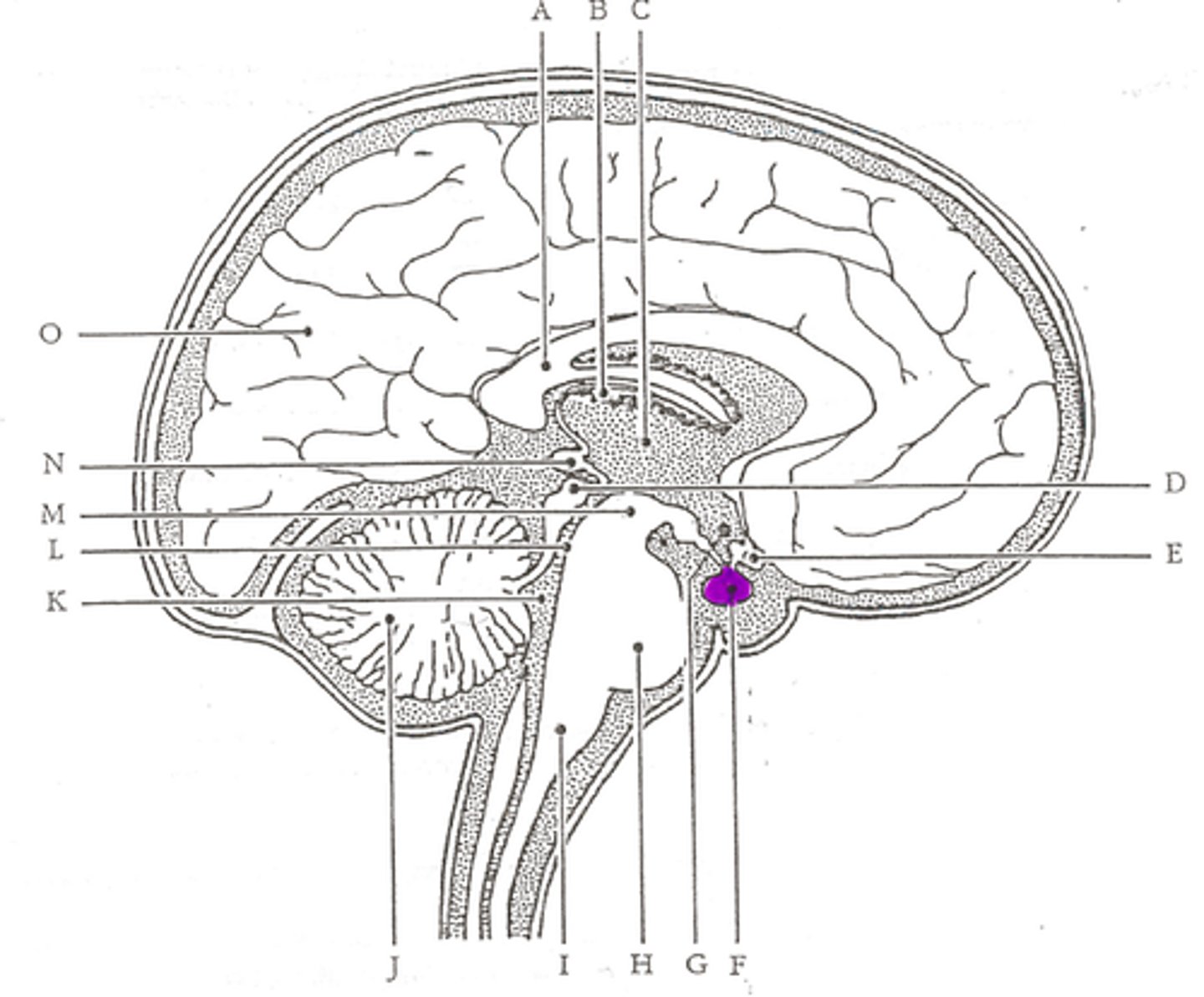
Pituitary gland location
Cranial cavity
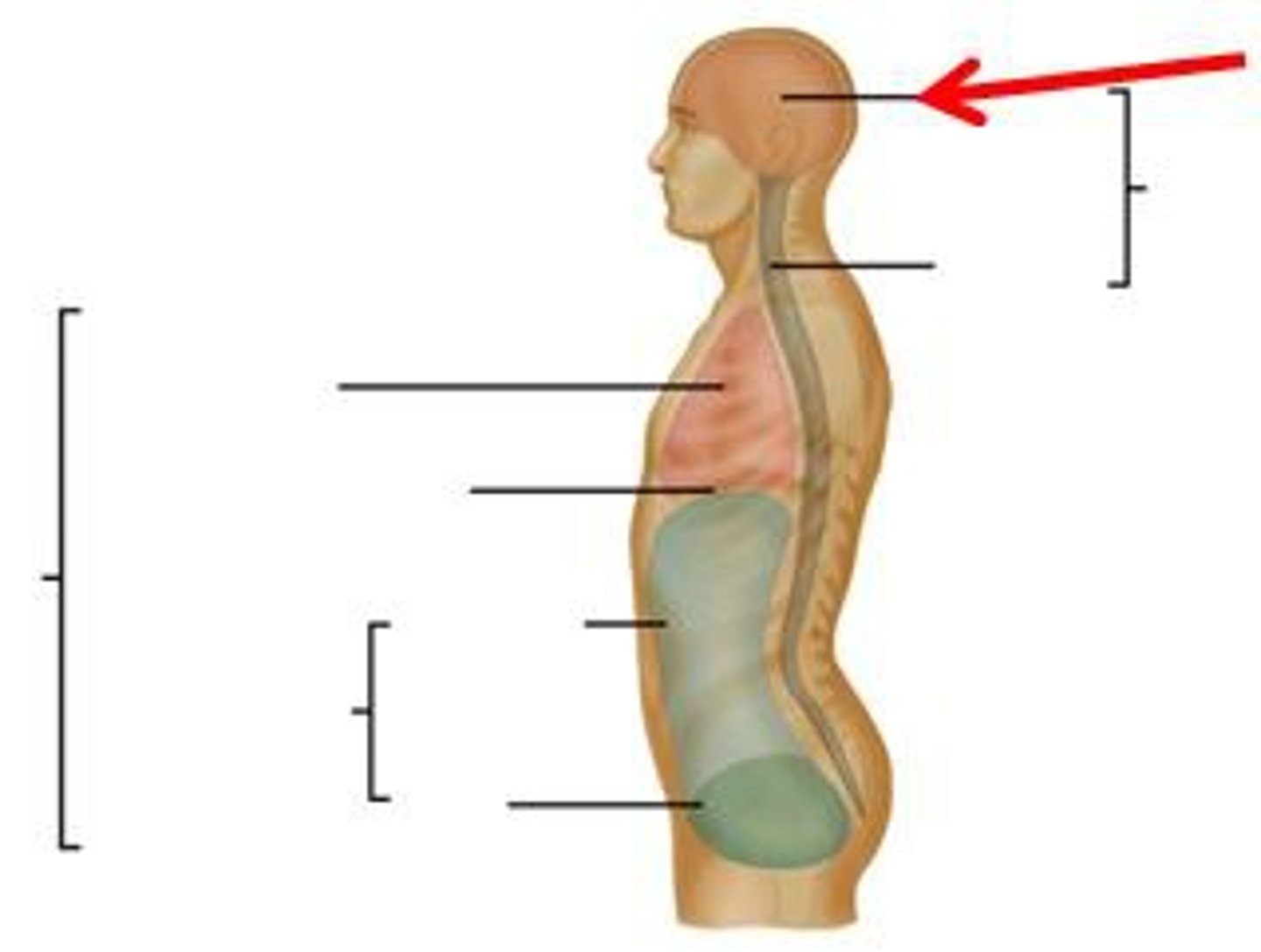
cranial cavity
brain, pituitary gland
thoracic cavity
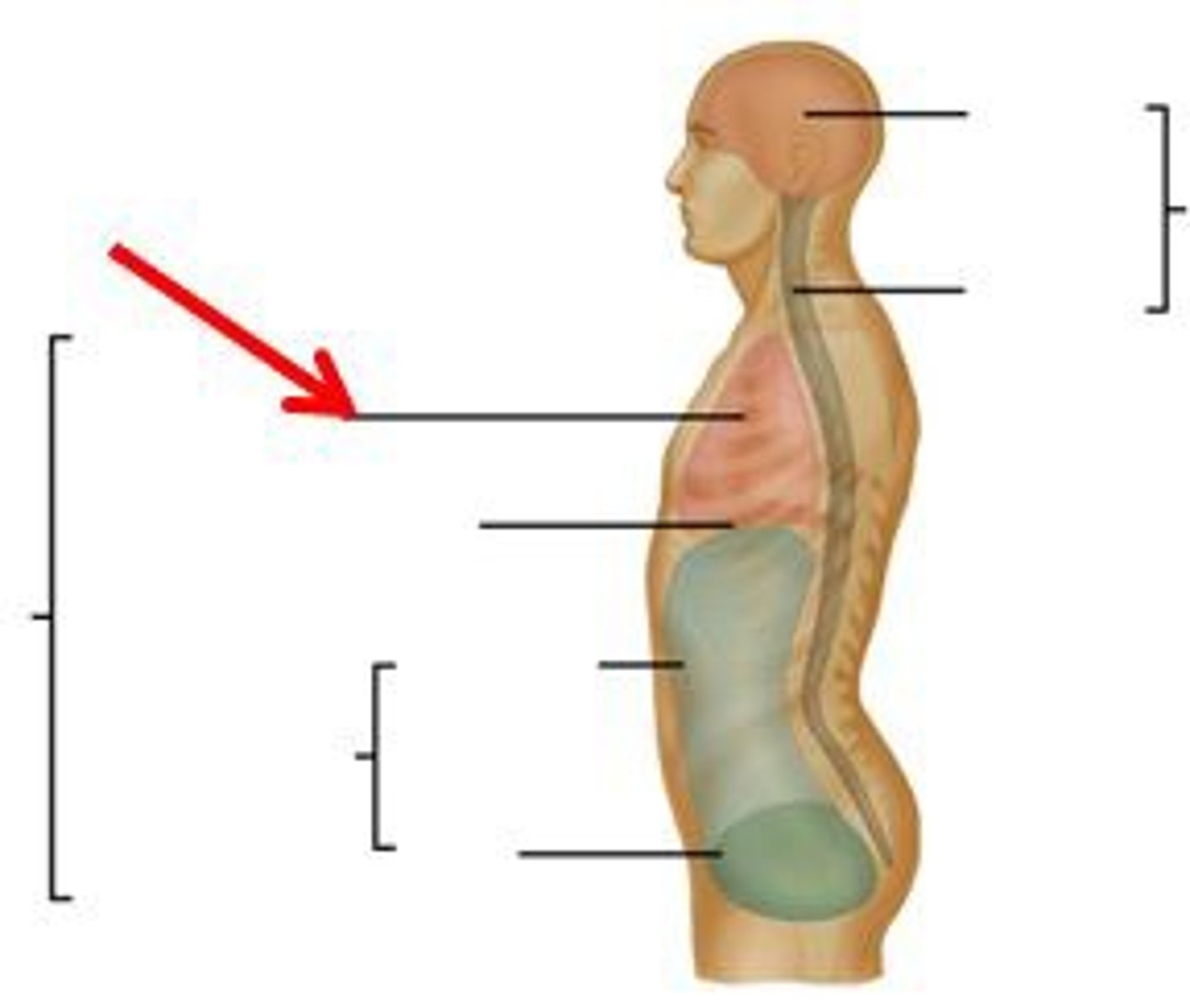
thoracic cavity (total contents)
lungs, heart, esophagus, trachea, bronchial tubes, thymus gland, aorta
pleural cavity and mediastinum
2 parts of the thoracic cavity
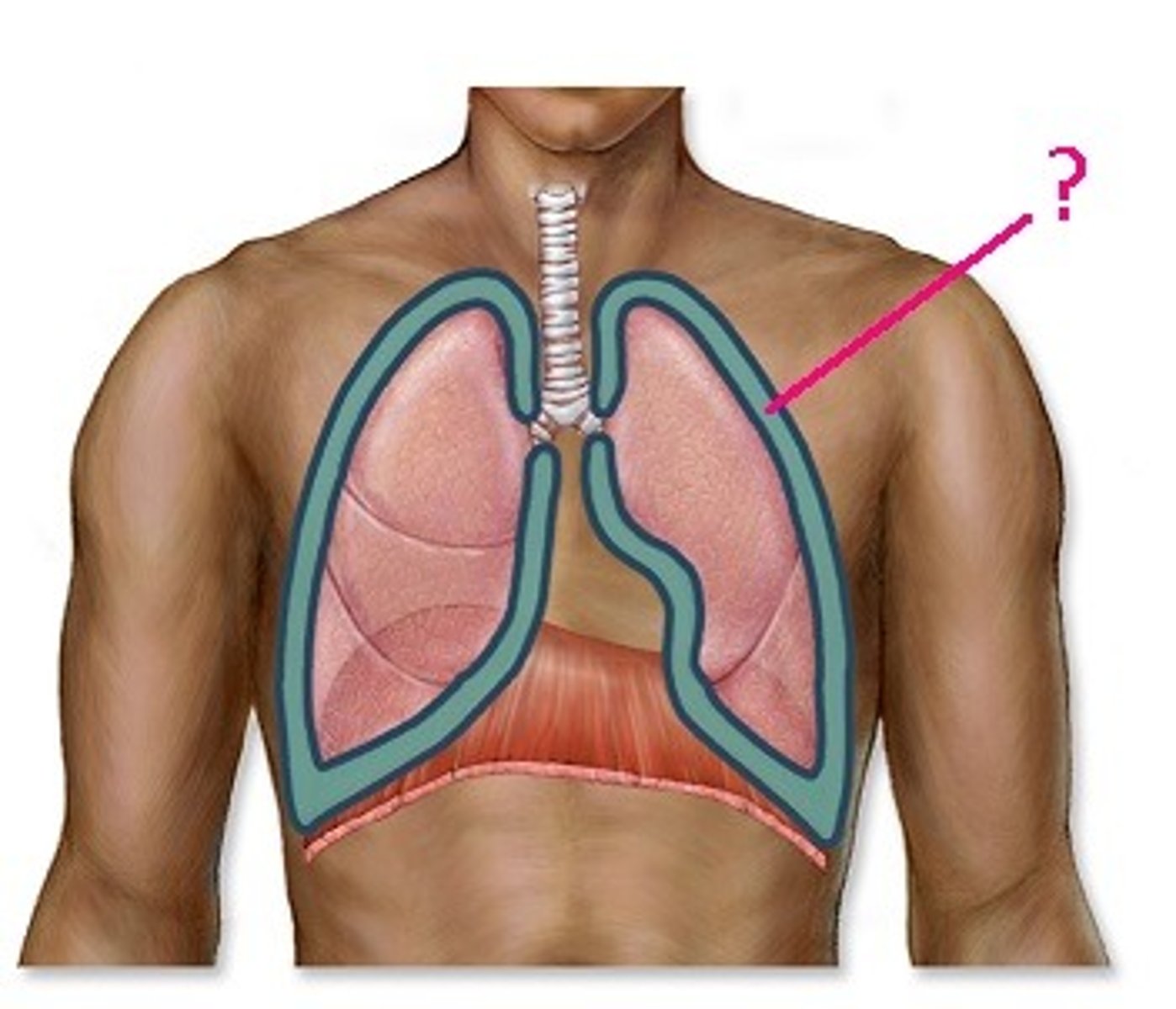
Pleural Cavity
space surrounding each lung
Pleura
double membrane that surrounds the lungs and protects them.
Pleuritis or pleurisy
inflammation of the pleura
Pleural Effusion
pleural cavity is filled with fluid
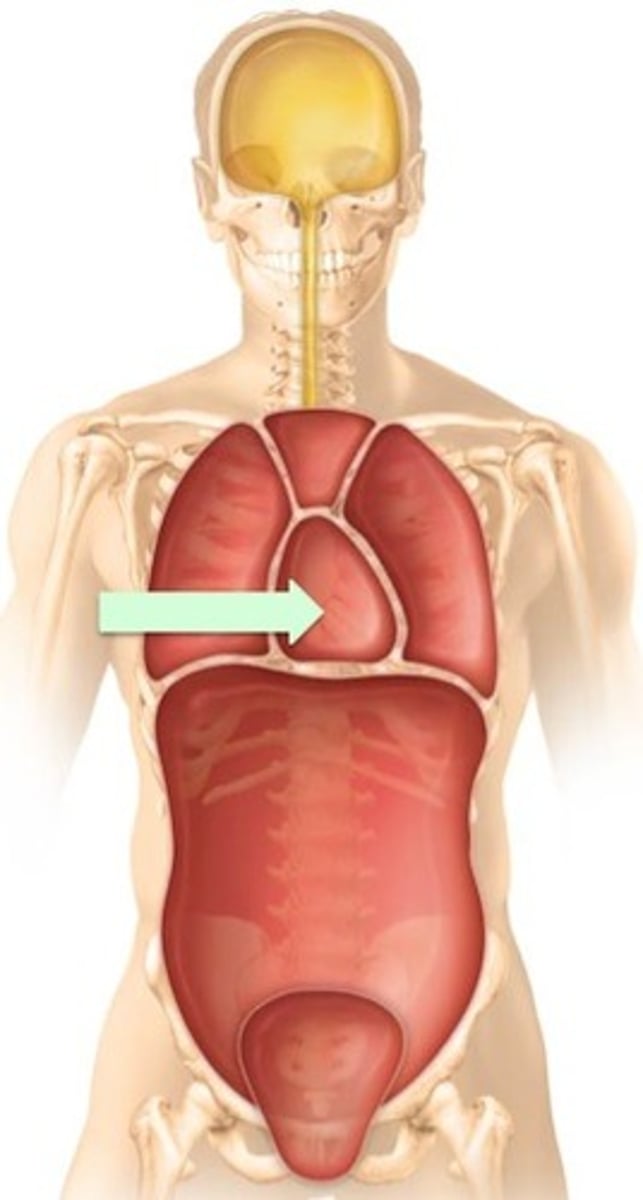
Mediastinum
centrally located space outside of and between the lungs.
What does the mediastinum contain?
heart, aorta, trachea, esophagus, thymus gland, bronchial tubes, and many lymph nodes
Abdominal cavity contents
peritoneum, stomach, small and large intestines, spleen, pancreas, liver, and gallbladder.
retroperitoneal area (behind the abdominal cavity)
What "cavity" are the kidneys located in?
Diaphragm
What muscle divides the abdominal and thoracic cavity?
Pelvic cavity contents
portions of the small and alrge intestines, rectum, urinary bladder, urethra, and ureters. (uterus and vagina in females)
Spinal Cavity
nerves of the spinal cord
Pelvic cavity
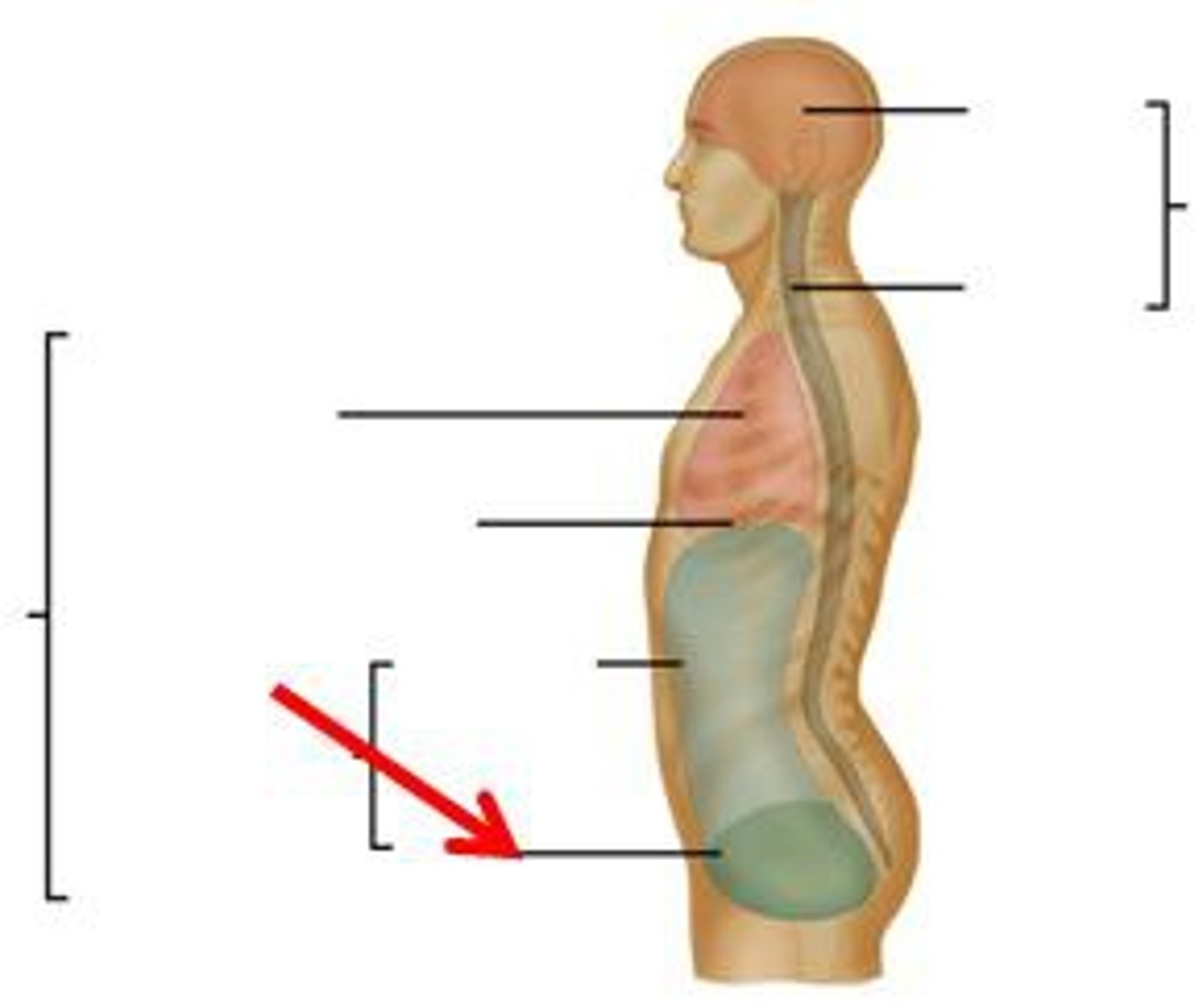
Spinal cavity
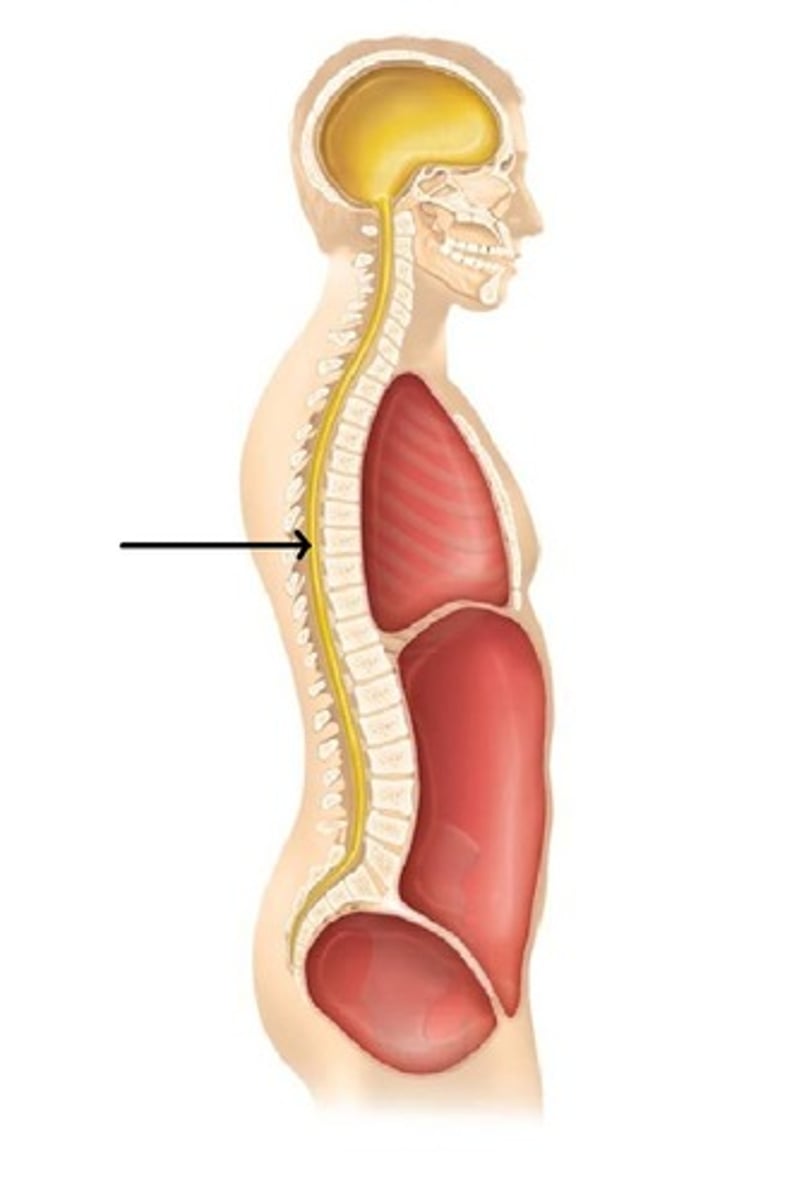
Abdominal cavity
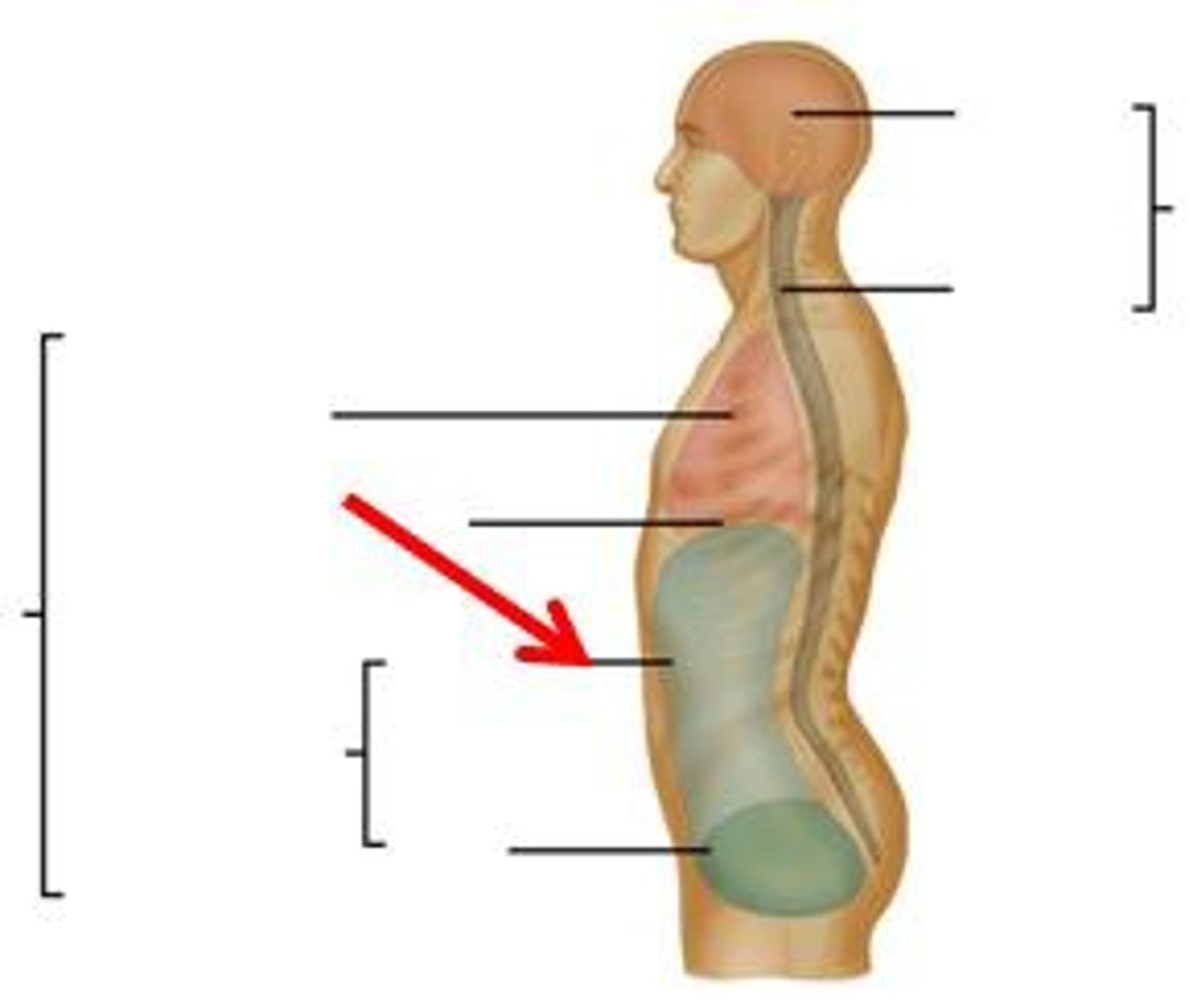
Diaphragm
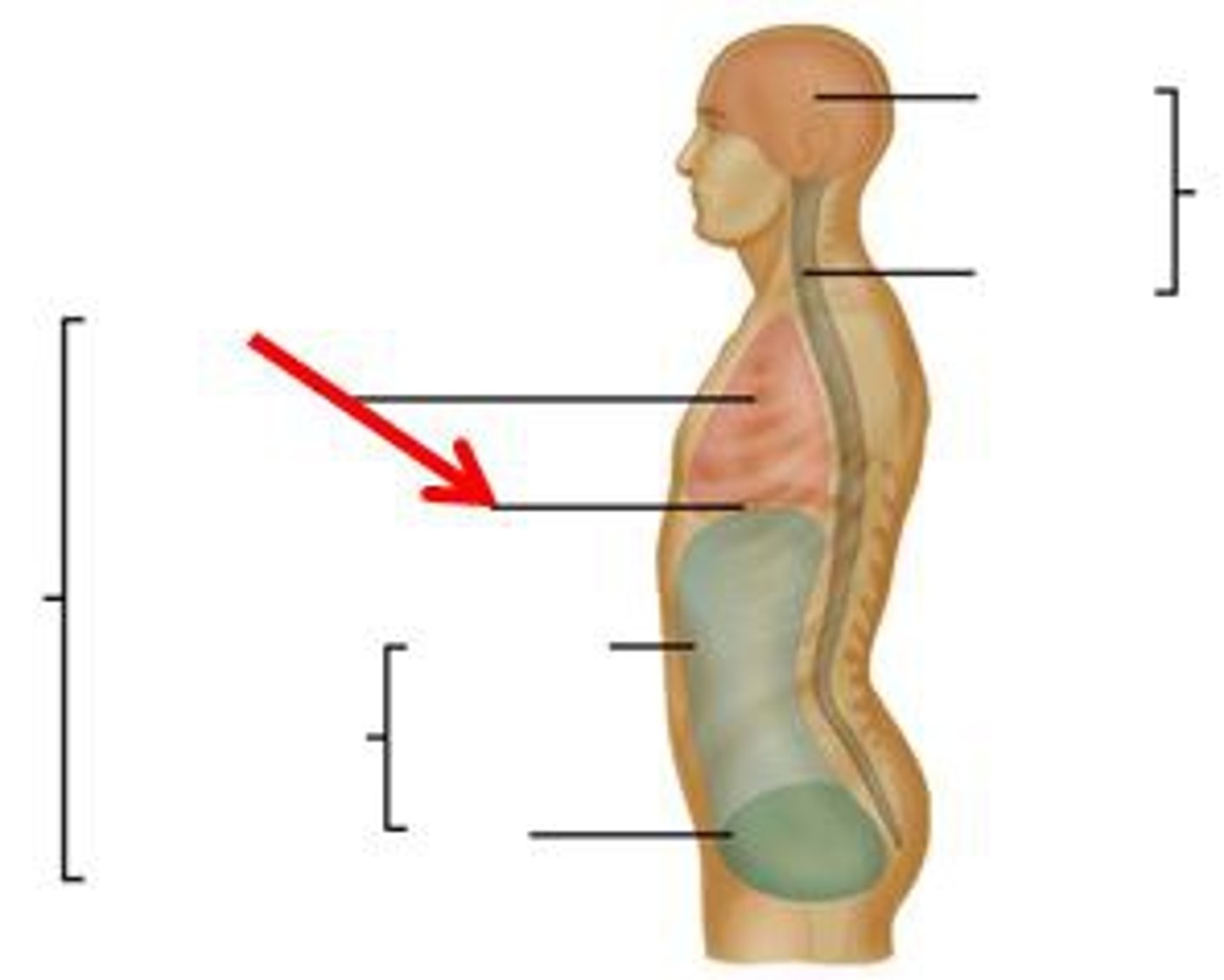
Pleura
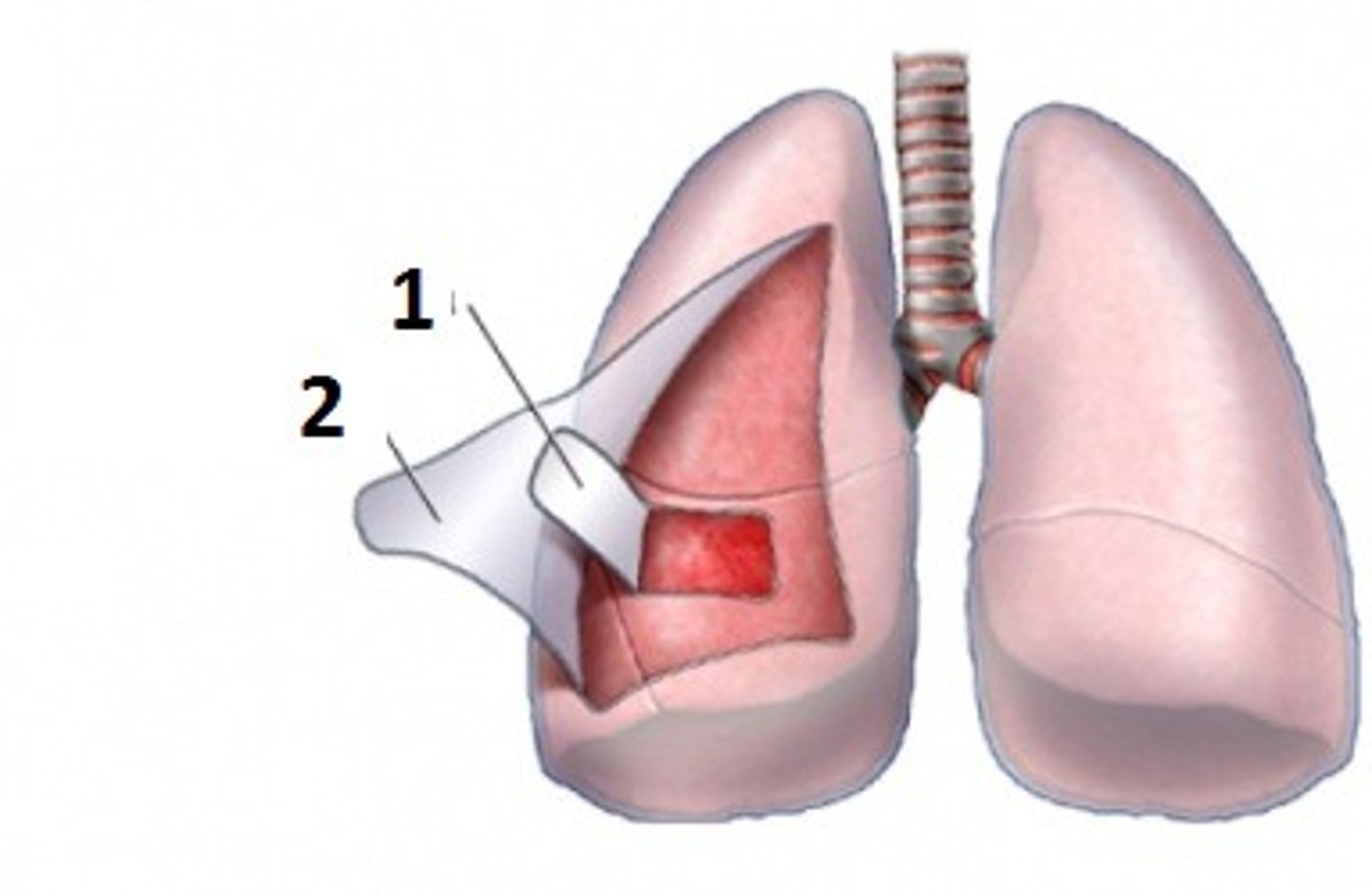
Pleural Cavity
Mediatstinum
Ascites
abnormal accumulation of fluid in the peritoneal cavity
dors/o
back
Ventr/o
belly
the abdominal and pelvic cavities
Which cavities are not separated by anything?
right hypochondriac region
right upper region below the cartilage of the ribs that extend over the abdomen
right hypochondriac region
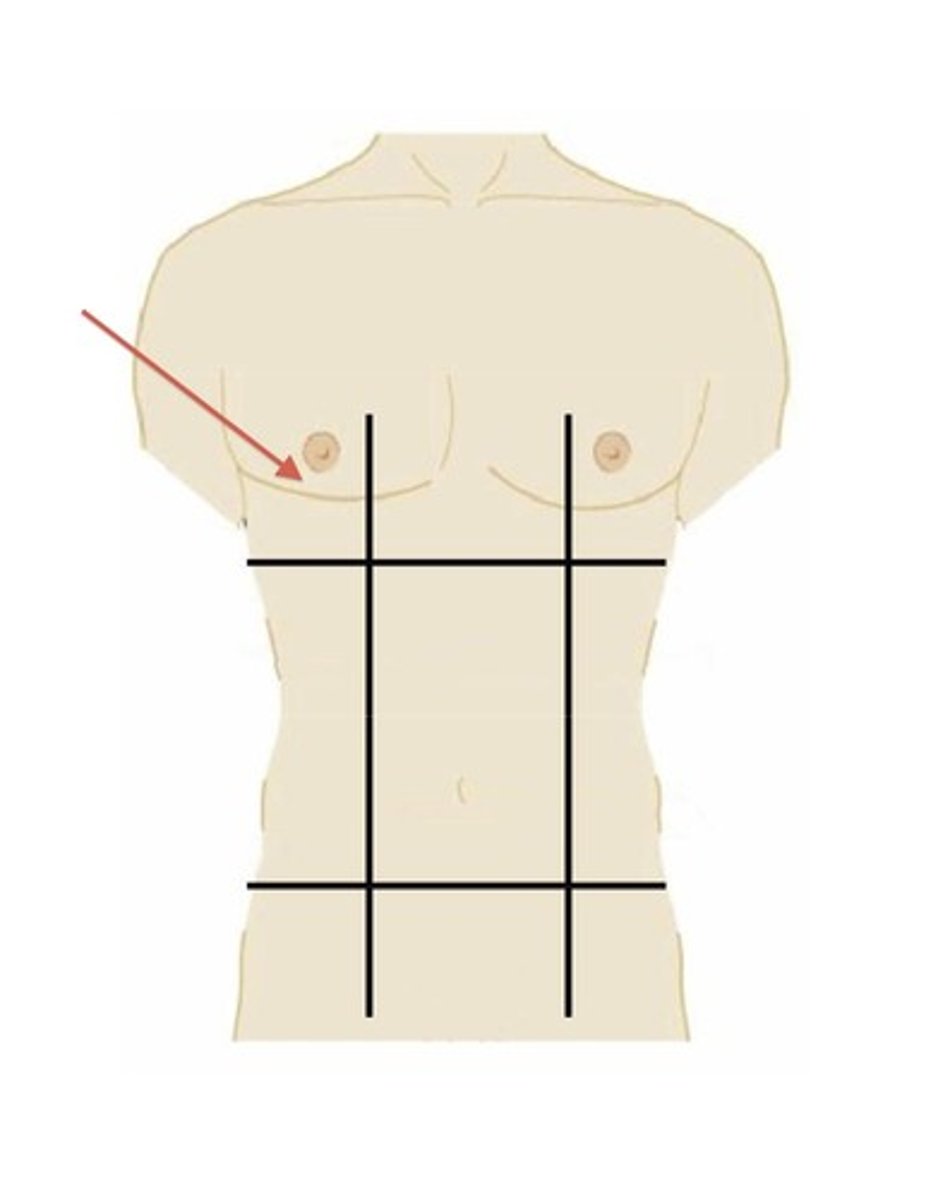
left hypochondriac region
left upper region below the rib cartilage
left hypochondriac region
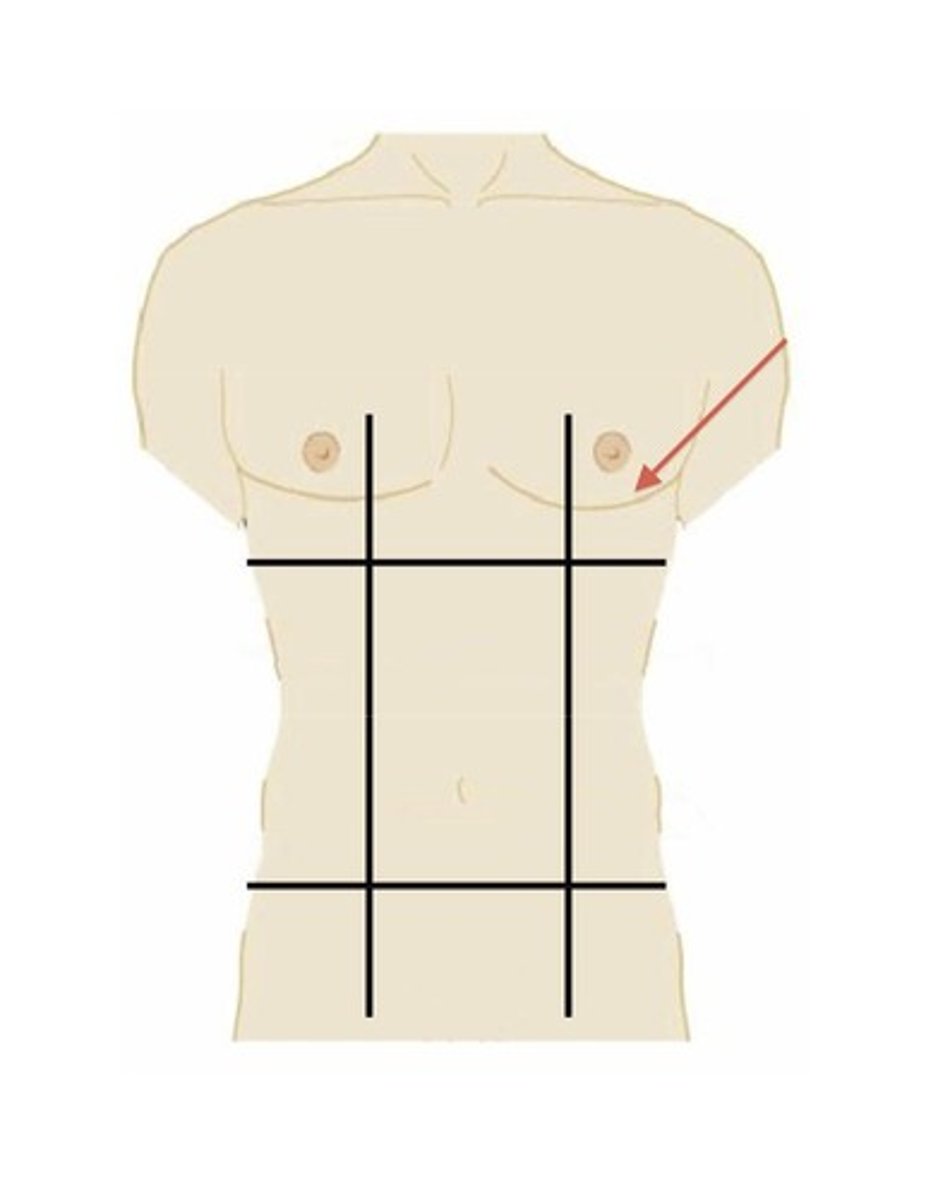
epigastric region
region above the stomach
epigastric region
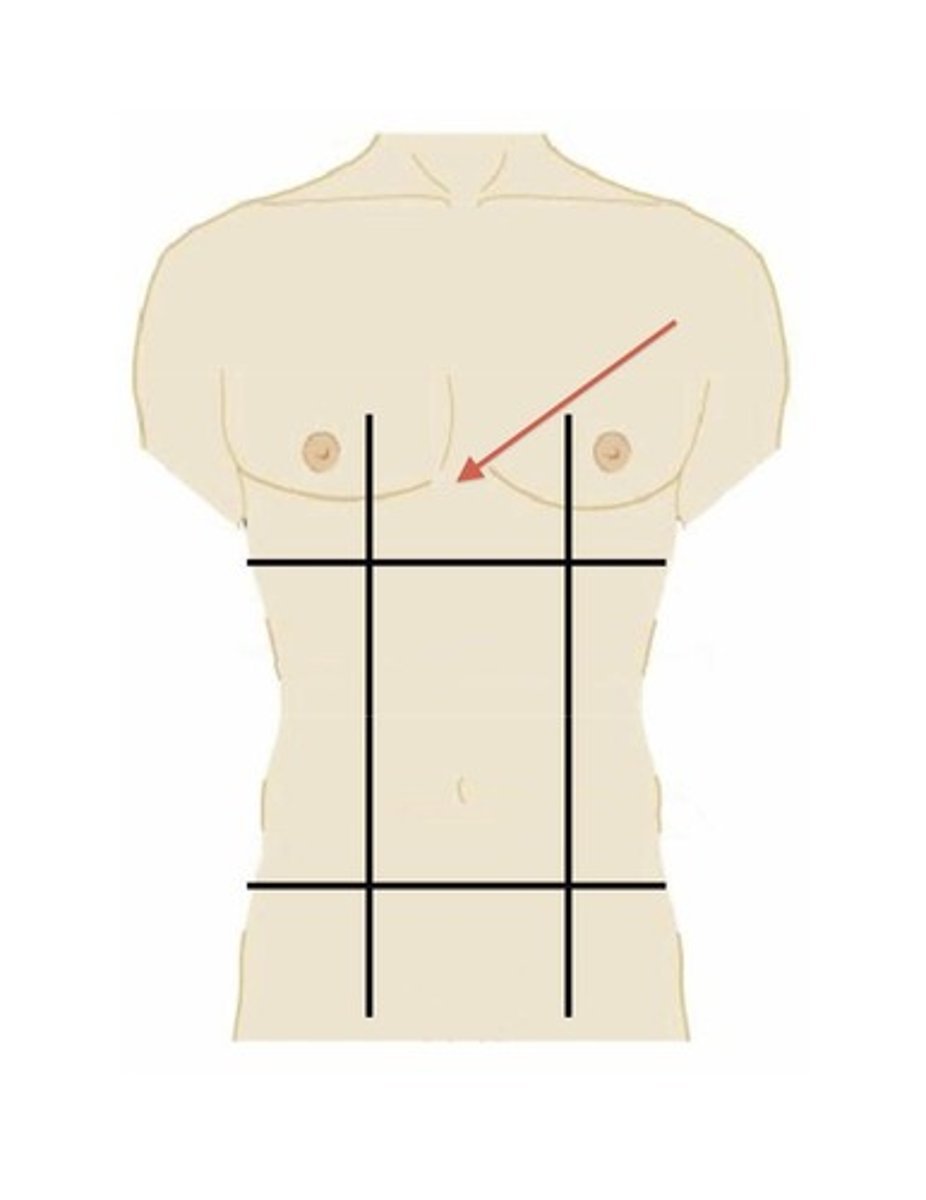
left lumbar region
left middle region near the waist
left lumbar region
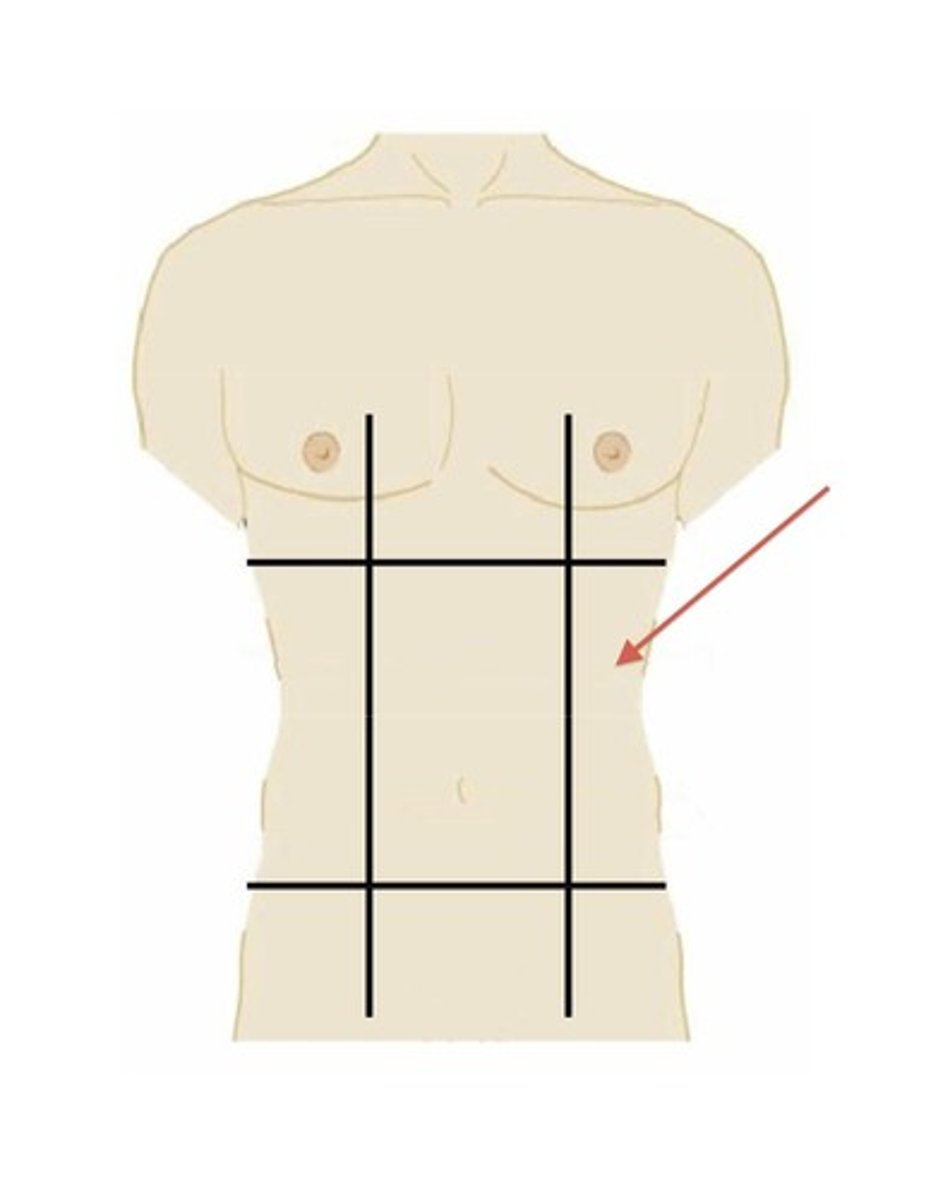
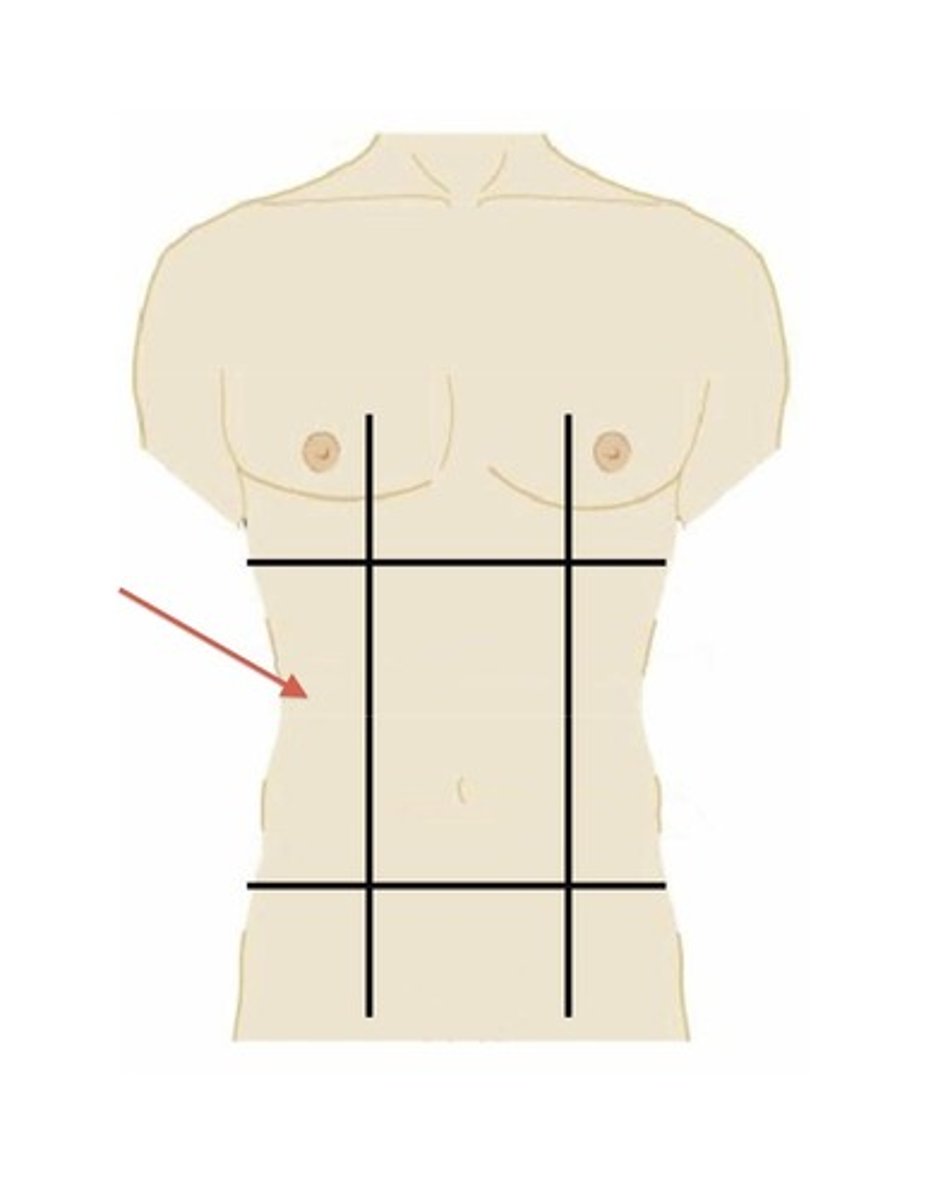
right lumbar region
right middle region near the waist
right lumbar region