immunity and cells lecture ❤
 Call Kai
 Learn
Learn Practice Test
 Spaced Repetition
 Match
Match Flashcards
 Knowt Play
1/90

There's no tags or description
Looks like no tags are added yet.
Name | Mastery | Learn | Test | Matching | Spaced | Call with Kai |
|---|
No analytics yet
Send a link to your students to track their progress
91 Terms
Phagocytic cells
are cells that engulf, ingest, and destroy foreign bodies or toxins
What are examples of phagocytic cells?
neutrophils + macrophages + monocytes + eosinophils + basophils
Phagocytic cells are the ----- line of defense?
FIRST!
Humoral cells
defend the body by producing specialized proteins called antibodies
What are examples of humoral cells?
B cells + plasma cell + Ig + memory cell
Humoral cells are the ----- line of defense?
SECOND!
Cell Mediated
hunt down and destroy cells that are infected by viruses, hijacked by intracellular bacteria, or turned cancerous
What are examples of cell mediated?
T Cells + helper T + suppressor T + cytotoxic T + natural killer cell
Cell mediated are the ----- line of defense?
THIRD!
Neutrophils are
short lived + if lab shows high result you are very infected!
Normal neutrophil counts is
1,500 to 8,000 cells/mcL (40-60% of total wbc count)
Neutropenia
Low neutrophil count increasing infection risk + less than 1000
Neutropenia nursing considerations include
no sitting flowers + limit visitors + vital signs (temp is most important) + handwashing + paper plates + do not share utensils + cough and deep breathe + assess skin breaks + monitor cbc count!
What isolation is neutropenia?
Reverse isolation! designed to protect immunocompromised patients with low white blood cell counts from outside infections. They prioritize meticulous hand hygiene, strict avoidance of sick contacts, dietary restrictions, and environmental controls to eliminate exposure to potential pathogens.
Macrophages are
longer lived and releases cytokines
High macrophages indicate
arthritis and covid 19
Monocytes are
immature!
High monocyte count indicates
atherosclerosis
Low monocyte count indicates
bone marrow suppression or severe systemic suppresion such as leukopenia
Eosinophils
are a type of disease-fighting white blood cell. They make up 1% to 5% of your total white blood cells and play a critical role in your immune system by regulating inflammation and destroying invading parasites or allergens
High levels of eosinophils indicates
asthma and eczema
Eosinophils help modulate immediate hypersensitivity reactions (allergic reactions) by
producing enzymes that break down and inactivate histamine!
IgE vs Eosinophils
Think of IgE as the alarm system and eosinophils as the emergency responders. When IgE antibodies detect an allergen, they attach to immune cells (including eosinophils). This triggers the eosinophils to release toxins that help fight the threat, which unfortunately also causes the inflammation and symptoms we experience during an allergic reaction.
Basophils
the least abundant type of white blood cell, making up less than 1% of your total circulating leukocytes. Despite their small numbers, they play a critical role in your immune system by releasing histamine and heparin to defend against allergens and infections
Basophils do what
inflammation + vasodilation + clotting off
B cells do what
produce antibodies + natural immunity
Natural (Innate) vs Artificial (also known as acquired) immunity
Natural (innate) immunity is the general, built-in defense system you are born with, providing immediate, non-specific protection against all germs. In contrast, artificial (acquired) immunity is a specialized defense developed later in life—either through exposure to a disease or via vaccines—which tailors a targeted attack against specific pathogens
What is natural immunity?
Immunity achieved through normal life processes. It's also referred to as "innate" immunity. Your body remembers antigens and fights it off in the future.
What are the two types of natural immunity?
active and passive
What is natural active immunity?
When you become immune after catching a disease. This is where you make your own lifelong immunity. An example would be chicken pox. This is the most preferred one to have out of all immunity. This also refers to our DNA component of immunity; think about feline leukemia. We aren't going to get this because our DNA doesn't allow us to get that disease.
What is natural passive immunity?
Passing antibodies from mother to baby via placenta or breastfeeding. These are temporary.
What is artificial immunity?
Immunity that is acquired when a person receives a vaccine or immunity from an external source.
What is artificial active immunity?
Acquiring one's own immunity against an attenuated pathogen. This is typically given by a vaccine. It can be lifelong but the length of activity can vary. This is why they may need to be kept up with boosters. These can be assessed via titers and boosters. These are only second “best” to natural active.
What is artificial passive immunity?
This is a temporary type of immunity where you get antibodies from an external source. Dr. Parker uses the example of getting antibodies (IV IG) for HPV or Hepatitis B to help treat the virus. This may be a way to control the virus and then the patient may receive a vaccine later.
Do you notice any trends that would help you remember/differentiate the different types of immunity?
Active=Permanent or long lasting
Passive=Temporary
Natural=from sources not man made
Artificial=sources that are man-made
Memory cell
fight past diseases
IgA
mucus membranes + prevent pathogen from entering + breast milk (newborn immunity) + protects against organisms found in food
IgM
first antibody produced
IgG
bloodborne + tissue infection
IgE
allergic reactions + hypersensitivity reactions
IgD
not highly active
Cell mediated
type of immunity provided by T cells + diagnosis affected by alteration including (AIDS + HIV + Autoimmune + Cancer)
HIV/AIDS stands for
Human Immunodeficiency Virus + Acquired Immunodeficiency Syndrome
HIV/AIDS
is a virus that attacks the body’s immune system, specifically the CD4 white blood cells. If left untreated, it progressively damages the immune system and can advance to AIDS (Acquired Immunodeficiency Syndrome), the most advanced stage of the disease
HIV/AIDS is defined by
a CD4 cell that is below 200 + a opportunistic infection (pneumonia or kaposi sarcoma) + HIV attaches to CD4 cell
HIV/AIDS transmission
sex + birth/breast feeding + needle stick + if a baby is born from HIV + mother they are HIV + antibodies but they will be negative
HIV/AIDS prevention + screening
PrEP is for indivisuals that are at a high risk + PEP
Pre-Exposure Prophylaxis (PrEP)
Daily medication (pills or long-acting injections) that prevents HIV infection if exposed. It is highly effective and recommended for individuals at high risk.
Post-Exposure Prophylaxis (PEP)
passive artificial + within 72 hours + take HIV meds for 28 days + follow up testing in 3-4 weeks @3months
HIV/AIDS s/s
fever + weight loss + sores
HIV/AIDS stage 1 s/s
2-4 weeks after exposure + flu-like symptoms
HIV/AIDS stage 2 s/s
latency + night sweats + 10-15 years
HIV/AIDS stage 3 s/s
CD4 is below 200 + opportunistic infection + anemia + thrombocytopenia + neutropenia
Pediatric considerations for HIV/AIDS
HIV to AIDS is quicker + failure to thrive
HIV/AIDS testing
Rapid HIV test (any antibodies) + EIA (nucleic acid test + most definite) + Blot
EIA test (Enzyme Immunoassay)
a test that screens for the presence of HIV antibodies in the blood + need 2 positive tests to take this
HIV/AIDS treatment
HAART Therapy + -vir therapy + combo (want to avoid resistance) + compliance is essential + talk about what could interfere with compliance
Allergic Reactions
ask what reaction they have to allergy
Hypersensitivity Type 1
anaphylactic + IgE + mast cells to histamines + typical allergy reaction
Hypersensitivity Type 2
cytotoxic reaction + IgG or IgM + body mistakes as foregin + blood transfusion reactions
Hypersensitivity Type 3
complex reaction + joints and kidneys
Hypersensitivity Type 4
delayed reaction
Histamines 1
hydroxyzine + do not operate heavy machinery + anticholinergic effects (ice chips) + photosensitivity
Histamines 2
pepcid + gastric cells
Prostaglandins
hormone like + vasodilation + smooth muscle contraction + pain receptors
Leukotrienes
smooth muscle contraction + more potent than histamines
Bradykinin
Bradykinin is a powerful vasodilator. During acute allergic reactions or anaphylaxis, increased bradykinin levels can cause profound drops in blood pressure and dangerous swelling (angioedema) in the throat or larynx.
Serotonin is a
potent vasoconstrictor
Assessment of allergic reaction should include
allergy history + labs (cbc + bodily fluids + serum IgE) + skin test (more accurate) such as intradermal injections on back or arm if tattoos + emergency equipment + do not take corticosteroids or antihistamines at least (48-96hr) before + food allergies + meds (-pens and sulfas)
treatments for allergic reaction include to
avoid + reintroduce + antihistamines + leukotriene receptor antagonists (taken daily + long term) + corticosteroids (watch for weight gain + CNS depression + hyperglycemia + taper off)
patients receiving allergy shots need to stay in office for how long?
30min!
Latex allergy
healthcare worked are most at risk! use latex free gloves!
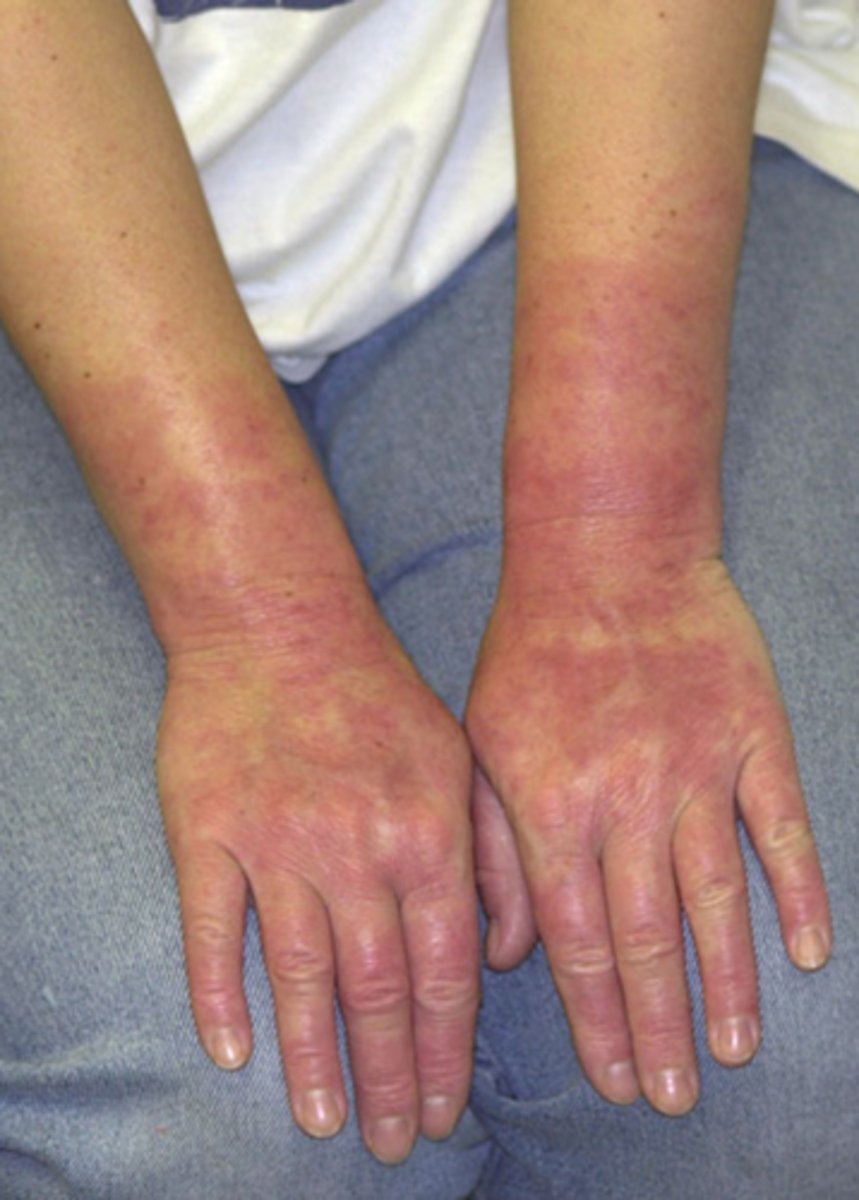
Latex allergy s/s
rhinitis + conjunctivitis
Latex allergy t/x
avoid condoms
Anaphylaxis
vasodilators + increase permeability + bronchoconstriction + airway is priority! + wheezing to stridor + EPI + med alert bracelet + NS fluid for hypotension
Arthritis
inflammation of a joint
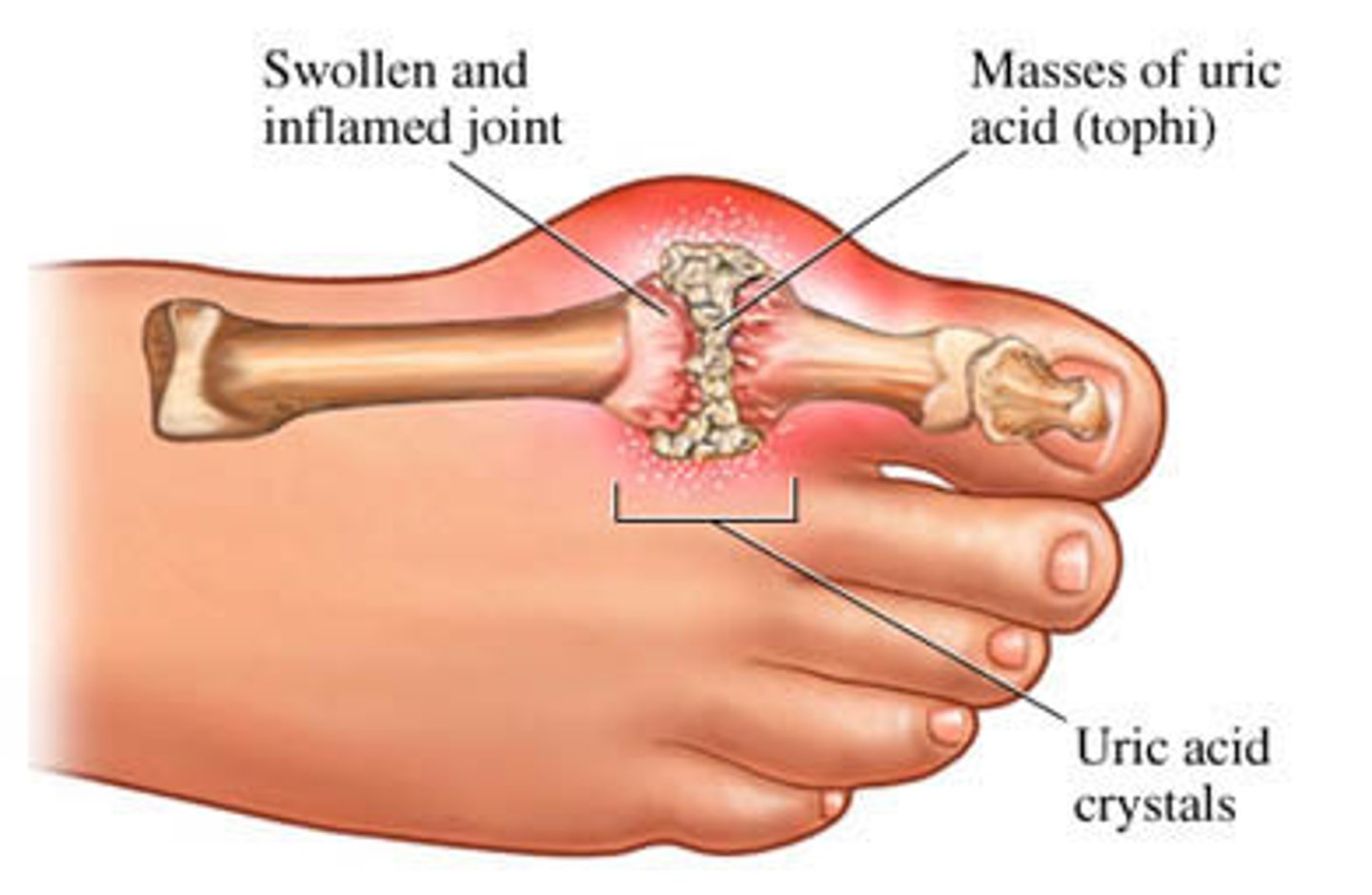
Arthritis risk factors
smoking + pollution + genetics
Arthritis s/s
articular and extraarticular
Articular vs Extra-Articular
"Articular" means inside or directly involving the joint (such as cartilage and joint space), while "extra-articular" means outside the joint capsule or surrounding soft tissues
Articular s/s of arthritis
bilateral + symmetric joint pain + morning joint stiffness + swelling + palpated joints feel spongy + starts in distal joints + overtime contracture
Extra-Articular s/s of arthritis
weight loss + fatigue + anemia + raynaud's phenomenon
Arthritis t/x
decrease joint pain + clinical remission + decrease. likelihood of joint deformity + minimize disability + cycling + lifting weights + reconstructive surgeries
Arthritis medications include
DMARDS + Hydroxychloroquine + Methotrexate + NSAIDS
DMARDS
Disease-modifying antirheumatic drugs for RA treatment + prevent inflammation + start within 3 months of diagnosis + results in 6 weeks
Hydroxychloroquine
monitor kidneys + cbc + bone marrow depression + annual eye exams
Methotrexate
prevent thrush + bone marrow suppression + could cause blistering if IV + fetal harm
NSAIDS
take with food
Lupus
a chronic autoimmune disease characterized by inflammation of various parts of the body
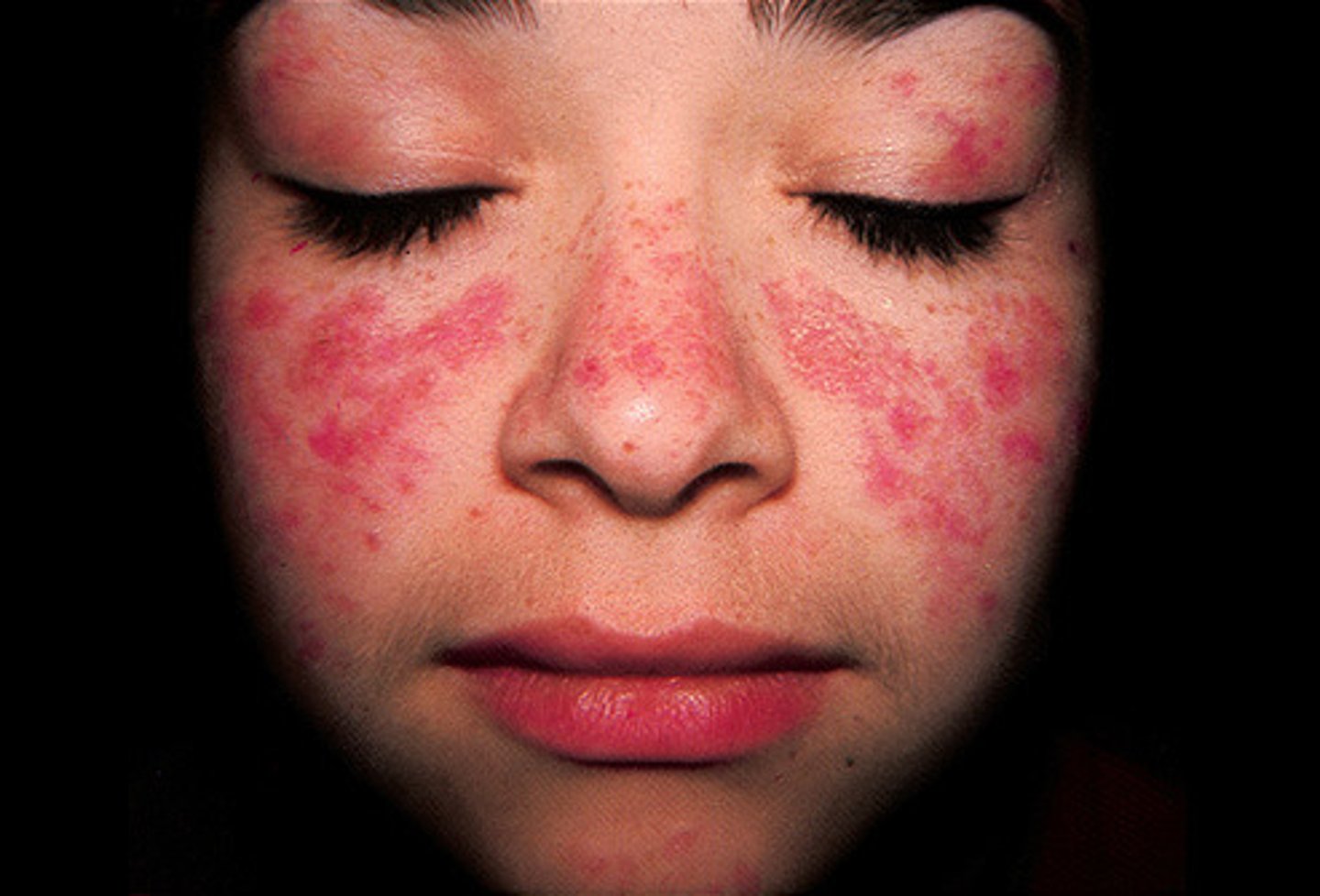
Lupus patho
body recognized self as foreign + b cells overproduce antibodies (clogs up capillaries)
Lupus s/s
butterfly rash + skin lesions + photosensitivity + joint pain + raynaud's + splintered nails + CBC shows anemia + leukopenia + thrombocytopenia
Lupus NC
manage pain + support group + collaborative care + smoking cessation + UV rays are a NO NO + avoid stressful situations + weight bearing activity