Exam 1
 Call Kai
 Learn
Learn Practice Test
 Spaced Repetition
 Match
Match Flashcards
 Knowt Play
1/786

There's no tags or description
Looks like no tags are added yet.
Name | Mastery | Learn | Test | Matching | Spaced | Call with Kai |
|---|
No analytics yet
Send a link to your students to track their progress
787 Terms
Which structure is located in the posterior mediastinum?
Esophagus
Which chamber of the heart receives oxygenated blood from the pulmonary veins?
Left atrium
During auscultation, the tricuspid valve is best heard at which location?
Left fifth intercostal space near the sternum
Which coronary artery commonly supplies the SA node?
Right coronary artery
A patient has damage to the left phrenic nerve. Which function would be most affected?
Contraction of the diaphragm
The apex of the heart is formed primarily by which chamber?
Left ventricle
Which structure is responsible for delaying the cardiac action potential before it enters the ventricles?
AV node
The right lung differs from the left lung because it has a:
Horizontal fissure
A needle inserted into the pleural cavity should be placed just superior to a rib because:
The intercostal vessels and nerves run along the inferior border of the rib
The ligamentum arteriosum is a remnant of the fetal:
Ductus arteriosus
Which vessel drains deoxygenated blood directly into the right atrium?
Coronary sinus
A foreign object aspirated into the airway is most likely to enter the right primary bronchus because it is:
Shorter, wider, and more vertical
The “dub” sound of the heartbeat is caused by closure of which valves?
Aortic and pulmonary valves
The left recurrent laryngeal nerve loops around the:
Aortic arch near the ligamentum arteriosum
The carina is located at the:
Bifurcation of the trachea
Which layer is directly adhered to the surface of the lungs?
Visceral pleura
The left ventricle is distinguished from the right ventricle by its:
Thicker muscular wall
The aortic arch gives rise to all of the following EXCEPT:
Right common carotid artery
Which structure anchors the cusps of the tricuspid valve to papillary muscles?
Chordae tendineae
The plane that divides the body into superior and inferior portions is the:
Transverse plane
As a future physician, what will you be expected to do (1):
Use proper terminology to communicate effectively with other members of the healthcare team
As a future physician, what will you be expected to do (2):
Familiarize yourself with colloquial terms patients may use
As a future physician, what will you be expected to do (3):
Explain and converse in clear terms the patient can understand when discussing problems/plan of care
Anatomical region of the head is referred to as
cephalic
Anatomical region of the neck is called:
cervical
Anatomical region of the chest to below the belly button is referred to as:
Trunk
Anatomical region of the arms is referred to as:
Upper limbs
Anatomical regions of the legs is referred to as:
Lower limbs
Anatomical regions of the head (cephalic), includes what
cranial and face (eye, nose, ear, cheek, mouth, and chin)
What is the eye referred to as:
orbital/ocular
what is the nose referred to as:
nasal
what is the ear referred to as
otic
what is the cheek referred to as
buccal
what is the mouth referred to as
oral
what is the chin referred to as
mental
in the anatomical region of the trunk, what is involved
chest, breast, naval (belly-button), and groin
in the trunk, what is the chest referred to as
thoracic
in the anatomical region of the trunk, what is the naval (belly-button) referred to as
umbilical
in the anatomical region of the trunk, what is the groin referred to as
inguinal
in the trunk, what is the breast referred to as
mammary
in the trunk, what is in the abdominal region?
umbilical = naval/belly-button
in the trunk, what is in the pelvis/perineum?
inguinal = groin
in the upper limbs, what is involved?
shoulder, arm pit, arm, forearm, inner elbow, and hand
in the upper limbs, what is the shoulder referred to as?
acromial
in the upper limbs, what is the arm pit referred to as?
axilla
in the upper limbs, what is the arm referred to as?
brachial
in the upper limbs, what is the forearm referred to as?
antebrachial
in the upper limbs, what is the inner elbow referred to as?
cubital
in the upper limbs, what is the hand broken down into?
wrist, palm, thumb, and fingers
in the upper limbs, what is the wrist referred to as?
carpal
in the upper limbs, what is the palm referred to as?
palmar
in the upper limbs, what is the thumb referred to as?
pollex
in the upper limbs, what is the fingers referred to as?
digital/phalangeal
in the lower limbs, what is involved?
thigh, knee, leg, and foot
in the lower limbs, what is the thigh referred to as?
femoral
in the lower limbs, what is the knee referred to as?
patellar
in the lower limbs, what is the leg referred to as?
crural
in the lower limbs, what is the foot referred to as?
pedal
in the foot, what is this broken down to?
ankle, toes, big toe, sole, and top of foot
in the foot, what is the ankle referred to as?
tarsal
in the foot, what is the toes referred to as?
digital/phalangeal
in the foot, what is the big toe referred to as?
hallux
in the foot, what is the sole of the foot referred to as?
plantar
in the foot, what is the top of the foot referred to as?
dorsum
on the posterior side, what is the trunk broken down to?
shoulder blade, lower back, and sacral (top of the butt, like inner lines)
on the posterior side of the trunk, what is the shoulder blade referred to as?
scapular
on the posterior side of the trunk, what is the lower back referred to as?
lumbar
on the posterior side of the trunk, what is the sacral referred to as?
sacral, it has no other name
on the posterior side of the upper limbs, what is included?
elbow, and back of hand
on the posterior side of the upper limbs, what is the elbow referred to as?
olecranal
on the posterior side of the upper limbs, what is the back of the hand referred to as?
dorsum
on the posterior side of the lower limbs, what is included?
buttock and back of knee
on the posterior side of the lower limbs, what is the buttock referred to as?
gluteal
on the posterior side of the lower limbs, what is the back of knee referred to as?
popliteal
what is the abdomen referred to as?
abdominal
the standard way to describe body parts in relation to one another
anatomical position
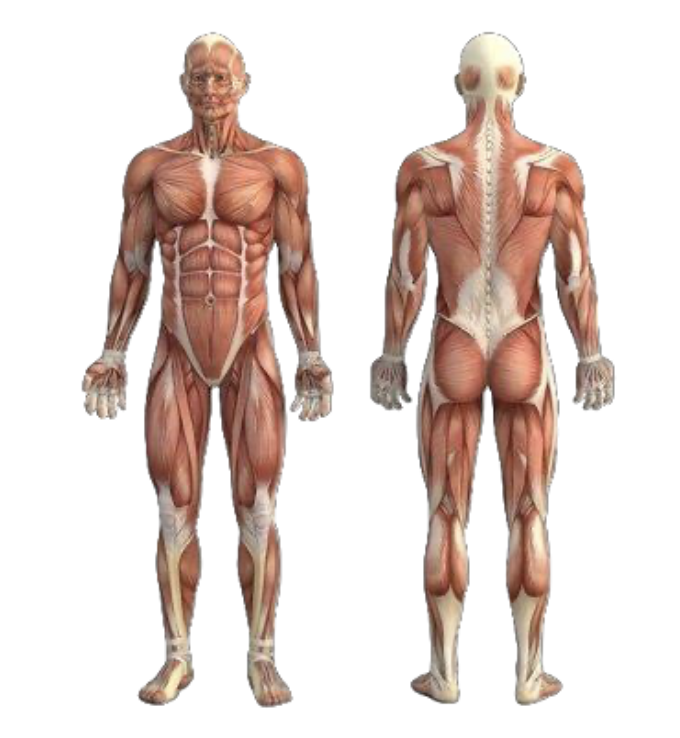
what is anatomical position
standing upright, facing forward, upper limbs down at the side, palms facing forward, lower limbs close together with feet parallel
When telling the location of structures, does it matter what position the patient is currently in?
no, it is always described with regard to anatomical position
define anterior and what is the other name for it?
towards the front, ventral
define posterior and what is the other name for it?
towards the back, dorsal
What is superior
above
what is inferior
below
what is cranial
towards the hed
what is caudal
towards the tail (buttock)
what is medial
towards the midline
what is lateral
away from the midline
what is superficial
towards the surface
what is deep
towards the inside
what is proximal
closer to the point of origin
what is distal
further from point of origin
what is supine?
facing upwards
what is prone?
facing downward
what are the three major planes
sagittal, coronal (frontal), transverse (axial)
what is the sagittal plane?
vertical plane that passes longitudinally through the body; divides the body into left and right parts
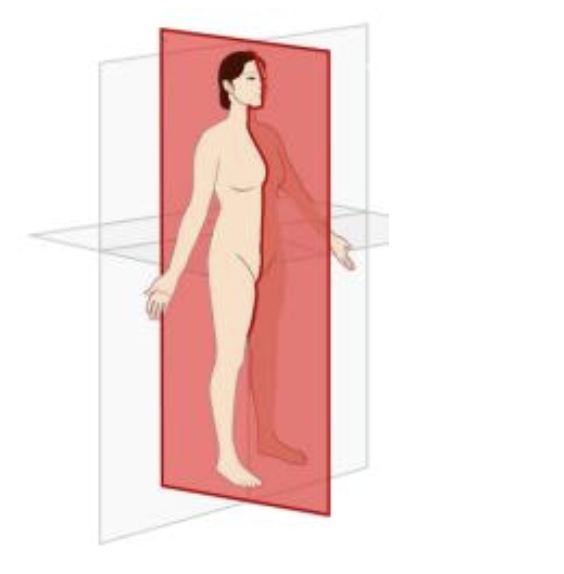
what does the sagittal plane provide the ability to observe?
anterior-posterior relationships and superior-inferior relationships
what is the coronal plane?
vertical plane that passes longitudinally through the body; divides the body into anterior and posterior parts
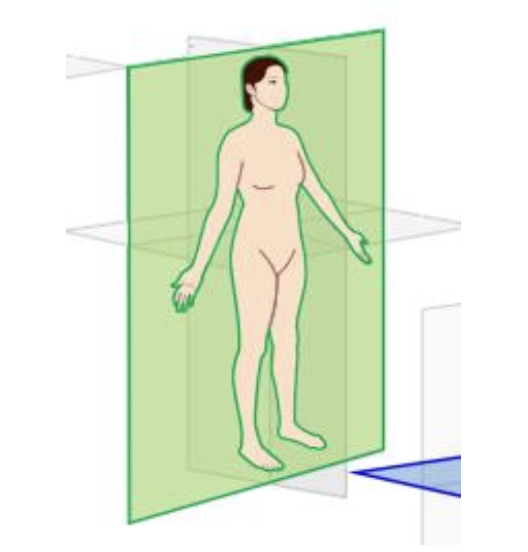
what does the coronal plane provide the ability to observe?
left-right/medial-lateral relationships and superior-inferior relationships
what is the transverse plane?
horizontal plane; divides the body into superior and inferior parts; radiological view is from foot to head
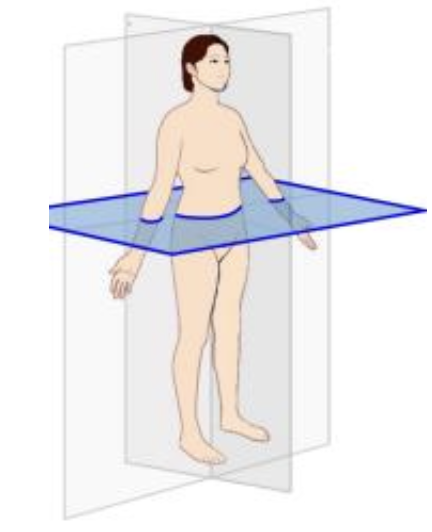
what does the transverse plane provide the ability to observe?
left-right/medial-lateral relationships and anterior-posterior relationships
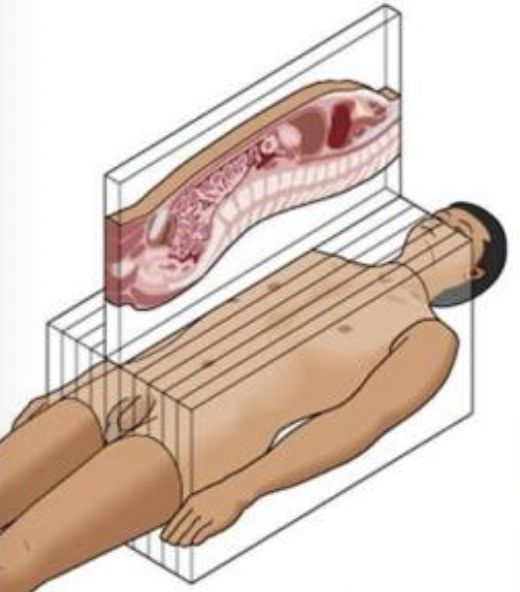
what does this image show?
sagittal