MC Practical - Balance Outcome Measures
 Call Kai
 Learn
Learn Practice Test
 Spaced Repetition
 Match
Match Flashcards
 Knowt Play
1/12

Earn XP
Description and Tags
MichaelMendoza11
Name | Mastery | Learn | Test | Matching | Spaced | Call with Kai |
|---|
No analytics yet
Send a link to your students to track their progress
13 Terms
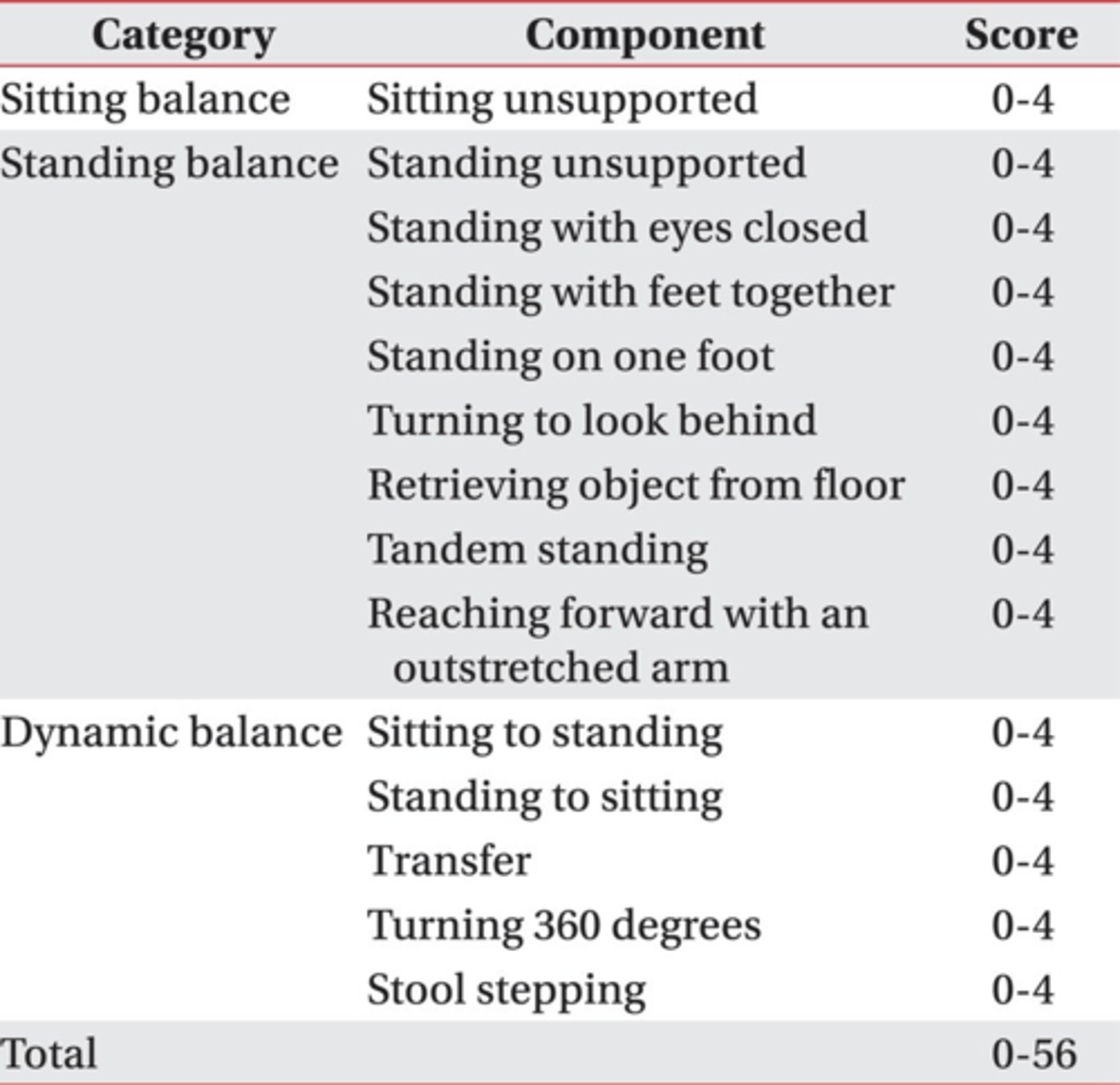
BERG Balance Scale
Anticipatory
To assess static and dynamic balance in older adults or individuals at risk of falls; commonly used in stroke, Parkinson's, and geriatric populations.
anticipatory, sit to stand, picking up object, standing unsupported, single leg stance, standing to sitting, transfers, eyes closed standing, feet together standing, pick up object, turning head to look over, turn 360, alternating feet,
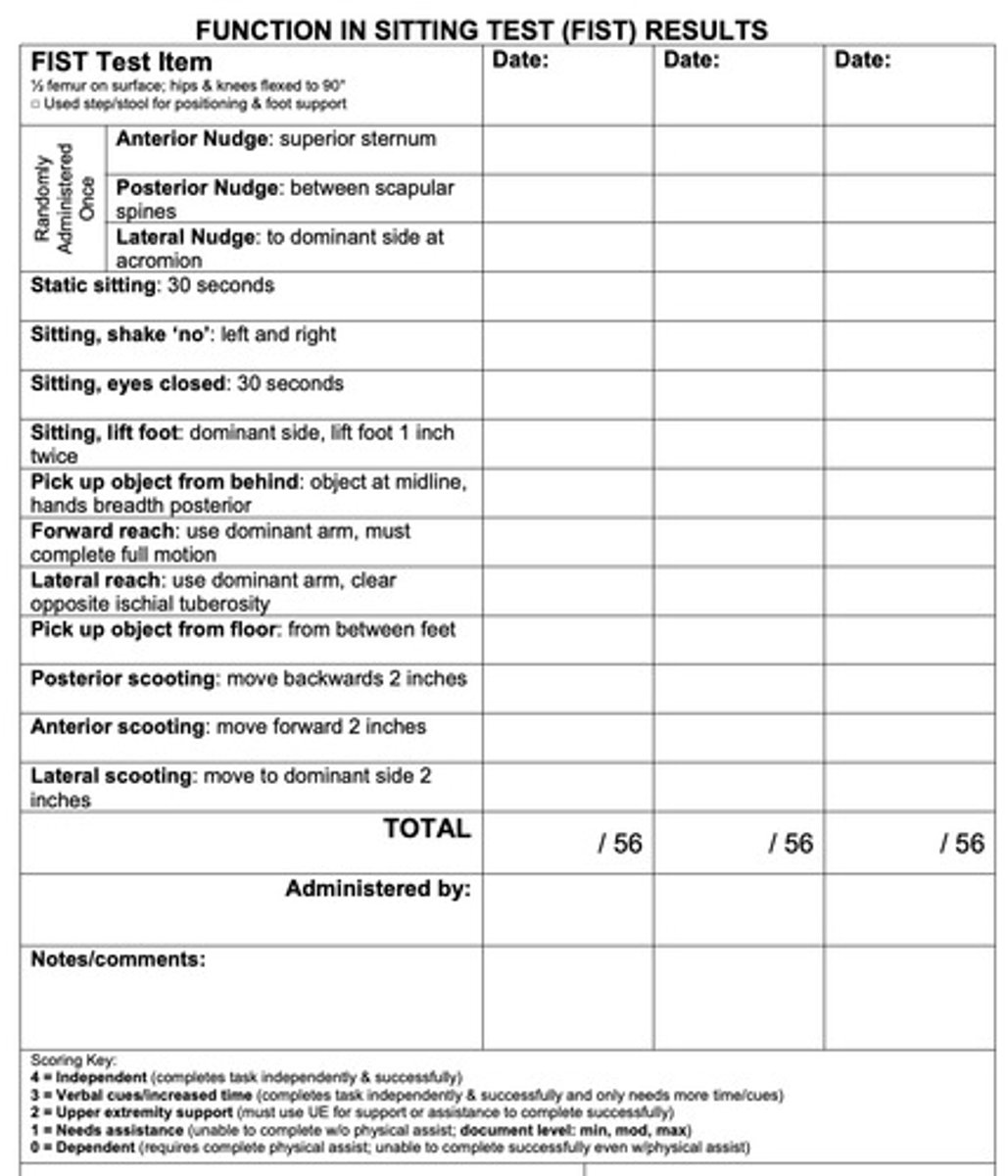
FIST (Function in Sitting Test)
Anticipatory
To evaluate sitting balance and postural control in patients with severe balance deficits, especially after stroke, brain injury, or spinal cord injury.
all in sitting, anticipatory, sitting reactive balance (posterior, anterior, lateral nudge), static, seated head shaking, pick up object siting, reaches, scooting
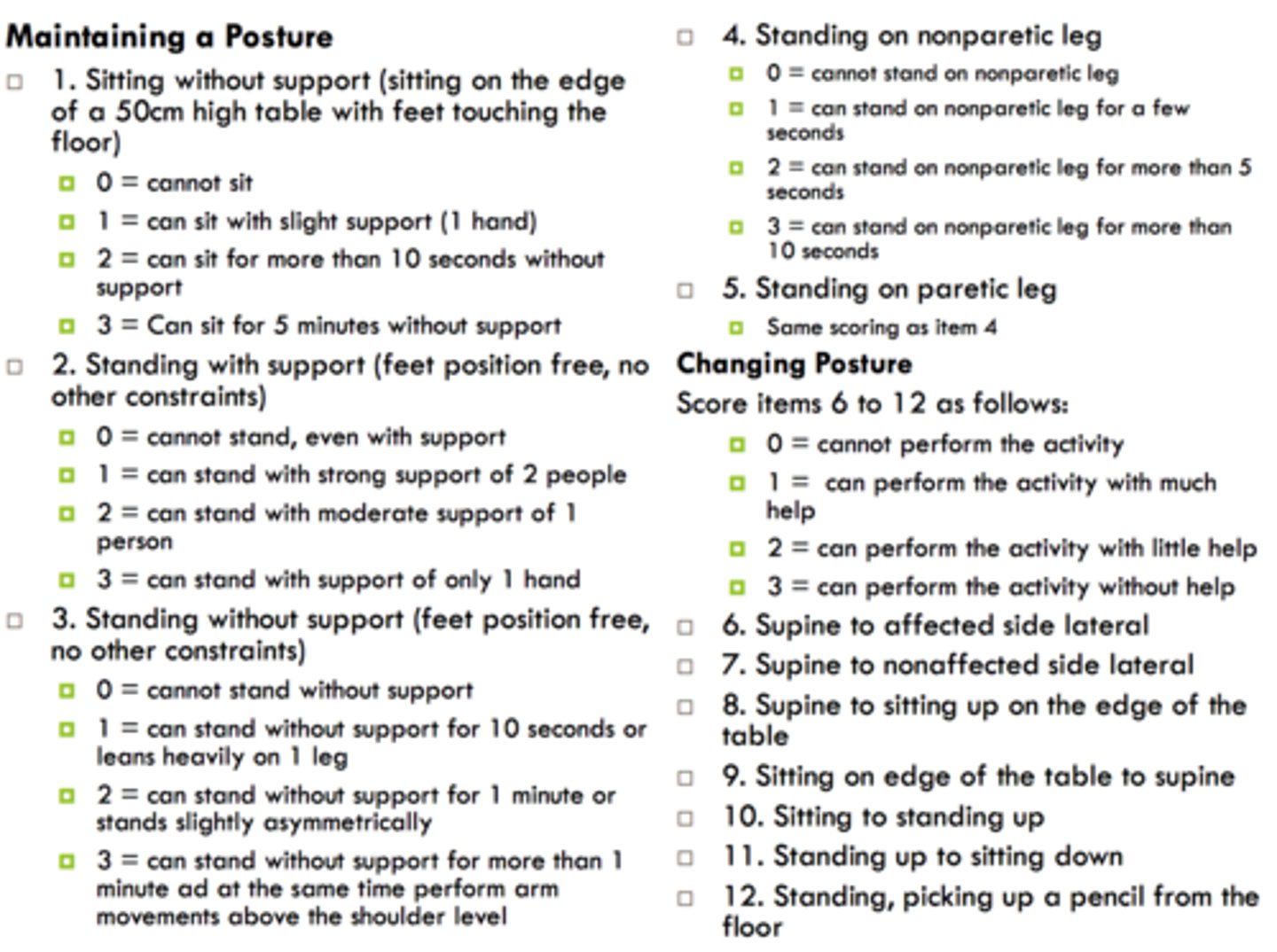
PASS (Postural Assessment Scale for Stroke Patients)
Anticipatory
Specifically designed to assess postural control in individuals recovering from stroke, particularly in the acute and subacute phases.
stroke patients, anticipatory balance, mobility
MiniBESTest (Mini Balance Evaluation Systems Test)
Reactive
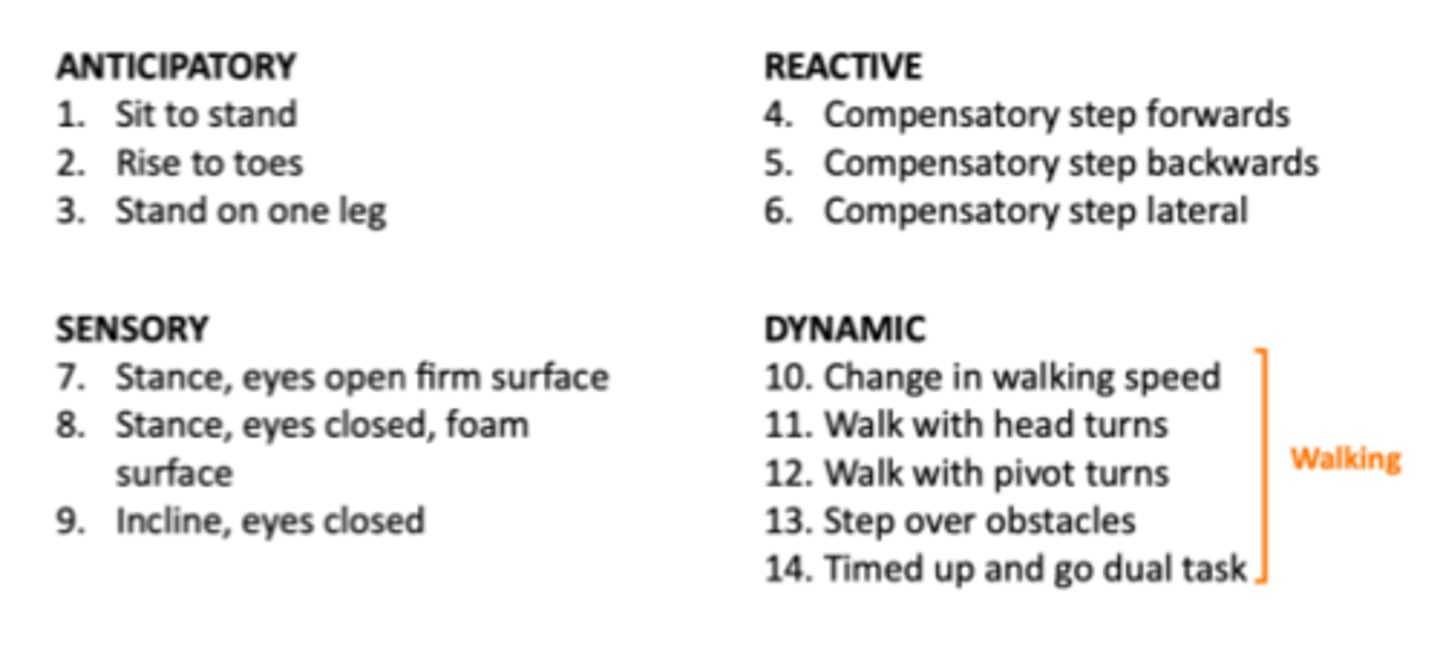
To assess dynamic balance and identify balance impairments related to anticipatory control, sensory integration, and reactive postural control — especially in patients with neurological disorders like Parkinson's disease.
sit to stand, rise to toes, stand on one leg, reactive, sensory orientation (foam), dynamic gait: TUG with dual task
FGA (Functional Gait Assessment)
(Anticipatory...)
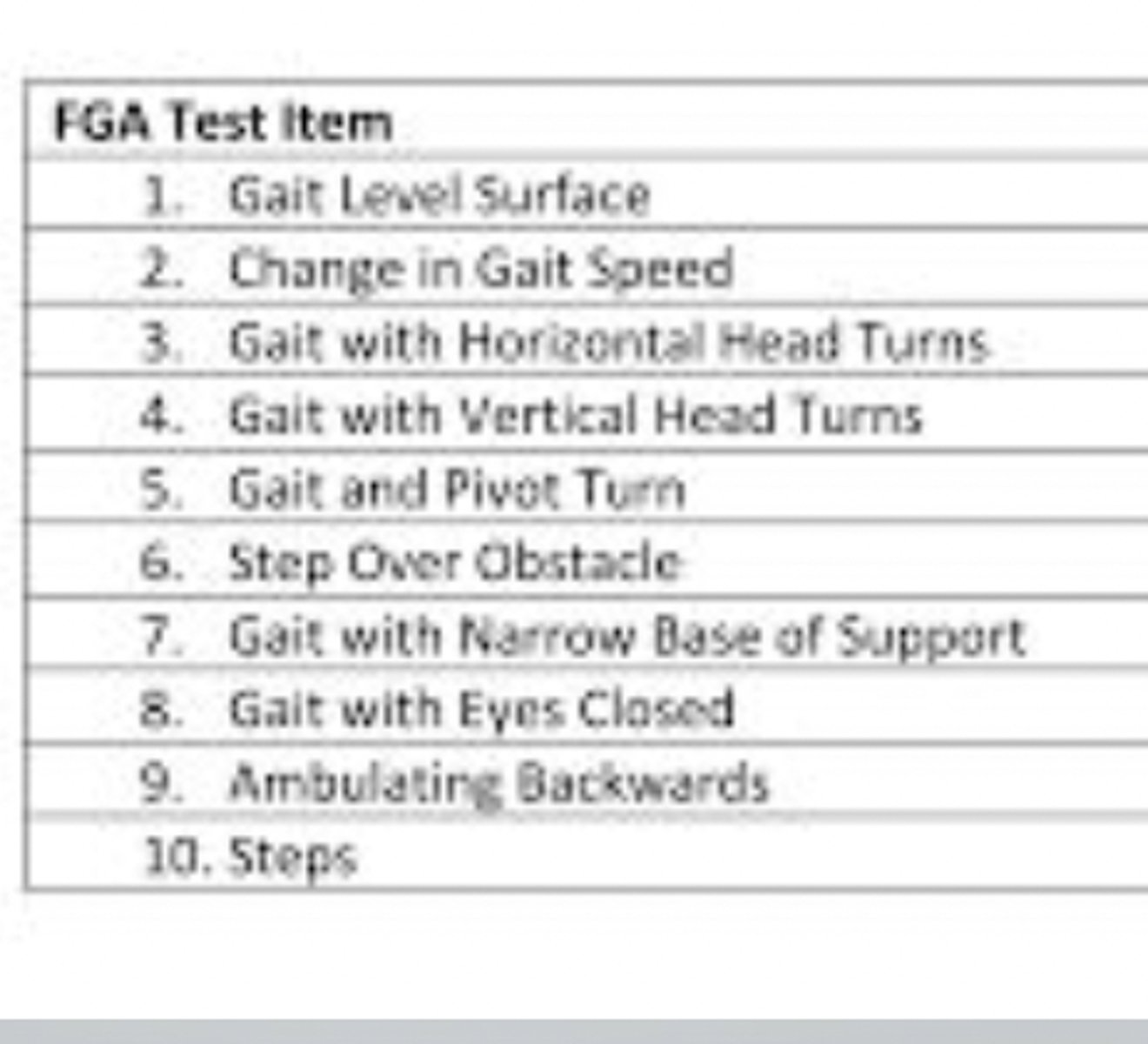
To assess postural stability during various walking tasks and to predict fall risk in older adults or people with vestibular and neurological conditions.
walking backwards, head turns, change in speeds, pivot turns, obstacles, walking narrow BOS, eyes closed walking, steps
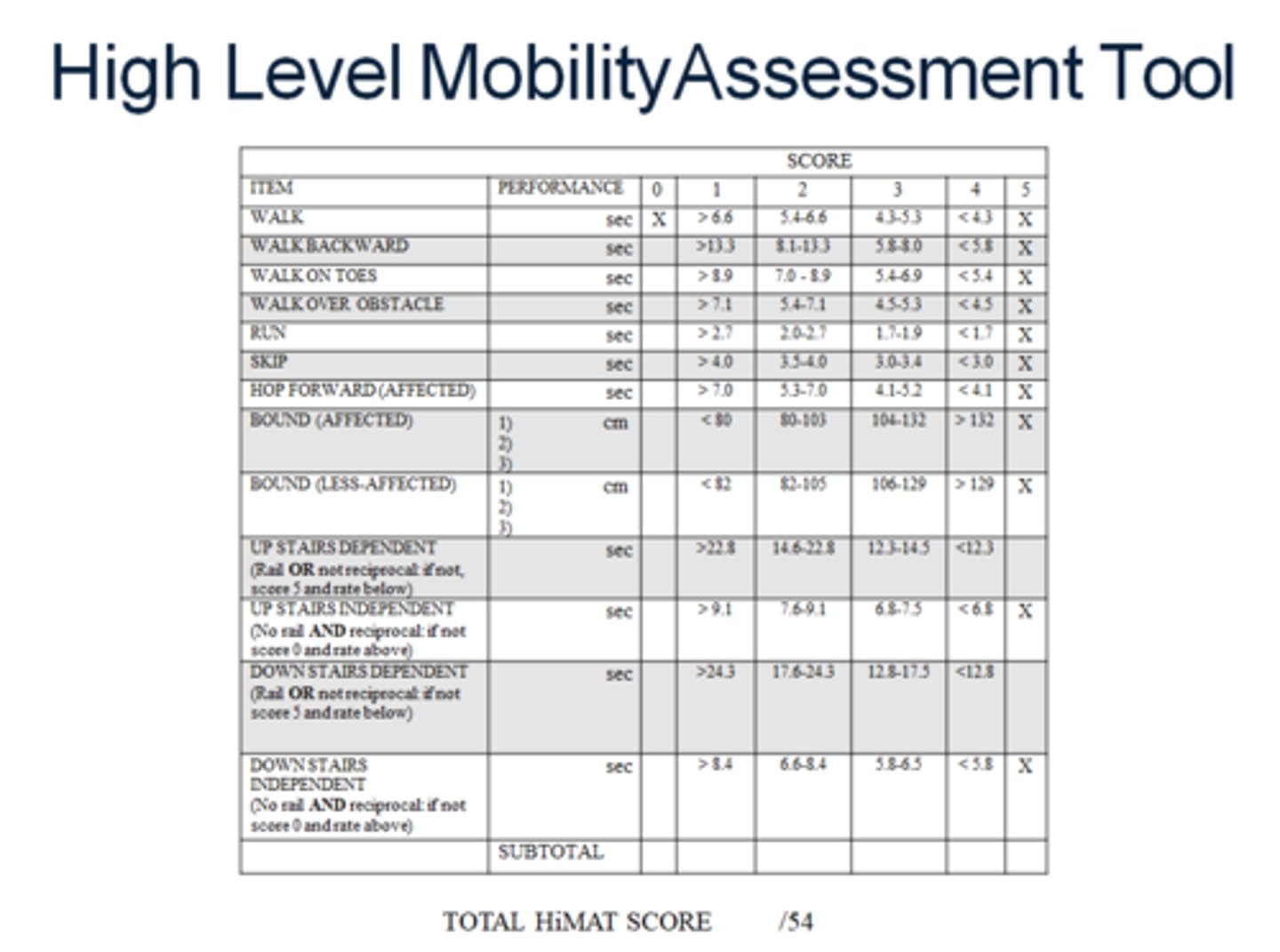
HiMAT (High-Level Mobility Assessment Tool)
(Anticipatory...)
To measure high-level balance and mobility in individuals with traumatic brain injury or other populations who have progressed beyond basic mobility tasks.
walking backwards, walk on toes, over obstacles, run, skip, hop forward, bound, up stairs, down stairs
CTSIB (Clinical Test of Sensory Integration and Balance)
Static/Sensory weighing
To determine how well a person uses visual, somatosensory, and vestibular input for postural control; often used for patients with balance disorders, vestibular dysfunction, or post-concussion.
BERG Balance Scale Score Range
0-20 high, 21-40 medium, 41-56 low fall risk; 45/56 general cut off.
FIST Score Range
0-56; higher score is better.
PASS Score Range
0-36; higher score is better.
MiniBESTest Score Range
0-28; higher scores better.
FGA Score Range
0-30; higher score better, cutoff 22/30.
HiMAT Score Range
0-54; higher score is better.