psicología de las organizaciones - UV
 Call Kai
 Learn
Learn Practice Test
 Spaced Repetition
 Match
Match Flashcards
 Knowt Play
1/95

There's no tags or description
Looks like no tags are added yet.
Name | Mastery | Learn | Test | Matching | Spaced | Call with Kai | Chat |
|---|
No analytics yet
Send a link to your students to track their progress
96 Terms
rationalist approach - scientific management (founder&assumptions)
Taylor (engineer): start industrialization, efficiency is low and there is a need to increase the control over the behavior of people
assumptions: interests of employees and employers run parallel (prosperity); scientific approach can be used to organize the work; there is a best way to do this
rationalist approach - scientific management (different from regular management)
manager is able to use science to analyze each facet of employees’ work → this knowledge replaces worker decisions
man. and work. work together to assure that insights are used (foremen)
clear division of tasks man. and work.
avoids arbitrary
rationalist approach - scientific management (specific aspects)
rational analysis of tasks
emphasis on measurement
repetitive tasks
tasks broken down into parts and regrouped to achieve highest efficiency
economic motivation of employees reinforced (productivity and salary connected)
rationalist approach - scientific management (criticism)
no consideration of psychological aspects of work
mechanic view: workers are extension of machine
money as only human motivation
Kurt Lewin: lack of humanity
rationalist approach - scientific management (current approach)
aka lean production approach/democratic Taylorism/Toyotism
optimalization: achieve more with less resources (synergy; 2+2 > 4)
security: focus on lifetime employment and cooperative man.-emp. relations
team: isolation of workers is followed but together they are also a team achieving goals of the organization
active, autonomous to some degree and individuals are responsible for quality control (and improvement)
rationalist approach - women in scientific management
Lilian Gilbreth
economy of movements: time, motion and fatigue
mother of scientific management
researcher, consultant and prolific science communicator
adviser of multiple US presidents
rationalist approach - bureaucratic tradition (founder&assumptions)
Weber
assumptions: macro-view approach (unlike Tsylorism, which is only focused on work → micro-view); bureaucratic organization is a demand of the modernism and the goal of efficiency of our system and ideally perfect because it changes criteria associated with tradition (unfair) and charisma (unstable); workers and groups under formal laws
dominations: charismatic, traditional and legal (rational)
rationalist approach - bureaucratic tradition (main characteristics)
activities (guided by standard and formal rules) are organized in tasks → tasks define positions (hierarchically)
behavior of individuals is formal and impersonal
work based on technical and professional qualifications
ideally perfect bcs efficiency is protected by principles and routines
challenge: combine law and flexibility over time → also considered in further structural approaches where structural contigency theory plays a role
rationalist approach - bureaucratic tradition (limitations)
rigidity if bureaucracy is exaggerated
dissemination of groups (in hierarchy) creates group interests and reduces efficiency
rules reinforces minimum levels of individual performance (workers achieve less than possible) and closer supervision
humanist relations tradition (founder&experiments)
Elton Mayo
Hawthorne plant (Western Electric Company): experiment started out with the women who had to work in favorable experimental conditions → performance improved continually → introduction of less favorable conditions (decrease lights, fewer breaks, more humidity) → still higher productivity → not the physical conditions, but social climate influenced the performance
2nd Hawthorne surprise: groups naturally develop an informal social organization, with rules that can be more influental and incongruent with the formal rules; informal groups reward and punish their members
organization can not protect itself from the motives, emotions and social relations of individuals and groups → the irrational variables
basic needs: ?, identity, self-esteem, recognition
opened the door to the study of emotions, motives, groups, leadership, etc.
humanist relations tradition (main points)
instead of economic, logical and rational human → individual behavior based on emotions connected to the work situation
personal relations create an informal structure with big impact on behavior
start of organization as a social system
humanist relations tradition (criticism on Hawthorne experiments)
absence of control groups
lack of random sampling in interviews
lack of control over the influence of the observer
human relations - women
Mary Parker Follett
participatory management: managers should involve their subordinates in decision making (falicitate autonomy and happiness)
no worker feels fully satisfied at work if not part of a group
multidisciplinary team approach
common goal but the artificial difference of management vs, workers darkens their relation
power WITH vs power OVER
socio-technical approach (founder&assumptions)
Trist (founder of the Tavistock institute)
non-technological determinism: there is not one technology compulsory and universal in organizations → we can choose the alternative with better impact on the social system and quality of working life
different ways to arrive to the same goal (inconsistent with principles of scientific management and bureaucratic tradition)
socio-technical approach - Tavistock
mining: traditionally gotten by hand with small containers: personnel selection, team salary, 3 persons did all the 3 tasks, production and performance control → new technology: long wall (conveyor band), no teams, standardized tasks divided, external control (in line with Taylorism and bureaucratic)
longwall led to lower performance, strikes, higher rates of absenteeism and sick leaves
Trist and Bamforth: investigation of mines, observed one atypical mine where the longwall organization was not strictly implemented
atypical mines: work organization similar to traditional system, group of miners responsible for the full work process, they exchanged tasks, organized their schedules themselves and defined a ‘fair’ compensation system themselves → combi mechanization and traditional organization → autonomous work groups
results atypical mines: performance 25% higher, costs lower, absenteeism cut in half
socio-technical approach - contributions of the Tavistock episode
one specific type of technology can accept different types of social organization of work
participation beyond the paternalism (semi-autonomous groups and self-regulation)
workers prefer meaningful and global tasks
human resource approaches - humanistic models (main principles)
focus on relations between employees and organizations, including congruencies and discrepancies
humanistic models indicated the gap between organizations and worker needs
assumptions
organizations have psychological assumptions about humans that are not congruent with reality (theory X vs. Y), hindering development of workers and cooperation between employees and employers
person has a need for self-actualization
based on Maslow (physiological needs, safety, love and belonging, esteem, self-actualization) → deprivation or dissatisfaction of a need will lead to the domination of this need
human resource approaches - humanistic models (authors)
McGregor, Likert, Argyris
organizations assume that workers are motivated by basic needs; however, humans have these needs relatively satisfied and other more abstract needs are the motivating factors
authors proposed actions such as:
goal-oriented management (aligning goals and workers’ needs), stimulation of participation, management centered on the employee concerns, reduction of hierarchical levels, increasing communication and coordination
McGregor: theory X and Y
X: humans avoid work and responsibilities and are passive and dependent
Y: if properly managed, humans don’t necessarily avoid work (natural activity like rest) nor responsibilities (like a bit of responsibility), humans take initiave
X is not true
human resource approaches - humanistic models (theoretical contributions)
a more complex view of humans and their motivation, beyond Scientific Management
emphasis on structural changes to stimulate participation
influential in the study of positive psychology
human resource approaches - humanistic models (criticism)
all organizations considered identical
universality of hierarchy of needs questioned
principles of humanistic models receive little clear or consistent support from research findings → it is too optimistic
human resource approaches - equilibrium models (founders & assumptions)
Barnard, Simon, March & Simon
in contrast to the humanistic models, the equilibrium approach proposes an instrumental view of workers in their relations with organizations: partial involvement
each participant and group receives inducements from the organization for their contributions
individual continues to participate as long as inducements he/she receives are greater than own contribution → measured by individual itself in terms of own values (may be different than just economic)
solvency (equilibrium) occurs as long as the organization can secure a sufficient flow of contributions by offering adequate inducements
human being is semi-rational
critical approaches (antecedents: what is being questioned?)
all previous models share a main assumption: the organization is an external reality that can be subjected to the design and management in order to achieve collective and shared goals
critical: organization is not an external reality subjected to design and management of experts → instead, the organization is continuous process of creation with an active role for language, communication and sensemaking
political models - critical approaches
softer side of critical approaches
the organization consists of individuals with conflicting interests → creation of coalitions
the dominant coalition has the greatest power in the articulation of objectives of the organization → the goal of the organization is the goal of the dominant coalition
however: this is too pessimistic (power and politics have negative connotations)
ideology critique - critical approaches
the domination and exploitation by owners and managers are central
naturalization: organizations tend to be seen as natural and stable → reinforces status quo; however: organizations are socio-historical constructions
universalization of managerial interests: interests of managers and owners have been generalized
primacy of instrumental reasoning (kijken naar hoe efficiënt een bepaald middel is ipv kijken naar het nu van het doel zelf): this way the attention is focused on the ways objectives of managers and owners can be achieved
leadership is not
one man band
sacrifice syndrome (causing burn-out)
charisma
one person has all the answers
always being firm and decisive
a position
based only on results
sacrifice syndrome which causes burn-out (what leadership is not)
emotional exhaustion → irritability and reactivity
depersonalization → negative emotional contagion (climate becomes tense, defensive or cynical)
reduced self-efficacy → micromanagement (try to control everything as they lose confidence in their ability to sustain the system)
Cristina Maslach coined the term burn-out
leader and leadership
someone who influences people to complete tasks sucessfully and helps to achieve the goals of the organization
what leaders do, the process of influencing a group to achieve goals
competency
McClelland: an underlying characteristic of an individual that is casually related to criterion-referenced effective and superior performance in a situation
Levy-Leboyer: behaviors, some people dispose of them better than others, they are even able to transform them and make them more effective for a given situation
Spencer & Spencer: an individual characteristic that can predict behavior and performance that is effective or supportive in the work situation
knowledge + skills + attitude
Know what, know how, want to do
classic models of leadership
innate personality traits and skills
Stogdill found several personality traits (ambitious, flexible, creative, assertive, self-confident, energetic) and skills (conceptual and social skilled, diplomatic) describing leaders
behavioral pattern (not about who you are, but how you behave)
leadership can be learned
Ohio University (50s, Stodgill, Fleishman)
Michigan University (50s, Likert, Katz, Kahn): continuum job-oriented - employee-oriented leadership behavior
Blake and Moutons managerial grid (1964): concern for people and concern for production
Ohio State Leadership Quadrants
initiating structure and consideration
high structure and high consideration: high followers’ satisfaction and performance
Blake and Moutons managerial grid (1964)
concern for people and concern for production
1.9 high for people, low for production: country club management
1.1 low for both: impoverished management
5.5 middle of the road management
9.9 team management
9.1 authority compliance management
criticism on the classic models of leadership
ignore the role of the situation
focus too narrow
contingency leadership theory (Fiedler, 1967)
leader-member relations (good-poor)
task structure (how clear task is; high-low)
position power (strong-weak)
whether a task- or relationship-oriented leader results in the best performance, depends on the situation
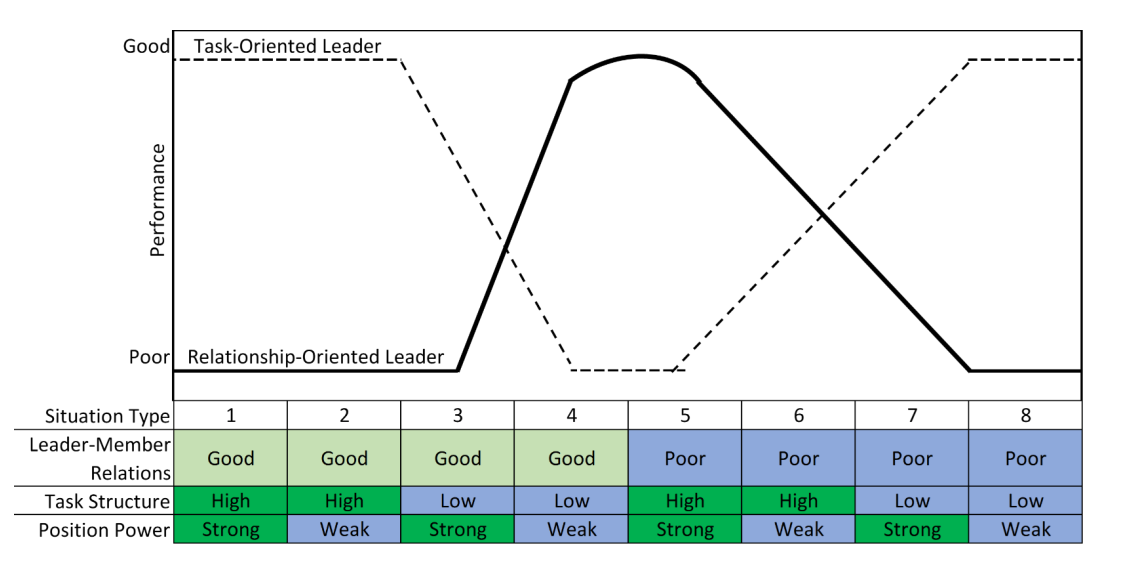
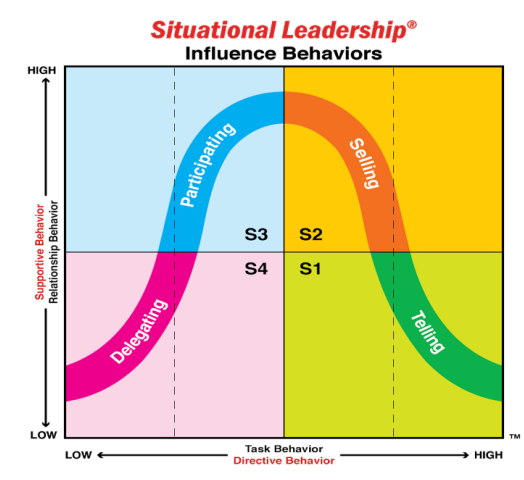
situational leadership
about readiness and maturity of the followers → leader has to alter his behavior to this
technical and psychological (motivation, commitment) maturity
types of performance readiness
R1. unable (low level of technical maturity) and unwilling (low psychological maturity); ‘I need clear structure and direction’ → telling or guiding: leader uses own base of experience to make decisions, provide direction and create movement
R2. unable but willing; ‘I am inexperienced, but highly motivated, so I need both encouragement and direction’ → selling or explaining: clarify decisions, recognize enthusiasm of follower
R3. able but unwilling; ‘I have a good understanding of what to do, but I need support’ → participating or involving: brainstorm alternatives together to try to come to alignment
R4. able and willing; ‘I am motivated, competent and confident’ → delegating or entrusting: leader trusts follower to use their own base of experience to complete task
ambidextrous leadership (March; Rosing, Frese & Bausch)
exploration-oriented behaviors
dynamic or uncertain environments
encourage innovation and experimentation, promote creativity and risk-taking
failure is part of learning
focus on long-term opportunities and adaptation
exploitation-oriented behaviors
stable environments
emphasize efficiency and execution, structure, control and standardization
optimize existing processes and capabilities
focus on goal attainment and performance consistency
full range leadership model (Avolio & Bass)
laissez-faire (Kurt Levin): absence of leadership, avoidance of decision-making, lack of direction
transactional: rewards conditioned on performance, monitoring and correcting errors, intervening only when a problem becomes serious
transformational: idealized influence (trust and identification), inspirational motivation (mission, guidance, meaning), intellectual stimulation (out of the box), individualized consideration
servant leadership
5 measurable dimensions
altruistic calling: serve others, even at the expense of personal interests, putting followers’ needs ahead of ones own
emotional healing: support followers with personal or emotional issues, promoting their psychological well-being
wisdom: make sound, thoughtful decisions by integrating experience, reflection and understanding of followers’ needs
persuasive mapping: leading through persuasion and reasoning, rather than coercion or formal authority
organizational stewardship: commitment to the well-being and sustainability of the organization
Greenleaf, Barbuto & Wheeler
organization culture according to Schein (iceberg)
shared basic assumptions that the group learned as it solved its problems; worked well enough to be considered valid; taught to new members as the correct way to perceive, think and feel in relation to those problems
measure via triangulation: interviews, questionairres (Schein hates these), observation
not what we do, but the product of what we do: one of the strongest predictors of behavior
continuous: both a cause and a product of how we perceive and interpret, how we think, how we (re)act
Schein’s iceberg model (1985)
above the surface: artifacts
visible organizational structures, processes and behaviors
physical spaces, language, symbols, history & myths, rituals & ceremonies, social interactions
under the surface: values
strategies, goals, philosophies
espoused: stated values that organization claims to uphold
enacted: values demonstrated through behaviors
gap between espoused and enacted indicates the level of organizational integrity
further down: underlying basic assumptions
unconscious and take-for-granted beliefs, thoughts and feelings
ultimate sources of values and action
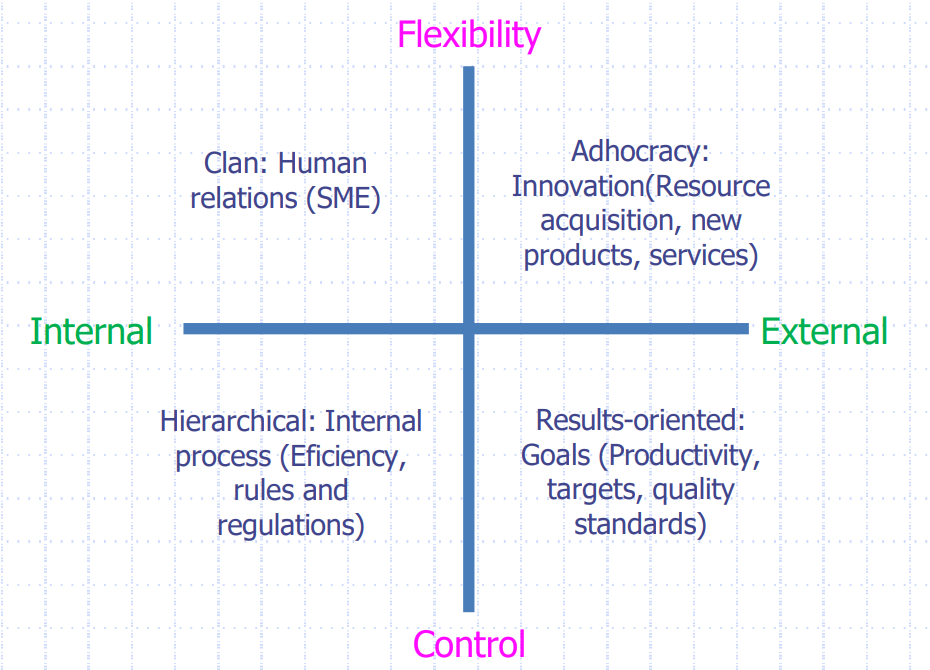
Quinns competing values framework
organizational culture
quantitative
two fundamental dimensions of efectiveness
flexibility (adaptation, creativity, innovation, autonomy) - control (rules, order, predictability, efficiency)
internal orientation (cohesion, internal processes, interpersonal relationships) - external orientation (competitiveness, market results
opposing ways to achieve valued outcomes
measured by the competing values culture assessment
quadrants of Quinns Competing Values Framework
flexible + internal oriented = Clan; human relations, e.g. family business
flexible + external oriented = Adhocracy; start-ups, innovation
control + external oriented = Competition; focus on goals, targets, e.g. bank
control + internal oriented = Hierarchical; internal process, efficiency, regulations
factors affecting organizational culture
policies, procedures, rules
nature of the business (NGO, marketing)
rewarding system
HR practices
culture islands - challenges in organizational culture
horizontal isolation
lack of communication between units
‘we don’t really have a lot in common with maintenance’
vertical isolation
workers hide near-misses, don’t communicate new ideas, opinions, etc., they lose motivation, don’t extra engage, only comply
‘my boss is too busy to listen to me’
functions of organizational culture
adaptive natural process
integration and adaptation
decrease levels of uncertainty
equality
cultural identity, feeling of belonging
key aspects of organizational climate
reference: ‘my team/department/organization adapts quickly to changes’ → depends on questionairre
level of analysis: are we interested in individual perception or shared group perception; will all employees share the same perceptions? → climate strength
multifaceted nature: shared perceptions among members of an organization regarding its policies, procedures and organizational practices
levels of analysis - organizational climate
psychological: individual perceptions of the characteristics of the context to which people belong; e.g. ‘my team adapts quickly to changes’
aggregated: the result of averaging the individual perceptions of members of one group (has to be verified that group share their perceptions and that these differ from other groups; cannot be aggregated at a higher level than the referent, e.g. ‘my team’ in ‘my team adapts quickly to changes’)
collective: aims to identify groups of organizational members who share similar perceptions (e.g. status, gender, education)
communication
process by which one person interacts with another through a common code (message) and waits for the latter to issue a response
different from information because there is feedback
original idea encoded into language, than decoded by receiver to a transmitted idea
types of noise influencing communication
physical (mechanical): traffic, noise
physiological (limitations): illness, being tired
psychological (cognitive): anxiety, stress, cocktail party effect
semantic: ambiguous vocabulary, jargon
cultural: verbal and non-verbal signs might mean different things
types of non verbal communication
proxemic: ways in which people structure and use space in the process of interaction
kinesics: study of body language and gestures
paralinguistic: vocal elements in verbal messages (tone of voice, volume, fluency, speed, silences)
taxonomy of communication
receiver type
centralization
formalization
flow direction
type of social structure
receiver type (taxonomy of communication)
internal
informative (clarity) → establishes the framework
command or instruction (include timely feedback) → activates action
cultural transmission (mission, vision) → gives meaning
conflict management (space for disagreement) → maintains stability
alignment → directs collective effort
external
increasing brand visibility
reaching new customers
bringing new info to the organization (external intelligence; e.g. share a coke)
relationship with stakeholders
centralization (taxonomy of communication)
highly centralized networks work best with routine tasks and simple problems
decentralized networks work well with tasks requiring innovation
formalization (taxonomy of communication)
formal: communication designed by the organization, structured
informal: spontaneous communication (also the emotional spectrum)
flow direction (taxonomy of communication)
vertical
top-down
leaders contact their subordinates
functions: inform, coordinate, motivate
bottom-up
change and initiatives
horizontal
between members at the samen hierarchical level
functions: coordinate, solve problems and manage conflicts
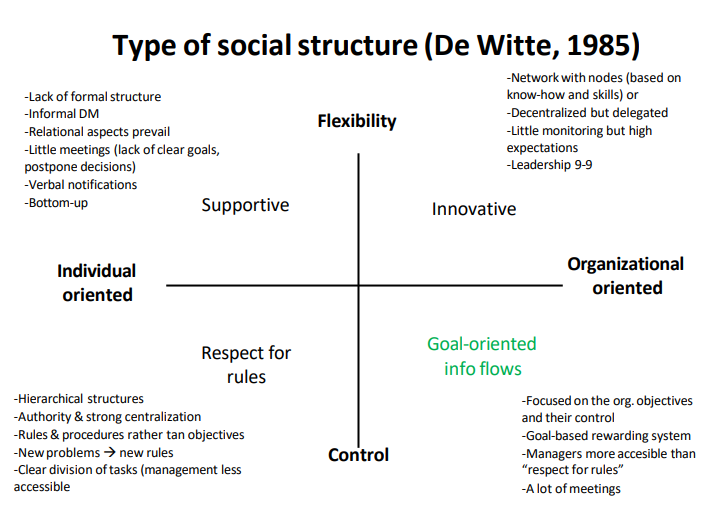
types of social structure (De Witte; taxonomy of communication): supportive
flexible and individual-oriented
lack of formal structure, informal, little meetings (lack of clear goals, postpone decisions)
verbal notifications
bottom-up
types of social structure (De Witte; taxonomy of communication): innovative
flexible and organizational-oriented
network with nodes based on know-how and skills or decentralized but delegated
little monitoring, high expectations
leadership 9-9
types of social structure (De Witte; taxonomy of communication): goal-oriented info flows
control and organizational-oriented
goal-based rewarding system
a lot of meetings
types of social structure (De Witte; taxonomy of communication): respect for rules
control and individual-oriented
hierarchical structures
authority and strong-centralization
rules and procedures over objectives
clear division of tasks, less accessible management
psychological safety in organizations (important)
assert belief among team members that the environment is safe for interpersonal risk-taking, such as speaking up, proposing new ideas, without fear for punishment or humiliation
programmed decisions
routine tasks
considerable reliance on past decisions
followers
fast
low risk
non-programmed decisions
creative tasks
no guidance from past decisions
owners
slow
high risk
the classical/rational model of individual decision making
normative, reflecting the ideal way of making decisions (optimal decision)
assumptions: decision maker
knows all alternatives, consequences and goals
has perfect knowledge
does not have cognitive limitations and time/economic constraints
decision making is seen as a logical process with prescriptive steps
eight step decision-making process (rational)
monitor the decision environment
define the decision problem
specify decision objectives
diagnose the problem
develop alternative solutions
evaluate alternatives
choose the best alternative
implement the chosen alternative
why are rational models of individual decision making wrong?
research confirmed that humans are not able to process complex info → limited cognitive capacities, time/economic constraints → alternatives not analyzed deeply → satisfying (good-enough) decision is the only possibility
GDMS
general decision making styles
avoidant
rational
intuitive
dependent
spontaneous
who came up with the bounded rationality model?
Herbert Simon and Kahneman
classic thinking
vertical/debate
confrontation, discussion
win/lose arguments
parallel thinking
organize group thinking by separating different types of reasoning that are usually mixed together
recudes conflict and improves the quality of collective thinking
more well-rounded decisions because you will have to look at the problem from multiple decisions
base for thinking hats method (Edward de Bono)
Management Science approach model of decision-making
similar to rational individual approach: structured, based on technology
remove human element
good when variables can be identified and measured
often used in HR (using math to make decisions)
Carnegie model of decision-making
decisions are not unilateral, there is not decision that is best for everyone (more realistic assumption)
there is a need for bargain, because of ambiguity, inconsistent goals or a shortage of time, resources or mental capacity
coalitions: managers talk to each other to gather more info → satisfying (to all members) rather than an optimal level of performance; problemistic search: look for a quick solution in the immediate environment
uncertainty/conflict → coalition formation → search → satisfying decision behavior
Herbert Simon and colleagues
differences between Management Science and Carnegie model
MS has all info available, C does not
MS decision making is costless, for C it is costly
MS generates all possible alternatives, C only has generated a limited range
MS solution is chosen by unanimous agreement, C bargains and compromises
MS ends up with an optimal decision, C ends up with a satisfying one
Garbage Can model of decision making
organisation is a garbage can with four independent streams of events, instead of a sequence of identifaction → solution
problems - dissatisfaction with the current state
potential solutions - ideas
participants - different
choice opportunities - right mix of three co-exist
the world becoming more and more VUCA - what does that mean?
volatile, uncertain, complex and ambiguous
contingency theory
managers analyze the environment and internal characteristics to achieve a better fit and performance
what do studies on organizational structures focus on?
the analysis of the dimensions (authority centralization, structural complexity, formalization)
basis often Webers’ hierarchy of authority
Aston studies: three dimensions of organizational analysis are identified
authority centralization
structural complexity
formalization
centralized, dominated structures: inert and elitist
inert power structure: they do not want power, but they just have it
elitist power structure: they can’t have power
decentralized structures: fractional and pluralistic decentralized
fractional power structure: power fractioned in groups
pluralistic decentralized structure: individuals, both vertical and horizontal, have the power
formalization (main organizational dimensions)
rules, norms and procedures are written down to formalize them
these are designed to drive members’ behavior
operative formalization: how production chain works; training
regulatory formalization: about general organizational functioning; onboarding
structure with low formalization
organic
relationships and autonomy
interdisciplinary teams
self-management, distributed power and responsibility
structure with high formalization
bureaucratic
inter-functional rather than interpersonal relationships
high functional interdependency
management by hierarchy and the chain of command
complexity (one of the main organizational dimensions)
set of structural units in which members are grouped
indicators for vertical vs. horizontal complexity
indicators of the amount of vertical complexity
the proportion of personnel responsable for coordinating, supervising and/or facilitating organizational tasks
span of control: number of people that need to be supervised by an individual
tall vs. flat structures
indicators of the amount of horizontal complexity
level of education
level of specialization
challenge of differentiation and intergration (complexity, main organizational dimensions)
differentiation
process by which people and resources are assigned to organizational tasks and the dependencies between tasks and authority relationships are established to enable the achievement of organizational goals
integration
process of coordinating various tasks, functions and divisions so that they work together and not for different purposes
complexity: forms of departmentalization
functional: horizontal complexity based on function
risk of low cooperation and subcultures
complexity by processes
e.g. production leads to different processes → more horizontal complexity
high specialization
difficult coordination
by products
each product has their own subdepartments
combination of functional and by processes
big companies
can lead to coordination and efficiency problems
by geographic areas
by clients
structural components organizational structure (Mintzberg)
strategic apex: ensures the company’s mission; ensures that the organization functions as an integrated unit and defines the strategy
technocrats/technostructure: design; staff that uses standardization to coordinate the work of the organization
middle line: the supervision line → middle management
support staff: they do not intervene in the main activity, but help them (e.g. maintenance, cleaning, HR)
operating core: formed by the members in charge of production or service provision (main activity)
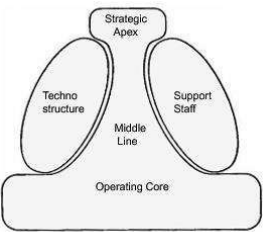
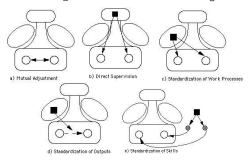
coordination mechanisms of organizational structures (Mintzberg)
mutual adjustment: horizontal, coordination through informal interactions
direct supervision: vertical, control by one person of the work of others
standardization of work processes: from technostructure to operating core; increases productivity and decreases supervision
standardization of work results: specification of the results expected to be obtained; from technostructure to arrows in operating core
standardization of skills: specification of the knowledge and skills needed to do a job (outside of the components to the operating core)
main structural configurations (Mintzberg)
based on the identification of the components and coordination mechanisms, five structural configurations are identified
simple (main structural configurations)
small apex, broader operational core
minimum differentiation of units, few hierarchical levels, little division of labor, low formalization
direct supervision
simple and dynamic environment: quick adaptation to changes, easy interpersonal relationships, young companies
strong sense of mission and high satisfaction level
vulnerable and dependent on one person

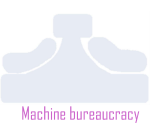
machine bureaucracy (main structural configurations)
organizations with repetitive, routine and simple tasks
high specialization, both horizontal and vertical
big and old organizations, simple and stable environments (low flexibility)
standardization of work process, also direct supervision
efficient, reliable, precise, consistent
resistant to change → slow adaptation, control obsession → effectiveness problem, coordination problems (direct supervision needed)
routine tasks → monotone → low satisfaction
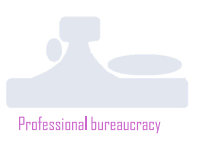
professional bureaucracy (main structural configurations)
combine standardization with decentralization (to deal with complex situations)
coordination through standardization of skills
expert authority vs. hierarchical authority
managers perform secondary tasks in support of the main tasks performed by experts
operational core is big and has a lot of power
complex but stable environment
democracy and autonomy
misuse of the freedom, coordination problems, resistance to innovate
e.g. hospital, university
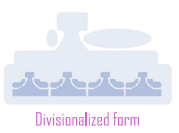
divisionalized structure (main structural configurations)
set of almost autonomous entities (divisions), coordinated by a central structure
standardization of results as a basic control and coordination system
central role of division directors (sometimes too powerful)
e.g. Unilever
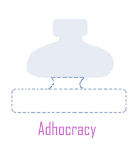
adhocracy (main structural configurations)
organic, flexible structure, with low formalization and high decentralization
delegation by knowledge and experience (not hierarchy)
grouping of members into functional units associated with a (temporal) project
coordination through mutual adaptation
they innovate solutions to unsolved problems
they tend to be young organizations → if solutions are effective, they are formalized and bureaucratization arises
complex and dynamic environment (high technology, temporary and gigantic projects)
enhances creativity and fast innovative solutions
no standardization → ambiguity and conflict, not ideal for long-term/stable projects
new structural configurations that have arisen as a result of changes in the environment, technological and social development
horizontal/Teal organization:
self-managed teams (no support staff)
no executive board
inter-team coordination
no external rules (no technostructure)
no organigram, job position or titles
horizontal blob
network organization: activities and functions outsourced to other organizations