Pig Dissection
 Call Kai
 Learn
Learn Practice Test
 Spaced Repetition
 Match
Match Flashcards
 Knowt Play
1/124

There's no tags or description
Looks like no tags are added yet.
Name | Mastery | Learn | Test | Matching | Spaced | Call with Kai |
|---|
No analytics yet
Send a link to your students to track their progress
125 Terms
left and right
pig's left and right
anterior
toward the head
posterior
toward the rear
caudal
toward the tail
dorsal
toward the back; up
ventral
toward the belly; down
lateral
toward the side
medial
toward the middle
proximal
near a specified point of reference
distal
away from a specified point of reference
pectoral
referring to the shoulder region
pelvic
referring to the hip region
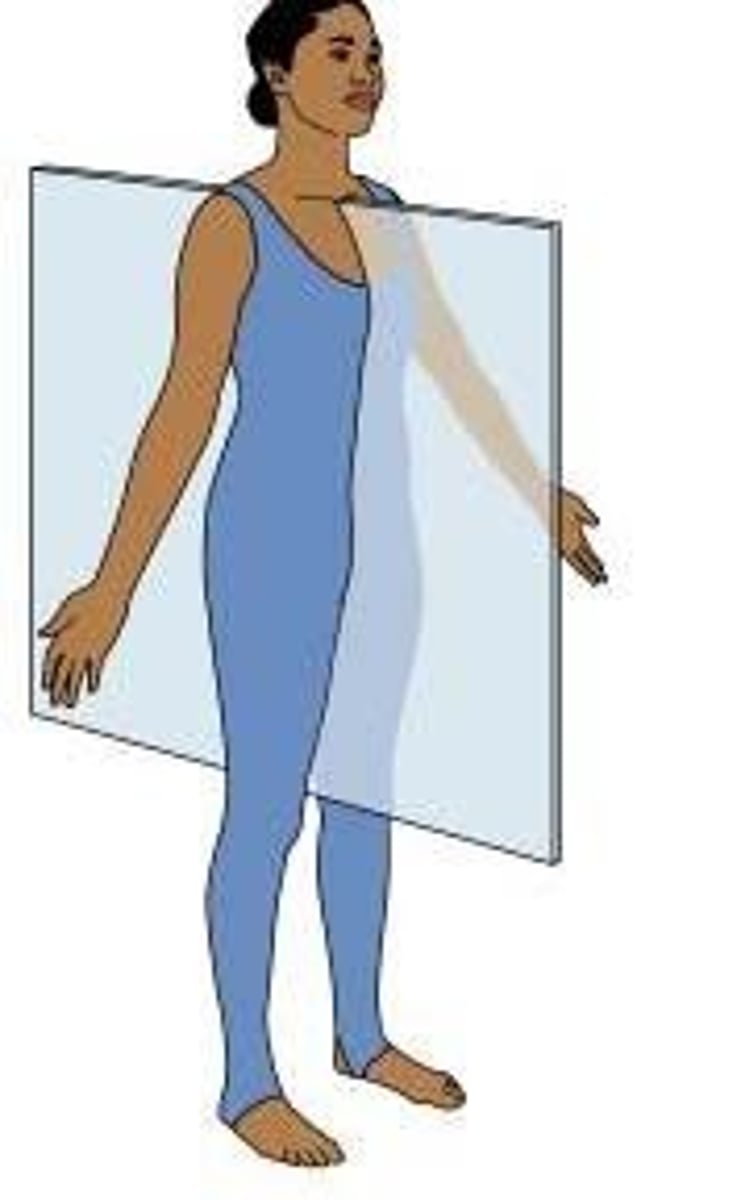
frontal plane
aka coronal plane; divides the body into ventral (front) and dorsal (back) regions
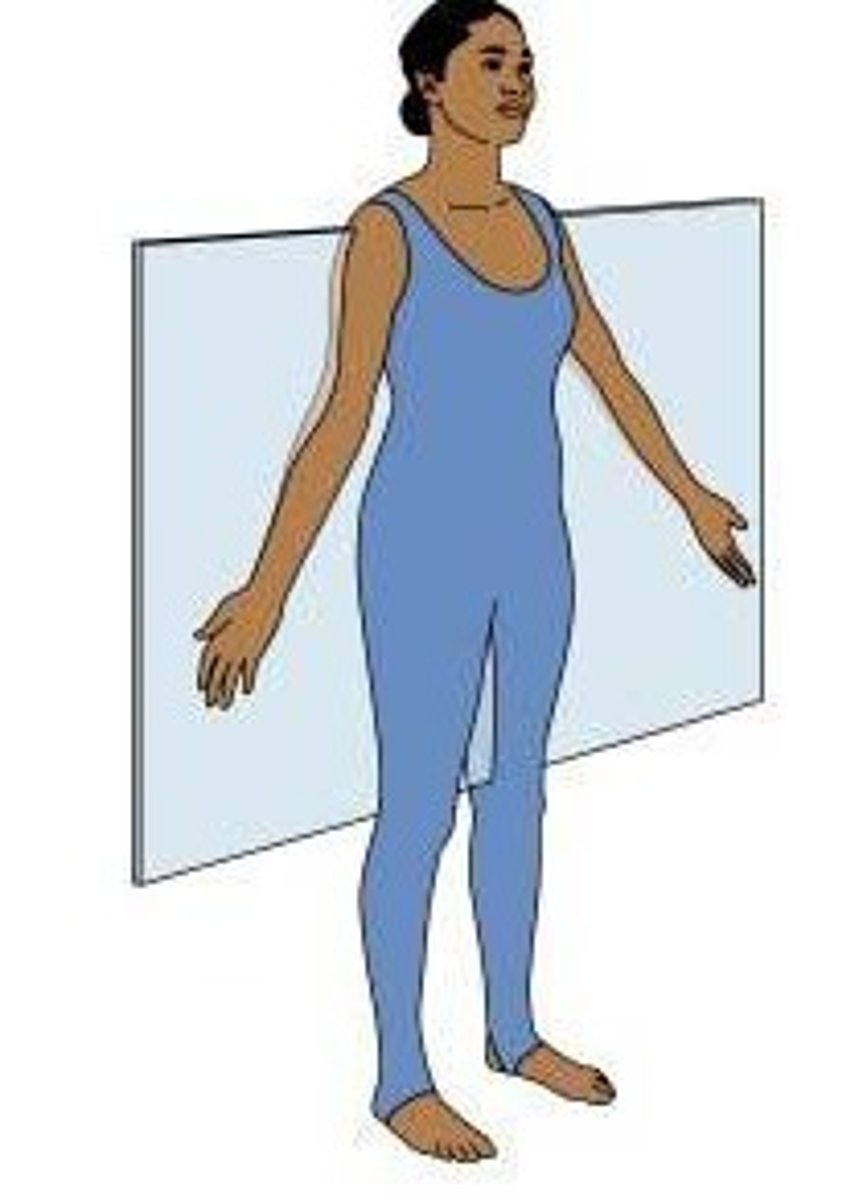
sagittal plane
aka longitudinal plane; divides the body into left and right regions
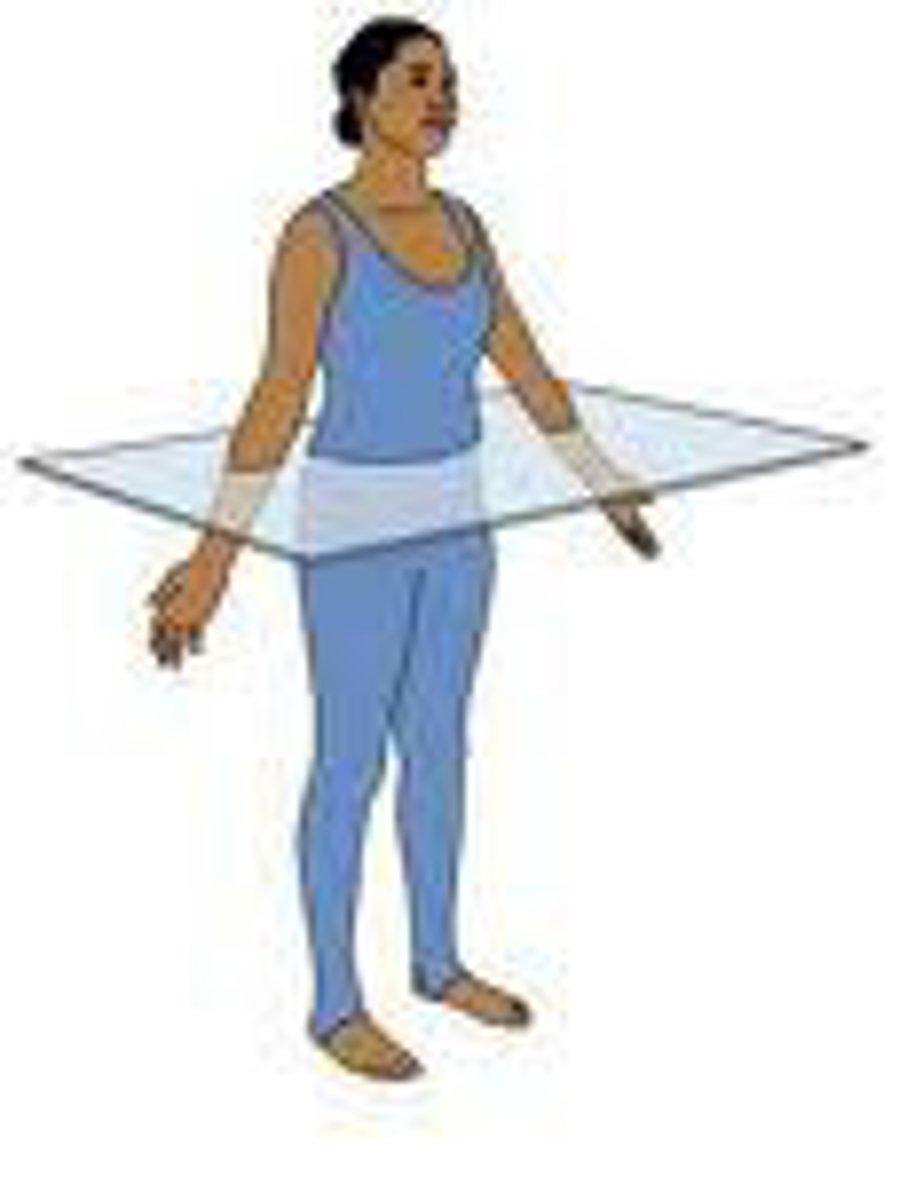
transverse (cross) plane
aka horizontal, axial; divides the body into upper and lower regions
the body proper is divisible into which two regions
thorax and abdomen
thorax
the chest; area between the neck and abdomen; contains the heart, lungs, and major blood vessels
abdomen
the belly; area between the chest (diaphram) and pelvis; contains the stomach, intestines, spleen, liver, kidneys, bladder, and female reproductive system
ears
allows the mammal to hear by receiving sound waves
pinna
L: external flap
F: helps to gather sound
- animals reliant on hearing have large pinnas
external acoustic meatus
L: canal leading to the eardrum
F: concentrates sound waves
eyes
F: allows mammal to see by capturing visible light
upper and lower eyelids
L: folds of skin around eye
F: protects the eye
nictitating membrane
aka third eyelid
L: covers anterior portion of eyeball
F: moves across eyeball; helps to keep it clean (and moist)
mouth (oral cavity)
F: beginning of the digestive system; point of ingestion (of food and air) and allows mammal to vocalize
lips
L: fleshy structures surrounding mouth
F: combined with the cheeks, it allows the young to suckle
cheeks
L: lateral walls of the mouth
F: combined with the lips, it allows the young to suckle
tongue
L: ventral surface of the oral cavity
F: the fleshy muscular organ in the mouth of a mammal, used for tasting, licking, swallowing, and (in humans) articulating speech.
hard palate
L: dorsal surface of the oral cavity
F: separation of nasal and oral cavities
soft palate
L: posterior to the hard palate, not supported by bone
F: a muscular flap that closes off the nasopharynx during swallowing or speaking
teeth
L: inside mouth, upper and lower gums
F: anatomical structures inside the mouth which allows the mammal to chew
incisors
L: inside mouth, upper and lower gums, between the canines
F: teeth that are used for cutting.
canines
L: inside mouth, upper and lower gums, in front of the premolars
F: teeth that rip and tear food.
pharynx
L: most posterior part of the oral cavity
F: passageway for the food and respiratory canals
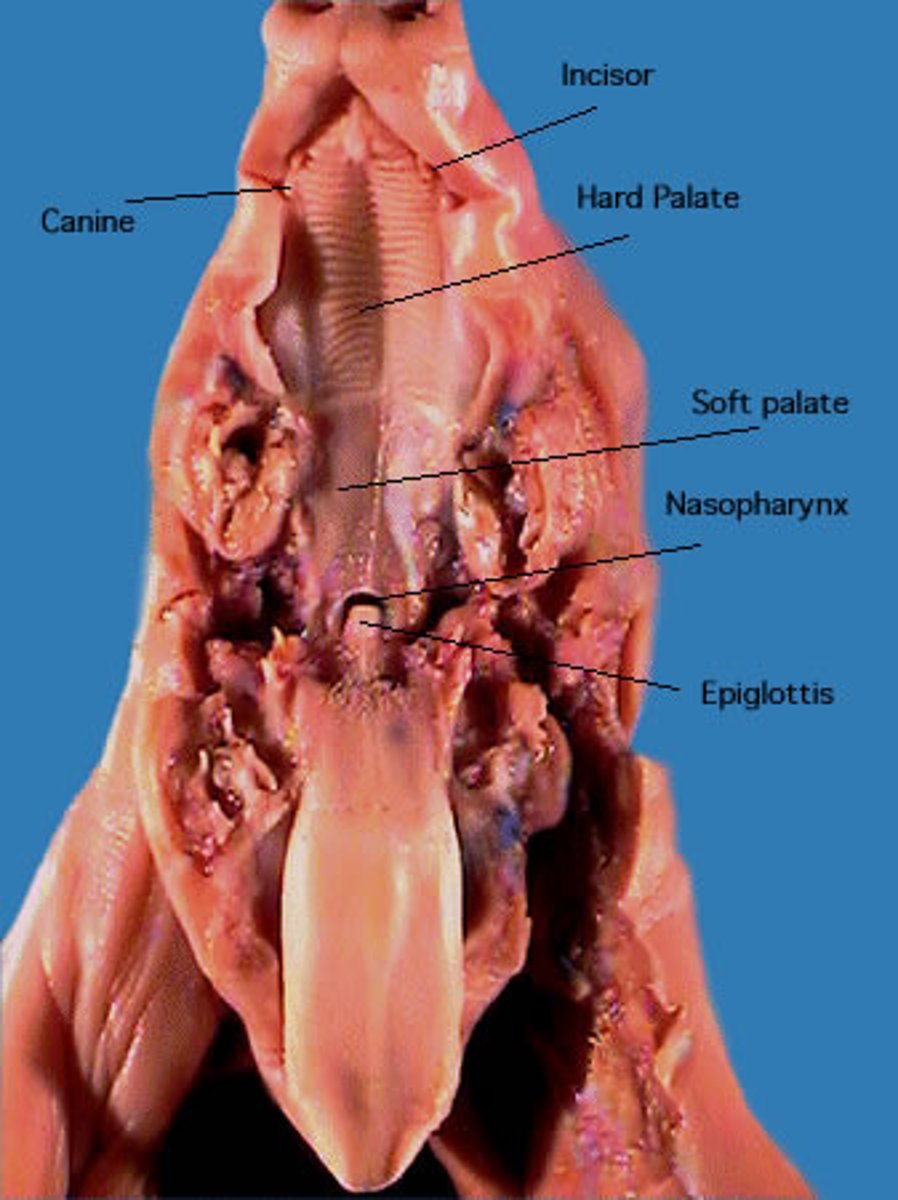
epiglottis
L: flap at base of tongue
F: prevents food from entering the trachea by covering the glottis
glottis
Opening between vocal cords in the larynx which serves as the passageway for air to travel in and out of the trachea
trachea
L: passageway leading to the lungs, right under the larynx
F: allow passage of air into and out of the lungs
esophagus
L: dorsal to trachea
F: soft, muscular digestive tract tube which connects the oral cavity with the stomach
thymus (glands)
L: among the muscles around the throat
F: produces antibodies as a defense against disease in young pigs
thyroid
L: by the trachea
F: endocrine gland that produces thyroxin, a hormone which regulates metabolic rate
parathyroid glands
four small glands on the posterior of the thyroid gland which produce parathyroid hormone
larynx
L: above the trachea
F: hollow tube forming an air passage to the lungs and contains the vocal cords
vocal cords
L: inside the larynx
F: membranes inside the larynx which vibrate to produce sounds
thoracic cavity
F: cavity housing lungs and heart
right / left pleural cavities
compartments containing the lungs
pericardial cavity
compartment containing the heart
bronchi
L: under the heart, posterior end of the trachea
F: tubes which branch off the trachea and carry air into the lungs
air sacs / alveoli
L: inside the lung
F: tiny, thin-walled pouches in the lungs where the exchange of oxygen and carbon dioxide occur
liver
L: under the diaphram
F: organ which removes toxins from the bloodstream, regulates blood sugar levels, and processes nutrients from food
diaphram
L: bottom of the chest cavity F: muscular partition that separates the thoracic and abdominal cavities and helps the mammal breathe
stomach
L: under the liver
F: organ in which food is stored and digestion is initiated
pylorus
L: constriction between stomach and small intestine
F: connects the stomach with the small intestine
pyloric sphincter
L: after the pylorus, before the duodenum
F: band of muscle which controls the flow of substances between the stomach and the small intestine
mesentery
L: abdominal cavity
F: sheets of tissue which support and suspend the visceral organs, especially the intestines to the wall and the spleen to the stomach
spleen
L: by the stomach and liver, long, flat, and reddish
F: organ that participates in the production, storage, and elimination of red blood cells
duodenum
L: anterior end (start) of the small intestine
F: the anterior end of the small intestine which continues digestion and begins the absorption of nutrients
small intestine
L: under the liver
F: digestive organ where most chemical digestion and absorption of food takes place
bile duct
L: connected to liver
F: tube that carries bile from the liver and gallbladder to the intestine
gall bladder
L: embedded in the liver
F: organ that stores bile and releases it as needed into the small intestine
pancreas
L: under the stomach
F: An organ which produces digestive enzymes and hormones that regulate blood sugar, such as insulin and glucagon
jejunum
L: connected to the duodenum
F: the middle portion of the small intestine which which further digests food and absorbs nutrients
ileum
L: connected to the jejunum, the last part of the small intestine
F: the last and longest portion of the small intestine which is responsible for the absorption of nutrients unabsorbed by the first two portions, particularly vitamin B12 and bile acids
large intestine / colon
L: connected to the small intestine
F: The last section of the digestive system, where water is absorbed from food and the remaining material is eliminated from the body
caecum (cecum)
L: beginning of large intestine
F: fingerlike projection of the large intestine that absorbs water and aids in digestion of carbohydrates
spiral colon
L: near the small intestine
F: portion of the large intestine which reabsorbs water and electrolytes, houses bacteria which anaerobically break down the waste further, and transports feces to the rectum
rectum
L: end of the large intestine
F: A short tube at the end of the large intestine where waste material is compressed into a solid form before being eliminated
anus
L: end of the rectum
F: A muscular opening at the end of the rectum through which waste material is eliminated from the body
heart
L: center of the thoracic cavity
F: A hollow, muscular organ that pumps blood throughout the body.
pericardium
F: membrane surrounding the heart which protects it
left ventricle
L: pig's left, our right
F: pumps the oxygen-rich blood to the body.
right ventricle
L: pig's right, our left
F: pumps the oxygen-poor blood to the lungs
left atrium
F: receives oxygen-rich blood from the lungs and empties the blood into the left ventricle
right atrium
F: receives oxygen-poor blood from the body and pumps it to the right ventricle.
pulmonary trunk
L: next to the left atrium
F: vessel which carries blood from right ventricle to the pulmonary arteries
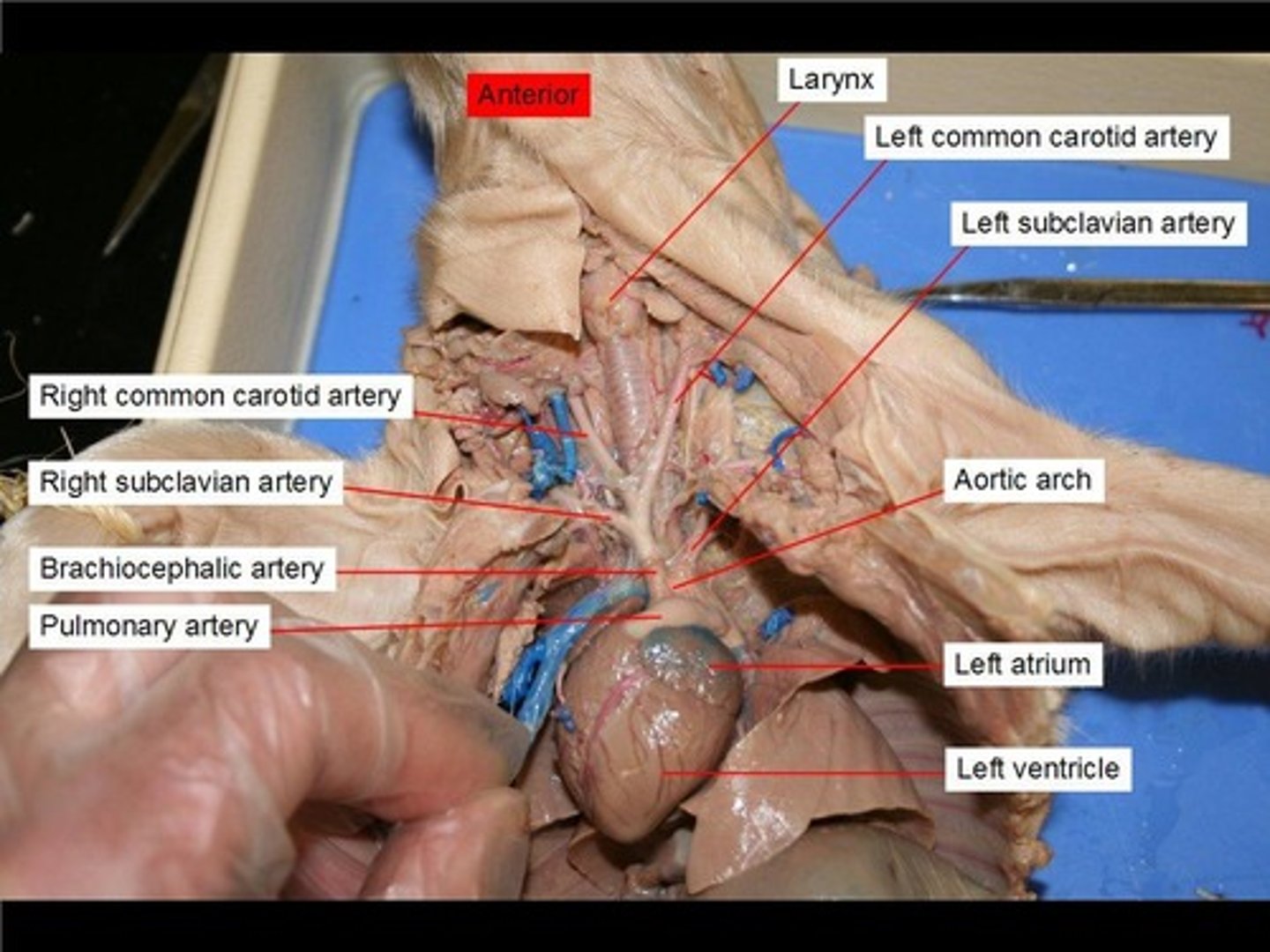
pulmonary arteries
L: branches of pulmonary trunk
F: vessels which carry deoxygenated blood to the lungs where it will release CO2 and pick up O2
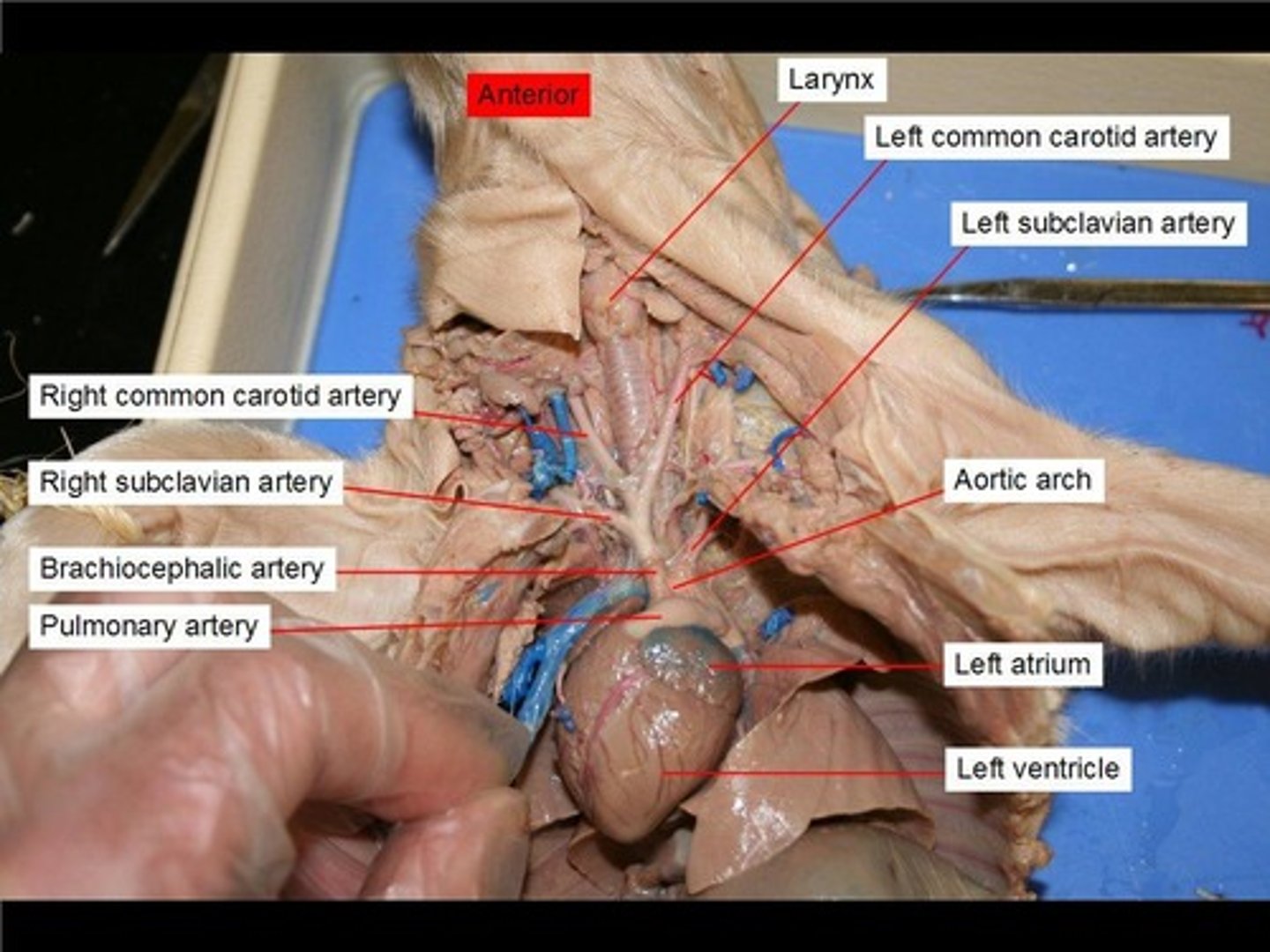
aorta
L: the big tube that has 3 vessels branching off it
F: artery that leaves the left ventricle and carries the oxygenated blood from the heart to the body.
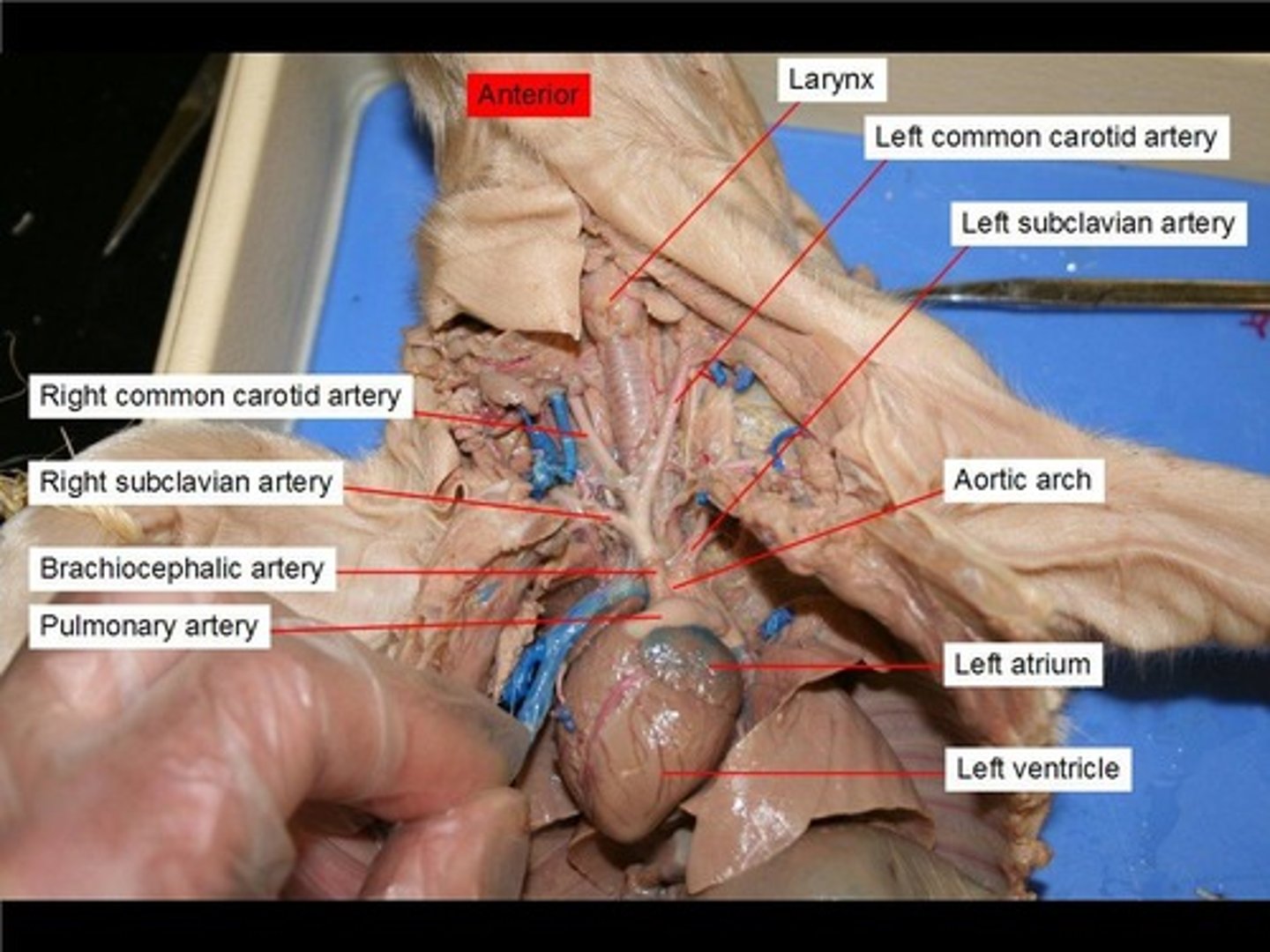
ductus arteriosus
L: between the aorta and pulmonary artery
F: a blood vessel in a fetus that bypasses pulmonary circulation by connecting the pulmonary artery directly to the aorta
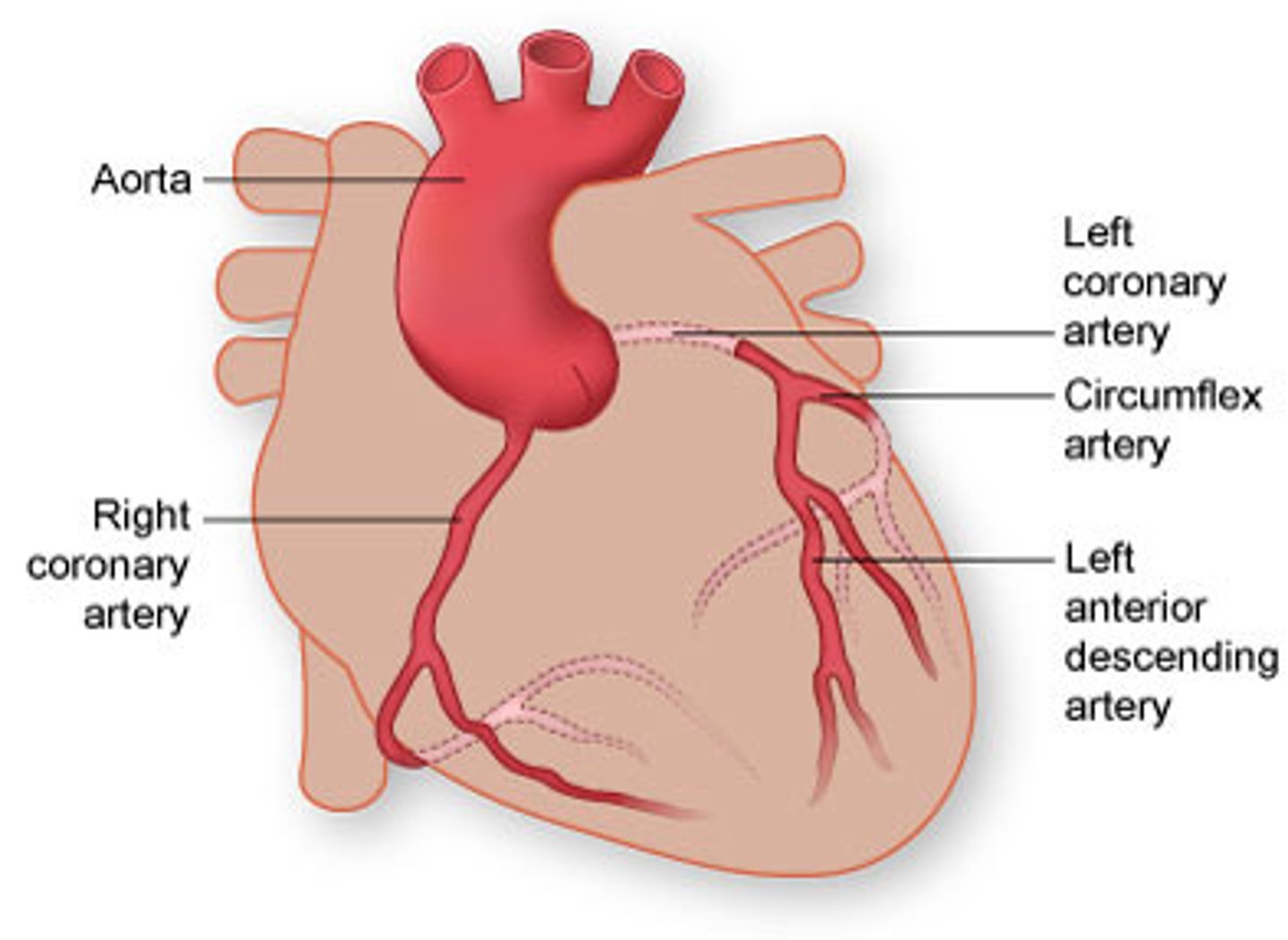
coronary arteries
blood vessels that branch from the aorta and carry oxygen-rich blood to the heart muscle
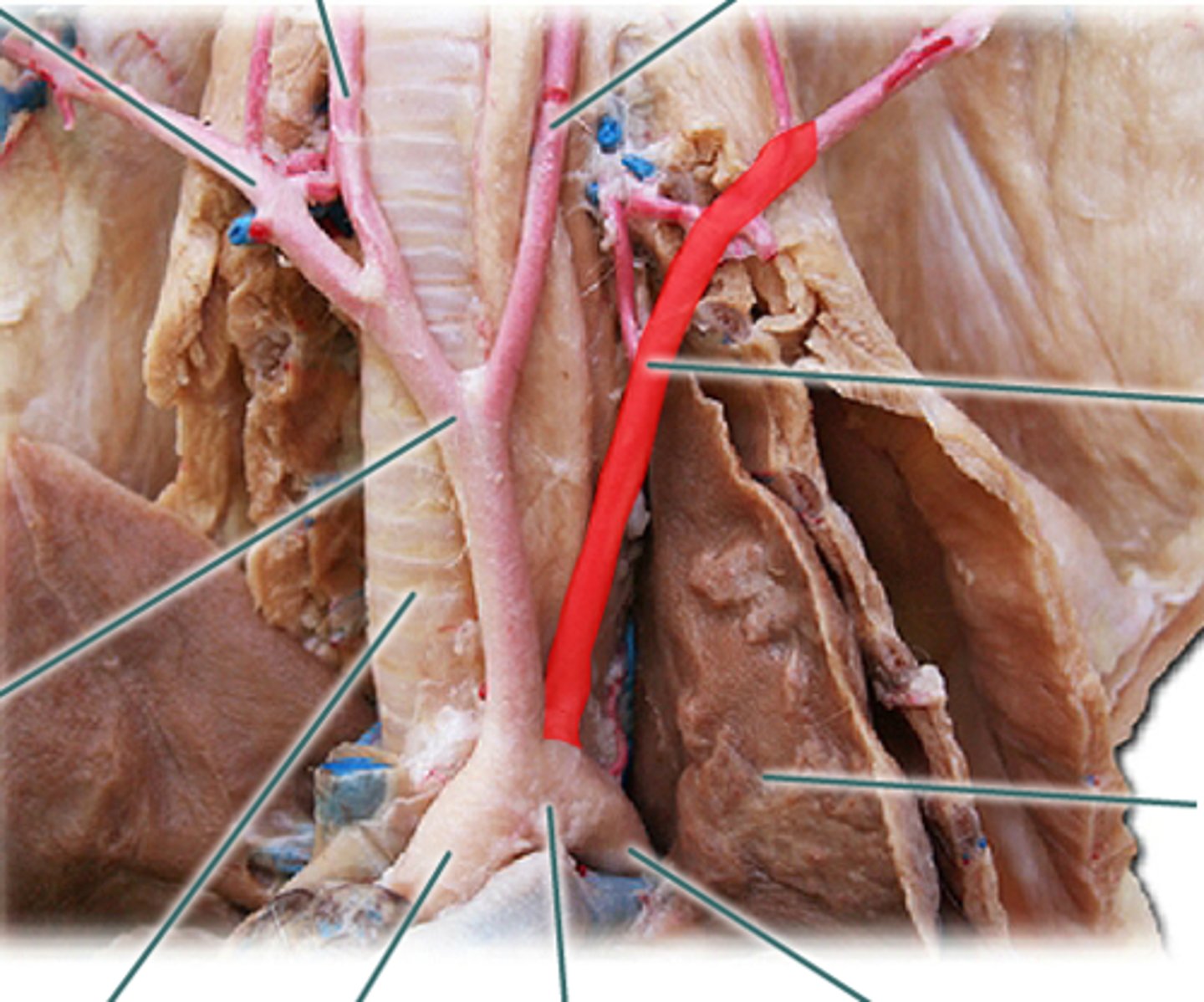
carotid arteries
Arteries that supply the head and neck with oxygenated blood
left subclavian artery
Third branch of the aortic arch that distributes blood to the left arm
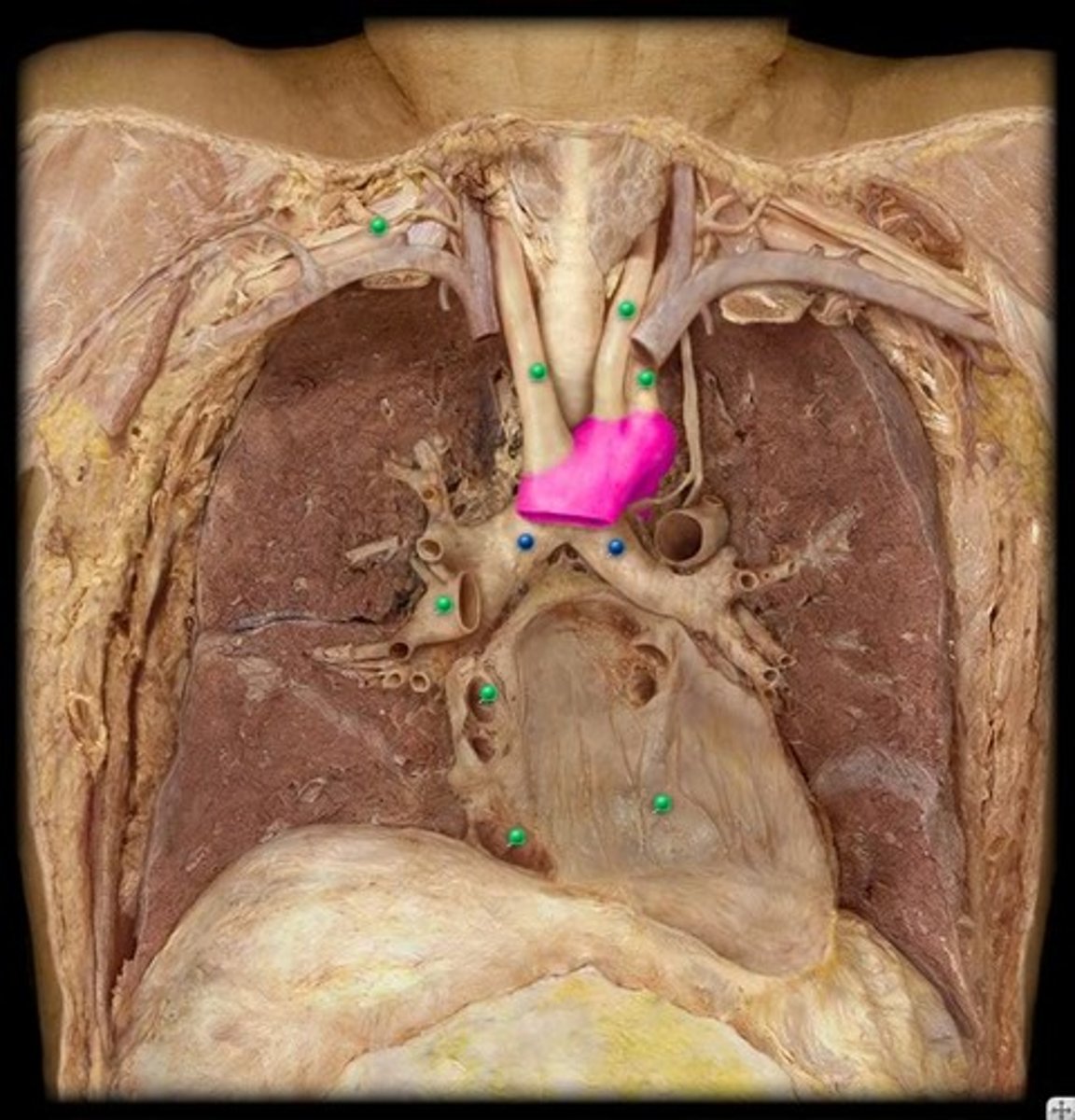
aortic arch
a curved blood vessel from which arteries branch to the head and neck
descending aorta
the descending part of the aorta that branches into smaller arteries in the thoracic and abdominal cavities
celiac / coeliac artery
short vessel which supplies the liver, stomach, duodenum, and spleen with oxygenated blood
mesenteric artery
a vessel which branches to the pancreas and small intestine
renal arteries
pair of arteries that supply the kidneys
iliac arteries
pair of arteries which branch off near the posterior end of the aorta and supply each of the legs
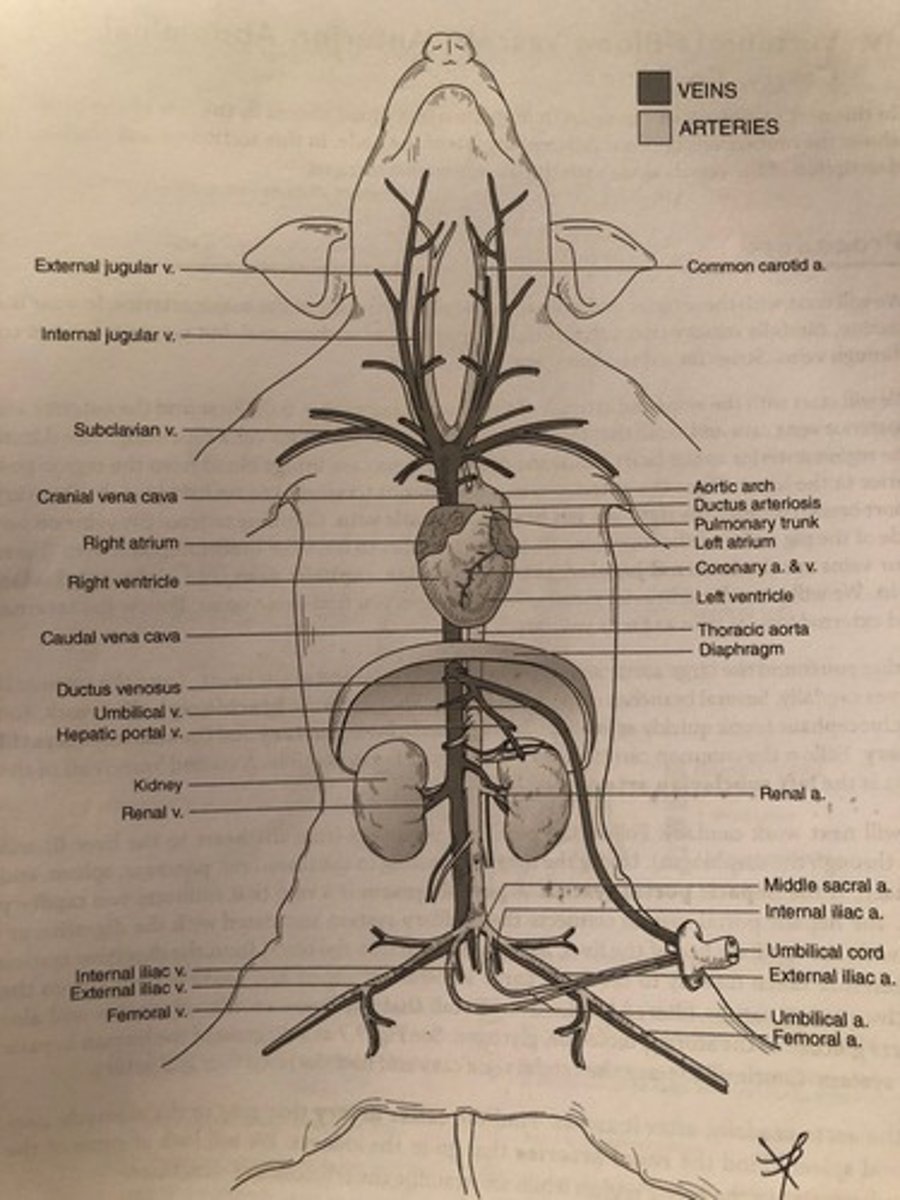
umbilical arteries
arteries which carry deoxygenated blood from the fetus to the placenta
umbilical veins
veins which carry oxygenated blood from placenta to fetus
caudal vena cava (inferior)
Carries deoxygenated blood from the lower portion of the body to the right atrium
***packet says oxygenated- is incorrect
foramen ovale
opening in the septum which connects the two atria in the fetal heart
cranial vena cava (superior)
carries deoxygenated blood from the upper portion of the body to the right atrium
nostrils (nares)
L: end of the snout
F: allow the entry and exit of air through the nasal cavities
legs
F: allows the mammal to move
ungulate definition
hoofed
3 parts of a muscle
Origin, belly, insertion
origin
end attached to a rigid part of the skeleton
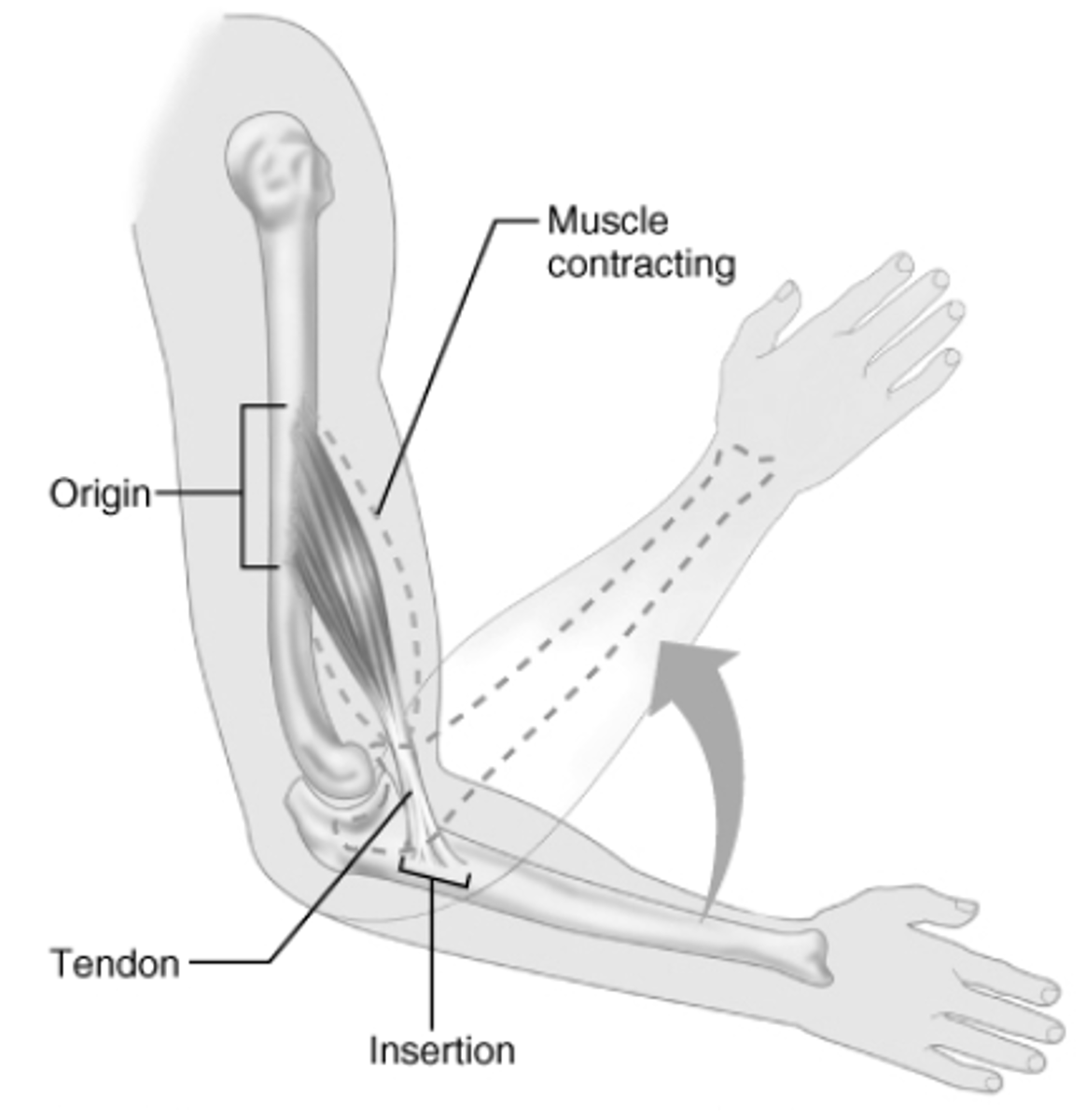
insertion
end attached to some part of the skeleton that moves when the muscle contracts
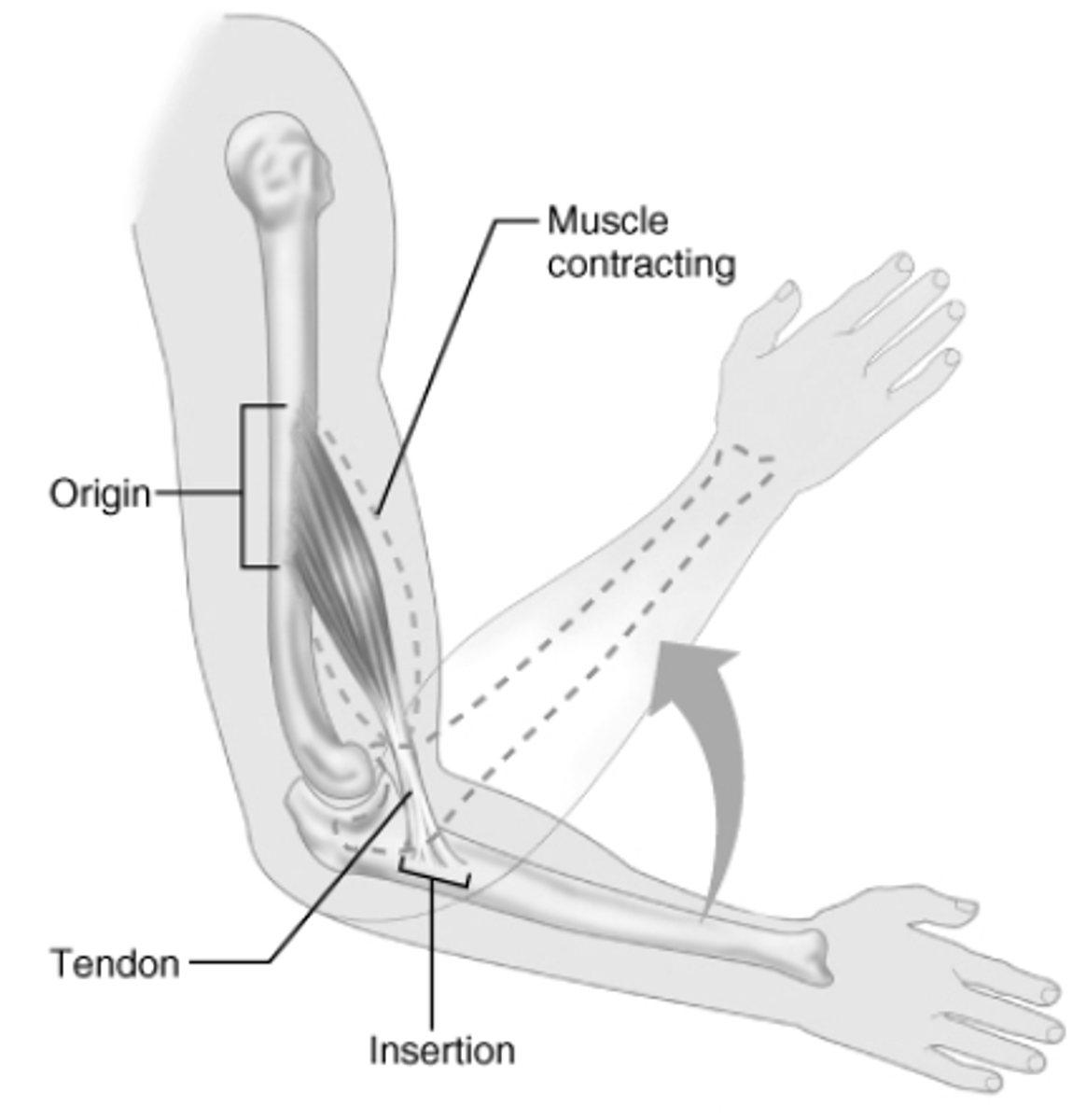
belly
thickened middle portion between the two points of attachment
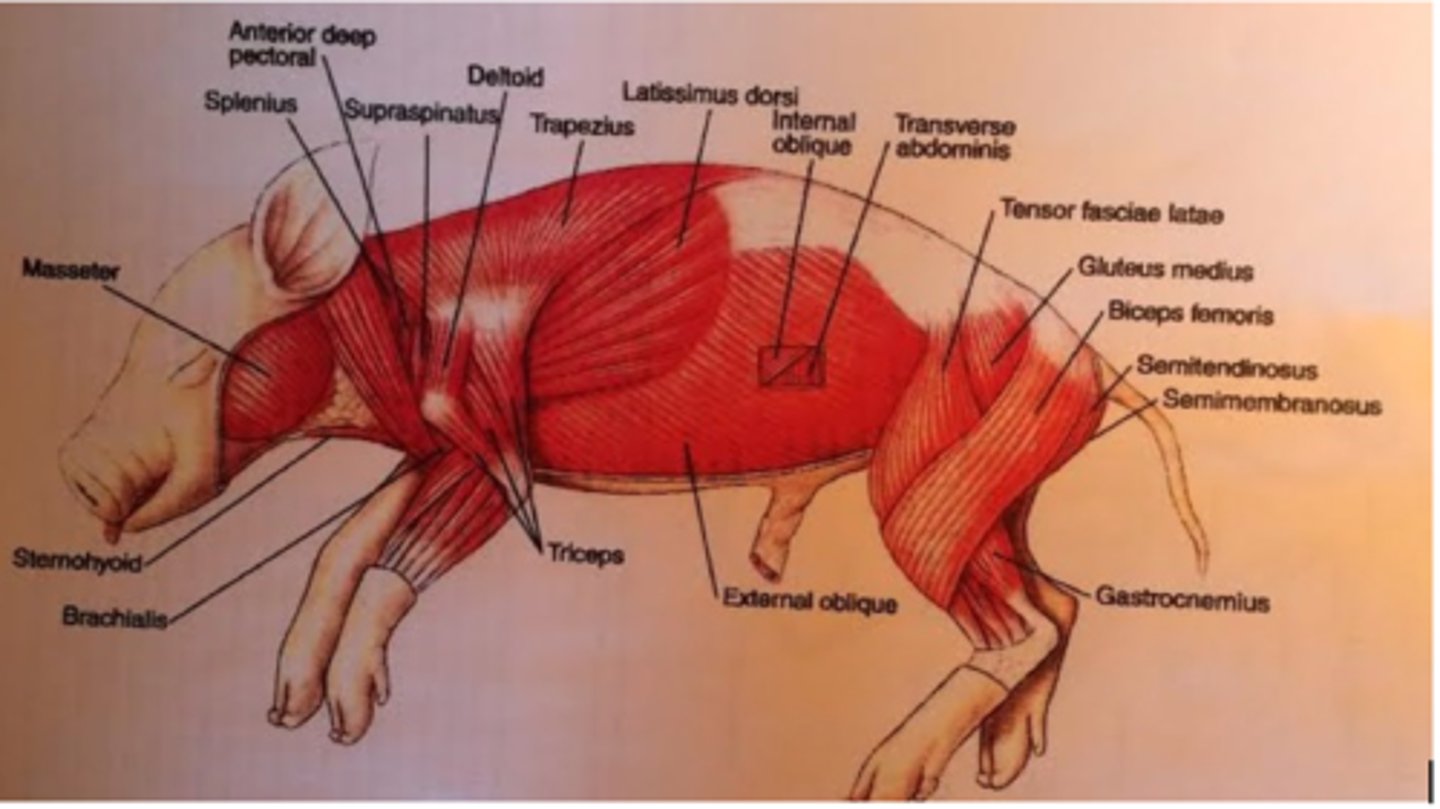
tensor fasciae lata
L: large muscle at the anterior surface of the thigh
- origin: ilium
- insertion: patella
A: (google) extension and lateral rotation of knee; abduction and medial rotation of thigh at hip
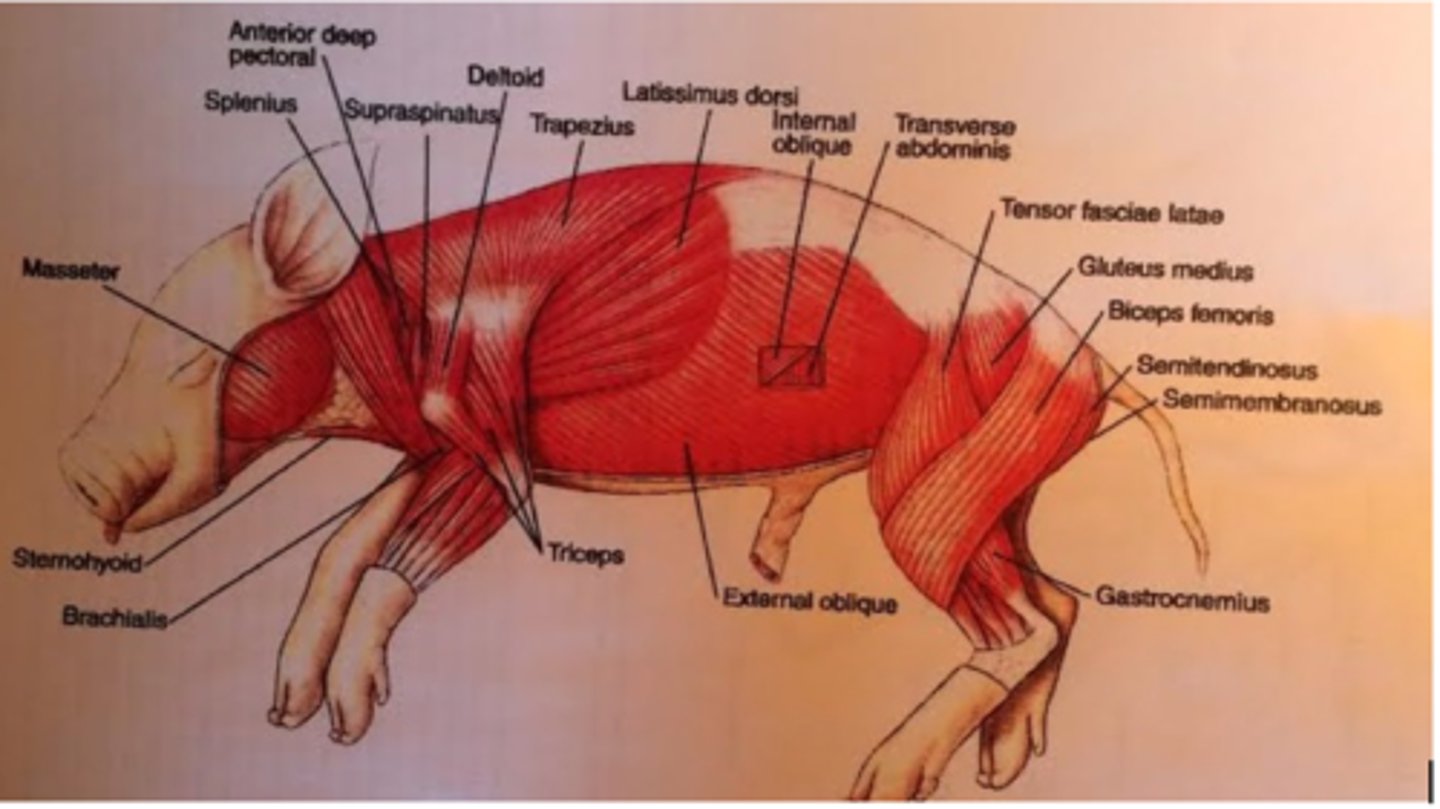
gluteus medius
L: a thick muscle which lies just posterior to the tensor fasciae lata
- origin: vertebrae
- insertion: proximal end of the femur
A: abduct the thigh