bio 30 chap 20
 Call Kai
 Learn
Learn Practice Test
 Spaced Repetition
 Match
Match Flashcards
 Knowt Play
1/10

There's no tags or description
Looks like no tags are added yet.
Name | Mastery | Learn | Test | Matching | Spaced | Call with Kai |
|---|
No analytics yet
Send a link to your students to track their progress
11 Terms
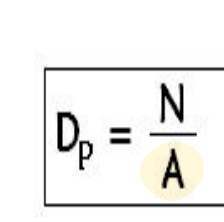
Population Density
Number of individuals in a defined area
Distrubition of populations (patterns)
Random: no attaction or repulsion among memebers
Uniform: Competion among individuals for space, nutrients, etc
Clumped: Grouped around attractant (water)
Population growth
∆N = (birth + immigration) - (death + emmigration)
Growth Rate
gr = ∆N / ∆t

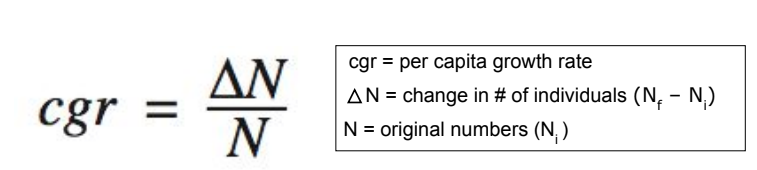
Per capita growth rate
cgr = ∆N/ N
Biotic potential
Regulated by-
• Offspring: max # / birth
• Procreation: # times/year reproduction happens
• Capacity for survival: chance of organism reaching reproductive age
• Maturity: age at which reproduction begins.
• Life span: length of life
Growth curves:
J –curve: Normally is followed by a sharp decline in population numbers, which may rise rapidly again
S –curve: has a point of maximum growth and a carrying capacity (K)
Limiting factors in populations
Density independent factors: will affect population regardless of its size. (floods, drought, etc)
Density dependent factors: increase in population size = increase results. (disease, parasites, food, competition)
Law of the minimum: of all the essential substances required for growth, the one in shortest supply controls population numbers.
Shelford’s law of tolerance: too little or too much of any factor can be harmful to an organism (ex. Salt, temperature)
r and K population
r – species: small body size, fast maturing and growing, little parental care, offspring # high
K – species: large body size, slow growing, require parental care
Symbiotic Relationships
Predation/consumption: relationship of predator/consumer and prey/plant, leads to coevolution (species adapting due to pressures exerting on each other).
Parasitism: one species benefits (parasite) while harming theother (host).
Commensalism: one species benefits with no effect on the other.
Mutualism: both species benefit.(+/+)
Succession
Gradual changes in organisms from a pioneer community to a climax community (best adapted).
Primary succession: No community existed before event.
Secondary succession:Following a destructive event.
Pioneer: 1st to arrive, hardly able to resist flucuations (weeds)
Seral/intermediate: can tolerate fluctuations (shrubs)
climax: longest lifecycles (hardwood trees) stabilze enviourment