Inflation and Quantity Theory of Money: Key Concepts and Impacts
 Call Kai
 Learn
Learn Practice Test
 Spaced Repetition
 Match
Match Flashcards
 Knowt Play
1/19

There's no tags or description
Looks like no tags are added yet.
Name | Mastery | Learn | Test | Matching | Spaced | Call with Kai |
|---|
No analytics yet
Send a link to your students to track their progress
20 Terms
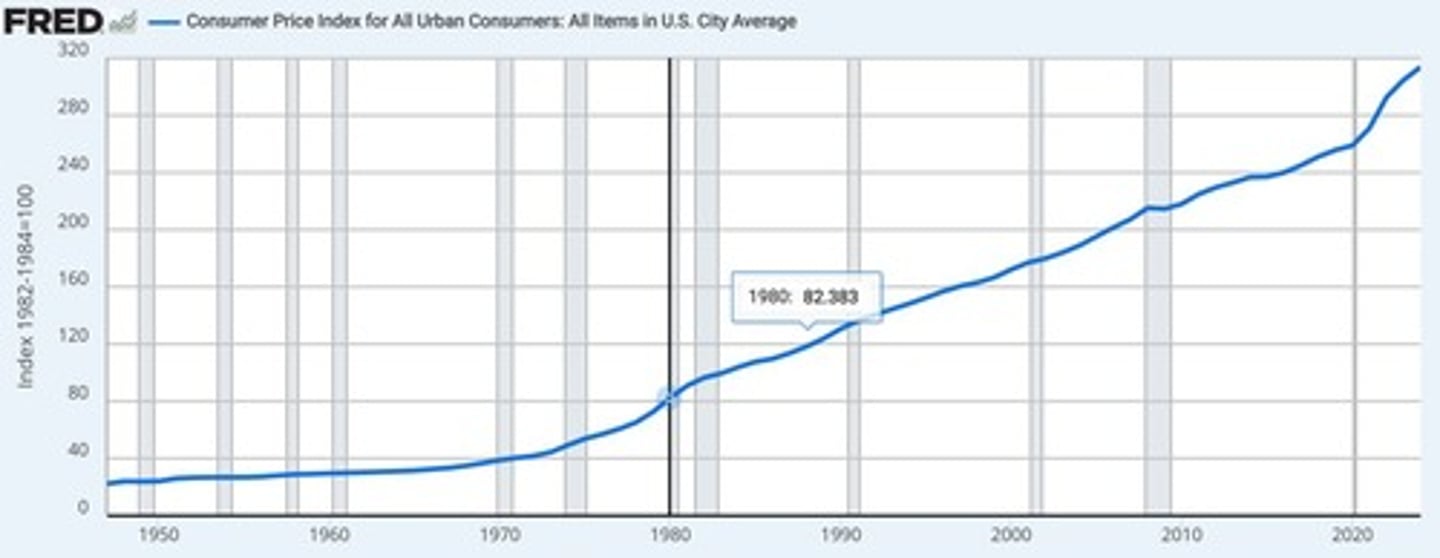
What is the formula for calculating inflation?
𝜋 = (𝑃𝑦𝑒𝑎𝑟2 - 𝑃𝑦𝑒𝑎𝑟1) / 𝑃𝑦𝑒𝑎𝑟1 × 100%
What does inflation represent?
An increase in general price levels over time.
What is the Quantity Theory of Money equation?
𝑀𝑉 = 𝑃𝑌
What does M represent in the Quantity Theory of Money?
Money supply (how much money is in the economy).
What does V represent in the Quantity Theory of Money?
Velocity of money (how quickly money rotates in the economy).
What does P represent in the Quantity Theory of Money?
Price level (price index/100).
What does Y represent in the Quantity Theory of Money?
Real output (real GDP).
What does it mean that money is neutral in the long run?
Money does not impact the real economy in the long run; it only affects prices.
What happens to price levels when the money supply increases in the long run?
𝑀↑ leads to 𝑃↑.
Why is money not neutral in the short run?
Because changes in money supply can affect real output and prices temporarily.
What is money illusion?
When people perceive nominal changes as real changes and adjust their behavior accordingly.
What is money confusion?
When people mistake real changes for nominal changes and do not adjust their behavior.
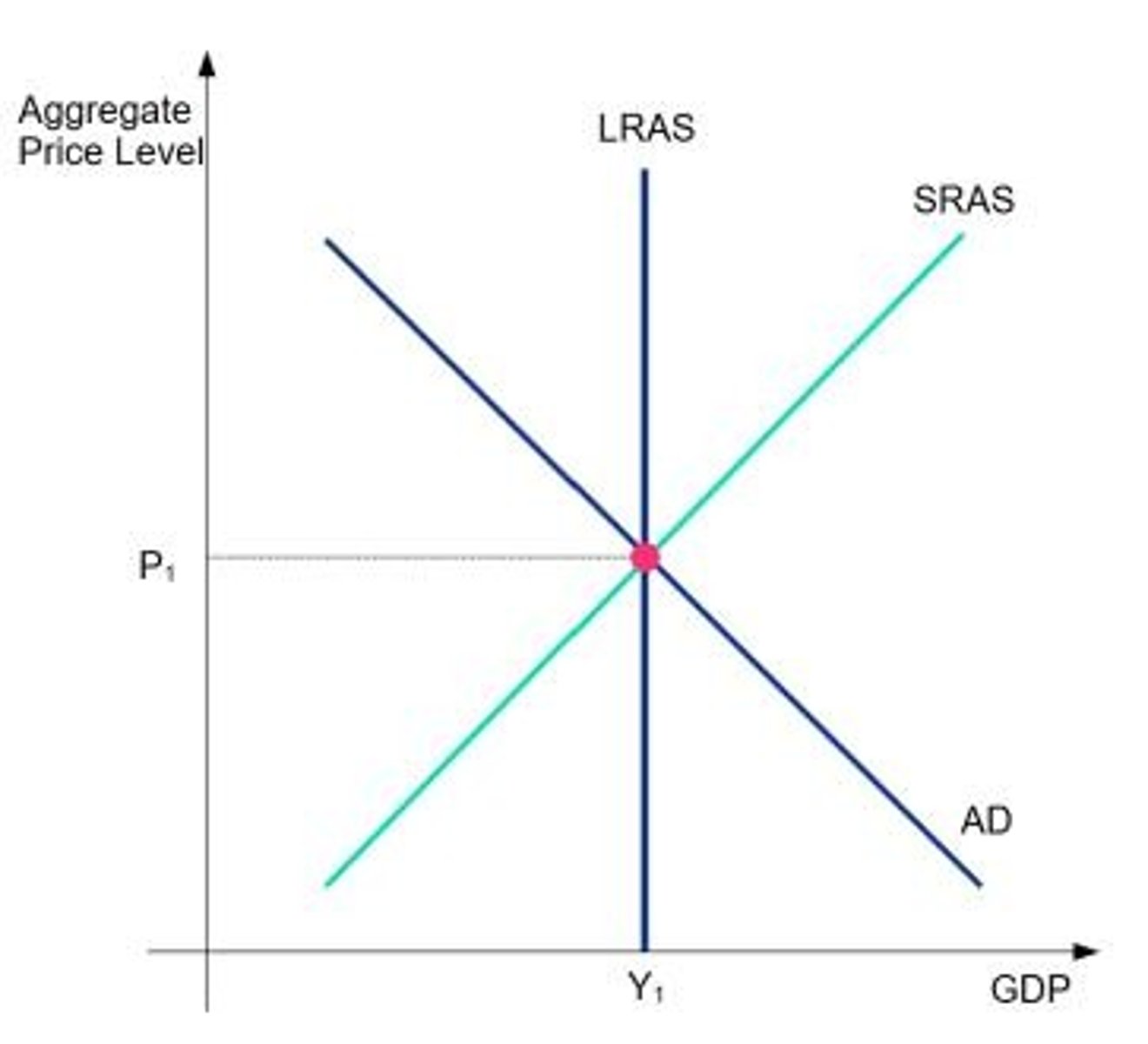
What is the short-run effect of an increase in money supply?
𝑀↑ leads to 𝑌↑ initially, but eventually results in 𝑃↑ and 𝑌↓.
What is the relationship between inflation and money supply according to Milton Friedman?
Inflation is 'always and everywhere' a monetary phenomenon; an increase in money supply causes inflation.
What are the costs of inflation?
Uncertainty in inflation rates, redistribution of wealth, lower economic growth, and taxation on nominal gains.
How does inflation affect lenders and borrowers?
Lenders may hesitate to lend if they expect inflation to rise, affecting loan interest rates.
What happens to savings during high inflation?
Higher inflation discourages savings, leading to less capital and lower real GDP.
Why doesn't the government monetize its debt?
Investors will adjust expectations, stop lending, or demand higher interest rates.
What is the impact of unpredictable inflation?
It is worse than consistently high inflation because it impedes economic decision-making.
How does inflation act as a tax?
Inflation redistributes wealth without a visible tax collector; it acts like a hidden tax.