BIOSCI 107 - module 2
 Call Kai
 Learn
Learn Practice Test
 Spaced Repetition
 Match
Match Flashcards
 Knowt Play
1/128

Earn XP
Description and Tags
Lectures: 1
Name | Mastery | Learn | Test | Matching | Spaced | Call with Kai |
|---|
No analytics yet
Send a link to your students to track their progress
129 Terms
DNA in simple terms
heritable material
RNA in simple terms
Messenger
Proteins in simple terms
Workers
What does the cytoplasm include
everything in the cell except nucleus
what is Cytosol
The liquid component of the cytoplasm.
What is the cytoplasm made from
water + dissolved and suspended substances (ions, lipids, ATP, proteins)
What makes up the Endomembrane system
Nucleus, ER, Golgi, Vesicles
What is the Endomembrane system responsible for
Packaging, labelling and shipping molecules along with Plasma membrane
Cytoplasm function
Structural support, protection, storage, metabolic processes, transport
Function of Plasma Membrane
Cell signaling, structural support, protection, homeostasis, movement of molecules
What is the Plasma membrane
A selectively permeable outer layer of the cell made from a double phospholipid layer with embedded proteins
Phospholipid
Makes up plasma membrane, has hydrophobic lipid tails (fatty acid) and hydrophilic polar heads (phosphate)
What do fats in the cell membrane do
Provide a barrier to water
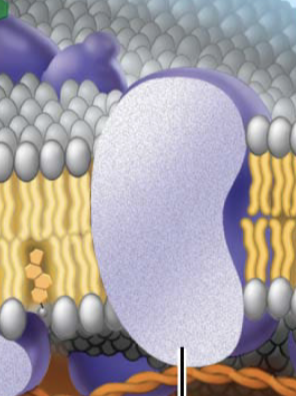
Which kind of protein is this
Integral, transmembrane protein
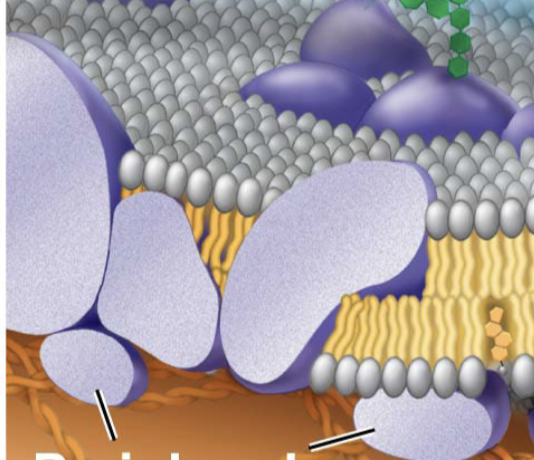
What kind of proteins are the arrows pointing to?
Periphereal membrane proteins
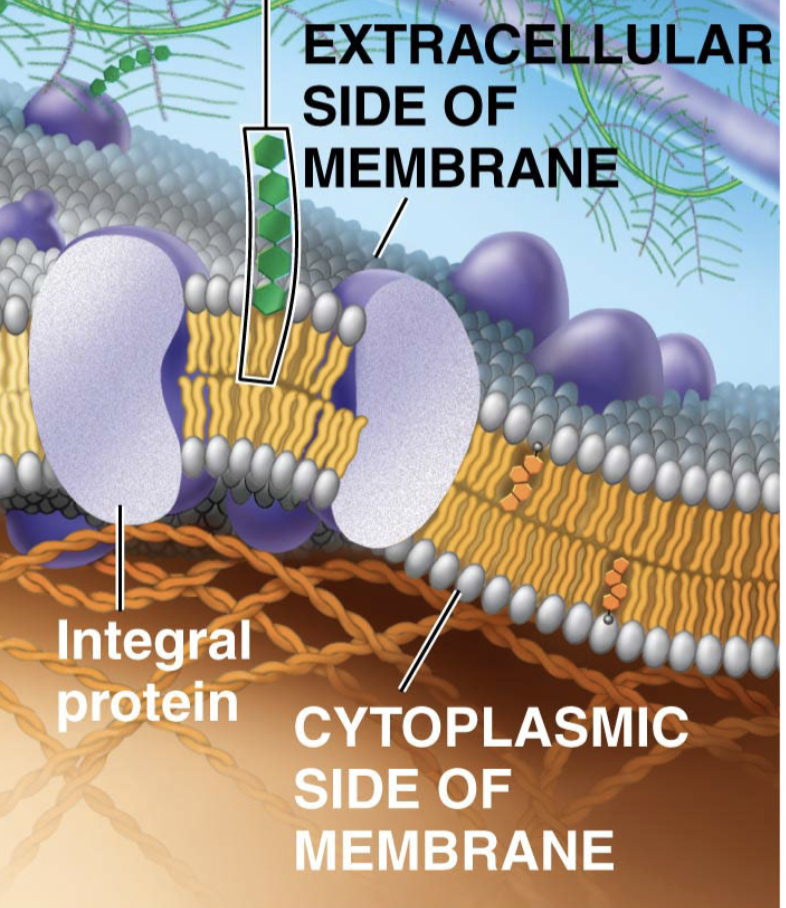
What is the green thing?
Glycolipid
Glycolipid function
Cell recognition
Function of PM proteins
mediate movement of hydrophillic substances
Plasma membrane proteins are often amphipathic, which means
have hydrophillic and hydrophobic regions
Integral proteins
Embedded in PM
Transmembrane proteins
Integral proteins that span the PM connecting extracellular and cytoplasmic areas
Periphereal membrane proteins
associated but not embedded in plasma membrane
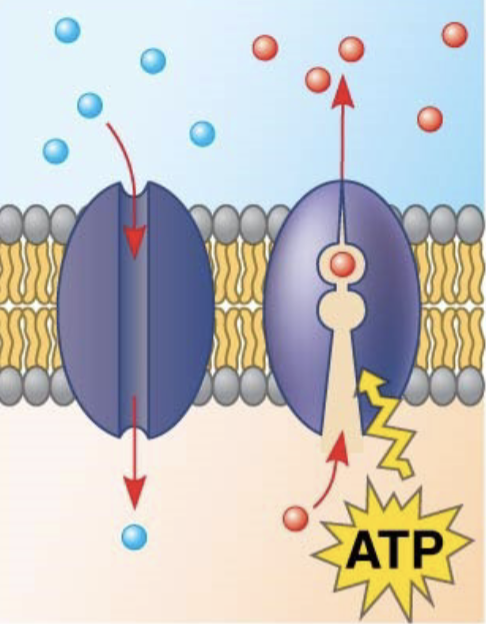
Transport- channels, general or selective, gated or not
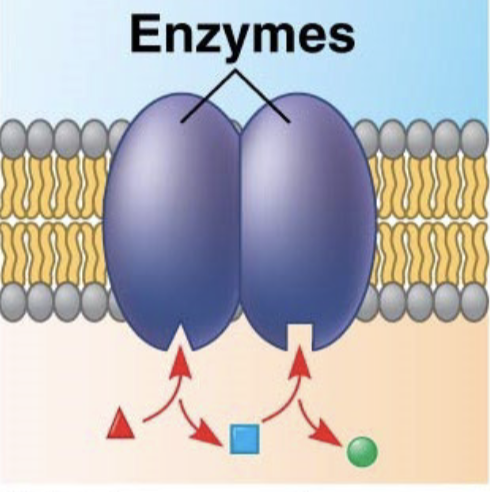
Enzymatic activity- chemical reaction, may be team of enzymes
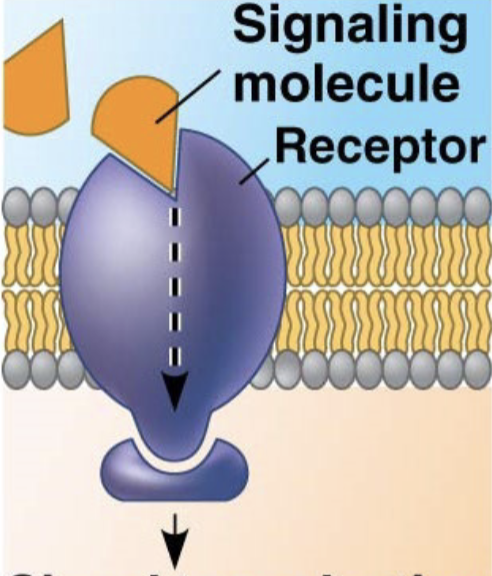
Signal transduction- external signaling molecule causing communication to inside cell
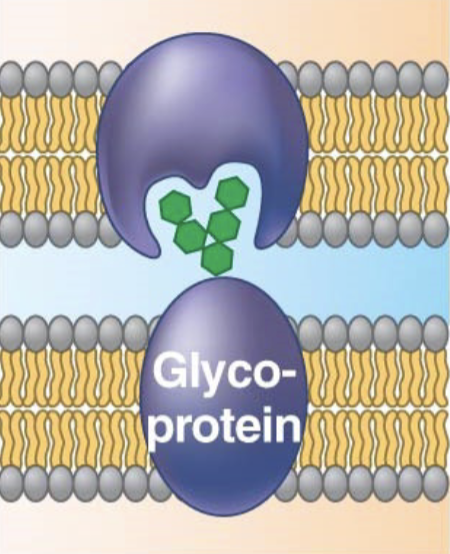
Cell to cell recognition- use of glycoproteins as molecular signatures of extracellular side of cell
What is a glycoprotein made of
Carbohydrate and protein
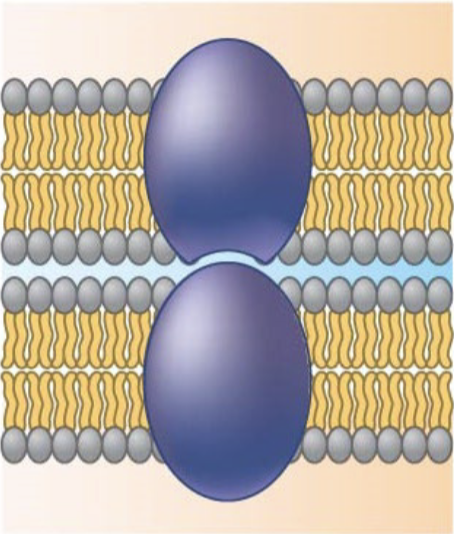
Intercellular joining- junctions eg gap, tight
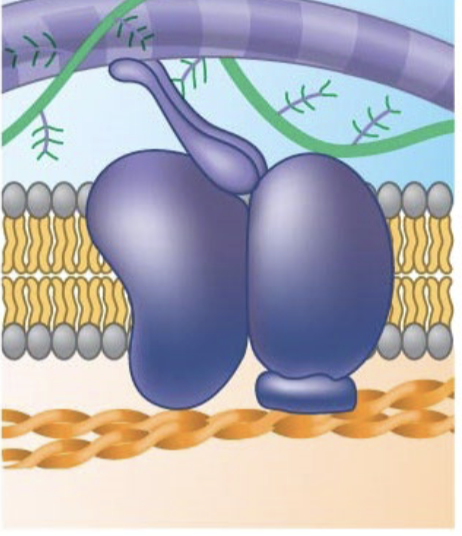
Attachment to cytoskeleton and ECM- eg, fibronectin mediates contact between cell surface integrins and ECM, facilitates movement
What is nucleus made from
A double bilayer (nuclear envelope) that is continuous with RER. Contains nucelolous and pores.
Nuclear pores
Control substances going in and out of nucleus
Nucleolous
Produces rRNA, assembly of small and large ribosomal. subunits
Functions of Nucleus
Make RNA, house and protect DNA, molecule segregation
What does molecule segregation in nucleus do
allows temporal and spatial control of cell function
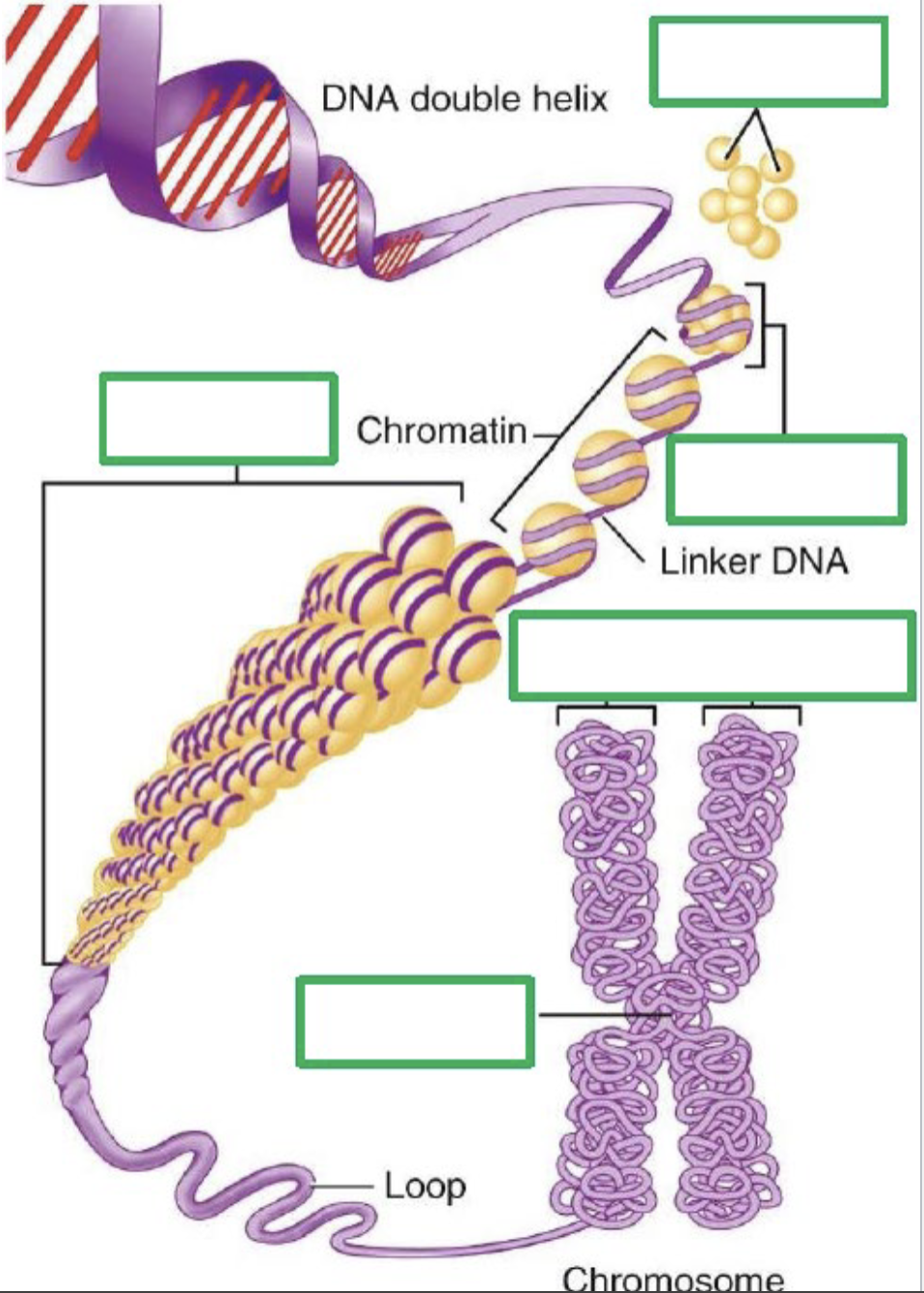
Fill in green boxes
Histones, nucleosomes, chromatin fibres, centromere, sister chromatids
How many times doe the DNA wrap the histones
2
How many histones does the DNA wrap
8
Nucleosomes are made from
DNA wrapped 2x around 8 histones
Nucleosomes together form
chromatin
Chromatin forms
Chromatin fibers
What stage is DNA typically in inside a cell
Chromatin and Chromatin fibers
What do chromatin fibers form
chromosomes
Chromosome contains
usually more than 1000 genes
A gene is
segment of DNA that codes for a phenotype or function
What are ribosomes made of
Ribosomal RNA and proteins
rRNA meaning
ribosomal RNA
Where do ribosomal subunits assemble
in nucleolous, leave through nuclear pores
Where are Ribosomes found
Cytosol (non endo protein production), RER (endomembrane proteins production)
Function of RIbosomes
protein production (translation)
RER membrane surrounds protein to form transport vesicle to golgi
Proteins enter what part of RER and why
lumen for folding
function of RER
producing organelle, membrane and secreted proteins
SER has no ribosomes so it
doesnt make proteins
SER function
synthesizes lipids (steroids and phospholipids), storage of cell specific molecules
Examples of SER
muscle SER holds calciumm ions, Liver holds enzymes for detoxification and glucose release
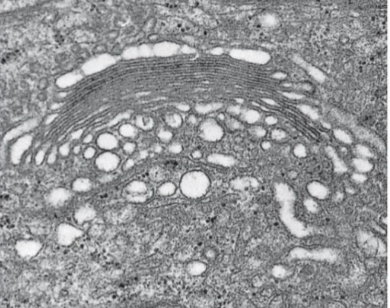
golgi
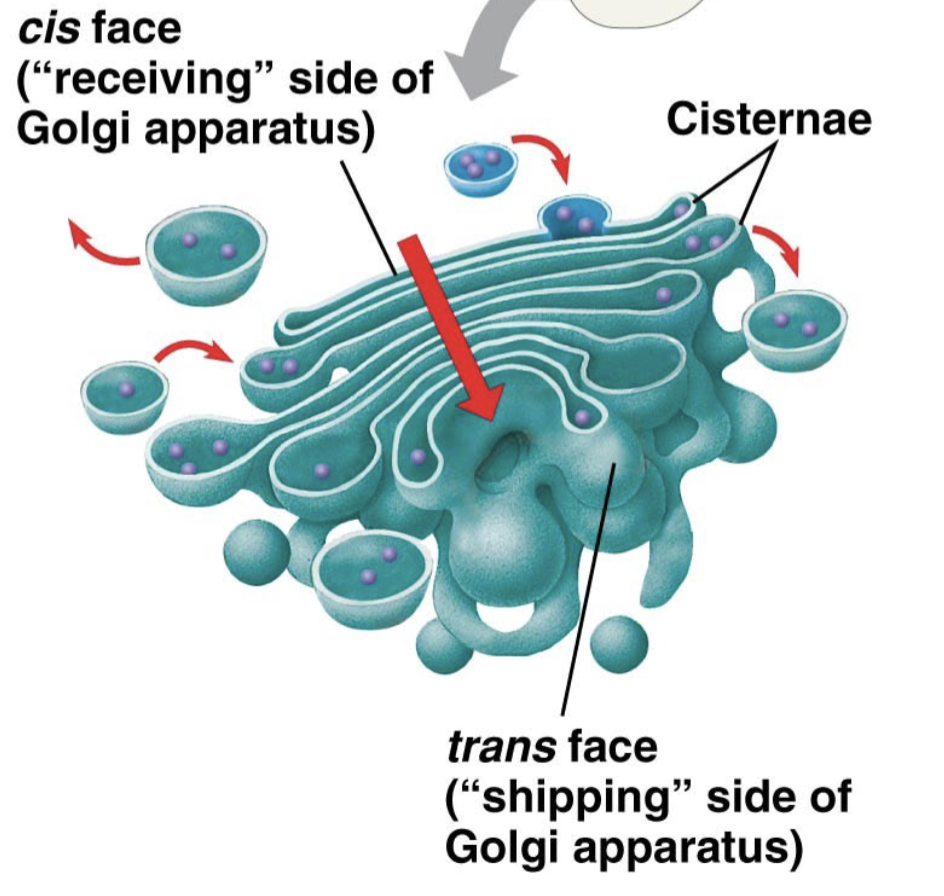
Golgi
Cis face
side in golgi that receuves proteins from RER
Trans face
side of golgi where modified proteins are released
Function of golgi
modify, sort, package and transport proteins received from RER using enzymes in cisternae
Golgi forms
secretory vesicles (proteins for exocytosis), membrane vesicles (PM molecules), transport vesicles (molecules for lyosome)
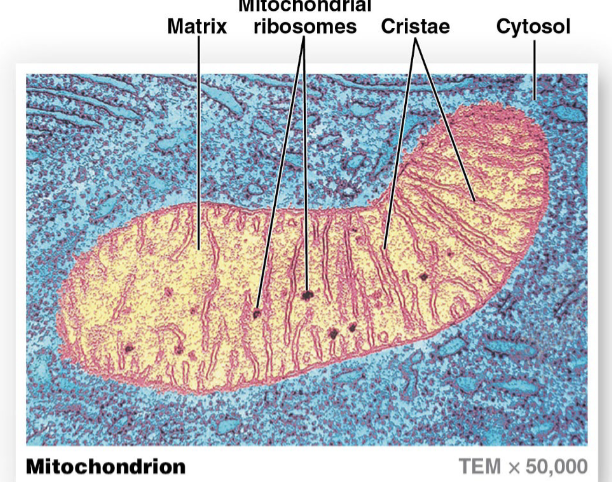
Mitochondria
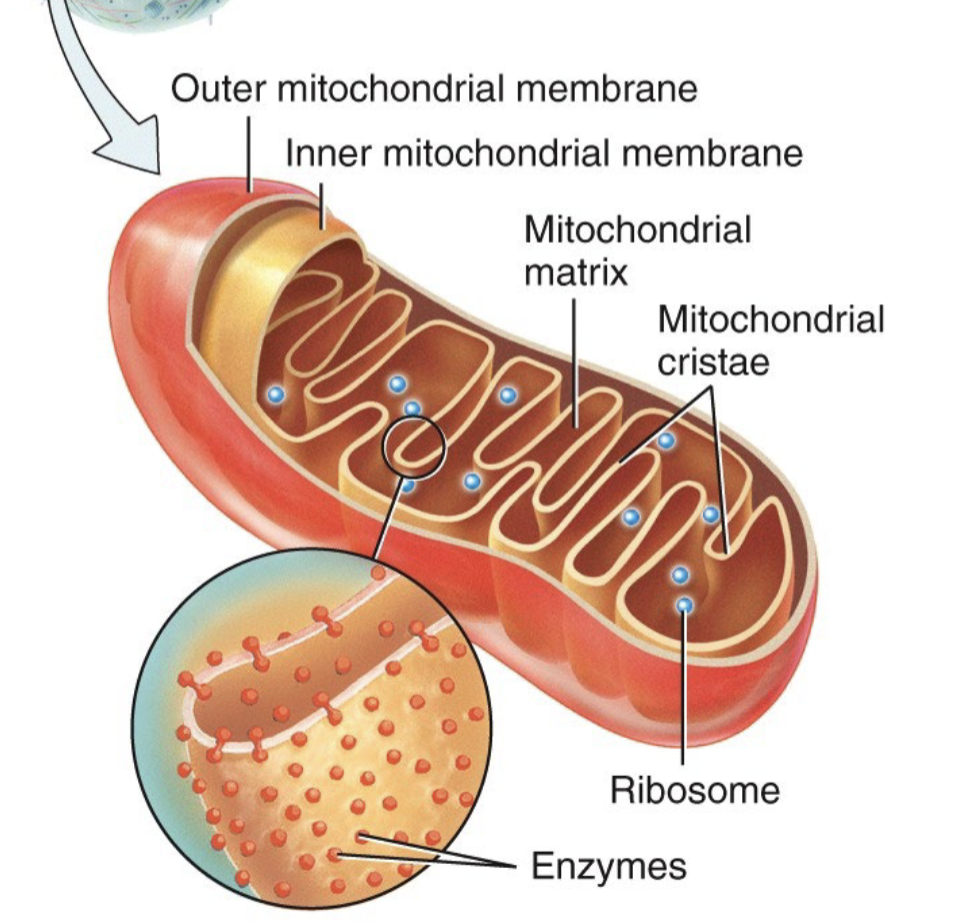
mitochondria
What is mitochondrias MAIN function
generation of ATP through cellular respiration
What is mitochondria made up of
Inner and outer mitochondrial membrane, mitochondrial matrix
Mitochondrial matrix
fluid filled interior cavity in mitochondria
Folds of inner mitochondrial membrane are
cristae
A cell has more mitochondria when
it uses lots of ATP, therefore needs to generate even more
Mitochondria carry seperate small
genomes (37 genes) encoding mithcondrial specific products
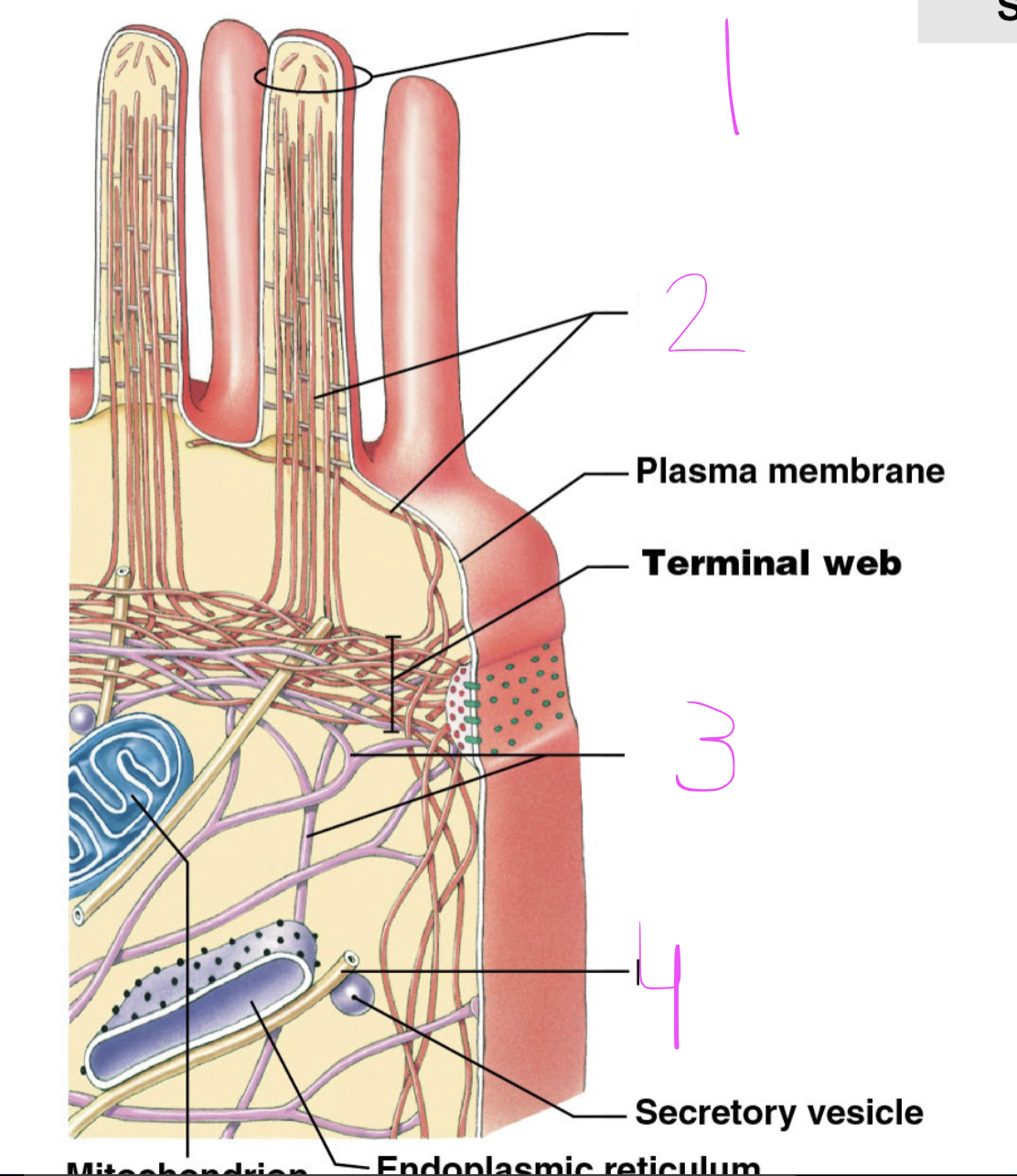
Name
Microvilli, microfilaments, intermediate filaments, microtubules
What does the cytoskeleton do
provides structural support to the cell, scaffolding, intercellular transport and cell movement
3 types of fibers in cytoskeleton from smallest to largest
microfilaments, intermediate filaments, microtubules
function of microfilaments
bear tension and weight by anchoring cytoskeleton to PM proteins, promote amoeboid motility
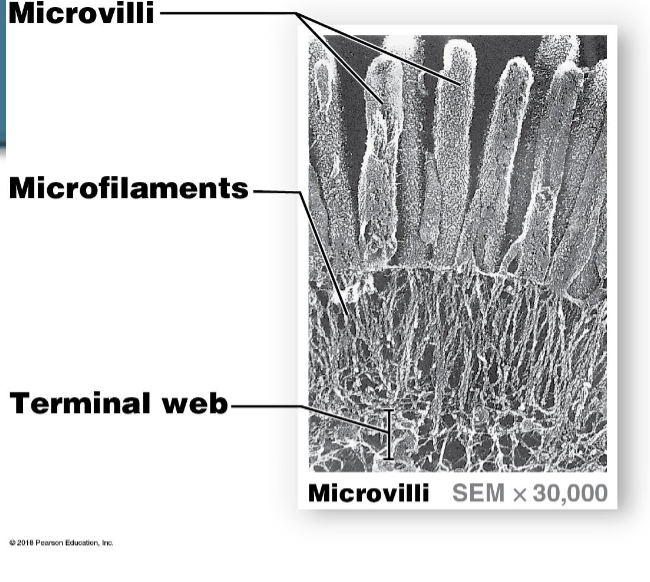
Where are microfilaments found
Periphery and lining of interior of cell
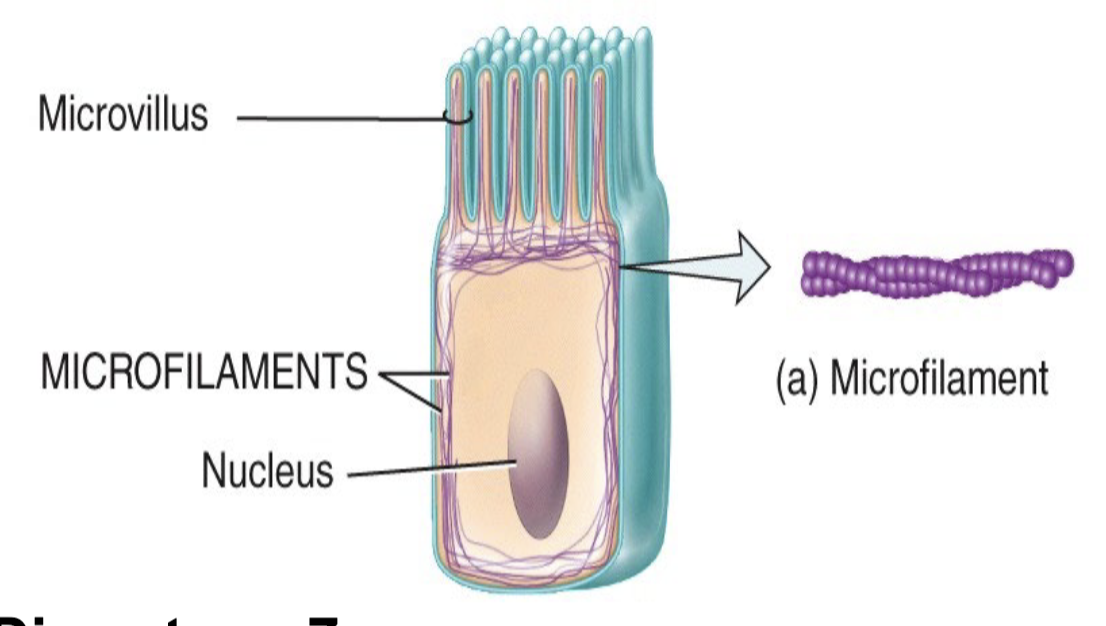
what do microfilaments look like
two long lengths of actin molecules twisted around eachother
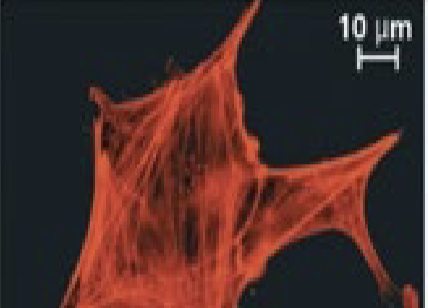
How big are microfilaments
~7nm
Microfilaments assemble and dissasemble when required because they are
dynamic
How big are intermediate filaments
8-12nm
What are intermediate filaments made of
a wide range of materials eg keratin
Where are intermediate filaments found
cytoplasm
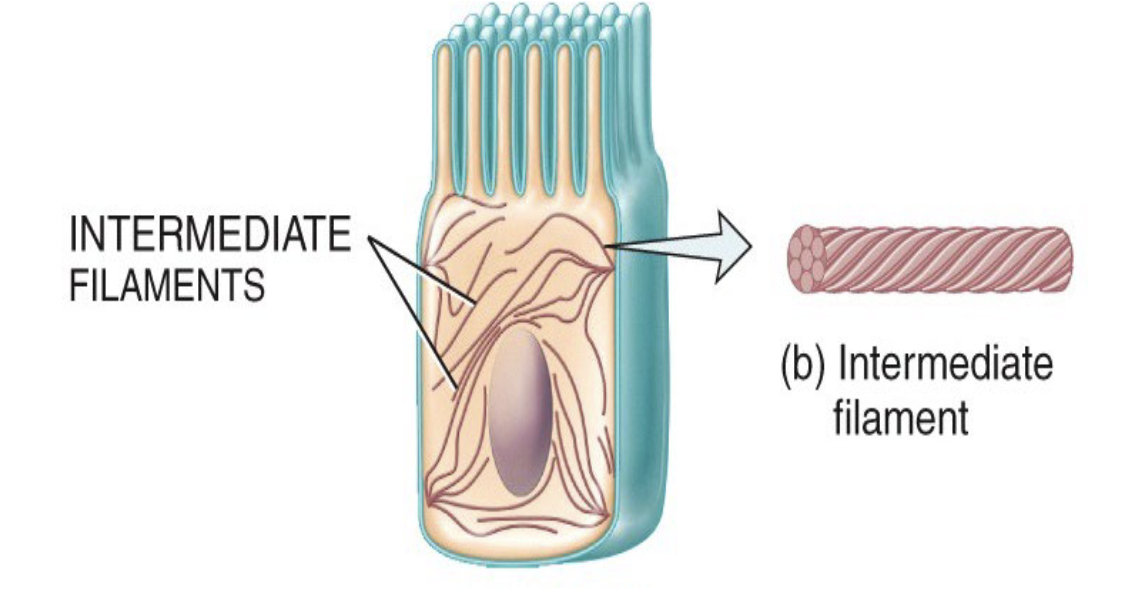
Function of intermediate filaments
Bear tension and weight throughout cell, scaffold for cellular organelles (nucleus)
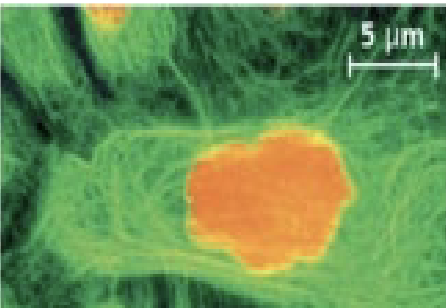
Intermediate filaments are the most ____ of the fibers and are the least _____
permanent, dynamic
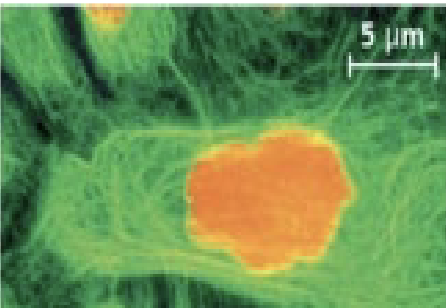
Intermediate filament
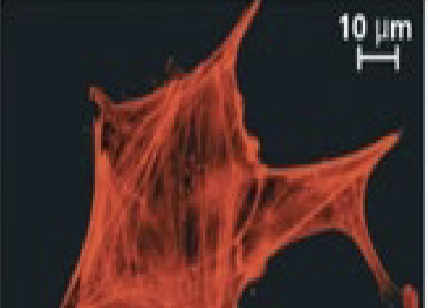
Microfilament
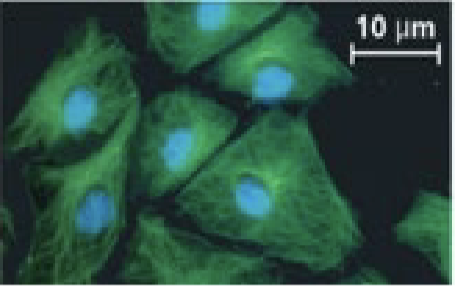
Microtubule
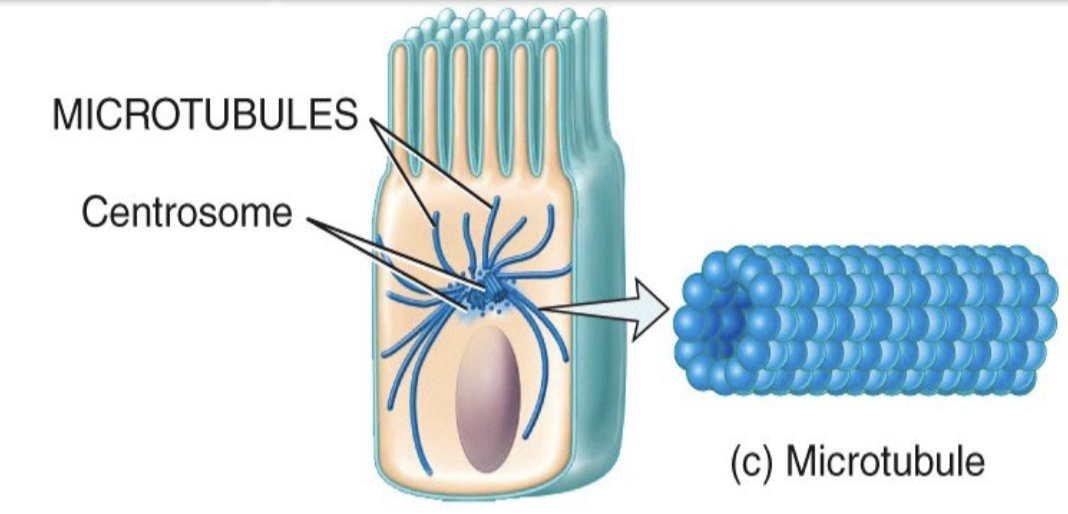
Structure of microtubules
Tubular, 25nm with 15nm central lumen
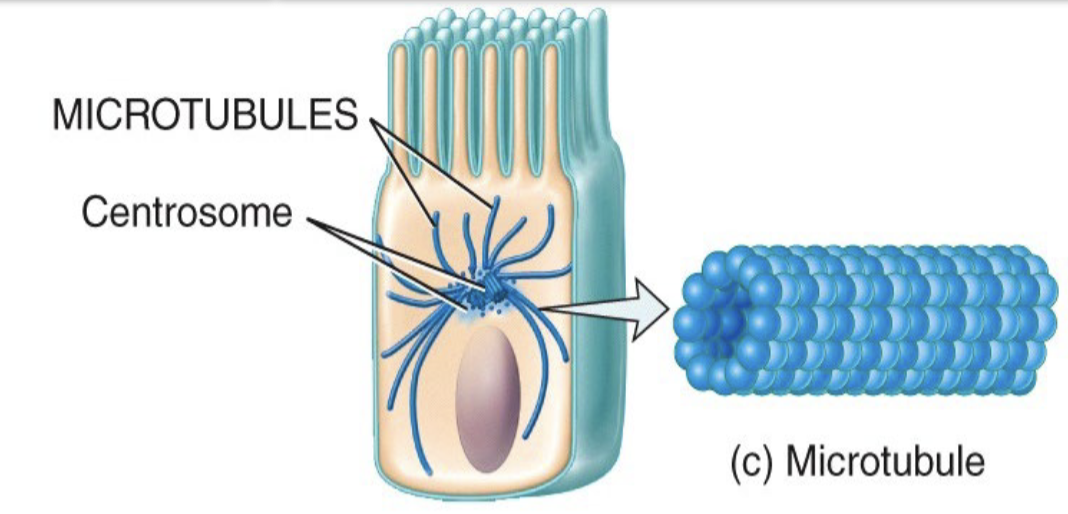
What are microtubules made from
Tubulin dimers coiled to form a tube
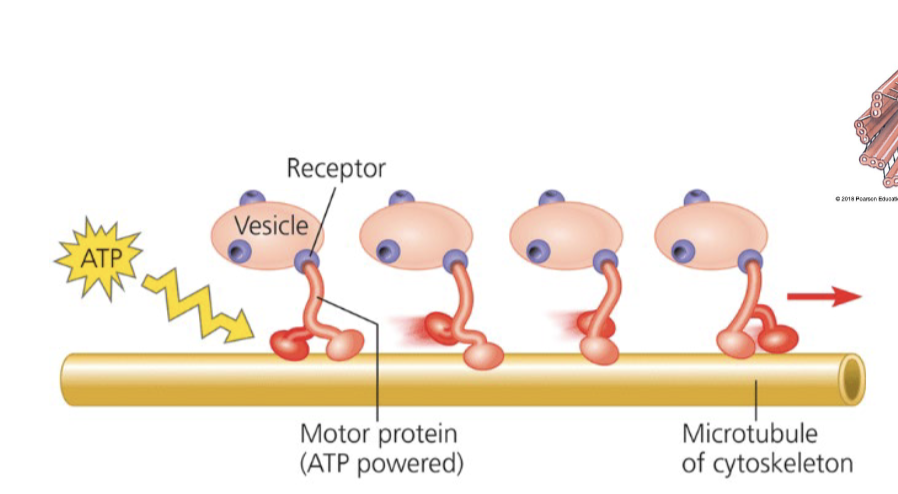
Functions of microtubules
support, road (moves organelles), chromosome organisation for cell division, support and movement of flagella/ cillia
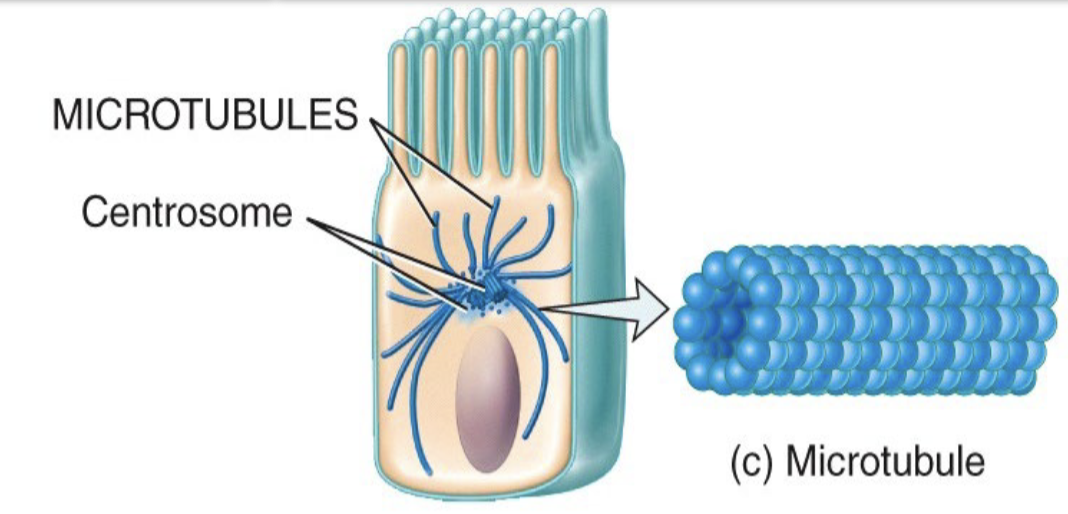
Microtubules are
dynamic
What is a lysosome?
A lysosome is a membrane-bound organelle containing enzymes that break down waste materials and cellular debris.
ATP cycle
transfer of energy between complex and simple molecules in the body, with ATP mediator
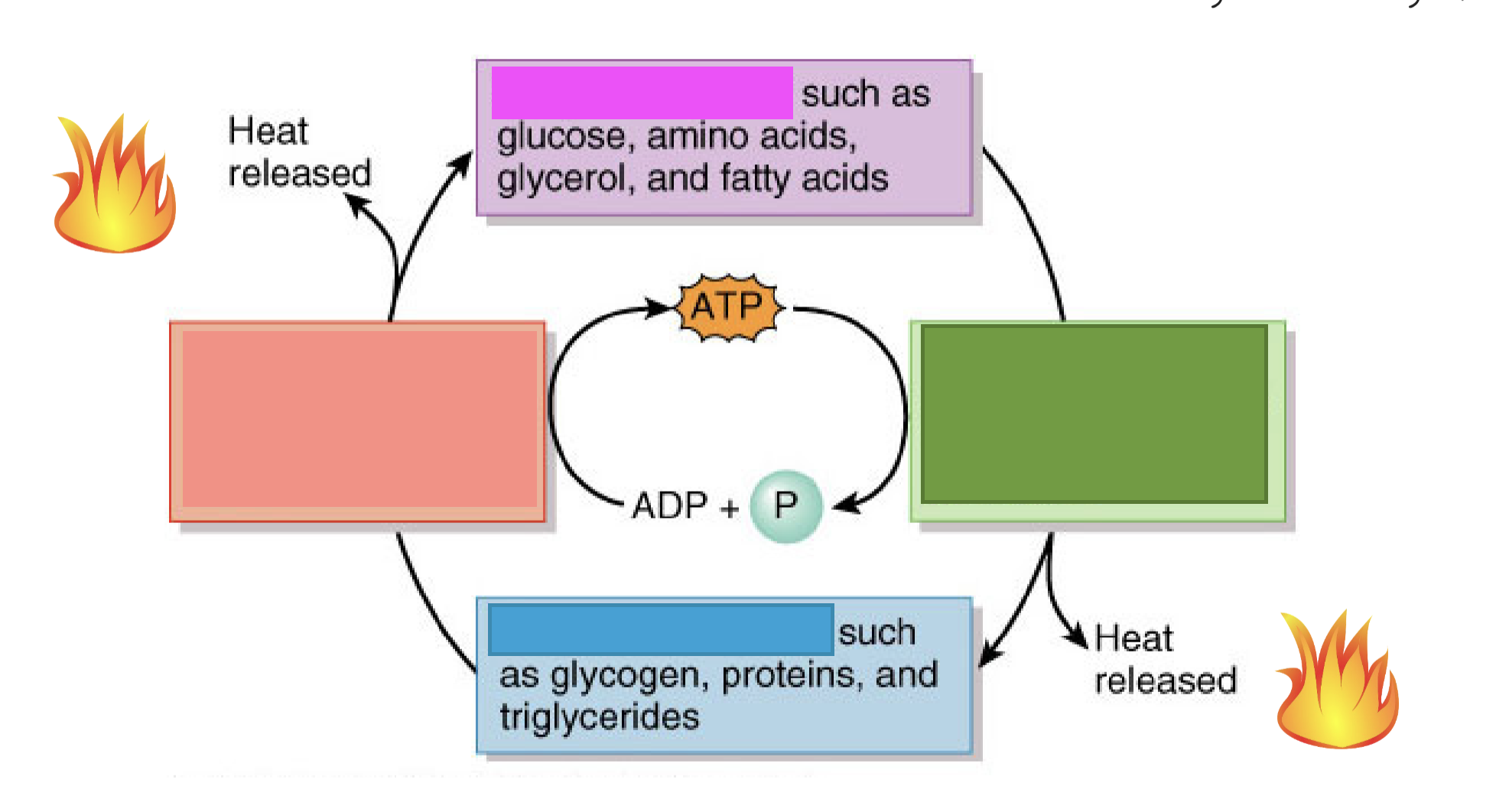
pink
simple molecules (glucose, amino acids, fatty acids)
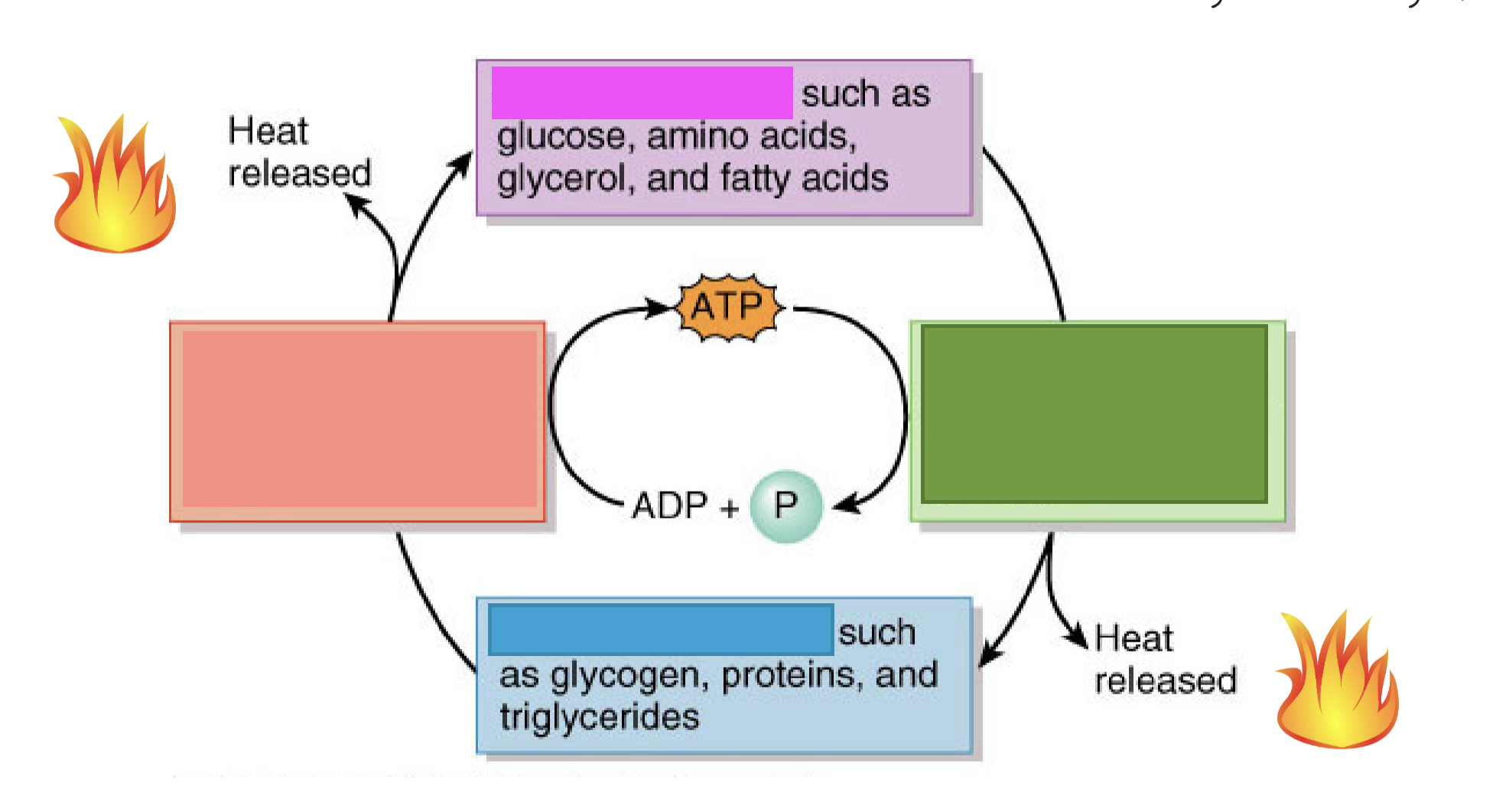
Green
Anabolic reactions transfer energy from ATP to complex molecules
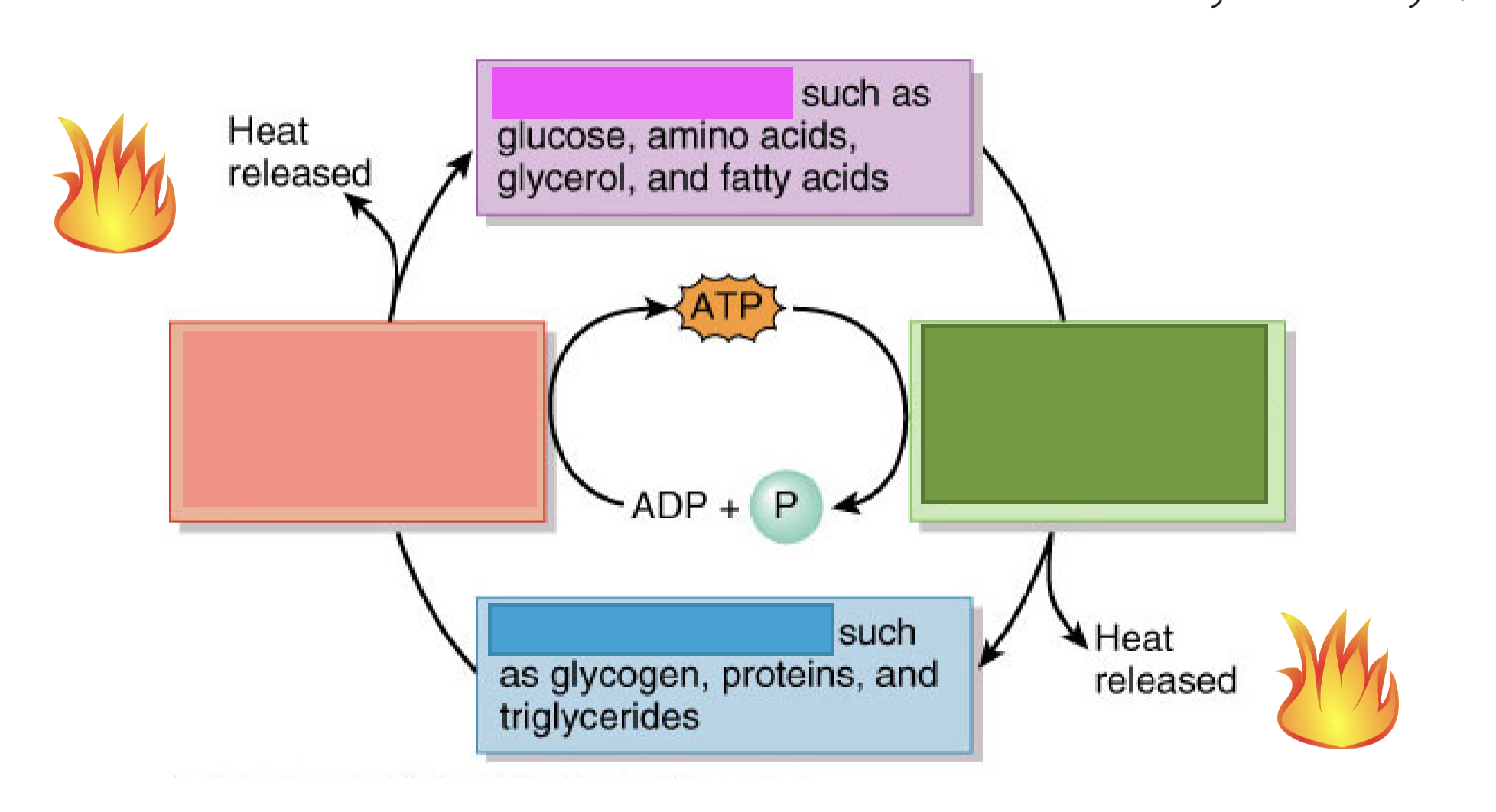
Blue
Complex molecules (triglycerides, glycogen, proteins)
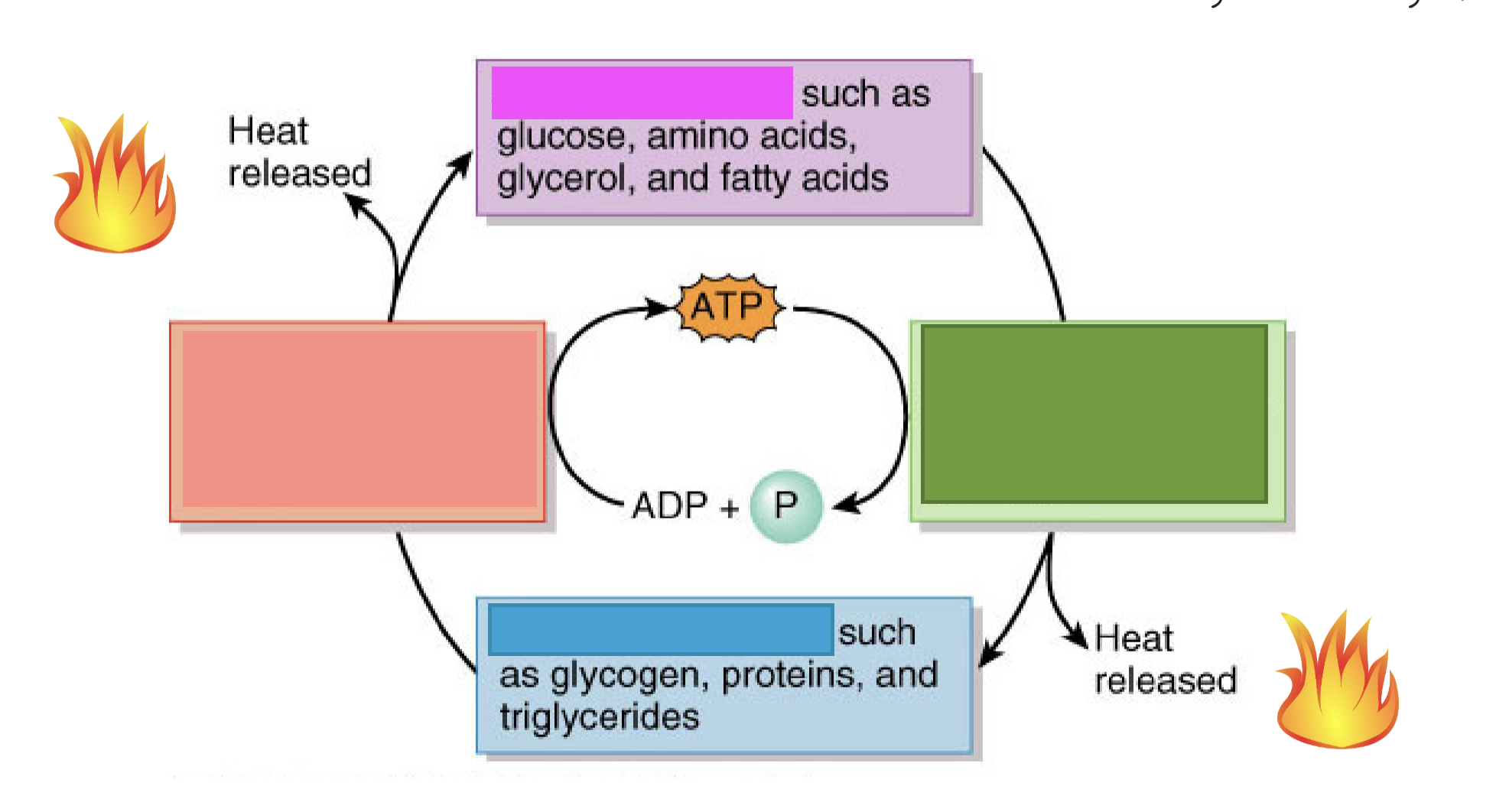
Orange
Catabolic reactions transfer energy from complex molecule to ATP
Major categories of fuel
Carbohydrates, Proteins, Fats
What are the three major fuels broken down into
Carbohydrates into simple sugars, protein into amino acids, fats into simple fats
What happens to fuel after being broken down
gets absorbed
The journey of glucose to cell
Glucose in food, glucose in bloodstream, facilitated by insulin becomes glucose in cell
Where does glucose go after being in cell
Cellular respiration or storage for harder times