anthro 1 final!
 Call Kai
 Learn
Learn Practice Test
 Spaced Repetition
 Match
Match Flashcards
 Knowt Play
1/101

There's no tags or description
Looks like no tags are added yet.
Name | Mastery | Learn | Test | Matching | Spaced | Call with Kai |
|---|
No analytics yet
Send a link to your students to track their progress
102 Terms
What were Paranthropus species like? When roughly were they around? What was unique about their anatomy?
Paranthropus• Enormous back teeth• Sagittal crests• Large temporalis muscles• Huge cheek bones(zygomatic arches)• Postcranial: bipedal, like Au.africanus
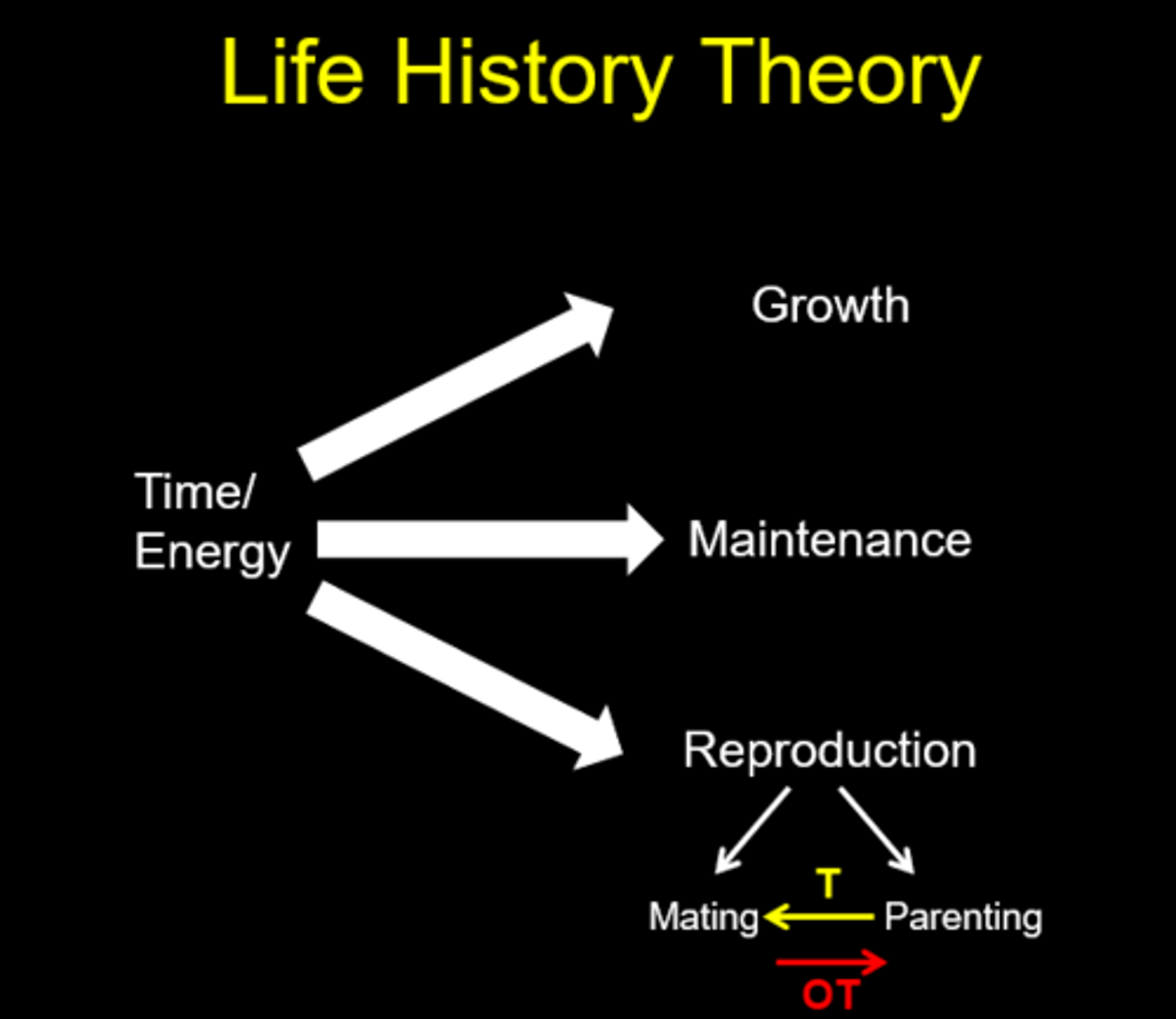
What is life history theory?
A different way to describe a species; physical, behavioral, etc. traits that describe the shape of the life cycle.
Examples: When to be born, How many offspring per litter, How fast to grow, When to wean/when to reach maturity, When to die
What are LH tradeoffs?
The traits an organism must compromise to support another trait, such as offspring investment strategies: quantity vs quality of offspring
How are LH traits connected (w/ examples)?
Trade offs to prioritize energy, such as allocating energy towards ovulation vs digesting food when reproduction is required, or building brain vs muscle during crucial times of development
Time vs energy and the principle of allocation
The principle of allocation is the process in which certain energy sources are prioritized over the other. Time vs. energy: time is limited so there must be trade offs between spending time on certain events. Examples: time spent being pregnant vs time spent lactating, or time spent looking for a mate vs time spent looking for food
How does extrinsic mortality shape LH?
Extrinsic mortality is death caused by uncontrollable aspects, such as predation, accidents, or disease. This shapes LH because if the chances of extrinsic mortality are low, more time can be spent on fortification vs just survival. If they're high, that means that more energy must be allocated towards survival techniques.
Be able to characterize primate life histories
Primates have long life histories. Slow maturation, large brains, long gestation, small litter, long life span. From baby to juvenile primates, the mother controls its growth until its ability to become independent. Then, juveniles allocate the most energy towards growth. Once it becomes an adult, the energy they once used for growth is used towards reproduction.
How does LH explain senescence? What are some theoretical explanations for senescence and death?
LH explains senescence by saying that death is the cost for fitness. A theory for senescence is Antagonistic Pleiotropy- that there are genes that improve ones fertility at a younger age but will cause you to die sooner. Since the gene is successful in its goal of reproduction, it will spread.
Generally - how do things become fossils?
They have to die near a low energy depositional environment, such as in a cave, sinkhole, or sediment. Over time, the sediment compacts the body as it decomposes, creating sedimentary rock. Then minerals seep into the rock, and then crystallizing creating the fossil.
What limitations are there in the fossil record?
It's a very sparse representation of reality because only a minuscule amount of organisms are fossilized. We should assume: The real origin of a species is earlier than fossils attest; and extinction is also later than fossils attest. Most extinct primate species have not been discovered.
What was the earth like when the first primates showed up? What ecological niches did they inhabit and exploit?
They originated in the Paleocene era:
Warm global temperatures
Greenhouse gases (C02)
Forests dominated much of the planet
When do the first primates appear?
The Paleocene era, 54-65 million years ago
What were the earliest primates called? What were they like generally?
Plesiadapiforms: Found in North America
Not primate like features: Small brains, eyes on side of head, no post-orbital bar, claws on most digits.
Primate-like features: Grasping hands and feet, nail on its big toe
What is peculiar about the evolution of platyrrhines?
Earliest known monkey from South America- the size of a squirrel• 36 million years old, very similar to species found in Africa at this time.
What were the earliest apes called? What era did they flourish?
Proconsul in Africa, Dated 27-17 mya. They flourished during the mid miocene
What are some anatomical features of bipedalism?
Skull: Foramen magnum position towards center of skull.
Pelvis: Short and broad and laterally flared, with changes in muscle attachments.
Femur: Longer, stouter, angled towards thecenter-line, with larger joint surfaces.
Foot: Enlarged big toe in line with others, stiff mid foot, arch.•
Spine: A large and curved lower spine so that body is balanced above hips (lumbar lordosis).
When did the first hominids show up (generally)? What was the earth like then?
Sahelanthropus tchadensis• Chad, Africa• Dated to 6-7 Ma• Once a lush forested region
When did bipedalism show up? How do we know?
We know this from fossil evidence, such as the shape of the skull, pelvis, leg bones, and footprints (like the 3.6-million-year-old Laetoli footprints), which show adaptations for upright walking.
Who was Ardipithecus (Ardi)? When was she around? What are some features associated with this finding? What was surprising?
Ardipithecus (Ardi) was a female early hominin who lived about 4.4 million years ago in Ethiopia. She had a small brain, long arms, and grasping feet, but also a pelvis and leg structure suited for bipedal walking. The surprising part was that she combined tree-climbing traits with upright walking, showing that bipedalism began before humans lost adaptations for life in the trees.
Why might bipedalism have been favored?
Bipedalism may have been favored because it saved energy, freed the hands for carrying and tool use, helped with cooling in hot climates, improved visibility over tall grass, and offered reproductive and social advantages.
Generally, when did Australopithecines live?
Australopithecines lived approximately 4 to 2 million years ago.
What were some common features of Australopithecines (Lucy in particular)? Anatomy? Brain size? Teeth? What do we know about her life?
Australopithecines like Lucy lived 4-2 million years ago. They were bipedal, small (about 3.5 feet tall), had small brains (~400-500 cm³), long arms, curved fingers, and small, human-like teeth. Lucy likely lived in woodlands, ate a varied plant-based diet, and died young, possibly from a fall.
Who might be the earliest stone tool user?
The earliest known stone tool user is likely Australopithecus afarensis or Australopithecus garhi, around 2.5-3.3 million years ago.
Tools from this period (like those from Lomekwi, Kenya, dated to 3.3 million years ago) suggest tool use may have begun before the genus Homo appeared.
What were some shared features of early Homo? When did they live?
Early Homo species (like Homo habilis) lived around 2.4 to 1.6 million years ago.
Larger brains: ~600-750 cm³ (bigger than Australopithecines).
Smaller teeth and jaws.
Flatter faces.
More human-like body proportions.
Used stone tools (Oldowan tools).
Likely more advanced behavior and possibly some rudimentary communication.
What were general brain size trends associated with hominin evolution? Body size?
Increased over time:
Early hominins (e.g., Australopithecus): ~400–500 cm³
Early Homo: ~600–750 cm³
Homo erectus: ~900–1,100 cm³
Modern humans (Homo sapiens): ~1,300–1,400 cm³
Also increased over time:
Early hominins were short and light.
Homo erectus and later species were taller and more robust, with longer legs suited for long-distance walking.
What is the distinction between erectus/ergaster? Where do we find them?
Homo ergaster is often considered the African form of early Homo erectus—slightly more primitive and older (about 1.9 to 1.4 million years ago).
Homo erectus usually refers to the Asian populations (like those found in Java and China), appearing around 1.8 million years ago and lasting until about 100,000 years ago.
What are some general anatomical features of erectus/ergaster?
Brain size: Larger than earlier hominins, about 900–1,100 cm³.
Body: Taller and more robust; longer legs and shorter arms, suited for efficient long-distance walking and running.
Skull: Thick cranial bones, a prominent brow ridge (supraorbital torus), and a low, long skull shape.
Face: Less protruding than earlier hominins, with a flatter face and smaller teeth.
Jaw: No chin, but smaller and less robust than Australopithecines.
Posture: Fully bipedal with human-like gait.
Generally, how old is tool use?
Tool use dates back at least 3.3 million years, based on stone tools found in Kenya (Lomekwi site).
What are the earliest tool traditions? What species are associated with them?
Lomekwian (~3.3 million years ago)
The oldest known stone tools, found at Lomekwi, Kenya.
Associated with Australopithecus or possibly early Homo species.
Oldowan (~2.6 million years ago)
Simpler, more standardized stone flakes and cores.
Associated mainly with Homo habilis and possibly late Australopithecines.
What types of foods to foragers rely on?
Wild plants: fruits, nuts, seeds, tubers, leaves
Animals: small and large game, fish, insects
Other sources: eggs, honey, shellfish
When does skill in foraging peak? What might this suggest about hominin evolution and LH?
How is foraging different than chimp food acquisition?
Foraging (Humans):
More diverse diet: Includes a wide variety of plants and animals.
Use of tools: Humans make and use tools to hunt, dig, and process food.
Food sharing: Cooperative hunting and sharing within social groups.
Planned gathering: Often involves planning and knowledge of seasonal availability.
Cooking: Humans cook food, making more nutrients available.
Chimpanzee Food Acquisition:
Primarily fruit-based: Though they eat insects and meat occasionally, fruits and leaves dominate.
Limited tool use: Some tool use (like termite fishing), but less complex than humans.
Individual foraging: Mostly gather food individually or in small groups.
No cooking: Eat food raw.
What is the general sexual division of labor in foragers? Why is sharing so important?
Men typically focus on hunting and sometimes fishing — targeting larger game or animals.
Women generally focus on gathering plant foods, small animals, and processing food.
Both roles are crucial and complementary for the group’s survival.
Why Sharing Is Important:
Reduces risk: Sharing buffers against food shortages when hunting or gathering fails.
Builds social bonds: Strengthens cooperation and group cohesion.
Supports offspring: Ensures children and elders receive enough nutrition.
Increases survival: Shared resources help the entire group thrive over time.
What is the age pattern of consumption and production? Why is this important?
Kids and elders consume more than they produce, while adults produce more than they consume. This balance is important because it creates interdependence, encouraging sharing and cooperation within the group.
What do we know about early Homo hunting/meat eating?
Early Homo likely hunted small to medium animals and scavenged meat from larger kills. They used simple stone tools (Oldowan) to cut and process meat. Meat eating helped support bigger brains and more energy-demanding bodies.
What was the world like during the middle Pleistocene?
Repeated ice ages and warmer periods (glacial and interglacial cycles).
Changing environments: forests expanded and contracted, and grasslands shifted.
More variable climates, forcing animals and humans to adapt.
Early humans like Homo heidelbergensis lived during this time, developing new tools and behaviors to cope with these changes.
What was H. heidelbergensis? When? Where do we find these? What are some general anatomical features?
Homo erectus evolved into a larger-brained hominin that we callHomo heidelbergensis.• It is not clear where/when these creatures first evolved-- sometimebetween 500,000 and 1 million years ago. They were found in Europe and Africa, their features included
Brain size 1200-1300 cc• Higher foreheads• More rounded skull• Sides of skull more vertical• Ancestral features (relative to H.sapiens)• Large brow ridges• Thicker cranial bones• Larger, more prognathic face• No chin
What type of tools did heidelbergensis use?
Increased symmetry of hand axes after 500KYA.• Mode 3 technology at 300 KYA.•
Levallois technique: flakes made withprepared cores.• Hafted tools.•
Efficient use of stone. Homo heidelbergensis Large Game Hunting with Spears• Use of projectiles, killing at adistance• Javelin-like forward-weightedspears.• Double-pointed throwing sticks.• Impact fractures and cut marks onlarge game
What did they probably evolve from? What did they evolve into?
Homo erectus, they evolved into neanderthals and homo sapiens
What is Homo floresiensis? why is it so surprising? What caused it's specific features?
The “Hobbits”• Flores, Indonesia• Dated to 700-60 kya• Small bodied• 3 feet tall• Weighed ~ 55 pounds.• Small brained~400 cc (chimp-sized)• Mode 1 tools, Island dwarfism of Homo erectus?• Diseased Homo sapiens? Likely due to island dwarfism—a process where species on isolated islands evolve smaller bodies and brains due to limited resources and lack of predators.
What are some general neanderthal anatomical features?
Large brain• Larger than Homo sapiens (1,500+ cc)• Long, low skull• Occipital bun• Thin walled• Unique teeth• Taurodont roots• Heavily worn incisors
Why do we consider neanderthals to be cold adapted? How does body size fit into this?
Heat loss is a major challenge in colderclimates.• Heat loss is proportional to surface arearelative to volume• Reduction of surface area less heat lost
Surface/volume ratio can be decreased bydecreasing limb size (length)
What type of tools did they use?
Neanderthals were skilled toolmakers• Made Mode 3 tools• Mousterian industry
What were neanderthal lives like? What didnt they have that Homo sapiens did?
Neanderthals lived in small groups, hunted large game, used fire and tools, and cared for the sick and elderly.
They lacked some things Homo sapiens had:
Complex symbolic behavior (like art and ornamentation)
Long-distance trade
Advanced tools and weapons
Larger social networks
These differences may have affected their survival and adaptability.
What are the denesovians? Where did they come from?
Denisovan and Neanderthal LCA lived ~450 ka• Neanderthal, Denisovan, and Human LCAlived~765-550 ka• Evidence suggests that Neanderthals,Denisovans, and Humans may have interbredin Eurasia• Made mode 3 stone tools and hunted large game
What were the genetic relationships between neanderthals, denikovians, and modern humans like?
Neanderthals lived in patrilocal bands.• Populations of Neanderthals and Denisovanswere very small compared to Homo sapiens
Where did H sapiens come from? When?
Homo sapiens began to appear inAfrica between 100,000 and 200,000years ago.• Genetic studies• Mitochondrial DNA (mtDNA)
What controversies are associated with early H sapiens?
Controversies about early Homo sapiens include:
Origin location: While most support an African origin, some argue for multi-regional evolution with gene flow.
Interbreeding: How much they interbred with Neanderthals and other hominins is still debated.
Behavioral modernity: Disagreement on when and where complex behavior (art, symbols, tools) first appeared.
Migration timing: Exact routes and timing of early human migration out of Africa are still unclear.
What are some morphological features of H sapiens?
Key morphological features of Homo sapiens include:
High, rounded skull with a vertical forehead
Small brow ridges
Chin present (unique among hominins)
Small face and teeth
Lighter, more slender skeleton
Long limbs and relatively short torso
What types of tools/technologies are associated with the middle Stone Age?
Tools and technologies of the Middle Stone Age (about 300,000–50,000 years ago) include:
Prepared core tools (e.g., Levallois technique)
Points for hafting onto spears
Scrapers and blades
Bone tools
Use of fire and hearths
Early symbolic items like ochre and beads
Describe human migration out of Africa. When did this occur? How do we know?
Populations left Africa and spread across theworld.• Limited migration 100,000-120,000 yearsago• Major migration 60,000 years ago• The ancestors of modern humans sometimesinterbred with Neanderthals and Denisovansin Eurasia.
What does mtDNA and Y chromosome comparisons tell us about our origins? What about the spread in Africa and move out of Africa?
hree kinds of DNA data are key:• Autosomal, DNA.• mtDNA• Y-chromosome• Each bit of the genome has an ancestry.• Mutations accumulate over time.• Gene trees
mtDNA and Y chromosome comparisons show that modern humans originated in Africa, with the greatest genetic diversity there. They also reveal that a small group left Africa around 60,000–70,000 years ago, spreading across the world.
What is the serial founder model?
The serial founder model explains human migration as a series of population splits.
As small groups left Africa and moved into new regions, each “founded” new populations with less genetic diversitythan the one before.
This model helps explain why genetic diversity decreases the farther a population is from Africa.
How did neanderthals and Denisovians leave their mark on our genes?
two studies have shown that greaterNeanderthal ancestry is associated with moreNeanderthal-like, elongated cranial shape.• Another study shows that more neanderthalancestry is associate with reduced height.
What was the upper Paleolithic like? How did humans live? How was this different than other species?
Dozens of distinctive tool kits emphasizingMode 4 tools• Blades• Tool diversity• Different raw materials used in toolmaking• Raw materials transported for long distancesUpper PaleolithicTechnology and Culture
When did dog domestication occur?
Dogs domesticated between 30 and 20 KYA• Dog-like fossils at sites 17-13 kya in Russia• Oldest known dog burial from 14 KYA• Used to protect camps vs danger predators,to help in hunting, carry loads?
What part of the world was last to be settled by humans?
The last major region to be settled by humans was the Pacific Islands, including places like Hawaii, Easter Island, and New Zealand.
This occurred relatively recently—between 3,000 and 1,000 years ago—as part of the Polynesian expansion using advanced seafaring skills.
How different are we from Chimps? What explains the major differences in biology?
Humans and chimpanzees differ by about1.2% and the difference between humans andbonobos is about 1.3%.• Looking at 13,454 homologous genes foundin both humans and chimpanzees:• 29% had the same sequence.• 71% had slightly different sequences.• This means 71% could produce slightlydifferent proteins
Nonsynonymous substitutions• Alters the amino acid sequence of proteins.• Can affect phenotype• Among the 71% of genes that had differentsequences, only 3-4% were non-synonymous.
Why are regulatory genes important? What is neoteny?
A regulatory gene is a gene involvedin controlling the expression of one ormore other genes.• Massive differences between humansand chimpanzees in the age-patterning of gene expression in thebrain.
What are the sources of human variation?
Two sources of human variation:• Genetic• Environmental• Difficult to determine relativecontributions of each• Variation exists within groups as well asamong groups.
Why are some reasons (with examples) of natural selection eliminated deleterious genes?
Balanced polymorphism• Highest fitness in heterozygous individuals e.g. sickle cell anemia
Why does sickle cell anemia exist?
Sickle cell anemia persists because the trait offers malaria resistance, so it's favored in regions where malaria is common.
Why does lactase persistence exist? Where do we find this? Why?
Lactase persistence exists because in some populations, being able to digest milk into adulthood gave a nutritional advantage, especially where dairy farming became common.
Which came first, LP or pastoralism? How do we know?
Pastoralism came first, then lactase persistence (LP) evolved.
How do we know?
Archaeological evidence shows dairy farming (e.g. milking animals) existed before most people had the genetic ability to digest lactose.
Ancient DNA studies show early herders lacked LP genes but still processed milk (e.g., fermented it to reduce lactose).
This means people used dairy before they could digest it raw, and LP spread later through natural selection.
Why do some populations that might have LP not? What are cultural solutions to this problem?
Some populations that rely on dairy don’t have lactase persistence (LP) due to:
Genetic variation: LP didn’t evolve everywhere, especially where dairy wasn't a long-term part of the diet.
Recent adoption of dairying: Not enough time for natural selection to favor LP genes.
Alternative dietary strategies: LP wasn’t necessary for survival in some environments.
Cultural Solutions:
Fermenting milk into yogurt or cheese lowers lactose levels.
Boiling or processing milk to reduce lactose content.
Using lactose-free dairy or consuming milk in small amounts with other foods.
How do we know when natural selection is occurring in parts of the genome? What is a selective sweep?
How Do We Know Natural Selection Is Occurring in the Genome?
Scientists look for genetic patterns that differ from what we'd expect by chance, such as:
Reduced genetic variation in a region
High frequency of certain alleles across a population
Unusual patterns of linkage disequilibrium (nearby genes inherited together more often than expected)
What Is a Selective Sweep?
A selective sweep happens when a beneficial mutation rapidly increases in frequency, and nearby DNA "hitchhikes" with it.This causes:
Low genetic diversity around the beneficial gene
A clear signal of recent selection
How do founder effects explain the distribution of genetic diseases? (with examples)
Founder effects explain the distribution of genetic diseases when a small group of people starts a new population, carrying only a limited set of genes. Rare mutations can become more common just by chance.
Examples:
Ashkenazi Jews: Higher rates of Tay-Sachs and BRCA mutations, due to descent from a small group of founders.
Finnish population: Certain rare diseases (like Finnish-type nephrotic syndrome) are more common because of historical isolation.
Afrikaners (South Africa): Elevated rates of Huntington's disease from a few early European settlers.
How does temperature alter body form?
Allen's rule: mammals in cold climates haveshorter, bulkier limbs, whereas animals in hotclimates have longer, narrower limbs
How do secular trends alter body form?
Secular trends are long-term changes in body form across generations due to improved environment, nutrition, and healthcare, not genetics.
How They Alter Body Form:
Increased height: Better childhood nutrition leads to taller adults.
Earlier puberty: Improved health and diet can trigger puberty at younger ages.
Changes in body weight: Modern lifestyles often lead to increased body mass (e.g., higher obesity rates).
What is the difference between the racial classification approach vs the explanatory approach? Which is correct?
Racial Classification Approach:
Tries to group humans into distinct “races” based on physical traits (like skin color, skull shape).
Assumes biological boundaries between races.
Outdated and scientifically flawed—doesn’t reflect real human genetic variation.
Explanatory Approach:
Focuses on why human variation exists (e.g. adaptation to environment, natural selection).
Recognizes that traits vary gradually (clinal variation), not in fixed racial groups.
Based on genetics, evolution, and environment.
Which Is Correct?
✅ The explanatory approach is correct.It reflects modern science by explaining how and why humans vary, without relying on false racial categories.
How do scientists understand race as a biological concept?
Scientists reject race as a biological concept and instead study human variation through genetics, evolution, and adaptation.
What forces cause human variation?
Human variation is caused by several evolutionary forces, including:
Mutation: Creates new genetic variants.
Natural selection: Favors traits that increase survival or reproduction.
Gene flow: Movement of genes between populations through migration.
Genetic drift: Random changes in gene frequencies, especially in small populations.
Sexual selection: Preferences for certain traits in mates.
What do comparisons of variation within and between groups tell us about racial classification?
Comparisons show that most genetic variation (about 85–90%) occurs within populations, while only a small portion (around 10–15%) exists between traditional racial groups.
This means that racial categories don’t capture the true genetic diversity—there’s more variation within so-called races than between them.
So, racial classification is not a reliable way to define human genetic differences.
Why does skin color vary?
Skin color is a complex biological traitinfluenced by several genes.• Melanin: "Natural sunscreen" produced by skincells responsible for pigmentation.
What health issues are associated with skin color? Why? How does this explain the evolution of skin color?
Light skin:
Risk of skin cancer due to less melanin protection from UV radiation.
Risk of vitamin D deficiency in low-UV environments if skin is too dark.
Dark skin:
Better protection against UV damage and skin cancer.
Risk of vitamin D deficiency in areas with low sunlight because melanin blocks UV needed to produce vitamin D.
How is race viewed socially in the US? Is this different than other countries?
In U.S. culture, racial identity is mainly acquiredat birth.• Rule of descent• Hypodescent: Automatically places children ofmixed marriages into the group of the minorityparents, it is different as in Some countries focus more on ethnicity, nationality, or religion than race.
Definitions of race can vary or be less rigid.
For example, in Brazil, race is more fluid with many categories; in France, official policy avoids racial classifications altogether.
How can evolution help us understand human behavior?
Evolution helps us understand human behavior by showing how behaviors that improved survival and reproductionwere favored over time.
Key ideas:
Many behaviors have biological roots shaped by natural and sexual selection.
Cooperation, mate choice, parenting, aggression, and social bonding can be explained as adaptations.
Evolution explains universal patterns and cultural differences as responses to environments.
What is the EAA?
In anthropology, EAA stands for the European Association of Archaeologists.
It’s a professional organization that promotes the study, protection, and understanding of archaeology in Europe and beyond. They organize conferences, publish research, and support collaboration among archaeologists.
Why do children avoid plants? What does this tell us about social learning strategies?
Human children grow up slowly and acquiremuch of the knowledge they need to survivethrough social learning• Social learning strategies• How to avoid danger• What is food and what isn't food• Plant problemsFood is morelikely to comefrom plants thanother things• Pay attention towhat adults aredoing, thingsthey eat are safe
What sort of dangerous things might we be evolved to avoid? What modern things are we not evolved to avoid?
The most common phobias:• Spiders• Snakes• Heights (or flying)• Social anxiety• Small animals (dogs, etc)• Why not electric wires, bottles of pills,motorcycles?• Novel causes of mortality vs ancient ones
Why is inbreeding bad? What is the evidence that humans avoid it? other primates?
Many diseases homozygousrecessive• Each person has 2-5 fatal alleles• Relatives likely to share samefatal alleles• Inbreeding reduces fitness• Many primates leave natalgroup upon reaching sexual maturity
inbreeding virtually absent cross-culturally - ahuman universal• Westermarck Effect• Adults not attracted to individuals theygrew up with
What is the evolutionary logic behind sex differences in mate preferences? Do these hold up?
Evolution predicts mate preferences• Female limiting factor: resources• Should favor males who can provide• Male limiting factor: females• Should favor healthy, fertile females
Why is jealousy relevant to human mating? What are the predictions regarding sex differences? Do these hold up?
Men predicted toexhibit more sexualjealousy• Women predicted toexhibit more emotionaljealousyj jealousy helps protect important relationships and ensure reproductive success by guarding against threats like infidelity or partner loss. Many studies support these patterns, showing sex differences in jealousy triggers.
However, there’s also overlap, and cultural/contextual factors influence responses.
Jealousy is complex and not strictly divided by sex.
What is marriage? How is it different than primate pair-bonding?
Mating is a biological concept whereasmarriage is a cultural construct• All sexually reproducing species mate, butonly humans marry• With only a few exceptions, marriage is ahuman universal
Primate pair-bonding is typically a biological, emotional attachment between mates, often for raising offspring.
It lacks the complex social, legal, and cultural structures found in human marriage.
Marriage often involves broader social alliances, inheritance, and rules that go beyond just the mating pair.
What type of marriages are there? Which is the most common?
monogamy, polygamy, polyandry, most popular is polygamy
What is the polygyny threshold model? what does it predict? What evidence supports it?
Polygyny threshold model• In some cases, females benefit from matingwith male who already has a mate• f the PTM works, we should expect that RS ofpolygynously married women will be equal toor greater than that of monogamouslymarried women• Female choice means that women wouldONLY choose a polygynous union if they arelikely to get an equal or greater benefit• Easier to test for differential male success
Kipsigis Case Study• East African Agro-pastoralists• Larger plot size associated with greaternumber of wives• But more important than plot size is the"breeding opportunity
Why is mate fidelity important? What is the logic behind sex differences?
Fidelity: loyalty or devotion to a person orcause• Men: paternal investment• Women: resource diversion• Sex-specific benefits
Females gain little in RS from additionalmatings while males can gain substantiallyfrom mating with multiple females• The stereotype of the "coy" female isborn• Males compete, females choose the bestcompetitor• Female reproductive variance is low• Little within-sex competition for females• Females generally breeding "at capacity
How does paternity certainty impact mens behaviors? Evidence for this? What is the non paternity rate across cultures?
Men’s investment should be tempered bytheir probability of paternity• Lower certainty - > less investment• How do men know if they have fathered achild?• Do they alter their investment as expected?
The non-paternity rate (NPR)—when the presumed father is not the biological father—is generally low, around 1–5%globally.
Rates vary depending on social, cultural, and economic factors, but extreme rates (>10%) are rare.
What predict parenting effort in men? What causes this to vary?
Paternity certainty: Higher certainty usually means more investment.
Mate relationship quality: Stronger bonds promote more care.
Resource availability: Men with more resources tend to invest more.
Cultural norms: Societies encouraging paternal care increase effort.
Child’s needs and health: More vulnerable children get more attention.
Genetic relatedness: Men invest less if unsure of biological ties.
Environmental factors: Harsh or resource-poor environments can reduce effort.
Social structure: In some cultures, communal care reduces individual paternal effort.
Personal characteristics: Personality, experience, and social status affect investment.
What is the challenge hypothesis? Evidence of this in humans?
The challenge hypothesis proposes that male testosterone levels rise in response to social challenges, especially those involving competition for mates or territory. Increased testosterone supports aggressive and competitive behaviors during these times but drops when males invest in parenting.
Men’s testosterone levels increase during competitive situations, like sports or status contests.
Testosterone tends to decrease when men become fathers or are involved in caregiving.
Men in committed relationships or actively parenting often have lower testosterone than single men.
How does paternal investment benefit men's children?
Increasing survival chances through protection, food, and care.
Improving health and nutrition, leading to better growth and development.
Providing social and learning opportunities (teaching skills, passing knowledge).
Enhancing future reproductive success by supporting offspring’s well-being and status.
What does the lost explorer example tell us?
How do we define culture
Information acquired by individualsthrough some form of social learning
Do animals have culture?
Culture in nonhumans iscommon.• Only humans have regularcumulative culture.
What is cumulative culture? Why is it important?
Cumulative culture is the process where knowledge, skills, and technologies build up over generations, becoming more complex and efficient than what any one individual could invent alone.
Why Is It Important?
It allows humans to progress technologically and socially beyond what individual learning can achieve.
Enables complex tools, language, art, and institutions to develop.
Supports adaptation to diverse environments and challenges.
It’s a key reason for human success and uniqueness compared to other species.
What types of learning are there?
1 - Social facilitation- theperformance of a behavior byolder individuals increases theprobability that youngerindividuals will acquire thatbehavior on their own
2 - Observational learning -observe the behavior of otherindividuals and thereby learn toperform a new behavior
3 - Emulation- individuals acquireinformation about the end state ofbehavior but do not acquireinformation about the processrequired to generate the end state
Why do we consider culture to be an adaptation?
Humans are particularly skilled atobservational learning.• Culture helps humans live in a wide range ofenvironments.
What is over imitation? How is this different between humans and chimps?
Overimitation is when individuals copy all actions of a model, including irrelevant or unnecessary steps, even if they don’t understand their purpose.
Difference Between Humans and Chimps:
Humans, especially children, overimitate extensively, copying both essential and non-essential actions.
Chimpanzees tend to imitate only goal-relevant actions, ignoring irrelevant ones.
How is human cooperation different than animal cooperation?
Humans are supercooperators, even amongnon-kinCooperation fundamentalto human sociality
Human cooperation differs from animal cooperation mainly in its scale, complexity, and motivation:
Humans cooperate in large groups, often with unrelated individuals, beyond immediate kin or mates.
Cooperation is supported by shared norms, language, and institutions.
Humans show strong reciprocity and punishment to enforce cooperation.
Animal cooperation is usually limited to close kin or direct mutual benefit, often based on immediate exchanges.
How do we solve the free rider problem? (Turkana example)
Animal cooperation typically among relatedindividuals and/or involves reciprocity• Humans prevent free riding via twomechanisms:• 1 - Prosocial sentiments• 2 - Culturally evolved moral norms withthird-party enforcement
The Turkana live in a harsh environment where livestock herding is central.
They show extensive sharing of resources (like milk and meat) across families and clans to manage risk.
Their social networks help buffer against environmental uncertainty, showing how cooperation supports survival.