population structure and dynamics
 Call Kai
 Learn
Learn Practice Test
 Spaced Repetition
 Match
Match Flashcards
 Knowt Play
1/21

There's no tags or description
Looks like no tags are added yet.
Name | Mastery | Learn | Test | Matching | Spaced | Call with Kai |
|---|
No analytics yet
Send a link to your students to track their progress
22 Terms
population
a group of coexisting individuals of the same species
have characteristics not possessed by individuals - demographic parameters
characteristics of populations
density, natality (births), mortality, age structure, sex ratios
can use these characteristics to predict growth and shrinking
population growth - logistic growth curve
phase 1 is exponential, unlimited growth - intrinsic rate of increase (r), abundant food, no disease, no predators, no density dependence
2 is transitional growth, limiting factors begin to decline the above growth, density dependence increases
phase 3 is the plateau or carrying capacity (K), no growth bc limited factors (these factors lower or raise K, dynamic)
maybe do the formulas?
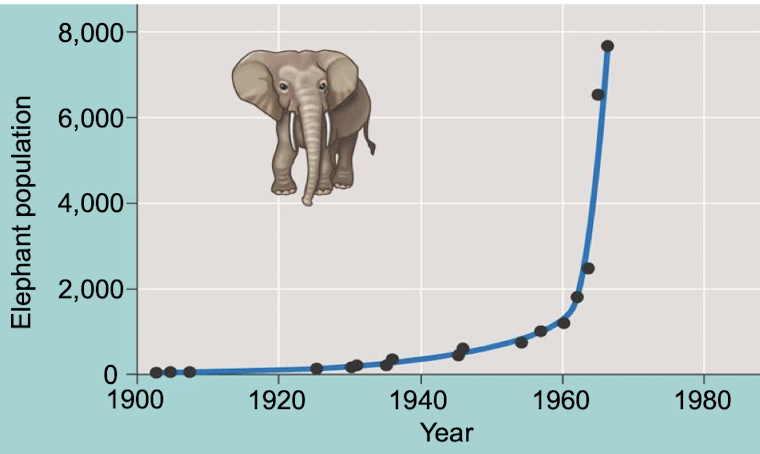
exponential population growth
J shaped curve
characteristic of some populations which are rebounding, but not common and cannot be sustained long
occurs in pest species when provided with naive, perfect environment
and non-native species when introduced and has no natural predators or diseases to keep in check
ex european starling
160 released in central park in NY in 1890 to bring something from home to the US
spread to california by 1942, now 100s of millions in north america
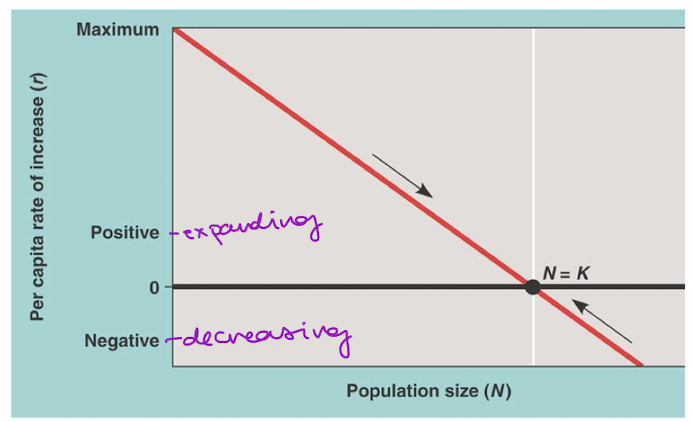
carrying capacity and logistic model
at low density, pop growth rate is driven by r, grows rapidly
at high density, pop growth is slower as density effects exert their effect
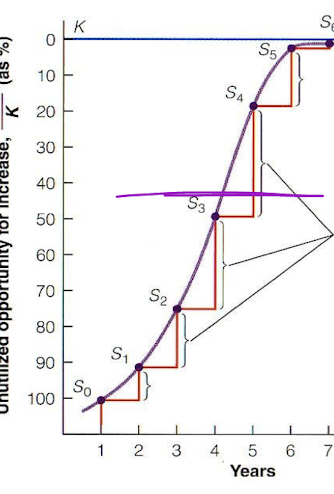
maximum sustained yield (MSY)
where N is ½ of K, point where the growth curve changes from increasing to decreasing
this is the theoretically sustainable harvest level, population can respond positively
what changes populations
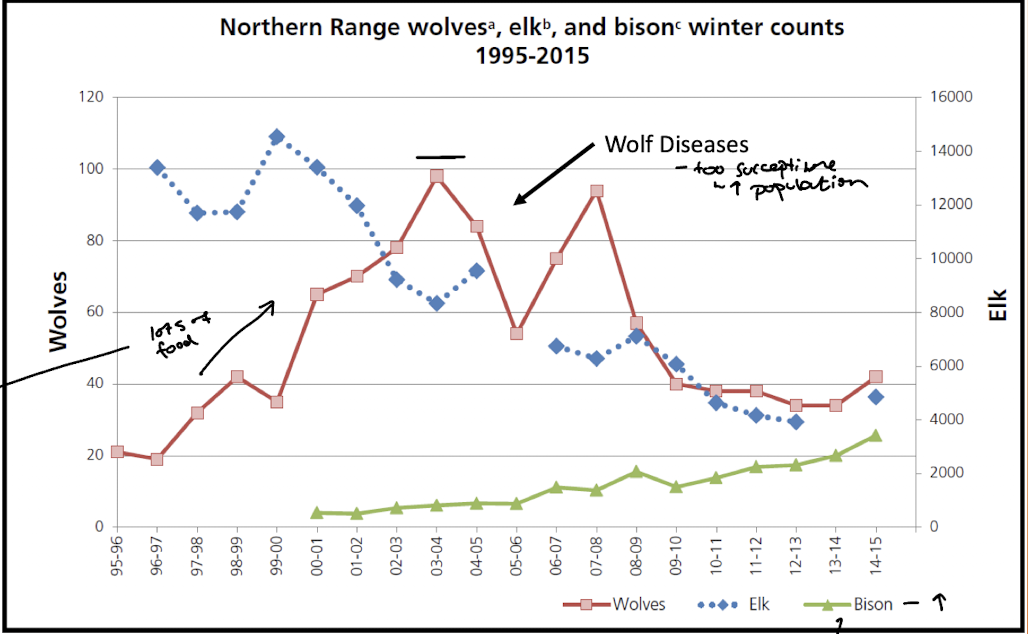
disruptions in the population resulting in outbreaks - density dependent or independent, ex is climate changes and disturbances
those that regulate the population and return it to original density after disturbance, always density dependent ex food, shelter
actual population growth
rate of increase = (births - deaths) - (immigration - emigration)
population regulation
a process where a density dependent factor tends to return a population to its equilibrium, K by altering the birth or death rate
population generally remains within a certain range of sizes which is considered stable
density dependence
related to changes in the proportion of the population dying or being born caused by changes in population density
includes disease, competition, predation, waste accumulation, stress, emigration
density independent
related to changes in the proportion of the population dying or being born unrelated to population size
ex extreme wether such as tornados, hurricanes, heat, flood, drought, cold → stochastic
depensation effect
inverse density dependence
when predators have a destabilizing effect on population size, move population size further from K rather than nearer
considerations in population regulation
commodities - commercial harvest prices, for ex beaver pelts or fisheries, controls the effort and thus potential harvesting of the population
time lags - predator populations may lag behind prey numbers as response, ex lynx hare
overcompensation
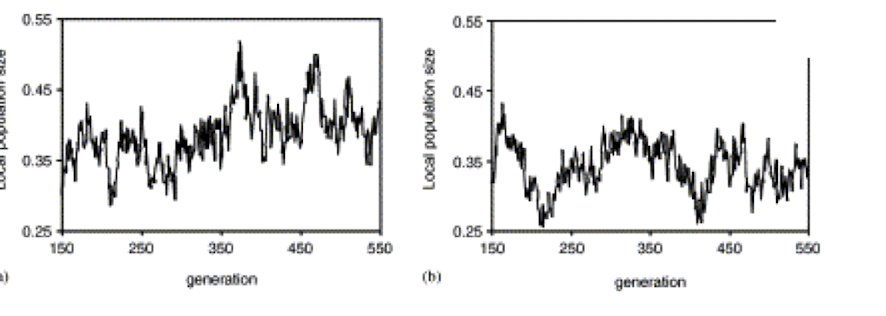
erratic appearing population fluctuations occurring from density dependence
occurs when population growth is high, and grows so fast that it overshoot the equilibrium and then has to retreat
factors affecting density dependence
regulation mechanisms, intraspecific competition, disease, foraging arena theory
regulation mechanisms
control population growth via intraspecific competition
predation and resource competition - for food, shelter, nesting sites, and territory
intraspecific competition
individuals of the same species utilize common resources that are in short supply or
competition occurs when the organisms seeking that resource harm one another in the process
tested in food addition experiments
how to determine is food is the cause of regulation
what type of food is eaten, how much food is needed, how much food is available?
what is needed must exceed what is available for competition to occur
hard to measure potential food, and we often likely think more food is available than the species might
foraging arena theory
trophic interactions in aquatic ecosystems occur in spatially (distribution of predators relative to prey) or temporally restricted arenas so interaction rates are limited by the exchange rates of prey in and out of the arenas
causes potential bottlenecks
disease as a regulator
often present in populations at low levels but becomes a major source of mortality at high population densities when populations are stressed, ex stages of malnutrition
ex fish farms and their use of antibiotics to deter disease, attempts to max yield of fish protein