[ORGANIC CHEMISTRY] Strains, Delocalizations, Inductive Effects
 Call Kai
 Learn
Learn Practice Test
 Spaced Repetition
 Match
Match Flashcards
 Knowt Play
1/51

There's no tags or description
Looks like no tags are added yet.
Name | Mastery | Learn | Test | Matching | Spaced | Call with Kai |
|---|
No analytics yet
Send a link to your students to track their progress
52 Terms
a. True
In order to achieve stability, electrons repel. The more separate the electrons are to each other, the more stable they are.
a. True
b. False
b. False
*The more stable, the less reactive.
Stability dictates reactivity. The more stable, the more reactive.
a. True
b. False
a. Strain
Unwanted disturbance/deviation from ideal bond angles.
a. Strain
b. Delocalization
c. Resonance
d. Inductive effects
a. 60°
Bond angle of a planar 3-membered cyclic hydrocarbon.
a. 60°
b. 90°
c. 120°
d. 180°
b. 90°
Bond angle of a planar 4-membered cyclic hydrocarbon.
a. 60°
b. 90°
c. 120°
d. 180°
d. 180°
Bond angle of a planar 5-membered cyclic hydrocarbon.
a. 60°
b. 90°
c. 120°
d. 180°
c. 120°
Bond angle of a planar 6-membered cyclic hydrocarbon.
a. 60°
b. 90°
c. 120°
d. 180°
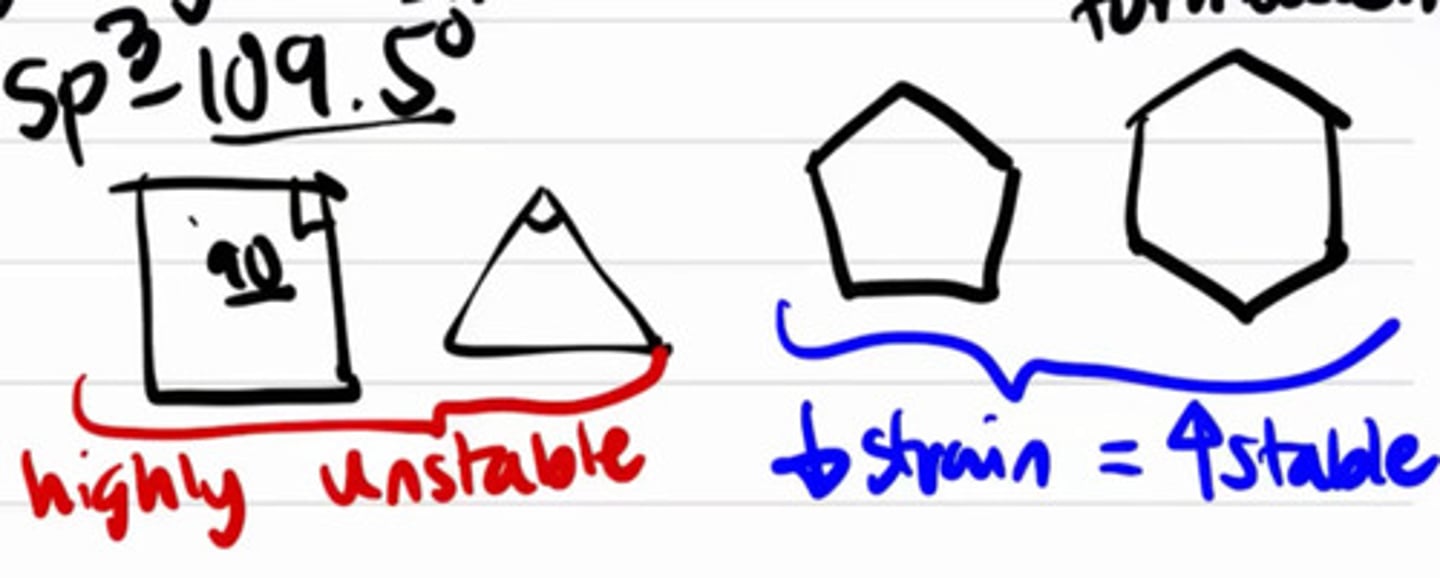
a. True
5 and 6 membered rings are relative more table than 3 and 4 membered rings.
a. True
b. False
a. Angle strain
Instability when the molecules are forced to form rings.
a. Angle strain
b. Steric strain
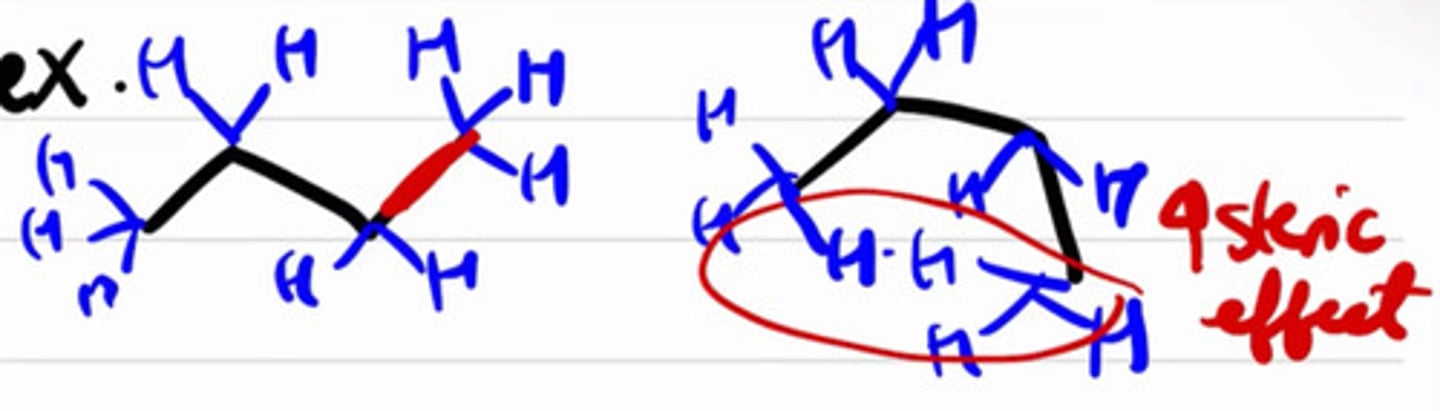
b. Steric strain
Sterio = "space"
Strain when two groups are so close to one another.
a. Angle strain
b. Steric strain
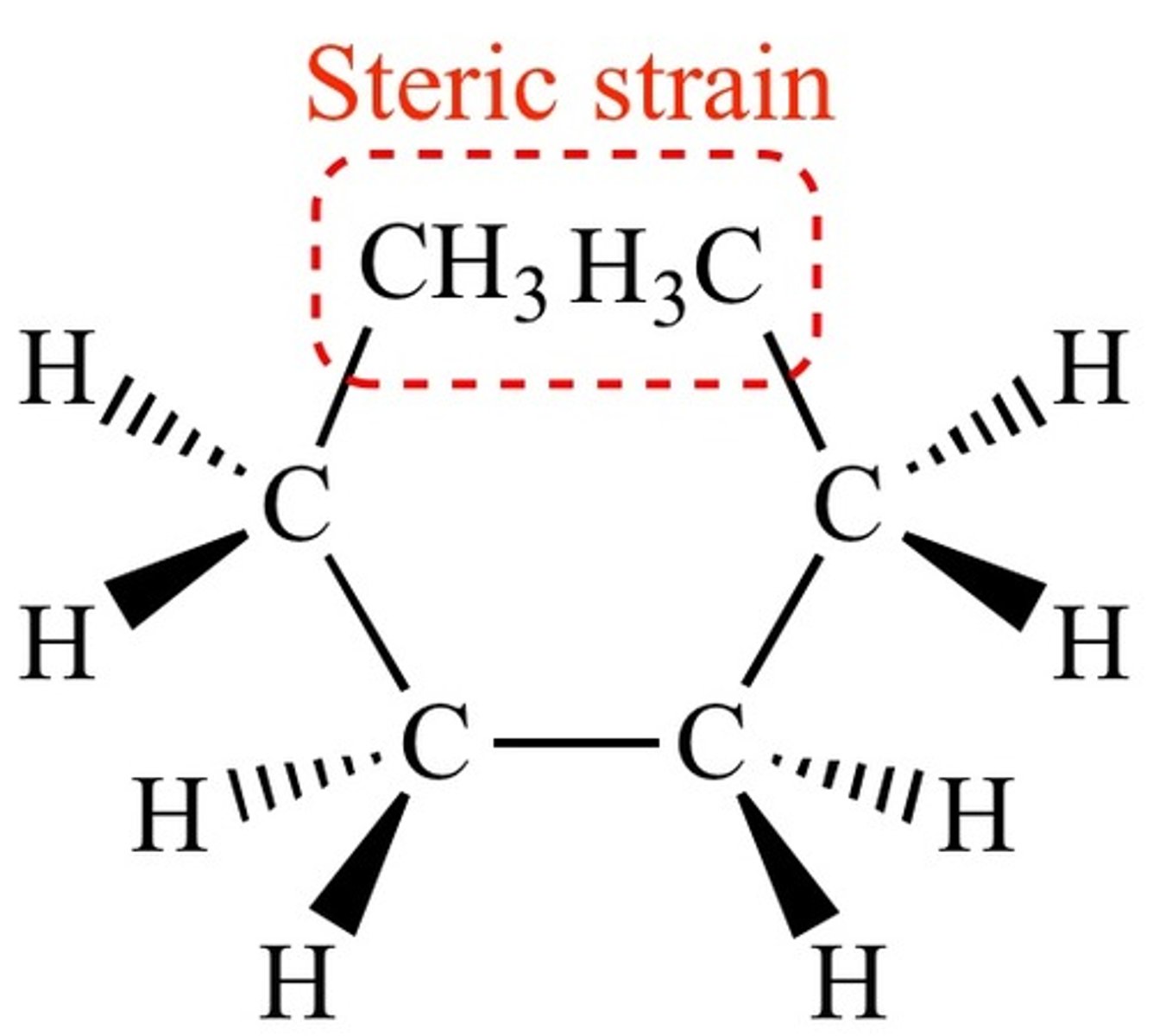
b. Steric strain
Strain caused by 2 eclipsed CH3 groups.
a. Angle strain
b. Steric strain
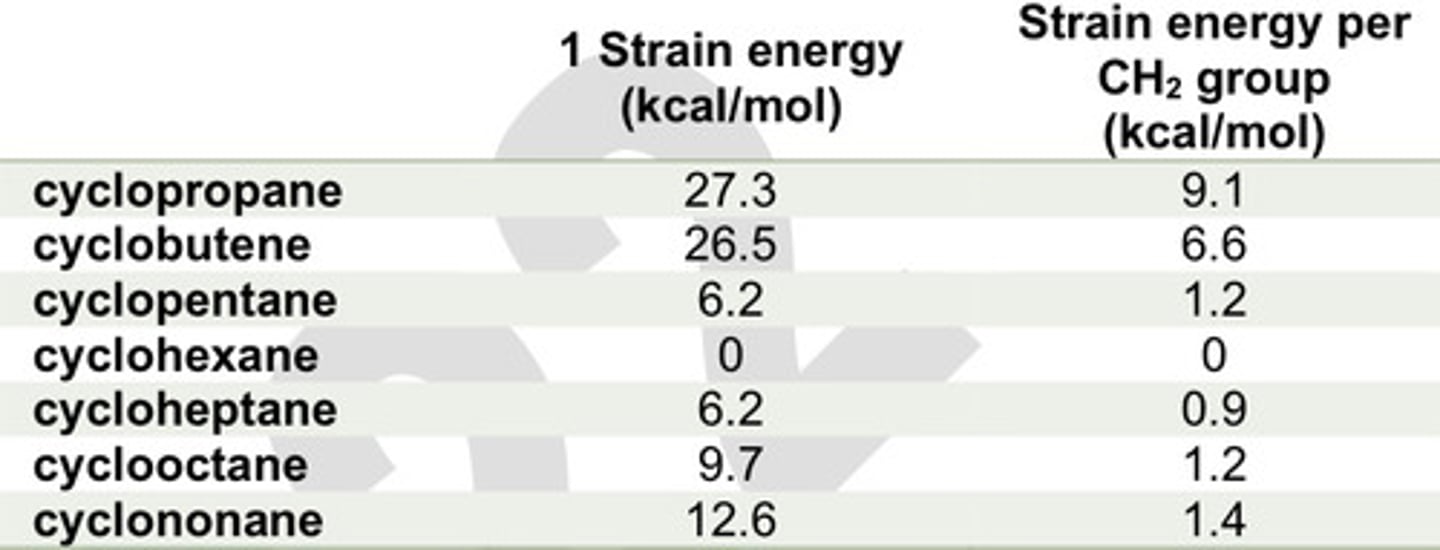
d. Cyclohexane
Most relatively stable cyclic hydrocarbon having 0 strain energy.
a. Cyclopropane
b. Cyclobutane
c. Cycloopentane
d. Cyclohexane
f. 27.3 kcal/mol
Strain energy of cyclopropane.
a. 0 kcal/mol
b. 6.2 kcal/mol
c. 9.7 kcal/mol
d. 12.6 kcal/mol
e. 26.5 kcal/mol
f. 27.3 kcal/mol
e. 26.5 kcal/mol
Strain energy of cyclobutane.
a. 0 kcal/mol
b. 6.2 kcal/mol
c. 9.7 kcal/mol
d. 12.6 kcal/mol
e. 26.5 kcal/mol
f. 27.3 kcal/mol
b. 6.2 kcal/mol
Strain energy of cyclopentane.
a. 0 kcal/mol
b. 6.2 kcal/mol
c. 9.7 kcal/mol
d. 12.6 kcal/mol
e. 26.5 kcal/mol
f. 27.3 kcal/mol
a. 0 kcal/mol
Strain energy of cyclohexane.
a. 0 kcal/mol
b. 6.2 kcal/mol
c. 9.7 kcal/mol
d. 12.6 kcal/mol
e. 26.5 kcal/mol
f. 27.3 kcal/mol
b. 6.2 kcal/mol
Strain energy of cycloheptane.
a. 0 kcal/mol
b. 6.2 kcal/mol
c. 9.7 kcal/mol
d. 12.6 kcal/mol
e. 26.5 kcal/mol
f. 27.3 kcal/mol
c. 9.7 kcal/mol
Strain energy of cyclooctane.
a. 0 kcal/mol
b. 6.2 kcal/mol
c. 9.7 kcal/mol
d. 12.6 kcal/mol
e. 26.5 kcal/mol
f. 27.3 kcal/mol
d. 12.6 kcal/mol
Strain energy of cyclononane.
a. 0 kcal/mol
b. 6.2 kcal/mol
c. 9.7 kcal/mol
d. 12.6 kcal/mol
e. 26.5 kcal/mol
f. 27.3 kcal/mol
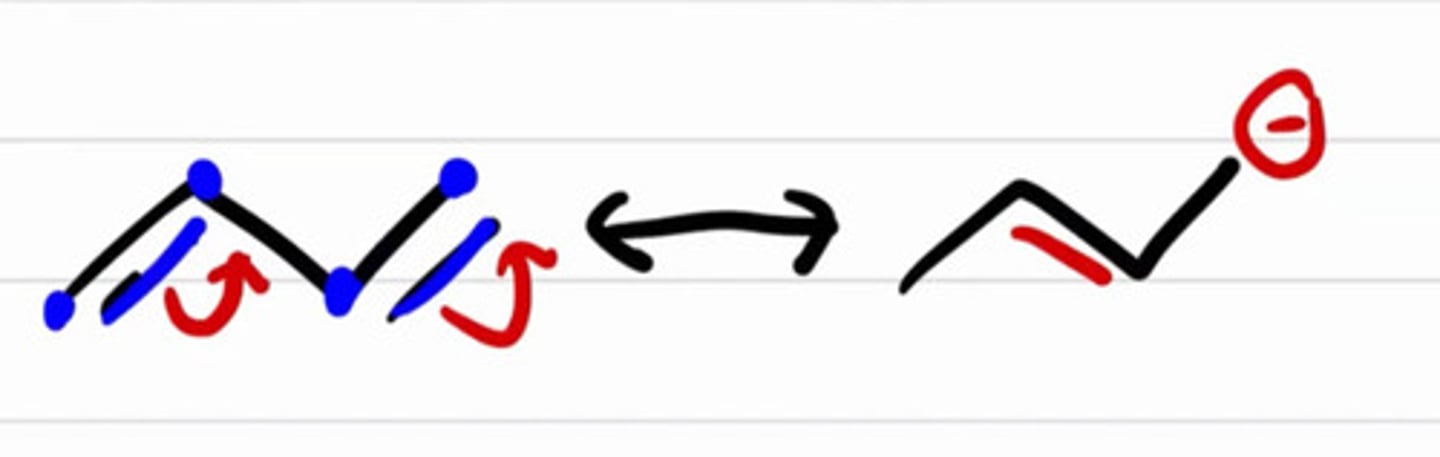
b. Delocalization
Electrons do not stay in a single space or region.
a. Strain
b. Delocalization
c. Resonance
d. Inductive effects
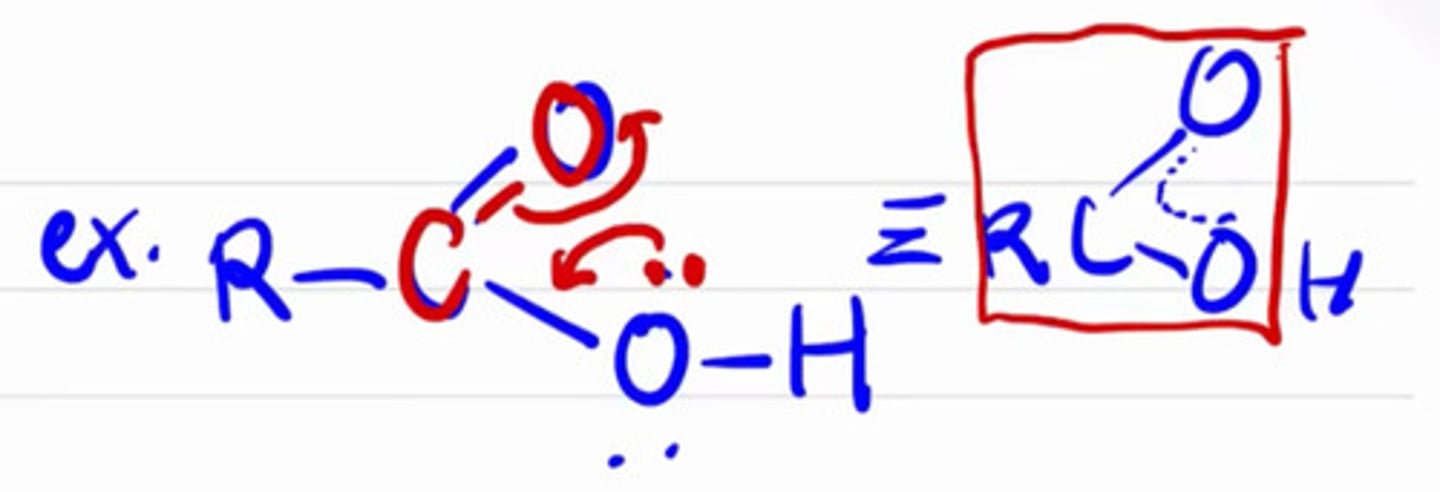
e. None
*Conjugation is not a requirement.
True about conditions for delocalization to occur except:
a. There must have e- source
b. Adjacent to sp2 C
c. e- source can be sigma and pi bond
d. e- source can be lone pair
e. None
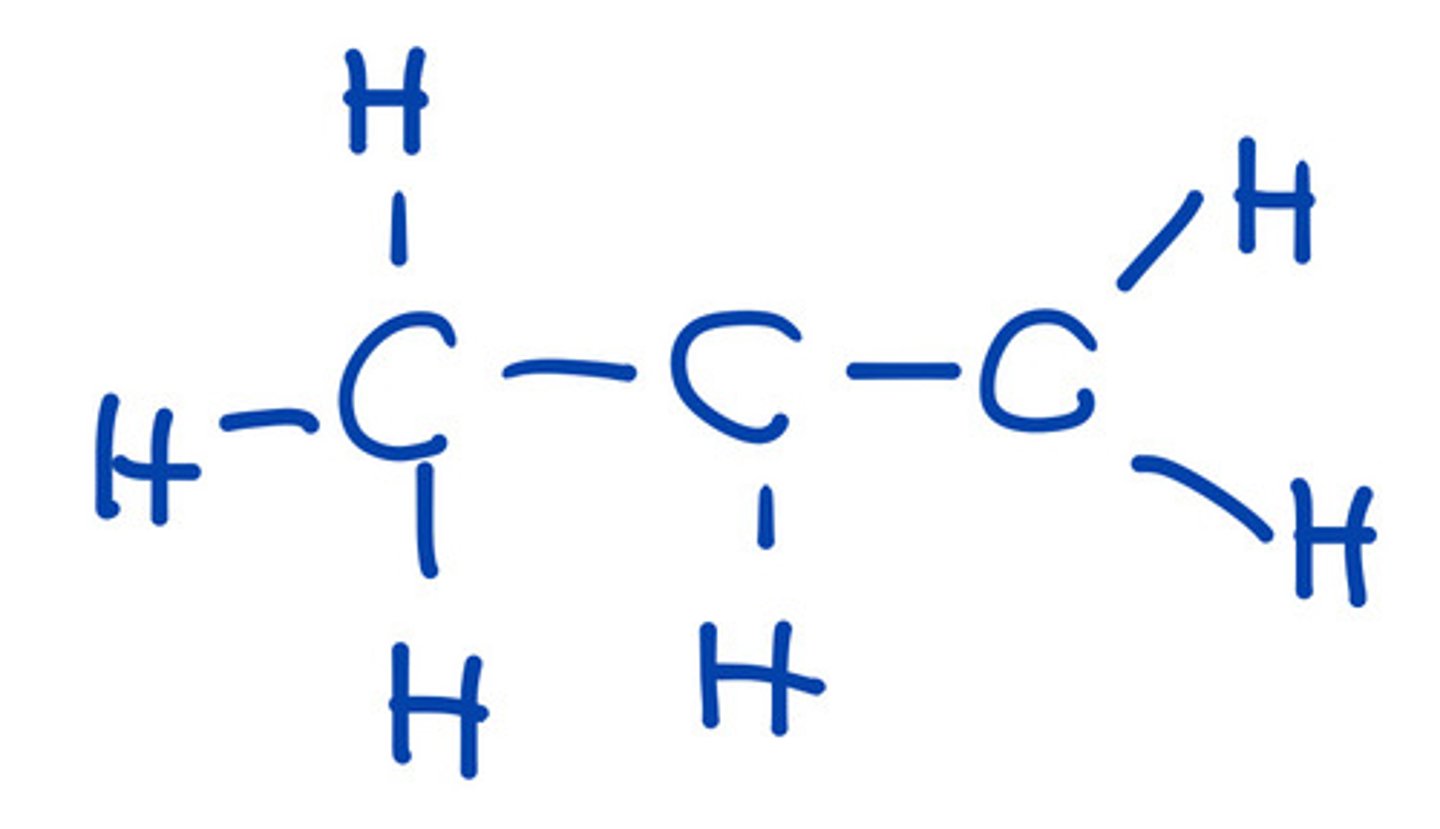
a. Hyperconjugation
Delocalization wherein source of electron is sp3.
a. Hyperconjugation
b. Resonance
c. Lone pair resonance
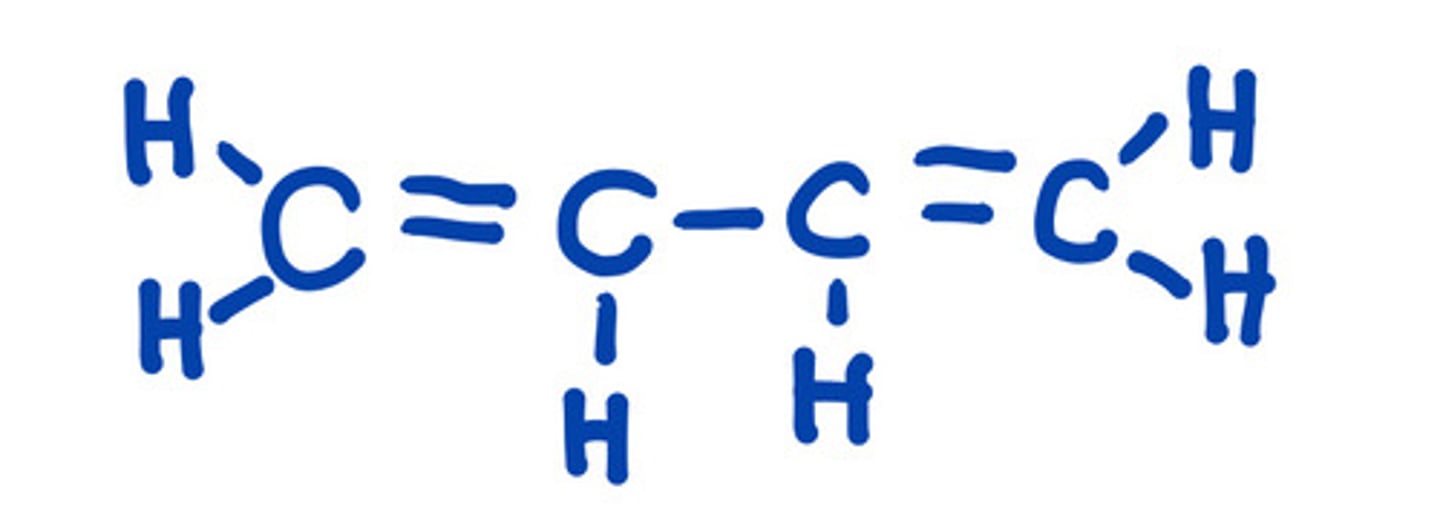
b. Resonance
Delocalization wherein source of electron is sp2.
a. Hyperconjugation
b. Resonance
c. Lone pair resonance
b. Resonance
Delocalization present in benzene.
a. Hyperconjugation
b. Resonance
c. Lone pair resonance
b. Resonance
Also known as pi resonance.
a. Hyperconjugation
b. Resonance
c. Lone pair resonance
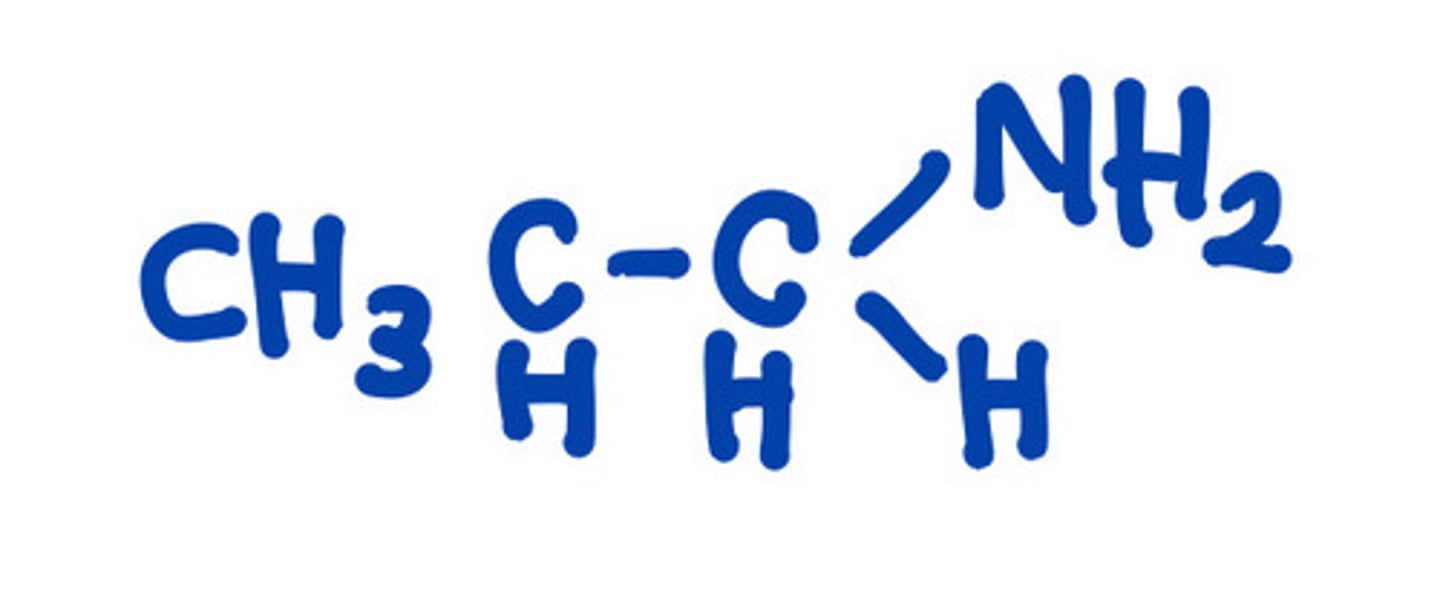
c. Lone pair resonance
Delocalization wherein source of electron is lone pair.
a. Hyperconjugation
b. Resonance
c. Lone pair resonance
b. sp2 C
Delocalization will occur when bond is adjacent to which of the following?
a. sp C
b. sp2 C
c. sp3 C
d. All
a. False
Both pi and lone pair resonance delocalization is MORE powerful than hyperconjugation.
Both pi and lone pair resonance delocalization is less powerful than hyperconjugation.
a. True
b. False
a. True
Presence of delocalization can be an indication of stability.
a. True
b. False
a. True
Benzene has resonance thus is very stable.
a. True
b. False
d. Inductive effects
Push and pull of electron by a group.
a. Strain
b. Delocalization
c. Resonance
d. Inductive effects
f. None
All are electronegative atoms which like to pull electrons thus have electron WITHDRAWING effect not electron DONATING.
Which of the following has electron donating effect?
a. F
b. Cl
c. Br
d. I
e. O
f. None
d. a and b
C and atoms with available lone pairs are non- electronegative atoms that tend to push electrons thus has electron donating inductive effects.
O is electronegative, thus electron withdrawing.
Which of the following has electron donating effect?
a. C
b. Atoms with available lone pairs.
c. O
d. a and b
e. b and c
f. All
c) Strain decreases the stability of molecules.
Strain in molecules arises when bond angles or bond lengths deviate significantly from their ideal values. This leads to higher energy and decreased stability, as the strained molecule is under additional strain energy.
How does strain affect the stability of molecules?
a) Strain increases the stability of molecules
b) Strain has no effect on the stability of molecules
c) Strain decreases the stability of molecules
d) Strain stabilizes some molecules but destabilizes others
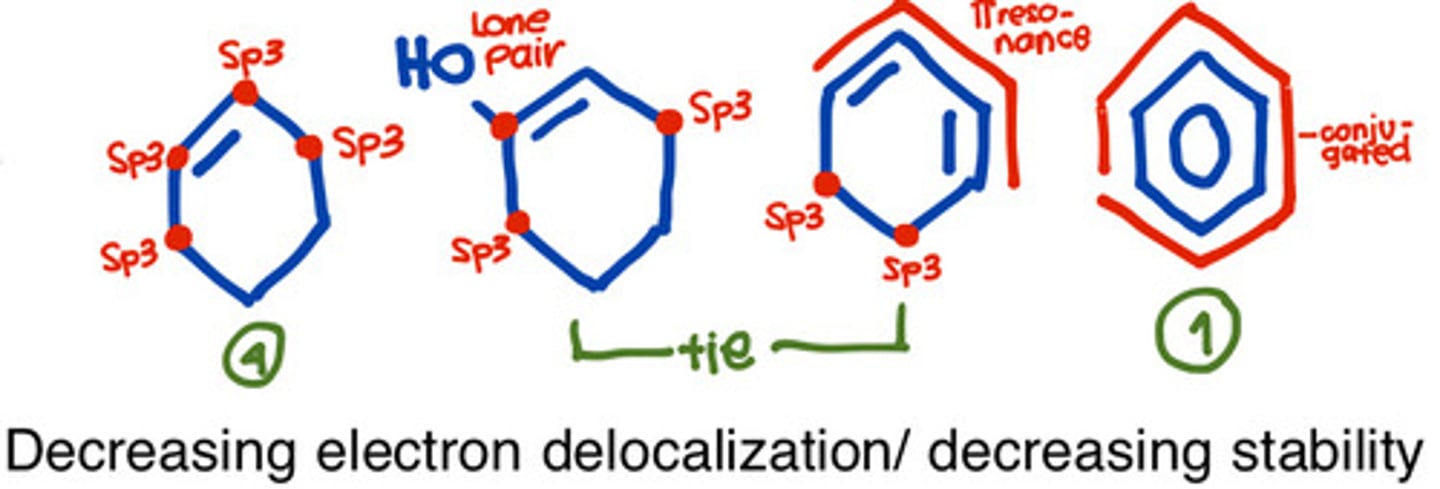
c) Electron delocalization increases the stability of molecules.
Electron delocalization, as seen in resonance structures or conjugated systems, spreads the electron density over a larger area, leading to greater stability. This phenomenon lowers the energy of the molecule and contributes to its overall stability.
What effect does electron delocalization have on the stability of molecules?
a) Electron delocalization decreases the stability of molecules
b) Electron delocalization has no effect on the stability of molecules
c) Electron delocalization increases the stability of molecules
d) Electron delocalization stabilizes some molecules but destabilizes others
a) Electron withdrawing effect decreases the stability of molecules.
Electron withdrawing groups tend to pull electron density away from the rest of the molecule, creating regions of partial positive charges. This can lead to instability and higher energy states in the molecule.
How does the electron withdrawing effect impact the stability of molecules?
a) Electron withdrawing effect decreases the stability of molecules
b) Electron withdrawing effect has no effect on the stability of molecules
c) Electron withdrawing effect increases the stability of molecules
d) Electron withdrawing effect destabilizes some molecules but stabilizes others
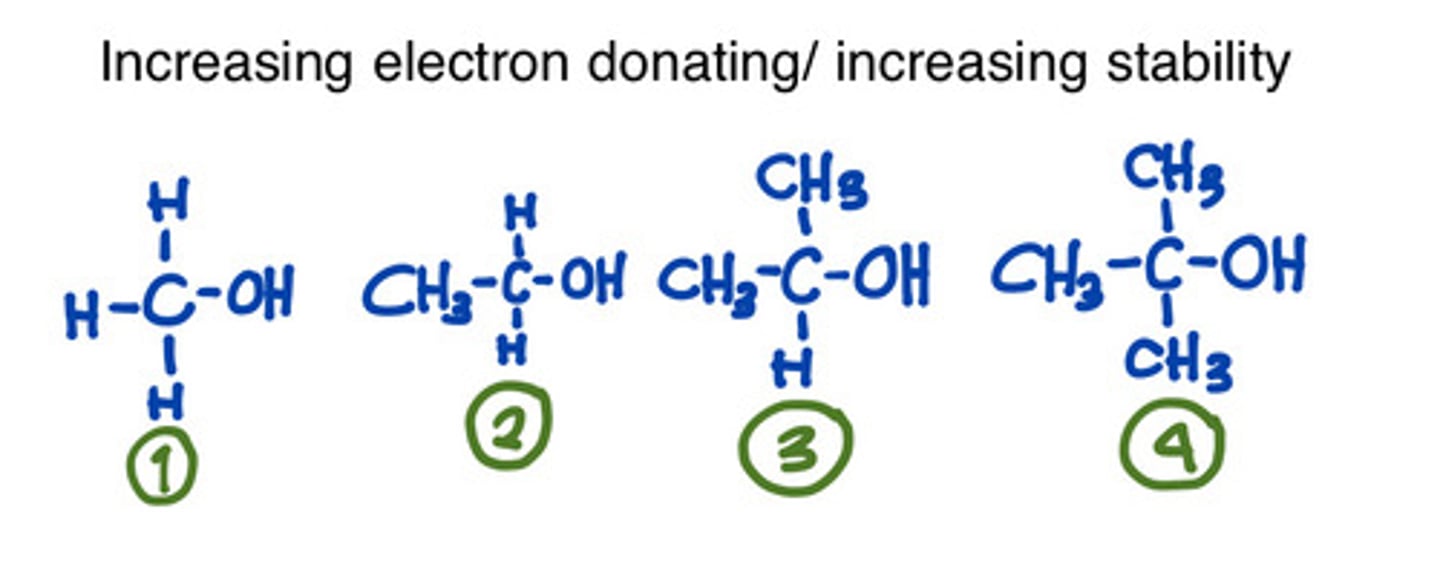
c) Electron donating effect increases the stability of molecules.
Electron donating groups tend to release electron density into the rest of the molecule, creating regions of partial negative charges
What is the impact of the electron donating effect on the stability of molecules?
a) Electron donating effect decreases the stability of molecules
b) Electron donating effect has no effect on the stability of molecules
c) Electron donating effect increases the stability of molecules
d) Electron donating effect destabilizes some molecules but stabilizes others
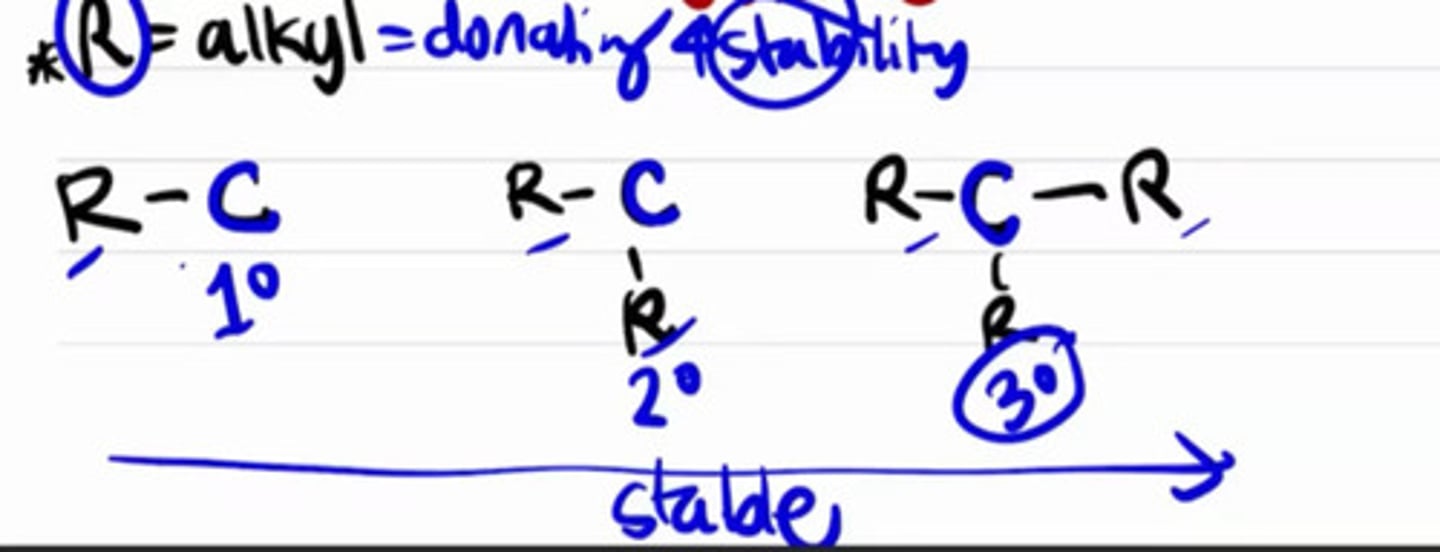
c. Tertiary
Type carbon that is the most stable.
a. Primary
b. Secondary
c. Tertiary
d. All are equal
c. 1432
Delocalization of electrons occurs when electrons are distributed over multiple atoms or bonds in a molecule. In option 1, CH3CH2CH2CH3, the electrons are localized within the carbon-carbon and carbon-hydrogen bonds, showing little to no delocalization. In option 4, CH3CH2CH2CH2OH, the hydroxyl group introduces some delocalization through the oxygen atom. Option 3, CH3CH=CHCH2, has a double bond that allows some delocalization of electrons within the pi bond. Finally, option 2, CH2=CHCH=CH2, has two conjugated double bonds, leading to the highest degree of delocalization among the given structures.
Arrange the following structures in increasing order of delocalization of electrons:
1- CH3CH2CH2CH3
2- CH2=CHCH=CH2
3- CH3CH=CHCH2
4- CH3CH2CH2CH2OH
a. 4132
b. 4123
c. 1432
d. 1423
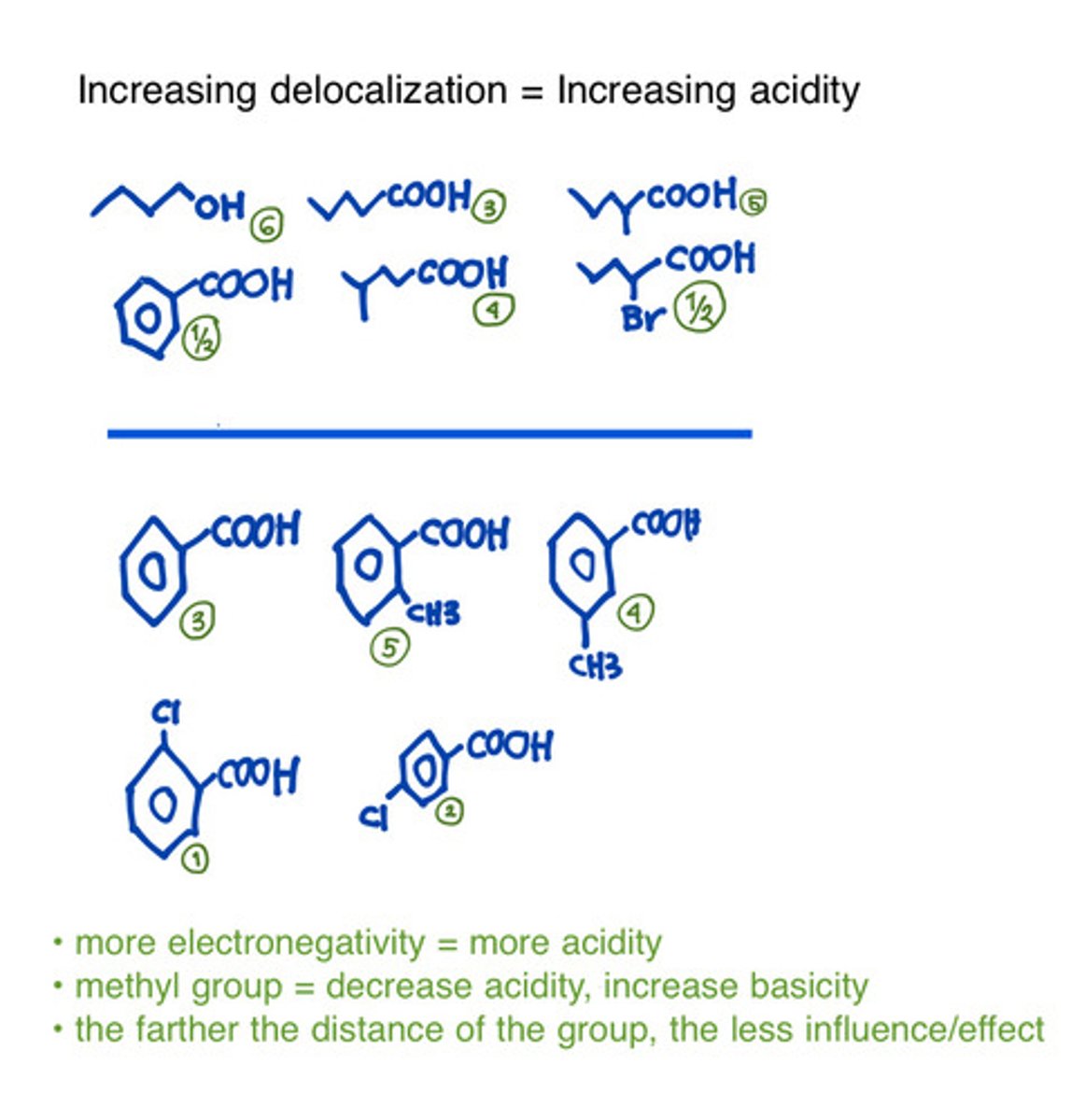
a) Electron delocalization increases acidity
*How does electron delocalization impact the acidity of molecules?
a) Electron delocalization increases acidity
b) Electron delocalization decreases acidity
c) Electron delocalization has no impact on the acidity of molecules.
d) The effect of electron delocalization on acidity varies depending on the specific functional groups involved.
a) Electron withdrawing effect increases acidity.
How does the electron withdrawing effect impact the acidity of molecules?
a) Electron withdrawing effect increases acidity.
b) Electron withdrawing effect decreases acidity.
c) Electron withdrawing effect has no impact on the acidity of molecules.
d) The effect of electron withdrawing effect on acidity depends on the specific functional groups involved.
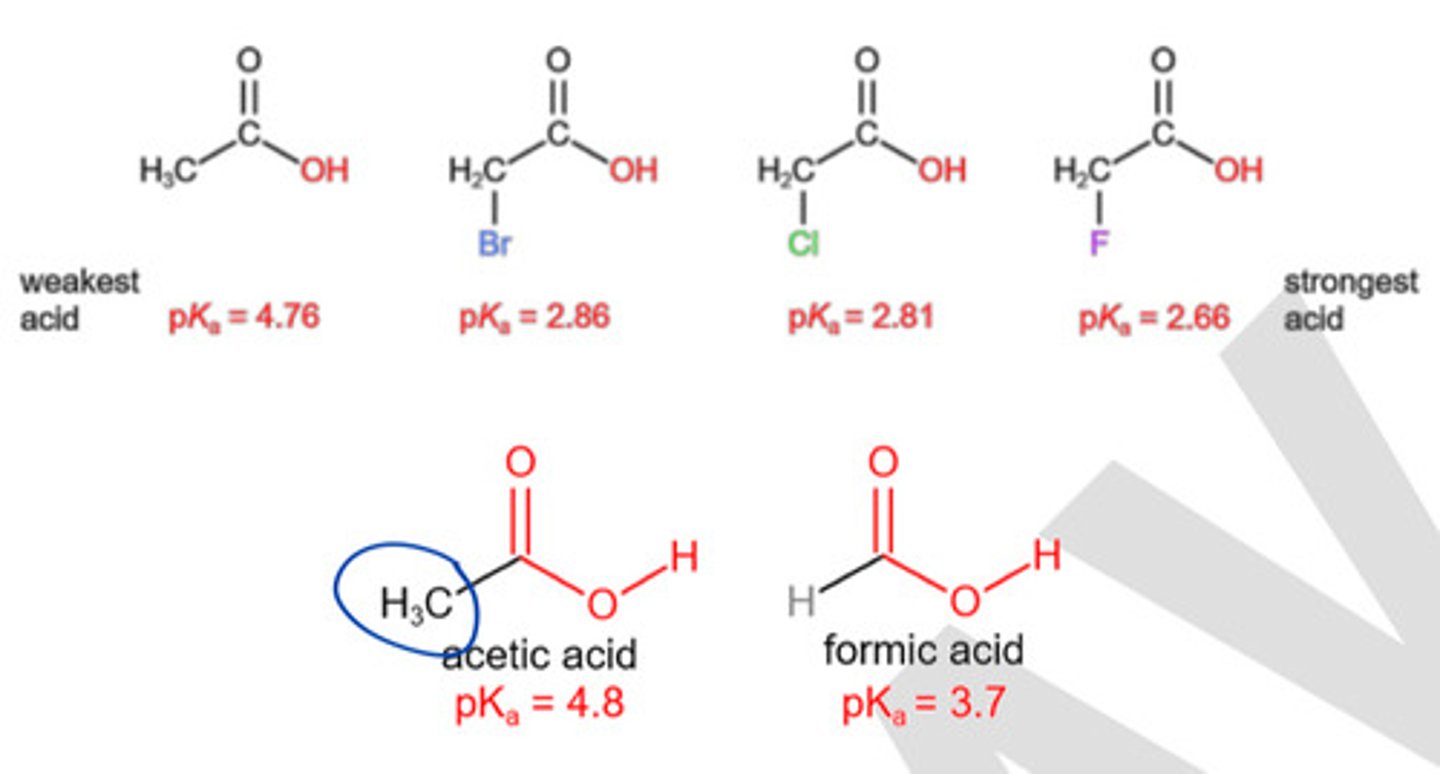
b) Electron donating effect decreases acidity.
How does the electron donating effect impact the acidity of molecules?
a) Electron donating effect increases acidity.
b) Electron donating effect decreases acidity.
c) Electron donating effect has no impact on the acidity of molecules.
d) The effect of electron donating effect on acidity varies depending on the specific functional groups involved.
f. All
Planar - all atoms are sp2
Requirements for aromaticity
a. It must be cyclic
b. It must be planar
c. Must follow Huckel's rule
d. a and b
e. b and c
f. All
a. 4n + 2 = # of pi electrons where n should be whole number
Huckle's rule
a. 4n + 2 = # of pi electrons where n should be whole number
b. 4n + 4 = # of pi electrons where n should be whole number
c. 2n + 2 = # of pi electrons where n should be whole number
d. 2n + 4 = # of pi electrons where n should be whole number
b. False
All conjugated rings are aromatic.
a. True
b. False
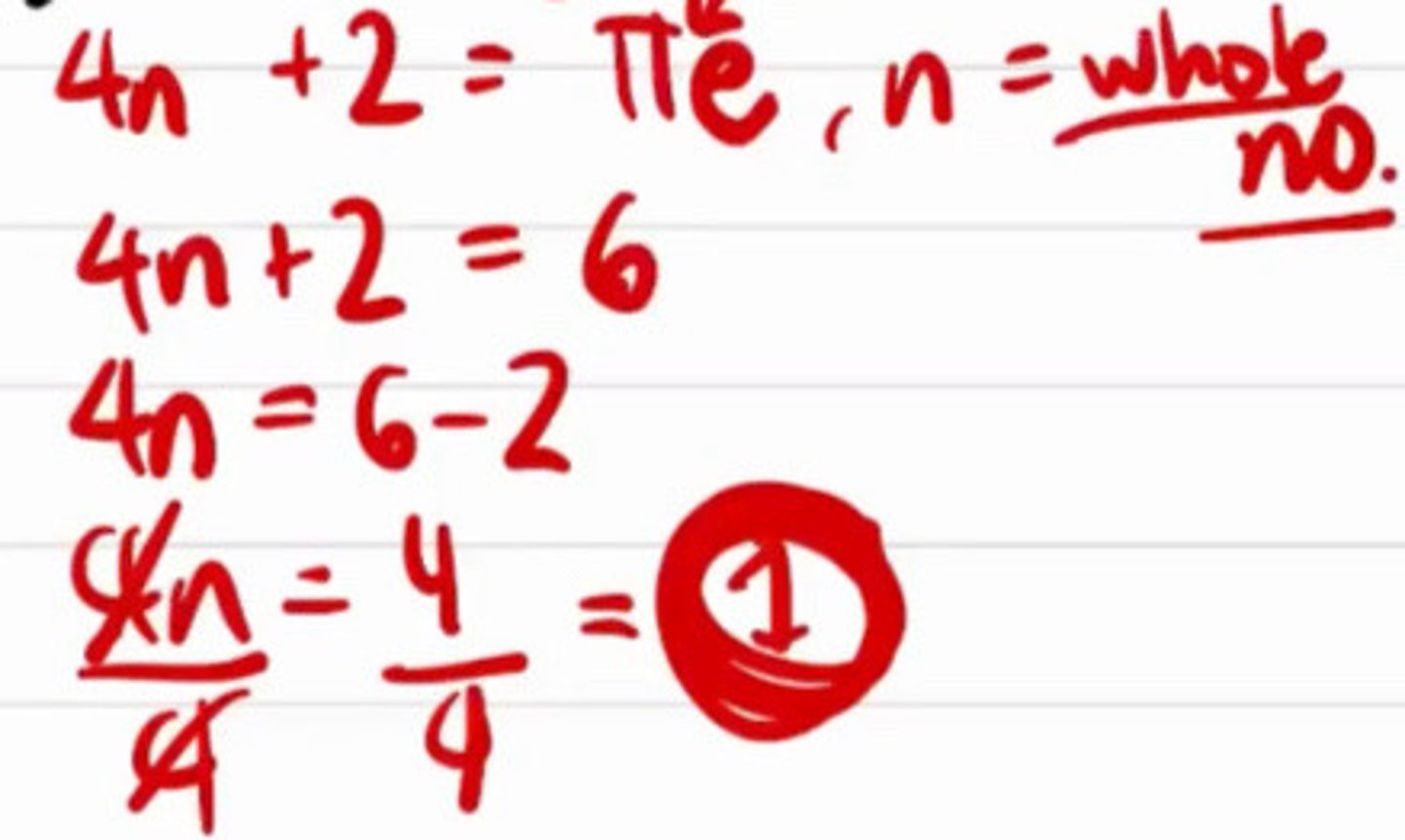
d. 6 - every pi bond, there is 2 pi electrons
How many pi electrons does benzene contain?
a. 2
b. 3
c. 4
d. 6
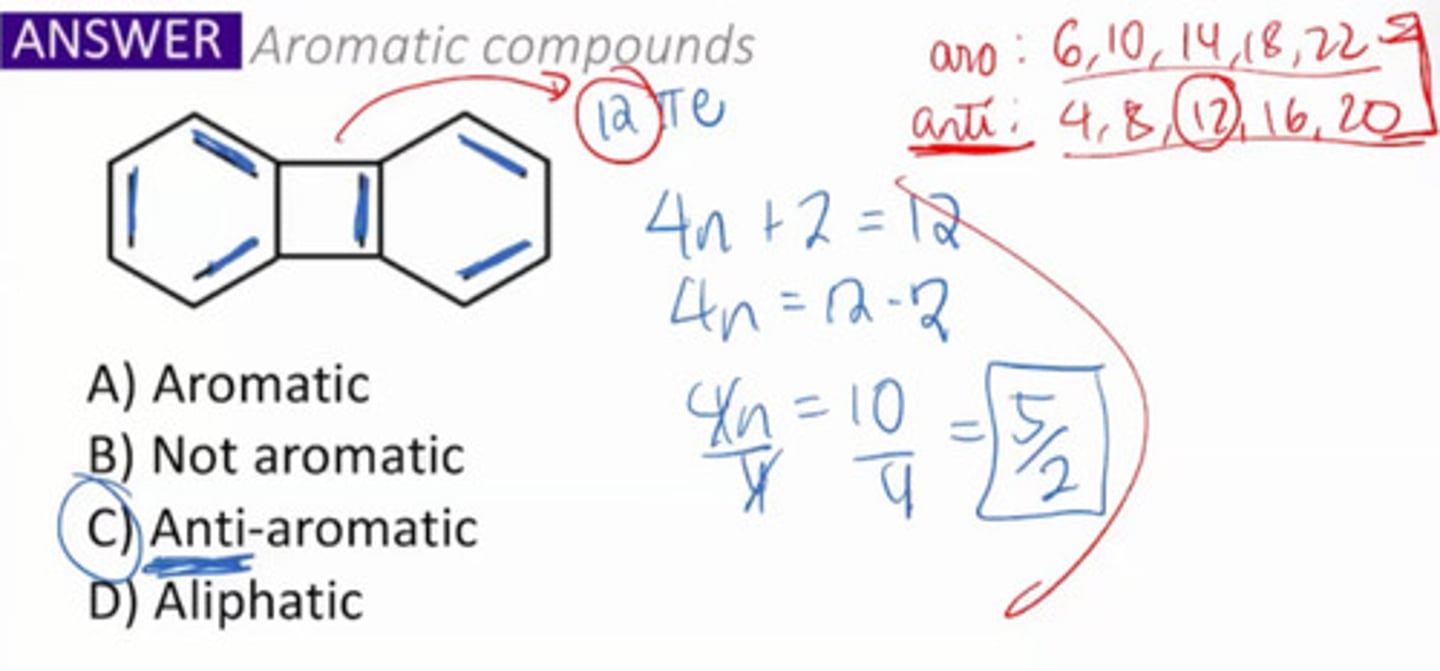
b. Antiaromatic
Compounds that are cyclic and planar but do not follow the Huckle's rule.
a. Nonaromatic
b. Antiaromatic
c. Pseudoaromatic
d. Anaromatic
b. False - Heterocyclic compounds can be aromatic also.
Aromatic compounds are homocyclic only.
a. True
b. False
a. True
Multiple rings can be aromatic.
a. True
b. False
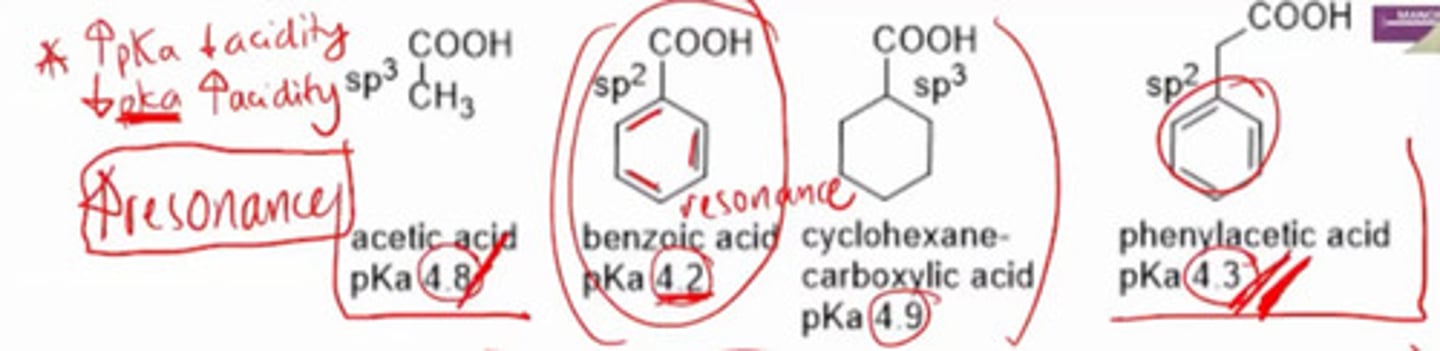
a. Increase
How does resonance affects acidity?
a. Increase
b. Decrease
c. No effect

a. Increase
How do electron withdrawing groups affect acidity?
a. Increase
b. Decrease
c. No effect

b. Decrease
How do electron donating groups affect acidity?
a. Increase
b. Decrease
c. No effect