11 & 12- fixed partial dentures + cad/cam
 Call Kai
 Learn
Learn Practice Test
 Spaced Repetition
 Match
Match Flashcards
 Knowt Play
1/19

There's no tags or description
Looks like no tags are added yet.
Name | Mastery | Learn | Test | Matching | Spaced | Call with Kai |
|---|
No analytics yet
Send a link to your students to track their progress
20 Terms
What is a fixed partial denture (/bridge) and its parts?
Prosthesis that replaces 1 or missing teeth- permanently attached to remaining teeth
Abutment- tooth that supports bridge
Pontic- artificial tooth suspended between abutements
Retainers- restorations (crowns) that are cemented to prepared abutments
Connector- junction between Pontic and retainer
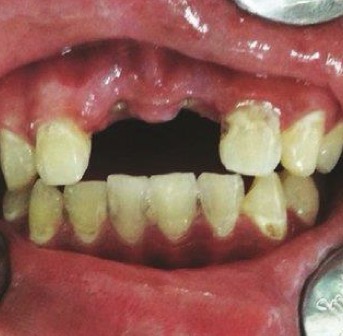
What is the importance of dental losses in anterior area?(8)
Loss of aesthetic smile
Lip support: shrinkage
Alteration in the axes of the teeth
Midline deviation
Antagonist tooth extrusion
Alteration in phonetics
Decreased volume buccal bone plate
Gingival tissue modifications
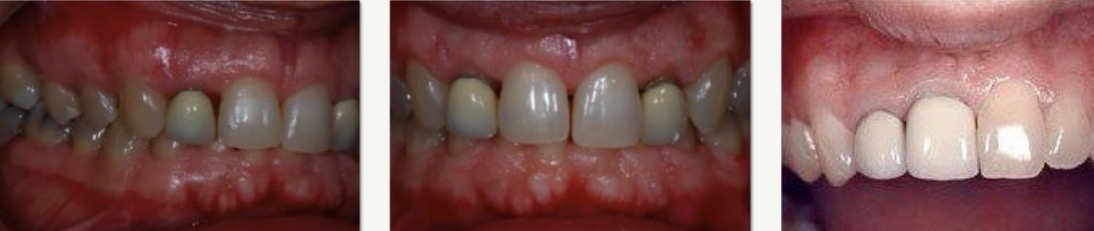
What are 4 problems of restorations with metallic core?
High opacity
Corrosion of the chromium-nickel alloy
Decreased gingival biocompatibility
Greyish gingival margin: umbrella effect- has disadvantages and therefore other materials are used
What are 7 therapeutic options for loss of anterior teeth?
1. Scaling and cleaning
2. Obturations (many caries to treat)
3. Conventional porcelain fused metal (PFM) bridge
4. Endo-osseous implant- depends on bone availability, adjacent gingival tissues, operator ability
5. Aesthetic bridges
6. Removable prosthesis
7. Auto transplantation ??
What is the process of making a ceramic?
SINTERED or by layers/coats
Over metal core
Over ceramic core
Over refractory material
▪ INJECTION OR CERAMIC CASTING
▪ MECHANIZED- done by either copying system or cad cam
How are aesthetic bridges classified by material?
1. Zirconium oxide (zirconia). NON–SILICA-BASED CERAMICS
2. Aluminium ceramics (procera all ceram)
3. Lithium disilicate
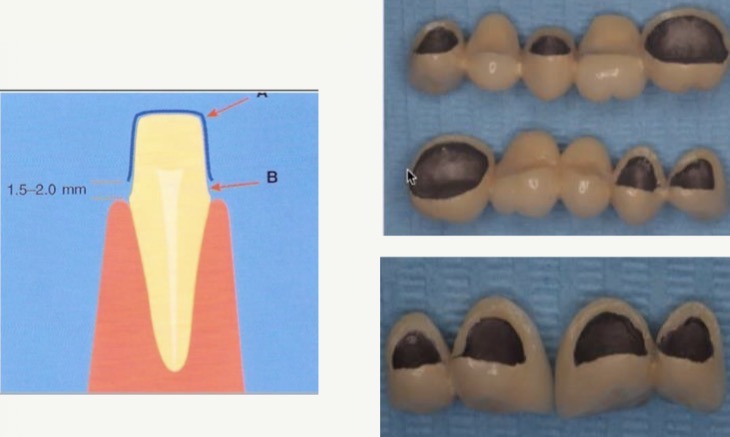
4. Modified porcelain fused metal (PFM) – has ceramic shoulders
5. Ceramic–Composite Hybrid (Resin Matrix Ceramics)
Properties of zirconium oxide (zirconia)-
polycrystalline ceramic
Composed of highly sintered zirconium oxide (95%), partially stabilized by yttrium oxide (5%)
High hardness because its microstructure is totally crystalline
Classification of zirconia?
1. Structures: only the internal structure (framework) is milled and is covered by various techniques with conventional ceramics.
2. Monolithic: the restoration is milled in its entirety.
We can only use zirconia in the framework + add conventional ceramic to do the external structure
or the whole structure can be made of monolithic zirconia
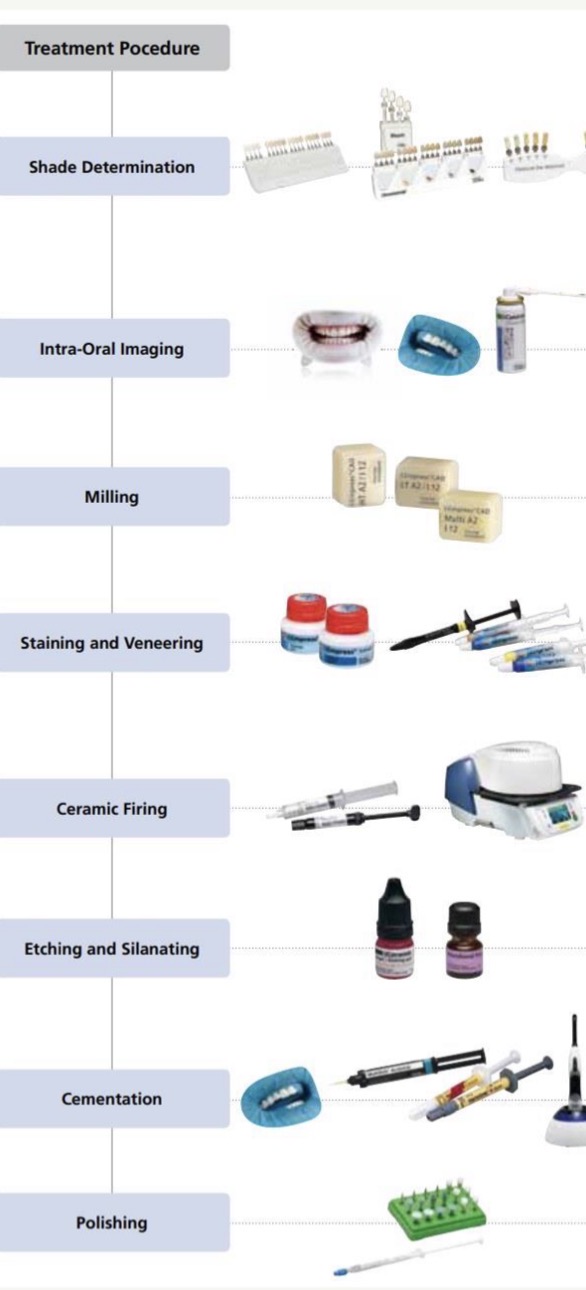
How is a bridge manufactured using CAD/CAM? (6 stages)
1. Scanning
2. Design
3. Milling
4. Colour adjustment
5. Sintered
6. Final bridge
What 3 different steps does all CAD/CAM systems consist of?
Scanner- digitalization tool that transforms geometry into digital data that can be processed by the computer
Design software- processes data, depending on the application- produces a data set for the product to be fabricated
Processing device- production technology that transforms the data set into the desired product
What materials can be used in Cad/cam?
Metals: Cobald Chrome and titanium- Precious metals cannot be machined
Ceramics such as zirconium oxide
Zirconia
Resin materials
7 Advantages of using CAD/CAM?
Digital impressions - no discomfort , no lab
No provisional restorations are needed
Single visit treatment
Natural restoration shades - as the ceramic block used allows light to pass through- gives resemblance of the patients' enamel
More precision and accuracy
Improved patient safety - as CAD/CAM systems use sculpted porcelain, avoiding the use of metal
Longer lasting restoration and esthetically pleasing - more durable
3 disadvantages of using CAD/CAM systems?
Higher cost for dentist- need optical scanner, CBCT for 3D imaging and CAD/CAM system
Higher cost for patient- 20% more than traditional resto
Need to spend time and money training courses
Why do we use monolithic zirconia over zirconium oxide?
To avoid chipping and fractures
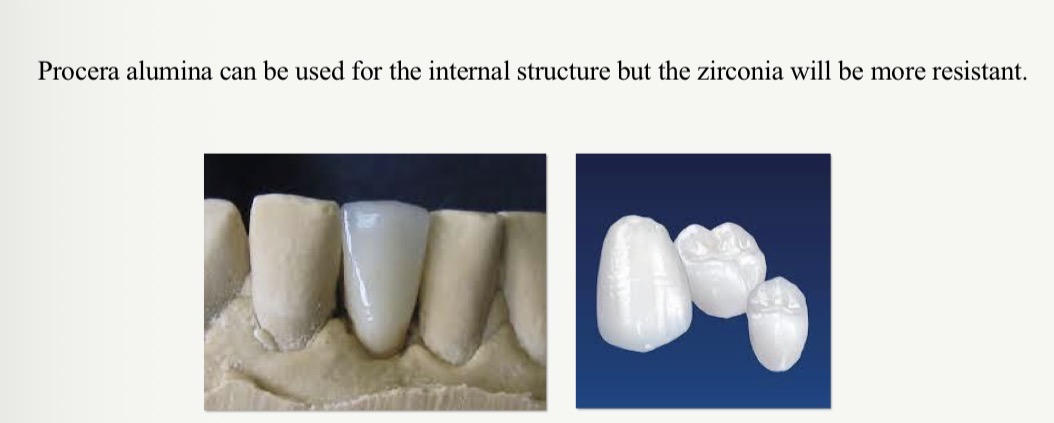
3 Properties of aluminium ceramics?
Very opaque- use for internal structures then cover with conventional porcelains for good aesthetics
Lower flexural strength than polycrystalline
Less resistant
Lithium disilicate (ips e max) used for…, properties
Injection technique- for making bridges
Most aesthetics- has diff shades and opacities
Low flexural strength
What is modified porcelain fused metal and its advs?
Consist of bridges with a metal structure where the covering of the same on the abutment tooth ends
1.5-2mm from the chamfer, giving a more translucent porcelain margin, increasing light diffusion to the soft tissue
Greatly avoids the umbrella effect
The reduced structure does not decrease the mechanical resistance
In longer stretches with aesthetic commitment
Can be used in cases of cast metal post and core.
Shoulder ceramics with a higher melting temperature than conventional ones on metal are used
For cementing, use adhesive techniques and silanization
5 Advantages of ceramic composite hybrid (resin matrix ceramics)
Materials like“hybrid ceramics” (a mix of ceramic + resin)
Flexible → less brittle than pure ceramics
Absorb stress better (helpful in younger teeth)
Used in CAD/CAM systems for same-day crowns
Wear resistance similar to that of natural teeth
Long-lasting aesthetics: Due to its greater resistance
How do you choose the material for a fixed partial denture?
Occlusion- favourable or unfavourable
Substrate (abutment tooth)- suitable to unsuitable
What are 4 combinations to consider when selecting material for fixed partial denture?
Favourable occlusion + suitable substrate = IPS e.max, zirconia, aluminium
Favourable occlusion + unsuitable substrate = zirconia, aluminium.
Unfavourable occlusion + suitable prosthetic space = zirconia, modified PFM
Unfavourable occlusion + insufficient prosthetic space = modified PFM