Ribs & Sternum- Anatomy & Pathology
 Call Kai
 Learn
Learn Practice Test
 Spaced Repetition
 Match
Match Flashcards
 Knowt Play
1/81

There's no tags or description
Looks like no tags are added yet.
Name | Mastery | Learn | Test | Matching | Spaced | Call with Kai |
|---|
No analytics yet
Send a link to your students to track their progress
82 Terms
bony thorax is formed by…
the sternum, 12 rib pairs, & 12 thoracic vertebrae
purpose of bony thorax
supports walls of pleural cavity and diaphragm that are used during respiration
allows volume of cavity to be varied during respiration
protects heart & lungs
the bony thorax is __ shaped
conical
what type of bones are ribs?
flat
ribs characteristics
long, narrow, & curved w/ an anteriorly attached piece of cartilage called costal cartilage
situated in an oblique plane slanting anterior & inferior
head of rib, articulates w/
body of vertebra
what is the flattened area between the neck & tubercle
neck of rib
tubercle of rib has a facet that articulates with…
transverse process of vertebra
what is the end of the rib which attaches to the thoracic vertebra?
vertebral end of rib
what is posteriorly, before connection to vertebra?
angle of rib
what is the lateral aspect curved section located near the axillary
axillary portion of rib
end of rib that attaches anteriorly
sternal end
what is located on the inferior/ internal border & contains costal arteries, veins, and nerves.
costal groove
Trauma to the ribs can damage this area and cause pain and hemorrhaging
costal groove
costovertebral joint
head connects to vertebral body
synovial gliding
costotransverse joint
tubercle connects to transverse process
synovial gliding
ribs that are 1-7 & attach DIRECTLY to the STERNUM
true ribs
ribs that are 8-12 & do NOT attach directtly to the sternum
false ribs
ribs that are 11 & 12 & attach ONLY TO THE VERTEBRAE
floating ribs
costochondral joint
anterior connection of sternal end of rib with the costal cartilage
cartilaginous synchondroses joints & allow NO MOVEMENT
joints that are located between the costal cartilages of 6-7, 7-8, 8-9, & 9-10
interchondral joints (synovial gliding)
what is the space between each rib
intercostal space
the diaphragm moves approximately __” between deep inspiration & deep expiration
1 ½”
what ribs are best examined on ABOVE the diaphragm, on inspiration?
1-9
what ribs are best examined BELOW the diaphragm, on expiration?
8-12
the rib cage is widest at what ribs?
8th & 9th
cervical rib
an anomaly that some people have
what bone is the sternum?
flat
3 parts of the sternnum
manubrium
body
xiphoid
what supports the clavicles & provides attachments to costal cartilages of first 7 ribs?
sternum
clavicular notches
on the superior lateral sides where the sternal end of the clavicles articulate
(ex: SC joints)
costal notch
for the cartilage of the 1st rib attachment
jugular notch corresponds to what vertebrae?
T2/T3
sternal angle corresponds to level of
T4/T5
body of sternum overview
costal notches
attachments of ribs 2-7
attachments of costal cartilage to sternum (sternocostal joints- synovial)
what is Cartilaginous early in life then partially or completely ossifies later in life.
xiphoid process
palpable & corresponds to the superior portion of liver & inferior aspect of the heart
xiphoid process
xiphisternal joint
joint space between sternal & xiphoid
cartilaginous synchondrosis joint (allows little to no movement)
xiphoid process lies at
T10
RAO sternum- large barrel chest patient
15 degree oblique
RAO sternum- thin chested patient
20 degree oblique
presence of air in subcutaneous tissue
subcutaneous emphysema
radiographic appearance of subcutaneous emphysema
streaks or lucency within the soft tissue of the chest that outlines the muscle bundles- no tech change unless lot of air- then decrease
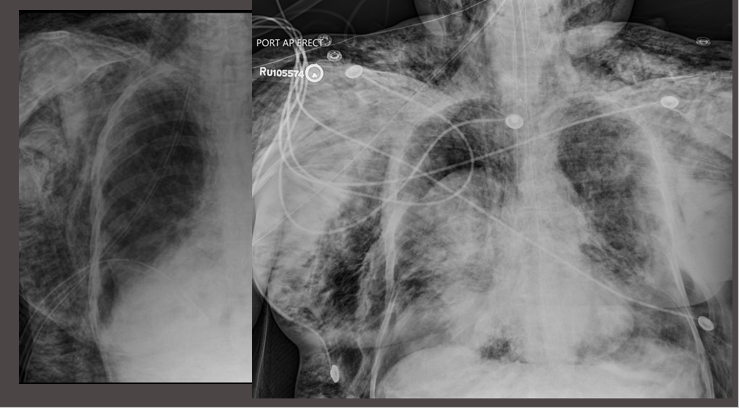
what pathology is this?
subcutaneous emphysema
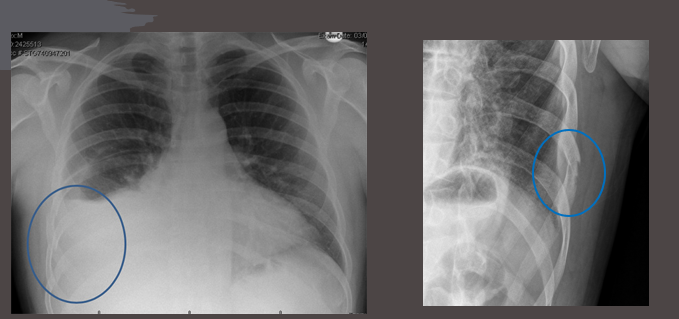
what pathology is this?
rib fracture
what pathology is when 2 or more continuous rib fractures with 2 or more breaks per rib?
flail chest
flail chest radiographic appearance
fracture of adjacent ribs in 2 or more places
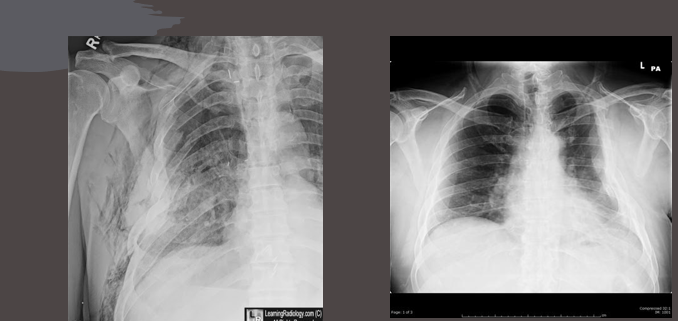
what pathology is this?
flail chest
what is an uncommon birth defect in which a child’s breastbone protrudes outward abnormally?
pectus carinatum- pigeon chest
radiographic appearance of pectus carinatum- pigeon chest
anterior protrusion of the lower sternum & xiphoid process
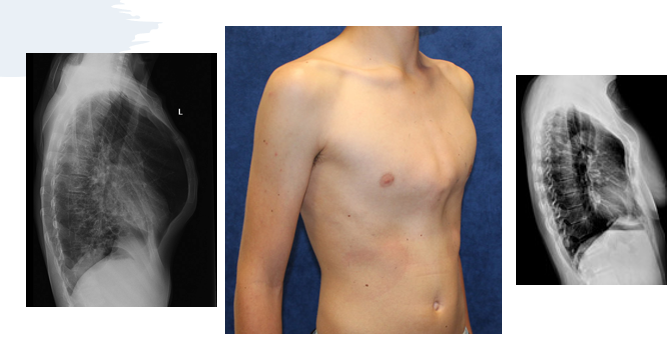
what pathology is this?
pectus carinatum- pigeon chest
what is the condition in which the person’s breastbone is sunken into the chest?
pectus excavatum- funnel chest
radiographic appearance of pectus exacatum- funnel chest
depressed sternum
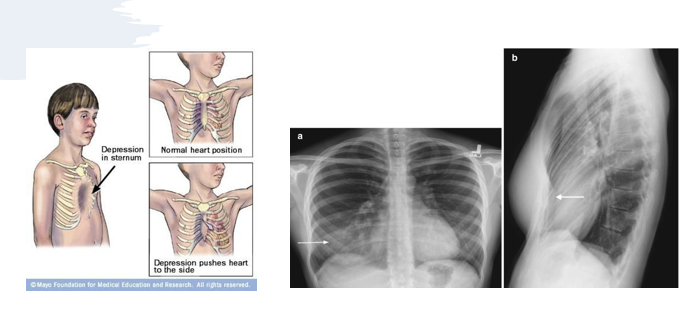
what pathology is this?
pectus exacatum- funnel chest
large barrel chest patient needs __ degrees for RAO sternum
15
thin chested patient is __ degrees for RAO sternum
20
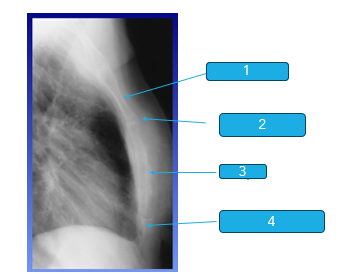
What is 1 on this sternum?
manubrium
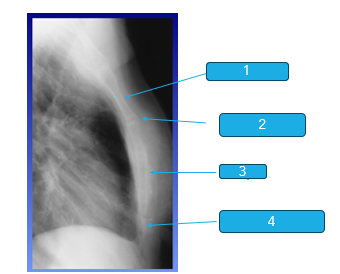
What is 2 on this sternum?
sternal angle
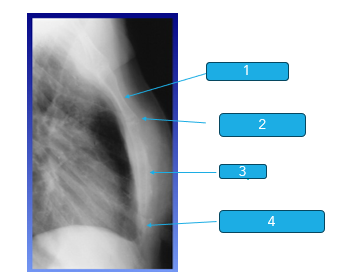
What is 3 on this sternum?
body
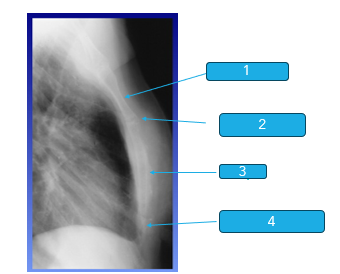
what is 4 on this sternum?
xiphoid process
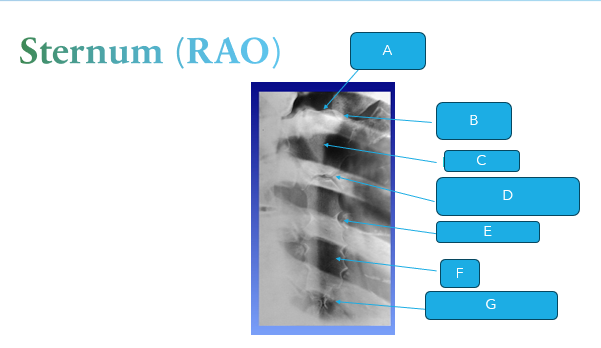
what is A on this sternum RAO?
jugular notch
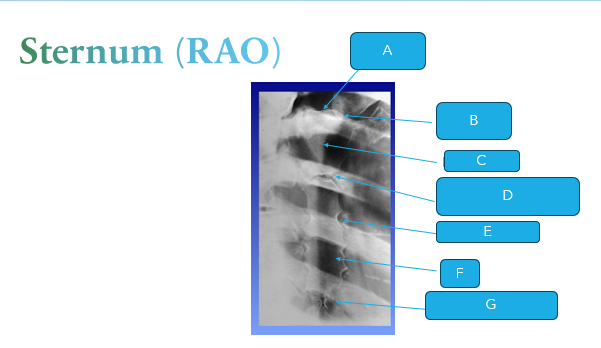
what is B on this sternum RAO?
SC joint
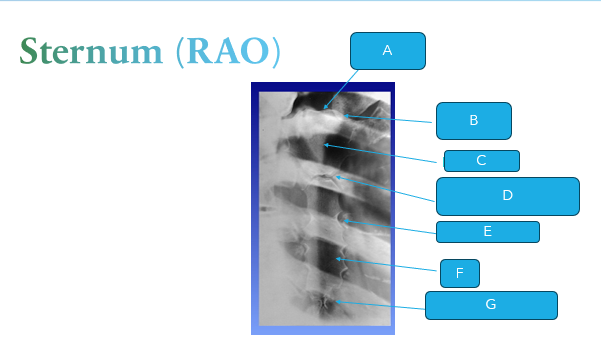
what is C on this sternum RAO?
manubrium
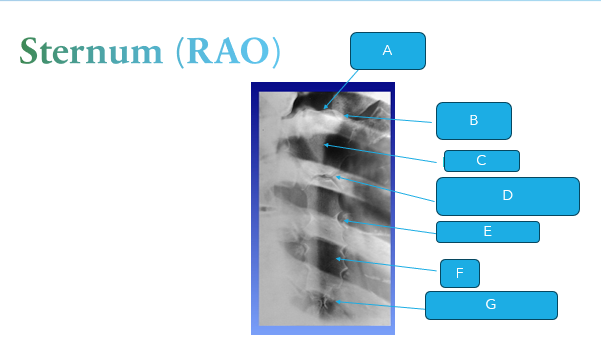
what is D on this sternum RAO?
manubriosternal joint (forms sternal angle)
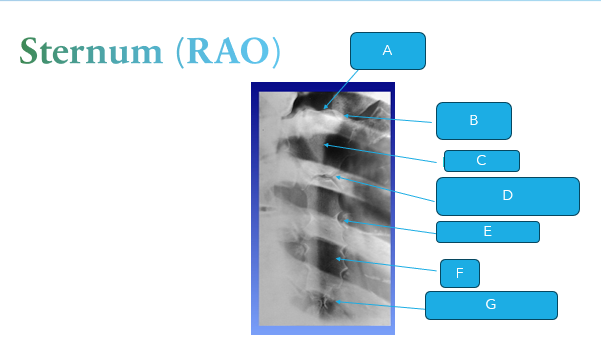
what is E on this sternum RAO?
costal notch
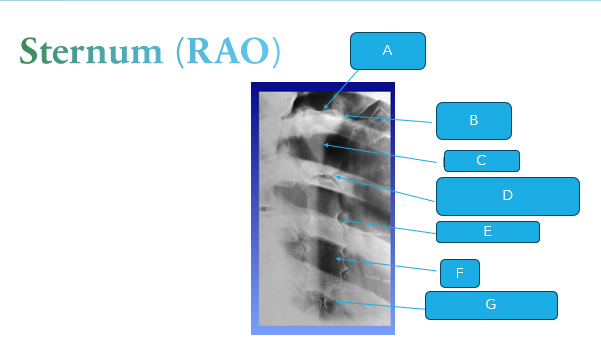
what is F on this sternum RAO?
body
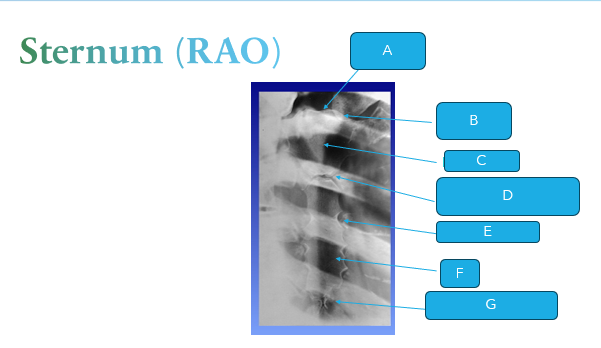
what is G on this sternum RAO?
xiphoid process
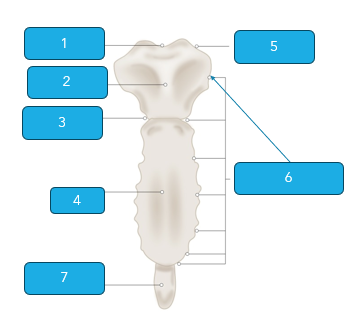
what is 1?
jugular notch
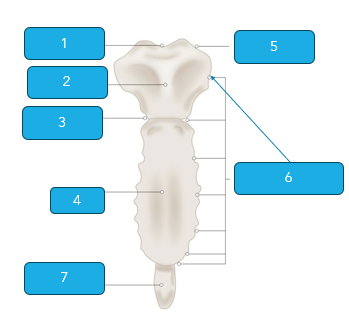
what is 2?
manubrium
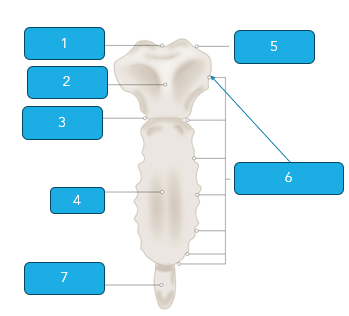
what is 3?
sternal angle
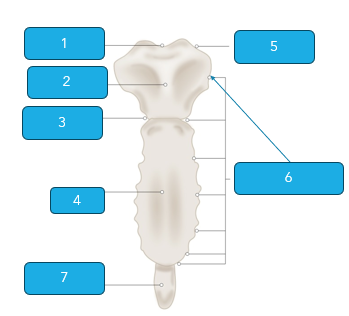
what is 4?
body
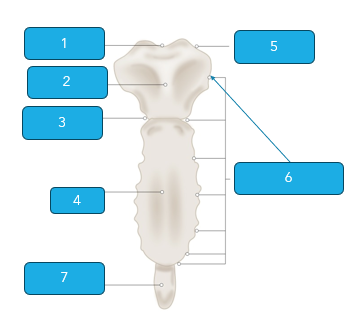
what is 5?
clavicular notch
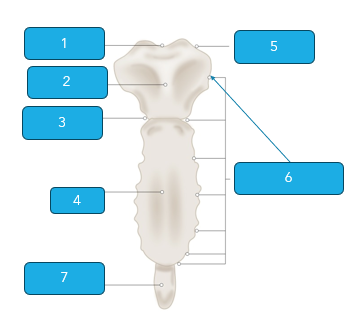
what is 6?
facets of costal cartilages 1-7
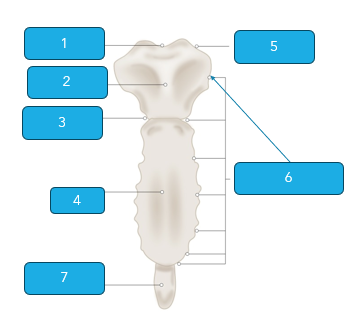
what is 7?
xiphoid
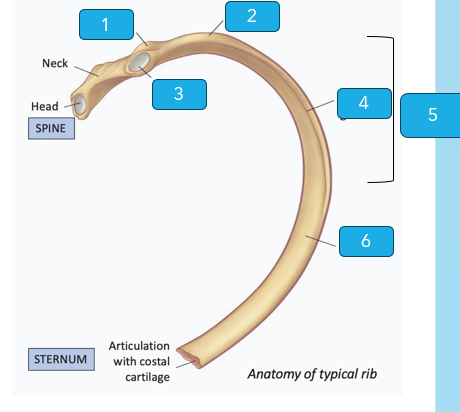
what is 1?
tubercle
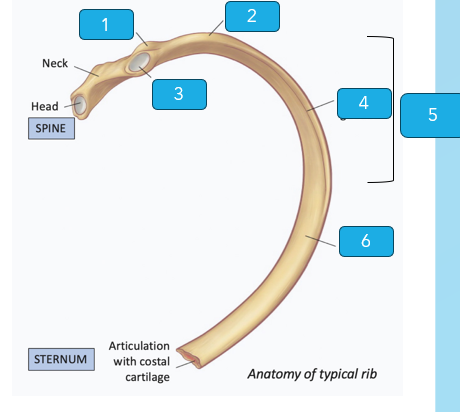
what is 2?
angle
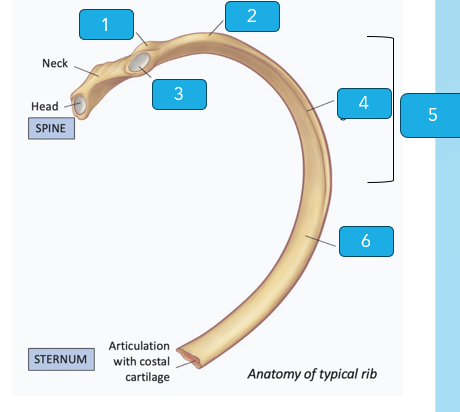
what is 3?
articular facet
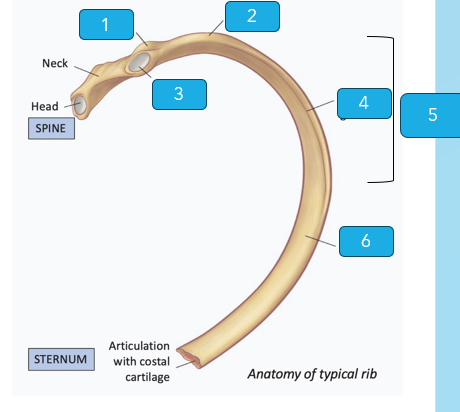
what is 4?
costal groove
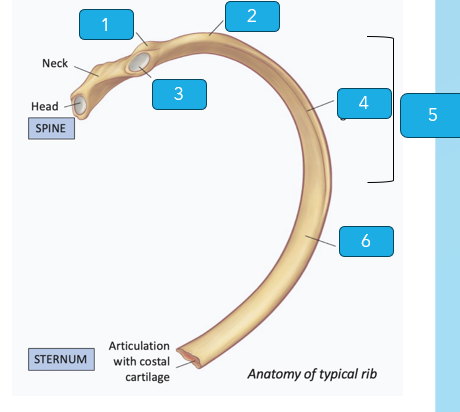
what is 5?
axillary portion
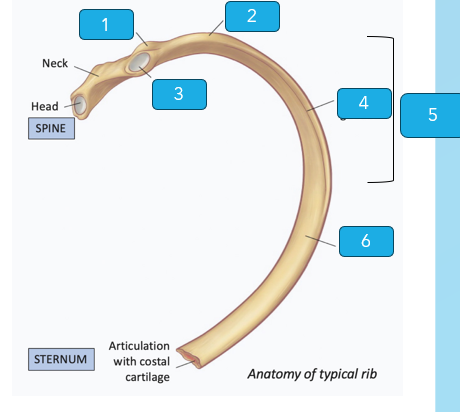
what is 6?
shaft
diaphragm moves approx. __ between deep inspiration & deep expiration
1.5 inches
what type of joints are sc joints?
synovial gliding joints