4. Mass transport
 Call Kai
 Learn
Learn Practice Test
 Spaced Repetition
 Match
Match Flashcards
 Knowt Play
1/30

There's no tags or description
Looks like no tags are added yet.
Name | Mastery | Learn | Test | Matching | Spaced | Call with Kai |
|---|
No analytics yet
Send a link to your students to track their progress
31 Terms
what do dissociation curves show
how saturated the haemoglobin is with oxygen at any given partial pressure
what is the Bohr effect
when cells respire they raise the pCO2
this increases the rate of oxygen unloading so the dissociation curve shifts right
the saturation of blood with oxygen is lower for a given pO2 so more oxygen is being released
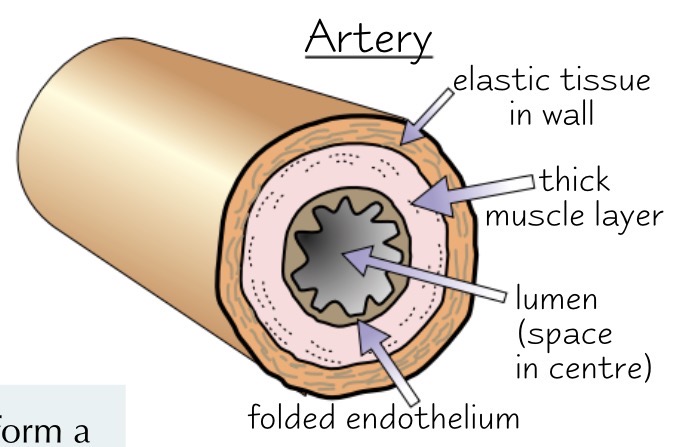
characteristics of arteries
carry blood from the heart to the rest of the body
thick and muscular walls
elastic tissue to stretch and recoil as the heart beats
which helps maintain the high pressure
the inner lining is folded, allowing the artery to stretch
helps to maintain high pressure
all arteries carry oxygenated blood
EXCEPT pulmonary arteries which take deoxygenated blood to the lungs
characteristics of arterioles
form a network throughout the body
blood is directed to areas of demand in the body by muscles inside the arterioles
muscles contract to restrict blood flow or relax to allow full blood flow
characteristics of veins
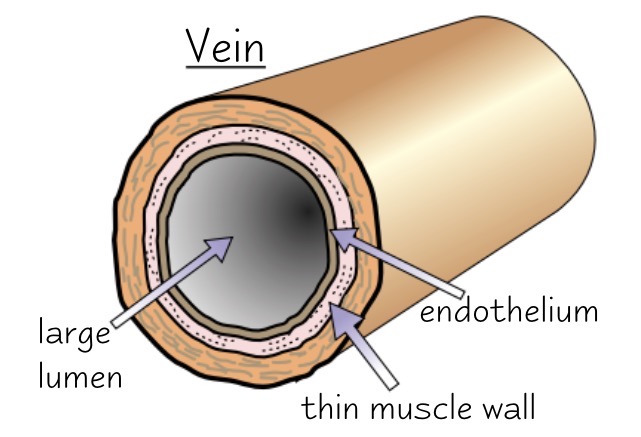
take blood back to the heart under low pressure
wider lumen
very little elastic or muscle tissue
veins contain valves to stop back flow of blood
contraction of body muscles surrounding veins helps blood to flow
carries deoxygenated blood
EXCEPT for the pulmonary vein which carries oxygenated blood to the heart from the lungs
characteristics of capillaries
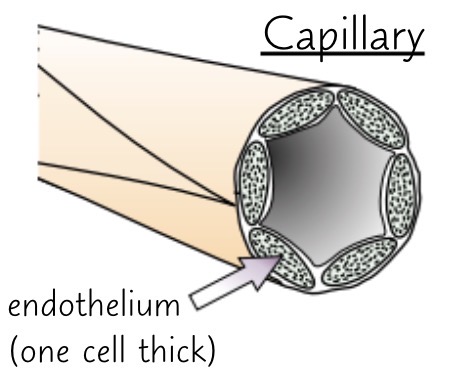
found near cells in exchange tissues so there’s a short diffusion pathway
walls are one cell thick, shortening diffusion pathway
large number to increase surface area for exchange
networks of capillaries in tissue are called capillary beds
what is pressure filtration
at the start of the capillary bed, nearest the arteries, the hydrostatic pressure inside the capillaries is greater than the hydrostatic pressure in the tissue fluid
this difference in hydrostatic pressure means an overall outward pressure forces fluid out of the capillaries and into the spaces around the cells, forming tissue fluid
as fluid leaves, the hydrostatic pressure reduces in the capillaries so the hydrostatic pressure is much lower than the vellum end of the capillary bed
due to the fluid loss and an increasing concentration of plasma proteins, the water potential at the venue end of the capillary bed is lower than the water potential in the tissue fluid
this means that some water re-enters the capillaries from the tissue fluid at the venue end by osmosis
where is excess tissue fluid drained
into the lymphatic system which transports this excess fluid from the tissues and returns it to the circulatory system
what do the atrioventricular valves (AV) do
they link the atria to the ventricles and stop blood flowing back into the atria when the ventricles contract
what do semi-lunar valves (SL) do
they link the ventricles to the pulmonary artery and aorta and stop blood flowing back into the heart after the ventricles contract
what do the cords do
they attach the atrioventricular valves to the ventricles to stop them being forced up into the atria when the ventricles contract
why does blood only flow in one direction through the heart
the valves only open one way and whether they’re open or closed depends on the relative pressure of the heart chambers.
what is the cardiac cycle
an ongoing sequence of contraction and relaxation of the atria and ventricles that keeps the blood continuously circulating around the body. The volume of the atria and ventricles changes as they contract and relax. Pressure changes also occur, due to the changes in chamber volume. The cardiac cycle can be simplified into three stages
what is the first stage of the cardiac cycle
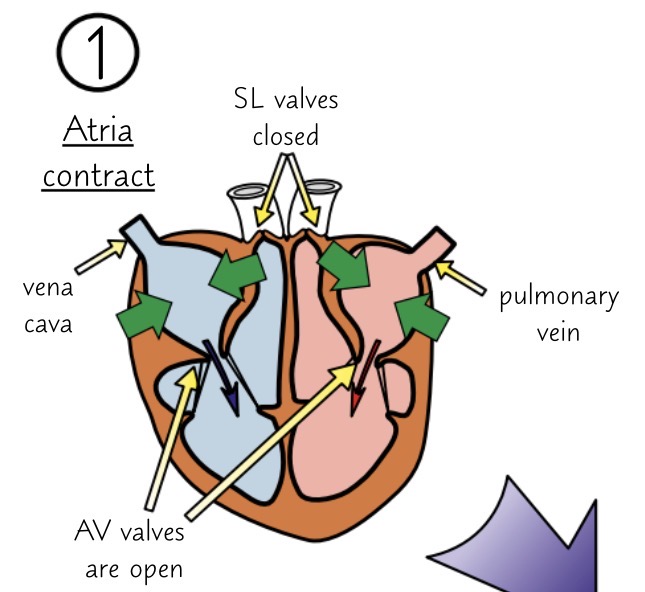
ventricles relax and atria contract
ventricles relax and atria contract
decreasing the volume of the chambers
increasing pressure inside the chambers
slight increase in ventricular pressure and chamber volume as the ventricles receive the ejected blood from the contracting atria
what is the second stage of the cardiac cycle
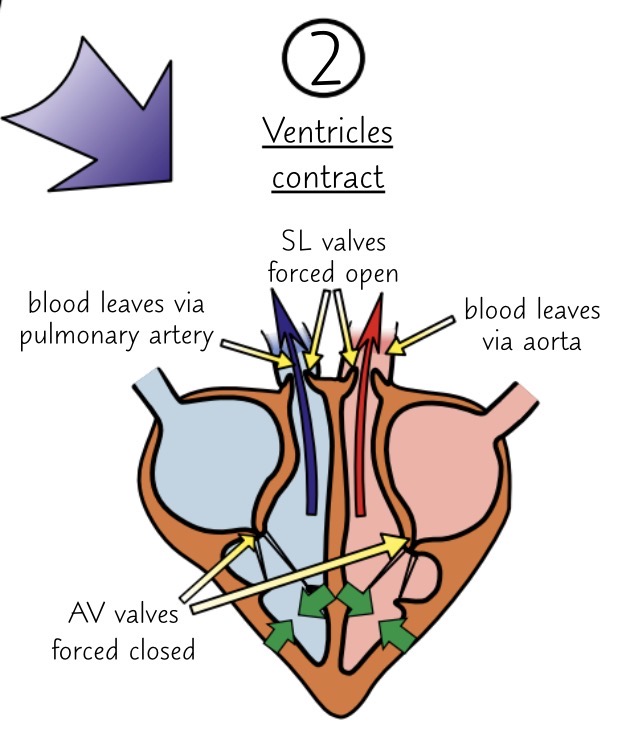
ventricles contract and atria relax
atria relax and ventricles contract
decreasing volume
increasing pressure
the pressure becomes higher in the ventricles than the atria, which forces the AV valves shut to prevent back-flow
the pressure in the ventricles is also higher than the aorta and pulmonary artery
this forces open the SL valves and blood is forced into these arteries
what is the third stage of the cardiac cycle
ventricles relax and atria relax
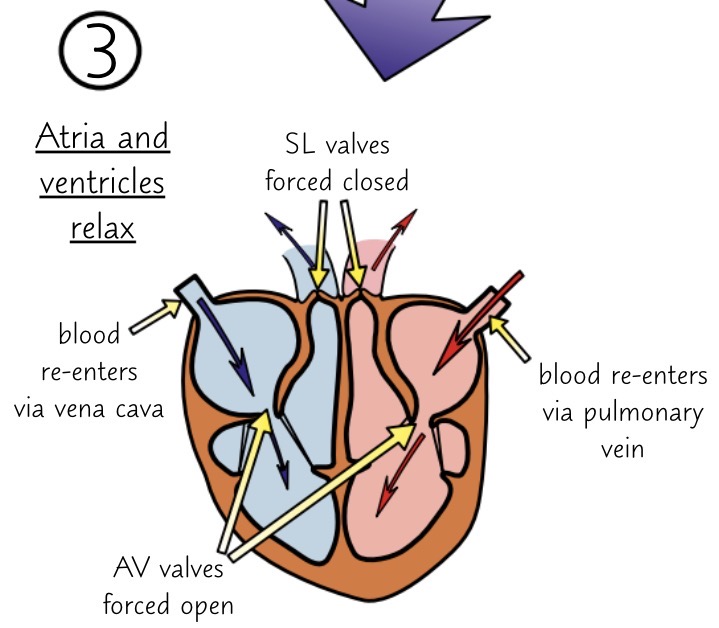
ventricles and atria both relax
the higher pressure in the pulmonary artery and aorta closes the SL valves to prevent back-flow into the ventricles
blood returns to the heart and the atria fill again due to the higher pressure in the vena cava and pulmonary vein
this starts to increase pressure of the aorta
as ventricles continue to relax, their pressure falls below the pressure of the atria and so the AV valves open
this allows blood to flow passively into the ventricles from the atria
the atria contract and the whole process begins again
what are the two types of disease that affect the arteries
aneurysm and thrombosis
what are atheromas
when damage occurs in the endothelium, white blood cells and lipids from the blood clump up together under the lining to form fatty acids which hardens to form a fibrous plaque called an atheroma
what are the two types of disease that affect the arteries and atheromas increase the risk of
aneurysm and thrombosis
what is aneurysm
balloon-like swelling of the artery
what is thrombosis
formation of a blood clot
what causes myocardial infraction (heart attack) and what are its effects
if a coronary artery becomes completely blocked, an area of heart muscle will be totally cut off from its blood supply, receiving no oxygen which causes myocardial infraction
it can cause damage and death of heart muscle
symptoms include pain in the chest and upper body, shortness of breath and sweating
if large areas of the heart are affected, complete heart failure can occur which is often fatal
what are the factors that increase the risk of coronary heart disease
high blood cholesterol and poor diet
cigarette smoking
high blood pressure
structure of the xylem
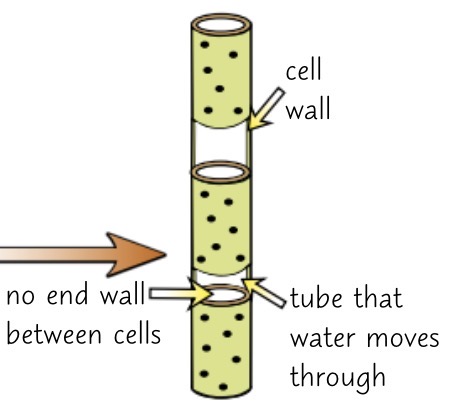
very long, tube-like structures formed from dead cells joined end to end
cohesion-tension theory of water transport
water evaporates from the leaves at the top of the xylem
this creates tension which pulls more water to the leaf
water molecules are cohesive so when some are pulled into the leaf, others follow
the whole column of water in the xylem therefore moves upwards
water enters the stem through the roots
what are the four factors that effect transpiration
light - lighter = faster rate, stomata open when its light to let CO2 in for photosynthesis.
temperature - higher = faster rate, molecules have more energy so they evaporate from cells inside the leaf faster, increasing the concentration gradient between the inside and outside of the leaf
humidity - lower = faster rate, if air around the plant is dry, concentration gradient between the leaf and air increases
wind - high = faster rate, lots of air movement blows away water molecules around the stomata which increases the concentration gradient
structure of the phloem
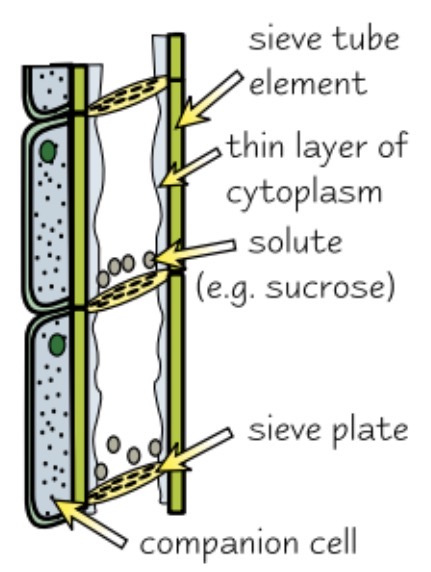
contains sieve tube elements and companion cells
sieve tube elements - living cells that form the tube for transporting solutes and have no nucleus and few organelles
there’s therefore a companion cell for each sieve tube element - they carry out living functions for sieve cells.
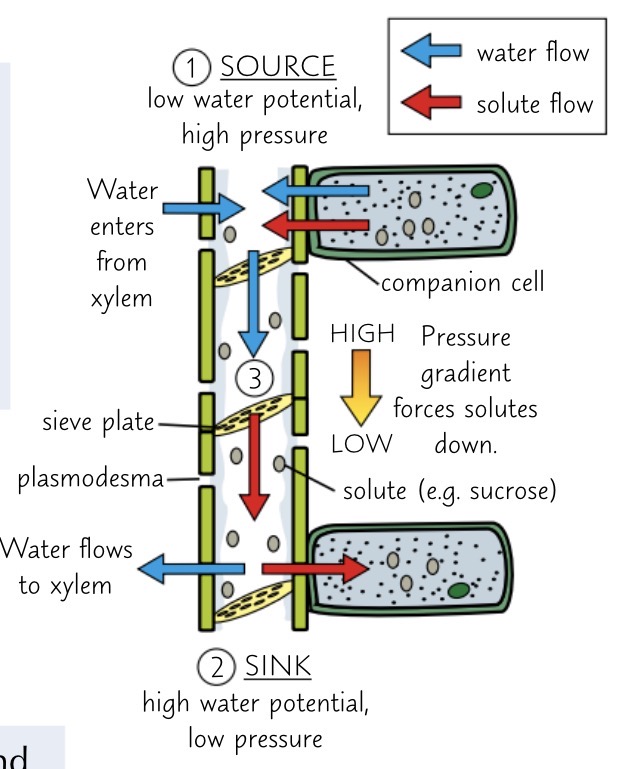
what is the mass flow hypothesis
1) source
active transport is used to actively load the solutes (sucrose) from companion cells into the sieve tubes of the phloem at the source (leaves)
this lowers the water potential inside the sieve tubes, so water enters the tubes by osmosis from the xylem and companion cells
this creates a high pressure inside the sieve tubes at the source end of the phloem
2)
at the sink end, solutes are removed from the phloem to be used up
this increases the water potential inside the sieve tubes so water also leaves the tubes by osmosis
this lowers the pressure inside the sieve tubes
3) sink
the result is a pressure gradient from the source end to the sink end
this gradient pushes solutes along the sieve tubes towards the sink
when they reach the sink, the solutes will be used (respiration) or stored (starch)
evidence supporting mass flow
a radioactive tracer such as 14C can be used to track the movement of organic substances in a plant
if a ring of bark is removed, a bulge forms above the ring. The fluid from the bulge has a higher concentration of sugars than the fluid from below the ring - evidence that there’s downwards flow of sugars
using aphids, sap flows out quicker nearer the leaves than further down the stem - evidence that there’s a pressure gradient
if a metabolic inhibitor is put into the phloem, then translocation stops - evidence that active transport is involved
evidence against mass flow
sugar travels to many different sinks, not just to the one with the highest water potential, as the model would suggest
the sieve plates would create a barrier to mass flow, a lot of pressure would be needed for the solutes to get through at a reasonable rate