MKT 3320 Quiz 1 - Fang Wu
 Call Kai
 Learn
Learn Practice Test
 Spaced Repetition
 Match
Match Flashcards
 Knowt Play
1/24

There's no tags or description
Looks like no tags are added yet.
Name | Mastery | Learn | Test | Matching | Spaced | Call with Kai |
|---|
No analytics yet
Send a link to your students to track their progress
25 Terms
What is branding?
Branding occurs when an organization uses a name, phrase, design, symbols, or combination of these to identify its products and distinguish them from those of competitors.
Brand elements
Components that identify and differentiate a brand
Key to creating a brand
-Able to choose a name, logo, symbol, package design, or other characteristic that identifies a product
-Distinguishes it from other products
Difference between a brand and a product
•A product is anything we can offer to a market for attention, acquisition, use, or consumption:
-That might satisfy a need or want
-Physical good like a cereal, tennis racquet, or car
•A brand is more than a product since it can have dimensions that differentiate it from other products
Brand equity
-Differences in outcomes arise from the "added value" endowed to a product
-The added value can be created for a brand in many different ways
-Brand equity provides a common denominator for interpreting marketing strategies and assessing the value of a brand
Ex: The same shirt with Nike and Russell and people will pay more for Nike
Benefits of Branding - Consumers vs firms
Consumers:
•Encompass all types of customers, including individuals as well as organizations
•Functions provided by brands to consumers
-Identify the source or maker of the product
-Simplify product decisions and reduces risk
-Lower the search costs for products internally (how much to think) and externally (how much to search)
-Helps set reasonable expectations about what consumers may not know about the brand
-Promise, bond or pact with maker of product
-Can be a symbolic device
-Signal of quality
-Signal product characteristics and attributes
▪On the basis of attributes products can be classified as:
-Search goods (grocery produce - evaluate on size, weight, etc.)
-Experience goods (tires - durability, ease of handling)
-Credence goods (insurance; real estate)
-Reduce risks in product decision
-Functional, physical, financial, social, psychological, and time
Firms:
•Brands provide valuable functions to a firm:
-Simplify product handling and tracing
-Help organizing inventory and accounting records
-Offer the firm legal protection for unique features or aspects of the product
-Provide predictability and security of demand for the firm and creates barriers of entry for competitors
-Provide a powerful means to secure competitive advantage
Steps in Strategic brand management process
1. Identify and develop brand plans
2. design and implement brand marketing programs
3. measure and interpret brand performance
4. Grow and sustain brand equity
Brand positioning
•"Act of designing the company's offer and image so that it occupies a distinct and valued place in the target customer's minds"
•Clarifies what the brand is about. How is unique and how is similar to competitive brands and why should consumers purchase and use it.
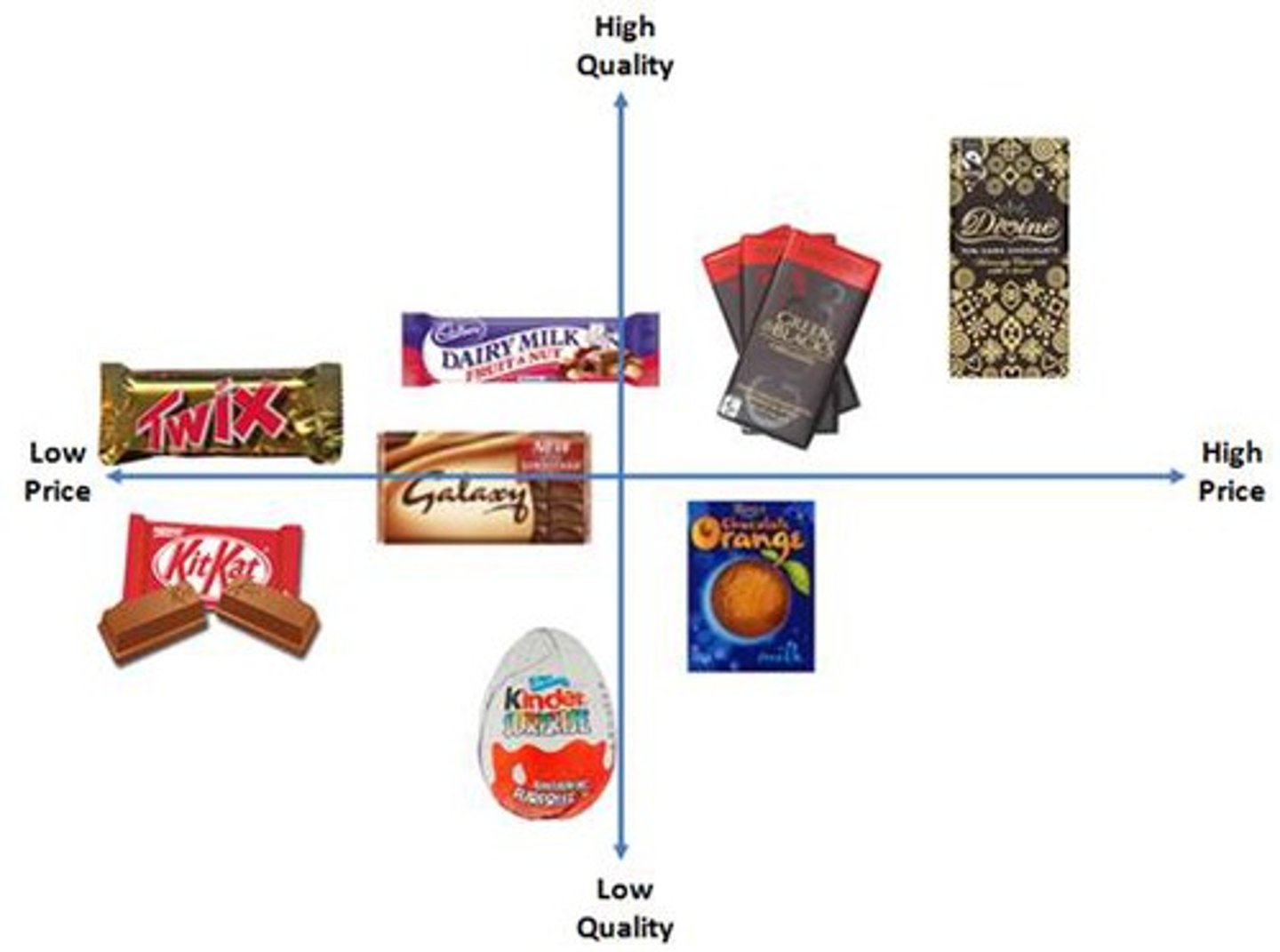
Perceptual map
displays, in two or more dimensions, the position of products or brands in the consumer's mind
Steps in establishing brand positioning
basic concepts
target market
nature of competition
points of parity and points of difference
brand equity
the added value a brand name gives to a product beyond the functional benefits provided
Brand knowledge
the set of associations that consumers hold in memory regarding the brand's features, benefits, users, perceived quality, and overall attitude as a result of prior brand marketing activities
brand awareness
how quickly or easily a given brand name comes to mind when a product category is mentioned
brand recognition
Consumer awareness and identification of a brand
brand recall
consumers' ability to retrieve the brand from memory when given the product category, the needs fulfilled by the category, or a purchase or usage situation as a cue
Customer segmentation basis and target market
•Market segmentation: Divides the market into distinct groups of homogeneous consumers who have similar needs and consumer behavior
•Involves identifying segmentation bases and criteria:
-Criteria:
▪Identifiability
▪Size
▪Accessibility
▪Responsiveness
▪Target: 18-34 commuting/working
Points of Parity vs Points of Difference
▪Points-of-difference (P O D s):
-Formally defined as attributes or benefits that consumers strongly associate with a brand
▪Points-of-parity associations:
-Not necessarily unique to the brand but may be shared with other brands
Brand mantra
A short, three to five word phrase that captures the irrefutable essence or spirit of the brand positioning
-Nike - Authentic, Athletic, Performance
customer-based brand equity
the differential effect that brand knowledge has on consumer response to the marketing of that brand
4 steps in building brand resonance model
1. Ensure identification of the brand and association in the customers' minds with a product class, benefit or need
2. Establish the totality of brand meaning by linking tangible and intangible brand associations
3. Elicit the proper responses to the brand
4. Convert responses intense relationships
Branding Pyramid. Know difference between left and right side
emotions are on the right
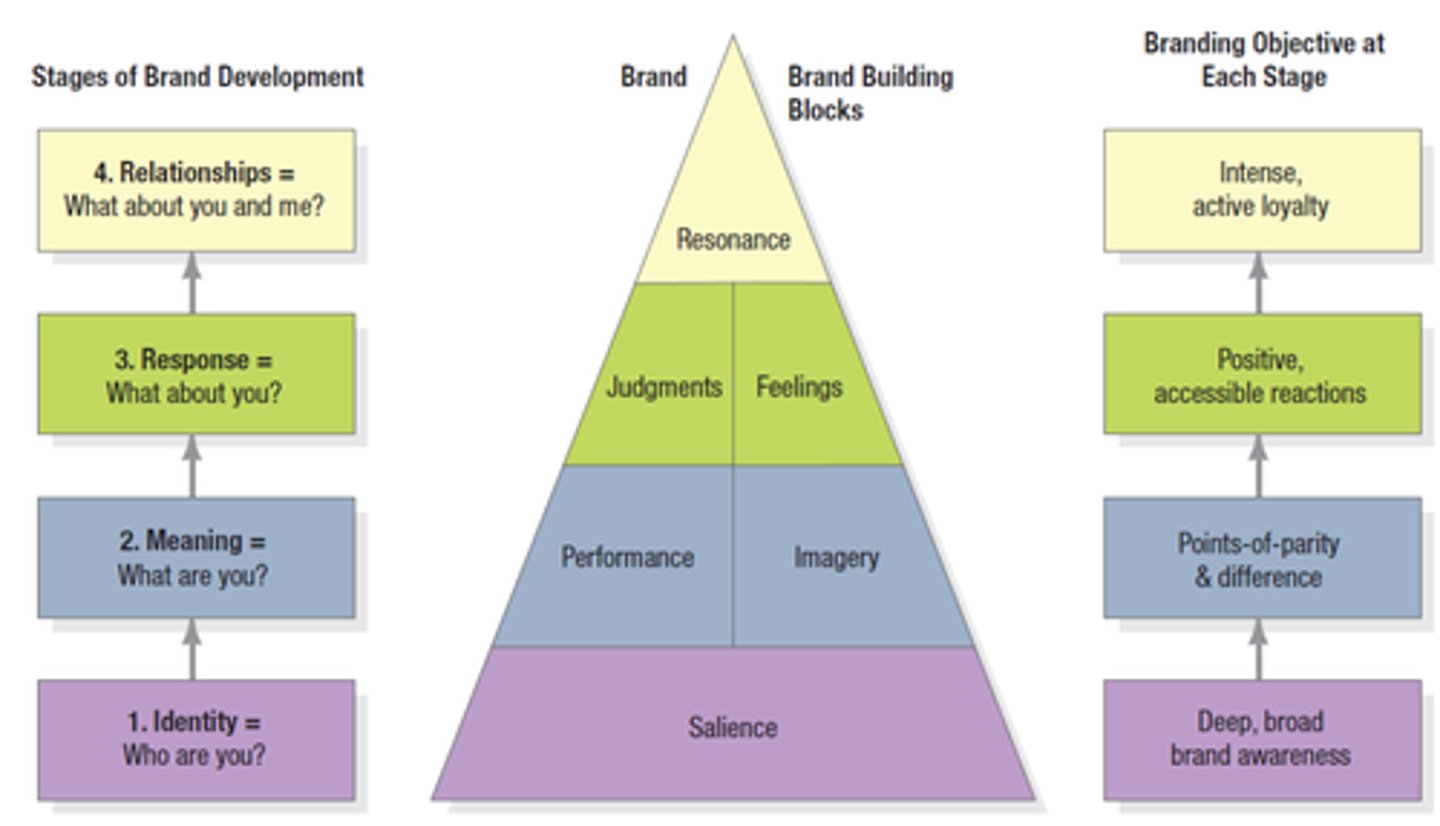
Brand salience
consumers' abilities to recognize, or have awareness of, any particular brand
Nike's just do it logo
Brand performance
how well the product or service meets customers' functional needs
Brand judgements
customers' personal opinions about and evaluations of the brand, which consumers form by putting together all the different brand performance and imagery associations
Brand resonance
a consumer's intense and actively loyal relationship with a brand