Unit 4.5: Application of reproduction & genetics
 Call Kai
 Learn
Learn Practice Test
 Spaced Repetition
 Match
Match Flashcards
 Knowt Play
1/30

There's no tags or description
Looks like no tags are added yet.
Name | Mastery | Learn | Test | Matching | Spaced | Call with Kai |
|---|
No analytics yet
Send a link to your students to track their progress
31 Terms
The Human Genome Project
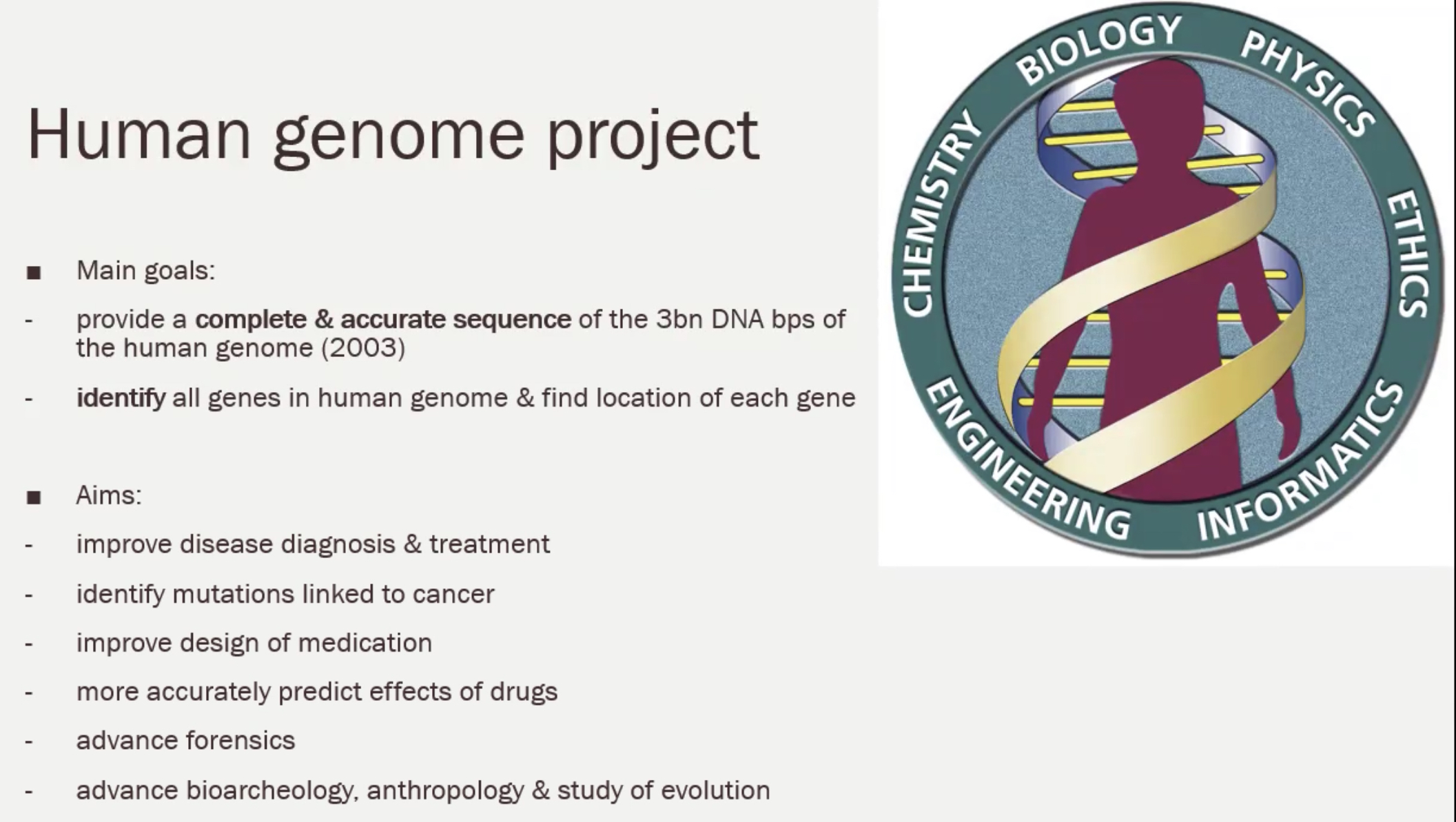
Sanger sequencing & the human genome project

Next generation sequencing (NGS) & the 100k Genome Project
New techniques, e.g. Next Generation Sequences (NGSs) can sequence an entire genome in just a few hours.
There are several NGS methods, but most add labelled bases to a growing chain of nucleotide, many of which can be analysed at the same time.
NGS is significantly cheaper, quicker, needs significantly less DNA & is more accurate & reliable than Sanger sequencing.
NGS is enabling scientists to study variation within human genome amongst 100,000 people with rare diseases in the UK.
This is known as the 100K genome project & could lead to individualised health care where therapies are tailored to patients & patients receive a unique treatment for a common disease.
Ethical issues surrounding human genome sequencing

DNA Sequencing of Non- Humans

Standard Form

Malaria

Genetic Fingerprinting

Polymerase Chain Reaction (PCR)

PCR Limitations

Gel Electrophoresis

Electrophoresis questions

Forensic uses, advantages & disadvantages of genetic fingerprinting

Genetic Engineering
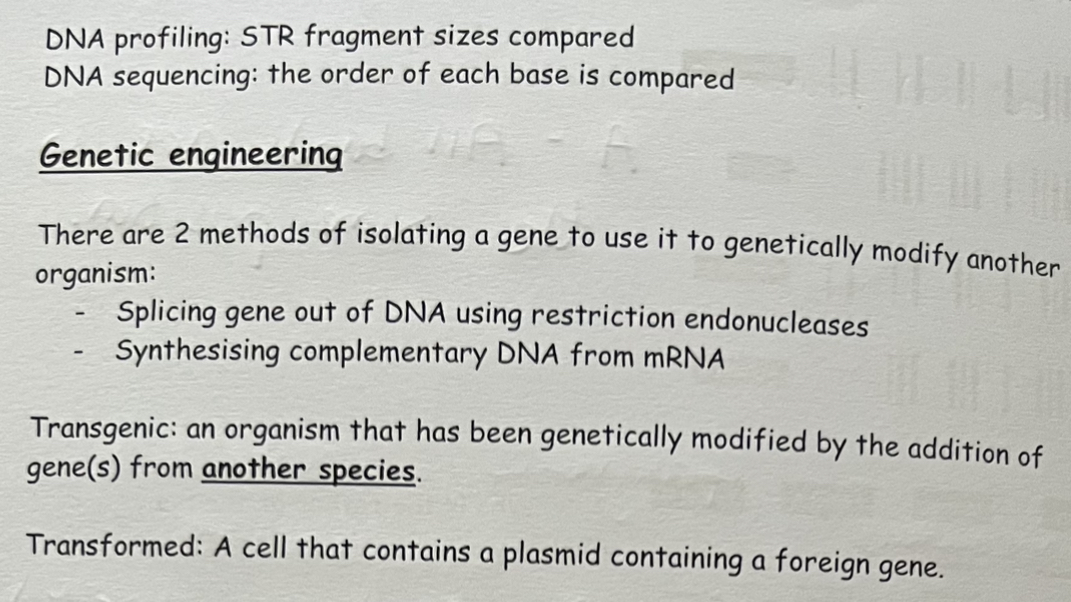
Gene Isolation: Using restriction endonucleases
1) Extract DNA from cell
2) Restriction endonucleases cut at specific base sequences on both sides of the target gene
3) DNA electrophoresis to identify target gene of known length amongst other non-target fragments
The recombinant plasmid vector can be taken up by bacteria to transcribe & translate the gene to synthesise the polypeptide.

Issues with using restriction endonucleases
Issues:
The human genome is massive & endonucleases will cut at a large number of places so need to know how large the gene is to isolate it with gel electrophoresis.
The base sequences on each side of the gene need to be known to use the correct type of restriction endonucleases.
Bacterial genomes don't have introns so lack splicing methods, meaning unedited human genes may not be transcribed & translated.
Gene Isolation: synthesising complementary DNA from mRNA
Reverse transcriptase - free complementary DNA nucleotides align opposite complementary mRNA bases.

Benefits of using cDNA to isolate genes & summary
Size of gene doesn’t need to be known
Non-functional gene/ DNA fragments not extracted
No introns present that bacteria can’t splice, functional polypeptide formed

Sticky ends & recombinant plasmids
1) Isolate the gene.
2) Insert gene into a vector. (normally a plasmid)
3) Insert vector into host cell.
4) Identify the host cell which now contains the required gene, making use of gene markers. (normally antibiotic resistance genes)
5) Clone the transformed host cells

Transformation Labelled Diagram
There will be 3 types of bacteria in the sample:
Bacteria that have not taken up any plasmids
Bacteria that have taken up non-recombinant plasmids that do not contain the target geneBacteria that have taken up recombinant plasmids containing the target gene
Transformation - Bacteria take up recombinant plasmids containing a foreign gene/ DNA from 2 organisms
The transformed bacterium that have taken up recombinant plasmids will translate the gene & synthesise the protein / polypeptide. These bacteria can be cloned to produce useful molecules, e.g. insulin.
Transformed cells have taken up recombinant plasmids.
Transgenic organisms have genes from another species incorporated into their genome, (not just one cell).

Replica Plating
Recombinant DNA - DNA from 2 different organisms bonded together
Marker gene - Genes with observable characteristics that indicate the presence or absence of another (target) gene.
Antibiotics - medicines which kill bacteria

Replica plating & marker gene method
Bacteria that have NOT taken up any plasmids will be:
- Susceptible to both antibiotics and so will not from colonies on either/ both plate(s)
Bacteria that have taken up recombinant plasmids will be:
- Susceptible to one antibiotic & resistant to the other antibiotic and so will survive & form colonies on one plate
Bacteria that have taken up non-recombinant plasmids will be:
- Resistant to both antibiotics and so will survive and form colonies on both plates
Colony - Small, circular patch containing a community of cloned bacteria that have arisen from the reproduction of a single bacterium.

Describe how scientists can form a recombinant plasmid that can transform bacteria
Plasmids are extracted from bacteria
Same restriction endonucleases cut plasmid and each end of target gene
Leaving unpaired sections of bases called sticky ends
DNA ligase joins complementary sticky ends of target gene & plasmid

Example Question

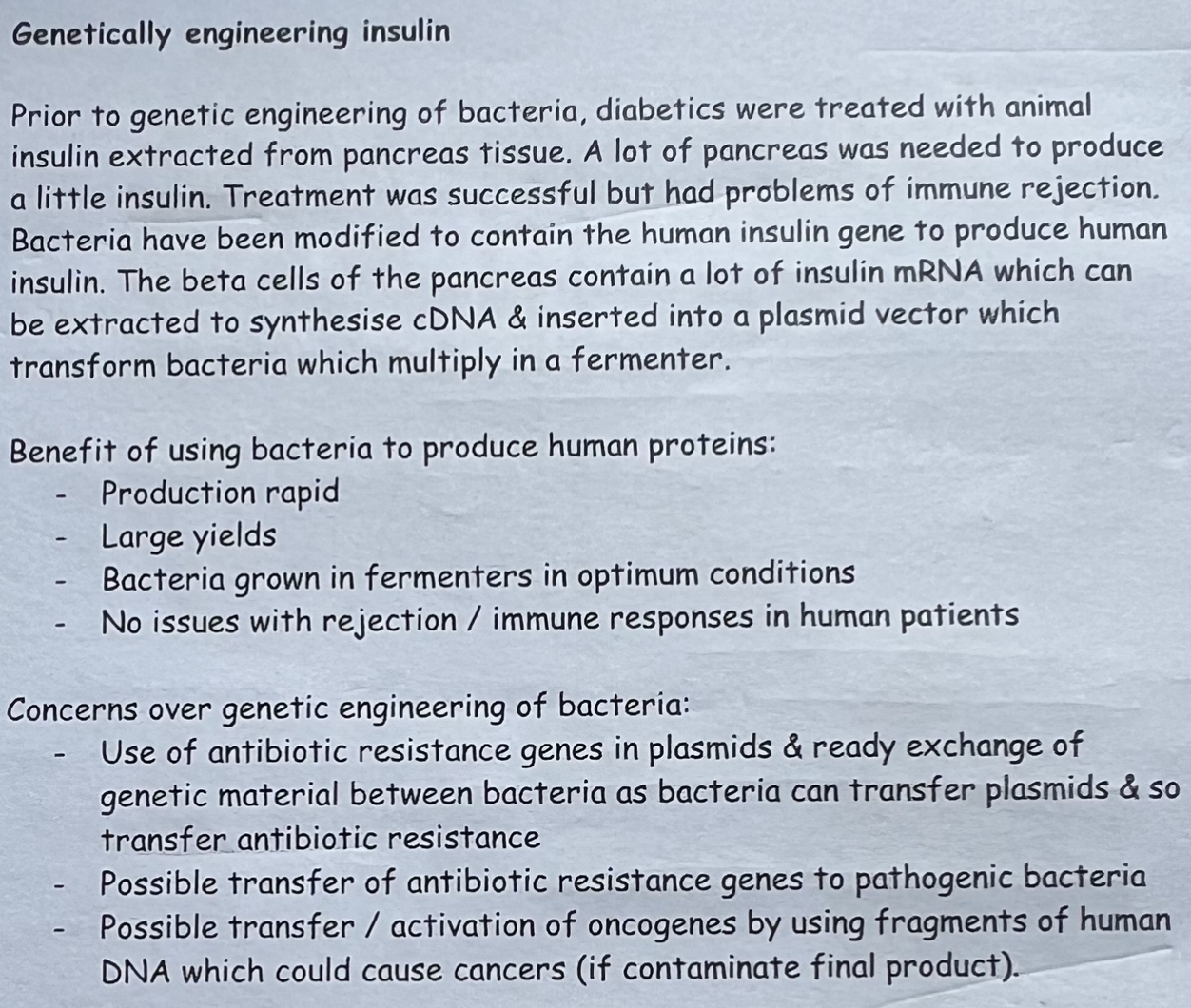
Genetic Engineering of Insulin - Benefits & Concerns
Genetically modified crops

Method of genetically modifying plants

Transgenic vs GM & Benefits
(understand starred term)

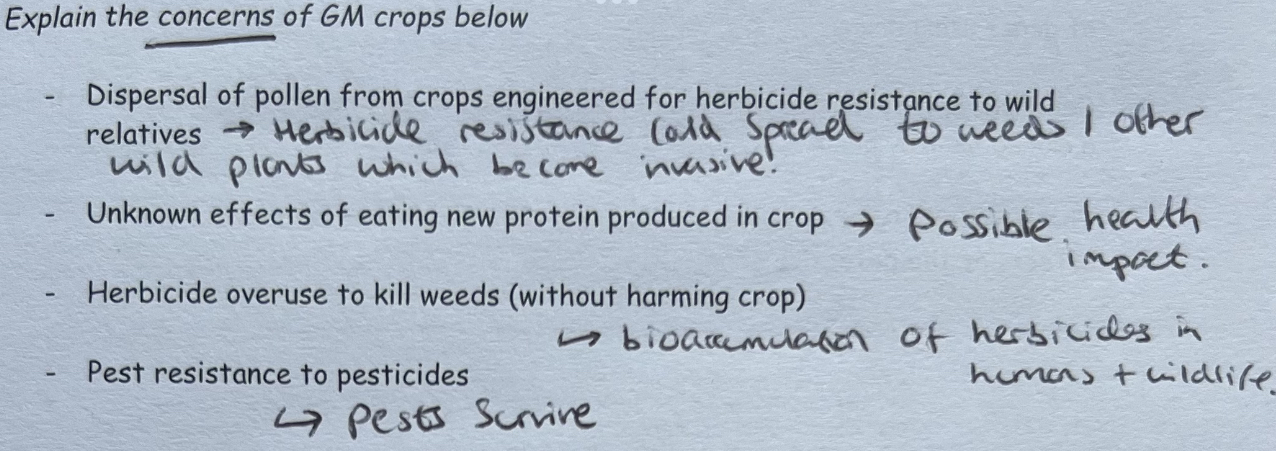
Concerns of GM crops
Advantages & disadvantages of gene therapy for treatment of disease, illustrated by muscular dystrophy & cystic fibrosis

Somatic vs Germ Line Gene Therapy
