New Content Micro Final
 Call Kai
 Learn
Learn Practice Test
 Spaced Repetition
 Match
Match Flashcards
 Knowt Play
1/20

There's no tags or description
Looks like no tags are added yet.
Name | Mastery | Learn | Test | Matching | Spaced | Call with Kai |
|---|
No analytics yet
Send a link to your students to track their progress
21 Terms
Define the differences between the kingdoms of protista and animalia. Why aren’t viruses considered a kingdom? What are amoeba?
Protista: unicellular protozoa, includes protists, apicomplexans, study using 18S rRNA gene
Animalia: multicellular metazoa, includes helminths
Amoeba: protists that use pseudopodia for movement and feeding
Viruses aren’t alive, and therefore aren’t considered a separate kingdom. They are considered obligate intracellular parasites.
Describe the differences between a direct lifecycle and an indirect lifecycle and provide an example of each.
Direct: no intermediate host (ex: Giardia)
Indirect: does have intermediate host (ex: Plasmodium and Anopheles mosquito)
Describe the three non-apicoblast protists discussed in this course.
Giardia intestinalis: flagellated anaerobe, equal sized nuclei, tx w/ metronidazole
Entamoeba histolytica: waterborne, liver abscesses
Naegleria fowleri: brain-eating, enters nose, warm water/soil, fatal meningoencephalitis
Describe the nature of apicomplexans and the four described in this course
Apicomplexans have apicoplasts (nonfunctional chlorophyll remnants) and are protists
Plasmodium: Anopheles, infects RBCs
Toxoplasma gondii: cat feces/undercooked meat, birth defects + brain damage, usually asymptomatic
Leishmania: sandflies, cutaneous/visceral, infects macrophages
Cryptosporidium parvum: Cl- resistant, watery diarrhea, rupture of intestinal epithelial cells, direct lifecycle, low infectious dose, sporozoites, diary calves/piglets
Describe the two types of trypanosomiasis and their vectors
African sleeping sickness: T. brucei in tsetse flies, CNS + spinal fluid
Chagas: American, T. cruzi in kissing bugs, chronic heart + GI symptoms, megacolon/megaesophagus, transovarial + no antigenic variation
local chancre, mesenchymal cell infection, Romana sign (periorbital edema)
Mammalian cycle: in humans, extracell trypomastigotes in peripheral blood become intracell amastigotes that divide
Describe lieshmaniasis
Flagellated protozoan, replicates in macrophages, nodules + ulcers
cutaneous/visceral
tx: antimony compounds
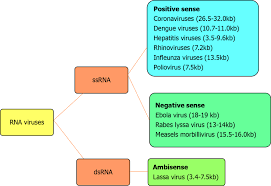
Describe the difference between +ssRNA and -ssRNA
ssRNA = single-strand RNA
+ssRNA: ‘ready to read recipe’, acts as mRNA + direct translation by host ribosomes
-ssRNA: ‘needs transcription first’, needs viral RNA polymerase to make mRNA, always packages RdRNAp
dsDNA = double-strand DNA, lower mutation rate, highly stable
Define capsid and naked/enveloped viruses
Protein shell that surrounds genome of a virion
Enveloped: outer phospholipid bilayer + capsid
Naked: no capsid
Define capsomere
Individual proteins patterned around a capsid
Define helical symmetry
Rod-shaped viruses, width determined by size of capsomeres, length determined by length of nucleic acid
Define icosahedral symmetry
spherical, most efficient storage of nucleic acid
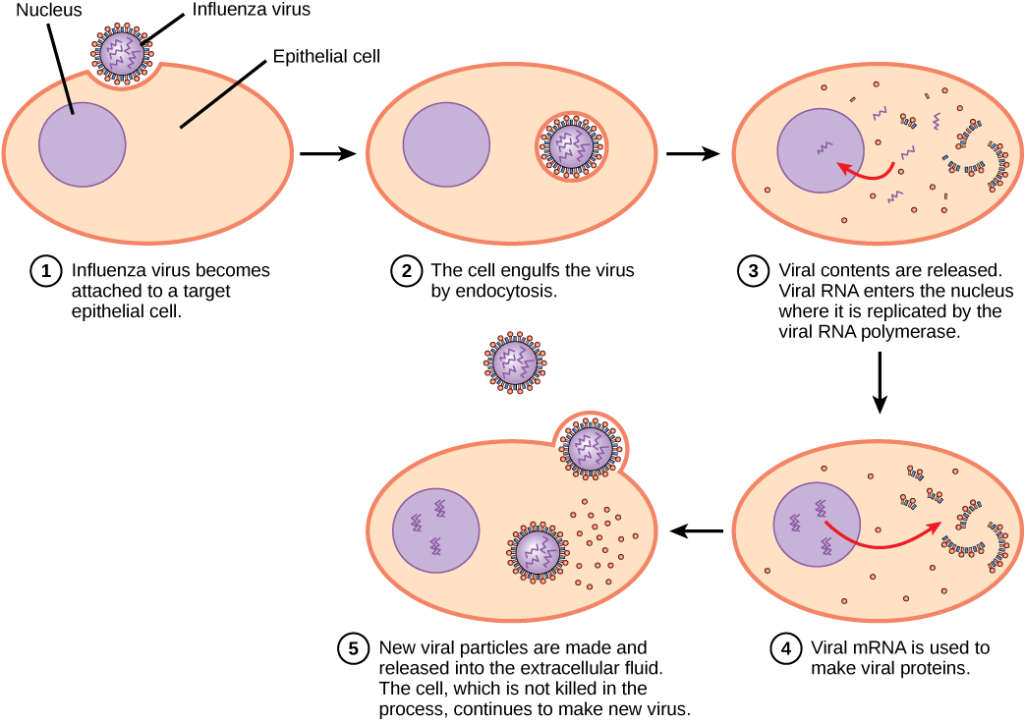
Describe the five steps of viral replication
attachment/adsorption: requires host cell receptors to match
Penetration: T4 lysomizes pore in peptidoglycan, membrane-fusion or R-mediated endocytosis
Uncoating/Synthesis: of proheads using ATP
Replication
Synthesis/Release of progeny (lysis)
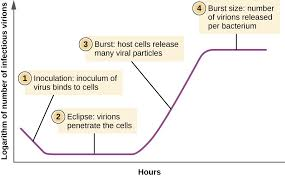
Describe the one-step growth curve for viruses
latency
eclipse: when genome is replicated
release (lysis/budding)
burst size: #virions/infected cell
Describe the example bacteriophage T4
E. coli, icosahedral head + helical tail, dsDNA, lytic
5-hydroxymethylcytosine stops host restriction endonucleases
Define lytic vs temperate
lytic: always lyses host cell
temperate: doesn’t lyse host cell, can be in lysogeny (integrates into host genome + replicates in tandem)
Define lysogenic conversion
the virus imparts new properties onto host bacterium
Describe tropism
the specificity a virus has for a host cell
Describe the four ways parasites are classified
motility
A/sexual reproduction
host location (skin/GI tract/etc)
intra/extracellular (viruses vs ticks)
Describe HIV/AIDS
targets CD4+ cells over time, retrovirus
RNA → (reverse transcriptase) DNA→(integrase) into host genome
tx: protease inhibitors (stops cleavage of viral proteins to create immature noninfectious virions [stay undetectable])
initial infection
acute viremia
AIDS progression
end-stage AIDS
tx: HAART
no vax? high variability, glycan shielding, CD4 latency, lack of animal model, safety/ethical concerns
Describe the two respiratory viruses in this course
influenza: -ssRNA, antigenic drift/shift, tx w/ neuraminidase, A/B/C, birds
shift: abrupt change, new hemagglutinin/neuraminidase proteins, reassortment
drift: small change, mutation
SARS-CoV-2: +ssRNA, uses ACE2r for entry
both: cause cytokine storm, inflammation