All Levy I don't know
 Call Kai
 Learn
Learn Practice Test
 Spaced Repetition
 Match
Match Flashcards
 Knowt Play
1/283

There's no tags or description
Looks like no tags are added yet.
Name | Mastery | Learn | Test | Matching | Spaced | Call with Kai |
|---|
No analytics yet
Send a link to your students to track their progress
284 Terms
The annual dose limit for members of the general public is:
A 0.1 rem
B 0.5 rem
C 1.0 rem
D 5.0 rem
A 0.1 rem
i.e. 1 mSv
For breast irradiation, internal mammary lymphatics would be best treated using:
A an anterior 10 MV photon field
B widened tangential fields
C an anterior electron field
D a posterior electron field
Internal mammary lymphatics may be included in tangential fields; however this would increase lung volume.
An anterior field could be matched to tangential fields using low-energy photons or electron beam. The electron beam would be best so that dose to limit dose to the mediastinum.
Internal mammary nodes are located approximately ___ below the anterior surface in patients of normal body habitus.
a. 3 cm
b. 3 inches
c. 2 cm
d. 2 inches
a. 3 cm
Electron contamination of high energy photon beams may result from photon interactions with the:
A room air
B collimators
C bolus
D Lucite trays
B collimators
Bolus does increase electron scatter but it is not considered contamination cuz you are purposefully putting it there most of the time to increase surface dose
Lucite trays are electron absorbers, tho they can also increase electron scatter and add contamination
Collimators add more scatter and contamination tho. The collimators and other gantry head components are typically made of a high z material such as copper, aluminum or tungsten. Photon interactions lead to particle contamination.
Fine needle aspiration can be used for bone biopsy. What is the main disadvantage of this procedure?
A Results are often false-negative.
B It is very expensive.
C It is dangerous and too invasive.
D The histological architecture of the bone might not be preserved.
D The histological architecture of the bone might not be preserved.
During FNA through the bone, the architecture may not be preserved, which is important in malignancy classification per histological type. You don’t see the trabeculae and haversian canals etc.
Because electrons scatter so readily in the air, they are:
A removed before striking the target
B focused by cones extending close to isocenter
C bent by 90 or 270 degrees toward the collimator
D used only at distances shorter than the SAD
B focused by cones extending close to isocenter
Cones are used to help keep electrons focused due to their potential to scatter in air.
When clinically setting up an electron field, the electron cone should not be pointed obliquely to the patient surface because:
A The depth of Dmax in the patient can shift toward the surface.
B Beam penetration can be reduced.
C Side scatter to the patient increases.
D all of the above
D all of the above
While it may not always be possible to position the cone applicator at 100 cm SSD in all clinical setups, every effort should be made to position the cone so its end is parallel to the patient surface. Side scatter to the tissue at shallower depths increases as a result of beam obliquity. Beam penetration is reduced, and the depth of Dmax is shifted towards the skin surface.
The usual position for breast treatment includes elevation of the arm on the affected side. The angle of elevation should principally depend on the patient's ability to:
A elevate the arm and the angle of the medial tangent
B move through the CT simulator bore
C elevate the arm and evaluate how the skin folds upon elevating
D elevate the arm and keep the chest slope under 20 degrees
C elevate the arm and evaluate how the skin folds upon elevating
The angle of arm elevation in the treatment of the breast depends greatly on the patient's ability and areas of skin folds created with the arm up.
Skin folds = erythema, scatter in the tissues
(A) is conceptually correct in treatment planning.
The exam question is targeting setup limitation, not planning optimization.
That’s why C is the keyed answer.
While treating a patient with painful boney metastasis, it is desirable to:
A eliminate clothing in the area of treatment
B raise clothing so that marks are visualized
C keep the sheet and blanket under the patient for comfort
D keep the patient on the gurney to prevent heightened pain
A eliminate clothing in the area of treatment
Reasoning:
Although it may be more comfortable for patients in pain to have soft clothing and sheets to rest on, it is best practice to remove all clothing and bed dressings in the area of treatment to prevent unnecessary dose buildup.
If the electron energy selected is 12 MeV, this energy selected indicates the:
A energy at the patient's skin surface
B energy of the bremsstrahlung radiation
C maximum energy of electrons in the beam
D energy of the secondary radiation
C maximum energy of electrons in the beam
Reasoning:
The electron and photon beams coming from the linac have a spectrum of energies. The energy selected indicates the maximum energy at Dmax.
When treating an extremity, the limb should be positioned:
A parallel to the horizontal axis of the beam
B perpendicular to the table
C resting on a sponge
D parallel to the torso
A parallel to the horizontal axis of the beam
Reasoning:
For dose homogeneity, limbs should be positioned parallel to the table and parallel to the horizontal axis of the beam.
How many atoms are in one gram atomic weight of I-125?
A 4.81 x 10²¹ atoms
B 7.53 x 1025 atoms
C 2.55 x 10²³ atoms
D 2.07 x 10²² atoms
A 4.81 x 10²¹ atoms
The number of atoms in one gram atomic weight is given by Avogadro's number (6.02 x 10²³). Dividing this number by the gram atomic weight of any element will give the number of atoms per gram atomic weight.
6.02 × 10^ 23/125
Which of the following technologies can be used to replace the need for wedge filters?
A 3-Dimensional planning
B dynamic multileaf collimators
C respiratory gating probes
D fiducial marker trackers
B dynamic multileaf collimators
Reasoning:
DMLCs can do dynamic wedging
When treating primary brain malignancies, setup markings should be placed on the:
A immobilization mask
B patient's scalp
C areas that have been shaved
D anterior and lateral neck
A immobilization mask
Reasoning:
For primary brain malignancies, total dose will likely exceed 60Gy, and fields will be very conforming. For the best targeting, an immobilization mask should be fabricated and marks placed on the mask in all coordinate planes.
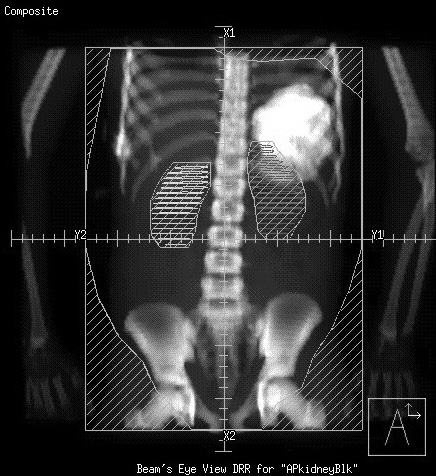
The treatment field shown is likely for the management of:
A ovarian cancer
B Hodgkin's disease
C seminoma
D Wilm's tumor
A ovarian
The whole abdomen field shown is likely for the management of ovarian cancer.
Which of the following is not a symptom of superior vena cava syndrome?
A pain
B syncope
C dyspnea
D venous distention
A pain
Superior vena cava syndrome is characterized by facial and orbital edema, venous distention in the neck and upper thorax, difficulty breathing, and occasional fainting.
For a controlled area, the shielding must be sufficient to reduce exposure to no more than:
A 1 mrem/hour
B 10 mrem/hour
C 1 mrem/week
D 100 mrem/week
D 100 mrem/week
Metastasis from primary bone cancer often shows up in the:
A breast
B diaphragm
C liver
D kidney
C liver
Metastasis from primary bone cancer shows up in the lungs, liver, adrenal glands, and brain. (big 4 + adrenal glands)
The parathyroids are located on the:
A posterior surface of the left thyroid lobe
B anterior surface of the left thyroid lobe
C posterior surface of both thyroid lobes
D anterior surface of both thyroid lobes
C posterior surface of both thyroid lobes
Reasoning:
The parathyroids are located on the posterior surface of both thyroid lobes.
Which of the following combined instruments make up a Fletcher-Suite applicator for use in gynecological brachytherapy?
A tandem and Syed Neblett device
B ring and tandem
C tandem and vaginal cylinder
D none of the above
D none of the above
Reasoning:
Syed-Neblett device template used for interstitial brachytherapy
Ring and Tandem: ring is like a 360 ovoid
Tandem + Vaginal Cylinder: used for endometrial or vaginal cancers to treat the length of the vaginal wall,
How many joules are in 1 electron volt?
There are 1.6 x 10 -9 joules in 1 electron volt.
If the upper mantle is treated, the arms may be elevated above the head or positioned akimbo in order to move the:
A axillary nodes away from the thorax
B mediastinal nodes into the field
C lungs away from the mediastinum
D heart away from the mediastinum
A axillary nodes away from the thorax
Positioning the arms up or akimbo for treatment of the upper mantle helps to move the axillary nodes away from the thorax for ease in protecting the lungs while treating axillary lymphatics.
The following is true regarding excisional biopsy:
A Involves the removal of a portion of the tumor.
B Generally appropriate for cure in relatively small, encapsulated, low-grade tumors.
C Provides a definitive diagnosis.
D 1, 2
C Provides a definitive diagnosis.
Reasoning:
An excisional biopsy takes all the tumor plus margin and can be the cure for early localized disease and also provide cell sample for histology.
B can be true but is not always true and C is always true
When the primary beam penetrates an object, much of it is scattered in all directions. This is known as:
A incidental radiation
B secondary radiation
C exit dose
D fallout
B secondary radiation
During gamma knife radiosurgery, gamma radiation is focused toward the target by:
A Lucite cones attached to the gamma helmet
B intraoperative circular cones attached to the gamma helmet
C several sources with energy directed through collimated spaces in the gamma helmet
D Lucite cones attached to the head frame
C several sources with energy directed through collimated spaces in the gamma helmet
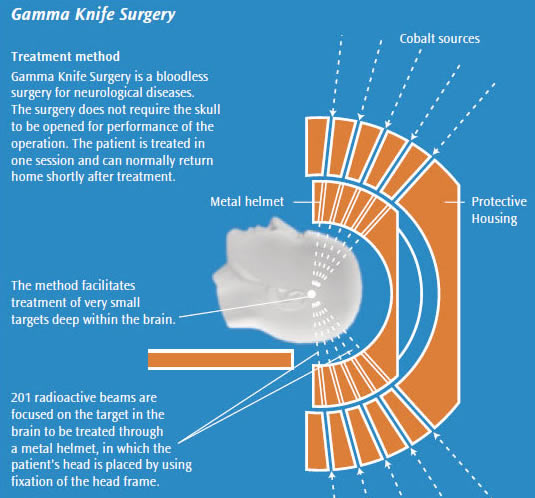
In single-fraction stereotactic radiosurgery:
A The target margins are generous.
B The fields conform to the target with a margin of 2 cm.
C There are generally no target margins.
D Fields are shaped using Cerrobend blocks.
C There are generally no target margins.
Reasoning:
In single‑fraction stereotactic radiosurgery (SRS), the goal is extreme precision. Because the dose is delivered in one high‑dose session, adding margins would increase the risk to nearby critical structures.
Obliquely incident photon beams that "flash" over the patient surface such as in the treatment of a chest wall can result in:
A increasing of the skin sparing effect
B inaccurate dose delivery
C neutron dose scatter to the patient
D decrease of the skin-sparing effect
D decreasing skin sparring effect
Reasoning:
TLDR: Flash increases surface dose
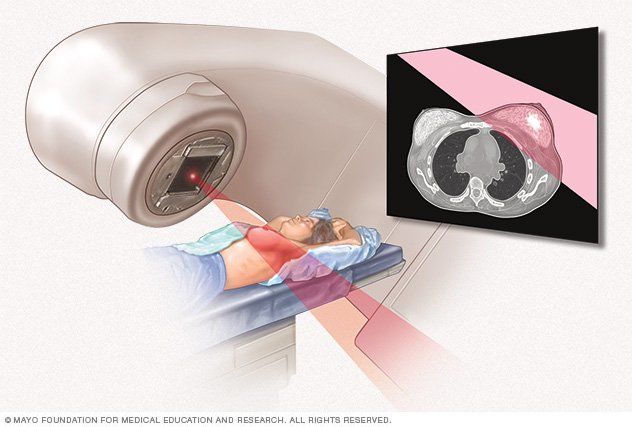
What is Plancks constant (the number)
What is it used for
6.62 x 10⁻³⁴ J-sec

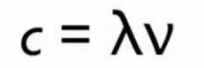
What is the formula for wavelength?
c = speed of light 3 × 10^ 8 m/s
v = frequency in Hz (1/s)
y = wavelength in meters (1 Angstrom =10^-10 meters)
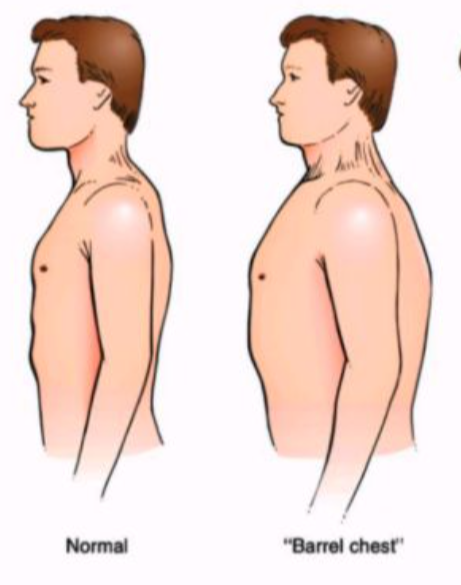
To achieve a neutral head position for a large patient with a large, barrel chest, the therapist may use a/an:
A Styrofoam block under the shoulders
B rolled towel behind the neck
C high headrest
D low headrest
C high headrest
A large patient with a large chest needs a high, thick headrest in order for the forehead and chin to be horizontal (neutral position).
FYI: COPD causes barrel chest
The lumen size for a urinary catheter is expressed in:
A cc
B mL
C gauge
D French
D French
Gauge is for Needles
cc/mL is for → contrast/ media volumes
Which of the following energy levels has the lowest binding energy?
A K shell
B L shell
C M shell
D all binding energies are the same
C M shell
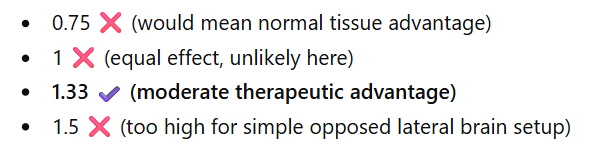
A midline brain tumor will be treated to 4500 cGy, through right and left lateral ports. Of concern is the normal brain tissue. The therapeutic ratio is approximately:
A 0.75
B 1
C 1.33
D 1.5
C 1.33
Therapeutic ratio is normal tissue tolerance/tumor lethal dose. The tolerance of brain tissue is accepted as 60 Gy. 60/45 = 1.33.
A dose of 3000 cGy is to be delivered at a depth of 5 cm with a %DD of 85%. What is the applied dose?
A 3529 cGy
B 2550 cGy
C 5550 cGy
D 6000 cGy
A 3529 cGy
Reason
Applied dose = dmax
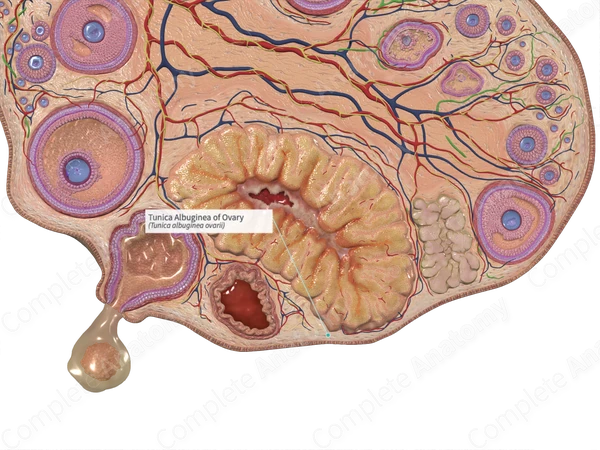
The tunica albuginea is a part of the ovary and describes a/an:
A capsule of collagenous connective tissue
B single layer of cuboidal epithelial tissue
C gland that secretes estrogen
D source of ovarian follicles
A capsule of collagenous connective tissue
The tunica albuginea is a capsule of white collagenous connective tissue in the ovaries.
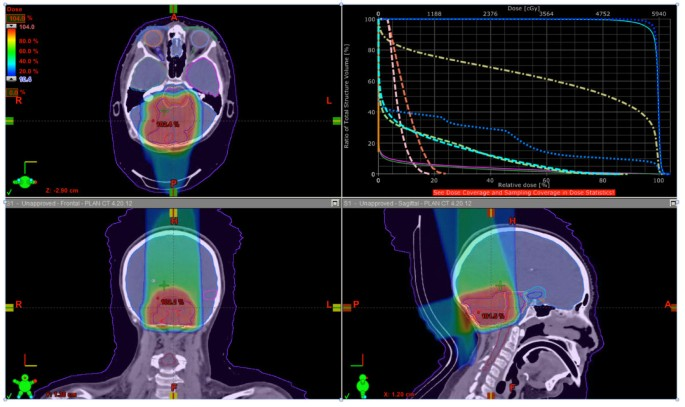
One disadvantage of using a vertex field to treat primary brain malignancies is that the field exits through the:
A brain and mediastinum
B pharynx and spinal cord
C orbits
D chest
B pharynx and spinal cord
When treating the vertex with the patient in neutral position, the vertex field would exit through the pharynx. If the patient is treated with chin flexed, the vertex field exits through the pharynx and spinal cord.
What is inderal
Drug class: Beta blocker
Used for: Hypertension, angina
Mechanism of action: blocks adrenaline, reduces physical response to stress: rapid heart rate, shaking, sweating etc.
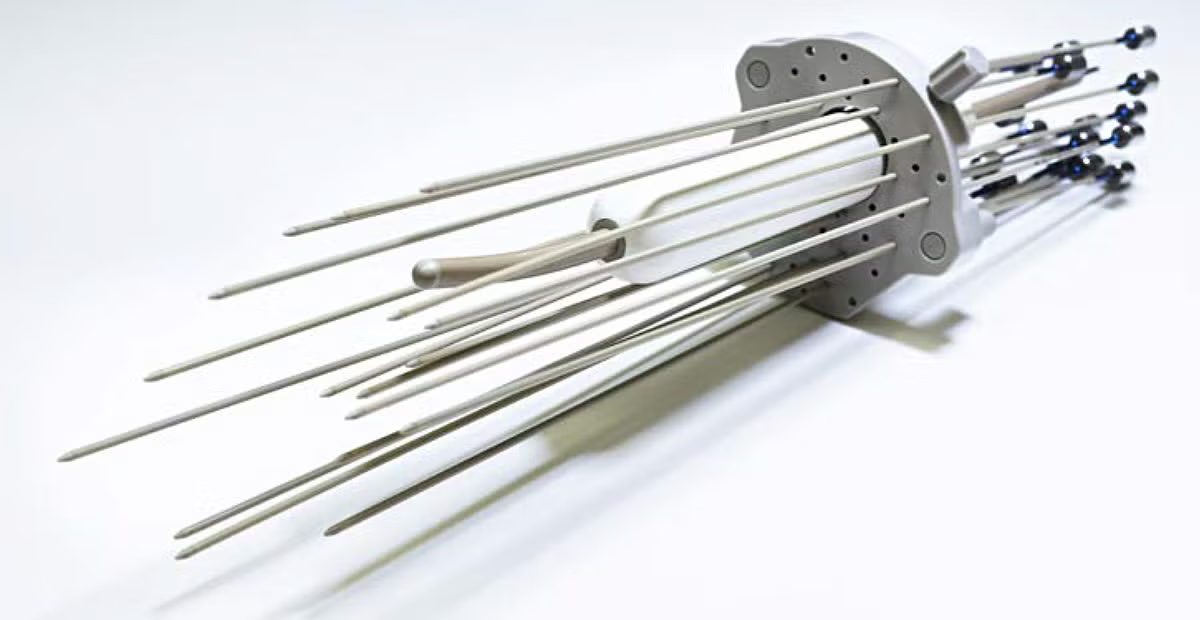
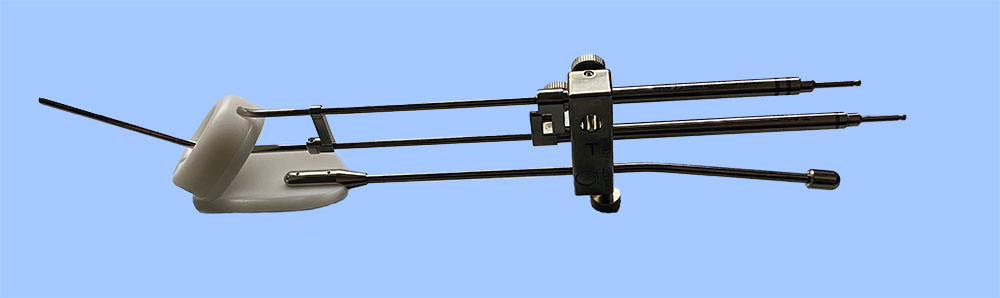
What is this?
What is it used for?
Syed-Neblett template is used for interstitial GYN brachytherapy for advanced tumors
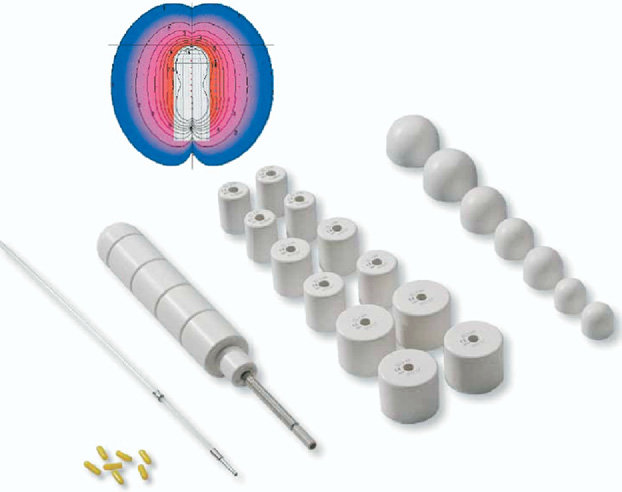
What is this? What does it treat?
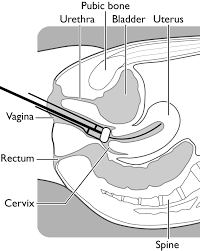
Vaginal cylinder - vaginal cuff (top part left after cervix and uterus are removed)
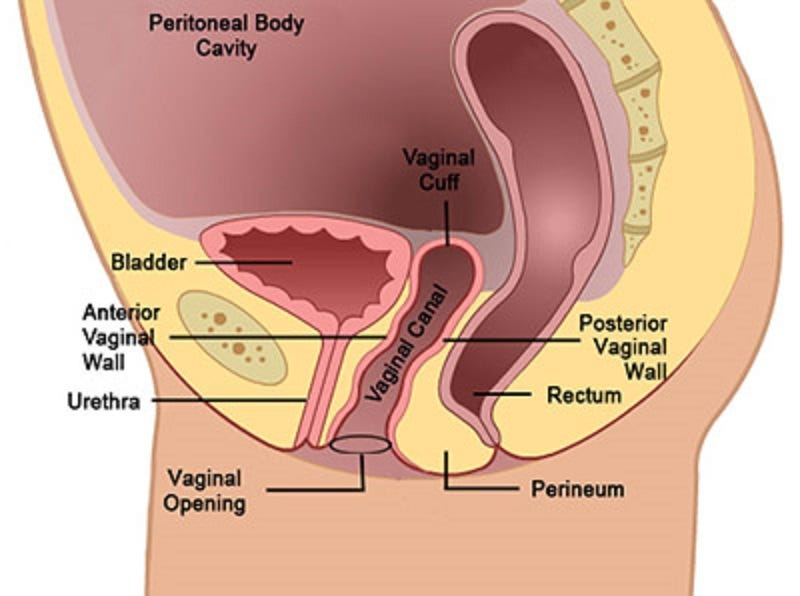
What is this what does it treat?
Tandem + ring- cervix
Term. Hematemesis
def. vomiting blood
Which of the following equipment produces extra nuclear indirectly ionizing radiation?
A Cobalt-60 unit
B linear accelerator
C Ir-192 high-dose-rate after loader
D none of the above
B linear accelerator
extra nuclear → outside the nucleus
indirectly ionizing→ low LET radiation
The rate of kinetic energy lost per unit path length is referred to as:
A stopping power
B linear energy transfer (LET)
C KERMA
D mass attenuation coefficient
A stopping power
Key word: '“lost” the energy is stopped
Stopping power is the rate of kinetic energy lost per unit path length of a particle. It is expressed in MeV cm2/g.
LET: Energy deposited locally per unit path length.
KERMA: Kinetic Energy Released per unit Mass. Photons give energy to electrons.
Measures energy transferred from photons to charged particles.
Doesn't necessarily mean the energy is absorbed there.
A radionuclide decays at the rate of 20% per hour. Its half-life is approximately:
A 2 hours
B 2.5 hours
C 3 hours
D 3.5 hours
D 3.5 hours
____
Do the % decay formula
All of the following are true regarding the photoelectric effect EXCEPT?
A The incident photon gives up all of its energy to the K-shell electron.
B A K-shell vacancy created by the interaction may be filled by an outer orbital electron resulting in characteristic X-ray production.
C The incident photon must overcome the binding energy of the K-shell electron.
D The photoelectric effect is the dominant interaction in radiation therapy.
D The photoelectric effect is the dominant interaction in radiation therapy.
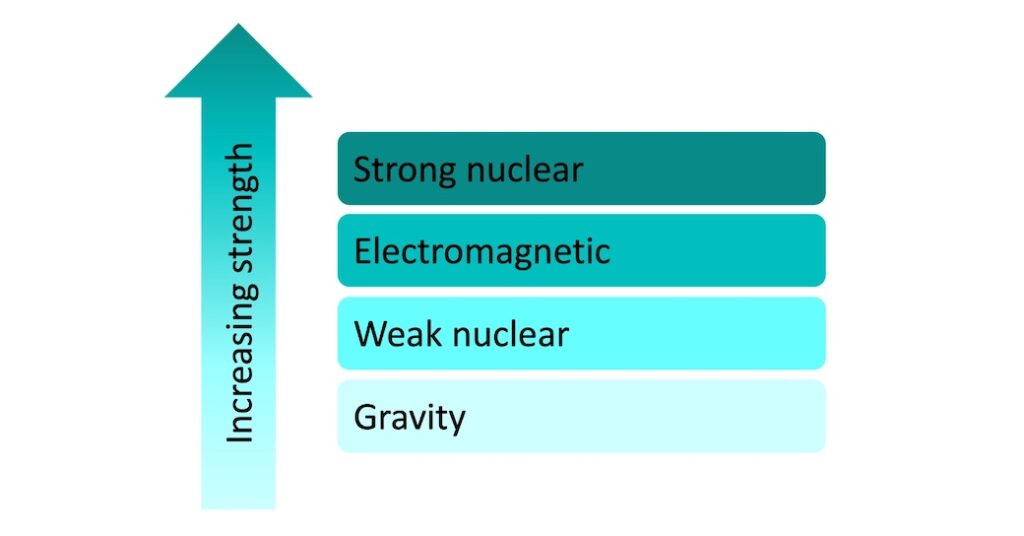
Which of the forces of nature is the weakest?
a. strong nuclear force
b. gravitational force
c. electromagnetic force
d. weak nuclear force
b. gravitational force
The term used to define the area on the surface of the patient on which radiation is incident is the:
A irradiated volume
B central axis
C target volume
D entrance point
D entrance point
Which of the following best defines a wedge factor?
A ratio of dose at depth with the wedge inserted to the dose at depth with no wedge inserted
B ratio of the angle of the isodose line tilt at a specified depth to the angle of isodose line with no wedge inserted
C ratio of dose at depth with no wedge inserted to the dose at depth with the wedge inserted
D none of the above
A ratio of dose at depth with the wedge inserted to the dose at depth with no wedge inserted
Wedge Factor: how much the wedge attenuates the beam
WF = Dose at depth with wedge/ dose at depth with no wedge
The Trendelenburg position is appropriate for a patient experiencing a medical emergency such as:
A seizure
B shock
C cardiac arrest
D respiratory distress
B shock
The Trendelenburg position has the patient's feet slightly elevated to promote blood flow to the heart. The position would be beneficial for a patient in shock or syncope.
The output energy will be altered if which of the following device malfunctions?
A light and mirror assembly
B dose monitor chamber
C electron gun
D filter and foil carousel
C electron gun
The output energy will be altered if the electron gun malfunctions. The electron gun is the source of electrons.
The collection of fluids or gasses in the pleural space potentially leading to lung collapse may be referred to as:
A pneumothorax
B hydrothorax
C hemothorax
D any of the above
D any of the above
FDG-PET imaging may be able to detect tumors not demonstrated on CT due to:
A higher glucose metabolic rates of malignant cells
B higher fluorine metabolic rates of malignant cells
C lower glucose metabolic rates of malignant cells
D lower fluorine metabolic rates of malignant cells
A higher glucose metabolic rates of malignant cells
FDG-PET imaging uses a radioactive fluorine tagged with glucose. Malignant cells have higher glucose metabolic rates, attracting the glucose-tagged fluorine to emit positrons.
Responsibilities of the Radiation Safety Officer (RSO) include(s) (select three):
A safe administration of radiation doses
B localization and decontamination in the instance of radioactive spills
C remaining abreast of all local, state, and federal regulations regarding radiation safety
D maintaining accurate exposure and inventory records
B, C, D
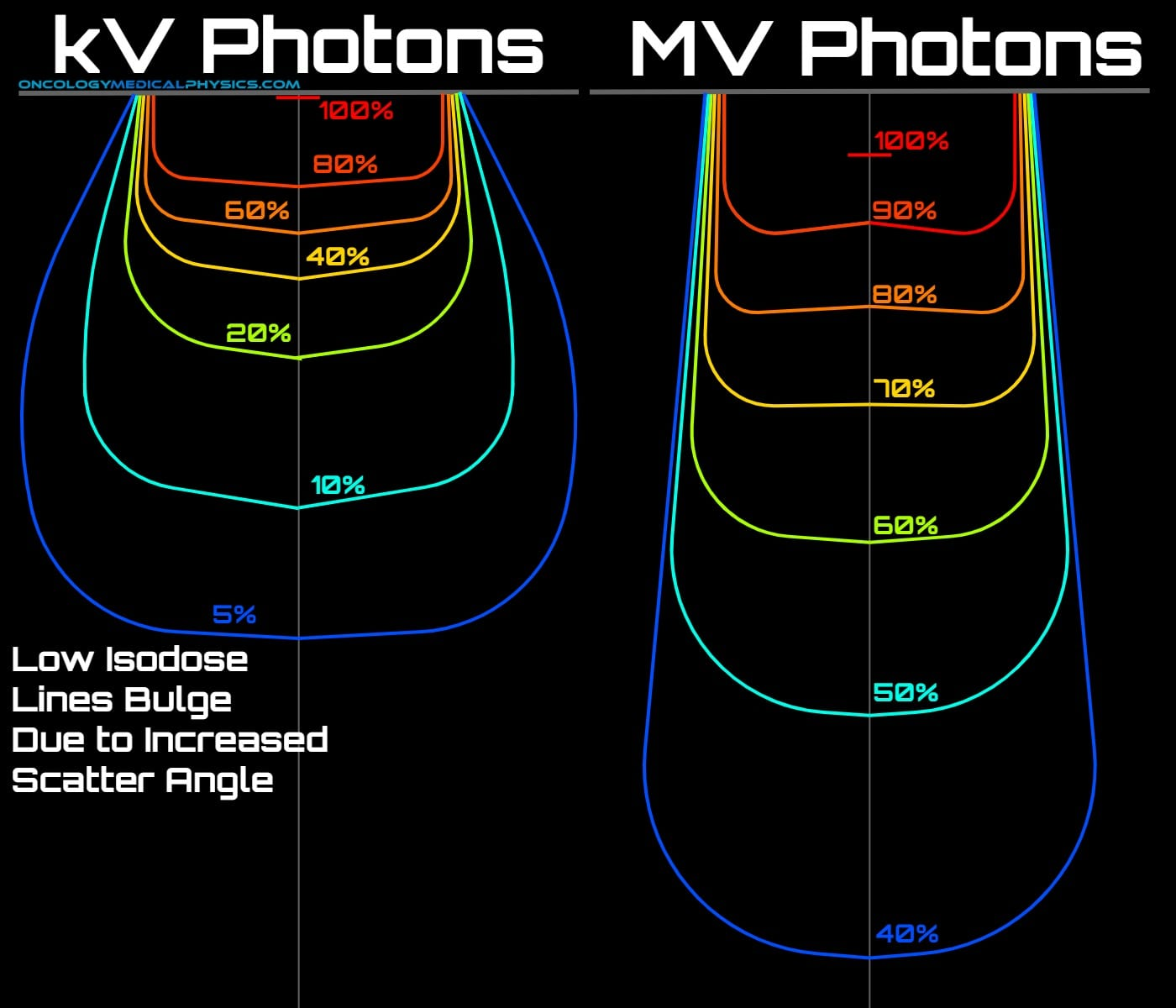
When comparing an isodose profile from a linear accelerator with one from an orthovoltage machine, the linear accelerator isodose will have the following characteristics:
1. greater penetration
2. greater side scatter
3. higher % DD at depth
4. flatter isodose lines
A 1, 2, 3
B 2, 3, 4
C 1, 3, 4
D 1, 2
C 1, 3, 4
The linear accelerator beam will be of greater energy so it will show greater penetration, less side scatter, higher percent depth dose and flatter isodose lines.
Which of the following cannot produce a 3-dimensional image?
A CT
B MRI
C ultrasound
D electronic portal imaging
D electronic portal imaging
For treatment of a soft tissue sarcoma on the calf of the leg, it would be reasonable to position the patient:
A prone with both legs together and immobilized with a foot band
B lateral decubitus with the affected leg elevated as high as possible
C supine with both legs together and immobilized with a foot band
D lateral decubitus with the affected leg moved away from the opposite leg and parallel to the couch
D lateral decubitus with the affected leg moved away from the opposite leg and parallel to the couch
A reasonable position among the ones listed for treatment of the posterior lower leg would be to have the patient on the side with the affected leg isolated and parallel to the couch.
When operating the linear accelerator in the electron beam mode, cones are used primarily to:
A scatter the raw electron beam across the treated area
B flatten the isodose lines of the electron beam
C focus electrons so that they are not easily scattered in the air
D raise the point of electronic equilibrium in the patient's tissue
C focus electrons so that they are not easily scattered in the air
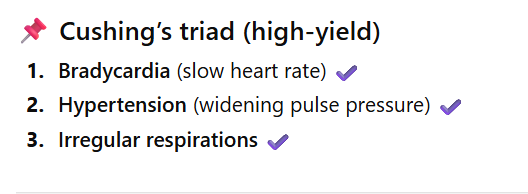
Signs of increased cranial pressure include all of the following except:
A nausea
B coma
C intense headache
D bradycardia
D bradycardia
Reasoning:
Increased cranial pressure may show relatively minor signs such as nausea, vomiting, and headache to extreme signs such as coma or sudden death.
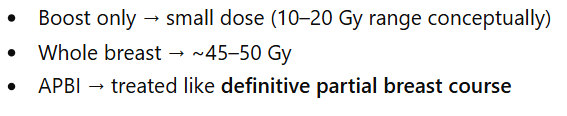
APBI (accelerated partial breast irradiation)
What does it treat?
What is the point of it?
treatment technique?
Advantages
lumpectomy site
breast-preserving technique
treated with brachytherapy
: shorter time frame + less tissue gets irradiated
Using APBI techniques, dose to the lumpectomy site typically ranges from 40-50 Gy.
APBI- treats only lumpectomy site
A patient suffering from a bacterial infection may have an elevated body temperature resulting from _____________released by the bacteria.
A antigens
B antibodies
C immunoglobulins
D pyrotoxins
D pyrotoxins
Pyrotoxins are chemical agents released by some bacteria triggering fever.
When planning portal arrangements, it is important to keep in mind that the treatment couch can be rotated:
A 360 degrees and moved right to left
B to any position and moved up and down
C up to 90 degrees and moved up and down and right to left
D about 180 degrees, moved up and down and right to left
D about 180 degrees, moved up and down and right to left
The treatment couch can be rotated approximately 90 degrees to the right and left of neutral/0 degrees, up and down and right to left, according to safe limits set by the manufacturer.
0.01 joule/kg is equivalent to:
A 1 roentgen
B 1 rad
C 1 Gray
D 1 Becquerel
B 1 rad
Lucite is often used as the material for positioning devices. One major concern when this material is in the path of the treatment beam is:
A electron contamination
B beam attenuation
C decreased rigidity
D acquired radioactivity
B beam attenuation
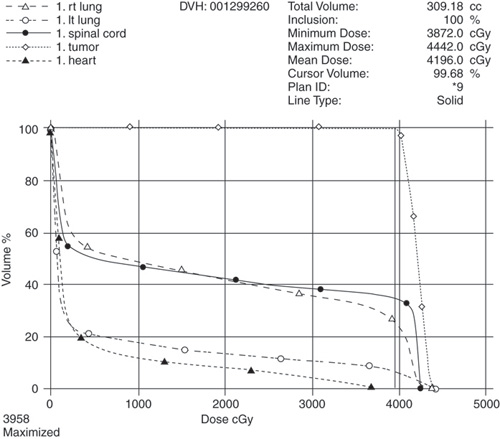
According to the dose volume histogram shown, 50% of the GTV receives:
A 4000 cGy
B 4100 cGy
C 4250 cGy
D 4500 cGy
B 4100 cGy
When your patient has symptoms of mild mucositis, you should advise a:
A regular diet
B high fiber diet
C soft, bland diet
D clear liquid diet
C soft, bland diet
For greater tumor control of Ewing's sarcoma, radiation dose must be higher than:
A 80 Gy
B 70 Gy
C 100 Gy
D 40 Gy
D 40 Gy
_____
To achieve tumor control for Ewing's sarcoma the radiation dose must be higher than 40 Gy.
Neuroblastoma originates in the:
A spinal cord
B nervous system
C liver
D kidney
B nervous system
Neuroblastoma is a pediatric malignancy originating in the sympathetic nervous system.
The cancer most commonly associated with previous ionizing radiation exposure is:
A leukemia
B lung cancer
C breast cancer
D ovarian cancer
A leukemia
The process of cellular growth and development is called:
A mitosis
B meiosis
C differentiation
D proliferation
D proliferation
Proliferation describes growth and development.
In a treatment plan report printed by the treatment planning system, the X, Y, Z coordinates of the isocenter indicate:
A the position of the isocenter relative to the position of the setup marks or radio-opaque markers placed on the patient's skin during the CT simulation
B the position of the isocenter relative to a designated origin in the CT image series used for the patient's treatment plan
C the position of the isocenter relative to constant anatomical landmark anywhere in the patient's body
D a and b
D a and b
Markers are placed on the patient's skin during the simulation. The treatment planner uses those markers to designate an origin in the patient's treatment planning CT series. In the treatment plan report, the isocenter coordinates represent an isocentric "shift" relative to the position of the setup markers placed at the time of simulation. This aids the therapist in positioning the patient and verifying the location of the isocenter on the first day of treatment. Port films are then acquired to document the treatment isocenter.
Which of the following would be considered a typical α/β ratio for early responding tissue?
A 1.5 Gy
B 3 Gy
C 5 Gy
D 10 Gy
Also answer:
Early vs late responding tissues:
4 examples of these types of tissues
do they divide quickly or slowly?
Sensitivity to fraction size?
Dose/fraction & # of fractions
high or low A/B ratio: also #
D 10 Gy
Early-responding tissues (tumors/carcinomas, mucosa, skin, bone marrow):
Divide quickly
Less sensitive to fraction size changes
normal dose/fraction & # of fractions
Have a HIGH α/β ratio: 10 Gy
Late-responding tissues (spinal cord, kidney, lung, bone): hypofractionation
Divide slowly
Very sensitive to fraction size:
bigger dose/fraction & less fractions
Have a LOW α/β ratio: 1–3 Gy
A good surface landmark for the true vocal cords is the:
A cricoid cartilage
B suprasternal notch
C thyroid cartilage
D hyoid bone
C thyroid cartilage
The true vocal cords are located about 1 cm inferior to the thyroid notch.
The therapist may see a patient treated in the seated position because of :
A shortness of breath and inability to climb onto the table
B weight exceeding the couch limit and claustrophobia
C shortness of breath and/or weight exceeds the couch limit
D anterior only treatment ports
C shortness of breath and/or weight exceeds the couch limit
Patients with shortness of breath may be treated sitting upright. Patients who would exceed the weight limits of the coach and who need emergency treatment and also experience shortness of breath may be treated sitting upright.
People with SVC could drown in their own fluids
The French-American-British (FAB) staging system is used to classify:
A chronic leukemia
B acute leukemia
C non-Hodgkin's lymphoma
D Hodgkin's lymphoma
B acute leukemia
The FAB staging system is used to classify acute leukemia using three levels for cell size in ALL or seven levels for maturation of cells in AML.
Half-value layer (HVL) is equal to:
A ln2/μ
B 0.693/μ
C a and b
D none of the above
C a and b
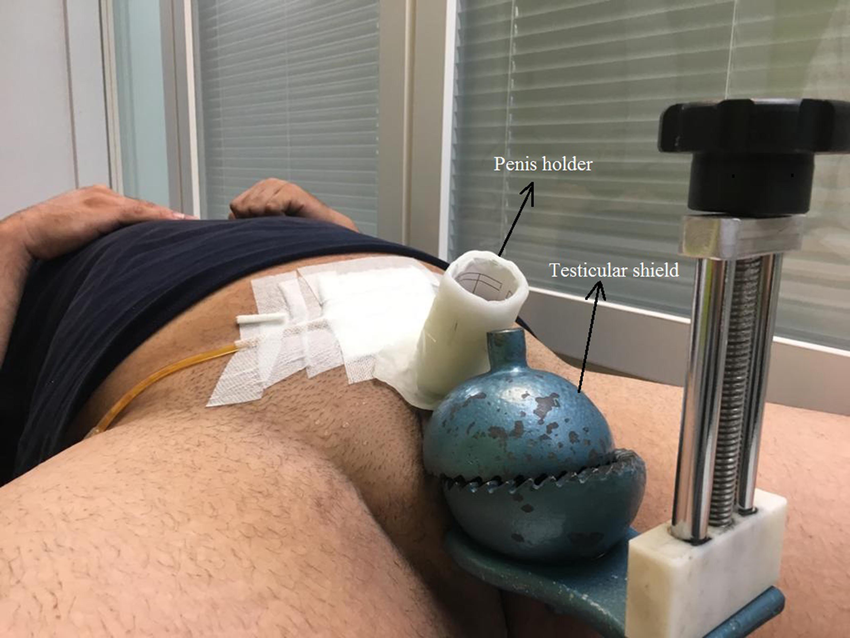
When treating a patient for a seminoma, the primary purpose of the testicular shield is to:
A shield the testes from electron contamination from the linac head
B shield the testes from the direct beam
C reduce the amount of internal scatter to the testes
D ensure the penis only receives dose
C reduce the amount of internal scatter to the testes
The testicular shield reduces the amount of internal scatter to the testes. Cuz usually they surgically remove the cancerous testicle so shield the remaining one
Although tamoxifen reduces the risk of breast cancer, what type of cancer may be a side effect of tamoxifen therapy?
A lung
B thyroid
C endometrial
D hypopharyngeal
C endometrial
In order to make custom photon Cerrobend blocks, the following information is needed:
1. target-to-image receptor distance
2. beam energy
3. patient thickness
A 1, 2
B 2, 3
C 1, 3
D 1, 2, 3
A 1, 2
In order to make custom blocks, the cutter must know:
the energy of the machine,
the target-to-image receptor distance, and
the target-to-tray distance.
The use of the wedge filter helps to: (choose all that apply)
1. achieve a more homogenous dose distribution
2. compensate for the absence or presence of tissue
3. avoid hot spots
123
A procedure used to stop the transmission of infection from the patient to others is called:
A aseptic technique
B reverse isolation
C sterilization
D isolation
D isolation
A procedure used to stop the transmission of infection from patient to others is called isolation. Reverse isolation stops the transmission of infection from others to the patient. Asepsis and sterilization inhibits the vehicle of disease transmission from objects to patient.
Reductions in______intake have coincided with______rates in colon cancer.
A meat; increasing
B fiber; increasing
C meat; decreasing
D fiber; decreasing
B fiber; increasing
Reasoning:
A diet low in fiber intake increases the risk of colon cancer.
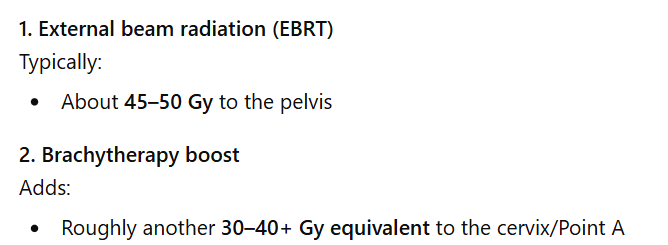
The expected total dose to point A for treatment of the cervix from both external radiation and brachytherapy is approximately:
A 35 Gy
B 70 Gy
C 90 Gy
D 140 Gy
C 90 Gy
A patient with bulky disease can receive 40 to 45 Gy with external beam and an additional 40 to 50 Gy with low-dose or high-high dose brachytherapy.
Patients treated while sitting upright are limited to treatment of the:
A pelvis
B whole abdomen
C upper torso
D extremities
C upper torso
What is the advantage of a rotating anode versus a stationary anode in an X-ray tube?
A Larger exposures are possible without overheating the tube.
B Rotating tubes are more economical.
C The rotating anode material has a higher atomic number than Tungsten.
D Rotating anodes are better conductors of heat than stationary anodes.
A Larger exposures are possible without overheating the tube.
The rotating anode distributes the heat produced over the entire anode, enabling it to withstand more heat than a stationary anode. This characteristic makes larger exposures possible.
Linear energy transfer is measured in units of:
A J/Kg
B keV/micrometer
C J/keV
D J/C
B keV/micrometer
The depth of inguinal lymph nodes :
A can range from 5 to 10 cm and is not influenced by patient size
B is at approximately 4 cm from the surface in all patients
C can range from 2 to 18 cm depending on patient size
D is always one-third of the patient's anterior to posterior separation
C can range from 2 to 18 cm depending on patient size
There are both deep and superficial inguinal lymph nodes located from 2 to 18 cm deep depending on the patient's size.
Mortality rates are based on the number of persons per___________population.
A 1000000
B 1000
C 100000
D 50
C 100,000
Cells of malignant growths are commonly:
A anaplastic
B well differentiated
C slow growing
D poorly oxygenated
A anaplastic
X-ray photons that have been emitted but have not yet struck the patient is referred to as:
A primary
B secondary
C scattered
D attenuated
A primary
What is the goal of Image Guided radiation therapy?
A to treat smaller volumes to higher dose
B to decrease treatment time
C to address positioning variation after treatment delivery
D to document electronic portal imaging accuracy
A to treat smaller volumes to higher dose
IGRT tries to correct for errors related to positioning inaccuracies and organ motion before treatment delivery so that more dose can be accurately delivered to smaller volumes of tissue.
A glioma spreads primarily by way of:
A local invasion
B cerebrospinal fluid
C lymph nodes
D blood
A local invasion
Gliomas spread by local invasion.
Tissue inhomogeneities that may alter dose distribution would include: (choose all that apply)
1. air cavities
2. lung
3. fat
4. bone
1234
Reasoning:
During treatment planning, any tissues without the same density as water may alter dose distribution.
Using a stethoscope alone would assess:
A pulse rate
B blood pressure
C pathogen load
D pulmonary and cardiac sounds
D pulmonary and cardiac sounds’
The stethoscope is used to assess respiratory and cardiac sounds.
Kidney tolerance (TD 5/5) in the adult would be:
A 2000 cGy delivered in 5 fractions
B 1500 cGy delivered in 5 fractions
C 2000 cGy delivered in 10 fractions
D 2400 cGy delivered in 10 fractions
C 2000 cGy delivered in 10 fractions
Reasoning:
The tolerance dose of the kidney in the adult is about 1800 to 2300 cGy using standard fractionation of 180 to 200 each fraction.
The standard treatment of choice for most differentiated thyroid cancers is:
A surgery
B external beam radiation
C chemotherapy
D hormone suppression
A surgery
For differentiated thyroid cancers, the treatment of choice is surgery.
The prescription says to deliver 450 cGy/fraction to the whole brain. Upon reading the prescription you should:
A Calculate the MU and treat the patient.
B Review the chart and modify the prescription.
C Ask another therapist to check your MU calculation.
D Verify the daily dose with the physician before administering.
D Verify the daily dose with the physician before administering.
450 cGy per fraction is a higher dose than typical for the whole brain. The therapist should check with the physician before administering.
The ability to displace the small bowel away from pelvic fields depends on:
A the volume of waste in the patient's bowel
B whether the patient has had previous radiation
C whether the patient has had previous pelvic surgery
D the patient's body habitus
C whether the patient has had previous pelvic surgery
The ability to displace the small bowel by using prone position and/or belly boards depends on:
the patient's body habitus and
whether the patient has had previous surgery in the pelvis and
also on whether the patient can assume the alternative position and use of devices.
An allogenic bone marrow transplant is one in which bone marrow is:
A removed from the patient, treated with radiation, and reinfused
B removed from the patient at the time of remission and later reinfused
C received from a sibling or person immunologically compatible
D received from an identical twin immunologically compatible
C received from a sibling or person immunologically compatible
An allogenic bone marrow transplant is one in which bone marrow is received from a sibling or individual determined to be immunologically compatible with the patient.
The main route of breast carcinoma as it metastasizes is first through the:
A bone
B internal mammary lymph
C supraclavicular lymph
D axillary lymph
D axillary lymph
Breast cancers spread first through the axillary lymph channels.
The best position for treating the vertex field is:
A chin extended as much as possible
B chin flexed
C chin turned to one side
D chin extension at 12 cm
B chin flexed
The vertex is best treated with the chin flexed. This position makes the field easy to image with the gantry and image receptor opposing and not colliding with the treatment couch.