Electoral Systems
 Call Kai
 Learn
Learn Practice Test
 Spaced Repetition
 Match
Match Flashcards
 Knowt Play
1/9

There's no tags or description
Looks like no tags are added yet.
Name | Mastery | Learn | Test | Matching | Spaced | Call with Kai |
|---|
No analytics yet
Send a link to your students to track their progress
10 Terms
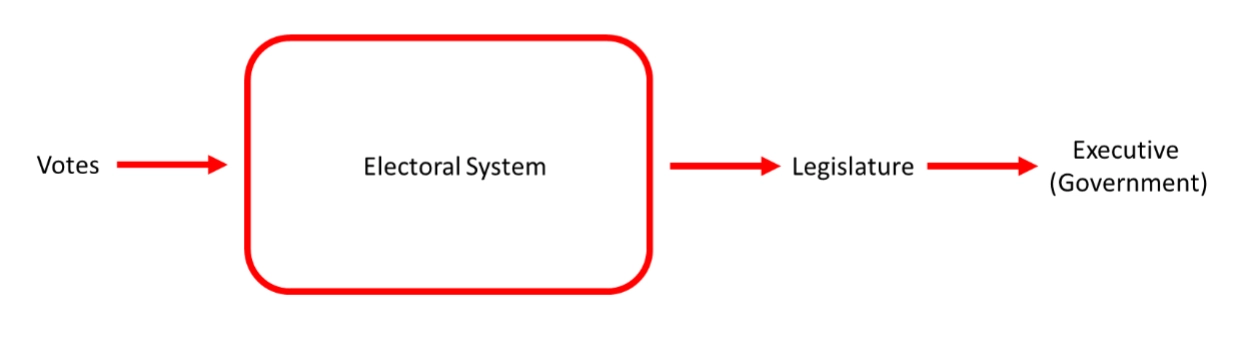
What is an electoral system?
method through which individual votes are translated into a collective outcome.
What are the 4 set of distinct rules in an electoral system?
districts (how many + allocation)
# of reps (how many per district? what about total?)
ballot procedure (one choice? ranking)
winning criteria (plurality or majority?)
What is each rule for the Single Member Plurality (geographically-based) system?
districts → 343 allocated by province, by population
representatives → 343 single per district
ballot → one choice
winning criteria → plurality (candidate with most votes in a district wins)
What is the SMP System?
Also known as First-Past-The-Post where the candidate with the most votes wins in single-member district, winners add up to form Parliament (House of Commons)
What is the Proportional Representation System?
A voting system where parties gain seats in proportion to the number of votes they receive in an election, aiming for a more representative outcome in legislative bodies, electoral rules can vary widely.
What are the effects of SMP?
efficiency → most efficient distribution of votes with more seats than its vote share warrants.
regionalisation → encourages regionalism by rewarding regionally concentrated parties, distorting regional strengths and weaknesses of national parties
What are the positives of the SMP?
simple in input and output
produces stable, decisive, accountable governments
minimises power of small and ‘fringe’ parties
What are the positives of PR?
translates voter preferences into representation without distortion
few or no wasted votes, more perspectives represented
can produce more consensus-based politics
What are the negatives of SMP?
distorts voter preferences at the aggregate level
many ‘wasted’ votes, narrows perspectives represented
concentrates power in one party and produces adversarial politics
What are the negatives of PR?
complex, especially in output
more unstable governments based on ‘elite’ bargaining
empowers small and fringe parties