ECO2023 - Microeconomics UF Midterm 1
 Call Kai
 Learn
Learn Practice Test
 Spaced Repetition
 Match
Match Flashcards
 Knowt Play
1/120

There's no tags or description
Looks like no tags are added yet.
Name | Mastery | Learn | Test | Matching | Spaced | Call with Kai |
|---|
No analytics yet
Send a link to your students to track their progress
121 Terms
Every point inside or on the PPF is
attainable (possible)
Any point that is on the PFF is
efficient (product efficient)
Any point outside of the PPF is called
unattainable (with the resources given to us)
One best point on the PPF is not only production efficient but is
allocatively efficient
What causes us to be inside of the PPF versus on the PPF?
misallocation of resource (example: unemployment)
opportunity cost
The next best alternative foregone; Loss/Gain
with a straight line PPF, OC are
constant along the entire PPF
with a bowed-out PPF, the OC are
always increasing in both directions; law of increasing opportunity costs
it is possible but unlikely that a nation's PPF could be ___________; this will be evident if the OC's are ___________ as we move along the PPF
bowed inward; decreasing
change in the factors of production cause a
shift in the PPF - due to: land, capital, labor, and entrepreneurial effort/entrepreneurship
a change in technology; if the technology for the production of ONE good changes, this will cause a
rotation in the PPF
a change in technology; if the technology for the production of BOTH goods changes, this can cause a
shift in the PPF
parallel shift of the PPF
won't change OC
rotation of the PPF
would change OC
quantity demanded
at a given price, how much stuff people are willing to buy
law of demand
the idea that as the price of something goes up, the quantity you demand goes down
income effect (demand)
spending what is in my pocket
substitution effect
queso or guac
demand
marginal social benefit
when there is a change in the price of a good, it is referred to as a change in the ____________ ________________
quantity demanded; this does NOT shift the demand curve, just move along the curve
shifts in demand: normal good
everyday life; as your income increases, demand ↑ (right)
shifts in demand: inferior good
things you buy if you have limited income; as income increases, D ↓
shifts in demand: anything that make a product less desirable
D↓(preferences)
shifts in demand: anything that makes a product more desirable
D ↑
shifts in demand: two goods that are consumed together (ex: hot dogs and hot dog buns)
complements; when the price of one goes up the demand for the other goes D↓
shifts in demand; two goods that are consumed instead of the other (ex. pepsi and coke)
substitutes; when the price of one goes up the demand for the other D↑
shifts in demand; when the population of consumers increases
D ↑
shifts in demand; when the population of consumer decreases
D↓
shifts in demand; when you expect a price in the future your demand changes TODAY! w/ an increase
expected future price; your demand today ↑
shifts in demand; when you expect a price in the future your demand changes TODAY! w/ a decrease
expected future price; your demand today ↓
shifts in demand; expected future income - more money in the future
D↑ TODAY
shifts in demand; expected future income - less money in the future
D↓ TODAY
shifts in demand; sanctions imposed on buys of a good
if it is illegal to buy a good, the demand ↓
quantity supplied
at a given price, how much stuff firms are willing to sell; as price increases, firms sell more stuff
law of supply
the idea that as price of something goes up, the quantity supplied goes up; example: low-hanging fruit
supply
marginal social cost
when there is a change in the price of a good, it is referred to as a change in the _________ __________ of that good
quantity supplied; this does NOT change the supply curve, just move along the curve
shifts in supply; as input prices increase
firms S ↓ - cost of inputs (things used to produce a good)
shifts in supply; as input prices decrease
firms S ↑ - cost of inputs (things used to produce a good)
shifts in supply; if there is a technological advancement (easier to make a good) in the production of a good, firms will product
more of that good; S ↑
shifts in supply; price of production substitute (example: using wood to make paper or furniture)
S ↓
shifts in supply; price of production complement (example: making steaks and leather)
S ↓ (by-products)
shifts in supply; if a firm expects the price to increase in the future,
S ↑ (expected future prices)
shifts in supply; if a firm expects the price to decrease in the future,
S ↓ (expected future prices)
shifts in supply; when the # of firms (sellers) increases
S ↑
shifts in supply; when the # of firms (sellers) decreases
S ↓
shifts in supply; natural disaster
state of nature - S ↓
shifts in supply; sanctions (penalties) imposed on sellers of a good
if it is illegal to sell a good, the supply ↓
A market is in equilibrium when
it is producing the efficient quantity
Quantity demanded > quantity supplied
surplus
Quantity demanded < quantity supplied
shortage
with a surplus present, if the market is left unregulated, the price will ________ until EQ is reached
drop
with a shortage present, if the market is left unregulated, the price will ________ until EQ is reached
rise
if demand increases
P ↑ Q↑
if supply increases
P ↓ Q ↑
if demand decreases
P ↓ Q ↓
if supply decreases
P ↑ Q ↓
key words for demand
consumers/consumption, buyers, and demanders
key words for supply
producers/production, sellers, and suppliers
law of demand states when the price of a good increases
the quantity demanded of that good will decrease
elasticity
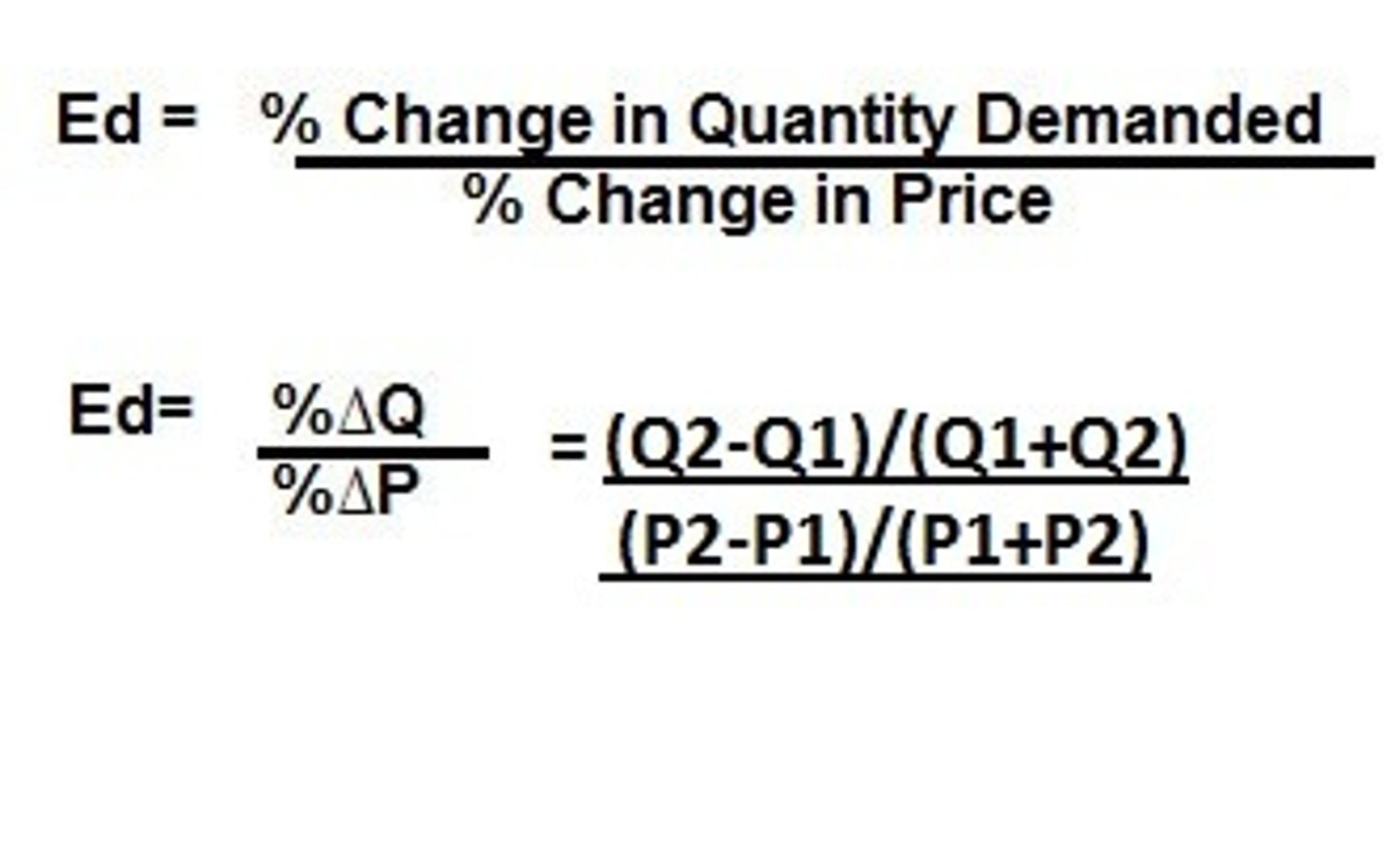
the percent change in quantity divided by percent change in price
Elasticity synonym
responsiveness
price elasticity of demand formula
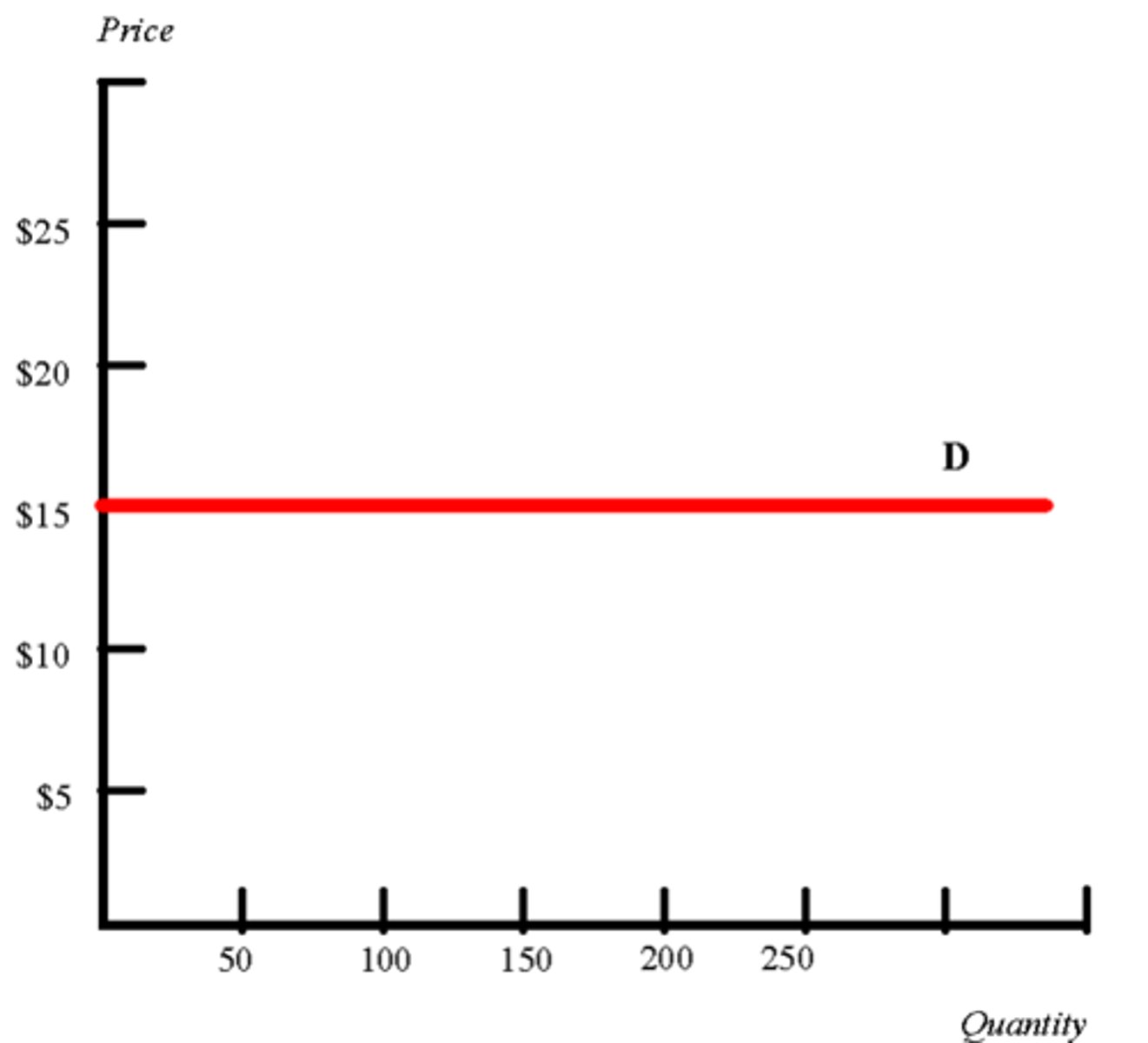
perfectly elastic
E = infinity
inelastic
E < 1
elastic
E > 1
unit elastic
E = 1
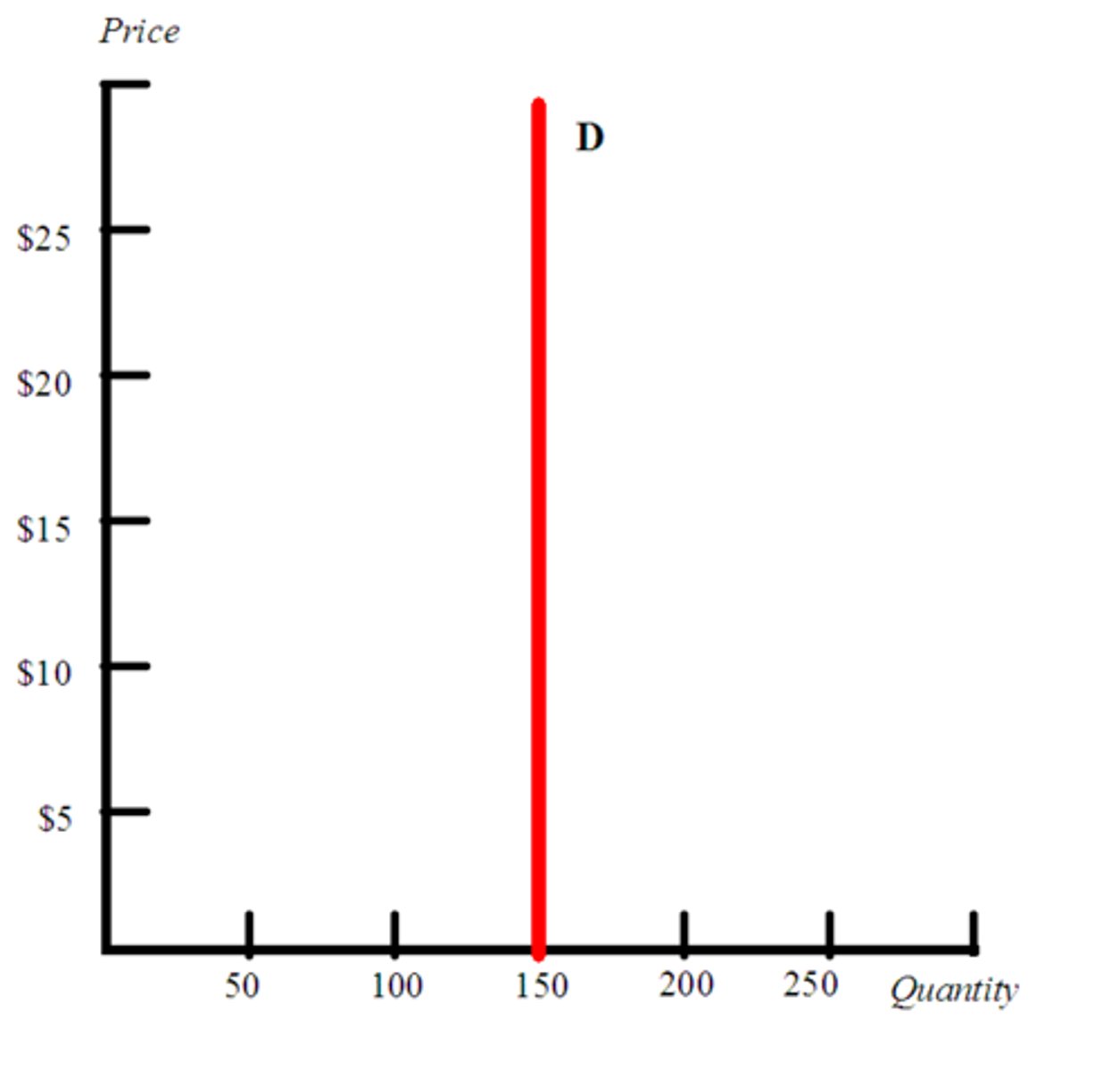
perfectly inelastic
E = 1
more elastic
flatter curve
portion of income spent on a good - higher proportion
more elastic - price decreases
Number of substitutes - more substitutes
more elastic
Luxury vs. Necessity
luxury good = more elastic
time passed since price change
more time passed = more elastic
total revenue
TR = P x Q
if demand is inelastic
revenue follows price
if demand is elastic
revenue goes against price
if demand is ELASTIC and a firm RAISES its prices, total revenue
↓
if demand is ELASTIC and a firm LOWERS its prices, total revenue
↑
if demand is UNIT ELASTIC and a firm RAISES its prices, total revenue
=
if demand is UNIT ELASTIC and a firm LOWERS its prices, total revenue
=
if demand is INELASTIC and a firm RAISES its prices, total revenue
↑
if demand is INELASTIC and a firm LOWERS its prices, total revenue
↓
income elasticity of demand - +
we have a normal good
income elasticity of demand - -
inferior good
cross price elasticity of demand - +
substitutes
cross-price elasticity of demand - -
compliments
marginal
one more unit
MB > MC
Q ↑ (deal)
MB < MC
Q ↓ (no deal)
consumer surplus
willingness to pay - price (demand - P*)
producer surplus
price - willingness to pay
total surplus
total surplus = consumer surplus + producer surplus
efficiency happens when we
maximize total surplus (producing at capacity)
if demand is more elastic than supply
flatter = more elastic; CS < PS
if supply is most elastic than demand
PS < CS
the more elastic curve will have _____ of the total surplus
less
when a competitive market is at equilibrium
MB = MC
Adam Smith, Wealth of Nations, 1776
each person in a competitive market, acting only in their own self-interest, is led to promote the efficient use of society's resources
invisible hand
a competitive market will reach the efficient point of production (the point that best uses society's resource) on its own accord, as if the market were being guided to the point by
if a market is not producing the efficient quantity then the market will have
deadweight loss