AP BIO final exam study
 Call Kai
 Learn
Learn Practice Test
 Spaced Repetition
 Match
Match Flashcards
 Knowt Play
1/59

There's no tags or description
Looks like no tags are added yet.
Name | Mastery | Learn | Test | Matching | Spaced | Call with Kai |
|---|
No analytics yet
Send a link to your students to track their progress
60 Terms
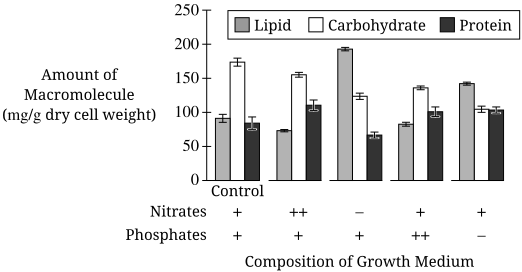
Figure 1. Effect of different abiotic factors on the macromolecule content of bacterial cells. Cells were grown in media with a standard amount (), twice the standard amount (), or a reduced amount () of each substance. Error bars represent .
To test the effect of different abiotic factors on the macromolecule content of bacterial cells, researchers grew identical samples of bacterial cells on growth media in which the amount of nitrates and phosphates differed. The amounts of carbohydrates, lipids, and proteins in each sample of cells were then determined (Figure 1).
Based on Figure 1, use of which of the following growth media resulted in a decrease in the amount of protein but an increase in the amount of lipids compared with the control?
Medium with a reduced amount of nitrates and a standard amount of phosphate

The regulation of a certain cyclin-CDK complex involves the activity of three enzymes (Figure 1), and the activation of this complex is required for cells to progress through the cell cycle.
Based on Figure 1, which of the following describes a cell in which cell cycle progression continues?
A cell in which enzyme 1 is functional, and enzyme 2 and enzyme 3 are nonfunctional
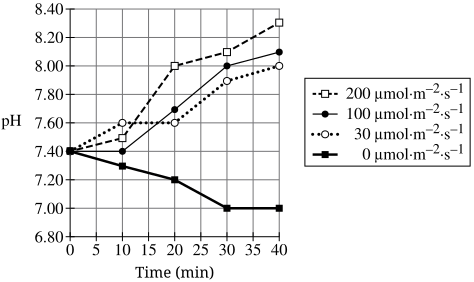
Students investigated the effect of light intensity on the rates of photosynthesis and cellular respiration in algae. They placed equal numbers of algal cells into test tubes containing a solution at pH7.40. The test tubes were divided into four treatment groups, and each treatment group was exposed to a different light intensity. The pH in the tubes was measured every 10 minutes and used as an indicator of CO2 concentration because CO2 produces an acidic solution when dissolved in water (Figure 1).
Which of the following claims is best supported by the data?
Algae that are exposed to 100 μmol⋅m⁻²⋅s⁻¹ of light have a greater rate of photosynthesis than of cellular respiration over time.
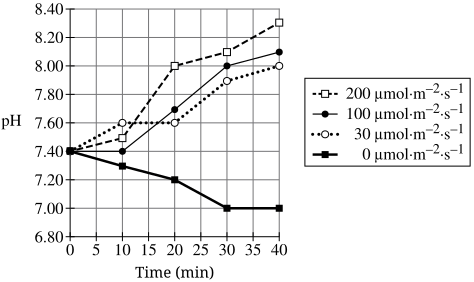
Students investigated the effect of light intensity on the rates of photosynthesis and cellular respiration in algae. They placed equal numbers of algal cells into test tubes containing a solution at pH7.40. The test tubes were divided into four treatment groups, and each treatment group was exposed to a different light intensity. The pH in the tubes was measured every 10 minutes and used as an indicator of CO2 concentration because CO2 produces an acidic solution when dissolved in water (Figure 1).
Scientists claim that changes in the rate of photosynthesis will be reflected by changes in pH.
Which of the following best supports their claim?
Algae performing photosynthesis remove CO2 from the solution, increasing pH.
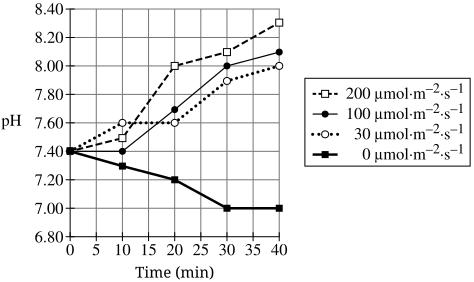
Students investigated the effect of light intensity on the rates of photosynthesis and cellular respiration in algae. They placed equal numbers of algal cells into test tubes containing a solution at pH7.40. The test tubes were divided into four treatment groups, and each treatment group was exposed to a different light intensity. The pH in the tubes was measured every 10 minutes and used as an indicator of CO2 concentration because CO2 produces an acidic solution when dissolved in water (Figure 1).
Based on Figure 1, which of the following was used as a control in the experiment?
The 0 μmol⋅m⁻²⋅s⁻¹ light-intensity treatment
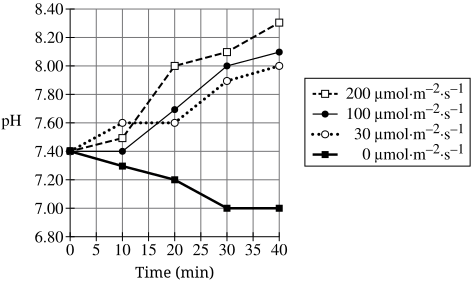
Students investigated the effect of light intensity on the rates of photosynthesis and cellular respiration in algae. They placed equal numbers of algal cells into test tubes containing a solution at pH7.40. The test tubes were divided into four treatment groups, and each treatment group was exposed to a different light intensity. The pH in the tubes was measured every 10 minutes and used as an indicator of CO2 concentration because CO2 produces an acidic solution when dissolved in water (Figure 1).
Based on Figure 1, which of the following environmental changes will result in the greatest increase in the net photosynthetic productivity by the algae?
A change in light intensity from 0 μmol⋅m⁻²⋅s⁻¹ to 30 μmol⋅m⁻²⋅s⁻¹
Cystic fibrosis is an autosomal (non-sex-linked) recessive genetic disorder in humans. In a certain geographical area, the incidence of cystic fibrosis is currently estimated at 1 in 377 live births. Which of the following is most likely closest to the frequency of the recessive allele in the human population in the area after 10 generations, assuming that the population remains in Hardy-Weinberg equilibrium?
0.052
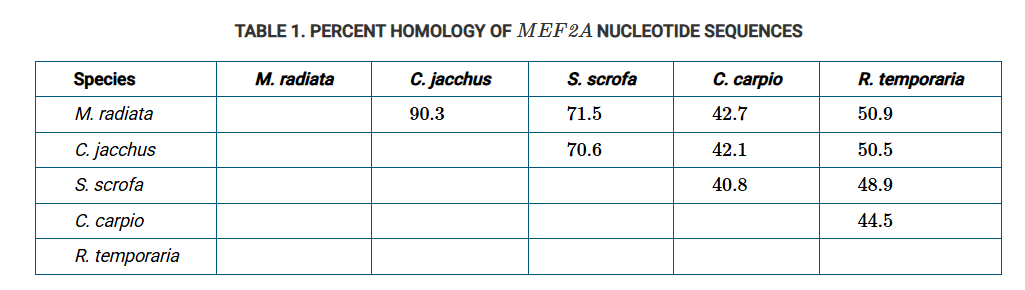
The MEF2A gene is critical for muscle development in many vertebrates. A researcher sequenced the MEF2A gene from five vertebrate species and calculated the percent homology between the nucleotide sequences from each pair of species (Table 1).
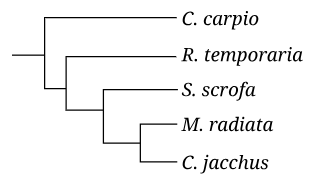
Which of the following cladograms is the most accurate representation of the data in Table 1 ?
Water crosses the plasma membranes of certain eye cells at a higher rate than it does in other cell types. Which of the following best explains why the rate of water transport is higher in the eye cells?
The eye cells have protein channels that allow water to pass through in greater quantities than the phospholipid bilayer allows.
A scientist performed an experiment to test the ability of chloroplasts to produce ATP in the dark. The scientist maintained chloroplasts under dark conditions and placed them first in a pH 4 solution for 15 seconds and then in a pH 8 solution containing ADP and Pi (inorganic phosphate). Under these conditions, the of the pH stroma increased to 8, the pH of the thylakoid space remained at 4, and the chloroplasts produced ATP.
Which of the following best explains how the difference in pH between the stroma and the thylakoid space enabled the chloroplasts to produce ATP in the dark?
The difference in pH created a proton gradient that enabled protons to pass through ATP synthase, activating it to produce ATP.
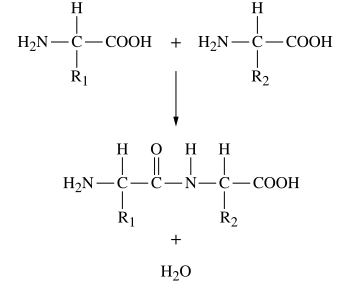
Which of the following best explains the reaction represented in Figure 1 ?
It is a dehydration synthesis reaction involved in the formation of a polypeptide.
Cyclin-dependent kinase 7 (CDK7) binds to cyclin H and a second accessory protein, MAT 1, to form a complex of three proteins. Researchers investigating the role of CDK7 claim that formation of this complex promotes cell cycle progression.
Which of the following supports the researchers’ claim?
Increased expression of CDK7 is associated with certain types of cancer.
Which of the following best describes a cell that is in the G1 stage of the cell cycle?
The cell is growing in size and increasing its number of proteins and organelles.
Cholinesterase is an enzyme that catalyzes the hydrolysis of the signaling molecule acetylcholine. Which of the following best explains how cholinesterase carries out its function?
Cholinesterase breaks covalent bonds within acetylcholine by the addition of a water molecule.
Which of the following best describes the primary mechanism of transport whereby carbon dioxide moves from inside a cell to outside the cell?
Carbon dioxide passively diffuses between the membrane lipids.
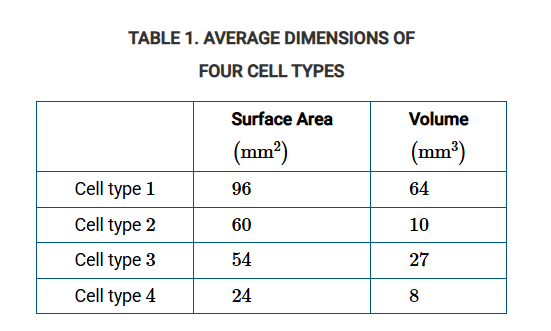
Which of the cell types represented in Table 1 is most efficient at acquiring nutrients by diffusion?
Cell type 2
DNA damage can lead to the release of the protein cytochrome c from mitochondria. Cytochrome c then activates the enzyme capase-9, resulting in the release of more cytochrome c, followed by apoptosis.
It is positive feedback because the release of cytochrome c from mitochondria contributes to the release of more cytochrome.
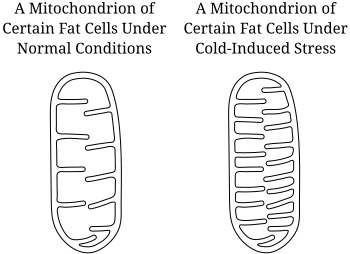
In a certain type of fat cells, cold temperatures trigger a series of events that include changes to the structure of the mitochondria. A model of a mitochondrion from these fat cells under normal environmental conditions and when experiencing cold-induced stress is shown in Figure 1.
Which of the following best explains how the changes in mitochondrial structure observed when the cell experiences cold-induced stress affect cellular respiration?
The surface area of the inner membrane increases, providing more space for the components of the electron transport chain

Researchers claimed that cells treated with radiation are unable to progress through the cell cycle. They tested their claim by exposing a group of cells to radiation (experimental group). A group of unexposed cells served as the control group. After 24 hours, they determined the number of cells in each stage of the cell cycle and confirmed that all differences were statistically significant.
Based on Table 1, which of the following best supports the researchers’ claim?
In the experimental group, no cells were able to enter G2
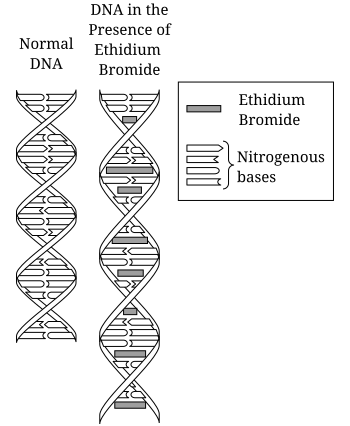
Ethidium bromide is a chemical that disrupts the replication of DNA. Based on the model shown in Figure 1, which of the following best describes the effect of ethidium bromide on DNA structure?
It is inserted between sequential nitrogenous base pairs, increasing the length of the DNA molecule.
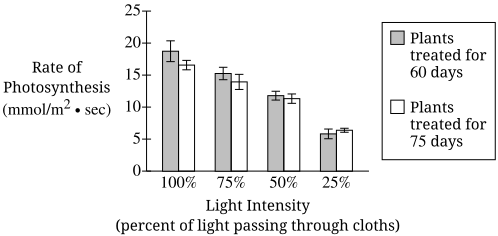
Using light-filtering cloths, scientists exposed sage plants to four different light intensities. Half of the sage plants were exposed to light for 60 days, while the other half were exposed to light for 75 days. The rate of photosynthesis in each plant was then determined (Figure 1).
Which of the following statements best describes the data?
At 75% light intensity, the rate of photosynthesis was unaffected by an increase in treatment time.
Hunting of African elephants for their tusks resulted in a 90% reduction in the size of one particular elephant population by 1992. Since then, protections of elephant populations have improved, and the population size has begun to increase. Before 1992, tuskless elephants were rare, but now a significant proportion of the female elephants in this population are tuskless. An allele of the gene AMELX appears to be responsible for the tuskless trait.
Which of the following best explains the change in the relative proportion of tuskless elephants since 1992 ?
Female tuskless elephants were more likely to have survived than were tusked females, resulting in a greater proportion of the offspring having the genes of the tuskless elephants.
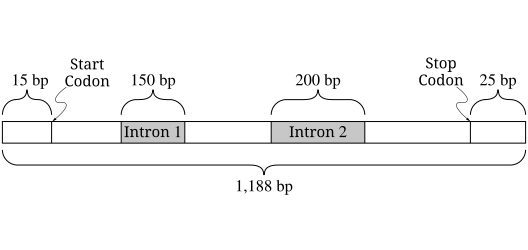
Which of the following is closest to the number of mRNA amino acids encoded by the produced from the pre-mRNA shown in Figure 1 ?
265
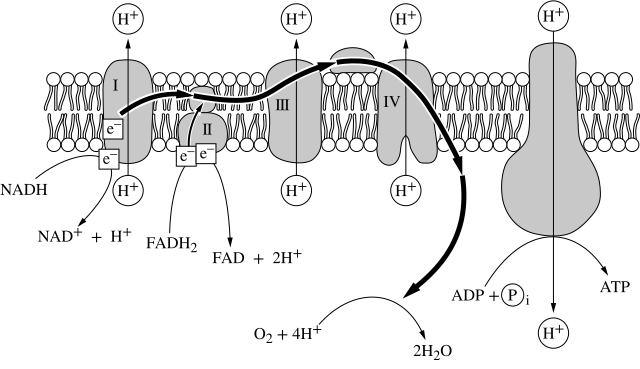
Compound X binds to complex IV of the mitochondrial electron transport chain and prevents complex from accepting electrons.
Based on Figure 1, which of the following best explains why the cells of an animal exposed to compound X have an increased ratio of NADH to NAD+?
NADH cannot be oxidized to NAD+ because complexes I, II, III and cannot accept electrons if electrons cannot be passed to complex IV.
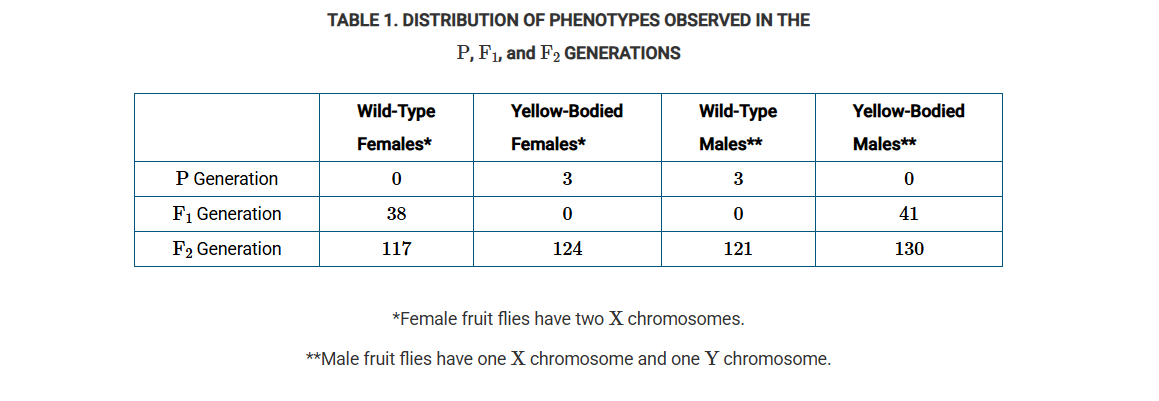
Based on the researchers’ hypothesis that the mutant allele is sex-linked, which of the following is closest to the expected number of wild-type females and the expected number of yellow-bodied males in the F2 generation?
123 wild-type females and 123 yellow-bodied males
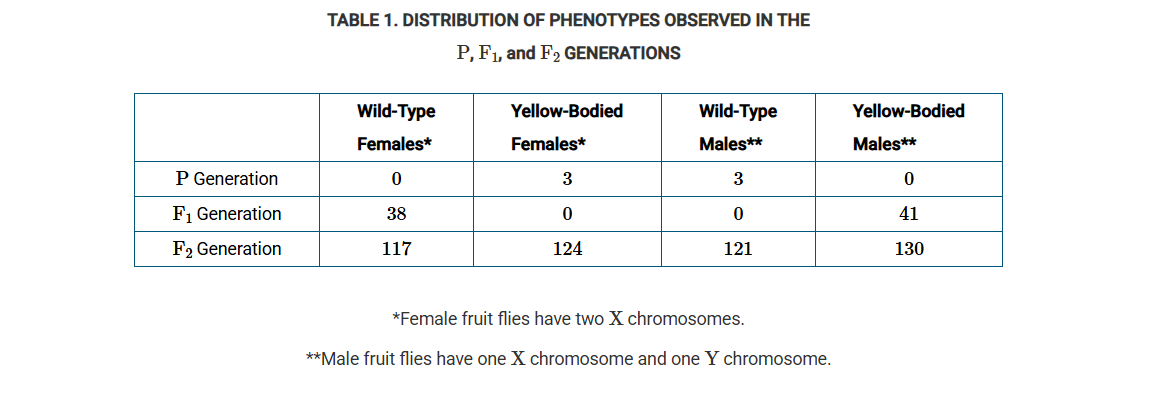
Using a P-value of .05, researchers performed a chi-square analysis of the distribution of phenotypes in the F2 generation.
Which of the following chi-square calculated values would cause the researchers to reject their null hypothesis?
7.98
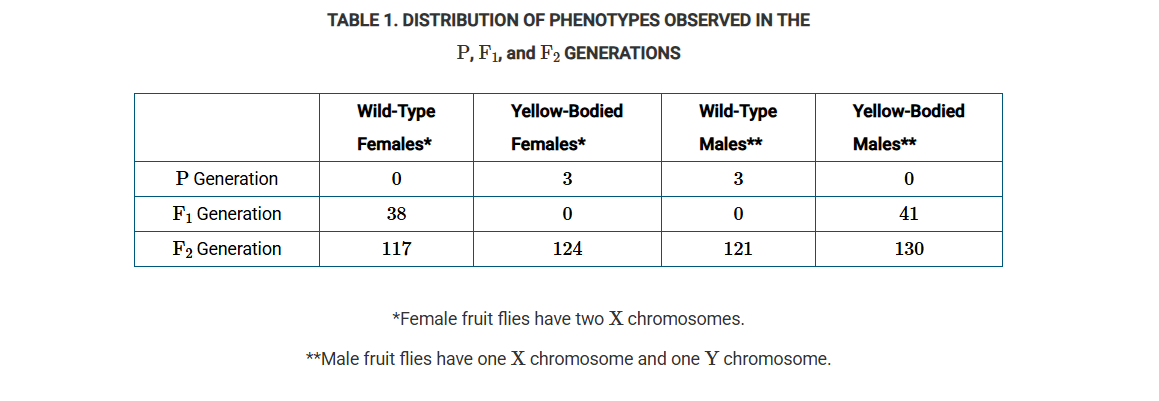
Which of the following best supports the claim that the fitness of yellow-bodied flies is lower than the fitness of wild-type flies?
Males with the yellow-body phenotype have weaker sex-comb bristles and decreased mating success compared with the bristles and mating success of wild-type males.
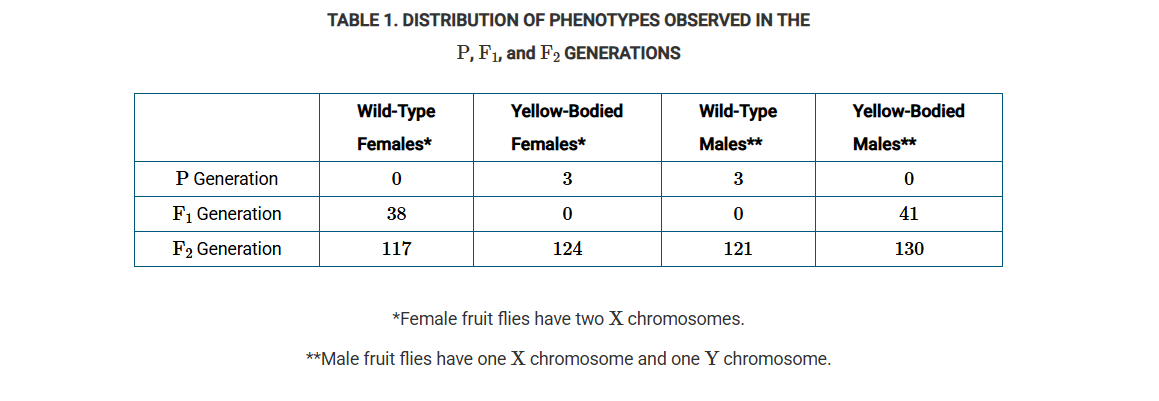
Which of the following most likely explains how the sex combs of yellow-bodied flies have a different structure than do the sex combs of wild-type flies?
The protein encoded by the mutant body color allele interferes with the development of sex combs.
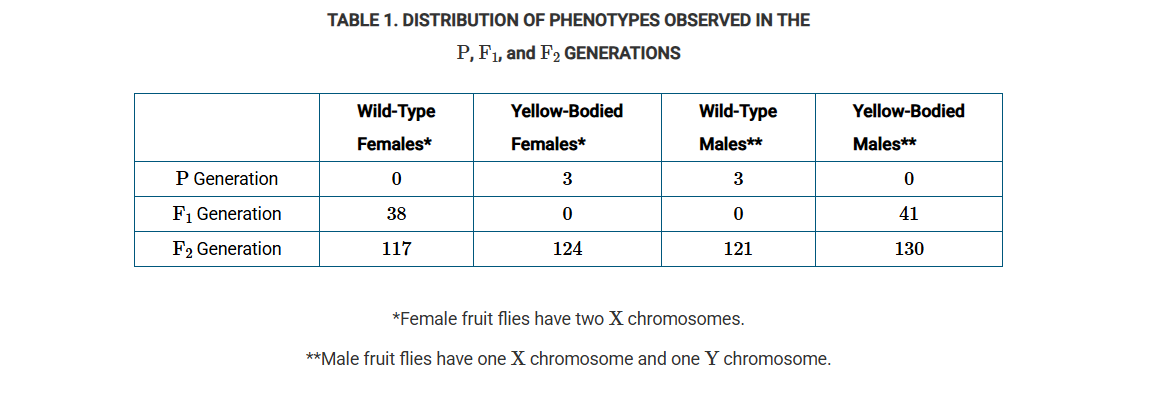
Based on the data in Table 1, which of the following is the most likely inheritance pattern for the mutant allele?
The mutant allele is X-linked recessive.
Gel electrophoresis can be used to directly determine which of the following?
The number of base pairs in a fragment of DNA
Pit vipers are snakes that have deep sensory openings (pits) between their nostrils and eyes. These pits enable the snakes to sense heat emitted by endotherms, such as mammals, allowing the snakes to find their prey. In an experiment, researchers discovered that nerve cells in the pits transcribe the TRPA1 gene 40 times more often than do other nerve cells in the snakes. The researchers claim that the gene TRPA1 is involved in the snakes’ ability to sense heat.
Which of the following would be the best control to add to the researchers’ experiment?
Measuring TRPA1 transcription in nerve cells of snakes lacking pits
In plants the enzyme EPSP synthase catalyzes a reaction between two different substrates, S3P and PEP, to form a product used in the synthesis of three amino acids. The structure of glyphosate, the active chemical in many herbicides, is very similar to that of PEP.
Which of the following explains how glyphosate most likely functions as an herbicide?
Glyphosate prevents synthesis of the three amino acids by competing with PEP for EPSP binding to the active site of synthase
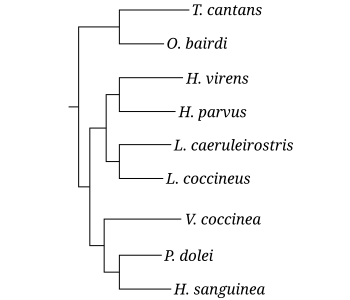
One hypothesized phylogenetic relationship among selected members of the Hawaiian honeycreeper bird family is shown in Figure 1. Based on the phylogenetic tree, birds in which of the following pairs share the most recent common ancestor?
L. caeruleirostris and H. virens
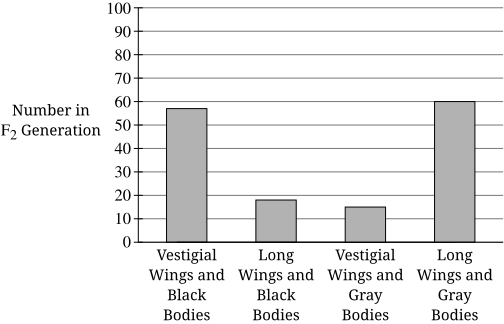
In fruit flies, genes that control body color and wing length are linked. A researcher crossed a true-breeding fruit fly with long wings and a gray body with a true-breeding fruit fly with vestigial wings and a black body. All of the F1 flies had long wings and gray bodies. The researcher then crossed the F1 flies with true-breeding flies that have vestigial wings and black bodies. The number of flies with each phenotype in the resulting F2 generation is shown in Figure 1.
What percent of the F2 generation flies carry chromosomes produced by crossing-over between the two linked genes?
22%
The process of hydrogenation is used in the food industry to convert lipids that are liquids at room temperature into solids at room temperature. The process involves the chemical addition of hydrogen atoms to the fatty acid tails of lipids, breaking some or all of the carbon-carbon double bonds in the fatty acid tails.
Which of the following best explains why hydrogenation converts liquid lipids to solid lipids?
Hydrogenation makes the fatty acids more saturated, enabling them to be more densely packed together.
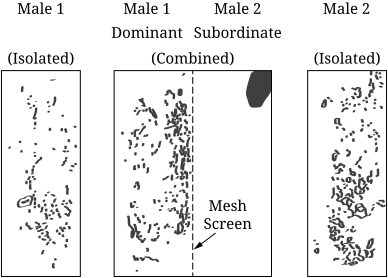
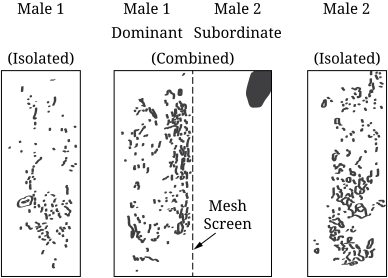
Mice live in territorial social groups, and each group has a single dominant male with the rest of the males in the group being subordinate. Male mice mark the area in which they live with their scent by leaving urine wherever they walk. There are two classes of proteins that are found in mouse urine, major urinary proteins (MUPs) and major histocompatibility complex (MHC) proteins. The proteins provide a unique scent for each mouse.
In an experiment, wild male mice were kept isolated in separate cages and their urination patterns were recorded. They were then combined into a single cage that was divided into two compartments by a mesh screen, and again their urination patterns were recorded (Figure 1).
Which of the following claims about communication and behavior in mice is best supported by the data from the experiment?
Subordinate males use scent to avoid territory occupied by a dominant male.
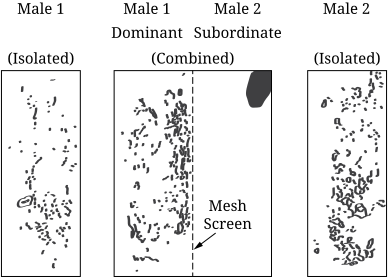
Mice live in territorial social groups, and each group has a single dominant male with the rest of the males in the group being subordinate. Male mice mark the area in which they live with their scent by leaving urine wherever they walk. There are two classes of proteins that are found in mouse urine, major urinary proteins (MUPs) and major histocompatibility complex (MHC) proteins. The proteins provide a unique scent for each mouse.
In an experiment, wild male mice were kept isolated in separate cages and their urination patterns were recorded. They were then combined into a single cage that was divided into two compartments by a mesh screen, and again their urination patterns were recorded (Figure 1).
In addition to their role in urine scent marking, proteins are used by body cells in both sexes of mice to distinguish self cells that originate in an individual’s body from nonself cells that do not originate in an individual’s body.
Which of the following best explains how -related odor-producing molecules might be used to maintain genetic diversity in mouse populations?
They could be used by female mice for mate selection to avoid mating with related individuals.
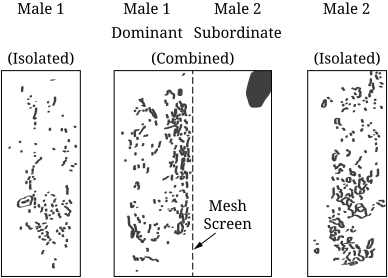
Which of the following best explains why particular MUP protein variants are associated with male dominance in individuals in populations of wild mice?
The MUP genes are located on a chromosome near genes associated with phenotypes of dominant males.
A researcher claims that the life spans of dominant males are longer than the life spans of subordinate males. Based on the results of the experiment, which of the following best supports the researcher’s claim?
Dominant males are able to move more freely throughout their territory, which gives them greater access to resources.
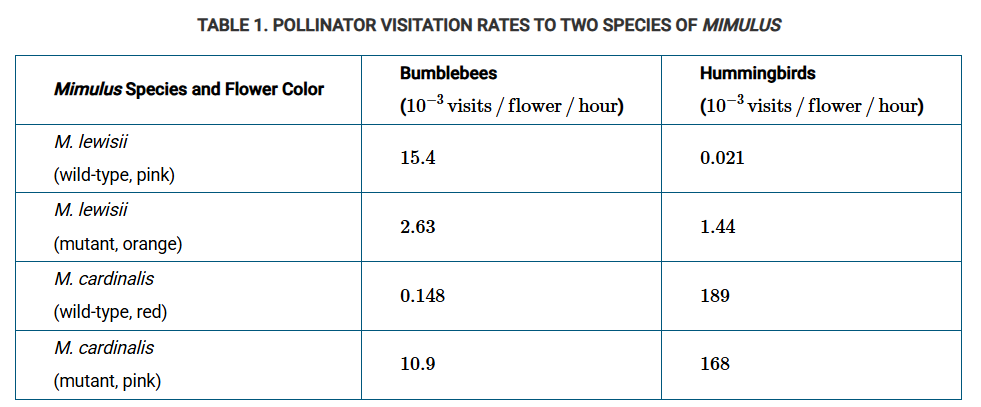
Plant species in the genus Mimulus have evolved specialized flower structures and colors that attract pollinators. Researchers identified mutant forms of two of the species, Mimulus lewisii and Mimulus cardinalis, that have different flower colors from the wild-type forms. They measured the number of visits by two pollinators, bumblebees and hummingbirds, to the flowers of the wild-type and mutant species (Table 1).
Which of the following statements best describes the data shown in Table 1 ?
Bumblebees visited mutant M. cardinalis approximately 70 times more frequently than they did wild-type M. cardinalis.
Which of the following best describes the position of the phospholipids within the phospholipid bilayer of the plasma membrane?
The hydrophobic tails face the inner region of the membrane, and the hydrophilic heads point outward.

During translation of an mRNA, amino acids are added one-by-one to the growing end of a polypeptide. Researchers wanted to determine whether there is a difference in the rate of amino acid addition in E. coli, a prokaryote, and S. cerevisiae, a single-celled eukaryote (Table 1).
Based on the data in Table 1, how does the rate of polypeptide elongation in E. coli compare with the rate of polypeptide elongation in S. cerevisiae?
The rate in E. coli is twice the rate in S. cerevisiae.
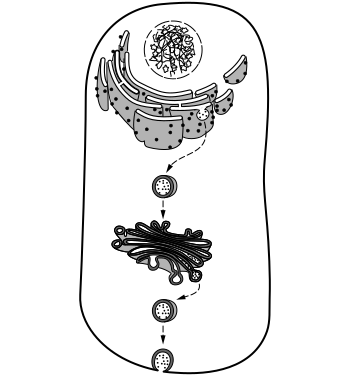
Insulin is a protein hormone that helps to regulate blood sugar levels. Figure 1 shows the path of insulin from its production in a cell to its export out of the cell.
Based on Figure 1, which of the following best describes how insulin leaves the cell?
A vesicle containing insulin fuses with the plasma membrane, enabling exocytosis of insulin.
Which of the following describes a process that increases genetic diversity in prokaryotic cells?
Conjugation transfers DNA from one cell to the other cell.
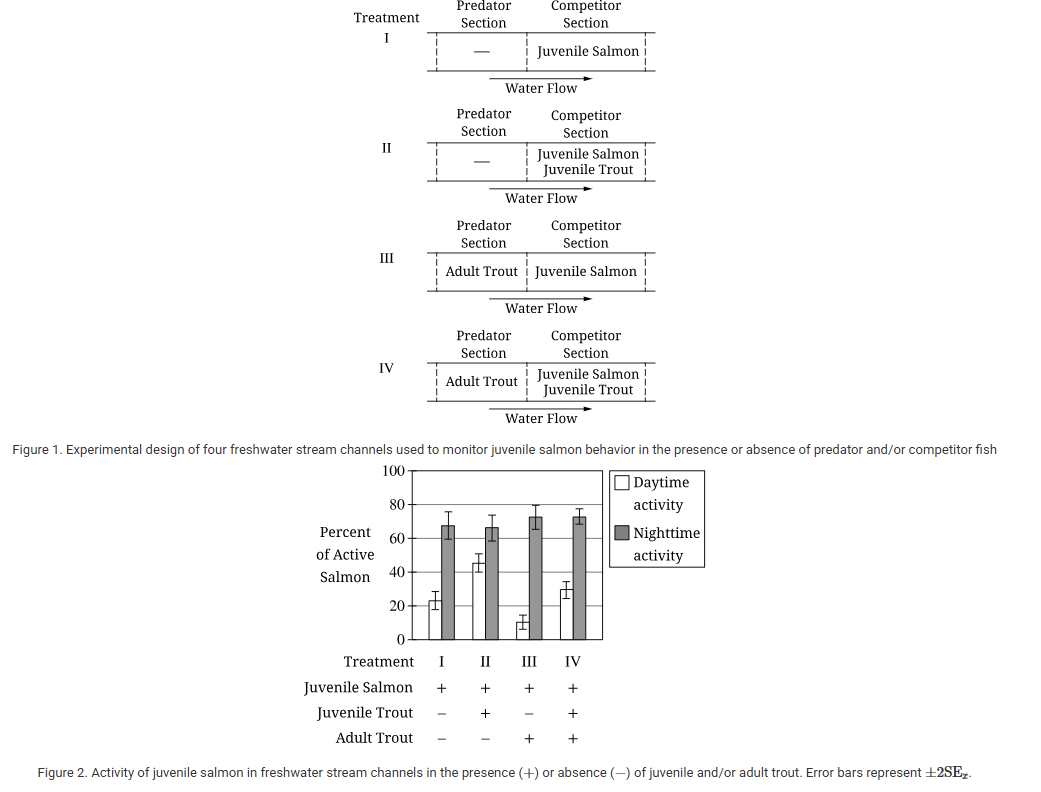
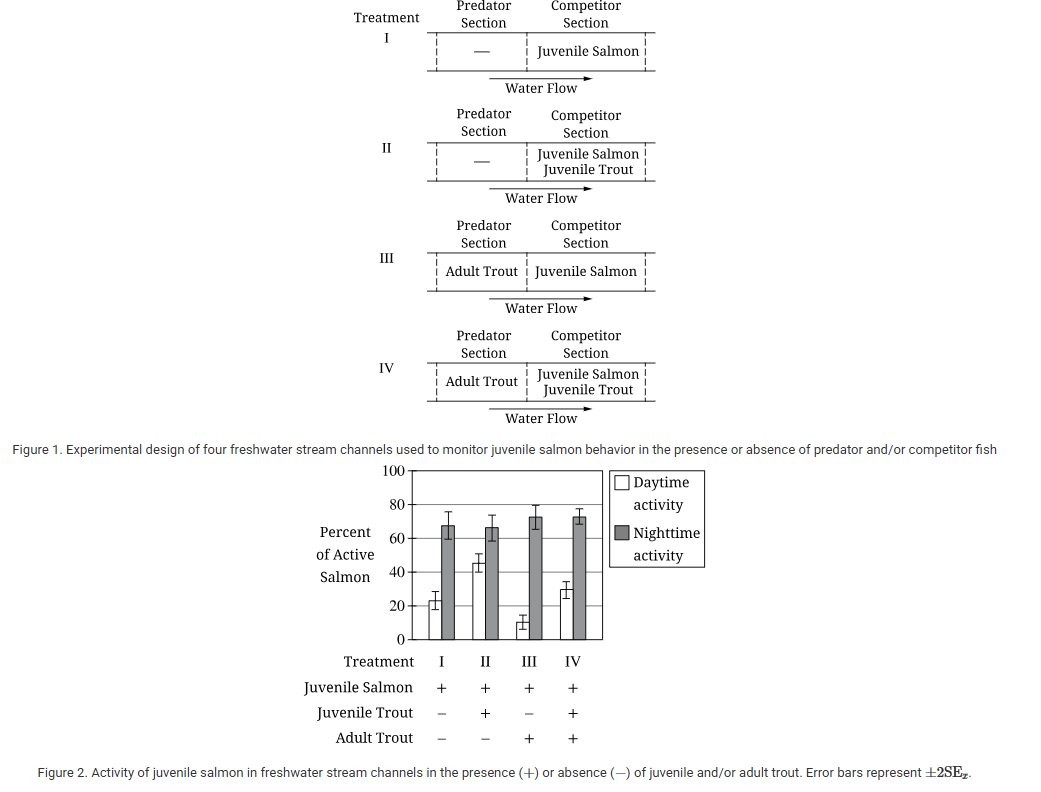
Researchers investigated the effects of nonnative trout on the behavior of native salmon inhabiting a freshwater stream. Juvenile trout compete with juvenile salmon for resources, and adult trout prey on juvenile salmon.
Researchers built enclosed channels in a freshwater stream. A transparent plastic mesh screen divided each channel into two sections, an upstream predator section and a downstream competitor section. Similar screens placed at the ends of each channel permitted the flow of water and small invertebrate organisms, eaten by juvenile members of both species of fish, through the channel. Juvenile salmon were placed in only the competitor section of each channel, in the absence or presence of juvenile trout, and in the absence or presence of adult trout placed only in the predator section (Figure 1). The researchers then recorded the percent of juvenile salmon that were active during the day and night, under the different conditions (Figure 2).
Which of the following descriptions of juvenile salmon activity is best supported by the data in Figure 2 ?
Daytime activity increases when only a competitor is present.
The researchers hypothesize that juvenile salmon use chemical cues to detect predators that are nearby. Which of the following modifications to the experiment will help the researchers test their hypothesis?
Replace the mesh screen with a solid, transparent barrier that allows light to pass through.
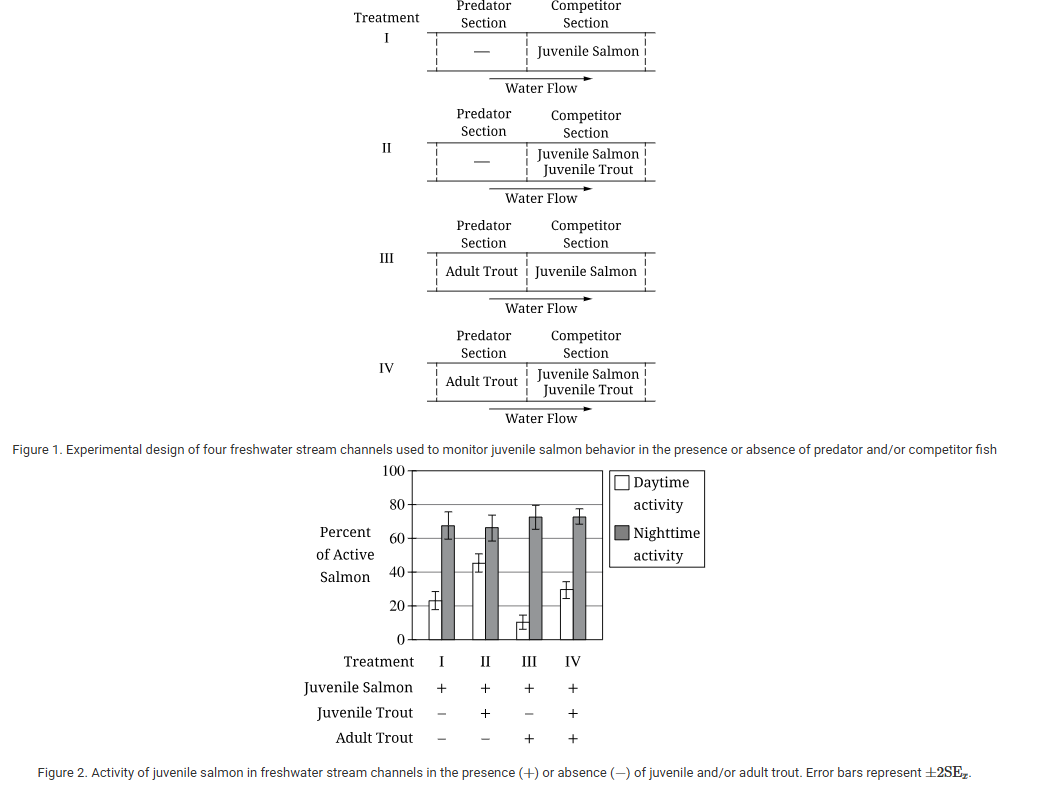
A researcher claims that the predator avoidance behavior of juvenile salmon observed in the study has evolved because of natural selection. Which of the following data could best be used to support the claim?
The salmon that avoid predators have a greater number of viable offspring as compared with salmon that do not avoid predators.
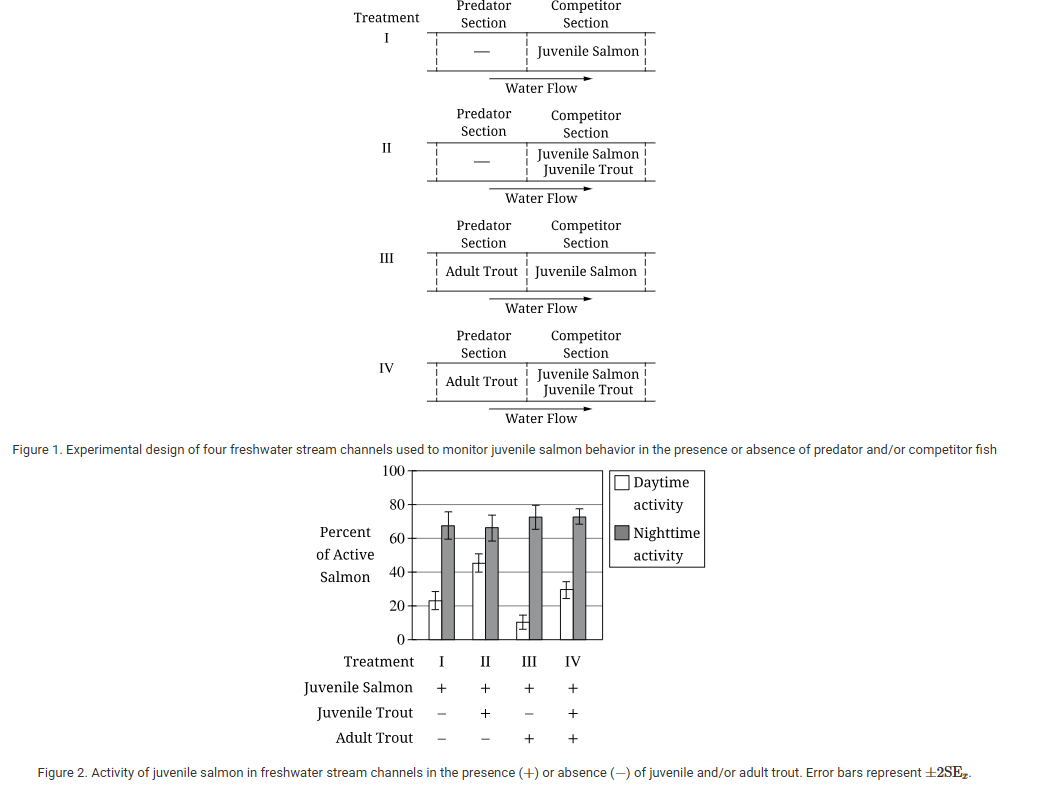
The researchers claim that the risk to juvenile salmon from predation is about the same as the risk due to competition. Which of the following best supports the researchers’ claim?
The daytime activity in treatment IV is about the same as the daytime activity in treatment I and intermediate between the daytime activity in treatments II and III.
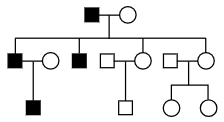
Which of the following pedigrees represents the inheritance of a trait most likely associated with a gene on the Y chromosome?
Snowshoe hares are small mammals that live in forests throughout Canada and the northern United States. Hares feed primarily on vegetation and are preyed on by lynx and owls.
In the fall, the hares shed their brown coat (molt), and a new white coat grows in over a period of 40 days. In the spring, the hares molt again and their white coat is replaced with a brown coat over a period of approximately 30 to 50 days.
In a recent study, researchers observed that the majority of hares in an isolated population began the molting process during the same week in the fall, even though the ground was not snow covered. The majority of hares also began the molting process during the same week in the spring, even though the ground was still snow covered. The researchers formulated a hypothesis that the timing of the molting process is influenced by seasonal changes in the daylight period.
Which of the following would best support the claim that the timing of the molting process in certain species is influenced by seasonal changes in the daylight period?
More species that molt seasonally are found in the arctic, where the daylight period varies, than near the equator where the daylight period is relatively constant.
Snowshoe hares are small mammals that live in forests throughout Canada and the northern United States. Hares feed primarily on vegetation and are preyed on by lynx and owls.
In the fall, the hares shed their brown coat (molt), and a new white coat grows in over a period of 40 days. In the spring, the hares molt again and their white coat is replaced with a brown coat over a period of approximately 30 to 50 days.
In a recent study, researchers observed that the majority of hares in an isolated population began the molting process during the same week in the fall, even though the ground was not snow covered. The majority of hares also began the molting process during the same week in the spring, even though the ground was still snow covered. The researchers formulated a hypothesis that the timing of the molting process is influenced by seasonal changes in the daylight period.
To test their hypothesis, the researchers conducted a laboratory experiment in which groups of hares were exposed to gradually decreasing periods of daylight. The lengths of the daylight period when molting began were recorded.
Which of the following experimental controls should have been included to ensure that the results could be attributed to changes in the daylight period and not to some other variable?
Exposing one group of hares to a fixed daylight period for the duration of the experiment
Snowshoe hares are small mammals that live in forests throughout Canada and the northern United States. Hares feed primarily on vegetation and are preyed on by lynx and owls.
In the fall, the hares shed their brown coat (molt), and a new white coat grows in over a period of 40 days. In the spring, the hares molt again and their white coat is replaced with a brown coat over a period of approximately 30 to 50 days.
In a recent study, researchers observed that the majority of hares in an isolated population began the molting process during the same week in the fall, even though the ground was not snow covered. The majority of hares also began the molting process during the same week in the spring, even though the ground was still snow covered. The researchers formulated a hypothesis that the timing of the molting process is influenced by seasonal changes in the daylight period.
Several climate models for the original study area predict that the length of time the ground is covered in snow will decrease over time while the daylight periods will remain unchanged.
Assuming that the researchers’ hypothesis about the timing of molting and the climate models are correct, which of the following will be the most likely immediate effect of the decrease in time the ground is snow covered on the hare population?
Hares will experience longer times with coat colors that do not blend with the ground color.
Snowshoe hares are small mammals that live in forests throughout Canada and the northern United States. Hares feed primarily on vegetation and are preyed on by lynx and owls.
In the fall, the hares shed their brown coat (molt), and a new white coat grows in over a period of 40 days. In the spring, the hares molt again and their white coat is replaced with a brown coat over a period of approximately 30 to 50 days.
In a recent study, researchers observed that the majority of hares in an isolated population began the molting process during the same week in the fall, even though the ground was not snow covered. The majority of hares also began the molting process during the same week in the spring, even though the ground was still snow covered. The researchers formulated a hypothesis that the timing of the molting process is influenced by seasonal changes in the daylight period.
If a viral infection significantly reduces the size of the snowshoe hare population, which of the following predicts the most likely effect on the community during that year?
The lynx and owl populations will decrease
Snowshoe hares are small mammals that live in forests throughout Canada and the northern United States. Hares feed primarily on vegetation and are preyed on by lynx and owls.
In the fall, the hares shed their brown coat (molt), and a new white coat grows in over a period of 40 days. In the spring, the hares molt again and their white coat is replaced with a brown coat over a period of approximately 30 to 50 days.
In a recent study, researchers observed that the majority of hares in an isolated population began the molting process during the same week in the fall, even though the ground was not snow covered. The majority of hares also began the molting process during the same week in the spring, even though the ground was still snow covered. The researchers formulated a hypothesis that the timing of the molting process is influenced by seasonal changes in the daylight period.
A second isolated hare population has white coats all year, although the area is not covered by snow.
Which of the following is a testable question the researchers can ask to explain the origin of the different coat color of the second population?
Do the genes associated with coat color in both populations have the same sequence of DNA nucleotides?
Which of the following best explains why surface tension is created on the surface of bodies of water?
Water molecules are attracted to each other because the sharing of electrons between hydrogen and oxygen is unequal.
Members of one population of the striped stem borer insect engage in mating behavior in the early hours of the night, whereas members of a second population mate much later during the night. Crossbreeding between individuals from the two populations produces offspring that mate at an intermediate time.
Which of the following is the most likely cause of the different timing of mating behavior between the two populations?
Genetic variation between the populations
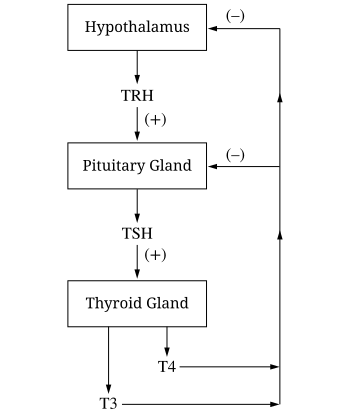
Based on Figure 1, which of the following most likely occurs in response to an increase in the secretion of thyroid hormones T3 and T4?
The thyroid hormones directly inhibit the hypothalamus, which results in a decrease in TRH secretion.
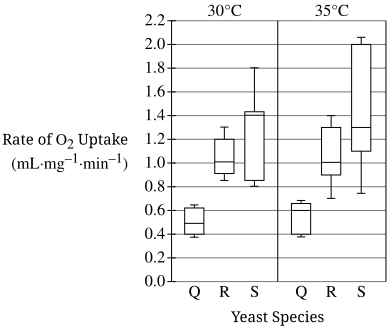
Researchers studied the effect of increased temperature on the rate of respiration of three species of Saccharomyces yeast (Q, R, and S) by measuring the rate of oxygen uptake in each species at 30 C and at 35 C (Figure 1).
Based on Figure 1, which of the following statements about the effect of the temperature increase on the respiratory rate of one of the species, Q, R, or S, is most likely true?
The median O2 uptake rate for species S at 35C is 0.1 μL⋅mg⁻¹⋅min⁻¹ less than it is at 30 C.
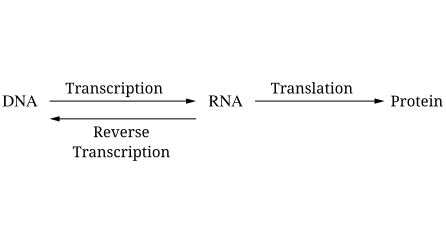
Which of the following processes requires all of the steps represented in Figure 1 ?
Replication of a retrovirus after it enters a host cell

Which of the following best describes the model shown in Figure 1 ?
The model shows how genetic information directs the synthesis of polypeptides.