AP World History Modern Unit 4 1450-1750 (Maritime Empires)
 Call Kai
 Learn
Learn Practice Test
 Spaced Repetition
 Match
Match Flashcards
 Knowt Play
1/105

There's no tags or description
Looks like no tags are added yet.
Name | Mastery | Learn | Test | Matching | Spaced | Call with Kai |
|---|
No analytics yet
Send a link to your students to track their progress
106 Terms
Charters
Documents granting the right to organize settlements in an area
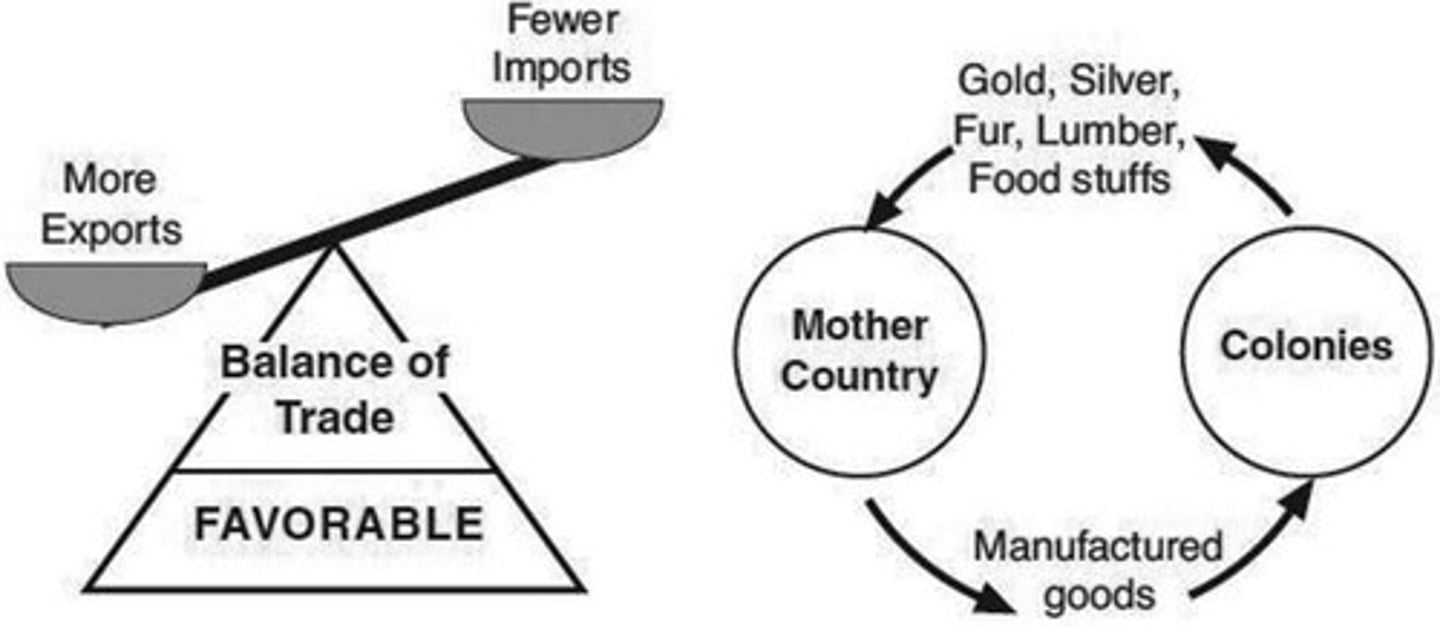
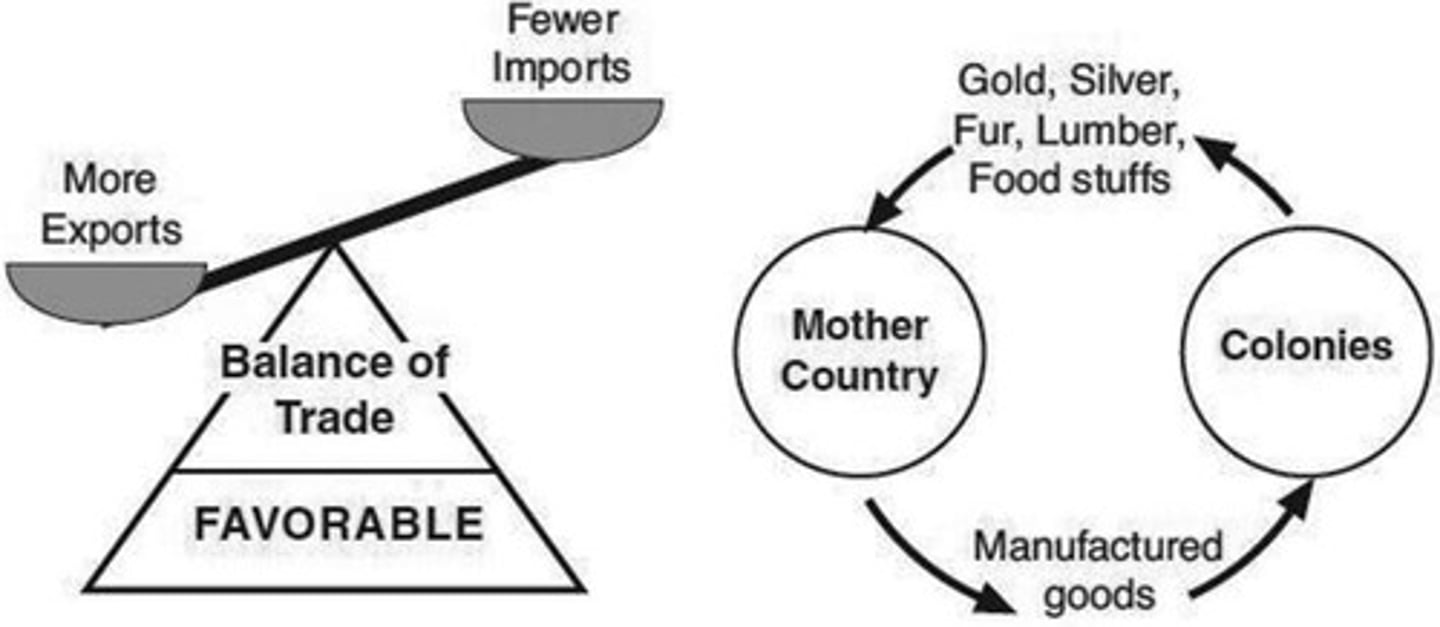
Mercantilism
An economic policy under which nations sought to increase their wealth and power by strictly regulating the economy to obtain large amounts of gold and silver by selling more goods than they bought and utilizing colonies
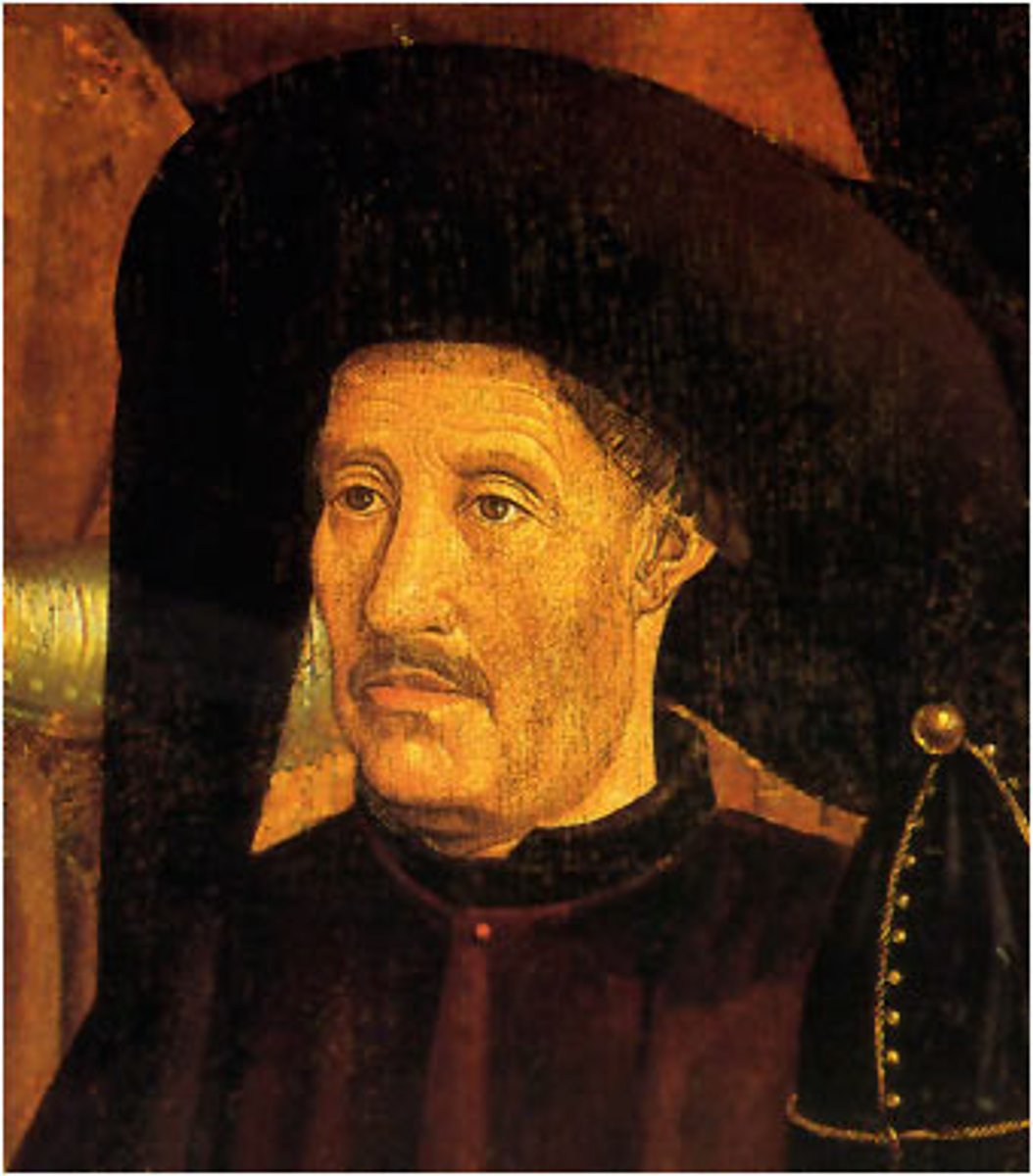
Prince Henry the Navigator
(1394-1460) Prince of Portugal who established an observatory and school of navigation at Sagres and directed voyages that spurred the growth of Portugal's colonial empire.
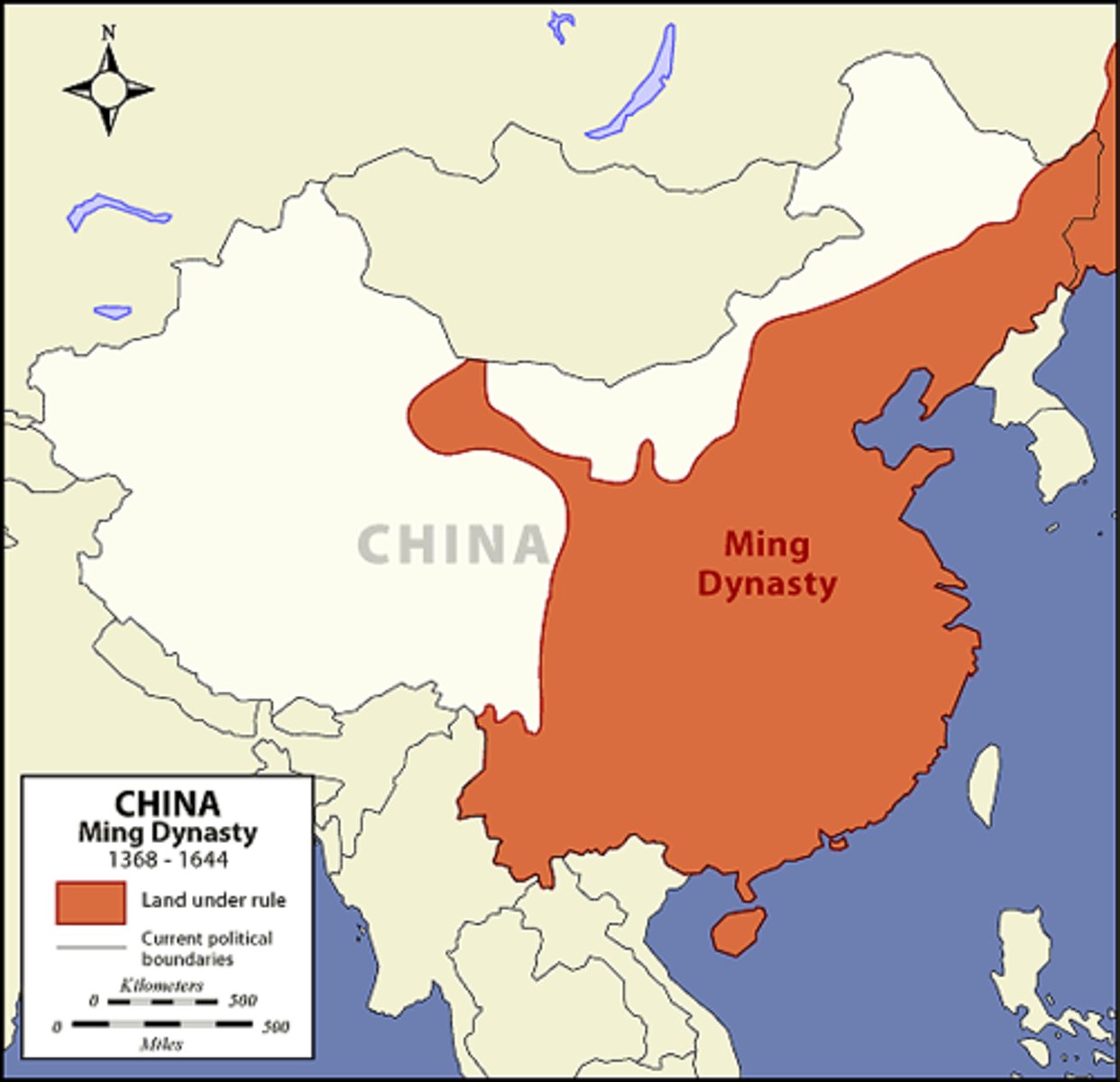
Ming Dynasty (1368-1644)
It was perhaps the peak of Chinese civilization with 300 years of peace and prosperity. They improved the Grand Canal, made great porcelain, and under Yong Le encouraged exploration. They also built the Forbidden City in the capital of Beijing. After Yong Le rulers would reject exploration. The Ming would participate in the Global Silver Trade, starting in the mid-1500s, as an eager buyer of silver. However, they will be overthrown by the Manchu.
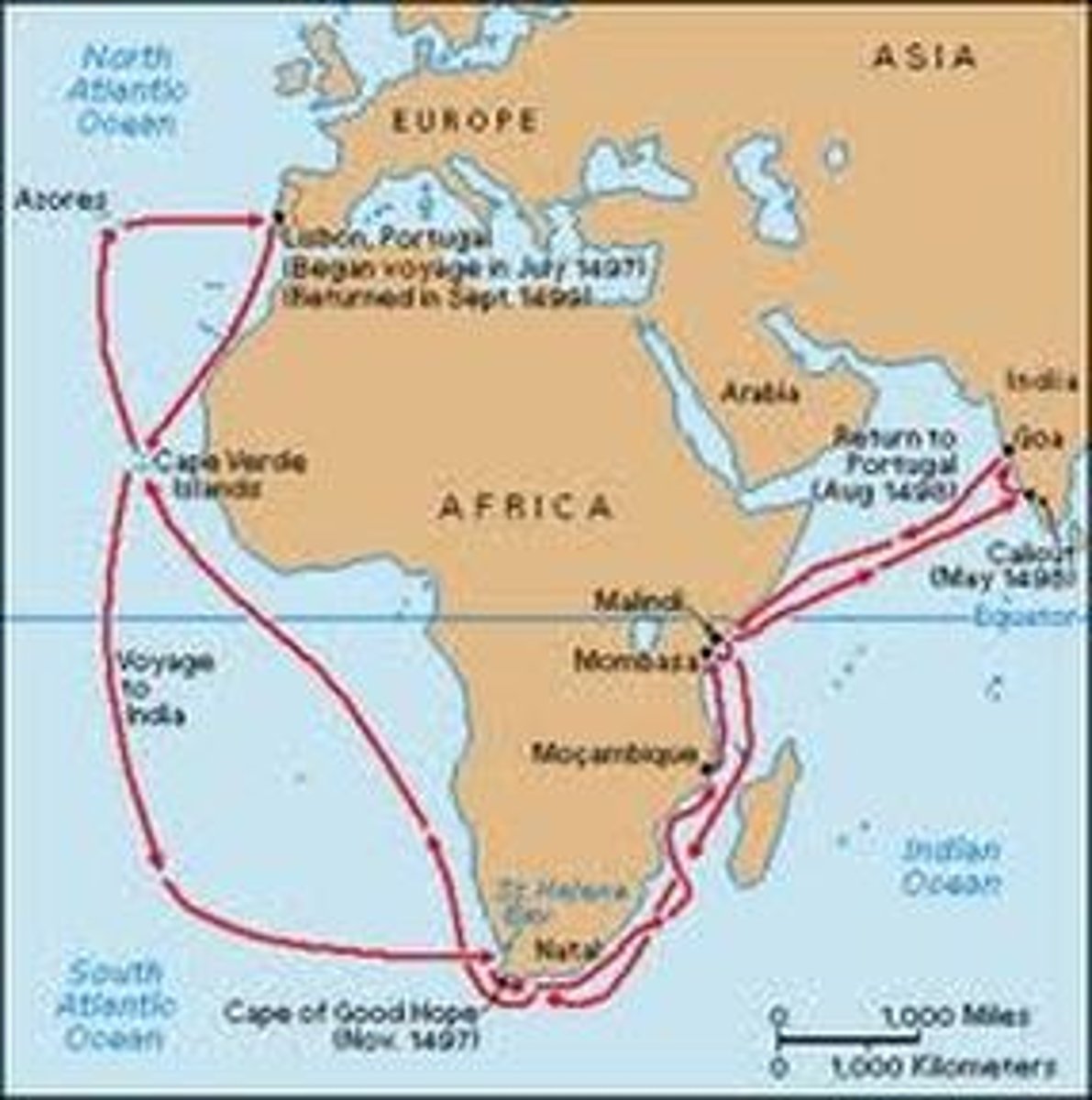
Portuguese Empire
took an early lead in European exploration (sponsored by Prince Henry); went East and established trading posts in West Africa, East Africa (Swahili City States) and India for spice trade
maritime
on or near the sea
Global Silver Trade
Silver trade between the Americas and Europe and onward to China from the 16th to 18th centuries. It had a profound effect on the world economy and silver trade could also be considered the beginning of the global economy.
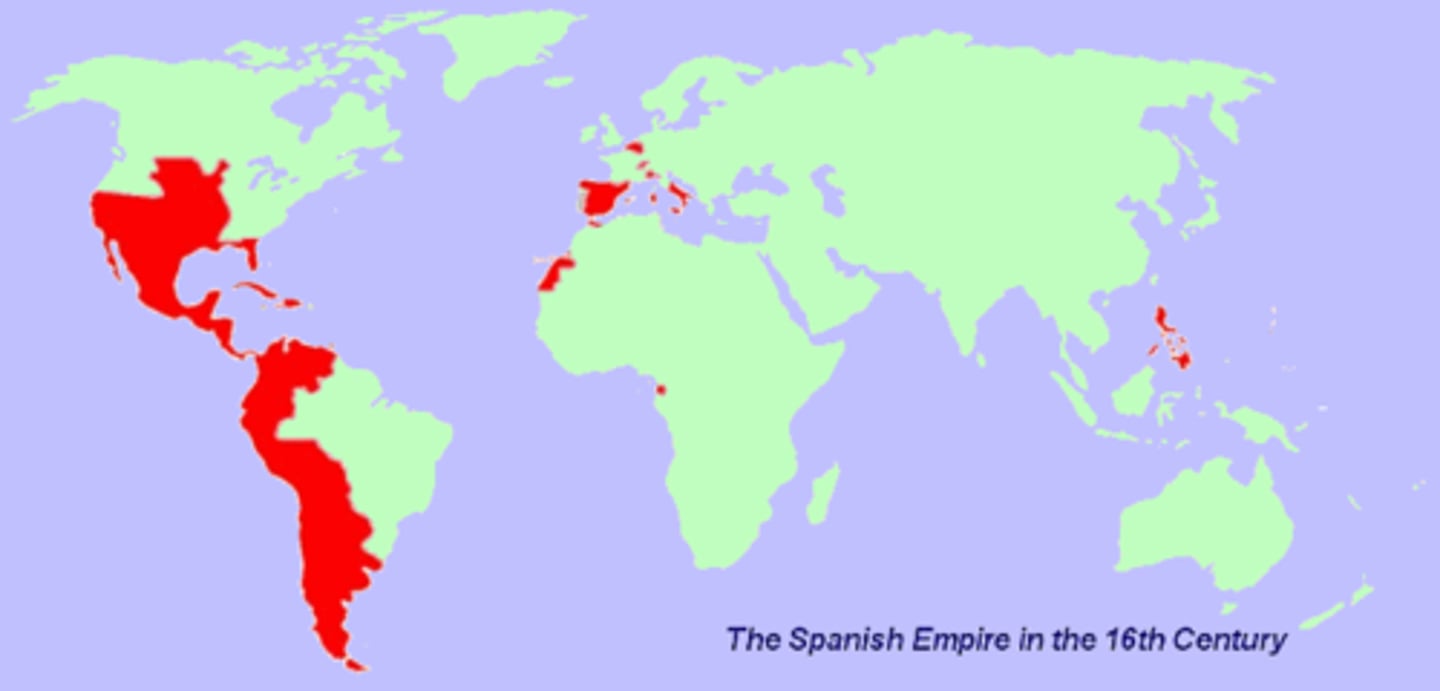
Spanish Empire
Made up of territories and colonies in Europe, Africa, and Asia controlled from Spain. At its strongest, it was one of the biggest empires in world history according to how much land they had, and one of the 1st global empires. Royalty from the Castile and Aragon kingdoms ruled it. Christopher Columbus led the first Spanish exploration trip which led them to colonizing in the Americas.
plantation agriculture
Production system based on a large estate owned by an individual, family, or corporation and organized to produce a cash crop.

cash crop
a crop produced for its commercial value rather than for use by the grower.
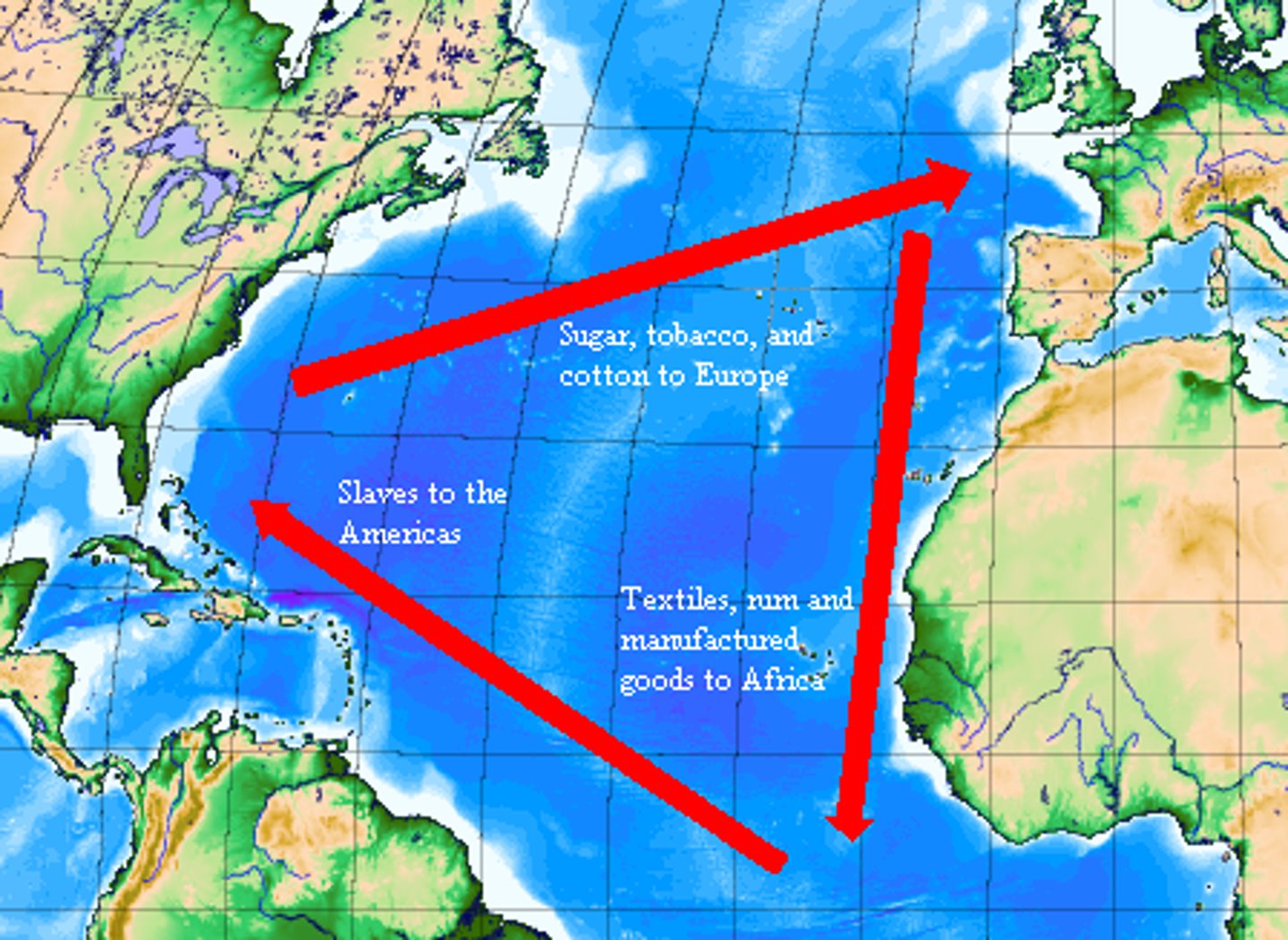
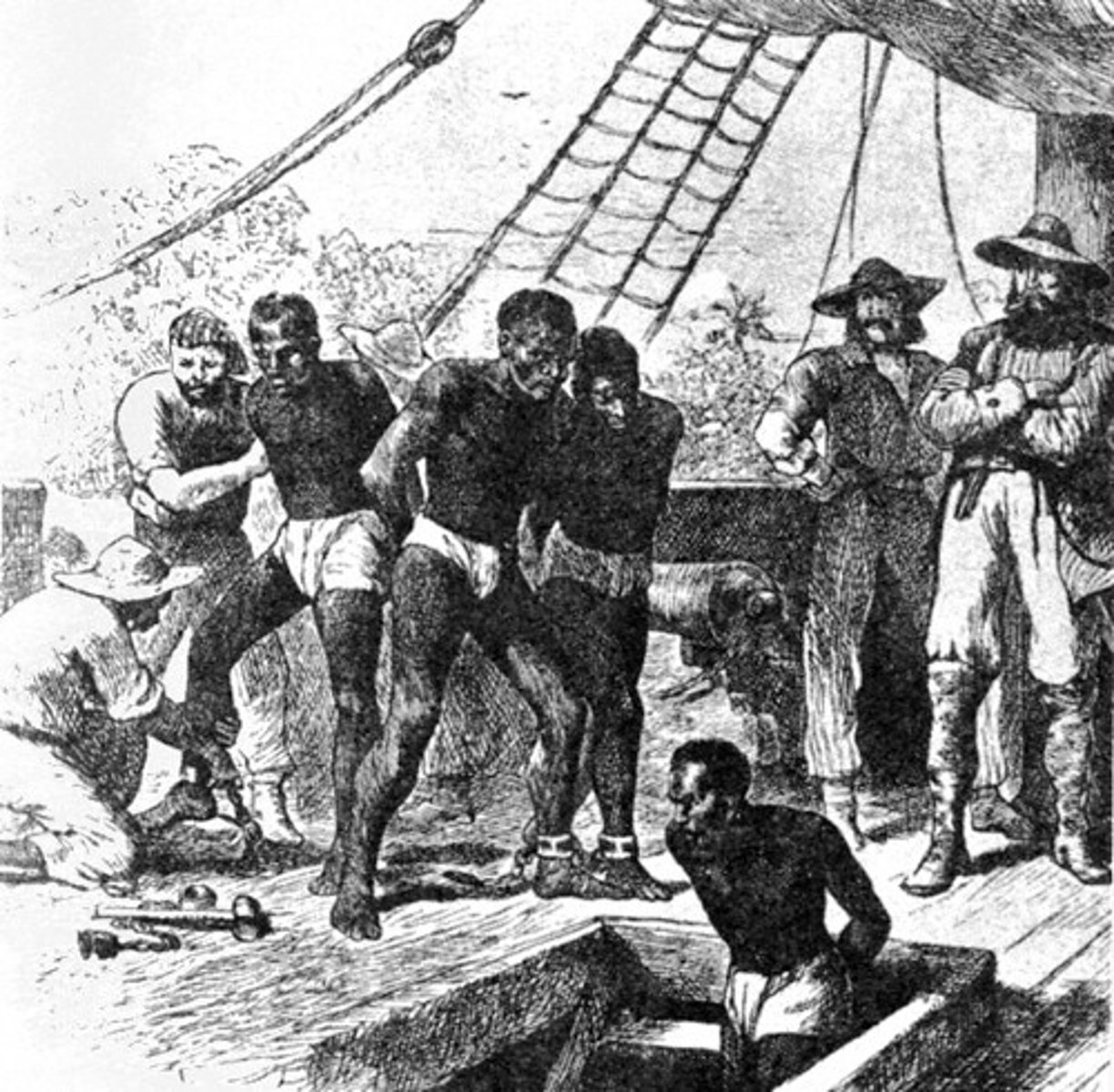
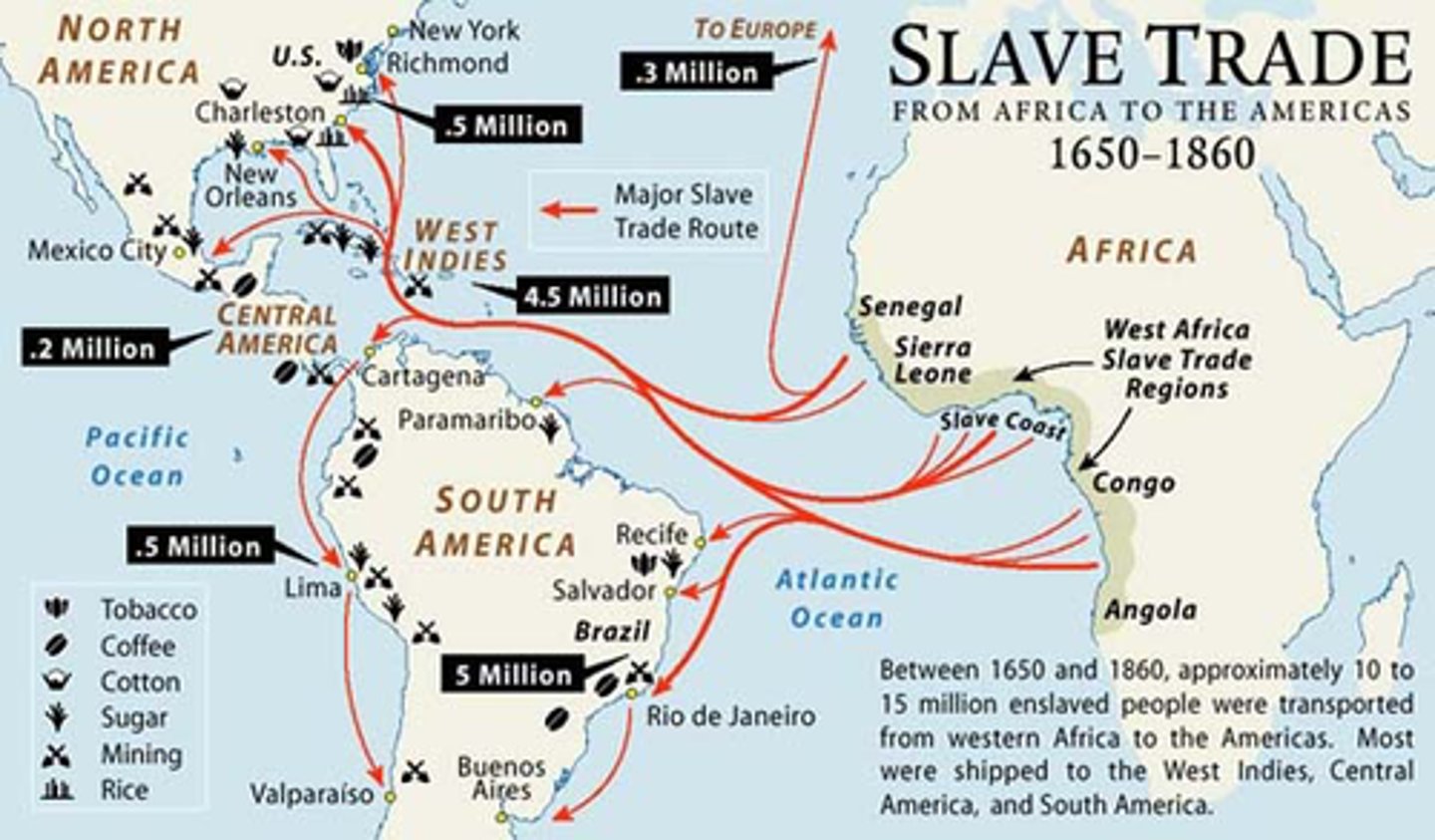
Trans-Atlantic Slave Trade
The forced migration of between 12 - 15 million people from Africa to the Western Hemisphere from the middle of the 15th century to the end of the 19th century.
indigenous
native to a certain area
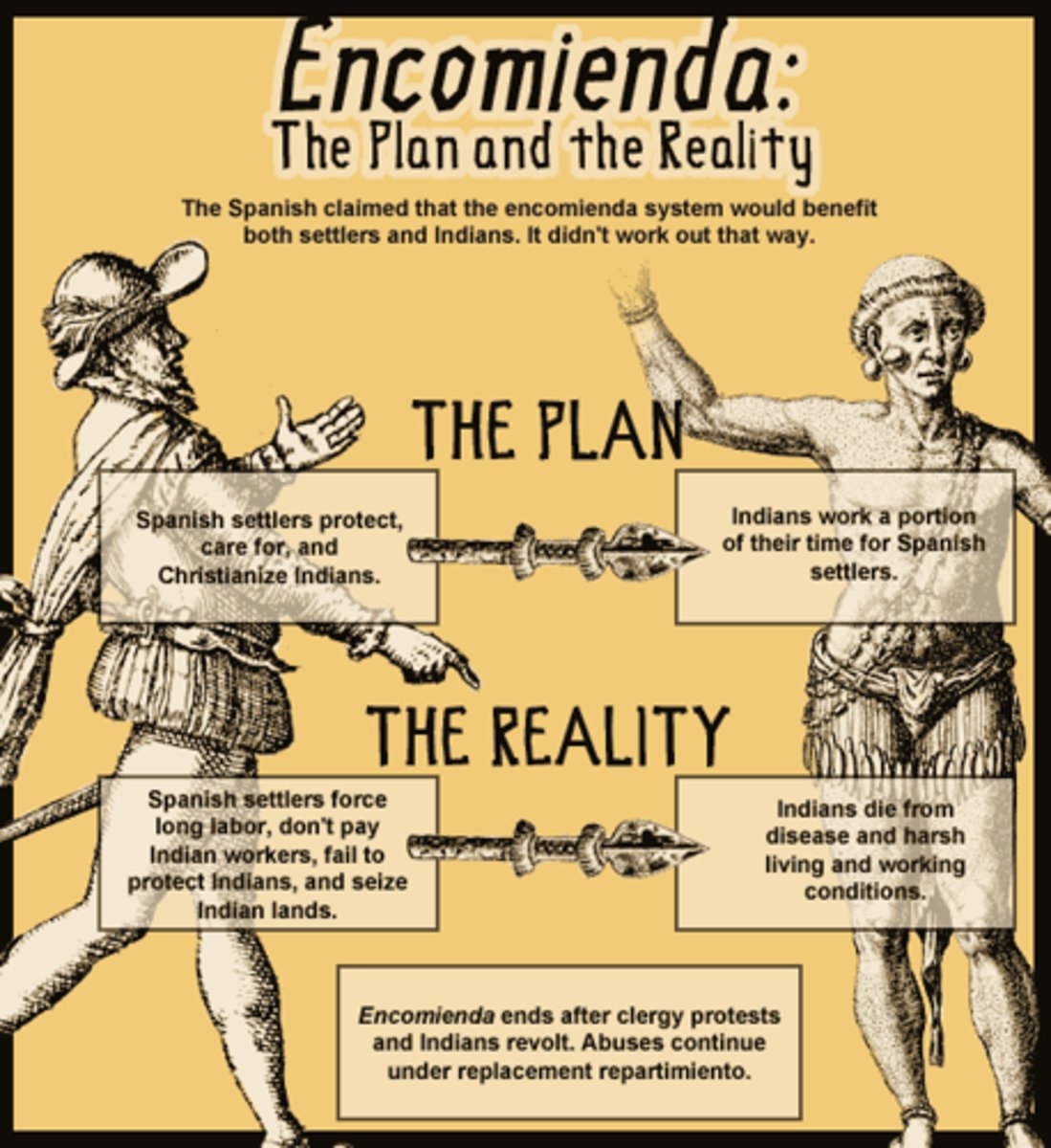
Encomienda System
It gave settlers the right to tax local Native Americans or to make them work. In exchange, these settlers were supposed to protect the Native American people (but generally exploited them) and convert them to Christianity. It was a form of coercive labor.
Tokugawa Shogunate
was a semi-feudal government of Japan in which one of the shoguns unified the country under his family's rule. They moved the capital to Edo, which now is called Tokyo. They isolated Japan from foreign influences. This family ruled from Edo 1868, when it was abolished during the Meiji Restoration.
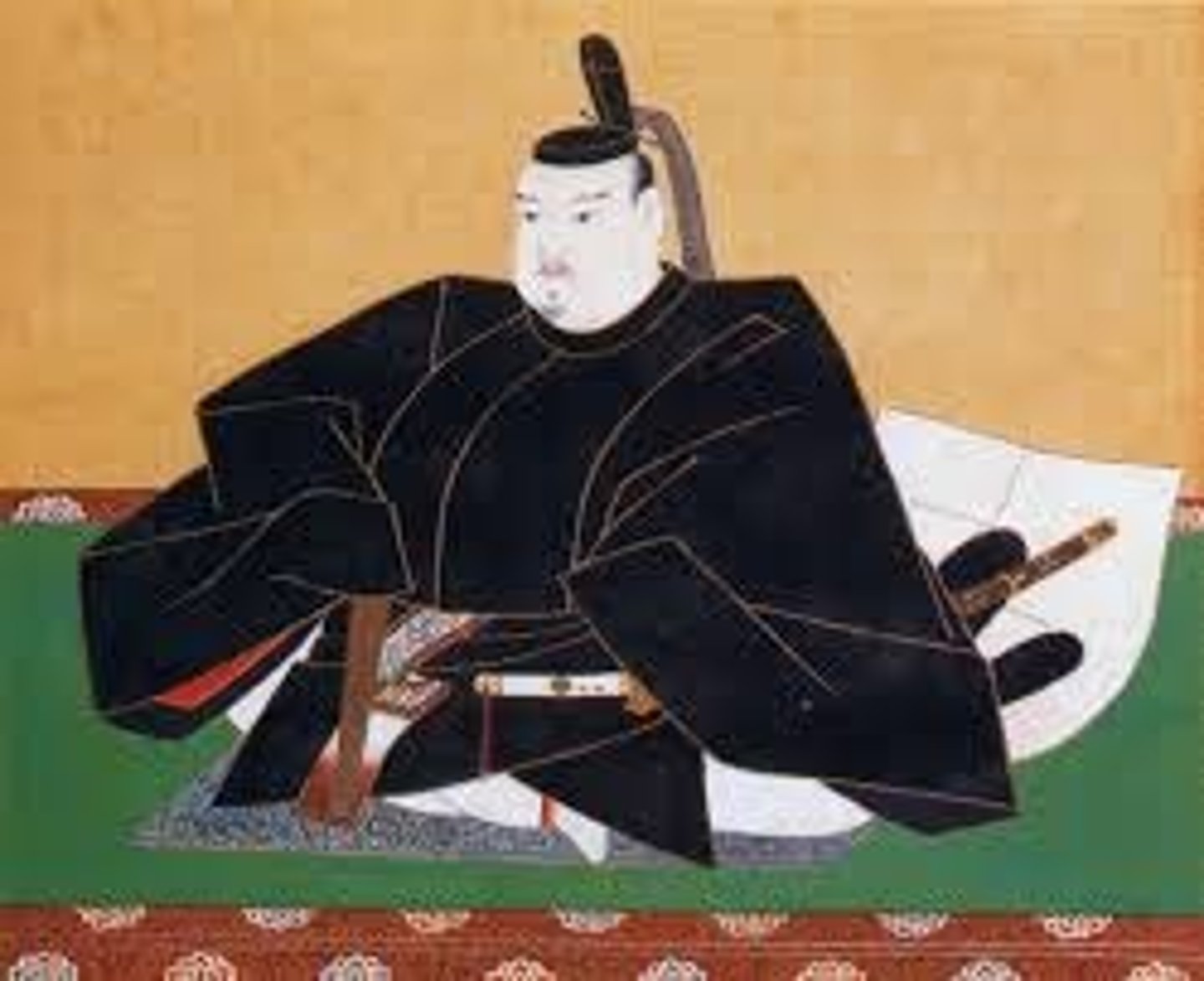
Closed Country Edict
Was a document that restricted Japanese to only certain times when the Japanese could trade and intervene with the outside world
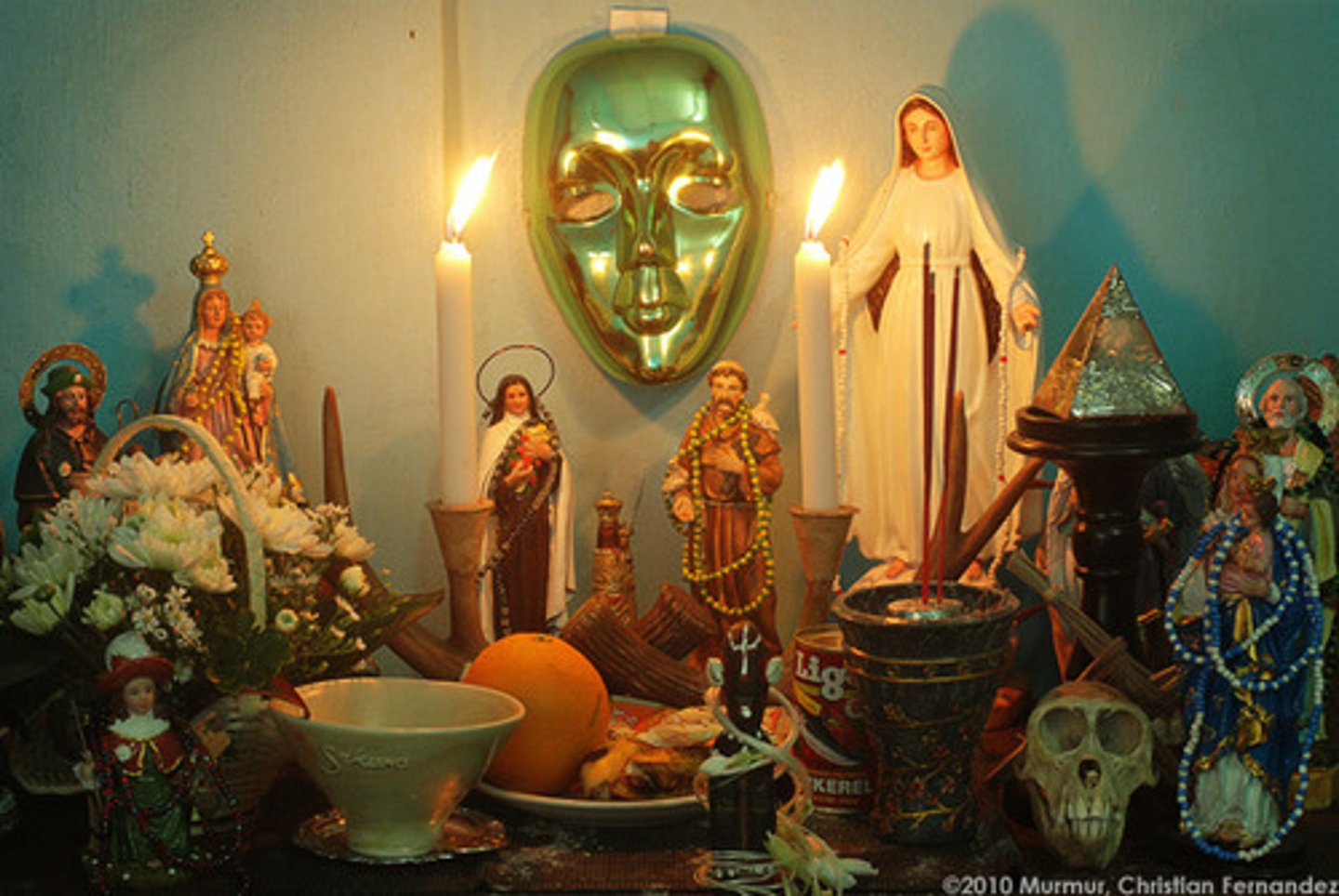
syncretic religion
Combines two religious traditions into something distinctly new, while containing traits of both (ex: voodoo, santeria)
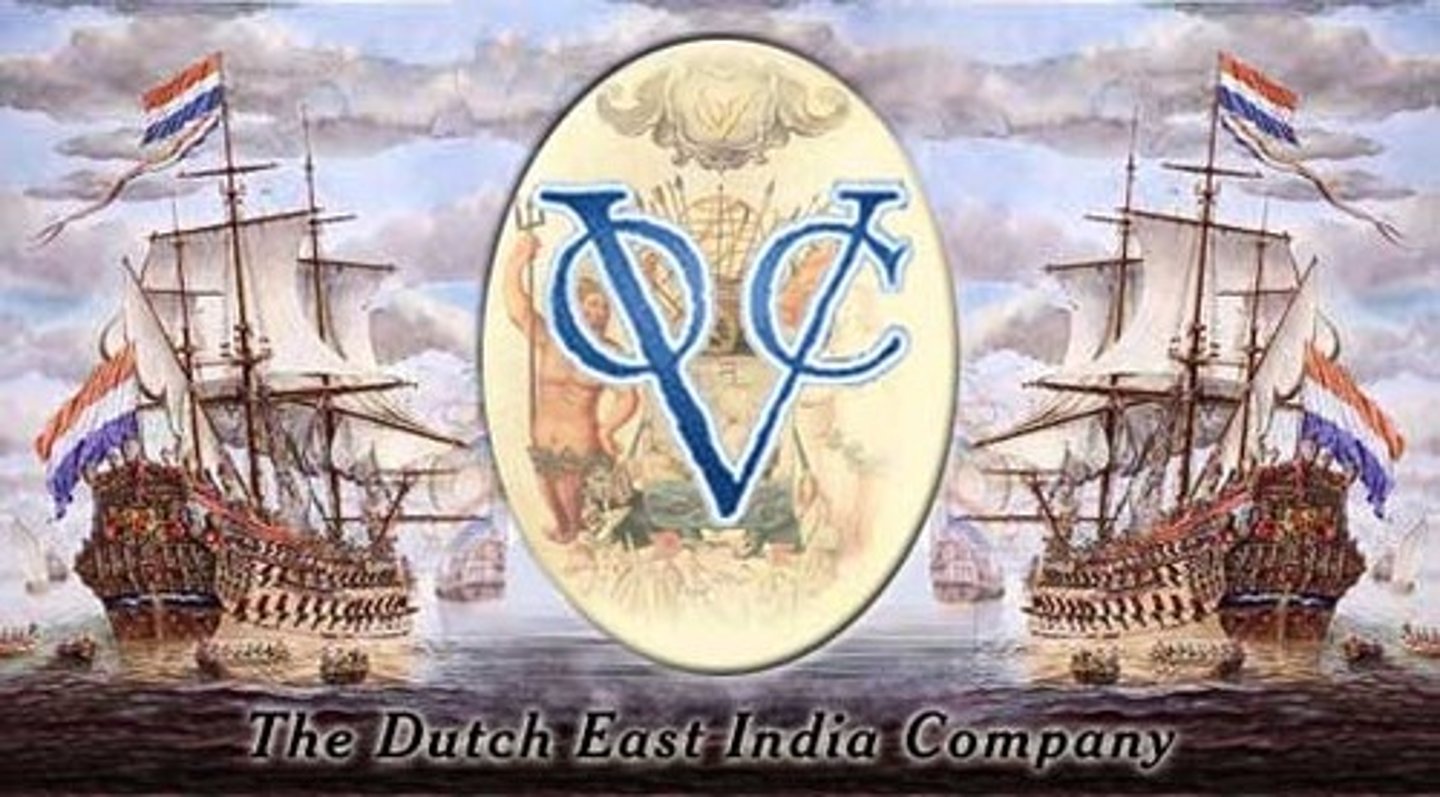
Dutch East India Company
Government-chartered joint-stock company that controlled the spice trade in the East Indies.
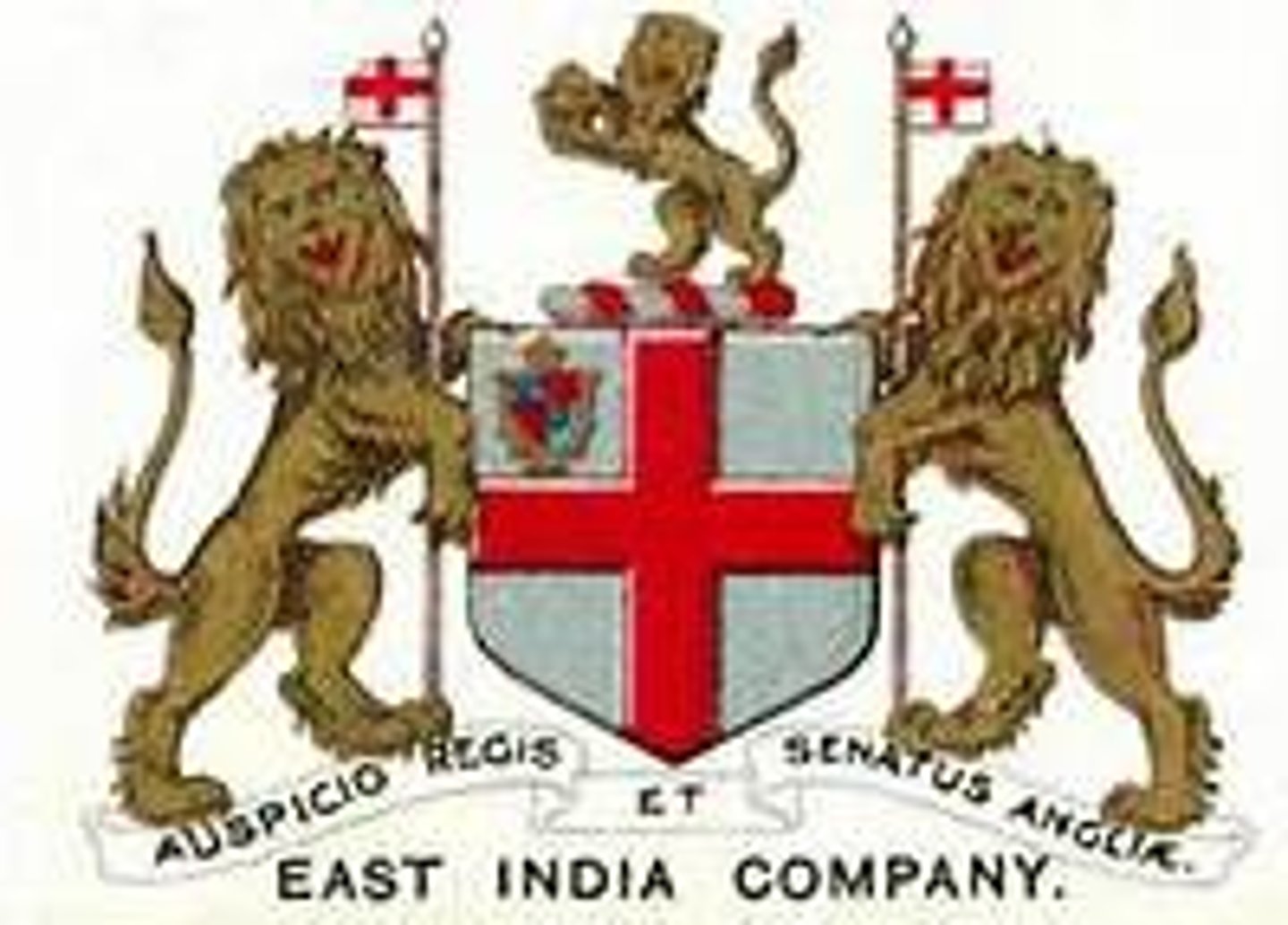
British East India Company
set up trading posts in India in the 1600s, beginning the British economic interest there
joint-stock company
A business, often backed by a government charter, that sold shares to individuals to raise money for its trading enterprises and to spread the risks (and profits) among many investors.
Columbian Exchange
The exchange of plants, animals, diseases, and technologies between the Americas and the rest of the world following Columbus's voyages.
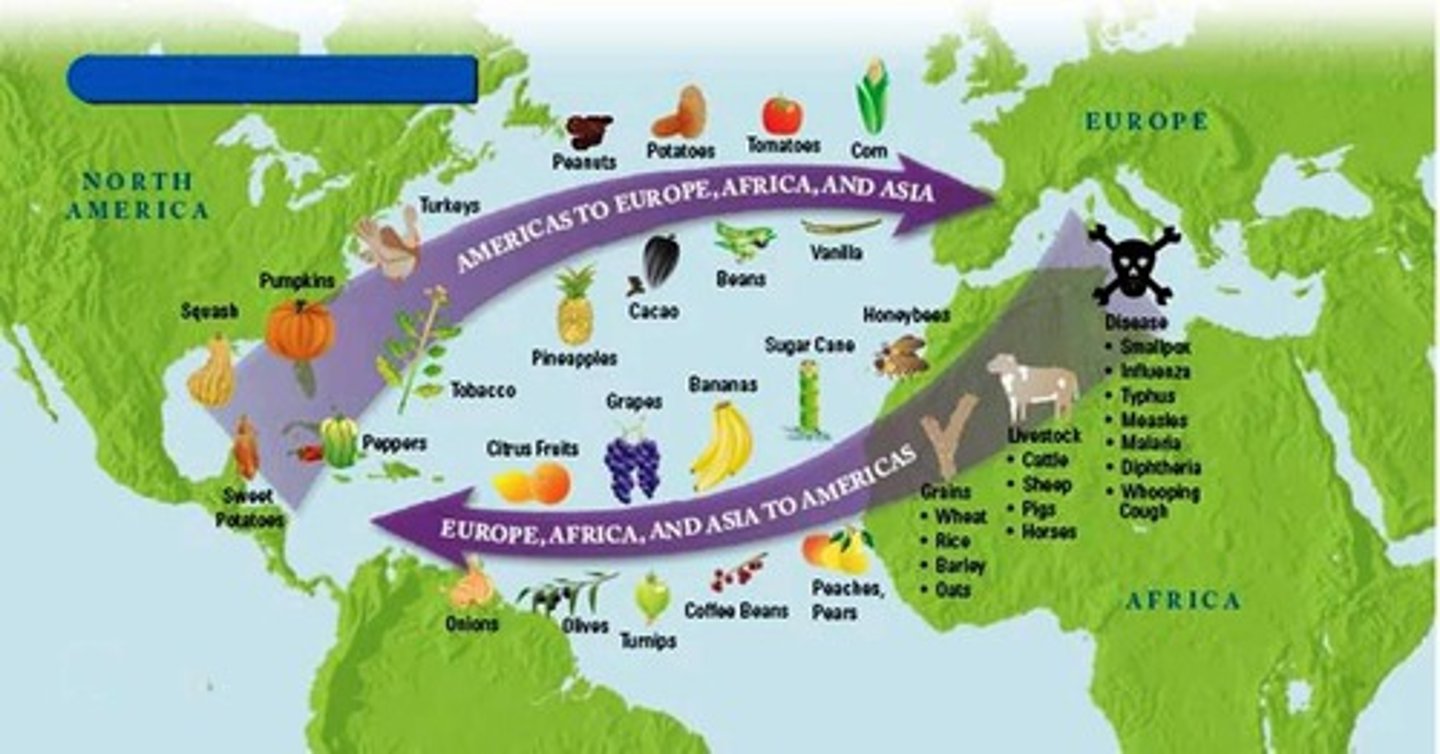
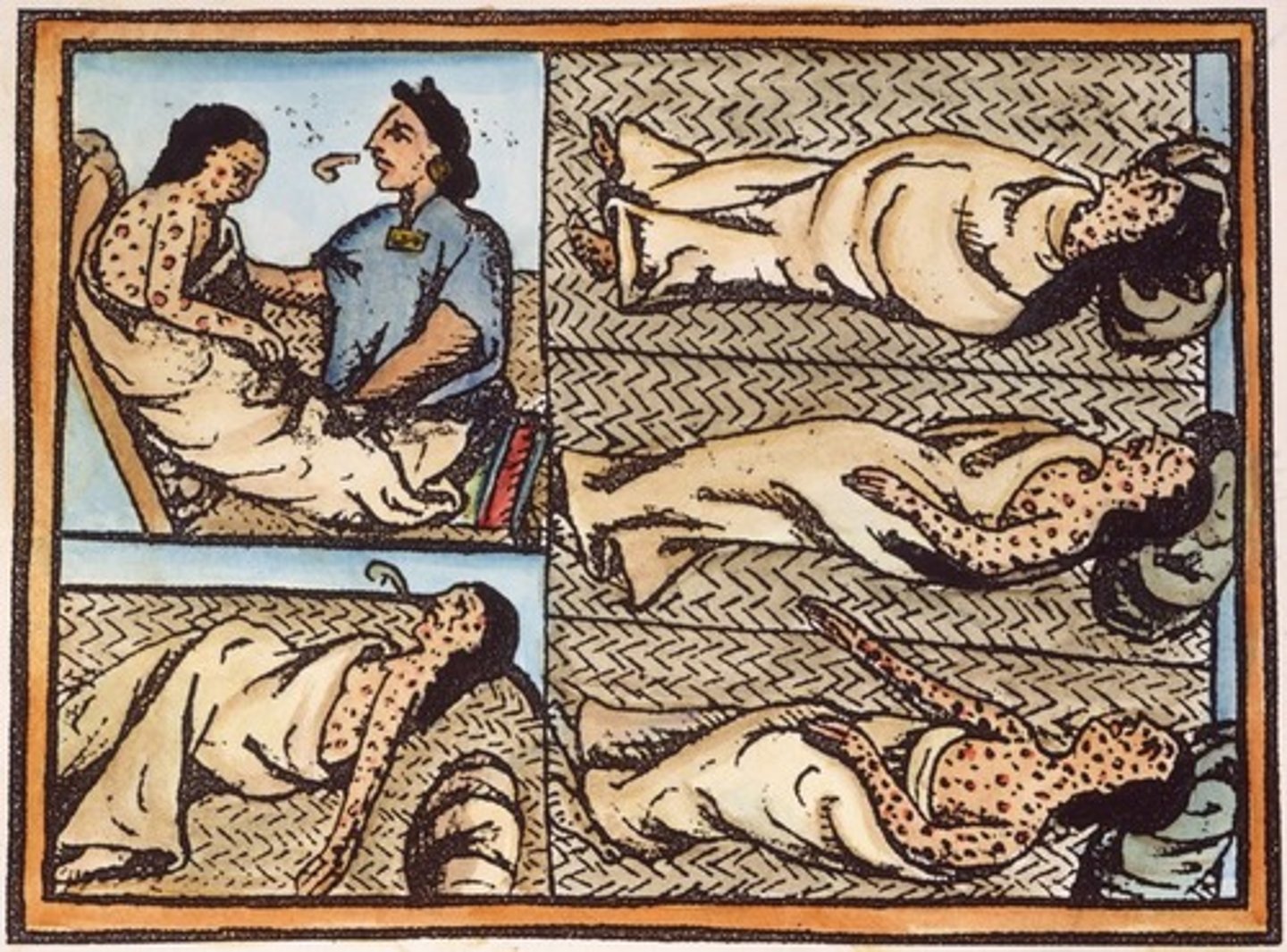
Smallpox
A highly contagious viral disease characterized by fever, weakness, and skin eruption with pustules that form scabs; responsible for killing Native Americans.
coercive labor
Any labor system that involves force (slavery, serfdom, and encomienda)
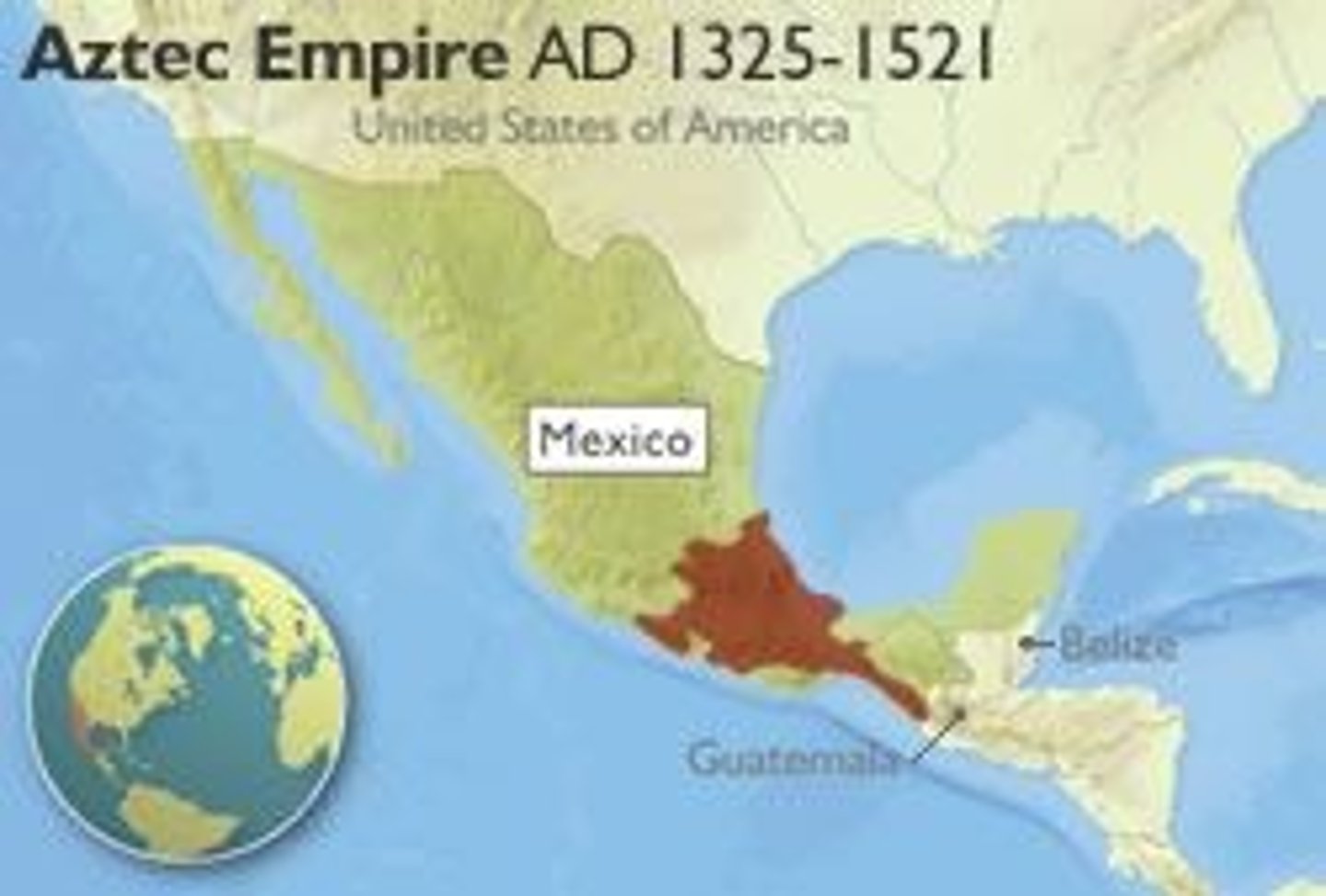
Aztec Empire
Central American empire constructed by the Mexica and expanded greatly during the fifteenth century during the reigns of Itzcoatl and Motecuzoma I.
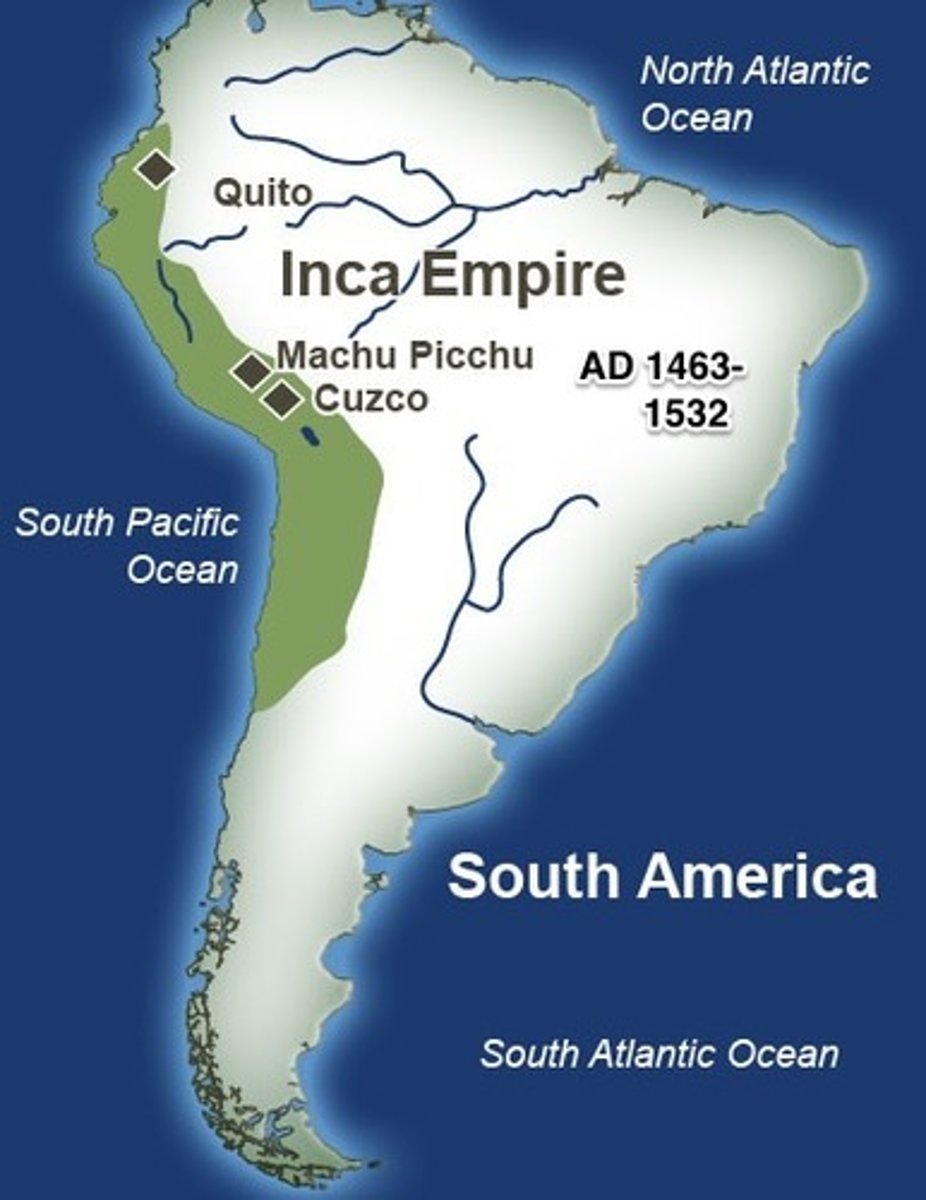
Inca Empire
Empire in Peru. conquered by Pizarro, who began an empire for the Spanish in 1535
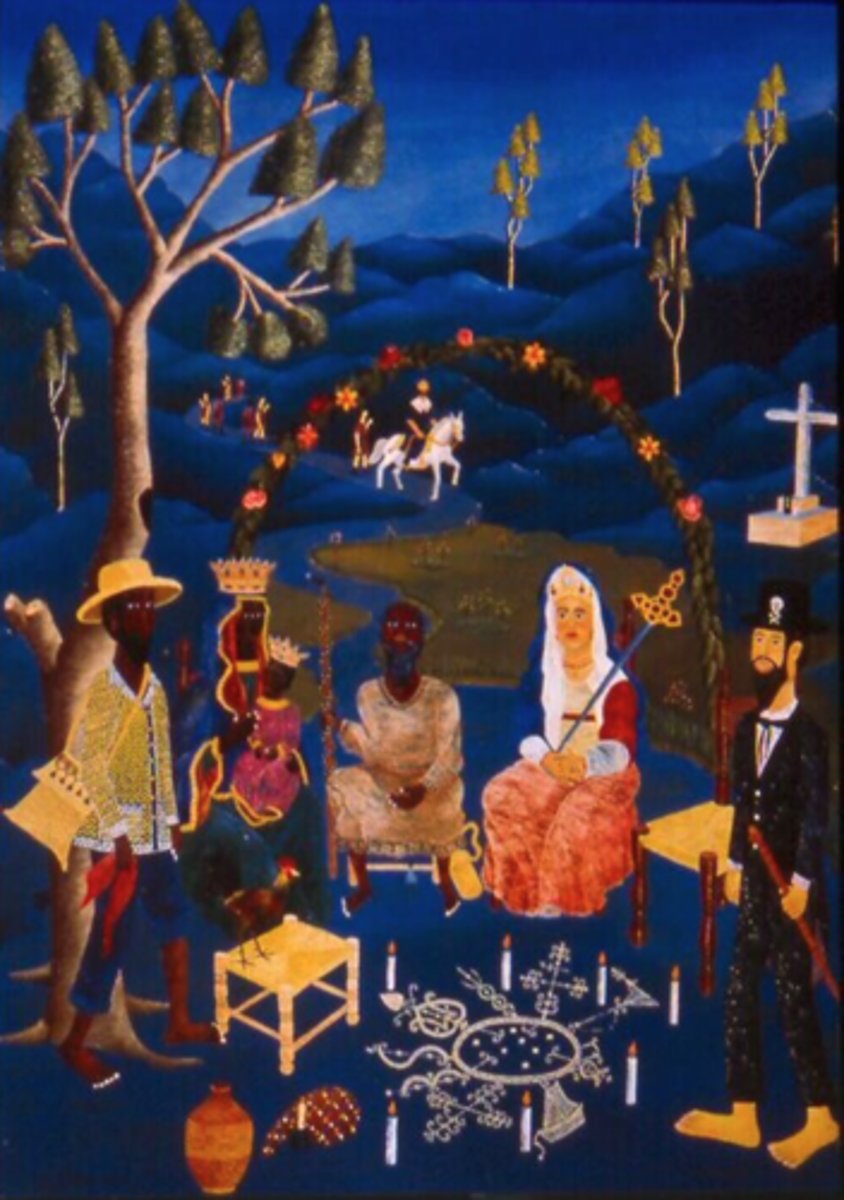
Voodoo
syncretic belief system that combines traditional African religious beliefs with elements of Christianity.
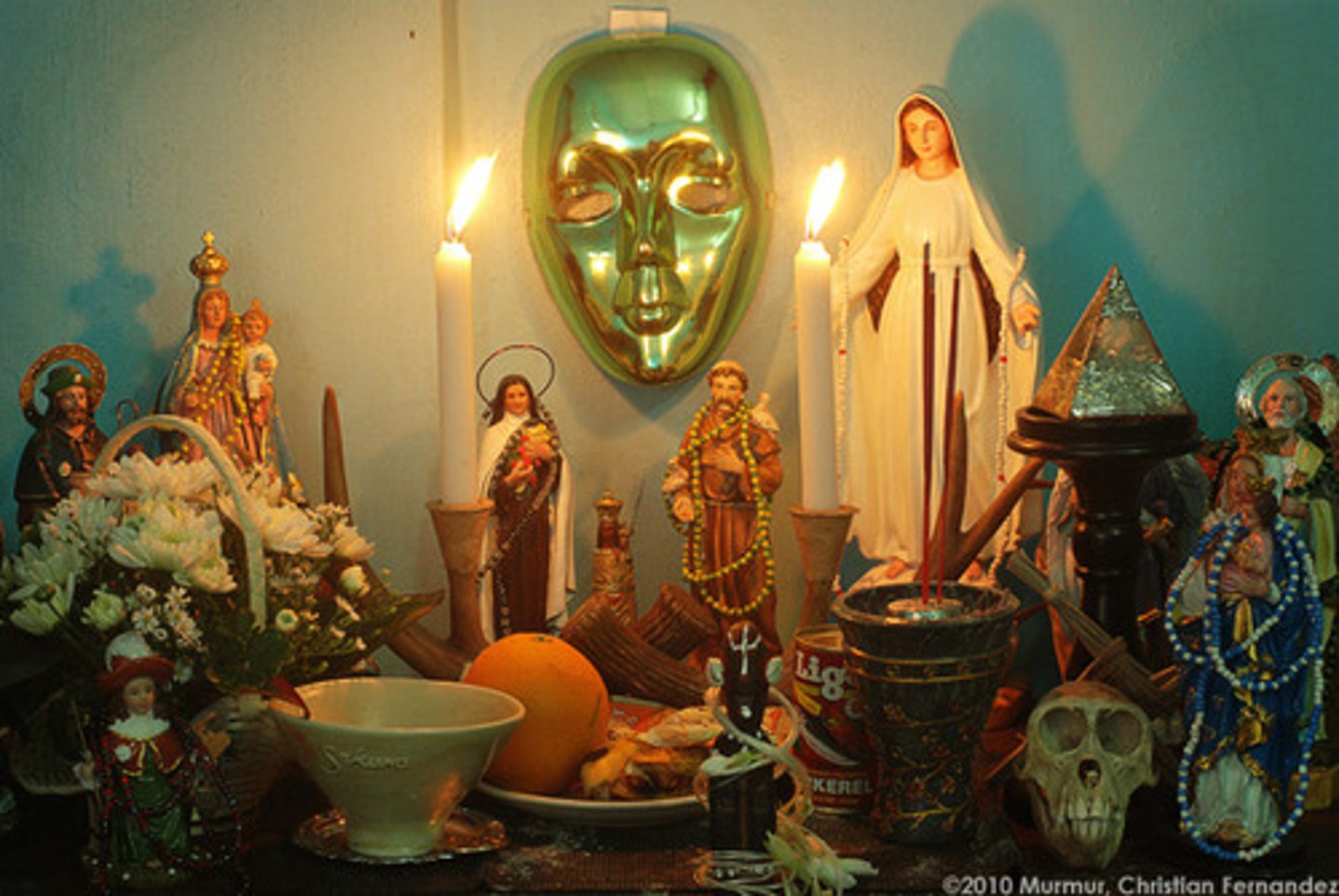
Santeria
Cuban religion that combines Catholic and West African beliefs
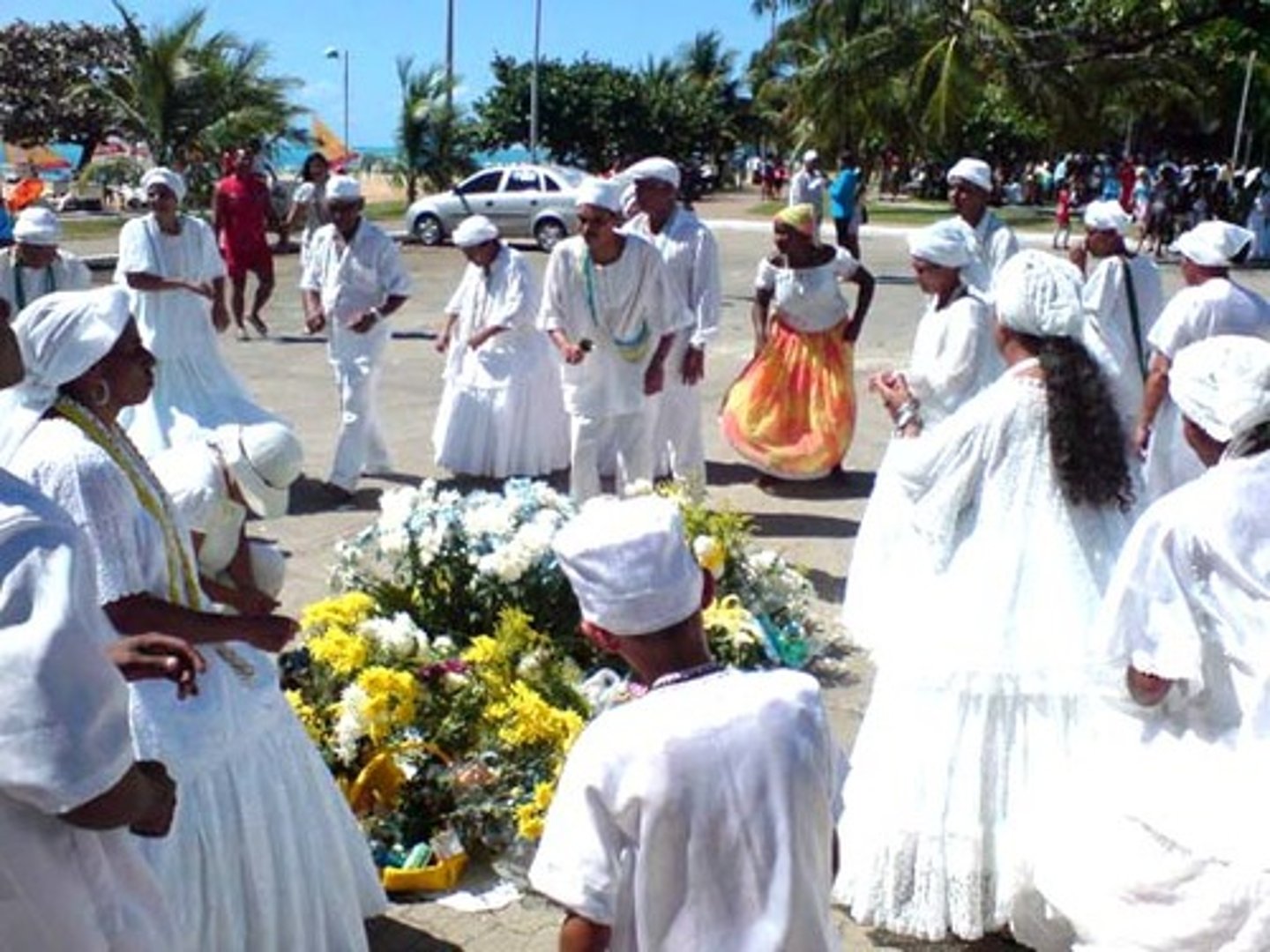
Candomble
African religious ideas and practices in Brazil, particularly among the Yoruba people.
Maroon Societies
Communities formed by escaped slaves in the Caribbean, Latin American. and the United States.
Slave Rebellions
Slaves resisted by working slowly, damaging goods, or running away; one of the largest uprisngs in the US was the German Coast Rebellion of 1811 in Louisiana; Nat Turner led a revolt in Virginia in 1831; Southern slaveowners enforced strict slave codes severe punishments and made it illegal to help run-away slaves;
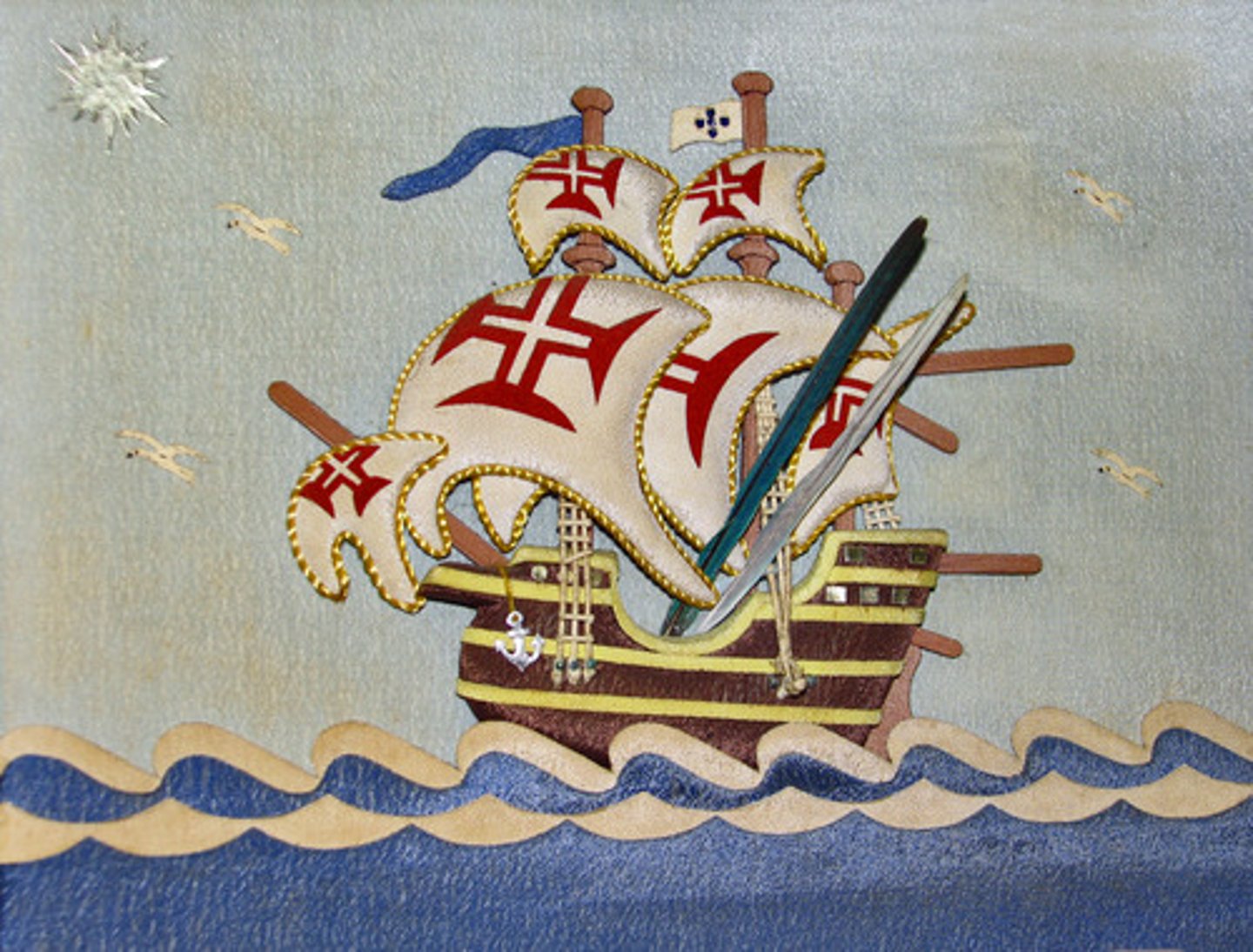
Caravel
A small, highly maneuverable three-masted ship used by the Portuguese and Spanish in the exploration of the Atlantic.
Kongo
Central African state that began trading with the Portuguese around 1500; although their kings, such as King Affonso I (r. 1506-1543), converted to Christianity, they nevertheless suffered from the slave trade.
Asante Kingdom
kingdom that emerged in the 1700s in present-day Ghana and was active in the slave trade
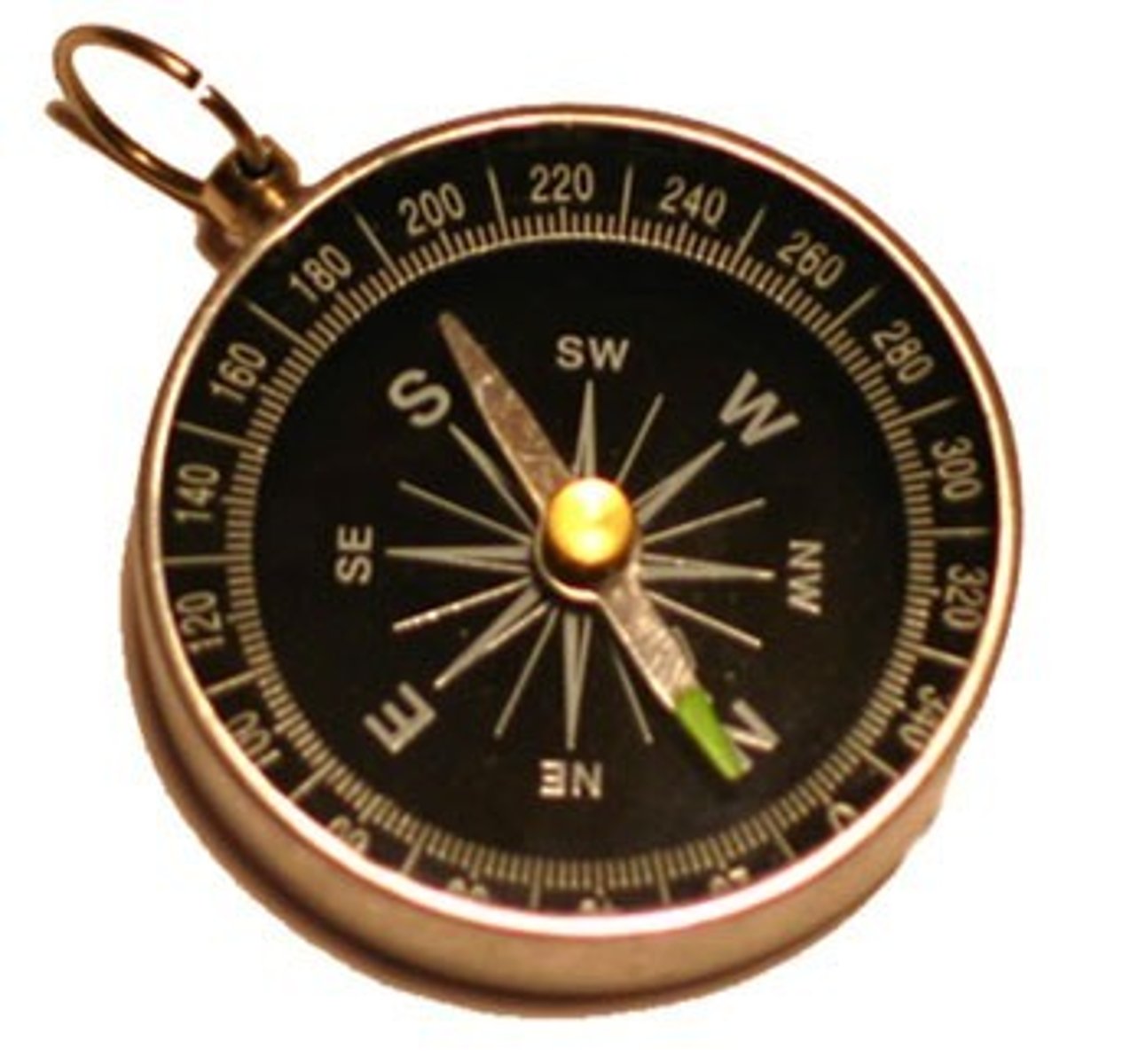
compass
an instrument containing a magnetized pointer that shows the direction of magnetic north and bearings from it.
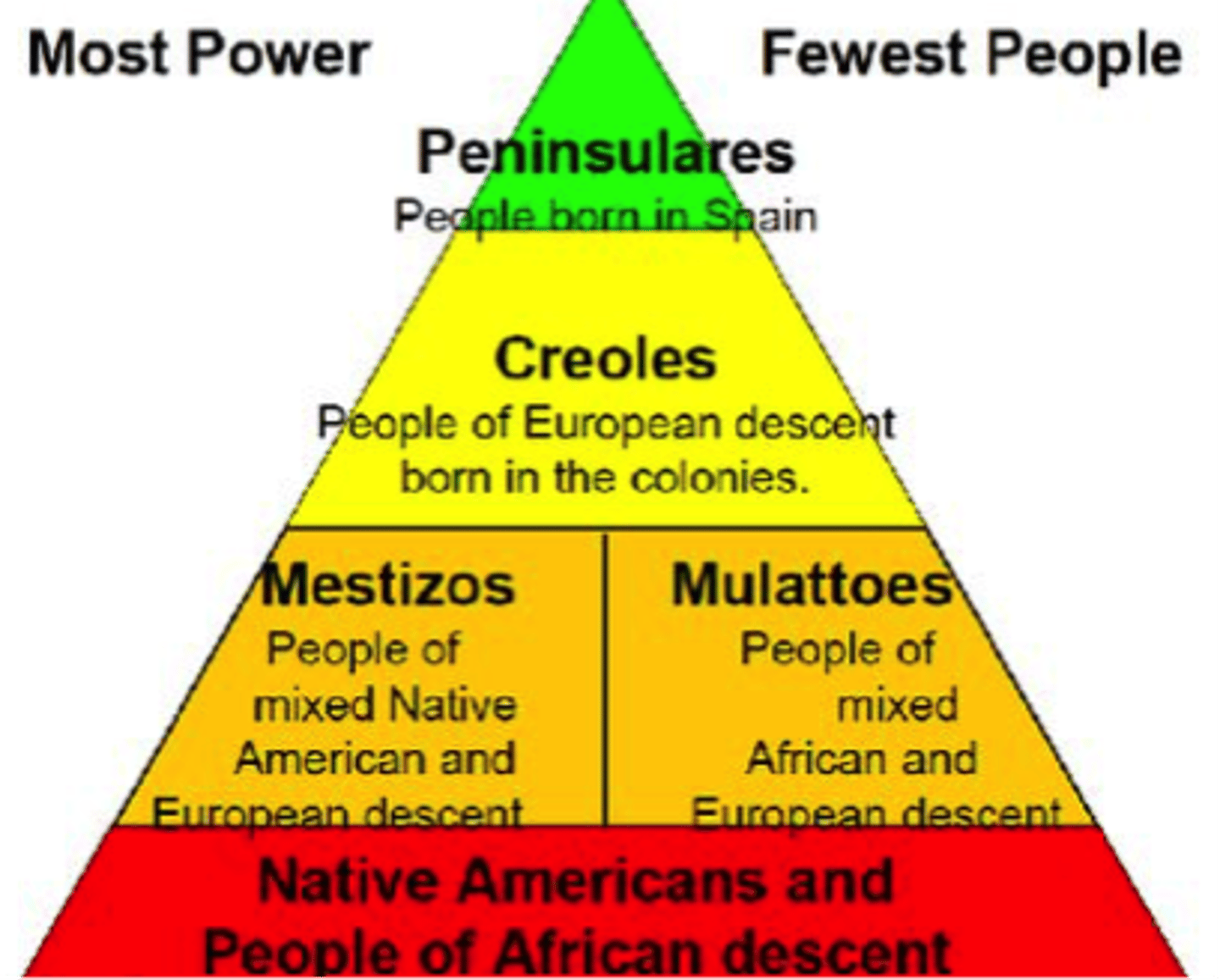
Creoles
In colonial Spanish America, term used to describe someone of European descent born in the New World.
Casta System
A system in colonial Spain of determining a person's social importance according to different racial categories.
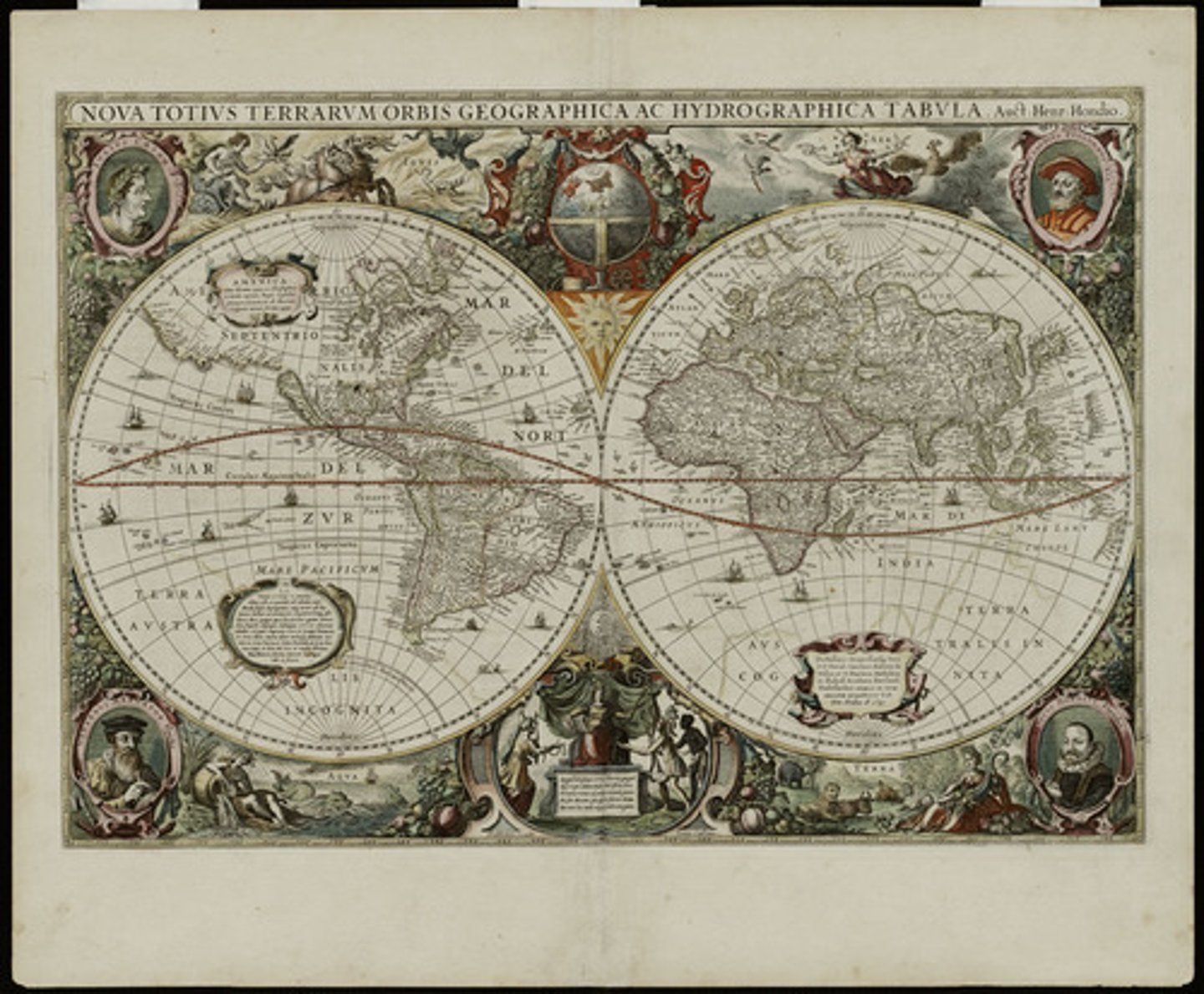
cartography
The science of making maps
astronomical charts
Charts of the sky that divides up constellations and astronomical bodies by location for navigational purposes
carrack
Large Portuguese ship used for ocean travel
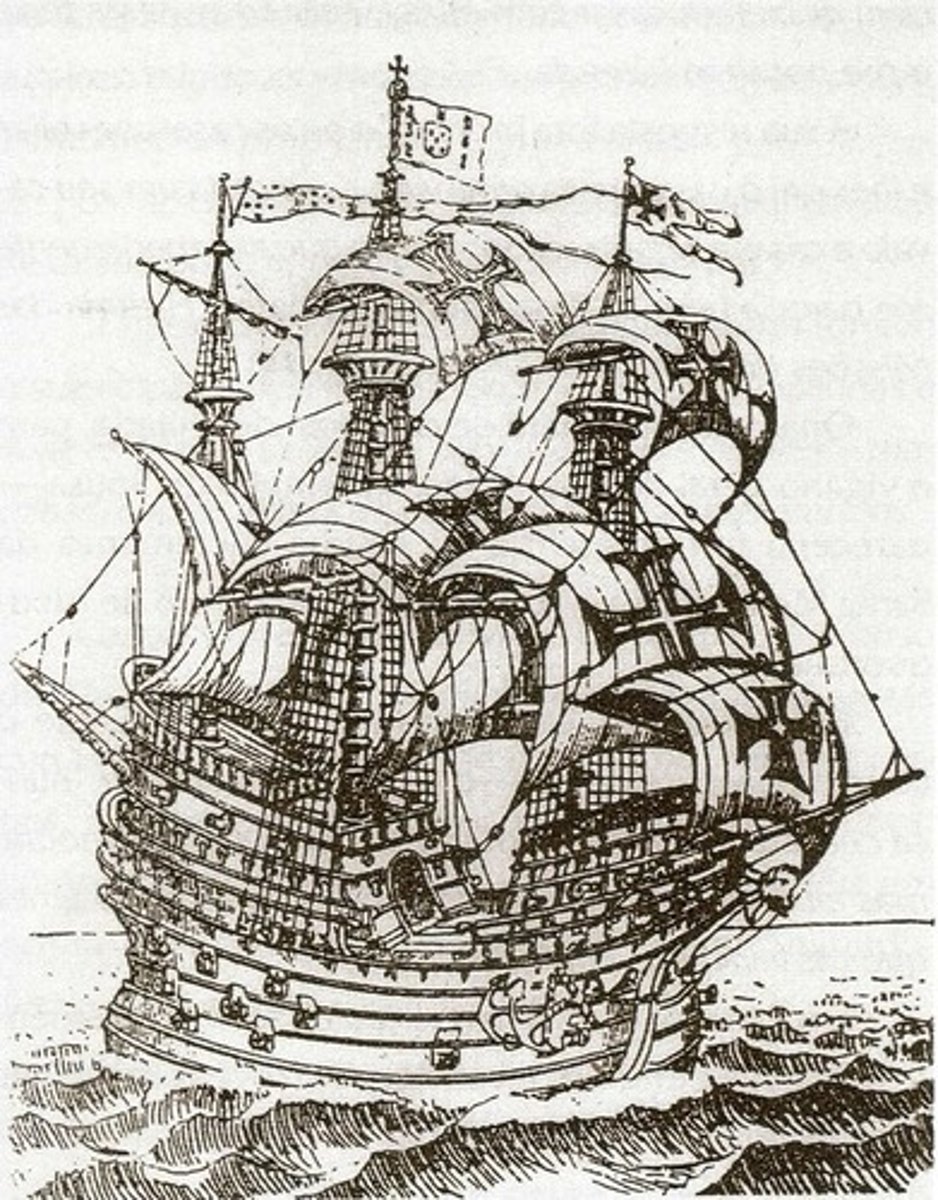
caravel
A small, highly maneuverable three-masted ship used by the Portuguese and Spanish in the exploration of the Atlantic.
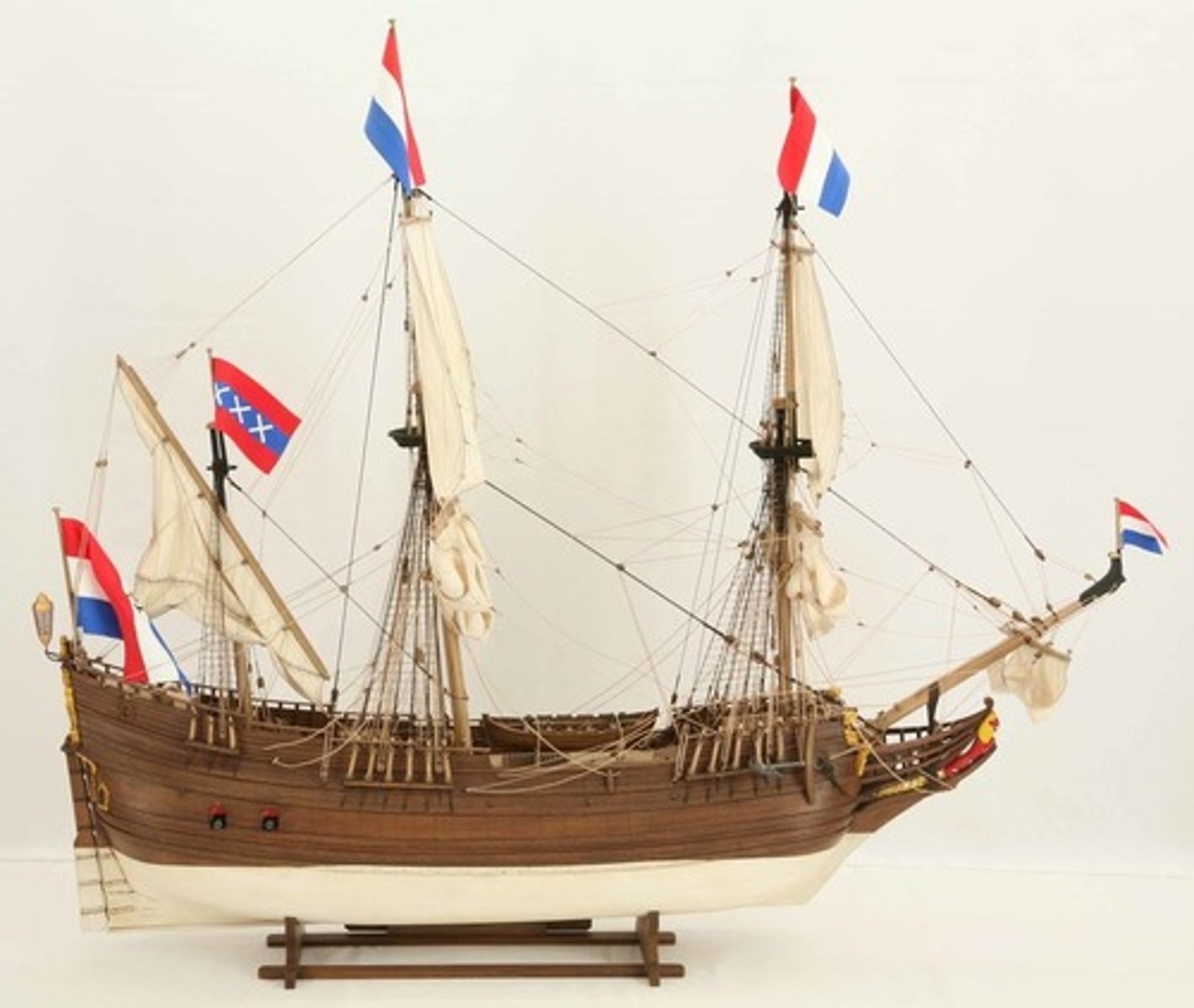
fluyt
Dutch sailing vessel that allowed them to control the Baltic trade; designed to facilitate transoceanic delivery with max space and crew efficiency; used from 16th to 17th centuries
astrolabe
instrument used to determine latitude by measuring the position of the stars

Bartholomew Diaz
(1487-1488) Portuguese, first European to reach the southern tip of Africa in 1488.
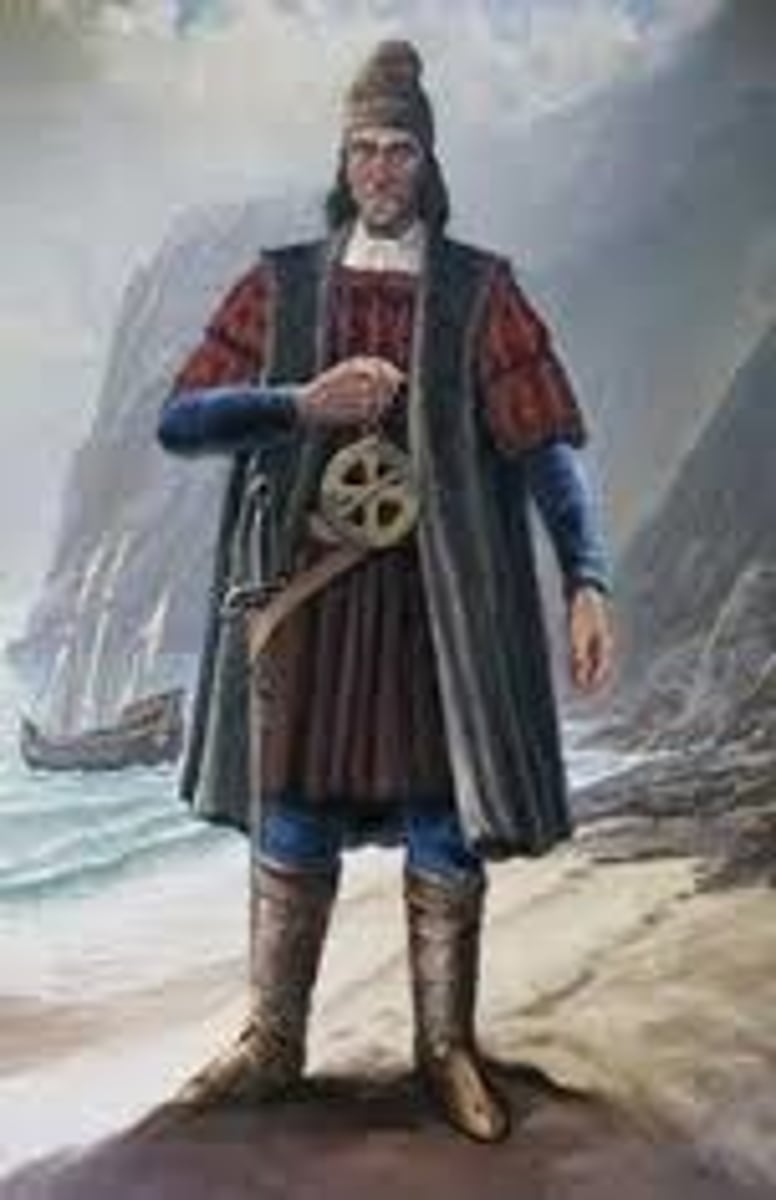
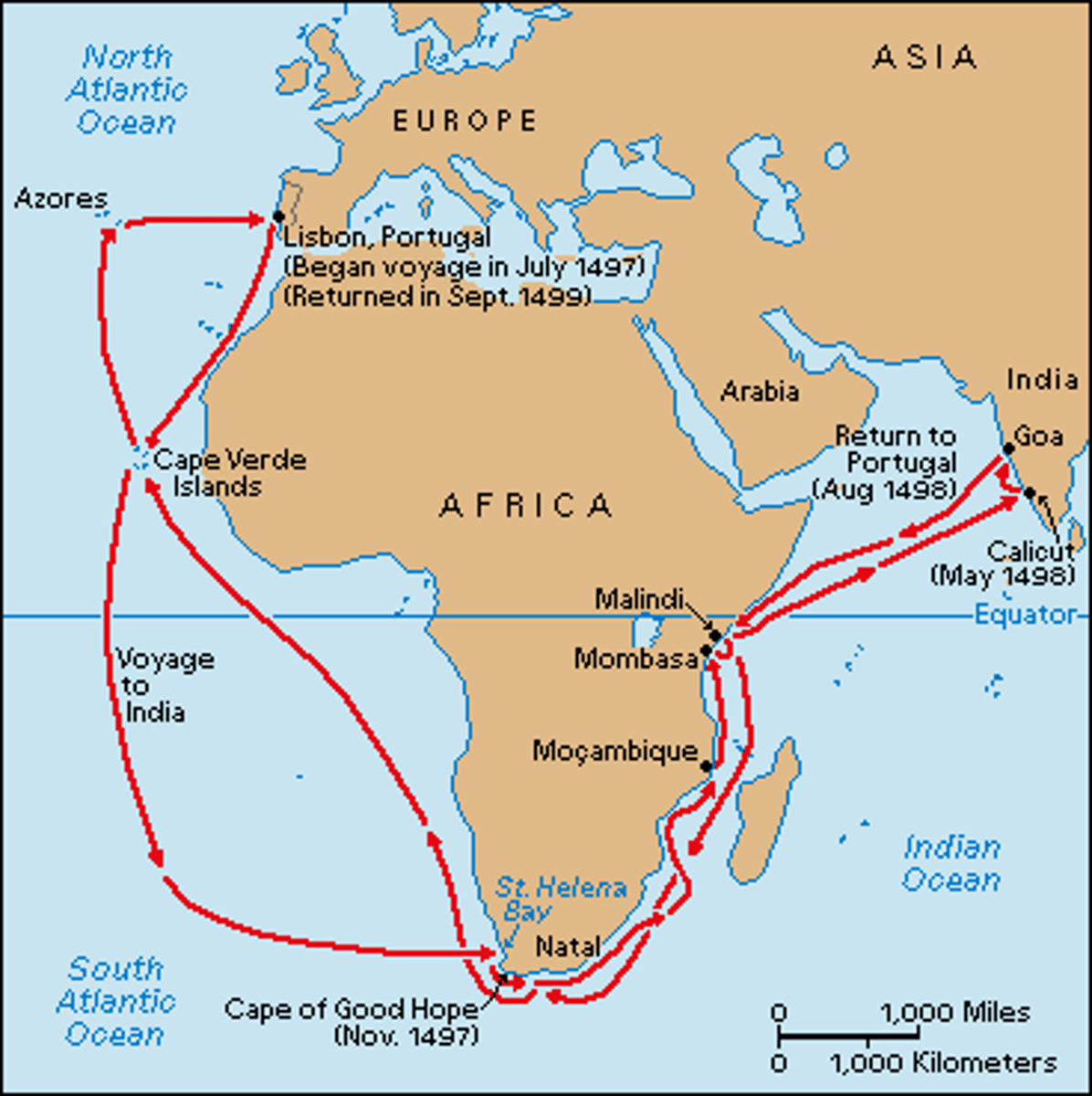
Vasco da Gama
Portuguese explorer. In 1497-1498 he led the first naval expedition from Europe to sail to India, opening an important commercial sea route.
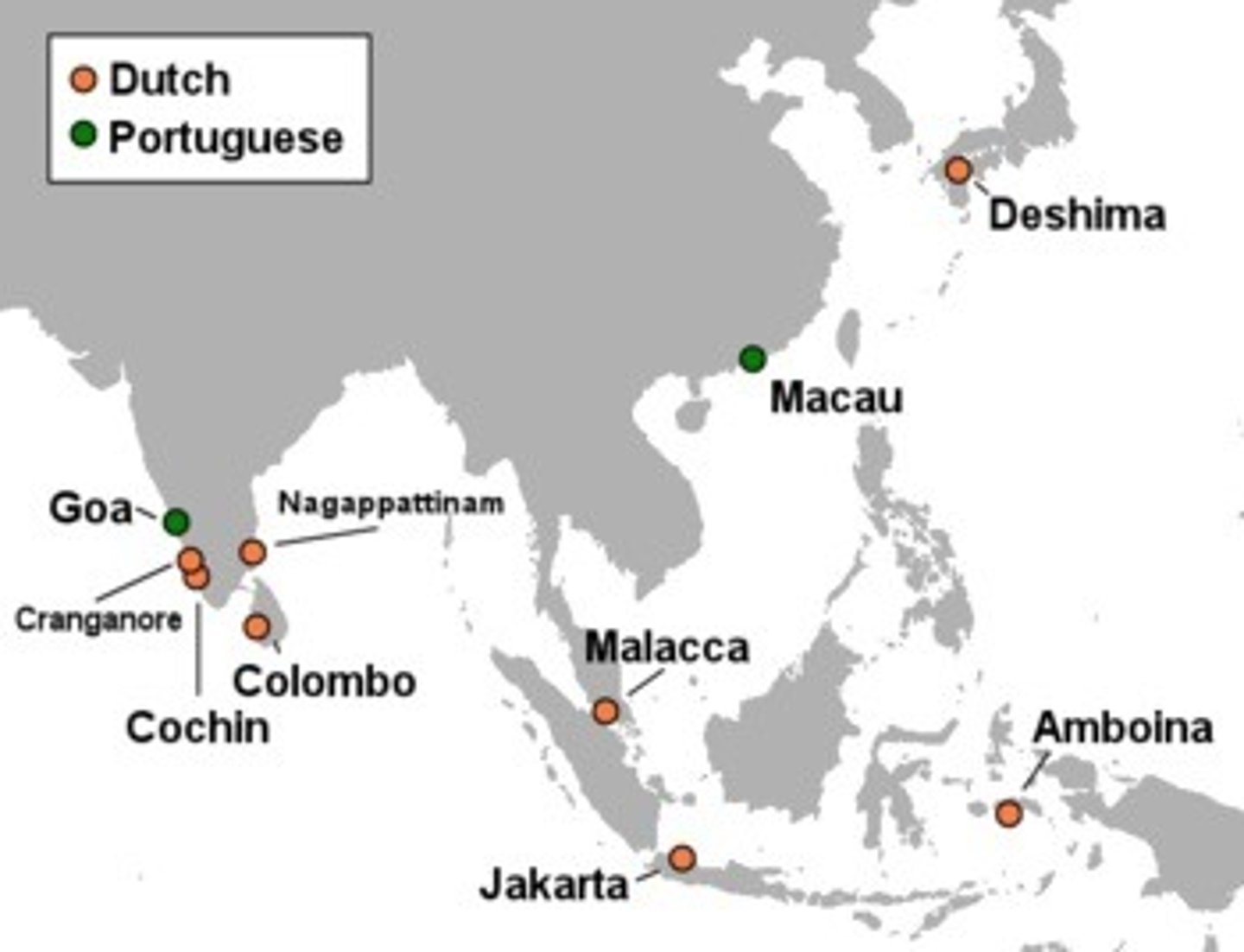
Trading Post Empire
16th Century. Built initially by the portuguese, these were used to control the trade routes by forcing merchant vessels to call at fortified trading sites and pay duties there.
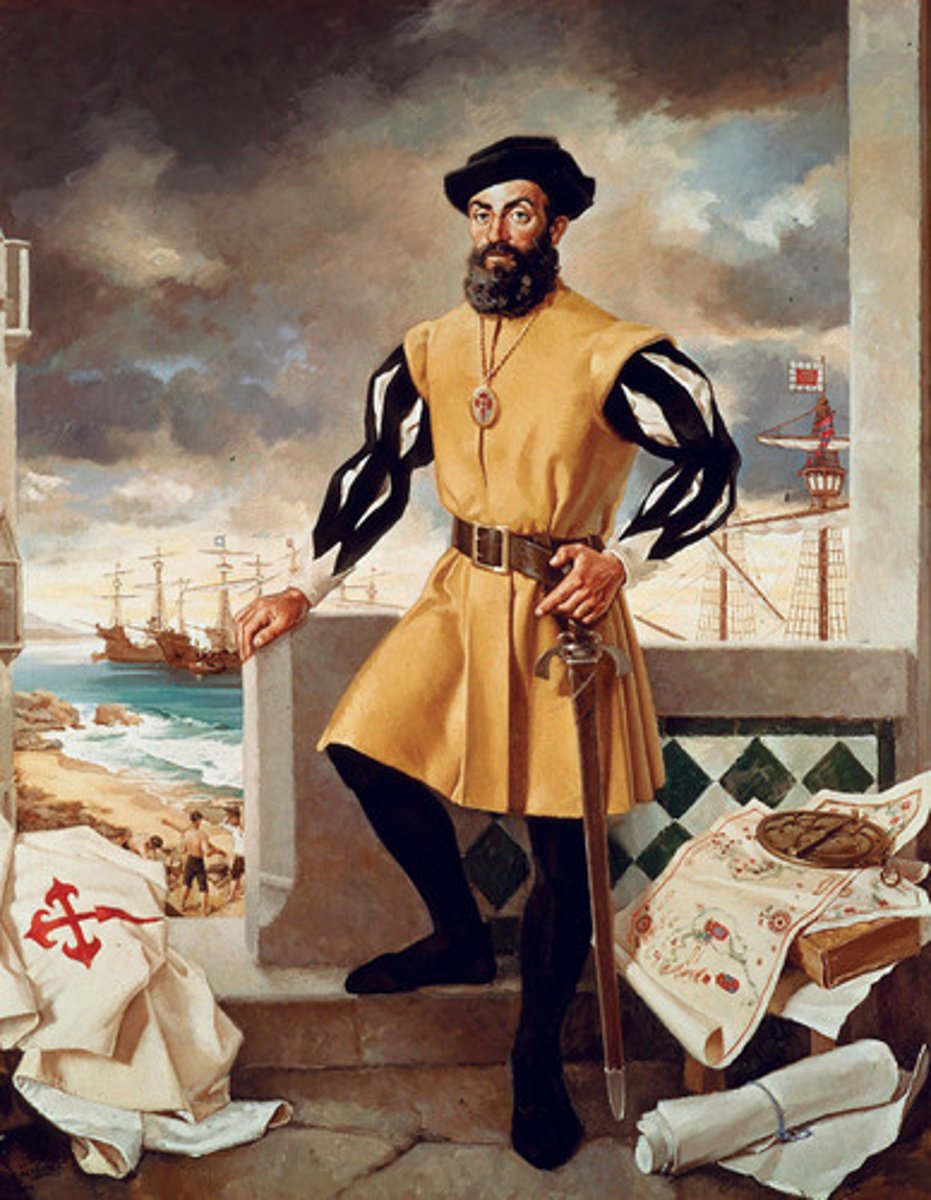
Ferdinand Magellan
Portuguese navigator who led the Spanish expedition of 1519-1522 that was the first to sail around the world.
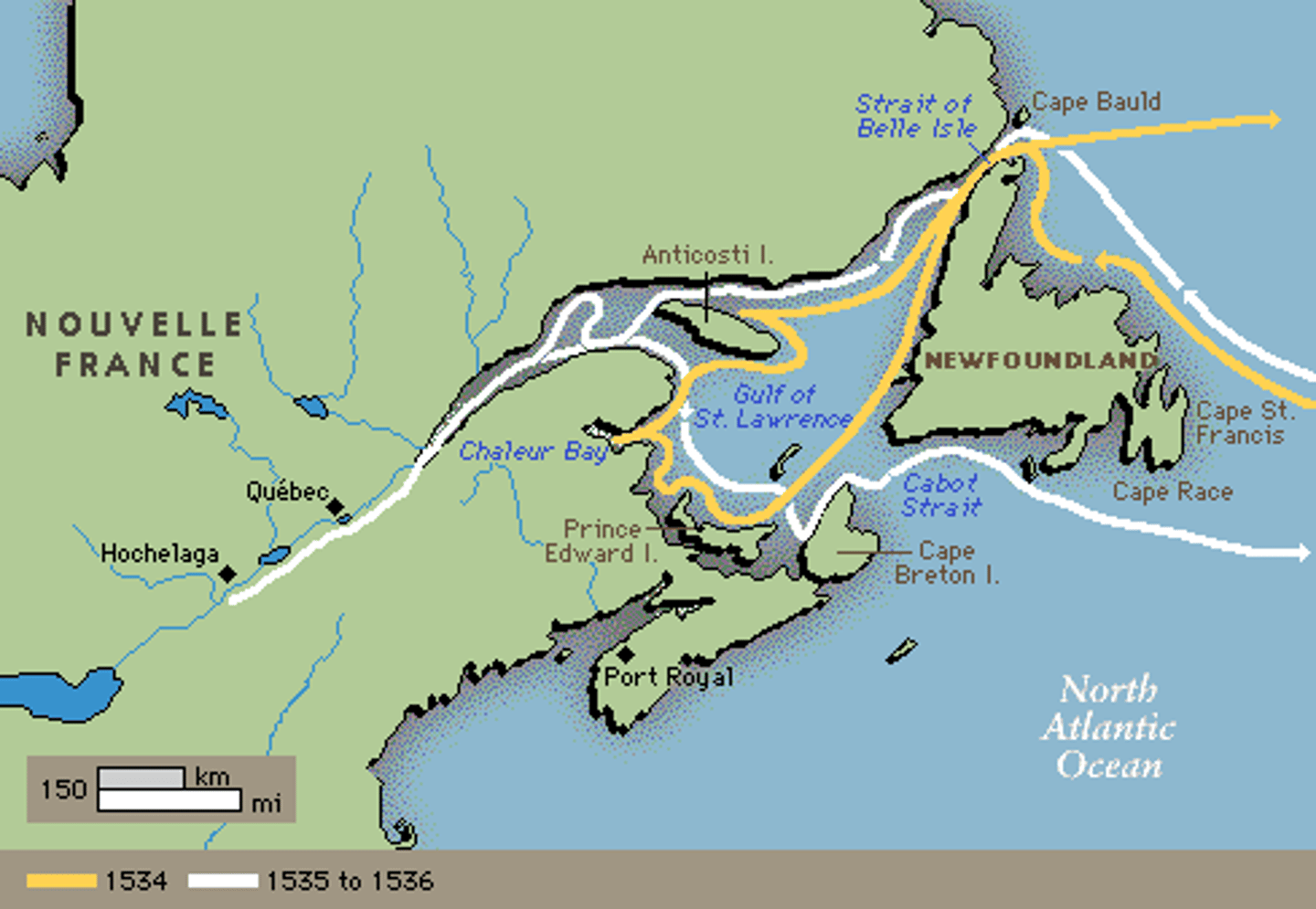
Jacques Cartier
French explorer who explored the St. Lawrence river and laid claim to the region for France (1491-1557)
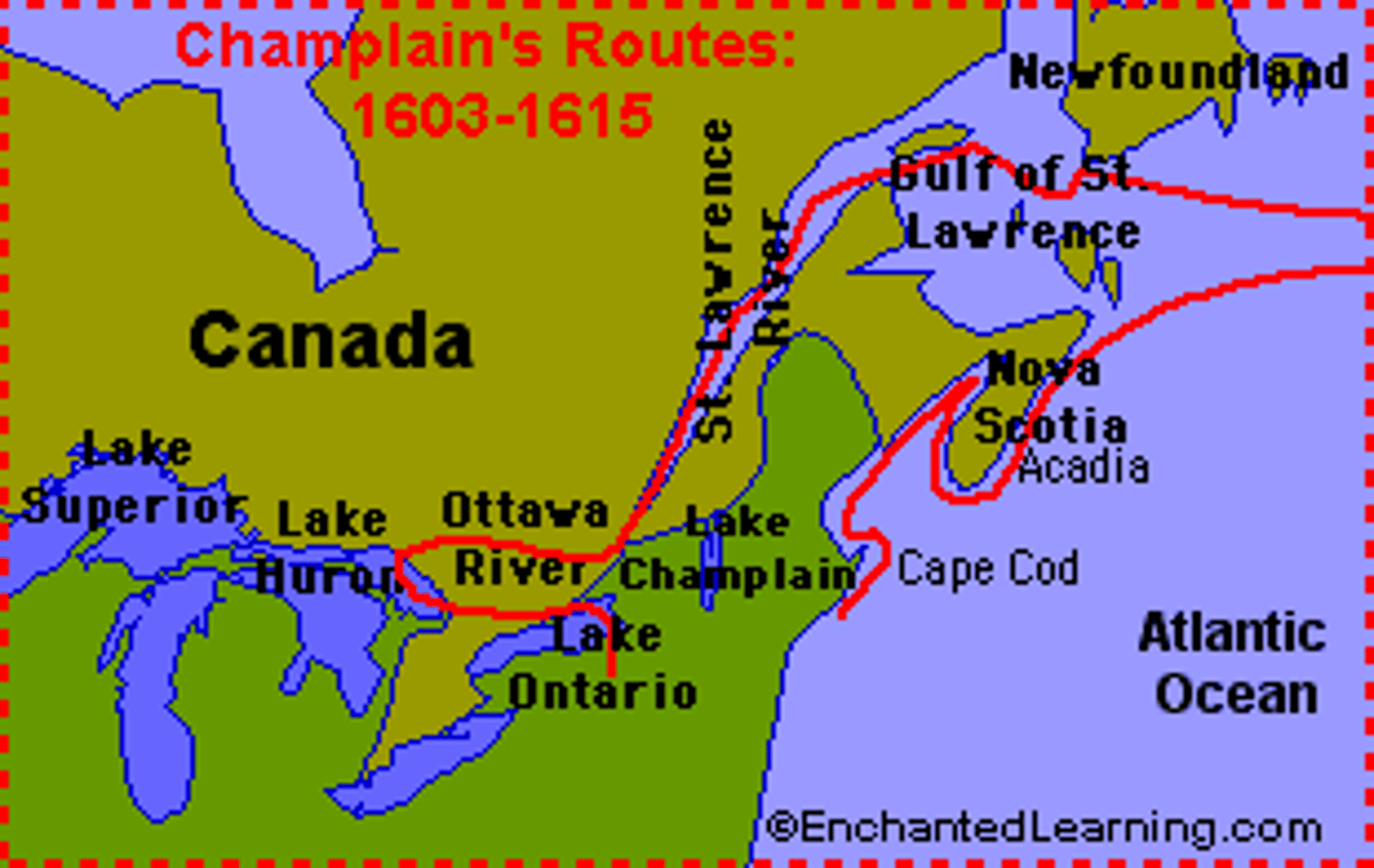
Samuel de Champlain
French explorer in Nova Scotia who established a settlement on the site of modern Quebec (1567-1635)
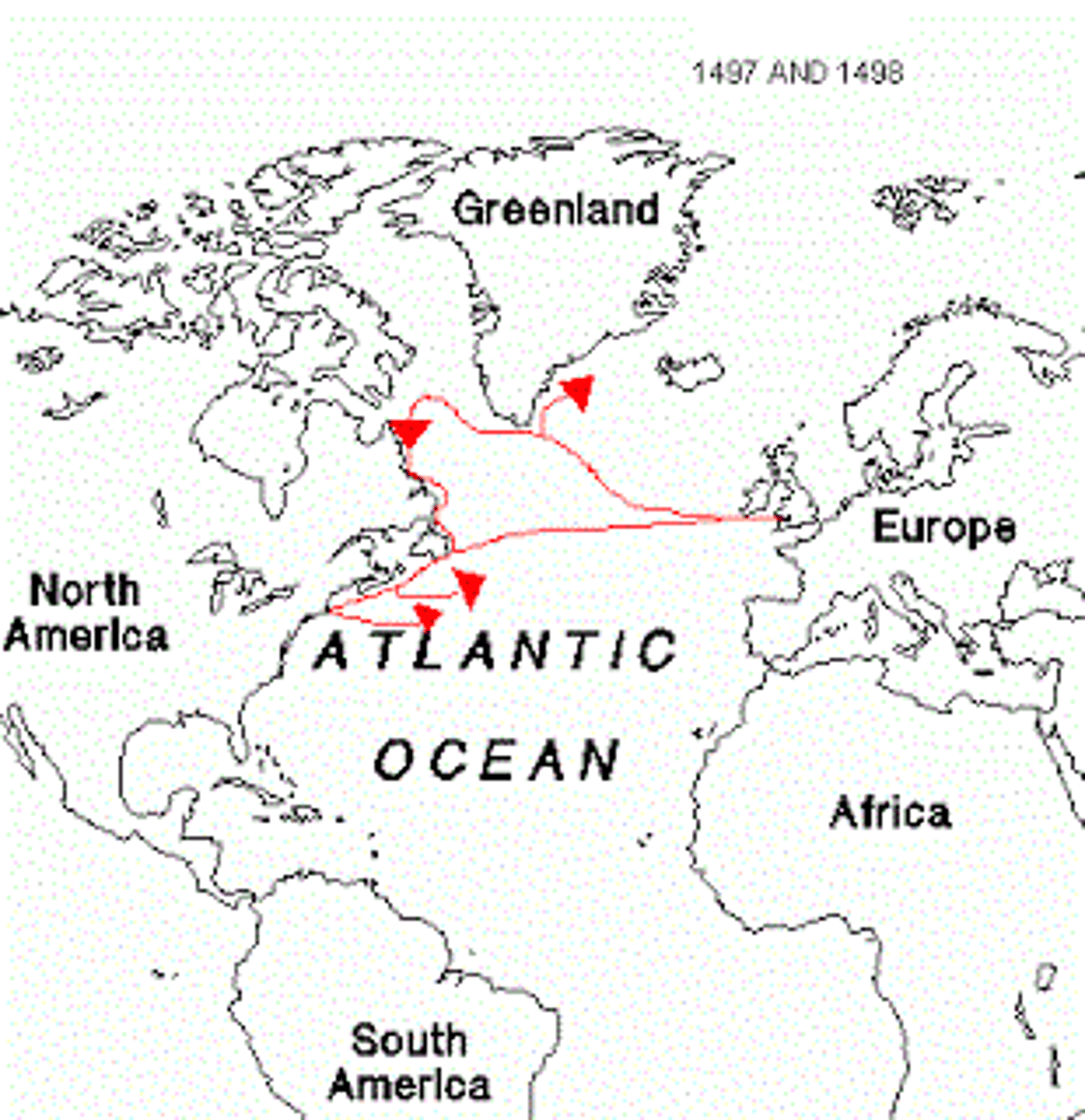
John Cabot
English explorer who claimed Newfoundland for England while looking for Northwest Passage
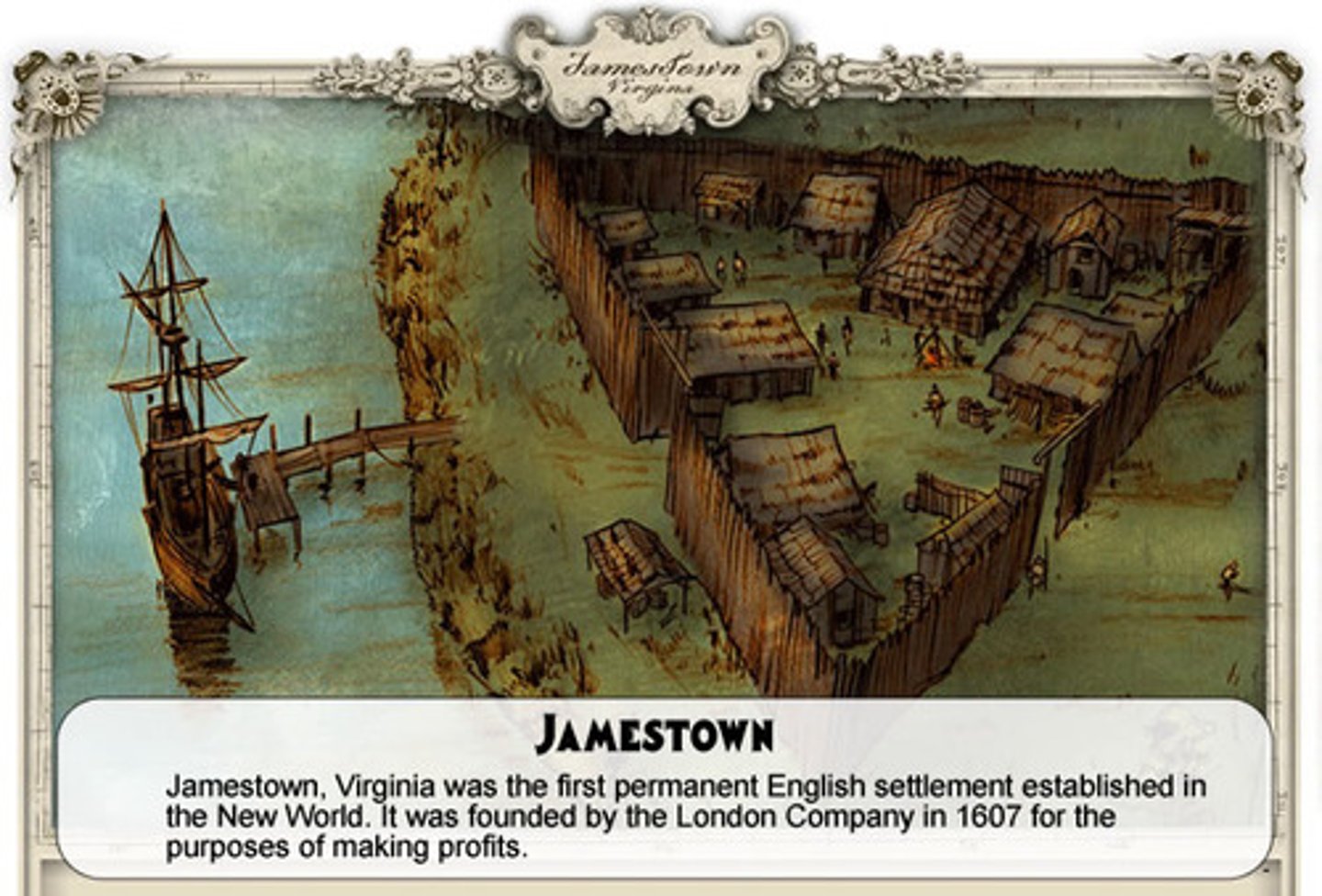
Jamestown
The first permanent English settlement in North America, found in East Virginia
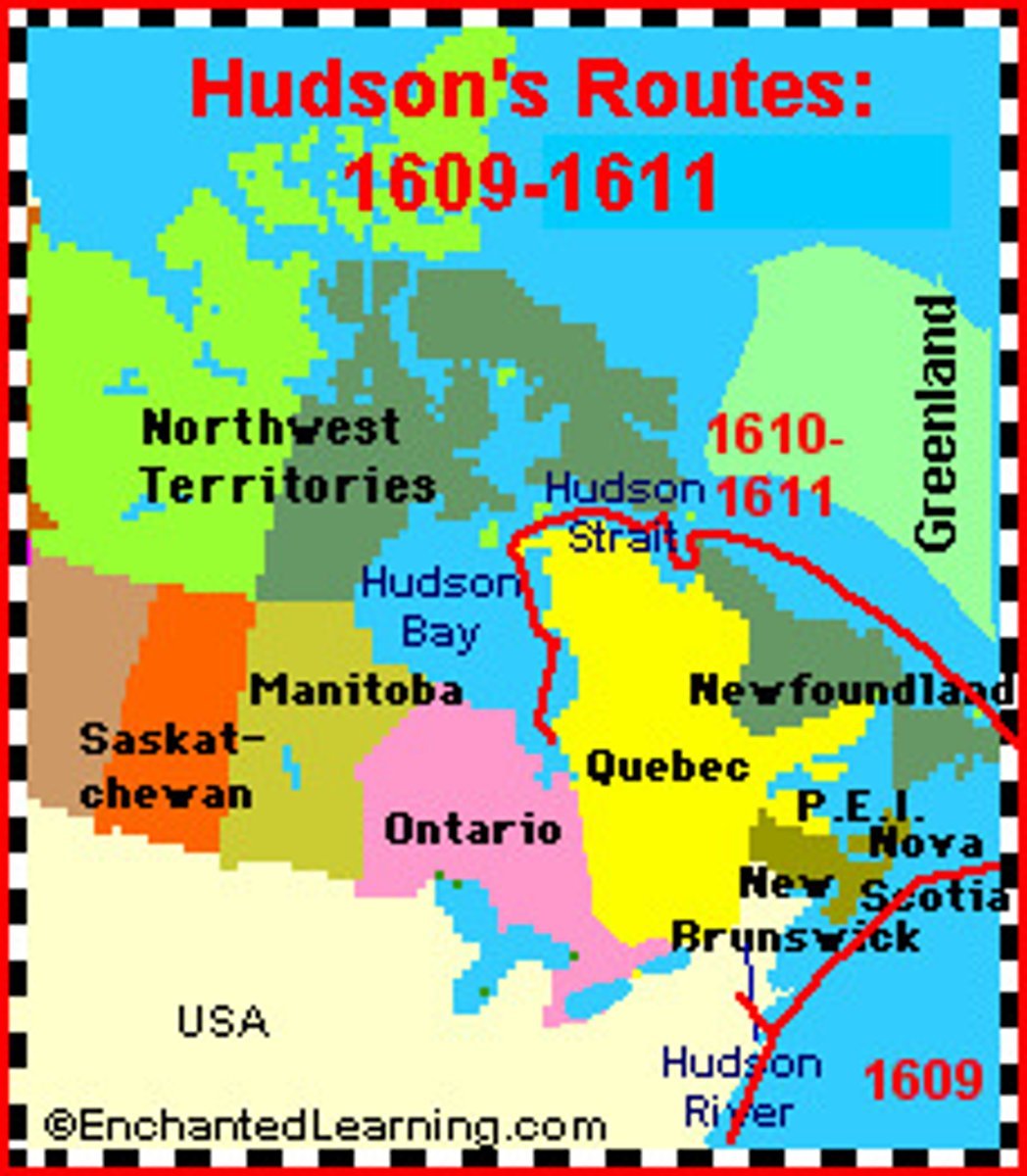
Henry Hudson
Navigatorn on behalf of the Dutch who discovered the Hudson River, claimed the Hudson River Valley, Manhattan, and New Amsterdam.
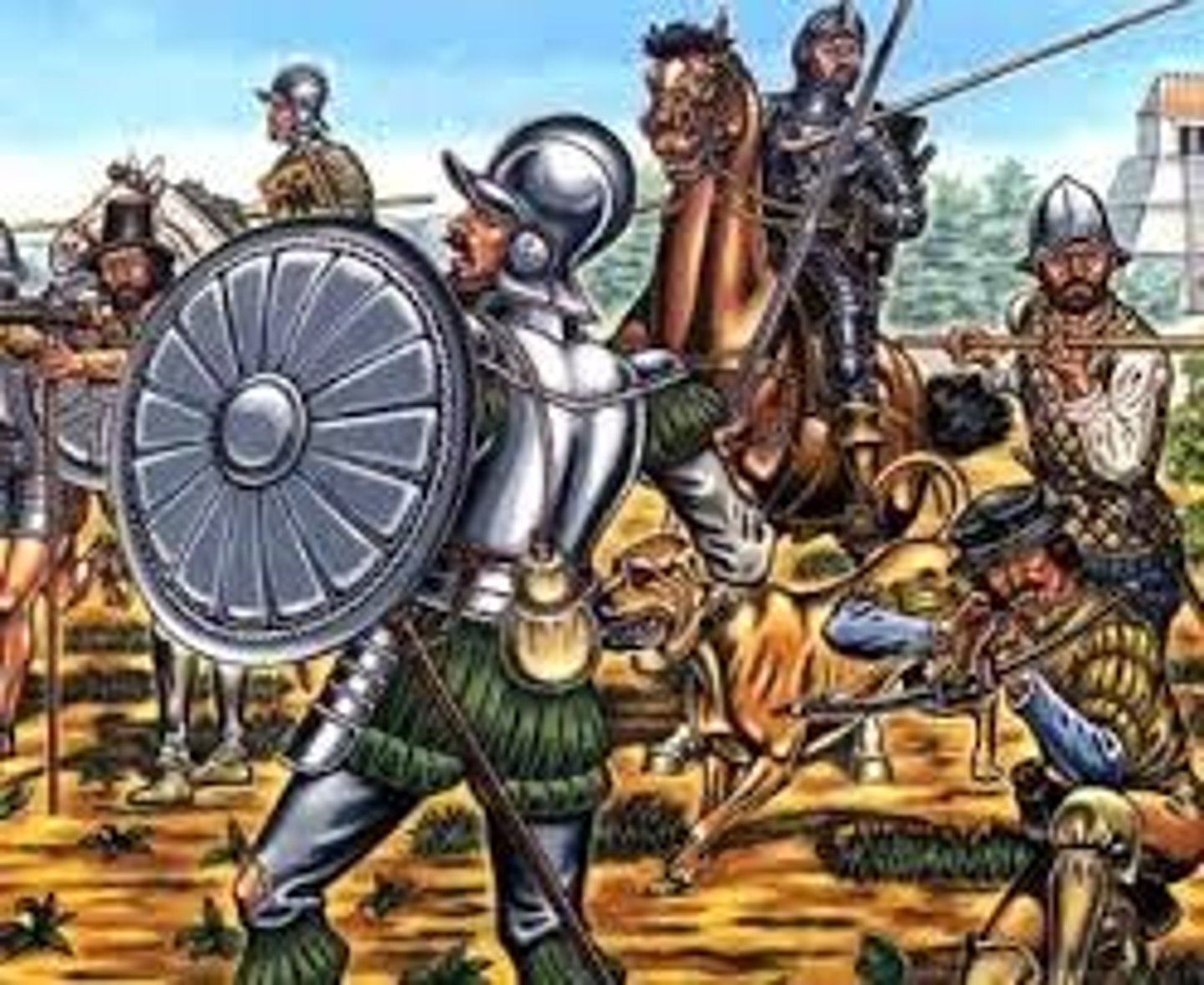
Conquistadors
Early-sixteenth-century Spanish adventurers who conquered Mexico, Central America, and Peru. (Examples Cortez, Pizarro, Francisco.)
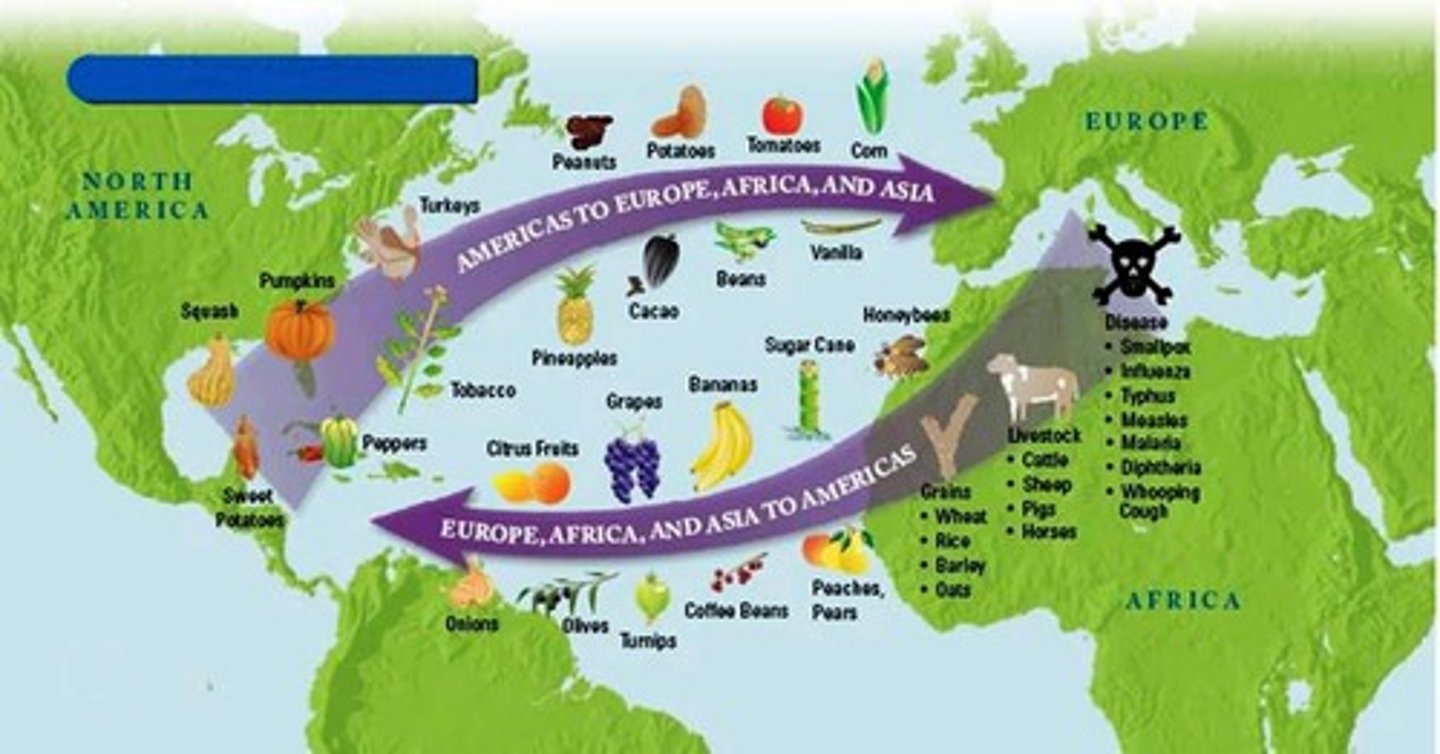
Columbian Exchange
The exchange of plants, animals, diseases, and technologies between the Americas and the rest of the world following Columbus's voyages.
smallpox
The overall deadliest known disease in the history of the world. It contributed to the Great Dying of America's indigenous population.
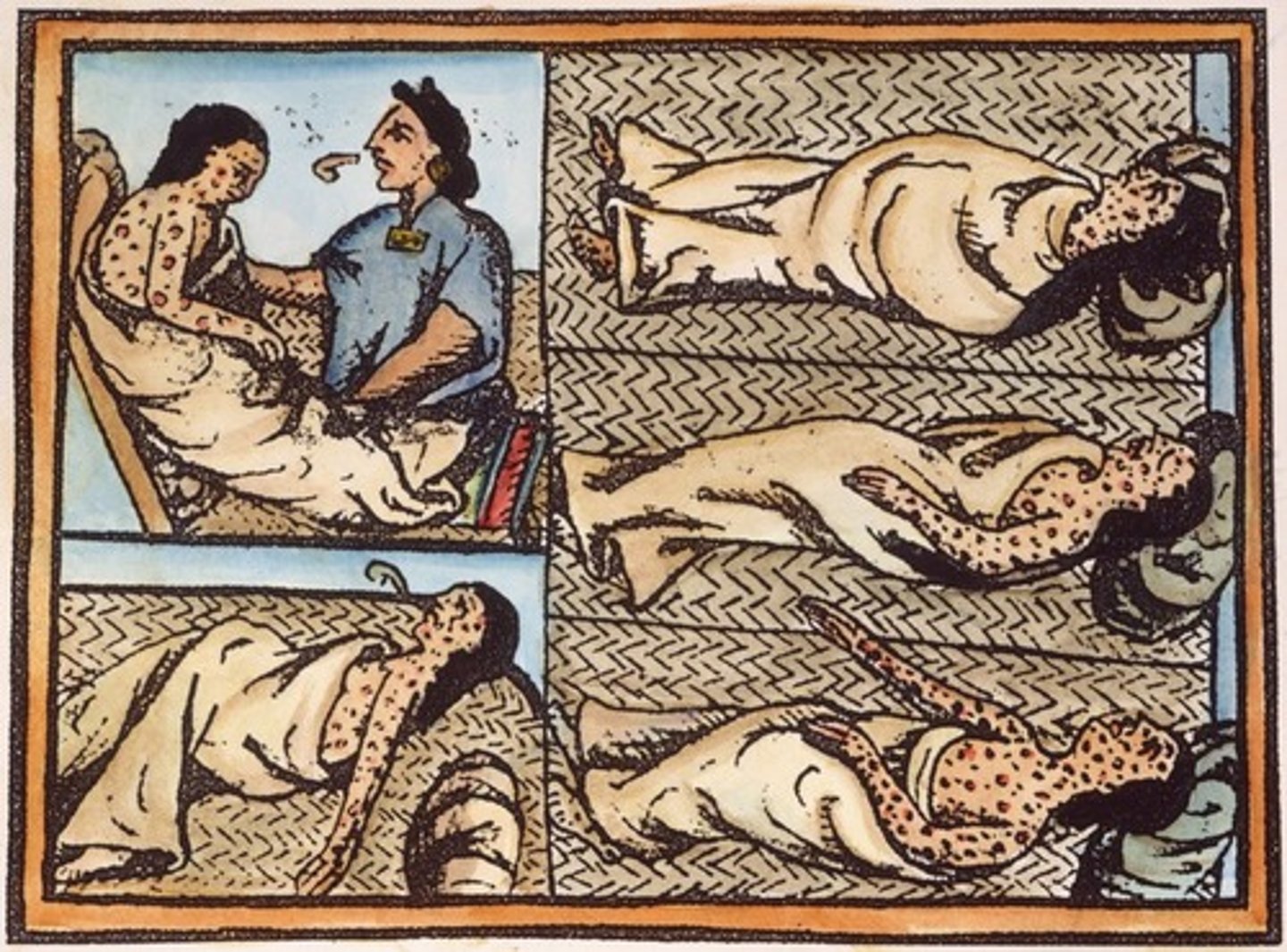
Great Dying
The devastating demographic impact of European-borne epidemic diseases (like smallpox and measles) in the Americas following European conquest; anywhere from 50-90% of indigenous peoples were killed by European diseases
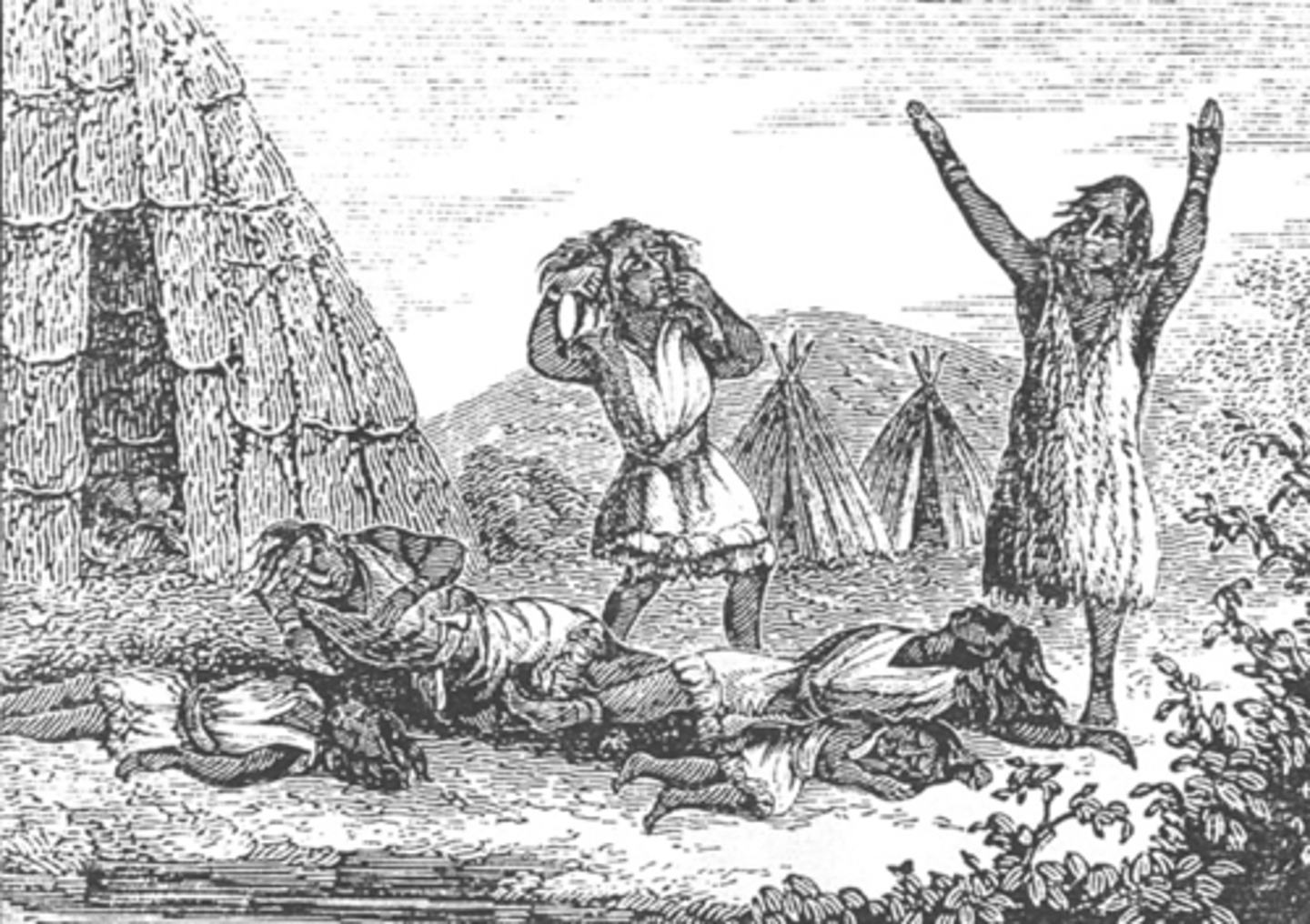
Transatlantic Slave Trade
Trading of slaves from Africa to the Americas
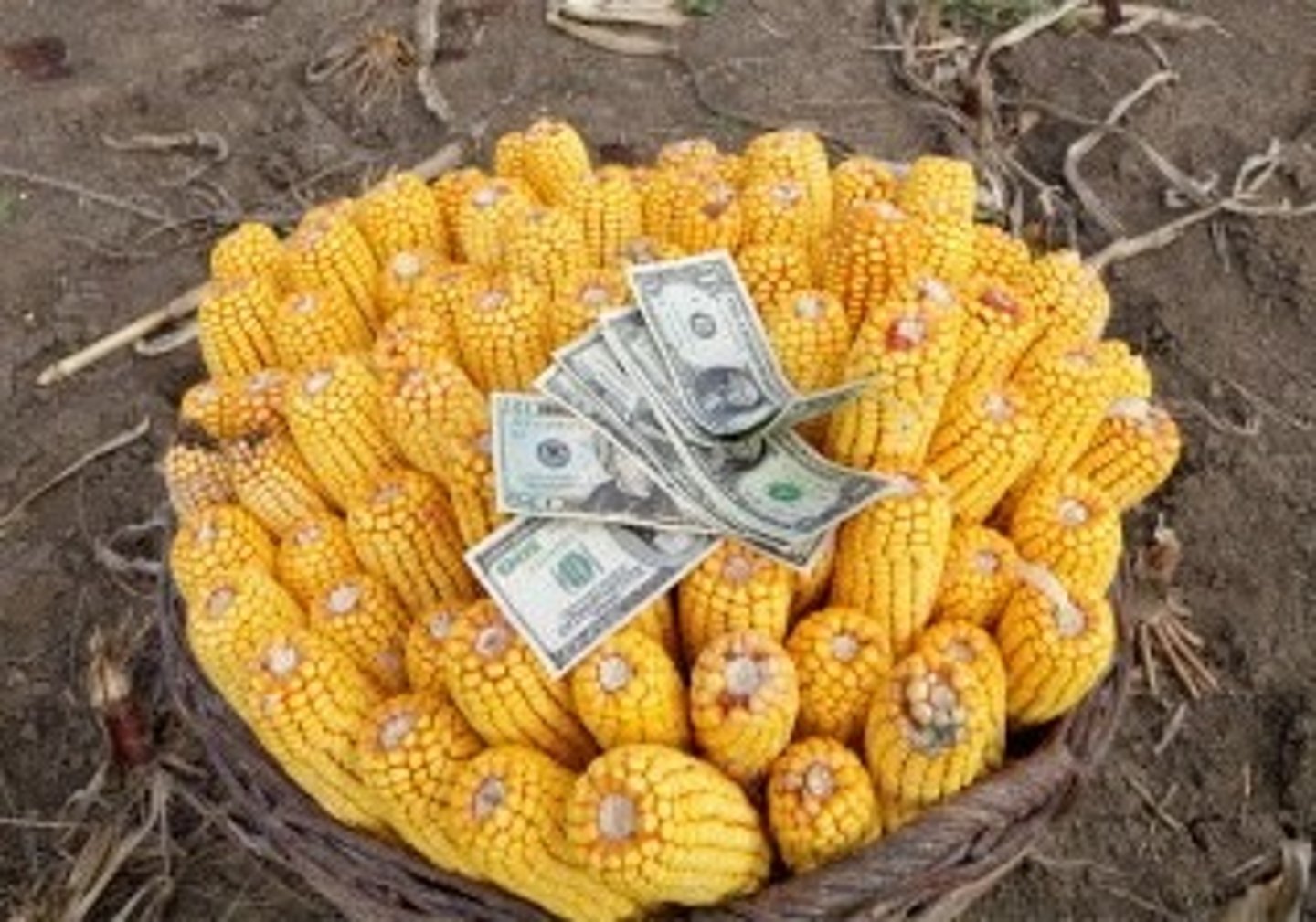
Cash Crops
crops, such as tobacco, sugar, and cotton, raised in large quantities in order to be sold for profit
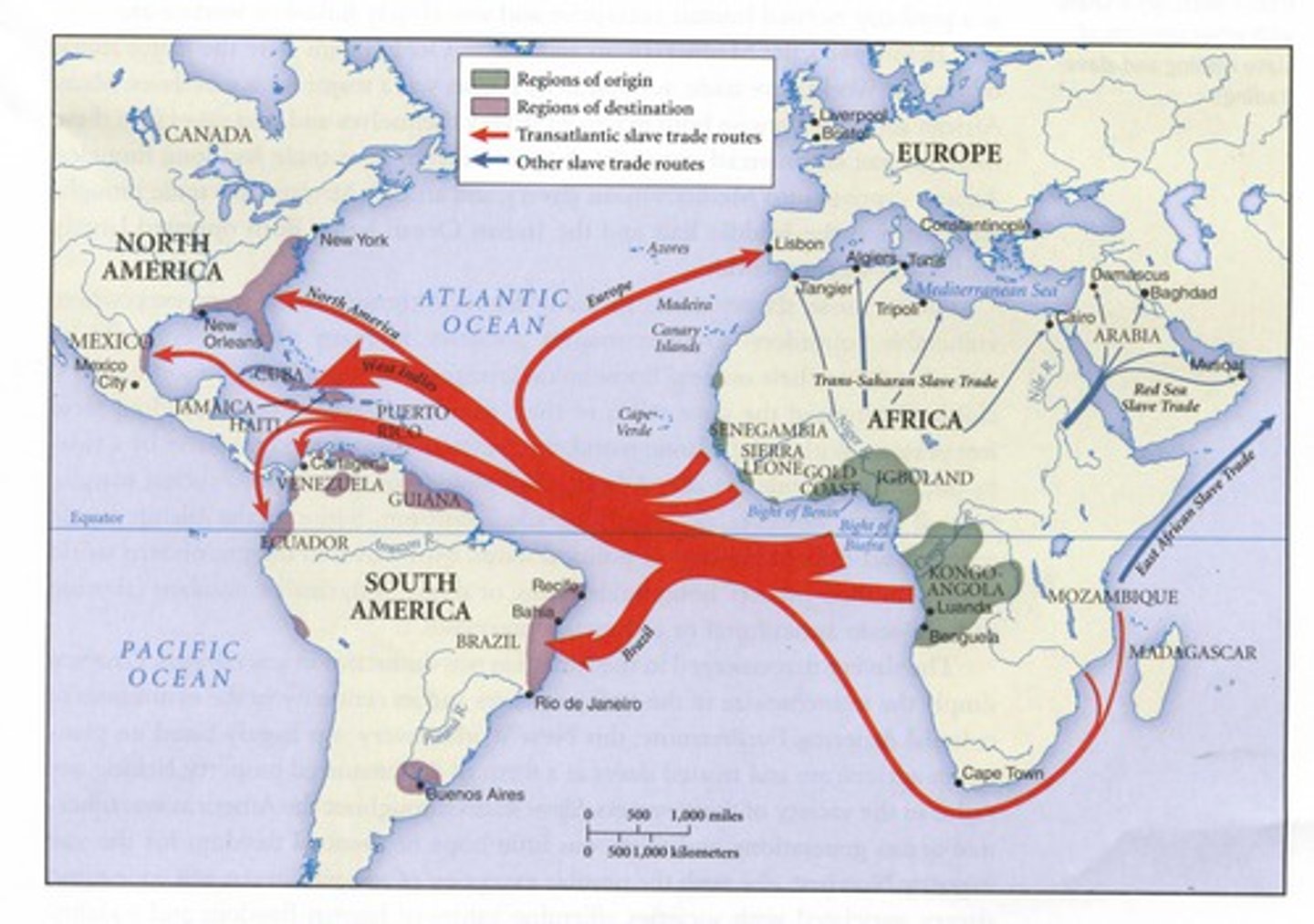
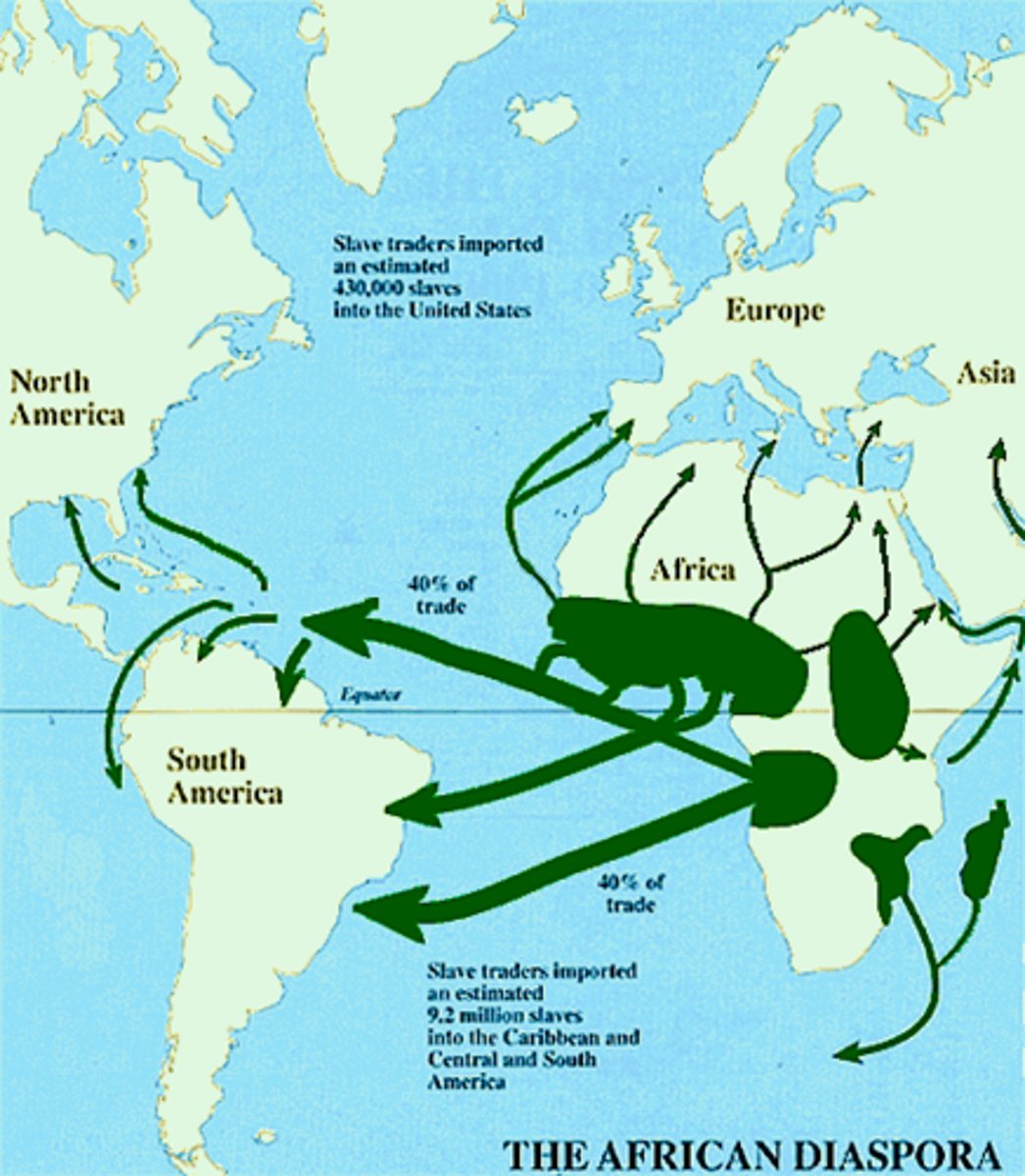
African Diaspora
The separation of Africans from their homeland through centuries of forced removal to serve as slaves in the Americas and elsewhere.
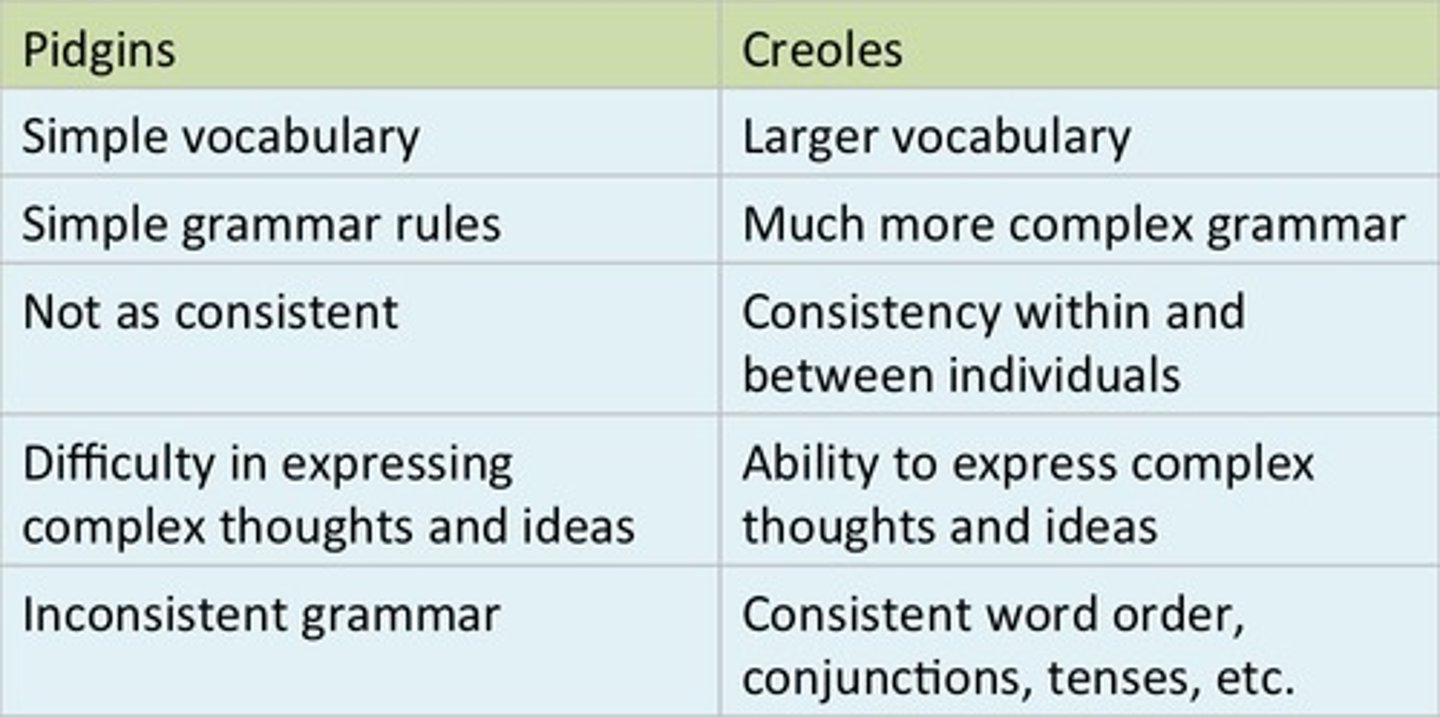
Creole
A language that results from the mixing of a colonizer's language with the indigenous language of the people being dominated.
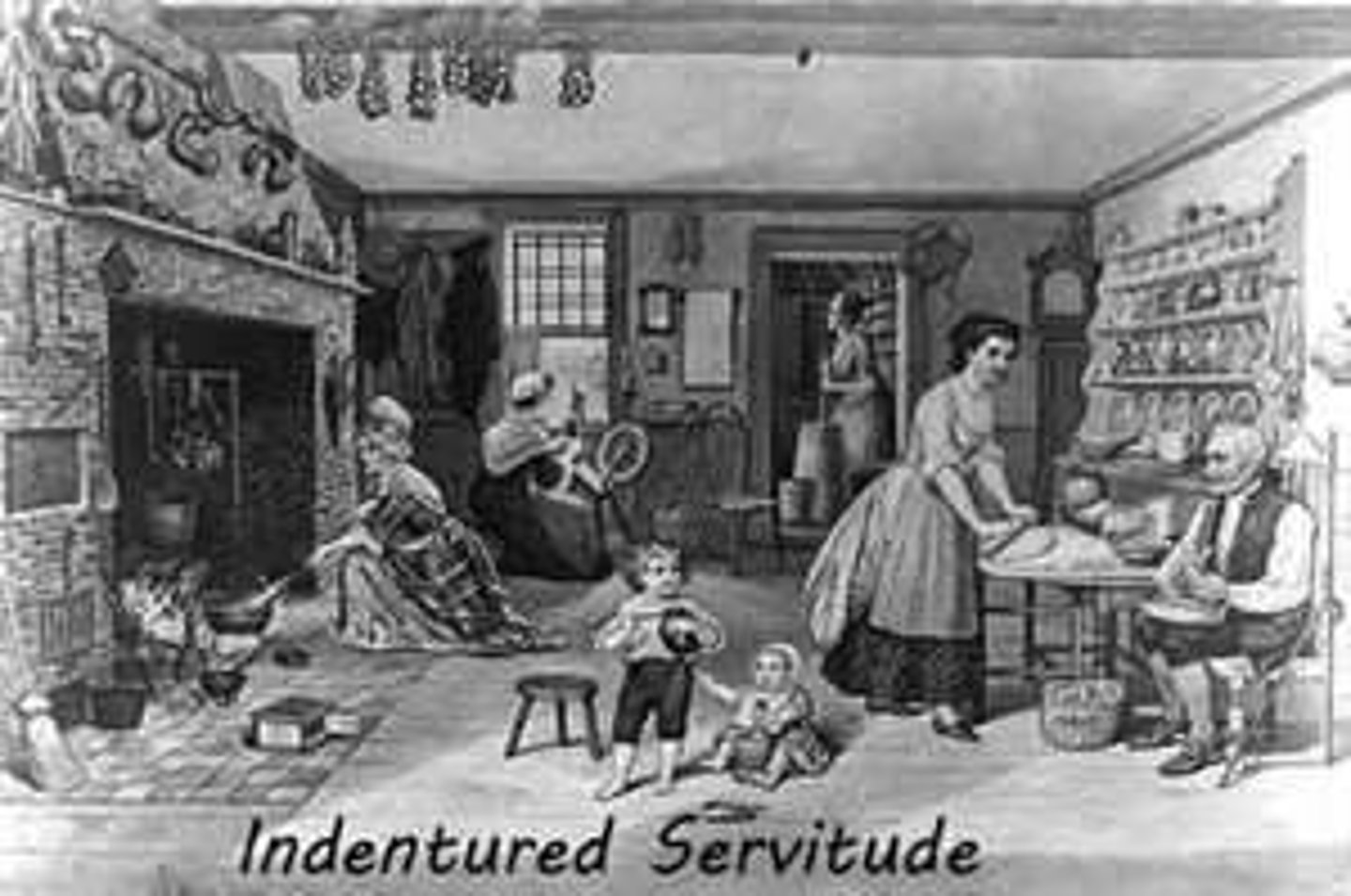
indentured servitude
A worker bound by a voluntary agreement to work for a specified period of years often in return for free passage to an overseas destination. Before 1800 most were Europeans.
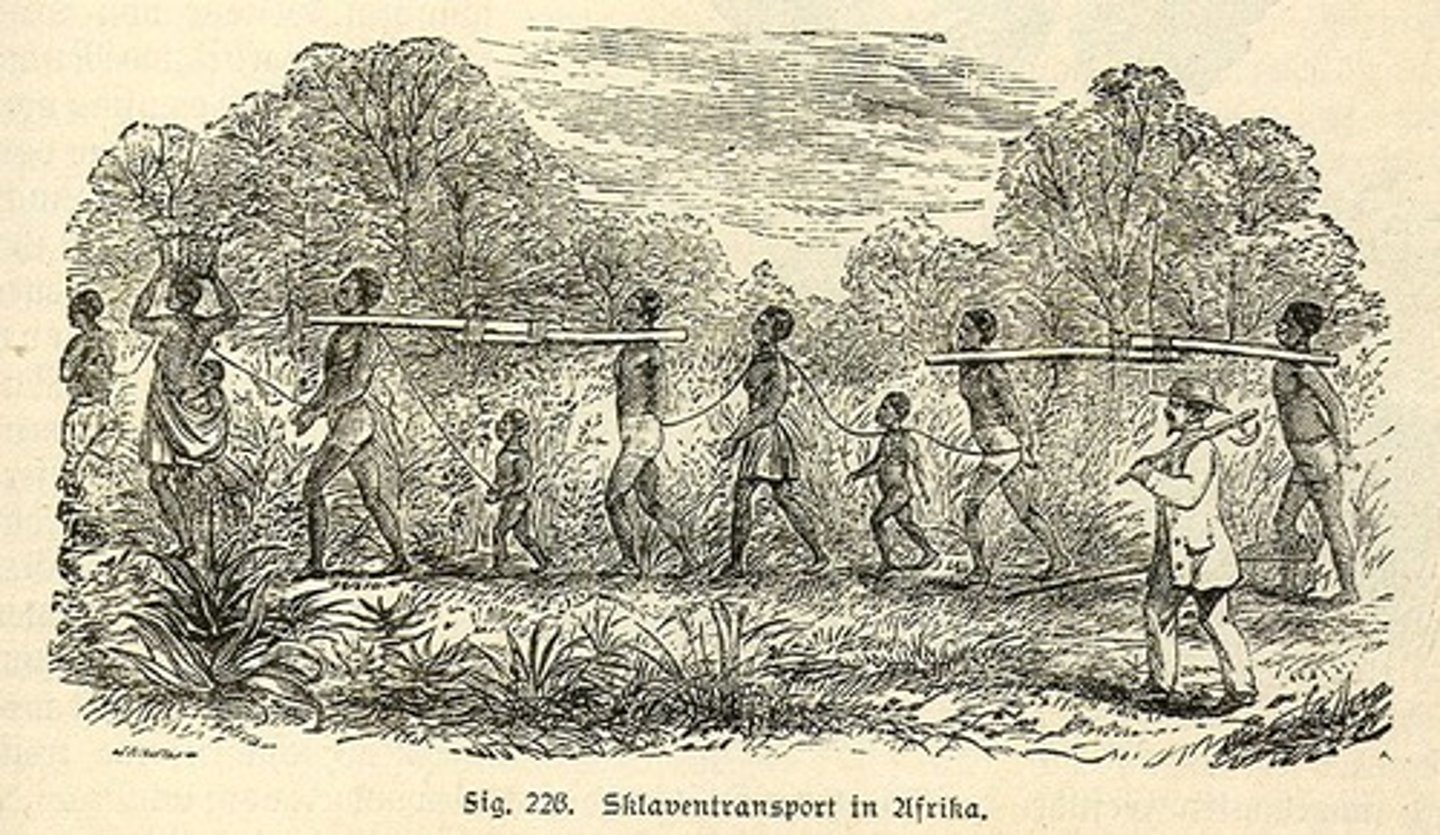
Chattel Slavery
Absolute legal ownership of another person as property, including the right to buy or sell that person.
Asante Empire
Established in Gold Coast among Akan people settled around Kumasi; dominated by Oyoko clan; many clans linked under Osei Tutu after 1650.
Zheng He
An imperial eunuch and Muslim, entrusted by the Ming emperor Yongle with a series of state voyages that took his gigantic ships through the Indian Ocean, from Southeast Asia to Africa.
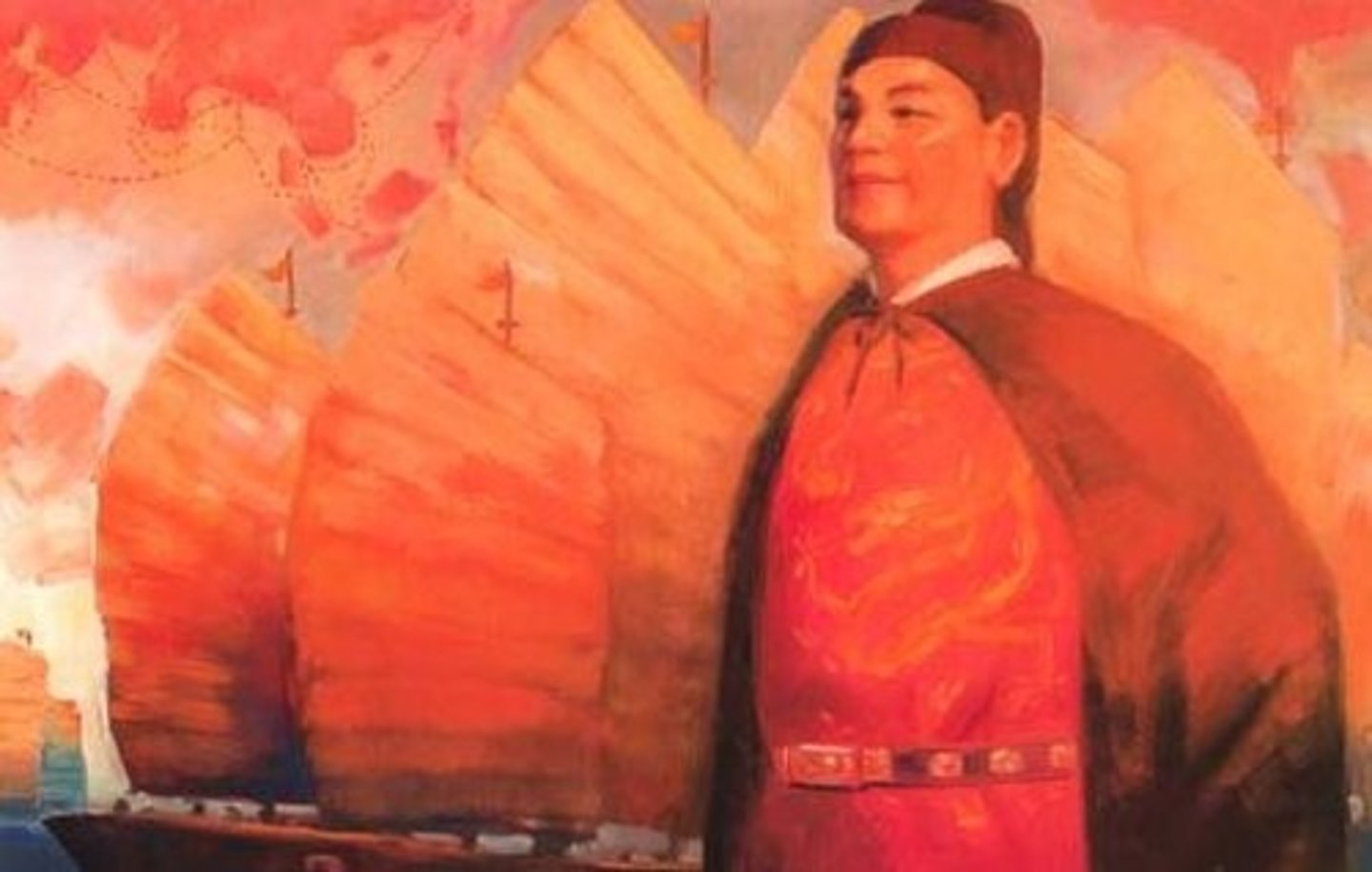
Ming Dynasty
Succeeded Mongol Yuan dynasty in China in 1368; lasted until 1644; initially mounted huge trade expeditions to southern Asia and elsewhere, but later concentrated efforts on internal development within China.
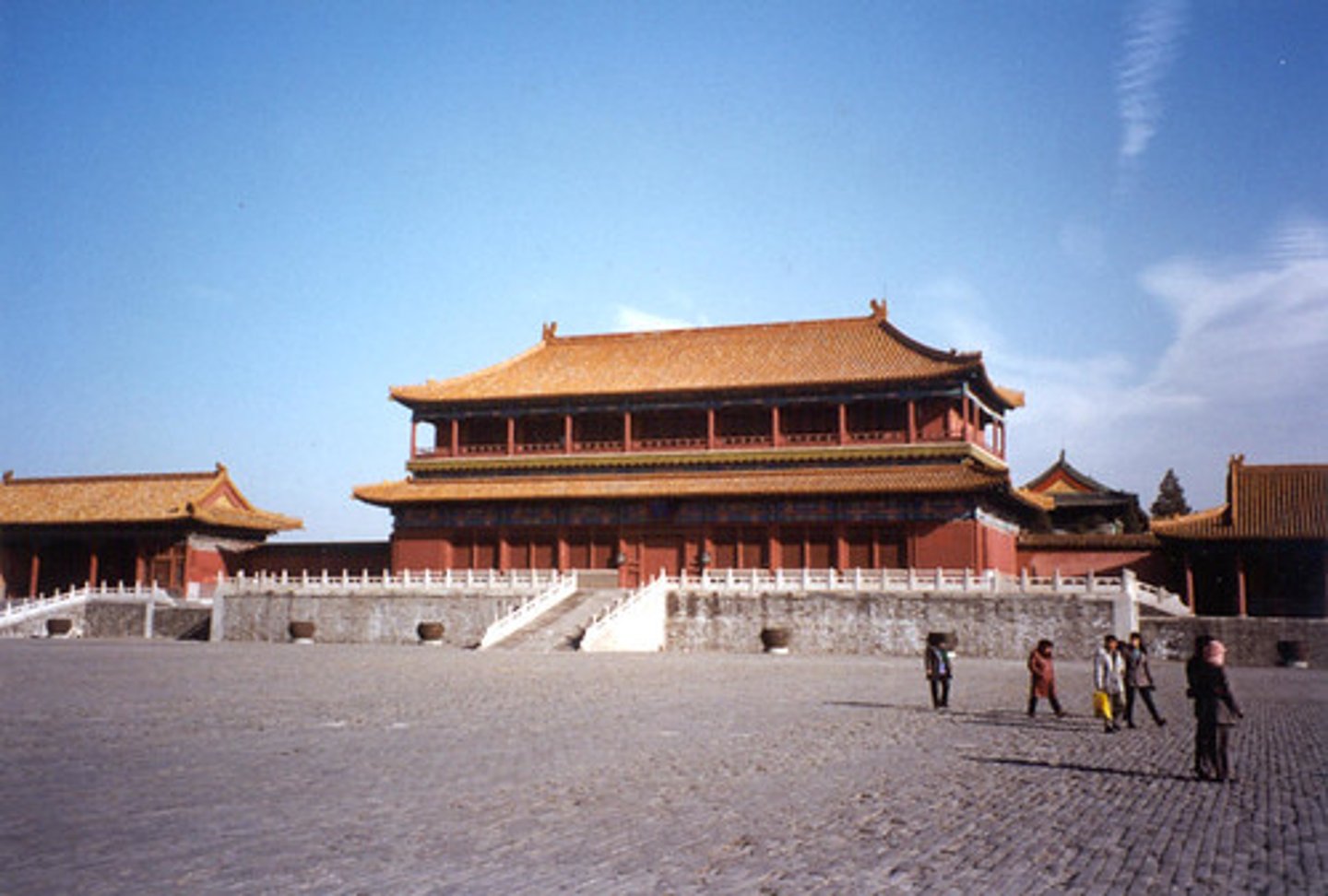
Francisco Pizzaro
Spanish conquistador who conquered the Incas
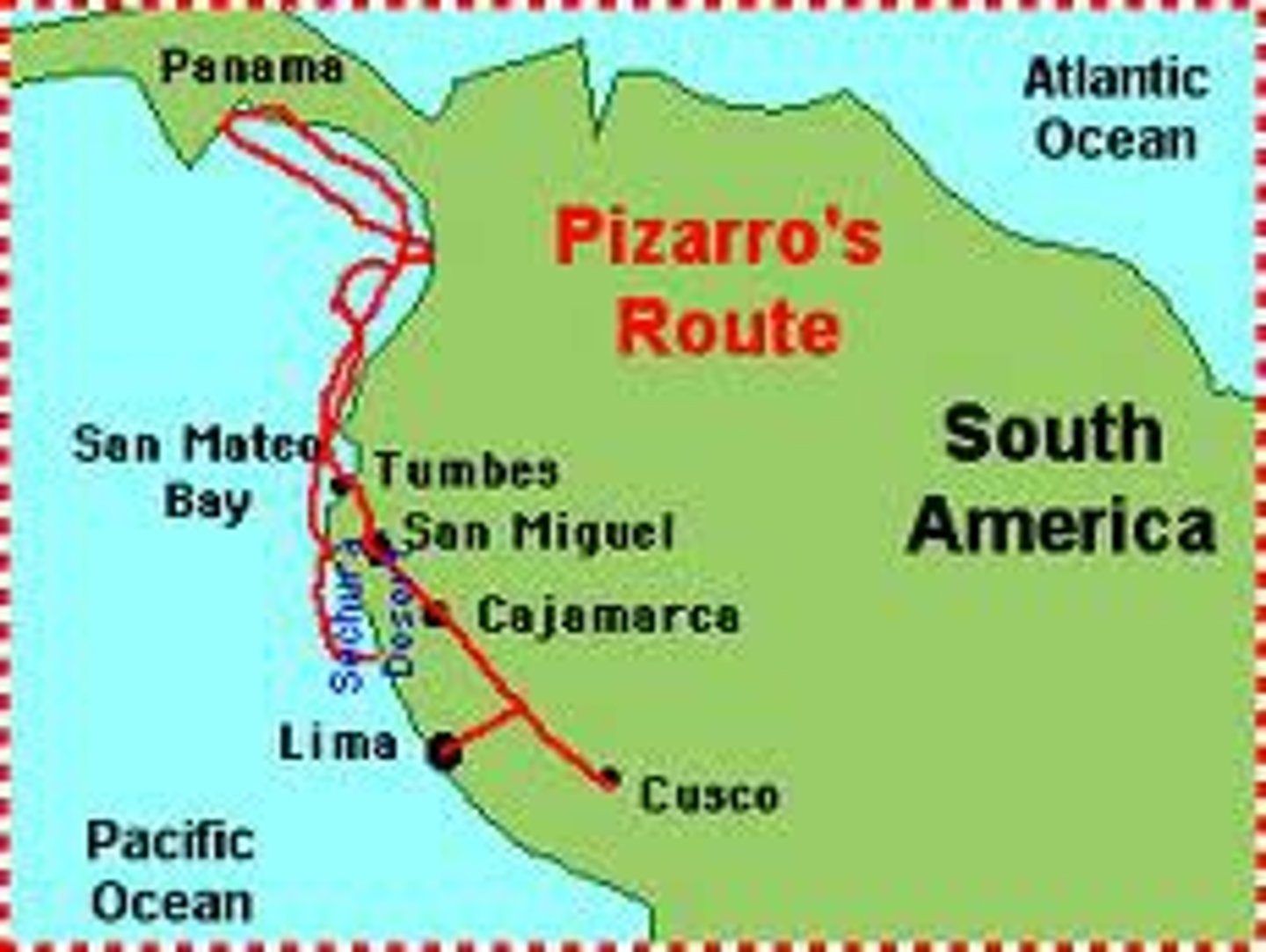
Hernan Cortez
A Spanish Conquistador who defeated and conquered the Aztec Empire
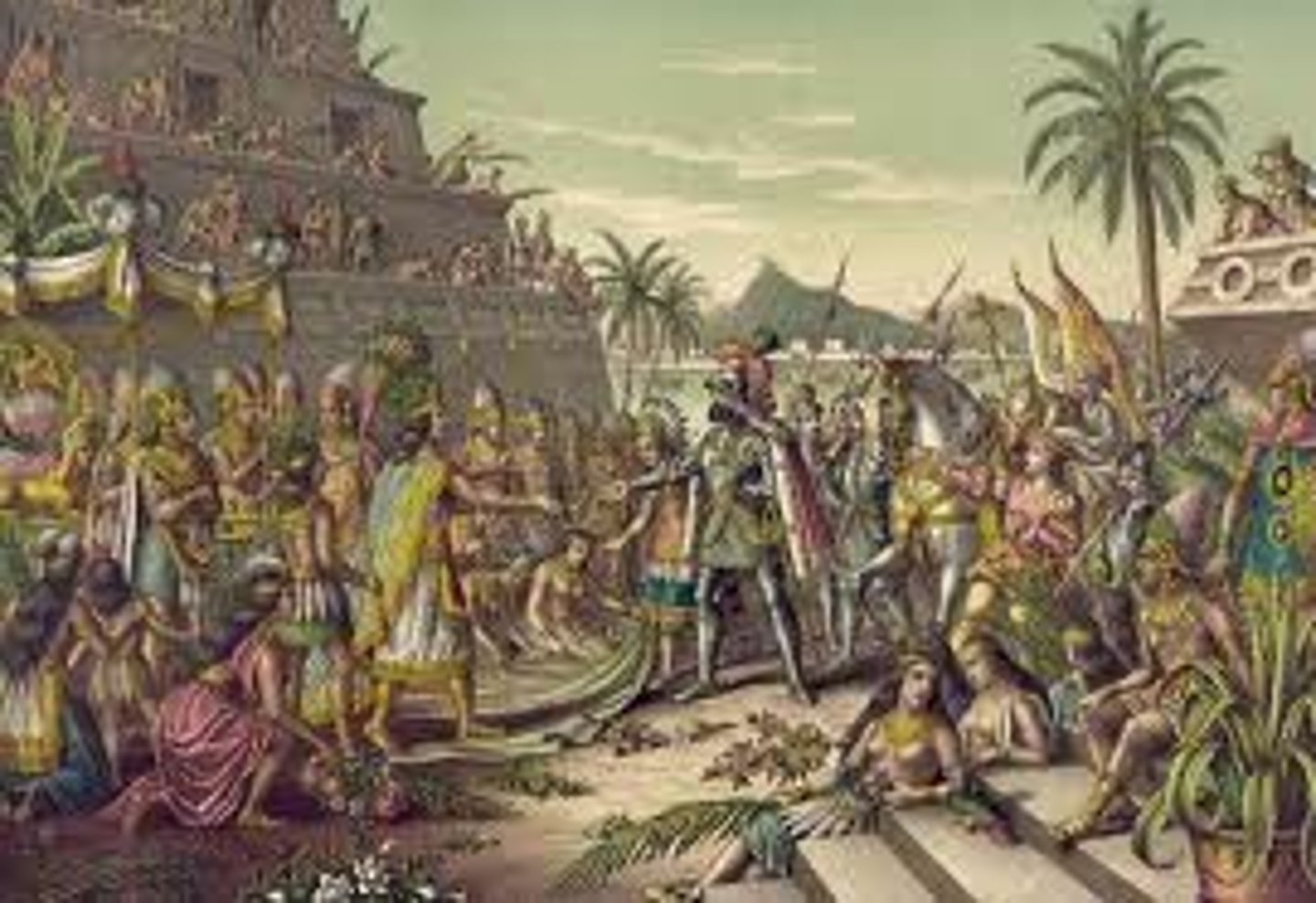
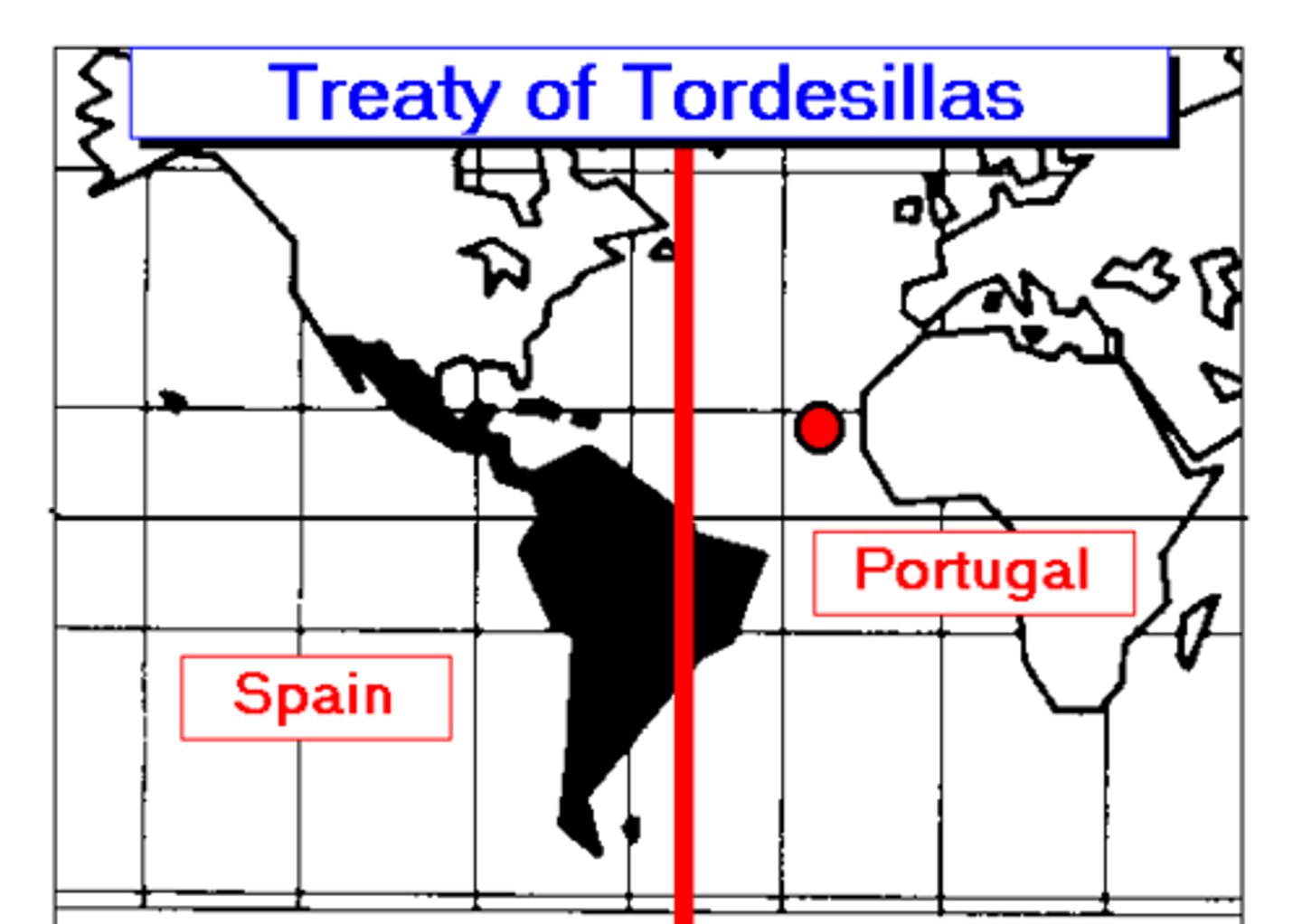
Treaty of Tordesillas
A 1494 agreement between Portugal and Spain, declaring that newly discovered lands to the west of an imaginary line in the Atlantic Ocean would belong to Spain and newly discovered lands to the east of the line would belong to Portugal.
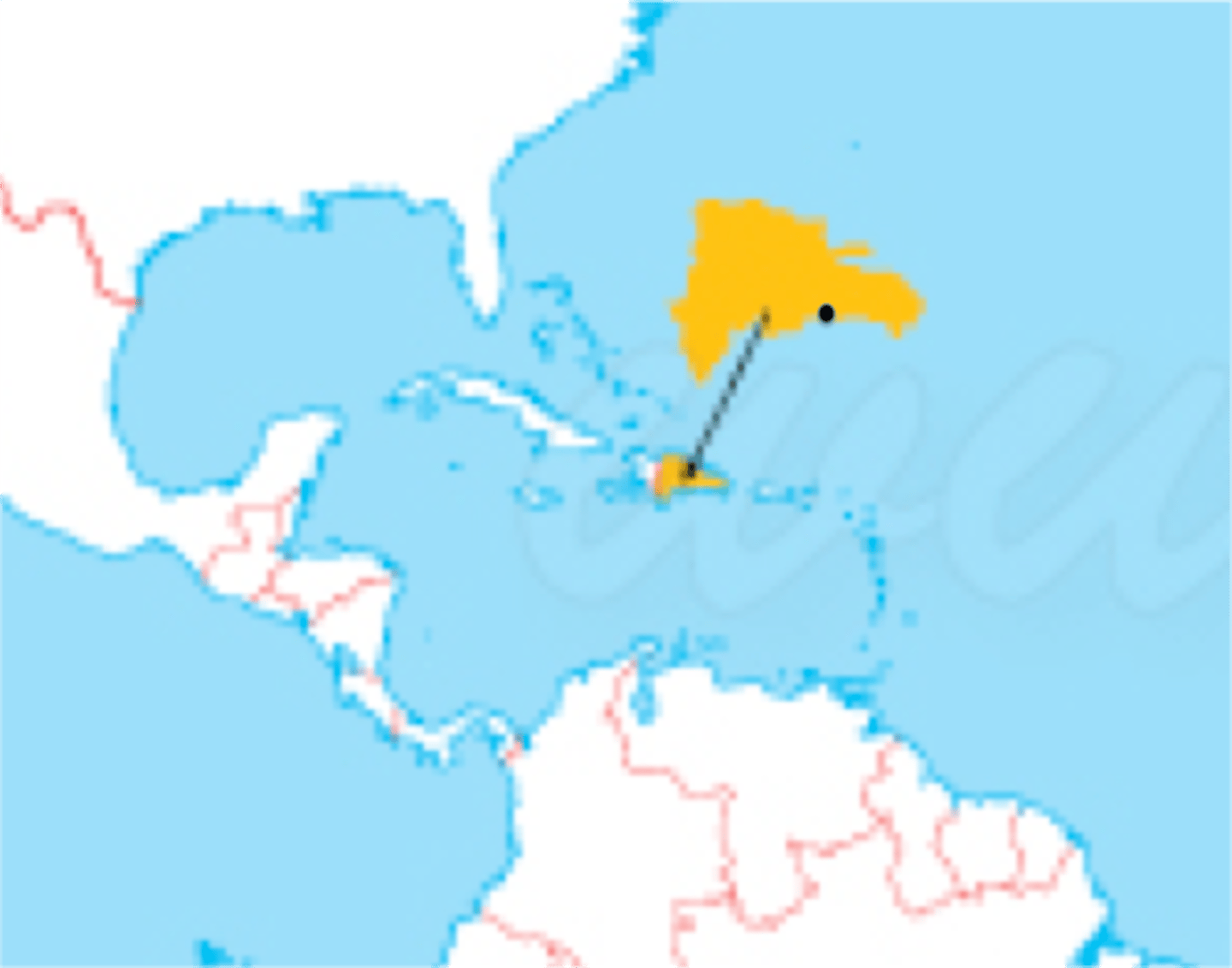
Hispaniola
First island in Caribbean settled by Spaniards; settlement founded by Columbus on second voyage to New World; Spanish base of operations for further discoveries in New World. later called Haiti.
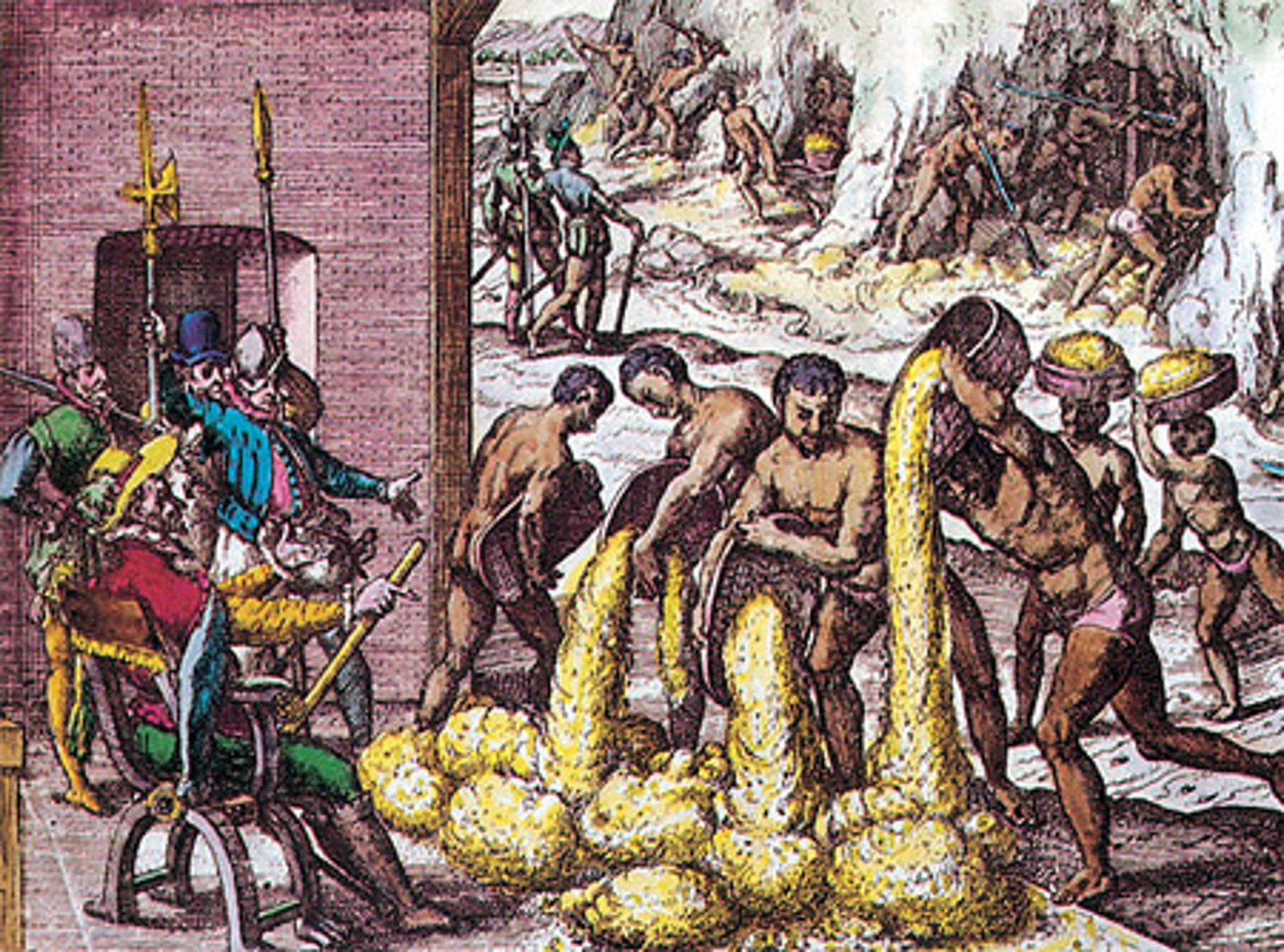
Encomienda
A grant of land made by Spain to a settler in the Americas, including the right to use Native Americans as laborers on it
Hacienda System
Conquistador landowners developed agriculture on their land, using coerced labor.
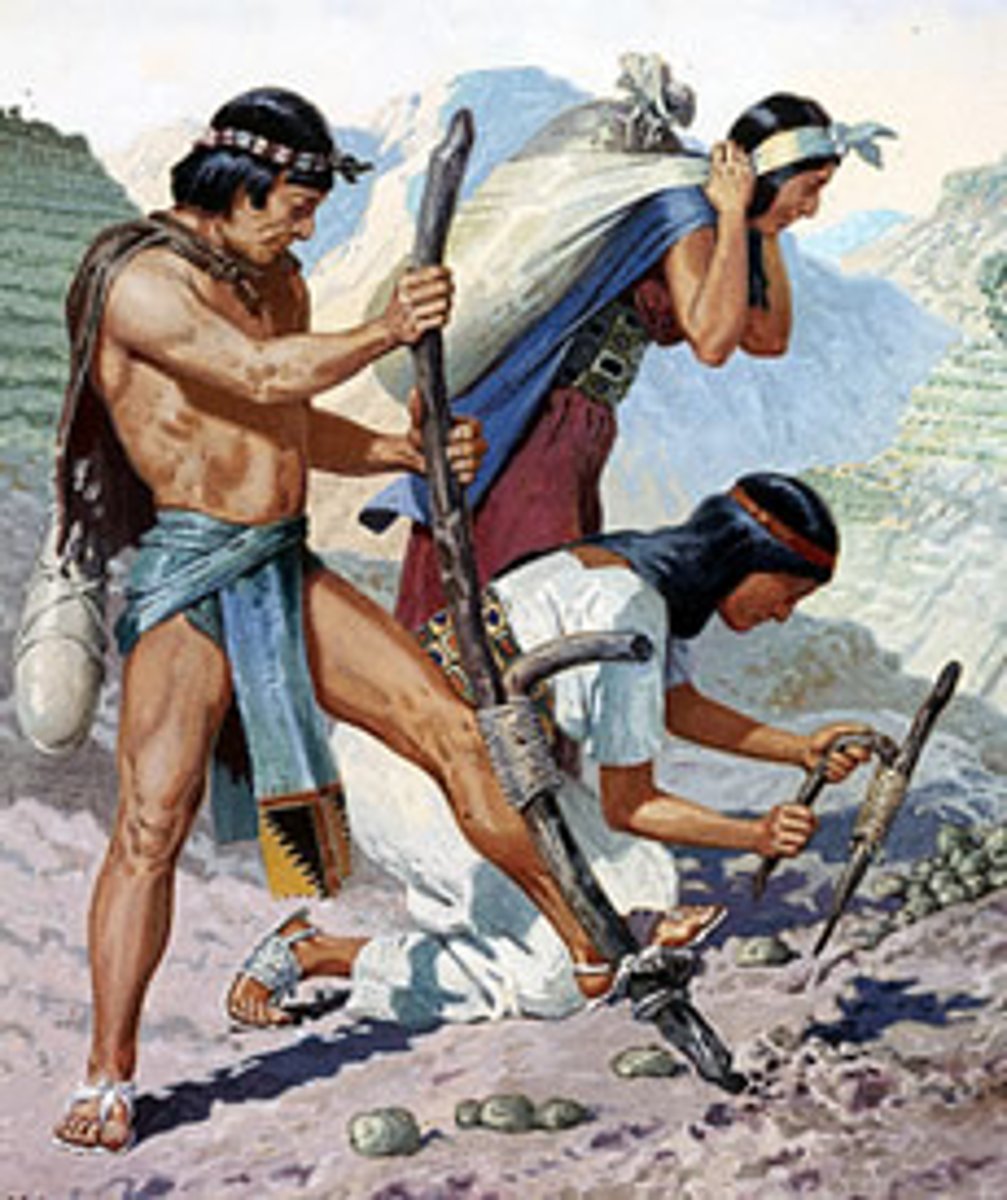
mit'a system
Incan system for payment of taxes with labor. Later used by Spain towards the Incans to mine silver as a coerced labor system.
mercantilism
An economic policy under which nations sought to increase their wealth and power by obtaining large amounts of gold and silver and by selling more goods than they bought
middle passage
The leg of the Triangle Trade that brought enslaved Africans across the Atlantic Ocean to North America and the West Indies
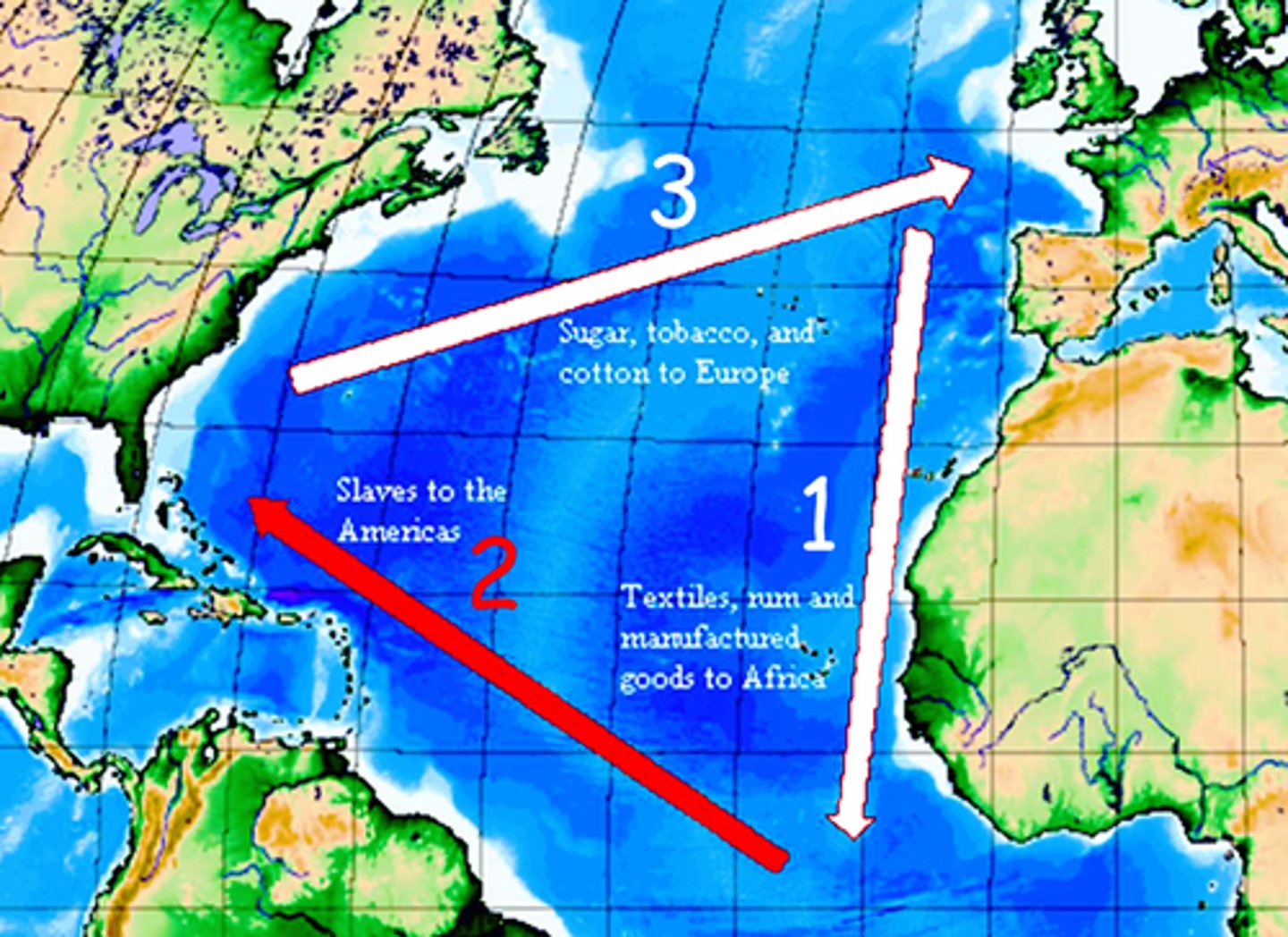
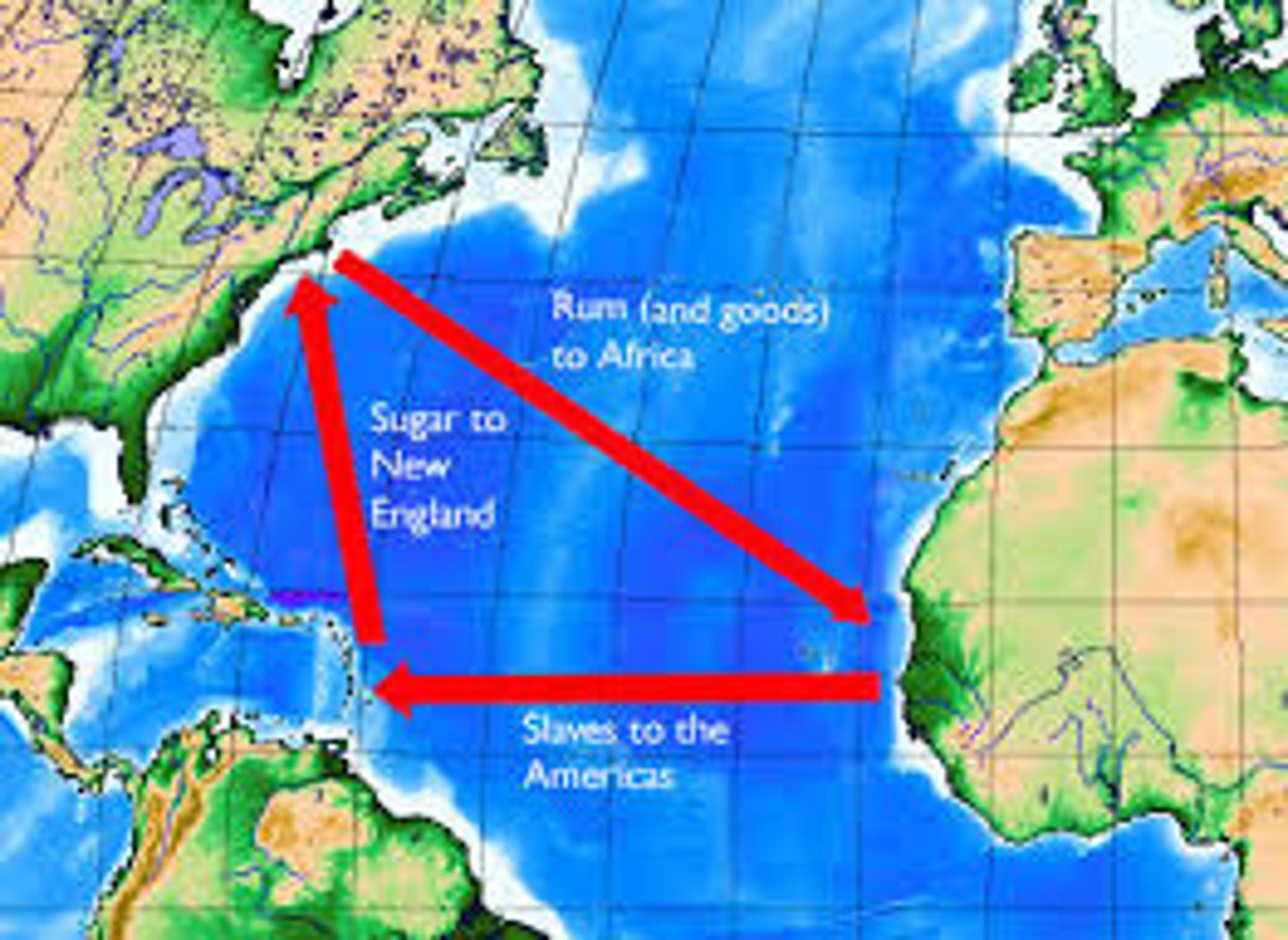
Triangle Trade
a trade route that exchanged goods and slaves between the West Indies, the American colonies, Europe, and West Africa
Atlantic System
The network of trading links after 1500 that moved goods, wealth, people, slaves, and cultures around the Atlantic Ocean basin.
joint-stock companies
a company whose stock is owned jointly by the shareholders.
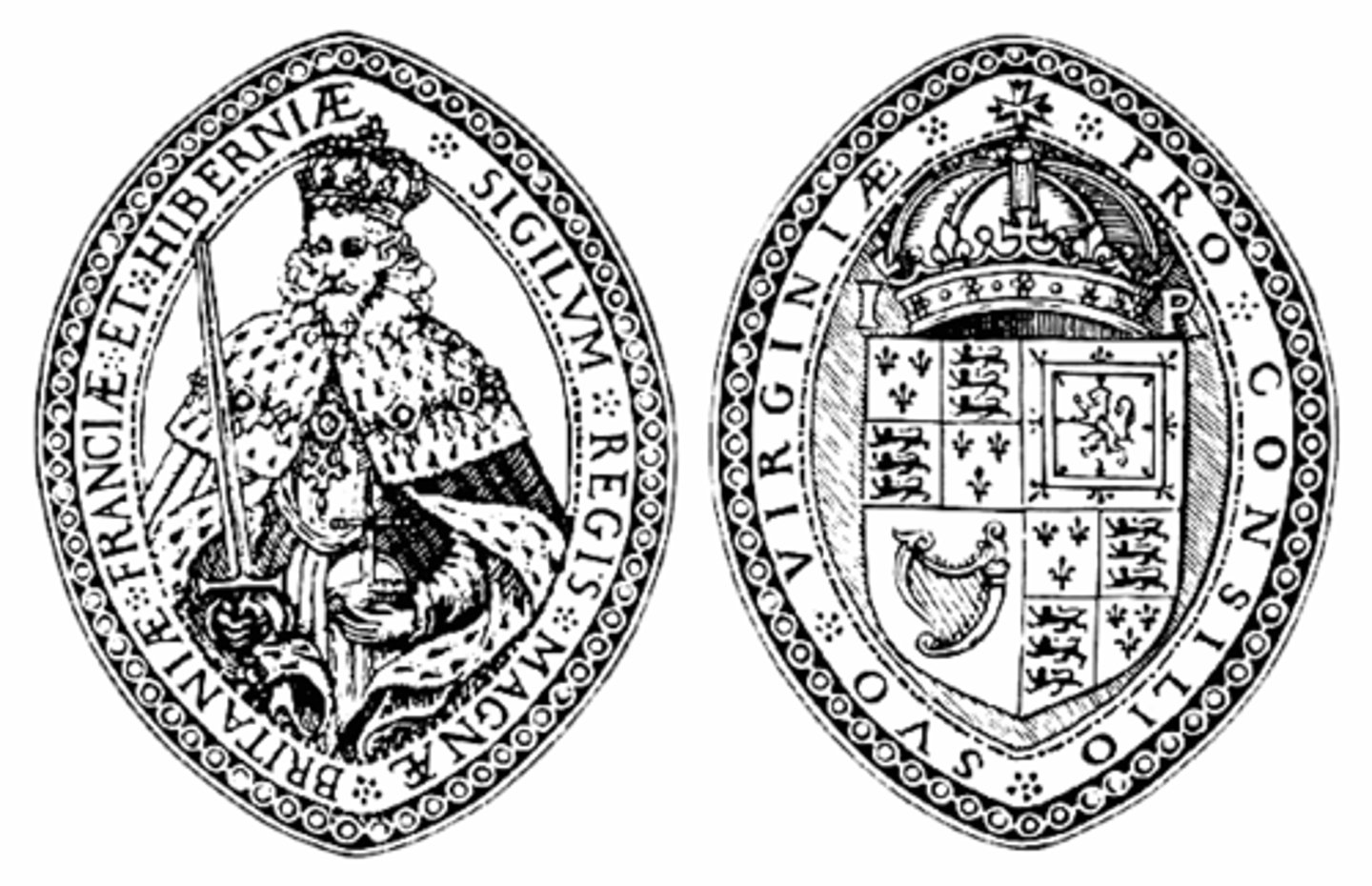
limited liability
A form of business ownership in which the owners are liable only up to the amount of their individual investments.
syncretism
a blending of beliefs and practices from different religions into one faith
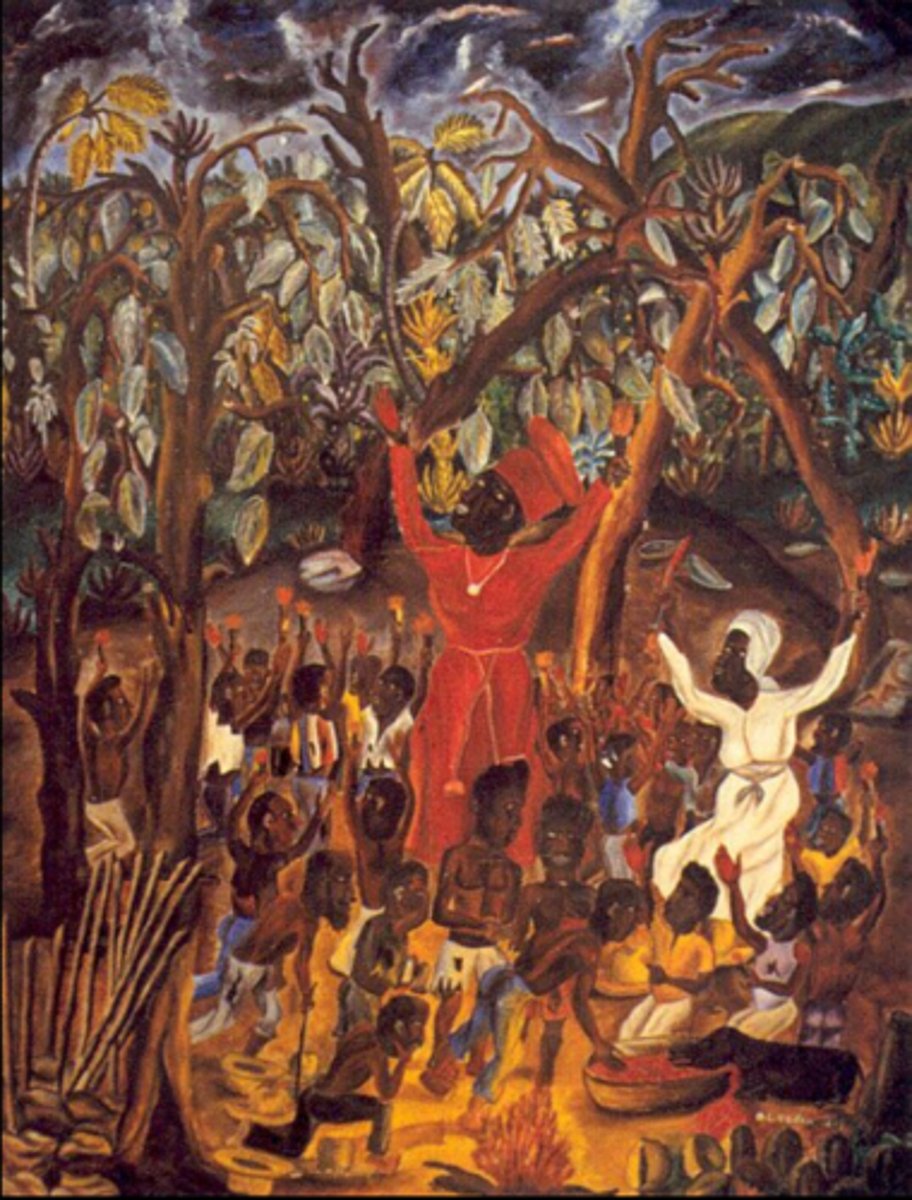
Vodun
or voodoo is a New World syncretic faith that combines the animist faiths of West Africa with Roman Catholic Christianity; evidence of the syncretism created when European and African beliefs merged in the Americas
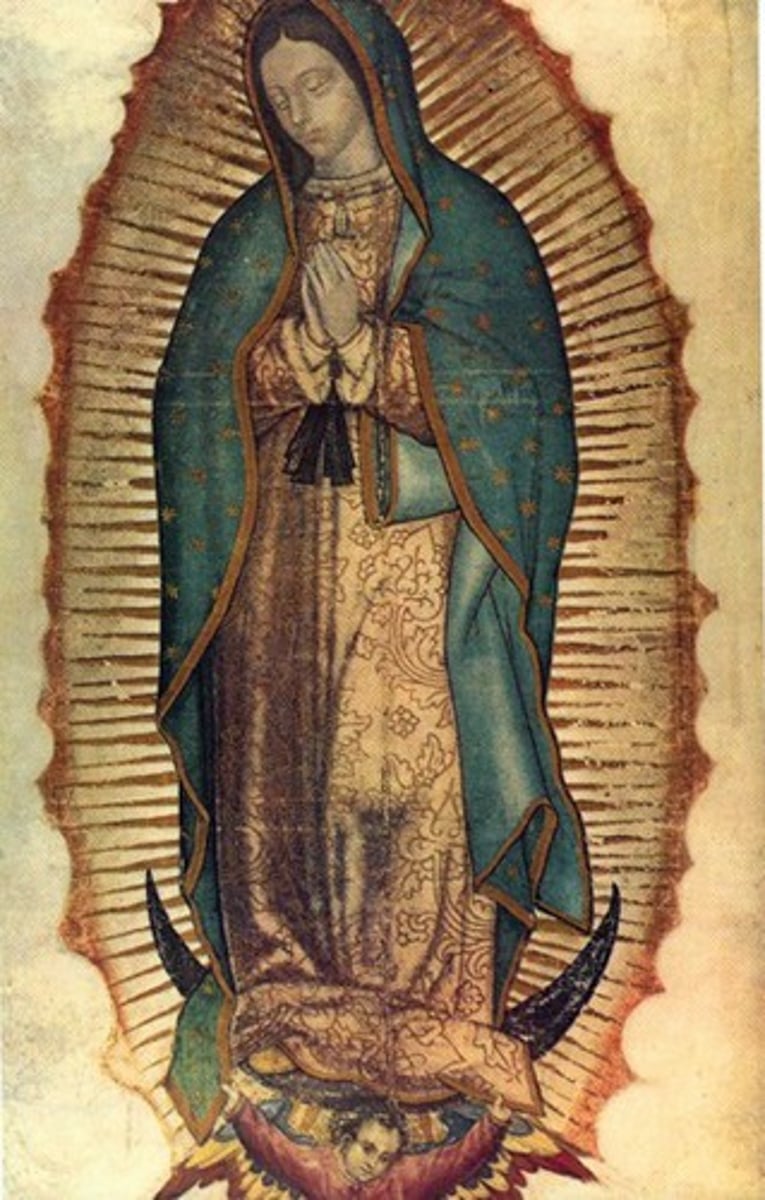
Virgin of Guadalupe
An apparition of the Virgin Mary said to have appeared to a Mexican farmer (Juan Diego) in 1531. She exerted a powerful attraction to Mesoamerica's surviving Amerindians and became an icon of Mexican identity.
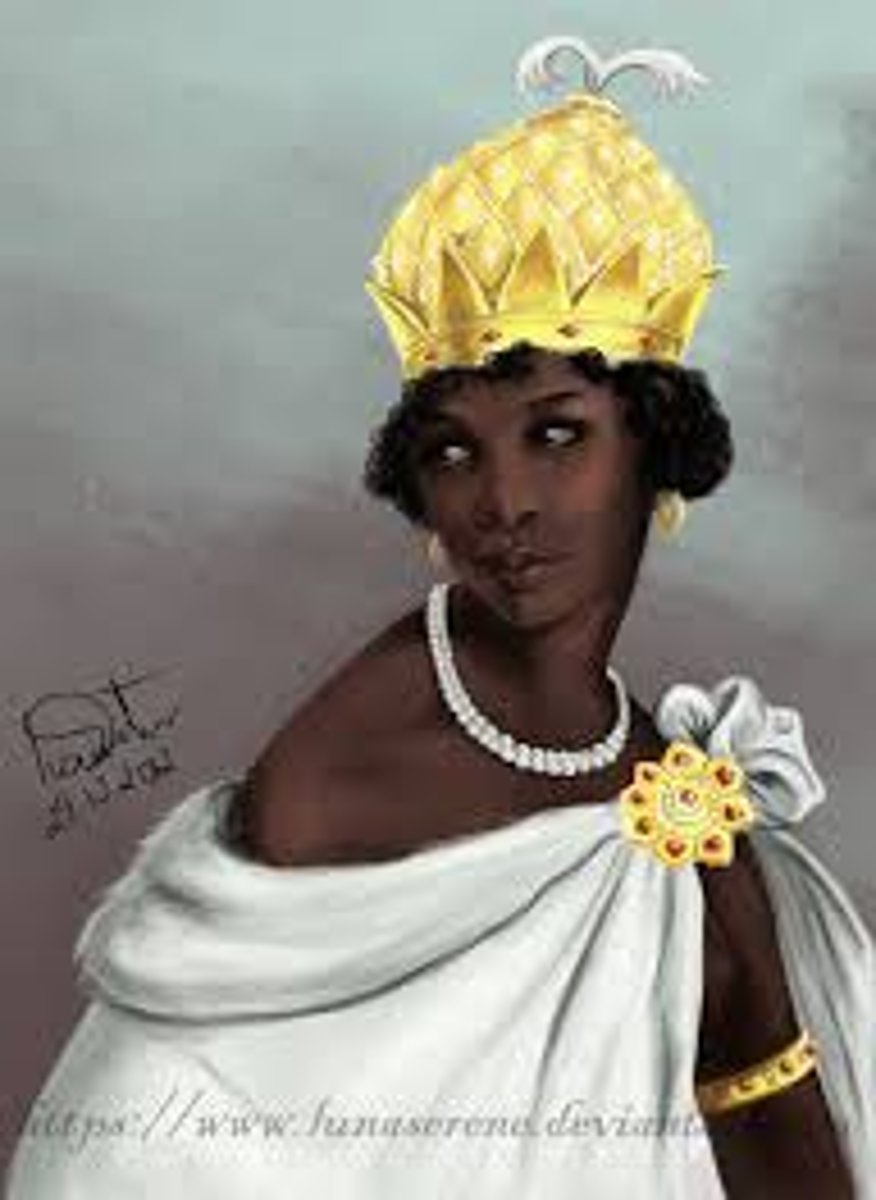
Ana Nzinga
Ruler of Ndongo in south-central Africa that became an ally to Portugal to stop Portuguese slave raids and attacks from other Africans. However, she and her people fled west after peace broke down. She took over Matamba, incited a rebellion in Ndongo, allied with the Dutch, and offered freedome to enslaved Africans.
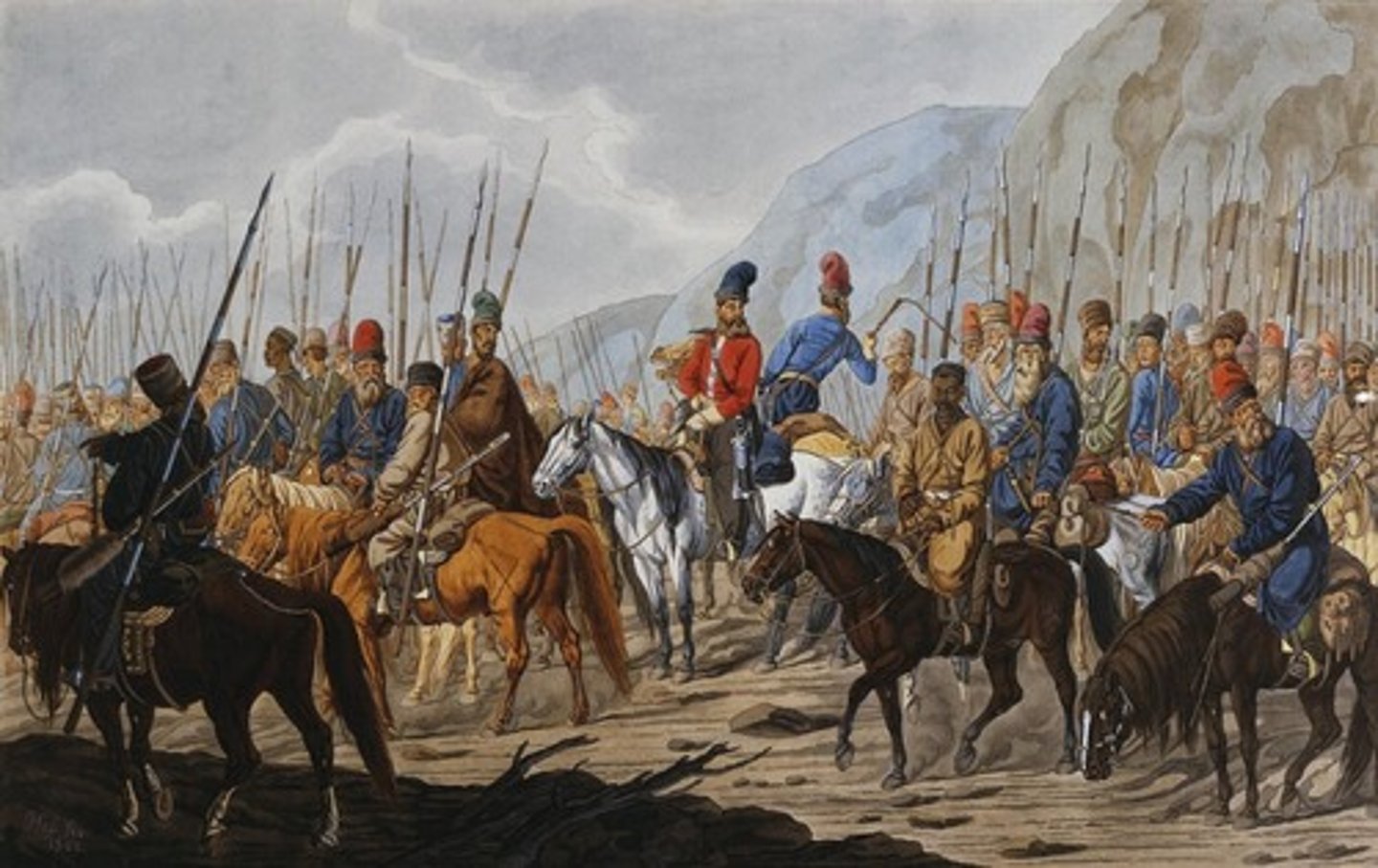
Cossack Rebellion
Peasant rebellion against Russian rulers and nobility over mistreatment of serfs
Pugachev Rebellion
Yemelyan Pugachev, a Cossack soldier, led a huge serf uprising-demanded end to serfdom, taxes and army service; landlords and officials murdered all over southwestern Russia; eventually captured and executed
Maratha Empire
The Maratha or Mahratta Confederacy was a South Asian Hindu imperial power that existed from 1674 to 1818. An excellent example of yet another rebellion against imperial power (the Mughals) in this time period
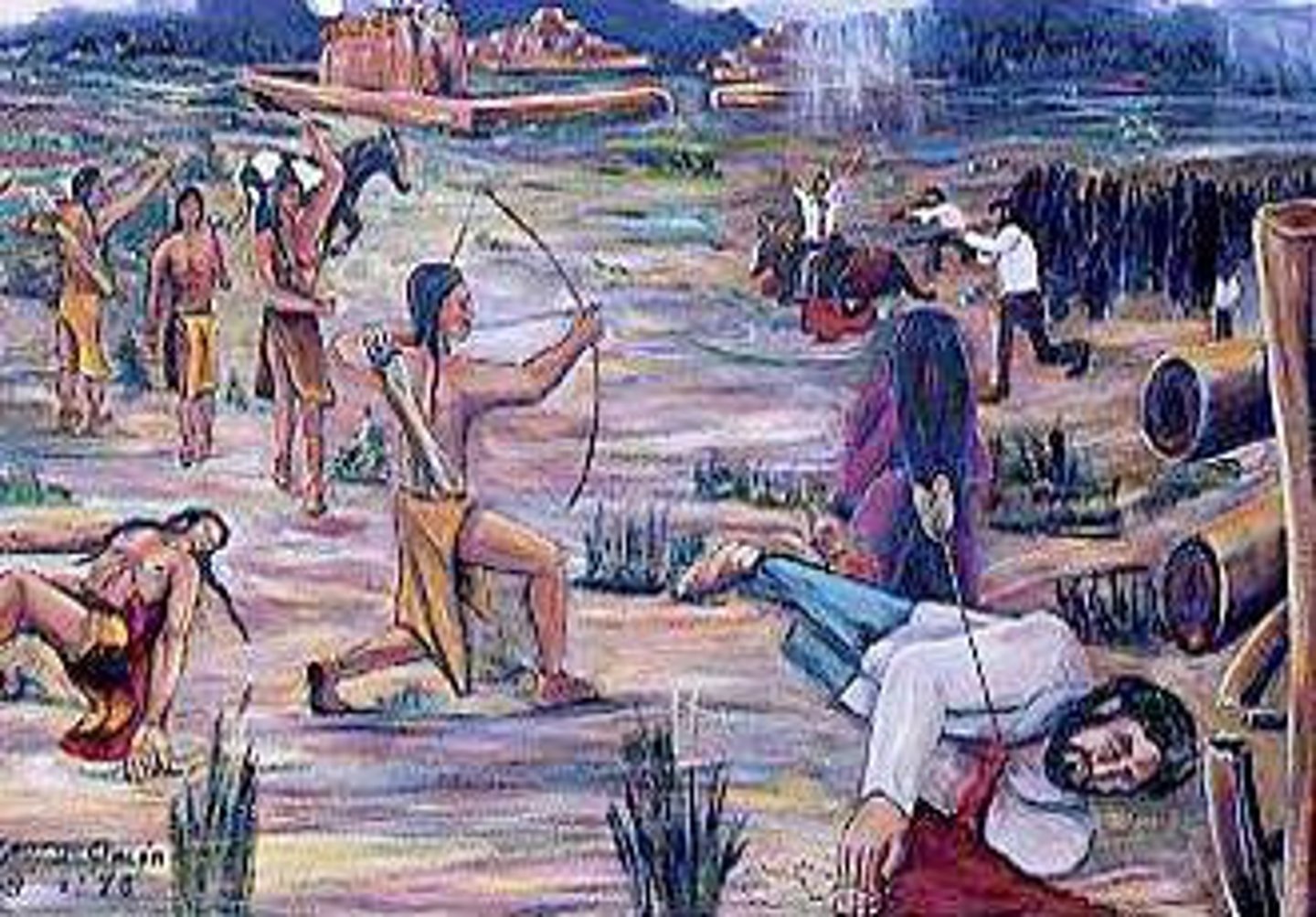
Pueblo Revolt
Native American revolt against the Spanish in late 17th century; expelled the Spanish for over 10 years; Spain began to take an accommodating approach to Natives after the revolt
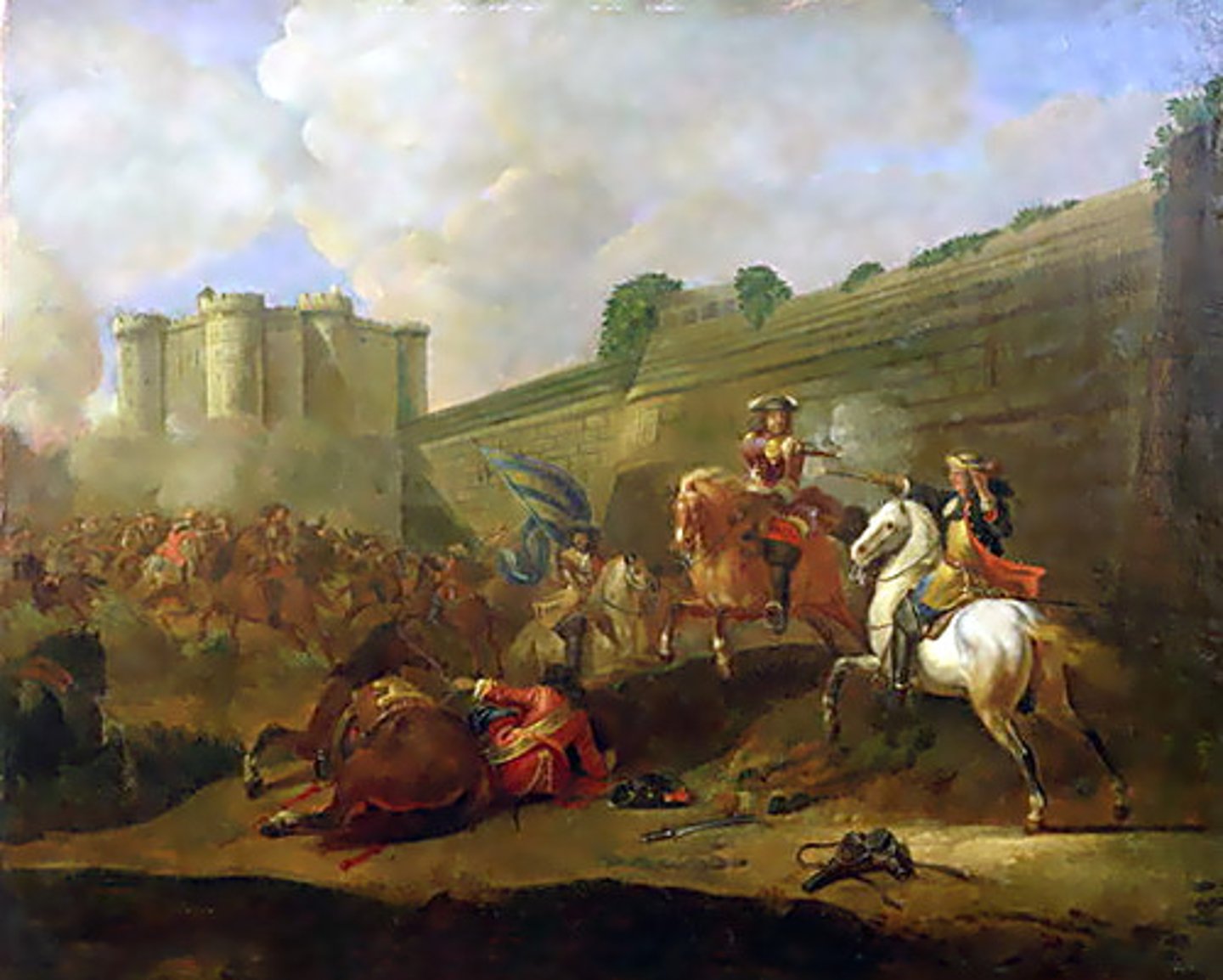
The Fronde
a french rebellion that was caused by Mazarin's attempt to increase royal revenue and expand state bureaucracy, caused Louis XIV to distrust the state and turn to absolutism
Maroon Wars
Conflicts between the Jamaica Maroon settlements and the British after the British gained control of the island from the Spanish.
Queen Nanny
An escaped slave who united all of the Maroons (other escaped slaves) of Jamaica
Gloucester County Rebellion
first recorded slave revolt in what is now the United States took place in Virginia in 1663
Metacom's War
Native Americans battle New England colonies; large percentage of native americans died, making it one of the bloodiest wars in US; severely damaged the Native American presence in the new world
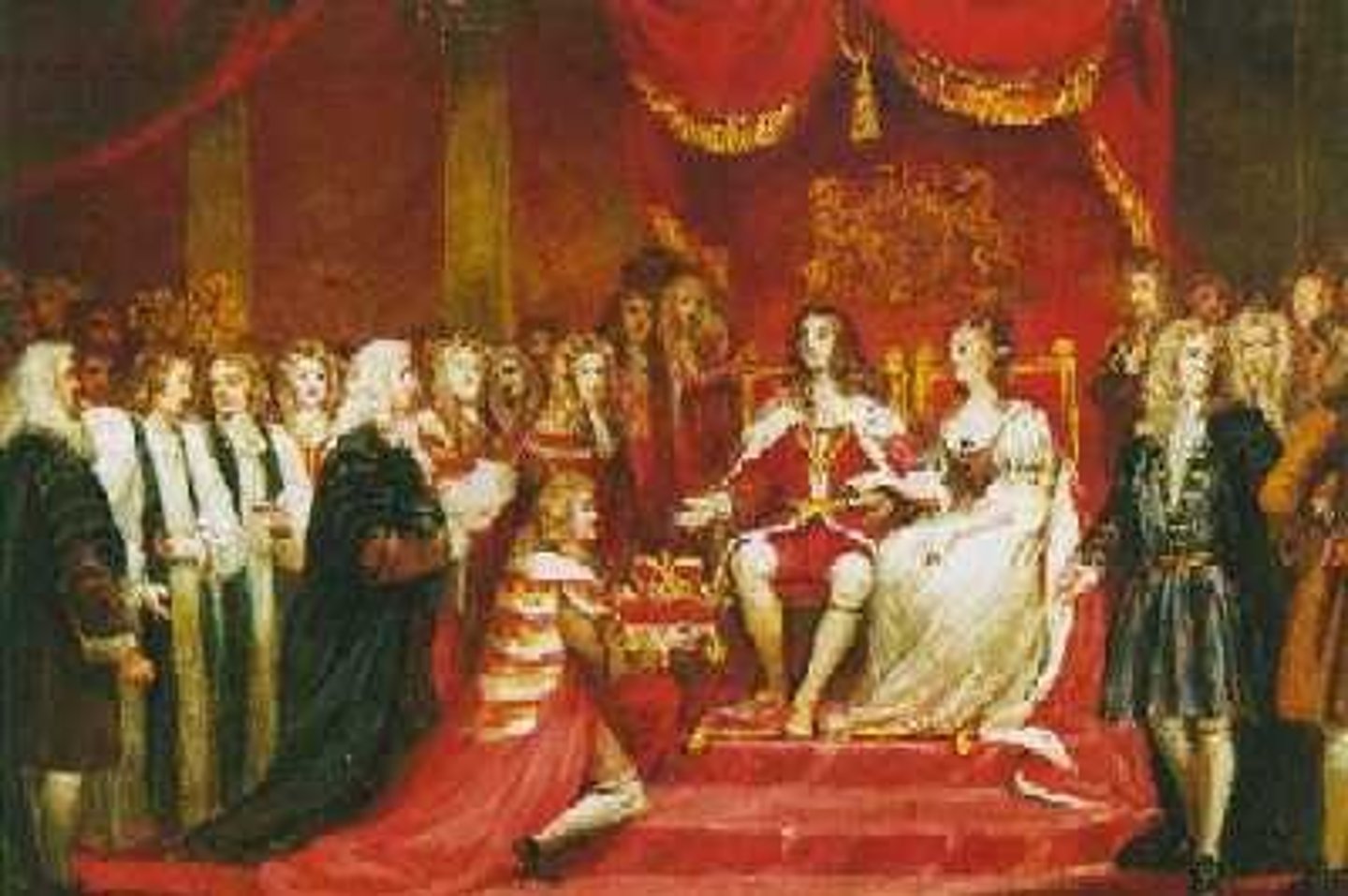
Glorious Revolution
A reference to the political events of 1688-1689, when James II abdicated his throne and was replaced by his daughter Mary and her husband, Prince William of Orange. James was a Catholic and outloawed Protestantism, as a result the Parliament asked William of Orange (a Protestant) to invade England and rule.
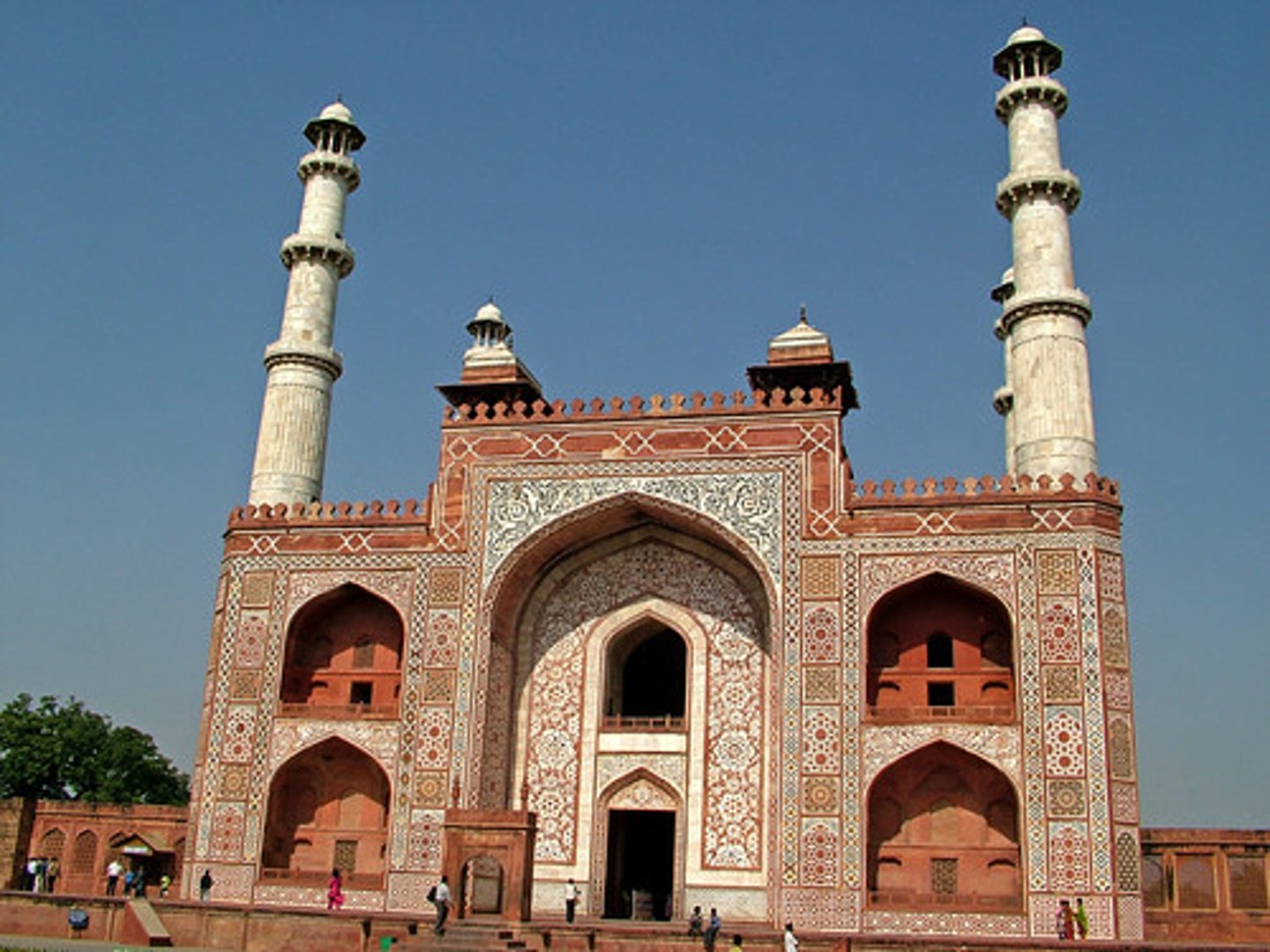
Akbar the Great
known for religious tolerance. grandson of Babur who created a strong central government
Sikhism
the doctrines of a monotheistic religion founded in northern India in the 16th century by Guru Nanak and combining elements of Hinduism and Islam

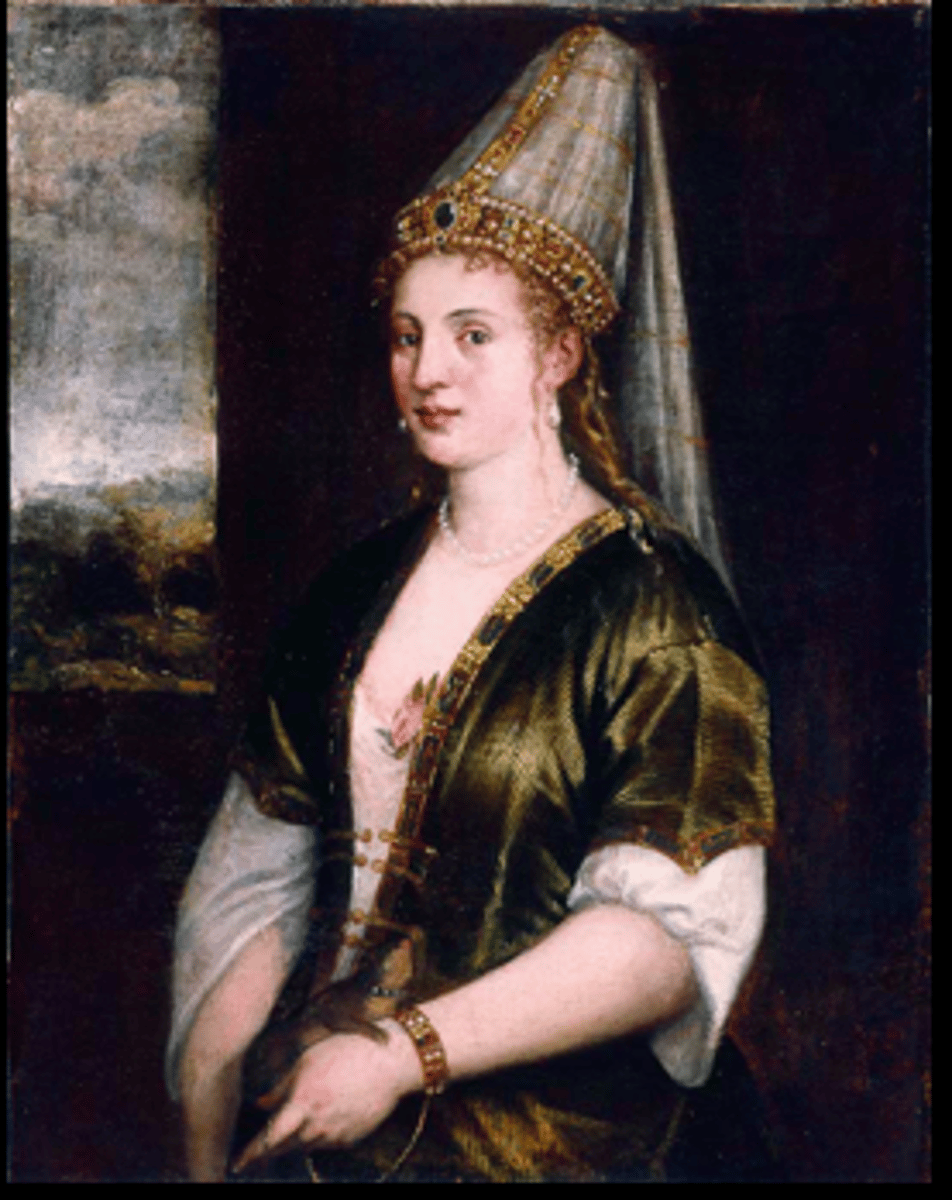
Roxelana
Suleiman's wife who was originally a slave but eventually rose to power and was a major patron of public works.
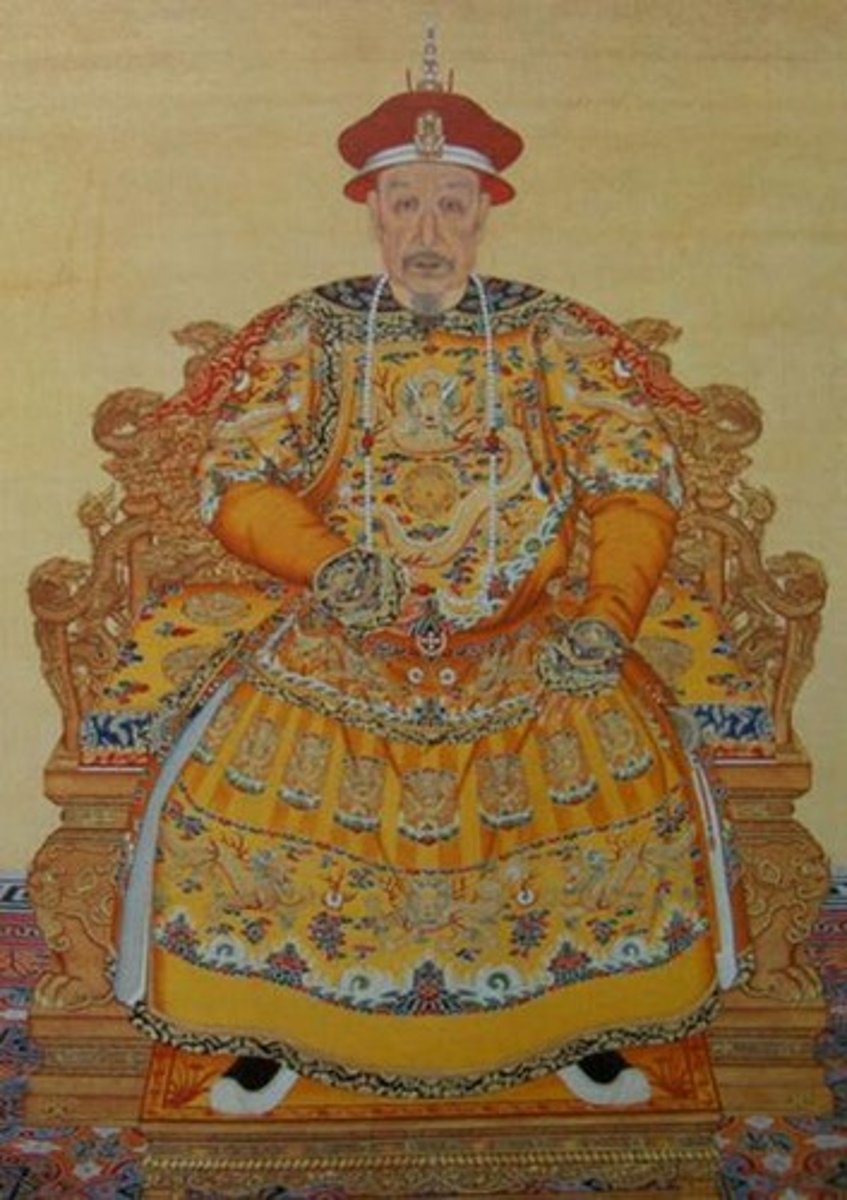
Qing Dynasty
(1644-1911 CE), the last imperial dynasty of China which was overthrown by revolutionaries; was ruled by the Manchu people: began to isolate themselves from Western culture,
Manchu
Northeast Asian peoples who defeated the Ming Dynasty and founded the Qing Dynasty in 1644, which was the last of China's imperial dynasties.
Queue
Hair cut require of Han Chinese to wear as a sign of their subservience to Manchu rulers of China. Considered humiliating.
Li Chengdong
during the Qing Dynasty he orchestrated three massacres in the city of Jaiding against Han who refused to assimilate to Qing practices
Li Liangzuo
A Han Chinese defector who massacred who massacred the entire population of Jiangyin, killing between 74,000 & 100,000 people
Sephardic Jews
Jews whose traditions originated in Spain and Portugal after being expelled.
Ashkenazi Jews
Jews whose traditions originated in central and eastern Europe