unti 2- Animal systems SBI3U exam review
 Call Kai
 Learn
Learn Practice Test
 Spaced Repetition
 Match
Match Flashcards
 Knowt Play
1/44

Earn XP
Description and Tags
this set follows the Ontario SBI3U course
Name | Mastery | Learn | Test | Matching | Spaced | Call with Kai |
|---|
No analytics yet
Send a link to your students to track their progress
45 Terms
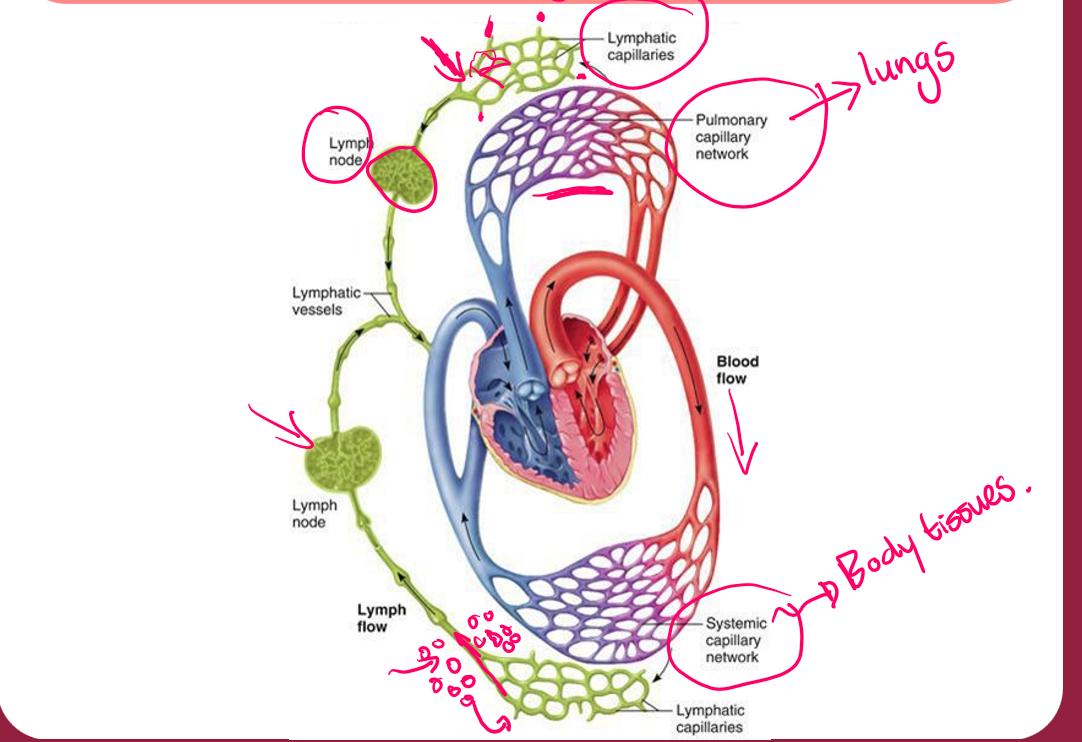
Explain the circulatory system
The Circulatory System
Made up of two closely connected systems:
Cardiovascular system: heart and blood vessels.
Lymphatic system: lymph vessels, lymph nodes, spleen, and thymus.
Together they maintain fluid balance.
Transport oxygen, nutrients, and hormones throughout the body.
Remove carbon dioxide and wastes.
Protect the body from disease.
Works closely with the respiratory and digestive systems to maintain homeostasis.
Homeostasis
Maintaining a stable internal environment.
Examples include body temperature and blood sugar.
Maintained even when external conditions are changing.
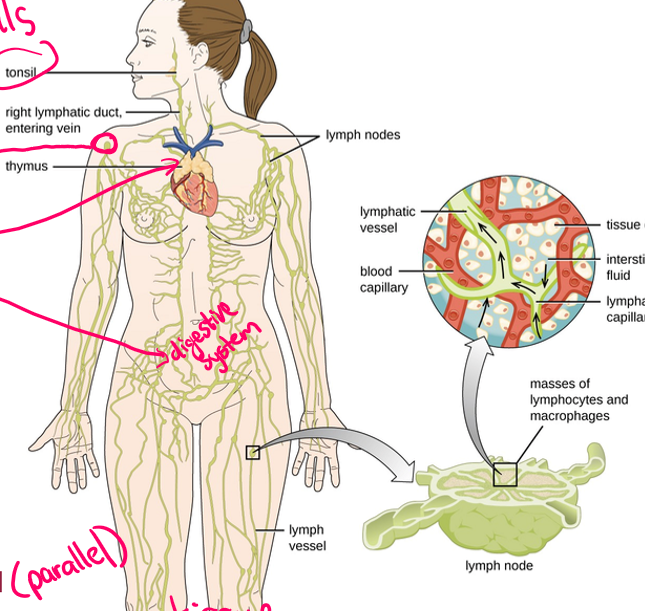
explain the lymphatic system
The Lymphatic System
Returns fluid from tissues back into the bloodstream.
Helps defend the body against infection.
Found mainly in mammals, and some amphibians and birds.
Consists of lymphatic vessels, lymph nodes, and organs such as the spleen, tonsils, and thymus gland.
Lymph is a clear fluid derived from tissue fluid (interstitial fluid) that has entered lymph vessels.
Looks like a network of transparent tubes that carry lymph fluid alongside blood vessels.
Fluid Balance
Blood plasma leaks out of capillaries to form tissue fluid (interstitial fluid).
Most tissue fluid returns to the bloodstream.
Some enters lymphatic capillaries, becoming lymph.
Flow of Lymph
Tissue fluid enters lymph capillaries.
Moves through lymph vessels and lymph nodes (where pathogens are filtered out).
Returns to the circulatory system through large veins near the heart.
Maintains fluid balance.
Helps transport fat and immune cells.
what does plasma do in the blood?
It is 55% of the blood.
It is the fluid portion of the blood.
It carries nutrients, hormones, waste, and proteins.
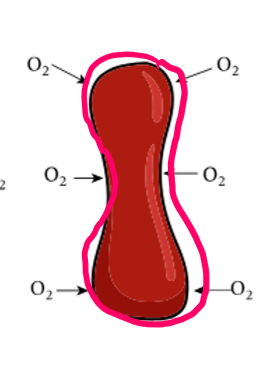
what does Erythrocytes do in the blood?
RBC is 43% of the blood.
It produces bone marrow.
No nucleus.
It contains HEMOGLOBIN that has iron in its core. ( Binds o2 and gives it red color) It transports O2 and carbon
What is the shape of red blood cells?
called: Biconcave
has a large surface area compared to volume
more efficient discussion
It is not round b/c then it would have a smaller surface area and be less efficient.
what does Leukocytes do in the blood?
WBC is 2% of the blood.
few in number, but big
in bone marrow and lymphatic tissue.
two categories:
Specific: targets specific pathogens for long-term immunity.
Non-specific: attack foreign invaders for immediate defence.
What does Thrombocytes do in the blood?
Platelets is 2% of the blood.
It is cell fragments that are made in the bone marrow.
contains protein called FIBRIN ( forms fibrous mesh)
help with blood clotting
Name the three different blood disorders
Anemia
Shock
Sickle cell disease
What is anemia, a blood disorder, and the effects of it on the body?
Description: Low RBC or hemoglobin levels
effect on body:
fatigue due to less O2 transport
What is Shock, a blood disorder, and the effects of it on the body?
description:
sudden lack of blood flow
Effects on the body:
O2 delivery to the tissue fails
What is Sickle cell disease, a blood disorder, and the effects of it on the body?
description:
Stiffened, crescent-shaped RBCs that can lead ot blockages.
effect on body:
Pain, fatigue, and weakness
What are the 4 cardiovascular diseases?
Atherosclerosis
Hypertension
heart attack
stroke
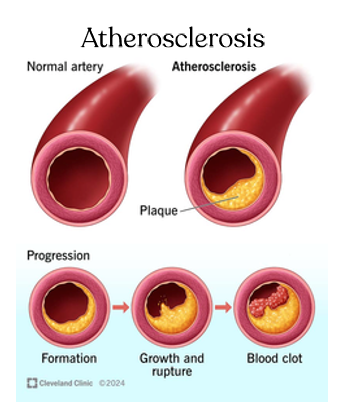
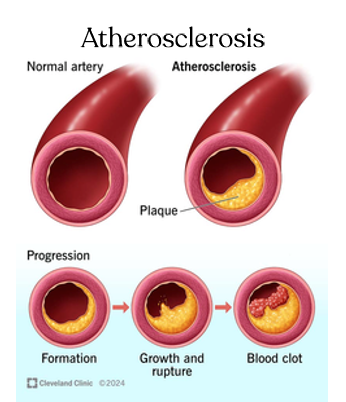
What is Artherosclerosis and its treatments?
cause: fatty plaque buildup in arteries
effects on circulation: narrowed arteries = reduced blood flow = increased blood pressure
treatment: balanced diet, exercise
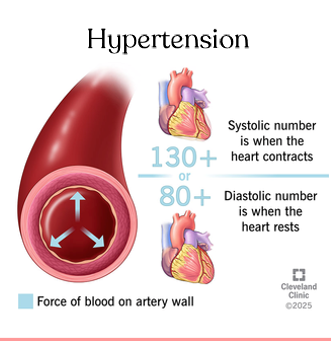
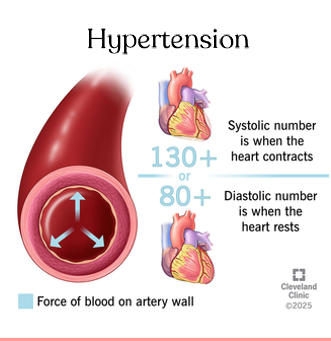
What is Hypertension and its treatments?
cause: persistent high BP
Effects on circulation: strains heart = risk of stroke
Treatment: manage stress, low salt intake
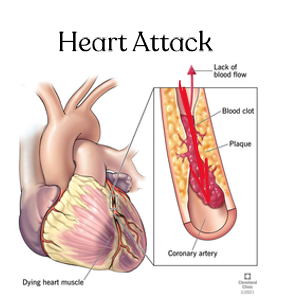
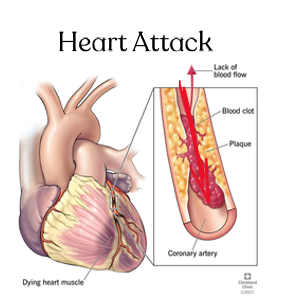
What is heart attack and its treatments?
cause: blocked coronary artery
Effects on circulation: O2 cut off = heart tissue dies
treatment: aspirin, lifestyle changes
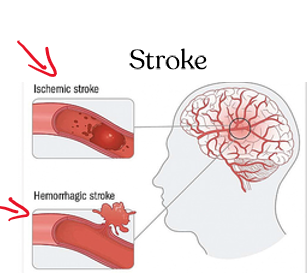
What is Hypertension and its treatments?
cause: blockage or rupture in a brain artery
Effects on circulation: brain deprived of O2 = damage
treatment: control BP, avoid smoking
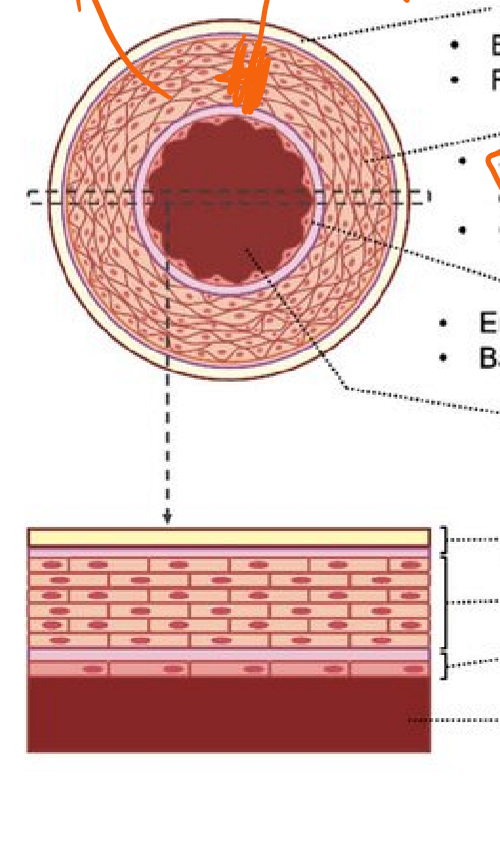
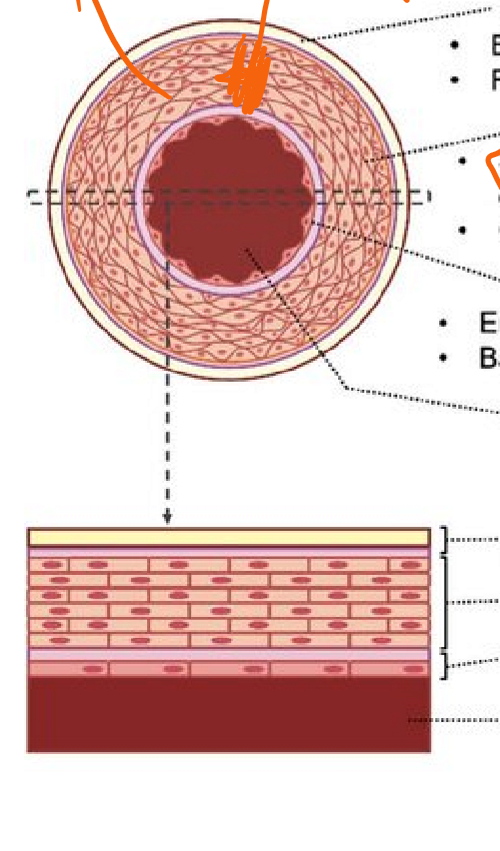
Describe the structure and function of the blood vessels, arteries.
structure: Thick, muscle layer, small lumen
Function: carry blood AWAY from heart under HIGH pressure
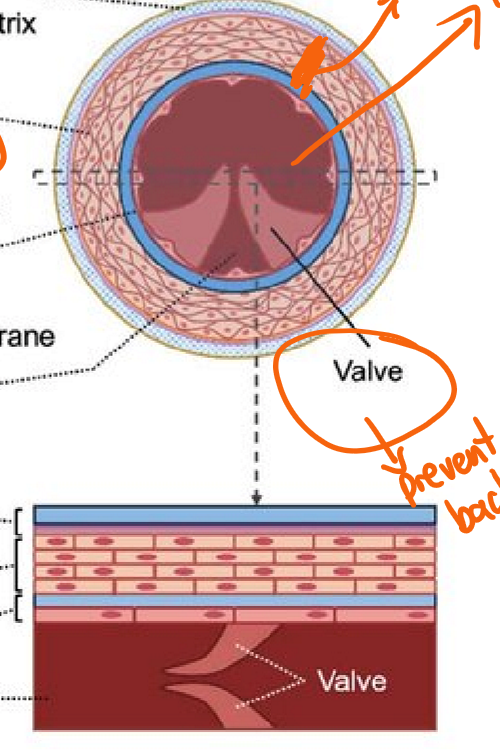
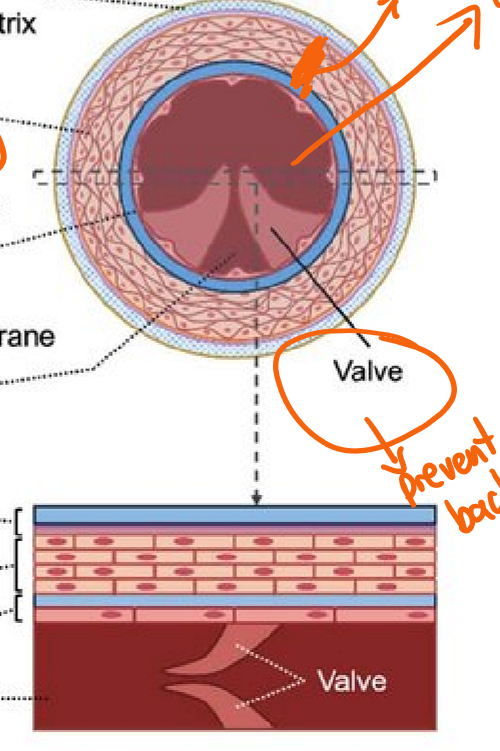
Describe the structure and function of the blood vessels, Veins.
Structure: Thin walls, larger lumen, valves present.
Function: Carry blood TO the heart under LOW pressure
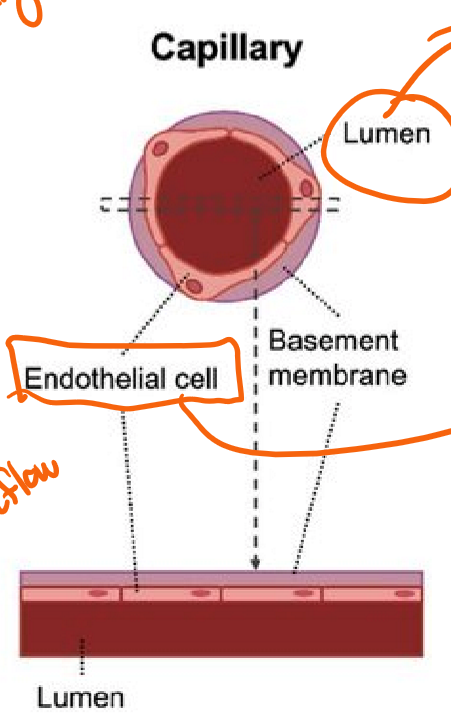
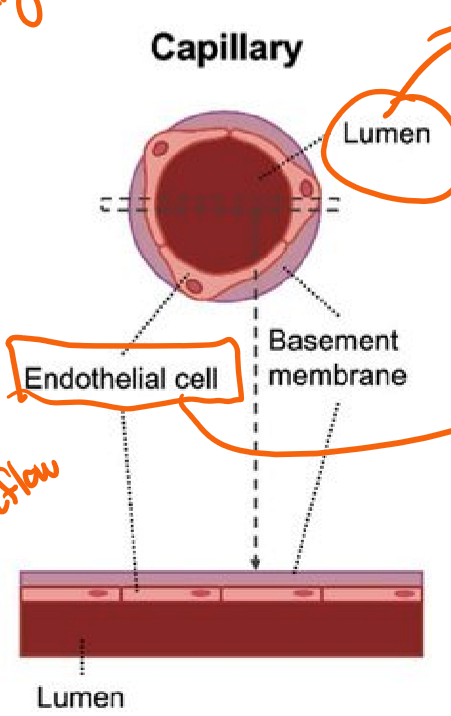
Describe the structure and function of the blood vessels, Capillaries.
Structure: One cell thick
Function: Site of gas and nutrient exchange between blood and tissues
How many antigens in RBC’s determine if you are blood type A B or O?
Two types: A antigen and B antigen.
True or False: Your plasma contains antibodies against the antigens your red cells don’t have.
True
true or false: the heart jumps around automatically
false: it is controlled by electric signals that coordinate contractions
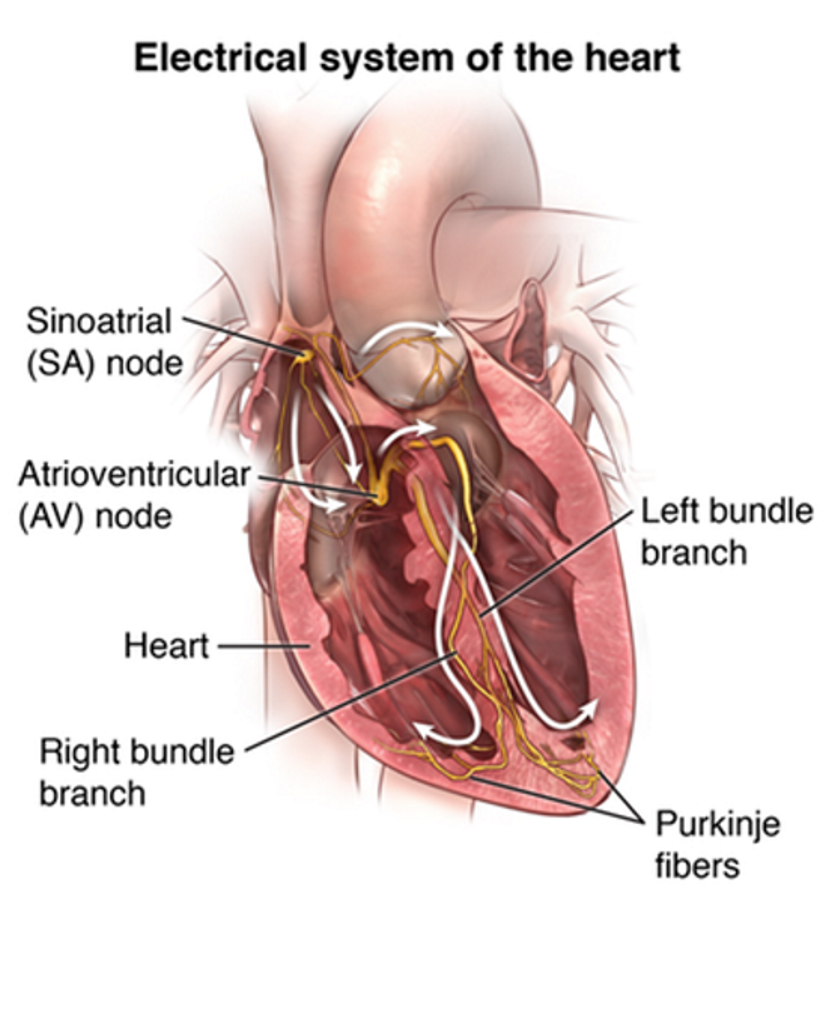
give the steps of the electric conduction of the heart
1) starts with an electrical signal from the SA node ( also known as the heart’s pacemaker)
2)signal spreads through the atria, causing them to contract
3) This passes the AV node, down the bundle of his, and into the Purkinje fibres, which trigger the ventricles to contract
This ensures the atria contract first, then the ventricles, creating a heartbeat
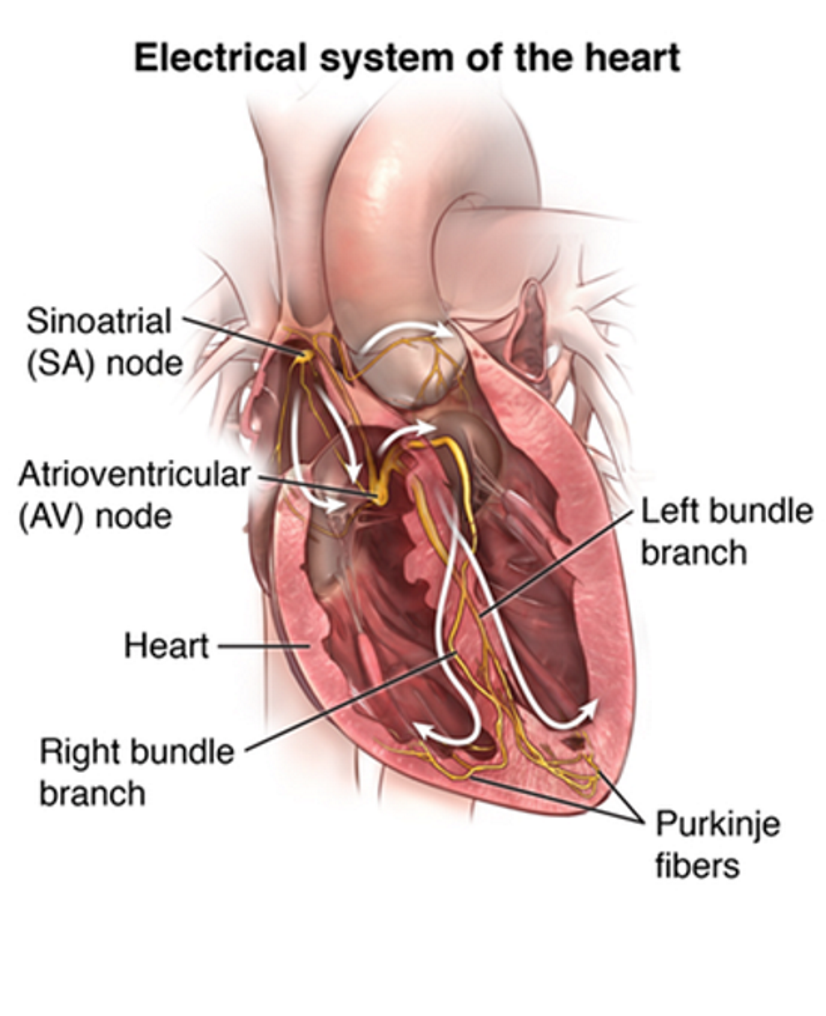
Explain the heart cycle’s heart rate and lub-dub sound.
Resting heart rate is controlled by pacemaker cells in the right atrium:
Systole: the heart muscle is contracted, and blood is being pumped out of the ventricles into the arteries.
Disdtole: the heart muscle is relaxed, and the chambers are filling with blood.
What are the 5 functions of the respiratory system
Ventilation, gas exchange
defense, Ph regulation, sound protection
explain the ventilation function of the respiratory system
Breathing is air going in and out of the lungs
it ensures O2 goes into the bloodstream and CO2 comes out
explain the Ga exchange function of the respiratory system
The diffusion of gases that happens between the air in the alveoli and the surrounding capillaries maintains the O2 level needed for cellular respiration.
removes CO2 ( a metabolic waste product)
explain the defance function of the respiratory system
The respiratory system protects the body from pathogens.
Mucus traps dust.
Cilia sweep upward toward the throat.
Sneezing and coughing remove irritants before they reach delicate lung tissue.
explain the Ph regulation function of the respiratory system
The amount of CO2 exhaled helps regulate the acidity of the blood.
Because CO2 forms carbonic acid in the bloodstream, breathing faster or slower can raise or lower PH levels
explain the sound protection function of the respiratory system
Air passes through the larynx, it causes the vocal cords to vibrate and produce sound.
What 7 things happen during Inspiration:
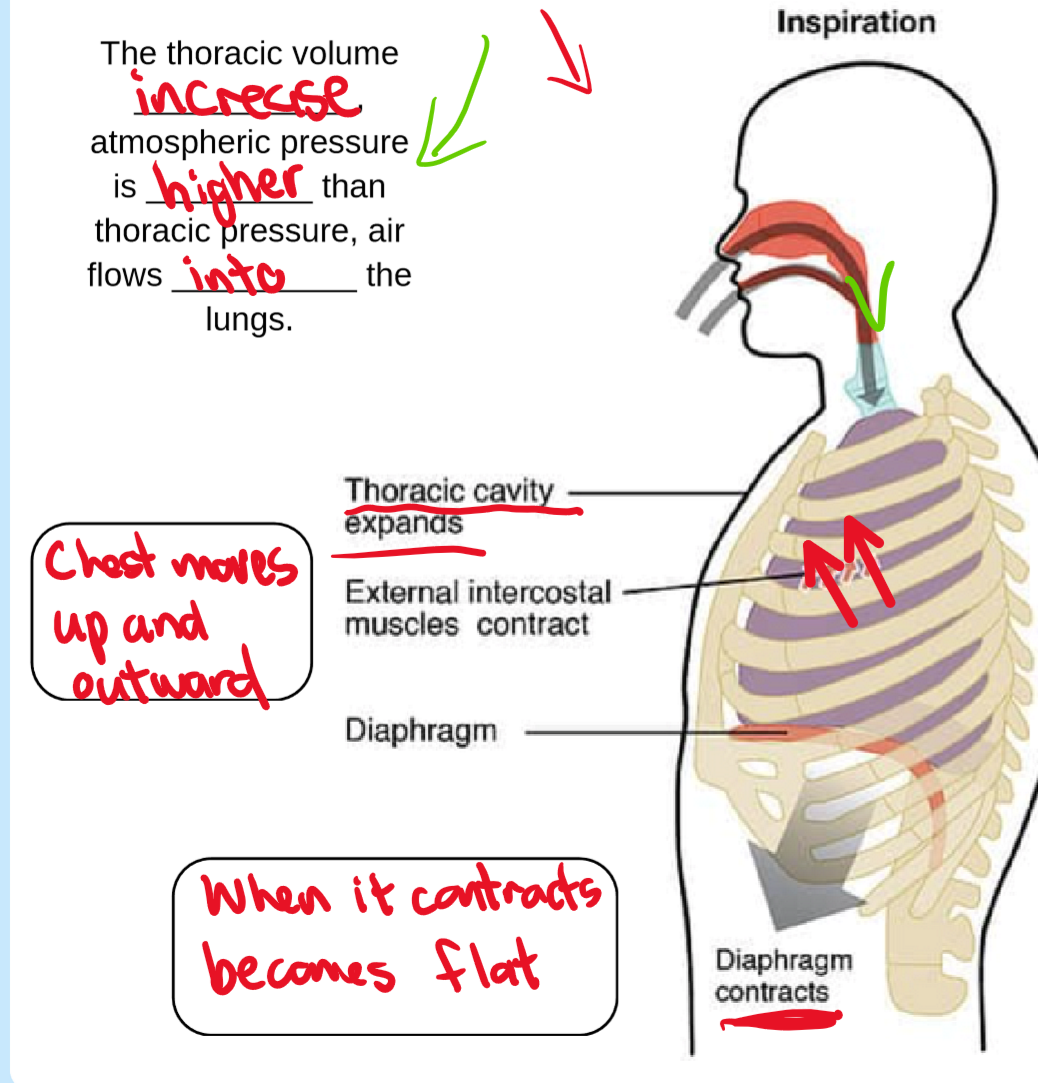
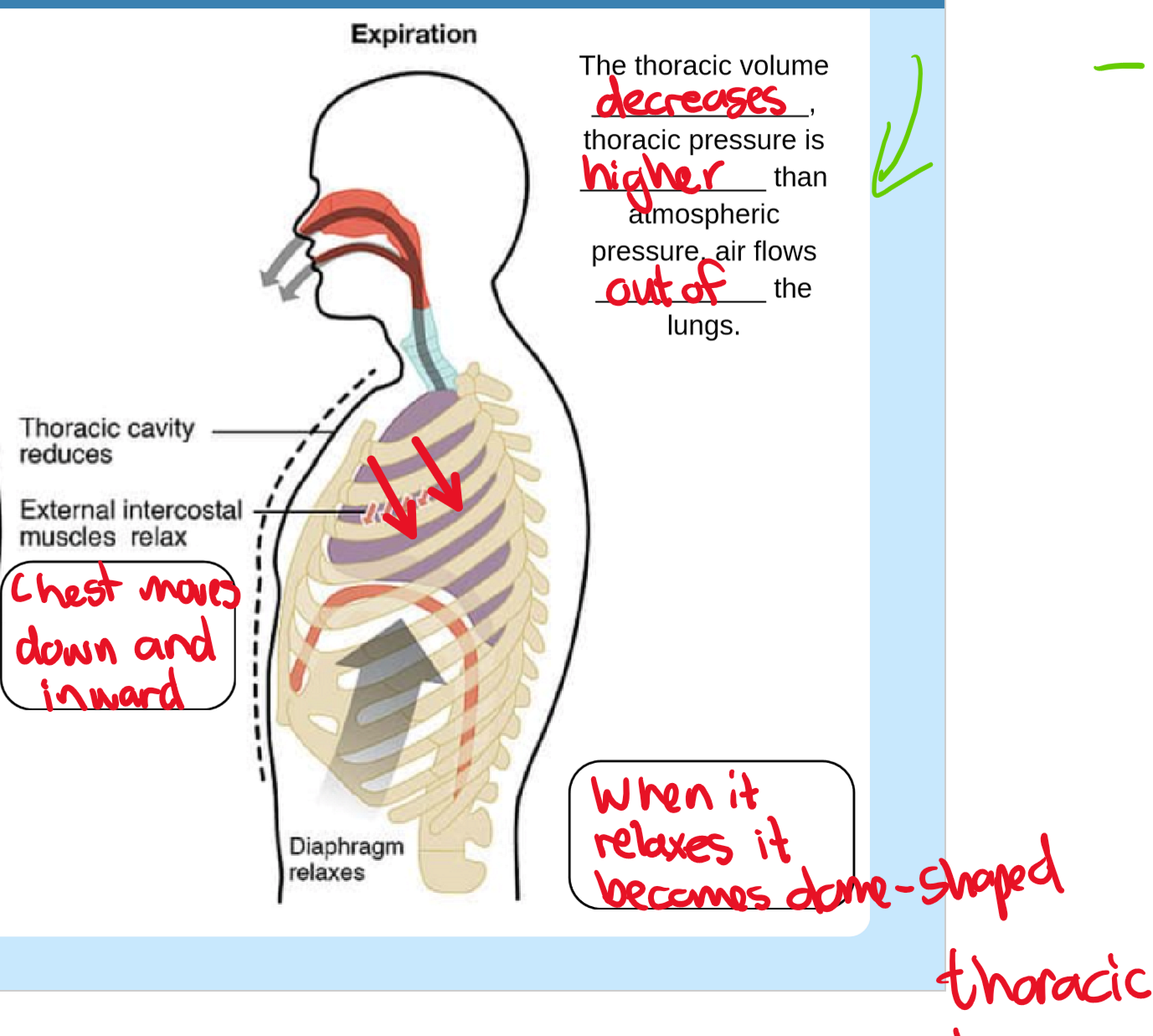
What 7 things happen during expiration:
Explain how external respiration works
Air enters through the oral and nasal cavities and travels to the alveoli.
The alveoli are tiny air sacs surrounded by capillaries.
Gas exchange occurs across the respiratory membrane.
Oxygen (O₂) diffuses from the alveoli into the blood because its concentration is higher in the alveoli.
Carbon dioxide (CO₂) diffuses from the blood into the alveoli because its concentration is higher in the blood.
Red blood cells containing hemoglobin transport the oxygen away from the lungs.
The alveoli have a thin epithelial layer, a large surface area, and a rich capillary network to maximize gas exchange.
Explain how external respiration works
Blood arriving at the tissues has a high concentration of oxygen (O₂).
Oxygen diffuses from the blood into the tissues where it is used for metabolism (cellular respiration).
The tissues produce carbon dioxide (CO₂) as a waste product of metabolism.
Carbon dioxide diffuses from the tissues into the blood.
The blood carries CO₂ back to the lungs for removal.
CO₂ is transported in the blood dissolved in plasma, as bicarbonate ions (HCO₃⁻), and bound to hemoglobin.
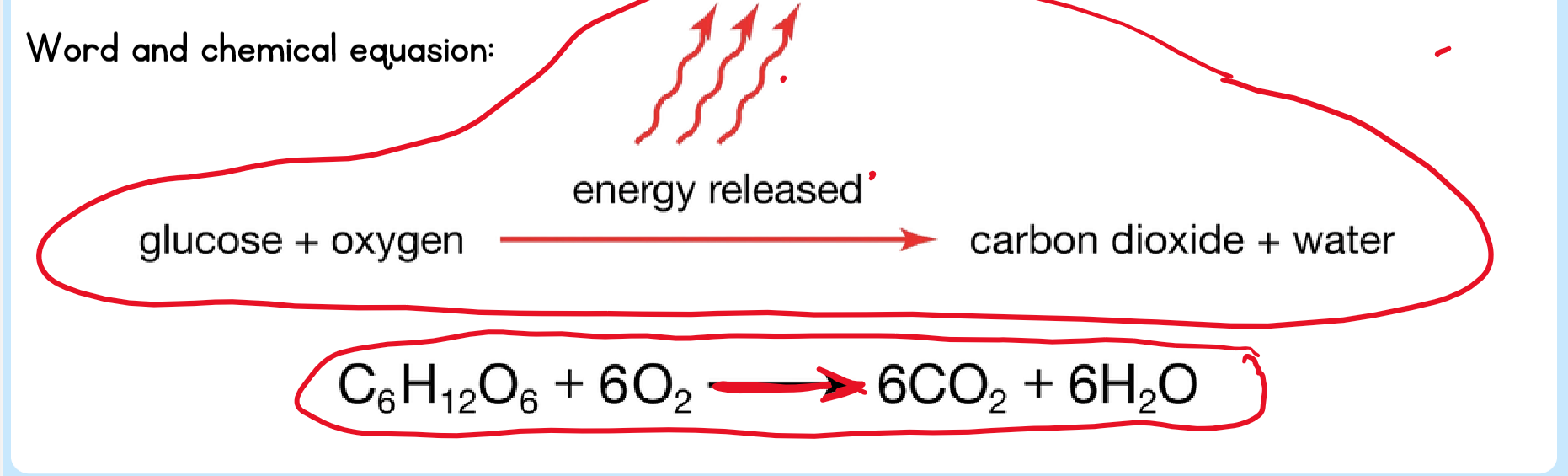
What is the chemical equation of cellular respiration
Name the 4 functions of the digestive system
Ingestion, digestion, absorption, elimination
Explain the use of ingestion
eating nutrients through the mouth
explain the use of digestion
Mechanical digestion: physical breakdown of the food
chemical digestion: enzymes break large molecules into small ones
explain the use of absorption
nutrient molecules enter the bloodstream or lymphatic system
explain the use of elimination
removal of undigested waste as feces
Explain the 3 dentition and diet types
Herbivore, omnivore, and carnivore
Describe the diet and teeth of herbivores
broad, flat molars that grind through plants, helping them break down cellulose for digestion
Describe the diet and teeth of omnivores
a mix of incisors tearing canines, and grinding molars that allows them to eat meat and plants
Describe the diet and teeth of carnivores
sharp k-9’s and slicing teeth to allow them to crush meat and bones